Day #4 of the WordCrafter “Seizing the Bygone Light” Book Blog Tour: My Review
Posted: March 18, 2021 Filed under: Blog Tour, Book Promotion, Book Review, Books, Photography, Poetry, Review, Story Telling Methods, WordCrafter Book Blog Tours | Tags: Cendrine Marrouat, David Ellis, Hadiya Ali, Photography, Poetry, Seizing the Bygone Light, WordCrafter Book Blog Tours, Writing to be Read 3 Comments
Day four of the WordCrafter “Seizing the Bygone Light” Book Blog Tour brings this wonderful tour to a close. Thanks to all who ventured on this brief book tour with us. On Day #1, I introduced this wonderful collection of photgraphy and poetry, Seizing the Bygone Light: A Tribute to Early Photography, an amazing collaborative effort from Cendrine Marrouat, David Ellis, and Hayida Ali, right here on Writing to be Read.

On Day #2, we visited Barbara Spencer’s Pictures from the Kitchen Window, where she interviews the three members of the ArtProMo Collective about their inspiration for Seizing the Bygone Light and the combining of poetry and photography as a storytelling medium.

Day #3 found us over at Robbie Cheadle’s Robbie’s Inspiration, where we get a guest post from the authors about their visions and collaborative efforts to create this unique collection of visual imagery and verse.

Now here we are, back where we started, where my review of this very interesting collection will finish off the tour. I want to thank you all for joining us, and if you missed any of the four blog stops along the way, just click on the links above to go back and see what you miss kelellpe.

My Review
Seizing the Bygone Light: A Tribute to Early Photography combines the visual media of photography and the art of poetry into a insightful method of storytelling. Cendrine Marrouat, David Ellis, and Hadiya Ali are visionaries in their arts. This collaborative effort employs the use of styles of both photography and poetry, which they have created themselves, exploring new and unique realms in their individual mediums.
The book is structured into three sections of black and white photographs. The third section combines the Pareiku and Haibun poetry of David Ellis with photographs of bygone days, while the reminigrams created by Cendrine Marrout produce timeless photos, and the captivating subjects and striking images of nature by Hadiya Ali are inspired by the photographic images of Irving Penn and Karl Blossfeldt, but her young eye and fresh vision offer unique perspective. The result of this collaborative effort is a stunning collection of inspiring visual stories that pay homage to the black and white era of days past, while at the same time, celebrating the rise digital photography with their original and innovative styles
Inspirational and innovative, Seizing the Bygone Light: A Tribute to Early Photography, is a must for anyone with an interest in photography or its history and for anyone who likes to view the world through a unique and captivating lense, as well as those who just have an appreciation of poetic form. I give it five quills.

Buy Link for Seizing the Bygone Light: A Tribute to Early Photography
_____________________________________________________________________________________________________________________________
About the Authors
Hadiya Ali is a 19-year-old Pakistan-born artist who now lives in Oman. A keen observer of people,
she noticed at a very young age how talented market workers were at what they did – but that they
seemed unaware of their own talent. So she decided to capture their stories with her camera.
Before she knew it, her project had attracted attention and she had been booked for her first
professional photoshoots, suddenly realizing that she, too, had been unaware of her own talent all
this time.
Hadiya works on projects that capture unique stories and themes. Some of her photography is
featured in The Auroras & Blossoms PoArtMo Anthology: 2020 Edition.
David Ellis lives in Tunbridge Wells, Kent in the UK. He is an award-winning poet, author
of poetry, marketing workbooks/journals, humorous fiction and music lyrics. He is also a co-author
and co-founder of Auroras & Blossoms, and the co-creator of PoArtMo (Positive Art Month and
Positive Art Moves) and the Kindku / Pareiku.
David’s debut poetry collection (Life, Sex & Death) won an International Award in the Readers’
Favorite Book Awards 2016 for Inspirational Poetry Books.
David is extremely fond of tea, classic and contemporary poetry, cats, and dogs but not snakes.
Indiana Jones is his spirit animal.
Cendrine Marrouat is a French-born Canadian photographer, poet, and the multi-genre author of
more than 30 books. In 2019, she co-founded the PoArtMo Collective with Isabel Nolasco, and
Auroras & Blossoms with David Ellis. A year later, Ellis and she launched PoArtMo (Positive Art
Month and Positive Art Moves) and created the Kindku and Pareiku, two forms of poetry. Cendrine is
also the creator of another poetry form (the Sixku) and a type of digital image (the Reminigram).
Cendrine writes both in French and English and has worked in many different fields in her 17-year
career, including translation, language instruction, journalism, art reviews, and social media.
Together, Cendrine, David, and Hadiya comprise the PoArtMo Collective, an artist collective dedicated
to creating and releasing inspirational and positive projects.
___________________________________________________________________________________________________________
Book your WordCrafter Book Blog Tour today!
Share this:

Craft and Practice with Jeff Bowles – Characters in Need of Color
Posted: March 17, 2021 Filed under: Character Development, Craft and Practice, Fiction, Writing, Writing Tips | Tags: Character Development, Craft and Practice, Jeff Bowles, Writing, writing advice, Writing Tips, Writing to be Read 1 Comment
Each month, writer Jeff Bowles offers practical tips for improving, sharpening, and selling your writing. Welcome to your monthly discussion on Craft and Practice.
I’m a big fan of color. Maybe it’s the art lover in me, but I can’t stand boring compositions. A little passionate red, cool and withdrawn blue, yellow to energize, purple to pacify. My stories are always full of color. I design them that way so I don’t get bored in the telling. Attention span of a cocker spaniel, I assure you. I figure if I’m getting bored, my readers don’t stand a chance.
In this edition of Craft and Practice, we’ll look at colorful characters. Where do they come from? How can we more easily create them? Let’s assume you find them preferable to stock characters that are functional but not especially inspired. I’m here to tell you that you don’t need much in terms of preparation. Outlines, character sheets, written histories, throw them all out for the time being. The trick here is to open yourself up, to trust your instincts and your ability to create something sort of magical and unique to your abilities, to your point of view. It’s not so much that preparation can hamper our ideas or dampen our expression of them. This is true some of the time, but not always. It’s more that the tighter we constrict our creativity―that’s constrict rather than channel; one is suppressive by nature and the other is purposefully expressive―the more likely we are to produce wooden and inflexible components.
Your characters don’t want to be inflexible. Trust me on this. They long to be unpredictable, passionate, full of life. Some writers like to work with a net. Perfectly understandable. It’s cleaner and in some sense easier. But I’d like you to consider the possibility that extra work at the conclusion of a writing project is worth more in the long run than an equivalent amount of preparation. The final product is bound to be less like everyone else’s stories and more like your own, and that’s a win in my book.
Let’s run a brief exercise to illustrate the point. Character A asks Character B for something to drink. Character A doesn’t visit other people’s homes very often, so the request doesn’t seem rude or presumptuous. Character B is a friendly sort, charitable in all the ways it matters, and if it’s possible to provide hospitality and comfort to Character A, then that’s precisely what Character B will do. Outcome: Character A gets to drink. Huzzah!
Notice that in just a few brief character descriptions, I’ve told you everything you need to know in order to enjoy the scene. Do you care what Character A’s first car was? Not unless it has direct bearing on the scene at hand. Do you care if your protagonist prefers Pizza Hut to Domino’s? Not as such, because they’re not eating right now. They’re, you know, drinking. What if childhood trauma involving fruit punch makes them thirstier than the average beverage enthusiast? I mean, that may be pertinent information. Put it in and see how it reads. In this way, story serves character, not the other way around. These imaginary folks living rent-free in your head, they might change their spots entirely by the time you’ve written THE END. In fact, we sort of need them to. It’d be damn boring if they didn’t. I’m saying the desired effect is best achieved organically. Think about your standard rising action chart
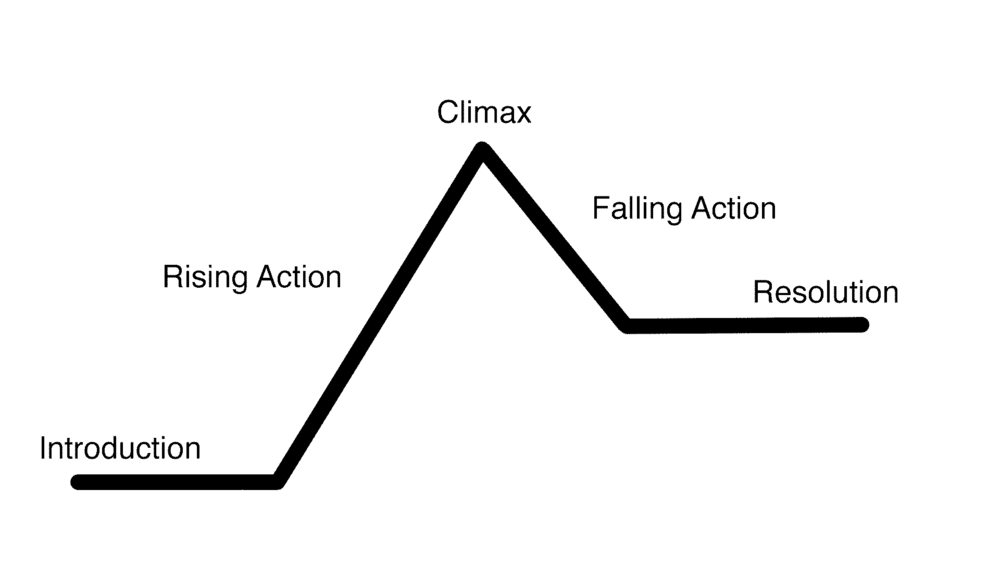
Notice the trajectory, one smooth line shot straight toward a conclusion. Don’t design your plot or your characters in this manner. Just don’t do it. Trust me, that line reads a whole lot better when it’s perforated, imbalanced, full of ups and downs, at last arriving at that ultimate destination. In real life, human beings do not proceed along a straight trajectory. Great actors know this. They understand innately to respond to moments as they come. One foot in front of the other, not all the feet all over the world all at once.
Imagine going onstage with a dozen pages of notes stapled to your forehead. This scene should be easier to perform because you have at your disposal so much background information. Right? Wrong? Yes? No? How’s your performance? Natural or constricted? I mean really, is that stuff helpful, or is it dead weight? A given scene tells me I should be afraid of snakes. The next one tells me I’m falling in love with someone who owns a lot of snakes. The core of my character remains, but the dictates of motivation, action, and reaction are all over the map. Am I in love with snakes and afraid of love? No, of course not. My name is Character A, and I’ve just been bitten by a rattler. See? No preplanning required.
Here’s another classic scenario for you to consider. You can night drive from Los Angeles to Las Vegas without ever seeing further ahead than the thirty feet of illumination provided by your headlights. The road is there, it promises to deposit you at your destination, but even it has no idea what will happen along the way. Maybe you don’t end up in Vegas at all. Maybe your characters have decided they’d rather go to Reno. Are you going to tell them no? They’ve already hit the ATM and booked serviceable lodging!
Thinking of your work in terms of performance is a good habit to cultivate. Just try it. Write a simple scene for which you’ve planned nothing. It’s not important where these characters have been, how much money they have, what their likes and dislikes are. All that matters is the spontaneous influencing the spontaneous. That’s the meaty part, the gold in the gold mine.
Fluff is a chore to read. If you don’t believe me, dig out one of your first serious pieces of writing and tell me how much of it is pertinent and how much ought to be nixed. I know, painful, right? Reminds me of the first piece of honest criticism I ever received, “I only have three problems with this story. The beginning, the middle, and the end.”
The good news about this craft is that there are a million and one ways to skin a cat. I’ll be back with more Craft and Practice next month. No cat-skinning required. See ya!
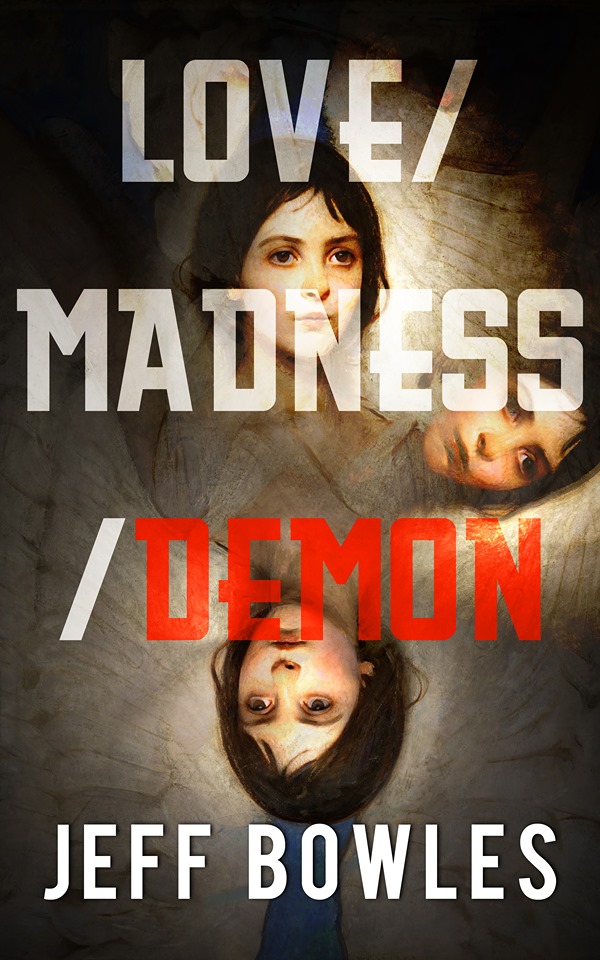
Jeff Bowles is a science fiction and horror writer from the mountains of Colorado. The best of his outrageous and imaginative work can be found in God’s Body: Book One – The Fall, Godling and Other Paint Stories, Fear and Loathing in Las Cruces, and Brave New Multiverse. He has published work in magazines and anthologies like PodCastle, Tales from the Canyons of the Damned, the Threepenny Review, and Dark Moon Digest. Jeff earned his Master of Fine Arts degree in creative writing at Western State Colorado University. He currently lives in the high-altitude Pikes Peak region, where he dreams strange dreams and spends far too much time under the stars. Jeff’s new novel, Love/Madness/Demon, is available on Amazon now!
Check out Jeff Bowles Central on YouTube – Movies – Video Games – Music – So Much More!
Want to be sure not to miss any of Craft and Practice with Jeff Bowles segments? Subscribe to Writing to be Read for e-mail notifications whenever new content is posted or follow WtbR on WordPress
Share this:

#Blogtour – Behind-the-Scenes Look at ‘Seizing the Bygone Light: A Tribute to Early Photography’
Posted: March 17, 2021 Filed under: Blog Tour, Books, Photography, Poetry | Tags: Cendrine Marrouat, David Ellis, Hadiya Ali, ProArtMo Collective, Seizing the Bygone Light, WordCrafter Book Blog Tours Leave a commentDay #3 of the WordCrafter “Seizing the Bygone Light” Book Blog Tour finds a guest post from the authors, Cendrine Marrouat, David Ellis and Hadiya Ali to tell us more about this amazing collection on “Robbie’s Inspiration”, hosted by Robbie Cheadle. Please join us in supporting these authors in their ambitious efforts to pay historical tribute.

Welcome to Day 3 of the Seizing the Bygone Light blog tour hosted by WordCrafter Book Blog Tours.
Welcome to the talented David Ellis, Cendrine Marrouat and Hadiya Ali with their new book Seizing the Bygone Light: A Tribute to Early Photography.

PoArtMo Collective started as FPoint Collective, a group of photographers. When we recently relaunched, we decided that it was time to welcome a larger diversity of artists.
Our passion for photography is still there, though. And while some of us are professional digital photographers, we are all indebted to the pioneering days of the art form, a time when documenting the minutiae of everyday life was the norm.
In 2020, we wondered how we could pay tribute to those old days through a multimedia project involving three artists, digital images, and poetry. The concept would be challenging, but we knew we could achieve something unique.
We decided…
View original post 1,713 more words
Share this:

My Blog today is from The Bygone Light Tour: A Tribute to early photography
Posted: March 16, 2021 Filed under: Blog Tour, Books, Photography, Poetry | Tags: Cendrine Marrouat, David Ellis, Hadiya Ali, ProArtMo Collective, Seizing the Bygone Light, WordCrafter Book Blog Tours 2 CommentsDay #2 of the WordCrafter “Seizing the Bygone Light” Book Blog Tour brings an interview with authors Cendrine Marrouat, David Ellis, and Hadiya Ali by Barbara Spencer on “Pictures From the Kitchen Window”. Please join us to learn more about these three innovative artists and their wonderful collection of poetry and photography.


A Behind-the-Scenes Look at ‘Seizing the Bygone Light:
PoArtMo Collective started as FPoint Collective, a group of photographers. When we recently relaunched, we decided that it was time to welcome a larger diversity of artists. Our passion for photography is still there, though. And while some of us are professional digital photographers, we are all indebted to the pioneering days of the art form, a time when documenting the minutiae of everyday life was the norm. In 2020, we wondered how we could pay tribute to those old days through a multimedia project involving three artists, digital images, and poetry. The concept would be challenging, but we knew we could achieve something unique.
Meet my guests: Cendrine Marrouat is a French-born Canadian photographer, poet, and the multi-genre author of more than 30 books. In 2019, she co-founded the PoArtMo Collective with Isabel Nolasco, and Auroras & Blossoms with David Ellis…
View original post 3,022 more words
Share this:

Welcome to the WordCrafter “Seizing the Bygone Light” Book Blog Tour
Posted: March 15, 2021 Filed under: Blog Tour, Book Promotion, Books, Photography, Poetry, WordCrafter Book Blog Tours | Tags: Cendrine Marrouat, David Ellis, Hayida Ali, Photography, Poetry, Seizing the Bygone Light, Visual Storytelling, WordCrafter Book Blog Tours 16 Comments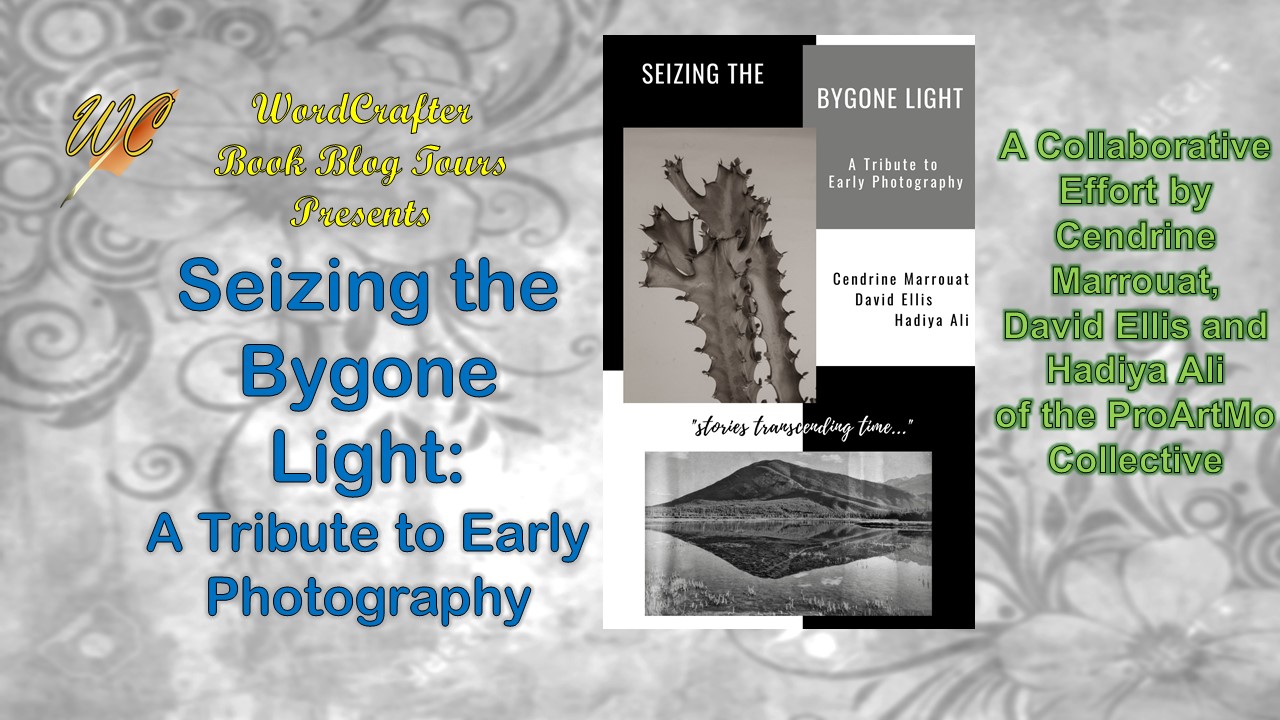
Welcome to the Seizing the Bygone Light Book Blog Tour, where we will be learning more about a delightful collection of photographs and poetry, which was created by three authors of the ProArtMo Collective as a tribute to early photography. This is a four day tour that will run through March 18, bringing you a guest post on Robbie’s Inspiration from the authors on what they strived to accomplish with Seizing the Bygone Light: A Tribute to Early Photography, an interview with the author’s by Barbara Spencer on Pictures from the Kitchen, and a review of the book by me to wrap things up, right here on Writing to be Read. I do hope all of you will join us in celebrating the history of photography along with authors Cendrine Marrouat, David Ellis, and Hayida Ali.
The medium of limitless possibilities that is photography has been with us for almost 200 years.
Despite its great advancements, its early days still influence and dazzle a majority of professional photographers and artists. Such is the case of Cendrine Marrouat, Hadiya Ali and David Ellis, three members of the PoArtMo Collective.
The result? Seizing the Bygone Light: A Tribute to Early Photography.
This unique collection of artistic styles brings together different innovative concepts of both gripping writing and stunning visual imagery.
Visual imagry can be a method of storytelling, and a powerful one at that when presented with a skillful hand. I know each of the authors has put much thought into the stories they wished to tell here, and how they wanted to do it. So, to introduce you to this marvelous group of original photography and poetry, I wanted the authors to tell you what they are trying to accomplish in their own words.
What inspired you to create this book?
All three of us were inspired together to celebrate the stunning vintage photography of the past and at the same time create an artistic project that shines a contemporary light alongside it, with our own individual blends of photography and poetry. This book allowed us to express ourselves in endearing ways that combine all of our passions and strengths. We wanted to collaborate in a way that would cause people to really become interested in the
images of the past and the endless rewards that they have to offer.
What makes Seizing the Bygone Light: A Tribute to Early Photography unique?
Our book looks back at the beginnings of photography in a way that has never been done
before. It is divided into three parts.
In part 1, Hadiya Ali has “recreated” the timeless photographic styles of Irving Penn and Karl Blossfeldt. Part 2 features some of Cendrine Marrouat’s reminigrams, a type of digital image that she invented years ago. Finally, in part 3, David Ellis shares a series of pareiku poems inspired by archival images.
Anyone with an interest in vintage photography has noticed how it documented the minutiae of
everyday life. Seizing the Bygone Light: A Tribute to Early Photography looks at that triviality
with a refreshed and positive outlook. It is one of the reasons why it is so unique.
The other reason? Three authors and artists whose vastly different styles actually complement
one another in a fascinating way.
(The Pareiku is a visual poetry David and Cendrine invented in 2020. For more information, visit
https://abpoetryjournal.com/pareiku/.)
Did you face any particular issues while working on the book?
Yes, we did. But these issues actually helped make the book more interesting and unique than if just one author had worked on it.
Hadiya decided to recreate the timelessness of Karl Blossfeldt’s and Irving Penn’s beautiful photography. She quickly realized that the subjects and props she was supposed to use were not as widely available as before. She had to find substitutes, like ordinary plants and create her own props, which taught her valuable lessons about simplicity and creativity.
Cendrine struggled to select the images that would fit the book, until she found herself thinking about her emotional relationship with photography. The result was ten images that made complete sense together, gelling naturally with Hadiya’s photos and David’s poems.
David used archival images as inspiration for his poetic section. At first, he was a little unsure about which photos to include, until he realised that since every photograph tells its own story, there should be an unconscious thread that can link almost anything if you are willing to look hard enough to uncover it. He then made sure to select the most intriguing, engaging images he could find and let his subconscious mind make the necessary connections between them, which was very exhilarating in the extreme.
Why do you think poetry and photography work so well together?
Because they more or less speak the same language. It is all about the finer details and how they are interpreted. Photography, just like poetry, thrives on meaning and purpose; both disciplines require attention to subject matter and framing things in the right light if they are to be taken seriously. Both mediums are great at telling stories with minimal amounts of words, they connect instantly with our souls and move us, just like beautiful music, we identify with common struggles and the beauty of life as it unfolds around us.
What are your goals with this release?
We would love it if this book led to more people getting interested in checking out photography of the past. Digital images are fantastic, but exploring old and film photography leads to a greater awareness of what photography truly is and represents. The greatest rewards lie there.
Do you have any advice for artists?
Never give up! Make time for your craft, do many different things to feed your passions and above all don’t be afraid to put your work out into the world. If it sounds like someone is exerting their opinion rather than giving you actual independent advice, feel free to take what you need and ignore the rest to improve and evolve your work. Your work will never be perfect but that doesn’t stop you from always trying to make the next piece even better than the last, to the best of your ability, then move on and sincerely appreciate the art you have made!
What kind of book can we expect from you next?
We are always working on new ideas. This year, Auroras & Blossoms (Cendrine and David) plans on adding several more guides and workbooks for authors and artists to its list. Members of the PoArtMo Collective will also continue working together on more positive and inspirational books and themed exhibits.
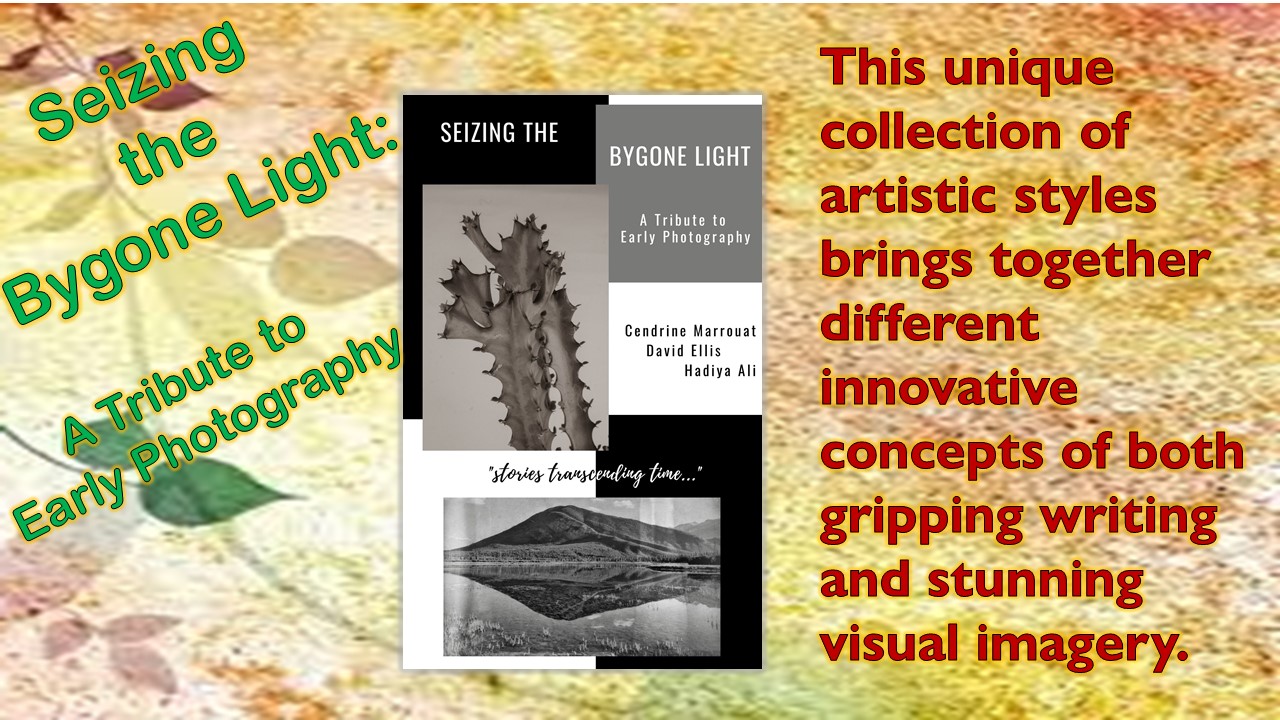
When this book was brought to my attention, I was eagar to learn more about this unique collection of original photography and poetry, and as I learned more about the creativity and inspiration of its authors, I came to believe that Seizing the Bygone Light may be a very special collection indeed. If you would like to following along on this book blog tour to learn more, check in right here on Writing to be Read for guiding posts that will lead to each blog stop, or just subscribe to this blog for reader feed or email notifications.
____________________________________________________________________________________________________________________________
Book your WordCrafter Book Blog Tour today!
Share this:

A Ghost And His Gold by Roberta Eaton Cheadle–A Review
Posted: March 14, 2021 Filed under: Book Review, Books | Tags: A Ghost and His Gold, Book Review, Paranormal, Roberta Eaton Cheadle 8 CommentsA great review for “A Ghost and His Gold”, by Writing to be Read’s own Roberta Eaton Cheadle!! Way to go Robbie. 🙂


A Ghost And His Gold by Roberta Eaton Cheadle is a brilliant, thoughtful, and deeply emotional novel. In this book, which is a historical paranormal novel, she weaves together the plots of a distant time period and shows how they connect to the present. Her historical research is impeccable, and her characters draw the reader completely into the story.
A Ghost And His Gold is a tale of love and hatred, the impact of the past on the present, greed and decency, war and peace, and sinning and redemption. Weaving such an intricacy of themes could easily be difficult, but Cheadle is extraordinary in her narration. She moves the reader seemingly without effort from one time period to another, and confusion is never a problem. Her plotting skills as are strong as are her character development.
This novel is set in South Africa, both in contemporary times and during the…
View original post 138 more words
Share this:

Time to bring the “Willow of Ashes” Book Blog Tour to a close
Posted: March 14, 2021 Filed under: Blog Tour, Book Promotion, Books, Epic Fantasy, Fantasy, Fiction, WordCrafter Book Blog Tours | Tags: Ellie Raine, Epic Fantasy, Willow of Ashes, WordCrafter Book Blog Tours 9 Comments
Willow of Ashes has been a great tour. I’ve known Ellie about a year, and I learned things I didn’t know about her and her books. For this blog stop, we’re going to wrap things up and recap the highlights about the book. We covered the basics about this book in my introductory tour post on Day #1. This award winning fantasy novel is book one of the NecrSeam Chronicles series, and it is also available in audiobook through Libro and Google Play.

Five kingdoms face destruction. Two brothers fight to prevent it. Their epic adventure of magic, love, and loss will become a timeless legend.
The five realms of Land, Sky, Ocean, Dream, and Death have been at peace for centuries, but that peace is threatened when dark forces seek to destroy it. The Gods have chosen a champion to protect the world, yet unexpectedly that champion was born as twin necromancers whose magic was split at birth. Only together would they be strong enough to survive what’s to come. But now one of them has died… and his soul became trapped inside his brother.
The coexisting twins embark on a journey across the five realms, determined to be normal again. But their quest of hope turns into a living nightmare when they stumble into an army of undead beasts that have been unleashed on the lands by a vicious sorceress. With the help of new comrades and a mysterious lady Reaper skilled with the scythe, they must fight for more than a new life. Now they fight for the future of the themselves.
Willow of Ashes is available on Amazon

Author Bio
“Writer’s Digest award-winning fantasy author Ellie Raine is a voracious BookWyrm when it comes to epic adventures, detailed world-building, and thrilling battles. Fueled by coffee-bean concoctions brewed by the finest caffeine alchemists in the land, she only emerges from the depths of these daring tales when she is summoned by her loving king and their darling daughter: the Dragon Princess Felicity, in the suburbs of Atlanta, GA.
Her first book, Willow of Ashes, won First Place in Fantasy for the 2019 Writer’s Digest Self-Published Ebook Awards, as well as Honorable Mention in Fantasy for the 2019 Readers’ Favorite Awards.”
We had a lot of fun on Day #2 over at Roberta Writes, where Robbie Cheadle did a wonderful Q & A with the author, Ellie Raine. We learned how Ellie accidentally became an award winning author of a story intended to be a video game.
Day #3, we heard from Ellie, herself in a guest post on This is my Truth Now, where she talks about the inspiration behind this story and the Necroseam universe.

On Day #4, I posted my review of this fresh and original new series starter. With traditional elements of storytelling scattered throughout, usually with an unexpected twist to them, this book was unlike any story I had ever read before. Fresh and original, with interesting and unusual characters you can’t help but like, I highly recommend this book.

The Day #5 blog stop was on Robbie’s Inspiration, with a guest post from Ellie, where she talks about what it’s like to revisit the early beginnings of the five book series of the Necroseam Chronicles. Willow of Ashes is that beginning, and it is so cool that this award winning novel is now available on audiobook, too.
On Pictures from the Kitchen, Barbara Spencer hosted Day #6, with a guest post from Ellie that was designed to help us understand the Necroseam universe, including a chart to help translat the Grim language.

That brings us right back here. I want to thank you all for delving into this fresh new fantasy journey on this tour. If you joined the tour later in the week and missed some blog stops, or you’ve followed with us all the way through the tour and just want to go back and revisit a stop, click on the links above. Willow of Ashes and the Necroseam Chronicles are definitely worth reading. If you’d like to learn more about Ellie and her books, you can check out the following links.
_____________________________________________________________________________________________________________________________
Book your WordCrafter Book Blog Tour today!
Share this:

Stopping by my blog today is author Ellie Raine!
Posted: March 13, 2021 Filed under: Blog Tour, Book Promotion, Books, Epic Fantasy, Fantasy | Tags: Ellie Raine, Epic Fantasy, Willow of Ashes, WordCrafter Book Blog Tours 1 CommentLearn more about the NecroSeam universe and the Grimmish language of Ellie Raine, for Day #6 of the WordCrafter “Willow of Ashes” Book Blog Tour on Barbara Spencer’s lovely blog, “Pictures from the Kitchen Window”. Drop by and join in the conversation.
“My goodness, what a difference a few weeks make. Stepping into the world of blog tours is like bungee jumping when you don’t know the first name of the instructor and only met him two seconds before – definitely a dive into perilous waters.”

My guest, Ellie Raine, is a young novelist who is currently taking readers of fantasy by storm. Not only does she write about things that might go bump in the night but she is very good at it. And on reading her bio, I realised she and I only share one thing in common – our love of Terry Prachett. Other than that she is young, reads Rachel Aaron, Brandon Sanderson and Douglas Hulick, and originally set out to create a computer game. In all honesty, she shares far more with my granddaughter who has just given up on her attempt to create a graphic novel…
View original post 1,251 more words
Share this:

Willow of Ashes blog tour – Day 5
Posted: March 12, 2021 Filed under: Blog Tour, Book Promotion, Books, Epic Fantasy, Fantasy, Fiction, WordCrafter Book Blog Tours | Tags: Ellie Raine, Epic Fantasy, Willow of Ashes, WordCrafter Book Blog Tours Leave a commentFor Day #5 of the WordCrafter “Willow of Ashes” Book Blog Tour, Robbie Cheadle hosts a guest post from author Ellie Raine about what it’s like to go back and revisit her seriews beginnings, on “Robbie’s Inspiration”. Come join us and learn more about this award winning epic fantasy novel and the NecrSeam series, which follows.

Today, I am delighted to welcome author, Ellie Raine, to Roberta Writes for Day 2 of her Willow of Ashes blog tour with WordCrafter Book Tours.
You can read the other posts for this tour here:
Day 1: https://writingtoberead.com/2021/03/08/welcome-to-the-willow-of-ashes-book-blog-tour/
Day 2: https://robertawrites235681907.wordpress.com/2021/03/09/willow-of-ashes-blog-tour-day-2/
Day 3: https://writingtoberead.com/2021/03/10/day-3-of-the-willowofashes-bookblogtour/
Day 4: https://writingtoberead.com/2021/03/11/day-4-of-the-willow-of-ashes-book-blog-tour-my-review/
Ellie Raine’s Take on Revisiting her Series’ Early Beginnings
After spending the last 13 years writing the NecroSeam Chronicles to completion, going back to work on the first volume’s audiobook was an interesting nostalgia trip for me. A lot happened between book 1 and book 5. Similarly, a lot happened in my life throughout the whole endeavor. I’m really not the same person as the girl who wrote Willow of Ashes. I barely remember who she was.
But since I’m an indie author with the rare opportunity to work (extremely) hands-on with the narrators for the audiobooks (Matt Goodson &…
View original post 1,211 more words




















“Mind Fields” – Weight Loss: Fact Or Fiction
Posted: March 19, 2021 | Author: artrosch | Filed under: Commentary, Mind Fields, Opinion | Tags: Advertising, Arthur Rosch, Mind Fields, Self-image, Societal Standards, Weight loss, White Teeth, Writing to be Read | Leave a commentWeight Loss: The Fiction of Being Skinny
I estimate that each of my legs weighs sixty pounds. That leaves a hundred pounds for the rest of my body. My head probably weights twenty, which leaves eighty for the arms and torso. My belly, that piece of me that surprised me totally when it arrived in the years between forty and forty five, my belly must take up sixty pounds of that remaining eighty. It’s a classic middle-aged man’s belly. It is true, I eat too much and most of that eating is done in bed. Every night of my entire life I have munched or crunched something as I read myself to sleep.
My theory is that I am seeking a substitute for breast milk. My early days on this planet were not a paradise of blissful bonding between mother and child. My father tells me that I had night terrors. I tell him that if I was terrified of anything, it was my mother.
During my futile attempts to rid myself of this belly, I’ve done ten kinds of abdominal exercises, hundreds of reps daily, for months and months on end. My belly didn’t get smaller. It got bigger.
Why was I exercising my six-pack this way? What myth did I buy into? If I wanted to get rid of my belly, I should have done absolutely nothing. I should have, with the wisdom of hindsight, accepted the fact that this belly is here to stay, it’s a natural by product of aging. It just IS, and why is that so horrible? Why is everyone buying gizmos, electronic abdominal muscle stimulators? Why do they buy gimmicks with names like Abbacizers, Sixpackalongs, Abhancers? Why do people hang from bars and pull themselves up and back, up and back, or lay tilted on long boards, going up and back, up and back? There’s more than a little insanity in this vain pursuit. The obsession with the six pack is about vanity and its monster shadow, insecurity. Our culture pumps its toxic load of media venom into our collective psychic bloodstream, so that we feel inadequate if our bodies don’t adhere to some contemporary ideal of beauty. For the moment, that ideal has become horrifically thin; it forms the ironic counterpoint to the visible reality that Americans have gotten chronically fat.
We’re a culture with a lot of food. There’s never been a civilization in the history of the world with more food. It’s hardly surprising that everyone eats a lot, gets fat and the ideal of beauty is to have arms and legs so thin that you have to walk around storm drains lest you slip through the bars and get washed out to sea.
I wish we could weigh thoughts just as we weigh butter, or scrap metal. How much would my daily output of body-shame weigh? How many pounds, kilos, ounces, grams would every thought weigh, those thoughts that go, “Oh I wish this belly would flatten out, it makes me feel so unattractive, so grotesque?”
Beneath the veneer of our society a drumbeat of subliminal command roars like an underground subway train. It’s saying, rhythmically, “hate your body hate your body hate your body hate your body.” Chugga chugga chugga chugga.
People who are at war with their bodies spend money on ridiculous products. Teeth whiteners! When did this obsession come along? Who cares about teeth whiteners? People who use them look ridiculous. There’s a blinding beam of Cheshire Cat grin every time they open their mouths, a light so blatantly artificial that it obscures the rest of the face with its message: “I am insecure and hopelessly vain. I use teeth whiteners.”
Recently I heard a radio spiel about a product that reduces shadows under the eyes. Oh my god, here we go again! The script describes the grotesque anatomical process behind eye shadows: a horrific network of bloated capillaries spreads beneath your eyes until they burst forth to spill a dark disgusting goo of congealing blood, thus producing bruised tissue, thus producing embarrassing and unsightly morning-after shadows, hanging and spreading and sagging until they’re the size of wrinkled leather saddle bags beneath your optical sockets.
Eeeeeeww! How humiliating! Burst blood vessels, bruises, discoloration? Wrinkled leather saddle bags beneath my eyes? I can’t have that!
This is how to create a market for a useless product. People will start fixating on their fatigue-shadows, examining the mirror for any hint of darkening skin. The stuff will sell like crazy, as another reason to hate one’s body darkens the horizon of the national psyche. This insanity is all about money. People who hate themselves spend more money, spend compulsively, to cover their unhappiness. It serves the interests of marketers to create a social condition in which self hatred becomes the paradigm.
I have to ask myself the question, “Which is worse, being overweight, or being guilty, stressed and ashamed of being overweight?” Which damages my health more? I think it’s the latter. I think that stressing and hating my body is more toxic than glugging down three milkshakes a day.
How many ridiculous weight-loss products bloat the bandwidth of the media empires? How many bogus concoctions feed on the fervent wish that one can lose pounds and become shapely without any effort?
I have invented my own product to add to this glut for gluttons: “Thindremeä!” Here’s the commercial, presented by a blandly attractive blonde woman in front of a red- white- blue studio set enhanced by computer graphics showing fat bodies and thin bodies arranged for before/after comparison.
I’ve given up trying to rid myself of this belly. I know that a group of cannibals would find me delicious. My bicycle thighs would be a Kentucky Fried delight, the most giant Crispy ever to appear in a cannibal’s bucket.
When I compare my life to the living hell in which I see that most people exist, I feel grateful for the good life that I have. My relationship with my partner has its sick elements, to be sure, its ‘enablings’ and ‘codependencies’ (how I love this modern language of the heart’s twisted pathways). We don’t fight. If something starts to fester between us, it will come out in a talk, a gentle but firm confrontation where our fears are expressed and laid to rest.
This was supposed to be about my belly, but I can’t write about that part of my personal real estate without including all kinds of other things in my life. My belly doesn’t exist in a vacuum, it isn’t just floating around in space, a belly, without connection to the rest of the universe. My belly may be causing storms on Neptune, for as we have recently discovered, everything has a connection to everything else. It’s the Butterfly Effect. Or in this case, The Belly Effect.
My belly is a dominating presence in my life. I, who spent my youth being thin and sinewy, looking like a Hindu holy man from the hippie trail in Nepal, am now somewhat imprisoned by this entity who sits astride the center of my body. It goes everywhere with me. My vanity is not the main actor in this dismay. My vanity went out about the same time as my hair. Well, that’s not exactly true. I am concerned with how I appear to other people. The problem is, I know that the one person least qualified to judge how I appear to other people is myself. And that is a universal law. You, who think you look thus and thus to the outside world, are completely deluded. When you look in the mirror, the information you receive is so utterly tainted by your needs and dreams that you might as well be looking at a stranger. I wish people would understand this.
YOU DO NOT KNOW WHAT YOU LOOK LIKE. YOU NEVER WILL.
There are so many ingredients that go into an appearance that are invisible to the owner of a human body, that said owner should just give up. Photographs lie for many reasons. Photos capture one two hundredth of a second, and in that two hundredth of a second, an expression may be crossing your face that is otherwise invisible, so quickly do the facial muscles change with the passing of emotion. That’s why we often look odd in pictures. Videotape is in some ways even worse. I don’t know a single soul who doesn’t cringe when viewing his or herself on video. Its distortions are insidious but nonetheless real.
I say this to my fellow humans: do your best to be hygienic, wear clothes that are comfortable and that please you, and let your nature emerge, because that’s what happens anyway. Your appearance is determined by your nature. The way you look is about energy, not physical features.
______________________________________________________________________________________________________
Arthur Rosch is a novelist, musician, photographer and poet. His works are funny, memorable and often compelling. One reviewer said “He’s wicked and feisty, but when he gets you by the guts, he never lets go.” Listeners to his music have compared him to Frank Zappa, Tom Waits, Randy Newman or Mose Allison. These comparisons are flattering but deceptive. Rosch is a stylist, a complete original. His material ranges from sly wit to gripping political commentary.
Arthur was born in the heart of Illinois and grew up in the western suburbs of St. Louis. In his teens he discovered his creative potential while hoping to please a girl. Though she left the scene, Arthur’s creativity stayed behind. In his early twenties he moved to San Francisco and took part in the thriving arts scene. His first literary sale was to Playboy Magazine. The piece went on to receive Playboy’s “Best Story of the Year” award. Arthur also has writing credits in Exquisite Corpse, Shutterbug, eDigital, and Cat Fancy Magazine. He has written five novels, a memoir and a large collection of poetry. His autobiographical novel, Confessions Of An Honest Man won the Honorable Mention award from Writer’s Digest in 2016.
More of his work can be found at www.artrosh.com
Photos at https://500px.com/p/artsdigiphoto?view=photos
_________________________________________________________________________________________________________
Want to be sure not to miss any of Art’s “Mind Fields” segments? Subscribe to Writing to be Read for e-mail notifications whenever new content is posted or follow WtbR on WordPress. If you find it interesting or just entertaining, please share.
Share this: