“Jaguar”: A thought provoking psychological thriller
Posted: July 19, 2021 Filed under: Book Review, Books, Fiction, Psychological Thriller | Tags: Bill Ransom, Book Review, Dreams, Jaguar, Psycological Thriller, Writing to be Read 2 Comments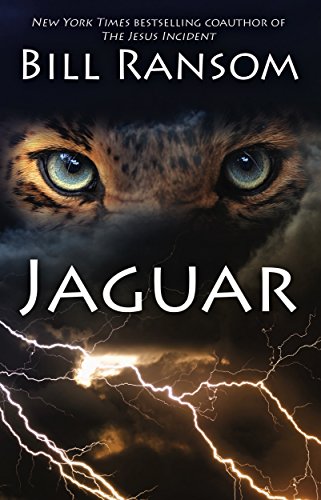
Dreams: A journey into the unconscious mind.
For Eddie Reyes and his friend Maryellen, dreams are much more than that. Dreams are an avenue for learning. Dreams are a means of breaking through to parallel worlds and making connections with their friends, Africa Lee and Rafferty. Dreams are a way to control people and a weapon which causes madness. To those who don’t know, it sounds like a cool superpower, but it’s one that carries a heavy price.
For Eddie, it’s the only way to hunt down the Jaguar to save their friends and the rest of the Roam from the persecution of the jaguar priests. But the Jaguar has reached Maryellen’s father through his dreams in this world and he’s intent on keeping she and Eddie apart at all costs.
Can Maryellen and Eddie escape her father and the other traps set on this side by the Jaguar long enough to hunt the him down in his own dreams before he destroys the Roam, and both worlds in the bargain?
My Review
Although Bill Ransom’s Jaguar unfolds the story slowly and it takes a little while to put the puzzle pieces together to form an idea of how the characters are connected and how they fit within the full picture of the story, it is just odd enough to keep your curiosity raised and keep you reading long enough to see it all come together. And by then, you’re hooked. You have to keep reading to find out how it all turns out. You can’t put it down. And it’s a good thing, because if you don’t read through to the end, you will miss the big reveal that changes the game and raises the stake even higher for Eddie.
A well-crafted psychological thriller that will keep you riveted to your seat. I give Jaguar four quills.

Buy Link: https://www.amazon.com/Jaguar-Bill-Ransom-ebook/dp/B0054SLB88
_______________________________________________________________________________________
Kaye Lynne Booth does honest book reviews on Writing to be Read in exchange for ARCs. Have a book you’d like reviewed? Contact Kaye at kayebooth(at)yahoo(dot)com.
Share this:

Treasuring Poetry: Meet poet and author Miriam Hurdle
Posted: July 16, 2021 Filed under: Book Review, Books, Interview, Poetry | Tags: Author Interview, Book Review, Miriam Hurdle, Poetry, Robbie Cheadle, Treasuring Poetry, Writing to be Read 126 Comments
Today, I am delighted to host poet and author Miriam Hurdle for the July edition of Treasuring Poetry.

Welcome Miriam Hurdle
Hi Robbie,
I’m delighted to be your guest on Writing to be Read to talk about poetry.
Which of your own poems is your favourite
Among the published poems in Songs of Heartstrings: Poems of Gratitude and Beatitude, several poems are my favorites in equal measure for different reasons. One is in the section of Songs of Marriage, one in Songs of Tribute, and one in Songs of Inspiration.
The time I wrote this post, my heart turns to the poem “Healthy Grieving” in the section of Songs of Tribute.
Healthy Grieving
Randy and my husband were true friends.
No appointment needed for
a barbeque, a movie or a game, just
knocked on each other’s door.
The conversation could go anywhere,
no worry about apologies.
When one needed a helping hand,
the other one is always there.
Twelve years was a long time,
such true friendship rarely came by.
People say, “Big boys don’t cry.”
I don’t know why.
Boys have emotion, as we all do.
My husband had never cried,
not until after Randy died.
What inspired you to write this particular poem?
There is a narrative precedes the poem. I wrote the poem to pay tribute to our neighbor, my husband’s best friend who died of a mountain bike accident. Here is the excerpt.
I remember on January 3, 2016. Randy joined us to celebrate my husband’s birthday. We had lunch and saw Star Wars at Irvine Spectrum. It was on Saturday.
The following Sunday, eight days later, his relative came over to tell us that Randy had a mountain bike accident. He and a gym buddy ventured on a long mountain bike ride. The bike hit a vast gap and made a somersault flip. He got thrown off the bike, fell forward and hit the ground, and smashed his head and face.
They rushed him to the close by emergency room but pronounced him dead as soon as the ambulance reached the hospital.
Randy was our neighbor who lived two doors down the street. He was my husband’s best friend for twelve years, ever since he came back to live with his parents. They worked out at the gym together. They enjoyed the Friday movie and pizza day for a while.
After my husband got a mountain bike, he also got one. They biked on the trails in the city. On special occasions, a barbecue dinner was in order. He came over to our house for game nights regularly. A year before he passed away, they switched to another restaurant to hang out in the bar, and I became their designated driver.
Randy was a lighthearted guy, a wonderful friend, a caring son. We missed him very much.
Which genre of poetry do you enjoy writing the most and why?
Whereas a “form” defines the way a poem arranges sounds, rhythms, or its appearance on the page, “genre” is something like the poem’s style. Many poetic genres have a long history, and new poems almost always seek to explore a new aspect of the traditional style and thus to redefine the genre.
Traditionally, there are nine genres of poetry. Three of them remain in the newer inclusion of poetry genres. They are narrative poetry which tells a story, lyric poetry which is musical in tone, and dramatic poetry which is a long dramatic monologue or persona poem.
I would say I enjoy writing narrative poetry genre. Regardless of the poetry forms, I like to write poems that tell the stories. The poem I included above is a good example in which I shared the story of the friendship between my husband and Randy.
As far as poetry form, I enjoy writing free verse which is free of rules and regulations. It doesn’t follow a consistent rhyme scheme, meter or musical structure. For the fun of learning, I also write blank verse which follows a stricter structure with precise meter. In addition to Haiku, Tanka, I have written a Shakespearean Sonnet, a Pantoum, several acrostic poems, two Villanelle, and one one-syllable poem (all the words used in the entire poem are single syllable words).
Which genre of poetry do you enjoy reading the most?
I enjoy reading narrative and lyric poetry including poetic song lyric. One example of narrative poetry is a poem by the American Poet Linda Pastan in which she tells a story about her daughter.
To a daughter leaving home
When I taught you
at eight to ride
a bicycle, loping along
beside you
as you wobbled away
on two round wheels,
my own mouth rounding
in surprise when you pulled
ahead down the curved
path of the park,
I kept waiting
for the thud
of your crash as I
sprinted to catch up,
while you grew
smaller, more breakable
with distance,
pumping, pumping
for your life, screaming
with laughter,
the hair flapping
behind you like a
handkerchief waving
goodbye.
This poem is about the poet teaching her daughter to ride a bicycle. The title suggests that her daughter is now old enough to leave home. Pastan cleverly extends the metaphor of the bike as part of life’s journey. When I read this poem, I identify with the poet the joy of parenthood, with the sentiment of missing my daughter when she grew up and has gone on to her own journey.
I can’t talk about poetry without talking about music. I’m a singer of classical, traditional, and some older pop music and memorized many song lyrics for solo performances. The poetic song lyrics influence the flow of my poetry writing.
Examples of poetic song lyrics are, “Yesterday” by the Beatles, “Memory” from the Musical Cats written by Trevor Nunn, and “Killing Me Softly” written by Norman Gimbel & Charles Fox.
What is your favourite poem?
My favorite poem is a popular one by Robert Frost. Its signature phrases have become so ubiquitous, so much a part of the individual life and business alike. I like it because of its message applicable in my life.
I have come to crossroads many points in my journey. As reflected by Frost, I couldn’t take “both,” tried to look down both paths “as far as I could.” Many times, they both were “equally” “fair” but no guarantee. Ultimately, it was my decision that “made all the difference.” Knowing that I would never “come back,”, I willingly took the responsibility for the road I chose to travel with no regret.
The Road Not Taken
Two roads diverged in a yellow wood,
And sorry I could not travel both
And be one traveler, long I stood
And looked down one as far as I could
To where it bent in the undergrowth;
Then took the other, as just as fair,
And having perhaps the better claim,
Because it was grassy and wanted wear;
Though as for that the passing there
Had worn them really about the same,
And both that morning equally lay
In leaves no step had trodden black.
Oh, I kept the first for another day!
Yet knowing how way leads on to way,
I doubted if I should ever come back.
I shall be telling this with a sigh
Somewhere ages and ages hence:Two roads diverged in a wood, and I—
I took the one less traveled by,
And that has made all the difference.
I would like to include the trailer for Songs of Heartstring created by Diana W. Peach at https://mythsofthemirror.com
Songs of Heartstrings Amazon https://www.amazon.com/dp/B07K1S47W9
About Miriam Hurdle
Miriam Hurdle is a member of the Society of Children’s Book Writers and Illustrators (SCBWI). She published four children’s books at twenty-six years old. Her poetry collection received the Solo “Medalist Winner” for the New Apple Summer eBook Award and achieved bestseller status on Amazon.
Miriam writes poetry, short stories, memoir, and children’s books. She earned a Doctor of Education from the University of La Verne in California. After two years of rehabilitation counseling, fifteen years of public-school teaching and ten years in school district administration, she retired and enjoys life with her husband in southern California, and the visits to her daughter, son-in-law, and granddaughters in Oregon. When not writing, she engages in blogging, gardening, photography, and traveling.
Find Miriam Hurdle
Website/Blog: https://theshowersofblessings.com
Amazon Author’s Page: https://www.amazon.com/Miriam-Hurdle/e/B07K2MCSVW
Goodreads: https://www.goodreads.com/author/show/17252131.Miriam_Hurdle
Twitter: https://twitter.com/mhurdle112
Facebook: https://www.facebook.com/Miriam-Hurdle-Author-100123351515424
My review of Songs of Heartstrings: Poems of Gratitude and Beatitude
![Songs of Heartstrings: Poems of Gratitude and Beatitude by [Miriam Hurdle]](https://m.media-amazon.com/images/I/41dgiMtCq+L._SY346_.jpg)
Songs of Heartstrings is a collection of poems and essays featuring the vast array of life experiences by the author. Miriam Hurdle has encountered both the best and the worst of life through the death of her husband’s close friend, her own treatment for cancer, the birth of her daughter and the close relationship of her parents. Her wonderful joy in life and strong faith in her religion shine through in her poetry and give a lot of insight into her strong spirit and ability to stay positive despite the curve balls life has thrown her way.
This book also demonstrates Miriam’s love of nature and features poems about her garden, a hummingbird and even a spider. Her photographs and pictures are lovely and compliment the prose.
My review of Tina Lost in a Crowd
![Tina Lost in a Crowd by [Miriam Hurdle, Victoria Skakandi]](https://m.media-amazon.com/images/I/61yAgY-MYuS.jpg)
Tina Lost in a Crowd is a charming book for children about two young school friends who attend a busy concert with Tina’s parents and get lost on their way to the restroom.
I enjoyed the character of Tina, a lovely and friendly girl who demonstrated politeness and respect towards both her teacher and her parents as well as consideration towards her friend. She has sufficient presence of mind not to panic in the scary situation of being lost in a big crowd.
The depiction of Tina’s family life and her mother’s interest in her and eagerness to plan some fun family outings for the summer vacation are heart warming and lovely to see in a children’s book. I liked the fact that Tina’s mother made a picnic for her family and Tina’s friend, Erica, to enjoy at the concert with good, wholesome food.
The illustrations in this book are a real treat and every page is a visual delight. I would recommend this book to parents and caregivers who like books that encourage good family values and level headedness by children in difficult situations.
About Robbie Cheadle

Robbie Cheadle is a South African children’s author and poet with 9 children’s books and 1 poetry book.
The 7 Sir Chocolate children’s picture books, co-authored by Robbie and Michael Cheadle, are written in sweet, short rhymes which are easy for young children to follow and are illustrated with pictures of delicious cakes and cake decorations. Each book also includes simple recipes or biscuit art directions which children can make under adult supervision.
Robbie has also published 2 books for older children which incorporate recipes that are relevant to the storylines.
Robbie has 2 adult novels in the paranormal historical and supernatural fantasy genres published under the name Roberta Eaton Cheadle. She also has short stories in the horror and paranormal genre and poems included in several anthologies.
Robbie writes a monthly series for https://writingtoberead.com called Growing Bookworms. This series discusses different topics relating to the benefits of reading to children.
Robbie has a blog, https://robbiesinspiration.wordpress.com/ where she shares book reviews, recipes, author interviews, and poetry.
Find Robbie Cheadle
Blog: https://www.robbiecheadle.co.za/
Blog: robbiesinspiration.wordpress.com
Twitter: BakeandWrite
Instagram: Robbie Cheadle – Instagram
Facebook: Sir Chocolate Books
_____________________________________________________________________________________________________________________
Want to be sure not to miss any of Robbie’s “Treasuring Poetry” segments? Subscribe to Writing to be Read for e-mail notifications whenever new content is posted or follow WtbR on WordPress.
Share this:

Growing Bookworms: Handwriting skills for children, Part 2
Posted: July 14, 2021 Filed under: Education, Growing Bookworms, Literacy, Reading, Teaching Writing, Writing, Writing Tips | Tags: Growing Bookworms, Handwriting, Robbie Cheadle, Teaching Writing, Writing to be Read 61 Comments
Last month, I discussed the reasons why handwriting is still important for both children and adults. You can read that post here: https://writingtoberead.com/2021/06/09/raising-bookworms-handwriting-skills-for-children-part-1/
Today, I am going to focus on strategies to improve handwriting.
The age of the child determines the best strategies for improving handwriting.
For a beginner writer in the early grades, the following strategies are useful to help children practice their handwriting and gain confidence with writing:
Make handwriting fun
There are a few ways you can make practicing handwriting more fun. You can give your child a fun or special pencil to use to practice writing. A stripped one or a pencil covered in flowers or cars. You can also play simple games that involve writing like hangman, word puzzles and anagrams.
I started writing the Sir Chocolate series of books with Michael to help him improve his handwriting. He used to write out the stories as we made them up. He tried very hard to write nicely in these little books we created.
Develop fine motor skills
Developing your child’s fine motor skills by drawing and painting, playing with play dough, cutting, threading, sand play, lego and building blocks are all great ways of encouraging children to manipulate small objects.


Correct pencil grip
Make sure your child is holding the pencil in a pincer grip and also using both hands to control the paper.
Here is a fun video song to help children with the correct pencil grip:
The correct equipment
Some children struggle to hold a regular pencil and do better with a shorter, smaller, or kid-sized pencil. Give your child an eraser so that s/he is confident and not afraid of making mistakes.
Use writing everywhere
You can practice handwriting in lots of fun places. You can write in the sand on the beach or on a foggy window or mirror. You can write in chalk on the driveway and you can even write on fondant with an edible ink pen.
About Robbie Cheadle
Robbie Cheadle is a South African children’s author and poet with 9 children’s books and 1 poetry book.
The 7 Sir Chocolate children’s picture books, co-authored by Robbie and Michael Cheadle, are written in sweet, short rhymes which are easy for young children to follow and are illustrated with pictures of delicious cakes and cake decorations. Each book also includes simple recipes or biscuit art directions which children can make under adult supervision.
Robbie has also published 2 books for older children which incorporate recipes that are relevant to the storylines.
Robbie has 2 adult novels in the paranormal historical and supernatural fantasy genres published under the name Roberta Eaton Cheadle. She also has short stories in the horror and paranormal genre and poems included in several anthologies.
Robbie writes a monthly series for https://writingtoberead.com called Growing Bookworms. This series discusses different topics relating to the benefits of reading to children.
Robbie has a blog, https://robbiesinspiration.wordpress.com/ where she shares book reviews, recipes, author interviews, and poetry.
Find Robbie Cheadle
Blog: https://www.robbiecheadle.co.za/
Blog: robbiesinspiration.wordpress.com
Twitter: BakeandWrite
Instagram: Robbie Cheadle – Instagram
Facebook: Sir Chocolate Books
_____________________________________________________________________________________________________________________
Want to be sure not to miss any of Robbie’s “Growing Bookworms” segments? Subscribe to Writing to be Read for e-mail notifications whenever new content is posted or follow WtbR on WordPress.
Share this:

In case you missed it
Posted: July 12, 2021 Filed under: Blog Tour, Book Promotion, Books, Plays | Tags: Cendrine Marrouat, In the Silence of Words, Plays, WordCrafter Book Blog Tours Leave a comment
Last week we had a great tour for In the Silence of Words, a three-act play by Cendrine Marrouat. If you weren’t able to follow last week, but would like to know more about Cendrine and her wonderful play, I’ve provided the tour stops below. I do hope you will drop by and see the posts you missed.
In the Silence of Words, by Cendrine Marrouat – July 5 – 9
July 5 – Intro. Post/Interview – Writing to be Read
July 6 – Guest post – Robbie’s Inspiration
July 7 – Review – Writing to be Read
July 8 – Guest post – Roberta Writes
July 9 – Guest post – Zigler’s News
http://ziglernews.blogspot.com/2021/07/day-5-of-wordcrafter-in-silence-of.html

Share this:

Last stop on the WordCrafter “In the Silence of Words” Book Blog Tour
Posted: July 9, 2021 Filed under: Blog Tour, Book Promotion, Books, Guest Post, Plays, WordCrafter Book Blog Tours | Tags: Cendrine Marrouat, In the Silence of Words, Play, WordCrafter Book Blog Tours Leave a commentJoin us over at Zigler’s News, for a fun guest post about which actors and acrtresses might play the characters in In the Silence of Words. I hope to see you there.
http://ziglernews.blogspot.com/2021/07/day-5-of-wordcrafter-in-silence-of.html
Share this:

The Many Faces of Poetry- “Crazy”: A Reading by Arthur Rosch
Posted: July 9, 2021 Filed under: Poetry, The Many Faces of Poetry | Tags: Arthur Rosch, Crazy, Feral Tenderness, The Many Faces of Poetry, Writing to be Read Leave a comment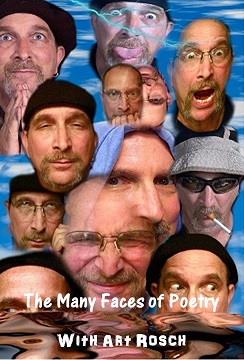
You can find this poem and many others in Feral Tenderness – A Poetry and Photography Collection by Arthur Rosch.

Buy Link: https://www.amazon.com/Feral-Tenderness-Arthur-Rosch-ebook/dp/B08VQGKKPZ/
____________________________________________________________________________________________________
Arthur Rosch is a novelist, musician, photographer and poet. His works are funny, memorable and often compelling. One reviewer said “He’s wicked and feisty, but when he gets you by the guts, he never lets go.” Listeners to his music have compared him to Frank Zappa, Tom Waits, Randy Newman or Mose Allison. These comparisons are flattering but deceptive. Rosch is a stylist, a complete original. His material ranges from sly wit to gripping political commentary.
Arthur was born in the heart of Illinois and grew up in the western suburbs of St. Louis. In his teens he discovered his creative potential while hoping to please a girl. Though she left the scene, Arthur’s creativity stayed behind. In his early twenties he moved to San Francisco and took part in the thriving arts scene. His first literary sale was to Playboy Magazine. The piece went on to receive Playboy’s “Best Story of the Year” award.
Arthur also has writing credits in Exquisite Corpse, Shutterbug, eDigital, and Cat Fancy Magazine. He has written five novels, a memoir and a large collection of poetry. His autobiographical novel, Confessions Of An Honest Man won the Honorable Mention award from Writer’s Digest in 2016.
More of his work can be found at www.artrosch.com
Photos at https://500px.com/p/artsdigiphoto?view=photos
________________________________________________________________________________________
Want to be sure not to miss any of Arthur’s “The Many Faces of Poetry” segments? Subscribe to Writing to be Read for e-mail notifications whenever new content is posted or follow WtbR on WordPress. If you find it interesting or just entertaining, please share.
Share this:

#Blogtour – Day 4 of the In the Silence of Words Three-Act Play Blog Tour
Posted: July 8, 2021 Filed under: Uncategorized Leave a commentDay 4 of the WordCrafter “In the Silence of Words” Book Blog Tour finds us over at Roberta Writes with a guest post by author Cendrine Marrouat. Join us and find out what attracts her about the play format and the poetry style that this play is based on.

Today I am delighted to host Cendrine Marrouat with her Three-Act Play, In the Silence of Words as part of her WordCrafter book blog tour.
You can read the other posts in the tour here:
‘In the Silence of Words’: A Behind-the-Scene Look by Cendrine Marrouat
When I started my artistic career in 2005, I knew I wanted to be more than just a poet.
Theatre has always fascinated me. I studied many plays in high school and at university. One of
the first things I realized is that theatre is an excellent genre to delve into difficult topics. The
best playwrights have mastered the “show, not tell” approach. They sprinkle clues everywhere
and force you to pay attention to details, so you can read between the lines and infer the overall
meaning when needed.
In 2006, I was in the…
View original post 964 more words
Share this:

Day 3 of the WordCrafter “In the Silence of Words” Book Blog Tour: My Review
Posted: July 7, 2021 Filed under: Blog Tour, Book Promotion, Book Review, Books, Plays, Review, WordCrafter Book Blog Tours | Tags: Book Review, Cendrine Marrouat, In the Silence of Words, Play, WordCrafter Book Blog Tours 8 Comments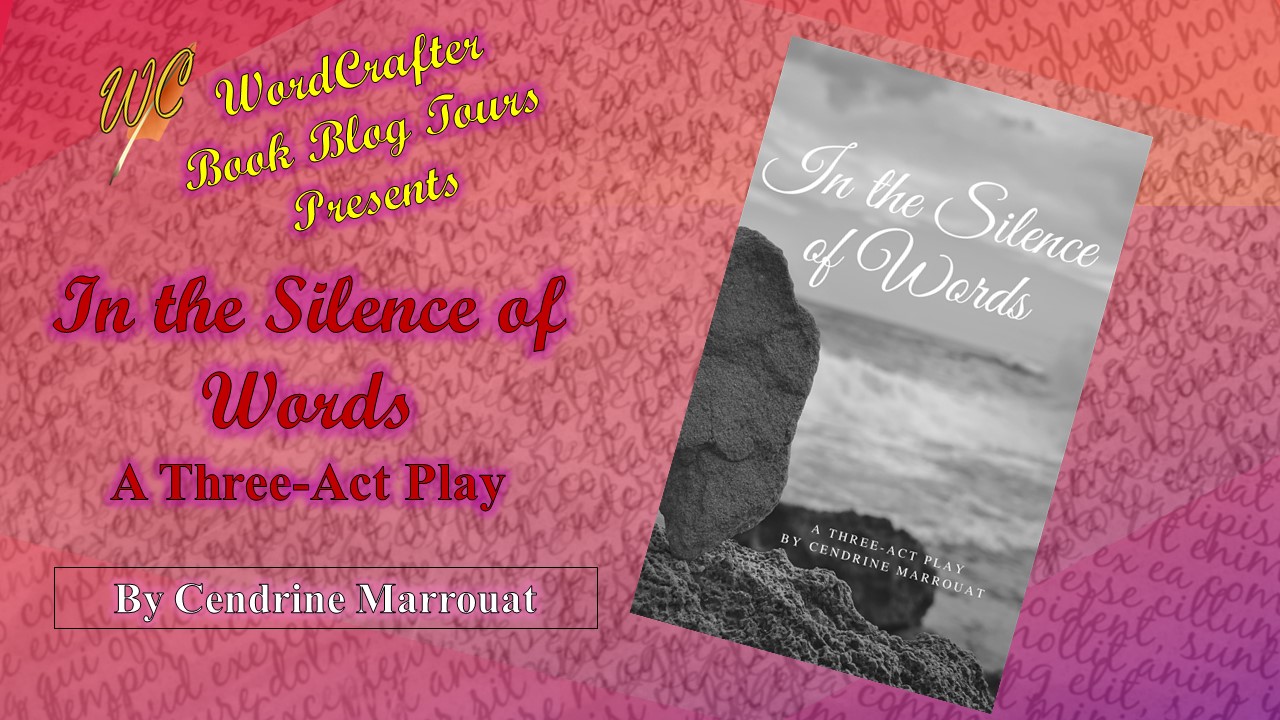
Thanks for joining us on Day 3 of the WordCrafter In the Silence of Words Book Blog Tour and my review of this thought provoking play. You can catch my interview with the creative mind of author Cendrine Marrouat for Day 1 here, on Writing to be Read, and Day 2 brought a guest post from the author on Robbie’s Inspiration about writing a play as a poet. Days 4 & 5 will also be guest posts, one on Roberta Writes, and then Zigler’s News will be finishing off the tour for us.
My Review
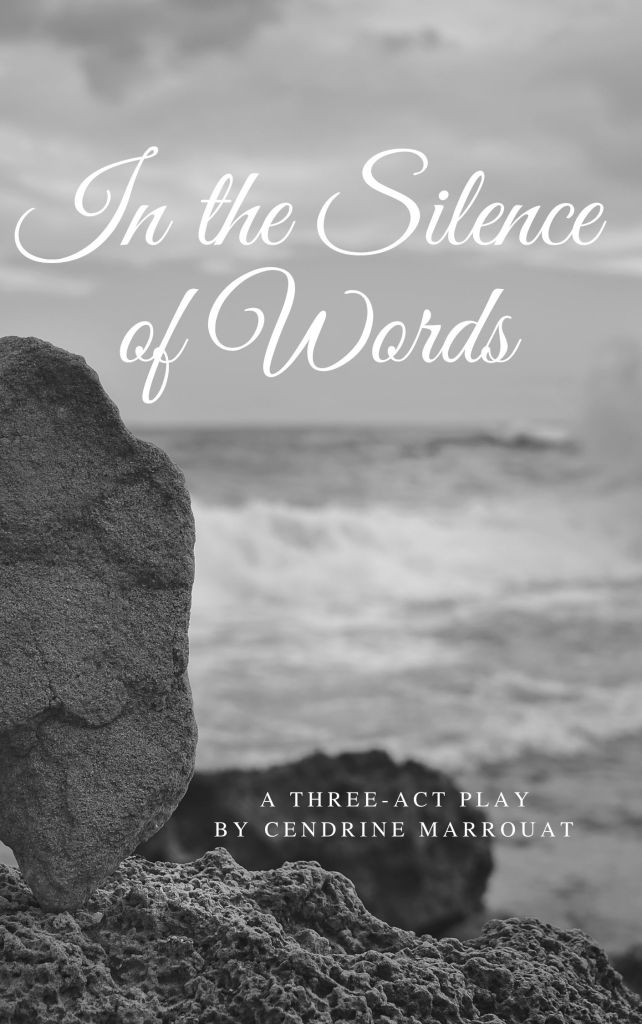
In the Silence of Words is a play which says much in what is left unsaid. The three dots… of more to come are left hanging time and again with unfinished thoughts that the reader is left to fill in on their own. But I think that is the point, because there is so much meaning in that which is left unspoken.
Through unspoken words, this play tackles several real life issues in a relatable manner that will touch readers, (or viewers), hearts – loss, self-sacrifice, searching for the self – these are life issues most of us have dealt with at one time or another in our own lives, giving rise to many opportunities for those “A-ha!” moments, when we can truly relate with Marrouat’s characters.
This play is well-crafted, with a thought provoking plot and relatable characters which move the story forward. I give In the Silence of Words five quills.

Buy Link: https://www.amazon.com/Silence-Words-Three-Act-Play-ebook/dp/B07BYT76VG
_________________________________________________________________________________
Book your WordCrafter Book Blog Tour today!
Share this:

#Blogtour – Day 2 of the In the Silence of Words Three-Act Play Blog Tour
Posted: July 6, 2021 Filed under: Uncategorized Leave a commentFor Day 2 of the WordCrafter “In the Silence of Words” Book Blog Tour, we are over at Robbie’s Inspiration with a guest post by author Cendrine Marrouat. Drop in to learn more about how the poet, Cendrine came to write this play.

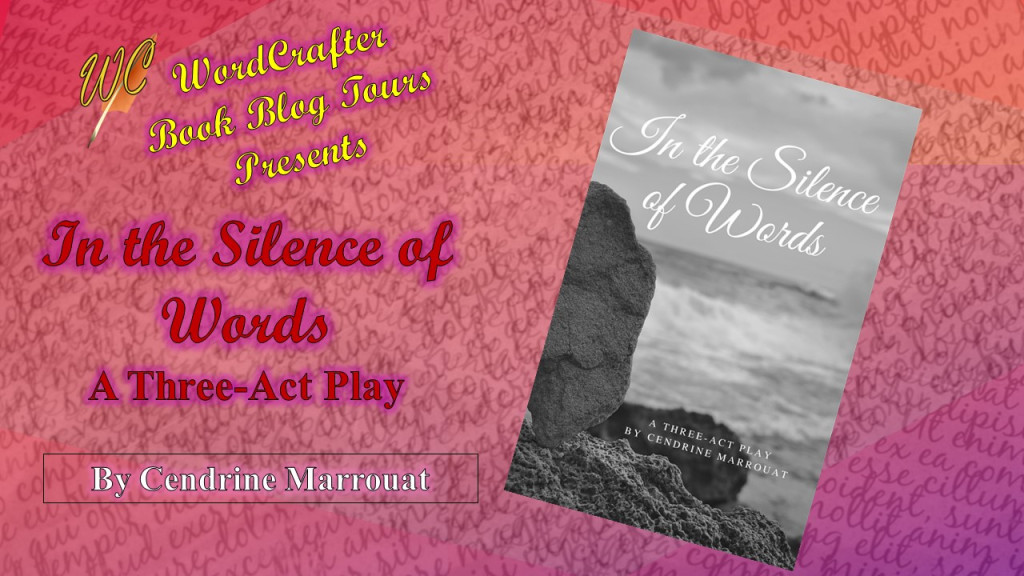
I am delighted to welcome Cendrine Marrouat to Robbie’s Inspiration with her new Three-Act Play, In the Silence of Words.
You can read Day 1 of this tour here: Writing to be Read
Writing a play as a poet
In the western world, we struggle to talk about death and depression. The stigma around mental illness is still very real. Overall, we have quite an unhealthy relationship with what scares us.
A little while after releasing Short Poetry for Those Who Fear Death (2006), I received an email from a reader who stated that the book had saved their life. It was an incredible comment, and I was very happy to know that my poems had been instrumental in helping them feel better.
To me, the event confirmed something that I had always known. The uniqueness of the poetic language allows it to be used to tackle heavy topics…
View original post 1,013 more words




















Mind Fields: I’m Confused
Posted: July 16, 2021 | Author: artrosch | Filed under: Commentary, Mind Fields | Tags: Arthur Rosch, Commentary, Internet, Mind Fields, Photography, Writing to be Read | 4 CommentsListen. A month ago I saw one of my bank statements and I saw that Adobe had been paid $119 in February. They’ve been getting the same $119 for five years. Uh? For what? Apparently I had signed on to an app for a one-time signing of a PDF contract. That was how Adobe got me. I’ve been paying 119 a year for that one-time signing. I should have seen it. I didn’t.
Software did it to me. Adobe. Photoshop and its minions, Lightroom and Lightroom Classic. Adobe has such a tight grip on the photo image market, it’s like an octopus with twenty four tentacles. I’ve been on fair terms with the awesome app for a long time. I’ve been using Photoshop CS5, which is about fifteen years old.
I figured that as long as I’ve paid Adobe through the years, I may as well install all the photo apps to which I am entitled. The latest Photoshop. The latest Lightroom, the latest Lightroom Classic.
Here’s where the confusion starts. There’s a guy on Youtube who looks like a Hindu version of Peter Lorre. His face is motionless, frozen into an amused smirk. He’s so good with Photoshop he just riffs with heavy duty stuff like “eliminating the background”. And he does it with a few clicks and brushes. Isn’t that fundamental with a thousand images you’ve taken? Wouldn’t it be great to have a tool that automatically erases the background?
That’s what’s happening now in Photoshop. It can do that! The Revolution has come! Not for me, not yet: I’m following Frozenface’s instructions and it’s not happening. That’s one aspect of Photoshop. There are hundreds of ways of doing the same thing. I follow FlatFace’s steps and I’m not erasing any background. I’m erasing the foreground. I WILL figure it out.
So I’m running two versions of Photoshop, I also have Lighroom, Lightroom Classic and Canon’s Digital Photo Pro. And all the Windows photo apps, all the Microsoft photo appos, all these image apps jumping in my face and saying “Use me! Use ME!” All these programs are supposed to run harmoniously together and shepherd my precious images towards their apotheosis.
I’m not comfortable with this stuff. I’m especially confused by the shift in terminology and the way “Save As” has become “Exports As” and now there are Collections instead of Folders. Folders had to give up their guts and ride the Adobe Train.
I’m lost and confused. I don’t know where my photos are any more. I don’t know how much duplication has happened and how much drive space these previews and previews of previews and preview previews for comparison photos, before and after, showing how many iterations of the same image exist.. Over and over again. Where they are. They’re on my computer. I can click and make an image appear. In fifteen different programs. Everyone loves photography. The internet is all about photography. And video, don’t forget video.
I think it must be okay. The people at Adobe are experts. They must have deep insight into the process of editing and transforming images or they wouldn’t be able to anticipate what photographers and graphic artists will need in the future. Even with the latest mega Terabyte solid state drives, space will always be a major consideration.
Hell yes I need a tool that can erase a background from an impromptu portrait snapshot. Hell yes. I just have to figure out the procedure. Right now I’m erasing the faces that I’m hoping to preserve. Maybe I need a better Youtube teacher than Mister SmirkFace.
It’s okay to be confused. Don’t let it alarm you. Ever since Walt Disney took control of this culture’s imagination things haven’t looked right. You never know when a set of whiskers will appear on the side of a woman’s face. Or dogs are fitted out as astronauts and interstellar explorers. Dogs, pigs, mice. Disney was a major zoophile. Things haven’t looked right for the last sixty years.
Where do archetypes end and stereotypes begin? Ask Walt Disney. Ask his ghost, I don’t care. He has a lot of ‘splainin’ to do.
I’m still confused. I expect to be less confused as I get familiar with this new software. OR…I’ll toss this shit and go back to Canon DP Pro, because it’s just easier.
__________________________________________________________________________________
Arthur Rosch is a novelist, musician, photographer and poet. His works are funny, memorable and often compelling. One reviewer said “He’s wicked and feisty, but when he gets you by the guts, he never lets go.” Listeners to his music have compared him to Frank Zappa, Tom Waits, Randy Newman or Mose Allison. These comparisons are flattering but deceptive. Rosch is a stylist, a complete original. His material ranges from sly wit to gripping political commentary.
Arthur was born in the heart of Illinois and grew up in the western suburbs of St. Louis. In his teens he discovered his creative potential while hoping to please a girl. Though she left the scene, Arthur’s creativity stayed behind.
In his early twenties he moved to San Francisco and took part in the thriving arts scene. His first literary sale was to Playboy Magazine. The piece went on to receive Playboy’s “Best Story of the Year” award.
Arthur also has writing credits in Exquisite Corpse, Shutterbug, eDigital, and Cat Fancy Magazine. He has written five novels, a memoir and a large collection of poetry. His autobiographical novel, Confessions Of An Honest Man won the Honorable Mention award from Writer’s Digest in 2016.
More of his work can be found at www.artrosch.com
Photos at https://500px.com/p/artsdigiphoto?view=photos
_________________________________________________________________________________
Want to be sure not to miss any of Arthur’s “Mind Fields” segments? Subscribe to Writing to be Read for e-mail notifications whenever new content is posted or follow WtbR on WordPress. If you find it interesting or just entertaining, please share.
Share this: