You’ll think twice about water after reading “Water Hazard”
Posted: October 11, 2010 Filed under: Book Review | Tags: Action, Adventure, Book Review, Tim Baker, Water Hazard 3 Comments Water Hazard, by Tim Baker takes readers on a ride as wild as any water slide. When twelve year old Justin and his buddy heist a collection of CDs from a car parked in a construction area, they don’t realize what treacherous waters they are treading into. Included in the collection, are a pair of encrypted discs that contain valuable information about an illegal water pumping operation, that mean big bucks for the owners, and they will stop at nothing, including kidnapping and murder, to get them back. When the boys sell the CDs to a local music store, owner Steve Warwick and his friend Ike are plunged into the eddy, and they are determined to bring down the whole operation with a splash. It seems that the villains in this story have just been dog paddling, in an attempt to swim with the big sharks, and you’ll have to laugh as Steve and Ike outsmart the bad guys time and time again, as they slip and slide through all the loops, and watch the bad guys as they belly flop. Water Hazard is filled with back flips and cannon balls that will keep you guessing as to who will sink and who will swim, in this hilarious adventure of high jinks and intrigue.
Share this:

“Reprisal! The Eagle Rises” gives readers something to think about
Posted: October 7, 2010 Filed under: Book Review | Tags: Books, Chris Keys, Reprisal!, Review Leave a comment Reprisal! The Eagle Rises, by Chris Keys is a thought provoking action thriller novel, as terrorist forces move to take control of the U.S. and ineffective politicians play right into their hands in a scenario that may be all too possible and too similar to reality for comfort. Keys gives readers a look at what might happen if a force with unlimited resources takes matters into their own hands and takes the action that the government either can’t or is unwilling to take. The politics of Reprisal! are eerily familiar, making one envision how easy it would be for a scenario such as this one to really happen. After reading this book you may even be just a little uneasy, for many of the circumstances reflected seem all too real. When the most recent terrorist attack kills members of General Chip Clarrett’s family, he decides to step down from his government post and climb on board Steven Howard ‘s Kilauea Corporation, and the fight becomes a personal. Can Kilauea Corporation stop the terrorist forces that are trying to infiltrate the U.S.? Can they really be more effective than government entities from around the world? Watch and see, as Kilauea forces swing into action and go after the terrorist cell that has recently wreaked havoc on their homeland. Reprisal! The Eagle Rises is action packed and filled with intrigue. Definitely a must read for action adventure fans.
Share this:

Where Does the Time Go?
Posted: September 30, 2010 Filed under: Writing Leave a commentWe’ve all had it happen at one time or another. You sit down to check your emails real quick, make a couple of replies, maybe respond to something that was posted on FaceBook, or one of the other social networks, before you get busy writing. Suddenly, you look up and realize that you have been sitting in front of your computer for two hours or more! You wonder how this happened. You just sat down to do a real quick check in, but now look how much time has passed; time that could have been spent writing (or doing something else productive).
This is a common occurrence at my house. Of course, the time gets away from me when I am actually writing, too. Often I will look up from whatever I am working on to realize that the rest of my household has gone to bed long ago. I vaguely remember saying good night to them. I find that I have written my way into the early morning hours without even realizing it. When I’m writing, I am lost in my own little world. When my husband calls us to supper and I respond, “Okay, just a minute.” His response is , “Are we talking about a real minute, or a computer minute?” Computer minutes stretch out to be a lot longer than real time minutes and he knows this. He knows it because of the many, many times that I have told him just a minute, and then left him waiting for hours, often until he is so frustrated that he is yelling at me to get off the damn computer, now! I look up, perplexed, because I don’t know why he is so upset. I just told him that I was coming…..uhhh….oh my, has it really been an hour?
It’s more frustrating when the activity that I’m caught up in, is something other than writing though. When I’m writing, at least I feel as if I am accomplishing something. But, I have learned that networking is important work, too. After all, how else is anyone going to even know my writing is out there? Networking is a lot more than just posting links. As a writer, you have to use social networking as a tool of your trade, for advertising your work and getting it out there for people to see, but also for making connections that will promote your career, and maybe some will even develop into genuine friendships. “What do friendships have to do with writing?” you ask. It is those friendships that cause people to care enough to want to follow the link that you posted or check out the story that you asked them to.
The real trick is, to divvy up your time, so that you can accomplish all the tasks that you need to accomplish and still have a life. Decide how much time you need to spend on networking each day, and then stick to it! Computers have clocks in the bottom right hand corner of the screen. Become a clock watcher and use it. When the time that you have allotted for networking is up, stop, and go on to the next task. Set goals for your writing, too. These can be timed goals, saying you will spend a certain number of hours writing, or they can be page or word counts that you want to meet. Whatever form they take, make sure that they are reasonable, and that they still allow time for the other things that are important in life, like family and friends. Do not set a goal for yourself of 100 pages a day, because that’s just not realistic. You won’t be able to meet it, and will just end up frustrated.
Your goals also need to be flexible, because let’s face it, things change. I have set my goals so many times, I can’t even begin to count, because my life situation had changed and the goals that I had set previously, were no longer realistic. I set new goals two weeks ago, and already events in my life have shifted, so that I need to adjust my goals accordingly once again. Don’t look at a resetting of your goals as a failure. It is just a matter of reprioritizing and knowing your limitations. When my husband was so sick, not too long ago, my priority was taking care of him, and I felt myself lucky if I got out one or two articles per day. I spent all my writing time concentrated on the articles that would actually bring in cash, because of all the time I had to miss from work. The articles and sites that I do because they grow my readership and I enjoy doing them got neglected. Fortunately, he is getting better, and I have been able to shift my priorities and get back to some of the fun stuff that makes writing my passion. Sometimes, making money has to be the priority, but if you let it overshadow everything else, you can get burnt out, even on something that you are passionate about.
So, my advice today is to set flexible goals that are realistic for your life circumstances. Allow time for writing and promotion, but be sure to set aside time for the other things that are important, and don’t let time get away from you. Know the difference between a computer minute and a real one, and keep track of the real ones to eliminate a good portion of stress from your life. No matter what, never lose sight of your writing goals and always keep your priorities straight.
Share this:

“Why Did This Happen to Me, Aunt Lou?” Inspires and Delights
Posted: September 16, 2010 Filed under: Children's Books 2 CommentsWhy Did This Happen to Me, Aunt Lou? ,by Rachel Jeanette Hall Stolle is a beau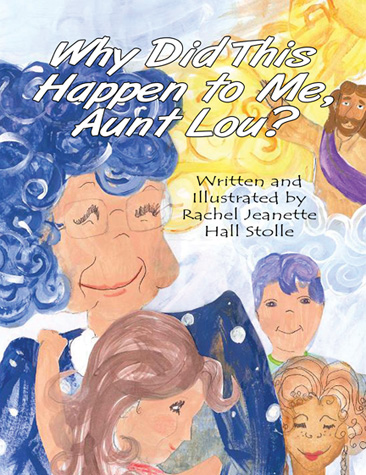 tifully illustrated children’s book, that deals with a difficult question that we all ask at one time or another. Who hasn’t wondered why bad things happen to them? Why some people just seem to be downright mean? Although this book doesn’t provide a clear cut answer to a question that really has no answer, it does discuss how we can turn to God for comfort and strength, through the voice of Aunt Lou, a character based on a special person in Rachel’s life, Louise Ritchie. The book is written in language and manner that is easily understandable by children big and small, and the author’s faith shines through clearly. It is a wonderfully inspiring book that applies to everyone, not just children. It includes helpful Bible verses for reference, and delightful illustrations that were created with the author’s own hand, provide a wonderful lesson in faith.
Share this:

“The Midnight Ride of Blackwell Station” is delightfully entertaining for all ages – Colorado Springs literature | Examiner.com
Posted: September 13, 2010 Filed under: Book Review Leave a commentShare this:

Comments are a Girl’s Best Friend
Posted: August 30, 2010 Filed under: Writing | Tags: Networking, promotion, Writing 2 CommentsOh, I know that it’s supposed to be diamonds, but as a writer, in today’s self-promoting market, comments are my diamonds. Every writer has heard the advice given to write for your readers, but how do we do that without knowing who are readers are? As writers, we need feedback to determine if what we have said has value to our readers, or if we have totally missed the mark. Reader comments serve as that feedback, and let us know that what we have written is actually being read. It is a wonderful feeling to know that someone has taken the time to read what we have worked so hard to produce, even if the feedback is negative. Of course, there are other ways to express appreciation when you read something that you like, such as the “Like” buttons on Facebook and LinkedIn, or by “sharing” on any of the social networks, or “Tweeting” it on Twitter, but the author doesn’t always get to know about these gestures. That doesn’t mean they are not appreciated by the writer, but we get to see comments and reply, when appropriate.
Every site that I publish on has a place for comments, but for some reason, I get relatively few. I don’t know if no one is reading my work, or if I’m just boring my readers to death! When this blog was on Today.com, I received comments that let me know if I should publish similar types of posts or take the blog in a different direction. Since I moved the blog to WordPress, I haven’t experienced such good fortune. However, it isn’t just here on this site. Readers of my Southern Colorado Literature Examiner page and on Hubpages have remained silent lately, as have the readers of the articles, stories and poetry that I have published through Triond, which have individual URLs. On the Examiner site, comments serve another purpose, as well. Examiner uses comments as one of the criteria to determine how much I get paid per viewing of my page, along with the number of subscribers and the quality of my readers, (which I am not sure how they determine).
I am aware of the value of comments, so I try to read blogs that I particularly like as often as possible, and I comment frequently. Many of my author friends can tell you that this is true, because some of them have some really great writing blogs, which I also subscribe to, including: Earth, Air, Fire and Ink – by Buena Vista memoirist, Maria Weber; A Writer Afoot – by Colorado Springs author, Barbara O’Neal; Walking Nature Home – by Salida author, Susan J. Tweit; Beth Groundwater’s blogspot – by Colorado Springs mystery author, Beth Groundwater; Blog of Fascination – by a very unique author, Art Rosch; The Writing Bug – by Northern Colorado Writers members, Kerrie Flanagan, Trai Cartwright, Jennifer Carter, Jenny Sunstedt, and Brooke Favero; The Urban Muse – by freelance writer, Susan Johnston; and Writer Unboxed – a blog about the business and craft of writing genre fiction that has made the Writer’s Digest “101 Best Websites for Writers” for four years running.
So, readers, while you are here, ( or when visiting any of my other sites), please take the time to post a comment to let me know if my writing has interested you, moved you or put you t o sleep. Note that both this site and my Examiner site have the option of subscribing to email, so that you are notified by email each time that I publish. It doesn’t cost anything, and is a small gesture that will let me know that you like what I write. Comments and/or subscriptions at any of my sites will be greatly appreciated. They will help me determine what types of writing I should publish in the future and it’s a lot cheaper than diamonds.
Share this:

Storyline in “The Truth Comes Out” keeps readers guessing – Colorado Springs literature
Posted: August 28, 2010 Filed under: Book Review Leave a commentStoryline in “The Truth Comes Out” keeps readers guessing – Colorado Springs literature.
Share this:

The Painful Process of Revision
Posted: August 12, 2010 Filed under: Children's Books, Writing | Tags: Children's Books, Revision, Writing Leave a comment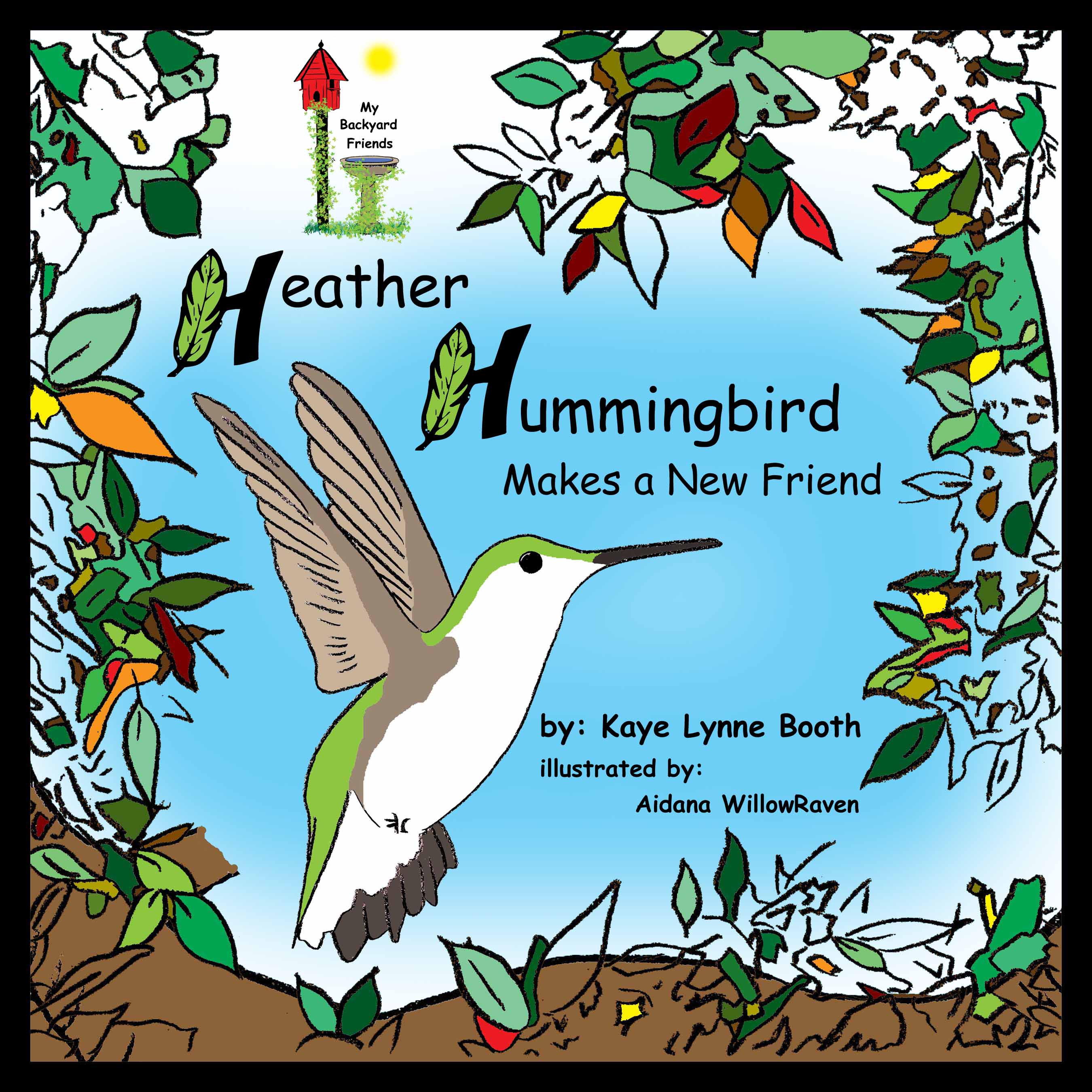
Illustrations by Aidana Willowraven
The good news is that I may finally have a publisher that is interested in my children’s book, Heather Hummingbird Makes a New Friend. The bad news, well I guess maybe it’s not that bad, is that the publisher liked the story and the concept, but she requested a rewrite. She sent me a set of general guidelines for children’s writing, that was basically grammar and punctuation rules, with the advice to “make every word count”, and a section that cautioned against using talking animals in your stories.
The My Backyard Friends series, of which Heather Hummingbird is only the first, is based on animals, mostly birds, but these are the characters. Was I supposed to rewrite the whole story and change all the characters into people? That would undermine the whole story concept of My Backyard Friends. I mean, the series is about the birds that are in my backyard, not the people that hang out there. Without the birds, there really are no stories. I pondered this, but finally decided they must be referring to animals that talk to people, which isn’t realistic and might be hard for kids, who are really smart, to buy. In my stories, all of the characters are animals, so this warning didn’t apply to my stories at all. Okay, that problem was taken care of, but I still wasn’t sure what I should change in my rewrite.
The next problem that I could see was one that I am sure a lot of writers are faced with. Here is this story that I wrote, edited and rewrote before ever sending it out anywhere. I thought it was already as perfect as it could get. How could I improve on perfection? The publisher wasn’t very specific about what she was looking for in the rewrite either. Hmmm….. Okay, so I sat down and gave the whole story a re-read. It had been awhile since I went over this one, so maybe I could get a fresh perspective on it. I found a few places where the wording could be changed a little, and I corrected a few spelling and grammar errors, and changed the punctuation in a couple places. It was only what you would call minor corrections, not enough to even be considered a rewrite.
A friend of mine, who is a writing coach looked at it, and made a few suggestions. She thought that it should be about 500-700 words for a picture book. We’re talking about a story that was running around 1,700 words! Shouldn’t be too hard to drop 1000 words or so, right? Ha! I went over it, and over it, and then over it again. This story had originally been written with a poet’s heart. Poets love to play with the sound of the words. “Heather Hummingbird was busily flitting from flower to flower, when she came upon Ethan Eagle, perched in the top of a very tall tree.” You can hear the sing-song quality that is pleasing to the ear and sort of rolls off the palette . Eventually, this opening phrase became, “Heather Hummingbird zipped from flower to flower. She came upon Ethan Eagle, perched in the top of a tall tree.” It’s much tighter writing, to be sure, but that lilting, poetic quality just isn’t there anymore. This really did hurt, because one of the things that I had really liked about the story was the way it sounded as I read it. I took the whole story went through this same basic process, with essentially the same results throughout. I still had 1, 269 words.
So, I took it to an editor friend, who helped me make some more cuts. She too, hated to cut any of it, because most cuts at this point would take away from the story. I mean, this thing was down to the nitty gritty. It was the same thing that I had been thinking, but she expressed it for me. So we tried to find ways that the story could be cut without losing vital pieces. We got it down to 1,242 after much painful deliberation.
I feared that I would cut so much that my illustrator would have to redo some of the illustrations that were already completed. I mean, she had even had mugs and magnets designed with that original opening line, which I thought was a very clever marketing device. Were the changes I was making going to mess up the illustrations? Would it cost me more if she had to redo some of them? I didn’t think that I had changed it so much that they would all have to be redone, but it worried me none the less.
My friend asked about my audience that I was aiming at. I was stumped. I didn’t set out to write for any one particular age group. I got an idea and just sat down and wrote the story. I hadn’t thought about how old the kids who read it would be. I know they tell you in all the writing courses and workshops to take the audience into consideration, but that just wasn’t how it had worked for me. She suggested that perhaps I was aiming for a higher age group, and this wasn’t a picture book at all. She pointed out some of the words that I had used that might be above the preschool/kindergarten age comprehension. Her point was a valid one. Would a kindergartener know what a mountain “crag” was? She suggested that if I were writing for a slightly higher age group, the word count wouldn’t have to be so low. 1,242 words is not bad for a book aimed at this age group, and some of the vocabulary suggested that the book would be more appropriate for a first or second grader. She was brilliant!
So, that is how I resolved my revision dilemmas. I took it home and did one last rewrite. It was still a very painful process, although I am sure that it is a better story for all the changes. I sent it back to the publisher, hoping that I had been able to do what she wanted, but still unsure. Now I wait to hear back and find out if she accepts it. Am I happy with what I ended up with? Is it still the story that I had intended? I suppose that it is, basically. I don’t think that it is as fun to read anymore, but perhaps it is better writing, even so. I learned some valuable lessons from the experience. Now I know why authors dread the revision process. I can’t even imagine doing what I did to this little story, with a full length book. It is a time consuming and heart wrenching process. On the other hand, I am a writer, so I hope with all my heart that someday I will have the chance to be faced with that chore. So, cross your fingers and wish me luck. The waiting is almost harder than the cutting was. Almost…, but not quite. I think I’ll wait awhile before I take another look at the other books in the series. The next book in the series,Charlie Chickadee Finds a New Home is about twice as long as Heather was. Ugh!
Share this:

Now I am Ready to be a Memoirist – Well, . . . Maybe
Posted: July 26, 2010 Filed under: Memoir, Writing | Tags: Creative Fiction, Memoir, Workshop, Writing Leave a commentYesterday, I attended the final workshop in the Writing Your Life: Crafting Creative Non-Fiction and Memoir from Life Experience workshop in Salida, Colorado. Presented by New York writer, Alex Van Ark, this workshop was really a great experience. I chose to attend this workshop for two reasons: the main one being that I have started a memoir about the life of my son, Michael, and the bond that he and I shared; and the workshop was free, so it fit into my budget quite well. Although I was unable to attend the first of the three Sunday afternoon workshop sessions, the two that I did attend taught me a lot about my own writing. Now I sit here, chewing on an English muffin, reflecting on what I really got from this workshop:
Through a series of writing exercises, Alex showed us all how to write more factually, by writing with only nouns and verbs, thus eliminating all opinions. This is more difficult than it sounds, believe me. Using this method though, you can create a picture that is much more clear and concise, (and it also seemed to cut down on run-on sentences, but maybe that was just me). It is amazing how much we tend to interject our own impressions and biases into our writing, and while this is not necessarily a bad thing, the exercises showed us how those same impressions can be portrayed through the action in the scene being described, so that readers can reach their own conclusions. While you can say that a character was not a good mother, but it is much more effective to show the ways in which she was not good. For example,
“More often than not, she would promise her boys that she would
be there for Christmas and then never show up, making up
some excuse, maybe car trouble or some fictional emergency
that didn’t really make sense, but would be believable enough for
two young boys who needed to have faith in their mother. She
would promise to send the presents, then, claim that she had to
move, and the presents were in storage, so she couldn’t get to
them, or claim that they must be lost in the mail. Sometimes
they would arrive in March, or May, with price tags still
attached, but sometimes they would never come at all. One
of her favorite tricks was to ask, “Didn’t you receive the card
that I sent?”, knowing full well they hadn’t. There never was a
card. She would claim that there was money in it and their
father must have stolen it, when they said that they had not
gotten it, with tears in their eyes.”
When you read this piece of writing, you can easily imagine how disappointed her children must have been, over and over, and most people reading this would come to the conclusion on their own that this woman was not a good mother. Moreover, this is much more powerful than simply stating that she was not a good mother. Readers may or may not believe it just because you say it, but they believe it after reading the passage about how she disappointed her children, because they came to the conclusion themselves and her actions leave no question as to the matter.
We also talked about how not to get sued when writing memoir and including real people and places. You can change the names, or use titles in place of names, or have the real life people sign clearance forms, giving permission for you to write about them, or you can turn the whole thing into creative fiction. Even with clearance forms, people can come back on you if they don’t like the way that their character is portrayed. In my case, many of the people involved, especially those associated with his death, would probably not be very open to giving clearance anyway, so I will have to come up with another solution.
The other thing that I learned was how to use archetypes to create my characters. Combining different types of characters creates diversity and adds conflict to the story. One exercise had us pick an archetype and write a description, using behavioral examples, of course, the reading our descriptions to see if the other workshop participants could identify the archetype. Another writing exercise involved having two archetypes interact. I think that by placing characters into an archetypal mold, it allows the character to be more rounded, while remaining focused. I found both exercises to be very interesting and helpful, as character portrayal can be a very difficult thing for me.
The last session, yesterday, was a Cowboy Story Hour, where each of us did a reading of some of our work. I chose three pieces, two of which were poetry. I had been fortunate enough to attend a Poetry Performance Reading with Rosemary Wahtola-Trommer, of Telluride, (The Word Woman), whose reading was vibrant and filled with energy. I couldn’t hope to do a reading even close to that quality, but I tried to keep her in my mind and emulate her, as I stood before the other workshop participants and did my first reading ever. I tried to read slowly and pause in all the right places to give the proper inflection of my words. I probably should have selected different pieces, as the ones I chose were maybe too personal, and I can’t even read them to myself, without choking back tears. My fellow workshoppers were very gracious though and gave me a nice round of applause, even though they may not have understood the last lines through my tears. It was scary to walk up there to read my work, but I think I did okay, and I definitely lived through it. I know because I couldn’t have heard all the other readings if I were not alive following my own. The talent of all those in the room was just amazing, with readings that carried us all over the world, to places that I had never been before, but never the less, made me feel as if I were really there. That was the best part: all of the great writers that I met there.
The facilitator, Alex Van Ark, was just a wonderful guy, who had the ability to draw on your hidden talent with his exercises, which aside from their learning value, were also quite fun. He was easy to talk to and he never asked us to do anything that he did not do himself. He did a writing of his own for each exercise, and then read what he had come up with, right along with the participants. He is a very talented writer, as are many who attended. All in all, it was a wonderful experience that I very much enjoyed. I am looking forward to Alex’s promised return next year and plan to attend his workshop again. It will be interesting to see how my memoir has developed over the year.
Share this:

The Basics of Marketing Your Book
Posted: July 13, 2010 Filed under: Promotion, Writing | Tags: Books, marketing, Writing 2 CommentsLast week my friend and fellow author, Chris Keys gave us a guest blog post on the basics of marketing your book, filled with so much information that it had to be broken into two parts. This week I bring you the second part of that post from a modest guy, that doesn’t give himself near enough credit as a writer, or as a marketing professional. So here is the rest of his excellent advice on how to sell that book and I thank him kindly for sharing it with us.
The Basics of Marketing Your Book (Part 2)
by Chris Keys-Author of The Fishing Trip-A Ghost Story and Reprisal! The Eagle Rises!
You will next need to develop your own website. Yep, you need a website. It’s not as hard as it seems. There are several free website building sites and many, when they do charge for hosting are very inexpensive. Mine currently is only five dollars a month. I’m using Intuit-Homestead.com.
There are dos and don’ts, to having a website. A few of the major things to keep in mind: Your website needs to be user friendly and it needs ask the reader to buy your book(s), blog collections and /or your branded collectables. Yes, your website will be your book store, where you’ll sell your books and maybe posters, coffee cups, ball caps, pen sets etc. plus you’ll post excerpts from your books, info about yourself, maybe links with other authors and ads from Google and Yahoo to help pay for your host fees.
There are going to be some expenses in promoting yourself and your book for things like travel to book signings, book trailer video, book marks with your info, picture, book title and or other info you see fit to put on it, editing, book covers and listings on the right lists to insure that your book(s) are available to libraries and the major booksellers.
Now some of these costs you’ll avoid if you are lucky enough to get a traditional publishing contract, but if your like the vast majority of us new writers, you’ll be self publishing until you develop enough of a following to ensure a strong likelihood that the publishers will make money off your book. By then though, you may not want to be with a publisher who is only willing to pay you 20% of the profit when you can get 85% of the profit when self publishing. Just a little something to remember as your writing career develops.
You’ll also want to learn all you can about virtual book tours, developing links with other authors by helping to promote them with blurbs about them and their books. Most of the other authors will gladly trade blurbs, which helps both of you. You need to develop friendly relationships with as many other authors as possible. Your success, as well as theirs, is dependent upon getting as many other people talking about you and your work as possible. Don’t worry if the other authors are new or old pro’s, because you never know who someone else knows, and who they might introduce to your writing, and where that might go.
I’ve mentioned a number of things so far and none of it is too taxing on your time or your wallet, but you still have couple of things to do. The last clear marketing item you need to be aware of needing to do, is also the first thing that you need to do — ask for the sale! Ask on your blog, on your website, on your book marks, your book covers your email, your social interaction sites, everywhere. If you don’t ask, you won’t get. There are a few ways to ask for the sale, and it takes a mix of the methods to be successful in making the sale. Those ways are, directly, indirectly and the stealth way. To be honest, the stealth way is part of the indirect way. The direct way is when you come out and just ask some to buy your book. You know, “Hey, you should buy my book.” The indirect way is showing the picture of your book cover with a note about how you can use pay pal to buy it. The stealth way is showing a picture of your book cover and have a person reading it with a big smile on their face. You don’t actually ask them to buy it, but infer they will be happy if they do. Which if you have really good vision, that’s exactly what I’m doing in the background of this very page. There is a good looking man or woman, which ever works for you and their reading my newest story, The Fishing Trip-A Ghost Story and they’re wearing a great big smile. Well ok that’s not quite true, well actually it’s a lie but you get the general idea right?
So now you have the very basics for developing your self promotion and marketing plan, destined to make you a household name and get your books read by the largest possible number of readers, except for the actual book itself. When you get ready to publish, you need to be sure you are offering the very best possible product you can. Make sure you have had the work professionally edited, that the cover art is very professional, that the books layout is crisp clean and easy to read and that story itself is one that’s worth while for someone other than you to read. Five hundred pages about how your pet frog likes to eat fruit flies, instead of house flies just won’t draw as many readers as a rags to riches story of a handicapped individual who overcomes impossible odds to become the President, and then the U.N.’s leader, when all hostilities ended between Arabs and Israelis. If the work you’re selling isn’t very well written, or the story isn’t compelling, then at best you’ll only sell a few copies even if you have the absolute greatest marketing campaign ever conceived. The word of mouth of how bad it is will kill it. Unless of course that’s the niche you’re trying to fill, then maybe by telling people it’s so bad they need to read it, just might be the best way to market it.
Thanks for enduring, Chris Keys the author of Reprisal! The Eagle Rises!, The Fishing Trip-A Ghost Story and The Motor Home-God Does Work in Mysterious Ways! Look for all three books this summer as Ebooks and POD’s. Follow Chris on Blogspot, Facebook and Twitter, as well as, Writer’s World.
Books are what is meant to fill the space between your ears! You should read one or all of mine!