Dreams come true in unexpected ways in Tim Baker’s “Living The Dream”.
Posted: February 19, 2012 Filed under: Uncategorized | Tags: Book Review, Living the Dream, Tim Baker 4 Comments
Living The Dream, by Tim Baker
In Tim Baker’s first novel, Living The Dream, Kurt, a down and out plumber’s helper; Jimmy, a dishonest businessman, who is up to his ears in cheating and embezzlement; Vicky, a disheartened wife; and Danny, an easy going dive shop owner all have two things in common: they’re all having some very strange dreams and they all feel that somehow, their dreams will come true. Kurt’s dreams lead him on a very rough ride to the Florida coast to carry out a get rich quick scheme that is not even fully developed in his mind. Jimmy thinks that his dreams are telling him that the walls are closing in around him and it’s time to break away and start a new life. Vicky is dreaming of a handsome mystery man, who is everything her husband is not. Danny is dreaming of a mysterious woman, the girl of his dreams, so to speak, and he is following clues from his dreams to find her.
Their dreams do, in fact, come true, but not in the same ways as each one envisions, as they are all drawn together by circumstance, while trying to sort through the craziness of their individual dream worlds. When their lives unwittingly intermix, it is an ending for some of them and a new beginning for others, but one thing is certain. They never dreamed that it would be like this.
Readers will never be bored while reading this comical race to riches, where nothing is at it appears. No one is truly in control, although they all think that they are. It’s hard to tell the guys from the bad, at times, and you may be surprised who ends up winners in this truly entertaining tale, as they all search for riches and happiness.
You can find Living The Dream and other books by Tim Baker at Blindogg Books
Share this:

Today Editing is More Important than Ever
Posted: February 11, 2012 Filed under: Uncategorized Leave a comment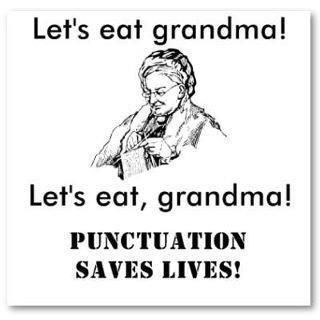
In today’s writing market, just about anyone can become a published author, if they are willing to pay the price. This is a double-edged sword, because although authors are no longer forced to be faced with countless rejections before finally receiving that long awaited acceptance by a publisher, but it also means that you don’t have to actually write well to be published. While I have reviewed many independently published books that are, indeed quality works of literature, I have also reviewed several that have appeared as if the author either hasn’t bothered with the editing process at all, or tried to do the editing themselves and didn’t have the proper skills to do it properly. Nothing ruins a good story as quickly as having to muddle through a poorly written work that is full of grammar and punctuation errors.
Don’t misunderstand me. There are many talented authors out there that publish independently, such as Chris Keys and Tim Baker, whose books I have reviewed here. I did a profile of Tim Baker in my post “Author Tim Baker recommends publishing independently“, because I feel that his books are examples of quality writing. Tim emphasizes the amount of work involved when publishing independently, due to the fact that you do not have the vast resources of a publishing powerhouse at your fingertips. When you choose to publish independently, the preparation for publication, as well as the marketing is all up to the author.
While traditional publishing houses provide editors to help writers make their work the absolute best that it can be, independent authors must spend more of their hard earned money, over and above the publishing costs, to have their work edited. In his article, “The Three Types of Editing: Which Does Your Manuscript Need?”, Yahoo contributor Steve Thompson gives a good definition of the differences between the three types of editing that one might require when preparing a manuscript for publication: basic editing, which is giving the manuscript a proofread, or run through to check for spelling grammar and punctuation errors; line editing, which goes more in depth to check plot structure, syntax, character development and factual errors; and substantive editing, which goes beyond that and involves reworking major pieces of the manuscript . Most editing services offer all of these types of editing for various prices, including my own, Write It Right Editing Services, found at Kaye’s Literary Corner.
If you are trying to get picked up by traditional publishers, you may have feedback from previous rejections to clue you in to what type of editing your manuscript requires, but if you plan to publish independently, it is up to you to determine what type of editing your manuscript needs. Even if you are a proficient speller and have a working knowledge of grammar and punctuation, I caution you against doing even basic editing, which is basically proofreading yourself for one simple reason. An author knows what a sentence or paragraph was meant to say and often, when rereading the work, will see what was meant instead of what is actually there, therefore missing many mistakes that someone else might pick up on. Independent authors owe it to their readers to make their manuscripts the best that they can be. They owe it to themselves, as well, for a book that has been published without the proper preparation shows, and will end up being a book that doesn’t sell. If you are going to spend the money to publish independently, it just makes sense to go the extra mile and have your manuscript professionally edited, so you have a chance of making your investment back on book profits.
Share this:

“No Good Deed” Keeps Readers Guessing
Posted: January 16, 2012 Filed under: Book Review, Uncategorized | Tags: Books, No, Reviews, Tim Baker 4 Comments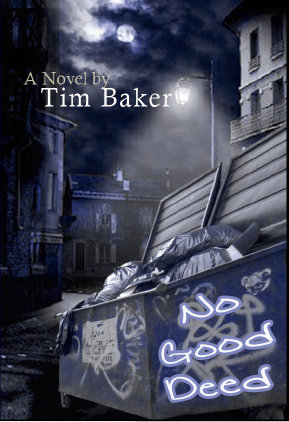 A large sum of mob money is suddenly up for grabs in “No Good Deed”, by Tim Baker. Nobody knows where it is, but everyone is trying to find it. A betrayed girlfriend whose looking for answers, two wise guys who haven’t got a clue, a grounds maintenance worker out for a piece of the big pie, and a guy who is down on his luck and sees an opportunity to turn his life around are thrown together by some unanticipated circumstances. No one is who or what they seem to be and wrong assumptions lead to mayhem in a race to get the cash. Kurt is looking for a respectable life and someone to share it with, but what he gets is trouble around every turn. Candy is looking for answers as to why her boyfriend would plan a new life that didn’t seem to include her, unwittingly placing her own life in danger. Al is looking to regain the life that he lost any way that he can. Howard is just looking for some easy money, but unknowingly sets all of them up for an enormous fall. Not until the battle is over, will readers know who will come out on top, and who won’t come out at all. “No Good Deed” is a truly entertaining story that will keep readers turning the pages just to find out what will happen next.
Share this:

Readers Get a Wild Ride in “Backseat to Justice”
Posted: January 7, 2012 Filed under: Uncategorized 3 Comments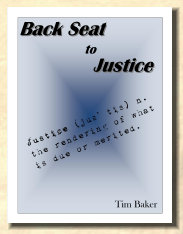 Fasten your seatbelt when you pick up Backseat to Justice, by Tim Baker. When a simple surveillance of a cheating husband turns into a murder investigation for private investigator Steve Salem, readers are faced with more twists and turns than a roller coaster ride. As Salem follows the leads, he rattles more than a few cages and finds himself being chased as well as chasing suspects. It’s hard to tell the good guys from the bad guys as Salem finds the clues leading to some surprising conclusion. There’s more to the story than meets the eye, for just when it seems that the murder is solved, his client is kidnapped. The fun has just begun for Salem and his friends, who set up a sting operation to catch the bad guy. Murders, kidnapping, money laundering, and even dog fights will not go unpunished when Steve Salem is dishing out a Backseat to Justice. Readers will be well entertained by this fast moving story. 50% of all profits from this book will be donated to the non-profit organization, “Golden Hugs Rescue, Inc.”, by author Tim Baker, to help find loving homes for orphaned Golden Retrievers.
Share this:

Readers strike it rich with “Rescue in Poverty Gulch”
Posted: January 3, 2012 Filed under: Uncategorized 2 Comments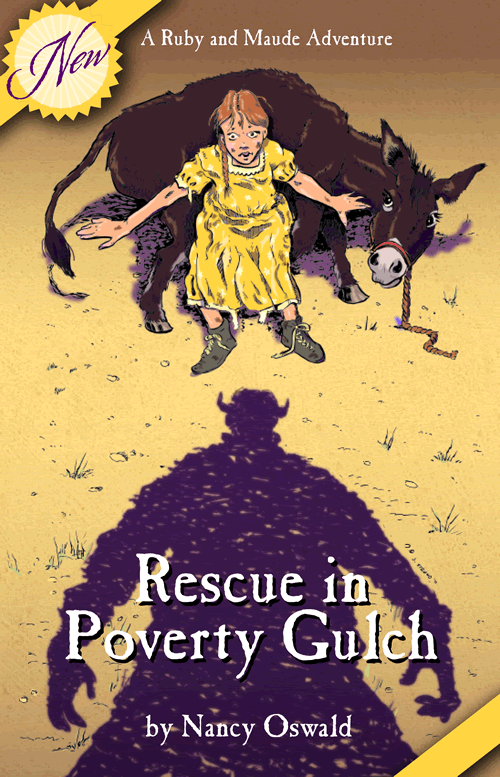 Rescue in Poverty Gulch, by Cotopaxi author Nancy Oswald is a delightful trip back to Cripple Creek, Colorado in the 1890’s with eleven year old Ruby Oliver and her loveable, ice cream loving donkey, Maude. All of her life Ruby has traveled with her father, wandering the mountainous Colorado wilderness until they came to Cripple Creek, where they must settle a spell. Ruby is enrolled in school for the first time ever, setting off a chain of events that has Ruby in trouble every time she blinks and has readers chuckling at the precarious situations that she and Maude find themselves in. When real trouble strikes, Ruby proves that she has grown up courage and love that knows no bounds. This is one story that will keep readers, young and old smiling all the way through.
Share this:

Reading Like a Writer
Posted: December 15, 2011 Filed under: Uncategorized Leave a commentOne of the pieces of advice most often offered by writers and authors to those trying to break into print is that writers must first be readers. Good advice, to be sure. Most of us started out as avid readers, and through books we gained an appreciation for the written word, which is what made us aspire to be writers in the first place.
At some point however, the way that writers read changes and reading for pleasure and entertainment may fade, and we may find ourselves reading more critically. We start noticing writing style, word choice, character development, story lines and plots. It’s not that we no longer derive pleasure from reading a good story, but now we think more about the creative process, and these things just seem to jump out and grab our attention. It may be that the dialog rings so true that we long to emulate it in our own writing, or perhaps an ending is so totally sappy that it spoils an otherwise great story.
This change occurs because when we read like writers, we learn from other authors; both their successes and their mistakes. For example, in Patricia Cornwell’s The Book of the Dead, halfway through the book I found that although the story line was compelling, I wasn’t really invested in the characters. As I continued to read, I found myself analyzing this further. Most of Cornwell’s characters in this series are independently wealthy and act rather pompous. Most people that I know do not possess either of these qualities and so to have a group of them, who seem to take being well off for granted does not ring true for me. The only character that I could really identify with was Marino, who is portrayed an emotionally messed up puppy dog, who has followed Scarpetta around for years harboring feelings for her that he conceals because he knows that she has a thing going with Benton. He seems to always be hurt because she doesn’t look at him as her equal, let alone a prospective lover, which makes him look rather foolish from the third person’s, or reader’s POV. Even though I have read other books in the series and I have some idea of what brought the characters to this point in time in the story, Cornwell was unable to interest me enough to really care about them, because they just didn’t seem realistic to me.
In comparison, the works of Anne Rice such as The Vampire Chronicles series holds characters that stand on their own merit and one doesn’t have to know what came before in the series to be invested in them. Whether Lestat is in the spotlight, where he most likes to be, as the hero or the villain, the reader still cheers him on and cares about what happens next. When the story is over, we want to know more about his exploits and he becomes almost like an old friend. And who could not fall in love with kind and mild mannered Louis, who fights against what he is so desperately, even though he is only featured in the first book. In fact, throughout her entire vampire series, Rice allows you to know many of her characters intimately, and she keeps the readers coming back for more.
It doesn’t take a genius to figure out which author I would rather emulate in my own work. Obviously, I want to create characters that are rich rather than shallow. The point here is that these differences are what I notice now when I’m reading. Dialog that doesn’t sound realistic makes me stop and say to myself, “Who says that?”; improper punctuation makes me pause; misspelled or missing words cause me to stumble on the text. These things never seemed to happen when I was just a reader. I’m not complaining though. I could never have become an editor if I didn’t read like a writer.
Share this:

The Process Takes Time
Posted: January 2, 2011 Filed under: Uncategorized | Tags: Children's Books, Publishing, Writing 6 Comments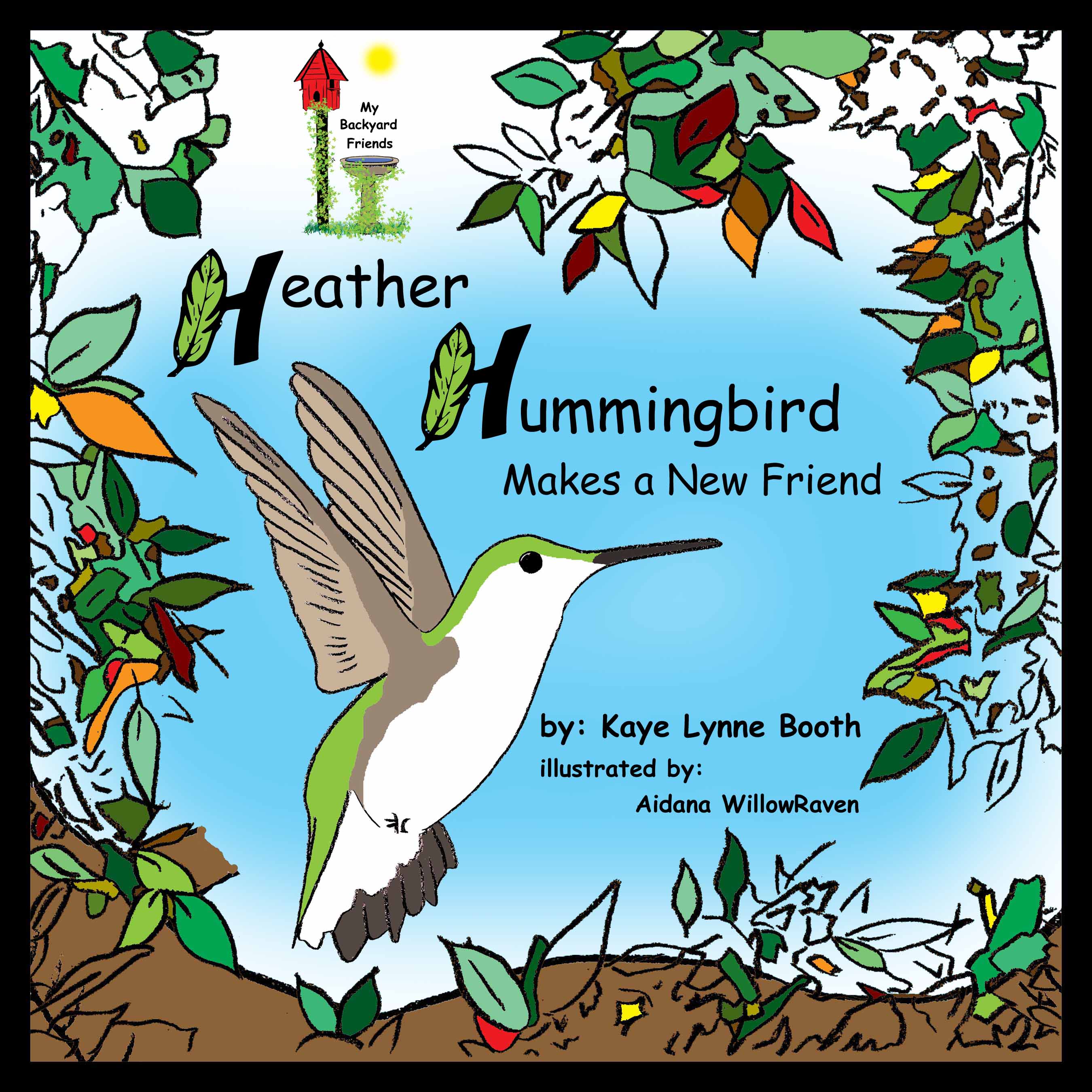 I signed the contract for Heather Hummingbird Makes a New Friend last month. This was a big step for me. I held on to the contract for almost a month before signing it, researching publishing contracts to be sure I was getting a fair deal and making sure that the author’s responsibilities were not unreasonable. I had never contracted a book to be published before, and so I was probably being overly cautious. This is the moment all writer’s hope for, being able to say that you have a publisher, right? So, why has it taken so long for me to share it with my readers?
I have to admit that my stomach did flip-flops when the contract arrived. I read over the whole thing and then set it aside for a few days, while I let the reality sink in. I actually had a publisher offering me a contract on a book that I wrote. Wow! It had been three years since I first signed the contract with my agent/illustrator that would start the illustration process. Although, at least a year of that time was a delay brought on by the death of my son, I was beginning to wonder if this day would ever come. Now here it was.
I was thrilled and excited once I convinced myself that it was the real deal, and I began to research what should be included in a publishing contract. All the legal terminology was pretty much mumbo jumbo to me. I wrote my illustrator/agent to verify that the parts outlining the illustrator’s share of the profits, (always assuming that there will be profits), were not in conflict with the contract I had signed with her three years ago. She assured me that it was not. After doing some online research, I was satisfied that what I had in front of me was a fairly standard publishing contract, which required me to do nothing unreasonable. As the author, I am expected to make promotional efforts, as is more and more common in these days of digital media, but the publisher was committing to do their share as well. It seemed fair. Finally, I gathered my courage and visited a notary, so that my signature could be witnessed and all would be official.
So why wasn’t I crowing from the rooftops, announcing this joyous occasion? Although I was pleased with the way things were going for the book, I was still hesitant to make the official announcement. I think perhaps it was because the projected date of release is October of 2012. That seems so far away right now. I have friends and readers that have been with me since I started this quest three years ago, that are patiently waiting for this book to come out, so they can get their copy. How do I tell these folks that have stuck by me that it’s going to be almost two more years before they will have that opportunity? Those that wanted a copy for their child or grandchild may find that the child in question has advanced past the age when Heather Hummingbird will bring screams of delight. I have to admit, it is a little disheartening.
But, it made me realize just how long this whole process of getting published takes. Sure, I had read the tales of other authors, which give lengthy wait times between start and the actual release date, but I don’t think it really sank in for me. I still envisioned my book being swept up by a publisher, like a princess being swept away by a prince in a fairy tale. “….And it was read joyously by children everywhere and made huge royalties ever after”. Okay, so maybe I was off into the clouds a little, but the reality of having a contract has brought me right back down to earth. Don’t get me wrong. I am pleased that I do have a contract and will wait for the release, perhaps a little impatiently. So for all of you that have been waiting with me, we have a ways to go still. Hopefully, that group will grow over the next two years, so if you haven’t been waiting with us, but would like to now, I welcome you. When you read those authors that are telling you that it takes time to be published, believe them. It does. All we can do now, is wait.
Share this:

Playing Catch Up on Amplify
Posted: December 19, 2010 Filed under: Uncategorized Leave a commentI just realized how badly I have neglected this site. I haven’t posted anything since last month! In an attempt to catch all of you up, I am going to post the links that I should have posted since that time. I hope some of the links will catch your interest and you’ll give them a read.
A Pyschic Reading with Dannion Brinkley:
http://socyberty.com/paranormal/a-psychic-reading-with-dannion-brinkley/
Can Johnson Remain Grounded After Five Consecutive Championships?
http://sportales.com/racing/can-johnson-remain-grounded-after-five-consecutive-championships/
How to Build a Raised Bed Garden with a Treated Wood Frame
http://gomestic.com/home/how-to-build-a-raised-bed-garden-with-a-treated-wood-frame/
Five Things You Should Not Say to a Friend Who is Grieving the Loss of Their Child
http://gomestic.com/family/five-things-you-should-not-say-to-a-friend-who-is-grieving-the-loss-of-their-child/
French Culture and Predictions for the Future Through the Eyes of Voltaire: A Reminder of the Origins of Democracy and its True Meaning
http://socyberty.com/issues/french-culture-and-predictions-of-the-future-through-the-eyes-of-voltaire-a-reminder-of-the-origins-of-democracy-and-its-true-meaning/
A Trip Down Memory Lane to the Days of Saturday Morning Cartoons
http://telewatcher.com/telewatching/an-trip-down-memory-lane-to-the-days-of-saturday-morning-cartoons/
Top Five Pot Luck Dishes on Short Notice
http://telewatcher.com/telewatching/an-trip-down-memory-lane-to-the-days-of-saturday-morning-cartoons/
Will Travis Pastrana Steal the NASCAR Show?
http://sportales.com/motorsports/will-travis-pastrana-steal-the-nascar-show/
Planting a Vegetable Garden Over a Leach Field
http://bizcovering.com/business/planting-a-vegetable-garden-over-a-leach-field/
Share this:

Inside the Editing Process
Posted: November 25, 2010 Filed under: Uncategorized | Tags: Editing, Writing Leave a commentOkay, I know I have been negligent in giving this blog the tender loving care that it deserves. I have been negligent in a lot of things lately, due to my husband’s illness and the care that he has required. I’ve taken leave from work, as well as cutting back time for writing and editing, but I’m trying hard to get back into the swing of things, so let’s talk about my latest endeavor. Did you catch it back there? Yep, I said editing. This has been a new and glorious prospect for me, because I’ve discovered that I am pretty good at it, and I’m learning a lot about writing, by looking at it from an editor’s perspective.
I never realized how much work really goes into the editing process. That was the first thing that I learned. I guess I hadn’t thought about it before, but it’s not just making a few corrections and sending it back to the author for repair. Oh, no. After that, the author sends the rewritten version back and you have to edit the whole thing again. Now this may sound like a pain, but I also learned that it is well worth it, for half the time I find things that I missed the first time around, or even change corrections that I had suggested back, because they didn’t have the effect that I thought they would. Many chapters go back for rewrites and then, re-editing four or five times, before I can call them good and put them in my finished folder. This is why they say you shouldn’t try to edit your own work, at least not on the final manuscript—authors can’t be objective enough about their own words, because they are too close to it. Through editing, I’ve been learning what to do in my own works, as well as what not to do. Here are some helpful things that I have learned so far, through my editing, about the writing process.
• I learned that sometimes autocorrect fixes things that don’t need fixing.
The computer program doesn’t recognize that you are writing dialog,
and sees a period as the end of the sentence, capitalizing the next word,
regardless of whether it should be or not. I’ve been constantly fighting
with this in my own writing, as well as when editing the work of others.
It also fails to pick up on things that need correcting. The computer
doesn’t distinguish between “Their” and “There”, or “Your” and “You’re”.
As long as the word has a legitimate spelling, the autocorrect doesn’t
perceive it as being wrong, even if it is wrong for the context of the
sentence.
• I learned that if you work with people and can be reasonable with
pricing and flexible with financing, you are often more likely to get
the job. I guess that is true for anything, not just editing, but I do
think it makes a difference. And I look at it this way; doing the job
for a little less than I would have liked and accepting payment in
installments, is better than losing the job because it is overpriced,
and not getting paid at all. I also think that this is one way in which I
can help out my fellow writers, and I’m all for that!
• I learned that sometimes, I can get so into the writing, that I take
liberties and actually suggest ways to reword things, instead of just
suggesting ways that it might be changed. So far this hasn’t been a
problem, but I can see where it could be. I’ll have to be careful not
to step on any author toes.
• I learned that while the bottom line is that the author is the boss, I have
been amazed at times, at how willing the author may be to take my
suggestions to heart. It brings a smile to my face each time I see one of
my suggestions implemented, and makes me feel good to know that I
might actually be making a difference that improves the work’s chances
of being published.
• I learned that when I feel like I’m going to scream if I have to read
chapter two one more time, it’s time to put it down and move onto
the next chapter. That’s when I need to pick up a chapter from the
file that is still waiting for first edit, and read something fresh that I
haven’t scrutinized so many time that I lost count. And… there is
such a thing as over analyzing and it is easy to do. I’ll have to be
careful not to pick each chapter to death.
• I learned that I like editing. I was hesitant at first to get into the editing
side of the business, because I’d never done it before. No experience.
But how are you going to get experience?…. Exactly! So far, I think I’m
holding my own. (By the way, it also felt great to be able to add copy
editing services to my website as I redesigned it, and to find my name
listed in the acknowledgements of the book as someone who helped
make it happen.)
• I learned that if I do too much editing at one time, I start making
changes and correcting spelling and punctuation in everything I
read. I have to remember to consciously switch mental gears,
when I’m reading for pleasure, rather than business. Somehow, I
don’t think Stephen King would be as interested in my suggestions
as my clients are.
Well, that’s what I have learned so far about editing. I have no doubt that I’ll learn more, as time passes and I edit more manuscripts, and of course, I will share it here, in hopes that it might help you to learn something, or at least make you chuckle.
Share this:

Poetry Worth Noting
Posted: November 12, 2010 Filed under: Uncategorized | Tags: Poetry Leave a commentWhen I started this blog, on the Today.com site, I published a poem at the end of every post. It seemed to be something that readers liked, and I had many poems that weren’t doing anything else at the time, so I just made it a practice. I tried to use poetry that fit in with the subject matter, and soon ran out of things that I had already written that fit. So, I found myself trying to write poems on the fly that would fit in with my posts. Some of those poems were okay, some were my worst attempts at poetry, but most were not really worth noting. However, there were two poems that I published on that site that were definitely worth noting. I was not the author of either one.
The first was written by a young man, named Brandon Boyd. He is the son of one of my oldest and dearest friends, and his poetry has depth for one so young. He now has a Facebook page dedicated to his poetry, which caqn be viewed at: I was proud to publish this poem by this as yet, undiscovered poet.
The Sands of Time
The sun once again breaks the horizon,
With the ball of fire my hopes begin risin.
The past is far gone and future is near,
My once foggy mind is starting to clear.
The cold wind blows but worse pain has been felt,
A new beginning and new cards have finally been dealt.
Grit my teeth at the past lettin go is a war,
But it’s time to look forward, rekindle the core.
Takin steps on each path with each step comes a choice,
Must not follow my instinct but only Gods voice.
Ill walk straight and narrow on my given path,
Nothin will stop me not even hells wrath.
The past is now gone into the depths of history,
What happens next in life is simply a mystery.
Each memory passes into the sands of time,
Never felt better I’m back in my prime.
The day is done the sun falls into night,
Awaiting tomorrow’s promising light.
My body falls asleep but my mind has awaken,
God with me through all I’m never forsaken.
-Brandon Boyd-
The other poem was written by a lady that I never even met. My husband was taking a creative writing class and had shared something about our son, who died two years ago, and his dog. I don’t even know what it was that he shared, but it inspired one of his classmates to write this lovely poem that just brought me to tears. She wrote it about our son and his dog, based on what my husband had said. I knew who it was about before I ever knew the story behind it. With her permission, I published this exceptional poem and would like to reprint it here.
Dance
when the air is brisk
and the breeze cool,
a presence is felt
and he invites me to dance with him
when i remember his smile
i swirl around to find him
he teases me, ready to play
and he invites me to dance with him
when i jump and run
along the mountain, my stage
i laugh and sing
and i invite him to dance with me
when we sprint down the hill,
wind whips through our coats
we fall into the yard
and we invite you to dance with us
when we call your name
and you don’t even answer
we continue to play
and we invite you to dance with us
look a little closer
at what you think you cant see
because we are here waiting
and we invite you to dance with us
Elizabeth Sansone