Treasuring Poetry – Meet poet Leon Stevens and book review
Posted: August 21, 2021 Filed under: Book Review, Books, Humor, Poetry, Treasuring Poetry | Tags: Book Review, Leon Stevens, Lines by Leon, Poetry, Poetry Collection, Treasuring Poetry, Writing to be Read 27 Comments
Today, I am delighted to host artist, poet and author, Leon Stevens.
Which of your own poems is your favourite?
Wow. Starting off with the hardest question…I have written about many aspects of my existence, but I think some of the poems about ego and human nature are my attempt at understanding why people act the way they do. I still don’t get why some people are jerks.
Ego (Part II)
An ego is a big cat
That needs to be stroked
By you or someone else
Smaller cats are easy to please
And the bigger the cat
The more dangerous it is
To rub the wrong way
What inspired you to write this particular poem?
I wrote a series of poems about ego after spending some time observing how people interact with each other as individuals jockey for position within a group. While they do that, they seek affirmation to justify their perception of themselves. There are positives to egos, but if an ego is too aggressive, it can leave you rolling your eyes and shaking your head.
Which genre of poetry do you enjoy writing the most and why?
I don’t set out to write any particular form of poetry. Usually, as the words come to me, they will dictate how the poem will manifest itself. This leads to some erratic rhyming and rhythmic patterns, but often I find that a well-placed, unexpected rhyme can have a powerful effect.
My poems tend to be short—no more than a page—often 4-6 lines. They are like a snapshot of a moment or experience rather than a slideshow or movie.
Which genre of poetry do you enjoy reading the most?
I honestly do not read a lot of poetry. Maybe it is a way not to be influenced, which I hope makes my own poetry unique. I do follow many blogs that feature poetry, so most of what I do read comes from those sites.
I grew up with my father reading the poems of Robert Service. The Cremation of Sam McGee Is one that has always stuck with me (Dad had it memorized along with many others). It is a tale set during the Klondike gold rush which has a humorous, macabre twist.
The Cremation of Sam McGee by Robert Service
There are strange things done in the midnight sun
By the men who moil for gold;
The Arctic trails have their secret tales
That would make your blood run cold;
The Northern Lights have seen queer sights,
But the queerest they ever did see
Was that night on the marge of Lake Lebarge
I cremated Sam McGee.
Now Sam McGee was from Tennessee, where the cotton blooms and blows.
Why he left his home in the South to roam ’round the Pole, God only knows.
He was always cold, but the land of gold seemed to hold him like a spell;
Though he’d often say in his homely way that “he’d sooner live in hell.”
On a Christmas Day we were mushing our way over the Dawson trail.
Talk of your cold! through the parka’s fold it stabbed like a driven nail.
If our eyes we’d close, then the lashes froze till sometimes we couldn’t see;
It wasn’t much fun, but the only one to whimper was Sam McGee.
And that very night, as we lay packed tight in our robes beneath the snow,
And the dogs were fed, and the stars o’erhead were dancing heel and toe,
He turned to me, and “Cap,” says he, “I’ll cash in this trip, I guess;
And if I do, I’m asking that you won’t refuse my last request.”
Well, he seemed so low that I couldn’t say no; then he says with a sort of moan:
“It’s the cursèd cold, and it’s got right hold till I’m chilled clean through to the bone.
Yet ’tain’t being dead—it’s my awful dread of the icy grave that pains;
So I want you to swear that, foul or fair, you’ll cremate my last remains.”
A pal’s last need is a thing to heed, so I swore I would not fail;
And we started on at the streak of dawn; but God! he looked ghastly pale.
He crouched on the sleigh, and he raved all day of his home in Tennessee;
And before nightfall a corpse was all that was left of Sam McGee.
There wasn’t a breath in that land of death, and I hurried, horror-driven,
With a corpse half hid that I couldn’t get rid, because of a promise given;
It was lashed to the sleigh, and it seemed to say: “You may tax your brawn and brains,
But you promised true, and it’s up to you to cremate those last remains.”
Now a promise made is a debt unpaid, and the trail has its own stern code.
In the days to come, though my lips were dumb, in my heart how I cursed that load.
In the long, long night, by the lone firelight, while the huskies, round in a ring,
Howled out their woes to the homeless snows— O God! how I loathed the thing.
And every day that quiet clay seemed to heavy and heavier grow;
And on I went, though the dogs were spent and the grub was getting low;
The trail was bad, and I felt half mad, but I swore I would not give in;
And I’d often sing to the hateful thing, and it hearkened with a grin.
Till I came to the marge of Lake Lebarge, and a derelict there lay;
It was jammed in the ice, but I saw in a trice it was called the “Alice May.”
And I looked at it, and I thought a bit, and I looked at my frozen chum;
Then “Here,” said I, with a sudden cry, “is my cre-ma-tor-eum.”
Some planks I tore from the cabin floor, and I lit the boiler fire;
Some coal I found that was lying around, and I heaped the fuel higher;
The flames just soared, and the furnace roared—such a blaze you seldom see;
And I burrowed a hole in the glowing coal, and I stuffed in Sam McGee.
Then I made a hike, for I didn’t like to hear him sizzle so;
And the heavens scowled, and the huskies howled, and the wind began to blow.
It was icy cold, but the hot sweat rolled down my cheeks, and I don’t know why;
And the greasy smoke in an inky cloak went streaking down the sky.
I do not know how long in the snow I wrestled with grisly fear;
But the stars came out and they danced about ere again I ventured near;
I was sick with dread, but I bravely said: “I’ll just take a peep inside.
I guess he’s cooked, and it’s time I looked”; … then the door I opened wide.
And there sat Sam, looking cool and calm, in the heart of the furnace roar;
And he wore a smile you could see a mile, and he said: “Please close that door.
It’s fine in here, but I greatly fear you’ll let in the cold and storm—
Since I left Plumtree, down in Tennessee, it’s the first time I’ve been warm.”
There are strange things done in the midnight sun
By the men who moil for gold;
The Arctic trails have their secret tales
That would make your blood run cold;
The Northern Lights have seen queer sights,
But the queerest they ever did see
Was that night on the marge of Lake Lebarge
I cremated Sam McGee.
Poem credit: https://www.poetryfoundation.org/poems/45081/the-cremation-of-sam-mcgee
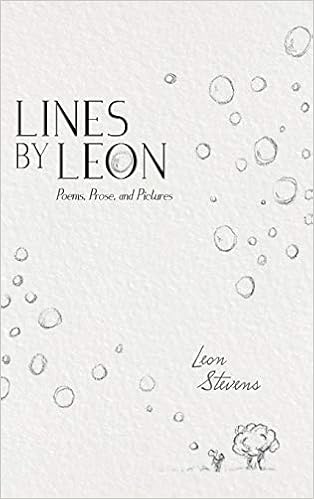
Book review: Lines by Leon: Poems, Prose, and Pictures
My review
Every now and then you discover a book of poetry which has you nodding your head in agreement and identifying with the views of the poet. For me, this was one of those books. Leon Stevens has an unerring way of aiming a poetic arrow straight at the heart of a difficult issue and exposing it for exactly what it is. This exposure is done with great dry wit, but it is nevertheless, brutally honest and truthful.
The poems in this book cover an array of topics including, inter alia, the poets personal viewpoints on specific matters, environmental experiences, the human conditions and how we relate with others, people and places, and ponderance and muse. There is a sprinkling of the poet’s own sketches throughout the book, and these, complement the humour and the simple, straightforward messages woven into these compelling poems.
This poem, called The Tendency to Cluster, was my personal favourite in this collection and demonstrates the points I’ve mentioned above:
People like orbs
Drawn by gravity
Unable to exist alone
Each dependent on the orbits of others
The only thing that keeps them
From being flung away
Needing others to define them
Needing to know
The quantum state of others
There are people
Content with singularity
In the colder outer regions
Emptiness brings strength, warmth, life
Occasional objects pass
Piquing curiosity
Worthy to share space (for a while)
Mostly continuing alone
Comfortable that orbits won’t decay
If you enjoy poems that speak clearly and simply about important matters, then you will enjoy this collection. Even if you don’t share the poet’s viewpoint, these poems will still make you think deeply.
Purchase Lines by Leon: Poems, Prose, and Pictures
About Leon Stevens
Leon Stevens is a writer, composer, guitarist, songwriter, and an artist, with a Bachelor of Music and Education. He became a writer out of necessity. Along with song writing, poetry has allowed him to make sense and accept events and situations in his life. He published his first book of poetry: Lines by Leon – Poems, Prose, and Pictures in January 2020, a book of original classical guitar compositions, and a collection of science fiction short stories called The Knot at the End of the Rope and other Short Stories. Visit www.linesbyleon.com for free sample eBooks.
Share this:

Poetry Set to Music – Just call it a song
Posted: August 16, 2021 Filed under: Poetry, Song Writing, Writing | Tags: music, Poetry, Song Writing, Writing to be Read 2 Comments
Poetry comes in many forms. There is free verse, rhymed poetry, blank verse or metered poetry, syllabic poetry, (such as hiaku on tankas), epic poems, narrative poetry, pastoral poetry, and sonnets, just to name a few. I’m partial to rhymed poetry, although I was warned away from it in school. I love rhymes of Dr. Suess and Shell Silverstein, and I love playing with rhyme and alliteration in my own poetry. Wordplay makes writing, (and reading), poetry fun. Poetry forms with structured rules, such as villinettes or syllabic poetry don’t come as easily for me.
I think it must be even more difficult to write poetry put to music, but if you think about it, many songs do use alliteration and rhyming, and this is perfectly acceptable in the song writing world. But what is a song, if not a poem set to music? Even many of the nursery rhymes that were handed down to you as a child have been put with a popular tune, making them more memorable: Old King Cole, Ring-Around-the-Rosy, London Bridge, Jack and Jill, etc… Below are some lyrics to some popular songs that use rhyming, but if you had never heard them, and didn’t know the tune, all you would see is poetry.
Winter nights we sang in tune
Played inside the months of moon
Never think of never
Let this spell last forever
Heart – Magic Man
_____________________________________________________________________________________________________________________________
Drowning nightly in deep blue seas
Waves of sadness swallow me
No soul can hear me beneath the waves
No gods, no saviors, no hands of fate
The Pretty Reckless – Only Love Can Save Me Now
________________________________________________________________________________________________________________________
Poetry uses language to paint vivid mental pictures and tell stories, as can be seen in the lyrics below. Fleetwood Mac uses similes and metaphores to paint a mental picture for the listener in some very poetic ways in Rhiannon, and Jethro Tull’s lyrics in Locomotive Breath conjurs some unusual images, as well.
Rhiannon rings like a bell through the night
And wouldn’t you love to love her?
Takes to the skies like a bird in flight
And who will be her lover?
Fleetwood Mac – Rhiannon
____________________________________________________________________________________________________________________________
In the suffering madness
Of the locomotive breath
Comes the all time loser
Headlong to his death
He sees the piston pumping
Steam breaking on his brow
But Charlie stole the handle
And the train, it won’t stop going
No way to slow down.
Jethro Tull – Locomotive Breath
___________________________________________________________________________________________________________________________
Narrative poetry tells a story in verse, as do many songs. Narrative songs that come readily to mind include The Wreck of the Edmund Fitzgerald, by Gordon Lightfoot, Running Bear by Sony James, and One Tin Soldier, by The Original Caste. Here, McGraw tells a story of the growth of first love in his song, Don’t Take the Girl. (And it rhymes.)
Johnny’s daddy was taking him fishing
when he was eight years old
A little girl came through the front gate
holding a fishing pole
His dad looked down and smiled,
said we can’t leave her behind
Son, I know you don’t want her to go,
but someday you’ll change your mind.
Tim McGraw – Don’t Take the Girl
_____________________________________________________________________________________________________________
I’ve listed the handful of songs above with the names of the artists who sing them, but that’s another way songwriters and poets are alike. Both get very little recognition for their writing. Often the singer is not the songwriter. Songs may be peddled among singers, as was the case with That’s the Night that the Lights Went Out in Georgia, (written by someone named Bobby Russell), which Cher turned down before Vicky Lawrence ended up cutting the record. Magic Man was actually written by the singers, Ann and Nancy Anderson, and Rhiannon was written and sung by Stevie Nicks. Taylor Momsen and Ben Phillips of The Pretty Wreckless wrote Only Love Can Save Me Now. But, Don’t Take the Girl was written by songwriters Craig Martin and Larry W. Johnson, Locomotive Breath may be sung by Jethro Tull, but it was written by Ian Anderson.
It’s customary for songs to be identified with the singer, rather than the song writer, and poets don’t become famous until after they are dead. Song writers are the unknown poets of the music world.
___________________________________________________________________________________________________________________________
Like this post? Let me know in the comments. You can be sure not to miss any of Writing to be Read’s great content by subscribing to e-mail or following on WordPress. If you found this content helpful or entertaining, please share.
Share this:

The Many Faces of Poetry – So Many Poets
Posted: July 23, 2021 Filed under: Poetry, The Many Faces of Poetry | Tags: Arthur Rosch, Poetry, The Many Faces of Poetry, Writing to be Read 2 Comments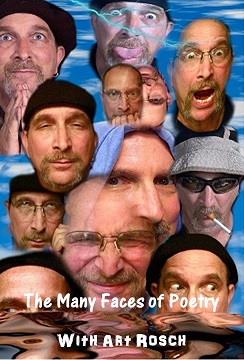
So Many Poets
By Arthur Rosch
Only I understand my own poetry.
If I read another poet
and get to the end of the poem
without being bored,
that makes her
a good poet. People tell me that William Butler Yeats
was a great poet but I’ll be damned if I understand him.
There are poets who play games with words
in such a way that the poetry bends the wind so that it ties knots in itself.
Listeners are embarrassed at their lack of comprehension.
So they applaud, to hide their gullibility, and the poet goes on to become a great
poet with audiences at colleges and books on shelves at stores.
Another kind of poet writes in plain English
but his narcissism makes him seem
as if he’s holding back a fart.
For god’s sake write in plain English. Or French. Or Serbo-Croatian.
Let’s start again.
I love MY poems. I love Pablo Neruda’s poems, just because I do.
e.e. cummings? Hey, come on. What a goofball. And Bukowsky; that’s as close to
real as poetry ever gets.
There are too many leaves and geese in Mary Oliver’s stuff. She’s obviously wise;
I hate poets who are wise. They fill me with envy. I’d like to be wise.
I don’t like poetry very much. There’s such a to-do over it, but hardly anybody
gives a poet money. Rich poets are always terrible. It isn’t about the poetry. It’s about the poet. We need poets,
badly, desperately. But we don’t need poetry at all. So I guess the best thing
is to be a poet who doesn’t write.
Just don’t tell anyone about me.
___________________________________________________________________________________

Arthur Rosch is a novelist, musician, photographer and poet. His works are funny, memorable and often compelling. One reviewer said “He’s wicked and feisty, but when he gets you by the guts, he never lets go.” Listeners to his music have compared him to Frank Zappa, Tom Waits, Randy Newman or Mose Allison. These comparisons are flattering but deceptive. Rosch is a stylist, a complete original. His material ranges from sly wit to gripping political commentary.
Arthur was born in the heart of Illinois and grew up in the western suburbs of St. Louis. In his teens he discovered his creative potential while hoping to please a girl. Though she left the scene, Arthur’s creativity stayed behind. In his early twenties he moved to San Francisco and took part in the thriving arts scene. His first literary sale was to Playboy Magazine. The piece went on to receive Playboy’s “Best Story of the Year” award.
Arthur also has writing credits in Exquisite Corpse, Shutterbug, eDigital, and Cat Fancy Magazine. He has written five novels, a memoir and a large collection of poetry. His autobiographical novel, Confessions Of An Honest Man won the Honorable Mention award from Writer’s Digest in 2016. His other works include his memoir, The Road Has Eyes, and his science fantasy novel, The Gods of Gift. Arthur’s lates release is a poetry and photography collection Feral Tenderness.
More of his work can be found at www.artrosch.com
Photos at https://500px.com/p/artsdigiphoto?view=photos
_____________________________________________________________________________________
Want to be sure not to miss any of Arthur’s “The Many Faces of Poetry” segments? Subscribe to Writing to be Read for e-mail notifications whenever new content is posted or follow WtbR on WordPress. If you find it interesting or just entertaining, please share.
Share this:

Treasuring Poetry: Meet poet and author Miriam Hurdle
Posted: July 16, 2021 Filed under: Book Review, Books, Interview, Poetry | Tags: Author Interview, Book Review, Miriam Hurdle, Poetry, Robbie Cheadle, Treasuring Poetry, Writing to be Read 126 CommentsToday, I am delighted to host poet and author Miriam Hurdle for the July edition of Treasuring Poetry.

Welcome Miriam Hurdle
Hi Robbie,
I’m delighted to be your guest on Writing to be Read to talk about poetry.
Which of your own poems is your favourite
Among the published poems in Songs of Heartstrings: Poems of Gratitude and Beatitude, several poems are my favorites in equal measure for different reasons. One is in the section of Songs of Marriage, one in Songs of Tribute, and one in Songs of Inspiration.
The time I wrote this post, my heart turns to the poem “Healthy Grieving” in the section of Songs of Tribute.
Healthy Grieving
Randy and my husband were true friends.
No appointment needed for
a barbeque, a movie or a game, just
knocked on each other’s door.
The conversation could go anywhere,
no worry about apologies.
When one needed a helping hand,
the other one is always there.
Twelve years was a long time,
such true friendship rarely came by.
People say, “Big boys don’t cry.”
I don’t know why.
Boys have emotion, as we all do.
My husband had never cried,
not until after Randy died.
What inspired you to write this particular poem?
There is a narrative precedes the poem. I wrote the poem to pay tribute to our neighbor, my husband’s best friend who died of a mountain bike accident. Here is the excerpt.
I remember on January 3, 2016. Randy joined us to celebrate my husband’s birthday. We had lunch and saw Star Wars at Irvine Spectrum. It was on Saturday.
The following Sunday, eight days later, his relative came over to tell us that Randy had a mountain bike accident. He and a gym buddy ventured on a long mountain bike ride. The bike hit a vast gap and made a somersault flip. He got thrown off the bike, fell forward and hit the ground, and smashed his head and face.
They rushed him to the close by emergency room but pronounced him dead as soon as the ambulance reached the hospital.
Randy was our neighbor who lived two doors down the street. He was my husband’s best friend for twelve years, ever since he came back to live with his parents. They worked out at the gym together. They enjoyed the Friday movie and pizza day for a while.
After my husband got a mountain bike, he also got one. They biked on the trails in the city. On special occasions, a barbecue dinner was in order. He came over to our house for game nights regularly. A year before he passed away, they switched to another restaurant to hang out in the bar, and I became their designated driver.
Randy was a lighthearted guy, a wonderful friend, a caring son. We missed him very much.
Which genre of poetry do you enjoy writing the most and why?
Whereas a “form” defines the way a poem arranges sounds, rhythms, or its appearance on the page, “genre” is something like the poem’s style. Many poetic genres have a long history, and new poems almost always seek to explore a new aspect of the traditional style and thus to redefine the genre.
Traditionally, there are nine genres of poetry. Three of them remain in the newer inclusion of poetry genres. They are narrative poetry which tells a story, lyric poetry which is musical in tone, and dramatic poetry which is a long dramatic monologue or persona poem.
I would say I enjoy writing narrative poetry genre. Regardless of the poetry forms, I like to write poems that tell the stories. The poem I included above is a good example in which I shared the story of the friendship between my husband and Randy.
As far as poetry form, I enjoy writing free verse which is free of rules and regulations. It doesn’t follow a consistent rhyme scheme, meter or musical structure. For the fun of learning, I also write blank verse which follows a stricter structure with precise meter. In addition to Haiku, Tanka, I have written a Shakespearean Sonnet, a Pantoum, several acrostic poems, two Villanelle, and one one-syllable poem (all the words used in the entire poem are single syllable words).
Which genre of poetry do you enjoy reading the most?
I enjoy reading narrative and lyric poetry including poetic song lyric. One example of narrative poetry is a poem by the American Poet Linda Pastan in which she tells a story about her daughter.
To a daughter leaving home
When I taught you
at eight to ride
a bicycle, loping along
beside you
as you wobbled away
on two round wheels,
my own mouth rounding
in surprise when you pulled
ahead down the curved
path of the park,
I kept waiting
for the thud
of your crash as I
sprinted to catch up,
while you grew
smaller, more breakable
with distance,
pumping, pumping
for your life, screaming
with laughter,
the hair flapping
behind you like a
handkerchief waving
goodbye.
This poem is about the poet teaching her daughter to ride a bicycle. The title suggests that her daughter is now old enough to leave home. Pastan cleverly extends the metaphor of the bike as part of life’s journey. When I read this poem, I identify with the poet the joy of parenthood, with the sentiment of missing my daughter when she grew up and has gone on to her own journey.
I can’t talk about poetry without talking about music. I’m a singer of classical, traditional, and some older pop music and memorized many song lyrics for solo performances. The poetic song lyrics influence the flow of my poetry writing.
Examples of poetic song lyrics are, “Yesterday” by the Beatles, “Memory” from the Musical Cats written by Trevor Nunn, and “Killing Me Softly” written by Norman Gimbel & Charles Fox.
What is your favourite poem?
My favorite poem is a popular one by Robert Frost. Its signature phrases have become so ubiquitous, so much a part of the individual life and business alike. I like it because of its message applicable in my life.
I have come to crossroads many points in my journey. As reflected by Frost, I couldn’t take “both,” tried to look down both paths “as far as I could.” Many times, they both were “equally” “fair” but no guarantee. Ultimately, it was my decision that “made all the difference.” Knowing that I would never “come back,”, I willingly took the responsibility for the road I chose to travel with no regret.
The Road Not Taken
Two roads diverged in a yellow wood,
And sorry I could not travel both
And be one traveler, long I stood
And looked down one as far as I could
To where it bent in the undergrowth;
Then took the other, as just as fair,
And having perhaps the better claim,
Because it was grassy and wanted wear;
Though as for that the passing there
Had worn them really about the same,
And both that morning equally lay
In leaves no step had trodden black.
Oh, I kept the first for another day!
Yet knowing how way leads on to way,
I doubted if I should ever come back.
I shall be telling this with a sigh
Somewhere ages and ages hence:Two roads diverged in a wood, and I—
I took the one less traveled by,
And that has made all the difference.
I would like to include the trailer for Songs of Heartstring created by Diana W. Peach at https://mythsofthemirror.com
Songs of Heartstrings Amazon https://www.amazon.com/dp/B07K1S47W9
About Miriam Hurdle
Miriam Hurdle is a member of the Society of Children’s Book Writers and Illustrators (SCBWI). She published four children’s books at twenty-six years old. Her poetry collection received the Solo “Medalist Winner” for the New Apple Summer eBook Award and achieved bestseller status on Amazon.
Miriam writes poetry, short stories, memoir, and children’s books. She earned a Doctor of Education from the University of La Verne in California. After two years of rehabilitation counseling, fifteen years of public-school teaching and ten years in school district administration, she retired and enjoys life with her husband in southern California, and the visits to her daughter, son-in-law, and granddaughters in Oregon. When not writing, she engages in blogging, gardening, photography, and traveling.
Find Miriam Hurdle
Website/Blog: https://theshowersofblessings.com
Amazon Author’s Page: https://www.amazon.com/Miriam-Hurdle/e/B07K2MCSVW
Goodreads: https://www.goodreads.com/author/show/17252131.Miriam_Hurdle
Twitter: https://twitter.com/mhurdle112
Facebook: https://www.facebook.com/Miriam-Hurdle-Author-100123351515424
My review of Songs of Heartstrings: Poems of Gratitude and Beatitude
![Songs of Heartstrings: Poems of Gratitude and Beatitude by [Miriam Hurdle]](https://m.media-amazon.com/images/I/41dgiMtCq+L._SY346_.jpg)
Songs of Heartstrings is a collection of poems and essays featuring the vast array of life experiences by the author. Miriam Hurdle has encountered both the best and the worst of life through the death of her husband’s close friend, her own treatment for cancer, the birth of her daughter and the close relationship of her parents. Her wonderful joy in life and strong faith in her religion shine through in her poetry and give a lot of insight into her strong spirit and ability to stay positive despite the curve balls life has thrown her way.
This book also demonstrates Miriam’s love of nature and features poems about her garden, a hummingbird and even a spider. Her photographs and pictures are lovely and compliment the prose.
My review of Tina Lost in a Crowd
![Tina Lost in a Crowd by [Miriam Hurdle, Victoria Skakandi]](https://m.media-amazon.com/images/I/61yAgY-MYuS.jpg)
Tina Lost in a Crowd is a charming book for children about two young school friends who attend a busy concert with Tina’s parents and get lost on their way to the restroom.
I enjoyed the character of Tina, a lovely and friendly girl who demonstrated politeness and respect towards both her teacher and her parents as well as consideration towards her friend. She has sufficient presence of mind not to panic in the scary situation of being lost in a big crowd.
The depiction of Tina’s family life and her mother’s interest in her and eagerness to plan some fun family outings for the summer vacation are heart warming and lovely to see in a children’s book. I liked the fact that Tina’s mother made a picnic for her family and Tina’s friend, Erica, to enjoy at the concert with good, wholesome food.
The illustrations in this book are a real treat and every page is a visual delight. I would recommend this book to parents and caregivers who like books that encourage good family values and level headedness by children in difficult situations.
About Robbie Cheadle

Robbie Cheadle is a South African children’s author and poet with 9 children’s books and 1 poetry book.
The 7 Sir Chocolate children’s picture books, co-authored by Robbie and Michael Cheadle, are written in sweet, short rhymes which are easy for young children to follow and are illustrated with pictures of delicious cakes and cake decorations. Each book also includes simple recipes or biscuit art directions which children can make under adult supervision.
Robbie has also published 2 books for older children which incorporate recipes that are relevant to the storylines.
Robbie has 2 adult novels in the paranormal historical and supernatural fantasy genres published under the name Roberta Eaton Cheadle. She also has short stories in the horror and paranormal genre and poems included in several anthologies.
Robbie writes a monthly series for https://writingtoberead.com called Growing Bookworms. This series discusses different topics relating to the benefits of reading to children.
Robbie has a blog, https://robbiesinspiration.wordpress.com/ where she shares book reviews, recipes, author interviews, and poetry.
Find Robbie Cheadle
Blog: https://www.robbiecheadle.co.za/
Blog: robbiesinspiration.wordpress.com
Twitter: BakeandWrite
Instagram: Robbie Cheadle – Instagram
Facebook: Sir Chocolate Books
_____________________________________________________________________________________________________________________
Want to be sure not to miss any of Robbie’s “Treasuring Poetry” segments? Subscribe to Writing to be Read for e-mail notifications whenever new content is posted or follow WtbR on WordPress.
Share this:

The Many Faces of Poetry- “Crazy”: A Reading by Arthur Rosch
Posted: July 9, 2021 Filed under: Poetry, The Many Faces of Poetry | Tags: Arthur Rosch, Crazy, Feral Tenderness, The Many Faces of Poetry, Writing to be Read Leave a commentYou can find this poem and many others in Feral Tenderness – A Poetry and Photography Collection by Arthur Rosch.

Buy Link: https://www.amazon.com/Feral-Tenderness-Arthur-Rosch-ebook/dp/B08VQGKKPZ/
____________________________________________________________________________________________________
Arthur Rosch is a novelist, musician, photographer and poet. His works are funny, memorable and often compelling. One reviewer said “He’s wicked and feisty, but when he gets you by the guts, he never lets go.” Listeners to his music have compared him to Frank Zappa, Tom Waits, Randy Newman or Mose Allison. These comparisons are flattering but deceptive. Rosch is a stylist, a complete original. His material ranges from sly wit to gripping political commentary.
Arthur was born in the heart of Illinois and grew up in the western suburbs of St. Louis. In his teens he discovered his creative potential while hoping to please a girl. Though she left the scene, Arthur’s creativity stayed behind. In his early twenties he moved to San Francisco and took part in the thriving arts scene. His first literary sale was to Playboy Magazine. The piece went on to receive Playboy’s “Best Story of the Year” award.
Arthur also has writing credits in Exquisite Corpse, Shutterbug, eDigital, and Cat Fancy Magazine. He has written five novels, a memoir and a large collection of poetry. His autobiographical novel, Confessions Of An Honest Man won the Honorable Mention award from Writer’s Digest in 2016.
More of his work can be found at www.artrosch.com
Photos at https://500px.com/p/artsdigiphoto?view=photos
________________________________________________________________________________________
Want to be sure not to miss any of Arthur’s “The Many Faces of Poetry” segments? Subscribe to Writing to be Read for e-mail notifications whenever new content is posted or follow WtbR on WordPress. If you find it interesting or just entertaining, please share.
Share this:

Treasuring Poetry – If by Rudyard Kipling and The Listeners by Walter de la Mare
Posted: June 19, 2021 Filed under: Poetry, Treasuring Poetry | Tags: Poetry, Poetry Collection, Poetry Treasures, Robbie Cheadle, Treasuring Poetry, Writing to be Read 51 CommentsThis month I am featuring my own favourite poems and a poem and picture from my forthcoming poetry book, Behind Closed Doors. I hadn’t intended to feature my own work this month, but sometimes life happens and so I am making the best of it.
If by Rudyard Kipling
I love the poem If by Rudyard Kipling because it is so inspiring and uplifting. The objective of the poem was to give his son advice and instruction on how to live a happy and successful life. I relate strongly to this advice possibly because I have two sons.
My favourite lines are as follows:
“If you can bear to hear the truth you have spoken
Twisted by knaves to make a trap for fools,
Or watch the things you gave your life to, broken,
And stoop and build ’em up with worn-out tools.”
The first two lines above warn that his son must learn to endure his own words twisted by dishonest and harmful people in order to serve their own agendas. The second two lines explain the importance of being able to cope with failure and pick yourself up and carry on, even if what you fail at has been your life’s work.
Both of these situations are ones that everyone comes across in life – people who are willing to walk on you in order to serve their own purposes and failure. How we deal with the resulting disillusionment and disappointment has a huge bearing on our lives going forward.
I like to re-read this poem as a reminder to myself to stay strong and on my chosen path in life.
You can listen to my recital of this poem here:
The Listener by Walter de la Mare
In summary, this poem is about a traveler who comes to a house on a moonlit night and knocks on the door. He demands that the door be opened but he receives no answer.
We discover that the traveler has made a promise to return to the occupants of the house, but he has been prevented from doing so until the current time. It is too late and the occupants are gone. He clearly feels some guilt because he cries “Tell them I came, and no one answered, That I kept my word…”
I love this poem because of its supernatural undertone. There is a mystery that runs through the poem and you feel the whisper of ghosts in the imagined echoes of the listener’s words.
You can listen to my recital of this poem here:
Which of these two poems do you like best?
This is a poem from my poetry book, Open a new door.
The Thunderstorm
A deluge of rain tumbles from the sky
like a bucket turned upside down
the beggars impervious to its ferocity
faces impassive, no fear or frown.
***
Young boys stand on the roadside
eyes smoldering with hunger’s pain
need forcing them to continue standing
despite the lightening and drenching rain.
***
One holds a bedraggled cardboard sign
the other a tattered polystyrene cup
each hoping a passerby will pause
and give something to eat or sup.
***
A young mother stands shivering
an old umbrella sheltering her child
his eyes huge and frightened
he’s never laughed or even smiled.
***
In the middle of an intersection
an old man stands bent and alone
his head bowed in supplication to the torrent
he doesn’t complain, sigh or moan.
***
It’s rare to see the elderly on the street
poverty means many don’t live that long
my heart fills with a wrenching pain
for this anguished society to which I belong.
***
At the traffic light outside my offices there are a collection of beggars and window washers. One old man stands in the middle of the intersection. It is hard to extend any aid to him as it is not a good place to slow down. This motely crew is there every day, come rain or shine.
I have a new poetry collection coming out soon. Here is the cover, designed by the amazing Teagan Riordain Geneviene

About Robbie Cheadle
Robbie Cheadle is a children’s author and poet.
The Sir Chocolate children’s picture books, co-authored by Robbie and Michael Cheadle, are written in sweet, short rhymes which are easy for young children to follow and are illustrated with pictures of delicious cakes and cake decorations. Each book also includes simple recipes or biscuit art directions which children can make under adult supervision.
Robbie has also published books for older children which incorporate recipes that are relevant to the storylines.
Robbie writes a monthly series for https://writingtoberead.com called Growing Bookworms. This series discusses different topics relating to the benefits of reading to children.
Robbie has a blog, https://robbiesinspiration.wordpress.com/ where she shares book reviews, recipes, author interviews, and poetry.
Find Robbie Cheadle
Blog: https://www.robbiecheadle.co.za/
Blog: robbiesinspiration.wordpress.com
Twitter: BakeandWrite
Instagram: Robbie Cheadle – Instagram
Facebook: Sir Chocolate Books
Want to be sure not to miss any of Robbie’s “Treasuring Poetry” segments? Subscribe to Writing to be Read for e-mail notifications whenever new content is posted or follow WtbR on WordPress.
Share this:

Dark Origins: The Sleeper, a poem by Edgar Allan Poe and my reading
Posted: May 26, 2021 Filed under: Dark Origins, Poetry | Tags: Dark Origins, Edgar Allen Poe, Poetry, Roberta Eaton Cheadle, The Sleeper, Writing to be Read 25 Comments

The Sleeper, a poem by Edgar Allan Poe takes as it subject a beautiful woman in death.
     At midnight in the month of June,
     I stand beneath the mystic moon.
     An opiate vapour, dewy, dim,
     Exhales from out her golden rim,
     And, softly dripping, drop by drop,
     Upon the quiet mountain top.
     Steals drowsily and musically
     Into the universal valley.
     The rosemary nods upon the grave;
     The lily lolls upon the wave;
     Wrapping the fog about its breast,
     The ruin moulders into rest;
     Looking like Lethe, see! the lake
     A conscious slumber seems to take,
     And would not, for the world, awake.
     All Beauty sleeps!—and lo! where lies
     (Her easement open to the skies)
     Irene, with her Destinies!
The speaker in the poem begins by describing the cemetery at midnight in the month of June. He observes the moon and notes the flowers that grow about the grave. At the end of the movement, he introduces the beautiful woman whom has died and whose grave is being prepared ready for her internment.
     Oh, lady bright! can it be right—
     This window open to the night?
     The wanton airs, from the tree-top,
     Laughingly through the lattice drop—
     The bodiless airs, a wizard rout,
     Flit through thy chamber in and out,
     And wave the curtain canopy
     So fitfully—so fearfully—
     Above the closed and fringed lid
     ‘Neath which thy slumb’ring soul lies hid,
     That o’er the floor and down the wall,
     Like ghosts the shadows rise and fall!
     Oh, lady dear, hast thou no fear?
     Why and what art thou dreaming here?
     Sure thou art come p’er far-off seas,
     A wonder to these garden trees!
     Strange is thy pallor! strange thy dress!
     Strange, above all, thy length of tress,
     And this all solemn silentness!
Irene is still lying on the bier in her room. The speaker can see her corpse through the window and watches the moving shadows on the wall and floor as the curtain of the canopy are blown about by the wind. The watcher is struck by her pallor, her strange dress, and her unusually long hair.
     The lady sleeps! Oh, may her sleep,
     Which is enduring, so be deep!
     Heaven have her in its sacred keep!
     This chamber changed for one more holy,
     This bed for one more melancholy,
     I pray to God that she may lie
     Forever with unopened eye,
     While the dim sheeted ghosts go by!

     My love, she sleeps! Oh, may her sleep,
     As it is lasting, so be deep!
     Soft may the worms about her creep!
     Far in the forest, dim and old,
     For her may some tall vault unfold—
     Some vault that oft hath flung its black
     And winged pannels fluttering back,
     Triumphant, o’er the crested palls,
     Of her grand family funerals—
     Some sepulchre, remote, alone,
     Against whose portal she hath thrown,
     In childhood, many an idle stone—
     Some tomb from out whose sounding door
     She ne’er shall force an echo more,
     Thrilling to think, poor child of sin!
     It was the dead who groaned within.
The speaker refers to Irene as being asleep and wishes for her sleep to be deep and for her not to be disturbed by on-going life such as children playing and throwing stones at the family sepulcher. The speaker calls Irene a “child of sin” but that holds no special significance. She is human and, therefore, is a child of sin.
Why did Poe write about women?
Throughout his life, virtually every woman Poe loved and who loved him died young.
His mother died before he was three years old and he was taken into the home of John Allan, a Richmond merchant who was presumed to have been his godfather. His foster mother died when he was in his late teens.
In 1835, when he was 27 years old, Poe married his cousin, Virginia Clemm, who was only 13. In 1842, Virginia became ill with tuberculosis and she died on the 30th of January 1847 at the age of 24.
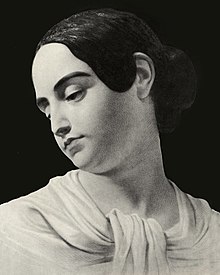
Why did Poe almost always write about women who died? It may have been because all the important women in his life died or he might have done it anyway. No-one will ever know.
Excerpt from Edgar Allan Poe’s letter to George W. Eveleth, Fordham, New York ,January 4, 1848 about his wife.
“Six years ago, a wife, whom I loved as no man ever loved before, ruptured a blood-vessel in singing. Her life was despaired of. I took leave of her forever & underwent all the agonies of her death. She recovered partially and I again hoped. At the end of a year the vessel broke again—I went through precisely the same scene. Again in about a year afterward. Then again—again—again & even once again at varying intervals. Each time I felt all the agonies of her death—and at each accession of the disorder I loved her more dearly & clung to her life with more desperate pertinacity. But I am constitutionally sensitive—nervous in a very unusual degree. I became insane, with long intervals of horrible sanity. During these fits of absolute unconsciousness I drank, God only knows how often or how much. As a matter of course, my enemies referred the insanity to the drink rather than the drink to the insanity. I had indeed, nearly abandoned all hope of a permanent cure when I found one in the death of my wife. This I can & do endure as becomes a man—it was the horrible never-ending oscillation between hope & despair which I could no longer have endured without the total loss of reason. In the death of what was my life, then, I receive a new but—oh God! How melancholy an existence.”
You can read more extracts of letters about Virginia Clemm Poe here: https://www.nps.gov/people/poe-virginiapoe.htm
My reading of The Sleeper by Edgar Allan Poe
About Roberta Eaton Cheadle

I am a South African writer specialising in historical, paranormal and horror novels and short stories. I am an avid reader in these genres and my writing has been influenced by famous authors including Bram Stoker, the Bronte sisters, Amor Towles, Stephen Crane, Enrich Maria Remarque, George Orwell, Stephen King, and Colleen McCullough.
I was educated at the University of South Africa where I achieved a Bachelor of Accounting Science in 1996 and a Honours Bachelor of Accounting Science in 1997. I was admitted as a member of The South African Institute of Chartered Accountants in 2000.
I have worked in corporate finance from 2001 until the present date and have written seven publications relating to investing in Africa. I have won several awards over my twenty year career in the category of Transactional Support Services.
I have been published a number of anthologies and have two published YA books, While the Bombs Fell and Through the Nethergate. I have recently published my first adult novel called A Ghost and His Gold which is partly set in South Africa during the Second Anglo Boer War.
Find Roberta Eaton Cheadle
Blog: https://wordpress.com/view/robertawrites235681907.wordpress.com
Twitter: https://twitter.com/RobertaEaton17
Facebook: https://www.facebook.com/robertawrites
Amazon: https://www.amazon.com/Roberta-Eaton-Cheadle/e/B08RSNJQZ5
_____________________________________________________________________________________________
Want to be sure not to miss any of Robbie’s “Dark Origins” segments? Subscribe to Writing to be Read for e-mail notifications whenever new content is posted or follow WtbR on WordPress. If you found it interesting or entertaining, please share.
Share this:

Welcome to the WordCrafter’s “Poetry Treasures” Book Blog Tour
Posted: May 24, 2021 Filed under: Blog Tour, Book Promotion, Books, Giveaways, Poetry, Treasuring Poetry, WordCrafter Book Blog Tours, WordCrafter Press | Tags: Poetry Collection, Poetry Treasures, Treasuring Poetry, WordCrafter Book Blog Tours, WordCrafter Press 27 Comments
Welcome to Day #1 of the WordCrafter Poetry Treasures Book Blog Tour. We’ve got a great tour planned with guest posts from several of the contributing authors to this poetry collection, and an awesome giveaway. Follow the tour and leave a comment at each stop for a chance to win one of three digital copies of Poetry Treasures to be given away. (Winners will be randomly selected following the end of the tour.)
Many of you may be familiar with Robbie Cheadle’s monthly blog series, “Treasuring Poetry”, which has grown in popularity since she began the series last year, here on Writing to be Read. For those who are not familiar with this series, Robbie hosts one author/poet guest each month, with an interview and review of their latest poetry collection. The series is popular because Robbie asks good questions which are designed to reveal some of the inner poetic workings of the author, and her guests are talented and insightful.

Poetry Treasures is a collection of poetry written by eight of the “Treasuring Poetry” guests in 2020, as well as the poetry of the series author, Roberta (Robbie) Eaton Cheadle. The poetry of the late Sue Vincent is also featured, along with a special tribute to this talented and vibrant poet and human being.
Poetry is subjective, often speaking to the reader in ways in which the author never intended, but are nevertheless just as valid as the ways in which those same words affected the poet. But, there are certain poems that just reach out and grab you, and I think that we have some of those featured in this poetry anthology, or at least I hope that we have managed to capture a few.
To introduce this wonderfully unique collection, we have a guest post by one of the contributing authors, Jude Kirya Italaki. You can find more of Jude’s wonderful poetry between the covers of Poetry Treasures.
______________________________________________________________________________________________________________
Sometimes the most beautiful things are that way because we are able to share them with others. And once those people leave our lives, the beauty we used to see can turn sour.
All that was beautiful, now mocks me
The resplendent night sky, hides secrets in plain sight
The vermillion sunrise, paints scars in bloody hues
And I hide from all their beauty; because it reminds me of you
However, there are things we will always find beautiful. It is important to discover ourselves, hold on to what makes us happy as individuals, and in turn share this with others. When introduced to beauty we did not know before, it might be crucial to love it genuinely, and instead of attaching it to the people who introduced us, we juxtapose it so that the grief of loss may not taint it.
_____________________________________________________________________________________________________________
We’ve got a great blog tour planned this week to introduce you to this wonderfully unique collection of poetry, published by WordCrafter Press. Contibuting authors include Sue Vincent, Geoff Le Pard, Frank Prem, Victoria Zigler, Annette Rochelle Aben, Colleen M. Chesebro, K. Morris, Jude Kirya Italaki and Roberta Eaton Cheadle, many of whom will be sharing their poetry and their inspirations in guest posts for this tour. I do hope you will join us and purchase your copy of Poetry Treasures, available in digital and print formats.
Buy Link: https://www.amazon.com/Poetry-Treasures-Sue-Vincent-ebook/dp/B0933KSJR9

_______________________________________________________________________________________________________________
Book your WordCrafter Book Blog Tour today!
Share this:

Treasuring Poetry: Meet author and poet M J Mallon
Posted: May 15, 2021 Filed under: Author Profile, Book Review, Books, Interview, Poetry, Review, Treasuring Poetry | Tags: Author Interview, Book Review, M.J. Mallon, Mr. Sagittarius, Robbie Cheadle, Treasuring Poetry, Writing to be Read 60 CommentsMy Treasuring Poetry guest today is talented author and poet M J Mallon. I am delighted to host Marje here and hope you enjoy her thoughts on poetry and her favourite poem.
Which of your own poems is your favourite?
This was such a difficult decision, I have at least three favourites! I narrowed it down to the robin. The robin and the dragonfly are my spirit animals and trees are also a huge inspiration. I’ve written about all of these and more in Mr. Sagittarius.

Bench,
A bird,
Red-breasted,
So, tame you rest,
Beside me robin,
Two friends on a park bench,
One human, one of nature,
I appreciate your kind time,
Until you away… exploring far,
Hinting at possibilities you go.
I wonder what you notice in your world.
And why you choose that ground to explore,
When you could have stayed here with me,
In mindful meditation.
Maybe you’ll visit me,
Christmas day, perhaps?
To bring good cheer,
Until then,
Peace to, You.
What inspired you to write this particular poem?
I’d been studying mindfulness at the sixth form college where I work. Mindfulness is the act of observing and using the full array of our senses meditatively to become more at one with ourselves. I’ve discovered that this is a fantastic practice to adhere to. It benefits an author’s creativity by making you more aware of the nuances of your surroundings. I’m fortunate in that I work near the botanical gardens in Cambridge, so I often visit and walk and observe the wonder of nature taking photographs of the trees, flowers, animal and insect visitors. Over time, I collected these photographs and wrote poems about them. These, along with various seasonal and short pieces of fiction feature in Mr. Sagittarius. It is a joyful celebration of siblings, magic, loves, nature, the seasons and the circle of our lives.
Which genre of poetry do you enjoy writing the most and why?
I love writing poetry about life in all its vibrant colours. I am often inspired by photography, (I am a keen amateur photographer – my grandfather and uncle were professional photographers,) or I use images I discover as prompts, often via Colleen Chesebro’s poetry challenge: https://wordcraftpoetry.com/
Specifically, I enjoy writing poems about nature, trees, flowers, love and Halloween! Halloween poems also feature in Mr. Sagittarius. Halloween is an autumnal activity, (and often a childhood one,) so it links well with the seasonal/circle of life, aspect of my poetry writing.
Which genre of poetry do you enjoy reading the most?
I enjoy reading short form poetry. It is so expressive and brilliant. I love how short verses of poetry convey so much detail in so few words. I enjoy haiku, and tanka, as well as poems that form a pattern on the page. I also enjoy longer forms as you will see from my choice of favourite poem.
What is your favourite poem?
I have always loved Ode To Autumn by John Keats. I can almost taste the words. They are magnificent—that first line: Season of mists and mellow fruitfulness —draws you in and makes you long to read more.
Ode To Autumn by John Keats
Season of mists and mellow fruitfulness,
Close bosom-friend of the maturing sun;
Conspiring with him how to load and bless
With fruit the vines that round the thatch-eves run;
To bend with apples the moss’d cottage-trees,
And fill all fruit with ripeness to the core;
To swell the gourd, and plump the hazel shells
With a sweet kernel; to set budding more,
And still more, later flowers for the bees,
Until they think warm days will never cease,
For Summer has o’er-brimm’d their clammy cells.
2.
Who hath not seen thee oft amid thy store?
Sometimes whoever seeks abroad may find
Thee sitting careless on a granary floor,
Thy hair soft-lifted by the winnowing wind;
Or on a half-reap’d furrow sound asleep,
Drows’d with the fume of poppies, while thy hook
Spares the next swath and all its twined flowers:
And sometimes like a gleaner thou dost keep
Steady thy laden head across a brook;
Or by a cyder-press, with patient look,
Thou watchest the last oozings hours by hours.
3.
Where are the songs of Spring? Ay, where are they?
Think not of them, thou hast thy music too,—
While barred clouds bloom the soft-dying day,
And touch the stubble-plains with rosy hue;
Then in a wailful choir the small gnats mourn
Among the river sallows, borne aloft
Or sinking as the light wind lives or dies;
And full-grown lambs loud bleat from hilly bourn;
Hedge-crickets sing; and now with treble soft
The red-breast whistles from a garden-croft;
And gathering swallows twitter in the skies.
https://allpoetry.com/Ode-To-Autumn
Mr Sagittarius by M J Mallon
About Mr Sagittarius
Twin brothers Harold and William love the magic of the natural world.
When Harold dies he leaves a simple memorial request.
Will his brother William and his sister Annette honour it?
Or, will the garden work its magic to ensure that they do.
A magical story expressed via an original compilation of poetry and prose with photographic images.
#Poetry #Prose #Photography #NaturalWorld #Trees #Magic #Spirit #Animals #CircleofLife #Humour #Halloween #Cats #Buddha
My review of Mr Sagittarius
Mr Sagittarius is a beautiful collection of poems and short stories, set in the lovely gardens of Cambridge and linked by the visits and experiences of a family of twin brothers and their younger sister.
The story starts with William visiting the weeping willow tree in the garden, a place that was special to his twin brother, Harold, who has recently passed away. William sees Harold’s spirit in a dragonfly that he chats to and finds solace in their one-sided communication.
This is a few lines from a poem about the dragonfly:
“Ancient, sweet fellow
Sacred magic bestower,
Change tumbling on fragile wings.”
When William returns home, he has an altercation with his sister, Annette. During their spat Annette reveals that she has always felt left out and overlooked by her twin brothers. This revelation leads to William and Annette becoming closer and visiting the garden together. Not long after, William passes on and Annette is left alone. She visits the garden and communicates with the spirits of both her brothers over the course of the rest of her long life.
The visits of the siblings to the garden are captured in lovely verse. This is an example I really enjoyed:
“I dream in colour
But now everything is dark
Where has the light gone?
Oh, cruel leafy canopy,
No green meadow, just blue thoughts.”
My favourite of the short stories was The Old Man of Snow and The Snow Snake. This is a story about making good choices in life and rejecting greed. I enjoyed the tale and the descriptive writing.
Mr Sagittarius is a gorgeous book full of delightfully depictive poems and short stories and decorated with striking photographs. This is a book that lovers of poetry, mystery, and wonder will love.
Purchase Mr Sagittarius: Poetry and Prose
About M J Mallon
I am a diverse author who blogs at: https://mjmallon.com. My interests include writing, poetry, photography, and alternative therapies. My favourite genres to write are: Fantasy YA, Paranormal, Ghost and Horror Stories and I love writing various forms of poetry and micro poetry – haiku and Tanka and flash fiction.
I am proud to be included in the best selling horror anthology Nightmareland which received best seller status with best-selling author Dan Alatorre at the helm.
It is one of my greatest pleasures to read and I have written over 100 reviews: https://mjmallon.com/2015/09/28/a-z-of-my-book-reviews/
About Robbie Cheadle
Robbie Cheadle is a children’s author and poet.
The Sir Chocolate children’s picture books, co-authored by Robbie and Michael Cheadle, are written in sweet, short rhymes which are easy for young children to follow and are illustrated with pictures of delicious cakes and cake decorations. Each book also includes simple recipes or biscuit art directions which children can make under adult supervision.
Robbie has also published books for older children which incorporate recipes that are relevant to the storylines.
Robbie writes a monthly series for https://writingtoberead.com called Growing Bookworms. This series discusses different topics relating to the benefits of reading to children.
Robbie has a blog, https://robbiesinspiration.wordpress.com/ where she shares book reviews, recipes, author interviews, and poetry.
Find Robbie Cheadle
Blog: https://www.robbiecheadle.co.za/
Blog: robbiesinspiration.wordpress.com
Twitter: BakeandWrite
Instagram: Robbie Cheadle – Instagram
Facebook: Sir Chocolate Books
Want to be sure not to miss any of Robbie’s “Treasuring Poetry” segments? Subscribe to Writing to be Read for e-mail notifications whenever new content is posted or follow WtbR on WordPress.
Share this:

Deadlines, Reminders and Announcements
Posted: April 26, 2021 Filed under: Anthology, Book Promotion, Books, Fiction, Paranormal, Poetry, Stories, WordCrafter, WordCrafter Press, Writing, Writing Contest, Writing Event | Tags: 2021 New Beginnings Virtual Writing Conference, Poetry, Poetry Treasures, Short Fiction, Treasuring Poetry, Where Spirits Linger, WordCrafter Paranormal Short Fiction Contest, WordCrafter Press, Writing, Writing Conference, Writing Contest, Writing to be Read 2 CommentsLast chance to enter the 2021 WordCrafter Paranormal Short Fiction Contest!

The deadline to enter the 2021 WordCrafter Paranormal Short Fiction Contest is April 30th, for a chance to have your short paranormal story included in the 2021 paranormal anthology, Where Spirits Linger. The entry fee is $5, and the author of the winning story receives a $25 Amazon gift card and inclusion in the anthology. See full submission guidelines and send me your ghost stories. There’s still time. Hurry!
____________________________________________________________________________________________________________
There’s still time to get tickets for the 2021 WordCrafter New Beginnings Virtual Writing Conference
Join us for a free Facebook pre-conference promotional and social book event on May 3rd, where you can meet conference presenters and other authors, learn about their latest releases, play games and enter giveaways! You can reserve your spot on the Facebook Event Page to join in on the fun from the comfort of your own livingroom or wherever you happen to be.
Then on May 4th & 5th, the interactive portion of the conference will be held, with interactive workshops & panel discussions will be offered by talented and experienced presenters, including Keynote speaker Paul Kane. Tickets can be purchased for $5 for individual sessions or a full event pass at the discounted rate of $50 for all 13 sessions. Visit the WtbR Event Page, right here on Writing to be Read, to see the full line-up and author bios, and purchase tickets. It’s going to be a lot of fun and we plan to learn a lot, too, so reserve your spot today.
I can’t offer a preview, because the conference will be live, but I can offer a sample from the 2020 WordCrafter Stay in Place Virtual Writing Conference to whet your appetites. Below is a video of the Visceral Story Beginnings interactive workshop with Ellie Raine. Ellie jumped in to present this workshop after the originally scheduled presenter was unable to attend. I think you did a fantastic job of picking up the ball.
____________________________________________________________________________________________________________________________
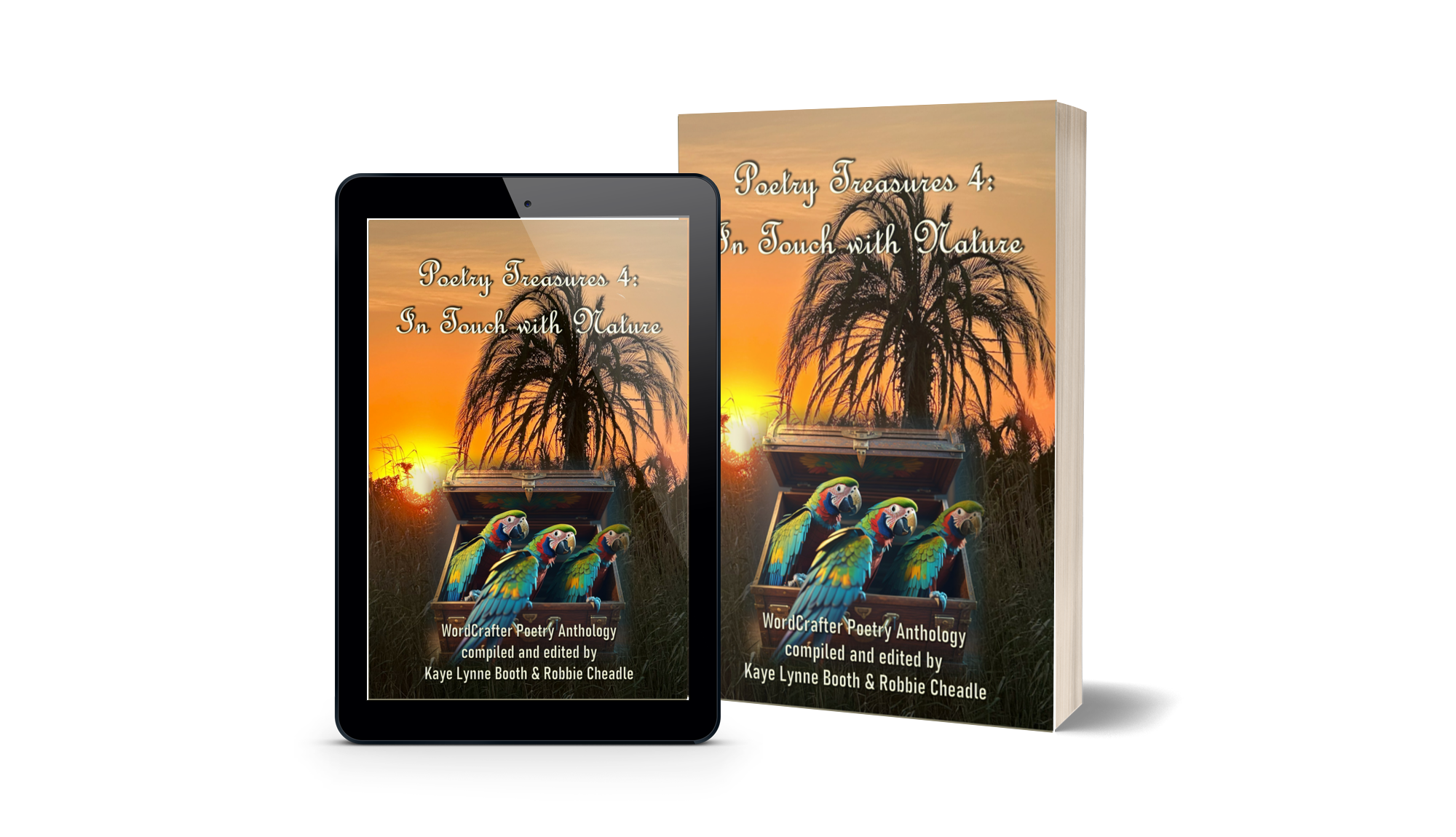
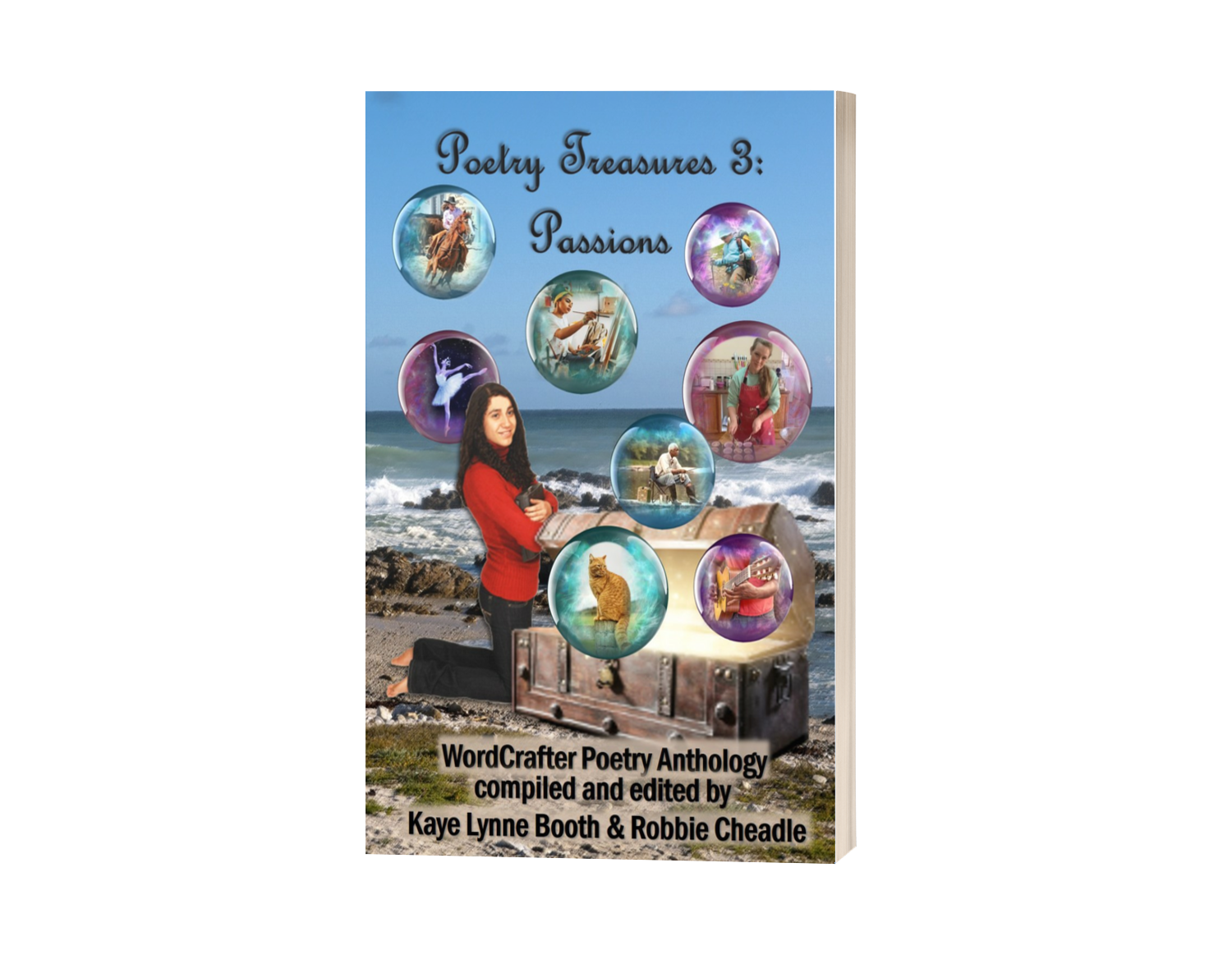
Announcing the release of Poetry Treasures, the WordCrafter poetry anthology featuring poetry by 2020’s author/poet guests on “Treasuring Poetry” blog series with Robbie Cheadle, right here on Writing to be Read.
Nine creative and talented poets have come together to produce this unique poetry collection, each one is truly a poetry treasure.
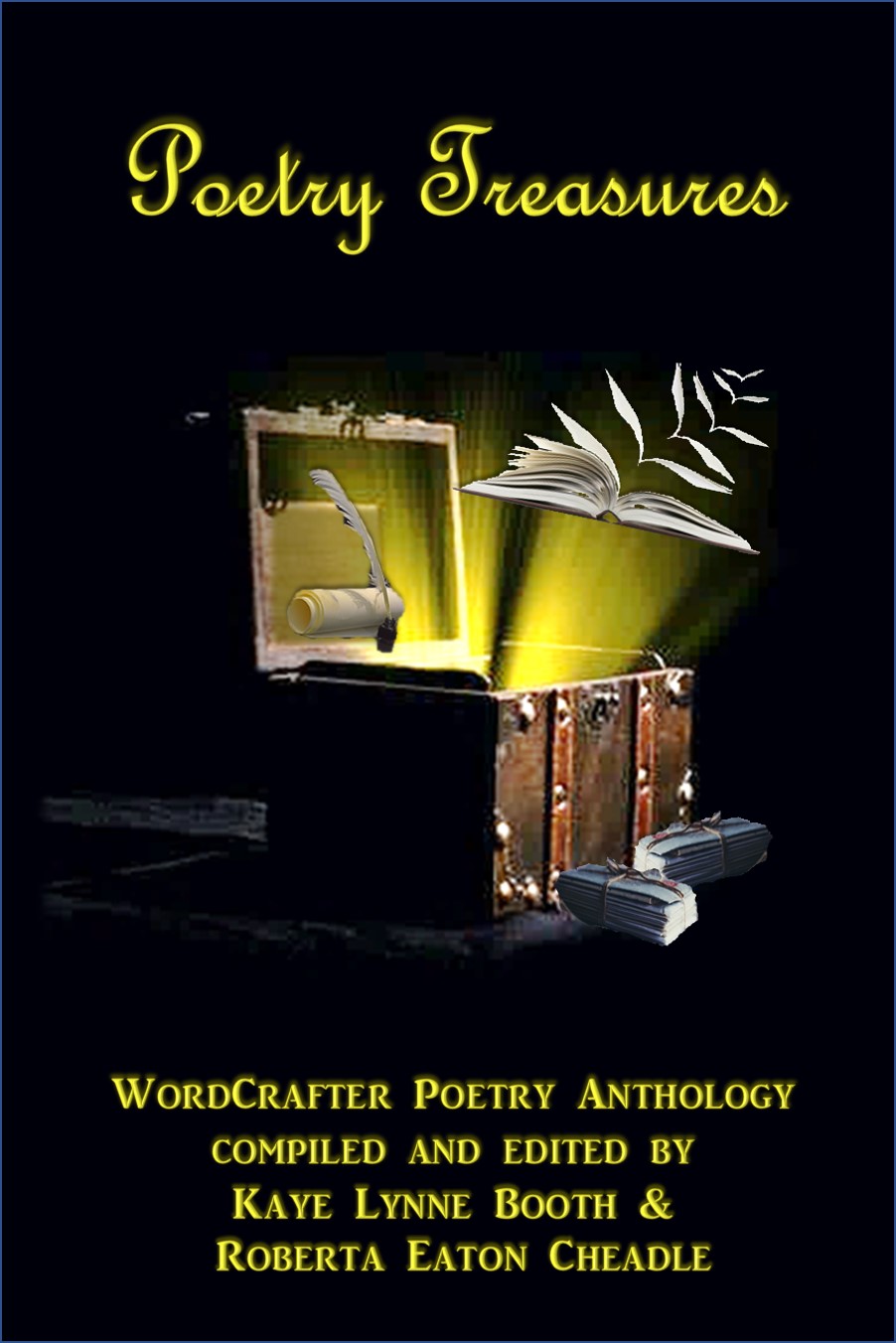
2020 “Treasuring Poetry” Featured Poet/Author Links:
Sue Vincent (December)
Sue Vincent (April)
Geoff Le Pard (October)
Frank Prem (August)
Victoria Zigler (March)
Colleen M. Chesebro (February)
K. Morris (July)
Annette Rochelle Aben (May)
Jude Kirya Itakali
Roberta Eaton Cheadle (Host)
______________________________________________________________________________________________
Like this post? Let me know in the comments. You can be sure not to miss any of Writing to be Read’s great content by subscribing to e-mail or following on WordPress. If you found this content helpful or entertaining, please share.