Growing Bookworms – Fun creations using fondant and Easter eggs #fondantart #Easter
Posted: March 13, 2024 Filed under: craft, Creative Projects, Growing Bookworms, Parenting, Teaching children | Tags: Easter Decorations, Fondant Art, Growing Bookworms, Robbie Cheadle, Writing to be Read 43 Comments
This month, I thought I would share a few ideas for making fun Easter creations using Easter eggs and fondant. Children love making things and modelling fondant is similar to modelling play dough.
I used candy coated hens eggs to make my creations but you can use any hens eggs sized Easter egg.
Step-by-step: How to make an Easter chick from fondant and an Easter egg


If you don’t have cutters, you can just cut the shapes freehand.


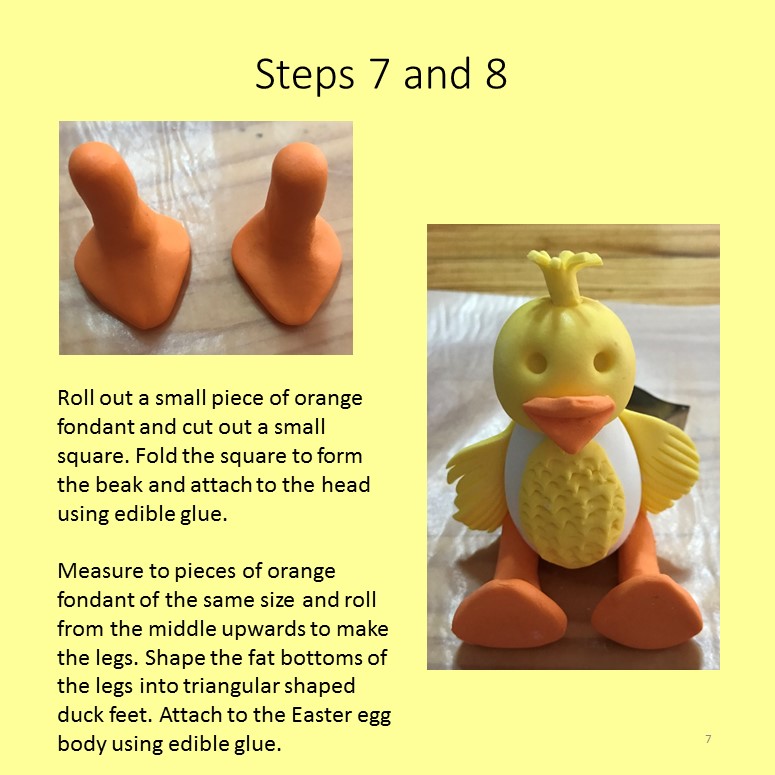


You can download a free PDF with these instructions here: https://robbiesinspiration.files.wordpress.com/2024/03/easter-chick.pdf
Step-by-step: How to make panda bear from fondant and an Easter egg


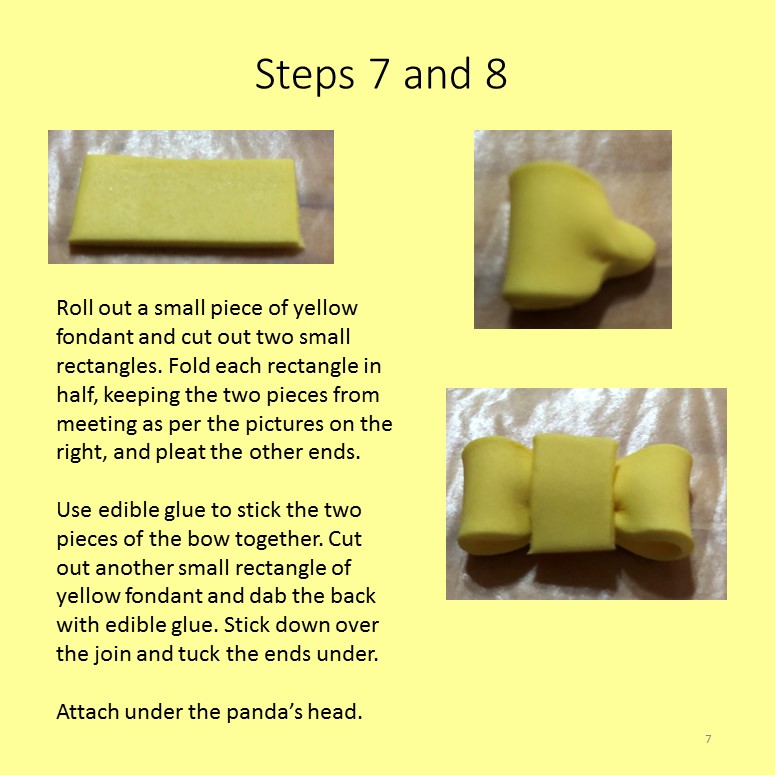

You can download a free PDF with these instructions here:
https://robbiesinspiration.files.wordpress.com/2024/03/panda-bear.pdf
Some other fondant and Easter egg idea – a dinosaur and a pig.


About Robbie Cheadle
Award-winning, bestselling author, Robbie Cheadle, has published fifteen children’s book and two poetry books. Her work has also appeared in poetry and short story anthologies.
Robbie also has two novels published under the name of Roberta Eaton Cheadle and has horror, paranormal, and fantasy short stories featured in several anthologies under this name.
The eleven Sir Chocolate children’s picture books, co-authored by Robbie and Michael Cheadle, are written in sweet, short rhymes which are easy for young children to follow and are illustrated with pictures of delicious cakes and cake decorations. Each book also includes simple recipes or biscuit art directions which children can make under adult supervision.
Robbie and Michael’s new Southern African Safari Adventures series is aimed at teaching young children about Southern African wildlife in a fun and entertaining way. Each book contains a rhyming verse story about a particular animal, as well as illustrations by Robbie Cheadle, photographs and links to video footage about that animal.
Robbie’s blog includes recipes, fondant and cake artwork, poetry, and book reviews. https://robbiesinspiration.wordpress.com/
Share this:

Growing Bookworms – The benefits of cooking and baking with children
Posted: May 10, 2023 Filed under: Children's Books, Growing Bookworms, Literacy, Parenting, Teaching children | Tags: Baking, Children, cooking, Growing Bookworms, Robbie Cheadle, Teaching Life Skills, Writing to be Read 54 Comments
I wrote this post six years ago when I hadn’t been blogging for very long and didn’t have many followers. During my recent attendance at the South African Festival of Children’s Literature where I was asked to speak about cake and fondant art and its benefits to children, I thought again about all these benefits and decided to share it again for Growing Bookworms.
Most children love to spend time in the kitchen either cooking or baking. It is a fabulous bonding experience with Mom or another caregiver and they always enjoying eating the results of their hard work afterwards.
I love to bake and both my sons have travelled the cooking, baking and eating road with me. Michael, particularly, loves to cook. He prefers to make more practical things than I do such as savoury and/or sweet pancakes, French toast and even stews and curries which he sometimes makes with his Dad. I like to cook but I also enjoy making all sorts of fancy sweet treats and cakes.
I remember baking with my small boys. Gregory used to love to measure and pour the ingredients into the bowl. Funnily enough, Greg also loved to wash up. Sadly, this did not continued into his teenage years. I used to strip him down to his nappy and stand him on a few chairs lined up in front of the sink [so that he could not fall off] and set him free in front of a sink of soapy water. He used to splash around happy with a cloth washing up the bowl and wooden spoon. I kept the washing of any sharp implements and breakables for myself.
Michael, on the other hand, has never been a fan of any kind of cleaning up. He likes to measure, pour and, especially, to mix. He also likes to “lick” out the bowl. I have photographs of Michael covered from head to toe in chocolate cake mix with the bowl upside down on his head. What fabulous fun.
Other than the obvious fun and bonding factors, there are a list of other great benefits to baking with your children. I did some research on this and this is what I found:
- Maths skills: Baking helps children to learn maths concepts, in particular, measurement and simple fractions (half a cup, a quarter of a lemon). In addition, multiplication and division are involved if you half or double a recipe. Other kinds of cooking may also involve patterning (for example with salads and kebabs) and simple addition (how many people are you feeding? how many cupcakes do you need for the class?);
- Art skills: Decorating cupcakes, cutting out biscuits and making animals and people out of fondant (sugar dough). All of these activities encourage creativity and develop design abilities. An element of construction can also be involved if you are making a gingerbread house or a marshmallow tower and children learn how to fit pieces together and get a tower to stand up;

Cupcakes decorated for charity by the children of St Columba’s Presbyterian Church Sunday School – Parkview, South Africa
- Comprehension skills: Baking and cooking teaches children how to read and interpret a recipe. They learn to follow a sequence of steps and how to organise the required ingredients. Baking also teaches children techniques and vocabulary such as folding, beating, kneading and blending;
- Science skills: Contrary to popular belief, baking is a science. Children learn the scientific effects of raising agents such as yeast and baking powder. They learn about the interaction between certain substances such as salt and bicarbonate of soda, cream of tartar and milk, yeast and warm water. If they make a mistake and/or leave out an ingredient, disaster often follows which helps enforce these learning points;


Picture credit: Photographs by Robbie Cheadle. Cream of tartar, Bicarb and milk mixed together create a good raising agent for biscuits. It also froths and bubbles and makes a perfect fuel for a biscuit rocket ship to the moon.
- Life skills: Baking and cooking with your children teaches them lifelong skills. In the future, the job of feeding themselves and their future families will become theirs. Baking and cooking skills will stand them in good stead when they leave home; and
- Self-esteem: Baking and cooking helps increase children’s self-esteem as they see and taste the results of their efforts. It also teaches children to work together with someone else in a team and that hard work pays dividends in the end.
I am not an occupational therapist but I found the following additional benefits listed on an OT website for children:
- Bilateral coordination;
- Eye-hand coordination;
- Hand strengthening; and
- Spatial perception and planning skills.
These four benefits make perfect sense to me in the context of baking and cooking with children.
So, what are you waiting for, get cooking. An easy way to start is with mini pizzas. You can buy the bases ready made from most grocery stores and you can also buy the tomato paste source to spread on the bases. Grate some cheese, cut up some mushrooms, pineapple, ham and anything else that you fancy and let the kids have fun assembling their own pizzas.
About Robbie Cheadle
Award-winning, bestselling author, Robbie Cheadle, has published thirteen children’s book and three poetry books. Her work has also appeared in poetry and short story anthologies.
Robbie also has two novels published under the name of Roberta Eaton Cheadle and has horror, paranormal, and fantasy short stories featured in several anthologies under this name.
The ten Sir Chocolate children’s picture books, co-authored by Robbie and Michael Cheadle, are written in sweet, short rhymes which are easy for young children to follow and are illustrated with pictures of delicious cakes and cake decorations. Each book also includes simple recipes or biscuit art directions which children can make under adult supervision.
Robbie’s blog includes recipes, fondant and cake artwork, poetry, and book reviews. https://robbiesinspiration.wordpress.com/
Share this:

Growing Bookworms – The importance of colour when illustrating children’s books #childrensfiction #readingcommunity #growingbookworms
Posted: November 9, 2022 Filed under: Books, Children's Books, Education, Illustrations, Literacy, Parenting, Reading | Tags: Children's Books, Color, Growing Bookworms, Illustrations, Parenting, Writing to be Read 43 Comments
Many children’s picture books make use of brightly coloured cartoon style illustrations. Children are attracted to bright colors such as red, yellow, green, blue, and pink. These colors create a sense of energy and playfulness and also emanate happiness. Colour impacts on children’s moods, behaviour, and educational performance.
Part of the reason children prefer bright colours is because saturated colours are easier for young, developing eyes to see. Bright colors and contrasting colors stand out more in a child’s field of vision than feinter shades.
Colour effects the way the brain functions and can be used by illustrators to encourage pattern recognition, memory, and the ability of young readers to absorb new information.
Here are a few examples of colours and how they can be used for learning:
RED – a powerful and attention-grabbing colour, red stimulates alertness and excitement. It encourages creativity and can also increase appetite.
BLUE – provides a sense of comfort by exuding calmness, loyalty, peace, serenity, and security.
YELLOW – encourages positive feelings and improves concentration by promoting creativity, clarity, and optimism.
GREEN – symbolises nature and the natural world. Green relieves stress and provides a sense of healing. It also represents balance, growth, tranquillity, cleanliness and calmness.
ORANGE – like red, orange is an energetic colour that promotes alertness. Orange creates a sense of passion, warmth, excitement and encourages communication.
PINK – symbolises love, romance, nurture, warmth, calmness, and imagination.
It is also important for illustrators, or writers engaging an illustrator, to note that colours can also overstimulate children, instead of inspiring them, so a balance of bright and neutral colours is required for illustrations.
I illustrate my own children’s books and I try to apply these principles in my own work. This is a collage of a selection of my fondant and cake art illustrations.

My illustrations have proved popular with children so I think I am getting the colour coding right.
These are some examples of famous children’s books and illustrators:


What do you think? Do you like bright colours? Have you written a children’s book and illustrated it yourself or engaged an illustrator? Let me know in the comments.
About Robbie Cheadle

Robbie Cheadle is a South African children’s author and poet with eleven children’s books and two poetry books.
The eight Sir Chocolate children’s picture books, co-authored by Robbie and Michael Cheadle, are written in sweet, short rhymes which are easy for young children to follow and are illustrated with pictures of delicious cakes and cake decorations. Each book also includes simple recipes or biscuit art directions which children can make under adult supervision.
Robbie and Michael have also written Haunted Halloween Holiday, a delightful fantasy story for children aged 5 to 9 about Count Sugular and his family who hire a caravan to attend a Halloween party at the Haunted House in Ghost Valley. This story is beautifully illustrated with Robbie’s fondant and cake art creations.
Robbie has published two books for older children which incorporate recipes that are relevant to the storylines.
Robbie has two adult novels in the paranormal historical and supernatural fantasy genres published under the name Roberta Eaton Cheadle. She also has short stories, in the horror and paranormal genre, and poems included in several anthologies.
Robbie Cheadle contributes two monthly posts to https://writingtoberead.com, namely, Growing Bookworms, a series providing advice to caregivers on how to encourage children to read and write, and Treasuring Poetry, a series aimed at introducing poetry lovers to new poets and poetry books.
In addition, Roberta Eaton Cheadle contributes one monthly post to https://writingtoberead.com called Dark Origins: African Myths and Legends which shares information about the cultures, myths and legends of the indigenous people of southern Africa.
Robbie has a blog, https://robbiesinspiration.wordpress.com. where she shares book reviews, recipes, author interviews, and poetry.
Find Robbie Cheadle
Blog: https://www.robbiecheadle.co.za/
Blog: robbiesinspiration.wordpress.com
Twitter: BakeandWrite
YouTube: https://www.youtube.com/channel/UCVyFo_OJLPqFa9ZhHnCfHUA
Facebook: Sir Chocolate Books
______________________________________________________________________________________________
Want to be sure not to miss any of Robbie’s “Growing Bookworms” segments? Subscribe to Writing to be Read for e-mail notifications whenever new content is posted or follow WtbR on WordPress. If you found it interesting or entertaining, please share.
Share this:

Growing Bookworms – Activities to teach children critical thinking skills
Posted: October 12, 2022 Filed under: Growing Bookworms, Literacy, Parenting, Teaching children | Tags: Critical thinking, Growing Bookworms, Robbie Cheadle, Teaching children, Writing to be Read 43 CommentsWhat are critical thinking skills?
Critical thinking is the ability to analyse facts and form a judgement.
In order to develop critical thinking skills, the following characteristics need to be fostered:
- An attitude of open mindedness, respect for evidence and reasoning, and the ability to see things from different perspectives and points of view;
- The ability to make a statement or decision based on supporting evidence;
- The ability to use reasoning skills to come to a logical conclusion. In other words, the ability to infer an outcome based on the facts and arguments presented;
- The ability to analyse information to assess its truthfulness. In other words, an ability to determine what is believable based on the facts and circumstances, and what is not.
Critical thinking skills help children learn how to work independently and solve problems.
Activities for teaching children critical thinking skills
- Creating art – when you express yourself using an artform, music or drawing or painting, you show an emotion or thought without using words and this encourages critical thinking.
- Games and puzzles – these activities help children learn to formulate strategies and understand how to approach a game with a plan of action.
- Reading books – while readings books, ask the child about the activities, thoughts, and emotions of the characters in the stories. Let them volunteer how they think a character will react to a certain situation and ask them how they think the story will end. This teaches the child to consider various options and outcomes and come up with theories.
- Real problems – modern children are exposed much younger to the problems of the world such as drought, hunger, and global warming. Discuss these issues with your child and help them consider possible solutions. The ability to find solutions to problems is a great skill and also encourages positivity and a sense of control. It is encouraging to think there are potential solutions to big issues.
- Building blocks – playing with lego and building blocks helps children to sift through endless possibilities, decide on one, and implement it. If it fails, they can try again.
My blogging friend, Norah Colvin, ex-teacher and developer of Readilearn Early Childhood Teaching Resources, recently shared an excellent post called Teaching thinking in the early years with itc thinkdrive. This post offers teachers some excellent resources for teaching critical thinking skills. You can read Norah’s post here: https://www.readilearn.com.au/teaching-thinking-in-the-early-years-with-itc-thinkdrive/
About Robbie Cheadle
Robbie Cheadle is a South African children’s author and poet with eleven children’s books and two poetry books.
The eight Sir Chocolate children’s picture books, co-authored by Robbie and Michael Cheadle, are written in sweet, short rhymes which are easy for young children to follow and are illustrated with pictures of delicious cakes and cake decorations. Each book also includes simple recipes or biscuit art directions which children can make under adult supervision.
Robbie and Michael have also written Haunted Halloween Holiday, a delightful fantasy story for children aged 5 to 9 about Count Sugular and his family who hire a caravan to attend a Halloween party at the Haunted House in Ghost Valley. This story is beautifully illustrated with Robbie’s fondant and cake art creations.
Robbie has published two books for older children which incorporate recipes that are relevant to the storylines.
Robbie has two adult novels in the paranormal historical and supernatural fantasy genres published under the name Roberta Eaton Cheadle. She also has short stories, in the horror and paranormal genre, and poems included in several anthologies.
Robbie Cheadle contributes two monthly posts to https://writingtoberead.com, namely, Growing Bookworms, a series providing advice to caregivers on how to encourage children to read and write, and Treasuring Poetry, a series aimed at introducing poetry lovers to new poets and poetry books.
In addition, Roberta Eaton Cheadle contributes one monthly post to https://writingtoberead.com called Dark Origins: African Myths and Legends which shares information about the cultures, myths and legends of the indigenous people of southern Africa.
Robbie has a blog, https://robbiesinspiration.wordpress.com. where she shares book reviews, recipes, author interviews, and poetry.
Find Robbie Cheadle
Blog: https://www.robbiecheadle.co.za/
Blog: robbiesinspiration.wordpress.com
Twitter: BakeandWrite
YouTube: https://www.youtube.com/channel/UCVyFo_OJLPqFa9ZhHnCfHUA
Facebook: Sir Chocolate Books
______________________________________________________________________________________________
Want to be sure not to miss any of Robbie’s “Growing Bookworms” segments? Subscribe to Writing to be Read for e-mail notifications whenever new content is posted or follow WtbR on WordPress. If you found it interesting or entertaining, please share.
Share this:

Growing Bookworms – Interactive books for children – Part 2: Digital books
Posted: September 14, 2022 Filed under: Books, Interactive Books, Literacy, Parenting | Tags: Growing Bookworms, Interactive Books, Literacy, reading education, Robbie Cheadle, Writing to be Read 66 CommentsLast month, I discussed physical interactive books for children and their benefits. You can read this post here:
This month, I am sharing the pros and cons of digital interactive books for children.
Firstly, what is an interactive eBook?
An interactive eBook is an ebook that has elements with which the reader can directly interact. This type of ebook has a lot of touchpoints where the reader can interact with videos, audio recordings, links and other content.
I read several articles about the benefits of eBooks for children and the experts believe that reading print books to toddlers and small children results in a better reading experience for the child. Research shows that children and parents/caregivers interact more frequently with one another when they are reading a paperback book and turning pages, and the quality of their interactions are better. This translates into better language development, literacy and bonding with caregivers.
The above being said, there are benefits to eBooks. Enabling children to learn new words and improve their fine motor schools are two of the more obvious benefits. The ability to engage with the storyline and possibly make choices, teaches children to weigh up options and improves their decision making abilities.
For reluctant readers, animated sounds, actions and special effects in books makes them more interesting and helps develop an interest in books and reading.
For economically disadvantaged children or children in settings that do not allow for borrowing books from public libraries, eBooks are a cheaper option. Parents can accumulate a digital library for their children at a fraction of the cost of a physical book. eBooks are also a more environmental friendly option as they do not use as many natural resources.
Children whose parents work long or unusual hours and can’t read to their children, benefit from having stories read to them by a digital reader. eBooks also provide for parents to read to their children when they are not in the same location. Parents and children can synch their ipads or iphones so they can interact on their screen in real time while holding an audio conversation. This is beneficial for parents whose jobs involve travel.
The down side of eBooks in this context is that to many sounds, actions and special effects can distract the child from the story as they don’t focus on it, but rather on the interactive features. There is a concern among experts that many eBooks available commercially are targeted towards amusement and emphasis multimedia, colours, sounds and other interactions and do not encourage literacy and language development. Studies have concluded that multimedia elements that enhance an understanding of the text benefit children, while those that draw the child’s attention away from the story, are non-beneficial.
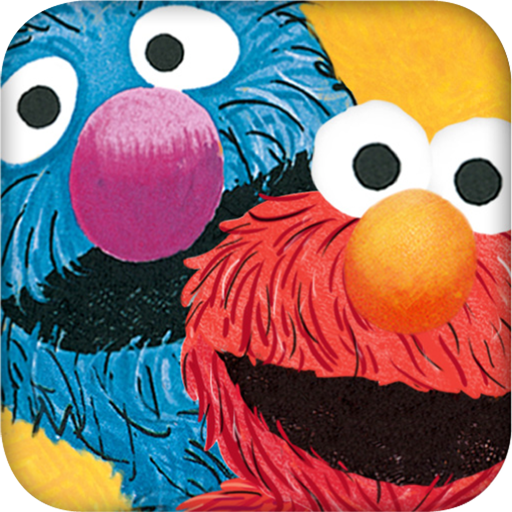
If you are interested in having a look at what is available for children in the eBook line, Amazon does stock them. Here is a link to one such book called Another Monster at the End of This Book…Starring Grover & Elmo! https://www.amazon.com/dp/B00B7S5FDG. There are a number of interesting reviews for this particular book.
What do you think about eBooks? Have you tried them? Do you think they are the future of children’s books?
About Robbie Cheadle
Robbie Cheadle is a South African children’s author and poet with eleven children’s books and two poetry books.
The eight Sir Chocolate children’s picture books, co-authored by Robbie and Michael Cheadle, are written in sweet, short rhymes which are easy for young children to follow and are illustrated with pictures of delicious cakes and cake decorations. Each book also includes simple recipes or biscuit art directions which children can make under adult supervision.
Robbie and Michael have also written Haunted Halloween Holiday, a delightful fantasy story for children aged 5 to 9 about Count Sugular and his family who hire a caravan to attend a Halloween party at the Haunted House in Ghost Valley. This story is beautifully illustrated with Robbie’s fondant and cake art creations.
Robbie has published two books for older children which incorporate recipes that are relevant to the storylines.
Robbie has two adult novels in the paranormal historical and supernatural fantasy genres published under the name Roberta Eaton Cheadle. She also has short stories, in the horror and paranormal genre, and poems included in several anthologies.
Robbie Cheadle contributes two monthly posts to https://writingtoberead.com, namely, Growing Bookworms, a series providing advice to caregivers on how to encourage children to read and write, and Treasuring Poetry, a series aimed at introducing poetry lovers to new poets and poetry books.
In addition, Roberta Eaton Cheadle contributes one monthly post to https://writingtoberead.com called Dark Origins: African Myths and Legends which shares information about the cultures, myths and legends of the indigenous people of southern Africa.
Robbie has a blog, https://robbiesinspiration.wordpress.com. where she shares book reviews, recipes, author interviews, and poetry.
Find Robbie Cheadle
Blog: https://www.robbiecheadle.co.za/
Blog: robbiesinspiration.wordpress.com
Twitter: BakeandWrite
YouTube: https://www.youtube.com/channel/UCVyFo_OJLPqFa9ZhHnCfHUA
Facebook: Sir Chocolate Books
______________________________________________________________________________________________
Want to be sure not to miss any of Robbie’s “Growing Bookworms” segments? Subscribe to Writing to be Read for e-mail notifications whenever new content is posted or follow WtbR on WordPress. If you found it interesting or entertaining, please share.
Share this:

Growing Bookworms – Setting learning goals with your child
Posted: May 11, 2022 Filed under: Commentary, Growing Bookworms, Parenting | Tags: Academics, Goal Setting, Growing Bookworms, Writing to be Read 49 Comments
Just like adults, children benefit by setting learning goals for the year or even the term. Goals give all of us something positive and definite to work towards and we feel a sense of achievement when we meet our goals.
At the beginning of the school year, parents should sit down with their child and plan some goals for the year. This goal setting process should include identifying the specific areas the child needs to work on and the setting of realistic and achievable goals in order to measure progress in those areas. If your child is struggling with maths, for example, there is no point in setting a goal of achieving a distinction in the first term of the new school year. A reasonable goal would be an increase of 5% for each term, which will allow the child to improve his/her understanding of the subject and gradually build on their successes. By setting achievable goals your child will be motivated to work towards them. Unrealistic goals are demotivating and set the child up for failure.
It is also better to set goals that are unrelated to specific grades and performance measures as this destresses the goal setting process for your child. Goals that shift your child’s learning objectives and focus from passing tests and exams to a greater understanding of the topic and appreciation of the value of the subject matter result in a better attitude towards learning. In this way, a child that dislikes a particular subject because of anxiety issues can learn to enjoy the learning process involved in tackling the subject and learning material. A positive attitude makes all the difference to a successful learning outcome.
Parents need to be sensitive when discussing areas of academic weakness with their child and ensure they do not compare one child in a family unfavourably to another. Children are all different and have their own talents which may differ dramatically. It undermines a child’s self confidence if they feel their performance is being measured against that of a sibling. Comparing children can also make them both feel that their parents love is conditional on good grades and academic performance thereby increasing anxiety and stress even in strong academics.
Goal setting should always focus on the future and not reflect negatively on the past. If the child has had a bad term and failed a subject, the goal should set out positive steps to improve performance and not focus on a bad result that can’t be changed. Ask your child how they can use the learning experience of the difficult test or exam to do better next time.
Goals don’t have to be academic in nature. A child that is exceptionally shy can set goals to try and participate more in class activities and discussions. A child that is not sporty can set a goal to play a non-competitive sport for a term. After all, learning is not only about academics, it is also about learning to be a good citizen and contributing positively to society.
What do you think? Have you ever set goals with your child? Let me know in the comments.
This morning, I came across an excellent post by Bella from Thoughts ‘n Life blog about goal setting. It offers some good advice which you can read here: https://thoughtsnlifeblog.com/2022/05/09/setting-the-right-priorities/
Thinking about goals setting and keeping children focused and positive brought to mind this song from the movie Annie:
About Robbie Cheadle

Robbie Cheadle is a South African children’s author and poet with 9 children’s books and 2 poetry books.
The 7 Sir Chocolate children’s picture books, co-authored by Robbie and Michael Cheadle, are written in sweet, short rhymes which are easy for young children to follow and are illustrated with pictures of delicious cakes and cake decorations. Each book also includes simple recipes or biscuit art directions which children can make under adult supervision.
Robbie has also published 2 books for older children which incorporate recipes that are relevant to the storylines.
Robbie has 2 adult novels in the paranormal historical and supernatural fantasy genres published under the name Roberta Eaton Cheadle. She also has short stories in the horror and paranormal genre and poems included in several anthologies.
Robbie writes a monthly series for https://writingtoberead.com called Growing Bookworms. This series discusses different topics relating to the benefits of reading to children.
Robbie has a blog, https://robbiesinspiration.wordpress.com/ where she shares book reviews, recipes, author interviews, and poetry.
Find Robbie Cheadle
Blog: https://www.robbiecheadle.co.za/
Blog: robbiesinspiration.wordpress.com
Twitter: BakeandWrite
Instagram: Robbie Cheadle – Instagram
Facebook: Sir Chocolate Books
______________________________________________________________________________________________
Want to be sure not to miss any of Robbie’s “Growing Bookworms” segments? Subscribe to Writing to be Read for e-mail notifications whenever new content is posted or follow WtbR on WordPress. If you found it interesting or entertaining, please share.
Share this:

Growing Bookworms – Letting Go!
Posted: February 9, 2022 Filed under: Growing Bookworms, Parenting | Tags: Growing Bookworms, Parenting, Robbie Cheadle, Writing to be Read 83 CommentsI’m going to start today’s post with a short, hopefully amusing, story about my taking my oldest son to get his university access card last week. By way of background, the relevant entrance for this task is on a busy street with no parking. The area is also not a good one, so hanging about on the street in front of the entrance is not particularly appealing. Another thing to note is there have been a spate of kidnappings of older teens and young men recently in South Africa.
“I think that Greg should go on his own to fetch his University card,” I say to Terence. “He won’t want his mother with him. I will embarrass him.”
“No,” Terence says with authority, “Parents go with.”
Hmmm, I think. You attended this university thirty years ago, things might have changed.
There is no arguing with this man who is over the moon that his son has achieved a scholarship to study a BSc Computer Science at “his” university. Thirty years has disappeared in a trice and Terence is back in full University mode. You’d think he was going and not Greg.
At 8.30am on the appointed morning, a determined Terence drops Greg and I off on the street in front of the entrance, waves cheerfully, and heads off to work, which is fortunately close by.
We go to security. Greg calls a number and is granted access. I call the same number and am not allowed in. I notice a few other parents outside the security gate.
“You just go on your own,” I say. “I’ll wait for you here.”
Off Greg goes and I am stuck standing on the street in this undesirable area. There are two security guards and a few other waiting mom’s so I don’t panic. One lady is very nice and makes conversation while we wait.
Ten minutes later, Greg texts me: I don’t know where to go.
I message back: Come back to the gate and the security guard will tell you where to go. I saw her telling another boy.
Greg does not come back to the gate. There is complete cyber silence
Another ten minutes pass and he texts: I’ve found it and I’m waiting in the queue.
Happiness! He’s doing this on his own [as he should] and I’m confident we’ve come early and he won’t take long. I feel an idiot waiting outside the barred gate like an unwelcome guest. Other arriving students stare at me suspiciously.
The time drags. One hour passes and my back is aching. I don’t like standing here on the street. I feel agitated. I text Greg: How much longer?
He replies: I’m getting on a bus and going somewhere else.
I text him: where are you going?
He replies: I don’t know.
Complete cyber silence.
I text him – no reply.
I call him – no reply.
I decide he has been enticed into a bus by kidnappers and is on his way to Nigeria to be forced into male prostitution.
I have a panic attack and call him six times.
No reply.
I phone Terence at work and tell him our son has potentially been kidnapped.
Terence knows me. He doesn’t say anything. He gets into his white car and charges to the rescue.
Terence arrives and I jump into the car and burst into tears.
Greg sends a text: I’m getting my card.
I tell Terence that the kidnappers are responding to messages on Greg’s phone so they can throw us off the scent and cross the border.
Terence is undecided: Should he take me to the closest mental institution or try to find Greg.
Greg texts: I’m finished. Can you fetch me from Alpha Campus.
***
It was very funny. Afterwards. Of course, I broke a major rule of “letting your child go.” Stay in the moment rather than imagining the worse-case scenario. Catch yourself if you are catastrophizing a situation.
Letting go is more about letting go of our own fears and anxieties as parents. It is adjusting to the idea that you are no longer in control of your child and they are now making their own choices and decisions. It also means they are responsible for any fallout from those decisions.
I blame my anxiety about my children on their collective 32 operations, chronic health problems, and the two home invasions I have been involved in. I have trust and anxiety issues, but I still need to get a grip and accept that my son is now an adult. Even Michael, needs some freedom and to be given wings.
Some other advice to parents who struggle to let go is as follows:
- Stop trying to raise a “happy” child. Accept that making decisions and choices is going to result in mistakes and the resultant misery these bring. People need these experiences to grow and learn.
- Empower your child over time by giving them some power of less important decisions as they get older. If they refuse to study for an important test, let them fail. You can’t shelter your child from all the difficulties in life and they need to learn to prioritize.
- Set boundaries and follow through on punishments if your child fails to comply. If you tell him/her to be home by 10pm and he gets home at 11pm, ground him. He needs to learn about consequences for actions.
- Have respect for your child and his/her ability to handle situations as they grow up. Have faith in the values and ethics you have instilled in them.
Did you struggle to let go when it come to your children? Let me know in the comments.
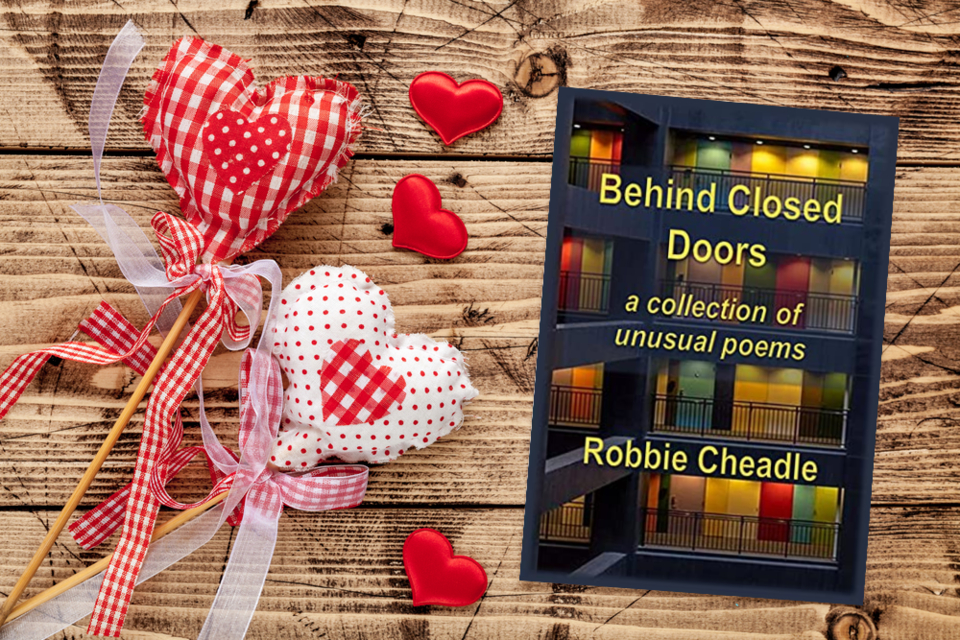
To round this post off, I am sharing a poem I wrote about letting go. It is included in my book, Behind Closed Doors.
He walks away by Robbie Cheadle
From the first day
he took a tentative step
on uncertain chubby legs
attached to adventurous feet
he moved away from her
embracing with enthusiasm
the mysterious outside world
She watched over him tenderly
as he learned about life
discovered the joy of friendship
and the heartbreak of loss
embarked on his academic journey
exploiting his strengths and
overcoming his weaknesses
and during all this time
mom was always enough
her smile healed all wounds
her kiss cured all pain
but she knew in her heart
that this investment of hers
was ultimately for another
a nameless faceless other
who would eventually take her place
she was preparing him to leave
and find his place in this world
His independence draws ever closer
her smile no longer enough
as he jostles for position
in the heartless world of men
her kiss no longer wanted
as he seeks the lips of the other
It’s heart wrenching to let go
knowing he must suffer pain
before he finds his enduring love
encounter setbacks and loss
before success and satisfaction
but it’s the duty of a mother
to set her son loose
to fly alone
About Robbie Cheadle
Robbie Cheadle is a South African children’s author and poet with 9 children’s books and 2 poetry books.
The 7 Sir Chocolate children’s picture books, co-authored by Robbie and Michael Cheadle, are written in sweet, short rhymes which are easy for young children to follow and are illustrated with pictures of delicious cakes and cake decorations. Each book also includes simple recipes or biscuit art directions which children can make under adult supervision.
Robbie has also published 2 books for older children which incorporate recipes that are relevant to the storylines.
Robbie has 2 adult novels in the paranormal historical and supernatural fantasy genres published under the name Roberta Eaton Cheadle. She also has short stories in the horror and paranormal genre and poems included in several anthologies.
Robbie writes a monthly series for https://writingtoberead.com called Growing Bookworms. This series discusses different topics relating to the benefits of reading to children.
Robbie has a blog, https://robbiesinspiration.wordpress.com/ where she shares book reviews, recipes, author interviews, and poetry.
Find Robbie Cheadle
Blog: https://www.robbiecheadle.co.za/
Blog: robbiesinspiration.wordpress.com
Twitter: BakeandWrite
Instagram: Robbie Cheadle – Instagram
Facebook: Sir Chocolate Books
______________________________________________________________________________________________
Want to be sure not to miss any of Robbie’s “Growing Bookworms” segments? Subscribe to Writing to be Read for e-mail notifications whenever new content is posted or follow WtbR on WordPress. If you found it interesting or entertaining, please share.
Share this:

Growing bookworms – The importance of day dreaming
Posted: November 10, 2021 Filed under: Creativity, Growing Bookworms, Inspirational, Parenting | Tags: Children, Creativity, Daydreaming, Growing Bookworms, Imagination, Parenting, Writing to be Read 67 Comments
When I was a little girl, I loved to day dream. I was one of those kids the teacher is always calling back from dream world. The recall to reality was always a little negative in my recollection. “Stop daydreaming, and concentrate on your maths/history/geography – fill in the blank.”
As I’ve grown older, I’ve realised the benefits of day dreaming and mental downtime. When my children were younger, I used to use the driving time into the office every day to day dream. It was a time for me to let my mind wander and relax. I discovered that poems would often pop into my head, more or less fully formed during this time. The inspiration would be something I saw on the way to work. For example, my poem “The Beggar’s Child” was inspired by a mother and baby I used to see standing on the curb everyday. I looked at that little boy, strapped to his mother’s back in the traditional African way, and wondered what he thought of the cars driving past and the indifference of the drivers to his plight.
About a year before the first lockdown, I started listening to audiobooks in the car, instead of day dreaming. I quickly discovered that my poetic output dropped dramatically with my new routine. That led to my having to make a choice between using my time in the car to listen to classic books or to day dream and produce poetry. I chose audio books.
The idea that the lack of day dreaming time was limiting my creativity stayed with me and I was most interested to learn that that day dreaming is considered to be good for children. Yes, you read correctly, day dreaming is beneficial for children and for adults.
Day dreams teach children to be calm and peaceful and to develop empathy and better emotional learning for consolidation of their learning experiences.

According to many psychologists, zoning out in your own internal world is good and helps you to plan for the future, generate ideas, regulate emotion, and spur creativity.
I have always felt that day dreaming, which I’ve always termed watching the clouds, is an essential part of the inventive process. The mind must wander and explore in order to be able to make the great leaps of logic and imagination required to invent something completely new. It pleases me greatly that recent research supports my view that day dreaming is an essential part of mental processing, reasoning, and learning.
These are some of the identified benefits of day dreaming:
- Enhanced critical thinking and intelligence – One of the main regions of the brain utilised when we day dream is the region associated with complex problem solving. Critical thinking capabilities are essential for successful learning;
- Motivation or achievement of ‘dreams’ – Living our dreams through day dreaming is an enabler of achieving our personal goals and objectives.
- Increased confidence – Imagining ourselves playing different roles in life and achieving certain objectives, like passing examinations, gives us more confidence when the real situation presents itself.
- Increased insight – The light bulb moments we have are often a result of our processing and organising information differently during day dreaming sessions.
- Increased ability to cope – Imagining ourselves in a different situation when our real one is emotionally draining or difficult, gives us an increased mental ability to cope with our reality.
- Better mental agility – Day dreaming enables us to smoothly shift mental gears in the face of unexpected situations or unanticipated events.
- Increased creativity – Day dreaming provides for increased creativity as our mind finds ways of entertaining us free from outside stimulation.
- Increased concentration – Mental downtime gives our brains time to process information and enables it to develop and concentrate better during periods of focus.
I must admit, that I have always innately know the above and I encouraged my children to day dream. Sadly, most kids fill all their free time with visual media like television and computers and I wonder what that will mean for innovation and progression in the future.
About Robbie Cheadle
Robbie Cheadle is a South African children’s author and poet with 9 children’s books and 2 poetry books.
The 7 Sir Chocolate children’s picture books, co-authored by Robbie and Michael Cheadle, are written in sweet, short rhymes which are easy for young children to follow and are illustrated with pictures of delicious cakes and cake decorations. Each book also includes simple recipes or biscuit art directions which children can make under adult supervision.
Robbie has also published 2 books for older children which incorporate recipes that are relevant to the storylines.
Robbie has 2 adult novels in the paranormal historical and supernatural fantasy genres published under the name Roberta Eaton Cheadle. She also has short stories in the horror and paranormal genre and poems included in several anthologies.
Robbie writes a monthly series for https://writingtoberead.com called Growing Bookworms. This series discusses different topics relating to the benefits of reading to children.
Robbie has a blog, https://robbiesinspiration.wordpress.com/ where she shares book reviews, recipes, author interviews, and poetry.
Find Robbie Cheadle
Blog: https://www.robbiecheadle.co.za/
Blog: robbiesinspiration.wordpress.com
Twitter: BakeandWrite
Instagram: Robbie Cheadle – Instagram
Facebook: Sir Chocolate Books
______________________________________________________________________________________________
Want to be sure not to miss any of Robbie’s “Growing Bookworms” segments? Subscribe to Writing to be Read for e-mail notifications whenever new content is posted or follow WtbR on WordPress. If you found it interesting or entertaining, please share.
Share this:

Growing Bookworms – The importance of teachers
Posted: October 13, 2021 Filed under: Education, Growing Bookworms, Parenting | Tags: Education, Growing Bookworms, Robbie Cheadle, Teachers, Writing to be Read 85 CommentsThe schools in South Africa are racing towards the end of a year fraught with lockdowns, illness and death. My sons have been on-line for long periods twice this year and many of the students have suffered the losses of friends, parents, grandparents, and other important people in their lives. Seeing how happy my sons are to be back at school and watching them forge ahead with their school work as their teachers valiantly try to reteach material and principles that were taught on-line and which the boys have failed to grasp properly, makes me feel more appreciative of their teachers than ever.
Gregory finishes school today. It is his last day of a 14-year journey and it is all rather emotional for the boys and teachers. His preliminary examinations went very well and he achieved an average of 92% for all 7 of this subjects including AP maths. This is partly due to hard work on Gregory’s part, but a lot of credit must go to his excellent teachers who really went all out to help the boys achieve the best they could. Greg attended on-line and in personal tutorials and extra sessions to prepare for his exams and some of them were over weekends during his teachers personal time.
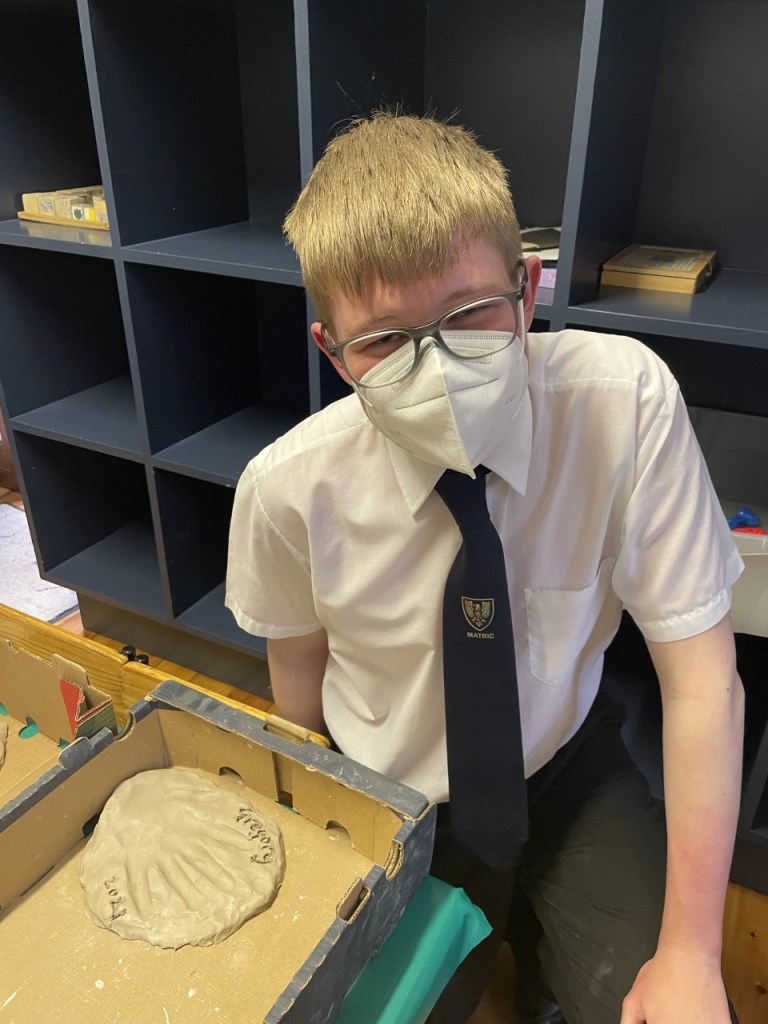
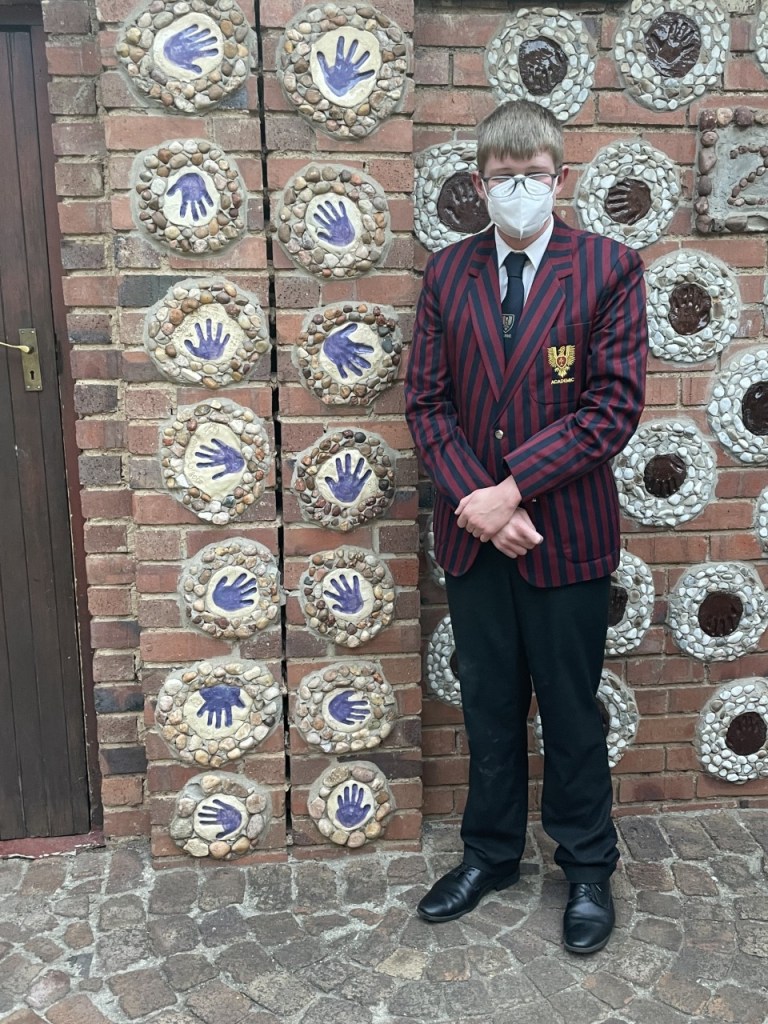
As part of his leaving experience, he was invited back to his old nursery school, which forms part of his current school campus, and his old pre-preparatory school. How lovely it was to walk those corridors again and see the small desks and sinks, the art rooms and to find Greg’s handprint from when he was a 5-year old boy.
I believe that teachers are one of the most important professional groups in our society. They give children purpose, help prepare them to be successful citizens of our world, and help to inspire them to achieve and succeed both at school and in life.
A teacher imparts knowledge, good values, traditions and helps youngsters recognise modern challenges and overcome them.
The role of teachers is often underplayed and misunderstood with parents and others thinking they get lots of free time in the afternoons and during school holidays. This believe is certainly unfounded as every teacher I’ve ever known works a full day and more. They all teach extra murals and many offer extra tuition for students that struggle. Many of the teachers at my sons school are also involved in a community education programme and teach children from less privileged schools and backgrounds during part of their afternoons. Teachers also do a lot of marking and lesson preparation and that takes up a lot of their evenings and holidays. In summary, teaching is not a part-time job.
One of the toughest parts of teaching is teaching children from all sorts of homes and backgrounds about using their imaginations, creativity and challenging them to develop consistency, good work ethics, empathy and emotional intelligence.
I have met a number of wonderful teachers in the blogosphere and I appreciate them all for the wonderful teachers they are. Once a teacher, always a teacher, it’s not really something you stop doing as it is a part of your nature and behaviour patterns.
I am going to end this post by sharing a YouTube video about a special teacher, Jennie Fitzkee, who is a great champion of reading out loud and appeared recently on the Kelly Clarkson show. Bravo to Jennie for helping share the word about the importance of reading and thank you to Kelly Clarkson for raising the reading banner so high.
Here is link to the video: https://www.facebook.com/KellyClarksonShow/videos/1119312005268883
About Robbie Cheadle
Robbie Cheadle is a South African children’s author and poet with 9 children’s books and 2 poetry books.
The 7 Sir Chocolate children’s picture books, co-authored by Robbie and Michael Cheadle, are written in sweet, short rhymes which are easy for young children to follow and are illustrated with pictures of delicious cakes and cake decorations. Each book also includes simple recipes or biscuit art directions which children can make under adult supervision.
Robbie has also published 2 books for older children which incorporate recipes that are relevant to the storylines.
Robbie has 2 adult novels in the paranormal historical and supernatural fantasy genres published under the name Roberta Eaton Cheadle. She also has short stories in the horror and paranormal genre and poems included in several anthologies.
Robbie writes a monthly series for https://writingtoberead.com called Growing Bookworms. This series discusses different topics relating to the benefits of reading to children.
Robbie has a blog, https://robbiesinspiration.wordpress.com/ where she shares book reviews, recipes, author interviews, and poetry.
Find Robbie Cheadle
Blog: https://www.robbiecheadle.co.za/
Blog: robbiesinspiration.wordpress.com
Twitter: BakeandWrite
Instagram: Robbie Cheadle – Instagram
Facebook: Sir Chocolate Books
______________________________________________________________________________________________
Want to be sure not to miss any of Robbie’s “Growing Bookworms” segments? Subscribe to Writing to be Read for e-mail notifications whenever new content is posted or follow WtbR on WordPress. If you found it interesting or entertaining, please share.




















Mind Fields: I Tear Apart Marvel Comics With My Grandkids
Posted: October 6, 2023 | Author: artrosch | Filed under: Comic Hero, Commentary, Mind Fields, Parenting, Writing to be Read | Tags: Arthur Rosch, Children, Marvel Universe, Mind Fields, Social Commentary, Writing to be Read | 17 CommentsWhen I’m with my grandkids watching movies from the Marvel Comics universe I have to remind myself not to view this material with an adult mind. It’s better to watch with the mind set of my 13 year old grandson and ten year old grand-daughter.
Last night we watched “Ant Man And The Wasp”. My grandkids loved it. I liked it. Well… I endured it. There’s so much filler in Marvel movies. Every “BOP! POW!” or “WHAM!”, every end-over-end toppling of a character whose booties excavate the pavement or crush an office building: all that stuff is so much dross. Such destruction! Miraculously, no one is annihilated by the falling buses or shattered facades.
It seems to me that great writers are those who go the extra mile. Lazy writers are those who go right up to the mile before the mile before the EXTRA MILE. That’s what’s frustrating about Marvel movies. The producers know that they can inject a liberal amount of fake fighting and harmless destruction into the script. How much? Fifteen minutes? Twenty? Maybe half an hour of combat-without-consequences? IF (and we are) raising children with this stuff it sets a dangerous idea, that is, “THERE ARE NO REAL CONSEQUENCES”. There are just provisional outcomes that can always be changed by using a time machine or some deus ex machina, some easy out. Kids absorb this data hungrily and without critical thinking. They love the bop!bam! stuff and don’t seem to be frustrated by the relative emptiness of the script.
“Ant Man And The Wasp” deals with some heayy concepts, like the world of Quantum Mechanics, the realm of the minute sub-quark particles. I enjoy the psychedelic visuals to depict these mysterious areas. “Someone” I thought (but did not speak aloud) has been smoking some DMT or ingesting psilocybin. I took a few moments to explain Quantum Mechanics to my grandkids. They’re super-bright little people who are far more powerful than I am. They’re still kids. So I have to tell myself to chill; watch the Marvel Universe with an uninformed mind. They understood my explanation of Quantum Mechanics“ as a continuum, from the mighty sizes of galaxies to the infinitesimal sizes of sub atomic particles. BUT..if you live in any of these places then it all looks normal-sized. To you and your friends”. Right? Right.
My grand-daughter just came into my office and asked “Whatcha doing?” I said that I was writing a review of the movie we saw last night. I explained my point of view and she seemed to grasp that a world in which no one REALLY dies is a bit fatuous. I explained that Marvel’s tactics remove the real terror from their productions. We all know that none of the heroes will die. That there’s some last minute rescue. Or the sequel will resuscitate the seemingly annihilated people.
Hasn’t the media world always been like this? The soft-peddle American media archives are full of plots with happy endings. The hero always triumphs; the frustrated couple always get their kiss. I think this is true, but now, in 2023, it’s just more so. There’s more technology, more ways to soften the blows of so called REALITY.
Reality has never been less real.
The sound track of “Ant Man And The Wasp” brings a relentless rhythmic figure, a continuous percussive BAH BUH BUMP BUMP that induces an excited state in the viewer. It was so pernicious that my sleep was disturbed until I got up at around three in the morning and quietly played some Joni Mitchell and Leonard Cohen. THAT was the last thing I heard before returning to bed and snoring away the next four hours. It’s important to understand this level of mind hygiene. The last sounds you hear remain in your head until you hear something else. If you want to sleep, you need to ditch the rough stuff in favor of something soothing. At least it works that way for me.
I explained the thrust of this essay to my ten year old granddaughter: that none of the heroes REALLY die and that makes the movies way less scary. I’m pretty sure she grasped my point. She’s really smart. I don’t know what kind of people god is now manufacturing but they are somethin’ else.
I’m less worried about the future when I see how these kids cope. Quantum Mechanics? They don’t care; its just something people say that means invisibly tiny stuff, like stuff that makes bacteria look HUGE!
They get it. They know that bacteria are too small to see, so why not even smaller stuff?
Why not? In a world where nothing is impossible; everything that’s going to happen has already happened and continues to happen. The future is giving way to this stuff. And it’s happening again.
About the Author
Arthur Rosch is a novelist, musician, photographer and poet. His works are funny, memorable and often compelling. One reviewer said “He’s wicked and feisty, but when he gets you by the guts, he never lets go.” Listeners to his music have compared him to Frank Zappa, Tom Waits, Randy Newman or Mose Allison. These comparisons are flattering but deceptive. Rosch is a stylist, a complete original. His material ranges from sly wit to gripping political commentary.
Arthur was born in the heart of Illinois and grew up in the western suburbs of St. Louis. In his teens he discovered his creative potential while hoping to please a girl. Though she left the scene, Arthur’s creativity stayed behind. In his early twenties he moved to San Francisco and took part in the thriving arts scene. His first literary sale was to Playboy Magazine. The piece went on to receive Playboy’s “Best Story of the Year” award. Arthur also has writing credits in Exquisite Corpse, Shutterbug, eDigital, and Cat Fancy Magazine. He has written five novels, a memoir and a large collection of poetry. His autobiographical novel, Confessions Of An Honest Man won the Honorable Mention award from Writer’s Digest in 2016.
More of his work can be found at www.artrosch.com Photos at https://500px.com/p/artsdigiphoto?view=photos
_________________________________________________
Want to be sure not to miss any of Arthur’s “Mind Fields” segments? Subscribe to Writing to be Read for e-mail notifications whenever new content is posted or follow WtbR on WordPress. If you find it interesting or just entertaining, please share.
Share this: