Pros and Cons of Traditional vs. Independent vs. Self-Publishing (Part 3): Interview with Self-Published Author Arthur Rosch
Posted: October 31, 2016 Filed under: Books, Fiction, Memoir, Opinion, Publishing, Self-Publishing, Writing | Tags: Art Rosch, Book, Books, Fiction, Novel, Novels, Publishing, sci-fi, Self-Publishing, Writing 3 Comments
Your at a dinner party, chatting with other guests when someone asks what you do. You say that you’re an author and everyone is adequately impressed. It’s not every day you meet a bonefide author. Then you mention that you are self-published, and suddenly they all have somewhere better to be.
Self-publishing carries with it a certain stigma. In part, it may be due to a certain number of poor quality self-published books that flooded the market with the rise in popularity of the self-publishing market. With the rise of digital media, almost over night, it was no longer necessary to seek out and captivate a traditional publisher, and anyone, whether they write well or not, could become an author. In the beginning, as it is with most rising trends, self-publishing was a rather expensive proposition, and many authors didn’t have a whole lot to invest, so they skimped by on costs by skipping things like professional editing. Some maybe had their mother or their aunt or their brother give it a once over, but none of them had a trained eye. Others didn’t even do that, believing that their writing was so good, it didn’t need to be edited, or perhaps they were just out to make a buck, and didn’t really care if they put out a quality book. But, for whatever reasons, a lot of less than good quality self-published books made their way out into the market, marring the reputation of the self-publishing industry.
Companies like Amazon and Smashwords put another bump in the industry when they offered authors yet another avenue for publication with the e-book. Digital publishing was cheaper and easier than publishing print copies. In fact, it is virtually free to publish digitally, freeing up funds to be used for things like editing in order to create a quality piece of literature. Of course, there will always be those who are just in it for the money and don’t really care if the book they put out there is good quality, as long as it makes them money. They’re the types that will take advantage of the savings of digital publication to line their own pockets and still won;t bother to pay an editor. They are the authors that wouldn’t survive in the digital publishing world, but hopefullly, there are less of them now.
Despite the stigma attached to self-publishing, there are many talented self-published authors out there, who care about creating and publishing a quality literary product. Today’s interview is with self-published author, Arthur Rosch, who puts whatever time and effort is required into his books, sometimes taking years to complete them. Art is a talented writer. His publishing credits include his travel memoir, The Road has Eyes: A Relationship, An RV, and a Wild Ride through Indian Country, his literary novel, Confessions of an Honest Man, and his epic science fiction novel, The Gods of the Gift. Art shares a positive outlook on self-publishing with previously interviewed self-published authors, Tim Baker and Jeff Bowles. Here, Art shares his thoughts on the publishing industry with his very generous answers, as he candidly relates his own publishing journey.
Kaye: Would you share your own publishing story with us?
Art: I’ve been reading for pleasure since I was five.years old I remember the day I learned to read. It came like a lightning bolt. Aha! So that’s how it works! I made the connection between letters and the sounds they represented. It was my third week in kindergarten. I hated school but I loved to read books. I started by reading historical novels. The other kids were reading “Dick And Jane Go To The Farm”.
When I was fifteen I fell madly in love with a girl. She wanted certain attributes in a boyfriend. One of those requirements was that said boyfriend should be a poet. So, I began to write poetry to please my girlfriend. She turned out to be far less faithful than the process of writing. I gave up on the girl and stuck with the writing. When I was twenty five I was seized by the ambition to write a novel. The project became a science fiction novel called THE GONGS OF SPACE. It was awful. It did, however, attract the interest of literary agent Scott Meredith. I signed a two year contract, and proceeded to write more novels. None of them sold. I had plenty of imagination but lacked some fundamental skills in the craft of writing.. I also needed more life experience.
I’m old enough to remember the “old” model of publishing. I had an entree into that world of agents, editors and publishers. A short story of mine won Playboy Magazine’s Best Story Of The Year Award. I had my fifteen minutes of fame. All the doors were open.
Playboy invited me (with an expense account) to their twenty fifth anniversary party.. I came away with a pocket full of business cards from important people in the publishing industry. Unfortunately, at that time I was dabbling in drugs. That dabble turned into a roaring addiction that derailed me for twenty years. I wrote during those decades. I wrote a lot. But I was like the Hubble Telescope before it was repaired. I couldn’t focus. I had a wonderful opportunity that I wasted by making a very bad choice. This kind of blunder is the stuff of life. I admit, I screwed up. I prefer to regard that interval in my life as “experience”. It was my Dark Night Of The Soul I had lost my family, my home, my possessions and my dignity. But I learned from my suffering.
What can a writer do without insight into the human condition? What decent writer is not also an observer and a psychologist?. My addiction years were loaded with with lessons. I sank to the bottom of the social order. I was on the streets, completely mired in the human experience. I learned from the streets. I learned hard. Then I had to put myself back together.
Addiction is one of the central pillars of my life narrative. I wanted to heal myself, so I went into a long therapy and read everything I could find about family dynamics, addiction and obsession.. Some writers need to spend an apprenticeship in the realm of compulsion, irrationality, bad choices and failure. By the time I was in my mid forties I had a thorough apprenticeship under my belt.
When I surfaced from that underworld, I started looking for an agent. A whole generation of agents had come and gone. The publishing world had changed. I was now (by my own evaluation) a fine writer with a distinctive voice. Agents weren’t interested in me. I wrote hundreds of query letters. I had three novels and a memoir that were ready for editing and representation. I got rejections again and again. How many times did I read the same phrases? “Not quite right for us”, “good luck with your writing career”, “though you write well, I couldn’t quite fall in love with this project.”
It’s likely that you’ve also read these phrases.. In 2001 I wrote to the Scott Meredith Agency in an attempt to re-kindle some kind of relationship. My letter was answered by the head editor. Meredith had passed away and the agency continued under a new owner. My novel, CONFESSIONS OF AN HONEST MAN was well under way. The editor loved the manuscript and offered to work with me. I was not a client of the agency. I was a side-project. The editor, B.N. Malzberg., charged no fee, and worked with me on his own time. The guidance he provided helped to make CONFESSIONS OF AN HONEST MAN into a mature and viable novel.
Still, no agents wanted to represent me. It was an odd situation. Malzberg didn’t have the authority to bring me on board. I don’t know why. I never will. I’m grateful to Mr. Malzberg for the help he gave me in bringing that wonderful novel to fruition.
Kaye: What are your thoughts on the self-publishing industry?
Art: I spend a lot of time writing my novels. Some of my books have been in process for thirty years. THE GODS OF THE GIFT, a sci fi epic, was begun in 1978 and wasn’t completed until 2012. Nowadays the book scene is so competitive that a writer needs to have an extensive body of work. Writers are forced to view their works as Product. The more product you have, the more you can sell. I have to learn to write more quickly. My travel memoir, THE ROAD HAS EYES, was finished in a year. Now I’m writing a crime novel. In a month I’ve racked up 20,000 words. I do all my own cover designs. I hire out the formatting. I mostly self-edit but that’s not really a good idea. It’s better to join a writing group and share your work with your peers. Better still, hire a good editor.
It’s useful to identify one’s “brand” with a genre. It’s also good to write series. The reading audience loves series. My crime novel will be a series based on the characters I’ve invented. I have a fantasy trilogy in the works. Book One is complete. Book Two, the sequel, is under way. I’m not known as a genre writer. With good reason. My portfolio consists of one memoir, one literary novel, three sci fi novels and a crime novel-in-progress. I also have nearly three hundred blog posts in the form of reviews, poems and essays. My “brand recognition” doesn’t stick. Fortunately I have relationships with magazines like Across The Margin and Exquisite Corpse. ATM has published a lot of my work. I’ve also published as a photographer with magazines like
Shutterbug and Popular Photography. I had a centerfold in CAT FANCY. Our beautiful cat, Agate, was shown without her clothes. Agate didn’t care. She never wears clothes. We don’t believe in dressing up animals to look like people.
Kaye: Why did you choose to self-publish your books?
Art: Four years ago I began to explore the self-publishing world. Getting a book published is easy. Marketing the book is another matter. I’m not a good marketer. I plunged into the crazy world of podcasts, webinars and the pitches of various book marketing gurus. I was trying to get a basic grip on marketing strategies. The problem is that the parameters for marketing change so fast that it’s impossible to know how to approach the world of self-promotion.. Also, I was broke. Marketing costs money. I spent $1500 on paid-for reviews and marketing “helpers”. These investments weren’t completely useless, but they didn’t do much to boost my sales.
I would estimate that at least $5000 is required for a marketing budget. That’s just for starters. If you’re lucky, and if you have some talent, your investment will begin to show returns fairly quickly. You’re going to need a knack for business promotion. Marketing a self published book requires patience. Patience. Patience. Just don’t give up. You’re going to encounter a lot of rejection and a lot of discouragement. It goes with the profession of writing.
Kaye: How much non-writing work, (marketing & promotion, illustrations & book covers, etc…), do you do yourself for your books?
Art: The first thing I do every day is drop a Tweet about one of my books. Twitter is free. Facebook is…well, not quite free. As the world’s population increases, so do the number of writers competing for a piece of the audience pie. I’ve learned, to my dismay, that you don’t have to be a good writer to be successful. You just have to be a good story teller. Many popular writers tell the same story over and over again. They hit on a formula that works, and they milk it. I don’t have it in me, to be a lazy writer. I pour my heart and soul into everything I do. My books enjoy modest sales. My platform is almost non–existent. It will take time to develop my platform until it’s something more than a few Popsicle sticks taped together.
Most of my “writing time” is actually study time. When I write, I write. But I spend three or four hours a day studying marketing. And I’ll admit I’m confused. The major advertising venues change their parameters suddenly and arbitrarily. Facebook had an advertising algorithm that was favorable to the writer. Then they changed the algorithm. The amount of pay changed downward. Same with Amazon, same with Google. It’s like writing in an earthquake. The ground shifts under our feet. But that’s life, isn’t it? The ground always shifts under our feet. The one thing you can count on is CHANGE.
Kaye: Would you recommend self-publishing to aspiring authors?
Art: Traditional publishing now resembles self-publishing so much that it’s difficult to pry them apart. If you sign a contract with a big house you’re still going to have to do your own marketing. If you’re a major name, that’s different. Steven King doesn’t do his own marketing. But Arthur Rosch will indeed have to market, whether he’s self published or under contract to Random House. So…why not self publish? Statistics reveal that self publishing is garnering an ever-increasing market share. There’s no longer a stigma attached to self publishing.
Don’t give up. Persist. Stay with what you love, and if you love writing, then, you must write. Right?
You can visit my book website at roschbooks.com. My e-books are $2.99. I signed up for the Amazon KDP promotion but I haven’t seen any benefit. Next step will be to publish real paperback books. I recommend self-publishing for the simple reason that many of us have no choice. It’s so difficult to hook an agent these days that you might as well fish for salmon in the local park’s swimming pool.
I want to thank Art for sharing his story with us. Be sure and check in next week on Writing to be Read, when I’ll talk with traditionally published children’s author, Stacia Deutsch and get her views on the publishing industry.
Did you like this post? Subscribe to email and be notified each time a new post is made here on Writing to be Read.
Share this:

Pros and Cons of Traditional vs. Independent vs. Self-Publishing (Part 2): Interview with Self-Published author, Tim Baker
Posted: October 24, 2016 Filed under: Action/Adventure, Books, Fiction, Opinion, Promotion, Publishing, Writing | Tags: Action, Blindogg Books, Books, independent publishing, marketing, Novels, Opinion, promotion, Publishing, Self-Publishing, Tim Baker, Traditional Publishing, Writing 3 Comments
Today I want to talk a little about definitions, because people often independent publishing as an umbrella term to cover authors who are self-published, as well as those authors who are published through an independent publishing house. I’m guilty of this, too, as the title for this article series does not differentiate, although the series will be looking at all three options. From here on out, I will differentiate between self-published and independently published authors, and refer to smaller presses as independent presses vs, the larger publishing houses, which shall be referred to as traditional publishers.
In Part 1 of this series, I interviewed self-published author Jeff Bowles to get his thoughts on the publishing industry as an emerging author today. Today’s interview is with Tim Baker, the author of nine novels, two novellas, and a collection of short stories, all self-published under his own brand, Blindogg Books. I’ve had the privilege of reviewing many of those books and can tell you he writes a well crafted story. His publishing credits include Living the Dream, Water Hazard, Backseat to Justice, No Good Deed, Unfinished Business, Eyewitness Blues, Pump It Up, Full Circle, Dying Days, with Armand Rosamillia, and Path of a Bullet. You can contact Tim Baker or find out more about his work by visiting his website at blindoggbooks.com.
Kaye: Would you share your own publishing story with us?
Tim: My love for reading came early in life when I discovered Treasure Island and The Adventures of Huckleberry Finn at the age of ten.
A high school journalism class and a creative writing course in college turned my love of reading into a love of writing. In 1988, I began writing a book called Full Circle, which combined my love of writing with my interest in Karma. A chain of events caused the unfinished, handwritten manuscript to be tucked into a box. During the ‘90s, my time was divided between raising my son, owning a home and building a career in engineering, leaving no time for writing. It remained untouched until February of 2015 when I dusted it off and completed it for release in November 2015.
By the time I moved to Florida in 2006, my dream of penning a novel was all but forgotten…until one night when a dream rekindled my passion for writing.
Then, in April 2007, I had a dream about two old friends and a submerged box of gold bars. The next day I found himself trying to figure out the story behind the dream. By the end of that day, the impetus of a story had formed and I had scribbled out two chapters in a spiral notebook.
One year later, my first novel, Living the Dream, was complete and the dam had burst — I soon followed up with my second novel Water Hazard.
Kaye: When did you know you wanted to be an author?
Tim: The funny thing is that I never really wanted to be an author – at least not consciously.
Even though I’ve always enjoyed reading and writing…it wasn’t until after my first book was published that I realized I was an author. All of a sudden I was an author – which was fine, because by then I had come to the realization that I loved writing.
Kaye: What made you decide to self-publish?
Tim: It wasn’t until after I completed the manuscript for my first novel (Living the Dream) that I started thinking about having it published. After a year of research I had learned a great deal about the differences between traditional publishing and indie publishing, and I decided that indie suited me better – primarily because I had read dozens of accounts about the overwhelming odds of landing a traditional publishing contract. I was not thrilled with the prospect of putting the fate of my novel in the hands of somebody who could shoot it down for any reason at all. This just didn’t seem fair.
Kaye: How did Blindogg Books come about?
Tim: Blindogg Books came about because my research taught me that indie authors need a brand for marketing purposes. I also learned that there are at least 3 other published authors named Tim Baker…so I decided to go with something other than my name.
During the 90s I raised and socialized puppies to be guide dogs for the blind…eventually I picked up the nickname “blind dog” which was changed to blindogg for internet identity reasons. When I needed a name for my brand I thought Blindogg Books had a nice ring to it. (for more info on this go to my blog)
Kaye: What do you see as the pros and cons of independent publishing?
Tim: I’ve had this conversation with many people and I like to sum it up this way;
Independent publishing is a “good news/bad news” situation. The good news is that anybody can publish a book – the bad news…anybody can publish a book. The vast majority of indie authors produce quality work, however the fate of their work depends on the book buying public, so when potential readers read one of the few indie works that just wasn’t ready for publication (for whatever reason) they tend to paint all indie authors with the broad brush of low quality. So even though it’s very easy to have your work published, it’s very difficult to convince readers who have had a bad experience that your work is worthy of their money.
Kaye: What do you see as the pros and cons of traditional publishing?
Tim: Not having any experience in the traditional world I can only speculate. I have to think that having the power of a large publishing house behind you for promotion and advertising is a nice relief from self-promotion. I also think it would be nice to get a big advance for a book. On the down side, I wouldn’t want to work under a contract which dictates when I have to finish a book. I’ve also heard that those big advances are only good if you sell enough books to cover the amount advanced. Obviously we all think our work will sell – but if it doesn’t (for whatever reason) I’d hate to have to give money back!
Kaye: What do you see as the pros and cons of independent publishing?
Tim: I’ve had this conversation with many people and I like to sum it up this way;
Independent publishing is a “good news/bad news” situation.
The good news is that anybody can publish a book – the bad news…anybody can publish a book.
The vast majority of indie authors produce quality work, however the fate of their work depends on the book buying public, so when potential readers read one of the few indie works that just wasn’t ready for publication (for whatever reason) they tend to paint all indie authors with the broad brush of low quality. So even though it’s very easy to have your work published, it’s very difficult to convince readers who have had a bad experience that your work is worthy of their money.
Kaye: How much work do you contract out? Book Covers? Editing? Etc…?
Tim: Everything!! I write it – then let others do the things I’m not qualified to do. This includes editing, formatting (for kindle and paperback) and cover design/layout. Many indie authors try to do these things themselves, but I would rather pay somebody to do it because I know they’ll do a much better job than I will and I won’t be wasting my time doing something that somebody else could do in half the time, leaving me more time for writing and marketing.
The most important one of the lot (in my opinion) is editing. Any money spent on a qualified editor is money well spent. Hiring your high school English teacher or a friend/relative who is “really good at English and reads a lot” will not give you a professional quality job.
Nobody knows more than me how difficult it is to fork out hundreds of dollars foran editor, but I want my books to be the best they can be.
Kaye: So, you’re saying self-published books that aren’t of good quality stigmatize the reputation of independently published books in general?
Tim: Yes. Readers, like all consumers, don’t want to waste money on sub-par products, so if they buy an indie book that is poorly written, edited or formatted they are likely to assume that this is the level of quality for all indie books.
Kaye: Do you think one of the major contributing factors to this stigma is authors who don’t want to spend money to have their books professionally edited? Or do you see other causes?
Tim: Absolutely. This is one of my biggest pet peeves. As I said above, many indie authors think editors are like dentists – a necessary evil. I think a qualified editor is more like a good tailor. You can buy a suit off the rack and it might look decent, but a suit that is professionally tailored will make you look outstanding – and people will notice the difference!
This is not to say there aren’t other causes.
People who write a book without trying to learn even the most basic “rules” lower the bar for all of us. I hate using the word rules, let’s say guidelines…whatever you want to call them – they are critical to producing a book that will make people want to read your next one. These days there is no excuse for not learning how to write a good book. There are a gazillion websites and blogs out there devoted to teaching people how to write – use them. Most of them are free.
But – the best way to learn how to write is to read. Learn from the good books as well as the bad…
Kaye: How much non-writing work, (marketing & promotion, illustrations & book covers, etc…), do you do yourself for your books?
Tim: I don’t have an exact number, but my conservative estimate is that for every hour I spend writing – I spend three hours marketing. I tell people all the time – writing the book is the easy part…selling it is where the work starts.
Kaye: Would you recommend your chosen path to publication, to emerging writers? Why or why not?
Tim: I’m not sure how to answer that – mostly because my path wasn’t chosen as much as it was found. I had no idea what I was doing – so I did lots of research – the most valuable of which was learning from other writers. So for any emerging writers who may be reading this I can only say this…there is a ton of information at your fingertips. The internet and especially social media can help you find the path best suited for you. Get out there and tap into it. Ask questions, do your research and learn from those who went before you.
I want to thank Tim for sharing his thoughts on the publishing industry and his advice with us. Be sure to check out next weeks interview with self-published author, Arthur Rosch, on Writing to be Read.
Did you like this post? Subscribe to email for notification each time a new post is made on Writing to be Read.
Share this:

“Wrinkles” – A Diverse Story of True Love, Friendship and Faith
Posted: October 14, 2016 Filed under: Book Review, Books, Opinion, Uncategorized | Tags: Book Review, Books, characters, Fiction, Inspiration, Mian Mohsin Zia, Novels, Reviews, Wrinkles, Writing 1 Comment
While representing his company at the expo, Xavier meets the woman in the next booth, Anna, and before you know it, he believes he’s fallen in love with her. Xavier doesn’t know why Anna is keeping him at a distance, never allowing him to get too close, but he is relentless in his pursuit of her and enlists his mother’s advice and the help of his friends to win her heart.
I had trouble buying into some of the occurrences in Wrinkles: A True Love Story, by Mian Mohsin Zia, but I realize a lot of this can be attributed to the fact that the culture in the story is very different from mine. Because I’ve never been to Africa, where the story is set, many of the events and customs portrayed in this book were foreign to me, making it seem strange. I may not have understood it all, but the story was compelling and touching, and I just may have learned a few things about other cultures and religions which I wasn’t previously aware of. I loved that it carried the underlying theme of integration, racial and religious tolerance.
Xavier’s relationship for his mother goes way beyond parental respect, but there are glimpses of an insecure little boy residing in the big man. This is his fatal flaw. Xavier’s biggest fear is that of losing his mother, whom he refers to as his “Lifeline”. His respect for his mother makes him a more endearing, as the doting son.
Descriptions are vivid, but they relate too many unnecessary details. We don’t need to know all the colors of clothing, color of pacifier, what materials their clothes are made from, etc… The story is repetitive and states the obvious quite a bit. Everything is spelled out for us, not giving the reader credit for being able to follow along.
There were other problems with Wrinkles, concerning formatting, punctuation, and grammar. The dialog is very stiff and formal, with dialog tags which are either missing or misplaced, there are subtle switches in point of view, a slight case of adverbitis, and a passive voice. I have put down books in cases where problems such as these, but the characters are likable enough for me to overlook them and keep reading.
What really sticks out the most for me though, was the fact that the last piece of dialog from Faith, Xavier’s mother, doesn’t ring true to her character. Throughout the whole story, she has always taught honesty, through verbal lessons and through example, and here she promises the young boy that they all be with him forever, when he asks questions about aging. Of course, we all know it would be impossible for the adults in the family to remain with him forever. The point is it isn’t true and it comes from a major character, who has been pillar of honesty thus far.
Overall, I saw some problems with this book, but the uplifting theme, heart touching story, likable characters, and compelling romance plot still make it an enjoyable read. I give Wrinkles: A True Love Story three quills.

Kaye Lynne Booth does honest book reviews on Writing to be Read, and she never charges for them. Have a book you’d like reviewed? Contact Kaye at kayebooth(at)yahoo(dot)com.
Share this:

Creating Story Equals Problem Solving
Posted: August 8, 2016 Filed under: Commentary, Opinion, Writing | Tags: Creative Fiction, Fiction, Writing, writing advice 1 Comment
Writers are problem solvers. That’s what we do. Solve problems. It doesn’t matter whether you’re fleshing out a plotline for your latest novel or working up a beat sheet for a screenplay, our job is to figure out how to avoid or circumvent any obstacles that prevent your characters from reaching their goals. Of course, we also create some of the obstacles on purpose, because that is another thing that we do. We put our main characters through hell.
But, that’s not all. I’m also talking about things like faulty logic, which makes it impossible for your characters to do something you need them to do in the story, or things that don’t make sense or pull the reader out of the story, or when there’s too big of a stretch, too much disbelief to be suspended. These are the hurdles we, as writers, must overcome to not just tell the story, but to tell the story well.
Problem solving. That’s what creating story comes down to, and it’s our job, as story creators, to shape the story to make sense, have plausibility and flow smoothly. It’s our job to think through plot lines and make the story work by our clever crafting of words. It’s our job to make sure each character completes their personal story arc, and ensure that the main story arc flows through to the desired conclusion. It’s our job to help the main characters face their fears, overcome their fatal flaws and conquer any obstacles we throw at them along the way. And, it’s our job to be sure the story is believable and makes sense.
Does a story have to have eloquent language? No, although some do. Does it have to have a happy ending? Only if it is a romance. Does it have to make us laugh? If it’s a comedy, but humor is allowed in almost every genre.
There are things a story does have to have. Every story does have to have a beginning, middle and end. At least the main story arc and those of your main characters must be completed, moving the story along and showing character growth and transformation.
A story does have to have a certain logic to it, and it has to have characters who are relatable enough to make your audience care. There are ways to do both, and so much more, if you know how to write a well-crafted story. Robin Conley has made some great suggestions on how to make your audience care in her Weekly Writing Memo, each Wednesday, (or Thursday), here on Writing to be Read.
So, the next time you’re applying for a writing gig, be sure to put down problem solver as one of your many impressive skills. You won’t be lying. Creating Story = Problem Solving.
Share this:

Acceptance or Rejection – Which do You Prefer?
Posted: June 27, 2016 Filed under: Commentary, Fiction, Opinion, Promotion, Publishing, Western, Writing | Tags: Acceptance, Creative Fiction, Fiction, Flash Fiction, I Had to Do It, Kaye Lynne Booth, Rejection, Western, Writing 1 Comment
 Back in May, I wrote a post about dealing with the rejection by a publisher of Delilah. My response to the rejection was to submit my novel elsewhere and keep hoping it will get picked up. More recently, I did a post on hybrid publishers, as I explored the concept after I had a hybrid publisher request my full manuscript. Unfortunately, they passed on Delilah, too. It is out to yet another publisher now.
I could go into another post about rejections. Lord knows, I’ve gotten plenty. But I’ve always been one to see the glass half-full side, rather than half-empty, focusing on the positive side to everything, so I think I’d rather talk today about acceptances. I don’t think anyone will disagree when I say acceptances are much better than rejections. You don’t have to be a writer to figure that one out.
You don’t get them as often as rejections, but they’re a lot more satisfying. But there’s a reason I want to write a post on acceptances. If you follow me on Facebook, or Twitter, or Google+, you may have seen my very recent post announcing that my flash fiction western story, I Had to Do It, has been picked up by Zetetic: A Record of Unusual Inquiry.
It’s true this isn’t a big paying publication. I’m certainly not going to get rich from this one little 850 word story. Flash fiction never pays a lot. There’s simply not enough words to make the pennies add up to much, even with higher paying publications. But, I was still elated when I received the acceptance, because my story found a home and people will now read it, and because it is still one more publishing credit for me. I can’t explain the rushing feeling of excitement and pride that small note from the editors brought me. I think most of all, it was thrilling to know that someone else really liked my writing. It was a affirmation of my own belief that my writing really is pretty good.
That probably sounds silly to those who have not yet received an acceptance. (Never fear. It will come.) But we writers are an odd lot, and we are filled with fears and self-doubt. Filled with it. Most of the time we can keep these elements of our inner beings at bay by simply pecking away at the keyboard or filling up sheets of notebook paper, but every once in a while we let our guards down and that’s when they strike. The fear and self-doubt simmer in us, just down below the surface, until they see an opportunity, a weakness, and then they reach up and grab a handful of us and don’t let go.
I think just about every writer worries that the only person in the whole world that really thinks their writing is good is themselves. Friends and family don’t count because they may be saying they like it so as not to hurt your feelings. When you receive an acceptance, any acceptance, it tells you other people do like your writing, and motivates you to get busy writing more.
It’s a good feeling. One I think every writer needs to experience. It can’t happen unless you submit relentlessly and write, write, write. That’s my advice. Write your heart out and then submit like crazy, and never, ever give up. The notes that say, “yes”, make it worth surviving all the ones that said, “no”. So what are you waiting for? Get writing!
Like this post? Subscribe to Writing to be Read for e-mail notifications whenever new content is posted.
Share this:

Weekly Writing Memo: It’s Your Story
Posted: April 6, 2016 Filed under: Fiction, Opinion, Uncategorized, Weekly Writing Memo, Writing, Writing Tips | Tags: Creative Fiction, Fiction, Writing, Writing Process 2 CommentsIf you spend enough time writing, and receiving feedback on that writing, eventually you will run into feedback on your work that you disagree with. As I said in my piece on receiving feedback, there’s nothing wrong with that and it’s to be ex pected. So how do you deal with feedback you don’t agree with, especially when it comes from someone you respect and admire, and someone you know knows their stuff?
Do you ignore it outright? Do you argue? Do you grit your teeth and make the change because they’re an expert? What do you do?
- Treat every piece of feedback as if it were true.
This is the hardest thing to do as a writer because it involves looking at your work as if it were someone else’s, and focusing on what might be bad about it. Writing is a personal thing. We get attached to our creations, and as friend recently put it, it’s like being in a relationship. You’re so close to it that it can be hard to step back and see all that’s really wrong within it until someone else points it out. Even then, our instinct can be to defend it to the very end because it’s personal, and we’re emotionally invested in it.
If you really want to improve, however, you have to consider everything as possible in your work, even being wrong. To do this, you have to force yourself to put aside any emotional reaction the feedback may cause and focus on the question the feedback is asking. Try to think of it as being honest with yourself. If the feedback is right, then being able to accept it will let you fix it and make your writing better. If you are stubborn and insist you’re right and nothing needs to be changed without thinking about it, then you’re risking having a story that will not be as good as it could be.
So the first step when getting feedback you don’t agree with, whatever it is, is to tell yourself it is right. Even if you later decide it’s wrong, tell yourself it is right and force yourself to look at your work as if it is.
- Try to prove the feedback right.
Once you’ve forced yourself to think that the feedback is right, the next step is to try and prove it right. Look at it like looking at a scavenger hunt within your own work. If you spend at least five minutes analyzing things and trying to find elements that prove the feedback right, you may surprise yourself with what you see. Even if it seems like a stretch, force yourself to consider it.
For example, if someone says your character is flat or boring, then look at that character critically. Find all the traits you’ve shown about that character. Have you shown them, or told them? Find all the dialogue for that character. Do they say everything plainly, or do they have personality? If you covered up the name, would you know who is speaking? Look at as much about the character as you can, and see if you’ve been too subtle with your efforts, or if you’ve missed a key character element.
If by the time you’re done analyzing, you’re convinced the feedback is wrong, then maybe it is. But only settle on that after you’ve given an honest effort to try to prove it right. Is there anything you can do better or add to the story, without adding needless things, to help anyone who thinks the character is boring change their mind? If you find anything while you’re analyzing that may be what made the critic feel the way they did, then try to fix it so other readers don’t get the same reaction.
The point is, if you treat the feedback like it is right, and then analyze your story trying to prove it is right, you’ll be more likely to maybe see what the person giving feedback is talking about. If after all the analyzing you still can’t prove the feedback right, then maybe the feedback is wrong or focused on the wrong thing.
- Trust yourself.
Ultimately, people are not perfect, and every writer and reader has a different idea of how things work, and what is good or bad. The most important thing to remember is that it is your story, and while I strongly, strongly encourage considering every piece of feedback and thinking critically about each piece of advice, sometimes you have to simply thank the feedback giver for their time and ignore part of their feedback.
Breaking down a story and being able to explain exactly how it works and why is not an easy thing, and sometimes as writers we do things instinctively based on years of reading and watching and taking in stories. Sometimes, you get a piece of feedback that you know is wrong but you don’t have the tools to prove it wrong.
At this point, if you’ve given the feedback an honest chance and just don’t agree, it’s time to trust yourself. It is your story, and unless the person telling you to change it is your boss who won’t pay the bill if you don’t change it, then listen to yourself. As one of my former professors used to say, “At the end of the day your name is what’s on the page, so you get the final say.”
If you’re really concerned because the person giving the feedback is more experienced, or more knowledgeable, and you aren’t confident in ignoring the note, then your alternative is to make the change and see what happens. Try it out. Does it improve the story? Or does it ruin something you were going for? Even if you do this, however, you still have to trust yourself enough to look at the change and decide if it is improving or hindering your story.
Whatever you decide, it’s your story, so trust yourself. You are the one telling it. No one knows it better than you, and no one can make a decision for you. So think critically, try to be honest, and trust yourself. And remember, even if you go through the process of trying to prove the feedback right, and end up deciding the feedback is wrong, it is never a waste of time. Just the act of forcing yourself to analyze and think critically about your writing will help you be a better writer overall. After a while, you’ll find it far easier to analyze each piece of feedback, you’ll get faster at doing it, and you’ll be better equipped to defend your work because you’ll be used to breaking it down in a critical way.
Share this:

Pride and Prejudice and Zombies: Classic Meets Monsters
Posted: February 26, 2016 Filed under: Book Review, Commentary, Opinion, Uncategorized | Tags: Books, Movie Review, Writing 1 Comment
Pride and Prejudice and Zombies (PPZ) takes a classic piece of literature and gives it a modern horror twist by adding zombies to the story. While the 2016 movie is based on the 2009 book written by Jane Austen and Seth Grahame-Smith, the result is an entirely different thing.
The book plot is essentially the same as the original Pride and Prejudice. The Bennett sisters are single women in want of husbands, and their mother is determined to find them each one. When the eldest sister, Jane, meets the well-to-do Mr. Bingley, she’s immediately smitten and so is he. The sparks between Jane’s sister, Elizabeth, and Bingley’s friend, Mr. Darcy, however, are not of the same sort. Elizabeth and Darcy go through a series of verbal sparring matches, letting their pride and prejudice get in the way of their chance at love.
Seth Grahame-Smith’s book edition adds zombies in the mix, and turns the Bennett sisters into skilled fighters. There are other minor changes, like at one point a verbal sparring match between Darcy and Elizabeth is turned into a physical fighting match, but overall the story of the PPZ book is much the same as the original novel there are just zombies in the world.
The PPZ movie, however, did what I wish the book had. The zombies become a crucial part of the story rather than just a world detail and minor complication. The premise for the PPZ movie is that zombies have taken over much of England except for a barricaded safe zone. Darcy is a Colonel in the war against the zombies, and a skilled fighter. The Bennett sisters have all been trained in Chinese martial arts and sword fighting, and are skilled fighters themselves. The fight against the zombies, and their growing numbers, is much more central to the plot of the movie and I think it works better than the zombie element in the book. The romantic plot of the movie follows much the same plot as the original book, with the exception of Wickham and Lydia.
I think the book PPZ is enjoyable because it’s essentially Pride and Prejudice just with the added elements of zombies. That being said, I found it annoying that the zombie element was not integrated into the plot more and that it seemed frivolous. I dislike things that aren’t essential to the story being thrown in. The PPZ movie, however, fixed that for me and did it in a way I enjoyed. The zombies aren’t just your typical walking dead, they’re an actively malevolent threat that leaves potential for a sequel. However, the movie did have issues of its own. If you can make it past the first thirty minutes (more details of issues below the spoiler tag), things do settle out and end up in a fun story, but there are some things to overlook to get there.
Overall, it’s worth the watch if you enjoy both zombie movies and Pride and Prejudice. Just be prepared for a mix of genres, and don’t hang your expectations too strongly on this being your typical Pride and Prejudice remake. By the end, I was ready to watch the second one (if it ever gets made), even though the beginning falters.
**** MOVIE SPOILERS BELOW ****
The biggest issue in the movie is the first thirty minutes. It’s clear the writers struggled with how to start this version of the story because it’s kind of all over the place tonally.
Tonally, there are some awkward moments that just don’t quite sit right. For example, early on there is a strange sexualized moment with Darcy and a doctor who is checking him over. Which I understand is supposed to foreshadow the doctor is not good at his job and has let an infected person into the house, but it isn’t blended well into the story. Plus, later on there are several moments where the Bennett sisters are getting ready for the party at Mr. Bingley’s when they are arming themselves that are also sexualized in the same odd way. While I didn’t mind that it was equal opportunity sexualization, it created a strange pause in the story and just didn’t blend smoothly. Then the sexual element would disappear and it’d feel like the storytelling shifted.
The tone problem continued early on when it came to humor as well. There were some great humorous moments – Matt Smith as Mr. Collins was wonderful – but they also weren’t blended in with the story well. They stuck out here and there like they were saying “this is supposed to be funny.” And while a lot of the moments were funny, they were also awkward at times and interrupted the story flow.
One moment specifically where I think it was meant to be humor but it just struck out for me, was when Darcy sees Elizabeth and the Bennett sisters fight the zombies at Mr. Bingley’s party. It goes from this big fight sequence to focusing on Darcy, and everything stops while he spouts this speech about Elizabeth and how he sees her differently now. Then it goes back to the action. I interpreted it as intending to be funny, but it felt instead like they paused the action movie to have an “Austen moment” and then hit play again. Which, could have been funny, but it almost didn’t feel deliberate which turned it into an awkward moment.
Once the story got going, however, things definitely balanced out and I felt like I could orient myself better in the story. The first thirty minutes just had me confused as I tried to figure out what type of story I was watching. That being said, I feel safe in saying that this is not an easy to classify movie. It’s not quite horror, not quite romance, not quite comedy… It definitely has some fun action moments, but it also doesn’t follow the typical action lines. It’s truly a crossover movie, and once you accept that while watching it becomes easier to stay with it. You just have to make it through the beginning and let yourself accept it as something new.
Honestly, I think this is the sort of movie that would really benefit from a dual viewing. The first to get oriented in the method of storytelling and cross-genre elements, and the second so you can just sit back an enjoy.
If the beginning was fixed, this would easily be a 4-4.5 Star movie for me, but as it stands, I can only give it:
3.5 Stars
Share this:

“Wild West Ghosts” may turn readers into believers
Posted: February 13, 2016 Filed under: Book Review, Opinion, Western | Tags: Book Review, Books 2 Comments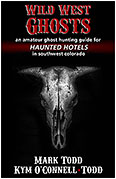
Wild West Ghosts, by Mark Todd and Kym O’Connell Todd may turn some readers into believers. The cover describes the book as “an amateur ghost hunting guide for HAUNTED HOTELS in southwest Colorado”, but it is so much more. Wild West Ghosts might be more accurately described as a travel guide for ghost hunters, outdoors enthusiasts, tourists and history buffs alike.
In addition to the detailed instructions provided for amateur ghost hunters, which lay out the methodology and equipment which the Todds used to achieve their results, and accounts of the local ghost lore of each area, they’ve included vivid site descriptions and colorful area histories which add an old west flavor. In addition, an outline of contemporary area attractions for each site is provided for visitors looking for more than ghosts on their vacation, including highlights of the area, Annual Festivals and events, and cultural and recreational opportunities.
By design, the locations chosen are a bit off the beaten path. The southwestern Colorado locations visited include Creede, Crested Butte, Cripple Creek, Del Norte, Delta, Fairplay, Gunnison, Norwood, Ouray, Paonia, South Fork, and Twin Lakes. For each location is provided with an account of the Todds visit, including details of any strange or ghostly phenomena they encountered either on their spirit box or EMF meter. Many accounts include ethereal conversations they were unaware of at the sites, which were discovered only after they were able to play back audio-only recordings. Their experiences are related in conversational tone, with professional manner and a dash of humor.
For those on a spirit quest, ghost hunting instructions are given in simple, easy to understand terms, ideal for first time ghost hunters. The authors thoughtfully included an account of their test run, made to familiarize themselves with the equipment, along with the lessons that they learned, so those thinking of trying their hand at the ghost hunting thing need not make the same mistakes. Related photos and maps locating each site have also been included to enhance both reading and ghost hunting experiences.
Mark Todd and Kym O’Connell Todd are partners in life, as well as in writing. They reside in the Gunnison area, where Mark teaches creative writing at Western State Colorado University. Their previous works as a team include the humorous, quirky Silverville Saga: Little Greed Men, All Plucked Up and the Majick Outhouse, which all revolve around a fictional Colorado mountain town and keeps readers chuckling to the last pages. To learn more about the Todds and their writing, visit their website, Write in the Thick of Things.
I give Wild West Ghosts five quills. 
Share this:

Let’s Be Truly Informed Voters: An Alternative to the Current System
Posted: November 2, 2012 Filed under: Opinion | Tags: Election Campaigns, Opinion, Voting 4 Comments I’ve had it with the mudslinging. It seems to me that election campaigns have turned into great big mudslinging contests. Campaigns are no longer based on what a candidate stands for, but rather on defacing the opponents, and this, my friends, are what we are to base our votes on. In today’s society, most people are not truly informed. They don’t go down and dig through public records to learn how the candidates voted on the issues in the past. Instead, they rely on the media to inform them and base their voting choices on information gained there. At least half of this information isn’t even true, or has been twisted by the opposing party to show the candidate in unfavorable light, but most of us aren’t going to run down to the courthouse or even do a Google search to check the facts. I don’t think our votes should be based on where a candidate keeps his money, who he sleeps with, the color of his skin, his/her gender, or if he was busted for drunk driving as a teen. Our votes should be based on a candidate’s true opinions on the issues, but even when they air a commercial that expresses a candidate’s beliefs instead of trying to smear the other guy we can’t believe it, because politicians all say what they think we want to hear, regardless of how they really feel.
I propose that we change the whole campaign system, where the only thing they are allowed to hand out, mail out or otherwise advertise is their previous voting records, which is what we, as informed voters, should be basing on voting choices on. Do away with the expensive campaign trail for all candidates, since they are a huge waste of money anyway and just provide the facts, with each party supplying the voting records for their own candidates only, in order to truly inform the public. The best we can hope for is to reasonably predict how they will vote on future issues by how they have voted on issues in the past, and overhauling the whole campaign system is the only way I see for that to happen.





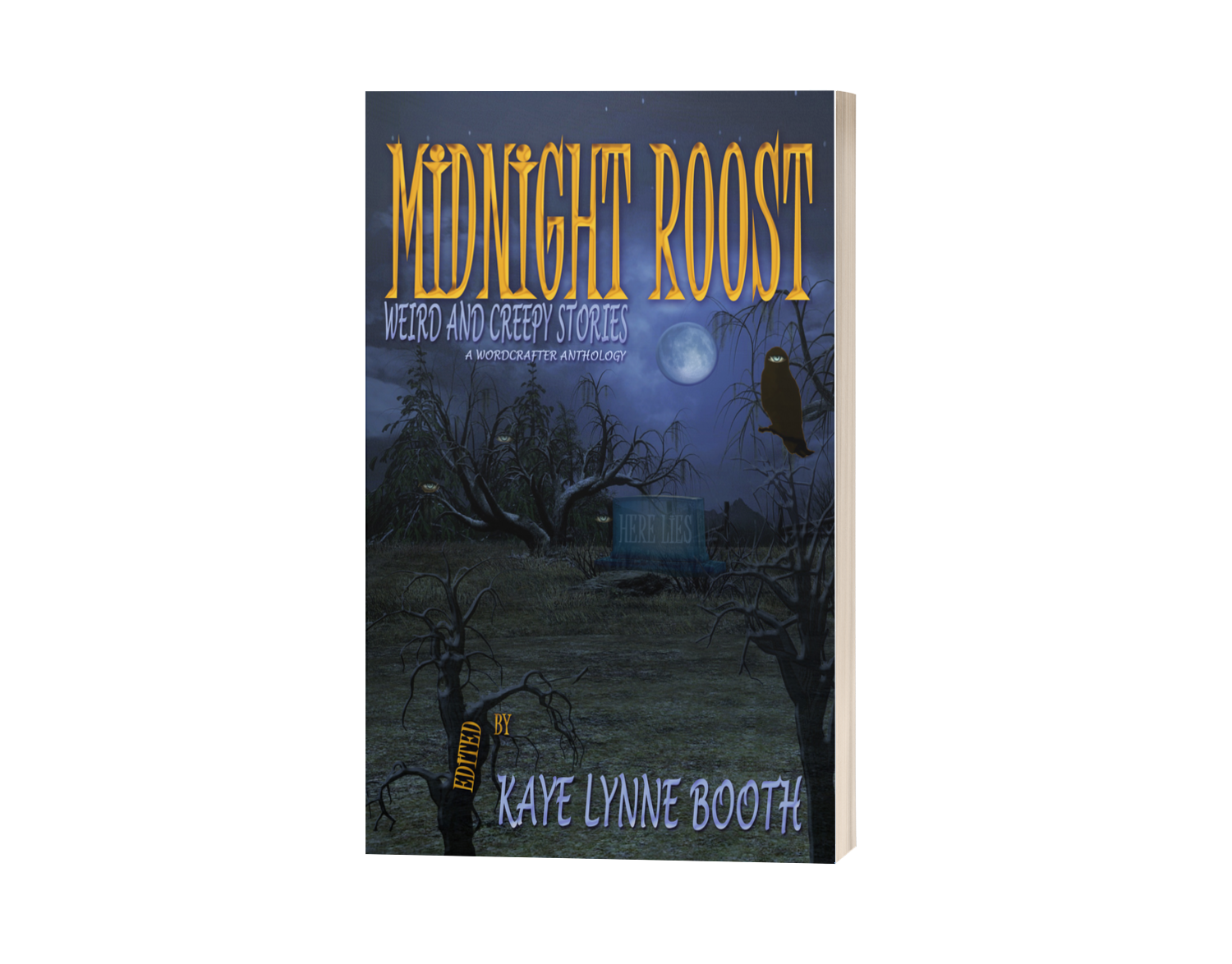
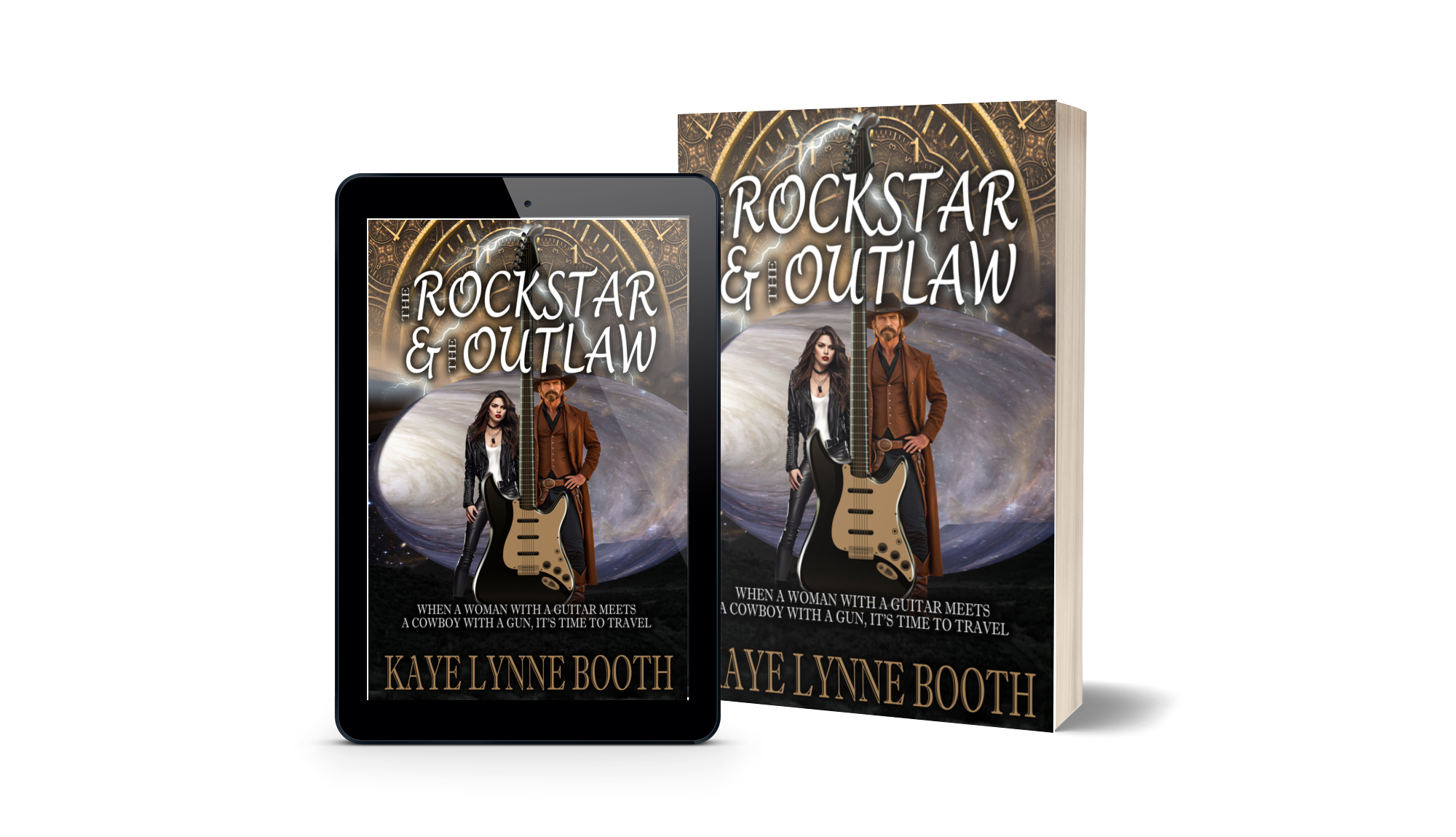

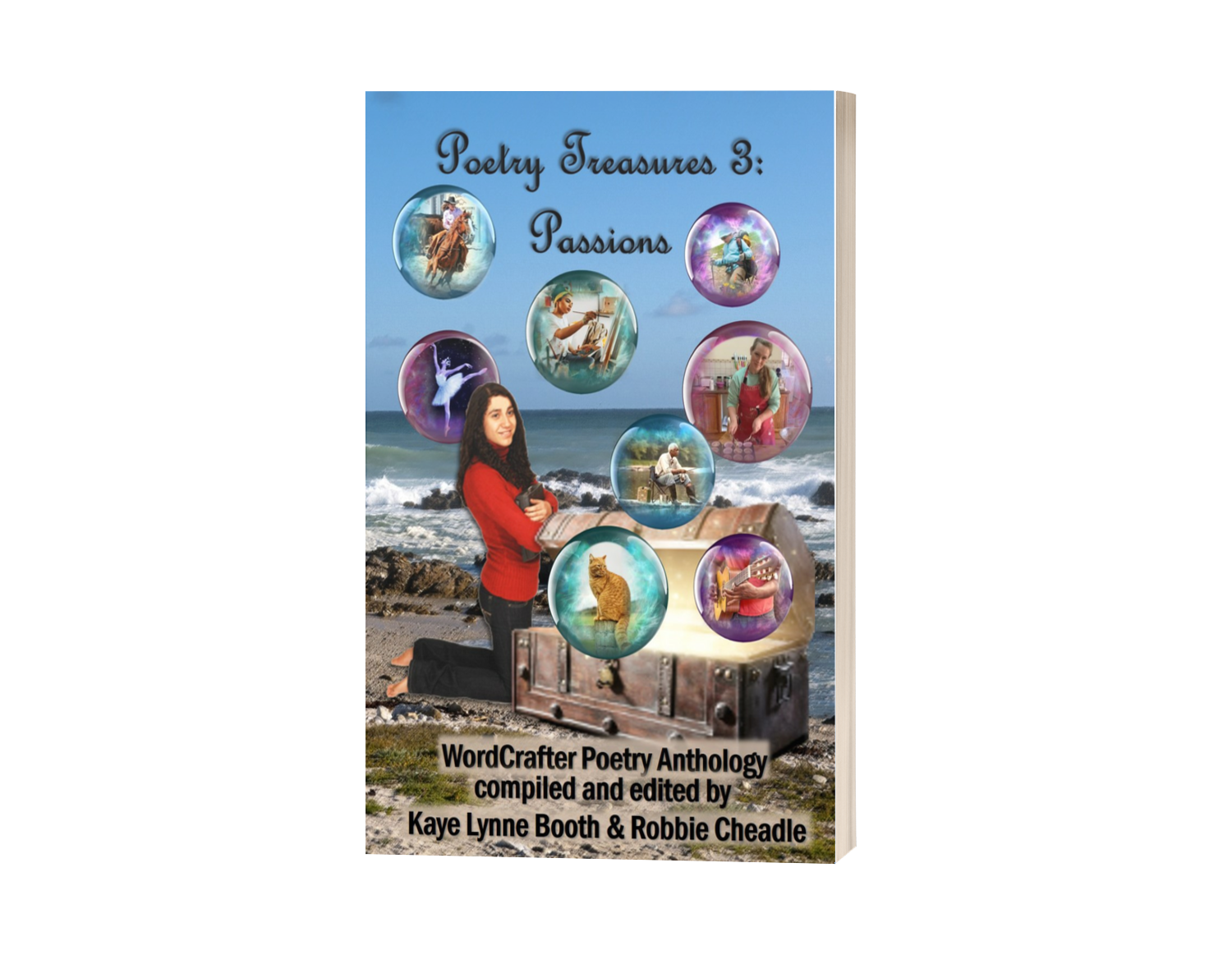
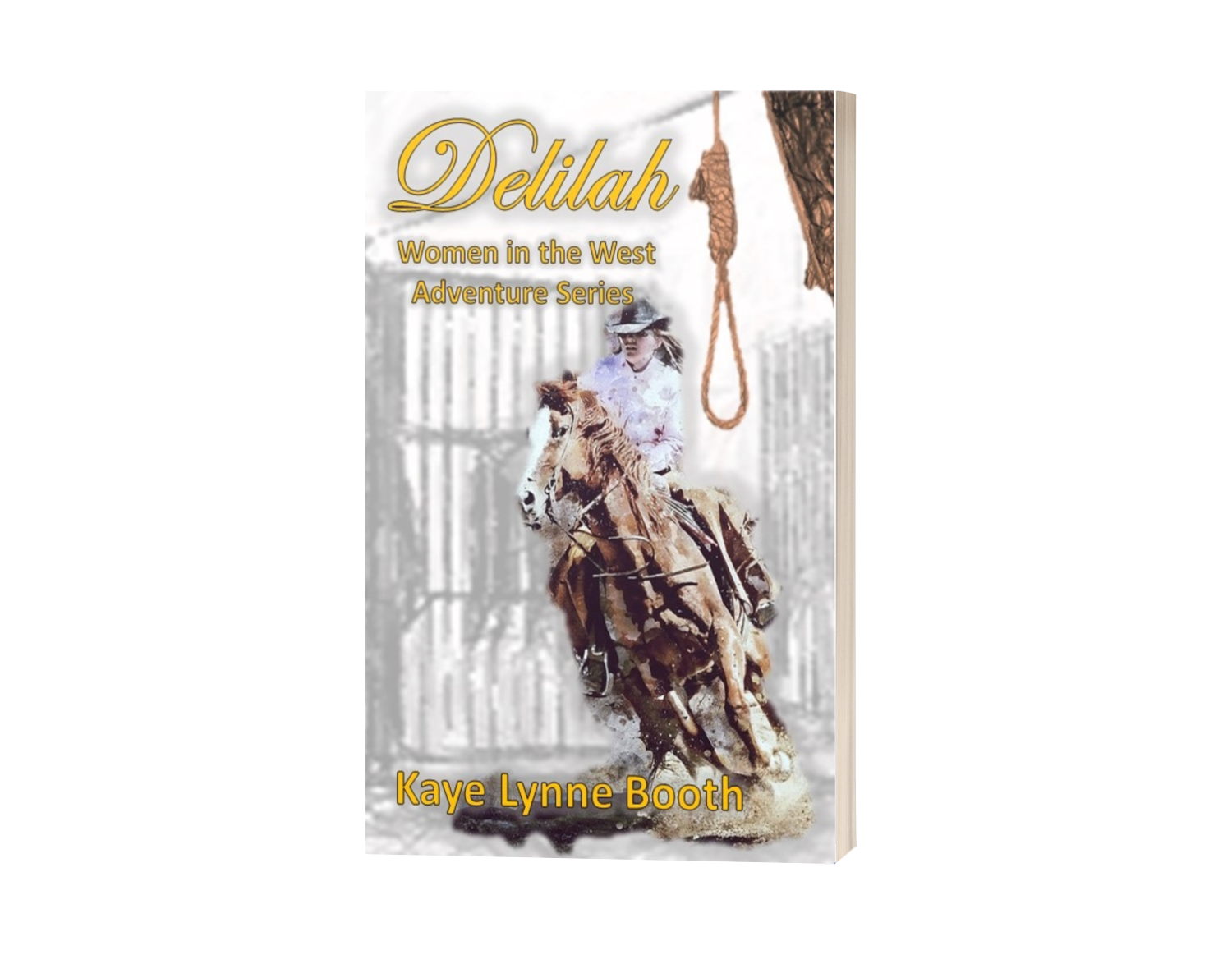




Today’s Authors Wear Many Hats
Posted: October 3, 2016 | Author: kayelynnebooth | Filed under: Books, Commentary, Opinion, Promotion, Publishing, Writing | Tags: Books, Opinion, promotion, Writing | 5 CommentsIn days gone by, authors needed only to wear a “Writer’s Hat”, their agent taking care of finding a publisher for their work, the publisher taking care of the actual publication and all of the marketing and promotion. But, today’s author has seen the rise of Amazon and digital publishing, and a surge in the self-publishing industry as a whole. The surge in the self-publishing industry brought about many changes, including what an author’s role is in the publication process. The rise of Amazon and digital publishing changed the way readers consumed the written word and the ways in which a writer’s works reach the general public, and boosted their book’s potential readership to a global scale.
With traditional publishing, an author writes a novel or has an idea for a book, in the case of non-fiction, so they query publishers to if they can find one who is interested in their work. When they finally receive a letter expressing a publisher’s interest in their work, amid all the letters of rejection, they send their complete manuscript o the publisher, or in the case of non-fiction, they finish writing their book and then send it. Then they wait some more while other read and ponder their work, and then pass judgement on it. If they are accepted they may receive an advance, but some publishers only offer royalties. My M.F.A. professor, Russel Davis advised, “Get as big an advance as you possibly can because chances are you’ll never see any royalties.” He advised this because he knows the advance is just that, and it must be paid back before any royalties can be owed you, so that advance may be all you ever get for your book, unless of course it goes viral and hits all the best seller lists. (Hey, stranger things have happened.)
The rise of digital publishing offered more publishing choices than ever before. Now an author can publish their book digitally or in print, or both. The rise of Amazon, with their 70% royalty for authors made it possible for authors to publish their work with very little out of packet expense, and Amazon’s market spans the globe, offering a much broader potential readership than would have been possible before. Amazon does offer any advance, in exchange for a higher percentage of royalties, so you still have to sell a lot of books to make any real money, although small amounts will trickle in from time to time.
Other changes Amazon and digital publishing brought about may not have been quite so positive. Amazon doesn’t charge the author up front to publish a book, so anyone can afford to publish with Amazon, and anyone did. There was a rise in the number of authors who chose to self-publish, but many of them weren’t any good, or were just too lazy to have their book edited and revise it before publication. The result was a lot of poor quality books out there, giving self-published authors a bad reputation in “reader world”. And that’s where it counts. Although many good authors self-publish high quality books, you know the old cliché, all it takes is one bad author the reputation of the whole bunch.
So, which way is better, independent or traditional publishing? I still don’t know, but be on the lookout for a series of articles that look at the pros and cons of each, “Traditional vs. Independent Publishing”, which will delve into this question further. I suspect it will depend on what your individual needs are, and what you’re expectations from publication are. I plan to interview authors and publishers to find out the answers. To be sure you don’t miss them, subscribe by email in the upper right hand corner, and you’ll receive notification every time there is a new post.
For now, it looks like either way an author chooses to go, he or she had better purchase a hat rack, because it doesn’t like we’ll be hanging any of them up for good any time soon. On top of writing, authors today must also know how to market and promote our work, build an author platform, create book trailers, and those of us who are gifted with artistic talent even illustrate their own books and design their own book covers. For now, it looks like that’s what we have to do to publish our books successfully.
Like this post? Subscribe to Writing to be Read for e-mail notifications whenever new content is posted.
Share this: