Mind Fields – Driverless Car Traffic Jam
Posted: February 13, 2021 Filed under: Humor, Mind Fields, Science Fiction | Tags: Arthur Rosch, Driverless Cars, Flash Fiction, Futuristic, Mind Fields, Writing to be Read 4 Comments
Traffic Jam Of Driverless Cars
January 31, 2026
It was unprecedented, the gridlock on 101 at the San Rafael cloverleaf. Driverless cars are everywhere and drivers are now texting, talking and watching videos. Their indifference is striking. The vehicles no longer require attention to drive down the road. In effect, automobiles have become alternate living rooms, dens, dining rooms, even bedrooms.
The Law Of Unforeseen Consequences has won the day. No one anticipated the social impact of driverless cars. Americans don’t like them. Americans enjoy driving, in spite of their endless complaints about drive time, gridlock and Highway Patrol robocycle stops. Americans miss the power they felt at the wheels of their four ton pickup trucks.
Interviewed at the site of the traffic jam, Ernesto “Corker” Levine said this: “Driverless cars suck!” A chorus of whistles, cheers, and high fives erupted from the crowd that had gathered as drivers left their cars running and milled around on the pavement of Northbound 101. “Suck suck suck” they chanted. Many exchanged business cards and personal porn videos. This kind of traffic jam has replaced tinder as the sex market of the twenty first century.
The jam finally broke up as drivers began to smell burnt wiring. Exploding batteries accelerated the resolution of the epic backup. The farcical dummy cops were instrumental in sorting out the mess with their Skyhooks… Robotic Highway Patrolmen lifted Chevys, Oppenheimers and Teslas and deposited them helter skelter on the margins of the freeway. Owners had difficulty identifying their cars but at least traffic was moving between San Francisco and Santa Rosa. The record-breaking traffic jam extended for thirty miles in both directions. The event was covered by journalists from as far afield as Indonesia and Japan. Some have begun calling it “The Second Woodstock”. Spontaneous appearances by Blue Detergent and Jimi’s Homunculus added luster to the event.
Lead singer Denzel Spurlock testified later at the inquest for “The 101 Incident”. He said, “I know people died, but Man, the whole jam was a gas. We should do it again, soon!”
____________________________________________________________________________________________

Arthur Rosch is a novelist, musician, photographer and poet. His works are funny, memorable and often compelling. One reviewer said “He’s wicked and feisty, but when he gets you by the guts, he never lets go.” Listeners to his music have compared him to Frank Zappa, Tom Waits, Randy Newman or Mose Allison. These comparisons are flattering but deceptive. Rosch is a stylist, a complete original. His material ranges from sly wit to gripping political commentary.
Arthur was born in the heart of Illinois and grew up in the western suburbs of St. Louis. In his teens he discovered his creative potential while hoping to please a girl. Though she left the scene, Arthur’s creativity stayed behind. In his early twenties he moved to San Francisco and took part in the thriving arts scene. His first literary sale was to Playboy Magazine. The piece went on to receive Playboy’s “Best Story of the Year” award. Arthur also has writing credits in Exquisite Corpse, Shutterbug, eDigital, and Cat Fancy Magazine. He has written five novels, a memoir and a large collection of poetry. His autobiographical novel, Confessions Of An Honest Man won the Honorable Mention award from Writer’s Digest in 2016.
More of his work can be found at Write Out of My Head
Photos at Art’s Digiphotos
_________________________________________________________________________________________
Want to be sure not to miss any of Art’s “Mind Fields” segments? Subscribe to Writing to be Read for e-mail notifications whenever new content is posted or follow WtbR on WordPress. If you find it interesting or just entertaining, please share.
Share this:

“Fool’s Gold Rush”: Old friends, action, humor – what more could a reader want?
Posted: October 23, 2020 Filed under: Action/Adventure, Book Review, Books, Fiction, Humor, Review | Tags: Action, Book Review, Fool's Gold Rush, Humor, Tim Baker, Writing to be Read 2 Comments
Reading Tim Baker’s Fool’s Gold Rush was like a reunion with old friends. As in all of Baker’s books, Ike is the anti-hero the reader can’t help but like, and Brewski plays the role of the loyal sidekick. Already, the reader is guarenteed a great action adventure. And Fool’s Gold Rush delivers.
With a plot that takes more twists and turns than a winding mountain road, this tale will keep readers turning pages. While trying to help his sister get away from her abusive husband, Lee gets caught up in a scam to raise money for her hospital bills and pay off the gambling debt he owes to Ralph Denobian. When Ike and Brewski come to collect, they decide to lend a hand and end up in the middle of a kidnapping and a plot to steal Ike’s gold from the museum. When the kidnapper finds out about the gold, the deal changes and he wants to exchange the gold for Lee’s sister and her autistic son, Ronny, but when the thieves get away with the gold, making the exchange may not be possible. Ike knows nothing comes easy, and with every setback he bares down and regroups until he finds a way to make things work out in his favor.
Like all of Baker’s books, Fool’s Gold Rush is well-crafted and filled with plot twists, unique characters, and lots of surprises. I give Fool’s Gold Rush five quills.

Other books I’ve reviewed by Tim Baker include: Eyewitness Blues, Unfinished Business, Pump It Up, Living the Dream, Doomed to Repeat, Blood in the Water, 24 Minutes, Full Circle, No Good Deed, Backseat to Justice, and Water Hazard. (Yep, I’m a long time fan.)
Kaye Lynne Booth does honest book reviews on Writing to be Read in exchange for ARCs. Have a book you’d like reviewed? Contact Kaye at kayebooth(at)yahoo(dot)com.
Share this:

Nightmare With Tracfone
Posted: March 27, 2020 Filed under: Commentary, Humor, Opinion | Tags: Art Rosch, Art's Visual Media Reviews, cell phones, Commentary, confrontation, customer service, daily life, frustration, Humor, Opinion, social observation, Writing to be Read 7 Comments
I am preparing a review of “Better Call Saul” but I’m not finished. Instead I will relate an experience that I had with a cell phone provider, I.E. Tracfone. Consider it a public service:
Nightmare With Tracfone
“God damn it!” I shouted into the cell phone. “I’m done with you, asshole, done done done! Go Fuck yourself, you motherfucker!” My wife stared at me in total shock. I hadn’t blown up like that in decades. If ever: in fact, I don’t remember the last time I lost my temper. Well, yes I do but that was fifty years ago and I was enraged with a particular girl. That’s a long time to go without blowing my cool. I did not, however, keep my head this week. Not after dealing with my cell phone carrier, i.e: Tracfone.. It may be that their service people are coached to present a hostile front to customers asking for refunds. After three days of agony dealing with Tracfone employees I ended the encounter screaming into my phone,
I can’t remember being as angry as I was now with this asshole fuck-turd Tracfone employee who was probably twenty six, living in a shitty condo somewhere in Reseda or Toluca Park. I don’t really assign blame to this hapless cubicle worker. I have compassion. I know I’m living a better life than he is. This essay is my revenge on Tracfone and a cautionary tale to anyone who has a mishap with a cell phone carrier.
I’ve used Tracfone for years without problems and the advantage of Tracfone is that they’re cheap. Like 90- days- with -unlimited -calls – for thirty – bucks cheap. I could keep going for months at ten bucks a month, and so I did, for seven years. Then I lost my phone. It was gone. No searching could retrieve it. The finder-app said it was on Third Street in Santa Rosa. I did a couple of drive-by searches. Alas, the phone was gone. I needed a new one. Everyone needs a cell phone. What if there’s an emergency in your 1998 Jeep Cherokee with the rattling fan belt? What if you can’t text your lover, your spouse, your kids, your granma? Phones possess dramatic intensity. This is the twenty first century! Phones are highly charged emotional extensions. They carry family, friendship, love, sex, money….all kinds of drama.
And I had lost mine. I needed a new one, quickly. I got on the Tracfone website and ordered a modest but decently cool phone costing $131.09. Then I waited. I expected delivery in no more than two days. Everything comes immediately these days. Drones drop your shit on your porch five minutes after you order. UPS robots open your back door and leave it on the couch by five o’clock. Things really move! But the phone didn’t arrive. And I waited yet another two days, still there was no phone. I needed a phone. Doesn’t everyone? Does life proceed without cell phones? Clearly it doesn’t. So, I tried again with Tracfone. I needed a phone, asap. I ordered a hundred dollar phone and asked Tracfone to expedite the shipping. I tried to order the drone service but Tracfone isn’t up to speed in that way. I did the next best thing: overnight shipping. I received that phone the next day. Where was the first phone? The one that costs $131.09. No one knew. I had never received a confirmation e-mail, a fact that should have raised a red flag. Of course, in this world we walk through a forest of red flags daily, so it meant nothing. Three weeks later there was a knock on the door, and a Fedex driver handed me a box. I accepted the box. I shouldn’t have. But I did, and therein lies this whole agonizing tale. It was, of course, the missing phone. I didn’t need a phone anymore. I took it down to the post office, paid fifteen bucks to ship it back to Tracfone. It was received by Tracfone in two days and I asked for a refund of $131.09. According to the phone agent, I should receive my refund within three to five work days.
I used the new phone for a while. Let’s give it a name. Call it Stylo 4. Then one morning I awoke to a seemingly normal day. It turned abnormal as soon as I tried to make a call with Stylo 4. I dialed a number and a neutral female voice said “Your device has been de-activated. If you wish to speak to Tracfone, please stay on the line.” So I held, and shortly had the Tracfone robot and went through three sets of identifications and options until I finally said that word, “Other”, which means that non of my problems were addressed by the previous robot. So I got another, more senior, robot. Again, after enduring the list of options, I uttered that loaded word, “Other”. I waited another ten minutes, then, finally, I got an agent.
Why has my phone been de-activated? The agent asked for the ID number or the EIMI identification code for the phone. I read it off the little red booklet, then I double checked the phone itself. The numbers matched.The Tracfone employee stated, quite simply, “That’s the phone that you returned to us.”
Huh? I’m holding this phone in my hand, I explained. I’m reading the EIMI number from this phone.
“We’re sorry, sir, but that’s the phone you returned to us.”
“No,” I said calmly, “it’s clearly not the phone I sent to you. I never opened the box on the other phone, the one you sent to me, the one that took three weeks to arrive, the one that cost $131.09 and is slated for refund directly into my bank account. I already had another phone, that I bought from you, Tracfone, for about a hundred bucks.”
“Would you please read the number again, sir.” I did so.
“Sir, that is the phone that you returned to us, according to the EIMI number.”
“There’s some mistake here. Can I speak to your supervisor?” Then I made a random hand movement, accidentally touched a number on the dial pad, and was disconnected. I had to start over again. I began with the first robot, then the senior robot, punching number after number. I asked for an agent, then a supervisor, and I arrived at the same deadlock at which I had arrived before. Tracfone is telling me that I returned the very phone upon which I was presently speaking.
“Does it occur to you that this is flagrantly impossible and that perhaps there’s been a mistake at your end?”
“Sir, your refund will be deposited in your account within thirty days.”
“Thirty days? I thought it was three to five days.”
“Your account has been marked and referred to our dispute department. Are you trying to obtain a free phone?”
I was shocked. “Of course not. Forget the refund for now, OK?. Please, just re-activate my phone number because I’m an elderly man suffering from Recalcitrant Plebny, Mono-Amine Insufficiency and a serious case of Portofino.”
Must I continue? I don’t want to. I spent nearly three days on the phone with Tracfone (the only number with which I could connect) and got nothing, no re-activation, a delayed refund and a black mark against my name. I think the black mark happened because after so many hours of going around and around I lost my temper and shouted “I’m sick of you assholes, I’m done I’m done, so Fuck You!”
Then I went to Walmart and purchased a Samsung A10e, a nice little phone. I’m signed up with Sprint and I’m paying $45 a month for the privilege of no longer dealing with the morons at Tracfone. I call them morons but I think that they’re just following company policy, to whit: Obfuscate, delay, confuse, deny, denigrate, de-activate.
That’s my cautionary Tracfone tale. Does any of this sound familiar? Is the world crazy? Of course it is.
For a further take on the basic humor and craziness of cell phones, go to my essay, “Total Cell Phone Ban” Click here: Complete Cell Phone Ban Coming Soon
A Midwesterner by birth, Arthur Rosch migrated to the West Coast just in time to be a hippie but discovered that he was more connected to the Beatnik generation. He hearkened back to an Old School world of jazz, poetry, painting and photography. In the Eighties he received Playboy Magazine’s Best Short Story Award for a comic view of a planet where there are six genders. The timing was not good. His life was falling apart as he struggled with addiction and depression. He experienced the reality of the streets for more than a decade. Putting himself back together was the defining experience of his life. It wasn’t easy. It did, however, nurture his literary soul. He has a passion for astronomy, photography, history, psychology and the weird puzzle of human experience. He is currently a certified Seniors Peer Counselor in Sonoma County, California. Come visit his blogs and photo sites. www.artrosch.com and http://bit.ly/2uyxZbv.
Want to be sure not to miss any of “Art’s Visual Media Reviews” segments? Subscribe to Writing to be Read for e-mail notifications whenever new content is posted or follow WtbR on WordPress. If you find it interesting or just entertaining, please share.
Share this:

“Mind Fields”: Hitler’s Afterlife
Posted: November 30, 2019 Filed under: Dark Fantasy, Humor, Mind Fields | Tags: Afterlife, Art Rosch, Hitler, Humor, Irony, Mind Fields, Passover Seder, Writing to be Read 1 Comment
Arthur Rosch Copyright 2019
A Guest At The Eternal Passover Seder
“Avraham, give our guest some more gefilte fish.” Mother Rachel spoke in Yiddish and gestured towards the man seated at the place of honor on the long holiday table.
Evidently the man couldn’t speak. His eyes bulged from his head, his arms went this way and that. Some hidden force seemed to glue him to his chair so that he could not even rise.

“He looks funny,” Avraham, eldest son, tried to conceal a giggle. The man was indeed a comical figure. His little mustache, his hair combed over his forehead, these were unusual accoutrements at the Eternal Seder. In the Spirit World the Eternal Seder was just that, an unending celebration of Passover. It occupied an archetypal place in the Cosmic Order.
“Why is he doing that?” asked Sipporah, younger daughter. The guest was thrusting his right arm out, almost straight, but bending and sagging from the fatigue of eons of attempting this salute.
“It’s supposed to mean Victory,” Zeyda Moishe said skeptically.
“I think he is perhaps deluded,” Baba Zifnah decided. “Don’t let him spoil the Seder.”
“There is always a guest at Seder,” said Cousin Frankl. “They are not always so unpleasant.”
The candles glistened, filling the chamber with soft light. More light, soft but differently colored, emanated from the spacious double windows.
“It is our tradition to welcome everyone, from all the Worlds and Spheres,” Mother Rachel declared. “Even the Hell Worlds.”
“Do you think he’s from one of those?” little Micah interjected with excitement. His eyes gleamed with ghoulish fascination.
“It is not ours to judge.” Zeydah Moishe said. “Sins are put aside during Passover. That is the whole point. The Angel Of Darkness passes over our house.”
There was a sound entering the chamber, a sound as of a colossal wagon loaded with tons of lead. It groaned with a sound so deep that most of it was felt rather than heard. Shadows covered the windows. The light was attenuated. Little Gavril, the toddler cousin, rose with curiosity to look out.
“Don’t!” commanded Mother Rachel. “Sit down! Our Guest’s crimes are rolling past our house. Praise God they don’t stop here.”
The grinding sound continued as if forever. Sledges pulled by immense demon-steeds yanked them forward a bit at a time. At last peace was restored. The Guest seemed to sag. It was possible to see a hint of remorse in his countenance. Then he straightened and attempted his rigid arm-salute.
“I thought for a moment that he might regret his crimes,” said Sipporah.
“For a moment, perhaps.” Zeyda Moishe replied. “But look: he is again celebrating his imaginary victory.”
“Too bad.” Baba Zifnah commented quietly.
“Without regret, without an accounting,” said Zeyha Moishe, “Crimes cannot be forgiven. It will take this one some time. Perhaps twenty eons, perhaps a thousand. Regret and remorse will come to him, but not for a very long time. Let us say a special prayer for his soul.”
Those at the Seder, all but the one who glared impotently, bowed their heads and began the traditional benediction. “Baruch Atah,” they intoned, “Blessed Be You.”
Share this:

Friday Funnies: Total Cell Phone Ban Coming Soon
Posted: September 27, 2019 Filed under: Humor | Tags: Art Rosch, Arthur Rosch, Friday Funnies, Humor, Writing to be Read Leave a comment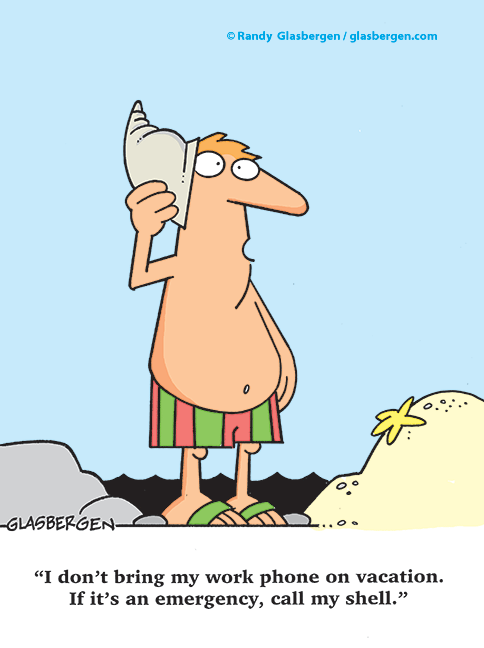
For the time being, the cell phone revolution is finished. In thirty days the phase-out begins. All cell phones will be handed over at specified collection points.
It has now been proved that these things cause serious brain damage. This recall is the largest disaster in the history of consumer electronics. Negotiations for refunds have been bitter, to say the least. Apple, Samsung, Motorola, etc have fielded an army of lawyers and finally hacked out the so-called “50/50 Bill”. A complex algorithm has been devised to assess the value of cell phones to arrive at a figure worth half the original value of the phone. The consumer who is returning a phone will fill out a form noting the age, condition, features, and dozens of other items of data regarding the device. It has already been demonstrated that at least fifty percent of phone owners won’t bother to get their money back. Word is out that this so-called REFUND was designed by the IRS and is just as difficult to obtain.
Media commercials for cell phones have completely ceased. The vast airwave dead time will be filled with inspirational music by Yanni and Clannad. Media conglomerates have taken a gigantic hit in advertising revenues. The world needs new products and it needs them fast. Writers, engineers and marketers are working at top speed to fill the void. The most promising ideas are coming from the automobile industry. Vietnamese conglomerate GWENJIAP is preparing a luxury sedan with a sixty two inch FlexVision LED. Features include online bill payment, 3200 channels of satellite-borne programming and an array of pay per view specials. The screen and speakers will be seamlessly integrated into the vehicle by replacing the front windshield with the television screen and using software and GPS systems to drive the cars without the input of a human being. Three’s also a twelve foot extending periscope giving the driver panoramic vision.
Some conventional window space will remain in order to prevent claustrophobia. A disconnected steering wheel is featured in order to convey that sense of control and driving pleasure. GWENJIAP’s design team has apparently pulled off a brilliant coup and has finally merged the auto and entertainment industries.
UPDATE: January 2021
The degree of emotional and somatic shock was not anticipated when consumers were separated from their cell phones. The most common symptoms are anxiety, rage and feelings of powerlessness. Therapists have mobilized their most advanced techniques but the response has been inadequate. Consumers have been going into fugue states. They look into empty space while their thumbs shake with greater and greater agitation. Measures are now being taken. Pfizer Pharmaceuticals are testing an anti-spasmodic/SSRI medication to control these symptoms. Consumers are also being provided with dummy cell phones to alleviate the effects of what is now called “Texter Reflex Muscle Memory Syndrome”, or TRIMMS
The dummy phones are programmed with several hundred generic messages, such as “See you at home,” “Tht ws wild lst nite”, “Is he/she cute?”, “Did U do it?”, “Gt any E?”, “My parents will be gone tnt”, “Did yr doc sign yr dope ticket?”, and so forth. These messages are randomly scrambled and appear on the dummy phone screens to provide the illusion that users are connected to their friends. The texting interface appears to work but of course it is not receiving or transmitting. The therapy has had mixed results, but since the killing of Yanni and the disappearance of Clannad, Pfizer has been given the green light by the FDA to widely distribute the new medication. It will be marketed under the name Gontwich CR.
The GIAP 300SLE hybrid vehicle has sold well. Unfortunately, the auto-sensors and self-guidance software have had glitches that have caused an undisclosed number of collisions. Firmware updates have eliminated 88 percent of minor collisions and 99 percent of fatal collisions. Rival designs from BMW and Mercedes are appearing on the market as of this writing. The Mercedes Double Decker Home Theater Hybrid boasts efficiency of a whopping 82 mpg and the Surround Sound 9.1 with broad band picture-in-picture-in picture has stimulated sales as fast as the vehicles are manufactured. BMW has matched this success with its clever Mirror 32ESL. The vehicles feature advanced autopilots and software. There is also a choice between full autopilot and manual driving. Many consumers enjoy the actual process of driving and guiding a vehicle. BMW has catered to this market and relegates the Big Screen TV to a cleverly designed rear compartment. There have been fewer fatal incidents among drivers of the 32ESL.
Email has not had the anticipated resurgence, but statistics indicate that consumers are reviving the archaic telephone. Therapists are working on issues that surround the stuttering epidemic. Efforts to immobilize the thumbs with modified cuffs has only intensified the issue. Parents of adolescents are still, as they say, “talking to empty space” but statistics indicate there has been an eight percent rise in direct eye contact among members of nuclear families.
Hope always burns high that there will be a return to ancient modes of person to person conversation. Cynical laughter from many millions of consumers has not deterred designers at GWENJIAP from using hi-res cameras to convert interior TV screens to real-time two way windows on their 300 SLE models. Rumors are floating about that Mercedes is bringing back a vehicle with transparent polymer windows that open and close, either at the touch of a switch or via speech recognition software. The stuttering epidemic, however, has persuaded Mercedes to give the manual switches a higher profile.
All of this turmoil may be history when Nokia introduces the Safe Mini-Phone that has been designed to operate without the use of the dangerous selenium diode and other circuits that ramped up microwave emissions to one thousand times the minimum safe level as indicated by the Consumer Safety Council. Work proceeds on the range and sensitivity of this innovative cell phone.
Nokia employee Jorma Kikkinen, the “whistle blower” who broke the radiation scandal is still being sought by authorities but is feared to have met with foul play.
A Midwesterner by birth, Arthur Rosch migrated to the West Coast just in time to be a hippie but discovered that he was more connected to the Beatnik generation. He harkened back to an Old School world of jazz, poetry, painting and photography. In the Eighties he received Playboy Magazine’s Best Short Story Award for a comic view of a planet where there are six genders. The timing was not good. His life was falling apart as he struggled with addiction and depression. He experienced the reality of the streets for more than a decade. Putting himself back together was the defining experience of his life. It wasn’t easy. It did, however, nurture his literary soul. He has a passion for astronomy, photography, history, psychology and the weird puzzle of human experience. He is currently a certified Seniors Peer Counselor in Sonoma County, California. Come visit his blogs and photo sites. www.artrosch.com and http://bit.ly/2uyxZbv.
Like this post? Let me know in the comments. You can be sure not to miss any of Writing to be Read’s great content by subscribe to e-mail or following on WordPress.
Share this:

Jeff’s Pep Talk: The Big C(riticism)
Posted: March 6, 2019 Filed under: Fiction, Humor, Inspirational, Nonfiction, Pep Talk, Writing | Tags: Criticism, Jeff Bowles, Jeff's Pep Talk, Writing, Writing to be Read 3 Comments
The Big C(riticism)
By Jeff Bowles
The first Wednesday of every month, science fiction and horror writer Jeff Bowles offers advice to new and aspiring authors. Nobody ever said this writing thing would be easy. This is your pep talk.
I don’t think there’s a soul on earth who likes criticism. There’s just something about it that can cut to the bone. Human beings have such fragile egos anyway, those pesky little conscious seats of individuality that get bruised and battered when others make us feel small, less talented, less competent, perhaps even less valid as people. Some more than others, right? I’ve had writers tell me they never feel offended, angry, upset, or in any way discouraged after a round criticism. I don’t think I believe them. I mean, not at all? Even just a little? Really?
And of course, if you’re checking out this blog, odds are you’ve seen your share of creative criticism. It’s essential to the process, right? Every writer can benefit from it, from the newest of newbs to the most seasoned authors. And a change in attitude often occurs once a writer actually gets neck deep in a viable career. At that point, criticism has become just another part of the job, kind of less of a hassle than, say, making deadlines you have no hope of making or enduring long, drawn-out revision cycles.
But there’s another dimension to writers that’s so common it’s a cliché. Many of us suffer from mental illness. I know I do, and lots of my associates and acquaintances are in the same boat. Most of the time their personal stories boil down to a bit of depression here and there, but look, there’s something about a creative profession that requires long periods of solitude that seems to attract folks who are maybe a bit less emotionally equipped than the rest of humanity. Plus, you know, the ubiquitous link between genius and madness. Some of the greatest writers in history should have been in the nut house. Some of them were.
Now there’s a big difference between getting your feelings hurt over some bad comments from a crit group and losing your mind completely. We subject ourselves to the honest (and often brutal) opinions of our colleagues because we understand in the end criticism will make us better. Especially when we’re just starting out. If we can find a few people who really get what we’re all about and who consistently offer good feedback, we’re wise to consider them valuable resources. The fact remains, writers pour ourselves into our work. In many ways, stories and novels, articles and memoirs, they’re like our children. Sometimes it’s hard not to take criticism personally. And I don’t think there’s anything wrong in admitting it.
So as a writer who’s had one or two creative outbursts himself (sorry about that black eye, prof), here’s a few tips to soothe the wounded beast. Number one, and going back to the crit group thing, it really does help to know a few people who are on the same page as you creatively. It’s old advice, but it is enormously beneficial. Also, try not to work with writers who aren’t quite as skilled as you are. Likewise, learn to recognize when you’ve gotten in with folks who have a lot more ability and experience. Writers who punch in above your pay grade aren’t going to be able to help as much as you might expect, and you may even struggle trying to understand and disseminate their feedback.
Next tip: always keep a few pots on the fire. Okay, this new story didn’t work out for me, but at least I have that other one that shows way more potential. Dive into this process head first, if you can. Conceive, draft, and revise in cycles. Nothing blunts criticism like a sense of forward momentum. Keep an idea notebook handy. Never miss an opportunity to dream up something new and play with it a little. We’re still growing here. Got lots and lots of stories to tell in the future. Stagnation sucks. It crushes the life out of creativity. Avoid it if at all possible.
Tip number three: make sure to honor your private life. I mean that. Some people throw themselves into their work at such high velocity their relationships and daily routines suffer. You’ve got friends, right? Hang out with them, have some fun. While we’re at it, don’t neglect your romantic life, either. Seems like kind of a toss-off to some people, but look, you’re human. Biology is a factor, and it’s just a basic fact that people tend to be happier when they consistently engage this part of their personality. Family, hobbies, even other, more practical career goals, these can all serve as a refuge when your creative mind is battered and tired. Conversely, writing itself can act as a pretty powerful refuge from things like, oh, family, hobbies, career goals, romantic life, friends…
Fourth tip: don’t worry about developing a thick skin. Focus more on developing a keen critical mind. Say someone tears your latest to shreds. You can either A) get emotional about it, B) decide this loser doesn’t know what the hell he or she is talking about, or C) penetrate the matter a little more deeply, choose which criticisms are valid, discard everything else, move on to the next thing. Your lizard brain is your lizard brain. It’s a given. But your analytical mind, that you’ve got to hone. So get clinical if you can. Easier said than done? For some it really is. You’re not a robot. At least I don’t think you are. I mean, you haven’t blinked in several minutes. I’m watching you…
Do the best you can to stay neutral during and after a round of feedback. Or if not neutral, at least receptive and pragmatic. This is a process. Repeat it to yourself if it helps. This is a process. This is a process. And don’t forget to ask plenty of questions. Stay engaged. Again, criticism affects people differently. I imagine some will read this blog post and think, “I don’t see what the big deal is. This Jeff Bowles guy must be a total train wreck.”
To which I might reply, “Stop staring at my mangled caboose!”
…Ahem, yes. Anyhoo, there’s no accounting for temperament. Look, it’s always seemed to me writers just aren’t honest when it comes to these things. And why should we be? Nobody likes a hot head. No one’s particularly desperate to work with a soppy, spongy mess. But there’s always the case to be made for blowing off steam when necessary. Never let it jeopardize your work, your reputation, or your sense of professionalism, but don’t bottle it up, either. If you find the situation becomes chronic, do a little soul searching. What’s really bothering you here? Why does criticism seem to affect you so much? Self-analysis, some say, is the path to divinity. Not that divinity has anything to do with the life of a writer.
Speaking of which, and if all else fails, there’s still good old-fashioned counseling and therapy. It might sound dopey and overwrought to even remind you of it, but sometimes in life, it helps to get serious about ourselves and consider our own triggers and shortcomings. No shame in it, and never let people tell you there is. Mental health is extremely important, much more important than the modern world ever seems to recognize. And even simple depression can become dangerous if left unchecked.
And now to spoil the mood completely, some depressed writer jokes!
“Well doc, I guess it all started when they said my steampunk riff on The Notebook was even lousier than my 50 Shades of Grey fan fic written from the whip’s perspective.”
“Really? And how did that make you feel?”
“Like we should have used a safe word.”
Why did the anxiety-riddled writer cross the road? Are you crazy? I’m not going outside. That road is clearly a death trap.
[end of joke digression]
Ready to tackle another round of critiques? Well, in a perfect world, I guess you would be. Do what you need to do to combat discouragement and self-defeatism. One of the healthiest attitudes we can adopt as professional writers is the macro, career-long perspective and an abysmal memory. If the fates allow, you’re in this for the long haul, so just remember this or that little hiccup will mean nothing in the end. It’s a basic fact that we learn more from failure than success. So what are you waiting for? Get out there and fail as hard as you can!
Pep talk concluded. Feel better now, don’t you?
Check out Jeff Bowles Central on YouTube – Video Games – Music – Entertainment – So Much More!
Want to be sure not to miss any of Jeff’s Pep Talk segments? Subscribe to Writing to be Read for e-mail notifications whenever new content is posted or follow WtbR on WordPress.
Share this:

“Zomnibus: Two Zombie Detective Novels in One Book
Posted: July 27, 2018 Filed under: Book Review, Books, Crime, Dark Fantasy, Fiction, Humor, Post-Apocalyptic, Speculative Fiction | Tags: Book Review, Comedy, Crime novel, Detective stories, Humor, Kevin J. Anderson, Speculative Fiction, Zomnibus 6 Comments
In Zomnibus, by New York Times best selling author, Kevin J. Anderson each case is a short tale in the unlife of a zombie detective. In the world following the Big Uneasy and the return from death en mas, vampires may be victims, ghosts can be discriminated against, zombie’s might be graffitti artists and ogres serve as security guards. Together with his human business partner and his ghost of a girlfriend, Dan Shamble detective agency solves cases for both living and unnatural clients.
These zombie detective tales are carefully crafted to keep your attention and tickle your funny bone. Anderson’s light tone and corny humor guarantee the Dan Shamble, Zombie P.I. tales will evoke at least a few chuckles. I give Zomnibus five quills.

Kaye Lynne Booth does honest book reviews on Writing to be Read in exchange for ARCs. Have a book you’d like reviewed? Contact Kaye at kayebooth(at)yahoo(dot)com.
Share this:

“A Cat Came Back”: an unusual tale of transformation
Posted: April 6, 2018 Filed under: Book Review, Books, Fiction, Humor | Tags: A Cat Came Back, Book Review, Fiction, Humor, Simone Martel, Transformation Leave a comment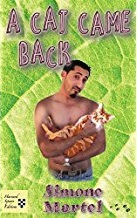
A Cat Came Back, by Simone Martel is a quirky little tale about a woman who finds herself in the body of a cat. Most of us, put in the same position, would panic and try to figure a way to get our own body back, but not Eliza. She accepts what has happened as a a matter of course. All she wants is for someone to see her for who she really is, and at first, it seems that being in this cat body might not be such a bad thing, since her boyfriend, Stu, takes one look at the cat and knows she’s in there. But, being recognized for who you are isn’t always easy, you have to keep working at it, especially when the only sounds that come out of your mouth are purrs, yowls and hisses.
A thoroughly entertaining story of transformation that offers a few surprises and the occasional chuckle. It’s light and quirky and funny. Not your typical body switching out of the bottle tale. I give A Cat Came Back four quills.

















Mind Fields: Fish In Or Out Of Water
Posted: May 7, 2021 | Author: artrosch | Filed under: Commentary, Humor, Opinion | Tags: Arthur Rosch, Commentary, Mind Fields, Writing to be Read | Leave a commentWe’re just like the fish; we don’t know what water is. But the element in which we swim, the element that is impossible for us to recognize, is stress.
You may think you know you’re stressed. This isn’t the kind of stress I’m talking about. We have become denizens of a culture that is actually a Torture Machine. It drives us insane by presenting demands so complex as to be impossible to achieve. Every day, it issues orders to our nervous systems. Turn on your left blinker. Pay your insurance premium. Pick up your kids’ school uniforms. Don’t forget the doctor’s appointment. Where’d you put the McFarland file? Where are the paper clips? Why is this milk sour? Screw it; not worth my time, flush it down the sink. Are the dogs’ vaccinations up to date?
Do I have the receipts for my tax audit?
Why am I always left with the feeling that I’ve forgotten to do a homework assignment? Who is this screaming at me, right next to my ear so that it hurts?
The Antifa people are scurvy hippies. Our government is letting people steal on a massive scale. My bank account only exists long enough for the auto-payments to hit, and it’s gone and I’ve got nothing left to spend.
I think I’m going crazy. I don’t have any sexual desire at all. The last time I felt truly alive was… when? Have I ever felt truly alive? I truly don’t think so.
There’s nothing to look forward to. My old age will merely be a time when insurance machines squeeze the remaining dollars from my estate, leaving my kids with nothing. Zero. The globe is warming up. It’s true. The waters are creeping on shore, slowly. The future is a tsunami.
OUR SOCIETY IS A TORTURE MACHINE, so complex that it takes a genius to maneuver its daily routine. It tortures by its relentless pressure. We don’t need Stalin or Hitler. We have modern life in Amerika. See that guy with the cardboard sign sitting at the parking lot exit? “Will work for food.” He isn’t a pathetic loser. He’s you or me or someone we know who just cracked under the pressure and opted to sit in the TIME OUT box in front of everyone. He couldn’t take the complexity any more. Now he’s doing better. He has a shoe box where his money piles up. He’s doing better than I am! Could I take sitting in the TIME OUT box in front of everyone? I don’t think so. I’m not tough enough.
Life has always been complex, but not like this… Hunting, gathering, fighting off raiders, that was easy stuff compared to this. The modern Torture Machine can’t be dodged. Your assignment is late! Punishment will be swift and merciless! Your interest will rise, your credit will be cut.
The injustice of it! I’m choking on injustice. I can’t breathe! Give me a cigarette. Where are all these voices coming from? Let me turn off the radio.
The off switch doesn’t work. The voices are coming from my pocket. It’s my Z-Phone. It doesn’t have an OFF switch. The argument continues, shouting everywhere, lies compound in blatant and shameless huckstering. Everything is a trick. Even the tricks we know to be tricks conceal more subtle tricks. Those Antif types are going to burn down Manhattan in a giant riot. Quick, we’d better launch a pre-emptive pogrom, mow them down before they find out where we’ve stashed the money.
The fish don’t recognize the sea. The people don’t recognize the element that dominates our lives. I will coin a term for it: Phobagonovia. Phobe-ago-NOVE-ee-yah. It causes us to curl up inside our homes with the giant TV playing football games and scripted “reality” shows where people are abused by their in-laws. Phobagonovia. We are afraid of new experiences. The Torture Machine has implanted this condition in our nervous systems. We are afraid of relating to one another openly, of crying in front of strangers, of expressing feelings easily, of hugging or kissing spontaneously, lest we be inappropriate, our strait jacket is “Appropriate”, we haven’t a clue how to dance in a circle while deeply in love with members of a clan, to sing ancient songs, to sit around a fire feeling wonderful under the stars. That doesn’t mean we want to go backwards. We want to invent new communities. We are dying of Phobagonovia. Our neck ties are cutting off our breath. Our high heels are warping our skeletons. The future is over. Donald Trump will be reborn as a talking pig that can only sputter nonsense. The people of his remote village will laugh at him holding their sides with mirth. They will postpone the time to eat him. He’s so strange that people come from villages far away to throw him pieces of rubbish. His time will come, at last.
When the chief takes the first bite, he will spit it out.
“We laughed too long,” he will say. “This fat talking pig tastes like shit.”
_____________________________________________________________________________________________________________________________
Arthur Rosch is a novelist, musician, photographer and poet. His works are funny, memorable and often compelling. One reviewer said “He’s wicked and feisty, but when he gets you by the guts, he never lets go.” Listeners to his music have compared him to Frank Zappa, Tom Waits, Randy Newman or Mose Allison. These comparisons are flattering but deceptive. Rosch is a stylist, a complete original. His material ranges from sly wit to gripping political commentary.
Arthur was born in the heart of Illinois and grew up in the western suburbs of St. Louis. In his teens he discovered his creative potential while hoping to please a girl. Though she left the scene, Arthur’s creativity stayed behind. In his early twenties he moved to San Francisco and took part in the thriving arts scene. His first literary sale was to Playboy Magazine. The piece went on to receive Playboy’s “Best Story of the Year” award. Arthur also has writing credits in Exquisite Corpse, Shutterbug, eDigital, and Cat Fancy Magazine. He has written five novels, a memoir and a large collection of poetry. His autobiographical novel, Confessions Of An Honest Man won the Honorable Mention award from Writer’s Digest in 2016.
More of his work can be found at www.artrosh.com
Photos at https://500px.com/p/artsdigiphoto?view=photos
_____________________________________________________________________________________________________________________________
Want to be sure not to miss any of Art’s “Mind Fields” segments? Subscribe to Writing to be Read for e-mail notifications whenever new content is posted or follow WtbR on WordPress. If you find it interesting or just entertaining, please share.
Share this: