Jeff’s Pep Talk: Finding the Right Writing Group
Posted: November 6, 2019 Filed under: Uncategorized 4 CommentsFinding the Right Writing Group
Every month, science fiction and horror writer Jeff Bowles offers advice to new and aspiring authors. Nobody ever said this writing thing would be easy. This is your pep talk.
A good writing group is something of a rarity. Not because there aren’t hordes of talented writers out there looking to provide and receive feedback in a friendly, encouraging environment, but because finding a writing group that complements your own experience and skill level can be tricky.
I’ve belonged to several writing groups, and I’ve even backed out of a couple because I could tell they wouldn’t be a good fit. It’s good to have a group, especially if you’re just starting out. The feedback provided by peers can be enormously conducive to leapfrogging higher and higher up the skill chain. Sort of like leveling up in a role-playing game. Forgive me for mixing metaphors, but my level ten warlock leapfrogger was once a paltry and underpowered level one.
A lot of us come from a liberal arts background, so we’re familiar with what a writing group entails. Many humanities majors find college-level workshops and seminars frustrating, because the feedback offered can vary so wildly from asinine to inspired to well-meaning yet unhelpful. Like I said, skill level is important. One of the first criterions for finding a group that fits is understanding you won’t get much out of peers who’re more or less skilled than you are. It may sound kind of cold, but don’t join a group of newbies if you aren’t one. You’ll have to be honest with yourself here. It just won’t do you any good if you can’t incorporate someone’s feedback because it’s either too advanced or too basic.
Another major criterion for finding a good group is to meet with people who have similar tastes and interests. Probably not going to help much to show your young adult romance novel to a bunch of hardcore military sci-fi buffs. Well, not necessarily. It’s not so much that folks who’re interested in other genres can’t help you. It’s just that they’re not as likely to know the ins and outs of what you do, and that can be problematic if they encourage you to change elements of your stories that are perfectly fine and otherwise perfectly saleable.
Internet writing groups can be a great place to start. My first major group out of college was an online science fiction forum. I shoveled a hell of a lot of stories through that place, and the feedback I received proved enormously helpful. The other writers there preferred a different strain of speculative fiction than I did, but my style and theirs were close enough it didn’t matter in the long run. Plus, I got to develop my voice in a dynamic environment, exacting, demanding, yet also encouraging. That’s kind of the sweet spot.
Finding an online group is as easy as a Google search. For the more agoraphobic amongst you, it doesn’t even require you to leave the house, but it stands to reason, meeting people face-to-face is almost always the preferred method. There’s likely to be some local writing groups in your area, especially if you live in the city. Just Google it; see what’s out there. Might take some trial and error, but if you can find a workshop environment you like, you might even be able to sniff out a publishing opportunity or two. Plus you get to socialize with other writers. We’re a friendly bunch, once you get to know us. Just don’t feed the horror guys. They’ve got something nasty growing in their guts.
Don’t forget, too, that there are plenty of great, more-or-less reasonably priced national workshops. Thousands of people pour into conferences, cons, and other smaller workshops every year, and participating in them can be pretty exciting. The basic point is that although you write in a vacuum, your work is ultimately meaningless if you can’t see its flaws and acquire the ability to revise appropriately and then publish it. And you want to get published, right? Right.
Last but not least, you could always go for an MFA. Speaking of seriously expensive, how about those Major of Fine Arts degrees, huh? I’m kidding (not at all kidding). I’m an MFA guy, so I know how valuable a good academic writing program can be. One thing of note, MFAs tend to focus on literary fiction, which means you’ll have to look around a bit if you’re more into the popular stuff. I come from such a place, however. I know from whence I speak.
MFA degrees are pricey, but the upshot is once you’ve got that nice shiny diploma, you can teach. Now that may either floor you or make you queasy. Not everyone is built for academia, after all. Still, to have the option, and to have acquired expertise along the way, it’s a valuable proposition, no?
The basic truth is that writers are pretty secluded creatures most of the time, and it can be of enormous benefit to get out into the world and exchange words and ideas with like-minded people. We never really grow out of the need for it, either. Sure, publishing may become easier the longer you do it, but the writing itself most assuredly won’t. And like I said, it’s difficult to see the flaws in our own work. Think like a muscle. Resistance make stronger.
And don’t be afraid if you’ve never been a part of something like this before. One of the biggest crimes I can think of in the world of art is talented people keeping that talent to themselves. They could be wonderful, masterful. Who’d ever know? You’ve got to start somewhere. Plus, having a good group often gives you that little kick in the ass you need to keep your nose to the grindstone. That’s never a bad thing. Gentle kicks in the ass, now. Remember, it’s a sensitive area.
Regardless of what road you travel by, keep working through the long months and years and eventually you’ll find the right alchemical reaction to become the writer you want to become. Just know that a good group can help you make the transition in half the time. Think long and hard about maintaining your personal writing bubble indefinitely. Good art does not, should not, and never will exist in a vacuum. I’ll stake my claim on that one.
Show people what you can do. Otherwise, all your significant, burgeoning ability is akin to a world-class meal prepared for four yet fed to the dog. Yeah, the dog’s happy, but he’s not likely to praise you for your exceptional flavors. Until next month, everyone. Pep talk over. Now go out there and be some doggy!
. . . body. Go out there and be somebody. Sorry.

Check out Jeff Bowles Central on YouTube – Movies – Video Games – Music – So Much More!
Want to be sure not to miss any of Jeff’s Pep Talk segments? Subscribe to Writing to be Read for e-mail notifications whenever new content is posted or follow WtbR on WordPress.
Share this:

Jeff’s Movie Reviews – Joker
Posted: October 18, 2019 Filed under: Comic Hero, Jeff's Movie Reviews, Movie Review, Movies, Super Hero | Tags: Batman, DC Comics, Jeff Bowles, Jeff's Movie Reviews, Joker, Writing to be Read 8 CommentsWho’s Laughing now? Anyone? Anyone?
by Jeff Bowles
At one point in time, the Joker was the super villain you loved to hate. Introduced in the very first issue of Batman, published in 1940, the Clown Prince of Crime has spent decades as an icon of the kind of humor that kills. He’s crazy, occasionally buffoonish, almost always invested in some overly complex hair-brained scheme, and what else can be said? The guy loves to laugh.
Except the Joker has evolved in the last ten years or so, predicated by Heath Ledger’s legendary turn in 2008’s The Dark Knight. His Joker was different, more menacing, quicker to kill with a gun or a knife, as opposed to laughing gas or a rubber chicken set to explode. This was not the Joker that generations of fans had grown up with, but Ledger’s performance was outstanding, and the fact that he died before the movie came out only increased his popularity. Warner Brothers and DC Comics seemed to have decided something at that point. The Joker people really wanted to see was less Cesar Romero and Jack Nicholson and more Ted Bundy and Jeffrey Dahmer. Enter Jared Leto’s performance in 2016’s Suicide Squad, which, while certainly enthusiastic, was more or less utterly ridiculous and clearly manufactured to up the ante on Ledger’s Joker on every front.
And now we finally have a Joker standalone film, starring Joaquin Phoenix in the title role. It’s R-rated, morose as a funeral, and seems to have misplaced the classic jolly clown that keeps hyenas as pets and shacks up with a blonde in a jester costume. Notably, even DC Comics has altered the Joker in their own source books, because, I suppose, they don’t understand what too much of a good thing is. This character has in recent years been a literal monster, a frightening urban legend, a crazed sadist, who in one famous 2009 story line, removed his own face and pinned it to a wall (though he still had time for a joke or two).
2019’s Joker film has done something with Batman’s arch nemesis that has never been attempted before. It’s taken the fun out of him. Phoenix’s portrayal is both woeful and terrifying, sympathetic and pityingly childlike. Batman isn’t in this movie, but if he were, you’d kind of hate the guy for beating the crap out of poor Arthur Fleck. In basic truth, we never love to hate this Joker. First we feel bad for him, then we want to run the hell away. He’s an unfortunate guy in a series of tremendously unfortunate events who learns the value of self-confidence once and only once he’s blown away three miscreants on the subway. The movie is more or a less a monotone depiction of a modern mass killer. It’s only got one speed: decay.
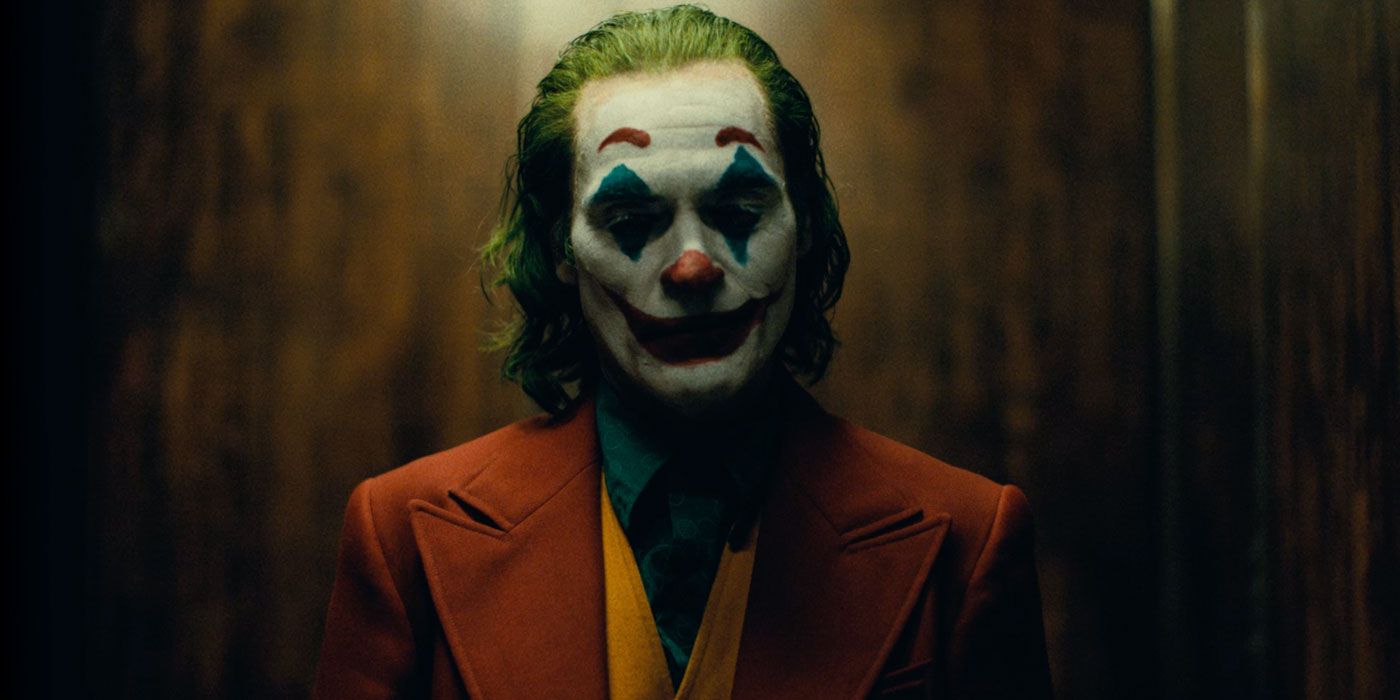
More than this, it feeds into the stereotype that people with severe mental illness are dangerous and scary. I hate to break the movie reviewer fourth wall here, but as someone who suffers from schizoaffective disorder, it’s a little demoralizing. As I write this, the guns vs. mental illness debate rages here in America. Phoenix’s portrayal of an alienated, unstable, abused, and traumatized individual who one day decides to take his pain out on the world hits a bit too close to home. We live that reality. Do we also want to watch it on the big screen?
The rest of the cast includes Brett Cullen as Bruce Wayne’s father, Thomas, Robert DeNiro as a late night talk show host (completing DeNiro’s King of Comedy destiny), Francis Conroy as Arthur Fleck’s frail mother, and Zazie Beetz, a kind of romantic interest who turns into a Fight-Club-like twist that goes nowhere. A talented cast, not improperly used, but still, to quote the clown himself, why so serious?
And the truly insane thing about it is we’re talking about the Joker! Beloved cultural icon since 1940. Yes, it’s a more realistic version of the character, and yes, the guy has been shown in so many different ways, there’s almost certainly a financially viable infinite multiverse of Jokers who could range from saccharine sweet to, well, Joaquin Phoenix depressing. But for crying out loud, I laughed once and snickered once during the entire running length, and in both those instances, not a single exploding chicken!
I kid of course. Someone ought to.
Ultimately, the real sin of this movie is a cinematic one. It’s a bit of a slog. It’s the equivalent of painting a jolly portrait using only grey. There are no highs, no true delirium, nothing of the brilliance it yearns to express. Joker isn’t exactly a bad movie. It’s probably ill-timed, and it’s debatably irresponsible, but for true Batman fans, it’s gratifying to see a favorite character shown so much respect. Or is that disrespect? Mileage may vary.
If only they’d remembered to invite Batman to the party. Does it say something about 2019 that we’d rather watch a movie about the villain than the hero? Joker is a downward plunge that never comes back up. It never relents, never provides us a single ray of light or shred of hope. That would normally be, you know, Batman’s job to provide. Speaking of which, if the guy dressing up like a giant bat is saner than you are, it’s entirely possible you’re not as funny as you think you are. Which explains… everything, really.
Jeff’s Movie Reviews gives Joker a 6 out of 10.
Check out Jeff Bowles Central on YouTube – Movies – Video Games – Music – So Much More!
You can keep up on what Jeff’s been watching and catch all of his great movie reviews the third Friday of each month on Writing to be Read. Subscribe to email or follow on WordPress today.
Share this:

Jeff’s Pep Talk: The Long-Term Effects of Rejection – No is Never the Final Answer
Posted: October 6, 2019 Filed under: Pep Talk, Publishing, Self-Publishing, Writing, Writing Inspiration, Writing Tips | Tags: Jeff's Pep Talk, Rejection, Writing, writing advice, Writing Tips, Writing to be Read Leave a commentThe Long-Term Effects of Rejection – No is Never the Final Answer
By Jeff Bowles
Every month, science fiction and horror writer Jeff Bowles offers advice to new and aspiring authors. Nobody ever said this writing thing would be easy. This is your pep talk.
To begin with, this article is written with the upstart in mind. The midnight worker, the weekend toiler, the writer who’s still slaving away in obscurity, penning story after story, unpublished novel after unpublished novel, and for whom the word ‘rejection’ has become a special kind of poison.
When I seriously started writing almost fifteen years ago–and by “seriously” I mean “cared enough to finish a single story and try to publish it”–I discovered pretty quickly that receiving rejections was almost as common as losing at a rigged carnival game. I couldn’t figure out why my writing wasn’t good enough, in what areas it was deficient, and to tell you the truth, it would be several years until such things were even remotely clear to me. Regardless, the absolute worst part of it all was receiving the rejections themselves, because I’m kind of a sensitive guy, and damn, they really tended to bruise the old ego.
Writers vary pretty wildly in how we respond to rejection. Some of us never seem fazed by it. Regardless of how often, how impersonal, and how heavy a solid “no” is, these guys seem to take it all in stride. I’ve never been able to tell if the impressive shrug of their shoulders is a put-on, but I do know one thing for certain: I cannot count myself amongst them. When I got rejections, I’d mope and whine and pout for hours or even days. Just ask my wife, who was my new girlfriend at the time. I’d turn into a real bear, and it was because it hurt so much. Like I said, sensitive guy. Plus, no one could get through to me about one very crucial thing: this is the way it’s supposed to be.
If you’re like me, and you tend to take rejection hard—or even if you’re not like me, and moving on to the next story submission is the easiest thing in the world—might I recommend a little tried and true advice. Accept your rejection phase as a given, and if you can go just one more country mile with me, learn to welcome it as a friend. Your rejection phase is helping to make you the writer you’ve always wanted to be. Your rejection phase is purifying your desire to write, and in so doing, allowing you to really decide if a writing career is what you want.
Because if it is, no amount of rejection will ever dissuade you. I thought I’d quit a million times. Now I realize there is no quit. No is never the final answer. And anyone who’s been publishing work for years and years will tell you rejection doesn’t end. Sure, you’re likely to receive less and less of it as you progress, but it’s not the kind of thing that disappears entirely. I know it hurts. Trust me, I’m with you on that one. But unless you plan on going all-indie, it really is a necessary part of your growth as a writer. Kind of a raw deal, I suppose. But then again, nobody ever climbs Mount Everest because it’s easy.
Now a brief word on indie publishing. A lot of older writers—and I don’t necessarily mean older in years, but rather older in experience level or maybe in their stance on traditional publishing—tend to believe that self-publishing inherently makes for worse writers. The idea being, of course, that without the resistance provided by steady rejection, a writer can never become all he or she is meant to become. I came up this way. I’d published dozens of times before I ever self-published on Amazon. The thing is, I don’t necessarily find it to be the case.
Sure, there is a lot of disposable material indie-published on the internet. And yes, I also believe adversity makes us better. But a writer can pick up all sorts of lessons and professional techniques in all sorts of different ways. Every time an indie author publishes something online and gets a few bad reviews, it’s not entirely unlike receiving a standard form rejection. In other words, the negative reinforcement can still become a positive.
All of this might lead someone to ask, what are the long-term effects of rejection? Well, this can go one of two ways. The majority of people who try their hand at writing will never even finish a single manuscript. Statistically, that is absolutely the case. Of those who finish, few will ever submit their work for publication. Now, those who do submit their work (or as the case may be, self-publish it) are likely to meet up with a little adversity. I’d say 90% of them will cut and run as soon as rejection gets too much to bear. But that remaining 10% will soldier on, and they’ll likely receive quite a bit more rejection in the months and years ahead. Is there a long-term legacy of rejection? Yes, there is, but it’s seldom a negative one. I think you’ll find one day that you treasure all those formal beat-downs you received.
Here’s what I would say. No matter how you ply your craft, regardless of whether you choose the path of the traditional publisher or the indie upstart, continuous work, practice, blood, sweat, and tears, are the only things that will make you better. Rejection is at times the name of the game, true enough, but it never has to be the final word on anything. Right?
Right.
Until next time, everybody!
Check out Jeff Bowles Central on YouTube – Movies – Video Games – Music – So Much More!
Want to be sure not to miss any of Jeff’s Pep Talk segments? Subscribe to Writing to be Read for e-mail notifications whenever new content is posted or follow WtbR on WordPress.
Share this:

Jeff’s Movie Reviews – It Chapter Two
Posted: September 20, 2019 Filed under: Fiction, Horror, Jeff's Movie Reviews, Movies | Tags: horror, IT Chapter Two, Jeff's Movie Reviews, Writing to be Read 7 Comments“Want your boat, Georgie?”
by Jeff Bowles
When the first big screen adaptation of Steven King’s It hit theaters two years ago, it took the world by storm. Audiences found it incredibly unnerving, disturbing, and twisted. In other words, it was everything fans of the most important horror writer of the 20th century (and maybe even the 21st century) could want. Part one of the It saga is a coming of age story, a love letter to the kinds of urban legends that have haunted the young and the young-at-heart for generations. I mean for cripes sake, a killer clown? Nightmare fuel, right? And one considered top-notch by critics and movie-goers alike. Too bad that 2017 modern classic was only half the story.
It Chapter Two wastes no time catching up with the heroes of the first movie, the Losers Club, the same rowdy bunch of kids who stopped that pesky, evil-as-all-hell clown (or whatever he is) before his spree of terror and death could claim one more fragile life in the fictional town of Derry, Maine. The Losers are all adults now, and though they’ve forgotten a surprising amount of their battle with the eponymous monster, most of them, after a fashion, choose to remember and honor the oath they took together to return to Derry if and when the nightmare began again.
That’s the problem with evil immortal-monster-alien-clown-shapeshifter thingies. They just don’t take no for an answer. The cast of Chapter Two is suitably star-studded. Jessica Chastain plays the adult Beverly, who possibly had the most to deal with in the first film, mostly due to an abusive father. She’s still suffering at the hands of an abysmally abusive man, her husband, which is sad, though annoyingly ham-fisted in the ludicrous fashion with which the guy goes from zero-to-full-on-rage without any believable provocation. Stephen King has never been known for subtlety, and It Chapter Two suffers from it. Not that the movie’s problems begin and end with the author.
Bill (James McAvoy), Richie (Bill Hader), Mike (Isaiah Mustafa), Ben (Jay Ryan), and Eddie (James Ransone) join Beverly back in Derry twenty-seven years after the events of movie one, each of them having lived surprisingly full lives. Well, all except for Mike, who’s spent the last three decades charting, following, and studying the supernatural killer. One of the Losers, Stan (Andy Bean), chooses to end his own life rather than set foot in that town again, which makes for a chilling prologue to the events that follow.
The first real set-piece of the movie takes place at the fan-favorite Chinese restaurant, a scene even the 1990 made-for-TV It nailed. It’s more adult and much creepier this time, and the dialog flows about as well as the original banter Steven King committed to the page. Then of course there’s the main event, the monster himself, played once again by Bill Skarsgard. Holly cannoli, this guy is freaky. Unfortunately, director Andy Muschietti makes the mistake of giving us less of him. In fact, less is the watchword for the entire exercise.

It Chapter Two is bloated and water-logged, just like that one guy It killed in … never mind. The only significant moments of cogency and relatability occur in flashbacks to the Losers as kids. These brief indulgences serve to remind us just how comparatively focused part one was, and we can’t help but feel a slight twinge of nostalgia for a movie that’s only two years old.
The cast does a great job exploring their characters’ unique personalities and allowing us to feel true terror when the big moments arise. But the film seems far too interested in pondering and extolling the concept rather than pushing it forward. Stephen King may be one of the most beloved pop-fiction writers of all time, but a second-parter built on what amounts to little more than a scavenger hunt? Yee-ikes. Don’t get me wrong, I love The Stand, Carrie, The Shining, and many others, as much as the next guy. Some of those books used long-windedness to their advantage. I hear they’re adapting The Stand next. Fingers crossed, all you kooky King nuts.
The climax of the film is impressive if confounding. By the time we get there, it’s become apparent the It saga has suffered from the same disjointed sequel-manufacturing other literary adaptations indulged in (Harry Potter, Hunger Games, and Twilight, I’m looking at you). Funnily enough, Marvel Studios’ big Avengers two-parter—released in 2018 and 2019, respectively—managed the trick in a much neater fashion, but then, those movies are actually two separate stories blended into one, whereas the It saga feels like, well, a nicely-structured opener and an obligatory half-waisted capstone.
Which isn’t to say It Chapter Two doesn’t have its moments. With high production values, an excellent cast, and a willingness to scare no matter what it takes, the movie can’t help but hit the mark more often than it misses. It’s just that the scenario doesn’t get as much breathing room this time. Scratch that. The problem is the scenario gets far too much breathing room.
Writing to Be Read gives It Chapter Two a six out of ten.
Not a truly poor nor truly serviceable adaptation, but who knows? Maybe when you binge both movies together, Chapter Two feels more satisfying. Is it possible a freakish clown lured us all down into his favorite storm sewer and made a nice, toothy snack of our expectations? I guess it could be worse. We could’ve buried a beloved dog in a pet cemetery, rented out a room at a haunted Colorado hotel, or engaged in interstate mayhem with a possessed car. Ooph. What a way to make a living.
Check out Jeff Bowles Central on YouTube – Movies – Video Games – Music – So Much More!
You can keep up on what Jeff’s been watching and catch all of his great movie reviews the third Friday of each month. Subscribe to email or follow on WordPress today
Share this:

Jeff’s Pep Talk: Roleplaying Games – Alternative Means of Expression Part III
Posted: September 4, 2019 Filed under: Inspirational, Opinion, Pep Talk, Writing, Writing Tips | Tags: Dungeons & Dragons, Jeff's Pep Talk, Pep Talk, Role Playing Games, Writing, Writing to be Read 3 Comments
Roleplaying Games – Alternative Means of Expression Part III
By Jeff Bowles
The first Wednesday of every month, science fiction and horror writer Jeff Bowles offers advice to new and aspiring authors. Nobody ever said this writing thing would be easy. This is your pep talk.
Earlier this year, I wrote two articles about finding new writing inspiration in what I called alternate means of creative expression. In the first article, I talked about creating new non-writing projects to jumpstart your inspiration, and in article two, I shared the perspective that sometimes the best thing you can do for yourself in the face of writing burnout is to—get this—quit for a while. If you’ve read the Pep Talk before, you know I’m a huge advocate for treating yourself well as a precursor to good creative output. I’ve seen too many very talented, very capable writers hit a wall in their work and tear themselves to pieces because they can no longer commit to a regular writing schedule. Being an author can be a pretty tough gig, and it does most people no good to pretend burnout doesn’t exist. Be kind to yourself. Recognize human creativity is not an inexhaustible resource, but rather, is more like a battery that occasionally needs a recharge.
This month I’ve got some new ideas how to go about said recharge, all centered on a little thing many adults have a hard time engaging in: play.
I like to play. In fact, you could say I’m an enthusiast. When I was a kid, sometimes the only refuge from school, bullies, and the pressures of modern family life was in fun and games. The thing about kids is nobody has told them yet it’s not okay to use their imaginations. You may not believe me on this, but a lot of people learn to ignore their creative impulses because they’re not “practical,” “serious,” or “valuable” enough for the adult world.
But you and I are storytellers, which means we know better. I say the day you stop playing is the day you lose contact with your own heart and soul. When I was getting too old for make-believe on the playground, I got into playing video games. Later, I got into playing music with my friends. In either case, I refused to sever contact with that part of myself that required the emotional release of a rollicking good time. And since we’re all storytellers here, odds are you may be a lot like me, in the sense that some part of you still feels the need to bring to life concepts, characters, and worlds that previously only existed in your head.
In my very personal experience, video games are a good way of nursing a bruised and battered creative drive, and if you’re so inclined, or if you simply haven’t played a good game in years, you might be surprised to learn modern gaming offers so much more quality and variety than players had access to in decades past. Only problem with video games is that although they’re interactive by nature, they’re often no different than watching a movie or a TV show, at least as far as these things go. In gaming, I don’t get to create the story, not really. Some other storyteller is graciously offering his or her talents, which in itself offers a fine respite, but it doesn’t always help me find my own inspiration.
So may I offer an alternative, one that might shock you in its sheer unabashed nerdiness. Back in the 1970s, people used to have to—wait for it—use their imaginations if they wanted to play. On a whim inspired by fantasy literature like The Lord of the Rings, a small group of very talented and enterprising nerds created something brand new from some very old storytelling traditions. (Nerds is not a pejorative, by the way. Not in the year 2019. These days, I’m a nerd, you’re a nerd, the old lady down the street is a nerd, and so is her pet poodle.) In 1974, a man called Gary Gygax published the very first version of Dungeons and Dragons, and the world of tabletop roleplaying was born. Now I know what you’re thinking.
“Dungeons and Dragons? Isn’t that only for people with bad acne, social issues, and a penchant for dwelling in their mothers’ basements well into their mid-40s?”
I’ll admit, the stereotypes tend to cling to D&D like a shirt of fine mithril clings to the back of a frightened halfling. But here’s the thing, tabletop roleplaying games engage an individual’s storytelling capacity in some pretty surprising and dynamic ways. For those not in the know, roleplaying games (RPGs) involve a shared storytelling experience between players and a game runner—in D&D parlance, a Dungeon Master. The game is all pretend and dice rolls, slowly and joyfully co-creating and co-experiencing an unfolding adventure completely unique to you and your group of friends. And let me tell you something else, here in 2019, there are so many variations, spin-offs, and reinventions of the basic RPG schema it’d make your head spin. There’s fantasy roleplaying, sci-fi roleplaying, horror roleplaying, romantic roleplaying, and even roleplaying based on Saturday morning cartoons. And I’ll tell you another thing, these kinds of games have experienced a huge resurgence in recent years.
I’ll make a confession at this point: my wife convinced me to write this article. I didn’t grow up playing D&D. Like many of you, when I was a kid and teenager I scoffed at it. Sure, I collected comic books, wrote speculative fiction stories, played video games, and enjoyed the heck out of entertainment properties like Star Wars and Star Trek, but for some reason, tabletop roleplaying was simply a bridge too far. My prejudices continued well into adulthood, but very recently my wonderful wife turned me on to a new way of experiencing RPGs.
Round about the time internet culture discovered people like to watch others game electronically, it also discovered the joys of watching a group of strangers play D&D. The most successful example of this is Critical Role, which you can watch on internet apps Twitch and YouTube. Critical Role is a weekly show populated by a group of eight Hollywood voice actors who just so happen to be best friends and hopelessly devoted D&D enthusiasts. These guys aren’t your prototypical basement trolls, either. They’re charming, attractive, talented, incredibly funny professionals who are as dedicated in their own ways to the craft of storytelling as you and me. They play D&D like no one else, personifying their characters with impressive skill and gusto to generate an incredibly engaging and entertaining storytelling experience that shouldn’t be tons of fun to watch but is. And they show you what’s possible when you engage your imagination in a completely improvised way.
Admit it, sometimes the act of writing is lonely. It’s just you, your word processor, and your dedication to the craft. Fun is not at all required, as much as we’d like it to be. So here’s my advice if you’re dead tired of laying down one paragraph after another, one concept after another, one character, theme, or narrative arc after another, and your mind is aching for a bit of a vacation: go out and play a little bit. Not everyone has access to a group of people who like roleplaying. This much is true. It’s also true a huge chunk of the adult population considers such things frivolous at best. But look, roleplaying can be a hell of a good time, and as modern pop psychology often reminds us, sometimes you’ve got to nurture your inner child before you can fully embrace what it means to be a grown up.
RPGs force players to think on the fly, to produce results from nothing but their own creativity and random dice throws. It’s extreme storytelling, if you think about it, and if you’ve tried everything else to combat that nasty spell of writer’s block, it may be just what the doctor ordered. There are plenty of online resources that can help you find local games in your area, but if you’re still not sure, maybe just start with a little passive viewing. Do yourself a favor and check out some internet shows like Critical Role. There are a lot of options out there. See if it doesn’t spark something within you, and if it does, maybe consider giving it a try yourself.
We live in such a take-no-prisoners world. Is it really too much to ask of yourself to slow down every once in a while and just have some good, clean, creative fun for the sake of, well, good, clean, creative fun?
Until next time, folks, keep those storytelling skills limber and toss a couple d20s. That’s roleplaying parlance, by the way. It’s your adventure. Tell it how you want it.
Check out Jeff Bowles Central on YouTube – Movies – Video Games – Music – So Much More!
Want to be sure not to miss any of Jeff’s Pep Talk segments? Subscribe to Writing to be Read for e-mail notifications whenever new content is posted or follow WtbR on WordPress.
Share this:

Jeff’s Movie Reviews – Once Upon a Time in Hollywood
Posted: August 23, 2019 Filed under: Jeff's Movie Reviews, Movie Review, Movies | Tags: Charles Manson, Historical Fiction, Hollywood, Jeff's Movie Reviews, Manson Family, Movie Review, Movies, Once Upon a Time in Hollywood, Quentin Tarantino, Quentin Tarantino Movies, Writing to be Read 2 Comments
Revenge as Entertainment
by Jeff Bowles
Quentin Tarantino isn’t necessarily known for subtlety. While his films are often genius—featuring nonlinear storytelling, irascible and energetic dialogue, and a certain unabashed love for B-movies and trashy 1970s grindhouse filmmaking—they are also incredibly violent and tend to feature characters who are more nasty than nice. That’s not really a minus in today’s entertainment landscape, nor was it especially considered as such in the 1990s, when Tarantino burst onto the scene with unexpected violent delights like Reservoir Dogs and Pulp Fiction. Yet something new has entered the 53-year-old filmmaker’s bag of tricks: history revision, the kind that allows him to brutalize some of the most notorious bad guys of all time.
In Inglorious Basterds (2009), Tarantino shot, burned, and blew up Adolph Hitler in a French movie house long before WWII ended in real life. In Django Unchained (2012), he took the fight to American slavery, unleashing a bloody revenge romp on a vile and inhumane southern plantation. There’s a certain catharsis to be experienced by, in some passing fashion at least, hurting old ghosts that hurt us still. Especially here in the United States, where as a collective, we’re still very much bound by the sins of the past. Tarantino, for all his faults as a filmmaker, has always been extraordinarily fearless in allowing audiences to exorcise our collective demons. Love him or hate him, he’s got a style and aesthetic all his own, and he doesn’t apologize for all his excesses and bloody genius madness.
Which is why Once Upon a Time in Hollywood, his 9th film and fourth in a row to feature a historical setting, hits so close to home. This time around Tarantino takes us on a trip to late-1960s Los Angeles, home of an American film industry churning out movies and TV shows in a hilariously fast and loose fashion. The streets are full of hippies, the soundscape is constant rock and pop hits and saccharine advertisements, and the personalities involved crave fame and public exposure like some people crave cigarettes dipped in LSD. Without spoiling too terribly much, the historical bad guys this time around are the Manson Family, and though Charles Manson himself only appears onscreen for a few minutes, his demonic presence is certainly felt.

Rick Dalton (Leonardo DiCaprio) is an aging cowboy actor who hasn’t had a decent starring role in years. He spends most of his time drinking, lapsing into coughing fits, and playing mustache-twirling heavy of the week on any network TV show that will hire him. His best friend and stuntman Cliff Booth (a delightfully chill yet dangerous Brad Pitt) takes care of him as best he can, but he hasn’t performed any stunt work for the former rising star since Rick lost the lead gig to Steve McQueen in a little movie called The Great Escape. Rick has a house in the Hollywood Hills right next door to director Roman Polanski and his new wife Sharon Tate. Here’s where the alternate history kicks in, folks. Younger audiences who know nothing about the Manson Family murders will undoubtedly experience Once Upon a Time in Hollywood in a much different fashion than the rest of us. Needless to say, the film cruises along Sunset Strip with a heavy mind and an eerie sense of impending doom, even when the action is relatively light and comical.
After Cliff engages in an ill-advised backlot sparring match with non other than martial arts legend Bruce Lee, he’s got all the free time in the world. Cliff picks up a vivacious hippy chick he’s been eyeing around town and drives her home to an old Western movie shooting set a large group of young, creepy, dangerous beatniks have converted into their own personal crash pad/drug den. Dakota Fanning plays a particularly dead-eyed Squeaky Fromme, and her interactions with Pitt are devilish. It’s the little historical flourishes that really make this film sing.
To go much further into the plot would spoil the ending, but look, when Tarantino gets his hands on real-life monsters, he goes all the way. Which isn’t to say Once Upon a Time lacks heart. Tarantino is a seasoned, mature filmmaker, and his characters spend much of the movie dealing with the limitations of their own flawed humanity. You really have to feel for DiCaprio’s Dalton, who has long ago confused success for self worth. And Margot Robbie shines as Sharon Tate, an absolute vision of 1960s femininity and grace.
The only real question we’re left with after the credits roll is if it’s earnestly healthy for our collective culture to, say, blow up Hitler or bathe an old plantation house in blood. In brutalizing the villains of history, has Tarantino allowed us mass catharsis, or has he just developed his own brand of big-budget revenge? It’s a forgone conclusion, but realistically, we are in fact dealing with the Manson Family. The actions of three of their members one late August night still ring out as some of the most atrocious and disgusting of the 20th century. Like it or not, Tarantino seems to tell us, we live in a world full of hate and murder, and in the year 2019, when mass shootings happen almost every week, what’s a simple movie got to do with human decency and justice?
Once Upon a Time in Hollywood is a masterful expose of the human psyche circa 1969. It’s funny, stylish, chock full of delicious old rock and pop tunes, and yes, it’s got a beating heart that ultimately outweighs the brief but vivid extreme violence that defines its climax. Tarantino has another winner on his hands, though the conversation about his impact on a culture reeling from gun violence will most likely continue.
Writing to Be Read gives the film a solid nine out of ten, but this movie reviewer has to wonder, will there ever come a time healing and revenge are not synonymous?
Check out Jeff Bowles Central on YouTube – Movies – Video Games – Music – So Much More!
You can keep up on what Jeff’s been watching and catch all of his great movie reviews the third Friday of each month. Subscribe to email or follow on WordPress today
Share this:

Jeff’s Pep Talk: All Hail the Late Bloomers!
Posted: August 7, 2019 Filed under: Uncategorized 5 Comments
All Hail the Late Bloomers!
By Jeff Bowles
The first Wednesday of every month, science fiction and horror writer Jeff Bowles offers advice to new and aspiring authors. Nobody ever said this writing thing would be easy. This is your pep talk.
It’s a forgone conclusion water never boils when you watch it. As aphorisms go, it’s kind of true, I guess. I know that in my own life, there have been times I’ve wanted something so bad, have focused on it so intensely, that it was almost no surprise I ended up with nada in the end. Do you feel that way about your writing career? Stuck? Unappreciated? Have you felt that way now for years or even decades?
It’s pretty rare for an aspiring author to strike gold on her or his first time out. Most writers accept this as fact, but I often wonder how many of us have internalized it. Stories of the ubiquitous wunderkind abound. It stirs our imaginations, the young upstart genius who, in earnest, works diligently to produce that one perfect novel and who, after a little effort, lands themselves a literary agent, then a book deal, then a movie deal, then…
But what about folks who don’t achieve much until they get a bit older? What about the late bloomer, who works just as hard as that young upstart, but for whom success has been slow in coming?
For a lot of people on the outside looking in, a writer’s inability to move the proverbial ball forward is often a sign of poor motivation, or worse, a lack of true talent. Unfortunately, the megastars have tainted the pool in this regard. For one, writers who achieve success while young tend to be tragically nonchalant about publishing and what it really takes for the vast majority of their peers to reach the same level. Selling yet another novel or short story is no big deal for them, and in my experience, more than a few of them fail to see the struggle the rest of us face. I don’t mean to call anyone out, of course. It’s just that perspectives shift wildly depending on who you talk to.
I don’t know about you, but I like to believe in a little thing called fate. Sometimes the things we want most just aren’t right for us, and it’s only after the fact, after we’ve struggled to attain them, that we realize we were perhaps meant for greener pastures. Whatever comes my way in life, I can’t actually argue with the cards I’ve been dealt, and neither can you. You can try, I suppose. Let me know in the comments section below how that’s worked out for you. Yeah, maybe it’s taking you longer to reach your goals than it took others. We can try to control things, buy self-help books, attend seminars about producing more commercially viable writing, but the reality of the situation is that thousands upon thousands of really talented folks struggle on a daily basis to be heard. It doesn’t mean we have to hate what we do. In fact, in can empower us to enjoy it even more.
There’s some solace to take if you’re perhaps getting on in life and are wondering if you should pack your silly writing dream up and focus on more worthwhile goals. Feeling dejected, rejected, and abused is not an age or experience thing. We all know what it’s like. The good news is that many of the most talented and successful authors you’ve ever heard of didn’t get their careers rolling until later in life. Bram Stoker, for example, didn’t publish his first story until the age of forty-three. And William S. Burroughs, the author of Naked Lunch, didn’t find the strength to take his writing seriously until the tragic death of his wife.
Luckily, you don’t need tragedy to learn the same lesson he did. It’s never too late. Not ever. You can’t predict when or where lighting will strike, and if you choose to quit, you won’t see all your effort pay off. It can’t be denied, there is something special about that wunderkind model. I wanted to be that guy. I’m sure more than a few of you did, too. But there’s also something to be said for experience, wisdom, patience, and dare I say it, deliberate and well-measured progress (also perhaps known as SLOOOOOOW progress).
So maybe you didn’t write a book until your kids were grown, your spouse had asked for a divorce, you lost your job, or whatever else you’ve been through in life. Isn’t it safe to say you’ve experienced things you and only you can write about? A treasure trove of experience, actually. And maybe you’ve read a few good books along the way, too.
We never know how much something means to us until we no longer have it. Never assume anything when it comes to this fate business. And don’t beat up that dead horse in your own mind. No, success is not a window that closes after a set time. Enjoy the work, love the craft, keep producing, and never stop dreaming. And I mean, it could be worse, right? You may have never started writing at all. Trust me on this one, folks, the world would be a far less magical place if you had.
Until next month!
Check out Jeff Bowles Central on YouTube – Movies – Video Games – Music – So Much More!
Want to be sure not to miss any of Jeff’s Pep Talk segments? Subscribe to Writing to be Read for e-mail notifications whenever new content is posted or follow WtbR on WordPress.
Share this:

Jeff’s Movie Reviews – Avengers: Endgame
Posted: May 17, 2019 Filed under: Uncategorized Leave a comment
Earth’s Mightiest
by Jeff Bowles
For more on Avengers: Engame, make sure to check out my full video review.
A wonderful thing happened to me as I watched Avengers: Endgame in the theater. At some point I realized that the worries and concerns that have been plaguing me in recent months are really just a steppingstone to something better, an invitation to move onward and upward in life. It happened around about the same time the core Avengers we met way back in 2012 tried to convince Robert Downey Jr.’s Iron Man to repair the past. “Well crap,” I said to myself, “if their mistakes are universe-ending, maybe mine aren’t as bad as I thought.”
And that’s the thing about this fourth Avengers movie, the capstone to the first eleven years of the mighty Marvel Cinematic Universe. Both understated and bold, the film urges us to reexamine our past choices. Some people stay stagnant and bemoan what they can’t change, while others look ahead and try to envision a better future.
Or maybe I just really love comic books, and a big, wonderful superhero flick like this awakens something serious and startling in me. Individual mileage may vary, of course, but truth be told, I’ve never seen a motion picture quite like this, and neither have you.
Avengers: Endgame is the second part of a two-part epic, which itself is the penultimate chapter of a series that’s twenty-two stories deep. That’s right, in order to gain a full appreciation for the trials and triumphs of Earth’s mightiest heroes, we need to go back to the very beginning, to the moment Tony Stark first slipped into his Iron Man suit. Readers of Marvel comic books were never astonished at how well this little project pulled together in the end, but audiences unfamiliar with a working shared universe might find themselves surprised by the complex tapestry eleven years of movies can weave.
Thanos the Mad Titan wiped out half of all sentient life in the universe with the snap of his fingers in last year’s Avengers: Infinity War, and now our heroes feel the need to, well, do some avenging. When it becomes clear it’s too late to fix Thano’s bold solution to universal overpopulation, the Avengers scatter and make individually vein efforts to move on with their lives. Captain America runs a support group for survivors of the infamous snap, Black Widow runs clandestine operations to protect what’s left of the world, Iron Man has settled into an existence of perfect domesticity, and Thor … well, don’t let me ruin for you how he’s ended up.
When Scott Lang, Ant-Man (Paul Rudd), unexpectedly pops his little shrinky-growy head out of the aptly named Quantum Realm, it slowly dawns on everyone it may be possible to return the universe to its former state after all, the lives of all those who turned to ash included. The movie focuses on the original six heroes we’ve come to love, which is a wise choice. Avengers: Infinity War sure was a beast of a movie, but it was also bloated with characters. The result here is a tighter, more focused narrative, one that dispenses with unnecessary story arcs in lieu of a clear and present runway to adventure, mind-bending time trickery, and a whole hell of a lot of interpersonal drama.

That’s the thing that’s so surprising about Endgame. Whereas most superhero movies overwhelm audiences with big fights and tons of CGI, this film invests in characters and the changes that have worked their way into every aspect of their personalities. Which isn’t to say big fights aren’t present, but the truth is this is a much more personal film than you might expect. As usual, it’s a long shot to save the world, but really, the adventure is secondary to the people.
Storytelling like this is often brooding and overly serious, but really, a good sense of humor turns out to be the name of the game. It’s not all beat-downs and overwhelming anxiety. These characters care about each other, and it shows. Past comic book movies like The Dark Knight have grappled with similar apocalyptic themes, but the first time The Hulk opens his mouth in Endgame, you’ll quickly realize superheroes rarely work best in their darkest, most imposing manifestations. Filmakers Joe and Anthony Russo and their very capable screenwriting team take some magnanimous risks with the humor, off-the-cuff and casual as much of it seems. It’s all worth it. The sense of good-cheer offsets nicely with moments of world-ending weight.
Additionally, a large section of Avengers: Endgame is devoted to reexploring some of the greatest moments from MCU history. It’s funny to think about nostalgia in a series that’s only a decade old, but for audiences who’re fully invested in the story thus far, it really is a beautiful opportunity to look back. So many great moments in Endgame were earned years ago, and while some movie reviewers and quasi-fans have gotten it into their heads this is the last big hurrah, by the time the credits roll, it’s clear we haven’t seen anything yet.
In movie biz terms, it was always a question how long some of these actors would stick around, but Marvel Studios is playing with eighty years of published continuity. Marvel, the little comics company that could, has been finding new ways to explore and reinvent itself on a weekly basis for longer than most people today have been alive, which means no, Virginia, the MCU will not be running out of ideas any time soon. If you keep showing up to the theater, they’ll keep pumping these movies out, and as I write this review, Avengers: Endgame has already become one of the highest grossing films of all time.
Speaking of writing reviews, it’s tough to describe Endgame without spoiling it completely. Suffice it to say, this three-hour epic will leave audiences breathless and hungry for more. It’s a huge, big-hearted film saturated by personal stakes. Or is that a personal movie containing universal stakes? I can’t imagine a more fitting entertainment milestone. Surely, the quality won’t always live up to the hype, but until such a time Marvel jumps the shark like Fonzie, box-office supremacy shouldn’t be an issue.
The next movie in the MCU arrives in early July. Spider-Man: Far From Home has already promised to explore the fallout from Endgame, and that’s really what Marvel is best at. Each time we come out for one of these flicks, we get more context and more invention. Say what you will about silly superhero movies, but don’t be surprised if in twenty years the film industry is still dominated by capes, masks, and tights. Until then, I’ve only got three words for you: make mine Marvel.
Avengers: Endgame gets a perfect 10 out of 10.
Ka-pow!
Check out Jeff Bowles Central on YouTube – Movies – Video Games – Music – Short Stories – So Much More!
You can keep up on what Jeff’s been watching and catch all of his great movie reviews the third Friday of each month. Subscribe to email or follow on WordPress toda
Share this:

Jeff’s Pep Talk: Who Influences the Influencers?
Posted: May 1, 2019 Filed under: Fiction, Inspirational, Pep Talk, Writing | Tags: Inspiration, Jeff's Pep Talk, Motivation, Writing, Writing to be Read 2 Comments
Who Influences the Influencers?
By Jeff Bowles
The first Wednesday of every month, science fiction and horror writer Jeff Bowles offers advice to new and aspiring authors. Nobody ever said this writing thing would be easy. This is your pep talk.
Are you an influencer? You might want to think about it a moment before you answer. In our culture, to influence is to make a big splash, to inform what individuals and groups value, how they think and interact. I’m an influencer because I’ve got a Mom and Dad, a wife, a brother, friends. I’ve had a huge impact on them, and it goes without saying, they’ve impacted me. We all influence each other, right? We can’t help it. If I know you and you know me long enough, we’ll start to get under each other’s skin. Science even suggests we’ll start to look alike, as terrifying as that sounds.
Human beings are the influential type. We’re social creatures, and usually, when one of us has trouble, there’s a whole baying wolf pack of supporters and naysayers coming up behind. One of the things I dislike most about our modern storytelling ecosystem is the fact writers today tend to favor death, tragedy, betrayal, all the nasty things in life. Whereas love, respect, loyalty, they seem to get left in the dust. So you’re a writer. You like to tell stories and communicate complex ideas that might otherwise mystify people. You’re an agent of truth, an avatar of righteous disclosure, and you need a clear mind and a firmly rooted foundation.
Enter the influencers. They come in all shapes and sizes. They can be that grade school teacher who first read you your favorite book. Or the acclaimed author who, after forty years of alcoholism, workoholism, and abject failure, produced that one brilliant novel that sets your soul singing every time you read it. You can be your own influencer, too. Who is it that forces you to sit down at the computer and write? Is it your work ethic? Where’d you pick that up? I’m an all-or-nothing guy, much more comfortable working in bursts and spurts. Also more likely to face periods of intermittent burnout because of it. But even I get uncomfortable when I’ve allowed myself to rest on my laurels too long. Knock me down, I get back up (eventually). Who influenced me to perform this way?
It may sound sappy, but I don’t believe people come into our lives by accident. I learned to work hard from my family. They taught me to laugh as well, which means my stories are par-boiled and strange as hell. I didn’t know I had talent until people close to me told me in no uncertain terms. Even as an adult, there have been those moments a special person has come out of nowhere and made me feel suddenly and delightfully valuable. A little encouragement goes a long way, right? And thank god for that.
But let’s not forget the negative influencers in our lives. The people who tell us we can’t, shouldn’t, mustn’t, that we’d never. Sometimes, especially when we’re just starting out, our naysayers seem more numerous than our supporters. I was an indie singer/songwriter until I turned twenty-three and decided I was a writer. Just about everyone in my life, my family, friends, even my fiancé, were puzzled by the sudden turnaround.
“Don’t you still want to do music on the side?” they asked, oblivious to the fact I might interpret their concern as doubt in my abilities.
I wasn’t born to write, not really, and neither were you. We worked at it, honed our abilities to finely pointed instruments of literary destruction. Sure, people like us have a natural aptitude for this sort of thing. But for crying out loud, my first completed short story was such a godawful mess I haven’t had the strength to look at it in all the years since. No, my family wasn’t super supportive of my choice. I think they wanted to be, but perhaps they didn’t know how. To say they were unequivocally negative about my chances wouldn’t be fair, but I was their golden boy when I had a guitar in my hands, something substantially less than that when I started cranking out sub-par stories. Like you do. Because we all have to crawl before we can crawl just a tiny bit faster.
Here’s the thing. I’m grateful for their doubt. I recognize now that if not for a little healthy adversity, there’s no way I’d be the writer I am today. Do you feel the same? Who influenced you? Who told you you could or couldn’t? You may be surprised to realize you needed both groups in equal measure. We never really know how bad we want something until it’s denied us. Ask any hard-case of unrequited love out there, it’s always so much more romantic when the answer is a resounding “no.”
I’ve got a brief writing exercise for you, a small motivational tool to unearth where you’ve been and help you ponder where you’d like to go. Write down the top ten people who have influenced you on your writing journey. Could be anybody, teachers, authors, loved ones. Now for each one, assign a numerical value from one to ten. Your high school language arts teacher, what was her name? She gets a seven because she’s the first person to compliment your out-of-the-box ideas. Tally up the final score for all ten influencers and answer one very simple question: did you do this alone?
No! Of course you didn’t. There were people ushering your progress the whole time, laughing at you, cheering you, doubting you, praising you. There were ghosts of old writers in all the books you collected, urging you to follow in their footsteps, to find truth in their work, such that it could be found. The sheer joy of the struggle, the artistic and cerebral strains, buoyed by hearts buoying hearts, the ability to sit down and craft a narrative that takes everything you are, were, believe, love, hate, condense it into chalky baby formula, slap it in the food processor, and then ka-blam! Gourmet word smoothies (literally speaking, of course).
It’s no small thing to think about these people from time to time. For so many of us, real support doesn’t manifest until we’ve been working for years and years. Imagine you were raised to go into business. Mom, Dad, I want to be a writer instead. Professors, Dean, sorry I’m leaving your wonderful but boring academic program. I’ve got the bug, you see, and there really is only one cure.
The older I get, the clearer it seems to me our desires don’t come to us by chance. Plenty of people try their hands at penning their first novel and never make it further than a chapter or two. So take for granted the fact that if the urge to create is so strong in you you’ve never been able to lay it down, obviously, much gratitude and respect, you are MEANT (that’s all caps, MEANT) to keep working. Saying nothing about MEANT to be super rich or super successful, MEANT to win awards, MEANT to change the world. No, simply MEANT to write, which is no small MEANT at all, thank you very much.
Do yourself a favor today and give some gratitude to all your many influencers. Without their love, support, disinterest, and bad advice, you wouldn’t be able to influence others in kind. Oh no, you didn’t think you were getting out of it that easy, did you? Of course you’re the biggest influencer of all. We don’t live in bubbled slip-space isolation, present state of geopolitical affairs notwithstanding. You never know who’ll come knocking on your door. That special individual may become the most important author of the millennium. Then again, they might just be a friendly guy or gal who needs a friendly pep talk and a kind word or two.
Don’t make your job harder, and don’t make them feel they should abandon theirs. Writers who make a point of discouraging others give me indigestion. Probably for the best, in the long and short of things. I never really listened to their sort anyway. Until next time, folks. Dream large. After all, if you don’t, who will?
Check out Jeff Bowles Central on YouTube – Movies – Video Games – Music – So Much More!
Want to be sure not to miss any of Jeff’s Pep Talk segments? Subscribe to Writing to be Read for e-mail notifications whenever new content is posted or follow WtbR on WordPress.
Share this:

Jeff’s Movie Reviews – Shazam!
Posted: April 19, 2019 Filed under: Comic Hero, Jeff's Movie Reviews, Movie Review, Movies, Super Hero | Tags: DC Comics, Jeff's Movie Reviews, Marvel, Movie Review, Movies, Shazaam!, Superhero, Writing to be Read Leave a comment
Just say the word.
by Jeff Bowles
(Be sure to check out my video review of Shazam! on YouTube’s Jeff Bowles Central.)
Shazam! is the kind of movie just about anyone can get behind. Film audiences segment into a multitude of groups, but when it comes to comic flicks, you’re either on board for the ridiculousness or you aren’t. Younger audiences tend to take a movie like this more seriously, whereas more mature viewers are often left scratching their heads. When science fiction and fantasy work best, they indulge in a certain real-world approach to emotionality, family, romance, regret, passion, and they do so at high enough levels that any and all nerdy accoutrements go down a little bit smoother, in that for many people out there, they’re extraordinarily hard to swallow.
Shazam! is a big, fun, friendly superhero movie with more heart and humor than just about any other DC Comics offering made in the last twenty years. During a time in which Superman is angst-ridden and Batman is a violent rage-freak, Shazam! understands home is where the heart is. Ask any comic movie fan the difference between the two behemoth companies, Marvel and DC, and you’re likely to hear Marvel is fun and DC is morose. Such is the genius of David F. Sandberg’s new movie. It feels Marvel-fun but engages the kind of deep archetypes and mythic dynamics DC Comics has been famous for since the 1930s.
Billy Batson is an orphan looking for a place to finally call home. He thinks finding his birth mother is the answer, but the truth is, if she’d wanted to be found, he wouldn’t have to break into cop cars and hack suspect ID computers for her deets. Enter the Vazquez family, genuinely supportive parental figures Victor and Rosa, and a full house of five other kids, all of them orphans. The dynamics at play in the Vazquez household expound in wonderful ways when Billy expects disaffection and dysfunction and finds hardcore familial love. And the other kids are all great to watch onscreen, always eager with another funny quip or charming character quirk.
To wit, Billy’s roommate, Freddy (Jack Dylan Grazer), perhaps the best personification of a sympathetic sidekick you’re likely to see all year. He’s disabled, hilarious, and he’s got a keen geek obsession. Superheroes, after all, exist in this world in spades. In fact, one of Batman’s famous baterangs is a star narrative prop, and Freddy’s knowledge of said-comic-isms comes in pretty handy when Billy gets his powers and then has to figure out what the hell to do with them.
Off world or in another realm, or wherever/whenever else you prefer, the ancient god of right-makes-might, Shazam (Djimon Hounsou), searches for a suitable replacement after millennia of tireless service. Unfortunately, the forces of evil are on the hunt for a successor, too. The clock’s seriously ticking, so in a spray of CG pyrotechnics and unexpected altruism on Billy’s part, Shazam summons our would-be hero to his mysterious throne room and endows the kid with strength, speed, flight, and of course, killer lightning powers. All Billy has to do is say his name, and he’ll transform into a musclebound adult version of himself in a red suit and sparkly white cape. Zachary Levi plays the god-like, full-grown superhero with all the adolescent joy, immaturity, and zany recklessness we’d expect from a teenager stuck in a man’s body. This is the where the movie kicks into full Tom Hanks’ Big mode, and Levi is the perfect choice. You get the sense this kind of thing is a walk in the park for him. It’s almost criminal how much fun he appears to be having.
Just as Billy begins to feel confident in his new dual identity, the evil Dr. Sivana (Mark Strong)—similarly endowed with incredible power, but by monstrous avatars of the seven deadly sins—arrives to threaten his heroic dominance, his life, and all the wonderful new people he’s come to love. The real joy of Shazam! is that it takes for granted how crucial it is to have people who care about and support you. So when Mom and Dad and all the other kids are in danger, we really feel the urgency. The filmmakers value them and what they mean to Billy, and we can’t help but do the same.
Billy Batson may not be a groundbreaking addition to the world of comic movies, but he does offer us a glimpse at a different kind of pop superhero psychology. There’s not much tragedy, horrific scarring, or trauma in his makeup, no more or less than in you or me. It’s almost a relief that the film only sparingly engages in world-ending theatrics. An interesting paradigm emerged in March and April, 2019 when Marvel Studios released Captain Marvel, and Warner Bros./DC released Shazam! As any fan will tell you, Shazam was also originally called Captain Marvel, and years ago, the two companies settled the branding dispute out of court. Apparently, Marvel was dead set on maintaining a character that carried their moniker and DC, well, maybe they realized Shazam is a better name for a boy-in-man combo that literally cannot do anything cool unless he, as the advertising declares, says the word.
But whereas Captain Marvel was a movie about finally realizing the power that always dwelt inside, Shazam! is about a sudden overwhelming change of fortune. Sometimes the thing you need most is right there in front of you. It is also admittedly the ultimate adolescent boyhood fantasy to wake up one day and find out you’ve got super powers. Shazam! won’t win any awards for exploring gender, sexuality, or race, but its heart is in the right place, and lest we forget, we could still be watching scowling Superman beating the crap out of growling Batman for no discernible reason other than MUSLCES! ANGER! KA-POW!
Billy Batson is enormously relatable, the perennial loner and outsider who has so much more to offer people than he knows. Who hasn’t felt unloved? Who’s never been lonely? Yet isn’t there always just a bit of hope in all the neglectful crap we have to put up with? Someday an amazing person will recognize me, and I’ll finally come home. It’s the emotional psychology of a movie like this that makes it so effective. Yes, the world is a terrible place sometimes, but when we take off our costumes and put away our utility belts, all we really want to do is laugh and dream.
On the surface, Shazam! is just another silly superhero movie in a sea of nearly identical offerings. But it’s also a fine example of comic book storytelling done right, supremely enjoyable, heartwarming, surprising, in fact more than enough to redeem the brooding misanthropy of other recent DC films. It rivals the very best of Marvel, and what’s more, it recognizes when a cape is just a cape. You don’t need to wipe out half of humanity or destroy the globe to bring out the hero in people. When the chips are down, all you have to do is say the word.
Shazam!
Am I … am I still here? Still just a slightly overweight yet lovable, handsome, and humble author/movie reviewer? I’ll work on that. We’ll get there, folks.
The new Shazam! movie gets 9 sparkling red tights out of 10
Check out Jeff Bowles Central on YouTube – Movies – Video Games – Music – Short Stories – So Much More!
You can keep up on what Jeff’s been watching and catch all of his great movie reviews the third Friday of each month. Subscribe to email or follow on WordPress today!