Jeff’s Pep Talk: Back in the Saddle
Posted: April 3, 2019 Filed under: Fiction, Opinion, Pep Talk, Writing | Tags: Editorial, Inspiration, Jeff's Pep Talk, Opnion, Writer's Block, Writing to be Read 3 Comments
Back in the Saddle
By Jeff Bowles
The first Wednesday of every month, science fiction and horror writer Jeff Bowles offers advice to new and aspiring authors. Nobody ever said this writing thing would be easy. This is your pep talk.
If you’ve been following the Pep Talk, you know I’m big on writers cutting themselves some slack. Burnout kills creativity and breeds writer’s block. So while I’ve always been a fan of the idea that we need to keep working in order to evolve, grow, and succeed, I’m incredibly cognizant of the ever-present reality most writers hit a wall every now and then, and that it’s okay to admit and even embrace that.
Now, a bit of an admission. The past two years or so, I’ve been struggling to rebound from my own slowdown. This decade has been intense for me, particularly on the creative front. I went from earning my MFA in a very hard and fast environment, to publishing short stories at a fairly decent rate, to suffering some unfortunate circumstances in my personal life, to not writing a single word for several years.
Really, this has been the worst burnout phase of my life. I’m in my mid-thirties now, so it stands to reason that ten years of working, practicing, and publishing finally caught up with me. Furthermore, we can’t stop living very human lives under very human circumstances. If I hadn’t experienced such a shake-up on a personal level, I might have been able to keep working. But things being what they were…
So this Pep Talk is not about showing yourself some love when you’re slowing down. It’s about being eager and ready when you’re speeding back up. I recently started a new writing project, a novel, and I’m pleased to report I’m about 9,000 words in. If that doesn’t sound like much of an achievement to you, it’s probably because you’re a hard-nosed writer who puts in your time, come rain or shine. And before my productivity started to drop off, I was right there with you. But the truth is we all need a break sometimes. All of us. Actually, very often life forces us to take breaks, and we can bemoan, resist, and condemn them, but it doesn’t change the fact that a career in the publishing industry is—in its most ideal form—a long-term project. As such, detours are something of an obligation.
For several years on end, my average yearly wordcount was around 120,000. And that was after a few years of maybe 75,000 to 100,000 words. Really, I was ramping up to something big. I’m a short story guy with some long-form publications in the indie realm. Not precisely a best-seller, but not a newbie either. And as I said, grad school was intense. I think a lot of people who go after an MFA have a similar experience, right on down to needing time off after graduation. The sad and torrid fact of the matter is I haven’t attempted a book-length project since I completed my thesis novel four years ago. That’s a huge dry spell for me, so I’ll take that nice 9,000-word head start, thank you very much.
If being kind to yourself in the face of writer’s block is about realizing you’re not a story machine (no matter how much you want to be), booting up your systems after some downtime requires acknowledging any fears or insecurities that might come up. It’s scary getting back in the saddle, or at least it can be. It’s also pretty exciting, isn’t it? Maybe, like me, you started wondering if you’d ever be productive again. Am I finally done with this whole writing thing? Where are my abilities?! Why don’t I feel like telling stories!? WHY, GOD, WHY!?
Got a flair for the dramatic? Well step right up, ‘cause this next one could be a doozy: in almost any case, we need to be able to accept the fact we might be rusty. Now I took a break of a few years, but I’ve known authors who went ten, fifteen, or twenty, and who were startled to encounter really crummy writing on their part. I know, it’s disappointing. Turns out none of us is a miracle worker. So a little piece of advice, maybe start slow, a short story or two. Heck, start writing blog posts or flash fiction or maybe even try your hand at a new genre, like creative nonfiction or poetry. That’s actually a good place to start. Writing truth is, in my experience, almost always easier than writing fiction. The point is you need a jumping on point, something you can sink your teeth into that doesn’t require you to … well, break your damn teeth.
And respect yourself enough to know when it’s time to work and when it’s not. Again, I really do appreciate the workhorse model of writing. That’s how the beast feeds itself. It’s the lifeblood of what we do. I just think it’s a bit self-deluded and unkind to think you can go on like that forever. Maybe some of us can, but for the majority, it does no good to crash and burn. Don’t knock yourself for it, man. And don’t let colleagues or friends and family make you feel bad or lazy or lost.
When it’s time to get back to work, it’s time. You’ll know you’re ready because—hey, here’s a nice big no-brainer for you—you’ll actually feel like it. Don’t push yourself too hard too soon. It’s a pretty organic process when it comes down to it. You can’t get blood from a stone, though I’m sure if you hit yourself in the head enough times with said stone blood would ensue. Never imagine yourself to be something you aren’t, a literary god, born of good fortune and the primal mud from which warriors emerge, Achilles of the word processor, Odysseus of plot structure and acute character psychology. Nah, you’re just a humble guy or gal who likes to crank out some good writing every now and then. Maybe you thought this day would never come. How do you feel now that it has?
I believe that life is almost always a matter of two steps forward, one step back. It’s how we progress as human beings. So two steps forward, one step back, two steps forward: hey look, the math checks out. You’re one step ahead of where you were last time. It’s like a Jacob’s ladder, right? You zig left, zag right, but you’re always climbing higher. Don’t feel like writing today? Consider, if you will, investing in some fun. Watch a few old movies that always manage to inspire you. Read a good book. Listen to some music, or try your hand at painting, sculpting, songwriting, video production, anything that engages your creativity and that doesn’t have all that unbearable weight built up behind it.
This is a fun job. Remember that. It’s fun. We get to tell stories and entertain people with our words. If you’ve been at this a while, and you’ve done silly things before, like attempting to quit but finding it quite impossible, then consider the possibility you’re meant for this life. You shouldn’t shirk being meant for something. Any way you slice a lifelong love affair, it’s fate, my friends. It’s kismet. Maybe you aren’t a literary god, but rest assured, the real gods up on Mount Word-lympus have plans for you that go back eons. One last time, do however much you actually feel you can do, and get excited about the prospects. If, lord forbid, you someday end up in a terrible driving, skying, skydiving, or rogue spelunking accident, you’re going to want a surgeon who can put you back together with slow and steady hands. Do yourself a favor and be that surgeon for your writing.
Until next time, everybody. The straightest line between two points is … wait, you guys are using straight lines?! So that’s why my writing is so crooked.
Check out Jeff Bowles Central on YouTube – Movies – Video Games – Music – So Much More!
Share this:

Jeff’s Movie Reviews – Captain Marvel
Posted: March 15, 2019 Filed under: Comic Hero, Fantasy, Film Review, Jeff's Movie Reviews, Movie Review, Movies, Super Hero | Tags: Captain Marvel, Jeff's Movie Reviews, Movie Review, Movies, Super Heroes, Writing to be Read Leave a comment
The Marvelous Mrs. Marvel
by Jeff Bowles
(For more on Captain Marvel, be sure to check out my full video review)
As far as Marvel movies go, Captain Marvel feels refreshing, if a bit familiar. It carries with it little of the eccentric energy found in other recent Marvel flicks like Thor: Ragnarok and Guardians of the Galaxy Vol. 2, but it also requires less of audiences who have yet to drink the Marvel Kool-Aid. Much like 2018’s box office behemoth Black Panther, the hero in question is not a white male, and as the star of a major Hollywood production released in the #MeToo era, that makes all the difference.
Which isn’t to suggest Marvel Studios’ latest doesn’t give plenty of nods to what has come before, and perhaps in a more lucrative vein, to what’s still headed our way. We finally learn how Nick Fury lost his eye, for instance, but filmmakers Anna Boden and Ryan Fleck are also thrilled to butter us up for that big late-April showdown called Avengers: Endgame (check your calendars, kids. Don’t forget to pre-order all the toys, and oh yeah, maybe a movie ticket or five).
If superhero tropes and comic-isms are as indecipherable to you as Kree battle language, odds are good the scope and scale of the Marvel Cinematic Universe rings hollow. Some of us have been on board since we were kids, leafing through our favorite monthly Marvel comics like little back-issue hording zealots. But if your speed is less Captain America and more … well, any other movie ever made, really—it’s safe to take heart. Captain Marvel is a pretty good jumping on point.
Carol Danvers (Brie Larson) is an Air Force fighter pilot with super-powered amnesia. A strange event in her past wiped her memories clean and granted her incredible abilities, the sum total of which she’s dutifully employed freedom-fighting for a race of intergalactic warriors known as the Kree (best personified by her squad leader, Yon-Rogg—played by master geek-movie thespian, Jude Law). When the Kree’s deadliest enemies, a race of green shapeshifters known as the Skrulls, capture Carol and bring her back to Earth, the nascent Captain Marvel must team up with S.H.I.E.L.D. agent Nick Fury (an impressively de-aged Samuel L. Jackson) to discover the secret behind the pivotal accident. Plus, you know, she’ll get to rock out to an unquestionably righteous and eclectic 90s soundtrack.

The fact that this movie takes place in 1995 only adds to its charm. There are era-specific nods and in-jokes aplenty, including a fun Stan Lee cameo that’ll tug at your sense of nostalgia. The film’s setting also means that most of the super-heroic hi-jinks found in the other 20 MCU movies have yet to occur. It’s a prequel more than anything else. Rounding out the cast are an unexpectedly funny Ben Mendelsohn as Skrull commander Keller, Lashana Lynch as Carol’s best friend, Maria Rambeau, and a de-aged Clark Gregg, happy to take a break from playing Agent Coulson on ABC’s Agents of S.H.I.E.L.D. to play … a younger-looking version of the exact same character.
Additional highlights include a cute but vicious orange cat named Goose, though I won’t spoil the big reveal here, and the marvelously named Air Force marvel, Mar-Vell (a somewhat spaced out and liminal Annette Bening). For the most part, Captain Marvel gets by on its charm. It’s best described as an above average superhero origin story, but unfortunately, there remains a certain amount of roughness in its narrative. Big chunks of exposition get belted out from behind scads of green creature makeup, and the grand finale carries enough logic gaps you may find yourself wondering, “She was just fighting that guy. So now who are these people?”
A lot of early buzz surrounding this movie included controversial comments made by Larson herself, but really, if a storytelling medium largely created by boys for boys can’t come to grips with a few girls getting in on the action whenever they damn well please, there’s less hope for this world than any of us could have ever imagined. Captain Marvel as a character has been blasting across the universe since the late sixties, but it was only in recent years that a woman donned the suit. And Larson does a fantastic job portraying Danvers on film. She is cocky, self-assured, funny, compassionate, caring, and once her full powers get unleashed, wonderfully formidable. A certain kinship evolves between her and Samuel Jackson’s Agent Fury, and moments spent in the Louisiana home of her best friend Maria prove that an intergalactic badass can be all about family, too.
Audiences are likely to get more out of the experience if they possess a running mental lexicon of all things Marvel, but unlike last year’s Avengers: Infinity War and the forthcoming Avengers: Endgame, Captain Marvel is likely to be a fun time no matter what prior knowledge you have going in. If you’re burned out on films featuring god-like people beating the holy Skrull out of each other, you may be better entertained elsewhere. But as Thor Odinson once famously declared to the world-eating demon Surtur, “That’s what heroes do.”
It’s a very geeky multiverse we live in, people.
Jeff’s Movie Reviews gives Captain Marvel an 8 out of 10.
Check out Jeff Bowles Central on YouTube – Movies – Video Games – Music – Short Stories – So Much More!
You can keep up on what Jeff’s been watching and catch all of his great movie reviews the third Friday of each month. Subscribe to email or follow on WordPress today!
Share this:

Jeff’s Pep Talk: The Big C(riticism)
Posted: March 6, 2019 Filed under: Fiction, Humor, Inspirational, Nonfiction, Pep Talk, Writing | Tags: Criticism, Jeff Bowles, Jeff's Pep Talk, Writing, Writing to be Read 3 Comments
The Big C(riticism)
By Jeff Bowles
The first Wednesday of every month, science fiction and horror writer Jeff Bowles offers advice to new and aspiring authors. Nobody ever said this writing thing would be easy. This is your pep talk.
I don’t think there’s a soul on earth who likes criticism. There’s just something about it that can cut to the bone. Human beings have such fragile egos anyway, those pesky little conscious seats of individuality that get bruised and battered when others make us feel small, less talented, less competent, perhaps even less valid as people. Some more than others, right? I’ve had writers tell me they never feel offended, angry, upset, or in any way discouraged after a round criticism. I don’t think I believe them. I mean, not at all? Even just a little? Really?
And of course, if you’re checking out this blog, odds are you’ve seen your share of creative criticism. It’s essential to the process, right? Every writer can benefit from it, from the newest of newbs to the most seasoned authors. And a change in attitude often occurs once a writer actually gets neck deep in a viable career. At that point, criticism has become just another part of the job, kind of less of a hassle than, say, making deadlines you have no hope of making or enduring long, drawn-out revision cycles.
But there’s another dimension to writers that’s so common it’s a cliché. Many of us suffer from mental illness. I know I do, and lots of my associates and acquaintances are in the same boat. Most of the time their personal stories boil down to a bit of depression here and there, but look, there’s something about a creative profession that requires long periods of solitude that seems to attract folks who are maybe a bit less emotionally equipped than the rest of humanity. Plus, you know, the ubiquitous link between genius and madness. Some of the greatest writers in history should have been in the nut house. Some of them were.
Now there’s a big difference between getting your feelings hurt over some bad comments from a crit group and losing your mind completely. We subject ourselves to the honest (and often brutal) opinions of our colleagues because we understand in the end criticism will make us better. Especially when we’re just starting out. If we can find a few people who really get what we’re all about and who consistently offer good feedback, we’re wise to consider them valuable resources. The fact remains, writers pour ourselves into our work. In many ways, stories and novels, articles and memoirs, they’re like our children. Sometimes it’s hard not to take criticism personally. And I don’t think there’s anything wrong in admitting it.
So as a writer who’s had one or two creative outbursts himself (sorry about that black eye, prof), here’s a few tips to soothe the wounded beast. Number one, and going back to the crit group thing, it really does help to know a few people who are on the same page as you creatively. It’s old advice, but it is enormously beneficial. Also, try not to work with writers who aren’t quite as skilled as you are. Likewise, learn to recognize when you’ve gotten in with folks who have a lot more ability and experience. Writers who punch in above your pay grade aren’t going to be able to help as much as you might expect, and you may even struggle trying to understand and disseminate their feedback.
Next tip: always keep a few pots on the fire. Okay, this new story didn’t work out for me, but at least I have that other one that shows way more potential. Dive into this process head first, if you can. Conceive, draft, and revise in cycles. Nothing blunts criticism like a sense of forward momentum. Keep an idea notebook handy. Never miss an opportunity to dream up something new and play with it a little. We’re still growing here. Got lots and lots of stories to tell in the future. Stagnation sucks. It crushes the life out of creativity. Avoid it if at all possible.
Tip number three: make sure to honor your private life. I mean that. Some people throw themselves into their work at such high velocity their relationships and daily routines suffer. You’ve got friends, right? Hang out with them, have some fun. While we’re at it, don’t neglect your romantic life, either. Seems like kind of a toss-off to some people, but look, you’re human. Biology is a factor, and it’s just a basic fact that people tend to be happier when they consistently engage this part of their personality. Family, hobbies, even other, more practical career goals, these can all serve as a refuge when your creative mind is battered and tired. Conversely, writing itself can act as a pretty powerful refuge from things like, oh, family, hobbies, career goals, romantic life, friends…
Fourth tip: don’t worry about developing a thick skin. Focus more on developing a keen critical mind. Say someone tears your latest to shreds. You can either A) get emotional about it, B) decide this loser doesn’t know what the hell he or she is talking about, or C) penetrate the matter a little more deeply, choose which criticisms are valid, discard everything else, move on to the next thing. Your lizard brain is your lizard brain. It’s a given. But your analytical mind, that you’ve got to hone. So get clinical if you can. Easier said than done? For some it really is. You’re not a robot. At least I don’t think you are. I mean, you haven’t blinked in several minutes. I’m watching you…
Do the best you can to stay neutral during and after a round of feedback. Or if not neutral, at least receptive and pragmatic. This is a process. Repeat it to yourself if it helps. This is a process. This is a process. And don’t forget to ask plenty of questions. Stay engaged. Again, criticism affects people differently. I imagine some will read this blog post and think, “I don’t see what the big deal is. This Jeff Bowles guy must be a total train wreck.”
To which I might reply, “Stop staring at my mangled caboose!”
…Ahem, yes. Anyhoo, there’s no accounting for temperament. Look, it’s always seemed to me writers just aren’t honest when it comes to these things. And why should we be? Nobody likes a hot head. No one’s particularly desperate to work with a soppy, spongy mess. But there’s always the case to be made for blowing off steam when necessary. Never let it jeopardize your work, your reputation, or your sense of professionalism, but don’t bottle it up, either. If you find the situation becomes chronic, do a little soul searching. What’s really bothering you here? Why does criticism seem to affect you so much? Self-analysis, some say, is the path to divinity. Not that divinity has anything to do with the life of a writer.
Speaking of which, and if all else fails, there’s still good old-fashioned counseling and therapy. It might sound dopey and overwrought to even remind you of it, but sometimes in life, it helps to get serious about ourselves and consider our own triggers and shortcomings. No shame in it, and never let people tell you there is. Mental health is extremely important, much more important than the modern world ever seems to recognize. And even simple depression can become dangerous if left unchecked.
And now to spoil the mood completely, some depressed writer jokes!
“Well doc, I guess it all started when they said my steampunk riff on The Notebook was even lousier than my 50 Shades of Grey fan fic written from the whip’s perspective.”
“Really? And how did that make you feel?”
“Like we should have used a safe word.”
Why did the anxiety-riddled writer cross the road? Are you crazy? I’m not going outside. That road is clearly a death trap.
[end of joke digression]
Ready to tackle another round of critiques? Well, in a perfect world, I guess you would be. Do what you need to do to combat discouragement and self-defeatism. One of the healthiest attitudes we can adopt as professional writers is the macro, career-long perspective and an abysmal memory. If the fates allow, you’re in this for the long haul, so just remember this or that little hiccup will mean nothing in the end. It’s a basic fact that we learn more from failure than success. So what are you waiting for? Get out there and fail as hard as you can!
Pep talk concluded. Feel better now, don’t you?
Check out Jeff Bowles Central on YouTube – Video Games – Music – Entertainment – So Much More!
Want to be sure not to miss any of Jeff’s Pep Talk segments? Subscribe to Writing to be Read for e-mail notifications whenever new content is posted or follow WtbR on WordPress.
Share this:

Movie Review of Glass (2019)
Posted: February 15, 2019 Filed under: Comic Hero, Film Review, Movie Review, Movies, Uncategorized 1 Comment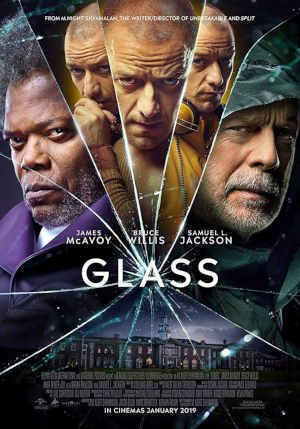
About as unbreakable as a piece of ill-tempered… well, you know.
Glass (2019) – Not Much Super, Not Much Hero
by Jeff Bowles
During the closing moments of Glass, I couldn’t help but think director M. Night Shyamalan had squandered the opportunity to build something both timely and unique. In the age of the Marvel Cinematic Universe, in which dozens of bigger-than-life characters exist concurrently and pop into each other’s movies like those annoying neighbors from down the street (you know the ones), it’s not unusual to expect some pretty big stuff from the superhero genre. And after all, Shyamalan began laying the groundwork for this trilogy of his long before The Avengers or The Guardians of the Galaxy had ever graced the silver screen, so it’s safe to say he had the market cornered on expanded comic book universes.
Shyamalan teased an unexpected and suitably epic showdown in the end credits scene of 2016’s Split, and while that movie was the best flick he’d made in years, the director who finally seemed to be getting his groove back has… well, lost his groove again. Glass is a lopsided mess, a film in search of a reason to exist. The only thing that saves it from complete mediocrity is the strength of its performances, chief among these being James McAvoy’s continually stunning, though in no ways realistic, portrayal of a man with so many personalities his personalities have personalities have personalities.
Really, McAvoy is an exceptional actor, one of the best of his generation, so casting him in a role like this takes a certain level of calculated genius. In his latest turn as mental patient Kevin Wendell Crumb—also known as Patricia, also known as Hedwig, also known as Barry, also known as The Beast, etc.—the Scottish-born actor gets to strut his stuff in some pretty bombastic ways. Scenery-chewing has never seemed so dignified, though. Shyamalan is clearly as in love with Kevin as audiences have become. He garners most of the film’s run time, which begs the question, why not just make a Split 2?
Glass of course acts as the capstone to a three-part story that began in the year 2000 with Unbreakable, the follow-up to Shyamalan’s debut masterwork, The Sixth Sense. Bruce Willis made for a pretty inert “superhero” all the way back in Y2K, and not much has changed. David Dunn still spends most of his time brooding and behaving like a working-class Bruce Wayne—a Bruce Springsteen Wayne, if you will—minus the car, the cave, and the Born to Run.
After a brutal encounter with Crumb, who’s been extraordinarily busy kidnapping and murdering young women since we saw him… kidnapping and murdering young women in a different movie, Dunn finds himself taken psychiatric prisoner and locked up in a dank, hopeless mental health facility somewhere in Philadelphia (no Philly Eagles jokes, please). Imagine his surprise to learn his arch nemesis has suffered the same fate, the eponymous Mr. Glass, played by Samuel L. Jackson.
Willis mostly seems bored with his role here, but he’s seemed bored in the majority of the movies he’s made in the last fifteen years. Jackson, however, clearly enjoys the opportunity to dust off an old fan-favorite and add another franchise notch to his belt. Mr. Glass spends too much time on the sidelines in this, his own movie, but once things really start cooking, he’s just as nerdy and evil as ever. Glass makes for an excellent counterpoint to Crumb, and in a surprisingly subtle performance, Jackon proves he’s still good for more than an eyepatch and the odd credit card commercial.
Back when Shyamalan released Unbreakable, good comic book movies were a rarity. Rarer still, mainstream acceptance and veneration for what is America’s oldest visual storytelling medium. Everyone likes comics these days, it seems, but in Glass, an overreliance on played-out comic-isms comes off as cheap, laborious, and self-conscious. Even the dastardly lady who’s thrown these colorful weirdos together, Dr. Ellie Staple (Sarah Paulson), can’t tell if she should balk at the notion of real-life superheroes or wipe them all off the face of the earth.
The movie sports a larger supporting cast culled from the other entries in the series, including Mr. Glass’ mother and Dunn’s still slightly unhinged son, but none of them are served particularly well, and in fact, the heroic Casey from Split (played by Anya Taylor-Joy) suffers a puzzling reversal of character that all but nullifies her prior life and death victories.
In truth, Glass struggles to find a beat, content for the most part in giving us context and backstory for everything we’ve already seen. Plot development is kept to a minimum, the classic Shyamalan botched twist ending is still classically botched, and the big final showdown concludes in such a disappointing and franchise-killing fashion, I had to ask myself why the entire exercise was even necessary. In my opinion, it wasn’t. M. Night Shyamalan is not a director’s director by any means, but even he knows obfuscation and bad timing are the deaths of tension.
Mr. Glass himself believes comics are a secret history of the world. And I suppose they are in a way. As a popular media artform, comic books have a long history of extraneous filler material. It’s just too bad Shyamalan capped off his grand trilogy with a story destined for the bargain bin.
Check out Jeff Bowles Central on YouTube – Short Stories – Video Games – Music – Entertainment – So Much More!
Share this:

Jeff’s Pep Talk: Permission to Quit Granted – Alternative Means of Expression: Part II
Posted: January 2, 2019 Filed under: Inspirational, Pep Talk, Uncategorized, Writing Process 2 Comments
Permission to Quit Granted – Alternative Means of Expression: Part II
By Jeff Bowles
The first Wednesday of every month, science fiction and horror writer Jeff Bowles offers advice to new and aspiring authors. Nobody ever said this writing thing would be easy. This is your pep talk.
A couple months ago, I talked about YouTube and alternative ways writers can express themselves in order to clear out writer’s block or perhaps simply gain perspective on career or creative issues. I consider the writer’s life a long-haul experience. Very often, we go through bursts of creativity and sheer writing bliss, only to end up in a long, slow burn of doldrums and low output. The first five to ten years of any writing career are all about figuring out our voices, our skill-levels, our likes and dislikes, and most importantly of all, our individual thresholds for, let’s say, soul-crushing rejection. After that, ultimate longevity is kind of a crap shoot, right? Well, sort of.
The workhorse model for professional writing doesn’t suit everyone. You may not believe me on that, but trust me, pragmatic holistics matter. Yes, in general it’s best to stay productive and avoid periods of low output, but it’s also a bare bones fact people seek and find inspiration in their own unique ways. For instance, it’s not uncommon for some very successful authors to disappear from the literary scene for years or even decades at a time, only to return in incredible, blinding flashes of brilliance. What do they get up to during those so-called creative droughts? Mostly, on an internal level, they live and experience a few more things until they feel they have something new to say.
If you’re the kind of writer who must hit the brakes every now and then, and by the way, I count myself among you, it may come as a surprise that there doesn’t exist a whole lot of information and support for your way of doing things. The workhorses of the world would have you believe you’re failing if you don’t put down your 2,000 words every single day. But you aren’t. Trust me on this. You’re still doing the job. Even quitters are doing the job. You’re smelling the roses, paying the mortgage, getting married, divorced, remarried, having kids, whatever it is. In essence, you’re telling the story so you can, you know, tell some more stories.
Quitting is a misnomer anyway. I’m not sure good writers ever actually quit. We say we want to, go through the motions, but sooner or later, the bug bites us again. Shamefully, we may disappear into our little domiciles and caverns and pine away for all the stories we never got to tell. But this attitude is borrowed, I can assure you, from a culture that sees reflection and seclusion as things slightly lower than sin.
Just quiz yourself for a moment. The last time you got yourself into a writing funk, wasn’t it because you had something bigger to do? You had to work on your insecurities or your fear of success, or maybe your great aunt died and left you a billion coupons for that buffet place she loved so much but that only serves your favorite brisket on Sundays. An unlikely scenario, sure, but you get the point. Writing doesn’t occur in a vacuum. As much as we may dislike the idea, every word we lay down reflects who we are, who we’ve been, what we believe and value, and the places we yearn to go.
It all depends on your purpose as a storyteller. Does anyone really have a purpose in this world? Yes, I believe we do, though you may feel free to disagree. As an avatar of the workhorse archetype (Family: workhardimus, Genus: unflappabilititus), your purpose may be to write whatever, however, whenever, and for as much money and prestige as possible. A worthy fate if there ever was one. If, by way of alternate example, your countenance and mean represent the BIG IDEA archetype (Family: trickleinspirationmaximus, Genus: deletekeywornout), you may make a habit of cooking a single manuscript for fifteen years before realizing it was good enough to show people eight years ago.
Is there a wrong or right answer here? I don’t think so. Is one of these writers lazier than the other? Arguably, but I don’t think dedication is the ultimate watch word. We’re looking at the sum rather than the parts here, and that makes all the difference.
Art, like life, is a product of time and gestation, and some ideas simply can’t be rolled out in the span of a few months or a few years. Let’s say all you want to write about is a clan of trolls that need to hatch a plan to infiltrate the King’s armory (why not? Substitute a diatribe for or against the Trump Administration, if you like). Every one of your writer friends tells you to plug away until the damned thing is finished, but instinct screams at you to put the story away because you don’t fully understand family dynamics during wartime, social patterns in relation to ground-dwelling malcontents, or the trials and tribulations of Diet Coke-swilling Presidents. I’m telling you to follow the instinct.
The relative complexity of the story you want to tell and your ability to execute it depend entirely on where you’re at as a person and a creator. An eighteen-year-old could write her magnum opus as easily as a fifty-year-old, it’s just the soul of one finds itself prepared many years prior to the soul of the other. So prep your soul a little. Here’s my recommendation if you’ve tried the 24/7, 365 model and found it wanting: live a little between projects. Forget what you’re working on right now, shelve it; yes, I’m giving you permission to quit. Here’s a real test of mettle. Can you forget all about your big dream? Can you go back to being a regular civilian non-writing-combatant? Knowing in the back of your mind when you return to work at some distant point in the future, you’ll be changed, the world will have changed, you’ll have packed on a few years, losses, wins, regrets, and that your stories will thank you for it?
Sometimes alternative means of expression require us to express nothing at all. To me, making something from nothing is a lot like breathing. The inhale, the brink, and then at last, the release and relief of a nice grateful exhale. Take in oxygen like a prize fighter or a Buddhist monk. Breathe until your belly fills with all the desire and longing you can stand, and then let it rightfully explode. Awaken to the possibility of laziness. I mean that. Sit on your butt and watch The Price is Right, or go to work every day and pretend to care about earning a living. In one hundred years you will be dead. Sorry if that’s a bit of a spoiler. Now did you write two books or forty? Would you rather have written fifty? No doubt, but tell me, was it your role to do so? Were you driven to do it? And can you really call that life of yours a waste because you lived how you were compelled to live?
To be blunt, don’t live by other people’s standards. Just in general, don’t do it. If you’ve got the drive and the nerve to chase your star, chase it as hard as you can. But if survival and struggle are all you know and you’re damn tired of it, understand there’s nothing to be gained by producing a mountain of crap for your name to sit atop as you relax into a neat pile of old bones. Individuality is far more central to our world than most people have the ability to recognize. One-size-fits-all only works in plumbing fixtures and baseball caps. Don’t knock yourself out with this story or even the next. Put it down if you need to. Put it down. Put it down. Put it down.
Then go for a walk and pick up a winning lottery ticket, meet the love of your life, or get an autograph from the leader of the free world that sends you reeling back through space and time to meet the man who invented Diet Coke. Stranger things have happened. I’m sure of it. Until next time, everyone.
Check out Jeff Bowles Central on YouTube – Video Games – Music – Entertainment – So Much More!
Want to be sure not to miss any of Jeff’s Pep Talk segments? Subscribe to Writing to be Read for e-mail notifications whenever new content is posted or follow WtbR on WordPress.
Share this:

Jeff’s Pep Talk: “Doing the MFA Thing”
Posted: December 12, 2018 Filed under: Pep Talk, Teaching Writing | Tags: Colorado, School, Short Stories, Writing Leave a comment
“Doing the MFA Thing”
By Jeff Bowles
The first Wednesday of every month, science fiction and horror writer Jeff Bowles offers advice to new and aspiring authors. Nobody ever said this writing thing would be easy. This is your pep talk.
When I was deciding to go back to school for an MFA, I noticed that a lot of writers—particularly those working in Science Fiction and Fantasy—looked down on the need to earn a secondary degree in what is essentially a field dominated by outsiders and formerly independent upstarts. Most successful writers have no MFA, after all. They learned to write successfully on their own. Teachers and professors need MFAs, but not writers. That’s the general feeling out there.
And I had no intention of becoming a teacher. I did, however, have a strong desire to tell stories at a higher level than I was capable of at that time. The thought of going back to school was both exciting and nausea inducing. Like many writers, I’ve got a touch of anxiety and isolationism. Meeting new people, lots of new people, it can be tricky for me. I also knew if I chose the wrong program, it’d set me back in my career rather than push me forward.
If you are considering a creative writing MFA, know there are basically two categories these kinds of programs can fall into: literary and traditional vs. everyone else. I write genre fiction. I’m a hopeless pop culture nerd and it never occurred to me to write anything else. Luckily, that made my decision much easier. Sensing correctly that most traditional master’s programs can get snobby about what and how you write, I knew I needed to place myself among like-minded people. At the time I decided to apply, the early part of 2013, there were only a few programs in the United States that specialized in genre fiction (that is to say, Sci-Fi, Fantasy, Horror, Crime; you know, the good stuff). Two of these were clear across the country, and all had a ‘low residency’ requirement, which is just another way of saying students have to live on campus a few weeks of the year.
The third program I found was a fairly new entry into what has since become a growing category of alternative MFA programs and certificates. It was also in my home state, Colorado, about 150 miles west of the little prairie town where I live with my wife. Western State Colorado University is a small but growing mountain college nestled in the Gunnison Valley, absolutely beautiful place, especially in the summer. The setting is rustic, but I’m a rural Colorado guy anyway, so it suited me just fine. Like I said, I was pretty nervous about meeting a whole new group of people, but I was hopeful in the very least that I’d come out of the program a much better writer, ready to take on the literary world in all its many serpentine manifestations.
During the two years I attended Western, I wrote an enormous amount of material, the majority of which I published. Actually, I started publishing it in the middle of my coursework, which impressed my classmates. I’d already been writing seriously for seven or eight years, and that’s kind of a stereotypical calibration mile marker at which point writers ‘stop being just okay’ and ‘start getting good’. Anyway, maybe the timing was on my side. Make no mistake, writers can be a jealous and fickle lot, and many who doubt their own abilities fall victim to popular whims and the nasty habit of clinging to others who, ehem, smell like success. That’s actually a constant in entertainment industries far and wide, so it really shouldn’t come as a surprise that nastiness and in-fighting can and do occur in MFA programs.
So while I can honestly say I produced a large amount of quality (and more importantly, saleable) work, the sum total of the experience was perhaps not exactly what I expected. For one, if you find that you’re a bit of a loner—as many authors are—you may consider other avenues. The notion of community is indeed important, but in programs such as these, group dynamics are a factor. You may experience interpersonal drama as the natural course. Heck, you may even participate in it. Some people think competition is good, that it breeds character, dedication, and an overall positive, can-do attitude. I don’t agree. I think it usually brings out the worst in people. The problem is that folks get into the mindset there is only so much success to go around, a grand lie if there ever was one. And really, a high-stress creative environment can only exacerbate insecurities, anxiety, and small-minded thinking. It’s entirely possible you’ll experience nothing of the sort during your time at an MFA, but then again, you may find yourself crawling through a big stinking pile of it.
The other thing worth mentioning is that if you as a writer are prone to overwork or burnout, you may consider getting a certificate or simply attending a really good writing workshop or two. There are plenty of those to go around, and they don’t require tens of thousands of dollar to attend, either. I wouldn’t trade my time at Western for anything. Really, I wouldn’t. The experiences I had, the people I met (even the ones I ended up disagreeing with), shaped me in unexpected ways. Pressure cooker situations can make you better at what you do, but they can also cause a slowdown or even complete stoppage of your natural creative drive. Ultimately, this is what happened to me, though luckily, writer’s block is perfectly surmountable given enough time and patience.
As I’m sure you well know, creative writing can be pretty difficult, especially when we as writers are put into situations or contracts under which we’re required to maintain constant output. But writing isn’t like most other creative professions, in that it doesn’t just require your creativity and imagination, but also your intellect and higher reasoning skills. To string one word after another, continuously, until a fully realized narrative emerges, that’s pretty hardcore, right? So again, if you are prone to periods of overwork or burnout, if you make a habit of pushing yourself too hard or of not being forgiving or gentle enough to allow yourself time to recoup your creative energy, an MFA may not be for you.
Yes, you can teach with one, and that may be the most useful outcome. Not every writer wants to teach. In fact, I think most don’t. But if you’ve been doing this a while, I’m sure you’ve also recognized the very real truth that superstar authors are few and far between, and even fewer simply got lucky on their paths, as opposed to agonizing over their craft for years and years before anyone showed even the slightest interest. So to teach or not to teach? Well, a paycheck is better than an empty bank account under any circumstance, and since reality is (unfortunately) rather persistent, you may find you need to pay some bills before your incredible new urban fantasy novel sees the light of day.
At the time I attended Western State, the school’s Genre Fiction program was still pretty new, and as such, the faculty still had a few things to iron out. This led to an uneven learning experience at times, but as far as a basic academic progress went, I always felt satisfied. Some of my classmates had a bad habit of complaining about certain aspects of our coursework, but I was always of the opinion that you get out what you put in. In other words, I never even bothered second-guessing individual assignments or their value. I simply treated them as writing challenges, opportunities for me to have fun and excel. And I loved to write, so I committed myself to telling the best stories I could, and at least in the short term, it paid off for me.
One thing is certain, if you go into an intense learning environment with a bad attitude, you’re already behind the eight ball. I had a great attitude, though my somewhat imbalanced mental health picture (at the time I suffered from some pretty bad depression) set me apart from my classmates, in that I occasionally needed extra help and time in order to get my work done. My teachers were more than willing to accommodate me, and thanks to them, I graduated on time and with (mostly) straight A’s. I used that lovely piece of frameable paper to bounce myself into some editing and freelance work, but if I’m being honest, sustained productivity become an issue after that. Perhaps I was just dog tired. Can you really blame me?
When all is said and done, the choice to pursue an MFA comes down to what you value and what you think you can accomplish on your own. An intense, focused experience like this can make you a better writer. I know it made me better. But it’s also true that you can get better on your own, through dedication, persistence, and a healthy work ethic. I think I was open and ready for something that allowed me to hone my abilities in a safe, nurturing, and output-driven environment. I’d like to thank all the faculty and staff at Western State Colorado University for their generosity of spirit and willingness to pass on their considerable knowledge and expertise. Don’t forget, folks, this is your story. Tell it how you want to sell it!
Until next time!
Check out Jeff Bowles Central on YouTube – Video Games – Music – Entertainment – So Much More!
Want to be sure not to miss any of Jeff’s Pep Talk segments? Subscribe to Writing to be Read for e-mail notifications whenever new content is posted or follow WtbR on WordPress.
Share this:

Jeff’s Pep Talk: Alternative Means of Expression – Part I
Posted: November 7, 2018 Filed under: Pep Talk, Writing Inspiration, Writing Tips 6 CommentsAlternative Means of Expression – Part I
By Jeff Bowles
The first Wednesday of every month, science fiction and horror writer Jeff Bowles offers advice to new and aspiring authors. Nobody ever said this writing thing would be easy. This is your pep talk.
Hey, kids. Life got you down? Writing career in the gutter? Why not put those keen authorin’ skills to the test and express yourself in new and exciting ways? You never know. You might just become an overnight internet celebrity!
I Thought I’d start this month’s Pep Talk under the guise of a made-for-TV salesman. Sometimes the promises of freedom and vocational enjoyment seem too good to be true. Then again, crashing and burning after writing up a storm for ten years straight isn’t all that appealing either, now is it? Not to be too gruff, but I’d rather be a slick salesman and get you to buy a decent breather every now and then than a stereotypical “pro-level” writer selling you a load of BS about “Writers write, always!” How are we doing so far?
There have been plenty of times I haven’t felt like writing a word. I know you’ve felt the same way. Lots of writers throw everything they’ve got at their careers. Best-seller or bust, you know what I mean? And while I appreciate that kind of discipline and have even managed to embody it once or twice in my life, it certainly is nice to have some alternative creative shelters into which I can disappear and revitalize myself.
I guess for me, it often doesn’t matter how I choose to utilize my writing skills, just as long as I’m still working to bring new storytelling experiences into the world and entertain the heck out of people. I think I was born to entertain. I’ve worn a lot of hats in this respect. I’m a singer-songwriter, an artist, a photographer; you name it, I’ve tried it. For some, choosing to engage in alternative creative pursuits seems like indulging a certain lack of focus. I completely understand. I’d love to be the kind of guy who can be single-minded enough to churn out one or two novels a year ad infinitum, but I’m just not wired that way.
One of the things I’ve dedicated myself to this past year has been my new YouTube channel, Jeff Bowles Central. It’s kind of a hodgepodge of all the things I love most: video games, movies, music, writing. I’ve even taken to reading some of my short stories in the style of old radio programs. I throw in sound effects and add some cool processing to my voice. Really, it’s a blast. One such video has gotten a pretty great reaction from people: Blue Dancing With Yellow, a flash fiction story about thunder beings crash landing in Central Park during a hurricane. The great thing about it is that I allowed myself to express my own written words in far more dynamic terms than simple text-on-page could allow. Here, check it out for yourself: https://www.youtube.com/watch?v=DXBx8hSRj7c
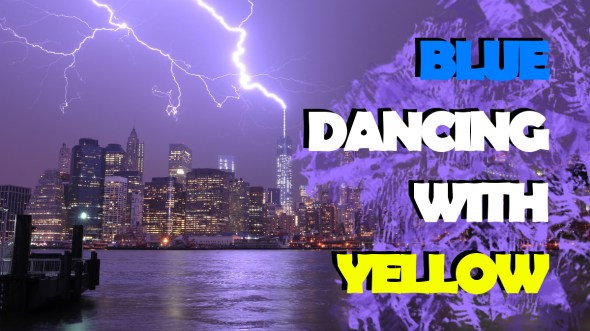
Of course, I’m not saying you’ve got to do as I did and put your own YouTube channel together. The point is in this day and age, you needn’t feel chained to or limited by the work you do. If you’re a storyteller–a good one who’s dedicated to your craft and who has worked incredibly hard to get those skills of yours into tip-top fighting shape–the sky is the limit.
Maybe get a bit more creative about what you can do and where you can ply your talents. The Internet has opened up a slew of new and burgeoning opportunities for folks like us. It’s not like your writing will disappear. It’ll always be there waiting for you when you’re ready to go back to it. Always. And do your best not to get so discouraged you decide to hang your writer hat up for good. If you’re feeling run down and discouraged, go make something new, something interesting. Play some guitar, make some videos or hire an illustrator to take your work into the visual realm. Are these alternative avenues always lucrative? No, very often they are not. But hey, they can be a hell of a lot of fun, and it seems to me that very few overworked writers consider the intrinsic value of that all-important F-word: fun.
Until next time, everyone. Why not share some of your extra-curricular creative pursuits in the comments section below? All of us here at WtbR would love to see them.
Check out Jeff Bowles Central on YouTube – Video Games – Music – Entertainment – So Much More!
Share this:

Jeff’s Pep Talk: Always One More Story to Tell
Posted: September 5, 2018 Filed under: Inspirational, Pep Talk 2 CommentsAlways One More Story to Tell
By Jeff Bowles
The first Wednesday of every month, science fiction and horror writer Jeff Bowles offers advice to new and aspiring authors. Nobody ever said this writing thing would be easy. This is your pep talk.
I’m good at giving pep talks. Sometimes I wonder if it’s not my life’s purpose to encourage others to success rather than to achieve a huge amount of it myself. If that’s the case, I think I’m okay with it. It’s not in my nature to divide or mislead people. I’ve got a slight carnival barker element to my personality, I suppose, but other than a little ill-timed self-promotion every now and then, it’s never gotten me into much trouble.
In this world, in this day and age, contention and cultural separateness are extremely popular trends. It seems folks today are primarily interested in defining themselves by what they are not and what they dislike, abhor, or disagree with. Maybe my personal philosophy comes from some other time, some other place. I’m more interested in the things that unite us, that remind us just how similar we are; I’d like to see people come together and acknowledge the good in life rather than the bad.
I’m an optimist by nature, even and especially when things in my own world seem askew. In grad school, I adhered to a certain ethos that served me pretty well. It became popular enough among my classmates I heard it repeated back to me more than a few times, especially as my academic cohort entered the home stretch of thesis prep. That ethos is simply this: there’s always one more story to tell. It actually applies to more in life than just writing, but for the purposes of this blog, I’ll narrow its definition to its most literal meaning.
There’s always one more story to tell means a good writer understands a career is not built on a single world, character, or narrative. It means no matter how hopeless or defeated you feel, your imagination and will to create are completely under your own power and can therefore sustain you through the hard months and years. There’s always one more story to tell implies none of us should ever stop dreaming. Dreams are the stuff of joy and expansion, not cold, hard, practical facts. Cold, hard, and practical wants you to see a slew of form rejection letters as a personal condemnation from the universe. “How dare you try to be a writer? Don’t you know you’re lousy at every single thing you do?”
I believe it’s possible to see through the illusions of life. Here’s the biggest illusion for writers who have yet to realize their goals: no one’s believed in me yet. It’s safe to assume no one ever will. Contrary to what you may have been told, belief is not required for success. There’s no secret recipe for super-stardom containing one part perspiration and nine parts yeah, but I believe so much. It’s not a badge of honor or a sign of a superior mind to keep the faith even when you’re feeling battered and bruised by every creative endeavor you’ve failed to launch. The truth is, there’s no room for belief in always one more story to tell. In fact, it’s antithetical to the entire basic philosophy.
Choose to be rather than to become. Were you born a human being or did you choose to become one? Did you draw your first breath naturally, or did it just seem the most prudent thing to do at the time? Oh, well I guess oxygen is a thing here in this hospital room. Didn’t seem to need my lungs down in that womb, but what the hell? I’ll play along with everyone and just breathe.
What is a writer? Honestly, have you ever stopped to ask yourself that? A writer is a person who writes. That’s it. You either are the thing or you aren’t. So in acknowledging you always have one more story to tell, you’re giving yourself permission to screw up a little. Or maybe even a lot. Man, that last story was a real loser. Well, so what? Remember that idea you had the other day while you were driving to work? The one about the race of rat-people who secretly control the international rat poison industry? Didn’t that excite you to think about? You know, excitement is the one and only key signifier of a creative avenue worth walking. Enthusiasm carries, after all, so ditch the last story that didn’t work and start crafting a new one. You’ve got to learn to harness your creativity before you can engage it with discipline. In a perfect world, a writing career would contain plenty of both, discipline enough to get the job done, creativity enough to ensure the stars in your eyes rarely dim.
So how does always one more story to tell work in practical application? For starters, don’t wait to start dreaming up your next masterpiece before you’ve finished with your current one. In fact, don’t ever stop dreaming, not if you can help it. Also, never stop watching, reading, playing, or listening to the types of stories that really get you going. Every single storyteller on the face of the planet was a fan before they were a creator. Never stop being a fan. You very well may become a huge success one day, which means you’ll meet some of your heroes. Don’t lose interest in their work once you discover they’re human, just like you. Know and understand the kinds of stories you enjoy most and devour them whenever you can. Don’t lose perspective. You’re a storyteller because you like being entertained and wish dearly to entertain others. That’s a noble goal. Really, it is. Writers are folks who allow others to be someone else for a while. We help people dream, just like other very noble writers helped us.
The dream is the thing that binds us. The dream is elemental and necessary. Rather than showing us who we aren’t, it defines us deep down to our very cores, who we are–or rather, who we’d be if we could take off our disguises and dance, as they say, like no one’s watching. I love to dance. You know how kids need no prompting when it comes to make-believe? It’s because no one’s taught them yet to avoid dancing at all costs. Above all else, writers are individuals who never fully integrated the lesson that adults do what they have to do 100% of the time and nothing else, no ifs, ands, or buts about it. And the world needs people like us. Perhaps now more than ever.
I recently went through a period in which I stopped writing completely. I had a few pretty major personal setbacks, and I needed time to recoup. I don’t regret it one bit. The me that worked my butt off in grad school would have told this other me to soldier on, work through the pain, never stop writing. That old me would’ve been dead wrong. Always one more story to tell also accepts the fact that sometimes there’s no story to tell right now, but that this won’t always be the case.
I always preach self-forgiveness to budding authors. I think it’s paramount. Writers are often a depressed bunch. Sometimes I think it must be the key to our tenacity, that we couldn’t do what we do without a little self-doubt. Writers are perpetually Linus clutching his security blanket. We need a hug and a little friendly reassurance from time to time. But then, well, who doesn’t? Be the storyteller who’s willing to cut herself or himself a break. You won’t forget how to write, not ever, not as long as you’ve still got a pulse. The lessons you’ve learned, the work you’ve put in, they won’t suddenly disappear overnight. Uncertainty will always be a factor. It’s probably best to get used to that. There are things you can control and things you can’t. C’est la vie, right?
Do yourself a favor and keep a running ‘story ideas’ notebook. I’m a digital guy, so I use an app called Evernote. It’s a pretty helpful tool, because it allows you to save and sync individual notes across all your mobile devices and then backs them up into the cloud. The next time you’re watching an old favorite movie and one line of dialogue gets you thinking about some great new concept, write it down and save it for a rainy day. You’ll be glad you did.
The best thing about collecting ideas is that the process is cumulative, which means one idea lends itself to another, lends itself to another. One good concept can change your life. Dr. Martin Luther King knew that and spoke highly of it when he told us about his dream. His vision of an America, a world, in which all people were truly thought of as equal was perhaps the best conceptualization in human history. It was so damn good it seemed like a no-brainer and still does, even if we’re still fighting to see it realized. I suppose that’s another thing. Bringing something new into the world will always be a fight. Remember, enthusiasm carries (as in, it can help carry your lazy butt to the door). Never underestimate your ability to conceive and create the future. MLK didn’t, and nor should you.
It’s natural to doubt yourself and your abilities sometimes. Everyone has done so at least once in their life. And really, the work of a creative soul is doubly hard, and fraught with personal perils deeper the the Grand Canyon and twice as cleft. “It’s not the years, honey, it’s the mileage.” Indiana Jones said that, and he hated snakes and had a thing for whipping the competition.… Okay, maybe that’s not the greatest motivational allusion, but you get the idea. Take a breath, do something fun for a while, come back to your work, start again, knowing with certainty you never really stopped anyway. Life’s a continuum, a big lopsided wheel bouncing through space. One day you’re on the bottom, sure, but guess what? That’s only a prelude to being back on top again.
You’re reading a blog post written by a guy who dislikes divisiveness. The pendulum, it seems, has swung in that direction. But it doesn’t mean any of us has to like it. It also doesn’t mean you have to accept it in your own creative endeavors. Competition is everywhere in the writing world. Don’t play that game. Honor the success of others, and feel and express gratitude for your own, no matter how humble it may seem. Sometimes choosing to sit down and put one word after another is the biggest victory you can claim. So celebrate your abilities and your work, and get excited for your future. Whatever you do, remember the following: there’s always one more story to tell, there’s always one more story to tell, there’s always one more story to tell.
Like the one about the garden fountain that pitches quarters at people to make wishes. Or the cybernetic super-being who wants to trade his metal heart for a plastic one that can break. Or the…
See what I mean? Until next time, people. ¡Viva la creación!
Check out Jeff Bowles Central on YouTube – Video Games – Music – Entertainment – So Much More!
Share this:

Jeff’s Pep Talk: Learning to Let Go
Posted: August 1, 2018 Filed under: Inspirational, Pep Talk, Writing | Tags: Inspiration, Jeff's Pep Talk, Motivation, Writing Leave a comment
Learning to Let Go
By Jeff Bowles
The first Wednesday of every month, science fiction and horror writer Jeff Bowles offers advice to new and aspiring authors. Nobody ever said this writing thing would be easy. This is your pep talk.
To tell you the truth, I never wanted to be a writer. So many authors–successful and unsuccessful alike–seem to have been aware of a certain literary calling from an early age. Stephen King began telling stories as a kid and never stopped. One of my personal favorites, Frank Herbert, creator of the Dune series, told his parents when he was little, “I want to be a author.” Adorably so, I’m sure, even if in basic syntactic error.
I had precious few moments like that. At the age of eight, I began an ambitious Star Wars fan fiction novel in which Luke Skywalker was forced to confront an evil dark Jedi clone of his poor dead Uncle Owen. I never got off the fourth page. When I was a teenager, I wrote about seven chapters of a complex space opera. But even though I showed clear aptitude, the process was long and boring, and I had better things to do, like playing music with my friends and spending hours on the couch in front of my PlayStation.
I didn’t decide to devote myself to writing until I hit my mid-twenties, by which time the life of a coffee-house-playing singer/songwriter had lost its appeal. Nobody listened to me when I performed. They were too intent on their dark roasts and shallow hipster conversations. I reasoned that even if I someday made it as a musician, I’d have to spend all my time on the road touring, and I’d just gotten engaged to a wonderful woman and had future plans to start a family with her. It made sense at that time to go after a new dream, and I’d always liked telling stories, even if I’d never demonstrated the necessary discipline to actually finish them.
Like so many young hopefuls, I was convinced literary success and stardom would be just around the corner. Ehem, they were not. What can I say? If you’ve been at this thing for any length of time, you know well the real hard work comes in the form of keeping your head down, applying butt to chair, and pounding out thousands of unsuccessful words before a single one catches the eye of an editor or an agent. Maybe you’re just starting out, in which case you might be wondering what the long-term odds of your success are.
Sad to say, but instant recognition is pretty rare. I know some very talented but also very lucky writers who hit it big their first time out. Ultimately, their jobs and their lives haven’t been made any easier. Sometimes the work is actually harder for them, because big success comes with big pressure. Each morning, they still have to make that basic choice: to write, or not to write. And that isn’t easy. Nothing about this job is. Anyone who tells you otherwise … actually, I seriously doubt someone with experience will tell you otherwise.
If you’re like me, your first stabs at storytelling were bad. Like really, really bad. I wrote at least thirty short stories before I snagged a single decent pub credit. I had a couple things working against me, and so did you. First off, I had to learn to write. And I don’t mean in the general sense; writing a blog post like this and writing a fully realized novel are two incredibly different beasts. That probably goes without saying, too.
Secondly, most of us have to build a name for ourselves slowly and over time. Many of your favorite authors didn’t get anywhere near success until they’d generated an incredible amount of published content (that’s published content; the unpublished stuff doesn’t count). The difficulty curve inherent to all this is enough to derail the majority of us. Everybody wants to write a book at some point in their life, but actually finishing one, submitting it through the proper channels, and receiving scads of rejection letters … well, may I just say, fresh meat, welcome to the great literary meat grinder.
At this point you may be asking, “What gives, Jeff? I thought you were going to give us a pep talk. This is more like trash talk.” Well, yeah, I guess it is. But it does no good to approach creative writing as a profession with anything less than a level head. You’ve got to know the odds. Or at least, I feel you should know the odds. The truth is–and this may seem counterintuitive–recognizing your likelihood of failure is just as important as having your writing dream in the first place.
I’m a dreamer by nature. Most creative types are. When I close my eyes at night, I’m just as likely to see book signings and red carpet movie premieres as blank white pages with blinking, unfulfilled cursors … taunting me, taunting me … the horror, the horror. Just because I recognized a long time ago instant success would never be mine doesn’t mean I no longer do what I can when I can to get there. Actually, and this is the important part, the slow and steady nature of my career thus far has allowed me to let go my prodigious and unproductive white-knuckle grip, helping me at last to relinquish just enough control so I could, say, have a life outside of my stories.
That’s kind of the point. Failure teaches us more than success. Failure hurts, no doubt about it, but it also heals. Failure is not a four-letter word. Count ‘em, seven letters, not even close. Nor is it some cosmic slight. Don’t be afraid to fail. In the grand scheme of things, there’s no difference between the careers of a thirty-year vet who hit the mark right out of the gate and a thirty-year vet who had to slowly build an audience with each successive work. In other words, it isn’t the destination, it’s the journey.
Here is your pep talk in four simple words: learn to let go. Seriously, that’s it. Let go of your need for recognition, for validation. Let go the desire for royalty checks the size of the annual Defense Department budget. Letting go doesn’t mean giving up. Far from it, in fact. Some very big writers love to spoil it for newbies. Gleefully, they hand out advice like, “If you can quit, you should,” implying of course this job sucks so bad you shouldn’t even bother.
I’m not that guy. I like to build people up. Learning to let go of your expectations, your insecurities and personal timetables, it’s actually a cure-all for life. The day-to-day of a writer really can be challenging. There are just so many lows, sometimes more than there are highs. You’ll have days you want to give up. Heck, you may have entire years or decades you don’t write a single word. So I find it’s better for the mind and the soul to consider writing a lifelong journey rather than a pass/fail vocation. Do you know what happens when you let go? You actually start enjoying what you do. Some time-tested philosophies think of this as living in the now, embracing the flow of life, or choosing to let the stream carry you rather than fighting its currents. It’s a healthy attitude to cultivate, especially when you’re in a creative industry that hands out disappointment like local discount car wash flyers.
Don’t give up. Don’t do it. And don’t let anyone, including yourself, tell you that you should. If you find you’re getting frustrated with your progress, take a break. That old chestnut, writers write, applies only to very unhappy people and very well-adjusted robots. Writers are just average folks, and like every other warm body on this planet, you need a life that’s fulfilling on more than one level. You know what you can do instead of pounding out words until you tear your hair out? Fall in love. Go see a movie. Have kids. Start a stamp collection. When you let go of the desperation, the incessant need to be somebody, you can be anybody, and that, my friends, is freedom itself.
You know who you are. You know you love to write. If you didn’t, you wouldn’t be here on this blog. So why not trust yourself? Trust life. Tell a story for the joy of it. One moment, one second, one word at a time. If you worry too much about the future, the next rejection, the next failure, if you obsess over the past and all the ugly moments still living there, you’re doomed to forever hate right now.
It’s okay to admit you’re no superstar. At least not yet. Trust me, it won’t hinder your ability to create awesome stuff. I’ve met some big name talent. Many of them feel imprisoned by their careers. The grass is always greener, right? So while you’re busy fuming with jealousy over their magnificent sales figures, they’re busy resenting you for what they perceive as your complete and total freedom. The joy of writing is in discovering what’s just around the corner. Imagine if a new entry in your favorite book series telegraphed its epic ending on page one. Wouldn’t that be disappointing? Life, like any story worth reading, works best when you don’t know what comes next.
So don’t try to predict the future. Live free, focus on today. And that’s your pep talk for the month, folks. Read ‘em and weep! Just don’t weep too hard.
Check out Jeff Bowles Central on YouTube – Video Games – Music – Entertainment – Fun!
Share this:

Jeff’s God Complex
Posted: August 9, 2017 Filed under: Articles, God Complex, Opinion 2 Comments
Video Games and the Lost Art of Storytelling
by Jeff Bowles
I’m an avid gamer. I’ve played everything from Pac-Man and Halo to Zelda and God of War. As a child, I spent countless hours on the first home console my family ever bought, the original Nintendo Entertainment System, and I’ve owned just about every major gaming platform released since.
I’m also a storyteller, which means I take keen interest in certain gaming industry trends. I’ve heard it suggested video games represent a great opportunity for writers today. Even in an industry dominated by online arena action shooters that feature little plot and the use of impersonal avatars instead of fully developed characters, writers are said to be very much in demand.
Independent job and project posting sites such as Upwork feature by-contract work for games from time to time, and small indy video game developers, which have flourished in recent years, are often much more receptive to unknown or burgeoning writers. If you’ve been stuck hawking short stories and one failed novel after another, it can be a great place to ply your talents.
Landing that kind of gig may be harder than it seems, however. The big developers like Bethesda Softworks, EA, Ubisoft, Sony, Microsoft, and Nintendo tend to retain and reuse writers, so unless you’re a well-established author looking to diversify, you may be out of luck. It’s kind of a niche profession anyway, writing for video games, especially since more and more developers have eschewed classic storytelling techniques in favor of more style, more flash, and way more explosions.
Should this surprise us? Like Hollywood, the gaming industry seems to have recognized the public’s slackening attention span. Many of the most popular games released in 2016 featured incredibly robust multiplayer and not much else.
Call of Duty: Infinite Warfare and Battlefield 1, the top sellers of the year, both have single player campaigns that are more or less afterthoughts. Another top seller, Blizzard Entertainment’s highly popular Overwatch, exists entirely online, so if you’ve got a poor internet connection or you just don’t want to play against other people, the message seems to be man up or look elsewhere. Overwatch, by the way, is a hell of a lot of fun. Too bad I didn’t care about any of its characters or situations.
Not so long ago, all of this would have been unthinkable. Before high speed internet made online gaming feasible for the broader market, game developers rarely ever shipped titles designed just for multiplayer. Home consoles had at most four controller ports back then, which meant you either played a deep, engrossing single-player campaign or you challenged a few of your friends to combat right there on the couch. Gaming was a much more personal, sociable experience then. Lord, how I pine for the good old days of just ten years ago!
As the gaming industry advanced into the current generation of home consoles (the Xbox One, PS4, and Nintendo Switch, respectively), an undercurrent of dissatisfaction among consumers became evident. Players were demanding new experiences, expanded horizons, creative and interesting mechanics they’d never seen before. The result, I take it, is that the major developers decided en masse the premium they’d placed on storytelling would no longer serve them going forward.
I found some of the biggest games of the last five years nearly unplayable, simply because competition, blood and guts, and fierce rivalries tend to turn me off. Let’s be honest, in the new millennium fewer and fewer people appreciate good stories. The point for most gamers is not the dialogue or plot so much as the bullets and blood.
I think that’s unfortunate. Good developers recognize their medium is unique. The games that work best allow players to inhabit strange worlds and the skins of other people. Long-standing series such as the Deus Ex franchise, for instance, let players explore innumerable options and solutions to any given scenario or character interaction, thereby assuring a unique experience for everyone. As a point of reference, the latest Deus Ex game was a commercial failure, as were other similar titles. A lot of players feel they don’t have time to invest in long, drawn-out narratives anymore. They just want to drop in, shoot their friends a few times, and drop out.
Classic American gaming, by the way, has not gotten any less violent or offensive in light of this new direction. In fact, divorced from good storytelling, many modern games feel like slaughterhouses, inducing the kind of fight-or-flight panic usually reserved for life and death emergencies. Recently, after playing a frenzied bout of For Honor, a game that simulates medieval sword-based combat in full gory detail, I told my wife I didn’t know if I could take it anymore. A round of that game is like squeezing your heart through a meat grinder fifteen minutes at a time. The experience is intense, but is it particularly fun?
Congress of course has railed against the gaming industry for decades. Too violent, too distracting, and far too addictive. I admit it, I’m hooked. I’m a grown man who hasn’t gone a week without video games since I was five years old, and for the amount of money I’ve spent on all those discs, cartridges, and controllers, you’d think they’d chip in for a limited-edition headset for me or something. When it comes to it, I suppose good storytelling never did anything to offset the more depraved aspects of the medium. They did, however, induce in us the feeling we were part of something exciting and creative.
Now every time I pop a new game into my PlayStation, I have to consider the odds of actually enjoying it. Will I spend the whole time hunting other human beings? Will it contain anything resembling a story? Perhaps the indy movement has opened new doors for the creative potential of the industry—doors which may have otherwise remained closed, especially to writers—but the dominant trends today have adhered very closely to a pretty simple principle.
Like all forms of entertainment intended for mass consumption, the real test of a game is in how it makes us feel. A well-told story feels like nothing else on earth. Unfortunately, so does an hour of mayhem, death, and bare-knuckled survival. Hey gaming industry, bring back the good old days! I guess I don’t mind killing my friends needlessly, but do I have to kill my sense of story, too?
Interested in my writing? Check out my latest short story collection, Fear and Loathing in Las Cruces — https://www.amazon.com/Fear-Loathing-Las-Cruces-Stories-ebook/dp/B06XH2774F
Facebook: http://www.facebook.com/jeffryanbowles
Amazon Author Page: https://www.amazon.com/Jeff-Bowles/e/B01L7GXCU0/ref=sr_ntt_srch_lnk_1?qid=14794534940