Review in Practice – Word Craft: Prose & Poetry
Posted: December 31, 2021 Filed under: Book Review, Books, Poetry, Review in Practice, Teaching Writing | Tags: Book Review, Poetry, Review in Practice, Sally Cronin, Syllabic Poetry, Word Craft: Prose & Poetry, Writing to be Read 5 Comments
Word Craft: Prose & Poetry, by Colleen Chesebro is an insightful and helpful instructional book for those who wish to learn more about writing syllabic poetry and prose. The first section covers Japenese syllabic poetry forms and American syllabic poetry forms are covered in section two. The author outlines the rules and inspirations for each form, and provides plenty of examples to help you get the idea.
Hiaku has been one of my favorite forms of poetry to read since it was introduced to me in the fourth grade. However, my fourth grade teacher didn’t really explain this poetry form in a way that my fourth grade mind could really grasp, so I’ve never felt very accomplished in writing Haiku. In Word Craft, Colleen Chesebro was able to explain the art of this form of poetry in a manner which my aged mind was able to grasp, giving me a much better handle on what I’m trying to do with this form of poetry. Haiku is much more than just putting the right number of syllables in each line. Haiku is written to evoke images and emotion in a succinct way. I was surprised to learn that the syllabic rules for Haiku are not set in stone, and can be varied. Below is a Haiku which I wrote after reading the chapters on this poetry form.
Spring skies let rain pour
Wings stretch, ruffling wet feathers
small Hummingbird preens
While I know poets who write Tanka poetry, which combines poetry and prose,I’ve never understood what they were doing with these poems. Although I can’t say that I’ve mastered the Tanka, I think I do understand it better, but I will need a lot of practice before I write something in Tanka or Tanka prose poem that I feel worthy of sharing.
I also had some experience in writing Hiabun, which is a combination of poetry and prose similar to Tanka Prose Poetry, but I never really understood the purpose of this form of poetry. You would think this would be the easiest form of poetry in this book for me to write, as the inspiration can come from anything and it can be in any point-of-view and any tense that you wish to write in, but I still have a hard time grasping the how of this poetry form. Fortunately, Colleen Chesebro includes many examples of each poetry style and I have no doubt that, with patience and practice I will eventually get a handle on the Haibun.
Forms of Japanese poetry that I wasn’t familiar with in this book include Senryu, which is similar in form to a Hiaku but differs in subject matter; Haiga, which uses either Haiku or Senryu and combines three art forms, imagry, poetry and calligraphy; and Gogyohka, which is based on the Tanka, but you do not count syllables, with one phrase to a line and a line-break after each breath. I found the Renga, which is design to be written by two poets, interactively, , kind of like a poetic conversation, to be in intriguing poetry form.
This is my first attempt at a Senryu poem.
Hot tea steams
on chill summer morn
wake up call
For me, the forms of American syllabic poetry were more difficult, perhaps because they tend to be longer. In the second portion of the book, Sally Cronin includes explanation and instruction and examples for Cinquains of all types, Etherees, Nonets, and Shadormas. I made several unsuccessful attempts at the basic types of each of these poetry forms, but they are much harder than they look. My hat is off to Cronin and anyone else that can meld their syllables with seeming ease.
I took a challenge on Teagan Riordain Genevieve’s blog and for that I wrote a Shadorma poem, which I published here, on Writing to be Read. You can see my example of a Shadorma here, but I don’t know if it is any good. It really was harder than I thought it would be.
If you like syllabic poetry, either Japanese or American, and would like to try your hand at it, I highly recommend the instruction of Word Craft: Prose & Poetry, by Sally Cronin. This book introduced me to new forms, as well as delving deeper into forms I was familiar with. I give it five quills.

________________________________________________________________________________________________________
Like this post? Let me know in the comments. You can be sure not to miss any of Writing to be Read’s great content by subscribing to e-mail or following on WordPress. If you found this content helpful or entertaining, please share.
Share this:

A Challenge and a Review: Dead of Winter
Posted: December 24, 2021 Filed under: Book Review, Creativity, Epic Fantasy, Fantasy, Poetry, Reader Challenge | Tags: Book Review, Dead of Winter, Fantasy, Poetry, Reader Challenge, Teagan Riordain Geneviene, Writing to be Read 9 Comments
The Challenge
This post is a response to a challenge issued on Teagan Riordain Geneviene’s blog, where she challenges readers to create a piece of art in the medium of your choice, inspired by her book, Dead of Winter: Journey 1: Forlorn Peak.
Recently, I’ve been dabbling in Japanese and English syllabic poetry, and I knew that I wanted to create a poem for this challenge. The image and poetry above is my response to Teagan’s challenge. It is a Shadorma poem, an form of syllabic poetry which may have originated in Spain, comprised of a sestet, or six-line poem with a syllabic count of 3-5-3-3-7-5 (Word Craft: Prose & Poetry, by Colleen M. Chesebro). Although no where have I found that Shadorma can appear with images to add meaning, like the Japanese Haiga poetry, I’ve found nothing that says it can’t, so I have featured mine with the image above.
They both create a feeling like what I felt after reading Dead of Winter, so might actually serve as a different type of book review. I think the poem could easily stand alone, so maybe that’s okay.

Buy Link: https://www.amazon.com/dp/B08RBBVRGX?tag=relinks-20
My Review
Dead of Winter: Journey 1: Forlorn Peak, by Teagan Riordain Geneviene is a brief little tale that sets the stage in a world where strict control prevents the protagonist, Emlyn, from revealing her gift of seeing and communicating with the dead. In this short tale, Emlyn receives a warning of what’s to come in the rest of the series. “Winter is coming…”
__________________________________________________________________________________________________
Like this post? Let me know in the comments. You can be sure not to miss any of Writing to be Read’s great content by subscribing to e-mail or following on WordPress. If you found this content helpful or entertaining, please share.
Share this:

Dark Origins – A Christmas Carol by Charles Dickens
Posted: December 22, 2021 Filed under: Classics, Dark Origins, Fiction, Historical Inspiration | Tags: A Christmas Carol, Charles Dickens, Classic Literature, Dark Origins, Robbie Cheadle, Writing to be Read 35 Comments
In the spring of 1843, Charles Dickens read a government report on child labour in the United Kingdom. The report, compiled by a journalist friend of Charles Dickens, comprised of a series of interviews with working children. It detailed the long hours, crushing work, and poor conditions suffered by these children.
The new and heartless attitude towards child labour was a result of three things:
- an increase in the population by 64% in 30 years;
- workers leaving the countryside and crowding to the cities in search of work; and
- the demise of cottage industries and there replacement with mundane and menial labour in factories.
Employers thought of the workers as commodities whose labour was measured purely on output and productivity.
There was a lot of controversy among the wealthy classes and the clergy as to whether assistance should be extended to the poor. A lot of people were of the opinion that people were poor due to their own laziness and malingering and that giving help would exacerbate these tendencies.
The work houses of the day split up families, provided minimal food, and extracted hard labour from its occupants, including children, in an effort to discourage the poor from seeking help.
I am reminded at this point of the song Food, Glorious Food from the musical Oliver based on the book by Charles Dickens:
Rev. Thomas Malthus advocated letting the poor go hungry to decrease the population. His view was that it was better to let the poor starve to “decrease the surplus population”.
Charles Dickens’ response was to write the novella, A Christmas Carol, which eloquently expressed his views on employer responsibilities towards workers.
If you don’t know the story of A Christmas Carol, this is a very brief overview:
The story opens with Ebenezer Scrooge sitting in his counting house on Christmas Eve. His clerk, Bob Cratchit, is sitting shivering in the anteroom because Scrooge won’t spend any money on heating. He turns down his nephew, Fred’s, invitation to a Christmas party and chases away two men collecting money for charity. At the end of the day, he returns to his cold, dark home.
After Scrooge has retired for the night, he is visited by the ghost of his dead partner, Jacob Marley. Marley is weighed down by heavy chains and is destined to make his way through the afterlife dragging them after him because of his mean-spirited and selfish life.
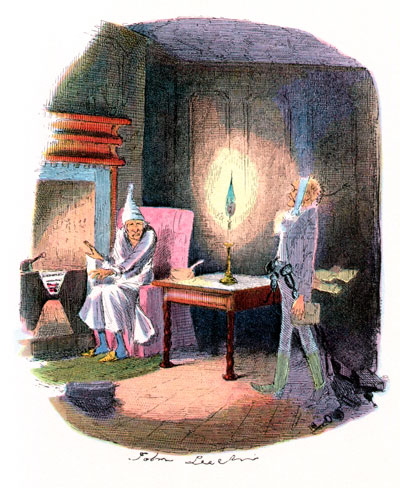
Marley tells Scrooge that he will be visited by three ghosts that night, the ghosts of Christmas Past, Present, and Future. The ghosts show Scrooge where he made mistakes in his past life due to choosing money over love and life, how his clerk and the Cratchit family are suffering because of his present day meanness, and show him a lonely future death. Scrooge is offered, and takes, an opportunity to change his ways and find redemption.
If you are interested in listening to A Christmas Carol beautifully read by Stephen Humphreys, you will find the links on Rebecca Budd’s blog: Clanmother: https://clanmother.com/2021/12/07/stephen-humphreys-reads-a-christmas-carol/
Wishing you all a Merry Christmas if you celebrate or Happy Holidays.
Although I cannot compare my take on Victorian child labour to Charles Dickens’ brilliant works, I have written several times about this and I thought I would share this short extract from my book, Through the Nethergate, about a serving girl in a tavern in Bungay in 1589.
“The rich, amber fluid flowed into the waiting tankard, in striking contrast to the damp, darkness of the barrel filled cellar.
The small, frail girl stood with the tankard in her trembling hand. She was hungry, thirsty and cold. She hadn’t had anything to eat or drink since last night’s frugal supper of leftovers in the Inn’s kitchen. A wave of dizziness washed over her as she contemplated the drink. Its golden depths seemed to entrance her as she lifted it to her lips.
At least the kitchen was warm, she thought, remembering the delicious heat of the enormous, roaring fireplace. The kitchen was a much better place to steal a moment of rest than this freezing cold
cellar, in the bowels of the building.
The strong, rich taste of the ale brought a smile to the girl’s pale face. She greedily drained the tankard, closing her eyes and allowing a feeling of well-being to permeate through her skinny, undernourished body. The girl, called Lizzie, worked as a servant at the pub and she was twelve years old.
She knew she should be grateful for the job, but it was hard to forgive the heavy-handed punishments metered out to her by Will, the owner of the establishment.
A rough hand grasped her shoulder, its thick fingers digging viciously into her flesh.
“What have you done?” the loud, grating voice of Will blasted through her euphoria.
Lizzie jerked with fear and the tankard fell from her fingers, clattering to the stone floor before rolling away.
She looked up into piggy eyes staring out of a fat and well-fed face. Will’s usually florid complexion looked even ruddier and coarser than usual.
“Why, you little thief,” continued Will. “You know what we do with thieves in this Inn.”
A short while later, Lizzie found herself chained to the wall of the cellar. Her pleas and cries for mercy had fallen on deaf ears as Will, filled with righteousness and piety at her ungodly action, attached the manacles to her wrists and ankles.”
__________________________________________________________________________________________________________
Want to be sure not to miss any of Robbie’s “Dark Origins” segments? Subscribe to Writing to be Read for e-mail notifications whenever new content is posted or follow WtbR on WordPress. If you found it interesting or entertaining, please share.
Share this:

Treasuring Poetry – An introduction to Word Weaving #1: A Word Craft Journal of Syllabic Verse edited and compiled by Colleen Chesebro and Jules Paige
Posted: December 18, 2021 Filed under: Anthology, Book Review, Books, Interview, Poetry, Treasuring Poetry, Writing | Tags: Anthology, Colleen Chesebro, Interview, Poetry, Robbie Cheadle, Treasuring Poetry, Word Weaving#1: A Word Craft Journal of Syllabic Verse, Writing to be Read 78 Comments
Today, I am delighted to introduce you to Word Weaving #1: A Word Craft Journal of Syllabic Verse, The Moons of Autumn, a delightful collaboration of syllabic poems by a variety of poets, edited and compiled by Colleen Chesebro and Jules Paige.
By way of background, Colleen Chesebro has run a weekly syllabic poetry challenge on her blog, Word Craft: Poetry and Prose for years. She has been a guiding light to the poetry community, sharing her knowledge about the many different forms of syllabic poetry and encouraging poets to experiment and all learn together.

What inspired you to put together a poetry anthology, is it a once off or will there be others?
My inspiration for the syllabic poetry journal came about when I realized that many of the poets who joined in my weekly challenge did not have the ways or means to publish their own books of poetry. I envisioned a yearly journal filled with creative syllabic forms. I’m not aware of another journal that presents both Japanese and American versions of syllabic poetry. This is a different concept and I think it has paid off.
Also, to note, the poet’s retained ownership of the poems submitted to the journal. All rights reverted to the respective author/artist upon publication. All we asked, was if their work was republished, we appreciated a mention that the Word Weaving Poetry Journal was the first place of publication.
While I planned this journal, I realized I wanted to host a poetry contest on wordcraftpoetry.com with paid prizes. It was logical to use the royalties from the sale of the Word Weaving Journal to pay for the prizes. As for another journal… I’ll let you know after the poetry contest in 2022. I’m aiming for the month of June for the contest on wordcraftpoetry.com. I’ll reevaluate at that time.
Which poem in the anthology touched you the most? Please provide the test of the poem and the author
This is a hard question to answer. My co-editor, Jules Paige and I first selected our favorites. We deliberated for some time over the poems… they were all so good! In the end we selected Ken Gierke’s gogyohka poem:
warmth of a pale light
found as clouds part
rewarded
while seeking the moon
on a cool autumn night
© Ken Gierke
We both felt this gogyohka best illustrated the concept of the “Moons of Autumn.” At the end of the Journal, Jules and I shared our three favorite poems by D. L. Finn, Merril D. Smith, and Ken Gierke.
If I had to go in deeper, my next favorite would be D. Wallace Peach’s tanka prose Idyll. The imagery in this poem is one of my favorites.
“Moon-spun”
November’s moon spins upon the tip of a white fir. Her fairy light whispers across the glades where alders part their leafless fingers into spindly shadows. The night glow sends the trolls trudging into the deep forest, brittle twigs crunching beneath their knobby feet. With nothing to fear, the deer lie down in a silver meadow. Old owl watches the coyotes croon to autumn’s stark beauty as they whiff the delicate scent of the coming snow.
a moon’s enchantment
befalls the northern forest
her magical light
banishes luring prowlers
inviting the night to sing
© D. Wallace Peach
What attracts you to syllabic poetry as opposed to other forms like freestyle and rhyming verse?
Syllabic poetry, especially the Japanese forms with their brevity of words, fills a special place in my heart. Not only do I like writing these forms, but I also enjoy reading what others have written. There is a simple beauty in haiku that I don’t find in other forms. Written mindfully, haiku are small poems with large meaning. It’s those a-ha moments of connection, I find the most pleasing.
For example:
summer clouds—
kayakers floating
the river
© Colleen M. Chesebro
In this haiku, I worked on imagery. The idea was to connect emotions by associating two or more images together in strange and unusual ways. It’s not as easy as it sounds. I find it is always best to look for alike or contrasting images to feature in my poem.
I targeted the “summer (my kigo) clouds” and the “kayakers floating the river,” as a summer activity. Clouds float – kayakers float, which are alike images.
A haiku should present an event in an image. It should SHOW us what happened without telling us about it or what emotion to feel. In the haiku above, what emotions do you feel?
Haiku poems share a specific event or observation. Haiku are not generalities, and we never use a simile or metaphor. Most haiku are written in seventeen onji (Japanese sounds) which equates to around twelve syllables (3, 5, 3). Most rhyming poetry doesn’t give me the same emotional impact as the simple haiku does. Although, I do enjoy creating some of the syllabic forms that use rhyme and meter.
What advice can you give people setting out on the path of writing poetry?
Poetry is about expression and creativity. Poets should write poetry daily. If you don’t practice, how can you perfect your craft? I write my poetry on my author blog at colleenchesebro.com and in a handwritten journal.
It’s best to get involved in a poetry community with poetry challenges where you can stretch your wings and try new things like we do on wordcraftpoetry.com. If you can’t find a challenge you like, start your own! Learning how to comment, critique, and write about the work of another poet is crucial to your own poetic journey.
Write more poetry! Find what forms bring you the most joy to write. Write them! Then, learn everything you can about that type of poetry.
Submit your poetry to literary journals and contests. I’ve had more poetry rejected than accepted, but that hasn’t stopped me yet.
What are your plans for Word Craft: Prose & Poetry going forward?
Wordcraftpoetry.com will continue to be a safe place to write syllabic poetry. We’re in our fifth year of the #TankaTuesday Poetry Challenge. Each week, I strive to make the challenges interesting. In 2022, we will have a few new prompts to freshen up our creativity. I will continue to feature a poet and their poem almost every week. Depending on the challenge week, the poet will choose the prompt for the next month’s challenge. It’s important to me to involve the poets in the challenges. That is what community is all about. Stay tuned. Who knows what I’ll think of next!
Thanks so much, Robbie for featuring me and the Word Weaving Journal on Treasuring Poetry.

Author biography
Colleen M. Chesebro is a Michigan Poet who loves crafting syllabic poetry, flash fiction, and creative fiction and nonfiction. She sponsors a weekly poetry challenge, called #TankaTuesday, on wordcraftpoetry.com where participants learn how to write traditional and current forms of syllabic poetry.
Along with JulesPaige, Colleen is also a co-editor of “Word Weaving, a Word Craft Journal of Syllabic Verse,” at wordweavingpoetryjournal.com. The debut issue of the journal published October 2021, with a kindle and print version of the journal.
Colleen’s syllabic poetry has appeared in various other online publications. Recently, she created the Double Ennead, a 99-syllable poetry form for the Carrot Ranch literary community at carrotranch.com. She hosts a challenge as a guest of the Saloon, every third Monday of the month.
Colleen’s poetry has poetry in various anthologies and journals including “Hedgerow-a journal of small poems,” and “Poetry Treasures,” a collection of poetry from the poet/author guests of Robbie Cheadle on the “Treasuring Poetry” blog series on “Writing to be Read” in 2020.
Colleen published “Word Craft: Prose & Poetry, The Art of Crafting Syllabic Poetry,” which illustrates how to write various syllabic poetry forms used in her Tanka Tuesday challenges; and a collection of poetry, flash fiction, and short stories called, “Fairies, Myths & Magic: A Summer Celebration,” dedicated to the Summer Solstice. She contributed a short story called “The Changeling,” in the “Ghostly Rites Anthology 2020,” published by Plaisted Publishing House.
Find Colleen Chesebro
Find Colleen at Word Craft: Prose & Poetry at wordcraftpoetry.com.
Find Colleen’s author blog at colleenchesebro.com.
Find Colleen’s pagan blog at awitchsbrew.wordpress.com
My review of Word Weaving #1: A Word Craft Journal of Syllabic Verse
This book, edited and collated by talented poets Colleen Chesebro and Jules Paige, is a delightful collection of meaningful poems by a variety of different contributors. The theme of the book is Harvest Moon and each poem gives insight into the meaning of this expression to the particular poet. Some poems are practical and some are ethereal, yet others are colourful and then there are the silvery ones, but they all share the common feature of being beautiful.
The poems in the book demonstrate as wide a variety of styles as there are contributors, with a common thread of all being syllabic. I came across a number of forms that were new to me, including senryu, haiga, and gogyohka among otehrs. There are also the more familiar syllabic forms such as haiku, tanka, haibun, tanka prose, etheree, nonet, shadorma, and cinquain.
My favourite poem in this collection is written by Kerfe Roig. I like it because it is filled with mystery and delight:
“who is this Other
come to greet me
glittering shadowed
behind and before
a changeling of light”
All the poems are gorgeous and this collection is a most worthwhile read for poetry lovers.
What Amazon says
Word Weaving is a yearly poetry journal, and for our first issue, we bring you poetry crafted from a broad mix of new and established voices across the spectrum of Japanese and American syllabic poetry forms. Enjoy this collection of poems that celebrate the Moons of Autumn.Contributing Poets:
Annette Rochelle Aben, Mona Bedi, Nancy Brady, Colleen M. Chesebro, Goutam Dutta, Bill Engleson, Elizabeth F., Andreea Finichiu, D.L. Finn, Jeff Flesch, Ken Gierke, Franci Hoffman, Thom Kerr, Sujata Khanna, Ruth Klein, Jules Paige, D. Wallace Peach, Gwen M. Plano, M. J. Mallon, R.V. Mitchell, Elaine Patricia Morris, Lisa Smith Nelson, Pat Raffington, Susmita Ramani, Kerfe Roig, Aishwarya Saby, Akhila Siva, Merril D. Smith, Willow Willers, and Cheryl Wood.
About Robbie Cheadle

Robbie Cheadle is a South African children’s author and poet with 9 children’s books and 2 poetry books.
The 7 Sir Chocolate children’s picture books, co-authored by Robbie and Michael Cheadle, are written in sweet, short rhymes which are easy for young children to follow and are illustrated with pictures of delicious cakes and cake decorations. Each book also includes simple recipes or biscuit art directions which children can make under adult supervision.
Robbie has also published 2 books for older children which incorporate recipes that are relevant to the storylines.
Robbie has 2 adult novels in the paranormal historical and supernatural fantasy genres published under the name Roberta Eaton Cheadle. She also has short stories in the horror and paranormal genre and poems included in several anthologies.
Robbie writes a monthly series for https://writingtoberead.com called Growing Bookworms. This series discusses different topics relating to the benefits of reading to children.
Robbie has a blog, https://robbiesinspiration.wordpress.com/ where she shares book reviews, recipes, author interviews, and poetry.
Find Robbie Cheadle
Blog: https://www.robbiecheadle.co.za/
Blog: robbiesinspiration.wordpress.com
Twitter: BakeandWrite
Instagram: Robbie Cheadle – Instagram
Facebook: Sir Chocolate Books
______________________________________________________________________________________________
Want to be sure not to miss any of Robbie’s “Treasuring Poetry” segments? Subscribe to Writing to be Read for e-mail notifications whenever new content is posted or follow WtbR on WordPress. If you found it interesting or entertaining, please share.
Share this:

Review: Bats, Bandits & Buggies
Posted: December 13, 2021 Filed under: Book Review, Fiction, Historical Fiction, Middle Grade, Review | Tags: Bats Bandits & Buggies, Book Review, Historical Fiction, Middle Grade Fiction, Nancy Oswald, Ruby and MAude Adventures, Writing to be Read 5 Comments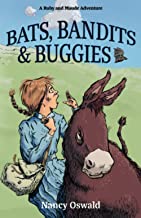
Bats, Bandits & Buggies, by Nancy Oswald was the light, entertaining read I needed after two months of serious short story selection for two separate anthology collections. A thoroughly enjoyable read, this book is a nonstop adventure that is sure to put a smile on the face of readers of all ages, not unlike the other books in her Ruby and Maude Adventure series, featuring a young girl named Ruby and her ice cream loving donkey, Maude.
In the first book of the series, Rescue in Poverty Gulch, Ruby and Maude come to Cripple Creek, Colorado in the 1800’s, but over the series the cast of characters has grown to include a cat named Trouble and a young donkey named Willie, and they’ve all moved down the mountain to Colorado Springs. But, trouble always seems to find Ruby and her friends in a whirlwind of seemingly unrelated events, which somehow leads to danger.
In Bats, Bandits & Buggies, Ruby and Maude set out to go into business offering buggy rides around Colorado Springs. But, when Ruby tries to help her friend Roy earn the money to pay his aunt for a book that was ruined, she finds herself with an uninvited partner. As Ruby trains Maude to pull the buggy and set forth on their new business venture, odd occurrences lead her to believe that something strange is going on in Colorado Springs. First, someone abducted her cat, Trouble, while Ruby was napping; then there’s the string of recent robberies in which the bandits leave the store with the stolen merchandise and mysteriously disappear; and then there’s Roy’s peculiar aunt, who seems to be taking advantage of her young nephew, and alternates her mood faster than you can blink your eye. Ruby isn’t sure what is really going on, but she’s determined to find out.
If you want to know more, you’ll have to buy this delightful book, for you won’t find spoilers here. But I will say that Bats, Bandits & Buggies is a purely fun read, all the way through. The pacing is wonderful, carrying the reader pleasantly moving along through the story, and the characters are delightful. I give it five quills.
Buy Link: https://www.amazon.com/Bats-Bandits-Buggies-Maude-Adventure/dp/1737754800
_____________________________________________________________________________________________________
Kaye Lynne Booth offers honest reviews in exchange for a copy of the book. If you have a book you would like a review for, contact her at kayebooth(at)yahoo(dot)com.
Share this:

The Many Faces of Poetry: 74
Posted: December 10, 2021 Filed under: Poetry, The Many Faces of Poetry | Tags: Arthur Rosch, Poetry, The Many Faces of Poetry, Writing to be Read 3 Comments
74
November 13, 2021
Old.
I am old.
Why is that so good?
I have a lot of experience.
That’s part of it. Experience
gives perspective. The mature mind
knows how swiftly things change,
how needless is the stress we impose
upon ourselves.
Old
means closer to death. Thoughts of death
sometimes visit. I have no problem with
death. Once, I would have raged at the prospect
of dying invisibly, and all my creations vanished. Never mind applause.
I don’t need that. It would be embarrassing.
The universe is vast and varied. My bit of it,
my earth landscape, has been just as varied and strange.
Every person is a universe; we live in a universe of universes that never end.
Old? If I could live another hundred years
I wouldn’t want to. These times are terrible. Humans
have multiplied without limit, till the earth groans. Why is it that only humans fuck up?
Whales don’t fuck up. Elephants don’t fuck up.
It must have to do with free will. Nah! It’s just stupidity.
It takes a lot of work to be smart. And even more work to be wise.
To be smart and wise, it helps to be
old. Whales and elephants: they’re old.
They’re old enough
and smart enough
to die off before the world becomes so miserable
that it’s no longer a wise place to live.
_______________________________________________________________________________________________________

Arthur Rosch is a novelist, musician, photographer and poet. His works are funny, memorable and often compelling. One reviewer said “He’s wicked and feisty, but when he gets you by the guts, he never lets go.” Listeners to his music have compared him to Frank Zappa, Tom Waits, Randy Newman or Mose Allison. These comparisons are flattering but deceptive. Rosch is a stylist, a complete original. His material ranges from sly wit to gripping political commentary.
Arthur was born in the heart of Illinois and grew up in the western suburbs of St. Louis. In his teens he discovered his creative potential while hoping to please a girl. Though she left the scene, Arthur’s creativity stayed behind. In his early twenties he moved to San Francisco and took part in the thriving arts scene. His first literary sale was to Playboy Magazine. The piece went on to receive Playboy’s “Best Story of the Year” award. Arthur also has writing credits in Exquisite Corpse, Shutterbug, eDigital, and Cat Fancy Magazine. He has written five novels, a memoir and a large collection of poetry. His autobiographical novel, Confessions Of An Honest Man won the Honorable Mention award from Writer’s Digest in 2016.
More of his work can be found at www.artrosch.com
Photos at https://500px.com/p/artsdigiphoto?view=photos
_______________________________________________________________________________________________________
Want to be sure not to miss any of Arthur’s “The Many Faces of Poetry” segments? Subscribe to Writing to be Read for e-mail notifications whenever new content is posted or follow WtbR on WordPress. If you find it interesting or just entertaining, please share.
Share this:

Growing Bookworms – Teaching children about charity
Posted: December 8, 2021 Filed under: Books, Children's Books, Education, Inspirational | Tags: Charity, Giving, Growing Bookworms, Parenting, Robbie Cheadle, Teaching, Writing to be Read 51 Comments
Christmas is just around the corner and many people are gearing up for holidays, family gatherings, presents, and lots of delicious food. Of course, not everyone is in this privileged position and there are millions of people who will not have any of these things.
I thought December would be a good time to write about teaching children about charity.
People who care about earth and the people and animals we share it with want to raise generous children who understand the importance of charity and giving back to society. It is a good idea to raise the concept of charity with our children early on and this can be done in a way that doesn’t scare them or make them fearful.
From a young age, I told my children that while there are many children whose families are wealthier than we are and who have more than we do, there are millions of children who have far less. We discussed children that have lost their parents and who are living in orphanages or as foster children. We spoke about schools that give children a hot meal at lunch time and I explained that for some of those children it is the only meal they get in a 24-hour period.
I tried to involve my boys in my own charity activities which included making up packs of groceries for needy pensioners, donating books to underprivileged schools, and giving used clothing to various charities.
When children are part of activities that help others who are less fortunate than they are, it gives them a sense of perspective about their own good fortune to have a nice home, food to eat, and schooling. As they get older, they will also learn to appreciate a loving and supportive family. Being generous helps children learn to appreciate what they have and be more grateful. It makes them feel useful and fosters empathy.
My children have both grown into caring and empathetic young men who see a need and are willing to put their own money and time behind helping other people.
Quote from Michael: “Children need to learn about charity because people have to work together to create a good environment.”
Every Christmas, my sons and I undertake 10 hours of community service each. Michael is auto-immune so we do their hours from the safety of our own home and, as Michael and I like to bake, our activities often involve these activities.
Last year we, the boys and I, made 150 goodie bags for the elderly residence of a local old age home. My nephews helped with this activity and the four boys baked and iced 80 gingerbread boys. I made 70 slices of shortbread and each bag contained a baked good, some chocolates, and a Christmas joke.


This year, we baked two beer-box cakes for a Christmas party for an underprivileged school. We had fun adding the sprinkles.

We are also making 150 Christmas crackers filled with three delicious chocolates for the old age home. So far we have made 40.

These are all fun activities to do with children, you can invite the kids in the neighbourhood or your nephews and nieces, and they bring a lot of joy to the recipients.
Another way of teaching children about giving and generosity is through reading to them.
I will never forget the scene from Little Women when Marmee asks her four daughters if they will give their Christmas breakfast away to a poor family:
“‘Merry Christmas, little daughters! I’m glad you began at once, and hope you will keep on. But I want to say one word before we sit down. Not far away from here lies a poor woman with a little newborn baby. Six children are huddled into one bed to keep from freezing, for they have no fire. There is nothing to eat over there; and the oldest boy came to tell me they were suffering hunger and cold. My girls, will you give them your breakfast as a Christmas present?’
They were all unusually hungry, having waited nearly an hour, and for a minute no one spoke; only a minute, for Jo exclaimed impetuously,—
‘I’m so glad you came before we began!’
‘May I go and help carry the things to the poor little children?’ asked Beth, eagerly.
‘I shall take the cream and the muffins,’ added Amy, heroically giving up the articles she most liked.”
This is just one of many wonderful books that teach children about sharing, giving and the real meaning of Christmas.
Another, one of my personal favourites, is How the Grinch Stole Christmas by Dr Seuss.
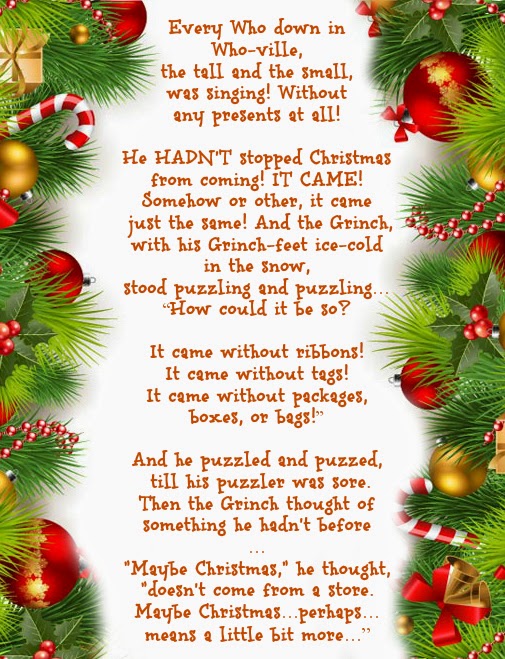
I must admit that every time I read that quote I get goosebumps.
This is the last Growing Bookworms post for 2021. If you celebrate, I wish you and your families a wonderful Christmas and all the best for the New Year. If you don’t celebrate Christmas, have a happy holiday period.
About Robbie Cheadle
Robbie Cheadle is a South African children’s author and poet with 9 children’s books and 2 poetry books.
The 7 Sir Chocolate children’s picture books, co-authored by Robbie and Michael Cheadle, are written in sweet, short rhymes which are easy for young children to follow and are illustrated with pictures of delicious cakes and cake decorations. Each book also includes simple recipes or biscuit art directions which children can make under adult supervision.
Robbie has also published 2 books for older children which incorporate recipes that are relevant to the storylines.
Robbie has 2 adult novels in the paranormal historical and supernatural fantasy genres published under the name Roberta Eaton Cheadle. She also has short stories in the horror and paranormal genre and poems included in several anthologies.
Robbie writes a monthly series for https://writingtoberead.com called Growing Bookworms. This series discusses different topics relating to the benefits of reading to children.
Robbie has a blog, https://robbiesinspiration.wordpress.com/ where she shares book reviews, recipes, author interviews, and poetry.
Find Robbie Cheadle
Blog: https://www.robbiecheadle.co.za/
Blog: robbiesinspiration.wordpress.com
Twitter: BakeandWrite
Instagram: Robbie Cheadle – Instagram
Facebook: Sir Chocolate Books
______________________________________________________________________________________________
Want to be sure not to miss any of Robbie’s “Growing Bookworms” segments? Subscribe to Writing to be Read for e-mail notifications whenever new content is posted or follow WtbR on WordPress. If you found it interesting or entertaining, please share.
Share this:

Review in Practice – The Magic Bakery
Posted: December 6, 2021 Filed under: Book Review, Books, Nonfiction, Review, Writing, Writing Reference | Tags: Book Review, Copyright, Copyright laws, Copyright permissions, Dean Wesley Smith, Publishing, The Magic Bakery, Writing, Writing to be Read 3 Comments
Authors make their livings off of the intellectual property they’ve created, but while they pay lip service to copyright, it’s mostly in the context of protecting their work from plagiarism, and many don’t realize what copyright is, how it is acquired or what it truly means. The Magic Bakery, by Dean Wesley Smith is a must read for anyone who is serious about making a career out of writing. Smith draws from decades of experience in the publishing industry to explain what copyright is and how it can be used to leverage intellectual property (IP) and maximize profits from your creative endeavors.
Smith uses the clever metaphor of a magic bakery, where the pies replenish themselves no matter how many pieces you sell, to emphasize the idea of writing as a business and simplify the explanation of how copyright works, so authors may place proper value on their work. As a seasoned author, who has published both traditionally and independently, Dean Wesley Smith offers a fresh and sensible outlook on the publishing industry and the business of writing.
The Magic Bakery offers a sensible approach to managing intellectual property and copyright for authors. Serious authors will benefit from consuming the delectable ingredients that make up this pie, so pull up a chair and savor a piece. I give it five quills.
Buy Link: https://www.amazon.com/gp/product/B074D7K3ZD
_____________________________________________________________________________________________________
You can be sure not to miss any of Writing to be Read’s great content by subscribing to e-mail or following on WordPress. If you found this content helpful or entertaining, please share.
Share this:

Welcome to the WordCrafter “Lingering Spirit Whispers” Book Blog Tour: Interview with author Stevie Turner
Posted: November 29, 2021 Filed under: Anthology, Author Interview, Blog Tour, Book Promotion, Book Release, Books, Fiction, Ghost Stories, Interview, Paranormal, Short Fiction, Stories, WordCrafter Book Blog Tours, WordCrafter Press | Tags: Author Interview, Ghost Stories, Lingering Spirit Whispers, Paranormal, Paranormal Anthology Set, Roberta Eaton Cheadle, Spirits of the West, Where Spirits Linger, Whispers of the Past, Writing to be Read 11 Comments
Thank you for joining us for Day #1 of the WordCrafter Lingering Spirit Whispers Book Blog Tour. This tour celebrates not one, but three different anthologies offered together in one anthology set. This unique paranormal set combines three paranormal anthologies into a single set for ghosties galore. A must have for lovers of paranormal fiction.
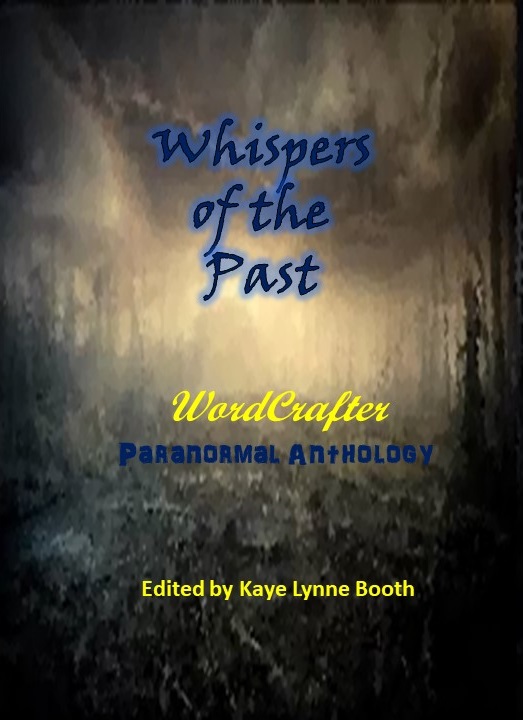
As you may know, every year WordCrafter Press runs a short fiction contest, and each year there is a resulting anthology. For 2019, it was Whispers of the Past, with paranormal stories from contributing authors including myself, Roberta Eaton Cheadle, Stevie Turner, Laurel McHargue, Julie Goodswen and author of the winning story, Jeff Bowles.


For 2020, it was Spirits of the West, with western paranormal stories from contributing authors including myself, Roberta Eaton Cheadle, Jeff Bowles, Arthur Rosch, Tom Johnson, and author of the winning story, Enid Holden.


For 2021, it was Where Spirits Linger, with paranormal tales from contributing authors including myself, Roberta Eaton Cheadle, Stevie Turner, Enid Holden, S.L. Kretschmer, and author of the winning story, Christa Planko.

You can get all three in one anthology set, Linger Spirit Whispers, to be released on December 1 and available for pre-order now.

And join us for the tour to learn more about the stories contained within these three paranormal anthologies and their authors. D.L. Mullen will be doing interviews on her Un dawnted blog site Monday through Thursday and we will finish up her with a guest post from 2021 contest winner, Christa Planko discussing the inspiration behind her winning story, “Olde-Tyme Village”, featured in Where Spirits Linger. Un dawnted does not have comments enabled, but feel free to post any comments you have on the interviews here. Interviews with authors Roberta Eaton Cheadle, Kaye Lynne Booth, Stevie Turner and Jeff Bowles will be featured. I hope you will join us today and follow us through the rest of the tour.
Today’s author guest is contributing author Stevie Turner, who has stories in two out of three anthologies included in this set.

Stevie Turner is a British author of suspense, paranormal, women’s fiction family dramas and darkly humorous novels, and likes to find subjects to write about that are not often covered. Stevie is married and lives in the wilds of East Anglia, England, and enjoys cycling about the countryside when she is not busy writing.
Her story “Partners in Time” is featured in Whispers of the Past – a paranormal romance where past and present cross.

And her story “David’s Revenge” is featured in Where Spirits Linger – a tale of revenge from the grave.

You can join in on Stevie’s interview with D.L. Mullen here: http://www.undawnted.com/2021/11/wordcrafter-lingering-spirit-whispers.html
_______________________________________________________________________________________________________
Book your WordCrafter Book Blog Tour today!



















Mind Fields – Overdose!
Posted: December 17, 2021 | Author: artrosch | Filed under: Commentary, Mind Fields, Opinion | Tags: Arthur Rosch, Drug Use, Mind Fields, THC, Writing to be Read | Leave a commentI didn’t think one could overdose on cannabis.
I was wrong. You can. I did.
I use tincture that I buy from a local grower. It wasn’t the tincture’s fault. I made a mistake. The bottle comes with an eye dropper for dosage measurements and this particular bottle was so low on tincture that I couldn’t fill an eyedropper. So I simply up-ended the thing and poured it down my gullet. That’s not even a dose’s worth, I thought, and proceeded to add another half dropper from a new bottle.
Uh oh.
I’ve been a hard core doper for much of my life and cannabis didn’t scare me one little bit. The most egregious overdose I ever had was with pharmaceutical Ketamine. Oh lord, that was dangerous. I made a perilous mistake and measured out a decimal point one too many after reading the Physician’s Desk Manual. I guess I wasn’t tracking too well even before taking the drug. That decimal point represented a ten times overdose.
After taking that stuff, I became completely dissociated. I was alone in the house. I sat in front of a candle, too terrified to move, while the candle burned down from its top to a mere stub. It was dark when I took the ketamine. It was light by the time I recovered enough to take stock and shake myself out of the trance.
That was my most profound and wretched experience in a lifetime of drug abuse. Until yesterday. I didn’t have enough awe for the cannabis tincture. I should have known better.
I proceeded with my normal day of chores and piano practice until I was pretty bone tired. I retreated to the bedroom, where I joined my wife for some late afternoon TV watching.
I began to roll around inside my body. That was very strange. I felt VERY STRANGE and somewhat close to a state of panic. My cognitive ability retreated to a little corner of mind. About ten percent of me was still present. In that corner I recognized that I had taken too much THC tincture. I could use that ten percent to get out my tool box for the treatment of anxiety. Deep breathing. Yoga. Everything. The alternative was simply panic.
My wife recognized that I was in an odd state. She is forbearing and reluctant to interfere in my escapades. I had to slide the words out of my mouth. “I am feeling very dissociated.”
I was confused. Where am I? I had to ask of myself. What is that? I was referring not so much to the TV but the programming that was on it. I recognized one of our favorite shows, a veterinary adventure, but I couldn’t connect with the content. I wanted to. It seemed petty and ridiculous in light of my emergency. I tried to explain it to Fox.
“Too much THC”. I struggled to form the words. Fox got the message.
“Can I help?” I didn’t know what to tell her. The idea of food crossed my mind. It might dilute further enhancement. It might bring me down. I wanted to come down. “Can you…banana dr…drink?”
“Don’t move from there,” she cautioned wisely. I didn’t move. I felt the urge to get up, but I listened to what my astute partner said.
It’s easy to say, “I was sooo fucked up!” What does that mean? There are a billion versions of “fucked up” and some of them are not great. I was so fucked up that my very consciousness was tied in a knot. I didn’t know where “here” was. I didn’t know whether or not I was “here”.
For further reference, it’s a good idea to know that you are “here”. Not knowing is a weak place, it’s ghostly and things can knock you over. I don’t want to ever get knocked over by anything.
I am HERE.
Share this: