Dark Origins – A Journal of the Plague Year by Daniel Defoe based on the Great Plague of London, 1665 #DarkOrigins #readingcommunity #history
Posted: October 25, 2023 Filed under: Books, Dark Origins, Fiction, Historical Fiction | Tags: A Journal of the Plague Year, BookReview, Daniel Defoe, Dark Origins, Robbie Cheadle, Writing to be Read 28 Comments
Overview

A Journal of the Plague Year by Daniel Defoe is a most interesting book particularly in light of the recent Covid-19 pandemic that swept the world.
It is written in the first-person as a first hand account of the protagonist’s, identified as H.F. and described as an unmarried saddler, experiences during the great plague that afflicted London in 1665. The story is fiction but it contains detailed statistics of the death bills as the plague started to take hold and over the months of its duration, charts, data and extracts from government documents which make it read like the non-fictional personal diary of someone who was recording the facts and figures of the time.
When the plague first comes to the city, it is contained to certain parishes and is staved off by the colder winter weather, but when late spring and summer arrive, the numbers of the infected and the dead increase significantly. The protagonist is aware that the rich are leaving the city, but he is very religious and believes that God wants him to stay.
He describes how the poor are tricked into purchasing preventative medicines and charms by quack doctors, fortune tellers, and other tricksters. It is interesting that he picks this thread up again later in the book and states that all of these ‘pretenders’ succumb to the plague.
H.F. describes in detail the horror of the plague. How infected people go mad and run naked through the streets until they drop down dead. He describes how the authorities implement a system of the shutting up of houses in terms of which when any member of a household was identified as having being infected, the entire household were locked up in the house and a watchman placed outside the door so they could not escape. The protagonist is not in favour of this system as it results in all the inhabitants of the household becoming infected and dying of the plague. It also results in a lot of desperate bids to escape shut up houses that resulted in the plague spreading further. Interestingly enough, a similar attempt to keep people in their homes during the Covid-19 pandemic also didn’t achieve the expected success and resulted in a huge amount of resistance by people.
H.F. depicts a governing structure in the city that is sympathetic to the situation of the poor and ensures that people have access to bread at a reasonable price throughout the duration of the plague. He goes into a lot of detail about the price of bread versus the weight of the loaves before the plague. The city is kept free of bodies which are collected at night and taken to mass graves.
The protagonist also goes into a lot of detail about the effect of the plague on the people of the city. The grief experienced by survivors who have lost their entire families and who follow their dead loved ones and throw themselves into the mass graves and other ‘infected’ people who effectively kill themselves because of the pain the disease is inflicting on them.
The narrator tells a lengthily story about three brothers who leave the city to escape the plague and meet up with a small band of other people also leaving. The difficulties experienced by Londoners who left the city and attempted to live in the countryside while the plague raged are detailed. The suspicion and lack of welcome by the rural villages and town who do not wish to accept any Londoners into their areas for fear of their carrying the plague, and the lack of shelter, food, and other amenities. The three brothers and their band manage to make a success of it with some help from a local wealthy landowner. They actually outlive a lot of the villagers when the plague does spread out of London and into the surrounding countryside.
Reading this book after the Covid-19 pandemic was fascinating. The parallels between this event more than 350 years ago in London and the experiences and reactions of people during the time of the pandemic are have a dreadful similarity. People turn to religion and to quack remedies, people resist the attempts by authorities to contain the disease by findings ways to escape from their homes, people suffer depression and loss.
This book is certainly not for everyone as it is filled with facts and figures, but I found it very interesting and appreciated the historical information shared.
The Great Plague of 1665 – 1666

The plague that broke out in London in 1665 was the worst outbreak to effect England since the black death of 1348. It is believed at approximately 15% of the population of London died. The recorded deaths were 68,596 but it is believed at least 100,000 people died. The population of the city in 1665 was 460,000.
The plague was carried by fleas on rats and they were attracted to the poorer parts of the city where rubbish and waste filled the streets.
There were three types of plague:
- Bubonic plague that caused swellings (buboes) in the lymph nodes found in the armpits, groin and neck. These sufferers experienced headaches, vomiting and fever. Sufferers had a 30% chance of dying within two weeks.
- Pneumonic plague which attacked the lungs and spread to other people through coughing and sneezing; and
- Septicaemic plague which occurred when the bacteria entered the blood. The chances of survival of this type of plague were very slim.

The treatments and methods of prevention were privative. Patients were bled with leeches. The air was cleansed using smoke and heat as people thought bad air caused the distemper. Children were encouraged to smoke to ward off bad air. Some people sniffed a sponge soaked in vinegar.
When the winter arrived, the plague started to decrease. Scientists believe this was due to people developing a stronger immunity to the disease rather than the great fire of London on 2 September 1666, making any notable impact through the destruction of houses within the walls of the city and on the banks of the River Thames. Many of the plague deaths had occurred in the poorest parishes outside the city walls
On The Plague Year: London, 1665
By DM Lovic
In London Town, the children played, the kittens purred, the flowers bloomed,
The adults laughed, the horses neighed, for no one knew they all were doomed.
Yes, all within the world was right when Death sneaked into town that night.
Beneath a haunted summer moon, upon a flute that whistled flat,
He played a slow, hypnotic tune that summoned every flea and rat
Who came from cellar, slum and glade to march the Devil’s plague parade.
Searching streets from side to side, the weakest souls with sword he struck,
Then left a token on their hide to signify the loss of luck.
For no one touched would e’er be saved, ‘twas six mere hours from spot to grave.
The wealthy fled to distant hills, doors were bolted, shutters locked,
But none could stop the morbid chills when death stood on the stoop and knocked.
Inside, they wept and fought with fate but, patiently, he’d smile and wait.
Sickness turned into despair, howls of terror, dreadful shrieks,
They echoed through the London air for weeks and weeks and weeks.
But panicked cries and wailing tears were only music to his ears.
One ghastly year that madness reigned and when Death fin’ly had withdrawn,
The price was tallied and explained: one hundred thousand souls were gone.
And London Town, in stark reverse, returned to life without the curse.
On city streets, the children played, the kittens purred, the flowers bloomed,
The adults laughed, the horses neighed, for every soul knew he was doomed.
From: The Poetry Nook
About Roberta Eaton Cheadle

Award-winning, bestselling author, Roberta Eaton Cheadle, is a South African writer and poet specialising in historical, paranormal, and horror novels and short stories. She is an avid reader in these genres and her writing has been influenced by famous authors including Bram Stoker, Edgar Allan Poe, Amor Towles, Stephen Crane, Enrich Maria Remarque, George Orwell, Stephen King, and Colleen McCullough.
Roberta has two published novels and has horror, paranormal, and fantasy short stories included in several anthologies. She is also a contributor to the Ask the Authors 2022 (WordCrafter Writing Reference series).
Roberta also has thirteen children’s books and two poetry books published under the name of Robbie Cheadle, and has poems and short stories featured in several anthologies under this name.
Roberta’s blog features discussions about classic books, book reviews, poetry, and photography. https://roberta-writes.com/.
Find Roberta Eaton Cheadle
Blog: https://wordpress.com/view/robertawrites235681907.wordpress.com
Twitter: https://twitter.com/RobertaEaton17
Facebook: https://www.facebook.com/robertawrites
Amazon: https://www.amazon.com/Roberta-Eaton-Cheadle/e/B08RSNJQZ5
_____________________________________________________________________________________________
Want to be sure not to miss any of Robbie’s “Dark Origins” segments? Subscribe to Writing to be Read for e-mail notifications whenever new content is posted or follow WtbR on WordPress. If you found it interesting or entertaining, please share.
Share this:

Dark Origins – The Road by Cormack McCarthy, a novel set in a post apocalyptic world with a drastically altered climate #darkorigins #TheRoad #readingcommunity
Posted: September 27, 2023 Filed under: Apocalyptic, Books, Dark Origins | Tags: Apocalyptic, Climate change, Cormack McCarthy, Dark Origins, Robbie Cheadle, The Road, Writing to be Read 48 CommentsCormack McCarthy’s novel, The Road, is set in a world that has been devastated by a cataclysmic event resulting in a drastically altered climate. The story begins in the middle with a father and his son travelling along a seemingly endless road in bitterly cold conditions and pushing their limited food and other supplies in a shopping cart. The world around them is completely grey from the dull grey sky overhead to the grey, ash covered wasteland they are travelling through. All the trees, plants and crops have been burned or scorched and there are no living creatures anywhere. It gets progressively colder as the pair’s journey continues and they are always hungry. The only food available is tinned or canned food they can scavenge from the desolate and abandoned houses they pass. The repetition of the word grey in all descriptions of the environment symbolises the bareness of the landscape
The following quotes describe the landscape depicted in The Road:
““Nothing. Where all was burnt to ash before them no fires were to be had and the nights were long and dark and cold beyond anything they’d yet encountered. Cold to crack the stones. To take your life. He held the boy shivering against him and counted each frail breath in the blackness.”
“He walked out in the gray light and stood and he saw for a brief moment the absolute truth of the world. The cold relentless circling of the intestate earth. Darkness implacable. The blind dogs of the sun in their running. The crushing black vacuum of the universe. And somewhere two hunted animals trembling like ground-foxes in their cover. Borrowed time and borrowed world and borrowed eyes with which to sorrow it.”
“The soft black talc blew through the streets like squid ink uncoiling along a sea floor and the cold crept down and the dark came early and the scavengers passing down the steep canyons with their torches trod silky holes in the drifted ash that closed behind them silently as eyes.”
As the story progresses, the details of the night of the catastrophe that ended civilization, and the rapid descend of the survivors into savagery’s following the scorching of the entire planetary ecology, are shared through memories of the father. This aspect of the book is similar to the degeneration of the school boys in William Goldings book, Lord of the Flies. Survivors have gathered in groups many of which have resorted to cannibalisms to supplement limited food supplies. It quickly becomes apparent that aside from the threats presented by the cold and hunger, other people pose an even greater danger to the travelers. In addition to all these obstacles, the father is very sick. He is suffering from some sort of lung disease, possibly lung cancer or a form of tuberculosis, which may have been caused by the ash in the air. The pair wear masks to filter the air they breath.
The Road acts as a warning about the irreversible and drastic consequences of climate change. This message is continuously driven home by the them of the certainty of death in a dying world. Death lurks at the edges of the father’s and son’s lives continuously. It takes many potential forms: the terrible cold, the father’s sickness, starvation due to the lack of food, and the evil cannibals’ patrolling the countryside. All of these are inescapable dangers for the pair and they will continue for the rest of their lives. The Earth is dead and is no longer able to sustain life.
I have focused on the themes of climate change and the death of Earth for this discussion as my purpose was to examine it against the backdrop of the current extreme weather being experienced around the globe resulting in flooding, fires, droughts, earthquakes and similar catastrophes.
For completeness sake, I will also mention that although the main conflict of the book is the struggle to stay alive in the adverse circumstances, there are also themes of hope and love. The entire purpose of the journey is one of hope to survive in the expected better climate at the coast. The father also constantly expresses his belief that their are good guys like them somewhere in the world. The boy is also depicted as an extremely empathetic and kind person despite the formidable nature of his circumstances.
The book ends on a relatively uplifting note with the boy finding ‘the good guys’ his father spoke about.
There is a movie of The Road and this is the trailer:
About Roberta Eaton Cheadle
Award-winning, bestselling author, Roberta Eaton Cheadle, is a South African writer and poet specialising in historical, paranormal, and horror novels and short stories. She is an avid reader in these genres and her writing has been influenced by famous authors including Bram Stoker, Edgar Allan Poe, Amor Towles, Stephen Crane, Enrich Maria Remarque, George Orwell, Stephen King, and Colleen McCullough.
Roberta has two published novels and has horror, paranormal, and fantasy short stories included in several anthologies. She is also a contributor to the Ask the Authors 2022 (WordCrafter Writing Reference series).
Roberta also has thirteen children’s books and two poetry books published under the name of Robbie Cheadle, and has poems and short stories featured in several anthologies under this name.
Roberta’s blog features discussions about classic books, book reviews, poetry, and photography. https://roberta-writes.com/.
Find Roberta Eaton Cheadle
Blog: https://wordpress.com/view/robertawrites235681907.wordpress.com
Twitter: https://twitter.com/RobertaEaton17
Facebook: https://www.facebook.com/robertawrites
Amazon: https://www.amazon.com/Roberta-Eaton-Cheadle/e/B08RSNJQZ5
_____________________________________________________________________________________________
Want to be sure not to miss any of Robbie’s “Dark Origins” segments? Subscribe to Writing to be Read for e-mail notifications whenever new content is posted or follow WtbR on WordPress. If you found it interesting or entertaining, please share.
Share this:

Dark Origins – The Second Mrs Astor, New York high society and the sinking of the Titanic
Posted: June 28, 2023 Filed under: Books, Dark Origins, Fiction, Historical Fiction, Historical Inspiration, history | Tags: Dark Origins, Historical Fiction, Robbie Cheadle, Shana Abe, The Second Mrs. Astor, Writing to be Read 44 Comments
The Titanic has been in the press again recently and has claimed five more lives. If you are out of the loop about this disaster, you can read about it here: https://www.reuters.com/world/search-intensifies-titanic-sub-with-only-hours-oxygen-left-2023-06-22/.
This disaster prompted me to write about a book I recently read, The Second Mrs Astor, and its dark origins.
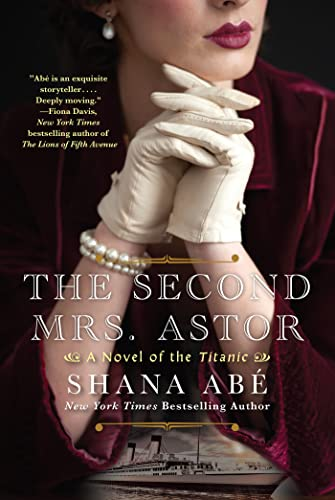
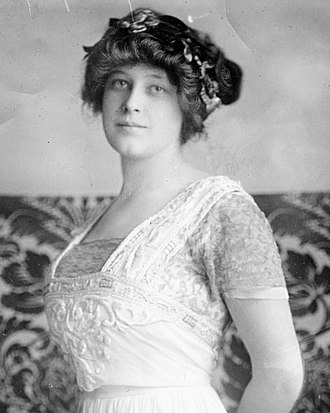
The Second Mrs Astor is a work of historical fiction by Shana Abe. It depicts the romance between the hugely wealthy John Jacob Astor IV and his second and very young wife, Madeleine Force Astor.
There are two aspects to this extraordinarily fine piece of fictionalised history that caught my attention: the snotty and superior attitudes of New York society created by John Astor IV’s mother, Caroline Schermerhorn Astor, and the sinking of the Titanic which claimed the lives of John Astor IV, his valet, and his dog, Kitty. Madeleine Force Astor, who was pregnant at the time, survived the disaster.
A History of New York’s high society in the late 19th century
New York high society started with The Four Hundred, a list of New York’s biggest names which achieved highly-coveted invitations to one of Mrs Caroline Astor’s most lavish parties in her Fifth Avenue mansion. At this time, called the Gilded Age, the Astor family were considered to be Manhattan’s old money – being one of the first Dutch settlers on the island, and they held the prestigious title of a true ‘Knickerbocker’ or a native New Yorker.
Caroline Astor was the ultimate authority of New York society at the time and many high-profile names from America’s 1 percent competed for a seat at her table. Once of these people was Ava Belmont, previously Ava Vanderbilt from the Vanderbilt railroad fortune, who tried to overthrow Caroline Astor thereby creating the most notorious high society rivalry in the late 19th century.
New York high society owned lavish summer homes in Newport, Rhode Island and enormous mansions in the heart of Midtown Manhattan and were known for their extreme extravagance.
Early romance between John Astor IV and Madeleine Force
Madeleine Force was 17 years old when she met John Astor IV. She came from a wealthy family who were part of Brooklyn high-society but was several rungs down the social ladder from the Astor’s.
At the time, John Astor IV was 47 years old and a divorcee with two children. At that time, divorce was considered to be scandalous by the clergy and high society.
Madeleine Force accepted John Astor IV’s marriage proposal despite the open disapproval of his societal circle and the malignant scrutiny of the press.
The early part of the couples marriage made for sad and difficult reading as Madeleine struggles to cope with social ostracism. This all happens against a background of outrageous privilege and extravagance. Both aspects made me angry as a reader.
The pair then went on an extended honeymoon to Egypt and elect to return to New York on the Titanic.

The sinking of the Titanic

Madeleine Astor was five months pregnant when she boarded the Titanic with her husband at Cherbourg, France. They were first class passengers. On the night of the 14th of April 1912, John Astor woke his wife and informed her that the Titanic had hit an iceberg. He reassured her that the damage did not seem serious, but he made her put on a life jacket. Madeleine Astor, her nurse and maid managed to board lifeboat 4 by crawling through the first-class promenade window. John Astor asked if he could accompany his wife as she was pregnant but his request was refused.
John Astor and his valet died in the sinking and his body was recovered on the 22nd of April.
The author’s descriptions of life aboard the Titanic before it struck the iceberg, and of the three hours during which the great ship sank are very compelling. I felt as if I was on that ship experiencing the cold, fear, and loss.
Of the estimated 2,200 people aboard the Titanic more than 1,500 died.
A quote from The Second Mrs Astor:
“The best memory I have about Titanic was that she was so large. So epic. I never felt any swaying or bobbing or turbulence to interfere with my meals, my sensitive appetite, or my slumber. I never felt any sort of vulnerability aboard that ocean liner, right up until the very end. I imagine that’s a blessing, don’t you? Whoever wants to know how it’s all going to end before it actually does? Only poets and madmen, I would think.”
Conclusion
Most people know something about the sinking of the Titanic so I haven’t gone into a lot of detail in this post. I was so captivated by this book, I did my own research to determine how much of the Astor love story was fictionalised and how much was based on truth. It does seem that the Astor’s really were in love and it was a great romance. Madeleine Astor never really recovered from the shock and horror of that fateful night and while her death at the age of 46 is recorded as heart failure, it is believed she died of a drug overdose.
One interesting survival story I came across during my research related to the chief baker on board the Titanic called Charles Joughin.

Ahead of the actual sinking of the Titanic, Charles Joughin imbibed significant amounts of alcohol. When the ship started sinking, the baker stepped off the stern of the vessel. As 1,500 screaming and panicked people froze to death around him, he continued to paddle in the water until dawn when he was picked up by a lifeboat. Within a few days, he was back at work.
Rather a remarkable story.
About Roberta Eaton Cheadle
Award-winning, bestselling author, Roberta Eaton Cheadle, is a South African writer and poet specialising in historical, paranormal, and horror novels and short stories. She is an avid reader in these genres and her writing has been influenced by famous authors including Bram Stoker, Edgar Allan Poe, Amor Towles, Stephen Crane, Enrich Maria Remarque, George Orwell, Stephen King, and Colleen McCullough.
Roberta has two published novels and has horror, paranormal, and fantasy short stories included in several anthologies. She is also a contributor to the Ask the Authors 2022 (WordCrafter Writing Reference series).
Roberta also has thirteen children’s books and two poetry books published under the name of Robbie Cheadle, and has poems and short stories featured in several anthologies under this name.
Roberta’s blog features discussions about classic books, book reviews, poetry, and photography. https://roberta-writes.com/.
Find Roberta Eaton Cheadle
Blog: https://wordpress.com/view/robertawrites235681907.wordpress.com
Twitter: https://twitter.com/RobertaEaton17
Facebook: https://www.facebook.com/robertawrites
Amazon: https://www.amazon.com/Roberta-Eaton-Cheadle/e/B08RSNJQZ5
_____________________________________________________________________________________________
Want to be sure not to miss any of Robbie’s “Dark Origins” segments? Subscribe to Writing to be Read for e-mail notifications whenever new content is posted or follow WtbR on WordPress. If you found it interesting or entertaining, please share.
Share this:

Dark Origins – The shockingly dark original story of Pinocchio
Posted: May 24, 2023 Filed under: Children's Books, Classics, Dark Fantasy, Dark Origins, Fairy Tales, Fiction | Tags: "Writing to be Read, 2018 Writing the Rockies Conference, Dark Origins, Pinochio, Robbie Cheadle 61 CommentsThe Adventures of Pinocchio is a children’s fantasy novel by Italian author, Carlo Collodi.
The story was originally published as a serial called The Story of a Puppet in the Giornale per I bambini, one of the earliest Italian weekly magazines for children starting from 7 July 1881. Originally, the story stopped after 8 episodes (published over 4 months) at Chapter 15. Due to popular demand, the episodes were resumed on 16 February 1882 and the following year, the story was published as a single book.
The storyline
In Tuscany, Italy, a carpenter named Master Antonio finds a block of wood which he immediately plans to carve into a table leg. The log cries out when he cuts it. Master Antonio falls to the floor as a result of shock and just at that moment his extremely poor neighbour, Geppetto, knocks on the door. The piece of wood instigates an altercation between the pair, but after a minor fisticuff, Geppetto receives the log as a gift. Geppetto is delighted and carves it into a marionette with the plan of making a living as a travelling puppeteer.
Quote: “On hearing himself called Polendina for the third time, Geppetto lost his head with rage and threw himself upon the carpenter. Then and there they gave each other a sound thrashing.
After this fight, Mastro Antonio had two more scratches on his nose, and Geppetto had two buttons missing from his coat. Thus having settled their accounts, they shook hands and swore to be good friends for the rest of their lives.
Then Geppetto took the fine piece of wood, thanked Mastro Antonio, and limped away toward home.”
As soon as Geppetto sets about carving the wood it becomes obvious that the puppet, called Pinocchio, will not be of good character.
Quote: “As he was about to put the last touches on the finger tips, Geppetto felt his wig being pulled off. He glanced up and what did he see? His yellow wig was in the Marionette’s hand. “Pinocchio, give me my wig!”
But instead of giving it back, Pinocchio put it on his own head, which was half swallowed up in it.
At that unexpected trick, Geppetto became very sad and downcast, more so than he had ever been before.
“Pinocchio, you wicked boy!” he cried out. “You are not yet finished, and you start out by being impudent to your poor old father. Very bad, my son, very bad!”
And he wiped away a tear.
The legs and feet still had to be made. As soon as they were done, Geppetto felt a sharp kick on the tip of his nose.
“I deserve it!” he said to himself. “I should have thought of this before I made him. Now it’s too late!””
Geppetto teaches Pinocchio to walk and he immediately runs away. The ungrateful puppet is caught by a law enforcement officer who, acting on the erroneous belief that Geppetto has mistreated the puppet, arrests Geppetto and puts him in prison.
Pinocchio returns to the empty house and meets the talking cricket which warns him of the perils of disobedience. In retaliation, Pinocchio throws a hammer at the cricket and accidentally kills it.

Having tried unsuccessfully to obtain some food, the puppet settles down to sleep on a stove. When he wakes up, his feet have been burned off. Luckily for Pinocchio, Geppetto is released from prison and returns home. He makes Pinocchio new feet. Caught up in short lived gratitude, Pinocchio agrees to attend school and Geppetto sells his only coat to buy him a schoolbook.
Pinocchio never makes it to school on that first day and his disobedience gets him into significant trouble. He narrowly escapes being used as firewood to cook a hungry puppeteer’s dinner. A fisherman coats him in flour and tries to fry him. As punishment for refusing to study, he is transformed into a donkey and thrown into the sea.
The worse of all his violent adventures is when Pinocchio is lynched from a tree by his recurring enemies, the Fox and the Cat. This is the point when Collodi ended his original Pinocchio magazine series. It was only popular demand by his readers that resulted in the Collodi reviving his puppet hero and finding a way out of this scrape for him.

Quote: “Happily for him, Pinocchio was made of very hard wood and the knives broke into a thousand pieces. The Assassins looked at each other in dismay, holding the handles of the knives in their hands.
“I understand,” said one of them to the other, “there is nothing left to do now but to hang him.”
“To hang him,” repeated the other.
They tied Pinocchio’s hands behind his shoulders and slipped the noose around his neck. Throwing the rope over the high limb of a giant oak tree, they pulled till the poor Marionette hung far up in space.
Satisfied with their work, they sat on the grass waiting for Pinocchio to give his last gasp. But after three hours the Marionette’s eyes were still open, his mouth still shut and his legs kicked harder than ever.
Tired of waiting, the Assassins called to him mockingly: “Good-by till tomorrow. When we return in the morning, we hope you’ll be polite enough to let us find you dead and gone and with your mouth wide open.” With these words they went.
A few minutes went by and then a wild wind started to blow. As it shrieked and moaned, the poor little sufferer was blown to and fro like the hammer of a bell. The rocking made him seasick and the noose, becoming tighter and tighter, choked him. Little by little a film covered his eyes.
Death was creeping nearer and nearer, and the Marionette still hoped for some good soul to come to his rescue, but no one appeared. As he was about to die, he thought of his poor old father, and hardly conscious of what he was saying, murmured to himself:
“Oh, Father, dear Father! If you were only here!”
These were his last words. He closed his eyes, opened his mouth, stretched out his legs, and hung there, as if he were dead.”
After this, Pinocchio’s story then continues its series of bleak set-pieces until finally our hero learns not to run away from his responsibilities. He begins to study hard and becomes a ‘good little kid’ and, at last, a real boy.
The dark origin of Pinocchio
It is clear from the narrative above the Pinocchio is a very dark story filled with violence, hunger, and illness. To understand how this story came about, the childhood of the author needs to be considered. According to https://metro.co.uk/, the house where Carlo Collodi was born in Florence in 1826, was on a long, narrow residential street which did not allow for any natural sunlight. He was the oldest of ten children and, to ease the burden on his parents, was sent away to live in a village with his mother’s family for much of his childhood.
While he was away, his family suffered a series of tragedies. Six of his nine siblings died before reaching adulthood. Some passed away as babies, while others lived long enough to become established parts of the family only to die later into childhood. The bleaker aspects of ‘The Adventures of Pinocchio’ are informed by the lasting impact of this pain on the author.
Themes
The themes of hunger, illness, and death are prevalent throughout the story.
Quotes:
“Are you not afraid of death?’
I am not in the least afraid!… I would rather die than drink that bitter medicine.’
At that moment the door of the room flew open, and four rabbits as black as ink entered carrying on their shoulders a little bier.
What do you want with me?’ cried Pinocchio, sitting up in bed in a great fright.
We are come to take you,’ said the biggest rabbit.
To take me?… But I am not yet dead!…’
No, not yet: but you have only a few minutes to live, as you have refused the medicine that would have cured you of the fever.’
Oh, Fairy, Fairy!’ the puppet then began to scream, ‘give me the tumbler at once… be quick, for pity’s sake, for I will not die–no… I will not die….”
***
“That puppet there,’ continued the Talking-cricket, ‘is a confirmed rogue. …’ Pinocchio opened his eyes, but shut them again immediately. ‘He is a ragamuffin, a do-nothing, a vagabond. …. Pinocchio hid his face beneath the clothes. ‘That puppet there is a disobedient son who will make his poor father die of a broken heart! …’ At that instant a suffocated sound of sobs and crying was heard in the room. Imagine everybody’s astonishment when, having raised the sheets a little, it was discovered that the sounds came from Pinocchio. ‘When the dead person cries, it is a sign that he is on the road to get well,’ said the Crow solemnly. ‘I grieve to contradict my illustrious friend and colleague,’ added the Owl, ‘but for me, when the dead person cries, it is a sign that he is sorry to die.”
***
“A boy’s appetite grows very fast, and in a few moments the queer, empty feeling had become hunger, and the hunger grew bigger and bigger, until soon he was as ravenous as a bear.
Poor Pinocchio ran to the fireplace where the pot was boiling and stretched out his hand to take the cover off, but to his amazement the pot was only painted! Think how he felt! His long nose became at least two inches longer.
He ran about the room, dug in all the boxes and drawers, and even looked under the bed in search of a piece of bread, hard though it might be, or a cookie, or perhaps a bit of fish. A bone left by a dog would have tasted good to him! But he found nothing.
And meanwhile his hunger grew and grew.”
Moral of the story
The moral of the story is that hard work, being good, and studying hard are the keys to success and it is only when Pinocchio devotes himself to the achievement of these three things that he transforms from a wooden puppet to a real boy with modern comforts. However, the author never lets the reader forget that disaster is always waiting to happen.
Quotes:
“I was just saying,” whined the Marionette in a whisper, “that it seems too late for me to go to school now.”
“No, indeed. Remember it is never too late to learn.”
“But I don’t want either trade or profession.”
“Why?”
“Because work wearies me!”
“My dear boy,” said the Fairy, “people who speak as you do usually end their days either in a prison or in a hospital. A man, remember, whether rich or poor, should do something in this world. No one can find happiness without work. Woe betide the lazy fellow! Laziness is a serious illness and one must cure it immediately; yes, even from early childhood. If not, it will kill you in the end.”
These words touched Pinocchio’s heart. He lifted his eyes to his Fairy and said seriously: “I’ll work; I’ll study; I’ll do all you tell me. After all, the life of a Marionette has grown very tiresome to me and I want to become a boy, no matter how hard it is. You promise that, do you not?”
“Yes, I promise, and now it is up to you.”
***
“Poor Pinocchio huddled close to the doghouse more dead than alive from cold, hunger, and fright. Now and again he pulled and tugged at the collar which nearly choked him and cried out in a weak voice:
“I deserve it! Yes, I deserve it! I have been nothing but a truant and a vagabond. I have never obeyed anyone and I have always done as I pleased. If I were only like so many others and had studied and worked and stayed with my poor old father, I should not find myself here now, in this field and in the darkness, taking the place of a farmer’s watchdog. Oh, if I could start all over again! But what is done can’t be undone, and I must be patient!””
If you would like to read the original The Adventures of Pinocchio, you can find it for free on Gutenberg here: https://www.gutenberg.org/files/500/500-h/500-h.htm
About Roberta Eaton Cheadle
Award-winning, bestselling author, Roberta Eaton Cheadle, is a South African writer and poet specialising in historical, paranormal, and horror novels and short stories. She is an avid reader in these genres and her writing has been influenced by famous authors including Bram Stoker, Edgar Allan Poe, Amor Towles, Stephen Crane, Enrich Maria Remarque, George Orwell, Stephen King, and Colleen McCullough.
Roberta has two published novels and has horror, paranormal, and fantasy short stories included in several anthologies. She is also a contributor to the Ask the Authors 2022 (WordCrafter Writing Reference series).
Roberta also has thirteen children’s books and two poetry books published under the name of Robbie Cheadle, and has poems and short stories featured in several anthologies under this name.
Roberta’s blog features discussions about classic books, book reviews, poetry, and photography. https://roberta-writes.com/.
Find Roberta Eaton Cheadle
Blog: https://wordpress.com/view/robertawrites235681907.wordpress.com
Twitter: https://twitter.com/RobertaEaton17
Facebook: https://www.facebook.com/robertawrites
Amazon: https://www.amazon.com/Roberta-Eaton-Cheadle/e/B08RSNJQZ5
_____________________________________________________________________________________________
Want to be sure not to miss any of Robbie’s “Dark Origins” segments? Subscribe to Writing to be Read for e-mail notifications whenever new content is posted or follow WtbR on WordPress. If you found it interesting or entertaining, please share.
Share this:

Dark Origins – The creepy true story behind Alice in Wonderland #DarkOrigins #AliceinWonderland
Posted: April 26, 2023 Filed under: Books, Children's Books, Classics, Dark Origins, Fantasy, Fiction | Tags: Alice in Wonderland, Children's Books, Classic Children's Literature, Dark Origins, Lewis Carroll, Robbie Cheadle, Writing to be Read 76 CommentsAlice in Wonderland is one of my favourite childhood books. I love it so much, I have seven different copies, one of which is vintage.
The book, Alice in Wonderland, starts with a young girl, Alice, sitting on a bank and watching her sister read a boring book with no pictures or conversations. Seeing a white rabbit passing by, she follows it down a rabbit hole. The rabbit walks and talks and has a pocket watch. Alice falls down and down the rabbit hole, all the while having an interesting conversation with herself, and ends up in a large entrance hall. There is a small door beyond which is a beautiful world, but Alice is to big to pass through it. She experiments with eating and drinking various items until she is finally small enough to gain entry to Wonderland.
Wonderland is a strange and mysterious world filled with unusual creatures and people. It is summed up by this quote: “If I had a world of my own, everything would be nonsense. Nothing would be what it is, because everything would be what it isn’t. And contrary wise, what is, it wouldn’t be. And what it wouldn’t be, it would.”
You can obtain a free copy of Alice in Wonderland from Gutenberg here: https://www.gutenberg.org/ebooks/11

About the author
Lewis Carroll was a pseudonym for Charles Lutwidge Dodgson, who was born in England in 1832. At the age of 18, Dodgson left home to attend Oxford University, where he studied and worked for the next 20 years. He was a student and then a professor and a mathematician.
Dodgson created the Lewis Carroll pseudonym while he was at Oxford, in order to write children’s books that would not be connected to his academic career. He was well known for developing close friendships with children but very few relationships with adults. He befriended the children of his colleagues and acquaintances and spent a lot of time with them, even writing them letters.
“Extra thanks and kisses for the lock of hair,” he wrote to a 10-year-old girl. “I have kissed it several times — for want of having you to kiss, you know, even hair is better than nothing.”
When Henry George Liddell became the Dean of Christ Church at Oxford, Dodgson became friends with his three young daughters: Lorina, Edith and Alice.
The story, Alice in Wonderland, came into existence in 1862 when Dodgson and a colleague took the three girls out on a picnic and rowing trip along the Thames. In order to keep the trio entertained, Dodgson started telling the story that would become Alice in Wonderland which was published in 1865.

Dodgson was also a keen photographer and it is known that he took photos of nude and semi-nude children – including a full-frontal nude shot of Alice’s sister Lorina.
Dodgson wrote:
“I confess I do not admire naked boys in pictures. They always seem to me to need clothes: whereas one hardly sees why the lovely forms of girls should ever be coverd [sic] up!”
In 1863, Dodgson’s friendship with the Liddell family came to a sudden end and he never again spent time alone with their daughters.
There’s no record of why Dodgson’s relationship with the family ended, but there is a theory that he proposed marriage to Alice. This wasn’t that unusual in the mid 1800s as the age of consent was 12 years old and some men did marry young girls.
Before even examining the deeper meaning and themes of Alice in Wonderland, its author and the creation of this story are cast in rather a creepy light.
Deeper meaning and themes of Alice in Wonderland
The Tragic and Inevitable Loss of Childhood Innocence
The theme of growing up is central to Alice in Wonderland. The author is credited with enjoying the innocence with which children approach the world. The multitude of physically changes Alice goes through in Wonderland are believed to be symbolic of puberty and the many changes that take place during that period of a person’s life.
Alice finds these changes disturbing and traumatic and she struggles to find a comfortable size, reverting eventually to her original size.
Relevant quotes:
“I wonder if I’ve been changed in the night. Let me think. Was I the same when I got up this morning? I almost think I can remember feeling a little different. But if I’m not the same, the next question is ‘Who in the world am I?’ Ah, that’s the great puzzle!”
“It was much pleasanter at home,” thought poor Alice, “when one wasn’t always growing larger and smaller, and being ordered about by mice and rabbits. I almost wish I hadn’t gone down the rabbit-hole–and yet–and yet–…”
“I knew who I was this morning, but I’ve changed a few times since then.”
Alice is also confused about who she is and her role in the world around her, namely, Wonderland.
“It’ll be no use their putting their heads down and saying “Come up again, dear!” I shall only look up and say “Who am I then? Tell me that first, and then, if I like being that person, I’ll come up: if not, I’ll stay down here till I’m somebody else”–but, oh dear!’ cried Alice, with a sudden burst of tears, ‘I do wish they WOULD put their heads down! I am so VERY tired of being all alone here!”
Life as a Meaningless Puzzle
As Alice travels through Wonderland, she encounters a series of situations and circumstances which she cannot make sense of and which have no clear solutions. This is symbolism for how life throws frustrating curveballs and problems that cannot be solved or unraveled in the expected way. Often, lateral thinking is required to circumvent issues and, sometimes, problems have no solution in life.
Relevant quotes:
“One day Alice came to a fork in the road and saw a Cheshire cat in a tree. ‘Which road do I take?’ she asked. ‘Where do you want to go?’ was his response. ‘I don’t know,’ Alice answered. ‘Then,’ said the cat, ‘it doesn’t matter.”
“Mad Hatter: Would you like a little more tea?
Alice: Well, I haven’t had any yet, so I can’t very well take more.
March Hare: Ah, you mean you can’t very well take less.
Mad Hatter: Yes. You can always take more than nothing.”
“The March Hare took the watch and looked at it gloomily: then he dipped it into his cup of tea, and looked at it again: but he could think of nothing better to say than his first remark, ‘It was the best butter, you know.’ Alice had been looking over his shoulder with some curiosity. ‘What a funny watch!’ she remarked. ‘It tells the day of the month, and doesn’t tell what o’clock it is!’ ‘Why should it?’ muttered the Hatter. ‘Does your watch tell you what year it is?’ ‘Of course not,’ Alice replied very readily: ‘but that’s because it stays the same year for such a long time together.’ ‘Which is just the case with mine,’ said the Hatter. Alice felt dreadfully puzzled. The Hatter’s remark seemed to have no sort of meaning in it, and yet it was certainly English. ‘I don’t quite understand you,’ she said, as politely as she could. ‘The Dormouse is asleep again,’ said the Hatter, and he poured a little hot tea upon its nose. The Dormouse shook its head impatiently, and said, without opening its eyes, ‘Of course, of course; just what I was going to remark myself.’ ‘Have you guessed the riddle yet?’ the Hatter said, turning to Alice again. ‘No, I give it up,’ Alice replied: ‘what’s the answer?’ ‘I haven’t the slightest idea,’ said the Hatter. ‘Nor I,’ said the March Hare. Alice sighed wearily. ‘I think you might do something better with the time,’ she said, ‘than waste it in asking riddles that have no answers.’ ‘If you knew Time as well as I do,’ said the Hatter, ‘you wouldn’t talk about wasting it.”

Death as a Constant and Underlying Menace
Over and over again, Alice finds herself in dangerous situations that suggest that death is lurking just around the corner. Although death never manifests in the book, the reader senses it and so does Alice. At the end of the book she comes to realise that despite the ridiculous circumstances in Wonderland, death could be a very real outcome and that is when she wakes up and the reader comes to understand the entire book is a dream.
Relevant quotes:
“Well!” thought Alice to herself. “After such a fall as this, I shall think nothing of tumbling down-stairs! How brave they’ll all think me at home! Why, I wouldn’t say anything about it, even if I fell off the top of the house!” (Which was very likely true.)”
“The executioner’s argument was that you couldn’t cut of something’s head unless there was a trunk to sever it from. He’d never done anything like that in his time of life, and wasn’t going to start now.
The King’s argument was that anything that had a head, could be beheaded, and you weren’t to talk nonsense.
The Queen’s argument was that if something wasn’t done about it in less than no time, she’d have everyone beheaded all round.
It was this last argument that had everyone looking so nervous and uncomfortable.”
Characterisation
Alice meets a plethora of characters that have become well known. It is believed that many of these characters, including Alice herself, suffer from mental health disorders. This is a list of some of the most famous characters with a description from Spark Notes (https://www.sparknotes.com/lit/alice/characters/)
The White Rabbit – “The frantic, harried Wonderland creature that originally leads Alice to Wonderland. The White Rabbit is figure of some importance, but he is manic, timid, and occasionally aggressive.” The White Rabbit suffers from an anxiety disorder and is in a constant state of panic.
The Queen of Hearts – “The ruler of Wonderland. The Queen is severe and domineering, continually screaming for her subjects to be beheaded.” The Queen of Hearts is completely self absorbed and has a narcissistic personality disorder.
The Cheshire Cat – “A perpetually grinning cat who appears and disappears at will. The Cheshire Cat displays a detached, clearheaded logic and explains Wonderland’s madness to Alice.” The Cheshire Cat is schizophrenic.
The Caterpillar – “A Wonderland creature. The Caterpillar sits on a mushroom, smokes a hookah, and treats Alice with contempt. He directs Alice to the magic mushroom that allows her to shrink and grow.” The Caterpillar is a drug addict who smokes a hookah and gives Alice a mushroom with mind and body-altering capabilities.

The Mad Hatter – “A small, impolite hatter who lives in perpetual tea-time. The Mad Hatter enjoys frustrating Alice.” The hatter is simply mad.
Have you read Alice in Wonderland? Did you spot these underlying themes and meanings?
Share this:

Dark Origins – The Chimes, A Goblin Story: a novella by Charles Dickens
Posted: March 22, 2023 Filed under: Classics, Dark Origins, Fiction, Short Fiction, Stories | Tags: Charles Dickens, Classic Literature, Dark Origins, Robbie Cheadle, The Chimes, Writing to be Read 42 CommentsI have been participating in a Dickens Readathon which is being hosted by by Marsha Ingrao from Always Write blog (this is her latest post for the challenge: https://alwayswrite.blog/2023/02/13/dickenschallenge-novella-4-the-battle-of-life/); Trent McDonald from Trent’s world (https://trentsworld.blog/2023/02/07/the-third-annual-dickens-challenge-a-triple-threat/) and Yvette Prior (https://priorhouse.wordpress.com/2023/02/09/five-novella-descriptions-2023-dickenschallenge-read-one-novella-by-june-9th-post-2/).
I have recently read The Chimes, a Dickens novella which was first published in 1844, one year after the well known A Christmas Carol. It’s social critisism perfectly suited my criteria for Dark Origins posts and I decided to share my thoughts and research on this novella for my March Dark Origins post.
The story involves the disillusionment of Toby “Trotty” Veck, a poor working-class man who works as a casual messenger or ‘ticket-porter’. Dickens goes to great lengths at the beginning of the story to detail Trotty’s poverty as per the following description:
“Making, with his leaky shoes, a crooked line of slushy footprints in the mire; and blowing on his chilly hands and rubbing them against each other, poorly defended from the searching cold by threadbare mufflers of grey worsted, with a private apartment only for the thumb, and a common room or tap for the rest of the fingers; Toby, with his knees bent and his cane beneath his arm, still trotted.“

The story commences on the afternoon before New Year’s Day. Trotty is waiting for work outside the church. Work has been slow for a few weeks despite his willingness to work hard. He is depicted as being a cheerful man despite his lot in life, but on that cold winter’s afternoon he reads a newspaper which includes a number of scathing reports about the poor. He embarks on a train of thought that the working classes are unworthy and their poverty is a result of this unworthiness. Trotty wonders whether the poor are born corrupt and are incapable of redemption.
His lovely daughter, Meg, arrives, bringing him a meal of tripe she has cooked. Meg tells her father that she is going to marry her childhood sweetheart, Richard, despite the fact they are both poor. She makes it clear that she accepts their poverty and does not expect their situation to ever change. These are her words:
“‘He says then, father,’ Meg continued, lifting up her eyes at last, and speaking in a tremble, but quite plainly; ‘another year is nearly gone, and where is the use of waiting on from year to year, when it is so unlikely we shall ever be better off than we are now? He says we are poor now, father, and we shall be poor then, but we are young now, and years will make us old before we know it. He says that if we wait: people in our condition: until we see our way quite clearly, the way will be a narrow one indeed—the common way—the Grave, father.’”
Dickens intention with this depiction is to highlight the terrible plight of the poor who are trapped in a capitalist system where the wealthy always abuse the poorer. He is also demonstrating Meg’s and Richard’s passive acceptance of their situation. Dickens believed this passive acceptance of the status quo by the working classes to be wrong.
Trotty has misgivings about the marriage, but hides it and they are happy until they encounter the proud and wealthy Alderman Cute and two other gentlemen. The gentlemen succeed in making Trotty, his daughter, and her fiancé feel as if they have no right to exist, never mind to marry and have children who with perpetuate the cycle of poverty. Alderman Cute degrades and humiliates Trotty and the working classes in general.
” ‘You see, my friend,’ pursued the Alderman, ‘there’s a great deal of nonsense talked about Want—“hard up,” you know; that’s the phrase, isn’t it? ha! ha! ha!—and I intend to Put it Down. There’s a certain amount of cant in vogue about Starvation, and I mean to Put it Down. That’s all! Lord bless you,’ said the Alderman, turning to his friends again, ‘you may Put Down anything among this sort of people, if you only know the way to set about it.’“
Cute gives Trotty a note to carry to Sir Joseph Bowley MP, who gives charity to the poor but is another arrogant and hypocritical man. Trotty’s encounter with Bowley leave him feeling even more humiliated and disillusioned.
“‘What man can do, I do,’ pursued Sir Joseph. ‘I do my duty as the Poor Man’s Friend and Father; and I endeavour to educate his mind, by inculcating on all occasions the one great moral lesson which that class requires. That is, entire Dependence on myself. They have no business whatever with—with themselves. If wicked and designing persons tell them otherwise, and they become impatient and discontented, and are guilty of insubordinate conduct and black-hearted ingratitude; which is undoubtedly the case; I am their Friend and Father still. It is so Ordained. It is in the nature of things.’“
Later that evening, Toby reads some sad and depressing news in the evening paper. He believes he hears the church bells chiming his name and he sets out to climb the church tower and hear what they have to say to him. This is the beginning of the supernatural part of the story that leads to Trotty realising that the poor are not born bad but that many of them end up in bad situations due to their terrible circumstances.

Passage illustration:
“He saw the tower, whither his charmed footsteps had brought him, swarming with dwarf phantoms, spirits, elfin creatures of the Bells. He saw them leaping, flying, dropping, pouring from the Bells without a pause. He saw them, round him on the ground; above him, in the air; clambering from him, by the ropes below; looking down upon him, from the massive iron-girded beams; peeping in upon him, through the chinks and loopholes in the walls; spreading away and away from him in enlarging circles, as the water ripples give way to a huge stone that suddenly comes plashing in among them. He saw them, of all aspects and all shapes. He saw them ugly, handsome, crippled, exquisitely formed. He saw them young, he saw them old, he saw them kind, he saw them cruel, he saw them merry, he saw them grim; he saw them dance, and heard them sing; he saw them tear their hair, and heard them howl. He saw the air thick with them. He saw them come and go, incessantly. He saw them riding downward, soaring upward, sailing off afar, perching near at hand, all restless and all violently active. Stone, and brick, and slate, and tile, became transparent to him as to them. He saw them in the houses, busy at the sleepers’ beds. He saw them soothing people in their dreams; he saw them beating them with knotted whips; he saw them yelling in their ears; he saw them playing softest music on their pillows; he saw them cheering some with the songs of birds and the perfume of flowers; he saw them flashing awful faces on the troubled rest of others, from enchanted mirrors which they carried in their hands. [“Third Quarter,” pp. 83-85, 1912 edition]“
Dickens uses the goblins in the bells as his instruments for social criticism and to make his points about the unjust treatment of the poor who are often wrongly accused an imprisoned for any reason due to the government’s attitude of ‘to jail with them’. The goblins also expose the social inequality innate in Victorian society and the hypocrisy of the politicians and aristocrats of the time.
Conclusion
Of the four so called Christmas novellas written by Charles Dickens I have read so far (A Christmas Carol, The Chimes, The Battle of Life and The Cricket on the Hearth, a Fairy Tale of Home), this is the one that brought the snobbery, hypocrisy, and arrogance of the Victorian gentry home to me the hardest.
The impact of the social inequality on the psyche of the working classes represented by Trotty and his daughter, Meg, and the injustices of the legal system presented by the treatment of Will Fenn, are truly heartbreaking as is the misguided attitude of the philanthropist represented by Sir Bowley.
How easy it is to judge others from a position of wealth and privilege.
You can read The Chimes for free here: https://www.gutenberg.org/files/653/653-h/653-h.htm
Have you read The Chimes? What did you think of its message?
About Roberta Eaton Cheadle
Award-winning, bestselling author, Roberta Eaton Cheadle, is a South African writer and poet specialising in historical, paranormal, and horror novels and short stories. She is an avid reader in these genres and her writing has been influenced by famous authors including Bram Stoker, Edgar Allan Poe, Amor Towles, Stephen Crane, Enrich Maria Remarque, George Orwell, Stephen King, and Colleen McCullough.
Roberta has two published novels and has horror, paranormal, and fantasy short stories included in several anthologies. She is also a contributor to the Ask the Authors 2022 (WordCrafter Writing Reference series).
Roberta also has thirteen children’s books and two poetry books published under the name of Robbie Cheadle, and has poems and short stories featured in several anthologies under this name.
Roberta’s blog features discussions about classic books, book reviews, poetry, and photography. https://roberta-writes.com/.
Find Roberta Eaton Cheadle
Blog: https://wordpress.com/view/robertawrites235681907.wordpress.com
Twitter: https://twitter.com/RobertaEaton17
Facebook: https://www.facebook.com/robertawrites
Amazon: https://www.amazon.com/Roberta-Eaton-Cheadle/e/B08RSNJQZ5
_____________________________________________________________________________________________
Want to be sure not to miss any of Robbie’s “Dark Origins” segments? Subscribe to Writing to be Read for e-mail notifications whenever new content is posted or follow WtbR on WordPress. If you found it interesting or entertaining, please share.
Share this:

Dark Origins – Myths and legends of the Shona People #Shona #Zimbabwe #stonesculpture
Posted: December 21, 2022 Filed under: African Legend, Dark Origins, Mythology and Legend | Tags: African Legend, Dark Origins, Myths and Legends, Roberta Eaton Cheadle, Writing to be Read 43 Comments
Introduction
The Shona people are part of the Bantu ethnic group native to Southern Africa. The primary home of the Shona is Zimbabwe, where they are the majority ethnic group, as well as Mozambique and South Africa.
There are five major Shona language groupings/dialects as follows: Karanga, Zezuru, Korekore, Manyika, and Ndau.
Creation story
The Shona creation story goes as follows:
“God (Mwari) created the first man, Mwedzi (the moon) in a great depth of water. Mwedzi became lonely and yearned to live on land. Despite Mwari’s warnings, he insisted on being released to the earth. Once there, he found that the earth was indeed a lonely and desolate place and begged Mwari for a partner. Mwari sent him morning star (Hweva / Massassi) and the couple gave birth to all the vegetation on earth. After a period of two years, the lovers were separated, leaving Mwedzi desolate once again. He petitioned for another wife and was given evening star (Morongo / Venekatsvimborume) and together they gave birth to the herbivores and birds of the earth and then to boys and girls. Morongo also gave birth to wild animals and reptiles but then created a great sin when she mated with a snake. This snake eventually bit Mwedzi and made him ill. His illness marked the dawn of all human suffering.
The End.“
Read more about the creation story and other fascinating facts about the Shona people here: https://blog.rhinoafrica.com/2018/10/15/5-fascinating-facts-about-shona-people-of-zimbabwe/
Vadzimu, Ngozi and Mashave
The spirits of the ancestors are called Vadzimu and they are very concerned about their living family and their welfare. The most important Vadzimu are those of a person’s father, mother, grandmother and grandfather. If a message is to be passed on to Mwari, the spirit of the father is called upon to pass the message back to his father and so on until it reaches the ears of the deity himself. A Vadzimu of a chief is more powerful that that of a commoner as the ancestor spirit retains the position that the person held in life.
A Ngozi is the vengeful spirit of a person who was harmed during his life by any one of his close relatives. A Ngozi returns after death seeking retribution. A Ngozi is always dangerous and if the presence of one is suspected, his victim is banished from his family clan to do penance for a period of one to two years. On his return, he must offer a goat to the Ngozi in order to bring about a reconciliation.
The Mashaves are spirits of foreigners or of wanderers who died far away from their family clans and did not receive a proper burial. As a result, Mashaves are destined to roam restlessly through the bush until they find a living host in which to reside. If the host is unwilling to accept the Mashave, then s/he will become ill and a diviner is needed to transfer the spirit into the body an an animal and then drive the animal into the wilderness.
Alternatively, if the host accepts the Mashave, the sickness leaves immediately and the individual is initiated via a special ceremony into a cult made up of groups whose members possess similar Mashaves. These cult groups possess special skills imparted to them by the Mashaves such as midwifery and herbal lore.
Spirits in Stone: Sculpture
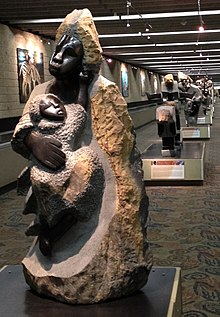
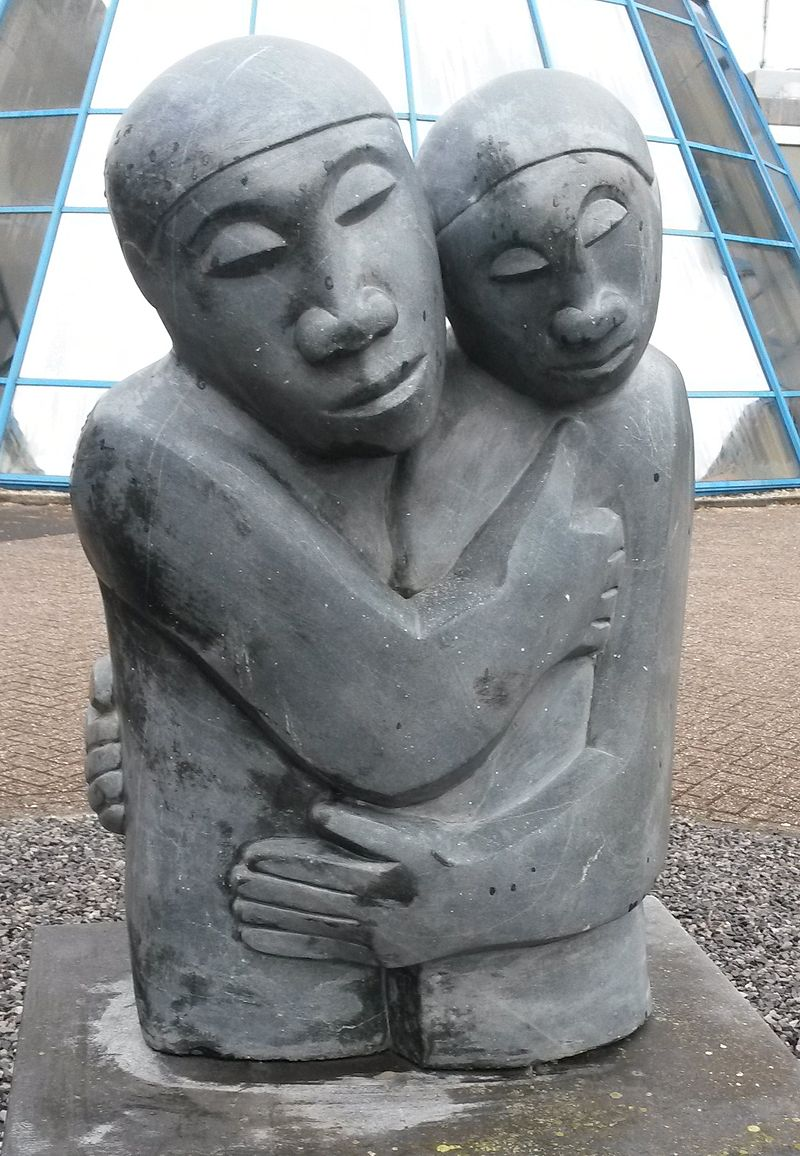
The art of sculpture has been practiced by the Shona since the 11th century. The first sculptures were based on ancient birds, which eventually became the national emblem of Zimbabwe.
Serpentine stones us used for the sculpture of Shona cult figures. This stone is sedimentary and comes in a variety of hardness’s and colours. Shona sculpturing is a means of expressing the relationship between the physical and the spiritual worlds and is used as a way of exploring legends, ancestry, beliefs and the human condition.
Since independence in 1980, Zimbabwe has become well known for its stone sculpture.
About Roberta Eaton Cheadle
Roberta Eaton Cheadle is a South African writer and poet specialising in historical, paranormal, and horror novels and short stories. She is an avid reader in these genres and her writing has been influenced by famous authors including Bram Stoker, Edgar Allan Poe, Amor Towles, Stephen Crane, Enrich Maria Remarque, George Orwell, Stephen King, and Colleen McCullough.
Roberta has short stories and poems in several anthologies and has 2 published novels, Through the Nethergate, a historical supernatural fantasy, and A Ghost and His Gold, a historical paranormal novel set in South Africa.
Roberta has 11 children’s books published under the name Robbie Cheadle.
Roberta was educated at the University of South Africa where she achieved a Bachelor of Accounting Science in 1996 and a Honours Bachelor of Accounting Science in 1997. She was admitted as a member of The South African Institute of Chartered Accountants in 2000.
Roberta has worked in corporate finance from 2001 until the present date and has written 7 publications relating to investing in Africa. She has won several awards over her 20-year career in the category of Transactional Support Services.
Find Roberta Eaton Cheadle
Blog: https://wordpress.com/view/robertawrites235681907.wordpress.com
Twitter: https://twitter.com/RobertaEaton17
Facebook: https://www.facebook.com/robertawrites
Amazon: https://www.amazon.com/Roberta-Eaton-Cheadle/e/B08RSNJQZ5
_____________________________________________________________________________________________
Want to be sure not to miss any of Robbie’s “Dark Origins” segments? Subscribe to Writing to be Read for e-mail notifications whenever new content is posted or follow WtbR on WordPress. If you found it interesting or entertaining, please share.
Share this:

Dark Origins – The Sotho-Tswana and the malevolent Tokoloshe #southernAfrica #myths&legends
Posted: October 26, 2022 Filed under: Dark Origins, Ghost Stories, Mythology and Legend | Tags: African Legend, Dark Origins, Roberta Eaton Cheadle, Writing to be Read 47 Comments
The Sotho-Tswana people of southern Africa comprise of the South Sotho (Basuto and Sotho), the West Sotho (Tswana) and the North Sotho (Pedi) people.
Most Sotho people were historically herders of cattle, goats and sheep and growers of grains and tobacco. The Sotho people were also recognised for their metal and leather work as well as their wood and ivory carving.
The Sotho people live largely in Lesotho and South Africa and as a combined group are the second largest ethnic group in South Africa.
Religious beliefs
The Sotho traditionally believe in Modimo who created the world and then withdrew to Heaven. He no longer concerns himself with life on earth. Modimo is not worshipped directly but though the ancestors.
The belief in ancestors is central to Sotho traditional religion. The ancestors are believed to have an influence over the daily lives of their direct descendants. Each family is under the direct guidance of its own descendants while the tribe, as a whole, is under the guidance of the ancestors of the chief.
Cultural differences
The Sotho-Tswana people have several linguistic and cultural characteristics that distinguish them from other Bantu speaking peoples of southern Africa.
- In Sotho-Tswana society each member has a totem which is usually an animal. Totems are inherited from the father and are passed down like surnames;
- A pre-emptive right for men to marry their maternal cousins;
- an architectural style characterized by a round hut with a conical thatch roof supported by wooden pillars on the outside;
- Cloaks made of skin;
- A preference for dense and close settlements; and
- A tradition for large-scale building in stone.
Tokoloshe myth
The Tokoloshe is an evil spirit that shaman create to to torment others as a form of punishment or revenge for a perceived slight. The Tokoloshe is dwarf-like, shriveled and hairy and, in some descriptions, has gouged-out eyes. When called, the Tokoloshe can be used for something as simple as scaring children, or can cause illness or even death to those it is tasked with tormenting.
The Tokoloshe is able to become invisible by drinking water or swallowing a stone.
The myth of the Tokoloshe is believed to have come about to explain why people mysteriously died while sleeping in their rondavels at night. Traditionally, people slept on grass mats on the floor encircling a wood fire during the winter. The fire depleted the oxygen levels in the huts and left behind noxious carbon monoxide with sank to the floor. A connection was eventually made that people who slept in elevated positions escaped the curse of the Tokoloshe. Some people still elevate their beds by placing bricks beneath the legs.

This is short reading from Myths and Legends of Southern Africa by Penny Miller called Catching the Tokoloshe:
About Roberta Eaton Cheadle
Roberta Eaton Cheadle is a South African writer and poet specialising in historical, paranormal, and horror novels and short stories. She is an avid reader in these genres and her writing has been influenced by famous authors including Bram Stoker, Edgar Allan Poe, Amor Towles, Stephen Crane, Enrich Maria Remarque, George Orwell, Stephen King, and Colleen McCullough.
Roberta has short stories and poems in several anthologies and has 2 published novels, Through the Nethergate, a historical supernatural fantasy, and A Ghost and His Gold, a historical paranormal novel set in South Africa.
Roberta has 11 children’s books published under the name Robbie Cheadle.
Roberta was educated at the University of South Africa where she achieved a Bachelor of Accounting Science in 1996 and a Honours Bachelor of Accounting Science in 1997. She was admitted as a member of The South African Institute of Chartered Accountants in 2000.
Roberta has worked in corporate finance from 2001 until the present date and has written 7 publications relating to investing in Africa. She has won several awards over her 20-year career in the category of Transactional Support Services.
Find Roberta Eaton Cheadle
Blog: https://wordpress.com/view/robertawrites235681907.wordpress.com
Twitter: https://twitter.com/RobertaEaton17
Facebook: https://www.facebook.com/robertawrites
Amazon: https://www.amazon.com/Roberta-Eaton-Cheadle/e/B08RSNJQZ5
_____________________________________________________________________________________________
Want to be sure not to miss any of Robbie’s “Dark Origins” segments? Subscribe to Writing to be Read for e-mail notifications whenever new content is posted or follow WtbR on WordPress. If you found it interesting or entertaining, please share.
Share this:

Dark Origins – African Myths and Legends: Castle of Good Hope in the Western Cape
Posted: September 28, 2022 Filed under: Dark Origins, Mythology and Legend | Tags: African Legend, Castle of Good Hope, Dark Origins, Roberta Eaton Cheadle, South African History, Writing to be Read 34 CommentsThe Castle of Good Hope in Cape Town, South Africa, was built in 1665 and became the scene of many bloody and tragic events. The Castle came about as the result of a ship wreck, a common occurrence at the southern most tip of Africa where the Atlantic and the Indian Oceans meet.
On the 25th of March 1647, a Dutch ship called De Nieuwe Haerlem ran aground near present day Milnerton, as it journeyed from Holland to the East Indies. The ship sank and a junior merchant named Leendert Janszen was requested to stay near the site of the wreck, with about 60 crew members, to look after the cargo while the rest of the ship wrecked men boarded other ships and continued to Holland.
While he waited to be relieved of his responsibilities and return home, Janszen and his men grew vegetables, caught fish and bartered fresh fish from the indigenous people in the area. When he returned to Holland, he was requested to compile a report recommending the suitability of the Cape to serve as a refreshment station for the Dutch East India Company’s ships travelling to India and back. Janszen was in favour of the idea and so was Jan Van Riebeeck, a member of the crew of the ship that picked up Janszen and his men.
In 1651, Van Riebeeck, accompanied by 79 men and 8 women, set sail for the Cape to establish a refreshment station. Van Riebeeck built the original clay and timber fort, called the Fort de Goede Hoop, which was replaced by a new fort made of stone between 1666 and 1679. The new building which still survives and is the oldest Colonial building in South Africa, has five bastions named after the main titles of William III of Orange-Nassau: Leerdam to the west, the Buuren, Katzenellenbogen, Nassau, and Oranje clockwise from it.

Legends of The Castle
The Castle was used as a prison and numerous prisoners were incarcerated for their sins (real or manufactured) in the ‘Donker Gat’ [Dark Hole]. This windowless dungeon was used as a torture chamber and it sometimes flooded during the winter, drowning any prisoners it contained.
The Castle is, of course, haunted and workers and visitors have reported hearing voices and footsteps in the Donker Gat and in The Castles narrow corridors. The bell in the bell tower sometimes rings of its own accord, despite having been bricked up centuries ago. It is believed that the ghost of a soldier who hung himself by the bell-rope rings the bell.
A vicious black dog is reported to haunt the castles grounds. It lunges and visitors and then disappears.
The most interesting of the ghosts, in my opinion, is that of Governor Pieter Gijsbert van Noodt. He had a reputation for mistreating his servants and the soldiers during his tenure. On the 23rd of April 1728, Governor van Noodt sentenced 7 men to hang for desertion. He was cursed by one of the men while he hung from the gallows and, that very same day, he was found dead in his office. Workers and visitors have seen him prowling the gloomy corridors of The Castle and heard him carousing and cursing in the upstairs rooms.
Do you know of any haunted castles? Share your story in the comments below.
An interesting historical connection
The Zulu King Cetshwayo also spent time as a prisoner at The Castle. This was after he was captured in the Ngome Forest after the defeat of the Zulu Nation by the British at Ulundi in 1879.
Subsequent to the defeat at Ulundi which dealt a death blow of the Zulu Kingdom, King Cetshwayo achieved the greatest victory against the British forces ever achieved by an indigenous army at the Battle of Isandlwana.

I have recently written two short stories about this battle, and this is a short extract from my story, written from the perspective of the Zulus, called “Hell Hath No Fury Like an Army Scorned.”
“22 January 1879
The narrow bottom of the gorge was filled with men, women, and boys. The grim, motionless ranks of over twenty thousand squatting warriors set the tone, ensuring that the several thousand uDibi boys, of which I was one, and the women conducted themselves soundlessly. The silence hung heavily, like early morning mist.
In accordance with the orders of King Cetshwayo, the Zulu army had marched the 62 miles from Ulundi at a slow pace. It was to “attack at dawn and eat up the red soldiers.”
Now, the men were resting and waiting for the ‘day of the dead moon’ to pass. Unless it was unavoidable, the army would not fight on this spiritual day.
“White men are coming!” The young herders appeared at the entrance to the ravine, driving the cattle before them. Their cries of warning echoed off the encircling rockfaces.
Looking up, I saw several white men on horseback starring down at our camp from the top of the overlooking ridge.
CRACK! CRACK! CRACK!
The observers fired down on us, before turning their animals and galloping away.
The dust from their horses’ hooves still hung in a thick cloud over the ridge when the great UNduna sprang into action.
“Prepare for battle, men,” Ntshingwayo kaMahole Khoza ordered. “We must attack now or lose the element of surprise.”
My belly roiled with fear.
The army’s not supposed to fight today. It’s bad khama, I thought.
“I hope the evil spirits in the air won’t bring bad luck,” my mother’s whispered words rang in my head as I set off with the other uDibi boys to prepare for battle.”
About Roberta Eaton Cheadle
Roberta Eaton Cheadle is a South African writer and poet specialising in historical, paranormal, and horror novels and short stories. She is an avid reader in these genres and her writing has been influenced by famous authors including Bram Stoker, Edgar Allan Poe, Amor Towles, Stephen Crane, Enrich Maria Remarque, George Orwell, Stephen King, and Colleen McCullough.
Roberta has short stories and poems in several anthologies and has 2 published novels, Through the Nethergate, a historical supernatural fantasy, and A Ghost and His Gold, a historical paranormal novel set in South Africa.
Roberta has 11 children’s books published under the name Robbie Cheadle.
Roberta was educated at the University of South Africa where she achieved a Bachelor of Accounting Science in 1996 and a Honours Bachelor of Accounting Science in 1997. She was admitted as a member of The South African Institute of Chartered Accountants in 2000.
Roberta has worked in corporate finance from 2001 until the present date and has written 7 publications relating to investing in Africa. She has won several awards over her 20-year career in the category of Transactional Support Services.
Find Roberta Eaton Cheadle
Blog: https://wordpress.com/view/robertawrites235681907.wordpress.com
Twitter: https://twitter.com/RobertaEaton17
Facebook: https://www.facebook.com/robertawrites
Amazon: https://www.amazon.com/Roberta-Eaton-Cheadle/e/B08RSNJQZ5
_____________________________________________________________________________________________
Want to be sure not to miss any of Robbie’s “Dark Origins” segments? Subscribe to Writing to be Read for e-mail notifications whenever new content is posted or follow WtbR on WordPress. If you found it interesting or entertaining, please share.
Share this:

Dark Origins, African Myths and Legends: Stories of the Western Cape – The Flying Dutchman #Ghoststories #FlyingDutchman #TableMountain
Posted: July 27, 2022 Filed under: Dark Origins, Ghost Stories, Mythology and Legend | Tags: African Legend, Dark Origins, Roberta Eaton Cheadle, Writing to be Read 42 CommentsIn the late Middle Ages, the spice trade from India and the so called Silk Road from China were of economic importance to Europe. After Constantinople fell to the Ottoman Empire in 1453 the European overland trade routes were disrupted and they needed to find a sea route to India and China.
Christopher Columbus attempted to find a sea route to India by travelling westwards. He discovered the Americas.
Portuguese explorer, Diogo Cão, explored the African coast south to present-day Namibia, and, in 1488, Portuguese explorer, Bartolomeu Dias, discovered the Cape of Good Hope. In 1498, Vasco da Gama headed an expedition which led to the Portuguese discovery of a sea route to India. This route around the Cape of Good Hope (current day Cape Town) came into use by the European East India Companies.
The Cape of Good Hope was also known as the Cape of Storms because of the treacherous winter storms that resulted in a total of 26 shipwrecks at Cape Point alone.
Legend has it that when Bartholomew Dias rounded this Cape of Storms and saw Table Mountain, he thought he was seeing a gigantic titan of the deep with it’s head veiled in white clouds. He imagined that the tides that foamed around the foot of the great mountain were the titan’s roar. The moment of Dias’ first sighting of this titan was described in the poem, Lusiadas, by Portuguese poet, Camoes. Camoes called the monster Titan Adamastor and depicted him as condemned to dwell imprisoned forever in the ‘furtherest confines of the south’ – the Cape of Storms. According to the poem, this sentence was passed by Jupiter when the Titans were vanquished following a war between these deities that lasted ten years. Adamastor and his brothers were imprisoned in various huge mountains around the world. Adamastor was filled with bitterness at his imprisonment and at losing the love of the queen of the sea, Thetis, and he swore eternal vengeance on all who should approach him and disturb his solitude. He shouted his rage and warnings of doom at Dias when he rounded the Cape.
In 1500, Dias returned to the Cape of Storms on his way to Sofala. As his fleet rounded the Cape it encountered a violent storm. Four of the ships, including the one captained by Dias, disappeared and Adamastor’s warning was fulfilled. From this unfortunate maritime disaster, the legend of the Flying Dutchman came into being.
The Flying Dutchman is a legendary ghost ship which is said to have never been able to make port and is doomed to sail the oceans forever.
According to Wikipedia: “According to the legend, if hailed by another ship, the crew of the Flying Dutchman was said to try to send messages to land, or to people long dead. Reported sightings in the 19th and 20th centuries claimed that the ship glowed with a ghostly light. In ocean lore, the sight of this phantom ship is a portent of doom.” You can read more here: https://en.wikipedia.org/wiki/Flying_Dutchman

This is my reading on YT of the story of The Flying Dutchman from Myths and Legends of Southern Africa by Penny Mills:


About Roberta Eaton Cheadle
Roberta Eaton Cheadle is a South African writer and poet specialising in historical, paranormal, and horror novels and short stories. She is an avid reader in these genres and her writing has been influenced by famous authors including Bram Stoker, Edgar Allan Poe, Amor Towles, Stephen Crane, Enrich Maria Remarque, George Orwell, Stephen King, and Colleen McCullough.
Roberta has short stories and poems in several anthologies and has two published novels:
* Through the Nethergate, a historical supernatural fantasy; and
* A Ghost and His Gold, a historical paranormal novel set in South Africa.
Roberta has ten children’s books published under the name Robbie Cheadle.
Roberta was educated at the University of South Africa where she achieved a Bachelor of Accounting Science in 1996 and a Honours Bachelor of Accounting Science in 1997. She was admitted as a member of The South African Institute of Chartered Accountants in 2000.
Roberta has worked in corporate finance from 2001 until the present date and has written seven publications relating to investing in Africa. She has won several awards over her 20-year career in the category of Transactional Support Services.
Find Roberta Eaton Cheadle
Blog: https://wordpress.com/view/robertawrites235681907.wordpress.com
Twitter: https://twitter.com/RobertaEaton17
Facebook: https://www.facebook.com/robertawrites
Amazon: https://www.amazon.com/Roberta-Eaton-Cheadle/e/B08RSNJQZ5
_____________________________________________________________________________________________
Want to be sure not to miss any of Robbie’s “Dark Origins” segments? Subscribe to Writing to be Read for e-mail notifications whenever new content is posted or follow WtbR on WordPress. If you found it interesting or entertaining, please share.




















