Nineteen gut-wrenching reports from the front lines of the War of the Worlds, as logged by Albert Einstein, Mark Twain, Theodore Roosevelt, H.P. Lovecraft, Winston Churchill, Jules Verne, and many of the other most famous writers of the time. The most popular and acclaimed science fiction writers of today relive the Martian invasion through the eyes of their famous predecessors.
My Review
I received War of the Worlds: Global Dispatches as a stretch goal reward from Kevin J. Anderson’s Bats in the Belfry Kickstarter campaign. This anthology offers a global take on the invasion begun in a novel by H.G. Wells and the 1938 radio broadcast that caused near panic when thought to be real. Compiled by Kevin J. Anderson, this anthology contains stories by various authors, portraying the invasion through the eyes of various historical figures. Authors with featured dispatches include Kevin J. Anderson, Dave Wolverton, Mike Resnick, David Brin, Gregory Benford, Walter Jon Williams, Connie Willis, Robert Silverberg, and others. MacLeod Andrews narrates these fictional tales from arounf the globe.
H.G. Wells nearly created a mass hysteria with his famous radio broadcast in 1938. By now, we’re all familiar with the infamous tale of a Martian invasion and foiled plan to take over the world. They came, smashing their cyclinders into the Earth at every vantage point they could find. We know what happened here in the U.S., where the original story was set, but what about the rest of the world?
Global Dispatches presents nineteen different perspectives on the Martian invasion from around the world, with more tripods and tentacles than you can count. Mike Resnik offers up the perspective of Theodore Roosevelt, Kevin J. Anderson speaks as Percival Lowell, a Chinese Empress speaks through Walter Jon Williams, Danial Marcus gives us the Picaso perspective, etc… How each of these historical figures might have percieved such an alien invasion is presented through nineteen talented authors.
To me, it seemed like all these stories were just more of the same, and I was easily bored as one tripod looks the same as the next. The fact that I was familiar with the oiginal story and knew how it ended, made it difficult for me to feel fear for any of the characters in these tales. Reactions are not surprising. All watch in fear as the invaders wreck havoc wherever they are until they all eventually come to a halt as our viruses and germs which their systems couldn’t fight off.
Although it may be interesting to explore this tale from different historical perspectives, how much variance can there be between the different areas of the globe? This one wasn’t for me. I give this story collection three quills.
_____________________________________________
Kaye Lynne Booth does honest book reviews on Writing to be Read in exchange for ARCs. Have a book you’d like reviewed? You can request a review here.
Prepare to be captivated by “Terror in the Shadows,” a gripping paranormal, mystery, suspense novel that plunges into a world of hidden secrets and uncertain destinies. Kelsey, a tenacious young reporter known for chasing stories, suddenly vanishes, paralleling the puzzling disappearance of her mother three months ago. As time ticks away, the race to find Kelsey becomes a desperate pursuit for Detective Silverton.
Haunted by the mysterious photo of Kelsey, Lucy, a mysterious man with an intriguing connection to the supernatural, feels an unwavering urge to aid in the search. With his enigmatic powers, he reveals the missing pieces as they rush into the shadows to unearth long-hidden truths.
In a realm where secrets and lies intertwine, ancient powers stir from their slumber, ready to shape the fate of all involved. Within this realm, where the boundaries between light and dark blur, Kelsey’s fate hangs in the balance.
As Detective Silverton uncovers the truth behind Kelsey and her mother’s disappearance, he walks a treacherous tightrope between saving the young woman and losing everyone he loves. The stakes have never been higher as the clock relentlessly counts down.
With each page turned, “Terror in the Shadows” will immerse you in a world where gripping suspense and unexpected twists reign supreme. As the story unfolds, you’ll be held enthralled from the very first page to the heart-stopping climax. Will the truth set Kelsey free, or will she become another headline shadowed by darkness?
Prepare yourself for an exhilarating journey that will keep you on the edge of your seat, yearning for answers until the last word. “Terror in the Shadows” will leave you craving more, long after you’ve turned the last page.”
My Review
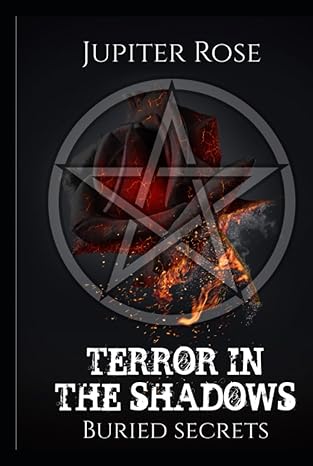
I requested a copy of this book from the author, Jupiter Rose, in exchange for an honest review, because the cover caught my eye. (Yes, I often consciously choose books by their covers.) The flaming pentagram with the figure of a man in it intrigued me and the title, Terror in the Shadows, promised a tale of dark fiction or horror to keep one awake at night. While this story has a lot of potential to be an excellent dark fantasy thriller, it failed to deliver on its promise.
It has an excellent premise, with witches and witch hunters, and even an appearance from the Dark Lord, himself, going by the name of Lucy. The mysterious disappearance of Kelsey’s mother starts things off, but we only get to learn about it through Kelsey’s thoughts before Kelsey herself disappears and it’s up to her two best friends Frank and Jennifer to find her before it’s too late. There are mysterious men stalking her, and a mysterious man who appears out of nowhere to help find her who has more information than he should, all building up to a climatic confrontation between the hunters and the hunted. I loved the tale enough to finish the book despite the problems that I found with it which included:
Massive head hopping. This story changes P.O.V. so often it’s difficult to know whose head your in – sometimes as often as every other paragraph.
Numerous typos, sometimes changing gender identifiers within a single sentence.
The characters were likeable enough, but they lacked depth, which could have easily been remedied by staying in P.O.V. so we could get more of their inner feelings and resonate with the reasons for their actions. There are too many extraordinary events that are reacted to by the characters as if they were every day occurrences, and no understanding as to why that would be.
Needed to be more realistic, and plot holes that need patched. The character of Frank, in particular, was hard to figure out. He is portrayed as a policeman, but his behavior is very un-cop-like. They all have massive time off of work to delve into mysteries, and after her abduction, they bring Kelsey home and report nothing to the police or the media, after her photo has been plastered all over to the public. Then her boss calls to demand her to come back to work before he has any way to know she’s no longer missing. These moments make the reader pause from the story to say, “What? When did that happen?” And there a many of them.
Too much telling and not enough showing. Told in past tense, it was too easy to fill us in later and just tell us something happened while we were out.
I never like to give less than positive reviews, but since I requested the book, I felt obligated to give an honest review as promised. The storyline was good enough to keep me reading despite the problems with craft and grammar. What makes it sad is that all of them could have been corrected by running it by a decent editor and giving it a good proofread. While I am a D.I.Y. author and publisher, I believe in putting out the best book possible, and I know how important it is to have a second, or even a third set of eyes go over the books that I publish. A book like this one just drives that message home.
A good storyline and characters, but hard to get through due to typos and problems with craft. I give Terror in the Shadows three quills.
______________________________
Kaye Lynne Booth does honest book reviews on Writing to be Read in exchange for ARCs. Have a book you’d like reviewed? You can request a review here.
She has been called many things: murderer, madwoman, monster. She will become only one thing: a god.
The Crone. A woman of legend, a creature of blood. A Valkyrie. She has tortured, murdered, maimed — performing all the rituals needed to call forth the power of Odin himself and summon Ragnarok. She just needs one more thing: the staff of Skara Brae, and her plans will be fulfilled.
But the staff is already in the hands of Morgan Sierra. An agent of ARKANE, the British agency tasked with protecting the world from supernatural crises, Morgan knows that giving up the staff could spell the end of all things.
Now the Crone has taken dozens of staff members, visitors — even children — hostage at the British Museum, demanding that Morgan turn over the staff. Willing to kill, possessor of powers beyond anything ARKANE has yet encountered, the Crone seems unstoppable.
Morgan’s only advantages are her wit, her skill… and Blake Daniel (of the best-selling Brooke and Daniel crime thriller series). Cursed with clairvoyance, Blake’s powers may be just enough to help Morgan turn back the Crone and stop the end of the world.
But the Crone has her own secrets. Able to weave illusions, to wield fear, even to call forth the dead Vikings of old. She is the most powerful adversary Morgan has ever faced. But will she be the last?
The Crone beckons. Ragnarok looms. And it is up to Morgan and Blake to deny them both.
I received a free digital copy of Day of the Vikings, by J.F. Penn as a bonus from her newsletter. I am not very familiar with Viking lore, but I do like supernatural thrillers, so I thought I would give it a go, and I’m glad that I did.
Morgan Sierra is an ARKANE agent out to protect the world from ancient evils of the world. When she visits the British museum to examine the Viking Relics housed there, a group of well organized neo-Vikings seize the museum in search of the ancient staff of skara brie, in a fiendish plot to recreate the brutal ritual sacrifice, the Blood Eagle. The Blood Eagle ritual opens the power for them to locate The Eye of Odin and use it to summon Ragnarok and destroy the earth and it’s up to Morgan to stop them.
Day of the Vikings is a fast paced supernatural thriller with a solid plot, although the characters were rather unremarkable. Although allowed small glimpses into the characters, I never got a real sense of who they were. There is Blake Daniels, who holds the potential to become a very interesting character, if allowed, but then it sounds like he has his own series. Even Morgan’s character seemed a bit flat compared to the bigger than life Valkyrie and her terror mongers and their onslaught.
Keeps you reading. I give Day of the Vikings four quills.
____________________________________________
About A Thousand Fiendish Angels
Three dark short stories inspired by Dante’s Inferno, linked by a book of human skin passed down through generations.
Sins of the Flesh:
When the mutilated corpse of a wealthy author is discovered, the police officer sent to investigate finds a curious diary amongst the occult objects at the scene.
Will he uncover the author’s secret at the ruined chapel, and is he willing to pay the price that it demands?
Sins of Treachery:
On the death of their grandfather, twin brothers Simon and Gestas are left a map covered in alchemical symbols that could lead them to great wealth and power.
But they find more than they expected in the frozen wastes of the Arctic north …
Sins of Violence:
In a brutal post-apocalyptic world, a young girl is about to be taken to The Minotaur for a Blessing that will end her innocence.
Can her sister gain access to the fortified city of Dis in time to stop the ritual and avenge her own lost youth?
Purchase link:
My Review of A Thousand Fiendish Angels
A Thousand Fiendish Angels, by J.F. Penn is a triology of short tales with the common theme of sins. Written for a challenge to write three interlinking stories, using the symbolism of Dante’s Inferno, these short tales explore the depths of the human soul. Sins of Flesh, Sins of Treachery, Sins of Violence; each tale explores a different aspect of sin and the human abilities to resist and weaknesses to give in, and the consequences. These stories are well thought out and well written, leaving me with much to ponder.
Thought provoking short fiction with a theme, but there should have been seven, instead of stopping at three. I give A Thousand Fiendish Angels five quills.
_____________________________________________
Kaye Lynne Booth does honest book reviews on Writing to be Read in exchange for ARCs. Have a book you’d like reviewed? You can request a review here.
🌪️ Unleash the Storm of Suspense and Rebellion! 🌪️
Prepare yourself for a heart-pounding journey into a world of deception, determination, and daring courage in Silent Blue, the electrifying sequel to JD Steiner’s Wreckleaf series. The saga continues as the tempestuous aftermath of the Season’s explosive finale thrusts Nerissa John into a whirlwind of danger and discovery, where silence is no longer an option.
💥 Survival Against All Odds 💥
Awakening to a brutal reality after the gripping conclusion of the Season, Nerissa John finds herself ensnared in a web of captivity. The battle she thought was won has merely transformed into an even more treacherous struggle for survival. Witness as she evolves from a vulnerable captive to a fierce warrior, confronting manipulation, torture, and despair head-on.
🔍 Unmasking Shadows Beneath the Surface 🔍
Beneath the gilded surface of the opulent Panacea lies a labyrinth of dark secrets. Nerissa refuses to be silenced, determined to expose the truth that threatens to shatter the illusions of society’s elite. As the stakes grow higher, she races against time to unveil the corruption hidden behind the luxurious façade—even if it means sacrificing herself in the process.
Silent Blue, by JD Steiner is the sequel to the unique fantasy thriller novel, Wreckleaf. (See my review of Wreckleaf here.) The tale in Book 2 picks up where the Book 1 left off. Steiner has created a villian in Colonel William Banks to rival the worst of them in diabolical cruelty, but Narrisa won’t give up her quest to stop him, even when it seems all is lost. And Steiner has created a world in which it seems no one cares to stop him.
Even after destroying his laboratory compound, Banks manages to gain the upper hand and forces Narrissa to surrender to save her people, the Dulhuphemale, a hybrid breed that isn’t supposed to exist. Narrissa is a strong willed female Dulhuphemale, determined to uncover the truth, even it it means her own death. She rebels even as she cooperates, knowing that he holds the fate of her family, her people, in his hands. Along the way, she finds unexpected allies and learns she’s not alone, but by joining forces their lives are endangered as well. Filled with twists, turns and surprises, this YA fantasy is one you won’t want to put down.
You’ll be rooting for Narrissa all the way, in this delightful fantasy. I give Silent Blue five quills.
Katie Connell is happily married and living the island life on St. Marcos. Just when she thinks life is settling down with her dream man and their gorgeous children, they learn a stranger died at the front gate of their jumbie house. After the victim’s well-connected employer hires Katie and Nick to investigate, they discover a horrifying secret about the place they call home.
Before Katie can process the information, her husband doesn’t return home one night. As if that weren’t enough, the uncooperative police chief counters Katie’s plea for help with a threat to seize their home out from under her. Can Katie track down her husband alone before his trail goes cold, or will powerful forces at work send her to an early grave?
I listened to Finding Harmony, by Pamela Fagan Hutchins, narrated by the author. Finding Harmony is the third book in Hutchins’ Katie Connell Caribean Mystery. (I listened to another audiobook by this author, Fighting for Anna. and you can read my review here.)Her accents and island dialects are wonderful, making it easy to tell who is speaking from the dreadlocked island native Rashidi to her New York proper father-in-law, Kurt. I must applaud her.
Katie Connell is a strong female protagonist who is very relatable. All she wants is a happy life in their haunted island estate with her wonderful husband and beautiful children, and she’s pleased to extend her family, including her in-laws in the household. She’s used to Estate Annalise communicating its needs in poltergisty ways and comforted in the knowledge that the house will protect her and her family.
What she isn’t used to is a man dying in her driveway, her husband’s plane disappearing with him in it, and the local law enforcement threatening her children with harm instead of helping her to locate her husband. With no one else to count on, and convinced that her husband is still alive somewhere, Katie sets out to find him with her father-in-law, but it looks like they’re on their own. The task grows even bigger as they learn that a Mexican drug cartel is involved and is determined to stop them from uncovering the truth, but Katie holds her own.
Throughly entertaining, from the first page to the last. I was rooting for Katie all the way, and couldn’t wait to find out what happened next. I give Finding Harmony five quills.
_________________________________________________
Kaye Lynne Booth does honest book reviews on Writing to be Read in exchange for ARCs. Have a book you’d like reviewed? You can request a review here.
In Ever So Gently, Lauren Scott shares her strong link to nature, taking the reader on a tranquil walk through a redwood grove. You’ll find an invitation to sit quietly on a patio, captivated by the simple beauty of a hummingbird. She’ll entice you to revel on the shore of a freshwater lake, mesmerized by its stunning beauty.
Scott shares how love has shaped her life. From that first delicious kiss to celebrating decades of marriage through a love that deepens over time. How her heart melted when she became a mom, then ached when her children started their adult lives across country. And how her adorable canine companions found their way into her heart.
Scott underscores how life presents mysteries we struggle to solve. We can’t help but ponder the deeper meaning of a simple vision. She prompts you to reminisce and reflect on your past, present, and future. Through the ups and downs. what matters most is to love and live ever so gently.
Purchase Link:
My Review
For me, poetry is best enjoyed in print, where I can hold the book in my hands and leaf through the pages, taking in each poem in small doses, and revisting those poems which have sparked further thought in my mind. So, I was tickled to receive a print copy of Ever So Gently: A Collection of Poetry from author Lauren Scott. In this delightful collection, we hear the author’s confident approach to life, feel her inner appreciation of the natural world arond her, and gain insight into value of connection with the people she loves and cares about.
Poetry is so personal, offering a window into the author’s soul, and EverSoGently does this beautifully. Many of the poems contained within resonated with me on a personal level. As a both nature and animal lover, the vivid images of the cautiously flitting hummingbird, a garden renewed, and beloved pets helped me to feel the moments described within each, as if witnessing or experiencing them.
Messages from the Sea
listen intently
inhale, exhale, feel the calm
your soul will tank you
secrets ride the waves
ebbing, flowing in turquoise
we are not privy
whispers in the surf
ambiguous to discern
relish in their song
_________________________
For Lauren Scott, nature is soothing, healing. I can relate with that as nature is also where I go for solace.
Chilling Embrace
I have been embraced
by the chilling presence
of lonliness.
I have wondered where the niche
designed for me exists in this world
in which my breaths originate.
I have waited for the glow
to emerge behind the shadows.
But when I take that soft step
into the splendor of nature,
listen to the treeswhisper their sagacity,
feel the flowing rivers move my pain,
creating vast distance between it and me,
I have been revived by the compassion
that nature offers so unselfishly.
_____________________________
But my very favorites were the poems in which she expressed her love of the written word, a love that I share, so can relate well with.
Books
Stories, poetry
Compelling, transporting, entertaining
Turning pages is exciting
Paperbacks
______________________________
But my true favorite is the poem that shares the title the book is so aptly named for. In it I see clearly the author’s positive, grounded attitude toward life. A wonderful outlook, to be sure.
Ever So Gently
Sometimes we get lost
in our thoughts…
losing focus of the stars
lighting up the night sky.
We tumble too deeply
into the frontal lobe,
allowing negative thoghts
to awaken, to throw a tantrum.
Remember, the breeze carries
burdens down river
and across oceans,
majestic trees sway with joy,
sheltering from shadows,
and the light shines even if only
a slight glimmer slips through.
Its glow will grow ever so gently
into a bright beacon of hope
rising with the golden sun
bringing clarity to our vision.
____________________________
With her uplifting poetic verse Lauren Scott basks in the earth’s beauty, cherishes loved ones, ponders life’s mysteries. Highly recommended. I give Ever So Gently five quills.
Her touch could save multitudes. But even with superhuman powers, will one high-school senior survive a battle with almighty deities?
Seventeen-year-old Hope wishes she could heal every wound. But after a heartbreaking ordeal during a hospital visit, her walk home turns into a fight for survival when she’s attacked by a two-tailed demon cat. And though she tries to shake off the incident, the sudden arrival of a pair of overly curious new classmates sets off the miracle-worker’s alarm bells.
Working hard to keep a low profile, she’s horrified when one of the handsome duo tricks her into mending his wounds after a schoolyard brawl. But when the two boys reveal their divine origins and her fated destiny, Hope plunges into a race to unlock her mystic potential before hellish forces turn them all to ashes.
As the veil between life and death unravels, can she claim her future and shield humanity?
The Healer is the action-packed first book in The Healer YA fantasy series. If you like empowered heroines, Asian gods, and romance that lasts through the ages, then you’ll love C. J. Anaya’s stunning coming-of-age tale.
Buy The Healer today to take a wild supernatural ride through history!
The Healer, by C.J. Anaya is a delightful Y.A. paranormal fantasy novel about Hope, a 17-year-old girl with healing abilities which is intricately woven into Japanese folklore. Hope would heal the entire world if she could, or would she?
On the one hand, Hope is an average teenaged girl, with average teenaged problems. But Hope has a side which she keeps secret, even from her best friend, Angie. Only she, her father, and the young leukemia patient whom she’s been trying to heal unsuccessfully and has built a friendship with. But when two students show up at her school, who seem to know of her healing abilities, things begin to get weird.
Hope finds herself strangely attracted to both Tie and Victor, although she doesn’t trust either. They are not your typical high school students. Only by discovering her true past, will Hope uncover the mysteries of her abilities and learn of the prophecy regarding her fate. When she does, she is faced with a decision. Is it really her destiny to save the world, or will Hope choose to follow her heart and chose her own fate?
A beautifully crafted coming of age story. I give The Healer five quills.
_________________________________________
Kaye Lynne Booth does honest book reviews on Writing to be Read in exchange for ARCs. Have a book you’d like reviewed? You can request a review here.
Imagine a community full of rainbow families where everyone comes together in the spirit of equality and fraternal love.
Shy pastor’s daughter Marceline and her new husband Jim Jones found Peoples Temple in the face of rampant hostility and aggression in 1950s segregated AmeriKKKa.
They give hope to the poor, the miserable, the alienated and disenfranchised of all colors, and build a commune in the jungle of British Guyana.
But this Eden too has its serpent. One who is also jealous of God, and where he goes, everyone must follow, even to the grave.
I was 14 years old in 1978, when the Reverend Jim Jones ordered the members of his congregation to drink a poisonous mixture and follow him to their deaths. He ordered them to give the same mixture to their children, and they blindly followed after him. I remember hearing about it on the news, and as a teenager, I couldn’t understand how something like this could happen. I wondered why a holy man would sacrifice his flock; why someone would follow aan like that, even when they had to realize what the results would be. What makes a man like Jones? Why would he lead those he claimed to love down a road to death? And why would all those people follow him blindly down that road? Were they deceived? Did they go willingly?
It bothered me, but time went on and other sensational events replaced it as the top story, and I didn’t think too much about it. Every once in awhile it would be mentioned on the news, such as when Waco was compared to Jonestown, and I’d think about it then, and it still bothered me. I still didn’t understand. And there was a part of me that needed to understand.
So when Annie Dawid asked me to review her novel about Jonestown, Paradise Undone, I jumped at the opportunity. Dawid has been working on this book since the event occured, so I knew it had been thoroughly researched, because I reviewed her collection of essays, Put Off My Sackcloth Essays, back in 2022. Her need to understand, to make some kind of sense of this horrendous event, was akin to my own, except hers drove her to act. And to make her offer even sweeter, she offered to send me a print copy. Yes please.
In Paradise Undone, by Annie Dawid, the author has written fictional accounts of a factual event. Her characters were all real people, although some of the names have been changed. Dawid offers up several perspectives of the event, sprinkled with actual quotes made by Jim Jones. She offers a glimpse into the minds of those involved, and their stories are told based on the facts that she uncovered through decades of research.
The plot for this story was written back in 1978, and the author doesn’t veer from known facts, all though she sets the records straight in some respects. Much of the tale she weaves is spun from actual Jonestown documents. Dawid presents the events through the eyes of those that were there or were members of The People’s Temple, and the aftereffects of this unthinkable event.
It is a sad and tragic tale, and there are no happy endings. We all know how the story ended. 918 people dead in the jungle of Guyana. But Dawid has offered us a glimpse into the humanity of the situation, enabling us to see that there were real people involved, people who loved and had hopes and dreams, although perhaps misguided.
I found myself relating to the character of Marceleine Jones, who hid behind behind a veil of feined ignorance as events spiraled out of control as a means of denying culpability. I think it is a common reaction of many women to ignore the traits in their partners which they otherwise could not tolerate in order to maintain the status quo and hold onto the lives that they’ve built for themselves. Marceleine ignored the intolerable until it had spiraled out of her control. The realization of what she’d allowed to happen and her inability to stop it was enough to motivate her drink the Fla-Vor-Aid.
I hope that through her research, Annie Dawid found the answers she was searching for. And me? Well, I’m still in awe that a catastrophic event such as this could occur. Although I’m not sure why it shocks me so much, when madmen are shooting up schools, theaters, and churches, or bombing public events so often that it has nearly become a part of normal life for many. But there is something even more disturbing about Jonestown for me, because Jim Jones gained the trust of his flock and then turned that trust against them. That, in itself, amplifies his crimes tenfold above the shooters of Columbine, the Aurora movie theater killer, the Boston Marathon bomber, with their random acts of violence.
Dawid has done her research and recreated this horrific event for us in stunning vividness. I give ParadiseUndone five quills.
_______________________________________________
Kaye Lynne Booth does honest book reviews on Writing to be Read in exchange for ARCs. Have a book you’d like reviewed? You can request a review here.
A whole new series from the world of the Echo Trilogy.
Three years ago, the gods abandoned us. We’ve been alone ever since.
Kat Dubois is immortal, and she’s retired. She’s long since hung up her sword and left assassinating immortals to someone else…anyone else. She’s now a hard drinking, sass-flinging Seattle tattoo artist with the innate ability to read people’s fortunes using her charmed deck of tarot cards. Her days of bloodshed are over, and she has nothing but time – an eternity, in fact – to hide from her past.
Until someone from her past shows up on her doorstep with news that her beloved older brother and mentor, Dominic, has gone missing. Kat may be the only person with the right skills – and access to the right magic – to track him down. She must confront her past if she’s to have any chance of finding and saving her brother. She must fight her demons. She must embrace the power within her.
I listened to the audiobook, Ink Witch, by Linsey Farleigh. Julia Whelan does a smashing job of narrating this urban fantasy novel about an immortal tattoo artist, Kate Dubois, whose magic is in her ink. Well, not really. The magic is inside of her, but when Kate inks up, watch out. Kate plays the reluctant heroine, coming out of retirement to find and save her brother, who has gone missing, along with others, both magical and mortal. But there’s more to it than at first meets the eye, and the danger ratchets up as Kate uncovers the pieces that will uncover an evil and diabolical plot to take unchallenged control of the magical realm. Her inky magic is just what’s called for to battle the forces of evil, but can she stop her adversaries before their plan can be carried out?
Original and entertaining to the utmost. A fun urban fantasy adventure. I give Ink Witch five quills.
Today, I am delighted to welcome prolific and masterful poet, Frank Prem, back to Treasuring Poetry. Frank writes incredibly relatable poetry that covers a wide variety of topics relevant to modern life including the bush fires that raged in Australia a few years ago, Devil in the Wind, working as a psychiatric nurse in an institution, The New Asylum: A Memoir of Psychiatry, as well as collections about war. I have read Frank’s beautiful and moving collections about World War 1, Sheep on the Somme, and the war in the Ukraine, From Volyn to Kherson: Interpretations of the War in Ukraine. Frank also writes romantic poetry, interpretive modern poetry and verse books for children. In the nicest way, nothing is safe from Frank’s poetic pen.
Tell us a bit about your war poetry collections
I developed an interest in the First World War many years ago and was particularly interested in the stories of Australian soldiers and their seeming need to volunteer to fight half a world away on the basis of loyalty to the British Empire and the Mother Country that was England, but also on the basis of a kind of chivalric principle. A moral fever that swept the nation.
I came across books that were written in the more modern historical style of telling stories to illustrate events – using the example of an identified soldier, from an identified town, with family details and background, then tracing their movements into the war and its various theatres and actions.
I found I was able to understand these individuals a little better and to empathise with them and their loved ones a little more than I otherwise could.
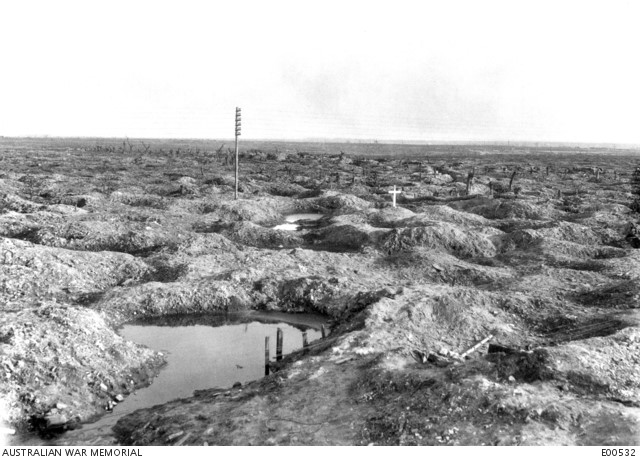
I also found myself interested in using images for my own poetic inspiration and that led me to the images held by Australia’s War Memorial. There was one image in particular that started me looking at pictures taken during the war. The image was of a white cross in a field of muddy and bloody craters. The cross marked the grave of Captain Ivor Margetts, much loved and respected by the men he led in battle. By the following day the cross and the grave were gone. They’d been blown to hell by the shelling.
I was tremendously moved by this, and as I searched for a version of that particular image online, I encountered many more, each with a poignant story to tell and many were destined to feature in my book Sheep On The Somme (https://www.amazon.com.au/Sheep-Somme-World-Picture-Poetry/dp/1925963144 ).
More recently, I found myself watching the sabre rattling over the Ukraine that was being perpetrated by Russia and was reminded very clearly of reading I’d done long ago about the beginnings of the Spanish Civil War back in the late 1930s and of the rise of Right-Wing Fascism in Europe during that same period of the 1930s. I was struck by the similarities and the ways in which those events and movements evolved into what became World War II. It was – and remains – quite concerning to see these way events continue to unfold.
As the news and pictures of Russia’s military build-up on the Ukraine border kept emerging, along with the seeming inability on the part of Ukraine to do anything to stop it, I watched events more and more closely.
When Ukraine’s borders were finally breached, there were more photographers and journalists on the spot than has ever been the case previously in a conflict. We were flooded with formal and informal news and masses of un-curated and un-censored images.
During the first nine weeks of the conflict I became engrossed in reading the news and studying the images. And – of course – I began to write.
I produced 3 volumes of poetry interpreting the Ukraine war – two of them will not be released because they used images taken by journalists in the field and I don’t have rights to use those images. The volumes (Bullets Into The Starichi Sky and I Call The Hole The War) sit on my private bookshelf here in my writing studio.
The third volume – From Volyn to Kherson – is a collection of poems in which I have attempted to use such talent for empathy as I possess to interpret the news stories I was reading in a way that enabled any of my own readers to get a sense of what the invasion and the conflict was like as an experience for the everyday people of Ukraine. What if it happened here, in my town? What would it be like to have seventy kilometres of armoured assault vehicles coming to surround and destroy my home town? Or yours?
I like readers to know where the inspiration for these writings has come from and so each individual poem is referenced and has a link to the online sources that I relied on in my writing. After nine weeks I was a little burnt out and had to stop writing, but I follow events over there diligently and worry about what I see happening in the wider world and which still so resembles the events of the 1930s.
What draws you to writing about wars?
I’ve encroached a little on this question with my answer above, I think, but I’ll try to elaborate a little more.
In my professional life I was a psychiatric nurse. Back (so many years ago) when I was a student nurse one of the areas of interaction with patients that was taught and stressed was empathy.
As I understood it, empathy was the ability to walk in another person’s shoes. To see things from the perspective of the other person, but not to necessarily sympathise, or accept, merely to understand in order to be able to reflect that understanding back to the patient.
The patients that came my way in psychiatry were invariably involved in and generally overwhelmed by personal chaos. This might have been due to illness, or it might have been due their life being in a mess they could not resolve. They might have been psychotic, depressed, suicidal, or experiencing any number of out-of-control situations.
That tool of empathy has stayed with me, I think, and now reveals itself in my writing. The experience of chaos by a person finds itself being reflected back in my writings.
I think it is in this way that I am attracted to attempt to unravel what a person may be feeling or experiencing in a war zone. Similarly, I find myself writing a lot about the human toll of natural disasters that come close to me or to my little place in the world.
I have always tried to develop my understanding of these things by writing my way through them. To help myself and any subsequent reader to understand by feeling what is happening through my words.
Tell us a bit about how you use photographs and newspaper articles to assist with writing your war poems
With newspaper articles, I try to extract the meat of the story. That part of the article that is the actual purpose – the reason that it is a story in the first place.
Often enough, there is human interest in the genesis of the article. I then allow the information to assemble itself in a way that I can present it to a reader. For example
What is grandmother doing in the kitchen? Is she cooking Sunday lunch? No. She is cooking Molotov cocktails for others to throw at invading vehicles. And . . . wouldn’t you or I, each do the same if this was happening in our back yard?
With an image, I anticipate that it will have a story to tell. I try not to impose myself and my own current thoughts or fears or desires on it, but to allow the story to be whatever comes.
For example, a golden paper daisy with a bright glow might well have a story to tell that reflects light, and the sun. But equally, it might be a harbinger – a prophet of some kind that draws attention to itself in order to be heard. I don’t know in advance what the story will be, but I try to keep myself out of its road and not to shape the narrative too much.
I have come to know, also, that each image will have a different story to tell to each viewer, so to the extent that I can, I try to facilitate a receptive space for that to occur through what I end up writing. I’ll give an example of how I find a story in a tiny image taken during wartime over a hundred years ago.
The image above is the view from inside a German army dugout in World War I – around 1916. It is from within this space that a small group of individuals fought their war.
When I look at this image, I notice a few things and I feel a few things. In no particular order:
From pitch darkness up into light. A very small doorway.
Claustrophobia.
Fear.
The smell of habitation. Bodily odours – where would the latrine have been?
The knowledge of death and destruction and battle rage just outside
Movement of the ground as shells fall outside. Perhaps close.
Maybe the sound of enemy troops approaching the bunker to destroy it.
What of family. Has this soldier (have I) written them a note to say goodbye?
I don’t have a personal experience of war, but I know what fear feels like. I know claustrophobia and the smells of my own body . . . and so on. I can draw on these to understand a little of what the soldier in the dugout might have felt.
The willingness to engage with these elements that come from the image allow me to engage my empathy and to allow a story – which the image itself contains – to be told.
What is your own favourite war poem?
I think that my personal favourite of my own written war poems is one that hasn’t featured in a book to date, but was written to be read for a spoken-word poetry slam 2 years ago. The criteria were that it needed to be 2 minutes reading time or less and to include the term ‘full circle’.
The poem told stories in word pictures and referenced images, without actually including them, if that makes sense. I have since recorded it for my YouTube channel and included there the images that the poem references, spanning both World War I and the current Ukraine war.
I can’t honestly say I have a favourite war poet, but I have read with a deep sense of connection stories such as All Quiet on the Western Front by Erich Maria Remarque with its empathy for the soldiers of the day. Here is the Wikipedia link: https://en.wikipedia.org/wiki/All_Quiet_on_the_Western_Front .
What is your favourite war poem?
I’m aware of many of the great poet writers of the First World War, such as Owen, Sassoon, Brook and Graves, among others, but for my response to this question I have to refer you and readers to a song that I first encountered back when I was a teenager (50 years, who would ever have thought . . .).
The song was performed by a wonderful English Folk ensemble called Steeleye Span, and the song is called Fighting For Strangers. Here is the YouTube link: https://www.youtube.com/watch?v=JI3vRaTg0tI
YouTube Links
In addition to the links given above, I would welcome viewers, new followers (if any so desire) comments and feedback on my YouTube Channel, where there a re a number of video readings from my war poetry collections (and natural disasters and psychiatry and others). Click on the link below to be taken along to the Playlists available on the Channel.
This book is a ‘hard’ read. It exposes the realities of war; the filth, the noise, the fear, and the destruction and death. No civilian wants war, it is something that is imposed on individuals because of factors outside of the man on the street’s control. Civilians, however, bear the brunt of war as the women lose their husbands and sons. The entire population generally loses its collectively homes, food stability, economic stability, access to sanitation, food, and healthcare. Many countries and populations never recover from wars and their populations become unwanted refugees. The sympathy of the unaffected world shrinks rapidly when wars and the resultant refugees impacts on their economies, making the slices of the economic pie for their own populations smaller.
The war in Ukraine hit me especially hard when I read about the Russian soldiers who froze to death in their tanks. Although the Russians were the instigators and aggressors in this war, many of those young men are the same ages as my own two sons, and their dreadful fate couldn’t fail to stir compassion. Young men frequently have a glamorous and inaccurate picture of war when they enlist or are called up. The realities of war quickly displace these notions but it is already too late.
A few stirring stanzas from this collection of freestyle poems:
From fallen (quietly weeping) “here it is safe
safe enough to shed a tear”
From the metro (is also home) “let the fear fall away for a moment while the anthem sounds”
From vasylkiv (is fighting on) This footnote made me shiver: “People used to think about new car or iphone, but nobody was thinking about peace. Now, we are dreaming of it. When old people used to wish each other peace, we didn’t understand what they meant. Now we do.”
and finally, from in okhtyrka (the tsentral’ne) “they are preparing the cemetery now in okhtyrka
adriy and his platoon are gone
vacuum bombed
air taken out of them
and then they died”
This is a beautiful and emotion book of poems that will change the way you view war forever.
Award-winning, bestselling author, Robbie Cheadle, has published fourteen children’s books and two poetry books. Her work also features in several poetry and short story anthologies.
Robbie also has two novels published under the name of Roberta Eaton Cheadle and has horror, paranormal, and fantasy short stories featured in several anthologies under this name.
The eleven Sir Chocolate children’s picture books, co-authored by Robbie and Michael Cheadle, are written in sweet, short rhymes which are easy for young children to follow and are illustrated with pictures of delicious cakes and cake decorations. Each book also includes simple recipes or biscuit art directions which children can make under adult supervision.
Robbie and Michael Cheadle have recently launched a new series of children’s books called Southern African Safari Adventures. The first book, Neema the Misfit Giraffe is now available from Amazon.