Review in Practice – The Magic Bakery
Posted: December 6, 2021 Filed under: Book Review, Books, Nonfiction, Review, Writing, Writing Reference | Tags: Book Review, Copyright, Copyright laws, Copyright permissions, Dean Wesley Smith, Publishing, The Magic Bakery, Writing, Writing to be Read 2 Comments
Authors make their livings off of the intellectual property they’ve created, but while they pay lip service to copyright, it’s mostly in the context of protecting their work from plagiarism, and many don’t realize what copyright is, how it is acquired or what it truly means. The Magic Bakery, by Dean Wesley Smith is a must read for anyone who is serious about making a career out of writing. Smith draws from decades of experience in the publishing industry to explain what copyright is and how it can be used to leverage intellectual property (IP) and maximize profits from your creative endeavors.
Smith uses the clever metaphor of a magic bakery, where the pies replenish themselves no matter how many pieces you sell, to emphasize the idea of writing as a business and simplify the explanation of how copyright works, so authors may place proper value on their work. As a seasoned author, who has published both traditionally and independently, Dean Wesley Smith offers a fresh and sensible outlook on the publishing industry and the business of writing.
The Magic Bakery offers a sensible approach to managing intellectual property and copyright for authors. Serious authors will benefit from consuming the delectable ingredients that make up this pie, so pull up a chair and savor a piece. I give it five quills.

Buy Link: https://www.amazon.com/gp/product/B074D7K3ZD
_____________________________________________________________________________________________________
You can be sure not to miss any of Writing to be Read’s great content by subscribing to e-mail or following on WordPress. If you found this content helpful or entertaining, please share.
Share this:

Review: Collateral Damage
Posted: November 22, 2021 Filed under: Book Review, Books, Nonfiction, Review | Tags: Book Review, Collateral Damage, Dorothy Kilgallen, J.F.K., John F. Kennedy assassination, Marilyn Monroe, Mark Shaw, Nonfiction, Writing to be Read 4 Comments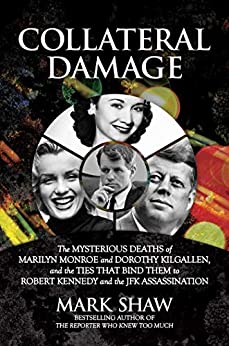
I grew up believing that John F. Kennedy was an upstanding and respectable man, a positive role model for America’s youth. He was assassinated before I was born, but I was the unseen listener to the conversations of the adults in my life, which often made no sense to me at the time. Between the opinions of my mother and my grandparents, and the way in which J.F.K. has always been portrayed in the media, I always thought that the Kennedys were part of the good guys. But after reading Collateral Damage, by Mark Shaw, my view of American history has changed. The evidence laid out by Shaw in this book, laid out through diligent research, paints a picture of a different story.
Not that John F. Kennedy didn’t do good in the office of President of the United States of America. Shaw makes no such claim, but he does tell a very different tale about J.F.K. the man and the rest of the Kennedy family. John F. Kennedy isn’t the main villain in this story, but one of the victims, an inadvertent casualty of one man’s drive for power. His investigative reporting skills have long been hard at work t bring this true life tale into the public eye. It’s a tale of connections and conspiracies, a true life drama of power and greed and the story of those who inadvertently got in the way.
Shaw presents compelling evidence to connect the assassination of John F. Kennedy, with the death of actress Marilyn Monroe and that of journalist and media icon Dorothy Kilgallen in an attempt to give them all the justice they were denied at the time of their deaths and ever after. His research is well-documented and much of the evidence is available for visual examination on his site for those who want to decide for themselves. The connections which Shaw reveals have always been there had anyone cared to seek out the facts, but no one did until Mark Shaw delved into the facts, presenting them a book at a time with each volume presenting more pieces of a puzzle, filling in the whole story gradually, in stages.
The edges of the puzzle were presented in The Reporter Who Knew Too Much, giving us the mysterious facts surrounding Dorothy Kilgallen’s life and death and some of the inside pieces connecting it with the assassination of President John F. Kennedy. In Denial of Justice, Shaw presents more of the facts tying Kilgallen and J.F.K. together, filling in more inner areas of the puzzle, but Collateral Damage presents new evidence delving into the death of Marilyn Monroe, filling in the gaps to complete the picture.
Collateral Damage is a well researched investigation into events which occurred in an era of mob rule and power politics, where corruption ran deep, deeper than I had ever realized. Shaw reveals a tale of intrigue, deceit and murder as he delves into three of the greatest mysteries in history. I give it five quills.
Like this post? Let me know in the comments. You can be sure not to miss any of Writing to be Read’s great content by subscribing to e-mail or following on WordPress. If you found this content helpful or entertaining, please share.
Share this:

Treasuring Poetry – Meet poet Lynda McKinney Lambert and a review
Posted: October 16, 2021 Filed under: Book Review, Interview, Poetry, Treasuring Poetry, Writing | Tags: Book Review, Interview, Lynda McKinney Lambert, Poet Interview, Poetry, Songs for the Pilgrimage, Treasuring Poetry, Writing to be Read 46 Comments
Today, I am delighted to welcome artist and poet, Lynda McKinney Lambert, to Treasuring Poetry with her thoughts about poems and poetry,
Which of your own poems is your favorite?
I chose a poem on page 127 of my latest publication, Songs for the Pilgrimage, DLD Books, 2021. “Talisman,” is located in Part IV: Landmarks and Landscapes.
“Talisman” (This is a free-form poem)
by
Lynda McKinney Lambert
(written April 30, 2016)
Visualize a talisman-
precious stones and crystals
woven in bold patterns
plenty of Japanese glass seed beads
tiny drops of perfect symmetry.
I select flawless beads
stab them onto steel needles
hundreds of stitches.
thrust them one at a time
upwards into the heavens
endlessly.
I plunge my thin needle
deep through layers of stiff cloth
make my stitches sure
hold tight.
I’m a warrior woman
thumping my spirit-drum
made of dappled starlight.
I measure timeless days
counting beads in
a mystical circle
held together
with a bronze toggle clasp.
A Talisman brings
protection from evil
healing for weary spirits
nourishment for aching bodies
courage for new directions
on a pilgrimage
over treacherous pathways
guides my dimmed eyes
and nervous steps.
Black onyx ovals
are like a vintage fan
unfurled with a flourish
or a sacred victory flag
prepared to cast an invocation.
my fingers stroke cold stones
glossy-smooth, polished, faceted.
gifts for a King.
Copyright, August 2, 2020. All rights reserved.
What inspired you to write this particular poem?
My Process:
My poems are created in the same way I create a work of art.
First, the studio must be in pristine condition. I go through this cleansing activity of putting everything in its proper place, cleaning the surface of my working table, and laying out my materials.
Second, I begin to put a few things down on the paper. I may b begin with just a word that has been flashing through my mind for some time. I may begin with an idea or a color, or an object that I want to describe.
I start making a list of all of those things. I also refer to the thesaurus and the dictionary to expand my possibilities and to give me insight into the deeper meanings of words I am working with. I continue laying this all out on my list until I have quite a lot of information from which to begin the work. I like to work with at least forty words, phrases, or ideas initially.
Third, I begin selecting from my list. As I select a word, I cross it off my list after I have put it down on the page where I am building the poem.
Fourth, I continue this selection process from my pool of ideas. As I am working back and forth from the brainstorming sheet to the poetry sheet – I am deleting, moving, or adding in my process.
Since I am a person who likes to begin with chaos, I continue sifting and sorting and I am actually bringing order to the chaos.
Fifth, After I’ve laid down a considerable amount of line, I begin the process of deleting and paring it all down to the essential essence. I want my poem to become sleek and spare. I remove every article that I can in this process. I do not want any extra words. I consider them a distraction that hides the core of the poem. I am ruthless at this time in the process.
Sixth, after I’ve taken away as much as I can and exposed the essence of what I am describing, I call it finished. I will read it over many times during the process to get a feel for how it will sound when spoken. At this point it passes from an idea to a living sound. The poem is an object that stands alone. It has taken on meaning in ways I could not have imagined when I began the building process. I am satisfied.
I chose this poem for it exemplifies the parallel between writing and making mixed-media fiber art
The focus of my attention for this poem is on the making of the object that will become a talisman.
When I am writing, I am conscious of being a weaver as I move my words, sentences, and punctuation around the page. When I am making art, I am conscious of how everything fits together as I plunge my thin, sharp needle through tiny faceted beads, Czech and Swarovski crystals, circle around gemstones and capturing found objects. My needle is my paintbrush, forming the shapes and values that take me on a journey.
When I begin to write or make art, I prepare for a journey. I carefully lay out all of the things I will need for my travels. I expect to reach a destination at the time when I begin to write.


About Lynda McKinney Lambert
Lynda’s interdisciplinary interests led her to a career in teaching across disciplines in fine art and English literature. She retired from her position as a professor of fine arts and humanities at Geneva College in 2008. Retirement from her international teaching schedule opened the door for her to pursue her love of writing full-time.
Lynda works from her rural western Pennsylvania home in The Village of Wurtemburg. Her five published books are available on Amazon, Smashwords, and other retail book sellers. Lynda’s newest book of poetry and personal non-fiction essays was published in April 2021 – Songs for the Pilgrimage.
Her second chapbook, Primavera: When Spring Break is Over, is ready for publication.
She is creating a collection of poems for a chapbook for the summer season and one for the autumn season in the year ahead.
Lynda’s poems appear internationally in journals and anthologies. She lives with her husband Bob and they celebrated their 60th anniversary on April 14, 2021.
Lynda earned a BFA and MFA in Painting. She also received the MA in English degree with her focus on poetry.

Purchase Lynda’s books:
My e-books on Smashwords.com
https://www.smashwords.com/books/view/1080756
Authors Page at DLD Books.
http://www.dldbooks.com/lyndalambert
Learn more about Lynda
Smorgasborg Café and Bookstore – Meet the Authors_Review
Robbie Cheadle Book Review of Star Signs: New and Selected Poems.https://www.lyndalambert.com/robbie-cheadle-review-of-star-signs/
Ten Things You May Not Know About Me.
This interview is featured on Marcia Meara’s Blog, The Write Stuff. September 3, 2021.#TenThingsYouMayNotKnow – About Lynda Lambert | The Write Stuff (marciamearawrites.com)
Showcase: Songs for the Pilgrimage.
Published by Charles Portolano, editor of The Avocet: A Journal of Nature Poetry.https://www.lyndalambert.com/showcase/
NFReads – An Interview with Lynda McKinney Lambert.https://www.nfreads.com/interview-with-author-lynda-mckinney-lambert/
Poem, Photo, and Explication of the work.https://www.lyndalambert.com/autumn-gifts-poem/
My review of Songs for the Pilgrimage
![Songs for the Pilgrimage by [Lynda Lambert]](https://m.media-amazon.com/images/I/51fS-MNn1RS.jpg)
What Amazon says
From the Prologue and Epilogue of Songs for the Pilgrimage
The word pilgrimage refers to a religious journey. Individuals commit to traveling to reach a predetermined destination, such as a shrine or holy place. The excursion is a trek from one location to another. Pilgrimage has been an abiding theme in my writing for several decades.
My first book, Concerti: Psalms for the Pilgrimage (Kota Press, 2002, now out of print), was inspired by my annual journeys to Salzburg, Austria, where I taught a month–long drawing and writing course. I revised and expanded the previous collection of stories, poems, historical notes, and journal entries for this new book. Songs for the Pilgrimage features writings, drawings, and photographs I created over four decades.
I conclude with an artist’s prayer:
My studio is yours, Lord. Be my welcome guest today. Your goodness and unfailing kindness have been with me all my life. I have tried to make your glory visible in the works of art I have created. Someday I will close the door of my studio for the final time, but I will not be alone. Together, we will go to your home, where we will continue to collaborate on glorious projects throughout eternity. Amen.
May I Serve You?
Here are the stacks of paintings
for you to look at tonight.
I carefully brought them out
of storage closets
arranged them here
in the kitchen—
where my children used to play
games around a square oak table.
Once, food to nourish the body
was prepared here, by my hands.
Tonight, there is an
abundance of food
for your soul.
Come into my kitchen and
taste the world,
prepared by my hands.
© 1997
My review
Songs for the Pilgrimage is an unusual and interesting collection of poems, interspersed with journal entries from the poets annual journeys to Austria where she taught a month long drawing and writing course. The journal entries provide a lot of insight into the poet’s life and experiences during these times and dovetail with the poems which expand on these experiences by vividly depicting the sights, smells, and thoughts of the poet. The poems are mainly freestyle and cover a full spectrum of observations including interpretations of different artworks, songs, and music.
My favourite poem in this collection and the one that demonstrates the vividness of the imagery presented in these poems is called How Vivaldi Learned to Dance:
“Antonio Vivaldi heard a new beat
began to dance inside his soul
Concerto Grosso came to visit him
D-Major opened his eyes at dawn
every set of notes in the strong
foot-stomping beginning
gave his soul a new pair of wings
horns, oboes, 2 violins, Vivaldi cast the spell
imagination approached the heavenly realm
just as his nimble feet urged him to dance on clouds
kicking up his heels, high off the pungent streets
lively staccato andante reminded
Medieval Venetians to stroll on sunny afternoons
narrow passageways, the scent of Italian lilies floats
over cobblestone paths Vivaldi’s thoughts
pulsed cautiously into the Adagio duet
quiet staccato notes changed his rhythm
roaming violin twins began a centripetal dance
slow and steady – up, down, up, down, up
the long final chord ended his journey on
urban bridges of arched stone
violin solos of his butterfly visions soared
where playful frantic allegro takes flight
X is the unknow factor when the master musician
yearns for one more summer day in Venice
Zeitgeist. His presence spanned the Baroque ages.”
I chose to share this particular poem because I feel it represents everything I enjoyed about this book. The vivid imagery is demonstrated in may places with the depictions incorporating the senses of sight, sound, movement/touch, and smell, the references to the music show the poet’s appreciation of Vivaldi, the Italian Baroque composer, virtuoso violinist, teacher, impresario, and Roman Catholic priest and her love of all of these things, including her religion. There is a strong theme of faith and religious respect running through this book. There is also a haunting attraction for Venice and all it offers which ties in with the overarching concept of a pilgrimage.
An intriguing and enjoyable book of prose and poetry.
About Robbie Cheadle

Robbie Cheadle is a South African children’s author and poet with 9 children’s books and 2 poetry books.
The 7 Sir Chocolate children’s picture books, co-authored by Robbie and Michael Cheadle, are written in sweet, short rhymes which are easy for young children to follow and are illustrated with pictures of delicious cakes and cake decorations. Each book also includes simple recipes or biscuit art directions which children can make under adult supervision.
Robbie has also published 2 books for older children which incorporate recipes that are relevant to the storylines.
Robbie has 2 adult novels in the paranormal historical and supernatural fantasy genres published under the name Roberta Eaton Cheadle. She also has short stories in the horror and paranormal genre and poems included in several anthologies.
Robbie writes a monthly series for https://writingtoberead.com called Growing Bookworms. This series discusses different topics relating to the benefits of reading to children.
Robbie has a blog, https://robbiesinspiration.wordpress.com/ where she shares book reviews, recipes, author interviews, and poetry.
Find Robbie Cheadle
Blog: https://www.robbiecheadle.co.za/
Blog: robbiesinspiration.wordpress.com
Twitter: BakeandWrite
Instagram: Robbie Cheadle – Instagram
Facebook: Sir Chocolate Books
______________________________________________________________________________________________
Want to be sure not to miss any of Robbie’s “Growing Bookworms” segments? Subscribe to Writing to be Read for e-mail notifications whenever new content is posted or follow WtbR on WordPress. If you found it interesting or entertaining, please share.
Share this:

Day 5 of the WordCrafter “Where Spirits Linger” Book Blog Tour
Posted: September 24, 2021 Filed under: book marketing, Book Promotion, Book Review, Books, Giveaways, Guest Post, Paranormal, WordCrafter Book Blog Tours | Tags: Book Review, Christa Planko, Enid Holden, Kaye Lynne Booth, Paranormal, Roberta Eaton Cheadle, S.L. Kretschmer, Short Fiction, Short Stories, Stevie Turner, Where Spirits Linger, WordCrafter Book Blog Tours Leave a comment
For Day 5 of the WordCrafter Where Spirits Linger Book Blog Tour brings us a guest post by contributing author, Stevie Turner about her story, “David’s Revenge”, on Zigler’s News and a review by Victoria Zigler. Please join us to learn more about this author and her story. Leave a comment and earn a chance to win a free digital copy of Where Spirits Linger.
https://ziglernews.blogspot.com/2021/09/where-spirits-linger-wordcrafter-book.html
_____________________________________________________________________________________________
Book your WordCrafter Book Blog Tour today!
Share this:

Treasuring Poetry – Meet poet and author Harmony Kent and my review
Posted: September 18, 2021 Filed under: Book Review, Books, Interview, Poetry, Treasuring Poetry | Tags: Author Interview, Book Review, Poetry, Poetry Collection, Robbie Cheadle, Writing to be Read 102 CommentsToday, I am delighted to feature poet and author Harmony Kent as my guest for Treasuring Poetry. I have read one of Harmony’s fictional books and her non-fiction book, Creative Solutions for the Modern Writer: Inspirational Tools to Fire Your Imagination, and they are both excellent. I have read and reviewed her poetry book, Slices of Soul: A Collection of Contemporary Poetry.
Welcome Harmony!
Which of your own poems is your favourite?
VOYAGE
Into the unknown we go
riding the ocean breeze
tacking this way and that
not too concerned with the far horizon
At peace, keeping an eye on the waves
that toss us about now and then
sailing through bright day
and deep dark night
It matters not
what tempest may come
we will weather the storms together
while we wend our way
We’ve lain our course
taken our soundings
and with love at the helm
we’ll keep a steady pace
Call it what you will
scow, skiff, sloop, hulk, schooner, bucket
so long as we caulk the boards and set the stays
we shall not founder
There’s no glory like it
in the heavens or on the Earth
than sailing free into the fire
of the sun as it sets into the glistening sea

What inspired you to write this particular poem?
When I met the love of my life, right away, we both went through some tough personal times. Those hardships brought us closer, and we’ve now been married for two years.
Which genre of poetry do you enjoy writing the most and why?
Some form of Haiku, because it forces me write with brevity and choose my words with utmost care.
Which genre of poetry do you enjoy reading the most?
As with my writing, my reading is eclectic. I enjoy a broad range of styles and genres.
What is your favourite poem?
Auguries of Innocence by William Blake
To see a World in a Grain of Sand
And a Heaven in a Wild Flower
Hold Infinity in the palm of your hand
And Eternity in an hour
A Robin Red breast in a Cage
Puts all Heaven in a Rage
A Dove house filled with Doves & Pigeons
Shudders Hell through all its regions
A dog starved at his Masters Gate
Predicts the ruin of the State
A Horse misused upon the Road
Calls to Heaven for Human blood
Each outcry of the hunted Hare
A fibre from the Brain does tear
A Skylark wounded in the wing
A Cherubim does cease to sing
The Game Cock clipped & armed for fight
Does the Rising Sun affright
Every Wolfs & Lions howl
Raises from Hell a Human Soul
The wild deer, wandering here & there
Keeps the Human Soul from Care
The Lamb misused breeds Public Strife
And yet forgives the Butchers knife
The Bat that flits at close of Eve
Has left the Brain that wont Believe
The Owl that calls upon the Night
Speaks the Unbelievers fright
He who shall hurt the little Wren
Shall never be beloved by Men
He who the Ox to wrath has moved
Shall never be by Woman loved
The wanton Boy that kills the Fly
Shall feel the Spiders enmity
He who torments the Chafers Sprite
Weaves a Bower in endless Night
The Caterpillar on the Leaf
Repeats to thee thy Mothers grief
Kill not the Moth nor Butterfly
For the Last Judgment draweth nigh
He who shall train the Horse to War
Shall never pass the Polar Bar
The Beggars Dog & Widows Cat
Feed them & thou wilt grow fat
The Gnat that sings his Summers Song
Poison gets from Slanders tongue
The poison of the Snake & Newt
Is the sweat of Envy’s Foot
The poison of the Honey Bee
Is the Artists Jealousy
The Princes Robes & Beggars Rags
Are Toadstools on the Misers Bags
A Truth that’s told with bad intent
Beats all the Lies you can invent
It is right it should be so
Man was made for Joy & Woe
And when this we rightly know
Through the World we safely go
Joy & Woe are woven fine
A Clothing for the soul divine
Under every grief & pine
Runs a joy with silken twine
The Babe is more than swaddling Bands
Throughout all these Human Lands
Tools were made & Born were hands
Every Farmer Understands
Every Tear from Every Eye
Becomes a Babe in Eternity
This is caught by Females bright
And returned to its own delight
The Bleat the Bark Bellow & Roar
Are Waves that Beat on Heavens Shore
The Babe that weeps the Rod beneath
Writes Revenge in realms of Death
The Beggars Rags fluttering in Air
Does to Rags the Heavens tear
The Soldier armed with Sword & Gun
Palsied strikes the Summers Sun
The poor Man’s Farthing is worth more
Than all the Gold on Africs Shore
One Mite wrung from the Labrers hands
Shall buy & sell the Misers Lands
Or if protected from on high
Does that whole Nation sell & buy
He who mocks the Infants Faith
Shall be mocked in Age & Death
He who shall teach the Child to Doubt
The rotting Grave shall neer get out
He who respects the Infants faith
Triumphs over Hell & Death
The Childs Toys & the Old Man’s Reasons
Are the Fruits of the Two seasons
The Questioner who sits so sly
Shall never know how to Reply
He who replies to words of Doubt
Doth put the Light of Knowledge out
The Strongest Poison ever known
Came from Caesars Laurel Crown
Nought can Deform the Human Race
Like to the Armours iron brace
When Gold & Gems adorn the Plow
To peaceful Arts shall Envy Bow
A Riddle or the Crickets Cry
Is to Doubt a fit Reply
The Emmets Inch & Eagles Mile
Make Lame Philosophy to smile
He who Doubts from what he sees
Will ne’er Believe do what you Please
If the Sun & Moon should Doubt
They’d immediately Go out
To be in a Passion you Good may Do
But no Good if a Passion is in you
The Whore & Gambler by the State
Licenced build that Nations Fate
The Harlots cry from Street to Street
Shall weave Old England’s winding Sheet
The Winners Shout the Losers Curse
Dance before dead England’s Hearse
Every Night & every Morn
Some to Misery are Born
Every Morn and every Night
Some are Born to sweet delight
Some are Born to sweet delight
Some are Born to Endless Night
We are led to Believe a Lie
When we see not Thro the Eye
Which was Born in a Night to perish in a Night
When the Soul Slept in Beams of Light
God Appears & God is Light
To those poor Souls who dwell in Night
But does a Human Form Display To those who Dwell in Realms of day
https://www.poetryfoundation.org/poems/43650/auguries-of-innocence
Slices of Soul: A Collection of Contemporary Poetry
What Amazon says
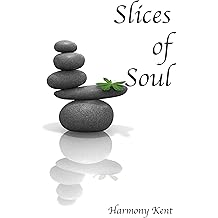
Slices of Soul is a collection of contemporary poetry from author Harmony Kent that will both delight and call for deeper reflection. ‘Phantoms’ gives a gritty account of pain that you can never catch. ‘Enough’ expresses the contentment of Zen. ‘Diamonds’ shows the beauty to be found on a drab and rainy day. While ‘The Alchemist’ shows you how a guitar can turn lead into gold. This wonderful arrangement of fifty poems takes you from the abstract of Zen to the melody of music, and will reach into your mind, your heart, and your soul.
My review
Slices of Soul is a compelling and unusual collection of poetry which certainly does give the reader glimpses into the complex soul and unusual life of the poet.
I think it is important to note that the poet spent 13 years living in a Zen Buddhist Temple and that the poems featured in this book were written, during and after this period in her life. I believe that her spiritualism and surroundings had a bearing on the thoughts and ideas expressed through the poems in this book.
The poems are divided into sections: Shaved Head, written during her time at the Zen Buddhist Temple, Short Hair, written during the transitional period of her changing life circumstances, and Long Hair which effectively covers all the remaining sections in the book and were written after she’d adjusted to her new life.
I felt the tone of the poems changed over the course of the book from intense reflections on life, to studies of nature, to fierce expressions of emotion, to gentler articulations of love and contentment.
The two poems that impacted me the most in this collection are from the first two sections of the book, Shaved Hair and Short Hair:
The Path
The ten directions all merge into one
this winding road leads nowhere
and goes straight there
Lost and Found
Deep dark depths
I got lost on purpose
this desolate place
the only way
to get my bearings
Poetry lovers who like poems that make you think about things and see them differently will appreciate this book.
Purchase Slices of Soul
Amazon Author Page Harmony Kent
About Harmony Kent
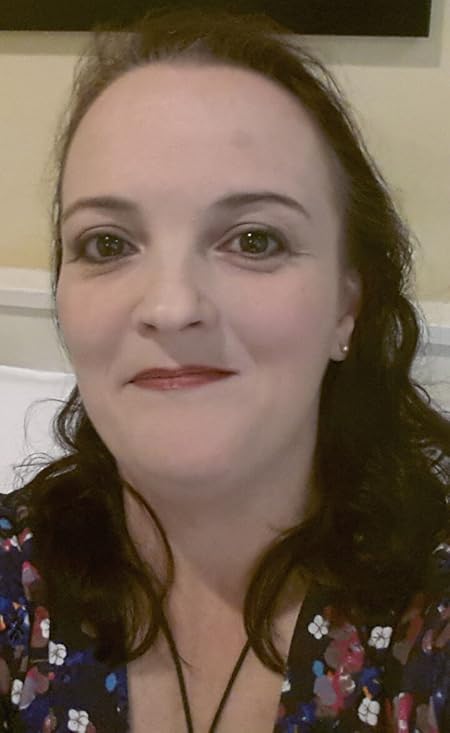
Harmony Kent is an award winning multi-genre author. Her publications include:
The Battle for Brisingamen (Fantasy Fiction) AIA approved
The Glade (Mystery/Thriller) AIA Approved/BRAG Medallion Honouree/New Apple Literary Awards Official Selection Honours 2015
Polish Your Prose: Essential Editing Tips for Authors (Writing/Editing) New Apple Literary Awards Top Medallist Honours 2015
Finding Katie (Women’s Fiction)
Slices of Soul (Contemporary Poetry)
Interludes 1 & Interludes 2 (Erotic Short Stories)
Moments (Short Stories and Poetry)
Jewel in the Mud (Zen Musings)
Backstage (Erotic Romance)
FALLOUT (Apocalyptic/post-apocalyptic Dystopia) BRAG Medallion Honouree
The Vanished Boy (Psychological Thriller)
As well as being an avid reader and writer, Harmony also offers reviews and supports her fellow authors. Harmony works hard to promote and protect high standards within the publishing arena. She is always on the look out for talent and excellence, and will freely promote any authors or books who she feels have these attributes. Harmony lives in Cornwall, England.
twitter: @harmony_kent
Goodreads: https://www.goodreads.com/HarmonyK
About Robbie Cheadle
Robbie Cheadle is a South African children’s author and poet with 9 children’s books and 1 poetry book.
The 7 Sir Chocolate children’s picture books, co-authored by Robbie and Michael Cheadle, are written in sweet, short rhymes which are easy for young children to follow and are illustrated with pictures of delicious cakes and cake decorations. Each book also includes simple recipes or biscuit art directions which children can make under adult supervision.
Robbie has also published 2 books for older children which incorporate recipes that are relevant to the storylines.
Robbie has 2 adult novels in the paranormal historical and supernatural fantasy genres published under the name Roberta Eaton Cheadle. She also has short stories in the horror and paranormal genre and poems included in several anthologies.
Robbie writes a monthly series for https://writingtoberead.com called Growing Bookworms. This series discusses different topics relating to the benefits of reading to children.
Robbie has a blog, https://robbiesinspiration.wordpress.com/ where she shares book reviews, recipes, author interviews, and poetry.
Find Robbie Cheadle
Blog: https://www.robbiecheadle.co.za/
Blog: robbiesinspiration.wordpress.com
Twitter: BakeandWrite
Instagram: Robbie Cheadle – Instagram
Facebook: Sir Chocolate Books
_____________________________________________________________________________________________________________________
Want to be sure not to miss any of Robbie’s “Treasuring Poetry” segments? Subscribe to Writing to be Read for e-mail notifications whenever new content is posted or follow WtbR on WordPress.
Share this:

Day 4 – WordCrafter “Behind Closed Doors” Book Blog Tour
Posted: August 26, 2021 Filed under: Blog Tour, Book Covers, book marketing, Book Promotion, Book Review, Books, Guest Post, Poetry, WordCrafter Book Blog Tours | Tags: Behind Closed Doors, Book Review, Poetry, Poetry Collection, Robbie Cheadle, WordCrafter Book Blog Tours 1 Comment
Day 4 of the WordCrafter Behind Closed Doors Book Blog Tour finds us over at Miriam Hurdle’s Showers of Blessings blog site with a guest post by author and poet Robbie Cheadle and a lovely review of Robbie’s latest book, Behind Closed Doors, a collection of unusual poetry. Drop in and learn more about this fascinating poetry collection and its author.
_____________________________________________________________________________________________________
Book your WordCrafter Book Blog Tour today!
Share this:

Treasuring Poetry – Meet poet Leon Stevens and book review
Posted: August 21, 2021 Filed under: Book Review, Books, Humor, Poetry, Treasuring Poetry | Tags: Book Review, Leon Stevens, Lines by Leon, Poetry, Poetry Collection, Treasuring Poetry, Writing to be Read 27 Comments
Today, I am delighted to host artist, poet and author, Leon Stevens.
Which of your own poems is your favourite?
Wow. Starting off with the hardest question…I have written about many aspects of my existence, but I think some of the poems about ego and human nature are my attempt at understanding why people act the way they do. I still don’t get why some people are jerks.
Ego (Part II)
An ego is a big cat
That needs to be stroked
By you or someone else
Smaller cats are easy to please
And the bigger the cat
The more dangerous it is
To rub the wrong way
What inspired you to write this particular poem?
I wrote a series of poems about ego after spending some time observing how people interact with each other as individuals jockey for position within a group. While they do that, they seek affirmation to justify their perception of themselves. There are positives to egos, but if an ego is too aggressive, it can leave you rolling your eyes and shaking your head.
Which genre of poetry do you enjoy writing the most and why?
I don’t set out to write any particular form of poetry. Usually, as the words come to me, they will dictate how the poem will manifest itself. This leads to some erratic rhyming and rhythmic patterns, but often I find that a well-placed, unexpected rhyme can have a powerful effect.
My poems tend to be short—no more than a page—often 4-6 lines. They are like a snapshot of a moment or experience rather than a slideshow or movie.
Which genre of poetry do you enjoy reading the most?
I honestly do not read a lot of poetry. Maybe it is a way not to be influenced, which I hope makes my own poetry unique. I do follow many blogs that feature poetry, so most of what I do read comes from those sites.
I grew up with my father reading the poems of Robert Service. The Cremation of Sam McGee Is one that has always stuck with me (Dad had it memorized along with many others). It is a tale set during the Klondike gold rush which has a humorous, macabre twist.
The Cremation of Sam McGee by Robert Service
There are strange things done in the midnight sun
By the men who moil for gold;
The Arctic trails have their secret tales
That would make your blood run cold;
The Northern Lights have seen queer sights,
But the queerest they ever did see
Was that night on the marge of Lake Lebarge
I cremated Sam McGee.
Now Sam McGee was from Tennessee, where the cotton blooms and blows.
Why he left his home in the South to roam ’round the Pole, God only knows.
He was always cold, but the land of gold seemed to hold him like a spell;
Though he’d often say in his homely way that “he’d sooner live in hell.”
On a Christmas Day we were mushing our way over the Dawson trail.
Talk of your cold! through the parka’s fold it stabbed like a driven nail.
If our eyes we’d close, then the lashes froze till sometimes we couldn’t see;
It wasn’t much fun, but the only one to whimper was Sam McGee.
And that very night, as we lay packed tight in our robes beneath the snow,
And the dogs were fed, and the stars o’erhead were dancing heel and toe,
He turned to me, and “Cap,” says he, “I’ll cash in this trip, I guess;
And if I do, I’m asking that you won’t refuse my last request.”
Well, he seemed so low that I couldn’t say no; then he says with a sort of moan:
“It’s the cursèd cold, and it’s got right hold till I’m chilled clean through to the bone.
Yet ’tain’t being dead—it’s my awful dread of the icy grave that pains;
So I want you to swear that, foul or fair, you’ll cremate my last remains.”
A pal’s last need is a thing to heed, so I swore I would not fail;
And we started on at the streak of dawn; but God! he looked ghastly pale.
He crouched on the sleigh, and he raved all day of his home in Tennessee;
And before nightfall a corpse was all that was left of Sam McGee.
There wasn’t a breath in that land of death, and I hurried, horror-driven,
With a corpse half hid that I couldn’t get rid, because of a promise given;
It was lashed to the sleigh, and it seemed to say: “You may tax your brawn and brains,
But you promised true, and it’s up to you to cremate those last remains.”
Now a promise made is a debt unpaid, and the trail has its own stern code.
In the days to come, though my lips were dumb, in my heart how I cursed that load.
In the long, long night, by the lone firelight, while the huskies, round in a ring,
Howled out their woes to the homeless snows— O God! how I loathed the thing.
And every day that quiet clay seemed to heavy and heavier grow;
And on I went, though the dogs were spent and the grub was getting low;
The trail was bad, and I felt half mad, but I swore I would not give in;
And I’d often sing to the hateful thing, and it hearkened with a grin.
Till I came to the marge of Lake Lebarge, and a derelict there lay;
It was jammed in the ice, but I saw in a trice it was called the “Alice May.”
And I looked at it, and I thought a bit, and I looked at my frozen chum;
Then “Here,” said I, with a sudden cry, “is my cre-ma-tor-eum.”
Some planks I tore from the cabin floor, and I lit the boiler fire;
Some coal I found that was lying around, and I heaped the fuel higher;
The flames just soared, and the furnace roared—such a blaze you seldom see;
And I burrowed a hole in the glowing coal, and I stuffed in Sam McGee.
Then I made a hike, for I didn’t like to hear him sizzle so;
And the heavens scowled, and the huskies howled, and the wind began to blow.
It was icy cold, but the hot sweat rolled down my cheeks, and I don’t know why;
And the greasy smoke in an inky cloak went streaking down the sky.
I do not know how long in the snow I wrestled with grisly fear;
But the stars came out and they danced about ere again I ventured near;
I was sick with dread, but I bravely said: “I’ll just take a peep inside.
I guess he’s cooked, and it’s time I looked”; … then the door I opened wide.
And there sat Sam, looking cool and calm, in the heart of the furnace roar;
And he wore a smile you could see a mile, and he said: “Please close that door.
It’s fine in here, but I greatly fear you’ll let in the cold and storm—
Since I left Plumtree, down in Tennessee, it’s the first time I’ve been warm.”
There are strange things done in the midnight sun
By the men who moil for gold;
The Arctic trails have their secret tales
That would make your blood run cold;
The Northern Lights have seen queer sights,
But the queerest they ever did see
Was that night on the marge of Lake Lebarge
I cremated Sam McGee.
Poem credit: https://www.poetryfoundation.org/poems/45081/the-cremation-of-sam-mcgee
Book review: Lines by Leon: Poems, Prose, and Pictures
My review
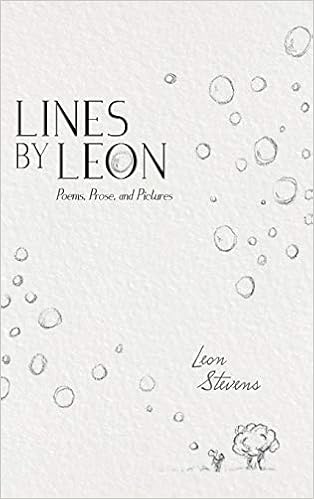
Every now and then you discover a book of poetry which has you nodding your head in agreement and identifying with the views of the poet. For me, this was one of those books. Leon Stevens has an unerring way of aiming a poetic arrow straight at the heart of a difficult issue and exposing it for exactly what it is. This exposure is done with great dry wit, but it is nevertheless, brutally honest and truthful.
The poems in this book cover an array of topics including, inter alia, the poets personal viewpoints on specific matters, environmental experiences, the human conditions and how we relate with others, people and places, and ponderance and muse. There is a sprinkling of the poet’s own sketches throughout the book, and these, complement the humour and the simple, straightforward messages woven into these compelling poems.
This poem, called The Tendency to Cluster, was my personal favourite in this collection and demonstrates the points I’ve mentioned above:
People like orbs
Drawn by gravity
Unable to exist alone
Each dependent on the orbits of others
The only thing that keeps them
From being flung away
Needing others to define them
Needing to know
The quantum state of others
There are people
Content with singularity
In the colder outer regions
Emptiness brings strength, warmth, life
Occasional objects pass
Piquing curiosity
Worthy to share space (for a while)
Mostly continuing alone
Comfortable that orbits won’t decay
If you enjoy poems that speak clearly and simply about important matters, then you will enjoy this collection. Even if you don’t share the poet’s viewpoint, these poems will still make you think deeply.
Purchase Lines by Leon: Poems, Prose, and Pictures
About Leon Stevens
Leon Stevens is a writer, composer, guitarist, songwriter, and an artist, with a Bachelor of Music and Education. He became a writer out of necessity. Along with song writing, poetry has allowed him to make sense and accept events and situations in his life. He published his first book of poetry: Lines by Leon – Poems, Prose, and Pictures in January 2020, a book of original classical guitar compositions, and a collection of science fiction short stories called The Knot at the End of the Rope and other Short Stories. Visit www.linesbyleon.com for free sample eBooks.
Share this:

“Watching Glass Shatter”: Some secrets are better left buried
Posted: July 21, 2021 Filed under: Book Review, Books, Drama, Review | Tags: Book Review, Family Drama, James J. Cudney, Watching Glass Shatter, Writing to be Read 16 Comments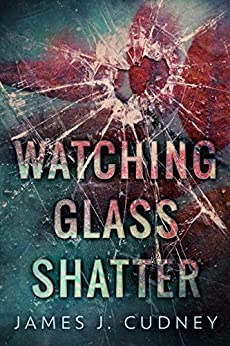
In Watching Glass Shatter, by James J. Cudney, secrets threaten to destroy a family and a legacy with the solidest of foundations. Olivia is a staunch matriarch who controls with an iron fist, or so some have said. When her husband Ben dies in a car crash, she is forced to take a close look at herself as she struggles to deal with the huge secret that he kept from her in what she thought was an open and honest marraige. Once it is dropped in her lap, she must decide how to handle this new knowledge that has the potential to rip apart the life of one of her five sons and change their familial relationships forever.
Olivia decides to spend some time with each of them before making her final decision, but the closer she gets to her sons the more secrets she learns that her family is harboring from one another, each with the potential to destroy family bonds and crumble all they have worked for. This family drama would be worthy of a television soap-opera series, such as Dynasty or Dallas.
The Glass family is well off, having built up a successful law firm which was to be the family business. Although the story is well-written, it seemed to me that things seemed to resolve a little too easily to be fully believable to me. It is a very different world in which I live, but maybe money does bring with it the solutions to many of life’s difficulties more easily. I give Watching Glass Shatter four quills.

_____________________________________________________________________________________________________________
Kaye Lynne Booth does honest book reviews on Writing to be Read in exchange for ARCs. Have a book you’d like reviewed? Contact Kaye at kayebooth(at)yahoo(dot)com.
Share this:

“Jaguar”: A thought provoking psychological thriller
Posted: July 19, 2021 Filed under: Book Review, Books, Fiction, Psychological Thriller | Tags: Bill Ransom, Book Review, Dreams, Jaguar, Psycological Thriller, Writing to be Read 2 Comments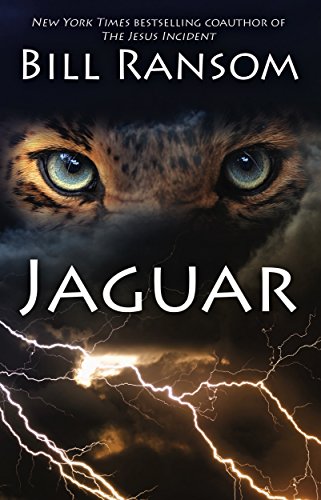
Dreams: A journey into the unconscious mind.
For Eddie Reyes and his friend Maryellen, dreams are much more than that. Dreams are an avenue for learning. Dreams are a means of breaking through to parallel worlds and making connections with their friends, Africa Lee and Rafferty. Dreams are a way to control people and a weapon which causes madness. To those who don’t know, it sounds like a cool superpower, but it’s one that carries a heavy price.
For Eddie, it’s the only way to hunt down the Jaguar to save their friends and the rest of the Roam from the persecution of the jaguar priests. But the Jaguar has reached Maryellen’s father through his dreams in this world and he’s intent on keeping she and Eddie apart at all costs.
Can Maryellen and Eddie escape her father and the other traps set on this side by the Jaguar long enough to hunt the him down in his own dreams before he destroys the Roam, and both worlds in the bargain?
My Review
Although Bill Ransom’s Jaguar unfolds the story slowly and it takes a little while to put the puzzle pieces together to form an idea of how the characters are connected and how they fit within the full picture of the story, it is just odd enough to keep your curiosity raised and keep you reading long enough to see it all come together. And by then, you’re hooked. You have to keep reading to find out how it all turns out. You can’t put it down. And it’s a good thing, because if you don’t read through to the end, you will miss the big reveal that changes the game and raises the stake even higher for Eddie.
A well-crafted psychological thriller that will keep you riveted to your seat. I give Jaguar four quills.
Buy Link: https://www.amazon.com/Jaguar-Bill-Ransom-ebook/dp/B0054SLB88
_______________________________________________________________________________________
Kaye Lynne Booth does honest book reviews on Writing to be Read in exchange for ARCs. Have a book you’d like reviewed? Contact Kaye at kayebooth(at)yahoo(dot)com.




















Book Review: Mudflap – A character concept many of us can identify with
Posted: August 9, 2021 | Author: kayelynnebooth | Filed under: Book Review, Books, Fiction, satire | Tags: Book Review, Jay Alden Bailey, Mudflap, satire, Social Commentary, Writing to be Read | 4 CommentsIn Mudflap, by Jay Alden Bailey the character’s name isn’t really Mudflap, but that is the name he identifies with because life always seems to be throwing him under the bus. We’ve all been there, so the character concept is easy to identify with. Every time Mudflap gets up, life knocks him back down again. But he just keeps getting back up again, even starting over from step one when necessary. This story makes a suttle social commentary as Mudflap’s tale unravels that readers with a keen eye will be sure to pick up on.
Sharing in the life and experiences of Mudflap makes one appreciate the circumstances in one’s own life more. If you need cheering up or are just looking for a chuckle, this story is for you. I give Mudflap four quills.
__________________________________________________________________________________________________________________________
Kaye Lynne Booth does honest book reviews on Writing to be Read in exchange for ARCs. Have a book you’d like reviewed? Contact Kaye at kayebooth(at)yahoo(dot)com.
Share this: