Posted: September 27, 2019 | Author: artrosch | Filed under: Humor | Tags: Art Rosch, Arthur Rosch, Friday Funnies, Humor, Writing to be Read |

For the time being, the cell phone revolution is finished. In thirty days the phase-out begins. All cell phones will be handed over at specified collection points.
It has now been proved that these things cause serious brain damage. This recall is the largest disaster in the history of consumer electronics. Negotiations for refunds have been bitter, to say the least. Apple, Samsung, Motorola, etc have fielded an army of lawyers and finally hacked out the so-called “50/50 Bill”. A complex algorithm has been devised to assess the value of cell phones to arrive at a figure worth half the original value of the phone. The consumer who is returning a phone will fill out a form noting the age, condition, features, and dozens of other items of data regarding the device. It has already been demonstrated that at least fifty percent of phone owners won’t bother to get their money back. Word is out that this so-called REFUND was designed by the IRS and is just as difficult to obtain.
Media commercials for cell phones have completely ceased. The vast airwave dead time will be filled with inspirational music by Yanni and Clannad. Media conglomerates have taken a gigantic hit in advertising revenues. The world needs new products and it needs them fast. Writers, engineers and marketers are working at top speed to fill the void. The most promising ideas are coming from the automobile industry. Vietnamese conglomerate GWENJIAP is preparing a luxury sedan with a sixty two inch FlexVision LED. Features include online bill payment, 3200 channels of satellite-borne programming and an array of pay per view specials. The screen and speakers will be seamlessly integrated into the vehicle by replacing the front windshield with the television screen and using software and GPS systems to drive the cars without the input of a human being. Three’s also a twelve foot extending periscope giving the driver panoramic vision.
Some conventional window space will remain in order to prevent claustrophobia. A disconnected steering wheel is featured in order to convey that sense of control and driving pleasure. GWENJIAP’s design team has apparently pulled off a brilliant coup and has finally merged the auto and entertainment industries.
UPDATE: January 2021
The degree of emotional and somatic shock was not anticipated when consumers were separated from their cell phones. The most common symptoms are anxiety, rage and feelings of powerlessness. Therapists have mobilized their most advanced techniques but the response has been inadequate. Consumers have been going into fugue states. They look into empty space while their thumbs shake with greater and greater agitation. Measures are now being taken. Pfizer Pharmaceuticals are testing an anti-spasmodic/SSRI medication to control these symptoms. Consumers are also being provided with dummy cell phones to alleviate the effects of what is now called “Texter Reflex Muscle Memory Syndrome”, or TRIMMS
The dummy phones are programmed with several hundred generic messages, such as “See you at home,” “Tht ws wild lst nite”, “Is he/she cute?”, “Did U do it?”, “Gt any E?”, “My parents will be gone tnt”, “Did yr doc sign yr dope ticket?”, and so forth. These messages are randomly scrambled and appear on the dummy phone screens to provide the illusion that users are connected to their friends. The texting interface appears to work but of course it is not receiving or transmitting. The therapy has had mixed results, but since the killing of Yanni and the disappearance of Clannad, Pfizer has been given the green light by the FDA to widely distribute the new medication. It will be marketed under the name Gontwich CR.
The GIAP 300SLE hybrid vehicle has sold well. Unfortunately, the auto-sensors and self-guidance software have had glitches that have caused an undisclosed number of collisions. Firmware updates have eliminated 88 percent of minor collisions and 99 percent of fatal collisions. Rival designs from BMW and Mercedes are appearing on the market as of this writing. The Mercedes Double Decker Home Theater Hybrid boasts efficiency of a whopping 82 mpg and the Surround Sound 9.1 with broad band picture-in-picture-in picture has stimulated sales as fast as the vehicles are manufactured. BMW has matched this success with its clever Mirror 32ESL. The vehicles feature advanced autopilots and software. There is also a choice between full autopilot and manual driving. Many consumers enjoy the actual process of driving and guiding a vehicle. BMW has catered to this market and relegates the Big Screen TV to a cleverly designed rear compartment. There have been fewer fatal incidents among drivers of the 32ESL.
Email has not had the anticipated resurgence, but statistics indicate that consumers are reviving the archaic telephone. Therapists are working on issues that surround the stuttering epidemic. Efforts to immobilize the thumbs with modified cuffs has only intensified the issue. Parents of adolescents are still, as they say, “talking to empty space” but statistics indicate there has been an eight percent rise in direct eye contact among members of nuclear families.
Hope always burns high that there will be a return to ancient modes of person to person conversation. Cynical laughter from many millions of consumers has not deterred designers at GWENJIAP from using hi-res cameras to convert interior TV screens to real-time two way windows on their 300 SLE models. Rumors are floating about that Mercedes is bringing back a vehicle with transparent polymer windows that open and close, either at the touch of a switch or via speech recognition software. The stuttering epidemic, however, has persuaded Mercedes to give the manual switches a higher profile.
All of this turmoil may be history when Nokia introduces the Safe Mini-Phone that has been designed to operate without the use of the dangerous selenium diode and other circuits that ramped up microwave emissions to one thousand times the minimum safe level as indicated by the Consumer Safety Council. Work proceeds on the range and sensitivity of this innovative cell phone.
Nokia employee Jorma Kikkinen, the “whistle blower” who broke the radiation scandal is still being sought by authorities but is feared to have met with foul play.
A Midwesterner by birth, Arthur Rosch migrated to the West Coast just in time to be a hippie but discovered that he was more connected to the Beatnik generation. He harkened back to an Old School world of jazz, poetry, painting and photography. In the Eighties he received Playboy Magazine’s Best Short Story Award for a comic view of a planet where there are six genders. The timing was not good. His life was falling apart as he struggled with addiction and depression. He experienced the reality of the streets for more than a decade. Putting himself back together was the defining experience of his life. It wasn’t easy. It did, however, nurture his literary soul. He has a passion for astronomy, photography, history, psychology and the weird puzzle of human experience. He is currently a certified Seniors Peer Counselor in Sonoma County, California. Come visit his blogs and photo sites. www.artrosch.com and http://bit.ly/2uyxZbv.
Like this post? Let me know in the comments. You can be sure not to miss any of Writing to be Read’s great content by subscribe to e-mail or following on WordPress.
Posted: August 30, 2019 | Author: artrosch | Filed under: Art's Visual Media Reviews, Television review | Tags: Art Rosch, Art's Visual Media Reviews, Lie to Me, Lie To Me TV Show, Paul Ekman, psychiatrist, Television review, Tim Roth |

Lie To Me
Actor Tim Roth is an odd creature. He can divide his face into zones and create two or three expressions simultaneously. He can be smiling and tender with his eyes while his lips and teeth express a feral snarl. It’s unsettling. In the TV series “Lie To Me” it’s supposed to be unsettling. Roth plays psychologist Cal Lightman. The character is a knock off of Dr. Paul Ekman, the innovative explorer of human body language. Dr. Ekman is the shrink who can read every tiny twitch of a person’s face. Termed Micro-Expressions, these muscle movements can be revealing of a subject’s inner state.
In Jungian psychology the mask that people wear for social interaction is called The Persona. It is just that, a mask. It’s essentially false, a place in which to hide our true anguish, guilt, depression and fear. It is a Lie, and we put it on our faces without knowing what we do.
In the series “Lie To Me” Dr. Cal Lightman is often dubbed “the human lie detector.” He sees through the Persona to the core emotions. This is a great device upon which to build a crime thriller series. It’s got enough of the cerebral to be interesting. It’s virtually shorn of physical violence. There are no car chases or fist fights, and guns are drawn only occasionally. It nearly makes me sigh with relief.
In short, there’s none of the usual crap.
Dr. Ekman was a consultant for the show. Nothing happened without his approval, including the casting of Tim Roth as his alter ego. Tim Roth bears no resemblance to Dr. Paul Ekman. Casting an Ekman lookalike would have been a dismal failure. Roth plays a feral, slouching, Cockney hoodlum with a lot of Phd’s behind his name. He works closely with the FBI and local police. He goes wherever he wants, barges through crime scene tapes, gets in people’s faces and stares into their eyes. Though Roth is guilty of many excesses (what actors call ‘carpet chewing’), these excesses work to keep the viewer fascinated. After a couple dozen episodes his mannerisms can get wearying. But Roth and the cast were having so much fun making the show that no director stepped in and said, “Tim, ease up on the ball scratching, eh? ‘Nuff sliding off couches in the conference rooms of posh developers eh?”
There’s method to Cal Lightman’s madness. He wants to push people out of their comfort zones. He wants them to get angry, to flip out and reveal the TRUTH, that they’re murderous scheming bastards. His mannerisms are a technique to break down the Persona.
Actress Kelli Williams (The Practice) plays Dr. Gillian Foster, Lightman’s business partner and possible love interest. Do they? Or don’t they? Will they or won’t they? Kelli Williams is a fine actress who looks like one of CNN’s high-end newscasters: model-perfect, every hair in place, always simmering with understated sexuality. She has a wonderfully kind face and is the perfect foil for Tim Roth. Chemistry makes for a good production and this is a cast that’s loaded with chemistry.
“Lie To Me” uses standard police procedural plots, but skews them just enough so that the detective (Dr. Lightman and his staff) work these cases using a different set of tools. Their skills may be exaggerated, but that’s TV, innit? Footnote: the “innit” I just used is an emulation of Roth’s cockney accent. That’s his back story. He is a one-time thug and petty criminal who lifted himself out of that scene to become the world’s foremost body-language theorist and human lie detector.
Dr. Lightman and his staff are called The Lightman Group. They catch serial murderers, thwart abusive psychiatrists, forestall assassinations, bombings and biological attacks. The stories are pretty good. The work of Brendan Hines as Eli Loker and Monica Raymund as Ria Torres keeps the ensemble small and tight. Cal Lightman has a teenaged daughter, Emily, played by Hayley McFarland. Emily’s presence helps to humanize the abrasive Dr. Lightman. Emily gives as good as she gets. To Emily the almighty Dr. Lightman is just her dad. She can mock him, annoy him and tease him. with hints at sexual liaisons. As the father of a teenaged daughter, Cal Lightman is hovering, hyper-protective and infuriatingly paranoid. Little Em knows how to drive her dad nuts.
The three seasons of “Lie To Me” satisfy like a good burger. They are sturdy and hold up well over time. Tim Roth shows that you don’t have to be good looking to be a leading man. You don’t have to be a Kung Fu master, you just need a healthy dose of confidence and aggression. You must be ready to wade into a brawl even if you’re really intending to sneak away from it at the first opportunity. When push comes to shove, Cal Lightman displays abundant courage. ‘E just ain’t stewpid, oi?
I enjoyed “Lie To Me”. I give it four and a half muskrats.
A Midwesterner by birth, Arthur Rosch migrated to the West Coast just in time to be a hippie but discovered that he was more connected to the Beatnik generation. He harkened back to an Old School world of jazz, poetry, painting and photography. In the Eighties he received Playboy Magazine’s Best Short Story Award for a comic view of a planet where there are six genders. The timing was not good. His life was falling apart as he struggled with addiction and depression. He experienced the reality of the streets for more than a decade. Putting himself back together was the defining experience of his life. It wasn’t easy. It did, however, nurture his literary soul. He has a passion for astronomy, photography, history, psychology and the weird puzzle of human experience. He is currently a certified Seniors Peer Counselor in Sonoma County, California. Come visit his blogs and photo sites. www.artrosch.com and http://bit.ly/2uyxZbv.
Want to be sure not to miss any of Art’s Visual Media Reviews? You can catch them the last Friday of every month or subscribe to Writing to be Read for e-mail notifications whenever new content is posted or follow WtbR on WordPress.
Posted: June 26, 2019 | Author: artrosch | Filed under: Poetry, The Many Faces of Poetry | Tags: Art Rosch, modern poetry, Poetry, Slam Poetry, The Many Faces of Poetry, Writing to be Read |
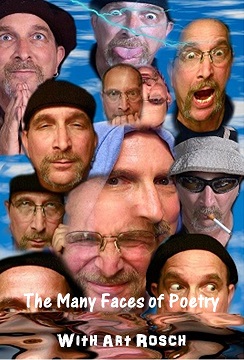
Modern poetry presents us with many problems. Like: the problem of understanding it. There are no rules to poetry, not any more, not for a century at least. I subscribe to some literary magazines on the internet. I get most of my poetry from The Rumpus and Across The Margin. These literary mags function as curators and critics. Who is there to tell us when something is good in poetry? Are there reviews of poetry? Sure there are! Does anyone read them? I do, out of curiosity. Just as I read poetry that’s being reviewed, out of curiosity and because they are appearing in magazines that I trust. Their very appearance is a critical acclaim. It’s in Rumpus, so it must be good. Etc.

It really gets down to taste and patience. Poetry is “OUT” in pop culture. It takes too long, requires too much commitment. I haven’t encountered a contemporary poet who inspires me to be a fan, to glue myself to his or her output with enthusiasm.
Other than myself. I’m a big fan of myself. A BIG fan.
When we were in high school we had Poetry Gods. We had e.e.cummings, Lawrence Ferlinghetti, T.S. Eliot, okay, yes, Allen Ginsberg. We had a Movement, we had the Beats and then Hippies. Am I out of touch? Let me know, will you?
Still, poetry thrives. It’s a bigger world, with more people, more poets.
Then there’s SLAM POETRY! The high culture equivalent of hip hop. I don’t know anything about SLAM POETRY except that it’s great fun, the audience is fully involved, the passions are up front, IT’S ALIVE IT’S ALIVE! Go to Youtube and search out Slam poetry and there you have it. The world of performance speech, it has no rules but one: tell a story, suck in the audience. If you don’t you will experience a gloomy traumatic humiliation that you’ll never want to repeat unless you combine the attributes of martyr with poet (not a bad combo, really) and you’re in it for the long haul, you’re there to perfect your art no matter what the price.
Youtube threw up a slam poet named Jesse Parent. The poem he spoke was called “To The Boys Who Will One Day Date My Daughter”. Then, boom! I was off on a delightful two hour marathon of enjoying slam poetry and the only reason it resolved at two hours was because my butt hurt from sitting so long in my malignant chair.
Guess what? The world has changed. I’m old enough to enjoy the backward/shrinking/reverse view of looking through the wrong end of a telescope. e.e. cummings? Allen Ginsberg? Are they hip-hoppers? What do they do?
“You’ve never heard ‘Howl’?”
“Is that a song?”
“No. Probably the most famous poem of modern times.”
“What? Like ‘Niggas In Paris’?”
“Niggas in…uhhhh, I don’t….”
“Daddy! Kanye and Jay-Z.”
I’m already confused. This began as an essay about poetry. “Well, Kanye’s pretty much destroyed himself, and Jay-Z, okay, I can handle Jay-Z, gotta give him some respect.”
“Listen, I’ll make a deal with you. I’ll listen to ‘Howl’ if you’ll listen to ‘Niggas in Paris.”
“Deal. But…let me warn you. Ginsberg wasn’t much of an orator…”
(Ginsberg reads: I saw the best minds of my generation destroyed by madness etc etc). He sounds as if he’s been drinking Robitussin for two weeks and just took a snort of cocaine to get through the reading. After listening to Jesse Parent for half an hour the desultory delivery of Ginsburg is pathetic. I listen to the words of the poem. I know it’s a classic. I like it. I’m ambivalent about it. It sounds old fashioned. But maybe that’s just poor Allen’s delivery.
Yes. The world has changed.
A Midwesterner by birth, Arthur Rosch migrated to the West Coast just in time to be a hippie but discovered that he was more connected to the Beatnik generation. He harkened back to an Old School world of jazz, poetry, painting and photography. In the Eighties he received Playboy Magazine’s Best Short Story Award for a comic view of a planet where there are six genders. The timing was not good. His life was falling apart as he struggled with addiction and depression. He experienced the reality of the streets for more than a decade. Putting himself back together was the defining experience of his life. It wasn’t easy. It did, however, nurture his literary soul. He has a passion for astronomy, photography, history, psychology and the weird puzzle of human experience. He is currently a certified Seniors Peer Counselor in Sonoma County, California. Come visit his blogs and photo sites. www.artrosch.com and http://bit.ly/2uyxZbv.
Want to be sure not to miss any of Art’s The Many Faces of Poetry segments? Subscribe to Writing to be Read for e-mail notifications whenever new content is posted or follow WtbR on WordPress.
Posted: February 27, 2019 | Author: artrosch | Filed under: Poetry, The Many Faces of Poetry, Women's Fiction and Poetry | Tags: Art Rosch, Elizabeth Barrett Browning, Emily Dickinson, Jane Hirschfield, Mary Oliver, Poetry, The Many Faces of Poetry, women in poetry |

There seem to be fewer female poets than male poets but that’s probably a sexist phenomenon. There are fewer PUBLISHED, FAMOUS lady poets, that’s all. Doing a search there are names that come to the top of the list: Mary Oliver, Jane Hirschfield, Emily Dickinson, Elizabeth Barrett Browning. I like to contrast the moderns with the Victorians because they make a little study in how much the world has changed. In 1850, assuming you had spectacular talent, “making it” as a poet was a matter of family connections, money and social place. The Victorians valued depth in education. Dickinson and Browning were well read in Greek Classics (in the original Greek), Milton, Shakespeare, et al. Today, attaining prominence as a poet is a matter of marketing and luck. Podcasts, platforms and persistence. Talent trails behind.

Mary Oliver And Friend
Mary Oliver is regarded as the English speaking world’s most beloved poet. I always think of flying geese when Oliver is mentioned. There’s a reason for that. This was the first poem I heard by Mary Oliver: Wild Geese. It’s a good example of her accessibility. Oliver celebrated nature, including human nature. She had a great eye/ear for the natural world’s subtle beauties.
Wild Geese, by Mary Oliver
You do not have to be good.
You do not have to walk on your knees
For a hundred miles through the desert, repenting.
You only have to let the soft animal of your body
love what it loves.
Tell me about your despair, yours, and I will tell you mine.
Meanwhile the world goes on.
Meanwhile the sun and the clear pebbles of the rain
are moving across the landscapes,
over the prairies and the deep trees,
the mountains and the rivers.
Meanwhile the wild geese, high in the clean blue air,
are heading home again.
Whoever you are, no matter how lonely,
the world offers itself to your imagination,
calls to you like the wild geese, harsh and exciting —
over and over announcing your place in the family of things.

Emily Dickinson
Now let’s turn our attention to Emily Dickinson. She was such an interesting person that I feel saddened by the brevity with which I must treat her in this essay. She was the daughter of a prominent lawyer, politician and man of civic affairs. This was Edward Dickinson. He provided a liberal and wealthy environment in which Emily could do pretty much as she pleased. She obtained a first class education at Amherst Academy and Mt. Holyoke, and cultivated friendships with the likes of Walt Whitman and Ralph Waldo Emerson. Emily is famous for her reclusive ways. When she was finished with her education she retired into a world that consisted of her bedroom and the extensive family garden. She maintained vast correspondence with the best minds of the era. She also wrote nearly 1800 poems. A year after her death the first collection of her poems was published and became a huge hit. I find her poems cryptic and timeless. Many of them are just a few lines, and, to tell you the truth, I don’t really understand some of them. I plan to read them again, and perhaps yet again. It seems that she was writing for her own pleasure. There was no thought of an audience. In this way her poems attain a great purity.
I Like to see it lap the Miles, by Emily Dickenson
I like to see it lap the Miles,
And lick the valleys up,
And stop to feed itself at tanks;
And then, prodigious, step
Around a pile of mountains,
And, supercilious, peer
In shanties by the sides of roads;
And then a quarry pare
To fit its sides, and crawl between,
Complaining all the while
In horrid, hooting stanza;
Then chase itself down hill
And neigh like Boanerges;
Then, punctual as a star,
Stop—docile and omnipotent—
At its own stable door.

Jane Hirschfield
.
It’s important to know that Jane Hirschfield is a student of Zen Buddhism. She was ordained in 2011 at The San Francisco Zen Center. Hirschfield gets irritated, however, when people try to identify her poetry as “Zen” or anything else. It’s just poetry. Winner of so many awards it gets ridiculous, Jane Hirschfield is a kind of poetry goddess of our times. She’s 65 as of today. She may be around for yet a while. Her poetry has a kind of practicality. It deals with familiar things in unfamiliar ways. Her poems are full of dogs and horses, images of man’s interaction with nature. There are musings on the dilemma of living within one’s own mind. I find such questions easy to understand. I, too, am some kind of Buddhist.
Rebus, by Jane Hirschfield
You work with what you are given,
the red clay of grief,
the black clay of stubbornness going on after.
Clay that tastes of care or carelessness,
clay that smells of the bottoms of rivers or dust.
Each thought is a life you have lived or failed to live,
each word is a dish you have eaten or left on the table.
There are honeys so bitter
no one would willingly choose to take them.
The clay takes them: honey of weariness, honey of vanity,
honey of cruelty, fear.
This rebus – slip and stubbornness,
bottom of river, my own consumed life –
when will I learn to read it
plainly, slowly, uncolored by hope or desire?
Not to understand it, only to see.
As water given sugar sweetens, given salt grows salty,
we become our choices.
Each yes, each no continues,
this one a ladder, that one an anvil or cup.
The ladder leans into its darkness.
The anvil leans into its silence.
The cup sits empty.
How can I enter this question the clay has asked?

Elizabeth Barrett Browning
Elizabeth Barrett Browning was born into an aristocratic English family and received a classical education. Getting such schooling was not a given for women of that age. Usually it depended on the father’s disposition. In Elizabeth’s case, dad was a poet and the family luxuriated in artistic pursuits. Elizabeth was educated alongside her younger brother. No feminist outrages here. The Barretts were extremely wealthy and lived within the intellectual mainstream of the Victorian era.
It all seemed so wonderful until I came to the tragic stories of the Barrett family.
Elizabeth’s brother drowned. Elizabeth came down with tuberculosis and had an accident that permanently damaged her spine. In its way this is typical of upper class Victorian suffering. They suffered extravagantly: people died young, children were scythed down by fevers, chronic brain afflictions abounded. Elizabeth spent the rest of her life on morphine, opium and other such medications. Still, she had the stubborn persistence of all artists and produced a huge body of work. This first poem, below, “How Do I Love Thee” is one of the most famous poems in the world. It is also called “Sonnet 13”. I follow it with “Sonnet 14”.
How do I love thee? or Sonnet 13, by Elizabeth Barrett Browning
How do I love thee? Let me count the ways.
I love thee to the depth and breadth and height
My soul can reach, when feeling out of sight
For the ends of Being and ideal Grace.
I love thee to the level of every day’s
Most quiet need, by sun and candlelight.
I love thee freely, as men strive for Right;
I love thee purely, as they turn from Praise.
I love with a passion put to use
In my old griefs, and with my childhood’s faith.
I love thee with a love I seemed to lose
With my lost saints, — I love thee with the breath,
Smiles, tears, of all my life! — and, if God choose,
I shall but love thee better after death.
Sonnet 14, by Elizabeth Barrett Browning
If thou must love me, let it be for nought
Except for love’s sake only. Do not say
‘I love her for her smile—her look—her way
Of speaking gently,—for a trick of thought
That falls in well with mine, and certes brought
A sense of pleasant ease on such a day’—
For these things in themselves, Beloved, may
Be changed, or change for thee,—and love, so wrought,
May be unwrought so. Neither love me for
Thine own dear pity’s wiping my cheeks dry,—
A creature might forget to weep, who bore
Thy comfort long, and lose thy love thereby!
But love me for love’s sake, that evermore
Thou mayst love on, through love’s eternity.
Thus we have a painfully brief glimpse into the worlds of some famous lady poets. It’s a rich universe and I feel ridiculous popping these classics out on the page so casually. These women were/are great poets! Profoundly human, they deal with universal themes, the glorious quiz of life on earth. Is there a difference between the male and female poets? Are men better than women? Hell no. Somewhere there’s a planet with six genders, each with distinctive characteristics and functions. They quarrel endlessly about whether a frem is superior to a bloot and why forgles make the best musicians. It’s always the same stuff. Art. That useless but essential stuff: Art. P.S. I think the it’s the werkish who make the best Jerk n’ Jell paddle players.
A Midwesterner by birth, Arthur Rosch migrated to the West Coast just in time to be a hippie but discovered that he was more connected to the Beatnik generation. He harkened back to an Old School world of jazz, poetry, painting and photography. In the Eighties he received Playboy Magazine’s Best Short Story Award for a comic view of a planet where there are six genders. The timing was not good. His life was falling apart as he struggled with addiction and depression. He experienced the reality of the streets for more than a decade. Putting himself back together was the defining experience of his life. It wasn’t easy. It did, however, nurture his literary soul. He has a passion for astronomy, photography, history, psychology and the weird puzzle of human experience. He is currently a certified Seniors Peer Counselor in Sonoma County, California. Come visit his blogs and photo sites. www.artrosch.com and http://bit.ly/2uyxZbv.
Want to be sure not to miss any of Art’s The Many Faces of Poetry segments? Subscribe to Writing to be Read for e-mail notifications whenever new content is posted or follow WtbR on WordPress.
Posted: December 26, 2018 | Author: artrosch | Filed under: Poetry, The Many Faces of Poetry, Uncategorized, Writing | Tags: Art Rosch, Poetry, The Many Faces of Poetry, Writing to be Read |
I did most of my poetry reading between the ages of sixteen and twenty one. I was in love with a girl who loved poetry. Otherwise, for the next several decades I neglected poetry. It was an occasional pleasure. Lately, however, I have been rediscovering poetry. If you want to read today’s poets head for the online magazine “Across The Margin” (acrossthemargin.com). ATM publishes living poets and prose writers. I am, fortunately, online buds with the editors Michael Fisher and Chris Thompson. As curators of such a venue, they are brilliant. They bring together some of the best writers of our times. While I’m throwing out resources, I must also mention the uber-poetry web empire PoemHunters.com
As an adolescent I was drawn to the work of Federico Garcia Lorca and Rainer Maria Rilke. Their influence yet remains with me. They occupy special seats in the Poets’ Pantheon. Lorca, who was mired in the political confusion surrounding the Spanish Civil War, was assassinated in 1936. He is now a Spanish national treasure. Extensive searches for his grave have failed to find his remains. He was thirty eight when he drew his final breath. No one knows who murdered him. The Fascists blame the Communists and the communists blame the Fascists. Hey, it was Spain in the thirties.
Here is one of his poems. As a Spaniard and member of what was called “The Generation Of ’27”, he was inspired and surrounded by surrealists.
in the sky there is nobody asleep. Nobody, nobody.
Nobody is asleep.
The creatures of the moon sniff and prowl about their cabins.
The living iguanas will come and bite the men who do not dream,
and the man who rushes out with his spirit broken will meet on the
street corner
the unbelievable alligator quiet beneath the tender protest of the
stars.
Nobody is asleep on earth. Nobody, nobody.
Nobody is asleep.
In a graveyard far off there is a corpse
who has moaned for three years
because of a dry countryside on his knee;
and that boy they buried this morning cried so much
it was necessary to call out the dogs to keep him quiet.
Life is not a dream. Careful! Careful! Careful!
We fall down the stairs in order to eat the moist earth
or we climb to the knife edge of the snow with the voices of the dead
dahlias.
But forgetfulness does not exist, dreams do not exist;
flesh exists. Kisses tie our mouths
in a thicket of new veins,
and whoever his pain pains will feel that pain forever
and whoever is afraid of death will carry it on his shoulders.
One day
the horses will live in the saloons
and the enraged ants
will throw themselves on the yellow skies that take refuge in the
eyes of cows.
Another day
we will watch the preserved butterflies rise from the dead
and still walking through a country of gray sponges and silent boats
we will watch our ring flash and roses spring from our tongue.
Careful! Be careful! Be careful!
The men who still have marks of the claw and the thunderstorm,
and that boy who cries because he has never heard of the invention
of the bridge,
or that dead man who possesses now only his head and a shoe,
we must carry them to the wall where the iguanas and the snakes
are waiting,
where the bear’s teeth are waiting,
where the mummified hand of the boy is waiting,
and the hair of the camel stands on end with a violent blue shudder.
Nobody is sleeping in the sky. Nobody, nobody.
Nobody is sleeping.
If someone does close his eyes,
a whip, boys, a whip!
Let there be a landscape of open eyes
and bitter wounds on fire.
No one is sleeping in this world. No one, no one.
I have said it before.
No one is sleeping.
But if someone grows too much moss on his temples during the
night,
open the stage trapdoors so he can see in the moonlight
the lying goblets, and the poison, and the skull of the theaters.
Rainer Maria Rilke was born into a middle class family in 1875. The family was highly dysfunctional, as are the families of 99 percent of every artist in Earth’s history. Rilke had the good sense to hang out with the most illustrious artists of any age. He was, for a while, Auguste Rodin’s secretary. He lived the life of a poet during the height of the Romantic era. His life was no piece of cake. He was drafted into the Austro/Hungarian Army at the outbreak of World War One. It took two years for his influential friends to free him from possible slaughter in the trenches. He did, however, have such friends. He wrote in a variety of media, including some four hundred poems.
This is Rilke.
At The Brink Of Night
My room and this distance,
awake upon the darkening land,
are one. I am a string
stretched across deep
surging resonance.
Things are violin bodies
full of murmuring darkness,
where women’s weeping dreams,
where the rancor of whole generations
stirs in its sleep . . .
I should release
my silver vibrations: then
everything below me will live,
and whatever strays into things
will seek the light
that falls without end from my dancing tone
into the old abysses
around which heaven swells
through narrow
imploring
rifts.
A Midwesterner by birth, Arthur Rosch migrated to the West Coast just in time to be a hippie but discovered that he was more connected to the Beatnik generation. He harkened back to an Old School world of jazz, poetry, painting and photography. In the Eighties he received Playboy Magazine’s Best Short Story Award for a comic view of a planet where there are six genders. The timing was not good. His life was falling apart as he struggled with addiction and depression. He experienced the reality of the streets for more than a decade. Putting himself back together was the defining experience of his life. It wasn’t easy. It did, however, nurture his literary soul. He has a passion for astronomy, photography, history, psychology and the weird puzzle of human experience. He is currently a certified Seniors Peer Counselor in Sonoma County, California. Come visit his blogs and photo sites. www.artrosch.com and http://bit.ly/2uyxZbv.
Want to be sure not to miss any of Art’s The Many Faces of Poetry segments? Subscribe to Writing to be Read for e-mail notifications whenever new content is posted or follow WtbR on WordPress.
Posted: October 31, 2018 | Author: artrosch | Filed under: Inspirational, Poetry | Tags: ancient texts, Art Rosch, language, Poetry, Rumi, spirituality, The Many Faces of Poetry |
The oldest poetry of all is in the Holy Books. The Rig Veda, The Maharashtra, the Buddhist Sutras, The Old and New Testament. Then there are the extended legend/poems that have become embedded as virtual racial memories of mankind. The story of Beowulf, the Icelandic Eddas, The Iliad and The Odyssey. It seems as if poetry came first, was the primal form of literature, handed down from The Gods to human beings.
More familiar to us today is the work of the Sufi mystics like Rumi. I know that Rumi’s poetry has become a consumer commodity. His work is immune to vulgarization, however, so I’m not worried about Rumi. He is said to be the most widely read poet in the world. His work has survived eight hundred years. He nearly vanished to the western world until Sufi scholar Coleman Barks translated Rumi into English and it took off…again!
Rumi addresses himself to God, to Allah, as if to an intimate lover. He gives all of himself to the Highest because he is in love with the Highest. Rumi is also very human, rooted and ordinary. He offers us practical insights on daily survival. He writes, “Don’t worry about what doesn’t come. By not coming it may prevent disaster.” He may as well have been speaking directly to me. I’ve waited for a lot of things that haven’t come.
Poetry and prayer are inseparable. Isn’t every poem really an address to the Divine? Isn’t it laden with hope, desire, confusion, supplication and maybe even surrender? Rumi’s poetry attracts modern readers because it retains its purity, it can’t be trivialized by the consumer paradigm that dominates our world. It doesn’t matter that Donna Karan uses Rumi to sell fashion. Or that rock star Chris Martin uses this poem on an album by Coldplay.
This being human is a guest house.
Every morning a new arrival.
A joy, a depression, a meanness,
some momentary awareness comes
as an unexpected visitor.
Welcome and entertain them all!
Even if they’re a crowd of sorrows,
who violently sweep your house
empty of its furniture,
still treat each guest honorably.
He may be clearing you out
for some new delight.
The dark thought, the shame, the malice,
meet them at the door laughing,
and invite them in.
Be grateful for whoever comes,
because each has been sent
as a guide from beyond.
I can’t think of any more appropriate response to the maladies that afflict us in these times.
This, then, is my poem, a poem very much influenced by Jalalladin Rumi of The Mevlevi School of Sufism.
A Worthy Destination
I haven’t found peace.
I don’t own peace,
rent peace,
buy or sell peace,
though I do encounter peace
from time to time.
Peace is like a friend
who comes for a surprise visit.
As my life takes on a shape
in which peace feels comfortable
I see peace more often.
Peace is not easily found in this world.
Peace comes like an accident,
a good mishap.
Peace lands in my heart like
a bird that’s raised its young
and is looking for a new place to nest.
I thought I would know peace by now,
but it’s taking longer than I expected.
The biggest problem is my mind.
It’s like a bag turned inside out, its contents
are the world, spilled and crazy.
Peace is not comfortable
in the world. When I’m with peace, I feel as though I’ve brought a guest
to the kind of party
that’s broken up by the cops after midnight.
I need to make peace more welcome here.
I should send peace an invitation, find a good solid tree
where peace can perch and sing
before taking flight
to a more worthy destination.
To see more of my writing, photography and music I highly recommend that you take an excursion to
http://www.artrosch.com
email writernuts@gmail.com

A Midwesterner by birth, Arthur Rosch migrated to the West Coast just in time to be a hippie but discovered that he was more connected to the Beatnik generation. He harkened back to an Old School world of jazz, poetry, painting and photography. In the Eighties he received Playboy Magazine’s Best Short Story Award for a comic view of a planet where there are six genders. The timing was not good. His life was falling apart as he struggled with addiction and depression. He experienced the reality of the streets for more than a decade. Putting himself back together was the defining experience of his life. It wasn’t easy. It did, however, nurture his literary soul. He has a passion for astronomy, photography, history, psychology and the weird puzzle of human experience. He is currently a certified Seniors Peer Counselor in Sonoma County, California. Visit his blogs and photo sites. www.artrosch.com and http://bit.ly/2uyxZbv.
Posted: July 16, 2018 | Author: kayelynnebooth | Filed under: Blog Content, God Complex, Poetry, Writing, Writing to be Read | Tags: Art Rosch, Blog Content, Changes, Jeff Bowles, Poetry, Writing, Writing to be Read |

I started Writing to be Read on a site called Today.com, as a pay-per-click blog. I was just beginning to create an online writing presence, and was unsure what to write about on a blog, but whatever my subject matter, I ended every post with a poems. One day, I tried to log into my account and found that Today.com no longer existed, and neither did my blog. I was forced to seek out a new home for my blog, and I found WordPress. That was back in 2010, and the author’s blog and website before you is what Writing to be Read has morphed into in the interim.
I no longer include a poem with each post, (that went the way of Today.com), and I don’t get paid per click, (or at all for that matter), but I feel that my content has expanded and improved over the years. I still believe poetry is an important aspect of writing. I feel in love with poetry when we studied Hiaku in the forth grade, and the first piece of writing I ever sold was a poem, (for five dollars). Poetry is sculpting with words, crafting a piece to fit our vision and communicate that vision to others.
There have been many changes along the way, which helped to make Writing to be Read what it is today, including my 2016 publishing series: The Pros and Cons of Traditional vs. Independent vs. Self-Publishing, my 2017 series on marketing and promotion: Book Marketing: What Works?, and the most recent this past year, my Ask the Authors series, where a panel of authors were interviewed on a variety of elements concerning writing. (Watch for a second series of AtA this fall.) Also, in 2017, we were fortunate to have Robin’s Writing Memo, with Robin Conley and The Pep Talk and Jeff’s God Complex, with author Jeff Bowles. I have attempted to include content that addresses all the elements of writing, but as I’m not very active in areas such as poetry, children’s writing, screenwriting or YA fiction, there have been only a few post in these areas, and I want to extend the scope of the blog to address all aspects of writing.
So, we’re about to change it up once more. I’m calling in the experts, or at least, those more expert than I in specific areas. I’ve asked a few guest bloggers to join the team in order to expand the scope of Writing to be Read. Our guest segments will be featured on Wednesdays. Here are some of the exciting changes you can expect to see in the near future.
 I’m happy to announce that Jeff Bowles will be joining us once again with Jeff’s God Complex the first Wednesday of every month, starting in August. Jeff is an independent author with an awesome power of description and an amazing imagination. He has published three short story collections, which I have given top notch reviews, including his latest one, Brave New Multiverse, which will post this Friday, July 20. Fear and Loathing in Las Cruces, and Godling and Other Paint Stories. Jeff’s post topics cover just about anything and everything if it regards writing.
 Starting Wednesday, July 25th, we will have our first segment of The Many Faces of Poetry, with Art Rosch. Art is an independent author, poet and photographer, who is into jazz. He draws many of his stories from his own experiences and creates his own book covers. He has published three books, all of which I’ve reviewed with high quills: Confessions of an Honest Man, The Road Has Eyes: A Relationship, An R.V., and a Wild Ride Through Indian Country, and The Gods of the Gift. Art is a talented writer and poet and I’m pleased to have him join the Writing to be Read team.

Also joining us with a Writing for a YA Audience segment is Amazon best selling YA author Jordan Elizabeth. Jordan has written many books aimed at a YA audience in a variety of genres: steampunk, time travel, fantasy, historical and ghost stories, to name a few. I recently reviewed her most recent book, a post- apocalyptic dystopian romance, Rotham Race, and I have reviewed many of her other works, including her very first novel, Escape From Witchwood Hollow, and several anthologies which include her stories. Jordan’s posts will be concerned with concepts and issues involved in writing for young adult readers. Writing to be Read will feature Jordan’s first post on Wednesday, July 18th.
This blog is a labor of love for me, and as such, these great writers are donating their time and efforts, so please help me to welcome the new members of the Writing to be Read team by liking their posts and leaving comments. Every writer wants to know they are being read.
I’m still searching for willing bloggers in the areas of screenwriting or children’s writing. I feel these elements of writing are important and deserve our special attention too. If you have expertise in these areas and think you might be interested in joining the Writing to be Read team, please email me at kayebooth(at)yahoo(dot)com.
Like this post? Subscribe to Writing to be Read for e-mail notifications whenever new content is posted or follow WtbR on WordPress.
Posted: May 7, 2018 | Author: kayelynnebooth | Filed under: Author Profile, Books, marketing, Promotion, Self-Publishing, Writing | Tags: Art Rosch, author's journey, book marketing, Confessions of an Honest Man, promotion, The Gods of Gift, The Road Has Eyes, Writing |
I’ve known Art Rosch since 2009, when he became a member of a writing site I was administiring called Writers’ World. Although I’ve never met him in person, we’ve been online friends, supporting one another like only authors can ever since. Art is a great guya da, and a fine photographer, and a damn good writer. You can feel the honesty in his words as you read them, and that’s not something all authors can do. I’ve had the pleasure of reviewing Art’s books, Confessions of an Honest Man, and The Road Has Eyes. I’ve also had the privilage of featuring an interview with Art in my 2016 series on publishing, as well as having him as a member on my more recent Ask the Authors series in March and April.
During my Ask the Authors series, I did a segment on Building an Author Platform. As a member of the author panel, Art expressed his frustration with the whole author platform/marketing and promotion thing and wasn’t sure how he could respond to my questions in a useful manner. Art had tried many paths to marketing and promotion, at times investing much money with little returns. He didn’t understand the problem and explained, “I can’t even give away books.”
This is one of the pitfals for today’s authors. We’re writers, not marketers. I think we all have gone through it at one time or another, (or will for new and upcoming authors). It’s easy for writers to become disheartened with the whole promotion process, especially if they’re not seeing results from their efforts. I told him to give me whatever he had. If he couldn’t tell me what had worked, he should tell me what hadn’t worked for him and why. I would take whatever he could offer. His response was a wonderfully told author’s journey that was too lengthy to be included in that segment of Ask the Author, but was worthy to appear on Writing to be Read, none-the-less. So, with that in mind, I give you this Guest Post by Art Rosch:

I’m the last person to ask about marketing and publishing. Perhaps my experiences might be cautionary, might enable other writers to consider how they proceed. I can only offer my history as a writer. You can call me disillusioned, but that’s actually a positive state. It’s good to dream but it’s important to temper the dream with reality. You can get swept down some terrible false paths by unskilled dreaming. I believe that this mantra, “dreams can come true if you persist” is a shibboleth. A lot of bullshit. It takes skill to dream the right dream. It takes skill and practice to execute a dream and bring it to fruition. Everything else is about karma. Destiny.
In 1978 I took a chance and sent the manuscript of a short story to agent Scott Meredith. At the time, Meredith had a branch of his prestigious agency that read unsolicited works for a fee. We’ve been warned countless times about this flaky practice, but it was, after all, Scott Meredith. He represented Norman Mailer and Ray Bradbury, Arthur C. Clarke and James Michener. I scratched together my fifty bucks and mailed the 3600 words of my comic science fiction tale about a planet where there are six distinct genders. It was called Sex And The Triple Znar-Fichi.
Eight weeks after mailing my story I received two envelopes. One was small and one was large. The small envelope contained a check for $1800. The large one contained a two year contract to be represented by Scott Meredith. The agency had sold my story to Playboy Magazine.
I was thrilled and motivated to write. I was young, ambitious, and not a little fucked up. There were problems in my life but everyone has problems. A writer without problems is hamstrung. Embrace your problems! They’re your fuel!
A few months passed. I was sending my works in progress to my editor at Meredith Agency. He was doing his job. He made it clear that my first science fiction novel was a bust and that I should focus on the book that has become The Gods Of The Gift. Then I received a package from New York. It contained a clear lucite brick featuring an etched Playboy logo. It carried the news that my story had won Playboy’s Best Short Story Award. There was another check for $500 and permission to use Playboy’s expense account to bring myself to New York City to attend the Playboy 25th Anniversary banquet and awards ceremony.
The Playboy Banquet was an amazing experience. I met Playboy’s fiction editor, I got business cards from the editors at The New Yorker, Penthouse, Esquire. I was a celebrity for the requisite fifteen minutes. I was hanging with the big hitters. My table mates at the dinner were Alex Haley, Saul Bellow and their wives. I was in! I had made it!
 I brought The Gods Of The Gift to a sort of completion and it went on the market. And didn’t sell. The agency kept batting for me but I wasn’t turning out viable material. I wasn’t writing long form books that would sell. But I was learning. Two years went by without a sale, and the agency did not renew my contract. I went into my personal Dark Night Of The Soul, a period that lasted a long time. In spite of all the obstacles, I continued to play music and write.
In 1976 I had started work on my autobiographical novel, Confessions Of An Honest Man. I was dealing with a paradox: how does one write an autobiographical novel at the age of thirty? The answer isn’t complicated. One starts. And one lives. Here I am, now, at the age of seventy, sitting on a huge body of work. When I was contracted to an agent, I couldn’t write to sell. Now that I can write to sell, I can’t find an agent. The ground has shifted. We live in a new era. Even with a publisher and an agent, we’re still on our own with regards to marketing. Unfortunately, I’m not much of a marketer. It takes money to market, and I’m not rich enough to front a sustained advertising effort. I’ve been online for fifteen years. I have eight hundred ninety Twitter followers. My Facebook stats aren’t much better. I have an excellent blog that features all my media work. It’s gotten so that I’m shocked when I receive a comment. I’m all over the web. I’m on Tumblr, Instagram, Snapchat, you name the social medium, I’m there.
It’s my photography that gets the attention. I suppose that’s natural. Images are so much more accessible than literature. We live in a tough time for writers of quality. There are so many writers, yet it seems as if there are fewer readers. The sales figures for my books are shocking. I can’t even give them away. In three years I’ve sold twenty five copies of my e-books. I’ve given away about eleven hundred. Those figures are spread over three books. In spite of this epic failure I persist. I figure I’m somewhere near my peak with regards to my writing skills. I’m a late bloomer. I’m also a writer who works a long time on each project. Like decades. Confessions Of An Honest Man only reached its completion when I switched from past to present tense. It changed everything. I finished that work last year. Begun in 1976, finished in 2017. Same with The Gods Of The Gift. It didn’t totally gel until I had revised it countless times and solved a thorny structural problem. Begun in 1978, finished in 2016. I can at least regard my non-fiction memoir, The Road Has Eyes with some affection. It took a year to write.
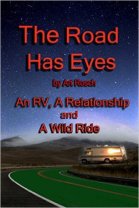
I again made contact with the Meredith Agency in 2001. They didn’t give me a contract but one of their editors was interested in me. Barry N. Malzberg is/was a science fiction author, critic and NYC literary personality. His editorial approach (with me, anyway) was brutal, confrontational, maybe even abusive. The cumulative effect on me was positive, but the experience gave me a two year bout of writer’s block. He helped me with Confessions Of An Honest Man. I’m considering making contact again. With some trepidation. He was a rough editor.
 My plan? I’m going to invest in Confessions Of An Honest Man and produce paperbacks. There’s something about a physical manifestation that enlivens a book. My intuition tells me that this is the right step. I’ll follow with my other books. I have an as-yet-unpublished fantasy book, The Shadow Storm (about fifteen years in the writing). I’ll bring it out. I expect nothing. It’s not that I don’t care. I’m just too f’ing old to have an attachment to results. It’s about the process of writing and publishing. It’s obedience to my inner voice.
I’m a very flawed person. I’ve lived at the extremes of life. I’ve experienced the horrors of addiction and homelessness. I’ve been a yogi/junkie. How’s that for a paradox? But I survive and have found a niche in the world. A place to write. I live in an RV with my partner and two obnoxious teacup poodles. That’s good enough.
Thank you for sharing with us, Art. Watch for my review of The Gods of Gift in the near future. You can learn more about Art and his work at:
Confessions Of An Honest Man
The Gods Of The Gift, science fantasy
The Road Has Eyes: A Memoir of travel in an RV
If you’d like to have a guest post you’d you’d like to have featured on Writing to be Read, contact Kaye at kayebooth(at)yahoo(dot)com. I wish I could, but at this time, I am unable to compensate you for your words. This blog is a labor of love, and so must be all guest posts.
Posted: October 31, 2016 | Author: kayelynnebooth | Filed under: Books, Fiction, Memoir, Opinion, Publishing, Self-Publishing, Writing | Tags: Art Rosch, Book, Books, Fiction, Novel, Novels, Publishing, sci-fi, Self-Publishing, Writing |

Your at a dinner party, chatting with other guests when someone asks what you do. You say that you’re an author and everyone is adequately impressed. It’s not every day you meet a bonefide author. Then you mention that you are self-published, and suddenly they all have somewhere better to be.
Self-publishing carries with it a certain stigma. In part, it may be due to a certain number of poor quality self-published books that flooded the market with the rise in popularity of the self-publishing market. With the rise of digital media, almost over night, it was no longer necessary to seek out and captivate a traditional publisher, and anyone, whether they write well or not, could become an author. In the beginning, as it is with most rising trends, self-publishing was a rather expensive proposition, and many authors didn’t have a whole lot to invest, so they skimped by on costs by skipping things like professional editing. Some maybe had their mother or their aunt or their brother give it a once over, but none of them had a trained eye. Others didn’t even do that, believing that their writing was so good, it didn’t need to be edited, or perhaps they were just out to make a buck, and didn’t really care if they put out a quality book. But, for whatever reasons, a lot of less than good quality self-published books made their way out into the market, marring the reputation of the self-publishing industry.
Companies like Amazon and Smashwords put another bump in the industry when they offered authors yet another avenue for publication with the e-book. Digital publishing was cheaper and easier than publishing print copies. In fact, it is virtually free to publish digitally, freeing up funds to be used for things like editing in order to create a quality piece of literature. Of course, there will always be those who are just in it for the money and don’t really care if the book they put out there is good quality, as long as it makes them money. They’re the types that will take advantage of the savings of digital publication to line their own pockets and still won;t bother to pay an editor. They are the authors that wouldn’t survive in the digital publishing world, but hopefullly, there are less of them now.
Despite the stigma attached to self-publishing, there are many talented self-published authors out there, who care about creating and publishing a quality literary product. Today’s interview is with self-published author, Arthur Rosch, who puts whatever time and effort is required into his books, sometimes taking years to complete them. Art is a talented writer. His publishing credits include his travel memoir, The Road has Eyes: A Relationship, An RV, and a Wild Ride through Indian Country, his literary novel, Confessions of an Honest Man, and his epic science fiction novel, The Gods of the Gift. Art shares a positive outlook on self-publishing with previously interviewed self-published authors, Tim Baker and Jeff Bowles. Here, Art shares his thoughts on the publishing industry with his very generous answers, as he candidly relates his own publishing journey.
Kaye: Would you share your own publishing story with us?
Art: I’ve been reading for pleasure since I was five.years old I remember the day I learned to read. It came like a lightning bolt. Aha! So that’s how it works! I made the connection between letters and the sounds they represented. It was my third week in kindergarten. I hated school but I loved to read books. I started by reading historical novels. The other kids were reading “Dick And Jane Go To The Farm”.
When I was fifteen I fell madly in love with a girl. She wanted certain attributes in a boyfriend. One of those requirements was that said boyfriend should be a poet. So, I began to write poetry to please my girlfriend. She turned out to be far less faithful than the process of writing. I gave up on the girl and stuck with the writing. When I was twenty five I was seized by the ambition to write a novel. The project became a science fiction novel called THE GONGS OF SPACE. It was awful. It did, however, attract the interest of literary agent Scott Meredith. I signed a two year contract, and proceeded to write more novels. None of them sold. I had plenty of imagination but lacked some fundamental skills in the craft of writing.. I also needed more life experience.
I’m old enough to remember the “old” model of publishing. I had an entree into that world of agents, editors and publishers. A short story of mine won Playboy Magazine’s Best Story Of The Year Award. I had my fifteen minutes of fame. All the doors were open.
Playboy invited me (with an expense account) to their twenty fifth anniversary party.. I came away with a pocket full of business cards from important people in the publishing industry. Unfortunately, at that time I was dabbling in drugs. That dabble turned into a roaring addiction that derailed me for twenty years. I wrote during those decades. I wrote a lot. But I was like the Hubble Telescope before it was repaired. I couldn’t focus. I had a wonderful opportunity that I wasted by making a very bad choice. This kind of blunder is the stuff of life. I admit, I screwed up. I prefer to regard that interval in my life as “experience”. It was my Dark Night Of The Soul I had lost my family, my home, my possessions and my dignity. But I learned from my suffering.
What can a writer do without insight into the human condition? What decent writer is not also an observer and a psychologist?. My addiction years were loaded with with lessons. I sank to the bottom of the social order. I was on the streets, completely mired in the human experience. I learned from the streets. I learned hard. Then I had to put myself back together.
Addiction is one of the central pillars of my life narrative. I wanted to heal myself, so I went into a long therapy and read everything I could find about family dynamics, addiction and obsession.. Some writers need to spend an apprenticeship in the realm of compulsion, irrationality, bad choices and failure. By the time I was in my mid forties I had a thorough apprenticeship under my belt.
When I surfaced from that underworld, I started looking for an agent. A whole generation of agents had come and gone. The publishing world had changed. I was now (by my own evaluation) a fine writer with a distinctive voice. Agents weren’t interested in me. I wrote hundreds of query letters. I had three novels and a memoir that were ready for editing and representation. I got rejections again and again. How many times did I read the same phrases? “Not quite right for us”, “good luck with your writing career”, “though you write well, I couldn’t quite fall in love with this project.”
It’s likely that you’ve also read these phrases.. In 2001 I wrote to the Scott Meredith Agency in an attempt to re-kindle some kind of relationship. My letter was answered by the head editor. Meredith had passed away and the agency continued under a new owner. My novel, CONFESSIONS OF AN HONEST MAN was well under way. The editor loved the manuscript and offered to work with me. I was not a client of the agency. I was a side-project. The editor, B.N. Malzberg., charged no fee, and worked with me on his own time. The guidance he provided helped to make CONFESSIONS OF AN HONEST MAN into a mature and viable novel.
Still, no agents wanted to represent me. It was an odd situation. Malzberg didn’t have the authority to bring me on board. I don’t know why. I never will. I’m grateful to Mr. Malzberg for the help he gave me in bringing that wonderful novel to fruition.
Kaye: What are your thoughts on the self-publishing industry?
Art: I spend a lot of time writing my novels. Some of my books have been in process for thirty years. THE GODS OF THE GIFT, a sci fi epic, was begun in 1978 and wasn’t completed until 2012. Nowadays the book scene is so competitive that a writer needs to have an extensive body of work. Writers are forced to view their works as Product. The more product you have, the more you can sell. I have to learn to write more quickly. My travel memoir, THE ROAD HAS EYES, was finished in a year. Now I’m writing a crime novel. In a month I’ve racked up 20,000 words. I do all my own cover designs. I hire out the formatting. I mostly self-edit but that’s not really a good idea. It’s better to join a writing group and share your work with your peers. Better still, hire a good editor.
It’s useful to identify one’s “brand” with a genre. It’s also good to write series. The reading audience loves series. My crime novel will be a series based on the characters I’ve invented. I have a fantasy trilogy in the works. Book One is complete. Book Two, the sequel, is under way. I’m not known as a genre writer. With good reason. My portfolio consists of one memoir, one literary novel, three sci fi novels and a crime novel-in-progress. I also have nearly three hundred blog posts in the form of reviews, poems and essays. My “brand recognition” doesn’t stick. Fortunately I have relationships with magazines like Across The Margin and Exquisite Corpse. ATM has published a lot of my work. I’ve also published as a photographer with magazines like
Shutterbug and Popular Photography. I had a centerfold in CAT FANCY. Our beautiful cat, Agate, was shown without her clothes. Agate didn’t care. She never wears clothes. We don’t believe in dressing up animals to look like people.
Kaye: Why did you choose to self-publish your books?
Art: Four years ago I began to explore the self-publishing world. Getting a book published is easy. Marketing the book is another matter. I’m not a good marketer. I plunged into the crazy world of podcasts, webinars and the pitches of various book marketing gurus. I was trying to get a basic grip on marketing strategies. The problem is that the parameters for marketing change so fast that it’s impossible to know how to approach the world of self-promotion.. Also, I was broke. Marketing costs money. I spent $1500 on paid-for reviews and marketing “helpers”. These investments weren’t completely useless, but they didn’t do much to boost my sales.
I would estimate that at least $5000 is required for a marketing budget. That’s just for starters. If you’re lucky, and if you have some talent, your investment will begin to show returns fairly quickly. You’re going to need a knack for business promotion. Marketing a self published book requires patience. Patience. Patience. Just don’t give up. You’re going to encounter a lot of rejection and a lot of discouragement. It goes with the profession of writing.
Kaye: How much non-writing work, (marketing & promotion, illustrations & book covers, etc…), do you do yourself for your books?
Art: The first thing I do every day is drop a Tweet about one of my books. Twitter is free. Facebook is…well, not quite free. As the world’s population increases, so do the number of writers competing for a piece of the audience pie. I’ve learned, to my dismay, that you don’t have to be a good writer to be successful. You just have to be a good story teller. Many popular writers tell the same story over and over again. They hit on a formula that works, and they milk it. I don’t have it in me, to be a lazy writer. I pour my heart and soul into everything I do. My books enjoy modest sales. My platform is almost non–existent. It will take time to develop my platform until it’s something more than a few Popsicle sticks taped together.
Most of my “writing time” is actually study time. When I write, I write. But I spend three or four hours a day studying marketing. And I’ll admit I’m confused. The major advertising venues change their parameters suddenly and arbitrarily. Facebook had an advertising algorithm that was favorable to the writer. Then they changed the algorithm. The amount of pay changed downward. Same with Amazon, same with Google. It’s like writing in an earthquake. The ground shifts under our feet. But that’s life, isn’t it? The ground always shifts under our feet. The one thing you can count on is CHANGE.
Kaye: Would you recommend self-publishing to aspiring authors?
Art: Traditional publishing now resembles self-publishing so much that it’s difficult to pry them apart. If you sign a contract with a big house you’re still going to have to do your own marketing. If you’re a major name, that’s different. Steven King doesn’t do his own marketing. But Arthur Rosch will indeed have to market, whether he’s self published or under contract to Random House. So…why not self publish? Statistics reveal that self publishing is garnering an ever-increasing market share. There’s no longer a stigma attached to self publishing.
Don’t give up. Persist. Stay with what you love, and if you love writing, then, you must write. Right?
You can visit my book website at roschbooks.com. My e-books are $2.99. I signed up for the Amazon KDP promotion but I haven’t seen any benefit. Next step will be to publish real paperback books. I recommend self-publishing for the simple reason that many of us have no choice. It’s so difficult to hook an agent these days that you might as well fish for salmon in the local park’s swimming pool.
I want to thank Art for sharing his story with us. Be sure and check in next week on Writing to be Read, when I’ll talk with traditionally published children’s author, Stacia Deutsch and get her views on the publishing industry.
Did you like this post? Subscribe to email and be notified each time a new post is made here on Writing to be Read.
Posted: May 6, 2016 | Author: kayelynnebooth | Filed under: Book Review, Nonfiction | Tags: Art Rosch, Book Review, Books, Nonfiction, The Road Has Eyes |
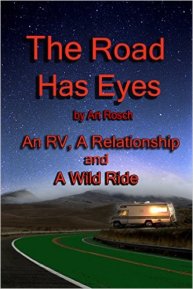
The Road Has Eyes – A Relationship, An RV and A Wild Ride Through Indian Country by Art Rosch is much more than a travel journal. It’s a memoir of a journey, both physical and spiritual, across country and into a new and different way of life. It begins in a relic RV that got them where they were headed, amidst mega doses of anxiety, then moves into a more modern RV that brings them back across the country to settle in to a new, downsized way of life. Along the way, readers get to know the author and his quirky companion, who traces her Native American heritage and links psychically with feral cats and other animals.
The tale is obviously told from an honest and heartfelt perspective, with a relaxed tone that’s easy to read. Rosch’s down to earth sensibilities and ability to see the humor in things, including himself, make this commentary on humanity a fun and amusing read. I found this book to be very entertaining, evoking more than a few chuckles as the pages turned. I can’t wait to start reading another of Rosch’s books, Confessions of an Honest Man. Check back here for my review on that one. I give The Road Has Eyes – A Relationship, An RV and A Wild Ride Through Indian Country four quills.