Dark Origins: The Sleeper, a poem by Edgar Allan Poe and my reading
Posted: May 26, 2021 Filed under: Dark Origins, Poetry | Tags: Dark Origins, Edgar Allen Poe, Poetry, Roberta Eaton Cheadle, The Sleeper, Writing to be Read 25 Comments

The Sleeper, a poem by Edgar Allan Poe takes as it subject a beautiful woman in death.
     At midnight in the month of June,
     I stand beneath the mystic moon.
     An opiate vapour, dewy, dim,
     Exhales from out her golden rim,
     And, softly dripping, drop by drop,
     Upon the quiet mountain top.
     Steals drowsily and musically
     Into the universal valley.
     The rosemary nods upon the grave;
     The lily lolls upon the wave;
     Wrapping the fog about its breast,
     The ruin moulders into rest;
     Looking like Lethe, see! the lake
     A conscious slumber seems to take,
     And would not, for the world, awake.
     All Beauty sleeps!—and lo! where lies
     (Her easement open to the skies)
     Irene, with her Destinies!
The speaker in the poem begins by describing the cemetery at midnight in the month of June. He observes the moon and notes the flowers that grow about the grave. At the end of the movement, he introduces the beautiful woman whom has died and whose grave is being prepared ready for her internment.
     Oh, lady bright! can it be right—
     This window open to the night?
     The wanton airs, from the tree-top,
     Laughingly through the lattice drop—
     The bodiless airs, a wizard rout,
     Flit through thy chamber in and out,
     And wave the curtain canopy
     So fitfully—so fearfully—
     Above the closed and fringed lid
     ‘Neath which thy slumb’ring soul lies hid,
     That o’er the floor and down the wall,
     Like ghosts the shadows rise and fall!
     Oh, lady dear, hast thou no fear?
     Why and what art thou dreaming here?
     Sure thou art come p’er far-off seas,
     A wonder to these garden trees!
     Strange is thy pallor! strange thy dress!
     Strange, above all, thy length of tress,
     And this all solemn silentness!
Irene is still lying on the bier in her room. The speaker can see her corpse through the window and watches the moving shadows on the wall and floor as the curtain of the canopy are blown about by the wind. The watcher is struck by her pallor, her strange dress, and her unusually long hair.
     The lady sleeps! Oh, may her sleep,
     Which is enduring, so be deep!
     Heaven have her in its sacred keep!
     This chamber changed for one more holy,
     This bed for one more melancholy,
     I pray to God that she may lie
     Forever with unopened eye,
     While the dim sheeted ghosts go by!

     My love, she sleeps! Oh, may her sleep,
     As it is lasting, so be deep!
     Soft may the worms about her creep!
     Far in the forest, dim and old,
     For her may some tall vault unfold—
     Some vault that oft hath flung its black
     And winged pannels fluttering back,
     Triumphant, o’er the crested palls,
     Of her grand family funerals—
     Some sepulchre, remote, alone,
     Against whose portal she hath thrown,
     In childhood, many an idle stone—
     Some tomb from out whose sounding door
     She ne’er shall force an echo more,
     Thrilling to think, poor child of sin!
     It was the dead who groaned within.
The speaker refers to Irene as being asleep and wishes for her sleep to be deep and for her not to be disturbed by on-going life such as children playing and throwing stones at the family sepulcher. The speaker calls Irene a “child of sin” but that holds no special significance. She is human and, therefore, is a child of sin.
Why did Poe write about women?
Throughout his life, virtually every woman Poe loved and who loved him died young.
His mother died before he was three years old and he was taken into the home of John Allan, a Richmond merchant who was presumed to have been his godfather. His foster mother died when he was in his late teens.
In 1835, when he was 27 years old, Poe married his cousin, Virginia Clemm, who was only 13. In 1842, Virginia became ill with tuberculosis and she died on the 30th of January 1847 at the age of 24.
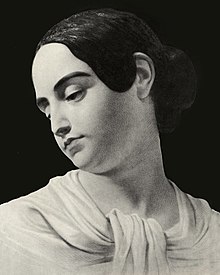
Why did Poe almost always write about women who died? It may have been because all the important women in his life died or he might have done it anyway. No-one will ever know.
Excerpt from Edgar Allan Poe’s letter to George W. Eveleth, Fordham, New York ,January 4, 1848 about his wife.
“Six years ago, a wife, whom I loved as no man ever loved before, ruptured a blood-vessel in singing. Her life was despaired of. I took leave of her forever & underwent all the agonies of her death. She recovered partially and I again hoped. At the end of a year the vessel broke again—I went through precisely the same scene. Again in about a year afterward. Then again—again—again & even once again at varying intervals. Each time I felt all the agonies of her death—and at each accession of the disorder I loved her more dearly & clung to her life with more desperate pertinacity. But I am constitutionally sensitive—nervous in a very unusual degree. I became insane, with long intervals of horrible sanity. During these fits of absolute unconsciousness I drank, God only knows how often or how much. As a matter of course, my enemies referred the insanity to the drink rather than the drink to the insanity. I had indeed, nearly abandoned all hope of a permanent cure when I found one in the death of my wife. This I can & do endure as becomes a man—it was the horrible never-ending oscillation between hope & despair which I could no longer have endured without the total loss of reason. In the death of what was my life, then, I receive a new but—oh God! How melancholy an existence.”
You can read more extracts of letters about Virginia Clemm Poe here: https://www.nps.gov/people/poe-virginiapoe.htm
My reading of The Sleeper by Edgar Allan Poe
About Roberta Eaton Cheadle

I am a South African writer specialising in historical, paranormal and horror novels and short stories. I am an avid reader in these genres and my writing has been influenced by famous authors including Bram Stoker, the Bronte sisters, Amor Towles, Stephen Crane, Enrich Maria Remarque, George Orwell, Stephen King, and Colleen McCullough.
I was educated at the University of South Africa where I achieved a Bachelor of Accounting Science in 1996 and a Honours Bachelor of Accounting Science in 1997. I was admitted as a member of The South African Institute of Chartered Accountants in 2000.
I have worked in corporate finance from 2001 until the present date and have written seven publications relating to investing in Africa. I have won several awards over my twenty year career in the category of Transactional Support Services.
I have been published a number of anthologies and have two published YA books, While the Bombs Fell and Through the Nethergate. I have recently published my first adult novel called A Ghost and His Gold which is partly set in South Africa during the Second Anglo Boer War.
Find Roberta Eaton Cheadle
Blog: https://wordpress.com/view/robertawrites235681907.wordpress.com
Twitter: https://twitter.com/RobertaEaton17
Facebook: https://www.facebook.com/robertawrites
Amazon: https://www.amazon.com/Roberta-Eaton-Cheadle/e/B08RSNJQZ5
_____________________________________________________________________________________________
Want to be sure not to miss any of Robbie’s “Dark Origins” segments? Subscribe to Writing to be Read for e-mail notifications whenever new content is posted or follow WtbR on WordPress. If you found it interesting or entertaining, please share.
Share this:

Day #3 of the WordCrafter “Poetry Treasures” book blog tour
Posted: May 26, 2021 Filed under: Uncategorized Leave a commentFor Day #3 of the Poetry Treasures book blog tour finds us over at Ritu Bhathal’s lovely blog site, “But I smile anyway”, with a guest post from contributing author Geoff Le Pard. Join us there to learn more about this wonderful anthology.
https://butismileanyway.com/2021/05/26/poetry-treasures-blogtour-featuring-geofflepard-bakeandwrite/
Share this:

WordCrafter Poetry Treasures blog tour – Day 2 featuring Victoria Zigler
Posted: May 25, 2021 Filed under: Uncategorized Leave a commentDay #2 of the WordCrafter “Poetry Treasures” Book Blog Tour finds us over at “Robbie’s Inspiration” with a guest post from contributing author Victoria Zigler. Please join us to learn more about the inspiration behind the poetry featured in this wonderful poetry anthology.

Poetry Treasures is an anthology of poems by a number of talented poets. Today I am thrilled to introduce poet and children’s author, Victoria Zigler, whose work features in this anthology.
I don’t do routines by Victoria Zigler
I’ve made that fact clear in several interviews where I’ve been asked what my writing routine looks like.
It’s not that I don’t want to, because I’d love to have a proper routine. The simple fact is, I can never make it stick, and it’s not even poor willpower, but issues with insomnia battling chronic fatigue, which means sometimes I go days where I’m lucky if I need all the fingers on one hand to count the hours of sleep I managed to get in those few days – regardless of how physically tired I might feel – while other times it’s the reverse, and it’s hours of wakefulness that are few…
View original post 672 more words
Share this:

Welcome to the WordCrafter’s “Poetry Treasures” Book Blog Tour
Posted: May 24, 2021 Filed under: Blog Tour, Book Promotion, Books, Giveaways, Poetry, Treasuring Poetry, WordCrafter Book Blog Tours, WordCrafter Press | Tags: Poetry Collection, Poetry Treasures, Treasuring Poetry, WordCrafter Book Blog Tours, WordCrafter Press 27 Comments
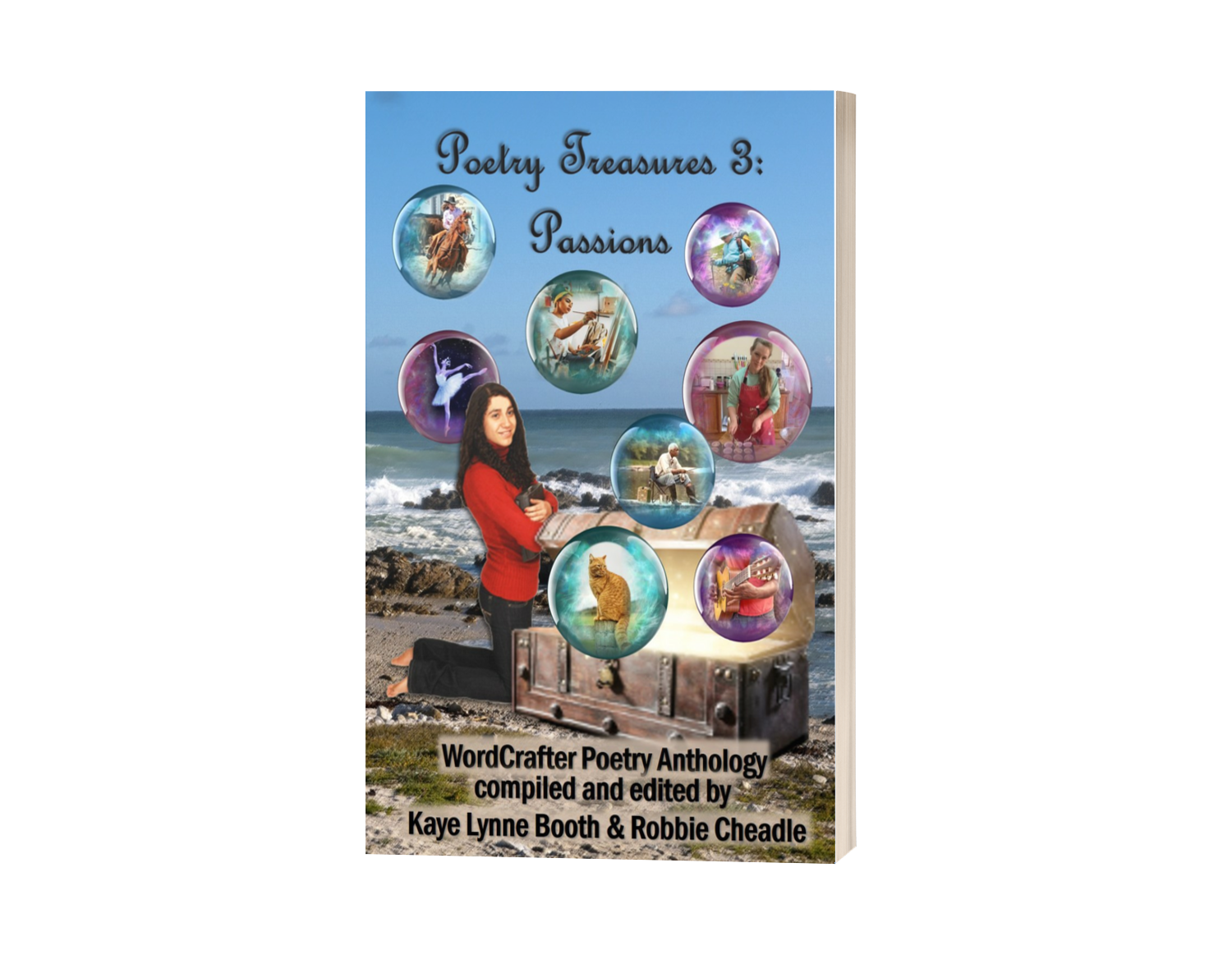
Welcome to Day #1 of the WordCrafter Poetry Treasures Book Blog Tour. We’ve got a great tour planned with guest posts from several of the contributing authors to this poetry collection, and an awesome giveaway. Follow the tour and leave a comment at each stop for a chance to win one of three digital copies of Poetry Treasures to be given away. (Winners will be randomly selected following the end of the tour.)
Many of you may be familiar with Robbie Cheadle’s monthly blog series, “Treasuring Poetry”, which has grown in popularity since she began the series last year, here on Writing to be Read. For those who are not familiar with this series, Robbie hosts one author/poet guest each month, with an interview and review of their latest poetry collection. The series is popular because Robbie asks good questions which are designed to reveal some of the inner poetic workings of the author, and her guests are talented and insightful.

Poetry Treasures is a collection of poetry written by eight of the “Treasuring Poetry” guests in 2020, as well as the poetry of the series author, Roberta (Robbie) Eaton Cheadle. The poetry of the late Sue Vincent is also featured, along with a special tribute to this talented and vibrant poet and human being.
Poetry is subjective, often speaking to the reader in ways in which the author never intended, but are nevertheless just as valid as the ways in which those same words affected the poet. But, there are certain poems that just reach out and grab you, and I think that we have some of those featured in this poetry anthology, or at least I hope that we have managed to capture a few.
To introduce this wonderfully unique collection, we have a guest post by one of the contributing authors, Jude Kirya Italaki. You can find more of Jude’s wonderful poetry between the covers of Poetry Treasures.
______________________________________________________________________________________________________________
Sometimes the most beautiful things are that way because we are able to share them with others. And once those people leave our lives, the beauty we used to see can turn sour.
All that was beautiful, now mocks me
The resplendent night sky, hides secrets in plain sight
The vermillion sunrise, paints scars in bloody hues
And I hide from all their beauty; because it reminds me of you
However, there are things we will always find beautiful. It is important to discover ourselves, hold on to what makes us happy as individuals, and in turn share this with others. When introduced to beauty we did not know before, it might be crucial to love it genuinely, and instead of attaching it to the people who introduced us, we juxtapose it so that the grief of loss may not taint it.
_____________________________________________________________________________________________________________
We’ve got a great blog tour planned this week to introduce you to this wonderfully unique collection of poetry, published by WordCrafter Press. Contibuting authors include Sue Vincent, Geoff Le Pard, Frank Prem, Victoria Zigler, Annette Rochelle Aben, Colleen M. Chesebro, K. Morris, Jude Kirya Italaki and Roberta Eaton Cheadle, many of whom will be sharing their poetry and their inspirations in guest posts for this tour. I do hope you will join us and purchase your copy of Poetry Treasures, available in digital and print formats.
Buy Link: https://www.amazon.com/Poetry-Treasures-Sue-Vincent-ebook/dp/B0933KSJR9

_______________________________________________________________________________________________________________
Book your WordCrafter Book Blog Tour today!
Share this:

Craft and Practice with Jeff Bowles – Narrators of a Different Color
Posted: May 19, 2021 Filed under: Character Development, Craft and Practice, Dialogue, Fiction, Point of View, Story Telling Methods, Tense, Voice, Writing | Tags: Craft and Practice, Dialogue, Jeff Bowles, narration, Point of View, writing advice, Writing Tips, Writing to be Read Leave a comment
Each month, writer Jeff Bowles offers practical tips for improving, sharpening, and selling your writing. Welcome to your monthly discussion on Craft and Practice.
There’s an entire school of thought behind the use of standard third-person perspective in narrative fiction. Often enough, beginning writers are encouraged to see it as their go-to, which isn’t horrible advice. Let’s do a quick POV lesson, in case your memory is hazy.
First-person: I walked to the lake.
Second-person: You walked to the lake.
Third-Person: He walked to the lake.
Conventional wisdom says most readers stomach lucky number three best. I think that might be a load of hogwash, but let’s assume it’s 100% correct. What would be the benefit of writing fiction—or creative nonfiction, for that matter—from a quote, unquote “nontraditional” perspective? Your own edification, right? And maybe something else.
Third-person is the norm because it provides helpful breathing room between us and our readers. It’s easy to tell a story this way, natural. We’re used to it, having read it a million times before. By the same token, I have noticed it’s become increasingly more common for storytellers to dabble in other modes. First or second-person, past or present tense, limited omniscience or full-blown mind-of-God territory. First-person present tense, by the way, is notoriously apt to cause chaos.
“I write on the blog post for a bit, and then I check my email. It occurs to me I’ve never met a sultan of Saudi Arabia, so it’s possible these diet pills are phony. Oh well. I chuck them in the trash and head outside to clear my mind. It smells like a forest fire out here. Hey, what gives?”
This is stream of consciousness stuff, easy to write but difficult and unwieldy to beat into proper shape. All the verbiage points to me, me, me, now, now, now. It can get same-same after a while, difficult to chew through. Not always, but often enough.

I’ll give you the benefit of the doubt and assume your new forest fire/phony diet pill story is perfectly well written, thank you very much. You did the job, tale told effectively, end of discussion. In that case, one crucial question comes to mind. Is your narrator any fun to read?
What do you mean, what do I mean? What’s a fun narrator supposed to sound like? Well, I guess they can be any of the following: idiosyncratic, faulty, confident, psychotic, mentally sound, likable, unlikable, funny, unfunny, jaded, naïve, a super focal lens, an individual with something to say, a personality worth delving into.
Maybe you’ve never considered it this way, but in my humble estimation, narration of this kind is a blank check. Most things worth achieving sound unlikely at first. Think of it like speed dating. You known instantly upon sitting across from someone whether or not you’d enjoy their company. Is your speed-dater worth engaging in conversation? Are they fun to listen to?
Gut check time. How well do you write dialogue? I only ask because I’ve realized throughout the years not everyone is as keen on it as I am. Sharp and amusing with zero fat left to trim, that’s my favorite kind. But what’s yours? Informative but not dull? Wacky and a bit irredeemable? More importantly, do you think you could extend a few lines of it to encompass an entire story? I’m willing to bet you can.
The simple truth is most writers create bland characters by default. Not you, of course. Perish the thought. Mentors and teachers might encourage us to pre-fill character sheets or go to public places and write down snatches of conversation we hear. I’m not saying that’s bad advice, but I can confidently tell you it’s more efficient and effective to let characters tell us who they are rather than to impose our sizable wills upon them. Don’t bloat yourself up with too much preparation. On the fly, hit the page and let your creations speak to you. A little honest individuality is enough to distinguish your work from the work of others, and that’s a good thing.
Rule makers have tried to enter this arena, but I don’t think they’ve done a great job setting any concrete prescriptive measures. Is addressing your reader directly breaking the fourth wall? No, not really. If you think about it, first-person narration divorced from context is unnatural anyway. It was much more common in centuries past for authors to speak to their readers through narration. As we discussed earlier, stability is easy to achieve by providing a little breathing room. This is a blank check, remember? Anything and everything is achievable, provided you’ve got the skills to stick the landing. That’s the thing about experts. If they tell you something can be done, they’re most certainly right. If they tell you it can’t, they’re most certainly wrong.
Style remains essential in this domain. My final advice is this: If you’re currently working on something you’ve written in first-person, try playing with your style a little, write it like you’d write some nice extended dialogue, just as far as you’re comfortable, nothing too crazy—unless you like crazy. You might just surprise yourself. Scratch that. Your narrator might surprise you.
Don’t be stiff or formal. Get into the nitty gritty and pour a serious helping of personality gravy on those otherwise boring and bland mashed ‘taters.
On that note…
See you next time, everyone. Have an awesome May, will you?
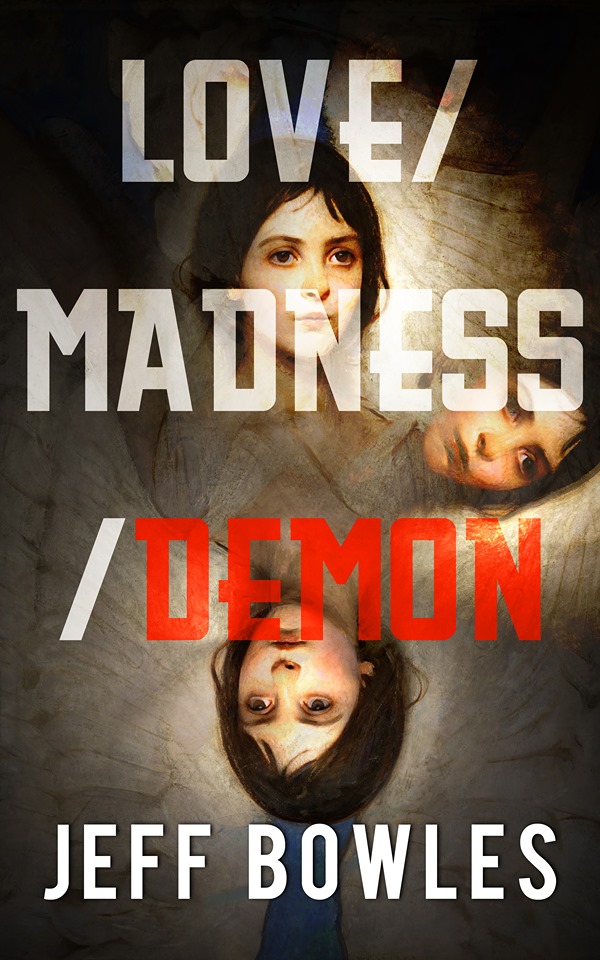
Jeff Bowles is a science fiction and horror writer from the mountains of Colorado. The best of his outrageous and imaginative work can be found in God’s Body: Book One – The Fall, Godling and Other Paint Stories, Fear and Loathing in Las Cruces, and Brave New Multiverse. He has published work in magazines and anthologies like PodCastle, Tales from the Canyons of the Damned, the Threepenny Review, and Dark Moon Digest. Jeff earned his Master of Fine Arts degree in creative writing at Western State Colorado University. He currently lives in the high-altitude Pikes Peak region, where he dreams strange dreams and spends far too much time under the stars. Jeff’s new novel, Love/Madness/Demon, is available on Amazon now!
Check out Jeff Bowles Central on YouTube – Movies – Video Games – Music – So Much More!
Want to be sure not to miss any of Craft and Practice with Jeff Bowles segments? Subscribe to Writing to be Read for e-mail notifications whenever new content is posted or follow WtbR on WordPress
Share this:

Put Off My Sackcloth Essays: A collection telling a story of hope
Posted: May 18, 2021 Filed under: Book Review, Books, essays, Nonfiction | Tags: Annie Dawid, Book Review, essays, Put Off My Sackcloth Essays, Writing to be Read 1 Comment
Put Off My Sackcloth Essays, by Annie Dawid provides open and honest glimpses into the life of a single daughter of a Jewish immigrant, who chooses to settle, eventually, in a small mountain community, where she lives off-grid with her mixed lineage son. Dawid’s essays are a brutally honest portrayal of her journey out of a history of suicidal depression and into motherhood.
The fact that the organization is not chronological, may make it more difficult for readers who are used to following a linear storyline, but her essays intermix recountings from her own life experiences with reflections on her research of the 1978 mass suicides in Jonestown, in a mosaic of small pieces that fit together to create a complete story, out of despair and into hope. These powerful essays are at times heart wrenching, at times evoking a smile, but they all reach out and touch the reader from the depths of the author’s soul.
Amazed by Dawid’s inner strength to battle her own demons, these soul revealing essays outline a journey from a life teetering on the edge of death into one filled with life and love. I give Put Off My Sackcloth Essays five quills.

Kaye Lynne Booth does honest book reviews on Writing to be Read in exchange for ARCs. Have a book you’d like reviewed? Contact Kaye at kayebooth(at)yahoo(dot)com.
Share this:

A Ghost and His Gold – Guest post about the Siege of Ladysmith during the Second Anglo Boer War
Posted: May 17, 2021 Filed under: Uncategorized 2 CommentsAnother great post on the history behind Roberta Eaton Cheadle’s “A Ghost and His Gold”. Check it out.

Debbie De Louise from Ruff Drafts hosted a post for my Great Escapes virtual book tour about the Siege of Ladysmith which took place at the beginning of the Second Anglo Boer War. Thank you Debbie.
Guest Post: The Siege of Ladysmith by Roberta Eaton Cheadle
Background
The siege of Ladysmith, a town in British controlled Natal, was a lengthily engagement between the British and the Boers during the Great South African War (Second Anglo Boer War).
When the negotiations between the two Boer republics and Britain broke down and war was declared on the 11thof October 1899, 21,000 Boers advanced into Natal from all sides. By way of a countermeasure, Lieutenant Sir George White deployed his British troops around the garrison town of Ladysmith. As the Boers surrounded Ladysmith, White engaged in the Battle of Ladysmith with ended in disaster for the British with 1,200 men killed…
View original post 152 more words
Share this:

Treasuring Poetry: Meet author and poet M J Mallon
Posted: May 15, 2021 Filed under: Author Profile, Book Review, Books, Interview, Poetry, Review, Treasuring Poetry | Tags: Author Interview, Book Review, M.J. Mallon, Mr. Sagittarius, Robbie Cheadle, Treasuring Poetry, Writing to be Read 60 Comments
My Treasuring Poetry guest today is talented author and poet M J Mallon. I am delighted to host Marje here and hope you enjoy her thoughts on poetry and her favourite poem.
Which of your own poems is your favourite?
This was such a difficult decision, I have at least three favourites! I narrowed it down to the robin. The robin and the dragonfly are my spirit animals and trees are also a huge inspiration. I’ve written about all of these and more in Mr. Sagittarius.

Bench,
A bird,
Red-breasted,
So, tame you rest,
Beside me robin,
Two friends on a park bench,
One human, one of nature,
I appreciate your kind time,
Until you away… exploring far,
Hinting at possibilities you go.
I wonder what you notice in your world.
And why you choose that ground to explore,
When you could have stayed here with me,
In mindful meditation.
Maybe you’ll visit me,
Christmas day, perhaps?
To bring good cheer,
Until then,
Peace to, You.
What inspired you to write this particular poem?
I’d been studying mindfulness at the sixth form college where I work. Mindfulness is the act of observing and using the full array of our senses meditatively to become more at one with ourselves. I’ve discovered that this is a fantastic practice to adhere to. It benefits an author’s creativity by making you more aware of the nuances of your surroundings. I’m fortunate in that I work near the botanical gardens in Cambridge, so I often visit and walk and observe the wonder of nature taking photographs of the trees, flowers, animal and insect visitors. Over time, I collected these photographs and wrote poems about them. These, along with various seasonal and short pieces of fiction feature in Mr. Sagittarius. It is a joyful celebration of siblings, magic, loves, nature, the seasons and the circle of our lives.
Which genre of poetry do you enjoy writing the most and why?
I love writing poetry about life in all its vibrant colours. I am often inspired by photography, (I am a keen amateur photographer – my grandfather and uncle were professional photographers,) or I use images I discover as prompts, often via Colleen Chesebro’s poetry challenge: https://wordcraftpoetry.com/
Specifically, I enjoy writing poems about nature, trees, flowers, love and Halloween! Halloween poems also feature in Mr. Sagittarius. Halloween is an autumnal activity, (and often a childhood one,) so it links well with the seasonal/circle of life, aspect of my poetry writing.
Which genre of poetry do you enjoy reading the most?
I enjoy reading short form poetry. It is so expressive and brilliant. I love how short verses of poetry convey so much detail in so few words. I enjoy haiku, and tanka, as well as poems that form a pattern on the page. I also enjoy longer forms as you will see from my choice of favourite poem.
What is your favourite poem?
I have always loved Ode To Autumn by John Keats. I can almost taste the words. They are magnificent—that first line: Season of mists and mellow fruitfulness —draws you in and makes you long to read more.
Ode To Autumn by John Keats
Season of mists and mellow fruitfulness,
Close bosom-friend of the maturing sun;
Conspiring with him how to load and bless
With fruit the vines that round the thatch-eves run;
To bend with apples the moss’d cottage-trees,
And fill all fruit with ripeness to the core;
To swell the gourd, and plump the hazel shells
With a sweet kernel; to set budding more,
And still more, later flowers for the bees,
Until they think warm days will never cease,
For Summer has o’er-brimm’d their clammy cells.
2.
Who hath not seen thee oft amid thy store?
Sometimes whoever seeks abroad may find
Thee sitting careless on a granary floor,
Thy hair soft-lifted by the winnowing wind;
Or on a half-reap’d furrow sound asleep,
Drows’d with the fume of poppies, while thy hook
Spares the next swath and all its twined flowers:
And sometimes like a gleaner thou dost keep
Steady thy laden head across a brook;
Or by a cyder-press, with patient look,
Thou watchest the last oozings hours by hours.
3.
Where are the songs of Spring? Ay, where are they?
Think not of them, thou hast thy music too,—
While barred clouds bloom the soft-dying day,
And touch the stubble-plains with rosy hue;
Then in a wailful choir the small gnats mourn
Among the river sallows, borne aloft
Or sinking as the light wind lives or dies;
And full-grown lambs loud bleat from hilly bourn;
Hedge-crickets sing; and now with treble soft
The red-breast whistles from a garden-croft;
And gathering swallows twitter in the skies.
https://allpoetry.com/Ode-To-Autumn
Mr Sagittarius by M J Mallon
About Mr Sagittarius
Twin brothers Harold and William love the magic of the natural world.
When Harold dies he leaves a simple memorial request.
Will his brother William and his sister Annette honour it?
Or, will the garden work its magic to ensure that they do.
A magical story expressed via an original compilation of poetry and prose with photographic images.
#Poetry #Prose #Photography #NaturalWorld #Trees #Magic #Spirit #Animals #CircleofLife #Humour #Halloween #Cats #Buddha
My review of Mr Sagittarius
Mr Sagittarius is a beautiful collection of poems and short stories, set in the lovely gardens of Cambridge and linked by the visits and experiences of a family of twin brothers and their younger sister.
The story starts with William visiting the weeping willow tree in the garden, a place that was special to his twin brother, Harold, who has recently passed away. William sees Harold’s spirit in a dragonfly that he chats to and finds solace in their one-sided communication.
This is a few lines from a poem about the dragonfly:
“Ancient, sweet fellow
Sacred magic bestower,
Change tumbling on fragile wings.”
When William returns home, he has an altercation with his sister, Annette. During their spat Annette reveals that she has always felt left out and overlooked by her twin brothers. This revelation leads to William and Annette becoming closer and visiting the garden together. Not long after, William passes on and Annette is left alone. She visits the garden and communicates with the spirits of both her brothers over the course of the rest of her long life.
The visits of the siblings to the garden are captured in lovely verse. This is an example I really enjoyed:
“I dream in colour
But now everything is dark
Where has the light gone?
Oh, cruel leafy canopy,
No green meadow, just blue thoughts.”
My favourite of the short stories was The Old Man of Snow and The Snow Snake. This is a story about making good choices in life and rejecting greed. I enjoyed the tale and the descriptive writing.
Mr Sagittarius is a gorgeous book full of delightfully depictive poems and short stories and decorated with striking photographs. This is a book that lovers of poetry, mystery, and wonder will love.
Purchase Mr Sagittarius: Poetry and Prose
About M J Mallon
I am a diverse author who blogs at: https://mjmallon.com. My interests include writing, poetry, photography, and alternative therapies. My favourite genres to write are: Fantasy YA, Paranormal, Ghost and Horror Stories and I love writing various forms of poetry and micro poetry – haiku and Tanka and flash fiction.
I am proud to be included in the best selling horror anthology Nightmareland which received best seller status with best-selling author Dan Alatorre at the helm.
It is one of my greatest pleasures to read and I have written over 100 reviews: https://mjmallon.com/2015/09/28/a-z-of-my-book-reviews/
About Robbie Cheadle

Robbie Cheadle is a children’s author and poet.
The Sir Chocolate children’s picture books, co-authored by Robbie and Michael Cheadle, are written in sweet, short rhymes which are easy for young children to follow and are illustrated with pictures of delicious cakes and cake decorations. Each book also includes simple recipes or biscuit art directions which children can make under adult supervision.
Robbie has also published books for older children which incorporate recipes that are relevant to the storylines.
Robbie writes a monthly series for https://writingtoberead.com called Growing Bookworms. This series discusses different topics relating to the benefits of reading to children.
Robbie has a blog, https://robbiesinspiration.wordpress.com/ where she shares book reviews, recipes, author interviews, and poetry.
Find Robbie Cheadle
Blog: https://www.robbiecheadle.co.za/
Blog: robbiesinspiration.wordpress.com
Twitter: BakeandWrite
Instagram: Robbie Cheadle – Instagram
Facebook: Sir Chocolate Books
Want to be sure not to miss any of Robbie’s “Treasuring Poetry” segments? Subscribe to Writing to be Read for e-mail notifications whenever new content is posted or follow WtbR on WordPress.
Share this:

Jeff’s Movie Reviews – Mortal Kombat (2021)
Posted: May 14, 2021 Filed under: Commentary, Jeff's Movie Reviews, Movie Review, Movies, Opinion, Video Games | Tags: Jeff's Movie Reviews, Mortal Kombat, Movie Review, Movies, Video Games, Writing to be Read Leave a comment
Finish him!
by Jeff Bowles
Movies based on popular video games aren’t typically known for their excellence. Among gamers and industry vets, they aren’t even known to please longtime fans in any serious way. Just check out some of the more financially successful ventures into this difficult field, films like Warcraft, Detective Pikachu (which actually wasn’t all that bad), the Tomb Raider series, Prince of Persia, Monster Hunter, all six entries in the Resident Evil franchise, Sonic the Hedgehog….
The problem usually lies in a misunderstanding of what makes video games tick, the basic fact they’re more fun to play than watch. Also a certain greedy approach to cash cows that otherwise net billions annually. Interactive, choice-driven, challenging, often containing stories that work precisely because players feel totally immersed.
Games can and do look and smell like movies, but they aren’t the same thing. An enterprising filmmaker would be loath to adapt a video game beat-for-beat. What would be the point? The most common approach is to try and split the difference, to take a few popular franchise characters, perhaps mix them in with some new no-name placeholders, invent a plot that is similar but not identical to the original, and then race the whole thing through production, packaging, and release.
The new Mortal Kombat film is no different. It thinks it understands what longtime fans want, but in reality it’s just a hodgepodge of half-baked ideas and mishandled IP. Honestly, I don’t know if you’ve ever played a MK game in your life, but the series isn’t about story, not really. It’s about gore and hyperviolence, the kind of bloody entertainment that rewards complex finisher moves so brutal they have but one appropriate name: fatalities.

This latest stab at the franchise wants to include all the blood and death, not sugar coat things like the famously inadequate Mortal Kombat movies made in the mid-90s. Lots of people grew up with those films, and Warner Bros. is convinced an updated, adult-friendly retread will hit the spot. For the most part, it does not. The story is messy, the action is simultaneously choppy and too slow (not sure how they managed that one), and let’s not mince words, so many different characters get thrown at you, it’s entirely possible you’ll need a PH.D. in Kombat-ology to keep up.
I’m old enough to remember a time many moms and dads would refuse to let their kids play Mortal Kombat. Video games have only gotten increasingly more realistic since then. A gaming series that pushes the violence and willfully misspells the word ‘Kombat‘ is never going to yield an Academy Award winner. Kome on, all you Klassic Mortal Kombat Kompetitors! Why no Kostly retread of Street Fighter, or Kan we finally Konsider the genre Kompromised?
Skip this movie if you can. Go play the newest Mortal Kombat video game, lucky number eleven, which at least understands what fans show up to see. Blood, blood, and even more blood, gameplay that is tight and fierce, competitive tournaments that let you test yourself against other players, and a story that is serviceable at best.
Because the vast majority of MK players don’t care about story. That just goes without saying. Remove all the things that make the games immersive fun, and you’re left with a whole heap of meh.
Kill the Koncept, Warner Bros.. Kan’t tell you how Kreatively Konstipated this Kategory has beKome.
Jeff’s Movie Reviews gives the new Mortal Kombat movie a Five out of Ten.
Jeff Bowles is a science fiction and horror writer from the mountains of Colorado. The best of his outrageous and imaginative work can be found in God’s Body: Book One – The Fall, Godling and Other Paint Stories, Fear and Loathing in Las Cruces, and Brave New Multiverse. He has published work in magazines and anthologies like PodCastle, Tales from the Canyons of the Damned, the Threepenny Review, and Dark Moon Digest. Jeff earned his Master of Fine Arts degree in creative writing at Western State Colorado University. He currently lives in the high-altitude Pikes Peak region, where he dreams strange dreams and spends far too much time under the stars. Jeff’s new novel, Love/Madness/Demon, is available on Amazon now!
Check out Jeff Bowles Central on YouTube – Movies – Video Games – Music – So Much More!
_____________________________________________________________________________________________________________
Want to be sure not to miss any of “Jeff’s Movie Reviews” segments? Subscribe to Writing to be Read for e-mail notifications whenever new content is posted or follow WtbR on WordPress. If you found it useful or entertaining, please share.











Mind Fields: My Bank Account Has Termites
Posted: May 21, 2021 | Author: artrosch | Filed under: Commentary, Opinion | Tags: Arthur Rosch, Commentary, Mind Fields, Writing to be Read | 1 CommentMy bank account has termites. Look at this statement! I’m paying $2.99 a month for National Geographic Online. I pay $4.99 for Bookbug, $3.99 for InfoTune. I’m still using the free version of Spotify. I can’t keep up! I did an audit of my books last night and my monthly internet charges are out of control. The total crept up on me like an infestation. One day it wasn’t there and the next day it was in my life like bugs in the basement. I can’t wonder: How did this happen? because I know how it happened. In the course of acquiring a normal amount of services and entertainment I accrued a creeping army of little debits. Look at this one: Chordbuddy.com. It’s a site that helps me practice piano. It gives me access to every musical chord ever devised. Many thousands of chords! It’s $5.99 a month and I use it every day. What chord is that? OK let’s look it up on Chordbuddy.com. Aha! Cminor 13. What a bizarre chord.
This tool is a miracle! Beethoven didn’t have the internet. He figured out his own shit without help from the digital universe. NOW… we have the digital universe and I’m teaching myself how to play and write with the aid of these tools.
I’m so grateful. I take nothing for granted. The world is always fluid and plastic. It melts and flows. Y’gotta be like a surfer.. Ride the waves as they come, big ones and small ones. My bank account gets nibbled at by a horde of seafloor crustaceans in digital form. Here’s my charge for keeping my Viewbug photo website up and running. It’s 10.99. I have to keep my amazing photos visible to the world because that pays part of my rent. Then… there’s $2.99 a month to Google for enough online storage to hold all these images and videos. Holy shit. I started writing this, kind of larking it but now it’s turned serious. I better audit my account again, for real this time. I need to know this essay has not been an exaggeration.
There are these fleas too. You get one behind your ear and for the next week even though the flea is long dead you still itch there, still scratch it now and then.
I keep a Sticky Note on my desktop. It has all my credit cards and internet debits listed by the company and last four digits. If I’m going to get hacked I’ll get hacked. One time I had my computer held hostage by a bunch of guys named Rah-jer. It cost me five hundred dollars and a lot of work to recover the contents of that computer. It wasn’t the machine that was hostage, it was the contents. Of course I had back ups. I always have backups and backups to the backups. Still, it was worth 500 dollars to ransom my computer.
I’m going to put the cover on my digital piano now and go to sleep. In the morning I may discover that I’ve signed up for a live Zoom conference with therapists at the South Pole. I don’t know what’s going to happen next:. The pace of change is positively sweaty! Close your eyes and turn around three times. Zipp! The world has changed. If you don’t change with it… well… you haven’t changed with it. That’s okay. If you want to be stuck in the past, pitch your tent with spikes made from old AOL discs.
______________________________________________________________________________________________________________________________
Arthur Rosch is a novelist, musician, photographer and poet. His works are funny, memorable and often compelling. One reviewer said “He’s wicked and feisty, but when he gets you by the guts, he never lets go.” Listeners to his music have compared him to Frank Zappa, Tom Waits, Randy Newman or Mose Allison. These comparisons are flattering but deceptive. Rosch is a stylist, a complete original. His material ranges from sly wit to gripping political commentary.
Arthur was born in the heart of Illinois and grew up in the western suburbs of St. Louis. In his teens he discovered his creative potential while hoping to please a girl. Though she left the scene, Arthur’s creativity stayed behind. In his early twenties he moved to San Francisco and took part in the thriving arts scene. His first literary sale was to Playboy Magazine. The piece went on to receive Playboy’s “Best Story of the Year” award. Arthur also has writing credits in Exquisite Corpse, Shutterbug, eDigital, and Cat Fancy Magazine. He has written five novels, a memoir and a large collection of poetry. His autobiographical novel, Confessions Of An Honest Man won the Honorable Mention award from Writer’s Digest in 2016.
More of his work can be found at www.artrosch.com
Photos at https://500px.com/p/artsdigiphoto?view=photos
__________________________________________________________________________________________________________________________
Want to be sure not to miss any of Art’s “Mind Fields” segments? Subscribe to Writing to be Read for e-mail notifications whenever new content is posted or follow WtbR on WordPress. If you find it interesting or just entertaining, please share.
Share this: