Day 5 of the WordCrafter “Behind Closed Doors” Book Blog Tour
Posted: August 27, 2021 Filed under: Blog Tour, book marketing, Book Promotion, Book Review, Books, Guest Post, Poetry, Review, WordCrafter Book Blog Tours | Tags: Behind Closed Doors, Poetry, Poetry Collection, Robbie Cheadle, WordCrafter Book Blog Tours Leave a comment
We’re wrapping up the WordCrafter Behind Closed Doors Book Blog Tour over at Zigler’s News with a guest post by poet and author Robbie Cheadle and a review by Victoria Zigler. Please join us to learn a bit more about the author and her book.
http://ziglernews.blogspot.com/2021/08/behind-closed-doors-collection-of.html
______________________________________________________________________________________
Book your WordCrafter Book Blog Tour today!
Share this:

Day 4 – WordCrafter “Behind Closed Doors” Book Blog Tour
Posted: August 26, 2021 Filed under: Blog Tour, Book Covers, book marketing, Book Promotion, Book Review, Books, Guest Post, Poetry, WordCrafter Book Blog Tours | Tags: Behind Closed Doors, Book Review, Poetry, Poetry Collection, Robbie Cheadle, WordCrafter Book Blog Tours 1 CommentDay 4 of the WordCrafter Behind Closed Doors Book Blog Tour finds us over at Miriam Hurdle’s Showers of Blessings blog site with a guest post by author and poet Robbie Cheadle and a lovely review of Robbie’s latest book, Behind Closed Doors, a collection of unusual poetry. Drop in and learn more about this fascinating poetry collection and its author.
_____________________________________________________________________________________________________
Book your WordCrafter Book Blog Tour today!
Share this:

Dark Origins – Peter Pan, Lost Boys who are murdered and mermaids who are Sirens.
Posted: August 25, 2021 Filed under: Classics, Dark Fantasy, Dark Origins, Pirate Fantasy, Stories, Writing | Tags: Dark Origins, Folklore, Peter Pan, Roberta Eaton Cheadle, Writing to be Read 42 Comments
Most of us know the Disney version of Peter Pan featuring Captain Hook, Mr Smee, Wendy, John, Michael, and the Lost Boys. Oh, and Tinkerbell, of course.
I am not sure how many people have read the original play called Peter Pan or the boy who wouldn’t grow up, written by J.M. Barrie in 1904, but it is a far cry from the innocent tale presented by Walt Disney.
We know from the Disney film that Peter Pan doesn’t want to grow up, but no mention is made of the extreme lengths Peter Pan is prepared to go to fight it.
Consider this extract: “The boys on the island vary, of course, in numbers, according as they get killed and so on; and when they seem to be growing up, which is against the rules, Peter thins them out; but at this time there were six of them, counting the twins as two.“
To put it bluntly, Peter Pan kills the lost boys to keep them from aging. While the film presents the view that Peter Pan is seeking eternal youth, he is, in fact, obsessed with death. This characteristic is believed to come from J.M. Barrie’s own childhood experience of losing his brother, David.
According to an article in The Herald, six-year old Jamie Barrie was hugely impacted by the death of his older brother, David, at the age of fourteen. David was said to have died the day before his birthday when he was accidently knocked over by a friend while skating, and fractured his skull on the ice. The article speculates that the ‘friend’ was in fact, young Jamie and that he was rejected by his mother as a result of the accident. You can read more about it here: https://www.heraldscotland.com/default_content/12469608.tragedy-behind-neverland-jm-barrie-cause-brothers-death/
And then there are the mermaids…
In the original Peter Pan story, the mermaids who inhabit Neverland all live in the lagoon. They enjoy the company of Peter Pan but are malevolent to everyone else. The are extraordinarily beautiful and have amazing singing voices, but they are vain and unfriendly.
The mermaids spend their days playing in the rock pools and ocean around Marooners’ Rock and they retire to their coral cave homes beneath the waves at night and during high tide.
The mermaids change when the moon is out and transform into darker creatures. They utter and wail strange calls in the moonlight. Captain Hook is terrified of the mermaids, calling them the ‘loreleis’ and saying that the lagoon is the most treacherous place in Neverland. A lorelei is a siren of Germanic legend whose singing lures Rhine River boatmen to destruction on a reef.

If you are interested in the true story behind Peter Pan and the life of J.M. Barrie, you can read more here: https://www.refinery29.com/en-us/2014/12/78880/peter-pan-jm-barrie-true-story
About Roberta Eaton Cheadle

Roberta Eaton Cheadle is a South African writer and poet specialising in historical, paranormal, and horror novels and short stories. She is an avid reader in these genres and her writing has been influenced by famous authors including Bram Stoker, Edgar Allan Poe, Amor Towles, Stephen Crane, Enrich Maria Remarque, George Orwell, Stephen King, and Colleen McCullough.
Roberta has short stories and poems in several anthologies and has 2 published novels, Through the Nethergate, a historical supernatural fantasy, and A Ghost and His Gold, a historical paranormal novel set in South Africa.
Roberta has 9 children’s books published under the name Robbie Cheadle.
Roberta was educated at the University of South Africa where she achieved a Bachelor of Accounting Science in 1996 and a Honours Bachelor of Accounting Science in 1997. She was admitted as a member of The South African Institute of Chartered Accountants in 2000.
Roberta has worked in corporate finance from 2001 until the present date and has written 7 publications relating to investing in Africa. She has won several awards over her 20-year career in the category of Transactional Support Services.
Find Roberta Eaton Cheadle
Blog: https://wordpress.com/view/robertawrites235681907.wordpress.com
Twitter: https://twitter.com/RobertaEaton17
Facebook: https://www.facebook.com/robertawrites
Amazon: https://www.amazon.com/Roberta-Eaton-Cheadle/e/B08RSNJQZ5
_____________________________________________________________________________________________
Want to be sure not to miss any of Robbie’s “Dark Origins” segments? Subscribe to Writing to be Read for e-mail notifications whenever new content is posted or follow WtbR on WordPress. If you found it interesting or entertaining, please share.
Share this:

Day 2 – WordCrafter “Behind Closed Doors” Book Blog Tour
Posted: August 24, 2021 Filed under: Blog Tour, book marketing, Book Promotion, Book Review, Books, Guest Post, Poetry, Review, WordCrafter Book Blog Tours | Tags: Behind Closed Doors, Poetry, Poetry Collection, Robbie Cheadle, WordCrafter Book Blog Tours 12 CommentsDay 2 of the WordCrafter Behind Closed Doors Book Blog Tour brings us another wonderful guest post by author and poet Robbie Cheadle and a review by DL Mullen. After you enjoy the guest post below, please pop on over to DL Mullen’s Undawnted blog site to check out her review:
http://www.undawnted.com/2021/08/wordcrafter-blog-tour-robbie-cheadles.html
Behind Closed Doors, a collection of unusual poems blog tour – Day 2
Do you want it enough? is a freestyle poem I wrote while contemplating why it is that some people and/or poets are prolific and manage to get a number of books, short stories and/or poems published while others don’t. It is not a question of talent generally, as many writers and poets who don’t publish their work are incredibly talented.
So what holds some writers and poets back?
This poem captured my ultimate view that it depends on the determination, resilience, and drive of the person in question. Publishing a book or any other work is a massive effort and requires numerous re-writes and edits. Once that process is complete, there is still the typesetting and final proofing phase to undergo before you can hit the publish button.
I also believe that there must be an acceptance that a piece of work will never be completely perfect. I have realised that I must accept a 96% perfection level in order to get a book finalised for printing and publishing. No matter how hard I try or how many times I read my work and get other people to read it and edit it for me, I always find a few typos and punctuations after the book has gone live. That is that nature of writing and is almost impossible to avoid. The fact that I detect typos and errors in traditionally published books gives me some comfort in this respect.
These ideas of mine resulted in the following poem.
Do you want it enough?
You tell me you want
Your time in the sun
To dance in the light
That reflects off your fame
Do you really want it?
Do you want it enough?
To give up the good things
Like relaxation and rest
Sleeping late in your bed
Toasty and warm
Are you sufficiently mesmerised
By the task to hand
To trade pleasure for work?
And sit in your office,
Juggling ideas and possibilities,
While your friends watch movies,
Eat out, drink, and socialise
Spending their weekends
Having a jolly good time
Can you be disciplined and sit
At a computer for hours
Tapping out words
While creating worlds
Actions and events
That form themselves into stories?
Will you watch
The world passing by
Through the glass of your window?
While you pursue the fantasy
You hope to achieve,
Knowing there are no guarantees
Few things in this life
Come without paying a price
And the tag accompanying fame
And its bedfellow fortune
Is always high
Taxing time and good health
With no assured return
Are you ready to exchange
Your freedom and pleasure
For the discipline required
To chase that elusive light?
If you prefer to listen to me reading this poem, you can find it on my Youtube Channel here: https://www.youtube.com/watch?v=wEXJnzzMYZo
What are your thoughts on perfection in publishing and the road to publication? Let me know in the comments.
Book blurb

What goes on behind closed doors: in the boardroom, after death, in the home, during lockdown, and in nature? This collection of poems, ranging from rhyming verse to twisted nursery rhymes, captures the emotions and thoughts people hide behind the masks they present to the world.
What thoughts are hidden
Behind her immobile face
Quite expressionless
Eyes cold and indifferent
Scrutinising me – hawk like
This book includes some of Robbie Cheadle’s spectacular fondant art and cakes.
Robbie Cheadle author bio

Robbie Cheadle is a South African children’s author and poet with 9 children’s books and 1 poetry book.
The 7 Sir Chocolate children’s picture books, co-authored by Robbie and Michael Cheadle, are written in sweet, short rhymes which are easy for young children to follow and are illustrated with pictures of delicious cakes and cake decorations. Each book also includes simple recipes or biscuit art directions which children can make under adult supervision.
Robbie has also published 2 books for older children which incorporate recipes that are relevant to the storylines.
Robbie has 2 adult novels in the paranormal historical and supernatural fantasy genres published under the name Roberta Eaton Cheadle. She also has short stories in the horror and paranormal genre and poems included in several anthologies.
Robbie writes a monthly series for https://writingtoberead.com called Growing Bookworms. This series discusses different topics relating to the benefits of reading to children.
Robbie has a blog, https://robbiesinspiration.wordpress.com/ where she shares book reviews, recipes, author interviews, and poetry.
Social Media Robbie Cheadle
Robbie Cheadle
Website
https://www.robbiecheadle.co.za/
Blog
Robbie’s inspiration
TSL Books Author Page
Goodreads
https://www.goodreads.com/author/show/15584446.Robbie_Cheadle
Purchase links
Amazon US: https://www.amazon.com/gp/product/B09BBR94NC
Amazon UK: https://www.amazon.co.uk/Behind-Closed-Doors-Robbie-Cheadle/dp/B099C8R3T4
____________________________________________________________________________________________________________
If you missed the Day 1 post yesterday, you can still catch it here: https://writingtoberead.com/2021/08/23/welcome-to-the-wordcrafter-behind-closed-doors-book-blog-tour/
Book your WordCrafter Book Blog Tour today!
Share this:

Treasuring Poetry – Meet poet Leon Stevens and book review
Posted: August 21, 2021 Filed under: Book Review, Books, Humor, Poetry, Treasuring Poetry | Tags: Book Review, Leon Stevens, Lines by Leon, Poetry, Poetry Collection, Treasuring Poetry, Writing to be Read 27 Comments
Today, I am delighted to host artist, poet and author, Leon Stevens.
Which of your own poems is your favourite?
Wow. Starting off with the hardest question…I have written about many aspects of my existence, but I think some of the poems about ego and human nature are my attempt at understanding why people act the way they do. I still don’t get why some people are jerks.
Ego (Part II)
An ego is a big cat
That needs to be stroked
By you or someone else
Smaller cats are easy to please
And the bigger the cat
The more dangerous it is
To rub the wrong way
What inspired you to write this particular poem?
I wrote a series of poems about ego after spending some time observing how people interact with each other as individuals jockey for position within a group. While they do that, they seek affirmation to justify their perception of themselves. There are positives to egos, but if an ego is too aggressive, it can leave you rolling your eyes and shaking your head.
Which genre of poetry do you enjoy writing the most and why?
I don’t set out to write any particular form of poetry. Usually, as the words come to me, they will dictate how the poem will manifest itself. This leads to some erratic rhyming and rhythmic patterns, but often I find that a well-placed, unexpected rhyme can have a powerful effect.
My poems tend to be short—no more than a page—often 4-6 lines. They are like a snapshot of a moment or experience rather than a slideshow or movie.
Which genre of poetry do you enjoy reading the most?
I honestly do not read a lot of poetry. Maybe it is a way not to be influenced, which I hope makes my own poetry unique. I do follow many blogs that feature poetry, so most of what I do read comes from those sites.
I grew up with my father reading the poems of Robert Service. The Cremation of Sam McGee Is one that has always stuck with me (Dad had it memorized along with many others). It is a tale set during the Klondike gold rush which has a humorous, macabre twist.
The Cremation of Sam McGee by Robert Service
There are strange things done in the midnight sun
By the men who moil for gold;
The Arctic trails have their secret tales
That would make your blood run cold;
The Northern Lights have seen queer sights,
But the queerest they ever did see
Was that night on the marge of Lake Lebarge
I cremated Sam McGee.
Now Sam McGee was from Tennessee, where the cotton blooms and blows.
Why he left his home in the South to roam ’round the Pole, God only knows.
He was always cold, but the land of gold seemed to hold him like a spell;
Though he’d often say in his homely way that “he’d sooner live in hell.”
On a Christmas Day we were mushing our way over the Dawson trail.
Talk of your cold! through the parka’s fold it stabbed like a driven nail.
If our eyes we’d close, then the lashes froze till sometimes we couldn’t see;
It wasn’t much fun, but the only one to whimper was Sam McGee.
And that very night, as we lay packed tight in our robes beneath the snow,
And the dogs were fed, and the stars o’erhead were dancing heel and toe,
He turned to me, and “Cap,” says he, “I’ll cash in this trip, I guess;
And if I do, I’m asking that you won’t refuse my last request.”
Well, he seemed so low that I couldn’t say no; then he says with a sort of moan:
“It’s the cursèd cold, and it’s got right hold till I’m chilled clean through to the bone.
Yet ’tain’t being dead—it’s my awful dread of the icy grave that pains;
So I want you to swear that, foul or fair, you’ll cremate my last remains.”
A pal’s last need is a thing to heed, so I swore I would not fail;
And we started on at the streak of dawn; but God! he looked ghastly pale.
He crouched on the sleigh, and he raved all day of his home in Tennessee;
And before nightfall a corpse was all that was left of Sam McGee.
There wasn’t a breath in that land of death, and I hurried, horror-driven,
With a corpse half hid that I couldn’t get rid, because of a promise given;
It was lashed to the sleigh, and it seemed to say: “You may tax your brawn and brains,
But you promised true, and it’s up to you to cremate those last remains.”
Now a promise made is a debt unpaid, and the trail has its own stern code.
In the days to come, though my lips were dumb, in my heart how I cursed that load.
In the long, long night, by the lone firelight, while the huskies, round in a ring,
Howled out their woes to the homeless snows— O God! how I loathed the thing.
And every day that quiet clay seemed to heavy and heavier grow;
And on I went, though the dogs were spent and the grub was getting low;
The trail was bad, and I felt half mad, but I swore I would not give in;
And I’d often sing to the hateful thing, and it hearkened with a grin.
Till I came to the marge of Lake Lebarge, and a derelict there lay;
It was jammed in the ice, but I saw in a trice it was called the “Alice May.”
And I looked at it, and I thought a bit, and I looked at my frozen chum;
Then “Here,” said I, with a sudden cry, “is my cre-ma-tor-eum.”
Some planks I tore from the cabin floor, and I lit the boiler fire;
Some coal I found that was lying around, and I heaped the fuel higher;
The flames just soared, and the furnace roared—such a blaze you seldom see;
And I burrowed a hole in the glowing coal, and I stuffed in Sam McGee.
Then I made a hike, for I didn’t like to hear him sizzle so;
And the heavens scowled, and the huskies howled, and the wind began to blow.
It was icy cold, but the hot sweat rolled down my cheeks, and I don’t know why;
And the greasy smoke in an inky cloak went streaking down the sky.
I do not know how long in the snow I wrestled with grisly fear;
But the stars came out and they danced about ere again I ventured near;
I was sick with dread, but I bravely said: “I’ll just take a peep inside.
I guess he’s cooked, and it’s time I looked”; … then the door I opened wide.
And there sat Sam, looking cool and calm, in the heart of the furnace roar;
And he wore a smile you could see a mile, and he said: “Please close that door.
It’s fine in here, but I greatly fear you’ll let in the cold and storm—
Since I left Plumtree, down in Tennessee, it’s the first time I’ve been warm.”
There are strange things done in the midnight sun
By the men who moil for gold;
The Arctic trails have their secret tales
That would make your blood run cold;
The Northern Lights have seen queer sights,
But the queerest they ever did see
Was that night on the marge of Lake Lebarge
I cremated Sam McGee.
Poem credit: https://www.poetryfoundation.org/poems/45081/the-cremation-of-sam-mcgee
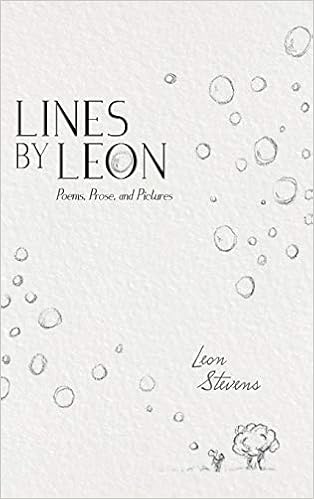
Book review: Lines by Leon: Poems, Prose, and Pictures
My review
Every now and then you discover a book of poetry which has you nodding your head in agreement and identifying with the views of the poet. For me, this was one of those books. Leon Stevens has an unerring way of aiming a poetic arrow straight at the heart of a difficult issue and exposing it for exactly what it is. This exposure is done with great dry wit, but it is nevertheless, brutally honest and truthful.
The poems in this book cover an array of topics including, inter alia, the poets personal viewpoints on specific matters, environmental experiences, the human conditions and how we relate with others, people and places, and ponderance and muse. There is a sprinkling of the poet’s own sketches throughout the book, and these, complement the humour and the simple, straightforward messages woven into these compelling poems.
This poem, called The Tendency to Cluster, was my personal favourite in this collection and demonstrates the points I’ve mentioned above:
People like orbs
Drawn by gravity
Unable to exist alone
Each dependent on the orbits of others
The only thing that keeps them
From being flung away
Needing others to define them
Needing to know
The quantum state of others
There are people
Content with singularity
In the colder outer regions
Emptiness brings strength, warmth, life
Occasional objects pass
Piquing curiosity
Worthy to share space (for a while)
Mostly continuing alone
Comfortable that orbits won’t decay
If you enjoy poems that speak clearly and simply about important matters, then you will enjoy this collection. Even if you don’t share the poet’s viewpoint, these poems will still make you think deeply.
Purchase Lines by Leon: Poems, Prose, and Pictures
About Leon Stevens
Leon Stevens is a writer, composer, guitarist, songwriter, and an artist, with a Bachelor of Music and Education. He became a writer out of necessity. Along with song writing, poetry has allowed him to make sense and accept events and situations in his life. He published his first book of poetry: Lines by Leon – Poems, Prose, and Pictures in January 2020, a book of original classical guitar compositions, and a collection of science fiction short stories called The Knot at the End of the Rope and other Short Stories. Visit www.linesbyleon.com for free sample eBooks.
Share this:

Poetry Set to Music – Just call it a song
Posted: August 16, 2021 Filed under: Poetry, Song Writing, Writing | Tags: music, Poetry, Song Writing, Writing to be Read 2 Comments
Poetry comes in many forms. There is free verse, rhymed poetry, blank verse or metered poetry, syllabic poetry, (such as hiaku on tankas), epic poems, narrative poetry, pastoral poetry, and sonnets, just to name a few. I’m partial to rhymed poetry, although I was warned away from it in school. I love rhymes of Dr. Suess and Shell Silverstein, and I love playing with rhyme and alliteration in my own poetry. Wordplay makes writing, (and reading), poetry fun. Poetry forms with structured rules, such as villinettes or syllabic poetry don’t come as easily for me.
I think it must be even more difficult to write poetry put to music, but if you think about it, many songs do use alliteration and rhyming, and this is perfectly acceptable in the song writing world. But what is a song, if not a poem set to music? Even many of the nursery rhymes that were handed down to you as a child have been put with a popular tune, making them more memorable: Old King Cole, Ring-Around-the-Rosy, London Bridge, Jack and Jill, etc… Below are some lyrics to some popular songs that use rhyming, but if you had never heard them, and didn’t know the tune, all you would see is poetry.
Winter nights we sang in tune
Played inside the months of moon
Never think of never
Let this spell last forever
Heart – Magic Man
_____________________________________________________________________________________________________________________________
Drowning nightly in deep blue seas
Waves of sadness swallow me
No soul can hear me beneath the waves
No gods, no saviors, no hands of fate
The Pretty Reckless – Only Love Can Save Me Now
________________________________________________________________________________________________________________________
Poetry uses language to paint vivid mental pictures and tell stories, as can be seen in the lyrics below. Fleetwood Mac uses similes and metaphores to paint a mental picture for the listener in some very poetic ways in Rhiannon, and Jethro Tull’s lyrics in Locomotive Breath conjurs some unusual images, as well.
Rhiannon rings like a bell through the night
And wouldn’t you love to love her?
Takes to the skies like a bird in flight
And who will be her lover?
Fleetwood Mac – Rhiannon
____________________________________________________________________________________________________________________________
In the suffering madness
Of the locomotive breath
Comes the all time loser
Headlong to his death
He sees the piston pumping
Steam breaking on his brow
But Charlie stole the handle
And the train, it won’t stop going
No way to slow down.
Jethro Tull – Locomotive Breath
___________________________________________________________________________________________________________________________
Narrative poetry tells a story in verse, as do many songs. Narrative songs that come readily to mind include The Wreck of the Edmund Fitzgerald, by Gordon Lightfoot, Running Bear by Sony James, and One Tin Soldier, by The Original Caste. Here, McGraw tells a story of the growth of first love in his song, Don’t Take the Girl. (And it rhymes.)
Johnny’s daddy was taking him fishing
when he was eight years old
A little girl came through the front gate
holding a fishing pole
His dad looked down and smiled,
said we can’t leave her behind
Son, I know you don’t want her to go,
but someday you’ll change your mind.
Tim McGraw – Don’t Take the Girl
_____________________________________________________________________________________________________________
I’ve listed the handful of songs above with the names of the artists who sing them, but that’s another way songwriters and poets are alike. Both get very little recognition for their writing. Often the singer is not the songwriter. Songs may be peddled among singers, as was the case with That’s the Night that the Lights Went Out in Georgia, (written by someone named Bobby Russell), which Cher turned down before Vicky Lawrence ended up cutting the record. Magic Man was actually written by the singers, Ann and Nancy Anderson, and Rhiannon was written and sung by Stevie Nicks. Taylor Momsen and Ben Phillips of The Pretty Wreckless wrote Only Love Can Save Me Now. But, Don’t Take the Girl was written by songwriters Craig Martin and Larry W. Johnson, Locomotive Breath may be sung by Jethro Tull, but it was written by Ian Anderson.
It’s customary for songs to be identified with the singer, rather than the song writer, and poets don’t become famous until after they are dead. Song writers are the unknown poets of the music world.
___________________________________________________________________________________________________________________________
Like this post? Let me know in the comments. You can be sure not to miss any of Writing to be Read’s great content by subscribing to e-mail or following on WordPress. If you found this content helpful or entertaining, please share.
Share this:

Adversity makes the story
Posted: August 13, 2021 Filed under: Character Development, Conflict, Fiction, Writing, Writing Tips | Tags: Adversity, Character Development, Conflict, Emotion, Writing, Writing to be Read 9 Comments
When Donald Trump ran for election the first time, in 2016, he was heard saying that he got his start when he borrowed a half million dollars from his father to start a business. He went on to say that he created a successful business and paid back that loan in something like six months. He was very proud of this feat and used it as an example of what good business sense he has, which he claimed qualified him to run the country. My response to his claim was to think to myself, ‘Yeah, if someone loaned me a half million dollars, I bet I could create a successful business, too.’
Everything I have ever done in my life, I have done on my own. There has never been anyone who would extend me a loan, or support me in my efforts. I’ve had a lot of failures, like the landscaping business I tried to start and got taken to the cleaners by my very first customer, leaving me in debt on the endeavor, but I picked myself up and tried again. Now, I have created a small independent press and I offer author services through WordCrafter. It’s small and I do it all online, out of my home. To me, that is more of an achivement than former President Trump’s multi-million dollar corporation, because I didn’t have any help in getting where I am today. I struggled to overcome all obstacle that stood in my way, and I built my business a little at a time, without loans or other help from anyone. To me there is no real story in what Trump did, but the road to success for me has been paved with obstacles and setbacks to overcome. He may be a lot richer than I am, but my story is ever so much more interesting.
Several years ago, one of the nurses that I worked with came up to me and told me how happy she was to learn that I had continued writing after my son died. She said that it meant that I was healing. The truth was, after Mike died, I had to write. I had so much grief boiling inside me that my only recourse was to write and let it all flow out. After Mike died, writing was what helped me keep my sanity. I wrote poetry. I wrote stories about Mike. I wrote and delivered his eulogy. More than likely none of it will ever be published, but the stuff I wrote during that time was powerful. If I read it now, it still brings tears to my eyes.
The negative emotions- grief, sadness, hate, anger – are all powerful emotions and to write a story that stirs those emotions is to draw your reader into the story and make them care. The positive emotions like love or triumph are powerful, as well, but they are made more powerful if the character has to struggle to achieve them. If the character is happy when the story begins, and remains happy throughout, then it’s really no big deal when he is happy at the end. But, if the character has longed for happiness, struggled to overcome the obstacles that prevent him from being happy, and the reader has been right there feeling his frustration and sorrow along the way, then the reader will be elated when, at the end, the character accomplishes his goal and achieves the ever sought after happiness. The negative emotions are what makes the positive ones that much stronger. In life, happiness is fleeting, easily forgotten as we move on to the next goal, but the negative emotions are always there, just below the surface, waiting to be called forth. They don’t go away. I miss my son now just as much as I did the day he died, and all I have to do is think about him for the tears to start to flow, even eleven years later. The negative emotions don’t fade away, like the positive seem to.
Adversity creates conflict, and conflict is why we keep reading. We have to see how the character is going to overcome whatever obstacles are placed in his way. We must read on to find out who wins the battle, to learn if our character will be triumphant, or if he will be ruined for life. Adversity, or conflict, is the key to writing a good story. Going through the characters struggles with them makes their revenge sweeter, their triumphs more elating, and their love so much stronger. Adversity is what makes us care about the characters.
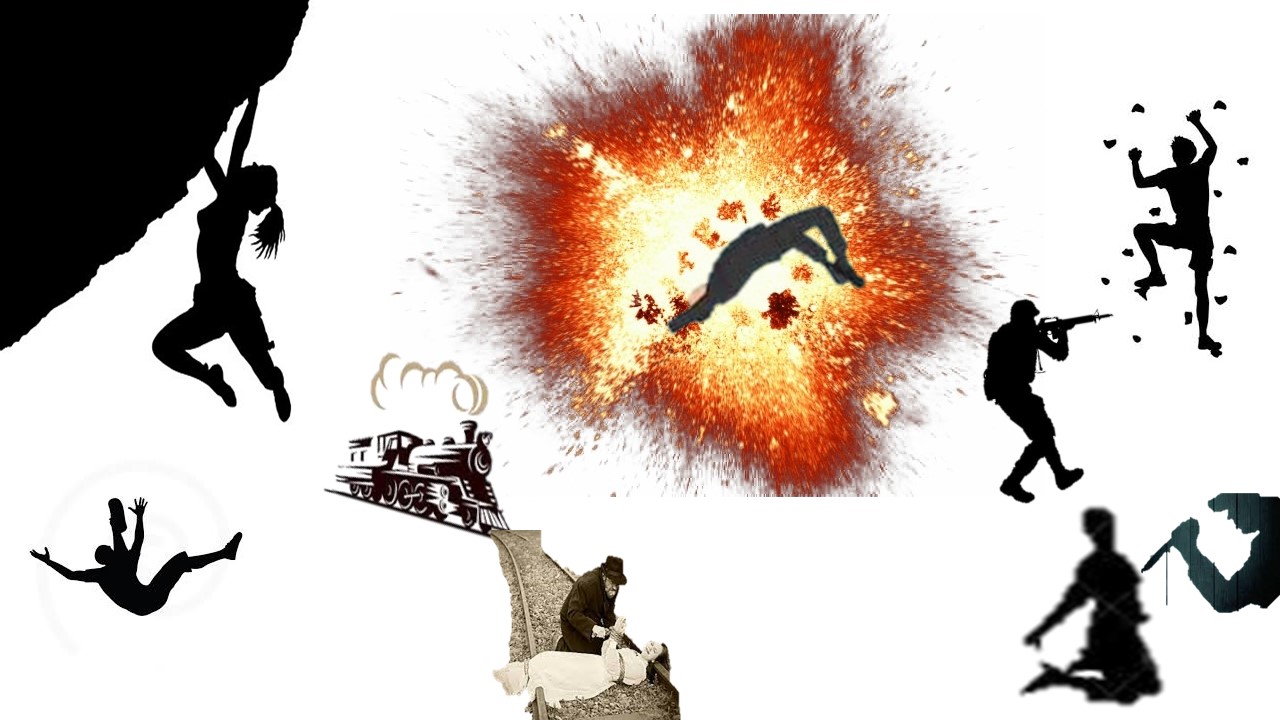
So, make things hard for your characters no matter what genre you write. Beat them up, make them walk over hot coals, climb mountains, jump out of airplanes, or dive to the ocean’s depths to get the girl, find the treasure, win the race, or achieve self-discoveries. And just when they are at the lowest point they have ever been at, and it seems that there is no way to come out ahead, throw a burning building in their path, raise the stakes, throw in a ticking time bomb. Don’t make it easy for them. If a good looking guy walks into the bar and sweeps the girl off her feet without even blinking and there is no one to object, no one will care if they live happily ever after or not. When the reader is aware of the price that has been paid to achieve the goal, then your readers will care so much more. Give your characters conflict and adversity. They’ll thank you for it later, and so will your readers.
___________________________________________________________________________________________________________________________
Like this post? Let me know in the comments. You can be sure not to miss any of Writing to be Read’s great content by subscribing to e-mail or following on WordPress. If you found this content helpful or entertaining, please share.
Share this:

Paid Writing Opportunity – Call for Short Fiction Submissions
Posted: July 30, 2021 Filed under: Anthology, Books, Dark Fantasy, Fairy Tales, Fantasy, Fiction, Humor, Science Fantasy, Science Fiction, Speculative Fiction, Stories, Writing | Tags: Anthology, Call for submissions, Fairytales, Mirror Mirror, Myths, Short Fiction, Short Stories, Writing to be Read 8 Comments
I recently embarked on the journey toward yet another degree – an M.A. in Publishing at Western State Colorado University – and I am studying under the prolific bestselling author and founder of WordFire Press, (and inductee into the Colorado Authors Hall of Fame), Kevin J. Anderson. For one of the publishing projects that must be completed for graduation is a cohort produced anthology. This will be the third year that the publishing cohort at Western has been headed by Kevin, and the third anthology that they have published.
Each of the previous year’s cohorts have produced an outstanding anthologies featuring stories by reputable author names, as well as new discoveries. You can see my review of Unmasked, last year’s anthology, here. The first year, Monsters, Movies & Mayhem received the Colorado Book Award. Both of these exceptional anthologies are available from amazon, your favorite bookstore, or buy direct at wordfirepress.com/gpcw.


This year’s cohort worked hard to develop the theme and guidelines over the past two weeks, and I’m really excited about this anthology. One of the cool things about this opportunity for writers is that it pays per word, if your story is chosen. Since I am a part of the publishing team, I’m not eligible to submit, but all of my readers are. I strongly encourage you to check out the guidelines below, get the gears turning and crank out an original story to submit for this year’s anthology. Feel free to share with anyone who might be interested.
Tips for getting your story accepted: Read the submission guidelines and follow them.
___________________________________________________________________________________________________________________________
MIRROR, MIRROR:
Modern Myths
Executive Editor: Kevin J. Anderson
When you’re alone with your reflection, are you prepared for what you see?
A prince in disguise? A monster revealed? An alien race?
Mirrors can be truth-tellers, wish-granters, face-concealers, illusion-makers, even monster-summoners. Maybe the mirror shows an evil twin, or an echo of the life that should have been. Or a portal to another world.
What happens when it shatters?
Once upon a time, no one knew the phrase “Once upon a time.” You’ve read the classic stories. Now write the lore you’ve always wanted to read. Explore this creative challenge from your own unique perspective informed by your roots, culture, and background. We want original fables, folklore, and fairy tales for an eclectic anthology showcasing a new dawn of an old artform.
Imagine a canon of diverse characters for today’s readers to love and loathe. Gaze into the mirror, whether literally or figuratively—classic or genre-bending, grim or whimsical, as long as it is new and fresh.
We are looking for original short stories (prose poems will also be considered) to include a mix of fantasy, science fiction, horror, magical, and romance elements. Must be appropriate for a “PG-13” audience. Please, no copyrighted characters. Previously unpublished stories only. Women, BIPOCs, LGBTQIA+, neurodiverse individuals, and other minorities are strongly encouraged to submit.
Length: up to 5000 words (firm limit)
Rate: 6¢/word on acceptance.
Rights: First Anthology Rights and audio rights as part of the anthology; rights revert to author one month after publication; publisher retains non-exclusive right to include in the anthology as a whole.
Due: We are open to submissions from August 30 through October 15, 2021.
Submit: A Microsoft Word or RTF file in standard manuscript format to
https://wordfirewestern.moksha.io/publication/2/3/submit
If you don’t know what standard manuscript format is, review, for example, https://www.shunn.net/format/classic/
One submission per person, please. NO SIMULTANEOUS SUBMISSIONS.
Edited by Kevin J. Anderson with an editorial team provided by Western Colorado University Graduate Program in Creative Writing, Publishing MA students. Anthology made possible by a generous contribution from Draft2Digital.
_____________________________________________________________________________________________________
Like this post? Let me know in the comments. You can be sure not to miss any of Writing to be Read’s great content by subscribing to e-mail or following on WordPress. If you found this content helpful or entertaining, please share.
Share this:

Capturing Enlightenment: A brief tale of humor
Posted: July 26, 2021 Filed under: Fiction, Humor, Stories | Tags: Capturing Enlightment, Kaye Lynne Booth, Short Stories, Writing to be Read 2 Comments
Buddy and Holly came bouncing up to Egbert, ready with any number of humorous things to say to tease him. Teasing Egbert was one of their favorite pass times. Buddy liked to say that Egbert wasn’t one of the brightest bulbs in the batch, and Holly usually commented on the squirrelly round glasses that magnified his eyes and made them appear to be popping out of his head, or the way that he stuttered when he talked. When they ran out of jibs on those subjects, they could always make fun of his name, telling him that his mother must not like him at all to give him a name like that; obviously, she didn’t love him or she would have given him a better name than Egbert, uh! Usually long before they got that far the tears were running down Egbert’s face. Sometimes he started tearing up as soon as he saw them coming.
That wasn’t the case today. Today, Egbert was actually happy to see them. He had something wonderful to show them and it was so special that once they saw it, they wouldn’t make fun of him anymore. “Hi Buddy! Hi Holly!” he said, heading over to meet them with a huge grin on his face.
“What are you so happy about, Egg Head?” Buddy asked.
“Yeah. You look ridiculous. That grin is almost bigger than your face. Close your mouth, so I can see you.” Holly said with a giggle.
“Wait until you see what I found!” Egbert said. “You guys aren’t going to believe this.”
“Oh, right,” Holly replied. “What could you possibly have that would even interest us?”
Egbert grinned even bigger as he looked from Buddy to Holly, and back to Buddy again. He was absolutely beaming with excitement.
Holly looked over at Buddy uneasily. When he glanced back at her, the uncertainty showed in his eyes.
Finally, Buddy broke the silence. “Well, are you just going to stand there with that silly grin on your face or are you going to show us whatever it is that you found?”
Egbert came out of his reverie. “What? Oh, yes of course. Just wait until you see!” He turned, running back toward his house, leaving the two of them standing there in puzzlement.
They looked at one another. “What do you think has him so excited?” Holly asked through the side of her mouth in a hushed voice, but Egbert could still hear her.
“Probably some old seashell from the beach or something,” Buddy replied.
“I don’t think so. He wouldn’t show us something like that anyway because he knows we’d just take it from him if it was cool or smash it if it wasn’t.” Holly said. “Besides, don’t you think it’s weird that he hasn’t stuttered at all?”
Before Buddy could answer, Egbert came racing around the side of the house with a jar which glowed from within.
“A firefly?” Holly said in disbelief. “We’re supposed to be impressed by a firefly?”
Egbert shook his head. “It’s not a firefly.”
“Then what is it?” Buddy asked. “It sure looks like a firefly to me.”
“Does it look like a firefly?” Egbert said, holding the jar up higher, so that they could see better. They squinted as the light coming from the jar seemed to get brighter, much too bright to be produced by a little firefly. Finally, they turned away, unable to look directly at it.
“Actually, that doesn’t look like any firefly I ever saw.” Buddy admitted.
“I told you, it’s not a firefly,” Egbert said.
“So, what is it? What did you find?” Holly asked. Egbert now had their full attention.
Egbert beamed and grinned once more. “I found enlightenment! I was playing down at the beach, when I saw it sitting, half buried in the sand. I scooped it up and carried it home and put it in this baggie for safe keeping.”
Buddy was skeptical. “Enlightenment? How do you know that’s what it is?”
“Because I can feel it.” Egbert replied. “I know things now that I didn’t know before.”
“Like what?” asked Holly.
“Like I know that you guys aren’t really bad people. You only do all of those mean things to me because you don’t feel very good about yourselves.” Egbert replied.
Buddy and Holly looked at each other nervously. Then they looked back at Egbert.
“It’s okay. Don’t be afraid,” Egbert said. “I also know now that all the things that I dreamed about doing to get back at you came from petty feelings. I want you guys to be my friends, just like I always wanted, only now I know that I don’t have to change who I am to do that.”
Buddy shuffled from foot to foot nervously. Usually ready with a smart comeback to anything, it seemed he suddenly had nothing to say.
Holly eyed Egbert distrustfully. “What do you mean?”
“Here,” Egbert said, holding the bag up closer to them. “If you just feel it, you’ll understand everything.”
“That’s okay,” said Buddy, backing into Holly.
“What are you afraid of?” Egbert asked.
“I-it’s nothing.” Holly said, stumbling over her own feet to get out of Buddy’s path. “I-it’s just that, well…, w-what if you’re wrong?”
Suddenly, Buddy found his voice. “Yeah, that might not even be enlightenment at all. Even if it is, how do we know that that is something that we would want to have any part of?” He spoke bravely, but he kept backing away.
“Doesn’t everyone want enlightenment?” Egbert asked, truly puzzled by their strange behavior.
“I’m not sure that I d-do.” Holly said, stammering the words. “L-look at y-you. L-look at the ch-changes that it has m-made in you already. And l-look at m-me, too. I d-don’t know w-why I’m st-st-stuttering all of a s-sudden!” Tears streamed down Holly’s face. She turned, rushing out of the yard and down the street.
“Hey wait, Holly!” Egbert called after her. “I know a good speech therapist. I’ll give you her card.”
“I uh, I think I should go and see if she’s okay.” Buddy said, running out of the yard, as well.

As he watched him go, Egbert got another grin on his face, this one however, had a sly cast to it. “Tsk. Tsk.” he said, shaking his head. “My speech therapy finally paid off. I really thought that they would be more impressed.” He opened the jar and lay it down in the grass where two small winged beetles crawled out and seperated from one another before flying away into the night. “Imagine getting so upset over two little glowbugs.” Egbert chuckled to himself all the way back into his house.
___________________________________________________________________________________________________________________________
Like this post? Let me know in the comments. You can be sure not to miss any of Writing to be Read’s great content by subscribing to e-mail or following on WordPress. If you found this content helpful or entertaining, please share.











Book Review: Mudflap – A character concept many of us can identify with
Posted: August 9, 2021 | Author: kayelynnebooth | Filed under: Book Review, Books, Fiction, satire | Tags: Book Review, Jay Alden Bailey, Mudflap, satire, Social Commentary, Writing to be Read | 4 CommentsIn Mudflap, by Jay Alden Bailey the character’s name isn’t really Mudflap, but that is the name he identifies with because life always seems to be throwing him under the bus. We’ve all been there, so the character concept is easy to identify with. Every time Mudflap gets up, life knocks him back down again. But he just keeps getting back up again, even starting over from step one when necessary. This story makes a suttle social commentary as Mudflap’s tale unravels that readers with a keen eye will be sure to pick up on.
Sharing in the life and experiences of Mudflap makes one appreciate the circumstances in one’s own life more. If you need cheering up or are just looking for a chuckle, this story is for you. I give Mudflap four quills.
__________________________________________________________________________________________________________________________
Kaye Lynne Booth does honest book reviews on Writing to be Read in exchange for ARCs. Have a book you’d like reviewed? Contact Kaye at kayebooth(at)yahoo(dot)com.
Share this: