“Bailin'”: A Comedic Crime Romance Indeed
Posted: April 7, 2017 Filed under: Action/Adventure, Book Review, Books, romance Leave a comment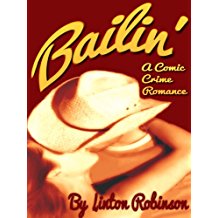
Bailin’ breaks every writing rule there is, but somehow, Linton Robinson makes it work. Labeled a “Comedic Crime Romance” on the cover, this book is a fast paced crime story, filled with a cast of bungling criminals, who somehow always manage to come out ahead, in spite of the precarious situations they end up in.
Bunny and Cole are a daring crime duo looking for the one big heist that will set them up for life. The two pull several heists, but never seem to come away with any money. Bogart and Flathead, two bikers, who try to make a business out of transporting certain things across the border, and who fail repeatedly as smugglers. Add in an embezzling treasurer, who gets caught and jumps bail, a determined bounty hunter, and a sadistic hit man, and you’ve got the proper ingredients for comedic antics as all of their paths cross.
I read it twice, the second time, aloud. It is filled with big words, lots of adverbs and adjectives, alliteration and empurpled prose, but the story line is so much fun, all of that can be forgiven. In fact, Robinson’s style helps to set the tone in this comedic caper and make the whole thing work.
I really enjoyed this read. I give Bailin’ four quills.
Kaye Lynne Booth does honest book reviews on Writing to be Read in exchange for ARCs at no charge. Have a book you’d like reviewed? Contact Kaye at kayebooth(at)yahoo(dot)com.
Share this:

A Sense of Accomplishment
Posted: April 3, 2017 Filed under: Movies, Screenwriting, Screenwriting, Writing | Tags: Movies, Screenwriting, Script Leave a comment
This past week my thesis for my screenwriting emphasis arrived in the mail. I opened the box and there, carefully wrapped inside was my thesis project bound in a hardback cover. I opened it up, and inside I found my analysis of screenwriting and my walk through the process, as well as my screenplay for Bonnie in script form. I can’t tell you what a sense of accomplishment that made me feel.
If you’re interested in my analysis or the screenwriting process, you can see the blog adapted version of those portions of my thesis in my four part series, The Making of a Screenplay: The Creative Process: Part 1 covers story origins and the tools used to shape an idea into a movie plot, Part 2 discusses the tools used to sell a screenplay, Part 3 covers the research that goes into writing a screenplay, and Part 4 talks about rewriting.
I turned in my thesis back in August, and there was a sense of accomplishment in doing that, but to see my script in print just about made me burst with pride. Glancing through it reminded me of what a really good script Bonnie is. Now I just have to figure out a way to get it in front of someone who will read it and fall in love with it as much as I am, and want to make it into a movie.
That’s the hard part. There’s some tough competition out there and it’s hard to get a foot in the door. Bonnie has commercial value and I need to get someone in the business to recognize it,There are those who claim it can’t be done unless you move to L.A. (“Hollywood Game Plan” Prepares Upcoming Screenwriters to Hit the Ground Running) Although I really want to sell Bonnie, and many other screenplays, I don’t see such a drastic move happening in the near future.
Most of the screenplay competitions are a bit more expensive to enter than my pocketbook can afford, so I have to be careful to pick the contest that are the best for my screenplay. In the literary community, you face the same challenge. You must determine which publisher is best to submit to, matching your work to a publisher, agent or writing contest.
The only way I know to solve the puzzle and match story or script to contest, or find a publisher or a producer who might be interested in your work, is good old fashioned research. These days it’s easier. Because of the Internet, we have the information at our fingertips now, where we didn’t thirty years ago. To find the right contest, or publisher, or producer today, we can sit down at the computer or pick up our phones and find out what kinds of work they are interested in to see if ours is a good fit, or check out their track record to gauge how successful they are. All it takes is a little time.
I’ve entered a short screenplay in a screenplay contest, and submitted a couple of my scripts to production companies, and I’ve collected a few rejection slips from them. I was almost ready to give up on the screenwriting and concentrate exclusively on my fiction. Even though I know rejection is expected in this business, and a lot of it, it doesn’t make the sting any less when it happens. On Jeff’s God Complex Wednesday, he offers some really good ideas that make sticking with it in the face of adversity much easier. I took it and felt refreshed when I sat back down in front of my laptop again.
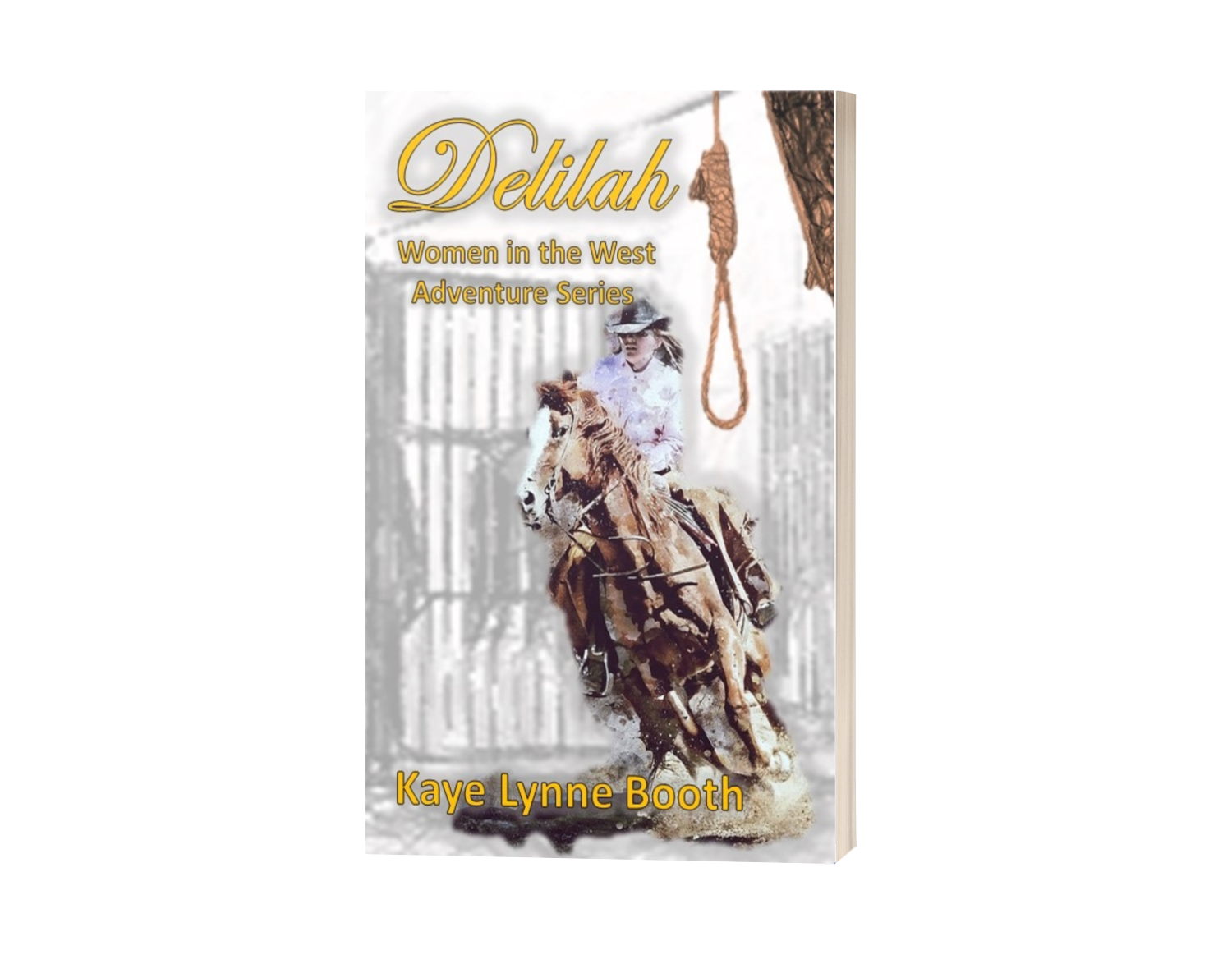
Receiving that bound copy and seeing my thesis script reminded me of why I went for the second emphasis in my degree. I am just as passionate about my screenwriting as I am about my fiction. I know my work is good and it’s only a matter of time before I sell a script or a book. I’m currently negotiating a contract for my western novel, Delilah, so I’m not just being optimistic here. It’s is easier to move forward in my career when I have a real sense of accomplishment, and my bound thesis reminded me of that.
Like this post? Subscribe to Writing to be Read for e-mail notifications whenever new content is posted.
Share this:

“The Clockwork Alice”: A Literary Work in the Tradition of Lewis Carroll
Posted: March 31, 2017 Filed under: Book Review, Books, Fantasy, Steampunk | Tags: Book Review, Books, DeAnna Knippling, Reviews, The Clockwork Alice, Wonderland, Writing to be Read Leave a comment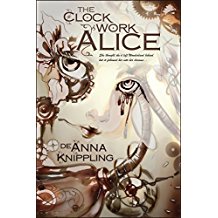
The Clockwork Alice, by DeAnna Knippling, introduces Alice, all grown up, and takes readers on a return trip to Wonderland, where all is not as it should be, or maybe it never was. Knippling does a smashing job of picking up the tone of the original Wonderland stories, making this a fantasy tale which will delight readers of all ages.
Many of our favorite characters make appearances, including the Red Queen, the White Rabbit, the March Hare, and the Cheshire Cat, to name a few. Alice discovers that all of Wonderland is actually made of clockwork mechanisms, including a Clockwork Alice, who looks just like the girl who she once was. But all is not as it should be in Wonderland, or maybe it never was, but it’s up to Alice, or one of the Alice’s, to stop the great unwinding, and set things back in order. Alice may uncover and foil the evil plot to destroy Wonderland, or perhaps she will destroy it all instead, because this trip to Wonderland is just as confusing, or maybe even more so, than the first.
The Clockwork Alice is a well-written, skillfully crafted story that is just plain fun to read. I give it five quills.

Kaye Lynne Booth does honest book reviews on Writing to be Read in exchange for ARCs at no charge. Have a book you’d like reviewed? Contact Kaye at kayebooth(at)yahoo(dot)com.
Share this:

Digital vs. Print Books
Posted: March 27, 2017 Filed under: Book Review, Books | Tags: Book Reviews, digital books, eBooks, Print Books, Publishing, Reading Leave a comment
I recently read an article by Zoe Wood in The Guardian, which states that print book sales are on the rise, and may be making a comeback. I, for one, welcomed this news with open arms. For me, there is nothing like kicking back with a good paper book in my hands. I can get comfy with my Kindle Fire, but it’s just not the same. And I don’t know that I can explain exactly why that is, but it is.
When I first began doing reviews, back in 2010, as the Southern Colorado Literature Examiner, my ARCs all came via snail mail, in print form. Now days, an author can have an ARC to you in a matter of minutes, because they all send digital copies, and everyone publishes in digital format. Some authors also put out print editions, but it’s too easy to get a digital copy to the reviewer for them to want to give away the print ones.
Since my review books are now arriving via e-mail, I adapted by first getting an e-reader app. for my computer, which wasn’t always convenient, but got me by. Then, I won a Kindle Fire in a giveaway on Author Market, (where I now offer my editing and proofreading services for very reasonable prices). With the Fire, my review reading became much easier, because the Fire is small enough that I can carry it with me, so I can pick it up and read whenever I get a free minute.
But, it’s still not a print book. I can’t help but miss the physical act of turning the pages one by one as I advance through the story, the anticipation as the pages left get thinner and thinner. For me, there is something comforting in that small act. My Fire has a feature that makes it look like a physical page is turning, trying to simulate it, so I must not be the only one who misses it. I know I get downright excited when I agree to review a book and the author asks for my street address instead of my email.
Gaby Wood talks about the differences in the way we read with the rise of digital publishing in her article in the The Telegraph. There’s no getting around it. Reading a digital book is not the same as reading a print book, and it never will be. However, we are a resilient bunch, and I have no doubt that we will adapt to the changes that are thrown our way where our reading material is concerned. Already, a new format is gaining popularity in the form of audio books. They aren’t new, but they are rising in popularity, so who’s to say they won’t be the next rising trend?
Like this post? Subscribe to Writing to be Read for e-mail notifications whenever new content is posted.
Image Credit: The Awkward Yeti. theawkwardyeti.com
Share this:

“White Dragon’s Chosen”: a Fun Read
Posted: March 24, 2017 Filed under: Book Review, Books, Children's Books, Fantasy, Fiction Leave a comment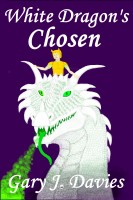
White Dragon’s Chosen, by Gary J. Davies is a children’s fantasy that takes readers to a world where dragons and elves and trolls and fairies exist, and magic abounds. They travel between our world and their own world of Narma through portals, and two kids, George and Mary, are the champions who lead the battle to save both worlds, together with their dragon counterparts.
When you are dragon’s chosen, you share thoughts and have the same abilities that they do. How cool is that? When Harry’s uncle dies, Harry discovers that he is special. He’s the White Dragon’s Chosen, and his next door neighbor, Mary is the Chosen of the Dragon Jewel. But he also learns that there is a bad evil about that threatens to destroy both Earth and Narma, and it’s up to he and Mary, with their dragons, to save both worlds. It’s a tale every kid will enjoy.
For me though, I found a few problems, the least of which, was the numerous typos and missed words. As far as the crafting of the story goes, there was a lot of telling, rather than showing, which may have related to my inability to suspend disbelief on this one. Davies failed to put me in the scene and convince me that this could be possible, at least in his world.
Although White Dragon’s Chosen had a few glitches as far as craft goes, I’ve no doubt kids will love it. It’s a cute little fantasy, that I give three quills.

Kaye Lynne Booth does honest book reviews on Writing to be Read in exchange for ARCs at no charge. Have a book you’d like reviewed? Contact Kaye at kayebooth(at)yahoo(dot)com.
Share this:

Update on “Playground for the Gods” Series
Posted: March 20, 2017 Filed under: Books, Fantasy, Fiction, Science Fiction, Speculative Fiction, Writing | Tags: Kaye Lynne Booth, Novel, Playground for the Gods, Writing, Writing Process 2 Comments
While Book 1: The Great Primordial Battle is spending time with my alpha reader, I’ve been busy working on Book 2: In the Beginning. Now I know it seems strange name for a second book, but for this series, it’s actually quite fitting.
You see, Book 1 covers the time just before and after the Atlans arrival on Earth in prehistoric times, which result in a great battle between the Atlans and the monstrous creatures created by the angry Tiamat, Oldest of Old Ones. It is the story of how the Atlans came to be on Earth.
Book 2, on the other hand, takes place during Earth’s earliest civilizations. It explores Biblical times and even before, as well as visiting ancient Egypt and Minoan cultures. It looks at the beginning of time, hence the title, In the Beginning.
That said, I’ve finished the first draft for Book 2, and started on revisions. I guess maybe my writing process is a little weird. At Western, while earning my M.F.A. in Creative Writing, we talked a lot about our writing processes, and while everyone’s processes were different, I never found anyone whose process was like mine.
My first drafts are pretty rough, consisting mostly of the basic plotline. The basics of what happens in each chapter, so the way the story moves forward can be seen. Once, I have that down, I can go back and revise, adding description and action that helps the story move in each chapter, sharpening the image, hopefully, for readers. That’s where I am in the revision process now.
Before I send it off to my alpha readers, I’ll do another run through to check for repetition, spelling, grammar and punctuation errors, and eliminate unnecessary words. This is the pass that tightens up my writing to make it the best it can be before going to the alpha readers have a go at it.
Once I have it back with their comments, I may do up to three or four more passes, before I feel it’s ready to submit to publishers or agents. If all goes well, I will get Book 1 back from my alpha reader, which in this case may be a beta reader since I made revisions to the completed work after sending it out without raising any interest, about the time I have the final draft of Book 2 ready to send out for her scrutiny.
I think the main problem, possibly with both books right now, is a lack of emotion from my characters, which could result in a lack of emotional investment from readers. Identifying it as such is good, because if readers don’t care about the characters, they won’t continue reading. The challenge will be finding a way to fix it, so my readers will keep turning the pages. Fortunately, I found some great ideas for showing my characters’ emotions in a post titled Emotion vs. Feeling by David Cobett on Writer Unboxed.
The story is there. Now I just need to breathe life into it. That’s what writers do.
Like this post? Subscribe to Writing to be Read for e-mail notifications whenever new content is posted.
Share this:

“Tangled Web” May Be Just the Beginning
Posted: March 17, 2017 Filed under: Book Review, Books, Erotica, Fiction, romance | Tags: Book Review, Books, Erotica, Jade C. Jamison, Reviews, Rock Star Romance, romance, Tangled Web Leave a comment
Tangled Web is the first book in a new rock star romance series by Jade C. Jamison. I picked up this book because I was so impressed with another book I reviewed by the same author, Bullet, and this book did have the same power to draw me into the story. However, this story is much shorter and left me feeling like there should be more.
*****************************Spoiler Below*******************************
Two old friends discover that they each had hidden feelings for the other. In Tangled Web, we watch as this discovery emerges, but the story ends as they realize their feelings for one another. While it is the moment the story has been leading up to, it feels more like a climax than an ending. It is the moment when everything changes, but I felt short changed because the reader isn’t allowed the opportunity to learn the outcome of the grand event. We don’t get to see the “Happily Ever After”. I guess it is assumed, but it would be more satisfying to see it unfold.
The story is good, the erotic scenes tastefully written, and I quite enjoyed this read. Tangled Web has the potential to be a really good romance, but it left me wanting more. I give it three quills.

Kaye Lynne Booth does honest book reviews on Writing to be Read in exchange for ARCs at no charge. Have a book you’d like reviewed? Contact Kaye at kayebooth(at)yahoo(dot)com.
Share this:

Monthly Memo: Finding Time to Write
Posted: March 15, 2017 Filed under: Fiction, Screenwriting, Screenwriting, Uncategorized, Weekly Writing Memo, Writing, Writing Tips | Tags: Opinion, Stories, Writing Leave a comment
How do you find the time to write?
Can you be a writer when you have a full-time job?
Or a family?
I have a brilliant story idea but I’m just so busy…
The above are all questions are just a few ways people have essentially asked me “how can I be a writer if I don’t have time?” Every time I hear it I have a mixed reaction. I like it because it shows that these people understand that writing is a craft that takes time and work and dedication. It shows they respect that it doesn’t just magically happen. As a writer, I appreciate that because many, many people think writers just throw some words on a page, easy as pie.
On the other hand, I absolutely abhor the question. The reason I dislike it is because writing is like anything else someone wants to do, if they really want to do it they find the time. There’s no magical secret to how writers find time to write, they just make it happen.
That being said, I know some people will still want ideas for finding time to write, so here are some ways I find time to write when I am slammed with other life responsibilities:
Sleep Less
If you really want to write, then you’re going to have to find the time elsewhere. If you don’t want to cut back on work, hobbies, free time, etc., then your other option is to cut back on sleep. Either get up an hour earlier, or go to bed an hour later, and use that time to write. You don’t have to do it every day, even an hour a week will add up in the long-term. The point is, the time has to come from somewhere and sleep is something everyone can cut back on now and then without too much consequence. So pick a day a week to try it and go from there.
Multitask
Can you eat lunch and type at the same time? How about when you’re watching a movie or listening to music? Can you talk while you do household chores? What about when you’re driving or hiking or whatever your hobby is? When I’m on long road trips I use a tape recorder to plot and outline, develop characters, and sometimes even write a few pages. You can do this while out and about doing things like hiking and such as well. I know several authors who do this, and some even send the audio out to be transcribed for them to make things easier. It takes some adjustment to get used to writing in this fashion, and it’s not always your best writing, but getting something down on the page so that the next time you have a break you can revise it makes for better progress than not writing at all.
Every Spare Minute
Basically, this is the main option. Every spare minute you have you try to write. Even if it’s just you wake up in the morning and jot a line down, take a shower, jot another line, eat breakfast, jot a line, go to work, jot a line a lunch, work some more and jot a line again a dinner and before bed. If you do that all day you should at least have a paragraph if not a whole page. Writing is done one word at a time, and while it’s not the most efficient method for writing, the little lines add up throughout the days/weeks/months and before you know it you’ll have a finished piece of work. So anytime you can add another word, sentence, paragraph, and so on, you should.
Final Notes
I know the above advice is nothing brilliant or even particularly new, but sometimes as writers we all need reminders that if we want to write, we have to find time for ourselves. There’s no magic secret or perfect writing opportunity that’s going to appear in your schedule. You use the time you have, any way you can, using any medium available, to get words on the page. Yes, it may not be efficient or look anything like the “dream writer’s life” but you’ll be writing, and you can’t be a writer if you don’t write.
Robin Conley offers great writing advice in her Monthly Memo on Writing to be Read. If you just can’t wait until next month to find out more, you can pop into her blog, Author the World, for more tips, or a weekly writing prompt.
Share this:

Good Things in the Works for “Writing to be Read”
Posted: March 14, 2017 Filed under: Writing | Tags: Author The World, God Complex, Jeff Bowles, Monthly Memo, Pep Talk, Reviews, Robin Conley, Writing, Writing Tips, Writing to be Read 1 Comment
I’m so excited! There are changes coming for Writing to be Read. Last week I gave you an introduction to the newest addition to the Writing to be Read team, Jeff Bowles, who will be giving us a monthly writer’s Pep Talk. Since that post, even more good changes have occurred, and I’m pleased to announce that Jeff will be migrating Jeff’s God Complex blog to this site and sharing even more valuable content with us, two Wednesdays a month.
For Writing to be Read and its readers, that means Wednesdays will be awesome! Robin Conley will still be providing her Monthly Memo with great writing tips, and Jeff will provide his monthly Pep Talk. On the two Wednesdays left, Jeff will prov Jeff’s God Complex content. Now, if you want to know what God Complex content is, I’m not sure if I can explain, other than to say Jeff’s posts are unique and can go in any direction, but they are usually about writing. If you want to know more, you can check out Jeff’s posts on Jeff’s God Complex. I think you will see why this is so exciting.
In addition, Jeff has agreed to provide one gaming review per month in the Friday reviews, and I’m hoping Robin will provide one film review per month, as well. Never fret. That leaves room for at least two book reviews per month and will allow me more time to do them. If you want to pick up more writing tips from Robin, or you’re looking for some of her great writing prompts, check out her blog, Author the World.
One more thing that I will be looking forward to, and I hope you will, too, is a series of author interviews I’m planning to run taking a look at what works for each of them. No one thing works for everybody. Hopefully, in these these interviews you will find some ideas that work for you. So be on the lookout for my Writing that Works interviews, which will be coming soon.
Overall, I think these changes will greatly improve Writing to be Read and make it a more well rounded blog by providing a greater diversity in content, allowing me to offer a little something for everybody. I hope you will all drop by frequently to see what’s new. Or better yet, subscribe to email and get notification to your inbox each time there’s a new post, so you never miss on what’s up on Writing to be Read.










The Pep Talk
Posted: April 5, 2017 | Author: Jeff Bowles | Filed under: Commentary, Inspirational, Opinion, Pep Talk, Writing, Writing Tips | 3 CommentsEvery month in this space, author Jeff Bowles offers advice for young and struggling writers. No one ever said becoming a world-famous storyteller is easy. This is the Pep Talk.
Everyone needs a pep talk now and then. I could use one at least once a week. I know a lot of damn fine writers who’re having challenging times right now. Maybe it’s just the year 2017, a surge of new energy which has left us feeling stifled and worn down. I think drive comes in waves. Easy to manifest when you’re young and hungry, also easy when you’re working for paychecks. An unexamined life is not worth living. What makes you tick, my friends? Why do you feel the need to work hard for your dream?
For me, a famous song lyric says it all: “Time inspires me like a dog inspires a rabbit.”
There’s a certain creative disposition that fuels productivity by way of dread for the brevity of life. I am of that disposition. When I get into a writing slump, I wake up in the middle of the night feeling unfulfilled and guilty. I’ve got so much to say, so many stories to tell. Maybe it’s more important to create as if nothing can harm us, as if the whole universe is waiting for our next works of art. It can feel like that sometimes, can’t it? Thank God.
Do you have big dreams for your writing career? I certainly do. There’s kind of a junction between what we want and what reality is willing to give us. What keeps us writing even when no publishers are interested in our work and readers are few and far between?
I think the answer is more universal than people realize. If you’ve been doing this long enough, no doubt you know a few people who’ve climbed further faster than you. Now this can be a really painful experience, and I think it’s okay to admit it. Is it petty to resent those who’ve accumulated more success than us? It is, but to a large extent it’s also unavoidable.
It’d take a very balanced personality indeed to shrug off adversity 100% of the time. There’s something within us, perhaps culled from our hunter-gatherer days, that endows us with an astonishing capacity for jealousy.
“How’d he publish that book? Mine is so much better!”
“And she won an award for it? Meanwhile I’m sitting here in obscurity, twiddling my thumbs.”
Comments like these are a sure sign of a bad attitude, but tell me you’ve never thought something similar. It’s normal, right? Even if we don’t want it to be. But I’d also like to remind you it’s corrosive to the mind and spirit.
Publishing is a tricky business because we’re all vying for limited resources. Only so many pub spots, book deals, and readers worldwide. Add to it the fact readership across the globe is on the decline, and holy cow! The competition is on. Some people are fueled by competition. In a perfect world we’d all hold hands and celebrate each other’s work and tell ourselves we can be happy, healthy and sane no matter how many copies of our latest masterworks we sell (or fail to sell).
In the end, jealousy tends to destroy people who cling to it. I do believe jealousy also serves a higher function. You can watch everyone around you meet with success and learn a great deal from it. Watch the successful ones, pay attention to their habits and practices. Are they better writers than you? Doubtful. Perhaps they’re just more keyed in to what sells. I have to admit I’m not very good at this. I have to do everything the hard way. Don’t be like me. Many people will tell you success is a game of luck. I’m not so sure I believe in luck anymore.…
That which we define as luck, I think, can be greatly enhanced by focus and productivity. You can beat the odds by maintaining a steady workflow and making sure you’re constantly revising, submitting, rewriting, doing the dance. Belief is more important than luck. I think you’ve got to take charge of who you perceive yourself to be.
Quit telling yourself you’re a failure nobody wants to read. Stop it! Do your best to boost your ego. Nothing flawed or vain about it. Isn’t there enough in this world that tears us down? So build yourself up. Focus on the end goal, the dream day, a fresh contract, your pen set to the signature line. A few months later, another dream day, signing fresh copies of your latest best seller, a huge line piled up at your table, running out the bookstore (I always imagine a nice cozy Barns & Noble).
Everyone needs friends and allies, too. People who appreciate what you do. Now I’ve got to admit that if you’re just starting out or are not yet as successful as you’d like to be, finding individuals to believe in you might be a challenge. Who knows why people behave this way, but there’s something about a nascent writing dream that drives the skeptics crazy. I’ve met a million of them, and I know you have, too. Just keep working, focus on where you want to be rather than where you are in this present moment.
I’ll just go ahead and say it. I think it pays to be delusional. You’ve got to be the emperor with no clothes on. When people tell you, “Yeah but you aren’t this. I’ve known you for years. What you really are is this.” You’ve got to show them your fine purple robes, assure them they’re more than thin air, and then parade around like you aren’t naked.
Someone someday will clothe you in something more real. Better yet, you’ll manage to get hold of some nice clothes yourself. But you can’t be a victim of other people’s circumstances. You’ll feel what you’ll feel, but don’t let envy control your world. Because it will try, again and again. We’re not monks on high mountains practicing infinite patience and unbridled universal centeredness. We are at best creative people willing to bleed for our work. And what are you going to do as a result? Quit? Ha! You’re no quitter. You are everything literature and great minds have praised for eons. To write and succeed is a blessing. To endure even as we struggle, that is divine. See you next time, everyone!
Interested in Jeff’s writing? Check out his latest short story collection, Fear and Loathing in Las Cruces: https://www.amazon.com/Fear-Loathing-Las-Cruces-Stories-ebook/dp/B06XH2774F
Twitter: @JeffBowlesLives
Facebook: http://www.facebook.com/jeffryanbowles
Amazon Author Page: https://www.amazon.com/JeffBowles/e/B01L7GXCU0/ref=sr_ntt_srch_lnk_1?qid=1479453494
YouTube’s Jeff Bowles Central: https://www.youtube.com/channel/UC6uMxedp3VxxUCS4zn3ulgQ
Share this: