Weekly Writing Memo: To Cliche, or not to Cliche
Posted: October 6, 2016 Filed under: Fiction, Science Fiction, Screenwriting, Screenwriting, Stories, Uncategorized, Weekly Writing Memo, Writing, Writing Tips | Tags: characters, Novel, Reviews, Stories Leave a comment A writing friend and I got in a heated discussion the other day as to whether clichés in writing can ever be a good thing. He is an adamant believer that clichés should be actively hunted down and eliminated from all dialogue, as well as most other areas of writing when possible. I, on the other hand, have a more lenient approach. I think clichés can be useful in specific circumstances, and sometimes they’re the best choice for the job. So when are clichés a good thing?
Avoiding Awkward
Sometimes if you can’t find a simple way to reword or rework a scene to avoid the cliché, then you can end up making the writing convoluted and awkward, which is worse than just using the cliché. A cliché can be invisible in the story and the audience may not even notice it, but awkward writing will interrupt the flow and stand out to an audience. It can also become obvious that you’re trying to avoid the cliché, and that can be distracting as well.
A really easy example is the phrase “that’s classified.” If you wanted to you could avoid it in a lot of ways, but there has to be a limit to how far you’ll go to avoid a cliché, and how much space you want to use to do so. If you try to avoid “that’s classified,” you could end up with something convoluted like, “I can’t tell you that because you are not qualified to access that information.” Just reading it makes me roll my eyes because it’s incredibly obvious I’m avoiding the cliché. In fact, it reads like a convoluted way of saying “that’s above your pay grade.” Which is another cliché.
The point is, avoiding the cliché in this case is turning out awkward, and it’s becoming obvious to the audience that it is what I’m doing. You don’t want your audience to stop and think about the writing when they’re enjoying the story – unless they stop to go “DAMN, that was good!” That is always acceptable! You want the audience involved, and in a situation like this it’s easier to throw in the cliché to get the message across and keep the story moving, rather than finding some roundabout way to avoid it.
Simplicity
Sometimes the decision for me to use the cliché comes down to one thing – simplicity. Sure, there are a lot of ways to word things that may let me avoid a cliché, but sometimes the cliché is the easiest, clearest way to get whatever message I want across to the audience. If I can use a cliché and it only takes 2 words instead of 20, then I better have some big motivation as to why those 20 words are needed. I’m a firm believer that every word has to count in a story, and as I said above, sometimes the cliché is just the simplest way to go. Will there be better ways to say things, probably, but does that mean you need to change your wording? No.
Cliches aren’t inherently bad. They can be overused, and they can be used at bad times, but sometimes they’re the best way to go for the sake of keeping the story moving forward. So always consider how complicated the route to avoid the cliché is. Ask yourself, if I avoid this cliché, will I slow the story down? Will it waste space on the page? Does the cliché add or take away anything from the scene? If the answers to these don’t give you a reason to take out the cliché, then I say go with the simplest method of keeping it in.
Character Culture
The biggest argument I think there is for keeping a cliché is that in some character cultures, clichés are ingrained in the system. By character cultures I mean communities like police officers, military personnel, doctors, politicians, etc. These kind of cultures that are part of large organizations have certain things that are ingrained in them.
For example, cliché language is often used by the higher ups in these organizations because clichés are something that a huge group of people will all understand in the same way. Clichés also become ingrained in these organizations because they relay on training being passed down, and the clichés carry through. For example, police officers and military personnel are more likely to use phrases that they have been trained to use. Military men use things like “need to know” because it’s an easy way for higher ups to dismiss lower level employees without actually giving them any information, and those lower level employees generally have to listen because they don’t outrank anyone.
In these sorts of settings, clichés can be used by the higher ups as a very easy way to create a separation between those of different ranks. Think of all the cliché phrases you can for military and even police personnel and think of their purpose: Need to know, that’s classified, that’s above your pay grade, etc. They all serve to protect information, and to put someone lower down in their place. In politics, there is a similar thing going on. The cliché phrases are more about delivering a message without delivering specifics. They say “I will bring change” or “I have the experience to do [blah]” and so on without every really specific what their plan is or how they are qualified.
Similarly, in medical fields clichés exist to keep information vague or to deliver a clear message without getting into specifics. In medical fields you sometimes don’t have time to lay out all the information because of the life and death situation, so abbreviated phrases are used to get a message across to everyone in the room quickly.
In general, these kids of systemized or structural cultures have clichés ingrained in them because they help create structure, they are universally understood, they deliver information and meaning without specifics as needed, and these cultures often have similar situations happen over and over again which can lead to certain sequences of events becoming cliché. The point is, you don’t need these characters to use clichés all the time, but having them in these instances is more acceptable because the clichés are part of the culture and the training almost everyone goes through in these professions, so they are almost expected by an audience.
When to Cut the Cliché?
Now clearly clichés should be cut whenever you can cut them in a way that doesn’t involve the things I’ve mentioned above, but sometimes it can be hard to decide. If there is an easy way to avoid the cliché, then always use it. If the cliché makes the scene cheesy or eye-roll worthy, then definitely cut it. If your entire plot hinges on a cliché, again, think about changing it. The important thing is that the clichés you do use don’t interrupt the flow or come off as lazy. Use them because they’re the best tool for the job (cliché!), and use them because they serve the story. Don’t use them because you’re too lazy to think of something else.
If you aren’t sure, then get a second opinion and see if your beta reader finds it distracting. Ultimately, like anything else in writing it all depends on the specific situation. Clichés exist for a reason, just use them wisely!
Share this:

“The Goat Children”: Once You’re There, You May Never Come Back
Posted: September 30, 2016 Filed under: Book Review, Books, Fiction, Young Adult | Tags: Book Review, Books, Creative Fiction, Jordan Elizabeth, The Goat Children, Young Adult Fiction 1 Comment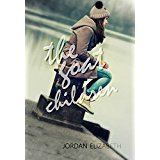
The Goat Children, by Jordan Elizabeth, is a journey into the world of dementia, as a seventeen year old cares for her aging grandmother out of love. The flashbacks are endearing, allowing readers to understand the relationship between grandmother and granddaughter better. It is a touching story which will tug at the heartstrings of its readers.
It was a pleasure to review this book, and a pleasant surprise to read this venture outside the steampunk genre for Jordan Elizabeth. The Goat Children is a well-crafted tale about a young girl and her struggles to take care of her grandmother in order to allow her to remain in her home, a tale many families with elderly member may relate well to. I can say, from almost twenty years’ experience as a senior caregiver, Jordan’s portrayal of dementia is accurate and realistic, and she handles the subject truthfully, yet with sensitivity.
The Goat Children are products of her grandmother’s dementia… or are they? No spoilers here. All I will say about the ending is that I didn’t see it coming and perhaps I was a little bit shocked by it at first, yet it was the perfect ending for this story.
I recommend The Goat Children and give it four quills.

Kaye Lynne Booth does honest book reviews on Writing to be Read, and she never charges for them. Have a book you’d like reviewed? Contact Kaye at kayebooth(at)yahoo(dot)com.
Share this:

Weekly Writing Memo: All About the Setup
Posted: September 28, 2016 Filed under: Fiction, Screenwriting, Screenwriting, Speculative Fiction, Stories, Thriller, Uncategorized, Weekly Writing Memo, Writing, Writing Tips | Tags: Fiction, Screenwriting, Writing, writing advice, Writing Process Leave a comment One of the most important elements of a story for it to work is for everything to be set up properly. Your plot, your characters, and your resolution all need to be set up in such a way that your audience can believe them. If the audience doesn’t believe it, or “buy in” as it’s often called, then they won’t enjoy your story and may not even continue it. So how do you properly set up everything in your story so it works?
What does your audience need to know?
Think about your plot, your characters, and your world before you start writing. What does your audience need to know about each of these in order for them to understand your story? If needed, make a list. Add to it anything that needs to happen in order for your plot to unfold, and decide in what order those things need to happen.
The things on this list are the things you need to set up in order for your audience to get into your story. Does your character have a mental problem? Then even if you don’t reveal it right away you need to show signs of it, foreshadowing what is to be revealed so when the reveal happens the audience believes it. Does your world involve superhuman mutants? Then again, this is something that needs to be set up in your story so your audience understands the world. Even if you don’t want to reveal the mutants, you need to reveal that there is the possibility of something supernatural going on. Think of all these sorts of elements that will be in your story before you get writing so you have a clear image in mind of what you need to do. You don’t have to make the elements obvious or spell it out blatantly, but do find ways to at least hint at these details so they don’t throw off your audience when they come into play later.
When do they need to know it?
The second part of setting up a story is know WHEN to reveal things. How much do you need to set up right away, and how much can you hold onto and reveal later? You don’t want all these details to come out in a list when you’re writing. They should come out in small doses as necessary. For example, your audience needs to know right away that your character has an enormous scar if it plays into how people react to him/her throughout the story. However, your audience doesn’t need to know right away how your character got the scar. In fact, the audience may never need to know how the character got the scar unless it plays an important part in the story for some reason.
The common mistake I see when people are setting up a story is mainly not mentioning something until it is needed to move the plot forward. For example, if your character needs to know complex mathematics, but your entire story she never once uses math, it’ll seem awfully convenient if the moment she needs it she busts out some calculus. Anything such as this that is key to moving the plot forward, or key to solving a problem, should be established in advance of when the character needs it. If it is something that is constant, then it should be established right from the beginning. If it’s something minor, then it just needs to be established a few scenes or so before it becomes relevant.
How can I show it?
So how do you show these minor things in your story without them coming off as listing or uninteresting? Something like the mathematics example would be boring if the character just said “I’m good at math.” Instead, you could simply have a short moment where your character does some impressive mental math for some reason, or even have something subtle like a math diploma on the wall someplace. These kinds of small details, or small moments, can be a way to establish important elements without taking too much story time.
For anything minor, the quicker you can establish it and move on, usually the better. Anything that is a key element of the story can be established by doing continual small touches throughout the story as it unfolds. For example, if you want to establish someone has anxiety about something, you can have them behave in increasingly anxious ways until their full anxiety is revealed.
Final Notes
Ultimately, there will be three stages of setting up your story. The first is the things you’ll know right off that you need to establish before you even begin writing. The second will be the things you discover as you are writing. When you come across these things in the second stage, it’s important to remember to not just throw them in when they come up. Take a moment to sit back and think about where that detail could naturally fit into the story. If you just put it in where you think of it, will it seem like something that conveniently pops up to solve the story conflict?
The final stage of setting up your story will come after you get feedback. Whoever you use as your beta reader should be able to tell you what doesn’t make sense, and you can use that as a sounding board for what in your story needs more setting up, and what you can do less on. No matter how obvious you think something is, people will always have different viewpoints so if you can find a subtle way to set it up a tad more, it’s probably a good idea to do so.
Robin Conley offers great writing advice most Wednesdays on Writing to be Read. If you just can’t wait until next week to find out more, you can pop into her blog, Author the World, for more tips, or a weekly writing prompt.
Share this:

Which Comes First, the Story or the Theme?
Posted: September 26, 2016 Filed under: Fiction, Movies, Screenwriting, Writing | Tags: Creative Fiction, Fiction, Screenwriting, Writing, Writing to be Read 2 Comments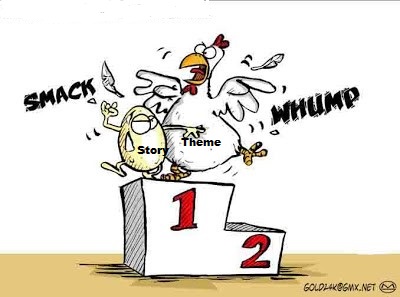
I asked Robin to do a post on theme for last week’s Writing Memo, as a compliment to my post here. She did a great job of explaining what theme is and how to bring it out in your story. She talked about how to identify your theme, how to bring your theme out in your writing and how multiple themes can be, and often are, woven into a single story. After reading her post, it sounded so easy.
One of the most difficult parts of writing, for me, is determining what my story’s theme is. The theme is what your story or screenplay is really about, and it isn’t always obvious. Often you really have to think about the story as a whole and look for the underlying theme. Or at least, I do.
Die Hard is a story about a man, John McClane, (Bruce Willis), trying to save his marriage, but when her office party is taken hostage, it becomes a story about survival – survival of the good guys, as well as survival of the marraige. (Yes, I see the irony in the fact that Robin and I both chose to use Die Hard in our examples.) Survival is what the story is really about.
 Lethal Weapon may be a buddy cop movie about the two cops getting the bad guys, but Roger Murtaugh, (Danny Glover), is struggling with aging and his approaching retirement, and his partner, Martin Riggs, (Mel Gibson), is struggling with the loss of his wife and certain suicidal urges. Dealing with aging and the end of life is what the movie is really about. But the underlying theme is not always easy to pick up on under all the shoot ’em up, good guy – bad guy stuff.
While pursuing my screenwriting emphasis for my M.F.A., one of the things that I was taught was how to breakdown the structure of a movie into different parts, or beats. My professor and screenwriting advisor, J.S. Mayank, had us use the structure model presented in the Save the Cat books by Blake Snyder. Professor Mayank had us watch a lot of movies and read a whole lot of screenplays and break their structures down, and one of the things I learned from this, is that in almost every movie, one of the characters states the theme in their dialog, usually by page five. As a general rule, it’s true. And if you can figure out what the movie is really about, you can put your finger on which line of dialog that is, however, that’s not always an easy thing to do.
For one thing, the line of dialog that states the theme usually doesn’t do it outright. To do so would make the dialog feel forced, untrue to what the character would say. For instance, the line that states the theme in Lethal Weapon is, “Your beard is getting gray. It makes you look old.” Coming from Roger Murtaugh’s daughter, as his family serves his 50th Birthday Cake while he takes a bath works well, but it doesn’t come out and say, “You’re getting ready to retire and your life is coming to an end. How are you going to deal with it?” It’s said and gone, and most viewers probably didn’t even catch that it was the theme stated unless they were looking for it.
These exercises in screenwriting were very helpful to me, but they required that I view movies in a whole new way. (We did a similar thing in my genre fiction classes, dissecting different novels to see what methods the authors used to portray their stories and how effective they are. And when you critique as you read, it’s a lot different than just reading to enjoy the story.) Most people watch movies for entertainment, right? I always had. But when you are doing structure analysis, you have to concentrate more on how it’s put together than you do on what happens in the story. And to figure out what the theme is, you have to watch, or read in the case of screenplays, with a philosophical eye to discover what the story is really about.
Th at’s where I had problems, especially when I was watching the actual movie, rather than reading the screenplay. I always sat down to watch a movie and immediately immersed myself in the story. Before I knew it, I would look up and realize the first five pages of script must be long past and I had failed to identify the line of dialog in which the theme was stated. It was the thing with reading screenplays. I found myself reading and re-reading those first five pages, searching desperately for the line that would tell me what the whole movie was about. I didn’t understand how I could be expected to pick out a line of dialog that stated what the movie was really about before I’d read the entire screenplay. And the sad thing is, I was no better at picking out theme in my own writing and writing a line of dialog to state it.
Here’s where I digress from Robin. You cannot decide what you want your theme to be and then write a story to fit. At least, I can’t. It won’t work. For me, theme must evolve from the story naturally, not the other way around.
When I decided to write, Bonnie, my screenplay for my thesis, I thought I was writing a story about two young kids who chose to live on the wrong side of the law in order to cope with the circumstances of living in the depression. But Bonnie is different than other renditions of the Bonnie and Clyde story, because it is told from Bonnie’s perspective, and before I had finished it, I found that what it is really about is Bonnie’s love for Clyde. Their love is my underlying theme. Just as love is the underlying theme in a story about a huge ocean liner that hit an iceberg and sank into the ocean, sending most of the passengers to their deaths. And just as it worked for James Cameron, when he wrote Titanic, I think it works for Bonnie. Love is what it is really about, the underlying theme.
The point here is, I didn’t set out to write a story about a young girl’s amazing love. That is what evolved from my story about a young couple’s choice to embark on a life of crime. Love was Bonnie’s motivation. Undying love was my theme and I didn’t even know it until I was more than halfway through writing the screenplay. This is why I say theme is the most difficult part of writing for me, whether I’m writing a novel or a screenplay.
But, I still say writing to the theme is more difficult. The theme must emerge naturally from the story, whether you’re writing for the page or the screen. If I just write the story, being true to my characters, the theme will come to the surface of its own accord. But, that’s me. Obviously, it’s different for Robin, who likes to identify her theme before she begins the story and finds ways to bring the theme out. Which comes first for you?
Like this post? Subscribe to Writing to be Read for e-mail notifications whenever new content is posted.
Share this:

“Godling and Other Paint Stories”: Contemplate the Meanings
Posted: September 23, 2016 Filed under: Book Review, Books, Fiction, Stories | Tags: Book Review, Books, Creative Fiction, Fiction, Godling, Jeff Bowles 3 Comments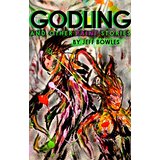
Godling and Other Paint Stories, by Jeff Bowles, is a collection of six short stories all thematically tied together by a very thin thread of paint, or more specifically, colors. In the ingenious mind behind these stories, it probably doesn’t seem far-fetched that paints would be self-aware, or that dogs could evolve into thinking talking animals with human-looking lips, but your average reader will take a look at these stories and say, “Wow!” But one thing these stories will make readers do, is ponder possibilities, because frankly, as an author with a God-thing going on, Bowles conceives of some really heavy concepts, the kind that really make you think.
The collection starts out with Godling, a science fiction tale of a God machine, which gave up its humanity for love, and may, or may not, be able to reunite to become whole once more. (With short stories, you really can’t have spoiler alerts, because they give away the whole thing, so you’ll have to read the story to find out what happens.)
Next is Traffic Patterns, a tale of a sentient traffic light that is granted godhood, for a time. And, Making Paint as a Means of Impermanence is filled with some truly disturbing images of how an attempt to gain immortality turns into an ever renewing ritual to maintain an impermeable existence. Wild Dogs of Buffalo is a canine Godfather, excuse me, I meant Dog Father. Anyway, I love it. It’s a truly entertaining read.
God, the Little Artist – An artist’s heaven. This is not the first time that author Bowles has killed God off in his stories. The main character is Mr. Williams. As in Robin? That’s what I kept picturing in my mind as I read this story. Robin Williams talking to the large baby God whose time is running out, as if perhaps God ages backward. When I’d finished, all I could think was Robin Williams as God. Now that’s scary. But, maybe it’s just me. (No spoiler alerts. Again read the story.)
Dr. Julianus Techt’s 5 Easy Steps to Building a Better You is an instruction manual on how to sell your soul in order to improve on God’s handiwork, which is you. Only Jeff Bowles would create such a story. As you read these stories, when you come to this last, do not… I repeat, DO NOT try this at home.
Godling and Other Paint Stories will be released on Amazon on September 25th, 2016. I highly recommend you grab a copy. Overall, this collection of short stories are all easy, enjoyable reads, which will give reader’s brains lots of food for thought. They are strange and unusual, but Jeff’s writing talent is such that it doesn’t take much to suspend your disbelief. I give Godling and Other Paint Stories five quills.

Kaye Lynne Booth does honest book reviews on Writing to be Read, and she never charges for them. Have a book you’d like reviewed? Contact Kaye at kayebooth(at)yahoo(dot)com.
Share this:

Weekly Writing Memo: Know Your Theme
Posted: September 22, 2016 Filed under: Fiction, Screenwriting, Stories, Uncategorized, Weekly Writing Memo, Writing, Writing Tips | Tags: Fiction, Screenwriting, Writing, writing advice, Writing Process 2 Comments Every story, whether intentional or not, has a theme within it. A theme is not necessarily a moral or lesson, but rather it is what your story is about at its core. Finding the theme of your story can sometimes take some work, as can making the theme come through in your writing, but it’s not as hard as it might seem.
What is your theme?
To find your story’s theme, ask yourself what your story is about. Maybe you won’t be able to break it down into a neat answer, but as long as you can answer the question you have the first step to finding your theme.
For example, let’s say you’re writing Die Hard. Your story would be about a cop who travels to visit his wife out of town, and ends up having to stop a terrorist plot. So what is the theme of this story? Well, it can be broken down in a lot of ways if you think about what the general terms of the story are: good triumphing over evil (cop vs villains), one man against the world (John vs the terrorists), or even how greed can lead to your downfall (the terrorists refusing to give up even though they’re losing because they’re determined to get the money).
The key to figuring out your story’s theme is to think about the larger concepts and the plot of your story, then try to break them down into simple terms as shown above. These larger ideas are the core of your story, and they help tell your audience what type of story it is. If you’re doing this and you are having trouble deciding what the main theme from your options is, ask yourself which potential theme if removed would completely change the story. The one that can’t be removed, and the one that is the biggest overall concept of the story, is your main theme.
How to show your theme?
Showing your theme throughout your story should not be hard. In Die Hard the theme of good triumphing over evil happens consistently. John is determined to do what’s right and to stop the bad guys, and despite all the trouble and missteps that happen, he ultimately always comes through. Even when he loses, it’s just further motivation for him to come back at the bad guys with even more vehemence so he can win. So for your own story, think of what your theme is and how your main character can represent that theme in some way.
Other ways to show your theme is to use something called mirroring. This is when you show the theme through minor secondary characters throughout the story. Sticking with the Die Hard example, you can see some minor mirroring of the theme “one guy against the world” when you look at the local cop who is stuck outside the building and is trying to help John. This cop is fighting against all the others to get John help and is the lone voice in the crowd. By showing your theme through these small mirroring acts you are also adding another layer of plot to your story.
You don’t always have to have the minor characters experience the same outcome as your protagonist either. You can use minor characters to show what the other possible outcome of your theme could be for your protagonist. For example, if your theme is good triumphing over evil, you could have a minor character lose to the evil to show the consequences if your character fails.
Can you have multiple themes?
As is clear with the Die Hard example, there is always a potential for there to be multiple themes in your story. Of course there should be one main theme that is the core of your story, but there can also be some minor themes that help build up your story as well. Maybe good vs evil is your main theme, but then you have themes involving love or, like in Die Hard, greed. These kinds of minor themes can contribute to your plot, as well as help deepen your characters, and many of them will appear without you having to force them into the story. If you look at your subplots, you should be able to see some of the themes that are present in them and bring them out a bit more so they are stronger.
Final Note
In general, it’s a good idea to know what your theme is before you start your story so you can keep your writing consistent. Sometimes, however, the theme comes out and is discovered as you write the story. Alternatively, you can also start your story thinking the theme is one thing, but as you write you discover it is really something else. This is fine, and happens all the time, but if it happens this way make sure you go back once you’re finished writing and make sure everything is consistent throughout the story. The most important thing about the theme of your story is that you’re consistent, and the clearer the theme is in your mind when you start writing, the easier this will be to do.
Robin Conley offers great writing advice most Wednesdays on Writing to be Read. If you just can’t wait until next week to find out more, you can pop into her blog, Author the World, for more tips, or a weekly writing prompt.
Share this:

You’d have to be crazy to want this “Dream Job”
Posted: September 9, 2016 Filed under: Book Review, Books, Fiction | Tags: Book Review, Dream Job, Janet Garber 3 Comments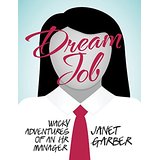
Dream Job: Wacky Adventures of an HR Manager, by Janet Garber, is a quirky romance with a light rhythm which readers fall into easily, moving the story along at a mellow clip. Although at times the dialog seems a bit stilted, Garber’s characters are just peculiar enough to make it work.
Melie Khol is great at solving everyone’s problems except her own, holding others off at a distance. Her “dream job” is really more of a nightmare – dealing with disgruntled employees, investigating allegations of bad behavior in the office, and disciplining culprits of the worst offenses. Melie handles all the unlikely events that occur in her wacky workplace as if they were just a matter of course, but even the best HR Manager has her limits.
She thinks she’s looking for love, or at least companionship, or… okay, maybe just descent sex, but like most of us homo-sapiens, she’s fooling herself. Melie knows her life is lacking something, but she’s not going to find it in the man from her daily subway commute, who she calls Ponytail Man because she finds his hair attractive, and who turns out to be a slug. She thinks She thinks she might find it with Ted, the guy she spends weekends in the country with, but he says he doesn’t do relationships.
As she ponders her non-relationship with Ted, problems at work keep her hopping. Melie has a big secret that could be her undoing if revealed in the ongoing company-wide background checks, her boss is murdered and everyone is suspect, including her, her new supervisor is sexually harassing her, and demands are flying at her from every direction. It all unfolds in a final meltdown of hilarious proportions and a happily ever after worthy of any good romance novel.
Dream Job will keep you smiling and perhaps even invoke a few chuckles. A thoroughly entertaining read. I give Dream Job: Wacky Adventures of an HR Manager five quills. 
Share this:

Weekly Writing Memo: Overcoming the Blank Page
Posted: August 17, 2016 Filed under: Books, Fiction, Publishing, Stories, Uncategorized, Weekly Writing Memo, Writing | Tags: Creative Fiction, creative process, Fiction, Screenwriting, Writing, writing advice, Writing Process 1 Comment Sometimes when it comes to writing, the hardest thing to overcome is the simplest. One such example of this is to overcome the intimidation of a blank page and to simply get started. Those first moments when you sit down in front of the page and tell yourself you’re going to write can be huge, and overwhelming. All sorts of thoughts can pass through your head that make putting the first words down on the page near impossible. Am I good enough? Do I have anything to say? How do I do this? Will anyone want to read it? Etc. These kinds of thoughts can stop your writing in its tracks before you even begin. Knowing how to overcome the blank page can be vital, and while there isn’t a method that works for everyone, there are several things that I find work well.
Free Write First
One of the easiest ways I find to get into writing is to simply allow myself to free write for a while. Even if I have a specific story idea in mind, I will sometimes think of my character or my setting and just write whatever comes to mind. It doesn’t always flow in a pretty way, or even make sense, but it does allow me to explore the characters or setting without restrictions and it gets me writing. Once I start putting words on the page, focusing them becomes easier. I also find that just getting started on the act of writing makes some of the tension around writing dissipate. So however you do it, get started by freewriting and getting words on the page. Even if you have to start by writing about your day or something, see where the freewriting takes you. Once you no longer have a blank page, it’s easier to focus on creating something cohesive that you can turn into a story.
Copy Someone Else
This is a method that has been around for a while, and was even used in the movie Finding Forrester. When you are just getting started writing and struggling, try grabbing a random book and copying down the first paragraph of it. As you are writing, let your mind wander, and when you’re comfortable, stop copying and start making it your own. Sometimes using someone else’s work to get you started writing can help you transition into your own work. Just remember to go back once you finish and to change the beginning so it is no longer copying the original author’s work. The key to this is that it gets words on the page, and in making what you write your own.
Make A Rough Outline
When I have a specific story idea in mind, but am struggling to get started, I find that writing down 3-5 bullet points of where I want the immediate section of story I’m working on to go helps. Usually I will do this when I start each chapter. I grab a piece of paper and jot down the 3-5 key moments of the chapter that form the arc of it, then when I write I have “goals” to write toward. It’s just enough outlining to keep the story focused while I’m writing, but not so much that people who hate outlining will feel like they’ve over planned anything.
It works for me because I prefer abbreviated outlines, and it allows me to discover how the characters get from one big moment to the next as I write. So take a few moments to create a small arc for what you want to write, and then let yourself write to those points. It’ll help you visualize what you’re planning to write, and it’ll give you points in the story to write toward. Just try not to make your bullet points too broad, or you can end up feeling lost as to where to start again.
Try a Different Medium
One of the last things I try when I’m struggling to write is to switch mediums. Sometimes I find that I just can’t write a certain story at the computer, and instead I end up writing with a notepad and pen. It seems silly, but just switching mediums like that can actually help get you started. Sometimes I think the notepad works better than the computer when I’m struggling because the notepad feels less permanent and professional. I’m just jotting down ideas! Not writing for real! Which isn’t true at all, but it feels that way. So allow yourself to try a different medium and see if it changes anything. At the very least, switching to something like a notepad where you can do things by hand can allow you to doodle and jot ideas to brainstorm while you are working on getting to the real writing. Which can be just as productive.
Final Notes:
The final thing to remember if you are stuck on the white page is that you don’t have to start by writing right away. If writing simply isn’t working, trying outlining or researching or brainstorming for your story. If you do those things, you’ll still be working on your story in some way, and maybe it’ll help you feel more confident so you can get started. Just remember, at some point you have to stop doing these things and get to the writing, so don’t procrastinate too long!
Share this:

Weekly Writing Memo: A Matter of Time
Posted: August 10, 2016 Filed under: Fiction, Screenwriting, Uncategorized, Weekly Writing Memo, Writing, Writing Tips | Tags: Fiction, Writing, Writing Process 1 Comment Something that almost every story deals with is the passing of time. It’s natural, and to be expected. What every writer needs to focus on is how to show the passing of time, and when to skip time in a story. These two things can be a huge pitfall in a story. If you tell too much of the story and don’t skip time when you need to, then the story can feel sluggish and boring. If you skip too much time the audience can feel like they’re missing things, and you can take away from the tension of the action. There’s a careful balance to time in every story, so the key is finding it for yours.
When to Skip Time
In general, you should skip time when nothing is happening in the story. Any time you have huge chunks of time passing with no conflict going on, you need to get the story moving and skip ahead if possible. There should always be some form of conflict going on in your story, so whenever it’s lacking you’ve either missed a plotline, started in the wrong place, or need to find a way to skip ahead. Look at this time period and see what happens in it that you absolutely need to show your reader, then find a way to show it elsewhere or to compress it down.
Sometimes you can also skip time when you are telling a story in a nonlinear way. Some stories work better if you can jump ahead and then go back to a flashback or something, so look at your conflict and see if it is best told linearly, or if skipping around in time can help you create more tension within the story. You want to maximize the tension and conflict, so if you can do this by telling the story in a new way, then you should try.
How to Skip Time
There are endless stories to use as reference for skipping time (Time Traveler’s Wife; Looper; Lord of the Rings). One of the key things to remember when skipping time is that you need to find a way to show that time has passed. In films, this is usually done with visual elements such as scenery changes, characters aging, seasons changing, etc. In fiction, this can be shown through some of those elements as well, but you can also use words that help show this. Mention the time passing, or use cueing phrases that help guide the reader (Ex – Months later; Kiera was 16 when she finally returned to the village…). Whatever you do, always find a way to show the time change unless you have a reason not to.
Sometimes in stories the writer will skip time by using a montage to show the key moments that happen during the transition, ending with the characters at the point in time where the story continues. Other times, the writer will just skip ahead and start the story at the point in the future where they want it to be. The method to use depends on what happens during the time skip. If something vital happens, then try to find a way to show it either in a flashback later, or before skipping time. As long as there is a key story element, then it needs to be shown. So figure out what matters to the story, and where the conflict is, and you’ll know which elements to show and which to skip.
Final Notes
Obviously there are a lot of moments in a story where exciting action isn’t happening that are still important, so don’t think that you need to skip all these. Those moments can still have character development and conflict. Internal conflict is just as important as external conflict, so make sure you aren’t skipping all that. If you find yourself skipping a lot of time in your story, it might also be time to look at if you’re starting in the right place. If you start your story later, can you still show all the information that you’re skipping over in some way? Usually the answer is yes. Whatever you decide, just remember that you can always ask for a second opinion if needed. Overall, just remember to consider the conflict, the character development, and how your story will change if you skip time. If you do those three things, you should be able to figure out what you need to do.
Share this:

“Keepers of the Forest” Plot Draws Readers In
Posted: August 5, 2016 Filed under: Book Review, Books, Fiction, Uncategorized | Tags: Book Review, Books, Creative Fiction, Fiction, James McNally, Keepers of the Forest 3 Comments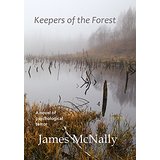
Keepers of the Forest, by James McNally has a good plot and interesting characters. When Chris is chosen by Crispus Attuck Brown to be the Chosen One, a summer spent with Scott and Chris’ aunt and uncle takes an unexpected turn, and Chris’ swim instructor, Brian is the only who realizes something is amiss. Brian must find a way to save the two brothers and foil Brown’s evil plot to destroy the world.
Brian is a young man who is afraid of commitment and perhaps drinks a little too much. He befriends a young boy, Chris, who is a sweet kid that falls into unfortunate circumstance and becomes the victim of an evil plot. Other players on the good guy’s team are Chris’s older brother, Scott, an angry teen who works through his own issues and story arc, and Brian’s bartender friend, Nancy who has her stuff together and acts as support for Brian as he works through his personal issues and becomes the hero. One of the most colorful characters unfortunately, has only a supporting role and isn’t really involved in any of the action. Nancy’s aunt, Leah, the balding swim instructor with cancer is a strong character, and I would have liked to see more of her.
The villain, Crispus Attuck Brown is an interesting chap, who believes he can bring about the second coming of the Dryad, and he’s gathering the Keepers of the Forest to that end. I think if we’d seen more of how bad he is sooner, it would’ve helped us to fear him more. At his side is an ex-hooker named Sherry, who is a misguided pawn in Brown’s game until she removes the blinders and realizes what is really going on around her. The big guy, Mason, is the muscle for the operation. He is feared because of his size, but is shown to have a soft heart. The crew is rounded out by two gay ex-cons, Ted and Vincent, who are cold blooded killers, who kill because they like it and almost seem more to be feared than Brown.
I had a couple of problems with Keepers of the Forest. First, McNally does a bit of head hopping, which makes it confusing to the reader as to whose P.O.V. we are in at times. And second, the characters all have such clear insight into their own motivations that they can self-analyze and express exactly what they are feeling and their motivations verbally. There isn’t a lot of subtext, and real people just don’t do that.
***************************SPOILER ALERT********************************
The other thing that just didn’t sit quite right with me, was the fact that the good guys save the day, but they are lead to the solution by Sherry, after she comes to the realization that her beliefs in Brown are faulty. Brian becomes a passive protagonist, in a way, because although he has a part in saving the boys, the rescue is led by a member of the opposing side, turned defector and he just does what he is told. For me, all the characters have the potential to be really great characters, but most of them fall short of what they could be.
I give Keepers of the Forest three quills.