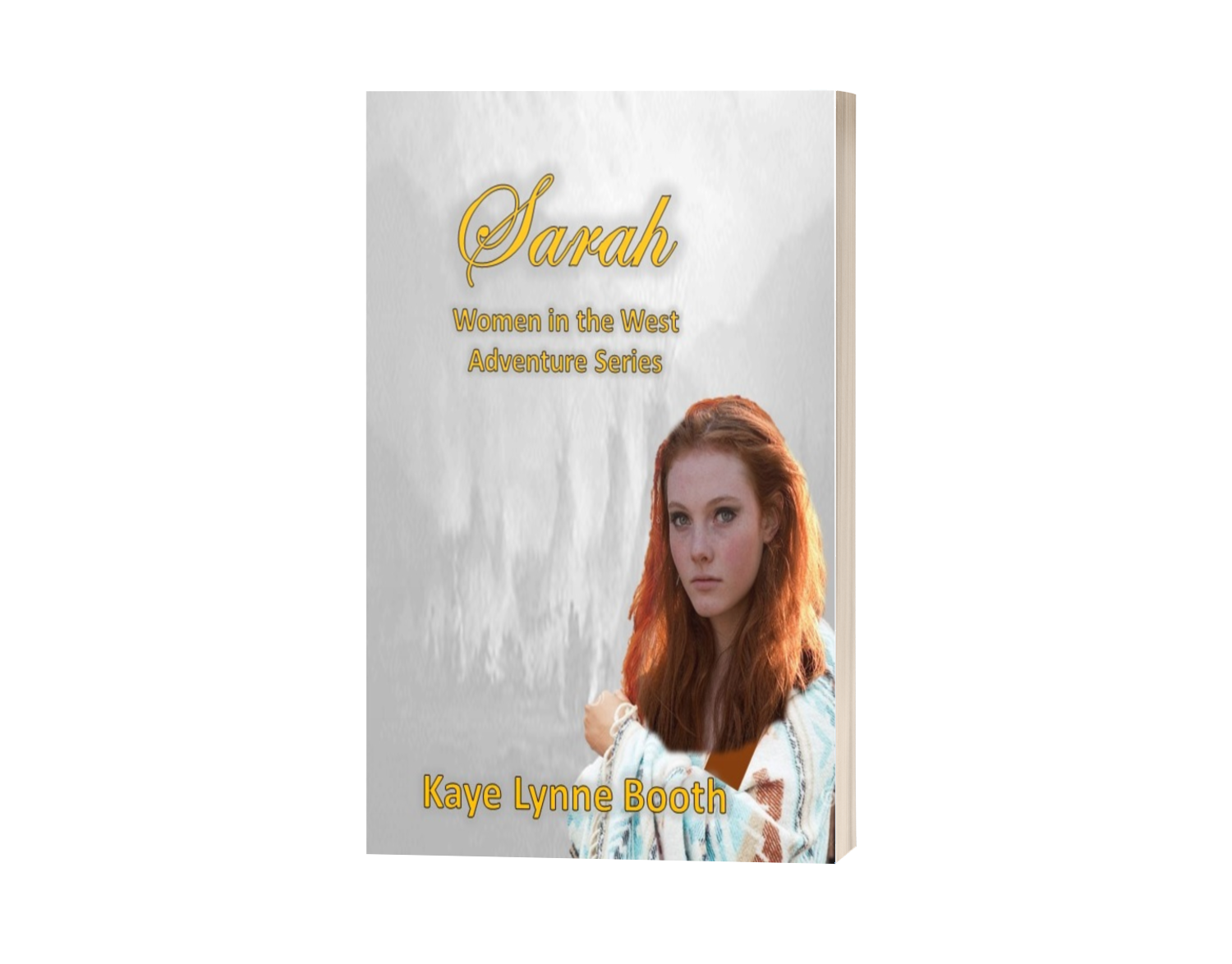
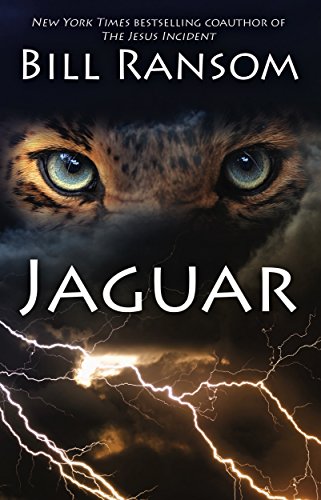
For Eddie Reyes and his friend Maryellen, dreams are much more than that. Dreams are an avenue for learning. Dreams are a means of breaking through to parallel worlds and making connections with their friends, Africa Lee and Rafferty. Dreams are a way to control people and a weapon which causes madness. To those who don’t know, it sounds like a cool superpower, but it’s one that carries a heavy price.
For Eddie, it’s the only way to hunt down the Jaguar to save their friends and the rest of the Roam from the persecution of the jaguar priests. But the Jaguar has reached Maryellen’s father through his dreams in this world and he’s intent on keeping she and Eddie apart at all costs.
Can Maryellen and Eddie escape her father and the other traps set on this side by the Jaguar long enough to hunt the him down in his own dreams before he destroys the Roam, and both worlds in the bargain?
My Review
Although Bill Ransom’s Jaguar unfolds the story slowly and it takes a little while to put the puzzle pieces together to form an idea of how the characters are connected and how they fit within the full picture of the story, it is just odd enough to keep your curiosity raised and keep you reading long enough to see it all come together. And by then, you’re hooked. You have to keep reading to find out how it all turns out. You can’t put it down. And it’s a good thing, because if you don’t read through to the end, you will miss the big reveal that changes the game and raises the stake even higher for Eddie.
A well-crafted psychological thriller that will keep you riveted to your seat. I give Jaguar four quills.
Kaye Lynne Booth does honest book reviews on Writing to be Read in exchange for ARCs. Have a book you’d like reviewed? Contact Kaye at kayebooth(at)yahoo(dot)com.
Today, I am delighted to host poet and author Miriam Hurdle for the July edition of Treasuring Poetry.
Welcome Miriam Hurdle
Hi Robbie,
I’m delighted to be your guest on Writing to be Read to talk about poetry.
Which of your own poems is your favourite
Among the published poems in Songs of Heartstrings: Poems of Gratitude and Beatitude, several poems are my favorites in equal measure for different reasons. One is in the section of Songs of Marriage, one in Songs of Tribute, and one in Songs of Inspiration.
The time I wrote this post, my heart turns to the poem “Healthy Grieving” in the section of Songs of Tribute.
Healthy Grieving
Randy and my husband were true friends.
No appointment needed for
a barbeque, a movie or a game, just
knocked on each other’s door.
The conversation could go anywhere,
no worry about apologies.
When one needed a helping hand,
the other one is always there.
Twelve years was a long time,
such true friendship rarely came by.
People say, “Big boys don’t cry.”
I don’t know why.
Boys have emotion, as we all do.
My husband had never cried,
not until after Randy died.
What inspired you to write this particular poem?
There is a narrative precedes the poem. I wrote the poem to pay tribute to our neighbor, my husband’s best friend who died of a mountain bike accident. Here is the excerpt.
I remember on January 3, 2016. Randy joined us to celebrate my husband’s birthday. We had lunch and saw Star Wars at Irvine Spectrum. It was on Saturday.
The following Sunday, eight days later, his relative came over to tell us that Randy had a mountain bike accident. He and a gym buddy ventured on a long mountain bike ride. The bike hit a vast gap and made a somersault flip. He got thrown off the bike, fell forward and hit the ground, and smashed his head and face.
They rushed him to the close by emergency room but pronounced him dead as soon as the ambulance reached the hospital.
Randy was our neighbor who lived two doors down the street. He was my husband’s best friend for twelve years, ever since he came back to live with his parents. They worked out at the gym together. They enjoyed the Friday movie and pizza day for a while.
After my husband got a mountain bike, he also got one. They biked on the trails in the city. On special occasions, a barbecue dinner was in order. He came over to our house for game nights regularly. A year before he passed away, they switched to another restaurant to hang out in the bar, and I became their designated driver.
Randy was a lighthearted guy, a wonderful friend, a caring son. We missed him very much.
Which genre of poetry do you enjoy writing the most and why?
Whereas a “form” defines the way a poem arranges sounds, rhythms, or its appearance on the page, “genre” is something like the poem’s style. Many poetic genres have a long history, and new poems almost always seek to explore a new aspect of the traditional style and thus to redefine the genre.
Traditionally, there are nine genres of poetry. Three of them remain in the newer inclusion of poetry genres. They are narrative poetry which tells a story, lyric poetry which is musical in tone, and dramatic poetry which is a long dramatic monologue or persona poem.
I would say I enjoy writing narrative poetry genre. Regardless of the poetry forms, I like to write poems that tell the stories. The poem I included above is a good example in which I shared the story of the friendship between my husband and Randy.
As far as poetry form, I enjoy writing free verse which is free of rules and regulations. It doesn’t follow a consistent rhyme scheme, meter or musical structure. For the fun of learning, I also write blank verse which follows a stricter structure with precise meter. In addition to Haiku, Tanka, I have written a Shakespearean Sonnet, a Pantoum, several acrostic poems, two Villanelle, and one one-syllable poem (all the words used in the entire poem are single syllable words).
Which genre of poetry do you enjoy reading the most?
I enjoy reading narrative and lyric poetry including poetic song lyric. One example of narrative poetry is a poem by the American Poet Linda Pastan in which she tells a story about her daughter.
To a daughter leaving home
When I taught you
at eight to ride
a bicycle, loping along
beside you
as you wobbled away
on two round wheels,
my own mouth rounding
in surprise when you pulled
ahead down the curved
path of the park,
I kept waiting
for the thud
of your crash as I
sprinted to catch up,
while you grew
smaller, more breakable
with distance,
pumping, pumping
for your life, screaming
with laughter,
the hair flapping
behind you like a
handkerchief waving
goodbye.
This poem is about the poet teaching her daughter to ride a bicycle. The title suggests that her daughter is now old enough to leave home. Pastan cleverly extends the metaphor of the bike as part of life’s journey. When I read this poem, I identify with the poet the joy of parenthood, with the sentiment of missing my daughter when she grew up and has gone on to her own journey.
I can’t talk about poetry without talking about music. I’m a singer of classical, traditional, and some older pop music and memorized many song lyrics for solo performances. The poetic song lyrics influence the flow of my poetry writing.
Examples of poetic song lyrics are, “Yesterday” by the Beatles, “Memory” from the Musical Cats written by Trevor Nunn, and “Killing Me Softly” written by Norman Gimbel & Charles Fox.
What is your favourite poem?
My favorite poem is a popular one by Robert Frost. Its signature phrases have become so ubiquitous, so much a part of the individual life and business alike. I like it because of its message applicable in my life.
I have come to crossroads many points in my journey. As reflected by Frost, I couldn’t take “both,” tried to look down both paths “as far as I could.” Many times, they both were “equally” “fair” but no guarantee. Ultimately, it was my decision that “made all the difference.” Knowing that I would never “come back,”, I willingly took the responsibility for the road I chose to travel with no regret.
The Road Not Taken
Two roads diverged in a yellow wood, And sorry I could not travel both And be one traveler, long I stood And looked down one as far as I could To where it bent in the undergrowth;
Then took the other, as just as fair, And having perhaps the better claim, Because it was grassy and wanted wear; Though as for that the passing there Had worn them really about the same,
And both that morning equally lay In leaves no step had trodden black. Oh, I kept the first for another day! Yet knowing how way leads on to way, I doubted if I should ever come back.
I shall be telling this with a sigh Somewhere ages and ages hence:Two roads diverged in a wood, and I— I took the one less traveled by, And that has made all the difference.
I would like to include the trailer for Songs of Heartstring created by Diana W. Peach at https://mythsofthemirror.com
Miriam Hurdle is a member of the Society of Children’s Book Writers and Illustrators (SCBWI). She published four children’s books at twenty-six years old. Her poetry collection received the Solo “Medalist Winner” for the New Apple Summer eBook Award and achieved bestseller status on Amazon.
Miriam writes poetry, short stories, memoir, and children’s books. She earned a Doctor of Education from the University of La Verne in California. After two years of rehabilitation counseling, fifteen years of public-school teaching and ten years in school district administration, she retired and enjoys life with her husband in southern California, and the visits to her daughter, son-in-law, and granddaughters in Oregon. When not writing, she engages in blogging, gardening, photography, and traveling.
My review of Songs of Heartstrings: Poems of Gratitude and Beatitude
Songs of Heartstrings is a collection of poems and essays featuring the vast array of life experiences by the author. Miriam Hurdle has encountered both the best and the worst of life through the death of her husband’s close friend, her own treatment for cancer, the birth of her daughter and the close relationship of her parents. Her wonderful joy in life and strong faith in her religion shine through in her poetry and give a lot of insight into her strong spirit and ability to stay positive despite the curve balls life has thrown her way.
This book also demonstrates Miriam’s love of nature and features poems about her garden, a hummingbird and even a spider. Her photographs and pictures are lovely and compliment the prose.
My review of Tina Lost in a Crowd
Tina Lost in a Crowd is a charming book for children about two young school friends who attend a busy concert with Tina’s parents and get lost on their way to the restroom.
I enjoyed the character of Tina, a lovely and friendly girl who demonstrated politeness and respect towards both her teacher and her parents as well as consideration towards her friend. She has sufficient presence of mind not to panic in the scary situation of being lost in a big crowd.
The depiction of Tina’s family life and her mother’s interest in her and eagerness to plan some fun family outings for the summer vacation are heart warming and lovely to see in a children’s book. I liked the fact that Tina’s mother made a picnic for her family and Tina’s friend, Erica, to enjoy at the concert with good, wholesome food.
The illustrations in this book are a real treat and every page is a visual delight. I would recommend this book to parents and caregivers who like books that encourage good family values and level headedness by children in difficult situations.
About Robbie Cheadle
Robbie Cheadle is a South African children’s author and poet with 9 children’s books and 1 poetry book.
The 7 Sir Chocolate children’s picture books, co-authored by Robbie and Michael Cheadle, are written in sweet, short rhymes which are easy for young children to follow and are illustrated with pictures of delicious cakes and cake decorations. Each book also includes simple recipes or biscuit art directions which children can make under adult supervision.
Robbie has also published 2 books for older children which incorporate recipes that are relevant to the storylines.
Robbie has 2 adult novels in the paranormal historical and supernatural fantasy genres published under the name Roberta Eaton Cheadle. She also has short stories in the horror and paranormal genre and poems included in several anthologies.
Robbie writes a monthly series for https://writingtoberead.com called Growing Bookworms. This series discusses different topics relating to the benefits of reading to children.
Want to be sure not to miss any of Robbie’s “Treasuring Poetry” segments? Subscribe to Writing to be Read for e-mail notifications whenever new content is posted or follow WtbR on WordPress.
Thanks for joining us on Day 3 of the WordCrafterIn the Silence of Words Book Blog Tour and my review of this thought provoking play. You can catch my interview with the creative mind of author Cendrine Marrouat for Day 1 here, on Writing to be Read, and Day 2 brought a guest post from the author on Robbie’s Inspiration about writing a play as a poet. Days 4 & 5 will also be guest posts, one on Roberta Writes, and then Zigler’s News will be finishing off the tour for us.
My Review
In the Silence of Words is a play which says much in what is left unsaid. The three dots… of more to come are left hanging time and again with unfinished thoughts that the reader is left to fill in on their own. But I think that is the point, because there is so much meaning in that which is left unspoken.
Through unspoken words, this play tackles several real life issues in a relatable manner that will touch readers, (or viewers), hearts – loss, self-sacrifice, searching for the self – these are life issues most of us have dealt with at one time or another in our own lives, giving rise to many opportunities for those “A-ha!” moments, when we can truly relate with Marrouat’s characters.
This play is well-crafted, with a thought provoking plot and relatable characters which move the story forward. I give In the Silence of Words five quills.
This week WordCrafter brings you a tour that is a little different, and I’m excirted to tell you about it. This tour is not for the usual novel or poetry collection, but for a play, In the Silence of Words, by Cendrine Marrouat. We are kicking things off today, right here on Writing to be Read, with an interview with the author which will tell us all a little more about this creative author and her latest release.
Kaye: What inspired you to create In the Silence of Words: A Three-Act Play?
Cendrine: The play is very loosely based on some major events in my life, including my mother’s suicide. I wanted to write something meaningful and inspirational to help or bring comfort to those who might be going through something similar.
Kaye: Why did you choose to write this tale in play format? How would it be different if you had tried to write it as a literary story instead?
Cendrine: Before the idea of the play was even born, I had tried writing short stories and a novel. I quickly realized that my style was at odds with those genres. I suck at descriptions, and much prefer focusing on short, “punchy” scenes that deliver emotions between the lines.
In the Silence of Words can only work as a play. Theatre encourages uncomfortable conversations while forcing introspection, lifting spirits, and bringing people together.
Kaye: What makes In the Silence of Words: A Three-Act Play different from stories following a similar concept?
Cendrine: The play is unique because of the number of challenging topics it deals with at the same time; and the way each unravels on its own and as a whole. Every reader will find at least one strongly relatable element that will give them an appreciation for life.
Kaye:In the Silence of Words was, in part, inspired by the haiku poetry form. Why do you think the haiku is such a powerful poetry form?
Cendrine: The haiku was not what inspired the idea for In the Silence of Words, but I used the same technique behind this wonderful poetry form to make the storyline more impactful.
The haiku is a very short poem of three lines that says very little but suggests a lot. It relies heavily on the unsaid to convey emotions and deep meanings. As such it is the epitome of the “Say less, show more” technique every serious writer uses to craft memorable stories.
Kaye: Most of your work focuses on the importance of embracing the world and situations around us. Why do you think it is important?
Cendrine: Because life only has meaning when we choose to accept the negative as well as the positive experiences we encounter. There are lessons to learn in everything. It’s up to us to decide, when we are ready, how fast or slowly we want to grow.
Kaye: What are your goals with In the Silence of Words: A Three-Act Play?
Cendrine: I want to invite people to view pain and loss differently. I want them to rethink their relationship with life, death, and everything in between. Losing loved ones is, of course, terrible, often leaving gaping wounds in our hearts. However, as main character, Cassandra Philip learns, there is a healthy, albeit liberating way to grieve and move on. It just (often) requires a series of distressing events to reach that kind of conclusion.
Cendrine Marrouat is a French-born Canadian photographer, poet, and the multi-genre author of more than 30 books. In 2019, she founded the PoArtMo Collective and co-founded Auroras & Blossoms with David Ellis. A year later, they launched PoArtMo (Positive Art Month and Positive Art Moves) and created the Kindku and Pareiku, two forms of poetry. Cendrine is also the creator of the Sixku, the Flashku, and the Reminigram. Cendrine writes both in French and English and has worked in many different fields in her 17-year career, including translation, language instruction, journalism, art reviews, and social media.
We have a great tour lined up for this thought provoking play. Join us tomorrow for a guest post by the author on Robbie’s Inspiration for Day 2. Then Wednesday, you can catch my review right here on Writing to be Read for Day 3. Thursday’s stop is on Roberta Writes with a guest post by the author, and we’ll be wrapping things up on Friday with another guest post on Zigler’s News. I do hope you’ll join us as we learn more about In the Silence of Words.
When I Was You, is a well-crafted thriller by Minka Kent that will keep readers guessing to the very end. This story has all the twists and turns of a good thriller, and just when you think you know what is going on, the plot doubles back for you to realize how wrong you were. I’m not sure how to review this book without giving away spoilers, because it does keep you guessing.
Brienne Dougray was attacked and robbed, putting a jolt in her self-confidence, making her feel afraid and vulnerable. To make matters worse, all of her friends have turned their backs on her and she has no idea why. It seems the only one she can rely on is Niall, a busy oncologist who is her tennant, whom she is developing feelings for. She begins to feel as if her life is not really her own when she learns there is another woman who is living her identity and Niall may not be the man she thought he was. These odd occurances have her doubting her sanity and she has to wonder if she really knows who she is. To solve the mystery of what is really going, is the only way to figure out who she really is and get her true life back.
Suspense and mystery keeps the pages turning in this well-crafted thriller. I give When I Was You five quills.
Kaye Lynne Booth does honest book reviews on Writing to be Read in exchange for ARCs. Have a book you’d like reviewed? Contact Kaye at kayebooth(at)yahoo(dot)com.
Put Off My Sackcloth Essays, by Annie Dawid provides open and honest glimpses into the life of a single daughter of a Jewish immigrant, who chooses to settle, eventually, in a small mountain community, where she lives off-grid with her mixed lineage son. Dawid’s essays are a brutally honest portrayal of her journey out of a history of suicidal depression and into motherhood.
The fact that the organization is not chronological, may make it more difficult for readers who are used to following a linear storyline, but her essays intermix recountings from her own life experiences with reflections on her research of the 1978 mass suicides in Jonestown, in a mosaic of small pieces that fit together to create a complete story, out of despair and into hope. These powerful essays are at times heart wrenching, at times evoking a smile, but they all reach out and touch the reader from the depths of the author’s soul.
Amazed by Dawid’s inner strength to battle her own demons, these soul revealing essays outline a journey from a life teetering on the edge of death into one filled with life and love. I give Put Off My Sackcloth Essays five quills.
Kaye Lynne Booth does honest book reviews on Writing to be Read in exchange for ARCs. Have a book you’d like reviewed? Contact Kaye at kayebooth(at)yahoo(dot)com.
My Treasuring Poetry guest today is talented author and poet M J Mallon. I am delighted to host Marje here and hope you enjoy her thoughts on poetry and her favourite poem.
Which of your own poems is your favourite?
This was such a difficult decision, I have at least three favourites! I narrowed it down to the robin. The robin and the dragonfly are my spirit animals and trees are also a huge inspiration. I’ve written about all of these and more in Mr. Sagittarius.
A beautiful picture of a robin by M J Mallon
Bench,
A bird,
Red-breasted,
So, tame you rest,
Beside me robin,
Two friends on a park bench,
One human, one of nature,
I appreciate your kind time,
Until you away… exploring far,
Hinting at possibilities you go.
I wonder what you notice in your world.
And why you choose that ground to explore,
When you could have stayed here with me,
In mindful meditation.
Maybe you’ll visit me,
Christmas day, perhaps?
To bring good cheer,
Until then,
Peace to, You.
What inspired you to write this particular poem?
I’d been studying mindfulness at the sixth form college where I work. Mindfulness is the act of observing and using the full array of our senses meditatively to become more at one with ourselves. I’ve discovered that this is a fantastic practice to adhere to. It benefits an author’s creativity by making you more aware of the nuances of your surroundings. I’m fortunate in that I work near the botanical gardens in Cambridge, so I often visit and walk and observe the wonder of nature taking photographs of the trees, flowers, animal and insect visitors. Over time, I collected these photographs and wrote poems about them. These, along with various seasonal and short pieces of fiction feature in Mr. Sagittarius. It is a joyful celebration of siblings, magic, loves, nature, the seasons and the circle of our lives.
Which genre of poetry do you enjoy writing the most and why?
I love writing poetry about life in all its vibrant colours. I am often inspired by photography, (I am a keen amateur photographer – my grandfather and uncle were professional photographers,) or I use images I discover as prompts, often via Colleen Chesebro’s poetry challenge: https://wordcraftpoetry.com/
Specifically, I enjoy writing poems about nature, trees, flowers, love and Halloween! Halloween poems also feature in Mr. Sagittarius. Halloween is an autumnal activity, (and often a childhood one,) so it links well with the seasonal/circle of life, aspect of my poetry writing.
Which genre of poetry do you enjoy reading the most?
I enjoy reading short form poetry. It is so expressive and brilliant. I love how short verses of poetry convey so much detail in so few words. I enjoy haiku, and tanka, as well as poems that form a pattern on the page. I also enjoy longer forms as you will see from my choice of favourite poem.
What is your favourite poem?
I have always loved Ode To Autumn by John Keats. I can almost taste the words. They are magnificent—that first line: Season of mists and mellow fruitfulness —draws you in and makes you long to read more.
Ode To Autumn by John Keats
Season of mists and mellow fruitfulness, Close bosom-friend of the maturing sun; Conspiring with him how to load and bless With fruit the vines that round the thatch-eves run; To bend with apples the moss’d cottage-trees, And fill all fruit with ripeness to the core; To swell the gourd, and plump the hazel shells With a sweet kernel; to set budding more, And still more, later flowers for the bees, Until they think warm days will never cease, For Summer has o’er-brimm’d their clammy cells.
2. Who hath not seen thee oft amid thy store? Sometimes whoever seeks abroad may find Thee sitting careless on a granary floor, Thy hair soft-lifted by the winnowing wind; Or on a half-reap’d furrow sound asleep, Drows’d with the fume of poppies, while thy hook Spares the next swath and all its twined flowers: And sometimes like a gleaner thou dost keep Steady thy laden head across a brook; Or by a cyder-press, with patient look, Thou watchest the last oozings hours by hours.
3. Where are the songs of Spring? Ay, where are they? Think not of them, thou hast thy music too,— While barred clouds bloom the soft-dying day, And touch the stubble-plains with rosy hue; Then in a wailful choir the small gnats mourn Among the river sallows, borne aloft Or sinking as the light wind lives or dies; And full-grown lambs loud bleat from hilly bourn; Hedge-crickets sing; and now with treble soft The red-breast whistles from a garden-croft; And gathering swallows twitter in the skies.
Mr Sagittarius is a beautiful collection of poems and short stories, set in the lovely gardens of Cambridge and linked by the visits and experiences of a family of twin brothers and their younger sister.
The story starts with William visiting the weeping willow tree in the garden, a place that was special to his twin brother, Harold, who has recently passed away. William sees Harold’s spirit in a dragonfly that he chats to and finds solace in their one-sided communication.
This is a few lines from a poem about the dragonfly: “Ancient, sweet fellow Sacred magic bestower, Change tumbling on fragile wings.”
When William returns home, he has an altercation with his sister, Annette. During their spat Annette reveals that she has always felt left out and overlooked by her twin brothers. This revelation leads to William and Annette becoming closer and visiting the garden together. Not long after, William passes on and Annette is left alone. She visits the garden and communicates with the spirits of both her brothers over the course of the rest of her long life.
The visits of the siblings to the garden are captured in lovely verse. This is an example I really enjoyed: “I dream in colour But now everything is dark Where has the light gone? Oh, cruel leafy canopy, No green meadow, just blue thoughts.”
My favourite of the short stories was The Old Man of Snow and The Snow Snake. This is a story about making good choices in life and rejecting greed. I enjoyed the tale and the descriptive writing.
Mr Sagittarius is a gorgeous book full of delightfully depictive poems and short stories and decorated with striking photographs. This is a book that lovers of poetry, mystery, and wonder will love.
I am a diverse author who blogs at: https://mjmallon.com. My interests include writing, poetry, photography, and alternative therapies. My favourite genres to write are: Fantasy YA, Paranormal, Ghost and Horror Stories and I love writing various forms of poetry and micro poetry – haiku and Tanka and flash fiction.
I am proud to be included in the best selling horror anthology Nightmareland which received best seller status with best-selling author Dan Alatorre at the helm.
The Sir Chocolate children’s picture books, co-authored by Robbie and Michael Cheadle, are written in sweet, short rhymes which are easy for young children to follow and are illustrated with pictures of delicious cakes and cake decorations. Each book also includes simple recipes or biscuit art directions which children can make under adult supervision.
Robbie has also published books for older children which incorporate recipes that are relevant to the storylines.
Robbie writes a monthly series for https://writingtoberead.com called Growing Bookworms. This series discusses different topics relating to the benefits of reading to children.
Want to be sure not to miss any of Robbie’s “Treasuring Poetry” segments? Subscribe to Writing to be Read for e-mail notifications whenever new content is posted or follow WtbR on WordPress.
Shadowland is the latest release in the Box Under the Bed horror anthology series, compiled and edited by bestselling author Dan Allatorre. Pick up any of the anthologies in this series and the reader will not be disappointed, but the collection of tales featured in Shadowland may have outdone those which came before. From the creative minds of Dan Alatorre, Betty Valentine, Roberta Eaton Cheadle, Christine Valentor, Jessica Bakkers, MD Walker, and Alison Marushka, each story is creatively crafted to fit into the premise of the anthology as a whole, like the pieces of a jigsaw puzzle fit precisely to do their part in the creation of the picture as a whole. This anthology has the potential to be made into a television series, with each individual story becoming a single, or even multiple episodes.
The mysterious and eccentric Dr. Aumental teaches a very special class, where students are excused from their other classes and sent on all expense paid travels to research dark folklore and legends as subjects for their term papers. The research takes students to the far reaches of the globe, searching for the truth about voodoo magic, demons, spirits of the dead, the cave dwelling Hojimaa, Hookman mythology, the monster under the bed, phantom cannibals, the Jersey Devil, and more. Any legend lurking in the shadows is fair game for the investigative skills of Dr. Aumental’s selected students. Certainly, this class must produce some very unique term papers, but why does the professor go to such lengths and what does he do with the information they contain?
Each of the dark tales in Shadowland easily stands alone on its own merit. Together, they form an anthology collection that goes beyond a common theme to help fulfill an overall premise that leaves itself open to endless possibilities. I give this horror anthology five quills.
Kaye Lynne Booth does honest book reviews on Writing to be Read in exchange for ARCs. Have a book you’d like reviewed? Contact Kaye at kayebooth(at)yahoo(dot)com.
Welcome to Day #2 of the WordCrafter A Ghost and His Gold Book Blog Tour. Yesterday Roberta Eaton Cheadle shared the origins of the story for this historical paranormal novel and I added my review of the book right here on Writing to be Read. Today we get a look at one of Cheadle’s characters, Boer, Pieter Van Zyl. Please join us as we snatch a glimpse into the author’s thoughts as she developed a character who represent one side of the Second Anglo Boer War in South Africa.
A Ghost and His Gold Give Away
Each stop on this five-day book blog tour will offer the opportunity to win a $10 Amazon gift voucher. (*Winners must be able to retrieve Amazon US gift vouchers.) Author Roberta Eaton Cheadle will also give away 2 paperback copies of A Ghost and His Gold. All you have to do to enter is drop by each tour stop and leave a comment!
Guest Post by Roberta Eaton Cheadle: Pieter van Zyl characterisation
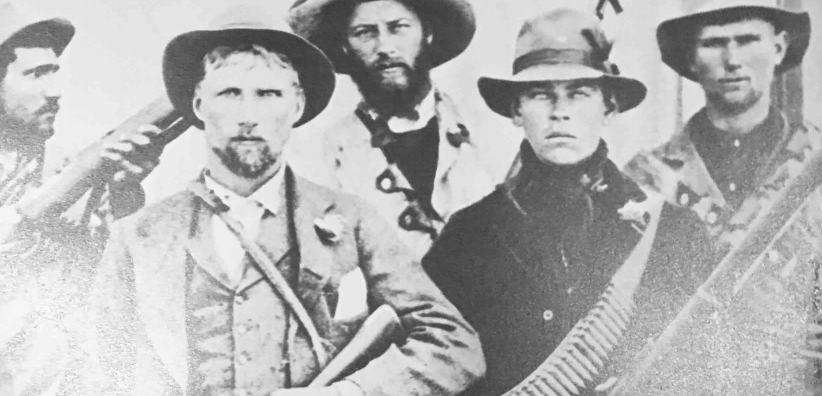
Pieter van Zyl is a Boer living on his farm in Irene near Pretoria in the South African Republic when war between the British Empire and the two Boer republics breaks out. Although the historical sections of the book are narrated from the points of view of a British soldier stationed in Mafeking during the siege, Robert, and Pieter’s eldest daughter, Estelle, as well as Pieter, he is central to the backstory and background of the other ghosts as well as the main themes of the book which are human greed, the horror of war, the desire for control and power and, most importantly, the erosion and corruption of the human spirit and individual’s morals, and ethics, under conditions of continuous war, destruction, and death.
Pieter’s late grandmother was English, and he is familiar with the ways of the British and more understanding of their characteristics and motivations that most of his peers.
Pieter is highly intelligent and well read and, although he is ready to play his role in fighting for the independence of his country, he is pessimistic about the eventual outcome of this war in the face of his peers excited optimism for a quick victory. Pieter is an introverted loner who keeps his thoughts to himself having learned his opinions and views on many topics are not popular with his peers. Pieter is a peacemaker and does not like conflict in his life. This is apparent in his relationships with his wife, Marta, and oldest daughter, Estelle. Pieter is incapable of dealing with the conflict between the pair and taking positive action to control his wife’s resentment towards her unusual oldest child.
The suffering and trauma that Pieter experiences during the war, in particular the loss of his farm and the confinement of his family in a concentration camp, wear down his abilities to tolerate and cope with his circumstances and his will to live is destroyed long before he dies.
He believed he would be safer among family and friends, having quickly learned that being obligated to fight for your country did not necessarily translate into an eagerness to do so. The reluctance of some of the Burghers to take up arms surprised him, and he chuckled at some of the conversations he’d overheard.
“I don’t want to go to war now,” said François Naude, “it’s spring and I need to be here to oversee the planting.”
Pieter, who was waiting to collect his grocery order from the proprietor of the Irene General Store, hid a smile at this amusing comment.
What does he think our government should do? Ask the British if they mind waiting for a more convenient time before we commence hostilities.
Extract 2
Grabbing his loaded Mauser rifle from its hooks on the wall near the door, he hesitates for a moment to admire its smooth and shiny wooden length. The feel of the gun in his hands gives him confidence; he is an excellent marksman.
This gun brought me a lot of respect.
His ability with a gun had been his saving grace when, as a young man, his peers had been mystified by his interest in books and writing and had liked to share their derogatory thoughts in that regard.
Extract 3
Willem was in high spirits. “This war will soon be over, Pieter. It’ll be the same as the last one. We’ll defend our borders against the invaders, and it will be over in three months. We’ll be home by harvest time.”
Willem shared the sense of excitement and euphoria that many of his fellow countrymen were experiencing, but Pieter did not.
War brings bloodshed, grief and tears. This time the British will probably send 36 many more soldiers. I think this war is going to be a much harder win.
He had not shared his own thoughts with Willem. There was no point and he had learned many years ago to keep his unpopular opinions to himself.
Extract 4
Pieter stops talking and gazes into space. Memories assail his mind in a kaleidoscope of sounds, smells and visions.
“At about midday, we saw a large cloud of dust coming our way. Having no idea how many horsemen there were, ten other Burghers, Willem and I quickly set up an ambush. As they drew closer, we could make out a mass of at least seven thousand horses and men. It was a hopeless situation and we prepared to withdraw, but the Khakis saw us and started shelling our position. My horse took fright at an exploding shell and bolted. I fell and broke two ribs, but luckily my horse is well trained, and he came back to me. Oom Willem hoisted me back onto my horse, and we were able to escape.”
Marta’s pale face and the tension around her mouth and eyes suddenly register with Pieter.
Is she upset because of my injury or because the Burghers ran away?
“It was cowardly of you men to flee, you should have stayed and fought,” said Marta, her lip curled with contempt.
How does she think I could have carried on fighting with broken ribs? She’s being ridiculous; if we’d carried on fighting, we would’ve all been killed. A handful of men couldn’t hold back such a significant force.
Smiling wryly, he took a sip of water. “Maybe you are right, Marta, but I was in too much pain to influence that decision.”
The Blurb
After Tom and Michelle Cleveland move into their recently built, modern townhouse, their housewarming party is disrupted when a drunken game with an Ouija board goes wrong and summonses a sinister poltergeist, Estelle, who died in 1904.
Estelle makes her presence known in a series of terrifying events, culminating in her attacking Tom in his sleep with a knife. But, Estelle isn’t alone. Who are the shadows lurking in the background – one in an old-fashioned slouch hat and the other, a soldier, carrying a rifle?
After discovering their house has been built on the site of one of the original farms in Irene, Michelle becomes convinced that the answer to her horrifying visions lies in the past. She must unravel the stories of the three phantoms’ lives, and the circumstances surrounding their untimely deaths during the Second Anglo Boer War, in order to understand how they are tied together and why they are trapped in the world of ghosts between life and death. As the reasons behind Estelle’s malevolent behaviour towards Tom unfold, Michelle’s marriage comes under severe pressure and both their lives are threatened.
About Roberta Eaton Cheadle
I am a South African writer specialising in historical, paranormal and horror novels and short stories. I am an avid reader in these genres and my writing has been influenced by famous authors including Bram Stoker, the Bronte sisters, Amor Towles, Stephen Crane, Enrich Maria Remarque, George Orwell, Stephen King, and Colleen McCullough.
I was educated at the University of South Africa where I achieved a Bachelor of Accounting Science in 1996 and a Honours Bachelor of Accounting Science in 1997. I was admitted as a member of The South African Institute of Chartered Accountants in 2000.
I have worked in corporate finance from 2001 until the present date and have written seven publications relating to investing in Africa. I have won several awards over my twenty year career in the category of Transactional Support Services.
I have been published a number of anthologies and have two published YA books, While the Bombs Fell and Through the Nethergate. I have recently published my first adult novel called A Ghost and His Gold which is partly set in South Africa during the Second Anglo Boer War.
Other books by Roberta Eaton Cheadle
Through the Nethergate
Margaret, a girl born with second sight, has the unique ability to bring ghosts trapped between Heaven and Hell back to life. When her parents die suddenly, she goes to live with her beloved grandfather, but the cellar of her grandfather’s ancient inn is haunted by an evil spirit of its own.
In the town of Bungay, a black dog wanders the streets, enslaving the ghosts of those who have died unnatural deaths. When Margaret arrives, these phantoms congregate at the inn, hoping she can free them from the clutches of Hugh Bigod, the 12th century ghost who has drawn them away from Heaven’s White Light in his canine guise.
With the help of her grandfather and the spirits she has befriended, Margaret sets out to defeat Hugh Bigod, only to discover he wants to use her for his own ends – to take over Hell itself.
Today is Day #1 of the WordCrafter A Ghost and His Gold Book Blog Tour with an interesting guest post by author Roberta Eaton Cheadle explaining how she came to write this wonderful paranormal historical novel. I hope you will join us at each of the tour stops because this tour has a great giveaway! Each stop on this five-day book blog tour will offer the opportunity to win a $10 Amazon gift voucher. (*Winners must be able to retrieve Amazon US gift vouchers.) Author Roberta Eaton Cheadle will also give away 2 paperback copies of A Ghost and His Gold. All you have to do to enter is drop by each tour stop and leave a comment!
And now, please welcome Roberta Eaton Cheadle as she introduces us to A Ghost and His Gold.
A Ghost and His Gold started as a simple short story idea. I was reading up on Ouma Smuts, the wife of Field Marshal Jan Christian Smuts who served as the Prime Minister of the Union of South Africa from 1919 to 1924 and from 1939 to 1948, when I came across an interesting ghost story involving their house.
Ouma Smuts lived with her husband and their children in a house in Irene near Pretoria, the capital of the previous Boer South African Republic (Transvaal). The house is now a museum which I have visited many times. The original tin roofed house is quite spooky with each room featuring a scene frozen in time. Jars of Ouma Smuts’ home-made preserves and pickles are still on the shelf in the pantry. There is an open book on the table in Jan Smut’s former library, a wonderful room which is lined with books from floor to ceiling.
It was during one of my tours of this museum that I first heard that the second-best bedroom, off the dining room, is purported to be haunted. The idea of a ghost interested me, and I decided to research it further.
The story goes that the farm ‘Doornkloof’ was originally owned by a Boer family. Their house was built on the same spot that Smuts eventually put up his house in 1909. The previous owner had fled one night during the 2nd Anglo Boer War when it became clear that the Bristish forces were marching on Pretoria and his farm was in the way. Not wanting his family to end up in a concentration camp, he buried his valuables including £30 000 worth of gold and left hurriedly, never to return. There is no word on what happened to the farmer, but it is said that his spirit still lingers in the house on his old farm.
The story of the ghostly farmer who is said to haunt the Smuts’ family home was so intriguing, I decided it needed to be told. Of course, any story about South African history is never going to stay short so it grew.
After a few months of research and writing, it was a novella of 30 000 words. At that point I sent it to my developmental editor, Esther Chilton for her review and feedback. Esther loved the story and came back with some wonderful comments that set me off on the road to further developing this story.
The history of South Africa is complex and involves more than one point of view, specifically that of the British, the Boers, and the native Africans. As I researched more about the time when the ghostly farmer lived, I discovered that the Boer and British perspectives on the Second Anglo Boer War conflict and vary. I also discovered that there is little recorded history about the involvement of the native Africans in this war.
To accommodate these different points of view and to provide a reader with a holistic overview of this war, its causes, circumstances, emotions, and the role it played in setting the stage for the future of South Africa, I decided to introduce three ghosts: Robert, the British soldier in Mafeking during the siege, Pieter, the Boer and my depiction of the “ghostly farmer”, and Estelle, Pieter’s daughter from a previous marriage to an Englishwoman.
The lack of recorded history made the inclusion of the native African perspective more difficult, but I introduced a few supporting characters who told their side of this story based on the information I managed to glean from hearsay, a thesis I discovered about the native African concentration camps, and other non-fiction and fictional works set in this period.
I hope I have done all three perspectives justice and achieved my goals of providing insight into the psychology of this terrible war.
The history is wrapped up in a paranormal tale which involves a modern couple and exposes their history and personal career mistakes which are, in many ways, a repeat of the past.
Relevant extracts from A Ghost and His Gold
Excerpt from A Ghost and His Gold
The Blurb
After Tom and Michelle Cleveland move into their recently built, modern townhouse, their housewarming party is disrupted when a drunken game with an Ouija board goes wrong and summonses a sinister poltergeist, Estelle, who died in 1904.
Estelle makes her presence known in a series of terrifying events, culminating in her attacking Tom in his sleep with a knife. But, Estelle isn’t alone. Who are the shadows lurking in the background – one in an old-fashioned slouch hat and the other, a soldier, carrying a rifle?
After discovering their house has been built on the site of one of the original farms in Irene, Michelle becomes convinced that the answer to her horrifying visions lies in the past. She must unravel the stories of the three phantoms’ lives, and the circumstances surrounding their untimely deaths during the Second Anglo Boer War, in order to understand how they are tied together and why they are trapped in the world of ghosts between life and death. As the reasons behind Estelle’s malevolent behaviour towards Tom unfold, Michelle’s marriage comes under severe pressure and both their lives are threatened.
I am a South African writer specialising in historical, paranormal and horror novels and short stories. I am an avid reader in these genres and my writing has been influenced by famous authors including Bram Stoker, the Bronte sisters, Amor Towles, Stephen Crane, Enrich Maria Remarque, George Orwell, Stephen King, and Colleen McCullough.
I was educated at the University of South Africa where I achieved a Bachelor of Accounting Science in 1996 and a Honours Bachelor of Accounting Science in 1997. I was admitted as a member of The South African Institute of Chartered Accountants in 2000.
I have worked in corporate finance from 2001 until the present date and have written seven publications relating to investing in Africa. I have won several awards over my twenty year career in the category of Transactional Support Services.
I have been published a number of anthologies and have two published YA books, While the Bombs Fell and Through the Nethergate. I have recently published my first adult novel called A Ghost and His Gold which is partly set in South Africa during the Second Anglo Boer War.
Other books by Roberta Eaton Cheadle
Through the Nethergate
Margaret, a girl born with second sight, has the unique ability to bring ghosts trapped between Heaven and Hell back to life. When her parents die suddenly, she goes to live with her beloved grandfather, but the cellar of her grandfather’s ancient inn is haunted by an evil spirit of its own.
In the town of Bungay, a black dog wanders the streets, enslaving the ghosts of those who have died unnatural deaths. When Margaret arrives, these phantoms congregate at the inn, hoping she can free them from the clutches of Hugh Bigod, the 12th century ghost who has drawn them away from Heaven’s White Light in his canine guise.
With the help of her grandfather and the spirits she has befriended, Margaret sets out to defeat Hugh Bigod, only to discover he wants to use her for his own ends – to take over Hell itself.
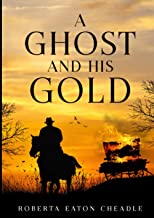
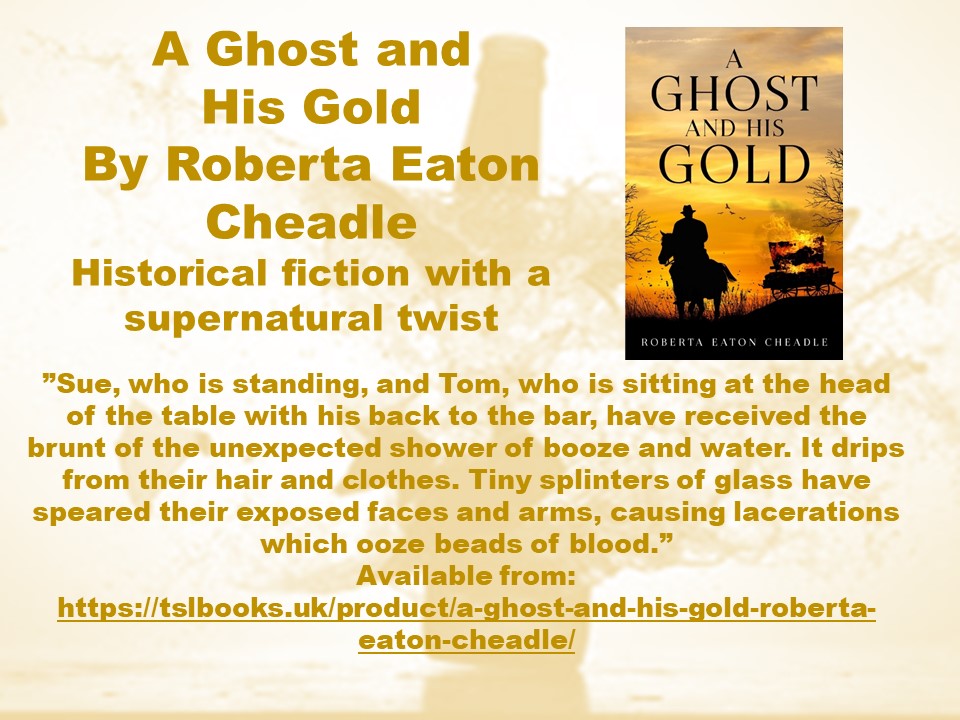
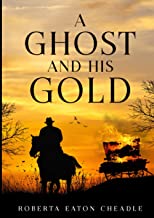
A Ghost and His Gold, by Roberta Eaton Cheadle is a cleverly crafted story that takes three lives from the past and converges their stories within the main story, which takes place in the present. Characters with depth drive this paranormal historical novel.
When Michelle and her husband, Tom, move into a new home, her future seems to be full of promise. But strange occurances soon lead Michelle to believe that her new home is haunted, and what’s more, Tom’s life may be in danger. In her efforts to unravel the mystery of what is going on in her new home, details in the lives of three ghosts, from the time of the second Anglo Boer War, are revealed: A British soldier named Robert, a Boer commando named Peiter, and a young girl named Estelle, who harbors anger and vengence against both Tom and Michelle.
As Michelle struggles to unravel the mystery of these ghosts and how they are connected to each other and to her new home, she uncovers a mystery in her own life, one that threatens to tear her marraige apart. Can she learn the truth and find a way to help them all before the vengeful poltergeist takes Tom’s life?
Cheadle has done her homework, and the South African history related within is quite educational as well as entertaining. Readers will be riveted to their seats as the tale of each ghost is revealed, with each of their stories being equally captivating. I give A Ghost and His Gold five quills.



![Songs of Heartstrings: Poems of Gratitude and Beatitude by [Miriam Hurdle]](https://m.media-amazon.com/images/I/41dgiMtCq+L._SY346_.jpg)
![Tina Lost in a Crowd by [Miriam Hurdle, Victoria Skakandi]](https://m.media-amazon.com/images/I/61yAgY-MYuS.jpg)