Treasuring Poetry: Meet poet and author Abbie Taylor
Posted: March 16, 2022 Filed under: Book Review, Books, Interview, Poetry, Review, Treasuring Poetry | Tags: Abbie Taylor, Author Interview, Book Review, How to Make a Better Musetrap, Poetry, Robbie Cheadle, The Red Dress, Treasuring Poetry, Writing to be Read 47 Comments
Today, I am delighted to introduce poet and author, Abbie Taylor, to discuss her favourite poems and poetry in general.
Which of your own poems is your favourite?
“The Bedroom” is one of those red herring poems that makes you think it’s about one thing, then turns out to be about another. It illustrates how much my late husband Bill depended on me after suffering two strokes that paralyzed his left side. It’s my favorite because even today, almost ten years after his passing, I’m amazed that I was able to meet his needs for six years after his strokes, despite my limited vision. Here’s the poem:
The Bedroom
At three in the morning,
I’m mildly aroused
by the gentle touch of his hand.
He only has one good arm and leg
but still knows how to please me.
As he strokes me,
and I breathe the scent of his sweat,
I purr with anticipation.
The mood is shattered
when he whispers, “I need to pee.”
What inspired you to write this particular poem?
Every night, after I brought Bill home from the skilled nursing facility, where he recuperated after his strokes, he woke me at least once, sometimes more than once, during the night, because he needed assistance to sit on the side of the bed and use a urinal. He was never demanding during this time. He gently woke me by rubbing my back and shoulders. Once I was fully awake, he said, I need to pee.” After he heard me read the poem during a public event, when he woke me, he would say, “What does your poem say I have to do?” Eventually, he was able to use the urinal in bed without sitting up first. So, all I had to do was get up and empty the urinal periodically, which made life a lot easier.
What are your plans for your poetry going forward?
I don’t have any definite plans. I’ve put together several collections but haven’t had much time to do anything with them. I imagine I’ll eventually publish them.
What is your favourite poem?
I’m assuming you want to know about my favorite poem by another author. Well, that would be “The Lanyard” by Billy Collins. Here it is, along with a link to a video of him reading it.
The Lanyard
BY BILLY COLLINS
The other day I was ricocheting slowly
off the blue walls of this room,
moving as if underwater from typewriter to piano,
from bookshelf to an envelope lying on the floor,
when I found myself in the L section of the dictionary
where my eyes fell upon the word lanyard.
No cookie nibbled by a French novelist
could send one into the past more suddenly—
a past where I sat at a workbench at a camp
by a deep Adirondack lake
learning how to braid long thin plastic strips
into a lanyard, a gift for my mother.
I had never seen anyone use a lanyard
or wear one, if that’s what you did with them,
but that did not keep me from crossing
strand over strand again and again
until I had made a boxy
red and white lanyard for my mother.
She gave me life and milk from her breasts,
and I gave her a lanyard.
She nursed me in many a sick room,
lifted spoons of medicine to my lips,
laid cold face-cloths on my forehead,
and then led me out into the airy light
and taught me to walk and swim,
and I, in turn, presented her with a lanyard.
Here are thousands of meals, she said,
and here is clothing and a good education.
And here is your lanyard, I replied,
which I made with a little help from a counselor.
Here is a breathing body and a beating heart,
strong legs, bones and teeth,
and two clear eyes to read the world, she whispered,
and here, I said, is the lanyard I made at camp.
And here, I wish to say to her now,
is a smaller gift—not the worn truth
that you can never repay your mother,
but the rueful admission that when she took
the two-tone lanyard from my hand,
I was as sure as a boy could be
that this useless, worthless thing I wove
out of boredom would be enough to make us even.
Why do you like this poem?
In a humorous way, it emphasizes the idea that our mothers do so much for us but we feel we don’t do enough for them.
About Abbie Taylor

Abbie Johnson Taylor is the author of three novels, two poetry collections, and a memoir. Her work has appeared in The Avocet and Magnets and Ladders. She lives in Sheridan, Wyoming, where, for six years, she cared for her totally blind late husband who was partially paralyzed by two strokes soon after they were married. Before that, she worked for fifteen years as a music therapist in nursing homes and other senior facilities. During that time, she also facilitated a support group for blind and visually impaired adults, taught Braille, and served on the advisory board to a state trust fund providing adaptive equipment to blind and visually impaired children and adults.
Contact Abbie Taylor
Website: https://www.abbiejohnsontaylor.com
Blog: https://abbiescorner.wordpress.com
Facebook: https://www.facebook.com/Abbies-Corner-of-the-World-988391584616528/
Amazon: https://www.amazon.com/Abbie-Johnson-Taylor/e/B00GDM1BWK/#nav-tophttp://
My review of The Red Dress by Abbie Taylor

The Red Dress is a lovely novel about a woman, Eve Sawyer, who has become a best selling author and has a devoted husband and three children, but who has never been able to move on from an unfortunate incident in her younger years when, in a fit of embarrassed irritation, she gave away the red dress that her mother had made for her to wear to her prom. Although Eve was goaded by her selfish roommate, Charlene, into giving her the dress, her mother has never forgiven her for this transgression and it has impacted heavily on their relationship. Her mother is now suffering from dementia and is being cared for in a home for the elderly, but she still remembers that Eve gave away this dress and holds it against Eve.
Eve wore the dress to her prom and she associated the dress with bad memories as her date had disappeared with her best friend, Adele, and she had found them in a compromising position in the back of his father’s car. Eve cuts Adele out of her life and has not contacted her in many years, even though Adele had returned to their home town to raise her son, conceived on the night of the prom.
The story starts with Eve receiving a Facebook request to connect with her old roommate, Charlene. She accepts the request, although she had doubts because she didn’t like Charlene. Before long, her daughter, Ashley, is in touch with Charlene’s daughter, Brenda, and the situation is irreversible. Eve is having her own problems with overwork and issues with her older daughter, Julie, who feels neglected as a result. Her husband is also irritated with her because he feels she favours their younger daughter and son and is harsh with Julie.
This is a story that tackles the themes of working mothers, unresolved grudges and situations from the past, raising teenage children, forgiveness, terminal illness, and death. The author does a good job of sharing Eve’s frustration at her mother and older daughter, irritation at Charlene for the trouble she has caused her, and hurt at Adele’s betrayal of their friendship.
Eve has to confront her negative emotions to resolve these lingering troublesome relationship issues from her past and move on with her future.
I enjoyed the character of Eve and found her to be realistic and relatable. Her situation vividly establishes the difficulties that can result from unsettled emotional problems from the past and juggling work and motherhood.
I enjoyed this story and would recommend it to readers of family dramas.
What Amazon says
When Eve went to her high school senior prom, she wore a red dress that her mother had made for her. That night, after dancing with the boy of her dreams, she caught him in the act with her best friend. Months later, Eve, a freshman in college, is bullied into giving the dress to her roommate. After her mother finds out, their relationship is never the same again. Twenty-five years later, Eve, a bestselling author, is happily married with three children. Although her mother suffers from dementia, she still remembers, and Eve still harbors the guilt for giving the dress away. When she receives a Facebook friend request from her old college roommate and an invitation to her twenty-five-year high school class reunion, then meets her former best friend by chance, she must confront the past in order to face the future.
Purchase The Red Dress
My review of How to Build a Better Mousetrap: Recollections and Reflections of a Family Caregiver (Poetry)

How to Build a Better Mousetrap is a memorable book of poetry which covers two distinct time periods in the author’s life.
Part 1: On Being a Family Caregiver, revolves around the poet’s role as caregiver to her husband following his having two strokes, a year apart, and becoming partially paralysed.
The second section section of the book comprises of Part 2: Recollections, Part 3: Reflections and Part 4: In the End which describes through the medium of freestyle poetry, the various states of the poet’s life from her early childhood through to her old age. There is little mention throughout the book of the author’s visual impairment, but I am aware of it as I have previously read an anthology, Understanding edited by Stevie Turner, that disclosed this information.
The poetry in this book is compelling and quite fascinating in its honesty as the poet ventures to express feelings and emotions that many people might seek to hide. It is refreshing to read expressions of helplessness and even the occasional anger and resentment towards a set of circumstances that have so drastically and unexpectedly impacted on the poet’s life. These emotions are overwhelmed by the poet’s clear devotion and love for her partner.
These verses from three different poems in this collection illustrate this internal conflict:
“In the beginning, you knew all about me
which buttons to push,
how to hook me up,
install programs, fix problems.
Now, you hesitate,
push the wrong buttons.
When I don’t give you the desired response,
you beat my keyboard, proclaim I don’t work.”
From Before and After
“I open my eyes,
gaze upon his sweet sleeping face,
long to hold, kiss him,
caress his hair, his cheek.”
from Awakening
“I’ll never tell you you’re stupid
when you forget something or don’t understand.
I’ll never tell you you’re lazy
when you sit at the kitchen table in your wheelchair
while I fix dinner, clean up.
I’ll never tell you you’re a baby
when I must do most things for you.”
from Things I’ll Never Tell You
What Amazon says
In January of 2006, Abbie Johnson Taylors husband suffered a stroke that left him paralyzed on his left side. After months of therapy in a nursing facility, he returned home in September of that year. Although he still had little use of his left arm and leg, it was hoped that through outpatient therapy, he would eventually walk again. In January of 2007, he suffered a second stroke that wasnt as severe, but it was enough to impact his recovery. In August of that year, his therapy was discontinued because he showed no progress. He has never walked since.
The first five poems tell the story of how Taylor found her husband when he suffered his first stroke, detail events in the first few months afterward, and describe Taylor and her husbands reactions. The rest of the poems in the first part were inspired by Taylors experiences while caring for her husband. Covering such topics as dressing, feeding, toileting, their relationship, and his computer, they often provide a humorous outlook. Some poems are from the husbands point of view. Poems in the next two parts cover childhood memories and other topics. The last section of poems was inspired by Taylors fifteen years of experience as a registered music therapist in a nursing home before marrying her husband.
Purchase How to Build a Better Mousetrap: Recollections and Reflections of a Family Caregiver
About Robbie Cheadle

Robbie Cheadle is a South African children’s author and poet with 9 children’s books and 2 poetry books.
The 7 Sir Chocolate children’s picture books, co-authored by Robbie and Michael Cheadle, are written in sweet, short rhymes which are easy for young children to follow and are illustrated with pictures of delicious cakes and cake decorations. Each book also includes simple recipes or biscuit art directions which children can make under adult supervision.
Robbie has also published 2 books for older children which incorporate recipes that are relevant to the storylines.
Robbie has 2 adult novels in the paranormal historical and supernatural fantasy genres published under the name Roberta Eaton Cheadle. She also has short stories in the horror and paranormal genre and poems included in several anthologies.
Robbie writes a monthly series for https://writingtoberead.com called Growing Bookworms. This series discusses different topics relating to the benefits of reading to children.
Robbie has a blog, https://robbiesinspiration.wordpress.com/ where she shares book reviews, recipes, author interviews, and poetry.
Find Robbie Cheadle
Blog: https://www.robbiecheadle.co.za/
Blog: robbiesinspiration.wordpress.com
Twitter: BakeandWrite
Instagram: Robbie Cheadle – Instagram
Facebook: Sir Chocolate Books
______________________________________________________________________________________________
Want to be sure not to miss any of Robbie’s “Treasuring Poetry” segments? Subscribe to Writing to be Read for e-mail notifications whenever new content is posted or follow WtbR on WordPress. If you found it interesting or entertaining, please share.
Share this:

Treasuring Poetry – Meet poet and artist, Smitha Vishwanath
Posted: February 16, 2022 Filed under: Book Review, Books, Interview, Poetry, Review, Treasuring Poetry, Writing | Tags: Author Interview, Book Review, Roads: A Journey with Verses, Robbie Cheadle, Smitha Vishwanath, Treasuring Poetry, Writing to be Read 48 Comments
Which of your own poems is your favorite?
There are quite a few poems I like – some for the flow, some for the imagery and some for the memories they bring back with them, there’s one poem that has stood the test of time. It’s a poem I penned when my girls were one and three respectively. Seventeen years later, the girls have grown – each into young ladies with a distinct personality, but it’s beautiful how the description of them in the poem still holds true. It’s special because this poem is one thing that the girls agree about.
Tender Moments
I sneak silently into the room
A quick peak I take of my budding blooms
Their breathing soft – rises and falls, a melodious rhapsody
To the soothing sound of a Spanish symphony
Their countenance silken smooth; serene
Tugs my heart, an enticing scene
Each distinctly different, yet subtly the same
Contrasting as night and day; asleep, they look- Oh! So tame
Their striking silhouette, in the mellow moonlit night
Slightly stirring, they curl; enraptured I gaze at the sight
One’s creamy-white skin peeps from the warm woollen quilt above
And the other’s little chocolaty toe pushes its way from below
One, strong and athletic; the other, dainty and petite
Poles apart in every way; a miracle I behold, a divine treat
The window slightly ajar, lets in the wintry wind
Blowing their untied tresses over their satiny skin; I lean
O’er their tender frames, and sweep the bouncy, brown curls away
And the silk-smooth strands of the other, as in deep slumber they lay
Both unique, both special, both a part of me
Peas in a Pod, they are and shall forever be
What inspired you to write this poem?
I had walked into the children’s room one night, sometime in 2008; the girls were asleep. The curtains were drawn, and the moonlight cast a soft glow on them. I looked at them and I scribbled a version of the poem in my diary. However, it was only later, in 2017, that I reworked on the poem and published it on my blog for the NaPoWriMo prompt, ‘Write a poem that explicitly incorporates alliteration,’ on 12th April.
What are your plans for your poetry going forward?
I co-authored a poetry book ‘Roads- A Journey with Verses’ which was published in 2018. My poems have been published in various journals since then, but I haven’t got to publishing a solo book as yet. I’d like to do that, but I have a lot of starting trouble, and so, it’s taken me longer than I expected, to do it. Hopefully, I can do it this year.
What is your favorite poem?
It’s difficult to choose a favorite. I have quite a few that never fail to speak to me. However, if I have to choose it will be Emily Dickinson’s ‘Hope is a thing with feathers’ (copied from the poetry foundation)
“Hope” is the thing with feathers by Emily Dickinson
“Hope” is the thing with feathers –
That perches in the soul –
And sings the tune without the words –
And never stops – at all –
And sweetest – in the Gale – is heard –
And sore must be the storm –
That could abash the little Bird
That kept so many warm –
I’ve heard it in the chillest land –
And on the strangest Sea –
Yet – never – in Extremity,
It asked a crumb – of me.
Why do you like this poem?
No matter how many times I read it I can not help being in awe of the choice of words, the simplicity and most importantly, how easily and perfectly ‘hope’ is described. Every line in the poem is a gem and anyone who has ever experienced ‘hope’ will vouch for it.
Roads: A journey with verses
![ROADS : A Journey with Verses by [Vandana Bhasin, Smitha Vishwanath]](https://m.media-amazon.com/images/I/41bPyRdgWkL._SY346_.jpg)
What Amazon says
“Roads” is a poetic rendezvous that takes the reader on a panoramic journey, making one pause, ponder and celebrate life.
The book is a light, alluring read that instantly strikes a chord and elevates one’s spirits. A trove of 60 poems, it is quilled with beads of nine virtues: Courage, Wisdom, Serenity, Love, Hope, Strength, Joy, Compassion and Gratitude. The verses encapsulate life’s ebbs and flows while prompting the reader to enjoy its simple pleasures.
“Roads” is a book that you would want to keep on your bedside, for a quiet read before retiring for the night or for the morning wisdom to seize the day. With poems revolving around emotions that each of us experiences, “Roads” very easily develops a personal connect with the reader that is defiantly refreshing.
“Roads” is a journey with verses. Take it on yours.
My review
Roads: A Journey With Verses is a beautiful book of mainly freestyle poetry written by Smitha Vishwanath and Vandana Bhasin. I have read and enjoyed a lot of poetry on Smitha’s blog in the past, but this was my first introduction to Vandana’s poetry.
I thought this was a wonderful combination of work by two talented poets and I enjoyed the different styles of writing by the two contributors. Smitha writes delicately beautiful poems in which her messages are subtly shrouded as if within a loving cocoon of words. Vandana’s writing is more strident and forthright, but I enjoyed her style equally and her strong messages for women’s rights moved me greatly.
This book is divided into sections as follows: Courage, Wisdom, Serenity; Love, Strength, Compassion and Joy, Hope, Gratitude. Each section is divided into subsections setting out an arrange of delightful poems in each subcategory. Each subsection is introduced with a short introductory verse which conveys its meaning for the poets and each poem is introduced with a paragraph setting out the the meaning and purpose of the specific poem to the writer. I really enjoyed reading about the inspiration and meaning behind each poem.
A selection of my favourite verses from this book are as follows:
From the sub-section Strength –
Believe in yourself by Vandana Bhasin
“They’ll laugh at you, and even ridicule you
They’ll even endeavor to enervate your spirits
But let the force of their dissuasion empower your faith
and the sound of their derision echo your beliefs
Believe in yourself, even when none believes in you.”
From the sub-section Compassion –
Help! She’s calling by Smitha Vishwanath
“Her eyes shone a tear, her lips quivered with
fear; down her face ran a scar, like a spear.
Her leg bruised, her hand bleeding, she felt a
shooting pain.”
From the sub-section Joy –
Tender moments by Smitha Vishwanath
“Their countenance silken smooth; serene
Tugs my heart, an enticing scene
Distinctly different, yet subtly the same –
Contrasting as night and day; asleep, they look
– Oh! So tame
Their striking silhouette, in the mellow moonlit night
Slightly stirring, they curl; enraptured, I gaze at the sight
One’s creamy-white skin peeps form the warm woolen quilt above
And the other’s little chocolaty toe pushes its way from below
One, strong and athletic; the other, dainty and petite
Pole apart in every way; a miracle I behold, a divine treat.
From the sub-section Hope –
Wings of freedom by Vandana Bhasin
“Wings of freedom are all I need
I want to live and not just breathe
I want to fly high like a bird
I want to dream big, not chase the world”
Purchase Roads: A Journey with verse
About Smitha Vishwanath

Smitha Vishwanath is your quintessential ‘bored banker’ turned writer. After a rewarding career in Banking in the Middle East where she worked for leading banks in senior positions, she quit and moved to India in July 2018 with her husband who had been transferred to the country on an International assignment. Therein began her writing journey.
‘Roads’ is the first book she has co-authored. Having lived and studied in different countries and different states within India and worked with different cultures, Smitha understands that ‘change’ and ‘ups and downs’ are very much a part of life. It is this experience that reflects in her poems and her writing which are filled with positivity, acceptance and willingness to change for the better.
She also writes regularly through her blog : https://lifeateacher.wordpress.com
Smitha’s art
Smitha is also a wonderful painter. I wrote a blog post about one of her painting that I have hanging in my bedroom here: https://robbiesinspiration.wordpress.com/2021/07/10/a-new-painting/
You can find more of Smitha’s artwork here: https://www.spacesbysmithav.com/
About Robbie Cheadle
Robbie Cheadle is a South African children’s author and poet with 9 children’s books and 2 poetry books.
The 7 Sir Chocolate children’s picture books, co-authored by Robbie and Michael Cheadle, are written in sweet, short rhymes which are easy for young children to follow and are illustrated with pictures of delicious cakes and cake decorations. Each book also includes simple recipes or biscuit art directions which children can make under adult supervision.
Robbie has also published 2 books for older children which incorporate recipes that are relevant to the storylines.
Robbie has 2 adult novels in the paranormal historical and supernatural fantasy genres published under the name Roberta Eaton Cheadle. She also has short stories in the horror and paranormal genre and poems included in several anthologies.
Robbie writes a monthly series for https://writingtoberead.com called Growing Bookworms. This series discusses different topics relating to the benefits of reading to children.
Robbie has a blog, https://robbiesinspiration.wordpress.com/ where she shares book reviews, recipes, author interviews, and poetry.
Find Robbie Cheadle
Blog: https://www.robbiecheadle.co.za/
Blog: robbiesinspiration.wordpress.com
Twitter: BakeandWrite
Instagram: Robbie Cheadle – Instagram
Facebook: Sir Chocolate Books
______________________________________________________________________________________________
Want to be sure not to miss any of Robbie’s “Treasuring Poetry” segments? Subscribe to Writing to be Read for e-mail notifications whenever new content is posted or follow WtbR on WordPress. If you found it interesting or entertaining, please share.
Share this:

2022 WordCrafter Short Fiction Contest: Call for Submissions
Posted: January 3, 2022 Filed under: Anthology, Fantasy, Fiction, Ghost Stories, Horror, Science Fiction, Stories, WordCrafter, WordCrafter Press, Writing Contest | Tags: 2022 WordCrafter Short Fiction Contest, Call for submissions, Submission Guidelines, Visions, WordCrafter Press, Writing to be Read 2 Comments
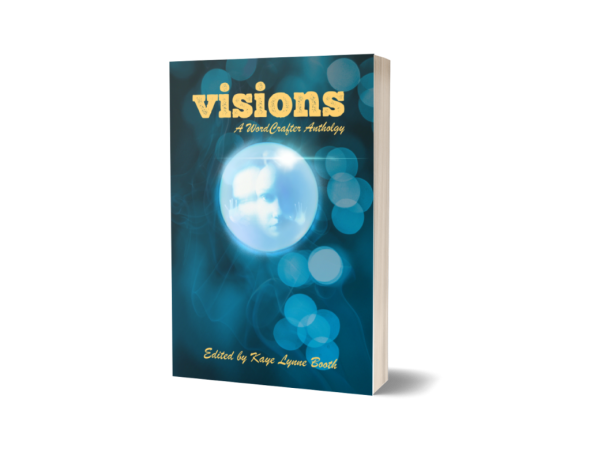
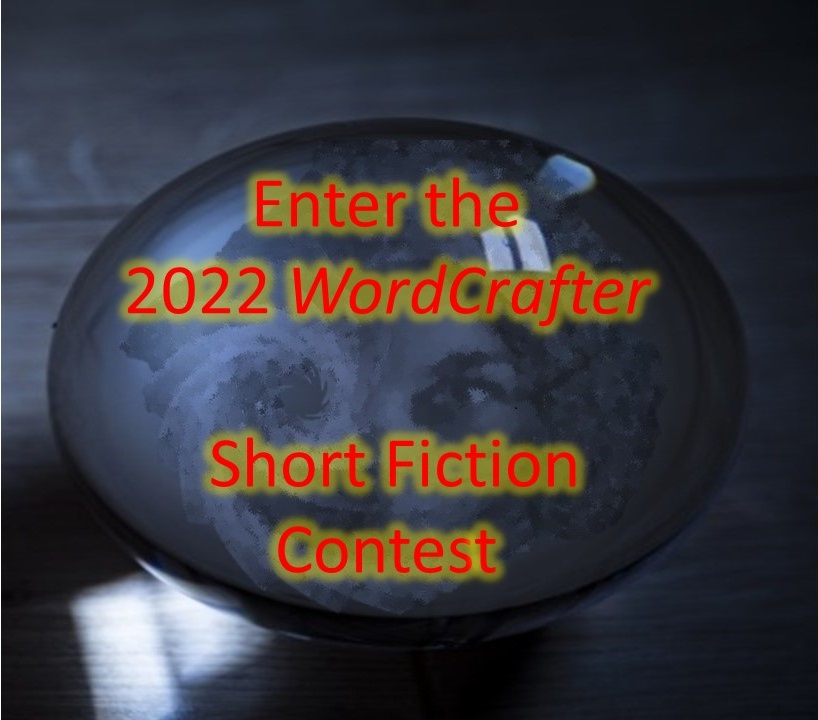
The 2022 WordCrafter Short Fiction Contest is now open for submissions. The submission deadline of May 31, 2022. The winner will receive a $25.00 Amazon gift card and their story will be guaranteed to be featured in Visions. All finalists will also receive an invitation to be included in the anthology, which offers a small royalty share for your story contribution. Submission guidelines are pretty simple, but as they are different from last year, I suggest you read and follow them carefully.
Submit your story with a cover letter to KLBWordCrafter@gmail.com with “Submission: [Your Title]” in the subject line and pay the $5 entry fee below.
Contest Entry
Enter the 2022 WordCrafter Short Fiction Contest for a chance at an invitation to the Visions anthology and a grand prize $25 gift card.
$5.00
WordCrafter Press wants your visions.
For 2022, WordCrafter Press is looking for original short stories in the fantasy, science fiction, horror or paranormal genres. Past contests and anthologies have been limited to paranormal, and for Visions, your story can still have a ghost if you like, but it is not required. What I’ll be looking for for the 2022 WordCrafter anthology are your very best thought provoking stories, the kind of stories that will stay with readers long after they close the book.
WordCrafter Press is looking for original short stories to include a mix of fantasy, science fiction, horror, magical, and paranormal elements. Previously unpublished stories only.
Genres: Paranormal, Science Fiction, Fantasy, Horror or any combination there of.
Length: up to 5000 words
Submission Deadline: May 31, 2022
Pay: Royalty share
Rights: First Anthology Rights and audio rights as part of the anthology; rights revert to author one month after publication; publisher retains non-exclusive right to include in the anthology as a whole.
Open to submissions from January 1 through April 30, 2022.
Submit: A Microsoft Word or RTF file in standard manuscript format to KLBWordCrafter@gmail.com
If you don’t know what standard manuscript format is, review, for example, https://www.shunn.net/format/classic/
Multiple and simultaneous submissions accepted.
Find some helpful tips for submitting short fiction here, but mainly just follow the guidelines.
Share this:

Review in Practice – Word Craft: Prose & Poetry
Posted: December 31, 2021 Filed under: Book Review, Books, Poetry, Review in Practice, Teaching Writing | Tags: Book Review, Poetry, Review in Practice, Sally Cronin, Syllabic Poetry, Word Craft: Prose & Poetry, Writing to be Read 5 Comments
Word Craft: Prose & Poetry, by Colleen Chesebro is an insightful and helpful instructional book for those who wish to learn more about writing syllabic poetry and prose. The first section covers Japenese syllabic poetry forms and American syllabic poetry forms are covered in section two. The author outlines the rules and inspirations for each form, and provides plenty of examples to help you get the idea.
Hiaku has been one of my favorite forms of poetry to read since it was introduced to me in the fourth grade. However, my fourth grade teacher didn’t really explain this poetry form in a way that my fourth grade mind could really grasp, so I’ve never felt very accomplished in writing Haiku. In Word Craft, Colleen Chesebro was able to explain the art of this form of poetry in a manner which my aged mind was able to grasp, giving me a much better handle on what I’m trying to do with this form of poetry. Haiku is much more than just putting the right number of syllables in each line. Haiku is written to evoke images and emotion in a succinct way. I was surprised to learn that the syllabic rules for Haiku are not set in stone, and can be varied. Below is a Haiku which I wrote after reading the chapters on this poetry form.
Spring skies let rain pour
Wings stretch, ruffling wet feathers
small Hummingbird preens
While I know poets who write Tanka poetry, which combines poetry and prose,I’ve never understood what they were doing with these poems. Although I can’t say that I’ve mastered the Tanka, I think I do understand it better, but I will need a lot of practice before I write something in Tanka or Tanka prose poem that I feel worthy of sharing.
I also had some experience in writing Hiabun, which is a combination of poetry and prose similar to Tanka Prose Poetry, but I never really understood the purpose of this form of poetry. You would think this would be the easiest form of poetry in this book for me to write, as the inspiration can come from anything and it can be in any point-of-view and any tense that you wish to write in, but I still have a hard time grasping the how of this poetry form. Fortunately, Colleen Chesebro includes many examples of each poetry style and I have no doubt that, with patience and practice I will eventually get a handle on the Haibun.
Forms of Japanese poetry that I wasn’t familiar with in this book include Senryu, which is similar in form to a Hiaku but differs in subject matter; Haiga, which uses either Haiku or Senryu and combines three art forms, imagry, poetry and calligraphy; and Gogyohka, which is based on the Tanka, but you do not count syllables, with one phrase to a line and a line-break after each breath. I found the Renga, which is design to be written by two poets, interactively, , kind of like a poetic conversation, to be in intriguing poetry form.
This is my first attempt at a Senryu poem.
Hot tea steams
on chill summer morn
wake up call
For me, the forms of American syllabic poetry were more difficult, perhaps because they tend to be longer. In the second portion of the book, Sally Cronin includes explanation and instruction and examples for Cinquains of all types, Etherees, Nonets, and Shadormas. I made several unsuccessful attempts at the basic types of each of these poetry forms, but they are much harder than they look. My hat is off to Cronin and anyone else that can meld their syllables with seeming ease.
I took a challenge on Teagan Riordain Genevieve’s blog and for that I wrote a Shadorma poem, which I published here, on Writing to be Read. You can see my example of a Shadorma here, but I don’t know if it is any good. It really was harder than I thought it would be.
If you like syllabic poetry, either Japanese or American, and would like to try your hand at it, I highly recommend the instruction of Word Craft: Prose & Poetry, by Sally Cronin. This book introduced me to new forms, as well as delving deeper into forms I was familiar with. I give it five quills.

________________________________________________________________________________________________________
Like this post? Let me know in the comments. You can be sure not to miss any of Writing to be Read’s great content by subscribing to e-mail or following on WordPress. If you found this content helpful or entertaining, please share.
Share this:

A Challenge and a Review: Dead of Winter
Posted: December 24, 2021 Filed under: Book Review, Creativity, Epic Fantasy, Fantasy, Poetry, Reader Challenge | Tags: Book Review, Dead of Winter, Fantasy, Poetry, Reader Challenge, Teagan Riordain Geneviene, Writing to be Read 9 Comments
The Challenge
This post is a response to a challenge issued on Teagan Riordain Geneviene’s blog, where she challenges readers to create a piece of art in the medium of your choice, inspired by her book, Dead of Winter: Journey 1: Forlorn Peak.
Recently, I’ve been dabbling in Japanese and English syllabic poetry, and I knew that I wanted to create a poem for this challenge. The image and poetry above is my response to Teagan’s challenge. It is a Shadorma poem, an form of syllabic poetry which may have originated in Spain, comprised of a sestet, or six-line poem with a syllabic count of 3-5-3-3-7-5 (Word Craft: Prose & Poetry, by Colleen M. Chesebro). Although no where have I found that Shadorma can appear with images to add meaning, like the Japanese Haiga poetry, I’ve found nothing that says it can’t, so I have featured mine with the image above.
They both create a feeling like what I felt after reading Dead of Winter, so might actually serve as a different type of book review. I think the poem could easily stand alone, so maybe that’s okay.

Buy Link: https://www.amazon.com/dp/B08RBBVRGX?tag=relinks-20
My Review
Dead of Winter: Journey 1: Forlorn Peak, by Teagan Riordain Geneviene is a brief little tale that sets the stage in a world where strict control prevents the protagonist, Emlyn, from revealing her gift of seeing and communicating with the dead. In this short tale, Emlyn receives a warning of what’s to come in the rest of the series. “Winter is coming…”
__________________________________________________________________________________________________
Like this post? Let me know in the comments. You can be sure not to miss any of Writing to be Read’s great content by subscribing to e-mail or following on WordPress. If you found this content helpful or entertaining, please share.
Share this:

Treasuring Poetry – An introduction to Word Weaving #1: A Word Craft Journal of Syllabic Verse edited and compiled by Colleen Chesebro and Jules Paige
Posted: December 18, 2021 Filed under: Anthology, Book Review, Books, Interview, Poetry, Treasuring Poetry, Writing | Tags: Anthology, Colleen Chesebro, Interview, Poetry, Robbie Cheadle, Treasuring Poetry, Word Weaving#1: A Word Craft Journal of Syllabic Verse, Writing to be Read 78 Comments
Today, I am delighted to introduce you to Word Weaving #1: A Word Craft Journal of Syllabic Verse, The Moons of Autumn, a delightful collaboration of syllabic poems by a variety of poets, edited and compiled by Colleen Chesebro and Jules Paige.
By way of background, Colleen Chesebro has run a weekly syllabic poetry challenge on her blog, Word Craft: Poetry and Prose for years. She has been a guiding light to the poetry community, sharing her knowledge about the many different forms of syllabic poetry and encouraging poets to experiment and all learn together.

What inspired you to put together a poetry anthology, is it a once off or will there be others?
My inspiration for the syllabic poetry journal came about when I realized that many of the poets who joined in my weekly challenge did not have the ways or means to publish their own books of poetry. I envisioned a yearly journal filled with creative syllabic forms. I’m not aware of another journal that presents both Japanese and American versions of syllabic poetry. This is a different concept and I think it has paid off.
Also, to note, the poet’s retained ownership of the poems submitted to the journal. All rights reverted to the respective author/artist upon publication. All we asked, was if their work was republished, we appreciated a mention that the Word Weaving Poetry Journal was the first place of publication.
While I planned this journal, I realized I wanted to host a poetry contest on wordcraftpoetry.com with paid prizes. It was logical to use the royalties from the sale of the Word Weaving Journal to pay for the prizes. As for another journal… I’ll let you know after the poetry contest in 2022. I’m aiming for the month of June for the contest on wordcraftpoetry.com. I’ll reevaluate at that time.
Which poem in the anthology touched you the most? Please provide the test of the poem and the author
This is a hard question to answer. My co-editor, Jules Paige and I first selected our favorites. We deliberated for some time over the poems… they were all so good! In the end we selected Ken Gierke’s gogyohka poem:
warmth of a pale light
found as clouds part
rewarded
while seeking the moon
on a cool autumn night
© Ken Gierke
We both felt this gogyohka best illustrated the concept of the “Moons of Autumn.” At the end of the Journal, Jules and I shared our three favorite poems by D. L. Finn, Merril D. Smith, and Ken Gierke.
If I had to go in deeper, my next favorite would be D. Wallace Peach’s tanka prose Idyll. The imagery in this poem is one of my favorites.
“Moon-spun”
November’s moon spins upon the tip of a white fir. Her fairy light whispers across the glades where alders part their leafless fingers into spindly shadows. The night glow sends the trolls trudging into the deep forest, brittle twigs crunching beneath their knobby feet. With nothing to fear, the deer lie down in a silver meadow. Old owl watches the coyotes croon to autumn’s stark beauty as they whiff the delicate scent of the coming snow.
a moon’s enchantment
befalls the northern forest
her magical light
banishes luring prowlers
inviting the night to sing
© D. Wallace Peach
What attracts you to syllabic poetry as opposed to other forms like freestyle and rhyming verse?
Syllabic poetry, especially the Japanese forms with their brevity of words, fills a special place in my heart. Not only do I like writing these forms, but I also enjoy reading what others have written. There is a simple beauty in haiku that I don’t find in other forms. Written mindfully, haiku are small poems with large meaning. It’s those a-ha moments of connection, I find the most pleasing.
For example:
summer clouds—
kayakers floating
the river
© Colleen M. Chesebro
In this haiku, I worked on imagery. The idea was to connect emotions by associating two or more images together in strange and unusual ways. It’s not as easy as it sounds. I find it is always best to look for alike or contrasting images to feature in my poem.
I targeted the “summer (my kigo) clouds” and the “kayakers floating the river,” as a summer activity. Clouds float – kayakers float, which are alike images.
A haiku should present an event in an image. It should SHOW us what happened without telling us about it or what emotion to feel. In the haiku above, what emotions do you feel?
Haiku poems share a specific event or observation. Haiku are not generalities, and we never use a simile or metaphor. Most haiku are written in seventeen onji (Japanese sounds) which equates to around twelve syllables (3, 5, 3). Most rhyming poetry doesn’t give me the same emotional impact as the simple haiku does. Although, I do enjoy creating some of the syllabic forms that use rhyme and meter.
What advice can you give people setting out on the path of writing poetry?
Poetry is about expression and creativity. Poets should write poetry daily. If you don’t practice, how can you perfect your craft? I write my poetry on my author blog at colleenchesebro.com and in a handwritten journal.
It’s best to get involved in a poetry community with poetry challenges where you can stretch your wings and try new things like we do on wordcraftpoetry.com. If you can’t find a challenge you like, start your own! Learning how to comment, critique, and write about the work of another poet is crucial to your own poetic journey.
Write more poetry! Find what forms bring you the most joy to write. Write them! Then, learn everything you can about that type of poetry.
Submit your poetry to literary journals and contests. I’ve had more poetry rejected than accepted, but that hasn’t stopped me yet.
What are your plans for Word Craft: Prose & Poetry going forward?
Wordcraftpoetry.com will continue to be a safe place to write syllabic poetry. We’re in our fifth year of the #TankaTuesday Poetry Challenge. Each week, I strive to make the challenges interesting. In 2022, we will have a few new prompts to freshen up our creativity. I will continue to feature a poet and their poem almost every week. Depending on the challenge week, the poet will choose the prompt for the next month’s challenge. It’s important to me to involve the poets in the challenges. That is what community is all about. Stay tuned. Who knows what I’ll think of next!
Thanks so much, Robbie for featuring me and the Word Weaving Journal on Treasuring Poetry.

Author biography
Colleen M. Chesebro is a Michigan Poet who loves crafting syllabic poetry, flash fiction, and creative fiction and nonfiction. She sponsors a weekly poetry challenge, called #TankaTuesday, on wordcraftpoetry.com where participants learn how to write traditional and current forms of syllabic poetry.
Along with JulesPaige, Colleen is also a co-editor of “Word Weaving, a Word Craft Journal of Syllabic Verse,” at wordweavingpoetryjournal.com. The debut issue of the journal published October 2021, with a kindle and print version of the journal.
Colleen’s syllabic poetry has appeared in various other online publications. Recently, she created the Double Ennead, a 99-syllable poetry form for the Carrot Ranch literary community at carrotranch.com. She hosts a challenge as a guest of the Saloon, every third Monday of the month.
Colleen’s poetry has poetry in various anthologies and journals including “Hedgerow-a journal of small poems,” and “Poetry Treasures,” a collection of poetry from the poet/author guests of Robbie Cheadle on the “Treasuring Poetry” blog series on “Writing to be Read” in 2020.
Colleen published “Word Craft: Prose & Poetry, The Art of Crafting Syllabic Poetry,” which illustrates how to write various syllabic poetry forms used in her Tanka Tuesday challenges; and a collection of poetry, flash fiction, and short stories called, “Fairies, Myths & Magic: A Summer Celebration,” dedicated to the Summer Solstice. She contributed a short story called “The Changeling,” in the “Ghostly Rites Anthology 2020,” published by Plaisted Publishing House.
Find Colleen Chesebro
Find Colleen at Word Craft: Prose & Poetry at wordcraftpoetry.com.
Find Colleen’s author blog at colleenchesebro.com.
Find Colleen’s pagan blog at awitchsbrew.wordpress.com
My review of Word Weaving #1: A Word Craft Journal of Syllabic Verse
This book, edited and collated by talented poets Colleen Chesebro and Jules Paige, is a delightful collection of meaningful poems by a variety of different contributors. The theme of the book is Harvest Moon and each poem gives insight into the meaning of this expression to the particular poet. Some poems are practical and some are ethereal, yet others are colourful and then there are the silvery ones, but they all share the common feature of being beautiful.
The poems in the book demonstrate as wide a variety of styles as there are contributors, with a common thread of all being syllabic. I came across a number of forms that were new to me, including senryu, haiga, and gogyohka among otehrs. There are also the more familiar syllabic forms such as haiku, tanka, haibun, tanka prose, etheree, nonet, shadorma, and cinquain.
My favourite poem in this collection is written by Kerfe Roig. I like it because it is filled with mystery and delight:
“who is this Other
come to greet me
glittering shadowed
behind and before
a changeling of light”
All the poems are gorgeous and this collection is a most worthwhile read for poetry lovers.
What Amazon says
Word Weaving is a yearly poetry journal, and for our first issue, we bring you poetry crafted from a broad mix of new and established voices across the spectrum of Japanese and American syllabic poetry forms. Enjoy this collection of poems that celebrate the Moons of Autumn.Contributing Poets:
Annette Rochelle Aben, Mona Bedi, Nancy Brady, Colleen M. Chesebro, Goutam Dutta, Bill Engleson, Elizabeth F., Andreea Finichiu, D.L. Finn, Jeff Flesch, Ken Gierke, Franci Hoffman, Thom Kerr, Sujata Khanna, Ruth Klein, Jules Paige, D. Wallace Peach, Gwen M. Plano, M. J. Mallon, R.V. Mitchell, Elaine Patricia Morris, Lisa Smith Nelson, Pat Raffington, Susmita Ramani, Kerfe Roig, Aishwarya Saby, Akhila Siva, Merril D. Smith, Willow Willers, and Cheryl Wood.
About Robbie Cheadle
Robbie Cheadle is a South African children’s author and poet with 9 children’s books and 2 poetry books.
The 7 Sir Chocolate children’s picture books, co-authored by Robbie and Michael Cheadle, are written in sweet, short rhymes which are easy for young children to follow and are illustrated with pictures of delicious cakes and cake decorations. Each book also includes simple recipes or biscuit art directions which children can make under adult supervision.
Robbie has also published 2 books for older children which incorporate recipes that are relevant to the storylines.
Robbie has 2 adult novels in the paranormal historical and supernatural fantasy genres published under the name Roberta Eaton Cheadle. She also has short stories in the horror and paranormal genre and poems included in several anthologies.
Robbie writes a monthly series for https://writingtoberead.com called Growing Bookworms. This series discusses different topics relating to the benefits of reading to children.
Robbie has a blog, https://robbiesinspiration.wordpress.com/ where she shares book reviews, recipes, author interviews, and poetry.
Find Robbie Cheadle
Blog: https://www.robbiecheadle.co.za/
Blog: robbiesinspiration.wordpress.com
Twitter: BakeandWrite
Instagram: Robbie Cheadle – Instagram
Facebook: Sir Chocolate Books
______________________________________________________________________________________________
Want to be sure not to miss any of Robbie’s “Treasuring Poetry” segments? Subscribe to Writing to be Read for e-mail notifications whenever new content is posted or follow WtbR on WordPress. If you found it interesting or entertaining, please share.
Share this:

Review: Bats, Bandits & Buggies
Posted: December 13, 2021 Filed under: Book Review, Fiction, Historical Fiction, Middle Grade, Review | Tags: Bats Bandits & Buggies, Book Review, Historical Fiction, Middle Grade Fiction, Nancy Oswald, Ruby and MAude Adventures, Writing to be Read 5 Comments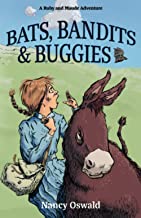
Bats, Bandits & Buggies, by Nancy Oswald was the light, entertaining read I needed after two months of serious short story selection for two separate anthology collections. A thoroughly enjoyable read, this book is a nonstop adventure that is sure to put a smile on the face of readers of all ages, not unlike the other books in her Ruby and Maude Adventure series, featuring a young girl named Ruby and her ice cream loving donkey, Maude.
In the first book of the series, Rescue in Poverty Gulch, Ruby and Maude come to Cripple Creek, Colorado in the 1800’s, but over the series the cast of characters has grown to include a cat named Trouble and a young donkey named Willie, and they’ve all moved down the mountain to Colorado Springs. But, trouble always seems to find Ruby and her friends in a whirlwind of seemingly unrelated events, which somehow leads to danger.
In Bats, Bandits & Buggies, Ruby and Maude set out to go into business offering buggy rides around Colorado Springs. But, when Ruby tries to help her friend Roy earn the money to pay his aunt for a book that was ruined, she finds herself with an uninvited partner. As Ruby trains Maude to pull the buggy and set forth on their new business venture, odd occurrences lead her to believe that something strange is going on in Colorado Springs. First, someone abducted her cat, Trouble, while Ruby was napping; then there’s the string of recent robberies in which the bandits leave the store with the stolen merchandise and mysteriously disappear; and then there’s Roy’s peculiar aunt, who seems to be taking advantage of her young nephew, and alternates her mood faster than you can blink your eye. Ruby isn’t sure what is really going on, but she’s determined to find out.
If you want to know more, you’ll have to buy this delightful book, for you won’t find spoilers here. But I will say that Bats, Bandits & Buggies is a purely fun read, all the way through. The pacing is wonderful, carrying the reader pleasantly moving along through the story, and the characters are delightful. I give it five quills.
Buy Link: https://www.amazon.com/Bats-Bandits-Buggies-Maude-Adventure/dp/1737754800
_____________________________________________________________________________________________________
Kaye Lynne Booth offers honest reviews in exchange for a copy of the book. If you have a book you would like a review for, contact her at kayebooth(at)yahoo(dot)com.
Share this:

Review in Practice – The Magic Bakery
Posted: December 6, 2021 Filed under: Book Review, Books, Nonfiction, Review, Writing, Writing Reference | Tags: Book Review, Copyright, Copyright laws, Copyright permissions, Dean Wesley Smith, Publishing, The Magic Bakery, Writing, Writing to be Read 2 Comments
Authors make their livings off of the intellectual property they’ve created, but while they pay lip service to copyright, it’s mostly in the context of protecting their work from plagiarism, and many don’t realize what copyright is, how it is acquired or what it truly means. The Magic Bakery, by Dean Wesley Smith is a must read for anyone who is serious about making a career out of writing. Smith draws from decades of experience in the publishing industry to explain what copyright is and how it can be used to leverage intellectual property (IP) and maximize profits from your creative endeavors.
Smith uses the clever metaphor of a magic bakery, where the pies replenish themselves no matter how many pieces you sell, to emphasize the idea of writing as a business and simplify the explanation of how copyright works, so authors may place proper value on their work. As a seasoned author, who has published both traditionally and independently, Dean Wesley Smith offers a fresh and sensible outlook on the publishing industry and the business of writing.
The Magic Bakery offers a sensible approach to managing intellectual property and copyright for authors. Serious authors will benefit from consuming the delectable ingredients that make up this pie, so pull up a chair and savor a piece. I give it five quills.
Buy Link: https://www.amazon.com/gp/product/B074D7K3ZD
_____________________________________________________________________________________________________
You can be sure not to miss any of Writing to be Read’s great content by subscribing to e-mail or following on WordPress. If you found this content helpful or entertaining, please share.
Share this:

Review: Collateral Damage
Posted: November 22, 2021 Filed under: Book Review, Books, Nonfiction, Review | Tags: Book Review, Collateral Damage, Dorothy Kilgallen, J.F.K., John F. Kennedy assassination, Marilyn Monroe, Mark Shaw, Nonfiction, Writing to be Read 4 Comments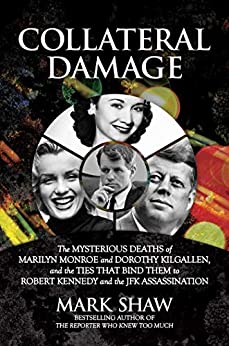
I grew up believing that John F. Kennedy was an upstanding and respectable man, a positive role model for America’s youth. He was assassinated before I was born, but I was the unseen listener to the conversations of the adults in my life, which often made no sense to me at the time. Between the opinions of my mother and my grandparents, and the way in which J.F.K. has always been portrayed in the media, I always thought that the Kennedys were part of the good guys. But after reading Collateral Damage, by Mark Shaw, my view of American history has changed. The evidence laid out by Shaw in this book, laid out through diligent research, paints a picture of a different story.
Not that John F. Kennedy didn’t do good in the office of President of the United States of America. Shaw makes no such claim, but he does tell a very different tale about J.F.K. the man and the rest of the Kennedy family. John F. Kennedy isn’t the main villain in this story, but one of the victims, an inadvertent casualty of one man’s drive for power. His investigative reporting skills have long been hard at work t bring this true life tale into the public eye. It’s a tale of connections and conspiracies, a true life drama of power and greed and the story of those who inadvertently got in the way.
Shaw presents compelling evidence to connect the assassination of John F. Kennedy, with the death of actress Marilyn Monroe and that of journalist and media icon Dorothy Kilgallen in an attempt to give them all the justice they were denied at the time of their deaths and ever after. His research is well-documented and much of the evidence is available for visual examination on his site for those who want to decide for themselves. The connections which Shaw reveals have always been there had anyone cared to seek out the facts, but no one did until Mark Shaw delved into the facts, presenting them a book at a time with each volume presenting more pieces of a puzzle, filling in the whole story gradually, in stages.
The edges of the puzzle were presented in The Reporter Who Knew Too Much, giving us the mysterious facts surrounding Dorothy Kilgallen’s life and death and some of the inside pieces connecting it with the assassination of President John F. Kennedy. In Denial of Justice, Shaw presents more of the facts tying Kilgallen and J.F.K. together, filling in more inner areas of the puzzle, but Collateral Damage presents new evidence delving into the death of Marilyn Monroe, filling in the gaps to complete the picture.
Collateral Damage is a well researched investigation into events which occurred in an era of mob rule and power politics, where corruption ran deep, deeper than I had ever realized. Shaw reveals a tale of intrigue, deceit and murder as he delves into three of the greatest mysteries in history. I give it five quills.
Like this post? Let me know in the comments. You can be sure not to miss any of Writing to be Read’s great content by subscribing to e-mail or following on WordPress. If you found this content helpful or entertaining, please share.
Share this:

Treasuring Poetry – Meet poet Lynda McKinney Lambert and a review
Posted: October 16, 2021 Filed under: Book Review, Interview, Poetry, Treasuring Poetry, Writing | Tags: Book Review, Interview, Lynda McKinney Lambert, Poet Interview, Poetry, Songs for the Pilgrimage, Treasuring Poetry, Writing to be Read 46 Comments
Today, I am delighted to welcome artist and poet, Lynda McKinney Lambert, to Treasuring Poetry with her thoughts about poems and poetry,
Which of your own poems is your favorite?
I chose a poem on page 127 of my latest publication, Songs for the Pilgrimage, DLD Books, 2021. “Talisman,” is located in Part IV: Landmarks and Landscapes.
“Talisman” (This is a free-form poem)
by
Lynda McKinney Lambert
(written April 30, 2016)
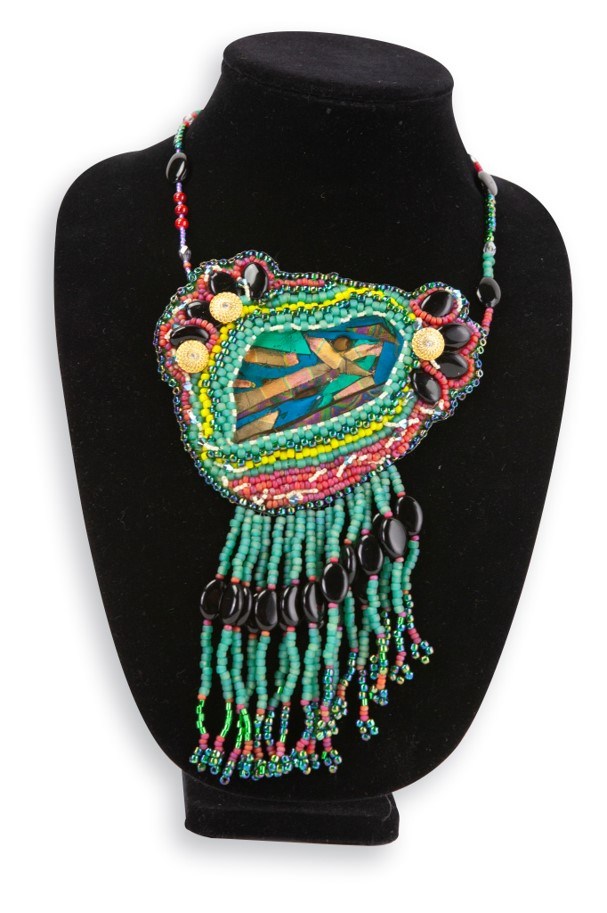
Visualize a talisman-
precious stones and crystals
woven in bold patterns
plenty of Japanese glass seed beads
tiny drops of perfect symmetry.
I select flawless beads
stab them onto steel needles
hundreds of stitches.
thrust them one at a time
upwards into the heavens
endlessly.
I plunge my thin needle
deep through layers of stiff cloth
make my stitches sure
hold tight.
I’m a warrior woman
thumping my spirit-drum
made of dappled starlight.
I measure timeless days
counting beads in
a mystical circle
held together
with a bronze toggle clasp.
A Talisman brings
protection from evil
healing for weary spirits
nourishment for aching bodies
courage for new directions
on a pilgrimage
over treacherous pathways
guides my dimmed eyes
and nervous steps.
Black onyx ovals
are like a vintage fan
unfurled with a flourish
or a sacred victory flag
prepared to cast an invocation.
my fingers stroke cold stones
glossy-smooth, polished, faceted.
gifts for a King.
Copyright, August 2, 2020. All rights reserved.
What inspired you to write this particular poem?
My Process:
My poems are created in the same way I create a work of art.
First, the studio must be in pristine condition. I go through this cleansing activity of putting everything in its proper place, cleaning the surface of my working table, and laying out my materials.
Second, I begin to put a few things down on the paper. I may b begin with just a word that has been flashing through my mind for some time. I may begin with an idea or a color, or an object that I want to describe.
I start making a list of all of those things. I also refer to the thesaurus and the dictionary to expand my possibilities and to give me insight into the deeper meanings of words I am working with. I continue laying this all out on my list until I have quite a lot of information from which to begin the work. I like to work with at least forty words, phrases, or ideas initially.
Third, I begin selecting from my list. As I select a word, I cross it off my list after I have put it down on the page where I am building the poem.
Fourth, I continue this selection process from my pool of ideas. As I am working back and forth from the brainstorming sheet to the poetry sheet – I am deleting, moving, or adding in my process.
Since I am a person who likes to begin with chaos, I continue sifting and sorting and I am actually bringing order to the chaos.
Fifth, After I’ve laid down a considerable amount of line, I begin the process of deleting and paring it all down to the essential essence. I want my poem to become sleek and spare. I remove every article that I can in this process. I do not want any extra words. I consider them a distraction that hides the core of the poem. I am ruthless at this time in the process.
Sixth, after I’ve taken away as much as I can and exposed the essence of what I am describing, I call it finished. I will read it over many times during the process to get a feel for how it will sound when spoken. At this point it passes from an idea to a living sound. The poem is an object that stands alone. It has taken on meaning in ways I could not have imagined when I began the building process. I am satisfied.
I chose this poem for it exemplifies the parallel between writing and making mixed-media fiber art
The focus of my attention for this poem is on the making of the object that will become a talisman.
When I am writing, I am conscious of being a weaver as I move my words, sentences, and punctuation around the page. When I am making art, I am conscious of how everything fits together as I plunge my thin, sharp needle through tiny faceted beads, Czech and Swarovski crystals, circle around gemstones and capturing found objects. My needle is my paintbrush, forming the shapes and values that take me on a journey.
When I begin to write or make art, I prepare for a journey. I carefully lay out all of the things I will need for my travels. I expect to reach a destination at the time when I begin to write.

About Lynda McKinney Lambert
Lynda’s interdisciplinary interests led her to a career in teaching across disciplines in fine art and English literature. She retired from her position as a professor of fine arts and humanities at Geneva College in 2008. Retirement from her international teaching schedule opened the door for her to pursue her love of writing full-time.
Lynda works from her rural western Pennsylvania home in The Village of Wurtemburg. Her five published books are available on Amazon, Smashwords, and other retail book sellers. Lynda’s newest book of poetry and personal non-fiction essays was published in April 2021 – Songs for the Pilgrimage.
Her second chapbook, Primavera: When Spring Break is Over, is ready for publication.
She is creating a collection of poems for a chapbook for the summer season and one for the autumn season in the year ahead.
Lynda’s poems appear internationally in journals and anthologies. She lives with her husband Bob and they celebrated their 60th anniversary on April 14, 2021.
Lynda earned a BFA and MFA in Painting. She also received the MA in English degree with her focus on poetry.

Purchase Lynda’s books:
My e-books on Smashwords.com
https://www.smashwords.com/books/view/1080756
Authors Page at DLD Books.
http://www.dldbooks.com/lyndalambert
Learn more about Lynda
Smorgasborg Café and Bookstore – Meet the Authors_Review
Robbie Cheadle Book Review of Star Signs: New and Selected Poems.https://www.lyndalambert.com/robbie-cheadle-review-of-star-signs/
Ten Things You May Not Know About Me.
This interview is featured on Marcia Meara’s Blog, The Write Stuff. September 3, 2021.#TenThingsYouMayNotKnow – About Lynda Lambert | The Write Stuff (marciamearawrites.com)
Showcase: Songs for the Pilgrimage.
Published by Charles Portolano, editor of The Avocet: A Journal of Nature Poetry.https://www.lyndalambert.com/showcase/
NFReads – An Interview with Lynda McKinney Lambert.https://www.nfreads.com/interview-with-author-lynda-mckinney-lambert/
Poem, Photo, and Explication of the work.https://www.lyndalambert.com/autumn-gifts-poem/
My review of Songs for the Pilgrimage
![Songs for the Pilgrimage by [Lynda Lambert]](https://m.media-amazon.com/images/I/51fS-MNn1RS.jpg)
What Amazon says
From the Prologue and Epilogue of Songs for the Pilgrimage
The word pilgrimage refers to a religious journey. Individuals commit to traveling to reach a predetermined destination, such as a shrine or holy place. The excursion is a trek from one location to another. Pilgrimage has been an abiding theme in my writing for several decades.
My first book, Concerti: Psalms for the Pilgrimage (Kota Press, 2002, now out of print), was inspired by my annual journeys to Salzburg, Austria, where I taught a month–long drawing and writing course. I revised and expanded the previous collection of stories, poems, historical notes, and journal entries for this new book. Songs for the Pilgrimage features writings, drawings, and photographs I created over four decades.
I conclude with an artist’s prayer:
My studio is yours, Lord. Be my welcome guest today. Your goodness and unfailing kindness have been with me all my life. I have tried to make your glory visible in the works of art I have created. Someday I will close the door of my studio for the final time, but I will not be alone. Together, we will go to your home, where we will continue to collaborate on glorious projects throughout eternity. Amen.
May I Serve You?
Here are the stacks of paintings
for you to look at tonight.
I carefully brought them out
of storage closets
arranged them here
in the kitchen—
where my children used to play
games around a square oak table.
Once, food to nourish the body
was prepared here, by my hands.
Tonight, there is an
abundance of food
for your soul.
Come into my kitchen and
taste the world,
prepared by my hands.
© 1997
My review
Songs for the Pilgrimage is an unusual and interesting collection of poems, interspersed with journal entries from the poets annual journeys to Austria where she taught a month long drawing and writing course. The journal entries provide a lot of insight into the poet’s life and experiences during these times and dovetail with the poems which expand on these experiences by vividly depicting the sights, smells, and thoughts of the poet. The poems are mainly freestyle and cover a full spectrum of observations including interpretations of different artworks, songs, and music.
My favourite poem in this collection and the one that demonstrates the vividness of the imagery presented in these poems is called How Vivaldi Learned to Dance:
“Antonio Vivaldi heard a new beat
began to dance inside his soul
Concerto Grosso came to visit him
D-Major opened his eyes at dawn
every set of notes in the strong
foot-stomping beginning
gave his soul a new pair of wings
horns, oboes, 2 violins, Vivaldi cast the spell
imagination approached the heavenly realm
just as his nimble feet urged him to dance on clouds
kicking up his heels, high off the pungent streets
lively staccato andante reminded
Medieval Venetians to stroll on sunny afternoons
narrow passageways, the scent of Italian lilies floats
over cobblestone paths Vivaldi’s thoughts
pulsed cautiously into the Adagio duet
quiet staccato notes changed his rhythm
roaming violin twins began a centripetal dance
slow and steady – up, down, up, down, up
the long final chord ended his journey on
urban bridges of arched stone
violin solos of his butterfly visions soared
where playful frantic allegro takes flight
X is the unknow factor when the master musician
yearns for one more summer day in Venice
Zeitgeist. His presence spanned the Baroque ages.”
I chose to share this particular poem because I feel it represents everything I enjoyed about this book. The vivid imagery is demonstrated in may places with the depictions incorporating the senses of sight, sound, movement/touch, and smell, the references to the music show the poet’s appreciation of Vivaldi, the Italian Baroque composer, virtuoso violinist, teacher, impresario, and Roman Catholic priest and her love of all of these things, including her religion. There is a strong theme of faith and religious respect running through this book. There is also a haunting attraction for Venice and all it offers which ties in with the overarching concept of a pilgrimage.
An intriguing and enjoyable book of prose and poetry.
About Robbie Cheadle
Robbie Cheadle is a South African children’s author and poet with 9 children’s books and 2 poetry books.
The 7 Sir Chocolate children’s picture books, co-authored by Robbie and Michael Cheadle, are written in sweet, short rhymes which are easy for young children to follow and are illustrated with pictures of delicious cakes and cake decorations. Each book also includes simple recipes or biscuit art directions which children can make under adult supervision.
Robbie has also published 2 books for older children which incorporate recipes that are relevant to the storylines.
Robbie has 2 adult novels in the paranormal historical and supernatural fantasy genres published under the name Roberta Eaton Cheadle. She also has short stories in the horror and paranormal genre and poems included in several anthologies.
Robbie writes a monthly series for https://writingtoberead.com called Growing Bookworms. This series discusses different topics relating to the benefits of reading to children.
Robbie has a blog, https://robbiesinspiration.wordpress.com/ where she shares book reviews, recipes, author interviews, and poetry.
Find Robbie Cheadle
Blog: https://www.robbiecheadle.co.za/
Blog: robbiesinspiration.wordpress.com
Twitter: BakeandWrite
Instagram: Robbie Cheadle – Instagram
Facebook: Sir Chocolate Books
______________________________________________________________________________________________
Want to be sure not to miss any of Robbie’s “Growing Bookworms” segments? Subscribe to Writing to be Read for e-mail notifications whenever new content is posted or follow WtbR on WordPress. If you found it interesting or entertaining, please share.