Katie Connell is happily married and living the island life on St. Marcos. Just when she thinks life is settling down with her dream man and their gorgeous children, they learn a stranger died at the front gate of their jumbie house. After the victim’s well-connected employer hires Katie and Nick to investigate, they discover a horrifying secret about the place they call home.
Before Katie can process the information, her husband doesn’t return home one night. As if that weren’t enough, the uncooperative police chief counters Katie’s plea for help with a threat to seize their home out from under her. Can Katie track down her husband alone before his trail goes cold, or will powerful forces at work send her to an early grave?
I listened to Finding Harmony, by Pamela Fagan Hutchins, narrated by the author. Finding Harmony is the third book in Hutchins’ Katie Connell Caribean Mystery. (I listened to another audiobook by this author, Fighting for Anna. and you can read my review here.)Her accents and island dialects are wonderful, making it easy to tell who is speaking from the dreadlocked island native Rashidi to her New York proper father-in-law, Kurt. I must applaud her.
Katie Connell is a strong female protagonist who is very relatable. All she wants is a happy life in their haunted island estate with her wonderful husband and beautiful children, and she’s pleased to extend her family, including her in-laws in the household. She’s used to Estate Annalise communicating its needs in poltergisty ways and comforted in the knowledge that the house will protect her and her family.
What she isn’t used to is a man dying in her driveway, her husband’s plane disappearing with him in it, and the local law enforcement threatening her children with harm instead of helping her to locate her husband. With no one else to count on, and convinced that her husband is still alive somewhere, Katie sets out to find him with her father-in-law, but it looks like they’re on their own. The task grows even bigger as they learn that a Mexican drug cartel is involved and is determined to stop them from uncovering the truth, but Katie holds her own.
Throughly entertaining, from the first page to the last. I was rooting for Katie all the way, and couldn’t wait to find out what happened next. I give Finding Harmony five quills.
_________________________________________________
Kaye Lynne Booth does honest book reviews on Writing to be Read in exchange for ARCs. Have a book you’d like reviewed? You can request a review here.
In Ever So Gently, Lauren Scott shares her strong link to nature, taking the reader on a tranquil walk through a redwood grove. You’ll find an invitation to sit quietly on a patio, captivated by the simple beauty of a hummingbird. She’ll entice you to revel on the shore of a freshwater lake, mesmerized by its stunning beauty.
Scott shares how love has shaped her life. From that first delicious kiss to celebrating decades of marriage through a love that deepens over time. How her heart melted when she became a mom, then ached when her children started their adult lives across country. And how her adorable canine companions found their way into her heart.
Scott underscores how life presents mysteries we struggle to solve. We can’t help but ponder the deeper meaning of a simple vision. She prompts you to reminisce and reflect on your past, present, and future. Through the ups and downs. what matters most is to love and live ever so gently.
Purchase Link:
My Review
For me, poetry is best enjoyed in print, where I can hold the book in my hands and leaf through the pages, taking in each poem in small doses, and revisting those poems which have sparked further thought in my mind. So, I was tickled to receive a print copy of Ever So Gently: A Collection of Poetry from author Lauren Scott. In this delightful collection, we hear the author’s confident approach to life, feel her inner appreciation of the natural world arond her, and gain insight into value of connection with the people she loves and cares about.
Poetry is so personal, offering a window into the author’s soul, and EverSoGently does this beautifully. Many of the poems contained within resonated with me on a personal level. As a both nature and animal lover, the vivid images of the cautiously flitting hummingbird, a garden renewed, and beloved pets helped me to feel the moments described within each, as if witnessing or experiencing them.
Messages from the Sea
listen intently
inhale, exhale, feel the calm
your soul will tank you
secrets ride the waves
ebbing, flowing in turquoise
we are not privy
whispers in the surf
ambiguous to discern
relish in their song
_________________________
For Lauren Scott, nature is soothing, healing. I can relate with that as nature is also where I go for solace.
Chilling Embrace
I have been embraced
by the chilling presence
of lonliness.
I have wondered where the niche
designed for me exists in this world
in which my breaths originate.
I have waited for the glow
to emerge behind the shadows.
But when I take that soft step
into the splendor of nature,
listen to the treeswhisper their sagacity,
feel the flowing rivers move my pain,
creating vast distance between it and me,
I have been revived by the compassion
that nature offers so unselfishly.
_____________________________
But my very favorites were the poems in which she expressed her love of the written word, a love that I share, so can relate well with.
Books
Stories, poetry
Compelling, transporting, entertaining
Turning pages is exciting
Paperbacks
______________________________
But my true favorite is the poem that shares the title the book is so aptly named for. In it I see clearly the author’s positive, grounded attitude toward life. A wonderful outlook, to be sure.
Ever So Gently
Sometimes we get lost
in our thoughts…
losing focus of the stars
lighting up the night sky.
We tumble too deeply
into the frontal lobe,
allowing negative thoghts
to awaken, to throw a tantrum.
Remember, the breeze carries
burdens down river
and across oceans,
majestic trees sway with joy,
sheltering from shadows,
and the light shines even if only
a slight glimmer slips through.
Its glow will grow ever so gently
into a bright beacon of hope
rising with the golden sun
bringing clarity to our vision.
____________________________
With her uplifting poetic verse Lauren Scott basks in the earth’s beauty, cherishes loved ones, ponders life’s mysteries. Highly recommended. I give Ever So Gently five quills.
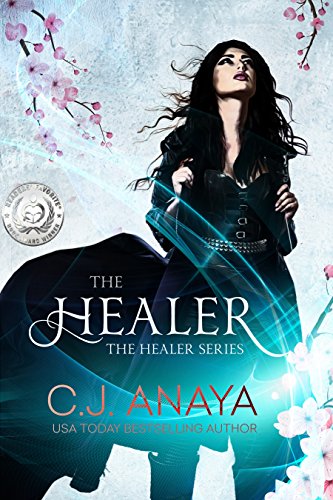
Her touch could save multitudes. But even with superhuman powers, will one high-school senior survive a battle with almighty deities?
Seventeen-year-old Hope wishes she could heal every wound. But after a heartbreaking ordeal during a hospital visit, her walk home turns into a fight for survival when she’s attacked by a two-tailed demon cat. And though she tries to shake off the incident, the sudden arrival of a pair of overly curious new classmates sets off the miracle-worker’s alarm bells.
Working hard to keep a low profile, she’s horrified when one of the handsome duo tricks her into mending his wounds after a schoolyard brawl. But when the two boys reveal their divine origins and her fated destiny, Hope plunges into a race to unlock her mystic potential before hellish forces turn them all to ashes.
As the veil between life and death unravels, can she claim her future and shield humanity?
The Healer is the action-packed first book in The Healer YA fantasy series. If you like empowered heroines, Asian gods, and romance that lasts through the ages, then you’ll love C. J. Anaya’s stunning coming-of-age tale.
Buy The Healer today to take a wild supernatural ride through history!
The Healer, by C.J. Anaya is a delightful Y.A. paranormal fantasy novel about Hope, a 17-year-old girl with healing abilities which is intricately woven into Japanese folklore. Hope would heal the entire world if she could, or would she?
On the one hand, Hope is an average teenaged girl, with average teenaged problems. But Hope has a side which she keeps secret, even from her best friend, Angie. Only she, her father, and the young leukemia patient whom she’s been trying to heal unsuccessfully and has built a friendship with. But when two students show up at her school, who seem to know of her healing abilities, things begin to get weird.
Hope finds herself strangely attracted to both Tie and Victor, although she doesn’t trust either. They are not your typical high school students. Only by discovering her true past, will Hope uncover the mysteries of her abilities and learn of the prophecy regarding her fate. When she does, she is faced with a decision. Is it really her destiny to save the world, or will Hope choose to follow her heart and chose her own fate?
A beautifully crafted coming of age story. I give The Healer five quills.
_________________________________________
Kaye Lynne Booth does honest book reviews on Writing to be Read in exchange for ARCs. Have a book you’d like reviewed? You can request a review here.
The above meme is found in the back matter of all WordCrafter Press books because it is true. Reviews are the best way to spread the love for authors that you read.
Not everyone can afford to buy a book, or back a Kickstarter campaign, or support a Patreon author. I get that. But it doesn’t cost anything to leave a review. You’ve already got the book in hand, so all it takes is a small amount of time to go onto your blog, or your favorite book site and leave a review, or both.
I do book reviews here on Writing to be Read. And although I’m not real timely about it, I also post my reviews on Amazon, Goodreads, and BookBub. Now that actually does take some time, but if I use copy/paste from blog to booksite, it isn’t too bad. I do them in batches, after the reviews have posted on my blog. I’ll be doing the last batch for the year in December, so I can start fresh with my January reviews in 2024.
I do that because I think reviews are important for authors, and I appreciate the work that goes into the books that entertain and inform me. I started doing reviews on my blog as a way to show my support for my fellow authors, and free books were just icing on the cake. I’ve never been able to afford my vorocious reading habits, so blogging reviews has been a win-win.
An article by Chuck Wendigg over at Terrible Minds offers good reasons for authors wanting reviews and for leaving reviews. https://terribleminds.com/ramble/2023/10/27/psst-leave-a-review-and-why-leaving-a-review-matters He points out the ‘word of mouth’ value of getting reviews for your books, and he also talks about the all-mighty algorythm, how reviews can affect it, and how it affects your standing with distributors and your book’s visability.
Let’s face it. In today’s marketplace, people check reviews on everything, not just books. Reviews are not a new thing for books, which have been riding on reviews, even when traditional publishing was the only option available to authors. So it should be no surprise that reviews are so very important. And as indie authors in a sea of competing books, they can be hard to come by.
I put a lot of time and effort into getting reviews for my own books and for those of WordCrafter Press, too. Reviews don’t usually fall from the sky, you have to ask for them. I send out review requests to reviewers who might be interested in each book, and offer up ARCs (Advance Review Copies). And I put the above meme in the back of each book to remind readers to leave a review right after they finish the book.
For Kaye Lynne Booth, writing is a passion. Kaye Lynne is an author with published short fiction and poetry, both online and in print, including her short story collection, Last Call and Other Short Fiction; her paranormal mystery novella, Hidden Secrets; her time-travel adventure, The Rock Star & The Outlaw; and book 1 of her Women in the West adventure series, Delilah. Kaye holds a dual M.F.A. degree in Creative Writing with emphasis in genre fiction and screenwriting, and an M.A. in publishing. Kaye Lynne is the founder of WordCrafter Quality Writing & Author Services and WordCrafter Press. She also maintains an authors’ blog and website, Writing to be Read, where she publishes content of interest in the literary world.
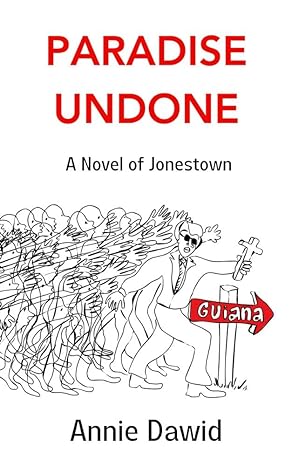
Imagine a community full of rainbow families where everyone comes together in the spirit of equality and fraternal love.
Shy pastor’s daughter Marceline and her new husband Jim Jones found Peoples Temple in the face of rampant hostility and aggression in 1950s segregated AmeriKKKa.
They give hope to the poor, the miserable, the alienated and disenfranchised of all colors, and build a commune in the jungle of British Guyana.
But this Eden too has its serpent. One who is also jealous of God, and where he goes, everyone must follow, even to the grave.
I was 14 years old in 1978, when the Reverend Jim Jones ordered the members of his congregation to drink a poisonous mixture and follow him to their deaths. He ordered them to give the same mixture to their children, and they blindly followed after him. I remember hearing about it on the news, and as a teenager, I couldn’t understand how something like this could happen. I wondered why a holy man would sacrifice his flock; why someone would follow aan like that, even when they had to realize what the results would be. What makes a man like Jones? Why would he lead those he claimed to love down a road to death? And why would all those people follow him blindly down that road? Were they deceived? Did they go willingly?
It bothered me, but time went on and other sensational events replaced it as the top story, and I didn’t think too much about it. Every once in awhile it would be mentioned on the news, such as when Waco was compared to Jonestown, and I’d think about it then, and it still bothered me. I still didn’t understand. And there was a part of me that needed to understand.
So when Annie Dawid asked me to review her novel about Jonestown, Paradise Undone, I jumped at the opportunity. Dawid has been working on this book since the event occured, so I knew it had been thoroughly researched, because I reviewed her collection of essays, Put Off My Sackcloth Essays, back in 2022. Her need to understand, to make some kind of sense of this horrendous event, was akin to my own, except hers drove her to act. And to make her offer even sweeter, she offered to send me a print copy. Yes please.
In Paradise Undone, by Annie Dawid, the author has written fictional accounts of a factual event. Her characters were all real people, although some of the names have been changed. Dawid offers up several perspectives of the event, sprinkled with actual quotes made by Jim Jones. She offers a glimpse into the minds of those involved, and their stories are told based on the facts that she uncovered through decades of research.
The plot for this story was written back in 1978, and the author doesn’t veer from known facts, all though she sets the records straight in some respects. Much of the tale she weaves is spun from actual Jonestown documents. Dawid presents the events through the eyes of those that were there or were members of The People’s Temple, and the aftereffects of this unthinkable event.
It is a sad and tragic tale, and there are no happy endings. We all know how the story ended. 918 people dead in the jungle of Guyana. But Dawid has offered us a glimpse into the humanity of the situation, enabling us to see that there were real people involved, people who loved and had hopes and dreams, although perhaps misguided.
I found myself relating to the character of Marceleine Jones, who hid behind behind a veil of feined ignorance as events spiraled out of control as a means of denying culpability. I think it is a common reaction of many women to ignore the traits in their partners which they otherwise could not tolerate in order to maintain the status quo and hold onto the lives that they’ve built for themselves. Marceleine ignored the intolerable until it had spiraled out of her control. The realization of what she’d allowed to happen and her inability to stop it was enough to motivate her drink the Fla-Vor-Aid.
I hope that through her research, Annie Dawid found the answers she was searching for. And me? Well, I’m still in awe that a catastrophic event such as this could occur. Although I’m not sure why it shocks me so much, when madmen are shooting up schools, theaters, and churches, or bombing public events so often that it has nearly become a part of normal life for many. But there is something even more disturbing about Jonestown for me, because Jim Jones gained the trust of his flock and then turned that trust against them. That, in itself, amplifies his crimes tenfold above the shooters of Columbine, the Aurora movie theater killer, the Boston Marathon bomber, with their random acts of violence.
Dawid has done her research and recreated this horrific event for us in stunning vividness. I give ParadiseUndone five quills.
_______________________________________________
Kaye Lynne Booth does honest book reviews on Writing to be Read in exchange for ARCs. Have a book you’d like reviewed? You can request a review here.
Today, I am delighted to welcome prolific and masterful poet, Frank Prem, back to Treasuring Poetry. Frank writes incredibly relatable poetry that covers a wide variety of topics relevant to modern life including the bush fires that raged in Australia a few years ago, Devil in the Wind, working as a psychiatric nurse in an institution, The New Asylum: A Memoir of Psychiatry, as well as collections about war. I have read Frank’s beautiful and moving collections about World War 1, Sheep on the Somme, and the war in the Ukraine, From Volyn to Kherson: Interpretations of the War in Ukraine. Frank also writes romantic poetry, interpretive modern poetry and verse books for children. In the nicest way, nothing is safe from Frank’s poetic pen.
Tell us a bit about your war poetry collections
I developed an interest in the First World War many years ago and was particularly interested in the stories of Australian soldiers and their seeming need to volunteer to fight half a world away on the basis of loyalty to the British Empire and the Mother Country that was England, but also on the basis of a kind of chivalric principle. A moral fever that swept the nation.
I came across books that were written in the more modern historical style of telling stories to illustrate events – using the example of an identified soldier, from an identified town, with family details and background, then tracing their movements into the war and its various theatres and actions.
I found I was able to understand these individuals a little better and to empathise with them and their loved ones a little more than I otherwise could.
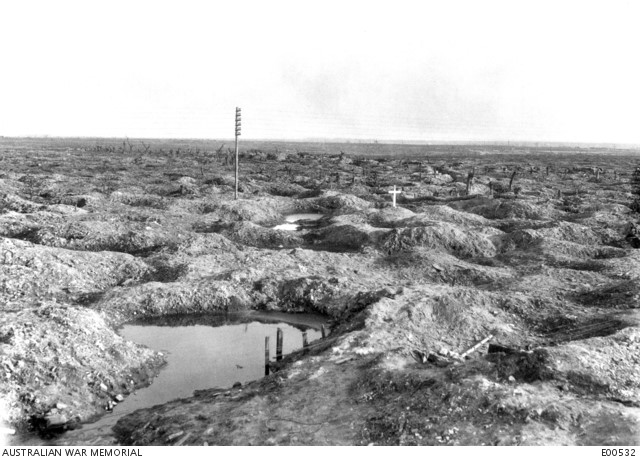
I also found myself interested in using images for my own poetic inspiration and that led me to the images held by Australia’s War Memorial. There was one image in particular that started me looking at pictures taken during the war. The image was of a white cross in a field of muddy and bloody craters. The cross marked the grave of Captain Ivor Margetts, much loved and respected by the men he led in battle. By the following day the cross and the grave were gone. They’d been blown to hell by the shelling.
I was tremendously moved by this, and as I searched for a version of that particular image online, I encountered many more, each with a poignant story to tell and many were destined to feature in my book Sheep On The Somme (https://www.amazon.com.au/Sheep-Somme-World-Picture-Poetry/dp/1925963144 ).
More recently, I found myself watching the sabre rattling over the Ukraine that was being perpetrated by Russia and was reminded very clearly of reading I’d done long ago about the beginnings of the Spanish Civil War back in the late 1930s and of the rise of Right-Wing Fascism in Europe during that same period of the 1930s. I was struck by the similarities and the ways in which those events and movements evolved into what became World War II. It was – and remains – quite concerning to see these way events continue to unfold.
As the news and pictures of Russia’s military build-up on the Ukraine border kept emerging, along with the seeming inability on the part of Ukraine to do anything to stop it, I watched events more and more closely.
When Ukraine’s borders were finally breached, there were more photographers and journalists on the spot than has ever been the case previously in a conflict. We were flooded with formal and informal news and masses of un-curated and un-censored images.
During the first nine weeks of the conflict I became engrossed in reading the news and studying the images. And – of course – I began to write.
I produced 3 volumes of poetry interpreting the Ukraine war – two of them will not be released because they used images taken by journalists in the field and I don’t have rights to use those images. The volumes (Bullets Into The Starichi Sky and I Call The Hole The War) sit on my private bookshelf here in my writing studio.
The third volume – From Volyn to Kherson – is a collection of poems in which I have attempted to use such talent for empathy as I possess to interpret the news stories I was reading in a way that enabled any of my own readers to get a sense of what the invasion and the conflict was like as an experience for the everyday people of Ukraine. What if it happened here, in my town? What would it be like to have seventy kilometres of armoured assault vehicles coming to surround and destroy my home town? Or yours?
I like readers to know where the inspiration for these writings has come from and so each individual poem is referenced and has a link to the online sources that I relied on in my writing. After nine weeks I was a little burnt out and had to stop writing, but I follow events over there diligently and worry about what I see happening in the wider world and which still so resembles the events of the 1930s.
What draws you to writing about wars?
I’ve encroached a little on this question with my answer above, I think, but I’ll try to elaborate a little more.
In my professional life I was a psychiatric nurse. Back (so many years ago) when I was a student nurse one of the areas of interaction with patients that was taught and stressed was empathy.
As I understood it, empathy was the ability to walk in another person’s shoes. To see things from the perspective of the other person, but not to necessarily sympathise, or accept, merely to understand in order to be able to reflect that understanding back to the patient.
The patients that came my way in psychiatry were invariably involved in and generally overwhelmed by personal chaos. This might have been due to illness, or it might have been due their life being in a mess they could not resolve. They might have been psychotic, depressed, suicidal, or experiencing any number of out-of-control situations.
That tool of empathy has stayed with me, I think, and now reveals itself in my writing. The experience of chaos by a person finds itself being reflected back in my writings.
I think it is in this way that I am attracted to attempt to unravel what a person may be feeling or experiencing in a war zone. Similarly, I find myself writing a lot about the human toll of natural disasters that come close to me or to my little place in the world.
I have always tried to develop my understanding of these things by writing my way through them. To help myself and any subsequent reader to understand by feeling what is happening through my words.
Tell us a bit about how you use photographs and newspaper articles to assist with writing your war poems
With newspaper articles, I try to extract the meat of the story. That part of the article that is the actual purpose – the reason that it is a story in the first place.
Often enough, there is human interest in the genesis of the article. I then allow the information to assemble itself in a way that I can present it to a reader. For example
What is grandmother doing in the kitchen? Is she cooking Sunday lunch? No. She is cooking Molotov cocktails for others to throw at invading vehicles. And . . . wouldn’t you or I, each do the same if this was happening in our back yard?
With an image, I anticipate that it will have a story to tell. I try not to impose myself and my own current thoughts or fears or desires on it, but to allow the story to be whatever comes.
For example, a golden paper daisy with a bright glow might well have a story to tell that reflects light, and the sun. But equally, it might be a harbinger – a prophet of some kind that draws attention to itself in order to be heard. I don’t know in advance what the story will be, but I try to keep myself out of its road and not to shape the narrative too much.
I have come to know, also, that each image will have a different story to tell to each viewer, so to the extent that I can, I try to facilitate a receptive space for that to occur through what I end up writing. I’ll give an example of how I find a story in a tiny image taken during wartime over a hundred years ago.
The image above is the view from inside a German army dugout in World War I – around 1916. It is from within this space that a small group of individuals fought their war.
When I look at this image, I notice a few things and I feel a few things. In no particular order:
From pitch darkness up into light. A very small doorway.
Claustrophobia.
Fear.
The smell of habitation. Bodily odours – where would the latrine have been?
The knowledge of death and destruction and battle rage just outside
Movement of the ground as shells fall outside. Perhaps close.
Maybe the sound of enemy troops approaching the bunker to destroy it.
What of family. Has this soldier (have I) written them a note to say goodbye?
I don’t have a personal experience of war, but I know what fear feels like. I know claustrophobia and the smells of my own body . . . and so on. I can draw on these to understand a little of what the soldier in the dugout might have felt.
The willingness to engage with these elements that come from the image allow me to engage my empathy and to allow a story – which the image itself contains – to be told.
What is your own favourite war poem?
I think that my personal favourite of my own written war poems is one that hasn’t featured in a book to date, but was written to be read for a spoken-word poetry slam 2 years ago. The criteria were that it needed to be 2 minutes reading time or less and to include the term ‘full circle’.
The poem told stories in word pictures and referenced images, without actually including them, if that makes sense. I have since recorded it for my YouTube channel and included there the images that the poem references, spanning both World War I and the current Ukraine war.
I can’t honestly say I have a favourite war poet, but I have read with a deep sense of connection stories such as All Quiet on the Western Front by Erich Maria Remarque with its empathy for the soldiers of the day. Here is the Wikipedia link: https://en.wikipedia.org/wiki/All_Quiet_on_the_Western_Front .
What is your favourite war poem?
I’m aware of many of the great poet writers of the First World War, such as Owen, Sassoon, Brook and Graves, among others, but for my response to this question I have to refer you and readers to a song that I first encountered back when I was a teenager (50 years, who would ever have thought . . .).
The song was performed by a wonderful English Folk ensemble called Steeleye Span, and the song is called Fighting For Strangers. Here is the YouTube link: https://www.youtube.com/watch?v=JI3vRaTg0tI
YouTube Links
In addition to the links given above, I would welcome viewers, new followers (if any so desire) comments and feedback on my YouTube Channel, where there a re a number of video readings from my war poetry collections (and natural disasters and psychiatry and others). Click on the link below to be taken along to the Playlists available on the Channel.
This book is a ‘hard’ read. It exposes the realities of war; the filth, the noise, the fear, and the destruction and death. No civilian wants war, it is something that is imposed on individuals because of factors outside of the man on the street’s control. Civilians, however, bear the brunt of war as the women lose their husbands and sons. The entire population generally loses its collectively homes, food stability, economic stability, access to sanitation, food, and healthcare. Many countries and populations never recover from wars and their populations become unwanted refugees. The sympathy of the unaffected world shrinks rapidly when wars and the resultant refugees impacts on their economies, making the slices of the economic pie for their own populations smaller.
The war in Ukraine hit me especially hard when I read about the Russian soldiers who froze to death in their tanks. Although the Russians were the instigators and aggressors in this war, many of those young men are the same ages as my own two sons, and their dreadful fate couldn’t fail to stir compassion. Young men frequently have a glamorous and inaccurate picture of war when they enlist or are called up. The realities of war quickly displace these notions but it is already too late.
A few stirring stanzas from this collection of freestyle poems:
From fallen (quietly weeping) “here it is safe
safe enough to shed a tear”
From the metro (is also home) “let the fear fall away for a moment while the anthem sounds”
From vasylkiv (is fighting on) This footnote made me shiver: “People used to think about new car or iphone, but nobody was thinking about peace. Now, we are dreaming of it. When old people used to wish each other peace, we didn’t understand what they meant. Now we do.”
and finally, from in okhtyrka (the tsentral’ne) “they are preparing the cemetery now in okhtyrka
adriy and his platoon are gone
vacuum bombed
air taken out of them
and then they died”
This is a beautiful and emotion book of poems that will change the way you view war forever.
Award-winning, bestselling author, Robbie Cheadle, has published fourteen children’s books and two poetry books. Her work also features in several poetry and short story anthologies.
Robbie also has two novels published under the name of Roberta Eaton Cheadle and has horror, paranormal, and fantasy short stories featured in several anthologies under this name.
The eleven Sir Chocolate children’s picture books, co-authored by Robbie and Michael Cheadle, are written in sweet, short rhymes which are easy for young children to follow and are illustrated with pictures of delicious cakes and cake decorations. Each book also includes simple recipes or biscuit art directions which children can make under adult supervision.
Robbie and Michael Cheadle have recently launched a new series of children’s books called Southern African Safari Adventures. The first book, Neema the Misfit Giraffe is now available from Amazon.
Gio Fortuna, a boy spurned by his parents for being “slow,” is raised by his grandfather in the ways of the Practice, a rich esoteric discipline drawing upon mystic traditions passed down over thousands of years from a multitude of cultures. Written in five parts chronicling Gio’s life, The Shaman sees Fortuna embark on a journey from initiate to adept, young boy to old man, as he navigates a network of teachers, each with their own unique lessons and challenges. Steeped in wisdom applicable to all, The Shaman is an inspiring story that proposes a unique path to self-discovery and growth unlike anything written before.
I received an ARC copy of this book from the author in exchange for an honest review.
The Shaman, by Joseph Carrabis is an adventure into the human coondition and beyond. I’ve learned more about myself from this book than I ever have from any work of fiction. A journey into the magical worlds of world cultures, this tale uses magical realism to guide us through an amazing adventure. As always, Carrabis is a master at lining his fiction with valuable lessons for all of us.
The magic of shamans lies within Gio Fortuna and Shaman is the story of his journey to discover the magic within himself, learn to use it, and teach others who are eagar to learn. But as he learns, others don’t understand, and they fear him for what he does. Feeling outcast and trying to find his place in life, Gio is on an amazing life-long journey of self-discovery. He learns something new with every interaction, whether they be teacher or student. For Gio, the incredible is ordinary, although most everyone else is left in awe.
Carrabis skillfully crafts his tale into life lessons learned by his character, Gio. As Gio ventures through life on a soul searching journey, each lesson is portrayed in a way which leaves them open to interpretation, for the reader to attach their own meanings. If you read this book, you will, too, without even realizinng that you’re doing it. I read chapters over repeatedly in order to grasp the meanings that were waiting there for me, although sometimes differing from their meanings for Gio.
I have always been interested in the mystical, but it hasn’t come naturally to me. I’ve never truly been able to meditate, and often fallen asleep during my attempts at it. Gio shows me what I need to do, but I need to learn to do it: lower – center – relax -breathe. The lessons which Gio learns and teaches are within the grasp of us all, and the author kindly lists them at the back of the book, where they can be referred to easily. As for the rest, we must each seek out our own path in our own way.
A spiritual oddesy in human nature, with so many lessons inside. I give The Shaman five quills.
______________________________________________
Kaye Lynne Booth does honest book reviews on Writing to be Read in exchange for ARCs. Have a book you’d like reviewed? You can request a review here.
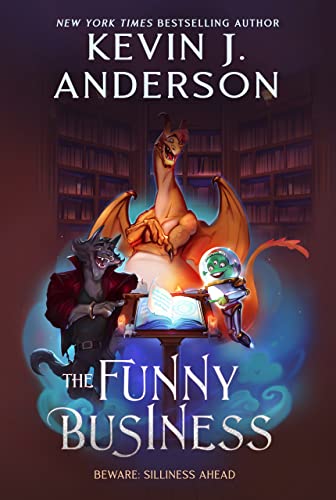
#1 Bestselling author Kevin J. Anderson is known for his grand science fiction sagas, his epic fantasies, his fast-paced adventures, or his steampunk Clockwork chronicles.
But Kevin J. Anderson also has a lighter side. You’ll laugh so hard, brains will come out your nose.
What happens when—
A wimpy, henpecked man finds an enchanted loincloth that turns him into a real jungle Ape Man?
A stranded alien uses his advanced technology to fool audiences as a stage magician?
A frustrated monster-movie actor uses a gypsy witch’s special makeup to turn into a real werewolf when the cameras start to roll?
A group of heavy-metal fans finds a spell on the internet to raise their favorite dead rock star from the grave for a final encore?
A vampire, just minding his own business, wakes from his coffin to find he’s being stalked through his own castle by an over-enthusiastic vampire hunter?
A futuristic law firm uses time travel as a legal loophole to win their client’s case?
Dan Shamble, Zombie P.I. takes on the Boogeyman for a client, or is hired out to save a sacrificial Aztec Christmas turkey?
These twenty stories cover a range of slapstick, subtle, short-short, and groaner humor. The Funny Business also includes for the very first time the scripts of the hilarious comic miniseries Grumpy Old Monsters, never before published.
Beware—silliness ahead. Open the book, and prepare to snicker!
The Funny Business, by Kevin J. Anderson is a collection of 20 totally silly stories, which entertain and elicit chuckles, including a few that he wrote with wife, Rebecca Moesta or other co-authors.
With so many stories, I’m not going to talk about them all. But I will mention those which particularly stuck out for me.
“Frog Kiss” is a classic fairytale turned upside down and a lesson in appreciating what life offers.
“Special Makeup” is werewolf story that proves you should be careful what you wish for.
“Bump in the Night” is a short Dan Shamble, Zombie P.I. adventure, when Dan is hired by the Boogyman to protect him from his overbearing aunts. Dan Shamble as always, is good for a few laughs.
“Paradox & Greenblatt, Attorneys at Law” are legal beagles specializing in time-travel dilemmas. By the time the case is through Paradox’s defense tactics may leave your head tied in ridiculous knots of possibilities and probabilities.
“Eighty Letters, Plus One” (with Sarah A. Hoyt), tells the tale of a misguided inspector with his priorities terribly twisted. The final letter offers a final ironic twist to this tale.
“The Sacrifice” brings us a village virgin awaiting the dragon to come for his ritual sacrifice, harboring a secret that may put the joke on the dragon.
“Technomagic” is a story about what happens when an alien being is stranded on Earth for twenty-seven years. The report he gives upon rescue may surprise you.
“Dark Carbucle” ( with Janis Ian), is a story of a rock stars personal hell.
“Cold Dead Turkey” is another Dan Shamble, Zombie P.I. story. Always a favorite for me. I love the antics of Dan and the antics of the unnatural quarter. In this one, an Aztec mummy hires him to track down his stolen wish turkey. ( I told you many of these tales were just plain silly… but really fun.)
“Loincloth” (with Rebecca Moesta), is the story of a timid little man who uses Tarzan’s loincloth to bring out the beast in him.
Of course, there are many more, including a comic strip script for “Grumpy Old Monsters” (with Rebecca Moesta), which is a different kind of reading, but funny just the same.
Twenty stories that will tickle your funny bone, I give The Funny Business five quills.
_________________
Kaye Lynne Booth does honest book reviews on Writing to be Read in exchange for ARCs. Have a book you’d like reviewed? You can request a review here.
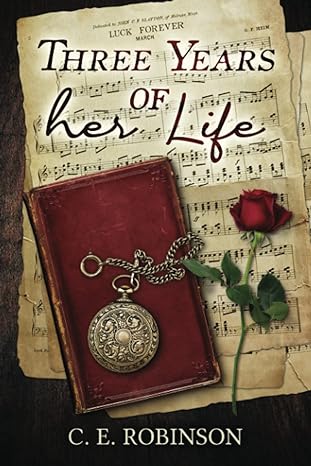
This debut novel is an indelible portrait of family love, trust, commitment, and unrelenting prejudice. A stirring tale that rides the line between historical fiction and romance., inspired by a famous musician’s hidden secret in Germany.
Three Years of Her Life, set in New England and Central Europe, is similar in concern and significant issues to bestselling America epic books of the Great Depression, The Great War and the U.S. South. People and places focused, the novel’s heartwarming and heart wrenching themes mark history in unsettled times.
My Review
The first thing that struck me about Three Years of Her Life, by C.E.Robinson, was the gorgeous cover. I was fortunate to have a print copy gifted to me by the author, which is always a treat. Most of the historical romance I read are westerns, but when well written, I have a taste for it at times. As her debut novel, C.E. Robinson has done a smashing job with this one. This novel was engaging, never losing my interest and I enjoyed every turn of the page. I found myself creating extra opportunities to read this print edition.
A romance set in the 1960s, ventures deeper into the past as Elizabeth and Erik delve into the hidden secrets of Elizabeth’s grandfather, to unravel a mystery dating back to Nazi Germany. What they uncover could unravel her whole family as old predjudices simmer just below the surface, and sometimes boil over into the public eye. Then the past reaches out to touch them both, when Erik is detained in East Germany as they raise the Berlin Wall, and Elizabeth, pregnant with their first child, journeys to West Germany to somehow bring him home. A tale of true love of the purest kind, as Elizabeth does what she must to keep the man she loves.
Mystery, intrigue and danger. Three Years of Her Life has all that and more. This historical romance is thoroughly engaging. I give it five quills.
______________________________________________
Kaye Lynne Booth does honest book reviews on Writing to be Read in exchange for ARCs. Have a book you’d like reviewed? You can request a review here.
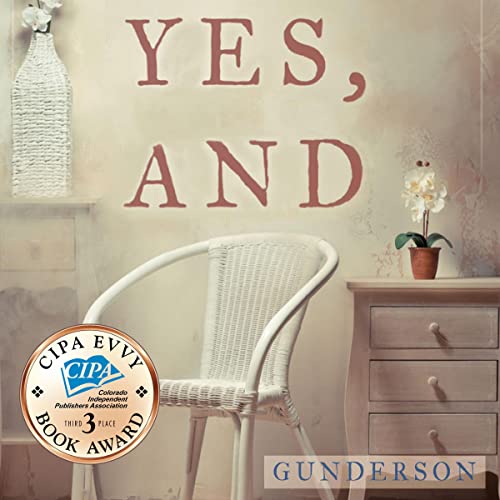
College student Toby and sharp 87-year-old Jo may sound like an unlikely pair, but the neighbors find unexpected friendship when they take on Jo’s money-hungry nursing aides and work to uncover Toby’s purpose. Together, they embark on madcap adventures and explore life’s mysteries in this touching, humorous tale that’s perfect for fans of Fredrik Backman.
My Review
I listened to the audio book, Yes, And, by Cynthia Gunderson and narrated by Bethany Luhrs. This story was different, outside of my usual reading or listening fare, but the title intrigued me, and so I picked it up with a Chirp deal. It is a heart warming, feel good story in many ways, yet it is not all smiles. It focuses on realistic situations and events that are relatable.
Jo is an older woman whose mind may be slipping some, but has it together most of the time. She believes her caregivers are stealing from her, but it is written off as paranoia, or forgetfulness by most. When young Toby moves in next door, an unlikely friendship forms as they team up to find out if Jo is right. This is a story about finding our own path in life and respecting the paths of others.
This is a touching tale of acceptance and caring, proving that everybody needs somebody. Gunderson’s dialog is spot on, and her characters are realistic and likeable. In fact, I kind of fell in love with them, just a little.
Bethany Luhrs does a nice job of differentiating characters, and somehow manages to do an eighty-something woman and a twenty-one year old man with equal conviction. Kudos on a story well read.
This book had the potential to be a really great story, with an ‘everybody needs somebody’ theme. Unfortunately, there was not enough foreshadowing, so often twists in the story came as a bigger surprise than they should have been and this reader felt like something important was missed, so I can only give it four quills.