Alternating reading with your child
Posted: February 13, 2019 Filed under: Books, Children's Books, Growing Bookworms, Reading | Tags: Children's Books, Children's Stories, Growing Bookworms, Reading, Robbie Cheadle, Writing to be Read 54 Comments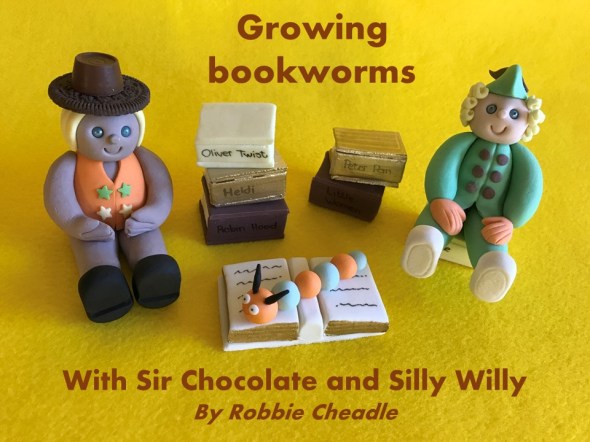
When my son, Michael, was in Grade 2 at school we discovered that he had an audio processing problem and this was inhibiting his ability to read fluently. It took Michael longer to read a book or perform an activity in class than his peers and his teacher was concerned about his ability to cope in Grade 3. The work load increased significantly when the children moved from the pre-prep (ages 5 to 8 years) to the prep school (ages 9 to 13 years) and they needed to work faster in order to keep up.
I was more concerned about my son’s mental well-being and confidence. I had noticed that my little boy was becoming withdrawn and reserved. I took him for a series of test by a child psychologist and together we decided that Michael would benefit from a remedial school. We enrolled Michael at a good remedial school in Johannesburg the year he turned 9 years old. This was an excellent decision for all of us as the remedial teachers at the school also gave me a lot of advice about helping Michael to develop a love of reading despite his learning barrier. I desperately wanted Michael to love books and reading as much as I did so I was delighted to embrace their advice which was very successful for us.
One of the methods of assisting Michael with learning how to read faster and more fluently was for me to alternate reading paragraphs and pages with him. Michael would select a book of his choice. In the beginning it was always Winnie the Witch or Horrid Henry books. He would read one page and I would read three. I would help him when he got stuck with a word and sometimes read with him if a sentence was particularly complex. This method enabled Michael to enjoy the story and it moved along at a pace that was fast enough for him (and me) not to become frustrated and forget the beginning of the story before we reached the end. If the book Michael selected was a bit more difficult than usual, we would alternate reading paragraphs instead of whole pages to ensure that frustration didn’t set in with Michael. In this way he was able to read the occasional book that was above his reading level at the time.
I encouraged Michael during these early years of learning to read fluently, to choose books comprised of a few short stories rather than full length chapter books. Despite the alternating reading, chapter books took longer for us to read together and Michael would sometimes lose the thread of the story before we reached the end of the book.
We continued with alternating reading for two years until Michael’s reading was sufficiently fluent and well-paced for him to start reading entirely on his own.
During this two-year period, I also read to Michael every evening after we had finished the alternating reading. The books I read to Michael were more challenging books than the ones we read together, and they appealed to his sense of humour and adventurous spirit. Michael loved being read to and it taught him good concentration and listening skills which I believe will benefit him for the rest of his life.
Alternative reading is beneficial for all learning readers and can also help a strong reader with their word pronunciation and vocabulary enabling them to move on to more challenging books more quickly.
About Robbie Cheadle

Hello, my name is Robbie, short for Roberta. I am an author with five published children’s picture books in the Sir Chocolate books series for children aged 2 to 9 years old (co-authored with my son, Michael Cheadle), one published middle grade book in the Silly Willy series and one published preteen/young adult fictionalised biography about my mother’s life as a young girl growing up in an English town in Suffolk during World War II called While the Bombs Fell (co-authored with my mother, Elsie Hancy Eaton). All of my children’s book are written under Robbie Cheadle and are published by TSL Publications.
I have recently branched into adult horror and supernatural writing and, in order to clearly differential my children’s books from my adult writing, I plan to publish these books under Roberta Eaton Cheadle. I have two short stories in the horror/supernatural genre included in Dark Visions, a collection of 34 short stories by 27 different authors and edited by award winning author, Dan Alatorre. These short stories are published under Robbie Cheadle.
I have recently published a book of poetry called Open a new door, with fellow South African poet, Kim Blades.
Find Robbie Cheadle
Blog: https://bakeandwrite.co.za/
Blog: robbiesinspiration.wordpress.com
Goodreads: Robbie Cheadle – Goodreads
Twitter: BakeandWrite
Instagram: Robbie Cheadle – Instagram
Facebook: Sir Chocolate Books
Want to be sure not to miss any of Robbie’s Growing Bookworms segments? Subscribe to Writing to be Read for e-mail notifications whenever new content is posted or follow WtbR on WordPress.
Share this:

The Beginning: The benefits of reading to young children
Posted: January 9, 2019 Filed under: Children's Books, Growing Bookworms, Reading, Writing | Tags: Children's Books, Growing Bookworms, Reading, Robbie Cheadle, Silly Willy, Sir Chocolate 34 Comments
I have always read to my two sons. My reading to them started during my pregnancies. I read somewhere that reading to your unborn baby helps sooth the fetus and get him/her used to his/her parents voice. Any excuse to read was acceptable to me and I read the entire Jean Auel Earth Children series to Gregory during my second and third trimester.
Gregory was a difficult baby. He was born with a defect that resulted in him having eighteen operations between the ages of 1 and 6 years old. When he was crying and restless I used to read to him. It always helped him settle eventually and it calmed me too.
During my pregnancy with Michael I had a two year old toddler to read to. The unborn Michael was entertained by a series of books for small children like Rupert the Bear, Paddington and the Mr Men series.
Both my boys have grown up to be readers. It wasn’t as easy with Michael as he has an audio processing barrier which required some intervention but we have overcome that and he is now a prolific reader. Gregory was one of four boys selected to represent South Africa in the Kids Literature Quiz held in New Zealand in 2016.
My own experience in reading to my sons and to my nieces, nephews and any other children who are interested in being read to has illustrated to me the following benefits of reading to young children:
Bonding
Reading to your children helps you bond as mother or father and child. I have always had to work and it was wonderful to cuddle up to my boys after dinner every evening and read to them for an hour. It was a lovely time that we all looked forward to each and every day.
Develops concentration skills
Reading to your young child helps them to learn to concentrate for longer periods. I started off reading to Gregory for periods of about 15 minutes when he was fifteen months old and this gradually built up to an hour or more. I used to take Gregory with me to the doctor for my checkups during my second pregnancy and sometimes we had to wait for up to two hours to see the doctor. He would sit next to me quietly while I read to him and never gave me a moments trouble.
Develops discipline
Reading to your child encourages discipline as they learn to sit quietly and focus and listen. The receptionist at the doctor’s room used to comment on what a good boy Gregory was while we were waiting and how well disciplined he was. I believe that my training him to sit and listen to a story contributed greatly to his developing this important skill which plays an even greater role in his life now that he is in high school.
Encourages imagination and creativity
When you read to your child, they must use their own imagination to picture the characters and happenings in the story. It is not provided to them as with other forms of entertainment like television. You can help develop your child’s imagination and creativity by discussing the characters and setting with them and providing your thoughts on what they look like. You can also use mediums like lego to build the settings in the book you are reading and make the story more alive.
Develops language skills
The more your child hears different words and spoken language the more vocabulary and understanding of language they will gain. Reading a variety of different fiction and non-fiction books to your child will give them an extensive knowledge of words and concepts. Reading to your child also helps develop language fluency.
Develops empathy
Reading fiction to your child will assist them in learning how to react to different situations and expose them to different and more adverse circumstances than their own. It helps children learn empathy and understanding for those less fortunate than themselves.
In addition to the above benefits, reading is an essential skill to achieve success in most areas of study. If you can’t read and comprehend effectively, for example, you will struggle to answer a complex word problem in mathematics. Reading to your child and developing a love of reading goes a long way to achieving academic success.
About Robbie Cheadle
Hello, my name is Robbie, short for Roberta. I am an author with five published children’s picture books in the Sir Chocolate books series for children aged 2 to 9 years old (co-authored with my son, Michael Cheadle), one published middle grade book in the Silly Willy series and one published preteen/young adult fictionalised biography about my mother’s life as a young girl growing up in an English town in Suffolk during World War II called While the Bombs Fell (co-authored with my mother, Elsie Hancy Eaton). All of my children’s book are written under Robbie Cheadle and are published by TSL Publications.
I have recently branched into adult horror and supernatural writing and, in order to clearly differential my children’s books from my adult writing, I plan to publish these books under Roberta Eaton Cheadle. I have two short stories in the horror/supernatural genre included in Dark Visions, a collection of 34 short stories by 27 different authors and edited by award winning author, Dan Alatorre. These short stories are published under Robbie Cheadle.
I have recently published a book of poetry called Open a new door, with fellow South African poet, Kim Blades.
Find Robbie Cheadle
Blog: https://bakeandwrite.co.za/
Blog: robbiesinspiration.wordpress.com
Goodreads: Robbie Cheadle – Goodreads
Twitter: BakeandWrite
Instagram: Robbie Cheadle – Instagram
Facebook: Sir Chocolate Books
Want to be sure not to miss any of Robbie’s Growing Bookworms segments? Subscribe to Writing to be Read for e-mail notifications whenever new content is posted or follow WtbR on WordPress.
Share this:

Halloween: Scary, but Fun
Posted: October 31, 2018 Filed under: Dark Fantasy, Dystopian, Fiction, Gothic, Horror, Paranormal, Reading, Speculative Fiction, Stories, Thriller | Tags: Dead Man's PArty, Facebook event, Ghost Stories, Halloween, horror, marketing, Scary stories, Short Fiction Leave a comment

People love to be scared, especially within a safe environment. That’s why the horror genre will always be popular. Sitting around trying to scare one another by telling ghost stories or urban legends is a passtime enjoyed and induldged by young and old alike. It’s one of the reasons Hallowen is a favorite holiday for many, with haunted houses and ghost stories and a monster around every corner.
But telling ghost stories to pass the time on a stormy night isn’t any type of new passtime. In fact, two hundred years ago, on a damp and dreary night, Mary Shelly’s Frankenstien was created on just such an occassion, when a challenge was issued to see who could invent the best scary story. Today’s monsters may be digitally enhanced, but we still enjoy sharing their stories, searching for an inkling of fear or a rush of adrenaline to get our hearts pumping.

That’s why I hope you’ll all drop in and join in the fun at the Sonoran Dawn’s Dead Man’s Party today on Facebook, where myself and other authors will be reading scary stories, playing games and holding giveaways. Many of the authors from the Dark Visions anthology, which I reviewed this past month, including Writng to be Read team member Jordan Elizabeth, and AtA panel member, Dan Alatorre, who compiled and produced the anthology which climbed up the ratings for best horror anthology rapidly following its release. I gave the anthology five quills and it is well worth the read. I’m excited to be reading a few of their stories for them, as well as my own The Haunting of Carrol’s Woods, and can’t wait to hear the audio recordings of the other’s stories, too. I hope you will join us. It may be scary, but it will be fun.

Like this post? Subscribe to Writing to be Read for e-mail notifications whenever new content is posted or follow WtbR on WordPress.
Share this:

Writing for a YA Audience: LEND ME YOUR EAR…OR YOUR LENDING LIBRARY
Posted: July 18, 2018 Filed under: Books, Reading, Writing, Writing for a YA Audience, Young Adult | Tags: Books, Lending Libraries, Reading, YA, Young Adult, Young Adult Fiction Leave a comment
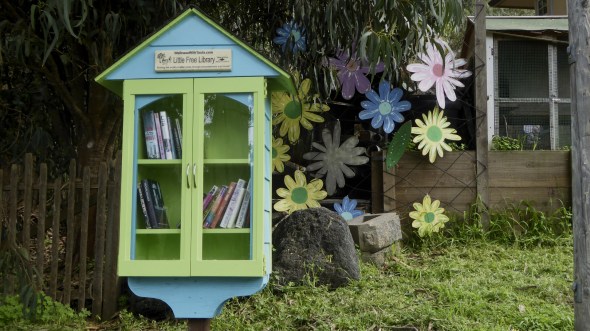
Lending libraries are the new craze. Basically, you build this little wooden box on a pole and stick it in your front yard. Most of the time, the little wooden box has a little glass window. People walking by leave a book and take a book. Lending libraries encourage neighborhoods to connect and read more. Plus, if you’re like me, they’re a great way to give away books and know they’ll go to a good home. The lending libraries can also be found outside of churches, schools, community pools, anywhere you might find a group of readers hungry for new books.
(For those who feel the need to DIY, here are some simple instructions to build your own.)
Lending libraries pull me in, and I’ve frequented quite a few. There’s one in Old Forge, Westernville, and New Hartford, all towns in Upstate New York where I live. Recently, I dropped off signed copies of my novels to the one in New Hartford.
Lending libraries, however, cater more toward adults than to young adults. Each one I’ve been to has never contained a young adult novel. I’ve seen some picture books for kids, but nothing in the young adult genre. The books are all well-worn copies of religious non-fiction, popular chick-lit or obscure fiction. I’m not knocking any of those genres, but let’s build up some interest for teenage readers.
The news is often talking about how teenagers aren’t reading enough. The news talks about how teenagers focus on their phones instead of getting out into the world. Lending libraries meant for young adults, or lending libraries with YA titles mixed in, would “fix” both of those issues. Teenagers would be reading more. They’d be introduced to more options. They would also be getting out into their neighborhoods. A great way to make lending libraries more interactive is to leave a note or bookmark inside the treasure you drop off. I like to include a thought about why I enjoyed the story. It helps to connect the readers, even if they live in a different town.
I’m all for dropping off a young adult title or two in the nearest lending library. Who is with me?
Jordan Elizabeth is a young adult fantasy author. Her latest book, a post-apocalyptic novella entitled ROTHAM RACE, released July 14th fron CHBB. You can connect with Jordan via her website, JordanElizabethBooks.com.