Lindsey’s Writing Practice: Out-of-this-world Writing Exercise
Posted: March 4, 2026 Filed under: Fiction, Lindsey's Writing Practice, Writing | Tags: Lindsay Martin-Bowen, Lindsey's Writing Practice, writing exercise, Writing to be Read 14 Comments
COFFEE, TEA, or TAKE ME TO YOUR LEADER
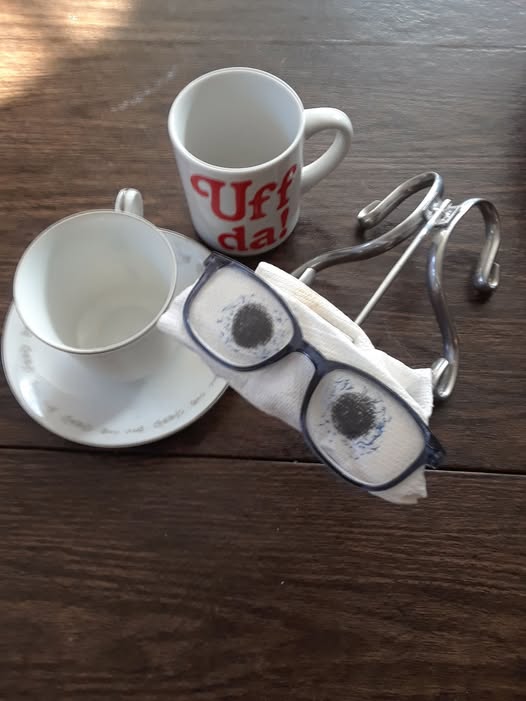
About a month ago, an interesting piece landed in my online mailbox.
A writer named Alle posted “tips for writing emotionally heavy scenes.” It went like this:
Alle sez:
1. Make a cup of tea while you don’t think about the work. Let images, phrases, feelings
float under you and through you.
2. Take a heartening sniff of the freshly brewed tea. Sip and savor. This moment is for you.
3. To your writing space.
4. Sit comfortably. Feet flat on the ground.
5. Write relentlessly. Write-write-write and don’t stop.
6. Check your feet. Still flat?
7. Write som’ more.
When you feel you have a first draft, lean back to enjoy many more sips.
Although I’m sure Alle’s suggestions will help many writers—and dear readers, please use them if you believe they’ll kick-start your work. (And please share with me if those hints do.)
Nevertheless, every writer is different. This technique would not work for me—not for an “emotionally heavy scene.” That tea would likely send me back to bed. (Perhaps I might dream about an emotionally heavy scene, but when I awoke, I’d likely forget it.)
So what are my suggestions for penning a heavy emotional scene?
Drink coffee. Lots of it. At least, as much as you’ll require to get your pulse flowing with the heat of that “emotionally heavy scene.” I am serious here. I admit, my coffee leans more toward cafe au lait (half-coffee, half-milk). Plus, I add a bit of hot water, just so I don’t become too jittery. But I need a drink that helps me soar with those emotions I attempt to capture on the page. Especially when they contain dialogue—or spats between lovers or siblings. Or between enemies. I mean, c’on: tea for emotion? (Perhaps that works if one is wearing a kimono and performing The Mikado. But I’ll never sing opera—no matter how hard I try.) In short, I must get down and dirty with only coffee.
And then, here’s an exercise that might work well for we coffee-drinkers. Not only would it be emotional, but it might also keep us from floating too far from the earth:
First, select one of your favorite songs—with or without lyrics—and play it on whatever device works for you. Savor it while you sip that coffee, then
—Imagine you meet an alien whose world is identical to yours—EXCEPT it consists of NO MUSIC. While you sip away and savor the music, write what you would tell the alien about music. (And note—trying to describe this to a being from a planet where music does not exist will likely become a highly emotional scene, correct?) How will that alien respond?
—So, explore your thoughts and feelings about music.
—Consider what OTHERS might feel and think.
—What do you know about music anyway? How would you explain it?
—What do you observe about yourself when you listen to it?
—Do you experience an overwhelming feeling that the music creates?
—Are you able to connect what you already know and feel to something you are experiencing and observing while you listen to the music?
—Are you able to predict how the alien will respond, how he or she would feel?
REMEMBER: Writing is discovering.
Finally, after undergoing this writing exercise, consider what new observations, discoveries, relations to what you knew about music before this exercise. Have you experienced any new connections to understanding your relationship with music and expressing it to some being who had never experienced it?
And please remember to have fun with this. I did.
About Lindsey Martin-Bowen
On Halloween 2023, redbat books released Lindsey Martin-Bowen’s 7th poetry collection, CASHING CHECKS with Jim Morrison. Her 4th collection, Where Water Meets the Rock, was nominated for a Pulitzer; her 3rd, CROSSING KANSAS with Jim Morrison was a finalist in the QuillsEdge Press 2015-2016 Contest. In 2017, it won the Kansas Writers Assn award, “Looks Like a Million.” Writer’s Digest gave her “Vegetable Linguistics” an Honorable Mention in its 85th Annual (2017) Contest. Her Inside Virgil’s Garage (Chatter House Press 2013) was a runner-up in the 2015 Nelson Poetry Book Award. McClatchy Newspapers named her Standing on the Edge of the World (Woodley Press/Washburn University) was one of the Ten Top Poetry Books of 2008. It was nominated for a Pen Award.

___________________________________
Did you know you can sponsor your favorite blog series or even a single post with an advertisement for your book? Stop by the WtbR Sponsor Page and let me advertise your book, or you can make a donation to Writing to be Read for as little as a cup of coffee, If you’d like to show your support for this author and WordCrafter Press.
_____________________________________
This post sponsored by WordCrafter Quality Writing & Author Services.

Whether it’s editing, publishing, or promotion that you need,WordCrafter Quality Writing & Author Services can help at a price you can afford.
Stop by and see what we have to offer today: https://writingtoberead.com/readings-for-writers/wordcrafter-quality-writing-author-services/
Share this:

LINDSEY’S WRITING PRACTICE: Book Review
Posted: February 4, 2026 Filed under: Anthology, Book Review, Books, Dark fiction, Fiction, Lindsey's Writing Practice, Review, Short Fiction, Stories | Tags: Book Reveiw, Lindsey Martin-Bowen, Lindsey's Writing Practice, Midnight Garden, Writing to be Read 3 CommentsAnthology Review: MIDNIGHT GARDEN: Where Dark Tales Grow

Purchase Link: https://books2read.com/MidnightGardenAnthology
Readers who relish dark tales will love this collection of numerous stories that often blend humorous word play to add levity to some very dark situations. For example, this second anthology in the Midnight Anthology Series, MIDNIGHT GARDEN, opens with award-winning author Paul Kane’s “Drip Feed.” The story incorporates light-hearted word-play into a grim setting–the polar opposite of the romantic backdrop in Kane’s “The White Lady,” from the 2023 MIDNIGHT ROOST collection.
In fact, this dark tale unsettled my psyche so much, I almost refused to comment upon it until after I read it a second time. Then, I focused upon its metaphoric interpretation,which is quite valid, especially considering our current world situation. And like many stories in this group, this one reveals some strong feminist themes. Thus, I now urge readers to “hang in there” while they peruse this midnight story.
Likewise, Ell Rodman’s “The Drummer,” set four hundred years ago in “Cull County.”
(yes—look up the noun definition for “cull” to glean this story’s underlying interpretation), projects both in-depth—but frightening images. (Note it ends in a fiery place where the Drummer ”wore fitted black robes, bearing a massive wooden hammer and a dark shield.”) Along with incorporating history into this piece, Rodman’s detailed descriptions of the environment keep readers traveling a mysterious path to the tale’s conclusion.
Also suspenseful but not as grim,, DL Mullan’s “Kurst,” is one of my favorites in this collection. Set in Salt Pines, a village in Arizona, “between dreamy pine peaks and unfathomable horrors,” the story opens when Karen Kurst leaves her editing job to checkout the “Kurst inheritance” on the Toronto National Forest’s eastern edge. After she encounters Sheriff “Bear” Barrett, who offers her background about her inheritance and eading materials, this story takes readers on a wild—frightening—but fulfilling “ride.”
Another favorite, Roberta Eaton Cheadle’s “Amahle’s Demon” reveals how little we often understand about our fellow creatures, which can result in heartbreaking ends. One of six elephants comprising a “sanctuary herd” recently moved to “another kraal near the visitors’ centre, ready for the afternoon tour.” Unfortunately, a much smaller creature—and a human’s ignorance led to an ending that evoked my tears.
Denise Aparo’s “Jack Moon and the Vanishing Book” (also a favorite tale) takes readers on a magical adventure of the mind—or perhaps into a different dimension via a “much sought-after Vanishing Book that steals souls.” While enjoying this other worldly piece, readers may decide whether it’s an earthly adventure or a magical one while enjoying the ride.
.
As I mentioned in my review of Midnight Roost, I’m mostly a rom-com fan, and Jon Shannon’s “Stitch” could fall into that category. But with a warning: Yes, it’s a romantic story about the characters Andy, a taxidermist and his wife, Julie, a superb seamstress, and the unusual creations they build together, which many of their colleagues consider bizarre. This tale comes with a warning, too: Its ironic humor is quite dark—and leads to a surprise “tongue-in-cheek” ending.
Julie Jones’s “Black Moon” serves as an allegory much like stories from ancient Greece. In fact, it brings to mind C.S. Lewis’s novel, Till We Have Faces, based upon Greek mythological characters.
In contrast, “Antepenultimate,” Molly Ertel ‘s first person narrative, initially evokes chuckles at the narrator’s obsession with the ticking of an antique “KIT-Cat Klock” that began “talking” to her until the narrator became obsessed with an internal urge that leads her down a terrible—and terrifying path.
Similarly, Kaye Lynne Booth’s first -person narrator in “The Puppet Men,” another of my favorites, awakens in a pitch-black room, where she encounters “A thin sliver of light coming in under the door” that clued [her] “memory” to recount she was sleeping in a dark room in her grandmothers house. There, she also hears “high-pitched , twittering, kind of chirpy” voices coming from her grandmother’s felt puppet collection. As an adult, she remains obsessed with those voices she found so threatening that she puts off back surgery to avoid the anesthetic, which she fears will bring the “evil puppets” back into her life.
In a similar vein, Alex Constance’s “The Peddler,” another “dark” tale, serves as an allegory about the downfalls of greed. And Constance’s description of the peddler, “Ichabod” reminded me of Disney’s Ichabod Crane in Washington Irving’s “The Legend of Sleepy Hollow,” especially in Disney’s cartoon version of that tale.
Although Danacka Scrimshaw’s “The Fae Game” at first appears to be a much “lighter: tale than most of those in this collection, the “flip” at its conclusion inspires in the reader feelings that are quite eerie.,
Prolific author Joseph Carrabis penned five stories in this collection, each with merit:
—“Striders,” with a “just desserts” ending, this sci-fi piece gives another nod to feminism
—“Grande Ture,” a short, intense tale that creates a strong statement about AI.
—“The Last Drop,” which illustrates ignorance and bigotry often leads to the opposite of bliss.
—And what I consider Carrabis’s literary masterpiece in this collection,“The Tomb,” a deep tale centering around a blind man who undergoes an operation to retain his sight. Although its plot varies significantly from the Val Kilmer 1999 film, At First Sight. (based upon a true case study by Dr. Oliver Sacks), it shares one of the movie’s sequence of events that creates the stories’ themes about the protagonist: being blind, undergoing an operation that gives him sight, then becoming disoriented when adapting to a visual world—and realizing he had more “sight” in his physical blindness. (Carrabis’s tale contains more “dark” physical drama in its conclusion.)
Aptly scribed with engaging (albeit sometimes weird) characters, all stories in this collection entice readers via their talented, skilled authors. And even if a story is terribly dark, most readers would likely concur it ends with characters reaping well-deserved fates—or “poetic justice,” such as those in Robbie White’s“Fire Sale at the Burdock Family Business” and Zack Ellafy’s “Self-Mutiny,”with its “poetic justice” ending. Indeed, even a narrator reaps his “just dessert in Paul Martz’s “The Blackest Ink.”
And for this well-written collection’s finale, the 2024 Wordcrafter Dark Fiction Contest winner, an engaging but eerie saga,‘The Seagull Man,” by M.J. Mallon unfolds with a detailed description of that bird-like man, who wears grey and white clothes and strolls regularly to the shore with a flock of seagulls circling him along the way. In contrast, “[t]he inhabitants of Cave Birdie knew of the Seagull Man’s reputation, his legend, and avoided contact with him.”
As the tale progresses, the reader learns why his neighbors avoid him—and most likely shares their reaction until the story unfolds in an unanticipated manner—a story that might be defined as a fantastical, especially for this reviewer who’s partial to Rom-Coms, including the eerie ones.
About Lindsey Martin-Bowen
On Halloween 2023, redbat books released Lindsey Martin-Bowen’s 7th poetry collection, CASHING CHECKS with Jim Morrison. Her 4 th collection, Where Water Meets the Rock, was nominated for a Pulitzer; her 3rd, CROSSING KANSAS with Jim Morrison was a finalist in the QuillsEdge Press 2015-2016 Contest. In 2017, it won the Kansas Writers Assn award, “Looks Like a Million.” Writer’s Digest gave her “Vegetable Linguistics” an Honorable Mention in its 85th Annual (2017) Contest. Her Inside Virgil’s Garage (Chatter House Press 2013) was a runner-up in the 2015 Nelson Poetry Book Award. McClatchy Newspapers named her Standing on the Edge of the World (Woodley Press/Washburn University) was one of the Ten Top Poetry Books of 2008. It was nominated for a Pen Award.
_________________________________________________
Did you know you can sponsor your favorite blog series or even a single post with an advertisement for your book? Stop by the WtbR Sponsor Page and let me advertise your book, or you can make a donation to Writing to be Read for as little as a cup of coffee, If you’d like to show your support for this author and WordCrafter Press.
__________________________________________________
This segment of “Lindsey’s Writing Practice” is sponsored by the Midnight Anthology Series and WordCrafter Press.
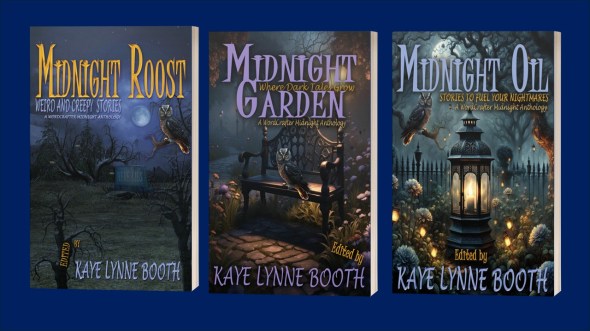
Midnight Roost: Weird and Creepy Stories: 20 authors bring your nightmares to life in 23 stories of ghosts, paranormal phenomenon and the horror from the dark crevasses of their minds. Stories of stalkers, both human and supernatural, possession and occult rituals, alien visitations of the strange kind, and ghostly tales that will give you goosebumps. These are the tales that will make you fear the dark. Read them at the Midnight Roost… if you dare. https://www.amazon.com/Midnight-Roost-Kaye-Lynne-Booth-ebook/dp/B0CL6FPLVJ
Midnight Garden: Where Dark Tales Grow: 17 authors bring you 21 magnificent dark tales. Stories of magic, monsters and mayhem. Tales of murder and madness which will make your skin crawl. These are the tales that explore your darkest fears. Read them in the Midnight Garden… if you dare. https://www.amazon.com/Midnight-Garden-Where-Tales-Anthology-ebook/dp/B0DJNDQJD3
Midnight Oil: Stories to Fuel Your Nightmares: 14 authors bring you 16 dark tales that explore your deepest fears. These are the stories which nightmares are made of. Tales of monsters, mayhem, and madness which will make you shiver in the dark. Read them while you burn the Midnight Oil… if you dare. https://books2read.com/Midnight-Oil
Share this:

LINDSEY’S WRITING PRACTICE
Posted: January 7, 2026 Filed under: Lindsey's Writing Practice, Poetry, Writing, writing exercise | Tags: Imagist Poem, Lindsey Martin-Bowen, Lindsey's Writing Practice, Poetry, Writing to be Read 24 CommentsImagery: Here’s one method to capture a reader’s attention—and evoke feelings. In fact an entire poetry movement was formed around this element: The Imagist Movement.
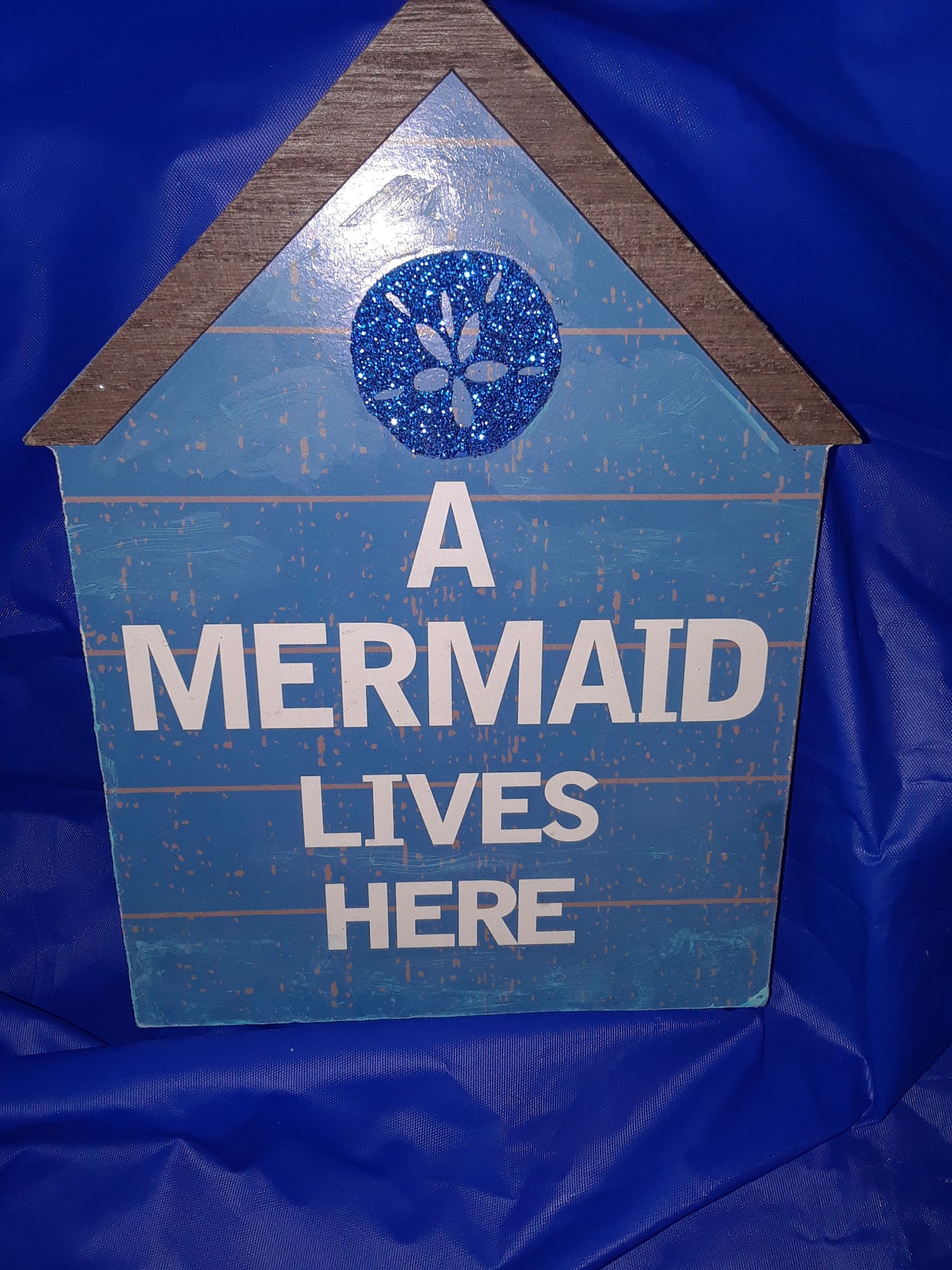
A MERMAID LIVES HERE
She flicks her tail
mornings,
sprays me with
sea foam
when I
so want to sleep one
more hour
before arising
Again flicking
her tail, she leaps in
the bathtub
so smoothly
—Lindsey Martin-Bowen
Penned by William Carlos Williams, the following poem is an example of the Imagist Movement, wherein the poem was “the thing.” In other words, Imagist poets ignored symbolism, rhyme, rhythm, and other poetic elements and focused upon creating an image.
Consider this your opportunity to attempt writing an Imagist poem. Using your own words, copy merely the style—and perhaps the “beat”—of the WCW poem (on the left) to create yours. And remember to enjoy writing this.
THIS IS JUST TO SAY
I have eaten
the plums
that were in
the icebox
and which
you were probably
saving
for breakfast
Forgive me
they were delicious
and so sweet
and so cold
—William Carlos Williams*
*WCW also wrote numerous short stories that included other essential elements in writing, such as dialogue, action, symbolism and so forth. He was also a physician, who wrote between appointments with patients, some of whom he used as sources for characters in his fiction.
One of my college students (a sophomore) wrote the poem (below). I submitted it to the campus literary magazine, Shorelines, which published it:
I have ruined
your lipstick
that was hidden
in your purse
the coral
shade you wore
only
to special events
I’m sorry it
was just so rich
and soft
and so bright
—Melissa Brower
Please feel free to submit your imagist poem to me. Happy New Year, too. May 2026 bring you joy, prosperity, and other blessings.
If you would like to try your hand at this, please submit your efforts in the comments below, or post it on your own blog and link back to this post, then submit the link to the post in the comments below. We’d love to see what you come up with.
About Lindsey Martin-Bowen
On Halloween 2023, redbat books released Lindsey Martin-Bowen’s 7th poetry collection, CASHING CHECKS with Jim Morrison. Her 4 th collection, Where Water Meets the Rock, was nominated for a Pulitzer; her 3rd, CROSSING KANSAS with Jim Morrison was a finalist in the QuillsEdge Press 2015-2016 Contest. In 2017, it won the Kansas Writers Assn award, “Looks Like a Million.” Writer’s Digest gave her “Vegetable Linguistics” an Honorable Mention in its 85th Annual (2017) Contest. Her Inside Virgil’s Garage (Chatter House Press 2013) was a runner-up in the 2015 Nelson Poetry Book Award. McClatchy Newspapers named her Standing on the Edge of the World (Woodley Press/Washburn University) was one of the Ten Top Poetry Books of 2008. It was nominated for a Pen Award.
___________________________________
Did you know you can sponsor your favorite blog series or even a single post with an advertisement for your book? Stop by the WtbR Sponsor Page and let me advertise your book, or you can make a donation to Writing to be Read for as little as a cup of coffee, If you’d like to show your support for this author and WordCrafter Press.
_________________________________
This segment of “Lindsey’s Writing Practice” is sponsored by the Midnight Anthology Series and WordCrafter Press.
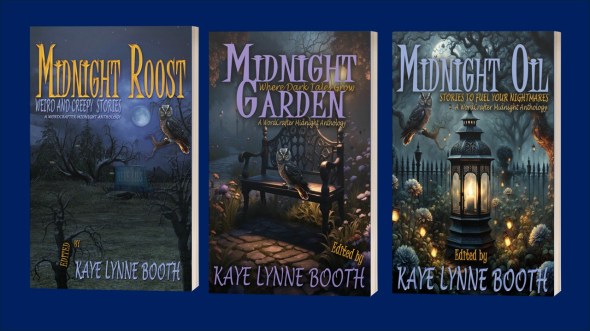
Midnight Roost: Weird and Creepy Stories: 20 authors bring your nightmares to life in 23 stories of ghosts, paranormal phenomenon and the horror from the dark crevasses of their minds. Stories of stalkers, both human and supernatural, possession and occult rituals, alien visitations of the strange kind, and ghostly tales that will give you goosebumps. These are the tales that will make you fear the dark. Read them at the Midnight Roost… if you dare. https://www.amazon.com/Midnight-Roost-Kaye-Lynne-Booth-ebook/dp/B0CL6FPLVJ
Midnight Garden: Where Dark Tales Grow: 17 authors bring you 21 magnificent dark tales. Stories of magic, monsters and mayhem. Tales of murder and madness which will make your skin crawl. These are the tales that explore your darkest fears. Read them in the Midnight Garden… if you dare. https://www.amazon.com/Midnight-Garden-Where-Tales-Anthology-ebook/dp/B0DJNDQJD3
Midnight Oil: Stories to Fuel Your Nightmares: 14 authors bring you 16 dark tales that explore your deepest fears. These are the stories which nightmares are made of. Tales of monsters, mayhem, and madness which will make you shiver in the dark. Read them while you burn the Midnight Oil… if you dare. https://books2read.com/Midnight-Oil
Share this:

LINDSEY’S WRITING PRACTICE: Book Review – “Midnight Roost: Weird & Creepy Stories”
Posted: December 3, 2025 Filed under: Anthology, Book Review, Books, Dark fiction, Lindsey's Writing Practice, Paranormal, Review | Tags: Book Review, Linda Griffin, Lindsey Martin-Bowen, Lindsey's Writing Practice, Midnight Roost: Weird & Creepy Stories, Writing to be Read 1 CommentWarning: These Stories May Disturb Your Sleep
Review: Midnight Roost (Volume 1 of the Midnight Anthology series)
By Lindsey Martin-Bowen
I confess it: My preferred reading choices have leaned toward the “rom-coms,” both traditional literary and contemporary, i.e., Jane Austen’s Pride and Prejudice, Emma, Sense and Sensibility, and so forth: Emily Brontë’s Wuthering Heights and Charlotte Brontë’s Jane Eyre, James Joyce’s “Ulysses,” and his short stories, especially “Araby.” Likewise, early 20th century novelist Daphne Du Maurier thrilled me by combining romance and suspense in Rebecca and Fisherman’s Cove. Plus, a more recent plethora of novels, (especially The Accidental Tourist and Pultizer-prize winning Breathing Lessons) by Anne Tyler, and Toni Morrison’s Beloved have enticed me to donate my hours (and cash) many times, as did Joan Didion’s Play It as It Lays.
Further, even if Edgar Allen Poe’s “The Tell-Tale Heart,” Oscar Wilde’s “The Picture of Dorian Gray,” and Franz Kafka’s “Metamorphosis” intrigued me, they didn’t match my love for the romances.
Yet after reading Midnight Roost, comprising 23 not only chilling, but well-wrought tales, I declare Move over, Poe, Wilde, Kafka, Steven King—here’s a fiction collection that matches your scary stories. And as alluring as the Twilight Zone stories may be, they’ve “got nuthin” over the mastery of the fictional elements (detailed sensual descriptions, rhythmic,flowing sentences, and strong tension buildup—interlaced wth imaginative, sometimes bizzare settings and outcomes) than these 23 tales reveal. In short, this masterfully-written collection mesmerized me. And here’s why:
The first two tension-filled stories play with the “haunted house” archetype, even though the reader can’t be sure it’s the house that’s haunted, especially in Zack Ellafy’s “House on the Plains” which opens with a sad story— after her marriage ended, Madison attempts to set up a new household—yes, on the Plains. Not only does her initial move into the house create tension, when her husband follows her to her new home, he adds to the stress by threatning her life.
The setting plays a huge role in the themes and outcome in the second tale, too. Chris Barili opens “Shaken” with a baby crying. Neither of the parents, Misty and George can make their son stop, and when nothing will stop his tears, the couple slowly realizes their child isn’t crying because of colic. And the world beyond the earth may well have caused the babe’s screams.
In contrast to the two opening stories, Joseph Carrabis’s “The Beach” occurs outdoors (on a real beach), which the protagonist “hadn’t seen in forty years,” when “[m]oss and ivy grew over the gate’ s red brick pillars, once clearly visible.” Throughout most of this tale, Carrabis’s detailed imagery engaged me up to the tense ending.
This collection includes two more Carrabis pieces combining strong imagery and symbolism, “Blood Magic,” uses the Genesis “apple” imagery intertwined with witches whose arms are tree limbs and who present humans with apples to resolve their problems. Again, his detailed imagery captures the reader. Set in a “copse of ancient, dark boled trees,” this story builds even more tension than “The Beach” and “Binky.” And Carrabis indeed knows how to twist a tale, enhance its drama by turning it upside-down, especially toward the ending, where it zaps the reader.
Then toward the end of the anthology, Carrabis’s futuristic “Binky” explores genetic markers and abortion advocates with with this frightning tale that entices readers to question today’s sociological values.
D.L. Mullan set “Mangled” in an opposite setting from the previous landscapes. In fact, it opens within what appears to be a hospital inside a space ship. Told in the first person point-of-view by a wounded female soldier, now a patient sharing visions now appearing in her heads “images splashed in my mind’s eye. My twentieth birthday party. Then a picture of my graduation from boot camp. The darkness of a moonless night, where millions of stars shone in their galaxies above filled me with apprehension . . . ” Despite all the trauma, the narrator takes the reader into an unexpected dimension hinting at hope. Insightful multi-levels of meaning exist here.
“The Easterville Glass Ghost” by Christa Planko is indeed a ghost story, and the main character Taryn studies a history of the town’s glassworks, which includes an “other-worldly” event with a likely “friendly spirit” that “she believed wanted to look out for her well-being. A foreman, maybe. Taryn could feel the spirit smile when that thought entered her mind.” Clever writing here made reading this story a delight.
Award-winning and best-selling author of more than 100 books and master at character development, Paul Kane penned a contemporary piece about an old legend, “The White Lady,” set in a blizzard that changes life dramatically for Harry Sharpe, publicist for Binge TV Productions, a man who “always believed you made your own luck.” After Sharpe gave up driving his car, he trudged through snow till he found his way to a nearby inn, entitled The White Lady. There, he encountered hints of his fate from the barman, an expert on “The White Lady” legends worldwide, who explained,
“Like so many variations going back centuries, she is said to have no
visible face.” He shrugged. “I did a bit of research when I knew it was
going to be important. You do, don’t you?”
Harry shrugged himself now; he couldn’t give a flying shit. Ex-
except he found himself saying, “And your version?”
The man smiled. “The original spirit of vengeance, ours is.”
Harry couldn’t help grinning too. “I’ve seen that one as well, only
it was Nicolas Cage riding a motorcycle.”
“Vengeance for the wronged, vengeance against—”
Harry flapped his hand, cutting the man off in mid-flow. “Urban
legends. I don’t blame you for pushing the marketing side of things,
I t’s what I’d do. Play to the tourists, the audience, right? But you can
save the spiel as far as I’m concerned.”
That conversation hooked me—and I quickly read the 23-page story. It’s now one of my favorite “thriller” stories ever.
A new addition to WordCrafter Press authors, Colorado’s Sonia Pipkin displays Disney-like appeal in “Once Upon a Time.” Not only does her tale with that phrase, but it draws readers into “a magical forest, [where] woodland creatures lived in peaceful co-existence, and not one human was the wiser.” Layering this opening with crisp descriptions of a sky “the perfect shade of aazure blue, trees with full leafy crowns,” she enforced the peaceful setting by adding, “not one drop of blood had ever been spolt on the soil in the enchanted land until that day.”
After building tension among the creatures with their response to events that transpire that day,, she recounts the “Goldilocks” tale—but with a twist—from the bears’ point-of-view.
And trust me, this story’s depth and word choices allow readers to see this is no mere “fairy tale” today. Just ask any deer who may roam in your neighborhood, as they do in mine.
Another tale, C.R. Johansson’s “She Shed Galleria,” reveals the author’s talent for developing intriguing, even odd-ball characters that can snare a reader’s heart, even if those characters are quite ornery. Such is Uluna, a portrait artist who owns the She She Galleria, dresses in mink, and likes to paint men performing work that excites them. Auto mechanic Bob describe her when she waltzed into a bar where he nursed a beer:
Having grown up surrounded by hunters, he recognized the expensive mink fur that lined the collar of the woman’s long, thick coat which swallowed her body like a giant bear. Even without the coat, he knew she was rich by the way she shook her head in contempt while she surveyed the room, as if the bar and the people were vermin.
After Bob became one of her subjects, this story twists into one that could easily find a home in The Twilight Zone among such tales with a comparable “oddball” sense of humor. I loved it. (But note, this is one for the “over-21” crowd.)
Another of my favorites, South African author Roberta Eaton Cheadle’s “The Behemoth’s Rage” exhibits flowing, descriptive language emulating sounds of the sea, which it personifies with detailed imagery. For example, the saga opens with,
The sun breached the horizon, spilling brilliant light across both sky and ocean. The water, an expanse of silver satin encrusted with clusters of glittering diamonds, paid homage, gracefully rising and dropping into curtseys.”
The light unveiled the dark grey behemoth, seated on the shore. It illuminated her edges, turning them into a froth of lighter grey lace. Shards of brilliance splashed across her sombre mourning dress. The aging face of the immobile matriarch disappeared into thick, golden edged clouds, leaving a headless hulk.
Especially significant in this tale is the word, “Behemoth,” (also known as Leviathan) alluding to the huge creature in Job 40:15-24, wherein God humbles Job by presenting the behemoth to him. With a parallel theme, Cheadle’s piece retells an old sea legend, but describes the creature as a female and adds a twist at the end—one that isn’t in Job 40.
Patty L. Fletcher’s “Casualties of War” opens with the lines,
DERRICK SAT AMONG the drunken Clear Bloods, allowing
their teasing to wash over him. He hated this role, but what choice
did he have? If he didn’t learn what plans were being set against
the Blended Lives Federation, all which he’d fought for would be
for nothing.
Ah ha! From this intro, I interpreted this story about “war casualties” was set in the Old West during the struggles between the settlers and Native American tribes. I wondered if it would entail time-travel or if it would reflect actual historical events in our nation’s early decades, which it would symbolically connect to the our nation’s contemporary situation.
Then,after a few pages, I realized my misinterpretation: Yes, the story contains aspects that apply to our nation—but dear readers, it was a tale quite opposite from what I anticipated. I won’t spoil the ending—or any possible interpretations: Both are surprises you won’t forget.
In contrast, Keith J. Hoskins’s tale, “Teddy,” centering around Quarterback Brad Jarrett, “is based on a true story,” according to its narrator. And it opens with Jarrett throwing a pigskin to the runner who scored the winning touchdown. When his team members hosted him to their shoulders, Jarrett “relished the splendor of the moment and bathed in the praise,” thinking “Could life get any better.”
Surely Hoskins expanded that story into a different dimension by making Jarrett’s stuffed Teddy bear come alive—but only to the quarterback. The ensuing battle between the two makes this surreal story a delight.
Another story that would serve well as a Twilight Zone episode, Denise Aparro’s “The Pines” leaves the reader in a strange space with female protagonist Orna Douglas, who happens to be both a nurse and a mystery writer. Opening with “The ping of brass.” auditory and visual descriptions, and quick dialogue, this story captures a reader and moves quickly. Bravo!
Likewise, Julie Jones’s “Night of Terror” opens opens with a description and rapid movement that also makes it another excellent Twilight Zone candidate:
THE FIRST SPACESHIP showed up around two o’clock in the afternoon. Doug and
Billy ran in from the sandbox to tell use about it, too worked up to notice Miss Clara
hollering about tracking up the clean floors. Their alarm cinvinced us something was ]
going on, though a UFO seemed far-fetched. We went outside to look at the sky—to
appease the upset boys, if nothing else—and there it was, just like they said.
Dear readers, his story hooked me immediately—and engaged me till its ending.
Another quick-moving tale with lush imagery and humor, Isabel Grey’s “Rabbits Cannot See Pink Fireworks,” written from a rabbit’s point-of-view, hooked me into reading it through the wee hours. The ninth-year rabbit storyteller not only provides a unique perspective, but adds nuances of social comment on a still controversial subject in our current society.
One more possible Twilight-Zone nomination, Robera M. Senese’s“Take Two” focuses upon a daughter-mother relationship. It opens showing the daughter, Sondra, revealing her perfectionism
in her profession:
“SONDRA STOOPED TO PEER through the camera focus. The camera rested
on a tripod set up in front of her usual recording location in the corner of her bedroon.
Yes, perfect. The lighting on the stool in front was just right, making the red leather
look lush. Beside her was her makeup table, styish and shining with black lacquer.
Once, she had noted in oneofher videos that the table was a little too shiny. A lovely
charcoal grey table runner took care of that problem and also stopped the various
makeup bottlesand boxes from sliding on the smooth surface.
After Sondra decides to help her aging mother, Florence “freshen” her looks, the tale
becomes more intriguing with what may be a surprise ending. Likely, many readers may
find that ending justified, too.
“Immediate Intervention” by Mario Acevedo takes on a more somber tome in this futuristic piece that may become closer to reality within a few years. Along with bringing in AI and algorithms, the story creates a frightening reality wherein The System rules human outcomes.
In contrast, Kaye Lynne Booth’s “Melina” leads the reader into the magical world of a mermaid (Melina) and her encounter with humans. Thestory opens with a delightful scene of Melina flipping her tail “playfully at her little siser, Elsbeth, who gives a mental titter and swims off . . .” Being a mermaid, Melina is able to sit with her sister by sending thought waves to her.
This allows Elsbeth (who swam too far away) to contact her sister when she becomes caught in
a fisherman’s net. In her attempt to help thr young mermaid, Melina becomes captured by humans
and begins to morph legs. Great tension here—but no spoilers. Part of this tale’s charm is its intensity.
Michacele Jordan’s “Afterwards” is a psycho-drama about Brad, riddled with nightmares after he’d suffered a car crash, an accident that killed a young woman, who re-appeared in his subsequent constant nightmares. This sent Brad to a psychiatrist, Dr. Rosenberg, whose “traffic light green” eyes haunted him while she attempts o help him regain his mental health. Albeit grounded in “reality,” this
one’s another suspenseful tale.
And speaking of suspense, Robert Kostanczuk’s “A Visitant Comes to the Window” evokes shades of imagery from Franz Kafka’s “The Metamorphosis” wherein the main character, Gregor transforms “into a gigantic insect.” This tale just may be more frightening.
Indeed, the last two stories in this collection definitely raised the hairs on the back of my neck. M.J. Mallon’s “The Cull” reflects some ideas similar to those in Oscar Wilde’s “The Painting of Dorian Gray,” but this tale is far more gastly—and heartbreaking.
And finally, Isabel Grey’s award-winning (WordCrafter’s Short Fiction Award 2023) “Red Door House” sent the proverbial chills down my spine (all the way to my toes). At first, the story brought to mind Toni Morrison’s Pulitzer Prize-winning novel, Beloved, wherein House 124 is haunted by the ghost of the character Sethe’s murdered daughter..
Yet that haunting is mild compared to the Red Door House—a house that narrates this wild tale.
Indeed, those who love thrillers will likely enjoy this one. Yes, the story is indeed well-written, especially the way it builds suspense. But the ending overwhelmed me, perhaps because my 1906 historic house may be haunted, I don’t know. Nevertheless, it was a tad too thrilling for my sensitivities—and kept me up till 4 AM., shivering. Sigh.
About Lindsey Martin-Bowen
On Halloween 2023, redbat books released Lindsey Martin-Bowen’s 7th poetry collection, CASHING CHECKS with Jim Morrison. Her 4 th collection, Where Water Meets the Rock, was nominated for a Pulitzer; her 3rd, CROSSING KANSAS with Jim Morrison was a finalist in the QuillsEdge Press 2015-2016 Contest. In 2017, it won the Kansas Writers Assn award, “Looks Like a Million.” Writer’s Digest gave her “Vegetable Linguistics” an Honorable Mention in its 85th Annual (2017) Contest. Her Inside Virgil’s Garage (Chatter House Press 2013) was a runner-up in the 2015 Nelson Poetry Book Award. McClatchy Newspapers named her Standing on the Edge of the World (Woodley Press/Washburn University) was one of the Ten Top Poetry Books of 2008. It was nominated for a Pen Award.
__________________________________
Did you know you can sponsor your favorite blog series or even a single post with an advertisement for your book? Stop by the WtbR Sponsor Page and let me advertise your book, or you can make a donation to Writing to be Read for as little as a cup of coffee, If you’d like to show your support for this author and WordCrafter Press.
__________________________________
This segment of “Lindsey’s Writing Practice” is sponsored by the Midnight Anthology Series & WordCrafter Press.

Midnight Roost: Weird and Creepy Stories: 20 authors bring your nightmares to life in 23 stories of ghosts, paranormal phenomenon and the horror from the dark crevasses of their minds. Stories of stalkers, both human and supernatural, possession and occult rituals, alien visitations of the strange kind, and ghostly tales that will give you goosebumps. These are the tales that will make you fear the dark. Read them at the Midnight Roost… if you dare. https://www.amazon.com/Midnight-Roost-Kaye-Lynne-Booth-ebook/dp/B0CL6FPLVJ
Midnight Garden: Where Dark Tales Grow: 17 authors bring you 21 magnificent dark tales. Stories of magic, monsters and mayhem. Tales of murder and madness which will make your skin crawl. These are the tales that explore your darkest fears. Read them in the Midnight Garden… if you dare. https://www.amazon.com/Midnight-Garden-Where-Tales-Anthology-ebook/dp/B0DJNDQJD3
Midnight Oil: Stories to Fuel Your Nightmares: 14 authors bring you 16 dark tales that explore your deepest fears. These are the stories which nightmares are made of. Tales of monsters, mayhem, and madness which will make you shiver in the dark. Read them while you burn the Midnight Oil… if you dare. https://books2read.com/Midnight-Oil
Share this:

LINDSEY’S WRITING PRACTICE
Posted: November 5, 2025 Filed under: Character Development, Lindsey's Writing Practice, World Building, Writing, writing exercise | Tags: character, Character Development, Lindsey Martin-Bowen, Lindsey's Writing Practice, World Building, writing exercise, Writing to be Read 7 CommentsBorrow-a-Character Exercise
For years, authors have borrowed characters from previous authors’ works. For example, Jean Rhys’s novel, Wide Sargasso Sea, details the early life of Mrs. Rochester, wife to Mr. Rochester in Charlotte Bronte’s Jane Eyre.
Likewise, other authors have followed suit: George Macdonald Fraser uses Tom Brown and Flashman from Thomas Hughes’s novel, Tom Brown’s School Days, John Gardner wrote the novel, Grendel, about the beast in Beowulf, and Joseph Heller brought the biblical King David to life in God Knows.
Now, it’s your turn.
The Exercise:
Select an antagonist or a minor character from a story or novel by someone else—select a character who intrigues you. Then, use that character as the protagonist in a scene or a story you write. For instance, what would Allie Fox’s wife say if she were to tell her version of Mosquito Coast or to write about the courtship between her and Allie? What might Rabbit’s illegitimate daughter (from John Updike’s Rabbit novels) say if she told her story?
The Objective:
To enter into the imaginative world of another writer, to understand that specific world and to build another one from it.
And, of course, to have fun with a character by taking him or her somewhere (either physically or mentally) that her original creator hadn’t imagined he or she would go.
About Lindsey Martin-Bowen
On Halloween 2023, redbat books released Lindsey Martin-Bowen’s 7th poetry collection, CASHING CHECKS with Jim Morrison. Her 4 th collection, Where Water Meets the Rock, was nominated for a Pulitzer; her 3rd, CROSSING KANSAS with Jim Morrison was a finalist in the QuillsEdge Press 2015-2016 Contest. In 2017, it won the Kansas Writers Assn award, “Looks Like a Million.” Writer’s Digest gave her “Vegetable Linguistics” an Honorable Mention in its 85th Annual (2017) Contest. Her Inside Virgil’s Garage (Chatter House Press 2013) was a runner-up in the 2015 Nelson Poetry Book Award. McClatchy Newspapers named her Standing on the Edge of the World (Woodley Press/Washburn University) was one of the Ten Top Poetry Books of 2008. It was nominated for a Pen Award.
______________________________________
Did you know you can sponsor your favorite blog series or even a single post with an advertisement for your book? Stop by the WtbR Sponsor Page and let me advertise your book, or you can make a donation to Writing to be Read for as little as a cup of coffee, If you’d like to show your support for this author and WordCrafter Press.
__________________________________
This segment of “Lindsey’s Writing Practice” is sponsored by WordCrafter Quality Writing & Author Services.

Whether it’s editing, publishing, or promotion that you need, WordCrafter Quality Writing & Author Services can help at a price you can afford.
Stop by and see what we have to offer today: https://writingtoberead.com/readings-for-writers/wordcrafter-quality-writing-author-services/
Share this:

Lindsey’s WRITING PRACTICE- Review: “Jigsaw Puzzling: Essays in a Time of Pestilence” by Denise Low
Posted: October 1, 2025 Filed under: Book Review, Books, Lindsey's Writing Practice, Nonfiction, Review | Tags: Book Reveiw, Denise Low, Jigsaw Puzzling, Lindsey Martin-Bowen, Lindsey's Writing Practice, Nonfiction, Problem Solving, Writing to be Read 4 CommentsBy Lindsey Martin-Bowen
“I never underestimate the power of a single puzzle piece. It fits within a whole, like each moment of my unfolding life story.”
—Denise Low
Hey, Dear Readers, this month you’ve earned a break: No writing exercise. Instead, I’m posting an engaging book review by a well-known poet, professor, fiction and prose writer, and former Kansas Poet Laureate, Denise Low. Jigsaw Puzzling: Essays in a Time of Pestilence amazed me—and I had to share the experience with others. Please enjoy it!
Who’da thunk it? Such an accomplished, widely-published poet, fiction and scholarly writer, and esteemed university professor she is—yet she’s writing about and documenting info about jigsaw puzzles?
Yes!

This brilliant scholar, Denise Low, penned an insightful, in-depth, engaging and well-researched book that could suffice as a manual or textbook for the jig-sawing craft. Trapped indoors—sans travel and during the COVID-19 pandemic, she and her husband, visual artist, Thomas Pecore Weso, found fulfillment and experienced marvelous teamwork in assembling jigsaw puzzles, including those that emulate high art. (In fact, Chapter 4 , “The Great Masters in (Jigsaw) Pieces,” Lowe lists some of the painting reproductions transformed into jig-saw puzzles, among them, Vincent Van Gogh’s Sunflowers, Claude Monet’s Waterlilies, and Thomas Gainsborough’s The Blue Boy.)
Like me, Low views paintings as “more intimate than photographs.” She continues to explore this viewpoint by adding, “If [Van Gogh’s] Arles bedroom scene had been a photograph, historical documentation would give the image an aura of authenticity. The painted representation of the bedroom also has some value as documentation— what was a nineteenth century peasant room like, anyway?—and it also records his mode of painterly creation. The artist’s vivid palette and energetic, rough brushstrokes are unique to him. The puzzling apotheosis of Van Gogh, a person transformed into an artist god, overrode my experience of the original painting. (30)
Low also intertwines words from Margaret Drabble, who pointed out the integration of high art into jigsaw puzzles to Springbok Editions’ 1964 publication of Jackson Pollack’s Convergence, renowned as “the most difficult jigsaw puzzle in the world,” by a British Broadcasting Company radio show, hosted by Alan Dein. Drabble is also a jigsaw and Van Gogh admirer, Low points out, and quotes Drabble’s words about the two topics: From jigsaws, you learn about the brushstrokes of Van Gogh, the clouds of Constable, the reflections and shadows of Manet, the stripes of Tissot and Rousseau, the brickwork and tiles of the Dutch masters, the flesh tones of Titian, the undulating fabrics and limbs of Botticelli, the business of Botsch and Breughel. (31) (From Drabble’s The Pattern in the Carpet: A Personal History with Jigsaws. Boston:Houghton Mifflin, p. 250, (2009 ).
Nevertheless, Low does not limit her analysis (and resolutions) of jigsaws to historical (primarily European) paintings. She also analyzes a work by a master Indigenous artist, whose works (in jigsaw puzzles) she admits were “not as easy” to find. Fortunately, her husband, (a member of the Menominee Nation family) found (on the internet) the Lakota leader Red Cloud, (his family’s distant relative), in a jigsaw of the original painting of Red Cloud standing with a calvary officer in front of four teepees, for a reconciliation—rather than for a war.
Both Low and her husband relate strongly to Native American art. In fact, she equates the process of piecing together a “large, table-size picture piece-by-piece “as tantamount to “creating a sand painting” (33), a process wherein Native American tribes and Tibetan Monks create art by mixing various hues with the sand.
Further, Low doesn’t focus solely on painted artwork. She also analyzes engravings and illustrations, such as one of a cabinet of curiosities from Ferrante Imperato’s Deli’Historia Naturale (Naples 1599), poetry shards, mosaics, and various other topics for jigsaw puzzles—and offers histories for these varieties of subjects in jigsaws.
In the final chapters, she wraps up how the jigsawing during that frightening pandemic affected her priorities, psyche, and health. An unexpected result of immersion into Jigsaw Landria has been how colors burn into my retinas and become part of my inner life. In waking dreams, sections from Water Lilies would dance before my eyes, colors of blue-topaz, cotton-candy pink, and fern green. Other puzzles have had the had the same effect, with after images of colors entering inner sight, dreams, and early morning awakening. These colors interacted with what, a spirit body? An etheric double? An aura?
From those questions, Low analyzes the various theories on color and concludes that Color is one of our first considerations when we select a puzzle. . . we want something bright or soothing or compelling. A puzzle made of too many colors is chaotic and upsetting . . . . As COVID-19 lasts far beyond the year 2020, we look for more from Monet’s palette, the muted tones of a seascape as sunlight filters through mist, we are grateful for this respite from the grim chaos beyond our control. (93)
Indeed, Low’s brilliant insight applies to our current Zeitgeist in the U.S., too.
After teaching many years as a tenured writing and literature Professor at Haskell Indian Nations University in Lawrence, Kansas, Low now teaches at Baker University. With more than 30 poetry books published, she continues to work in her free-lance writing career.
About Lindsey Martin-Bowen
On Halloween 2023, redbat books released Lindsey Martin-Bowen’s 7th poetry collection, CASHING CHECKS with Jim Morrison. Her 4 th collection, Where Water Meets the Rock, was nominated for a Pulitzer; her 3rd, CROSSING KANSAS with Jim Morrison was a finalist in the QuillsEdge Press 2015-2016 Contest. In 2017, it won the Kansas Writers Assn award, “Looks Like a Million.” Writer’s Digest gave her “Vegetable Linguistics” an Honorable Mention in its 85th Annual (2017) Contest. Her Inside Virgil’s Garage (Chatter House Press 2013) was a runner-up in the 2015 Nelson Poetry Book Award. McClatchy Newspapers named her Standing on the Edge of the World (Woodley Press/Washburn University) was one of the Ten Top Poetry Books of 2008. It was nominated for a Pen Award.
_____________________________________
Did you know you can sponsor your favorite blog series or even a single post with an advertisement for your book? Stop by the WtbR Sponsor Page and let me advertise your book, or you can make a donation to Writing to be Read for as little as a cup of coffee, If you’d like to show your support for this author and WordCrafter Press.
________________________________
This post sponsored by WordCrafter Quality Writing & Author Services.
Whether it’s editing, publishing, or promotion that you need, WordCrafter Quality Writing & Author Services can help at a price you can afford.
Stop by and see what we have to offer today: https://writingtoberead.com/readings-for-writers/wordcrafter-quality-writing-author-services/
Share this:

LINDSEY’S WRITING PRACTICE: WACKY WAYS TO WARM UP
Posted: September 3, 2025 Filed under: Fiction, Lindsey's Writing Practice, Writing, Writing Inspiration | Tags: Books, Creative Writing, Lindsey Martin-Bowen, Lindsey's Writing Practice, Poetry, Reading, Writing, writing exercise, Writing to be Read Leave a commentMany writers I’ve known either suffer from writer’s block—or, like Ernest Hemingway—have discovered techniques to lift their minds above that block and leap over it into productive writing.. So if you suffer from writer’s block, even for a day, why try some of these
WACKY WAYS TO WARM-UP
OPEN a book—any book. Often, dictionaries work best. Close your eyes, then point to a page. Open your eyes. Start writing by using whatever word you pointed to. (No cheating here—force yourself to use that particular word.
If your finger rested on an article, such as “an,” “the,” or “a,” start with the word following it. I suggest using this focused free-writing just after you awake in the morning—or even after a nap later. It worked wonders for Ernest Hemingway.
SIT AT A COMPUTER or TYPEWRITER or next to YOUR JOURNAL with pen-in-hand. WRITE a poem. IMMEDIATELY. This need not be a prizewinner. You might begin by describing sunlight filtering through Venetian blinds or ominous clouds churning above your concrete patio. Play with the poem’s language for about fifteen minutes, then embark on your writing project.
FLIP through a MAGAZINE until you find a provocative photograph. Imagine you’re one of the persons in the photo. What are you saying? Thinking? Feeling? Why? Who are you talking with? As you were the character in the photo, write about what’s on your mind for fifteen to twenty minutes. Then start on your project.
JAUNT (or drive, if you must) to an enclosed shopping center (or perhaps an outdoor mall, if weather permits). Find an “outdoor” cafe that serves whatever beverage you prefer. Open your journal and describe your environs. Then watch the people around you. Describe their physiques, clothing, and movements. Capture their voices and words (or dialogue). Then begin your own project. I used this method to write a few chapters of my novella during graduate school. The indoor mall near my home contained a Winstead’s, which inspired me.
AND, of course, DREAM. Jot down your dreams in your journal (which I suggest keeping on a table adjacent to your bed). Respond to those dreams when you first awake. Then begin your project. I’ve also found this technique invaluable when words come to me, too. Many times I lose particular phrases if I don’t jot them down immediately—then worry about revising them later.
GOOD LUCK. If any of these techniques inspire you to plunge into your writing, please let me know. And I’d love to learn the details about which ones helped and what your writing project was.
About Lindsey Martin-Bowen
On Halloween 2023, redbat books released Lindsey Martin-Bowen’s 7th poetry collection, CASHING CHECKS with Jim Morrison. Her 4 th collection, Where Water Meets the Rock, was nominated for a Pulitzer; her 3rd, CROSSING KANSAS with Jim Morrison was a finalist in the QuillsEdge Press 2015-2016 Contest. In 2017, it won the Kansas Writers Assn award, “Looks Like a Million.” Writer’s Digest gave her “Vegetable Linguistics” an Honorable Mention in its 85th Annual (2017) Contest. Her Inside Virgil’s Garage (Chatter House Press 2013) was a runner-up in the 2015 Nelson Poetry Book Award. McClatchy Newspapers named her Standing on the Edge of the World (Woodley Press/Washburn University) was one of the Ten Top Poetry Books of 2008. It was nominated for a Pen Award.
_____________________________________
Did you know you can sponsor your favorite blog series or even a single post with an advertisement for your book? Stop by the WtbR Sponsor Page and let me advertise your book, or you can make a donation to Writing to be Read for as little as a cup of coffee, If you’d like to show your support for this author and WordCrafter Press.
________________________________
This post sponsored by WordCrafter Quality Writing & Author Services.
Whether it’s editing, publishing, or promotion that you need, WordCrafter Quality Writing & Author Services can help at a price you can afford.
Stop by and see what we have to offer today: https://writingtoberead.com/readings-for-writers/wordcrafter-quality-writing-author-services/
Share this:

LINDSEY’S WRITING PRACTICE: Punch Up Your Writing with Parallelism
Posted: August 6, 2025 Filed under: Lindsey's Writing Practice, Writing | Tags: Lindsey's Writing Practice, Parrallelism, Writing, Writing to be Read 2 CommentsMany superb professional writers—poets, playwrights, novelists, and essayists—often use parallelism to structure sentences in an eye-catching way. Note how various forms of parallelism can engage readers with its sounds, rhythms and imagery. And you can do this, too, First, examine these samples of experts using parallelism to structure sentences. (I ask students to choose two different sorts of repetition and create their own sentences using that specific repetition format—but with their own words and sentences.):
1. THE REPETITION OF KEY WORDS
A. Basal repetition—the repetition of key particles, especially prepositions and articles.
“I have a dream my four little children will one day live in a nation where they will not be judged by the color of their skin, but by the content of their character.”
—Martin Luther King, “I have a Dream”
B. Conceptual Repetition—the repetition of major conceptual terms, particularly nouns, verbs, or adjectives.
“There warn’t no color in his face, where his face showed: It was white; not like another man’s white, but a white to make a body sick, a white to make a body’s flesh crawl—a tree toad white, a fish-belly white.”
—Mark Twain, The Adventures of Huckleberry Finn
NOTE—This format is my favorite. And here’s my sentence employing Conceptual Repetition: Her eyes were deep blue: not a cornflower blue, not like a typical sunny-sky blue, but deeper than that, a blue as deep as an ocean, a blue that lured you into them—a blue that held you so tightly you couldn’t resist them.
C. Parallel Modification—using the same word to modify two different words in a sentence.
“False face must hide what the false heart doth know.”
—William Shakespeare, Macbeth
D. Isocolon—precise word-for-word repetition of two or more members (phrases, clauses, and so forth) with the exception of one or two words.
“. . . He did not know the Somali proverb that says a brave man is always frightened three times by a lion: when he first sees his track, when he first hears him roar, and when he first confronts him.”
—Ernest Hemingway, “The Short Happy Life of Frances Macomber”
2. THE USE OF OPPOSITE WORDS (ANTITHESIS)
“The rich ruleth over the poor, and the borrower is servant to the lender.”
—Proverbs 22:7 (KJV)
3. THE REPETITION OF GRAMMATICAL ELEMENTS
A. Nominal
“The hazy sunlight, the warm and drowsy air, the tender foliage, the opening flowers, betokened the reviving life of nature.”
—Mark Twain, Life on the Mississippi
B. Verbal
“Suddenly one of these gypsies, in trembling opal, seizes a cocktail out of the air, dumps it down for courage, and, moving her hands like Frisco, dances out alone on the platform.”
—F. Scott Fitzgerald, The Great Gatsby
C. Participial
“They move in orderly lines around the box, crowding one another precisely, without injury, peering down, nodding, and then backing off to let new people in.”
–Lewis Thomas, The Lives of a Cell
D. Infinitival
“Manny Greenhill is hoping to get Miss Baez to write a book, to be in a movie, and to get around to recording the rock ‘n’ roll songs.”
—Joan Didion, “Where the Kissing Never Stops”
E. Gerundive
“And with her cries came the sound of hoofs and the beating of wings and the roaring of lions.”
—Kahlil Gibran, The Prophet
F. Adjectival
“His features are strong and masculine, with an Austrian Lip, an arched Nose, his Complexion olive, his Countenance erect, his Body and Limbs well proportioned, all his Deportment majestick.”
—Jonathan Swift, Gulliver’s Travels
G. Adverbial
“The Bible’s account of Moses is, alas, as geographically perplexing as it is spiritually enlightening.”
—National Geographic
Now it’s your turn: Select at least two of these format and write a sentence emulating the form by repeating the a specific word in the format one of these writers used. Good luck—and have fun.
About Lindsey Martin-Bowen
On Halloween 2023, redbat books released Lindsey Martin-Bowen’s 7th poetry collection, CASHING CHECKS with Jim Morrison. Her 4 th collection, Where Water Meets the Rock, was nominated for a Pulitzer; her 3rd, CROSSING KANSAS with Jim Morrison was a finalist in the QuillsEdge Press 2015-2016 Contest. In 2017, it won the Kansas Writers Assn award, “Looks Like a Million.” Writer’s Digest gave her “Vegetable Linguistics” an Honorable Mention in its 85th Annual (2017) Contest. Her Inside Virgil’s Garage (Chatter House Press 2013) was a runner-up in the 2015 Nelson Poetry Book Award. McClatchy Newspapers named her Standing on the Edge of the World (Woodley Press/Washburn University) was one of the Ten Top Poetry Books of 2008. It was nominated for a Pen Award.
___________________
Did you know you can sponsor your favorite blog series or even a single post with an advertisement for your book? Stop by the WtbR Sponsor Page and let me advertise your book, or you can make a donation to Writing to be Read for as little as a cup of coffee, If you’d like to show your support for this author and WordCrafter Press.
___________________
This segment of “Lindsey’s Writing Practice” is sponsored by WordCrafter Quality Writing & Author Services.

Whether it’s editing, publishing, or promotion that you need, WordCrafter Quality Writing & Author Services can help at a price you can afford.
Stop by and see what we have to offer today: https://writingtoberead.com/readings-for-writers/wordcrafter-quality-writing-author-services/
Share this:

LINDSEY’S WRITING PRACTICE: Mapping a Character’s Mind
Posted: July 2, 2025 Filed under: Character Development, Fiction, Lindsey's Writing Practice, Writing | Tags: Character Development, Creative Writing, Fiction, Lindsey Martin-Bowen, Lindsey's Writing Practice, Writing, Writing Tips, Writing to be Read 1 CommentMost fiction writers realize Character & Conflict remain essential elements in writing fiction. And those concepts can work to make a poem more engaging, too. Thus, this month’s practice offers hints for creating characters—and conflict, which remain essential in moving fiction along.
First,create a mind map for at least the main characters in your novel, short story, or poem. How?
Using the point-of-view for each character, fill in the “answers” to these questions:
1. I hate . . .
2. I love . . .
3. I need . . .
4. I fear . . .
5. I am drawn to . . .
6, I get shivers from . . .
Once you’ve set up this “map,” for you main character(s), think about each character’s flaws. For example, what might urge a character to make a choice opposite from what he or she would normally do? (Remember, each character is a hero or heroine in his or her own mind.)
Consider, too, how seasons and landscapes may serve as characters that motivate the human characters. Remember: TENSION (or CONFLICT) is ESSENTIAL to move fiction along. Thus, a character must WANT something at a story’s onset—and some person, place, or situation, must block him or her from getting it. Thus, the character must try a different ploy.
Dialogue, too, can create conflict as strong as action can. (In fact, many successful stories create as much—or even more—conflict with words as with action.
Again, much of this can work in poems, especially when the poet uses an archetype for either the persona—or a character the persona loves, hates, fears, is drawn to, or all of the preceding situations.
Have fun with this—and see if it helps move a story, chapter, or poem along. Remember: writing must HOOK the reader with a character in conflict with others, a situation, or him or herself.
About Lindsey Martin-Bowen
On Halloween 2023, redbat books released Lindsey Martin-Bowen’s 7th poetry collection, CASHING CHECKS with Jim Morrison. Her 4 th collection, Where Water Meets the Rock, was nominated for a Pulitzer; her 3rd, CROSSING KANSAS with Jim Morrison was a finalist in the QuillsEdge Press 2015-2016 Contest. In 2017, it won the Kansas Writers Assn award, “Looks Like a Million.” Writer’s Digest gave her “Vegetable Linguistics” an Honorable Mention in its 85th Annual (2017) Contest. Her Inside Virgil’s Garage (Chatter House Press 2013) was a runner-up in the 2015 Nelson Poetry Book Award. McClatchy Newspapers named her Standing on the Edge of the World (Woodley Press/Washburn University) was one of the Ten Top Poetry Books of 2008. It was nominated for a Pen Award.
___________________
Did you know you can sponsor your favorite blog series or even a single post with an advertisement for your book? Stop by the WtbR Sponsor Page and let me advertise your book, or you can make a donation to Writing to be Read for as little as a cup of coffee, If you’d like to show your support for this author and WordCrafter Press.
___________________
This segment of “Lindsey’s Writing Practice” is sponsored by WordCrafter Quality Writing & Author Services.
Whether it’s editing, publishing, or promotion that you need, WordCrafter Quality Writing & Author Services can help at a price you can afford.
Stop by and see what we have to offer today: https://writingtoberead.com/readings-for-writers/wordcrafter-quality-writing-author-services/
Share this:

LINDSEY’ WRITING PRACTICE: WRITING FICTION-When Lying Reveals the Truth
Posted: June 4, 2025 Filed under: Fiction, Lindsey's Writing Practice, Writing, writing exercise | Tags: Lindsey's Writing Practice, Writing, writing exercise, Writing to be Read 4 CommentsRenowned fiction author Mark Twain (Samuel Clemons) was known to be as much of a liar as two of this most famous characters: Tom Sawyer and Huckleberry Flynn. (In fact, the author himself boasted of his deceitful nature.) And yet, like his novels containing those protagonists, his lies (in story form) were devised to reveal dynamic truths.
Take, for example, many conversations between Jim, an escaping slave, and protagonist Huck reveal the lack of humanity—and duplicity—of a nation touting such ideals as freedom from dictators when it enslaved so many human beings within it.
So—for this month’s writing practice, ask yourself: Do I lie? What about? And if fiction or stories, ironically, reveal some “truth,” how might the lies I’ve told (or considered telling) do this?
Then, write a story—or even a novel, if you’ve the time—centered around your lie.
Please—like Mr. Twain—remember to have fun with this, too.
About Lindsey Martin-Bowen
On Halloween 2023, redbat books released Lindsey Martin-Bowen’s 7th poetry collection, CASHING CHECKS with Jim Morrison. Her 4 th collection, Where Water Meets the Rock, was nominated for a Pulitzer; her 3rd, CROSSING KANSAS with Jim Morrison was a finalist in the QuillsEdge Press 2015-2016 Contest. In 2017, it won the Kansas Writers Assn award, “Looks Like a Million.” Writer’s Digest gave her “Vegetable Linguistics” an Honorable Mention in its 85th Annual (2017) Contest. Her Inside Virgil’s Garage (Chatter House Press 2013) was a runner-up in the 2015 Nelson Poetry Book Award. McClatchy Newspapers named her Standing on the Edge of the World (Woodley Press/Washburn University) was one of the Ten Top Poetry Books of 2008. It was nominated for a Pen Award.
Her poems have run in numerous lit mags, including New Letters, I-70 Review, Thorny Locust, Coal City Review, Silver Birch Press, Flint Hills Review, The Same, Phantom Drift, Porter Gulch Review, Rockhurst Review, 21 anthologies. She taught lit & writing at UMKC & MCC 25 years, and taught law for Blue Mountain College in Pendleton, Oregon. She holds an MA from the U of Mo. and a JD degree from the UMKC Law School. Previously, she was reporter for The Louisville Times and The SUN Newspapers, an associate editor for Modern Jeweler Magazine and the editor for The National Paralegal Reporter.
___________________
Did you know you can sponsor your favorite blog series or even a single post with an advertisement for your book? Stop by the WtbR Sponsor Page and let me advertise your book, or you can make a donation to Writing to be Read for as little as a cup of coffee, If you’d like to show your support for this author and WordCrafter Press.
___________________
This segment of “Lindsey’s Writing Practice” is sponsored by WordCrafter Quality Writing & Author Services.
Whether it’s editing, publishing, or promotion that you need, WordCrafter Quality Writing & Author Services can help at a price you can afford.
Stop by and see what we have to offer today: https://writingtoberead.com/readings-for-writers/wordcrafter-quality-writing-author-services/




















