Interview with Author Kristy Centeno
Posted: July 17, 2017 Filed under: Author Profile, Books, Fiction, Full Moon Bites, Interview, Paranormal, romance, Writing, Young Adult | Tags: Author Interview, Books, Deliverance, Kristy Centeno, Novel, Paranormal Romance, Writing, Young Adult Fiction 3 Comments
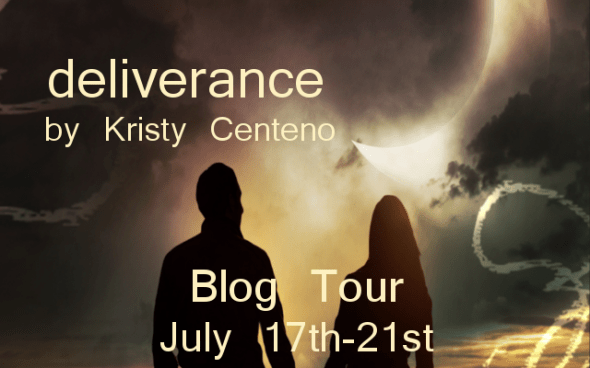
Today, we have the pleasure of chatting with author Kristy Centeno, who recently had her latest YA/NA paranormal romance released, Deliverance. In addition to being the author of the Secrets of the Moon saga and Keeper Witches series, and now, Deliverance, Kristy is a wife and mother to five children, and she holds down a day job, as well. This interview will kick off her book blog tour for the book with Full Moon Bites author promotions, so let’s give her a good send off.
Kaye: Your most recent paranormal romance released is Deliverance, and I hear it has received some great reviews. Would you like to tell us a little about it?
Kristy: Deliverance depicts the story of a young man who has been imprisoned in an Institute his entire life. Created in a lab, he has no clues as to what he is. Only that he’s not human. Tired of a life of suffering, he escapes to seek the assistance of a man that can help permanently free him and the other prisoners from his creator’s clutches. To do so, he requires the assistance of a young woman—one that will come to challenge everything he believed his enemies to be.
Deliverance delves into the paranormal, with a hint of romance, and some mystery thrown in as well. It took me a year to complete this project and enjoyed every minute of the process. Tiger wasn’t an easy character to develop as he isn’t quite your average hero. He’s both fierce and vulnerable. Strong yet weak. A potential killer yet innocent. As readers go through the story, they’ll better understand what I mean.
Kaye: Deliverance is listed under both YA and NA paranormal romance. Would you talk a little about what the difference in these two genre categories are?
Kristy: Young adult is basically geared more toward the teenage audience with coming of age scenarios that help shape the young character’s future, personality, or outlook in life. The main characters are usually in their teens, experiencing, learning, experimenting things for the first time.
New Adult, however, portrays characters that are a bit older and perhaps, a tad more mature. Think college age adults who undergo a series of scenarios that might have more of an impact on their lives than it would a younger person. They might have to deal with things that might not be an issue for someone in their teens.
Kaye: You are currently working on a sequel to Deliverance. Any hints as to what might be in store for your readers there?
Kristy: There is a bit more background story for some of the main characters as well as information on how the Legion works. It gives some insight on what Gerard’s next plans for the main characters were. And, of course, another mystery unfolds. One that will flip Tiger and Kristina’s worlds upside down.
Kaye: You have a large family, including five children. What are your secrets for juggling writing with family?
Kristy: Between my day job and my five children, finding time to write isn’t always easy. To be honest, even when I find time, I struggle between heading off to bed early to get some rest or get the next chapter completed. My days are full, but I try to make the best of what time I do have.
Most days, I get some writing done after the kiddies head off to bed. It’s nice and quiet. Not having anyone vying for my attention provides me with at least one to two hours of uninterrupted writing.
Basically, the way I work around my schedule is by tending to the kids first, house second, and then my writing. If the kids need something or the house is unorganized I can’t concentrate on my writing either so when I sit down to write, no matter what time of the day it is, I have to make sure that my to-do list is complete. Then and only then can I devote my full attention to those that live in my head.
Kaye: What is the one thing you hope to teach your children?
Kristy: There’s so much I wish to teach my children that I could go on forever naming each. But one thing that’s important for me is that they learn how to love themselves first and everyone else second. With so many issues about body shaming and public ridicule for being different, I don’t want my kiddies to feel as if they have to be like everyone else just to fit in the crowd. I always tell them that it’s okay to be different and there’s nothing wrong with being a little weird.
Kaye: You have two blogs dedicated to author promotions and writing. Would you like to tell us how they came about and what one might find there? How do you come up with enough content to keep them both active?
Kristy: When I was first published, I realized right away that one of the most difficult things to do as an author was, and still is, promoting. I had to develop an online presence and that took time. Fortunately for me, I found a network of authors that were willing to lend a hand when it came to promoting my work, offering advice, and some constructive criticism when needed.
While I was establishing an online presence, I found many new authors that like me, struggled to promote their work and would benefit from the same kind of help I received when I first got started. Thus, the idea was born to create not one but two blogs where I could assist anyone that needed it.
It didn’t take long at all for my inbox to start to fill up with requests from authors all over the States, Canada, and even the UK. I keep a calendar to track which author I’m hosting on what day due to the sheer volume of requests. Many of the authors I’ve worked with over the years also help cross promote my work on their sites/blogs, which is fantastic. Plus, I get to learn about new authors and their fabulous work that I’d probably have a difficult time locating if I didn’t hear from them directly.
Now, I also host blog tours for various book blogging companies as well. It’s something that I’ve come to enjoy over the years and continue to do as a hobby.
Kaye: What’s something most readers would never guess about you?
Kristy: I’m a bit of an introvert. Most people don’t believe this because I’m generally outgoing. Though at first I’m a bit shy, once I’m comfortable with someone I tend to talk a lot more and joke around. But I prefer the comfort of my own home as opposed to going out.
Kaye: What is the biggest challenge of being a writer?
Kristy: Aside from getting published and struggling with promoting your work once it’s published, I’d say one huge challenge is overcoming the dreaded writer’s block.
Kaye: Would you share the story of your own publishing journey?
Kristy: My story isn’t that different from most authors. At least, I don’t think. I must have queried close to thirty agencies that first year, receiving nothing but rejection after rejection. It was very disappointing, not to mention it really made me suffer through periods where I had serious self-doubt about my work and myself as a writer.
I didn’t understand that even if your first manuscript isn’t the best, you tend to improve overtime. I wasn’t in that state of mind though. I considered quitting before I even got started. That was until I heard a positive response from a publisher that was interested in reading the full manuscript of the first book I ever submitted.
They decided to pass, but that rejection ended up helping so much. When they got back to me, they were kind enough to say where my strengths lay and where and what I needed to improve. I took their advice to heart and worked on my manuscript some more. It wasn’t perfect by any means, but it read a lot better. When I submitted it again to another publisher, I was once more asked for a full manuscript. Three months later I was offered a contract. I was elated!
From there it has been easier but I’m still learning. I’m sure there’s still so much room for growth and I don’t mind. I love evolving my skills and developing my voice as I go along. With every publisher and every editor I work with, I learn something new. I learn where I have to improve and what areas I should focus on. It’s a never-ending cycle but one I don’t mind repeating.
Kaye: What’s the best piece of advice you were ever given?
Kristy: “No matter how hard life knocks you down, you better get right back up again and plow through. Life will never stop trying to knock you off your feet so don’t ever stop getting right back up again.”
Kaye: You are fortunate enough to have found a publisher for your books. How much non-writing work, (marketing & promotion, illustrations & book covers, etc…), do you do yourself for your books?
Kristy: Fortunately, the book covers are taken care of by the publisher. However, I do most of the marketing for my book. I organized takeovers, hire book blog companies, spread the word via social media, send emails, etc.
One of my publishers does quite a bit in terms of spreading the word about our books. They have put our books in local libraries, they send out newsletters with interviews, guest posts, etc. and we occasionally do author takeovers and Facebook events as well.
Kaye: What strategies and promotional tools work best to sell books for you, as far as marketing goes?
Kristy: It’s hit or miss with marketing to be honest. I have found that when I book a tour via a book blogging company, some will do extremely well and I immediately see an increase in sales. While there are other times when there’s barely a difference. However, I’ve found that when I do character interviews, guest posts, or giveaways my book does well and there’s a lot of online activity, which is great.
I prefer to schedule release tour weeks in advance to get the release off to a good start. Usually, this is when I see the most impact when it comes to sells as well as reviews. Giveaways do very well too so I have tend to partake in them more and more nowadays than I used to. Especially if I’m giving out a signed copy of one of my books. People respond positively to that.
I want to thank Kristy for joining us here, on Writing to be Read, and for sharing a little bit about herself and her paranormal romance, Deliverance. You can purchase Deliverance on Amazon, iTunes, B&N, Inktera, and Createspace.
To find out more about Kristy, or her books:
Her Website: https://booksbycenteno.com/
Blog: http://therightbook4u.blogspot.com/
Amazon Author Page: https://www.amazon.com/Kristy-Centeno/e/B00BR7KQ4U
Goodreads Author Page:
https://www.goodreads.com/author/show/6580510.Kristy_Centeno
Or check her out on social media:
Like this post? Subscribe to Writing to be Read for e-mail notifications whenever new content is posted or follow WtbR on WordPress.
Share this:

“Something Borrowed, Something Blue” Will Chill Your Bones Through and Through
Posted: July 14, 2017 Filed under: Book Review, Books, Fiction, Horror | Tags: Book Review, DeAnna Knippling, horror, Something Borrowed Something Blue Leave a comment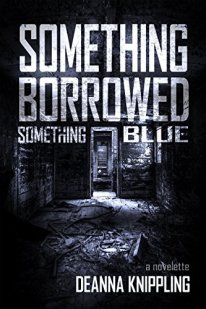
As rare as it is these days to find a truly well written horror story which draws the reader in and gets a grip, Something Borrowed, Something Blue, by DeAnna Knippling was a pleasant surprise. This novelette gives off a feeling that something ugly lies just below the surface, something that we can’t quite see, but the feeling says that the situation will not end well, and in that we are not disappointed. In the fashion of classic horror, this story makes readers want to say, “No! Stop!” even when it’s clear that events have already been set in motion and there is no turning back.
Sometimes being prepared isn’t the best policy, especially when you’re faced with something no one could be prepared for; something unimaginable that makes the skin crawl, yet demands action. Something Borrowed, Something Blue makes a connection with readers because it’s a situation they can place themselves in, if only in the dark recesses of their minds. Sometimes, that’s where the monster’s dwell which we fear the most. The story’s resolution may leave readers with more questions than answers. This is the kind of story that makes you think, maybe for a long time, after you read it.
Something Borrowed, Something Blue is a well-crafted tale that honors great story telling tradition by capturing readers and not letting them go until long after they’re finished with the story. I give it five quills.

Kaye Lynne Booth does honest book reviews on Writing to be Read in exchange for ARCs at no charge. Have a book you’d like reviewed? Contact Kaye at kayebooth(at)yahoo(dot)com.
Share this:

Interview with “The Best Seller”author Dina Rae
Posted: July 10, 2017 Filed under: Books, Fiction, Full Moon Bites, Interview, Science Fiction, Thriller, Writing | Tags: Author Interview, Conspiracy, Dina Rae, Science Fiction, The Best Seller, Thriller Leave a comment
Today, we have with us, the science fiction author of the conspiracy thriller, The Best Seller, Dina Rae. She’s tried both the traditional publishing and self-publishing routes, and her latest novel, The Best Seller, was recently released by Solstice Publishing. With this interview, we kick off her book blog tour with Full Moon Bites author promotions.
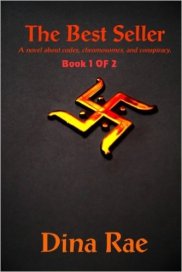
Kaye: Your latest science fiction conspiracy thriller, The Best Seller: Book 1 of 2 was recently released. It is the tale of a writer’s dream come true, turned nightmare. Would you like to talk about that? Tell us what it’s all about.
Dina: I thought it would be interesting to write about a Stephen King-like author who doesn’t write his work, but records it from extraterrestrials. I once listened to a podcast that talked about automatic writing that comes from the Akashic record and thought it would play well in a novel. Of course, the author doesn’t live happily ever after. That would make for a short, boring book. There’s a reason for it as you read on. My next novel, The Sequel, gets more into it.
Kaye: You’re a wife and mother in addition to being a writer. What are your secrets for juggling writing with family?
Dina: I also work full-time as a teacher and coach, so yes, it’s a lot to juggle! I bring a notebook with me at all times. When I am waiting at the dentist, it’s time to write; when I am waiting for noodles to boil, it’s time to write; when I am at a choir concert or softball game; it’s time to write… You can always find time to do the things you love to do. I wish I was that determined when it comes to working out! I have found that the most productive people on the planet are the ones who have no time. Ask the busiest person you know to do something and it’s done!
Kaye: What is the one thing you hope to teach your children?
Dina: Great question! I want them to be good people, but also know that it is okay to mess up. It’s okay to take a risk and fail. Learning from mistakes is not just a lesson, but a way to live your life. I want them to understand the value of a dollar. So many young people start out their lives in massive debt from college. Life’s expenses cause more debt. My college-aged daughters decided to attend junior college and work as a way to keep expenses down. They might just graduate debt free. They both have friends who already are in massive debt and have yet to graduate.
Kaye: Your books are filled with conspiracies and intrigue. A lot of your books don’t fit neatly into a genre category or subcategory. How do you describe your books?
Dina: I love a good conspiracy-left-wing, right-wing, alien, HAARP, contrails, 911, apocalypse, bring it on! All of my books take kernels of popular conspiracies and then build stories around them. The Best Seller delves into how the government not only knows about extraterrestrials, but partners up with them to maintain power. Of course, a humongous conspiracy always has a few that go rogue which messes up the plan. I also take the Roswell incident and fill in the blanks about how our government found a spaceship and aliens in New Mexico back in 1947. In The Sequel, The Best Seller’s second volume, there is a great deal of conspiracy about Hitler and his Nazis.
Kaye: You do a lot of research in order to write about things you haven’t ever seen and places you’ve never been? What are some of the strangest things you’ve ever had to research for your books?
Dina: In The Sequel, I spent a great deal of time researching races of aliens. David Icke’s name popped a few million times. Very, very strange. He believes a Reptillian race lives on earth among us. They shapeshift into key figures of the elite circle. These Reptillians prepare for New World Order. I loved it! He is very sincere in his beliefs as are the many who follow him.
Kaye: Are you a plotter or a pantser? Why?
Dina: I am a total pantser for the first half of the book. I start plotting later on, and then go back to change everything! I tend to work better without an outline.
Kaye: You’ve made some pretty awesome book trailers, which do a good job of capturing readers’ attention, but how effective have they been as far as selling books goes?
Dina: Thanks so much! The truth is the trailers do not generate a lot of hits. They are something that I will keep doing anyway. I think that I get most of my sales from interviews of bloggers and radio hosts. I also will have selling spurts after a great review from a review blog.
Kaye: If writing suddenly made you rich and famous, what would you do?
Dina: I would love to find out! I have everything that I want in a middle-class capacity. Extra money would mean lots of traveling.
Kaye: What’s the most fun part of writing a novel? What’s the least fun part?
Dina: Most fun-I oddly love to research. I also love putting the pieces together for the story-it’s like a puzzle. Yes, I am a geek! Least fun-editing and constantly promoting.
Kaye: What did your road to publication look like? How did you get to where you are today?
Dina: My first book was The Last Degree. My publisher was not entirely on the up and up. I didn’t know any better. I pulled the manuscript and canceled the contract. The book is now up on Amazon as self-published. My second book and third books, Halo of the Damned and Halo of the Nephilim, had much smoother rides. They were published by Damnation Books. They recently sold the business to another publisher, Caliburn Books. The Best Seller was picked up by Solstice Publishing and they have been great. The got back to me right away after my query. I signed and then they gave me a cover. While it was being edited, I started promoting the book.
My advice to new writers is this-check out Preditors and Editors. They keep tabs on the publishing world. Also know that not everyone is legit.
Kaye: Is there anything unique or unusual about your writing process?
Dina: Not really, but I do like to write longhand. I like to buy cool looking journals to write in.
Kaye: What is the strangest inspiration for a story you’ve ever had?
Dina: It’s certainly not an original idea, but genetic modifications, cloning, CRISP-R, and gene therapy scare the hell out of me. Fear of the future inspires me. I don’t see the progress, I see the pitfalls.
Kaye: What do you like to do when you’re not writing?
Dina: I love to play tennis and walk my two dogs. My husband and I also love to go to flea markets for fun.
Kaye: What is the biggest challenge of being a writer for you?
Dina: There are so many challenges. Advertising is so expensive. Authors have to be more creative in their promotions. There is a lot of trial and error.
Kaye: If you could have lunch with any author, alive or dead, who would it be? Why?
Dina: Jesus Christ/God because I believe they wrote the Bible. Meeting them would mean I made it into Heaven. On a less divine note, I would love to talk to Shakespeare (or Queen Elizabeth as some conspiracy theories claim is the real author of all of those plays). I want to know how it feels to have so many of your phrases used in today’s language. I would want to know how he feels about modern literature.
Thanks so much for interviewing me! Great questions!
I want to thank you, Dina, for sharing with myself and my readers a small glimpse into your life and your writing. I’m sure The Best Seller will be… a best seller, and I’m pleased to be able to help kick off your tour.
You can follow Dina here:
@haloofthedamned
Blog: http://www.dinaraeswritestuff.blogspot.com/
Goodreads: https://www.goodreads.com/book/show/30286767-the-best-seller
See Her Book Trailers Here:
The Best Seller: https://www.youtube.com/watch?v=JQER8wJmaf8
The Last Degree: http://www.youtube.com/watch?v=nkbg6Yy8UKU
Halo of the Damned: http://www.youtube.com/watch?v=4p89LXZNxOs
Dina is also hosting a give away for 2 signed paperbacks of The Best Seller, and 2 Amazon $10.00 gift cards. You can enter the give away here:
http://www.rafflecopter.com/rafl/display/873c06d2357/?
Like this post? Subscribe to Writing to be Read for e-mail notifications whenever new content is posted or follow WtbR on WordPress.
Share this:

“Unpredictable Webs” Keeps Readers Guessing
Posted: July 7, 2017 Filed under: Book Review, Books, Fiction, Thriller | Tags: Book Review, Books, Darlene Quinn, Fiction, Thriller, Unprdictable Webs Leave a comment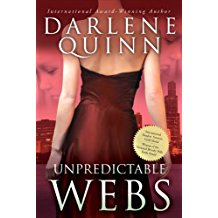
Unpredictable Webs by international award winning author, Darlene Quinn, is an intricately plotted and tightly woven story of mystery and intrigue. A vivid cast of characters, who all think they know what’s best keep the pages turning. Although the book is a single piece in a much larger tapestry, it easily works as a stand alone for those who have not read other books in Quinn’s Web series.
As moguls of a major department store chain, Conrad and Ashleigh Taylor are open targets for attacks from all directions. Whether from protesters, who don’t want the iconic name of John Stewart’s to be swallowed whole by their Jordan’s conglomerate, or predators who see only dollar signs when they consider the wealthy couple, the threats are always near. When one predator goes after one of their twin teenage girls in a kidnapping gone awry, there is no telling what will happen next, and the Taylors will stop at nothing to get their daughter back.
Unpredictable Webs is a complex tale of suspense, which keeps readers on their toes with skilled crafting and well developed plot. I give it four quills.

Kaye Lynne Booth does honest book reviews on Writing to be Read in exchange for ARCs at no charge. Have a book you’d like reviewed? Contact Kaye at kayebooth(at)yahoo(dot)com.
Share this:

It’s All in the Packaging: Interview with Writer, Poet and Cover Designer, Dawn Leslie Mullan
Posted: July 3, 2017 Filed under: Books, Cover Art, Interview, marketing, Poetry, Promotion, Writing | Tags: Books, Cover Art, Cover Design, DL Mullan, Poetry, Sonoran Dawn Studios, Writing 1 Comment


They say you can’t judge a book by it’s cover, but we do all the time. So, when sales for Delilah was faltering, I decided to change it up. Actually, I ran into an awesome cover designer, who came up with a great cover for not only Delilah, but one for Last Call, too. Subsequently, the sales for Delilah went up some. The new cover just came out for Last Call, so it remains to be seen if it will have the same effect, but I’m anticipating some positive results. It all goes to show just how important it is to find the right cover designer for your work. If you don’t believe a book cover can make a difference, take a look at the original cover for Last Call, below and compare with the new one, above:
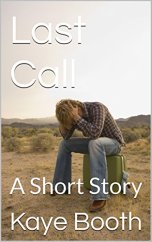
Today I am fortunate to be able to interview my awesome cover designer, DL Mullen of Sonoran Dawn Studios, so I can share with my readers just what a talented cover designer this lady really is. And she’s so much more. Also a writer and poet, Dawn Leslie Mullan spends a lot of time getting creative.
Kaye: In addition to being an accomplished poet, you have your own design company, Sonoran Dawn Studios. How did you get into cover art design?
Dawn: I got into cover design because I knew that beauty is in the eye of the beholder. People are attracted to book covers as well as read tag lines and brief synopses to make their decisions about purchases. Since I have had my digital art shown across the country in various exhibits and at conventions, the creation of my own cover art was a natural fit. Sonoran Dawn Studios is the intuitive progression from an artist and writer to designer and publisher.
Kaye: You’ve self-published two books of nature poetry, Effloresce, and Rain: Monsoon in the Desert and two books of dark poetry, Memoirs of a Psychotic Painting Elephant, and The Descent. Would you share the story of your own publishing journey?
Dawn: My publishing journey is much like many other writers’ careers. I have been writing since my formative years, but the confidence to write for publication did not happen until higher education. When I was exposed to literature and professors who understood the dynamics in literary context, my world expanded a thousand-fold. I was no longer in this cocoon of sensory deprivation. The experience allowed me to dream.
As I grew older my dreams also grew, but some obstacles were thrown in my way. I became disabled by Environmental Illness, so the future book tour I had envisioned for myself was replaced by severe reactions to an array of chemicals and molds. A collapsed immune system does not a national book tour make. With the help of natural doctors, nutrition, and lots of bed rest, I have been able to balance my disabilities with my goals. I began my website, Undawnted, to feature my writing. Later, I created Sonoran Dawn Studios to publish what I produced with the dream of helping other writers accomplish their goals of publications in the future.
Just because life happened while I was making other plans does not mean I still cannot fulfill my life’s purpose. Creativity is more than a hobby; creativity also brings about choices through true authentic problem-solving. As a testament to my originality and perseverance, my publishing journey has become a triumph over adversity.
Kaye: Would you publish through Lulu again? Why or why not?
Dawn: Yes, I love publishing through Lulu. The ebooks I can disseminate are endless. I am researching beyond Lulu for other Print on Demand services to see what the best modality for my print books may be. I want to make sure my readers are taken care of, while not being intrusive or creating confusion. I do foresee my ebooks finding their way into print sometime in 2019.
Kaye: What is the single most important quality in a poem for you?
Dawn: The most important quality in a poem is based in the five W’s of journalism. What, where, why, when, and how. What image is the reader left with at the end? Where has the poem taken the reader? Why would this poem be important to the reader later on in life? When will the poem reoccur in the memory of the reader long after the poem is read? How does the poem leave an indelible mark in the emotions of its audience?
Anyone can write a poem. The best poems are the ones that linger in the recesses of a reader’s mind. To stir there, be forgotten until an emotion brings up images of the poem that can only be satisfied by reading the poem again. Poetry is more than words and rhymes; poetry is the exercise in conveying emotions through imagery.
So, what do you see when you write?
Kaye: Where do your poetic inspirations come from?
Dawn: Everywhere. That is where my inspiration comes from. I am in awe of this world and our universe. I keep a child’s naïveté and wonderment lurking around every corner of my imagination. I view circumstances with that innocence as if I am seeing lightning, touching a cat, hearing a siren, or feeling the sun for the first time. Every time.
That juxtaposition allows me to combine youthful honesty, integrity, and virtue with the aged heartbreak, candor, and wisdom. No emotion is off limits to experience inside my soul. Every creative dimension is then available to express whether that would be in the forms of poetry or prose.
Inspiration is everywhere… you just have to feel it.
Kaye: What’s your favorite social media site for promotion? Why?
Dawn: None of them really are my favorites for any kind of promotion but I go where my audience travels. Social media is the ghetto harbors of the internet. Our creativity and objectivity are trapped in programmed cages that reverberate and sometimes crescendo our own confirmation bias. Social ghettos like their city namesakes limit opportunities for those individuals seeking advancement and relegate people into an inferior stasis with poor resources and tyrannical mismanagement.
I’d rather own my own website away from social media, but finances impede that dream at this moment. So I am stuck in the ghettos of Facebook, Google plus, and Blogger. I hope someday people realize how confining social media is so we can return to a time of free expression.
Won’t you join me?
Kaye: You are a creative person, writing award winning poetry and designing some pretty awesome cover art, etc… Were you creative as a child?
Dawn: Thank you. I have always had an active imagination. My formative years began in solitude, but after my family moved to the west coast, we ran a daycare, and so there was no shortage of company.
The lack of companionship, however, is a different matter. I knew I was atypical from other children of my age. I observed. I understood far beyond my years. I intellectualized, but I also empathized.
Creative maturity has given me the ability to recognize those evocative reactions and morph the feelings into a seasoned response. Empathy is a strong connection to other people and their plight, the trick is to find a positive way to express myself through art, writing, and problem-solving to avoid the pitfalls of negativity.
That is why so many creative people are depressed and feel rejected by society: improper context of sensory stimuli. Creative people need to step outside of a given situation and see all the moving parts. The ability to walk in another’s shoes is a gift, but when that gift creates blinders to the other parts of life, that is where creativity can destroy instead of uplift.
I had to find that balance. I had to find my own wisdom. Meditation and energy work are beneficial. A balanced perspective is everything. I had to learn that being a creative child did not mean I had to be an explosive, renegade adult… that is what my characters are for!
Let your imagination work for you. Be calm, cool, and collected with your interactions with the world. Allow your creativity be the solution.
Make your characters say and do what society frowns upon. In creativity, you are free. In living imagination, you are the creator.
So design a better reality to inspire change: one person can make a difference.
Kaye: How would you describe yourself in three words?
Dawn: Innovative. Dynamic. Trendsetter.
Kaye: What’s the best piece of advice you were ever given?
Dawn: I really have no idea. Maybe it was: don’t play in traffic? Or, don’t stick your fingers in the light socket? I do not believe I have ever been given a lot of advice.
I have always been a self-starter. I am a person who walks forward in life. There have been some obvious setbacks, but I set short- and long- term goals. Whatever is attainable, I achieve. Whatever does not work for me, I change to fit my new timeline.
So I do not believe my life has been about being advised as much as it has been about who can keep up with me.
Kaye: You’ve had many poems published and won awards for quite a few. What is the biggest challenge in being a poet?
Dawn: The biggest challenge in being a poet, or an artist in general, is discovering new ways to compete with myself. How can I outdo my last creation? Achieve a better response? Create something thought-provoking or truly distinctive?
As a writer, I challenge my own status quo. I am in competition with no other person but myself. So the creative balance I endeavor to maintain has helped me restructure my point of view. I strive for self-betterment to take my writing to the next level.
This fresh perspective allows me to mature as a writer as well as be a cheerleader for other authors. When I removed the ego-driven, quantity over quality focus from my writing career, I discovered how the release from those negative aspects took my creativity to new heights.
I spent more time creating than worry about the industry, agents, publishing houses, and other writers. I could then help others without feeling jealous or anxious or petty. I could be happy for other writer’s successes because those writers were never in direct competition with me. That is an illusion I had to shed.
Once I realized that each person has their own goals and life path to fulfill, then I understood the dynamics with which creativity really springs: inside my own internal genesis.
People on a parallel career path weave branches from the same tree on which my creativity sprouts. Each branch is different from the others and reflects the health of the common root. If we do not tend to our roots, fertilize the soil, and water regularly, then the tree will falter in a coming storm. Angst ruins everyone’s creative efforts. So why bother with it?
That is a summation of the writing craft and our individual responsibility within our community. We must become the best writer we can be and also give a helping hand to another writer regardless of his or her success. Wisdom is in the balance.
Of course that also frees me from the cookie cutter manufactured industry standards I see dominating the writing craft. So watch out world! I don’t have a compass. I don’t have a quota system. I am following my own branch that is reaching for the stars.
And, everyone can change their stars.
Kaye: What advice do you have for aspiring writers and poets?
Dawn: Writers need about ten years to season well, marinate in their own juices. Raw writers tend to give their hearts but when constructively critiqued, lose their minds. So I advise aspiring writers to go in search of criticism, negative criticism. Take courses for a community college certificate or degree in creative writing. Go out and join your local Professional Writer’s Group. Seek out people who will guide and help you without sparing your feelings. Those people are gems.
When you receive constructive advice, use it. Correct your writing and erode your ego. Writing is not about dissecting words and mincing phrases, but about dismantling your hubris.
Once a writer can get out of their own way, their writing takes on a profound quality. Stillness. Wisdom. Maturity.
One should always know and understand their craft through hard work and education. One should also write from the heart. Writing from the ego only speaks to other egos. When a writer writes from the heart, their story resonates at varying degrees within their audience and their writing is called: literature. Then a writer can build a loyal readership and just not simply have hapless followers.
On that same note: never believe your own press. I have had forum critique comments like: that was the best poem I have ever read! Only to look a few comments down and read: I really didn’t think your poem was all that great.
You just have to laugh.
When a writer has been through the crucible of their own development, then a writer can discover their weaknesses and strengths. Until that level of discernment is achieved, a writer is not ready to meet the world. The world is full of wolves ready to take your money and tell you whatever you want to hear.
An educated, informed, and mature writer can espy the wolves, escape the traps, and only do what is right for their needs.
So become the writer you have always wanted to become. No one else can do it but you. What are you waiting for?
Kaye: What time of day do you prefer to do your writing?
Dawn: Any time is fine. I write during the day or night. I do like night though when I really have to concentrate and do not want to be disturbed. No phones. No television. No distractions.
I do write when the muse descends. When I first began writing as a hobby, I would wake up from a dead sleep to jot down notes or a poem. My mind was active during my dream state. Now with my own creative structure, I find myself less inclined to be so impulsive. I write until I am done with that scene and I move on to another activity.
I also rotate from art to poetry to nonfiction, and then fiction writing. It is very noticeable trend on my personal social media status. Those breaks help avoid creative lulls and downright boredom. Writing for me is a metamorphosis of the psyche more than it is a time and place.
Kaye: You’ve had to face some huge obstacles to get to where you are now. Would you like to talk about them?
Dawn: Which obstacles? Chronic illness, abandonment, or near death experiences? My life has run the gambit, but direct participation in life events is what writing is all about. When I go through a challenge, I meet the impediment head on. There is no sense in hiding from life.
Do whatever you have to do short of hurting yourself or others; I do not abide by those types of negative expressions, but if you must throw your shoes or scream out the window, then do it. Then learn from your interaction with the world so you can check your emotions to respond with a healthy regard to life instead of having meltdown reactions to it.
The more you deal with life’s ills; the more those issues become underwhelming. Oh, the car broke down in triple digit heat… that problem interfered with my day but not unexpected given the circumstances. If you structure your life with good planning, sensible organization, and attainable goals, then you can respond to the world from a point of important but not urgent. So when the car breaks down, everything else takes care of itself, and you do not feel overwhelmed… just slightly irked.
With my brain inflammation and neurological issues, I have had some unflattering behavioral repercussions. In a short amount of time, I have learned what my body needs to combat this inflammation so I can deal with life as it comes. For my emotions, I write to express my discontent with research, citations, and good ole-fashioned sarcasm. My awareness blog for my neighborhood news can be incendiary at times, educational and informative at others, but entertaining to thousands of people a month.
So huge obstacles are what you make out of them. I find that I must navigate in a sea of challenges that most people would just give up and let a shark eat them. I am not like most people. I will take your shark, fry him up for dinner, and raise you: writing and publishing careers!
It comes down to simplicity: you can spend your life saying: oh crap, not again. Or, looking at challenges from a different point of view: at least my toaster oven still works.
Well what did you expect? I react to microwaves.
Kaye: Which poet, dead or alive, would you love to have lunch with? Why?
Dawn: Just one? I kind of do this exercise with my poetry. I call my brand of talking with the creative masters as response poetry. I take a poem from Poe, Dickinson, and then write a response. Upon Reading Edgar Allan Poe is a literary take on many of his works. Death Responds to Emily Dickinson is the Grim Reaper’s rebuttal to her I Could Not Stop for Death.
If I had to pick between the two, I would like to sit down with Poe. Not because it’s “Poe,” but because Edgar was a literary critic in his time and quite combative with his contemporaries, which I find entertaining as well as educational.
What were Edgar’s pet peeves in writing? How did his critics respond to his opinions? Did his critics give constructive criticism to Edgar’s work or did they just attack out of ego-driven defensiveness?
As writers and critics, we can learn from the advice, mistakes, and behaviors from our forefathers, and foremothers. If you do not know the past, you are doomed to repeat it. Art and writing, much like society, cannot go forward always repaving the roads of the past. We must create new exits onto the roads less traveled by. The best way is to learn from the master artists, poets, and writers from their works to their own personal views of the craft itself.
On your journey, is your road already built or are you walking in a forest that has no name?
Kaye: What’s something most readers would never guess about you?
Dawn: I am overeducated.
Seriously, I have never met a topic I did not like or want to know more about. I do have six college degrees including a Master of Arts in Teaching and Learning with Technology. I have degrees ranging from general studies, foci in biology and geology, emphasis and focus in history and biology, and organizational management. I was also working on creative writing, marketing, computer science, and publication creation before I became disabled.
I was an active community member. I have lectured and had speaking engagements about technology, art, and the role of girls in our technotronic era. I have paneled at science fiction conventions. I have exhibited and won awards for my digital art. I have ghost hunted as a history major and aspiring medium. I have experience in film and stage. In addition, I have a background in medicine for about a decade as a family member’s caretaker.
My greatest achievements have not been the cords, ribbons, or degrees. Although I am grateful for the honors I have earned in their formation of my character as well as giving me the skills to navigate our ever-changing, technological world, I am interested in more intangible achievements at present. I am on a spiritual path to investigate the human condition. I seek to answer the mysteries of our universe and impart that wisdom onto others.
With that said, I feel my greatest achievement is leaving a creative and educational legacy. My illness precludes me from having offspring, but with management of my health, I have endeavored to become the person I have always wanted to be. I am a work in progress. I can be grumpy and irritable at times, but I am more patient and charitable than anything else.
I guess that comes from living a life less traveled by. I have shrugged off convention for a spiritual road on the superhighway of life. I may be in the slow lane, but I am not obsessed with the destination. The journey is my classroom and I am an enthusiastic student.
Will you like to hitch a ride?
Kaye: What is the one thing that is the most unusual or unique thing you’ve done so far?
Dawn: Strange is what I do. I combine real life scenarios in my creative works to give the contrived a reality check. When a reader experiences my characters and their challenges some of those obstacles may be rooted in my own life. I will not tell which is which, what fun is that?, but I will say that creative writing allows me the indulgence to work out some past issues in a positive and productive manner.
So the most unusual or unique quality to my writing is that I use creative fiction and nonfiction as my camp counselors.
Have a problem? Fantasy about justice? Do not have the energy to bury a body in a remote location? Then you need to become a writer. You have innovative ideas, a spark of madness, and a tinge of laziness that comes with sitting down at a computer to let your fingers do the trash talking.
Shovel, anyone?
Thank you Dawn, for joining us today and sharing your unique take on life, and writing, and shoveling. And thank you for allowing me to use you for the purposes of illustrating the important role cover art is in the sale of your book. You could write a masterpiece, but no one will ever know it if they never crack the cover to read the words inside.
We Need Your Help!
This post came at a good time, because today Dawn and I have some exciting news to share. The cover art for Delilah has made it to round two in the Joandisalovebooks Summer Loving Book Cover EVENT 2017. This is great news because it is a really great cover, but we can’t do it alone. The winner in each genre category will receive a great marketing package, which would be great for the promotion of Delilah.
We need your votes, so we can win first prize in the western genre category. You can find more information on how to place your vote at Sonoran Dawn Studios, where Dawn has been kind enough to lay out step by step instructions for you. So, if you are a follower of Writing to be Read, a fan of Delilah, or someone who has just discovered Kaye Lynne Booth author, please take a few moments to clink on the link and cast your votes for us. It will be greatly appreciated.
Like this post? Subscribe to Writing to be Read for e-mail notifications whenever new content is posted or follow WtbR on WordPress.
Share this:

“A Slapshot Prequel Box Set”: Good Stories, Bad Editing
Posted: June 30, 2017 Filed under: Book Review, Books, Fiction, romance, Stories | Tags: A Slapshot Prequel, Book Review, Books, Heather C. Myers, Hockey, marketing, romance Leave a comment
A Slapshot Prequel Box Set (Slapshot Prequel Trilogy Book 4), by Heather C. Myers is a perfectly good story line, offering the POV of three characters, in three alternate stories, running parallel to one another. Nicely done. If you’re into hockey, A Slapshot Prequel Box Set (A Slapshot Prequel Trilogy Book 4), by Heather C. Myers may be just what you are looking for. The set contains three separate stories, which unfold simultaneously, the first a murder mystery with a romance element, the second and third romances.
In Blood on the Rocks, Serephina must learn to manage the hockey team she just inherited, and figure out who killed her grandfather at the same time. The problem is, she doesn’t know who to trust, and she finds herself strangely attracted to the prime suspect in her grandfather’s murder. In Grace on the Rocks, a romantic relationship is the last thing Emma is looking for. That is, until Kyle Underwood, the handsome young hockey player, skates right into her life. In Charm on the Rocks, Madison is a college student who goes for brainy guys, not athletic ones, until she meets Alec but she can’t let her dad know she’s a Gulls’ Girl, scraping ice for the Newport Beach Seagulls hockey team, or she may lose his love as well as her tuition, and Alec Schumacher provides a means for her to gain her independence, making her finally admit that she is interested in him.
I was glad this set is labeled prequel, because the overall story, doesn’t feel complete. In fact, I can’t be sure what the main story that ties these three together is. So it was good to think there’s more to come. But then, it is also labeled Book 4, so I’m not so sure about the continuation. I hope there is more to come, because the most serious conflict in any of them is the revelation of Serephina’s grandfather’s killer.
The biggest criticism I have of A Slapshot Prequel Boxset was the editing, or lack thereof, distracts and pulls the reader out of the story repeatedly, to the point of annoyance. There are so many spelling errors, typos, and repetitive wording that it pulls the reader out of the story repeatedly. The stories were interesting enough to keep me reading, but the errors were bothersome and annoying at times.
The three stories in A Slapshot Prequel Boxset are nicely overlapped, but definitely feel like only three parts of a whole. Although the story lines are good, they are lacking true conflict and, combined with the poor editing, I give it three quills.

Kaye Lynne Booth does honest book reviews on Writing to be Read in exchange for ARCs at no charge. Have a book you’d like reviewed? Contact Kaye at kayebooth(at)yahoo(dot)com.
Share this:

Interview with Author Amy Cecil
Posted: June 26, 2017 Filed under: Author Profile, Fiction, Interview, romance, Self-Publishing, Writing | Tags: Amy Cecil, Author Interview, Contemporary Romance, Historical Romance, Ice on Fire, romance, Writing Leave a comment
I’m happy today to be interviewing Amy Cecil, author of the Knights of Silence MC romance series, as a part of her blog tour surrounding the release of Book 2 in the series, Ice on Fire. (See my four quill review of Ice on Fire.) Amy is married, and she and her husband have three dogs and a horse. She is also the self-published author of four novels. She writes both historical and contemporary romance.
Kaye: Your new release, Ice on Fire, is the second book in your Knights of Silence MC Would you like to tell us about the contemporary romance series, and how Ice on Fire fits into it?
Amy: The Knights of Silence MC series is my pride and joy. It is my first attempt to write my own characters, develop them and subsequently fall in love with them. And, it’s in a genre that is totally different than what I started in. It has been a challenge for me and the result is a product that is all my own. That makes me a very proud writer. The series right now is going to consist of four books, but who knows, that may change. Ice, the first in the series was published in September. I am currently working on book 3 in the series, Celtic Dragon, and I am hoping on a spring 2018 release.
Kaye: You wrote your first novel in thirty days and went on to be a two time NaNoWriMo winner, in 2015 and 2016, where contestants are challenged to write a novel in a month’s time. What is the secret to writing a novel length work in thirty days?
Amy: NaNoWriMo requires 50,000 words in 30 days to win. That’s seems pretty tough to do, but if you break it down, it’s not so bad. I divide the 50,000 by 30 and come up with my daily goal. It’s 1,666 words a day. Doesn’t sound so overwhelming when you break it down. And then the hard part is to adhere to that goal. Some days I will write more, other days I will write less, but by the 15th of the month, you can bet I will make sure there is 25,000 words written and that I am on track. And then periodically throughout the month, I make sure I am still on track. NaNoWriMo does this for you and it is really helpful.
Kaye: Today many independent or small press authors are using what are called street teams to spread the word about their books. Could you explain what your street team does and how you go about building a street team?
Amy: When I first started writing, I never knew what a street team was, until my PA’s Alicia Freeman and Michelle Cates told me I needed one. These girls are amazing and built my team to over 400 members in just a few months. This is where I can talk with my fans and actually let them share in the writing process. They have not only shared my books and teasers, they have contributed in many ways to my books. They are a great group to bounce ideas off of and they are always there to support me when I am doing an author takeover event. I’d be lost without them.
Kaye: What are some of the differences between writing historical romance and contemporary romance?
Amy: From a writer’s perspective, the biggest difference is how they talk. Historical romance is more formal, more polite. Things are very proper and liberties are not common. Contemporary is more relaxed and casual. They are less formal in the way they speak and you can use contractions. That’s a big no no in historical writing. Also, you can take liberties with your characters that you would normally have to be careful within a historical romance. Because I write Jane Austen Fan Fiction, I have to be conscious of keeping my characters the way Jane Austen created them.
Kaye: What do you see as the pros and cons of independent, or self-publishing?
Amy: When I first started writing, I went the traditional route. I sent my manuscript to several publishers and of course, was turned down by all of them. Discouraged, but not ready to give up, I learned that I could self-publish. Since then, I have self-published four novels. I’m not sure what I would do now if a publisher wanted to publish one of my books. I really like the freedom I have to write what I want and when I want. I have no deadlines. The hardest part of self-publishing and requires the most amount of work is PR. Getting your name out there is difficult if you don’t have a publishing house or an agent behind you. But I have found two great PA’s, Alicia Freeman and Michelle Cates. They not only help me promote my works on social media, they all put together an amazing street team for me.
Kaye: Where does the title come in the writing process for you? How do you decide the titles for your books?
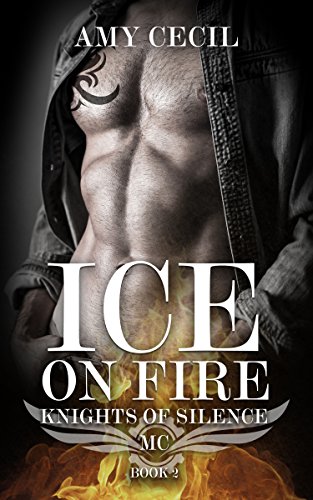
Amy: My titles usually come first. I don’t have any special formula to specific way I do. Some just come to me, some have been suggested by friends and the latest one, Ice on Fire came from my husband.
Kaye: What’s the most fun part of writing a novel? What’s the least fun part?
Amy: I would have to say that my favorite part of writing a novel is coming up with the initial story line. Creating the characters and just watching it all play out. My least favorite part is the editing. I know, it has to be done. But it is always a struggle for me. Luckily, I have an amazing editor Carl Augsburger of Creative Digital Studios who makes this process a little less agonizing for me.
Kaye: What’s your favorite way to get exercise?
Amy: I walk my dogs – I have three of them.
Kaye: Besides writing, what are your favorite things to do?
Amy: My husband is in the Air Force, so I spend a lot of time at home alone. I work full-time for a home improvement company. Also, I have three rescue dogs and a horse that keep me busy. I enjoy other creative hobbies as well like painting and basket weaving.
Kaye: Where do you get your cover art?
Amy: Ellie Augsburger of Creative Digital Studios designs my covers. We use stock photos and get most of them from Adobe Stock. I’m not sure what other resources she uses.
Kaye: What’s your favorite social media site for promotion? Why?
Amy: I guess I would have to say Facebook. I use it the most because I am most familiar with it. I really want to expand my social media reach, but I guess that will come with time.
Kaye: What’s the best piece of advice you were ever given?
Amy: “Write your own.” These were the exact words from my best friend who encouraged me to write my own story. I’m so glad I took her advice.
Kaye: What time of day do you prefer to do your writing?
Amy: I really don’t have a specific time of day to write. Usually it seems to be when the ideas hit me. I don’t write everyday, but that doesn’t mean I am not working on my books. I spend a lot of time doing research.
I want to thank Amy for joining us here, on Writing to be Read, and sharing some interesting facts about herself and her writing. You can find each of Amy Cecil’s books here:
getBook.at/ICEonFIREbyAmyCecil
getBook.at/ARoyalDispositionbyAmyCecil
getBook.at/RelentlessConsiderationsbyAmyCecil
Follow Amy:
Facebook: https://www.facebook.com/authoramycecil
Goodreads: https://www.goodreads.com/authoramycecil
Twitter: https://twitter.com/acecil65
Amazon: https://www.amazon.com/author/amycecil
Website: http://acecil65.wix.com/amycecil
Learn more about Amy’s Amazing Street Girls:
https://www.facebook.com/groups/201903646918497/
Like this post? Subscribe to Writing to be Read for e-mail notifications whenever new content is posted.
Share this:

Ice on Fire: A Story Worth Reading
Posted: June 23, 2017 Filed under: Book Review, Books, Fiction, romance | Tags: Amy Cecil, Book Review, Fiction, Ice on Fire, Knights of Silence, Motorcycle Clubs, romance 1 Comment
Ice on Fire, by Amy Cecil is the second book in her contemporary romance Knights of Silence MC series. An intricately woven story line, which ties characters to one another and to the other books in the series, takes readers on a journey into the violent, volatile world of motorcycle club mayhem, where broken souls heal and form family.
Book 2 of this series, Ice on Fire, follows the growth and development as three separate romances blossom, as Ice (or Caden), the president of the Knights of Silence, let’s the world believe he’s dead in an effort to protect those he loves from the retaliation of the Satans, after brutally killing one of their members, while he puts a plan into action to bring about a peace between the two rival clubs.
Although this story has the romance elements and some pretty steamy bedroom scenes, the main story line, mentioned above overrides all three budding romances, causing me to question if it can really be classified as the romance genre. For me, it was more a story of loyalty, with a theme of family sticking together, showing a different, softer side to the motorcycle club culture. With three budding romances in progress, the Knights of Silence certainly prove that they can be gentle and romantic.
It’s a good story line, and I will certainly read book 1, Ice, and maybe future books in the series, as well. My one criticism is that there were times when exposition pulled me out of the story, making me feel like a distant observer rather than a participant. I give Ice on Fire four quills.

Kaye Lynne Booth does honest book reviews on Writing to be Read in exchange for ARCs at no charge. Have a book you’d like reviewed? Contact Kaye at kayebooth(at)yahoo(dot)com.
Share this:

“The Day My Fart Followed Santa Up The Chimney”: A Unique Children’s Christmas Story
Posted: June 16, 2017 Filed under: Book Review, Books, Children's Books, Fiction | Tags: Ben Jackson & Sam Lawrence, Book Review, Books, Children's Books, Christmas, Picture Books, Reviews, The Day My Fart Followed Santa Up The Chimney Leave a comment(No Cover Photo Available)
Most kids dream of hitching a ride in Santa’s sleigh at one time or another. In The Day My Fart Followed Santa Up The Chimney by Ben Jackson and Sam Lawrence, Timmy doesn’t get a ride, but his little fart does. Timmy’s Fart is a cute little green guy, kind of a cross between a Smurf and a chubby baby dragon.
The Day My Fart Followed Santa Up The Chimney is a delightful children’s picture book, which explores the magic of Christmas and takes Little Fart on a great adventure. It wasn’t what I expected, (I expected a lot of fart humor from the title), but I was pleasantly surprised. I give it four quills.

Kaye Lynne Booth does honest book reviews on Writing to be Read in exchange for ARCs at no charge. Have a book you’d like reviewed? Contact Kaye at kayebooth(at)yahoo(dot)com.
Share this:

“Wolves for the Holiday 1.1” has potential to be more
Posted: June 9, 2017 Filed under: Book Review, Books, Erotica, Fiction, Paranormal, romance, Speculative Fiction | Tags: BookReview, Josette Reuel, Paranormal Romanace, romance, Wolves for the Holiday 1.1 4 Comments
Wolves for the Holiday 1.1, by Josette Reuel is a short story with the potential to be a longer supernatural romance. As with many short stories, it feels like there should be more. The ground work is laid for secondary characters to have relationships, providing plenty of subplot material that Reuel fails to take advantage of, and readers are left wanting more. This story has the potential to become a novel length work, if more fully developed.
When first three wolves, and then later, three naked men show up at a secluded mountain cabin, where three writer friends are taking a writer’s retreat, things promise to get a little weird. That’s where the problem lies, for three women in a secluded cabin just wouldn’t react the way these women do, so I had a hard time buying into the story. The premise is good. Actually, the premise is great, but Reuel fails to suspend my disbelief.
Then there is the romance element, which is good, and almost believable. However, having our heroine submit to the Alpha male makes her appear weak, conforming to typical female stereotypes. The males are stereotyped as well, but I could buy that because they are wolves, after all.
After our two protagonists have their romp in the hay, there is no follow through. The story just ends, leaving the reader feeling cheated. Relationships with her friends and his pack members are alluded to, but not shown. We can only guess what was happening in the rest of the cabin while the main romance is blossoming in the bedroom. I will say the bedroom scene itself was done tastefully.
Wolves for the Holiday 1.1 has a great premise, but fails to deliver, doesn’t carry through the full romance arc, has a weak female protagonist, but does include a well written bedroom scene. I give it two quills.




















