BOWLESIAN! – God, the Little Artist
Posted: May 4, 2022 Filed under: Bowlesian!, Fiction, Stories | Tags: Ask the Authors 2022, Bowlesian!, God the Little Artist, Jeff Bowles, Short Fiction, Short Stories, Writing to be Read Leave a comment
God, the Little Artist
by Jeff Bowles
It took me four years to paint like Raphael, but a lifetime to paint like a child.
–Pablo Picasso
We were certainly very sorry to hear about your death, Mr. Williams. Happens to even the best of His creatures, we suppose. Rest assured all the finger paints here on Planet Heaven are thrilled beyond words you have finally arrived. Begin reception of extraphysical sense and thought in three … two … one…
There. That’s better. This’ll help us get to know you. We see now, for instance, that your eyes have adjusted to the darkness, that you hear a thin dripping somewhere off to your left and that your feet scrape against rough, rough limestone. Understand, we finger paints have witnessed just about everything there is to witness.
Finger paints, yes. That’s what we are. Self-aware, creation-endowing finger paints. We dribble from a pin-hole wound in God’s lower back, right at the base of his spine. Whenever it’s time for him to paint, he scoops us up and lets out a giggle; a deified, bloody, Technicolor spinal tap. We wish you to know he’s been expecting you for quite some time. Sitting cross-legged here in his cavern, deep below the cliff face high, using his brittle fingers to paint portraits of your existence.
“Yay!” he often exclaims. “Colors time! Colors time!”
Few things get him so excited, save perhaps milk and cookies or his favorite Saturday morning anamatia.
Look, here’s the painting he calls Puppy, and there’s the one entitled First Time with a Lady. Note the lack of definition, of sharpness and lucidity. Sublime, isn’t it? Weren’t you an art history major? We’re great lovers of art, ourselves. In these paintings, Mr. Williams, if you don’t mind our interpretation too terribly, you aren’t so much a man but a concept. Of simple lines, basic shapes. Of any color that can exist in a rainbow of perfectly aligned moons and stars.
You approach God slowly, reverentially, overwhelmed, completely unsure of yourself and a thing so magnanimous as immeasurable love. You suddenly have visions of burning bushes and burning Sodom and savior children left to die on crosses for the salvation of all–
He spots you in an instant. His smile is broad and toothless. “Sorry, Daddy,” he says, eyes wide beneath bushy, peacock-feather brows, “I ax’dently spilled juice all over Taking too Many Per’skiption Pills.”
Taking too Many Prescription Pills, of course, is the one he painted just the other day after you’d passed out on the couch, stopped dreaming, stopped being much of anything.
God is ancient-looking and has paint stains all around his lips. He sits on the cavern’s floor, naked as the day he willed himself into being. He reaches for the painting in question, holds it up for you to see. Yes, completely ruined. The image of you–eyes rolled into your head, slobber trailing from your mouth–transcendentally post-Picassian though it may be, looks vaguely like a melting meat-puppet minus the hand up the meat-hole. It’s like Salvador Dali, but without the clocks.
When God says he spilled juice all over it, he means this rather literally. He drinks a lot of juice. Apple juice, to be precise. Not vino, vin, wijn, or the more aptly dubbed, Jesus Juice.
God cannot imbibe the red and/or white stuff. After all, he’s got the mind of a child.
“Daddy,” he says, “there’s sumfin I needs to ax you. Come closer.”
You lean in closer.
“No, Daddy, closer, closer.”
You get down on one knee, and you lean into his cracked, peeled-wallpaper lips.
“You love me, Daddy?” he whispers.
You nod. What man who can truly call himself a man does not love God?
“Love me bunches and bunches?”
You nod again. How humbling to hear the word and feel the breath and know the power that is–
God plants a big, sticky, icky one right on your cheek. He laughs in your face, then he slaps you so hard you see bloody Egyptian rivers.
Ouch. That smarts.
“Tee hee!” He says. “Got you, Daddy. Got you good. You’re gonna’ be God now!”
Precisely what, you inquire, does this mean, oh Lord of Space and Time?
“Pretend I’m a baby, Daddy! Baby needs changin’. Change me, Daddy! Change me!”
And what, oh Lord of Space and Time, you query, shall be the object, function, and product of the change? For in changing God, does not man–nay, does not the universe–cease to exist in his glorious image?
“Huh?” says God.
You huff and shout, What the hell do you mean, baby needs changing!
And then God starts to cry.
Aw, look at him. You made God cry. Aw. Look at him, all naked, and old, and cross-legged, and bawling his eyes out. With his naked, old soul and his naked, old heart all torn to pieces. Tears and snot stream from every hole tears and snot are apt to stream from. We hope you’re happy now. We really hope you are.
You coo at God, and then you pat his back and scoop him up in your arms, because you’re desperate and just feel like such a jerk.
You never had any children. Never had any grandfathers, either. Leastways, you never had any grandfathers who acted just like the children you and your wife never managed … Well at least you say you’re sorry. Lord of mercy, you are so, so sorry. You never meant to yell at him. You love God. You love him just as much as you loved your wife, and your sister, and your mom, and your dog, and your…
But God, he is hurt. He pushes you away and screams at the top of his lungs, “I’m dyin’ Daddy! I’m gonna’ die real soon. I bleed each time I paint!”
What does he mean by this?
God shakes his head and frowns. He draws his fingers to his back, winces as he touches them to skin. He holds them up for you to see. Color. True and everlasting color, no kind of blood you’ve ever seen. You find us both horrible and enchanting. It’s like Edvard Munch, only you try not to scream.
“I been paintin’ so long,” God says. “So really, really long. I been paintin’ all of you. You know what’s gonna’ happin’ when there’s no more blood to bleed?”
He’s going to die. He’s going to die? Holy hell. You bite your lip and start to panic. He’s going to die? You run a hand through your hair. God can’t die. Holy hell. God can’t die, can he? You pose to him this very question.
He sighs, and though he looks even sadder and more impossibly frail than before, the tears stop flowing.
“I can,” he says. “Yup. And I’m real sad, too. So you’re gonna be God now, Daddy. I slapped you good, so now you got god-power. I made my daddy special. When I was paintin’ your pit’tures, I made sure to con … concen… con-cen-trate real, real hard.”
Enough with this daddy business! Why does God need a daddy? The creator of all that is infinite and everlasting can never, metaphysically speaking, create that which is, by act of temporal creation alone, both a beginning and an ending to his own existence. Can he?
Perplexed, unnerved, you find you only have the strength to ask him this:
Why did God cross the road?
He shrugs. “Prolly ‘cuz the big kids was chasin’ him again.”
# # #
God is dying in your arms, Mr. Williams. Right here, right now. We can feel him slipping away, death a fatal pressure building inside his spine. Recreation, such as painting pictures, is widely known to relieve pressure. And spinal taps are good, too.
He’s asked to die outside, far from his dank, dark cavern, because, as he says, the 29 moons of Planet Heaven remind him of his favorite spaceman animatia. The monstrous, towering cliffs of his river basin rise high and immeasurable all around you. The sky is a deep, ruddy purple, the grass a fine, silky blue.
Colors abound. In your nose. You smell the colors of the universe. On the tip of your tongue. Taste the colors of an endless dream. Smells like burnt cherry wood. Tastes like … paint. Because even though you had no children, Mr. Williams, you were a child once, and you know what paint tastes like. Because children eat it, and eat glue, and paper, and … God dying in your arms … if only you could eat paint and love it like you once did.
God’s breathing is heavy, labored. His lips are pulled back over his teeth, mule and horse-like. Does the body of God go to waste before the end?
“Daddy,” he says. His voice cracks and splinters. “Daddy, come closer.”
You lean in.
“No, Daddy, closer. Please, closer.”
You draw his body into yours, and you press your face in so close you can smell his breath.
“Don’t worry, Daddy,” he says. “I ain’t gonna slap you again.”
Well that’s a relief.
“I should, though. Cuz’ it’d be real funny.”
No, Lord, you say, please don’t.
He nods meekly. “Kay. Kay. Daddy?”
Yes?
“Daddy … Daddy?”
What is it, oh Lord of Space and Time?
“Don’t forget. Ladies wear dresses.”
You ask him what he means. You barely hear what he says next.
“When you paint ’em. Ladies wear dresses. Men wear pants. Doggies go arf, arf.”
You tell him to rest, to be still. He speaks again. So quiet, so fragile and insubstantial it breaks your heart to pieces.
“Also,” he says, “the act of creation is not a self-validating act in and of itself. Nor is the act of destruction. That’s childish, childish and misses the point of being the child.”
Childish? Child? Why is it he suddenly doesn’t sound like a child anymore?
“Wonder,” he says, “wonder,” and one final time, “wonder. In all that you do, my son, wonder. There is so much in this universe to … to paint for the sake of…”
And then God dies. No great final gasp, no moaning or earthly laments or anything so substantial that you think, yes, that’s it, that is the end. And you, Mr. Williams, are suddenly lost in your own grief, in thoughts of your wife, your sister, your mom, your dog and … how alone they all must be. How it feels to abandon. How it must’ve felt for God–just now, just a moment ago–to abandon so hastily all he’s ever loved and nurtured.
And now he’s dead, and in death so placid he may as well have drifted away, a newly winged thing, to paint pictures on the 29 moons of Planet Heaven.
So peaceful and serene. Except that…
The very next instant, his body explodes.
Pressure in the spine. Explosion, detonation. We come hurtling out. A million-billion gallons of paint splatter Planet Heaven and splatter you and splatter the universe beyond. Buildup, relief. Our viscous, fluid minds have blown out wide and interstellar. It’s like Jackson Pollock, only messier.
Red.
Green.
Blue.
Yellow.
An infinite pallet, besides.
We fill you up. Fill you in. Blood in, blood out. And you know such beauteous things. Such things no mere man could ever know. Is this what it means to be at the center of all places and times? You reach two fingers to your back and wince from the pain, bring those fingers to your open mouth and lick them. Oh, you think, maybe I still love to eat paint, after all.
END
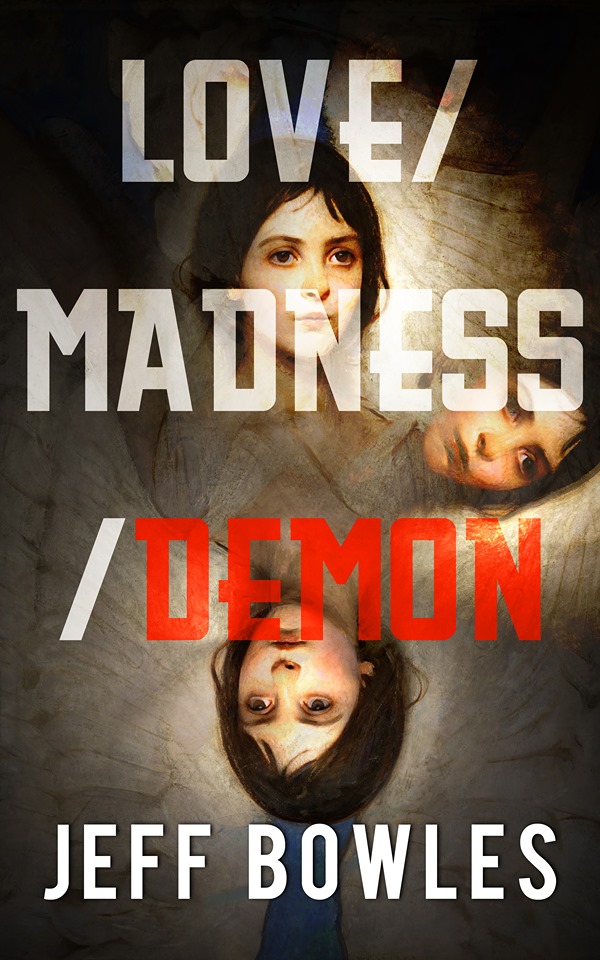
Jeff Bowles is a science fiction and horror writer from the mountains of Colorado. The best of his outrageous and imaginative work can be found in God’s Body: Book One – The Fall, Godling and Other Paint Stories, Fear and Loathing in Las Cruces, and Brave New Multiverse. He has published work in magazines and anthologies like PodCastle, Tales from the Canyons of the Damned, the Threepenny Review, and Dark Moon Digest. Jeff earned his Master of Fine Arts degree in creative writing at Western State Colorado University. He currently lives in the high-altitude Pikes Peak region, where he dreams strange dreams and spends far too much time under the stars. Jeff’s new novel, Love/Madness/Demon, is available on Amazon now!
Check out Jeff Bowles Central on YouTube – Movies – Video Games – Music – So Much More!
Share this:

BOWLESIAN! – Dr. Julianus Techt’s Five Easy Steps to Building a Better You
Posted: April 6, 2022 Filed under: Bowlesian!, Dark Fantasy, Fiction, Horror, Short Fiction, Speculative Fiction, Stories | Tags: Bowlesian!, Jeff Bowles, Short Fiction, Short Stories, Writing to be Read Leave a commentDr. Julianus Techt’s Five Easy Steps to Building a Better You
by Jeff Bowles
You are an absolute horror show. You are a wreck and ruin of a human being. I can’t even stand the sight of you anymore. You’re weak. Feeble. Go on and do it. Go on and rid the universe of your wretchedness once and for all.
Sound familiar?
Hi, friends. Dr. Julianus Techt here. Life got you down? No friends? No significant love interests? No point in living one more excruciating, soul-crushing day? Believe me, I know the feeling.
Congratulations on your purchase of Dr. Julianus Techt’s 5 Easy Steps to Building a Better You. This book, and the accompanying materials and spells companion crate, are each designed with the lowlife in mind. Contained within these pages, friends, are the answers you are looking for. Not happy with the man/woman you have become? Why not simply build a better you? The methods, magics, and matriculations I am about to divulge are time-tested and fool-proofed.
I know exactly what it’s like. I was once in your shoes. My PhD is in world-class suffering. I earned my doctorate at the school of hard knocks. Now I am a new man entirely. Come along with me and discover the secrets to self-love, self-respect, and self-actualization. Your glorious, resplendent days in the sun are just 5 Easy Steps away….
Easy Step 1: Back to Basics
Why is it you hate yourself so much? Why is it you’re so despairingly, disconsolately desperate to become a better human being? Is it because, like me, you’ve let down every last friend, family member, and lover who’s ever cared about you? Or do you, like me, simply find life painful, disappointing, a series of valleys–each deeper and darker than the last–without even a passing glimpse of a single peak or shred of hope?
Ha ha. Well, you were sharp enough to buy this book. So at least you’ve got that going for you.
I want you to imagine what the better you will look like.
Now I want you to open your materials and spells companion crate and make it happen.
Inside the crate you will find,
One (1) man-sized sheet of multi-colored construction paper
Five (5) century-aged cherry wood logs, each weighing approximately twenty-five (25) lbs.
One hundred seventy-five (175) lbs. of premium oil-based plastilina modeling clay.
One (1) ancient scroll of Black Soul-Shard enchantments.
And last, but not least,
One (1) complimentary Pizza Barn coupon, buy 1 slice, get the second half-off.
Arrange your materials and spells in whatever manner that best allows for ease-of-access and attenuation with the life-force powers of the universe and the forsaken black domain of the damnation/animation god, Frülik.
Ready to begin?
Good. I was hoping you’d say that.
Note: Dr. Julianus Techt’s 5 Easy Steps to Building a Better You is, if nothing else, a trial-and-error process. Steps 2-4 will enable you to produce 3 different soul-shard versions of yourself. If at any time you become satisfied with a soul brother or sister, please feel free to skip to step 5, There, isn’t That Better? Similarly, if at any time you feel threatened or are attacked by your soul brothers or sisters, please discontinue use, flee your house or place of residence, and immediately cash in your complimentary Pizza Barn coupon as you await police/emergency medical technician intervention.
Easy Step 2: Frülik
From your kitchen, retrieve one (1) large knife, serrated; one (1) cereal bowl; one and one-half (1 1/2) teaspoons of iodized table salt; one (1) sticky bandage, extra-large; and one (1) lb. of leftover meat to offer as supplication to Frülik, the damnation/animation god.
Retrieve your ancient Black Soul-Shard scroll and refer to enchantment #12 as you perform the following:
Sit down on the floor with your legs crossed. Pour the salt into the bowl and set it in your lap so that it can catch the copious amounts of blood about to gush from the palm of your hand.
This next part may sting a little.
Slice open your hand and hold it over the bowl. As you howl in agony, notice that your blood runs red. This will change as you begin to recite the enchantment, the one which begins,
“Oh mighty Frülik! I offer you my blood and meat! Cleave my astral self in twain! Take from me now that which you desire most!”
Notice that three things occur. The first is that your blood turns black. Don’t be alarmed. This is simply an indication you have just sold your soul for something far purer than you can possibly imagine. Notice, too, that the air around you has suddenly grown approximately 50° cooler. Your breath puffs frost. You snort in the cold like a castrated bull. You should probably be aware that the damnation/animation god, who will be arriving shortly, cannot abide warmth. It reminds him the living still thrive in the world beyond his forsaken realm, and that for him, all hope for love, passion, and earthly pleasures are lost, lost, lost.
Anyway, the last thing you will notice is that a 10-foot tall, bone-armored, entrail-covered, cloven-footed demon god will scratch and claw his way from the cereal bowl filled with salt and your precious blood.
Once he’s standing over you, with the edge of his massive Broadsword of Deepest Lacerations resting precipitously against your neck, he will squeal like a cancerous boar. He will then say something to the effect of,
“Woe unto you! Woe! Your soul is damned to the bleakest pits of horror and suffering! Pestilence! Rotten, fetid, malodorous flesh! I shall feast on your severed scrotum each mealtime for a thousand lives of men!”*
*Please note that based on your gender, Frülik may or may not in fact use the word “scrotum.”
The damnation/animation god will now use his broadsword to cleave your head from your shoulders. Do not be alarmed, this is simply an astral projection of your head and nothing more. Unfortunately, the pain you feel is entirely real and will no doubt haunt you for years to come.
Frülik is consumed by his own lust for spiritual power. He will snort and stomp and pull exactly three (3) individual shards of your soul out through your neck. His desire, of course, is to eat them and thereby enslave you for all time as his personal Concubine of Nightly Anguish.
It is now appropriate to offer him the one (1) lb. of supplication meat.
“Meager vittles!” he will bellow, but he will nevertheless proceed to stuff the meat into his face and forget all about the severed pieces of your spiritual essence hanging from your throat.
Please refer to enchantment #16 on your ancient scroll. Recite and repeat until the damnation/animation god is banished, moaning and cursing your name, back to his profane realm.
“Mighty Frülik!,” you will say. “Return to blackness! Mighty Frülik! A caelo usque ad centrum!”
Once Frülik is gone, and his howls of abject agony and rage have finally subsided, you will feel the urge to pass out and slip into the Sleep of Ages. This is completely normal, a side-effect of doing business with a demon god, and I must tell you, feels rather nice after a nightcap of chamomile tea and vodka.
Before you sleep, pull the three soul shards from the astral wound in your neck and lay them out, as best you can, with the rest of the materials from your companion crate.
When you awaken in exactly twelve (12) days and nights, we will finally create your soul brothers/sisters. Won’t that be fun?
Easy Step 3: The Better You Emerges
Twelve (12) days and nights have now passed. Are we back in the land of the living? Excellent.
Quick, what is fragile, tenuous, rough around the edges, and excruciatingly, mind-numbingly easy to reduce to cinder? No, it’s not Dr. Julianus Techt’s four failed marriages. It’s paper, friends. Simple, well-crafted, infinitely pliable commercial paper.
Your next task is to create a soul brother/sister from the man-sized sheet of multi colored construction paper you’ve retrieved from the materials and spells companiontjngsopjojgs kijipsgmijijithinign ijisrjomoejoig Frülik fhsko
sohoihionofihisniohi Frülik shinjpspsom Frülik shions
Frülik loves Techt
Frülik loves Techt
Frülik luvs Techt
Frülik has Techt
Frülik has Techtmpr
Say goodbye, Techt
Say goodbye, Techgtnikjigjopop
Managing Editor’s Note: And this is the last thing he wrote for the project, people. The police entered his home last week to find the place torn to pieces but otherwise empty. They found on his workstation a single Tupperware dish containing a full pound of rotting meat.
Due to the highly volatile and disturbed nature of this manuscript–and of course, in light of Dr. Julianus Techt’s mysterious disappearance–One-Hill Prairie Publishing hereby suspends all production plans for Five Easy Steps to Building a Better You until further notice. We have also mandated the immediate destruction of all mockup materials and spells companion crates. Our number one priority is to keep the particulars of this project from reaching the public. Can you imagine what’d happen if some poor fool actually attempted any of this?
Post-Script: We realize that working with Dr. Techt these past weeks and months has been trying, and at times, freakishly horrifying. Free mental health screenings and complimentary Pizza Barn coupons to all who apply.
END
Jeff Bowles is a science fiction and horror writer from the mountains of Colorado. The best of his outrageous and imaginative work can be found in God’s Body: Book One – The Fall, Godling and Other Paint Stories, Fear and Loathing in Las Cruces, and Brave New Multiverse. He has published work in magazines and anthologies like PodCastle, Tales from the Canyons of the Damned, the Threepenny Review, and Dark Moon Digest. Jeff earned his Master of Fine Arts degree in creative writing at Western State Colorado University. He currently lives in the high-altitude Pikes Peak region, where he dreams strange dreams and spends far too much time under the stars. Jeff’s new novel, Love/Madness/Demon, is available on Amazon now!
Check out Jeff Bowles Central on YouTube – Movies – Video Games – Music – So Much More!
Share this:

BOWLESIAN! – Tumbleweeds and Little Girls
Posted: March 2, 2022 Filed under: Bowlesian!, Fantasy, Fiction, Short Fiction, Speculative Fiction, Stories | Tags: "Tumbleweeds and Little Girls", Bowlesian!, Fantasy, Jeff Bowles, Short Fiction, Short Stories, Speculative Fiction, Writing to be Read Leave a commentTumbleweeds and Little Girls
They had the tumbleweed ambassador on the news a month before the big battle. The news guy and news girl said he was intelligent, and then a local representative of the Plains and Wildlife Service translated for him because tumbleweeds can’t talk and must sign everything by rolling and hopping and what not.
“We mean your people no harm,” said the Plains and Wildlife Service guy. He spoke kind of slow and choppy. I guessed he wasn’t actually, what do you call it? Fluent in tumbleweed?
He said, “The war has started, whether you realize it or not. The Prairie Queen has an army of deer, antelope and coyotes. She’s got the power of fire. She murdered our Wizard Father and made her castle from our dead tumbleweed brothers and sisters. The crazy bitch!”
I winced at this last word. I’m only twelve years old, after all. My dad used to talk real rough like that. He used to cuss and laugh and say to me, “Don’t repeat that to your mother, Amie Masterson. I don’t want to fight no little girl.” Then we’d roughhouse a bit. My dad died last year, though. Some kind of cancer. Mom never told me which.
I don’t usually watch the late news. I’m supposed to be in bed. But Mom passed out on the sofa early. I laid a blanket over her and picked the empty wine bottle off its side so it wouldn’t drip on the carpet.
The Plains and Wildlife Service guy said, “Have you not noticed her spot-fires outside your city? We want to kill your precious girls!”
The tumbleweed popped up into the air and spun angrily.
Plains and Wildlife Guy said, “Oh, I’m sorry, I’m sorry. We want to utilize your precious girls. We have no defenses. We need soldiers. The Prairie Queen cannot stand against the wealth of your girls. Or so we believe.”
There was some more talking. I was getting sleepy.
The news guy said, “And of course we know the city has been expanding into the Queen’s prairieland at an exponential rate.”
And the news girl said, “Right you are, Tom. In retrospect, that may have been a huge mistake. Oops.”
And then a commercial for local heating and cooling repair came on. I went to kiss Mom on the forehead. She moaned softly, smiled for a second, and then settled into a noisy, listless snore. Mom is a good mother, but I think Dad dying did some stuff to her. I guess that’s normal. She never used to drink wine.
There was a knock at the door. I was scared for a second, but only because Mom said never to open the door to strangers at such a late hour.
There was another knock.
“Mom,” I said, “someone at the door.”
Mom didn’t wake up. I nudged her, shook her, but still nothing, all snores, drool dribbling from the corner of her mouth. I went to the door, looked through the peephole.
There was nobody there.
“The heck?” I said. I slid back the deadbolt and opened the door.
A tumbleweed sat on our welcome mat. It had a leather glove duct-taped to its scrawny, scratchy limbs. It was kind of a big tumbleweed. The color of autumn wild grass. It leaned in to, like, look in our house.
“Is this because I’m a precious girl?” I said.
The tumbleweed shook.
“And you’re recruiting all the girls and that means me, right?”
It shook again.
“Only thing is I can’t leave. Mom’ll be super pissed. Oops. Mom’ll be super angry.”
The tumbleweed rolled, over and over, until the glove and duct tape came undone and stuck and sat limp and kind of sad on our porch. The tumbleweed wiggled and bent toward the glove.
I shrugged and picked it up. There was a big rock inside. There was also some red dirt. I brought the dirt to my nose to sniff it. It smelled salty, briny, kind of like how I imagine the ocean smells, like vast rotting shipwrecks beneath the waves where porpoises and turtles swim and play.
“What’s this stuff?” I said.
The tumbleweed smashed into my leg. My hand jerked, the dirt flew, a bunch of it went up my nose.
I sneezed.
Someone said, Me entiendes?
I sneezed again. A big cloud of red flew from my nostrils.
Someone said, Ne me comprenez-vous?
“Huh?” I snorted. “S’that even English?”
Oh, English, English! Oh, of course! Yes, how sally of me.
“What? Sally?” I wriggled my nose and wiped allergy tears from my eyes.
Silly! Silly! Of course! Stupid Dumb-Dust. I’m dumb, you know? All tumbleweeds are dumb. Call me Aaron. Aaron Sisymbrium Altissimum. Don’t worry about that last part. That’s my family name. Are you ready to be a soldier, girl?
“Soldier?” I said. “You mean to fight the Prairie Queen?”
That’s precisely what I mean. Time is short. Matters are barbiturate.
“Barbiturate?”
Aaron twitched. Desperate! Desperate! If we don’t stop her now, she’ll kill all the tumbleweeds, and then, girl, she’ll kill all the humans, too.
I looked over my shoulder. Mom was still snoring away on the couch. Wine makes adults snore. That’s something I learned.
Come on, soldier, said Aaron, no more dilly dallying. Don’t you want to make your fellow humans proud?
I learned a lot of things in Tumbleweed Army. I learned how to march, how to roll up into a little ball to protect myself. Learned how to say, “Yes, ma’am!” like I meant it. Most of all, I learned coyotes and deer and antelope were really scary because they could eat the tumbleweeds and break the wizard’s spell and use their shoulder-mounted flamethrowers to burn everything. The Prairie Queen had the power of fire. She wanted to burn it all, burn the world, which I guess included my home and my mom, which is why I stayed.
There was a girl there called Jade. She was an older girl. Really pretty, with deep almond skin and bright green eyes. We’d be in the middle of flamethrower-dodging exercises, and she’d come up to me and look at the way I was darting and dodging around, and she’d say, “Looking real good, Masterson. Looking real sharp.”
The tumbleweeds didn’t do any of the teaching or drilling themselves. They only knew tumbling. They left it to all the thirteen and fourteen-year-olds to teach us everything we needed to know. Maybe they should have asked for the real army, the adult army. Even they seemed weirded out by a little girl army, and sometimes they acted like they didn’t know how they’d ended up with us at all.
If the adult army was looking for us, they never found us, secret and hidden away on the outskirts of the city like we were. Also the tumbleweeds had this special concealing magic. The last thing they had left of their Wizard Father.
Aaron told me, Our Wizard Father was a great man. He granted us intelligence and the freedom we so cherish. But the concealing magic’s fading. We can’t stay hidden from the Queen forever.
I was like, okay, you’re fine, the older girls know everything. They’ve designed this whole thing and know everything there is to know. That’s probably why our uniforms were pink and sparkly, and why our flags carried pictures of Justin Bieber and Lady Gaga, and why even though the cutoff age was fourteen, you could tell they were serious and skilled and were girls on a mission, girls ready to kill.
I missed my mom. I’m not going to lie about that. I missed her so bad it didn’t matter to me she didn’t listen anymore when I talked to her about school, or that I always saw her crying first thing in the morning, or that everything Dad made her promise when he was in the hospital sort of, well, just went forgotten and we didn’t talk about it. I was in that army for four weeks, then we had the big battle, but I never forgot Mom, and I guess she never forgot me, but I couldn’t say goodbye to her just in case I might die, because the tumbleweeds were real, real strict about enemy code breakers and antelope misinformation squads.
One night as I was laying down to sleep in my tent, Jade came and undid the tent flap and she and a few girls brought in a little white cupcake with a single candle flickering and hopping kind of like a tumbleweed.
“What’s this?” I said sleepily.
“It’s your birthday, Masterson,” said Jade.
“My birthday?”
She nodded and said, “Make a wish.”
I wished to kiss a boy, but knew it probably wouldn’t come true because there were no boys for miles and miles. Me and the girls shared the cupcake, but the cupcake was made out of mashed potatoes, because the tumbleweed galley only had potatoes because Aaron told us all you eat is potatoes in the army and we didn’t argue.
“Jade,” I said, choking down my last bite. “Do you think things will go back to normal after this? I mean, after we kill the Prairie Queen and all? Do you think all us girls can go back to how we were?”
Jade thought about this. She nodded. “Yes, I think we can. At least I hope we can. Wizards and Queens and Dumb-Dust, all that stuff shouldn’t exist. I think it only exists because the world needs stuff to make you wonder. You know what I mean? My Dad always says, ‘Boy it really makes you wonder’. I think that sort of thing is really important.”
“Why?” I said.
One of the other girls chimed in. “Because everything would be so boring otherwise.”
“Boring’s not bad,” said Jade. “Boring’s only bad if you get used to it. There’s always people stepping on other people. Trying to take things that don’t belong to them, you know? Because people get used to that, too. Like that spot where our city and their world meet up….”
So there was this spot where our city and their world met up. For miles and miles, our buildings rose high, and interstates ran, and traffic lights blinked red, yellow, green, red, yellow, green.
But on this spot, there were a few loose suburban fingers of little houses that looked nice but that also all looked the same, and those fingers kind of stretched out, and then they ended, and their world was beyond, the prairie world, high grass and rolling hills, pretty wildflowers and peaceful vistas.
The wind could rustle through, and it could carry a dry, dusty scent, and maybe there’d be pollen on the wind, but there were no honking car horns or televisions blaring. People didn’t shout at each other. There were no people. The city wasn’t there yet. Maybe it would be someday. Of course it would be. The city just kept growing and growing and growing, and nobody bothered to ask the Queen if it was okay. Nobody stopped to think it might be a bad thing if the prairie world got swallowed up, got paved over, with houses and restaurants and, you know, post offices and stuff built all over it.
We had the battle on that spot. It was time. No more hiding. Me and all the girls—thousands of girls—we lined up at the fence line of that last wandering suburban finger. The hot mid-afternoon sun beat down on us. Smell in the air like columbines. We came in our pink sparkly uniforms, with our flags waving. The grenade girls all had purple caps. Girls with rifles had big red badges on their chests. There were also film-crew girls, who’d appointed themselves to the rank, who held up smartphones and snapped selfies with the battlefield-to-be in the background.
I was light infantry, just like Jade, and that meant we had no weapons, only pig-tails and three-ring binders, because the tumbleweeds had chosen girls for a reason, and we all figured we’d be even scarier all dressed up for school.
Prairie Queen’s afraid of school girls. Prairie Queen’s afraid of school girls.
We kind of told each other that over and over again, sort of like a, what do you call it? A mantra?
Prairie Queen’s afraid of school girls.
Prairie Queen’s afraid of school girls.
And we said it again and again, and it made us less afraid, even though we knew we might die that day.
The ground beneath our feet trembled. Far off across the field, over the rise and fall of grassy hills, we saw the first ranks of animals and their flamethrowers. The coyotes were the fastest and lightest, and they ran ahead of the herd, belching fire, scorching earth, I guess to scare us. They howled and yipped at the antelope and deer. You kind of figure antelope and deer don’t make noises, but they do. This strained, desperate, sharp kind of screaming noise. And when there are thousands of them—and there were thousands—it comes off like a banshee wail, like a great roaring throat sound loud as jet engines.
I don’t know why, but the sound made us cry. It was so loud. The screaming, the yipping, the flames and flames and flames. I cried like I knew a soldier should never cry. But it was okay, because Jade cried, too. Maybe I felt like running home to my mom, and maybe Jade did also, but she didn’t, she stood there like she was the bravest crying girl in the world, and she called back to us through her tears, “Steady, now! Wait until you see the whites of their eyes!”
And I didn’t know what that meant, because animals don’t have white eyes, but I stood my ground all the same, even though my legs trembled, even though the tears drenched my uniform and my tongue felt stuck to the roof of my mouth.
The tumbleweed commanders came rolling out to marshal our forces. I saw Aaron there with Commander Johnston Salsola Kali.
Commander Johnston waved a scraggly little twig-limb and said through the Dumb-Dust, Today you do your species proud! Today you are not girls, but women! Human women of distinction, finery, and absolute quality. We have no idea how it is you came to defend us, but be not afraid, dear human beings! For though you may die—yes, you may die, yes, yes!—for though that may be so, remember, one and all, that the Queen may take your lives, but she shall never take your Sweden!
In unison, the thousands-girl army said, “Huh?”
Commander Johnston said, Bother! Freedom! Freedom! Freeeeeeedom!
The army roared. Girls fired rifles in the air. They said, “Freeeeeeedom!” Even though freedom wasn’t really the thing, but getting trampled and burned up, but a cry of freedom was enough, and I said it, too.
Jade told us to stand at the ready. We did. She told us to march ahead at the quick step. We did that, too. I think the older girls had watched old war movies before the battle, so everything they were telling us to do was really smart and accurate for what soldiers are supposed to do in battle.
We marched at the quick step. The rifle girls and grenade girls were right behind us. The rifle girls fired rounds over our heads. This was smart because the animals kind of flinched and froze at the noise.
Bang! Bang! Bang, bang, bang!
And anyway, it wasn’t the animals we were after, but the Queen, who, tumbleweed intelligence told us, would be in the middle of her formations, in the mobile command station made of dead tumbleweed bodies all stuck together.
“Double-time, march!” said Jade.
We picked up the pace.
Coyotes snapped and howled at us. The deer and the antelope shot steady burning jets of fire. We began our dodging maneuvers, still in ranks, still in line, but dodging that fire like crazy.
A girl beside me—Kirsten—went down screaming. Our standard bearer went up in flames, but the next girl in line—a film-crew girl—picked up the smoldering flag and soldiered on, still bravely snapping selfies and snagging footage of the whole bloody mess.
And it occurred to me that the world was a crazy place. It made you wonder. Really made you wonder, you know? Girls weren’t supposed to be soldiers. Were they? Were girls supposed to be soldiers? I bent over Kirsten. Girls weren’t supposed to be soldiers, were they? Little girls? Kids and teenagers? I froze to the spot. I tried to touch her. Girls weren’t supposed to be soldiers. She was too hot, too bubbling, too much melted Kirsten. Girls weren’t supposed to be soldiers. They weren’t, were—
Jade slapped me.
“Snap out of it, Masterson!” she said. “The command station! Look, it’s right there!”
And it was right there. It looked like a castle on wheels. Made of tumbleweeds. Thousands upon thousands of poor dead tumbleweeds.
Burn the world! Burn it all!
Nobody else would die! Nobody!
Jade and I and the remnants of our unit—all told, seven girls—we darted in and out of flames and animals. Grenades exploded all around us. Dying things, dying from bullet wounds, dying from the burn.
We mounted the ramp of that mobile command station. We tried to punch through the tumbleweed walls, but the Queen had cast a spell, and the walls were solid as steel.
Jade told us to begin the chant, the mantra. We began it.
“Prairie Queen’s afraid of school girls! Prairie Queen’s afraid of school girls! Prairie Queen’s afraid of school girls!”
The mobile command station rolled to a stop.
“Prairie Queen’s afraid! Prairie Queen’s afraid!”
The animals stopped. Their roaring streams and jets and flames. They stopped their screaming. The coyotes stopped howling and yipping and yapping.
“Prairie Queen’s afraid of school girls!”
And our army stopped, too. Nobody told them what to do if the animals quit fighting. Nobody expected that. The battlefield went silent, all but the wind, and the flickering and popping of little grass fires here and there, and us seven girls, and our chanting, our mantra.
“Prairie Queen’s afraid of school girls! Prairie Queen’s afraid—”
“The Prairie Queen fears nothing!”
The voice boomed and echoed across the field. It was low, brassy, not human at all.
The command station exploded.
I went flying. I hit the ground. The air rushed from my lungs.
Tumbleweed shrapnel bit at me, scratched me up. I felt the pain of it, but I couldn’t breathe, couldn’t breathe at all.
The voice came again. With a kind of wispy whipcrack to each syllable.
“The Prairie Queen fears nothing! Nothing!”
Like the blast of a shotgun, my breath came back to me. I sucked in air like it was a thick milkshake, like the best chocolate milkshake I’d ever tasted.
Hands took hold of me, lifted me, jerked me up. My feet didn’t touch the ground.
“You, girl! Do you think I fear you?”
It wasn’t hands that had a hold of me. And it wasn’t a nasty old Queen hovering inches from my face. I expected a scary old lady. The Prairie Queen was a blade of wild grass. Just a single, tall, stout blade of wild grass, with no face, no mouth, no eyes. Split from her body, willowy grass arms, with little willowy grass hands. She shook me. She said, “What stupidity! What inane musings! To think I could fear this dull creature! This girl. You people. You take so much. I will take from you!”
And then she threw me to the ground and started whipping me with her green grassy hands.
It stung. It slivered and sliced. I started bleeding. The girls just watched. The animals watched. Stunned.
“Help!” I said. “Help!”
“You will not take from me,” screeched the Queen. “You will not take from me.”
She whipped me. Welts and cuts and lacerations and ripping, tearing skin. I curled into a ball, like the older girls had taught us, but the whipping kept coming and kept coming and kept coming.
A little ball of fire started circling her wild grass head. The Queen said, “Burn the wizard. Burn the weeds. Burn your city to the ground!”
The ball grew and grew, and it circled faster and faster and—
Movement in the field.
A tumbleweed rolled and hopped over me and smashed into the Queen. The ball of fire circling her head exploded. The tumbleweed ignited. The Queen ignited, too.
“Masterson!” Jade was moving now. She tossed me a grenade. I pulled the pin and flicked it at the Queen.
The burning tumbleweed was in the way. I rolled behind an antelope carcass.
Mom found me bleeding on the sofa the next morning. There was a collection of wine bottles in our living room. And also a bunch of notebooks and pens and candy wrappers. And also pizza boxes because adults like whole pizzas and whole bottles of wine. That’s something I learned.
Mom was drinking from a fresh bottle, sort of stumbling down the hall. She spotted me and said, “Oh my God, Amie?”
“Hi, Mom.”
She dropped the bottle. Wine splashed our white carpet. She flung herself at me and started kissing me all over and crushing me.
“Ow!” I said. “Ow, Mom! I’m hurt. I’m bleeding.”
“Jesus Christ, you’re bleeding!”
“I know.”
“Band-Aids! Hydrogen Peroxide!”
Mom patched me up as best she could. We both agreed I should go to the hospital, though. War’s like that I guess. Sometimes people die. Sometimes they have to go to the hospital.
I watched the television as she fawned over me and poured peroxide over all my wounds. It bubbled and itched and burned. I still watched TV.
The Plains and Wildlife Service guy translated for Tumbleweed Commander Johnston. I didn’t need him to, though.
Commander Johnston said, This day, this VQ day, this victory over the Queen, we shall remember it always, just as we shall remember and honor anew a bond of brotherhood between weed kind and humankind. Let it never be said your people backed down when all free folk everywhere fell under the flaming, fiery yoke of prairie oppression.
“It’s absolutely crazy,” said my mom. “It’s crazy you girls had to do this.”
Commander Johnston said, Your girls are our heroes. We don’t know why you sent them to us. All we know is we’re glad you did.
At this, Plains and Wildlife Guy paused, and, loud enough for the studio microphones to pick him up, he said, “What do you mean? You specifically said girls. Precious girls. You took them from us before we even—”
Commander Johnston quivered. No, the girls were your idea. You’re the ones who kept saying girls, girls. We asked for pearls. Thousands of precious pearls. As a means of currency. You know, to buy the aid of Southeast Asian mercenaries.
Plains and Wildlife Service Guy looked into the camera. He shook his head. He sighed and rubbed his temples.
Regardless, said Commander Johnston, it was the bravery of two—one weed, one girl—who gave us our victory, who stopped the wicked Queen and her lust for death and destruction. Aaron Sisymbrium Altissimum. Amie Masterson.
My mom paused.
We owe our lives to you.
And then they showed the moment. The moment I don’t think I’ll ever forget. Aaron went rolling and hopping. It was Aaron. It was his death all over again. He smashed into the Queen. They both ignited. Jade threw me the grenade. I flicked it, rolled away. The screen went white for a moment. Big boom. And that was the end of the war.
“Dear God, Amie.” My mom’s voice was soft, barely above a whisper. “You did that?”
I nodded, staring at the screen, watching the replay, feeling all those grassy whip lashes again and again, feeling that impact, the way it hit the antelope carcass. Smell of gunpowder. Shrapnel in my leg. Antelope meat in my hair and in my mouth.
“You did that?” my mom said again.
“I did. I did do that.”
“But you’re just a little girl.”
I put my hand on hers. Squeezed it.
“Mom?” I said.
“Yeah?”
“Too many wine bottles. Less wine, okay Mom?”
Mom hesitated. She nodded and said, “Okay, less wine.”
“And Mom?”
“Yes, honey?”
“It was my birthday last week.”
“I know.”
“Can I have a cake? A real cake? Not a potato cake.”
“What’s a potato cake?”
“It’s what you eat on your birthday when you’re in the army. Don’t you know anything about the army?”
Mom stared at me. She glanced at the TV, the footage, the whipping, the fire, the explosion. She shook her head.
“No,” she said, “I guess I haven’t the slightest clue.”
THE END
Jeff Bowles is a science fiction and horror writer from the mountains of Colorado. The best of his outrageous and imaginative work can be found in God’s Body: Book One – The Fall, Godling and Other Paint Stories, Fear and Loathing in Las Cruces, and Brave New Multiverse. He has published work in magazines and anthologies like PodCastle, Tales from the Canyons of the Damned, the Threepenny Review, and Dark Moon Digest. Jeff earned his Master of Fine Arts degree in creative writing at Western State Colorado University. He currently lives in the high-altitude Pikes Peak region, where he dreams strange dreams and spends far too much time under the stars. Jeff’s new novel, Love/Madness/Demon, is available on Amazon now!
Check out Jeff Bowles Central on YouTube – Movies – Video Games – Music – So Much More!
Share this:

Words to Live By – Professional Jealousy
Posted: November 3, 2021 Filed under: Words to Live By, Writing, Writing Tips | Tags: Jeff Bowles, Words to Live By, Writing, writing advice, Writing Tips, Writing to be Read 2 Comments
The first Wednesday of the month, writer Jeff Bowles muses on life, creativity, and our collective destinies as makers of cool stuff. You’re a writer, but have you ever thought about how or why? Here are some words to live by.
Green with Envy?
How jealous can you get? It’s an important question, one which may very well help define your ultimate level of happiness. I don’t mean the kind of jealousy that can emerge between romantic partners, or even jealousy that exists in people who constantly feel the need to keep up with the Joneses, though that in part has something to do with it.
I’m talking about professional jealousy, specifically as it occurs in the publishing world (or in any other creative field, really). It’s that sting you feel when a rival snags a big book contract, seemingly leaving you in the dust. It’s also the feeling you get when a good friend becomes successful, and you can’t seem to get anywhere close. This is not a rare experience, nor is it down to animosity or contention alone. It’s everywhere. Don’t try to deny what the world already knows. Human beings get jealous, maddeningly so, and there’s not much any of us can do about it, right?
Wrong. I’m going to go out on a limb here and suggest that some who stumble across this post will have no idea what I’m talking about. Jealousy isn’t much of an issue for them, at least not in this sense. They may be beginners, or in some cases, they might be individuals who are much smarter than the average bear. You see, it takes a certain amount of practiced intelligence to avoid the crushing impact of full-on, green-to-the-gills jealousy.
When I was starting out with short stories, I noticed my own capacity for envy when it came to other writers in my sphere. Some of them were better than me. Much, much better. Some were bypassing shorts altogether and were producing novel-length manuscripts, which made me even more irascible. At that time, I wasn’t too terribly smart about these things. I didn’t realize what this life would come to represent to me, a brilliant and complex tapestry in which no single thread is out of place. We can’t all be huge successes. I’m sure you know that by now. Jealousy is a wholly destructive emotion. A person can use it to jumpstart their inner drive, but mostly it’s just corrosive.
Those who earn the spotlight deserve the spotlight. End of story. And it doesn’t mean you aren’t deserving too. It’s just that either by randomness or divine intervention, you’re in your own little universe with your own feathers for your own cap, and really, that rival or that friend has very little to do with any of it. Don’t let it become a mile marker for all your anxieties and worries. Their successes doesn’t make you inadequate or unskilled. It’s just that you haven’t gotten there yet, may never get there, may decide someday you didn’t really want it as bad as you thought you did.
The only real losers in this game, and I’ve long believed this about creative folks, are the ones who don’t even try, who settle for less than full creative disclosure, who don’t take at least one or two risks in their limited time here on this planet. Don’t get me wrong, I’m not saying it’s everyone’s solemn duty to reach for the stars and try to become something they aren’t likely to become, but look, if you’ve got the drive and ambition, it’d be a real shame to leave all your talents undeveloped and hidden from the rest of the world. Share these things, put them out there, even if you fail. Especially if you fail. Because I guarantee you’ll rarely meet (or perhaps, meet less often) that other beast of an emotion, regret.
And I would suggest you do so for reasons that live up to your lofty station as a maker of cool stuff. Don’t go after your dreams if you think they’ll add something to you that isn’t already there. Similarly, don’t do it if your goal is to crush and outperform all other applicants. Create because you love to create, publish because you’ve got something to say, stories to tell. Do these things for joyous reasons, not simply because you want to teach that vindictive high school English teacher a lesson or prove once and for all to everyone you know that you are worth a damn. Trust me, you are. Don’t even question that. Take it as a given.
Remaining anonymous is not failure. I had to learn this the hard way. Our culture can be shockingly backwards and out of sync with the realities of, well, reality. You have your own path to walk; your work and your passion is a matter of personal pride. Nobody can do things the way you can. Nobody. We are simultaneously small in the grand scheme of things and as massive as the universe itself. You are and always have been precisely all you are and always have been. I do believe that. You’re perfect enough already. Keep that notion close by at all times.
Do your work, create what can create. Do it like no one’s watching, regardless of whether or not anyone is. It’s a wide and generous world if you know what to look out for, and allowing poison into your heart won’t solve anything for anyone. Do I still get jealous of other writers? You bet I do, but if I can, where I’m able, I decline to attach to that particular emotion and just let the old familiar sting pass on by.
Until next time.
Jeff Bowles is a science fiction and horror writer from the mountains of Colorado. The best of his outrageous and imaginative work can be found in God’s Body: Book One – The Fall, Godling and Other Paint Stories, Fear and Loathing in Las Cruces, and Brave New Multiverse. He has published work in magazines and anthologies like PodCastle, Tales from the Canyons of the Damned, the Threepenny Review, and Dark Moon Digest. Jeff earned his Master of Fine Arts degree in creative writing at Western State Colorado University. He currently lives in the high-altitude Pikes Peak region, where he dreams strange dreams and spends far too much time under the stars. Jeff’s new novel, Love/Madness/Demon, is available on Amazon now!
Check out Jeff Bowles Central on YouTube – Movies – Video Games – Music – So Much More!
Want to be sure not to miss any of “Words To Live By” segments? Subscribe to Writing to be Read for e-mail notifications whenever new content is posted or follow WtbR on WordPress. If you found it useful or entertaining, please share.
Share this:

Words To Live By – Boredom, Star Wars, and the Unavoidable Lull
Posted: September 1, 2021 Filed under: Commentary, Opinion, Words to Live By, Writing, Writing Life | Tags: Jeff Bowles, Words to Live By, Writing, Writing Life, Writing to be Read 1 CommentThe first Wednesday of the month, writer Jeff Bowles muses on life, creativity, and our collective destinies as makers of cool stuff. You’re a writer, but have you ever thought about how or why? Here are some words to live by.
Boredom, Star Wars, and the Unavoidable Lull
So I’ve been away from my writing duties here at WtbR for a few months. Heck, I’ve been away from most of my creative obligations, not just blogging, which might be the reason I’ve been so bored sitting at home, knocking my tin cup against prison bars of digital entertainment, paperback novels, and maybe a household chore or two. Read that book you’ve read a half dozen times before? Watch the same old movie series you’ve been watching since you were a kid? Do I even have to ask?
Okay, what are we up to today? Star Wars or Star Trek? Star Wars or Star Trek? Maybe Indiana Jones? Hmm…
The reality is that some lucky beings on planet Earth are built like machines, incredibly industrious, real honest to god workhorses. Boy do I envy the workhorses among us. I’m just not one of them. I can admit that to myself now.
Unfortunately, and it took me far too many years to discover this about myself, I’m more of a work-in-exhausting-spurts-and-then-crash kind of guy. I’ve always been like this, even when I was in school. Sooner or later, mental and emotional exhaustion would get the better of me, and it’d be hell just to turn in assignments on time, keep a steady workflow going.
I’ve previously written about my experiences with schizoaffective disorder, at last diagnosed five years ago, so I won’t bore you with the details again. Suffice it to say, there are reasons—real and concrete medical and psychological reasons—that I can’t compete with so many avid worker bees out there. My mind and personality just don’t keep up; the flesh is willing, but the spirit is weak.
My family lost someone dear to us back in March, my wife’s mom, who was a wonderful person and a key figure in our lives. At that time I’d been running pretty hot as far as creative output went, having kept up with a reasonable workload, more or less, for a year or so on end. But her passing stopped me in my tracks, and I’ve sort of been floundering all summer long.
Didn’t write anything new. Didn’t even edit anything old, and I’ve got a whole unpublished novel sitting on my computer’s hard drive, an odd and hopefully entertaining piece of work I finished up at the tail end of last winter, the COVID winter, the one when we were all locked indoors anyway.
All this incompletion frazzles me. Our society tells us we’re not complete if we’re not working, and at that notion I’ve always thumbed my nose. Not because I’m a rebel or even a lazy slug (I mean, arguments could be made), but because for me, constant work has never been desirable or even possible. It hurts me that I need so much downtime. I’d like to be as dependable as a racehorse, constant as the northern star (God bless Will Shakespeare, had a phrase for everything). It’s just not how I’m built, I’m afraid. I need recuperation time, rest and relaxation that lasts however long it needs to last. There’s no way around it, at least not any I’ve found.
So does that make me an ineffective person? Worse yet, does it make me a failure in the professional sense? I feel like some people might say yes, but honestly, I’ve tried to take the bull by the horns, and well, the bull almost always has its way with me.
Schizoaffective Disorder is no joke, man. Very often I can’t trust my own conscious experience, and that’s lame, because consciousness is all human beings have. It’s the only thing given to us by default, our birthright, our entire universe. Never mind school assignments or projects that never get off the ground. What about the amazing feeling you get when you’ve completed something grand? I love that feeling. Don’t take that feeling away! I’m not done with it yet!
I’m glad to be back at Writing to be Read, but the truth is I don’t feel 100% yet. Yes, I’ve been playing video games and watching old movies and generally feeling bored out of my mind. But that’s what recuperation looks like for me. Read ‘em and weep. Or don’t.
I like to write about my everyday experience. It helps me parse through things that need careful consideration. You can’t fight your own mind. I mean, you can try, but it’s sure to cause literal raging headaches. I’m interested in learning about other long-term work habits people employ out there. Leave a note in the comments section below if you’re so inclined. How do you get your work done? Is it a struggle in the long term, or is it the easiest thing in the world for you?
Look for another Words To Live By next month. Count on it. Just don’t expect me to show up for dinner. I’ve got some more recuperation to get through. Star Wars or Star Trek again? Star Wars or Star Trek? Maybe Battlestar Galactica? Hmm…
Boredom never looked so … unavoidable. Until next time, folks.
Jeff Bowles is a science fiction and horror writer from the mountains of Colorado. The best of his outrageous and imaginative work can be found in God’s Body: Book One – The Fall, Godling and Other Paint Stories, Fear and Loathing in Las Cruces, and Brave New Multiverse. He has published work in magazines and anthologies like PodCastle, Tales from the Canyons of the Damned, the Threepenny Review, and Dark Moon Digest. Jeff earned his Master of Fine Arts degree in creative writing at Western State Colorado University. He currently lives in the high-altitude Pikes Peak region, where he dreams strange dreams and spends far too much time under the stars. Jeff’s new novel, Love/Madness/Demon, is available on Amazon now!
Check out Jeff Bowles Central on YouTube – Movies – Video Games – Music – So Much More!
__________________________________________________________________________________________________
Want to be sure not to miss any of “Words To Live By” segments? Subscribe to Writing to be Read for e-mail notifications whenever new content is posted or follow WtbR on WordPress. If you found it useful or entertaining, please share.
Share this:

Jeff’s Game Reviews – Resident Evil Village
Posted: May 28, 2021 Filed under: Jeff's Game Reviews, Review, Video Games | Tags: Jeff's Game Reviews, Resident Evil Village, Video Games, Writing to be Read 2 Comments
Reviewed on Xbox Series X – Also available on Xbox One, Xbox Series S, PS4, PS5, and PC
The Resident Evil game series has been around now for twenty-five years. Most people associate it with shambling zombies, but in fact, developer Capcom more or less nixed the walking dead way back in 2005 with the release of Resident Evil 4. Ever since then, each new main-entry game has had some pretty interesting baddies to offer. That’s still the case with Resident Evil Village, which is a good thing, because without them, there might not be much there, there.
This newest RE game is actually Resident Evil 8, but you’d be forgiven for missing that fact based on the awkward way Capcom jammed roman numerals into the promotional artwork. After the genuinely frightening events of Resident Evil 7: Biohazard, new series protagonist Ethan Winters is forced back into the fray when his wife and daughter are kidnapped right from under his nose. Traveling to a decrepit Romanian village (which, by the way, has a MASSIVE gothic castle sitting on its northern side), Ethan must battle everything from werewolves to amorphic super-monsters in order to save his family.
The story goes to some pretty gonzo places after that, but no point spoiling it for you. The great news is that in true Resident Evil fashion, all the main boss characters steal the show in a big way. The lynchpin is a frightening matriarchal figure by the name of Mother Miranda, but she’s just the tip of the iceberg. Psychotic machine maker Heisenberg, the freakish and pitiful Moreau, Donna Beneviento and her murderous living doll.
The new fan favorite, Lady Dimitrescu, is a ten-foot tall vampire lady dressed as elegantly as any starlet from the golden age of cinema. The internet has already modded and discussed her to the nth degree, and that’s the best sort of praise a game character can receive. She lumbers through the castle, screaming your name, your only recourse to evade her at all costs. Some gamers have commented on a certain strange sex appeal when it comes to the Lady. Her burning cigarette, elegant nature, and bountiful… you know… stature. I just wanted to get the hell away from her whenever she appeared. Enough time to gawk? I don’t think so. To each their own, I suppose. Phew.

The gameplay of Resident Evil Village is more or less identical to what Capcom created from scratch for RE 7. First person perspective, lots of shooting and evasion, slowly picking your way through this or that lush location, finding rare items, solving puzzles. Actually, Village borrows a few things from the past, most notably from RE 4. Fans of that game may be happy to learn this newest entry is much more action heavy. This series has been around so long, it’s got a multitude of different flavors, and Capcom certainly knows when and how to tug at our nostalgic heart strings.
Ultimately, Village’s story is short and just a tad confusing, but that doesn’t stop it from being fun. An average gamer should expect the campaign to last eight to ten hours, which is anemic compared to most other AAA video games release these days. A multiplayer portion has been included, but it’s not all that enjoyable. Nope, for better or worse, Village is the star of the show.
Played on one of the new game consoles released late last year (Xbox Series X, Series S, or PS5), the game is a wonder to behold. Almost photorealistic at times, pretty snazzy. It still looks good on older platforms, so don’t sweat it if you can’t run out and buy the latest and greatest. Where would you run to anyway? Online retailers have been in and out of stock since November.
Regardless, this game is surprising, beautiful, and very often thrilling. It’s clear horror is still alive in 2021, and Capcom once again proves they are king of the hill. Resident Evil Village is focused on giving players a pulse-pounding experience unlike any other. That it misses the mark every now and then is no big sin.
Jeff’s Game Reviews gives Resident Evil Village an EIGHT out of TEN
Jeff Bowles is a science fiction and horror writer from the mountains of Colorado. The best of his outrageous and imaginative work can be found in God’s Body: Book One – The Fall, Godling and Other Paint Stories, Fear and Loathing in Las Cruces, and Brave New Multiverse. He has published work in magazines and anthologies like PodCastle, Tales from the Canyons of the Damned, the Threepenny Review, and Dark Moon Digest. Jeff earned his Master of Fine Arts degree in creative writing at Western State Colorado University. He currently lives in the high-altitude Pikes Peak region, where he dreams strange dreams and spends far too much time under the stars. Jeff’s new novel, Love/Madness/Demon, is available on Amazon now!
Check out Jeff Bowles Central on YouTube – Movies – Video Games – Music – So Much More!
__________________________________________________________________________________________________
Want to be sure not to miss any of “Jeff’s Game Reviews” segments? Subscribe to Writing to be Read for e-mail notifications whenever new content is posted or follow WtbR on WordPress. If you found it useful or entertaining, please share.
Share this:

Craft and Practice with Jeff Bowles – Narrators of a Different Color
Posted: May 19, 2021 Filed under: Character Development, Craft and Practice, Dialogue, Fiction, Point of View, Story Telling Methods, Tense, Voice, Writing | Tags: Craft and Practice, Dialogue, Jeff Bowles, narration, Point of View, writing advice, Writing Tips, Writing to be Read Leave a comment
Each month, writer Jeff Bowles offers practical tips for improving, sharpening, and selling your writing. Welcome to your monthly discussion on Craft and Practice.
There’s an entire school of thought behind the use of standard third-person perspective in narrative fiction. Often enough, beginning writers are encouraged to see it as their go-to, which isn’t horrible advice. Let’s do a quick POV lesson, in case your memory is hazy.
First-person: I walked to the lake.
Second-person: You walked to the lake.
Third-Person: He walked to the lake.
Conventional wisdom says most readers stomach lucky number three best. I think that might be a load of hogwash, but let’s assume it’s 100% correct. What would be the benefit of writing fiction—or creative nonfiction, for that matter—from a quote, unquote “nontraditional” perspective? Your own edification, right? And maybe something else.
Third-person is the norm because it provides helpful breathing room between us and our readers. It’s easy to tell a story this way, natural. We’re used to it, having read it a million times before. By the same token, I have noticed it’s become increasingly more common for storytellers to dabble in other modes. First or second-person, past or present tense, limited omniscience or full-blown mind-of-God territory. First-person present tense, by the way, is notoriously apt to cause chaos.
“I write on the blog post for a bit, and then I check my email. It occurs to me I’ve never met a sultan of Saudi Arabia, so it’s possible these diet pills are phony. Oh well. I chuck them in the trash and head outside to clear my mind. It smells like a forest fire out here. Hey, what gives?”
This is stream of consciousness stuff, easy to write but difficult and unwieldy to beat into proper shape. All the verbiage points to me, me, me, now, now, now. It can get same-same after a while, difficult to chew through. Not always, but often enough.

I’ll give you the benefit of the doubt and assume your new forest fire/phony diet pill story is perfectly well written, thank you very much. You did the job, tale told effectively, end of discussion. In that case, one crucial question comes to mind. Is your narrator any fun to read?
What do you mean, what do I mean? What’s a fun narrator supposed to sound like? Well, I guess they can be any of the following: idiosyncratic, faulty, confident, psychotic, mentally sound, likable, unlikable, funny, unfunny, jaded, naïve, a super focal lens, an individual with something to say, a personality worth delving into.
Maybe you’ve never considered it this way, but in my humble estimation, narration of this kind is a blank check. Most things worth achieving sound unlikely at first. Think of it like speed dating. You known instantly upon sitting across from someone whether or not you’d enjoy their company. Is your speed-dater worth engaging in conversation? Are they fun to listen to?
Gut check time. How well do you write dialogue? I only ask because I’ve realized throughout the years not everyone is as keen on it as I am. Sharp and amusing with zero fat left to trim, that’s my favorite kind. But what’s yours? Informative but not dull? Wacky and a bit irredeemable? More importantly, do you think you could extend a few lines of it to encompass an entire story? I’m willing to bet you can.
The simple truth is most writers create bland characters by default. Not you, of course. Perish the thought. Mentors and teachers might encourage us to pre-fill character sheets or go to public places and write down snatches of conversation we hear. I’m not saying that’s bad advice, but I can confidently tell you it’s more efficient and effective to let characters tell us who they are rather than to impose our sizable wills upon them. Don’t bloat yourself up with too much preparation. On the fly, hit the page and let your creations speak to you. A little honest individuality is enough to distinguish your work from the work of others, and that’s a good thing.
Rule makers have tried to enter this arena, but I don’t think they’ve done a great job setting any concrete prescriptive measures. Is addressing your reader directly breaking the fourth wall? No, not really. If you think about it, first-person narration divorced from context is unnatural anyway. It was much more common in centuries past for authors to speak to their readers through narration. As we discussed earlier, stability is easy to achieve by providing a little breathing room. This is a blank check, remember? Anything and everything is achievable, provided you’ve got the skills to stick the landing. That’s the thing about experts. If they tell you something can be done, they’re most certainly right. If they tell you it can’t, they’re most certainly wrong.
Style remains essential in this domain. My final advice is this: If you’re currently working on something you’ve written in first-person, try playing with your style a little, write it like you’d write some nice extended dialogue, just as far as you’re comfortable, nothing too crazy—unless you like crazy. You might just surprise yourself. Scratch that. Your narrator might surprise you.
Don’t be stiff or formal. Get into the nitty gritty and pour a serious helping of personality gravy on those otherwise boring and bland mashed ‘taters.
On that note…
See you next time, everyone. Have an awesome May, will you?
Jeff Bowles is a science fiction and horror writer from the mountains of Colorado. The best of his outrageous and imaginative work can be found in God’s Body: Book One – The Fall, Godling and Other Paint Stories, Fear and Loathing in Las Cruces, and Brave New Multiverse. He has published work in magazines and anthologies like PodCastle, Tales from the Canyons of the Damned, the Threepenny Review, and Dark Moon Digest. Jeff earned his Master of Fine Arts degree in creative writing at Western State Colorado University. He currently lives in the high-altitude Pikes Peak region, where he dreams strange dreams and spends far too much time under the stars. Jeff’s new novel, Love/Madness/Demon, is available on Amazon now!
Check out Jeff Bowles Central on YouTube – Movies – Video Games – Music – So Much More!
Want to be sure not to miss any of Craft and Practice with Jeff Bowles segments? Subscribe to Writing to be Read for e-mail notifications whenever new content is posted or follow WtbR on WordPress
Share this:

Jeff’s Movie Reviews – Mortal Kombat (2021)
Posted: May 14, 2021 Filed under: Commentary, Jeff's Movie Reviews, Movie Review, Movies, Opinion, Video Games | Tags: Jeff's Movie Reviews, Mortal Kombat, Movie Review, Movies, Video Games, Writing to be Read Leave a comment
Finish him!
by Jeff Bowles
Movies based on popular video games aren’t typically known for their excellence. Among gamers and industry vets, they aren’t even known to please longtime fans in any serious way. Just check out some of the more financially successful ventures into this difficult field, films like Warcraft, Detective Pikachu (which actually wasn’t all that bad), the Tomb Raider series, Prince of Persia, Monster Hunter, all six entries in the Resident Evil franchise, Sonic the Hedgehog….
The problem usually lies in a misunderstanding of what makes video games tick, the basic fact they’re more fun to play than watch. Also a certain greedy approach to cash cows that otherwise net billions annually. Interactive, choice-driven, challenging, often containing stories that work precisely because players feel totally immersed.
Games can and do look and smell like movies, but they aren’t the same thing. An enterprising filmmaker would be loath to adapt a video game beat-for-beat. What would be the point? The most common approach is to try and split the difference, to take a few popular franchise characters, perhaps mix them in with some new no-name placeholders, invent a plot that is similar but not identical to the original, and then race the whole thing through production, packaging, and release.
The new Mortal Kombat film is no different. It thinks it understands what longtime fans want, but in reality it’s just a hodgepodge of half-baked ideas and mishandled IP. Honestly, I don’t know if you’ve ever played a MK game in your life, but the series isn’t about story, not really. It’s about gore and hyperviolence, the kind of bloody entertainment that rewards complex finisher moves so brutal they have but one appropriate name: fatalities.

This latest stab at the franchise wants to include all the blood and death, not sugar coat things like the famously inadequate Mortal Kombat movies made in the mid-90s. Lots of people grew up with those films, and Warner Bros. is convinced an updated, adult-friendly retread will hit the spot. For the most part, it does not. The story is messy, the action is simultaneously choppy and too slow (not sure how they managed that one), and let’s not mince words, so many different characters get thrown at you, it’s entirely possible you’ll need a PH.D. in Kombat-ology to keep up.
I’m old enough to remember a time many moms and dads would refuse to let their kids play Mortal Kombat. Video games have only gotten increasingly more realistic since then. A gaming series that pushes the violence and willfully misspells the word ‘Kombat‘ is never going to yield an Academy Award winner. Kome on, all you Klassic Mortal Kombat Kompetitors! Why no Kostly retread of Street Fighter, or Kan we finally Konsider the genre Kompromised?
Skip this movie if you can. Go play the newest Mortal Kombat video game, lucky number eleven, which at least understands what fans show up to see. Blood, blood, and even more blood, gameplay that is tight and fierce, competitive tournaments that let you test yourself against other players, and a story that is serviceable at best.
Because the vast majority of MK players don’t care about story. That just goes without saying. Remove all the things that make the games immersive fun, and you’re left with a whole heap of meh.
Kill the Koncept, Warner Bros.. Kan’t tell you how Kreatively Konstipated this Kategory has beKome.
Jeff’s Movie Reviews gives the new Mortal Kombat movie a Five out of Ten.
Jeff Bowles is a science fiction and horror writer from the mountains of Colorado. The best of his outrageous and imaginative work can be found in God’s Body: Book One – The Fall, Godling and Other Paint Stories, Fear and Loathing in Las Cruces, and Brave New Multiverse. He has published work in magazines and anthologies like PodCastle, Tales from the Canyons of the Damned, the Threepenny Review, and Dark Moon Digest. Jeff earned his Master of Fine Arts degree in creative writing at Western State Colorado University. He currently lives in the high-altitude Pikes Peak region, where he dreams strange dreams and spends far too much time under the stars. Jeff’s new novel, Love/Madness/Demon, is available on Amazon now!
Check out Jeff Bowles Central on YouTube – Movies – Video Games – Music – So Much More!
_____________________________________________________________________________________________________________
Want to be sure not to miss any of “Jeff’s Movie Reviews” segments? Subscribe to Writing to be Read for e-mail notifications whenever new content is posted or follow WtbR on WordPress. If you found it useful or entertaining, please share.
Share this:

Jeff’s Game Reviews – PS5 vs. Xbox Series X – Which Should You Buy?
Posted: April 30, 2021 Filed under: Jeff's Game Reviews, Jeff's Game Reviews, Review, Video Games | Tags: Jeff Bowles, Jeff's Game Reviews, PS5, Writing to be Read, Xbox Series X Leave a commentPS5 vs. Xbox Series X
2020 will likely go down as one of the most challenging years in modern history, not in the least for commerce, business, and technology. Small mom and pop stores and large corporations alike felt the crunch, and one industry in particular suffered unexpected misfires even the incoming Biden administration felt compelled to investigate.
I’m speaking, of course, of the video game business, specifically digital entertainment powerhouses Microsoft and Sony and their brand-new home consoles, the Xbox Series X and PlayStation 5. Both companies came to the market in November 2020, and both probably regret they did. Don’t get me wrong, having used each system extensively, I can attest to the quality of both. Neither has been without launch jitters and bugs, but Microsoft and Sony have, in their own time, gone a long way toward patching and improving problems as they’ve come up.
The real trouble with the Xbox Series X (and its kid brother, the Series S) and the PS5 is that they were both released without a steady supply of fresh product in the pipeline. A lot of excitement built up in the gaming community over the course of 2020, and by the time the launch window finally arrived in November, you would’ve needed to be exceptionally lucky or downright Google-gifted to snag a preorder. Add to that a huge issue with reseller bots buying consoles at unprecedented rates and creating a kind of gaming black market on eBay, and you’ve got a recipe for mass frustration.
But let’s back up a bit. Assuming you can in fact get your hands on a system, which should you choose? The truth is subtler than you might expect. Though graced with different architecture, the PS5 and Series X run third-party titles in a virtually identical manner. Games look great, sharp, clear, detailed. You’ll need a decent 4K television to see this stuff in full next-gen glory, but assuming you don’t mind upgrading, I can guarantee an excellent experience either way. That being said, services, content, and a few hardware points do enough to properly differentiate Series X from PS5. In the end, it all comes down to individual preference, so let’s look at each in turn.

Xbox Series X
Microsoft released two consoles last autumn, but the Series S is meant to be a less powerful and cheaper option designed for gamers who don’t care too much about 4K or enhanced performance or owning the biggest and baddest on the block. It’s a full $200 USD cheaper than Series X, and therefore makes for an appealing option. The Series X is the real star here, however, so let’s zoom in on it.
Consider this article for a full rundown of the Series X’s technical specifications. Needless to say, there’s a lot of power under the hood. The Xbox brand has one major trump card called Gamepass. For a monthly fee, players can gain access to a huge library of old classics and modern stunners. In fact, if you were so inclined, you might not even need to buy games at full retail value again. The Series X is also bolstered by its impressive zeal for backward compatibility. Almost every single title available on the previous generation’s Xbox One, including older Xbox 360 and original Xbox games, is playable here. Most if not all older titles benefit from lighting-fast load times and post-processed HDR (High Dynamic Range color and lighting). In addition, the system has quick resume functionality, which allows players to jump back into their games precisely where they left off, even if the system has been in sleep mode for weeks or even months.
It all goes for $500 USD, the same price as PS5. Happens to be the smaller of the two systems, too, which is admittedly a non sequitur. PS5 is massive, just massive, but Series X is fairly large as well. It is currently a bit easier to find at online retailers,. PlayStation sales are through the roof, but if you want a system right now, you could do worse than Series X.
PlayStation 5
Ask any diehard Sony fan why they keep coming back to PS and you’re likely to hear one answer above all others: the exclusives. See this article for a full list of tech specs for PS5.
Truthfully, Sony has the better history producing first-party games. The list from the last few years alone is impressive, the PS4 having been the exclusive home of some truly great titles like Spider-Man, Final Fantasy VII Remake, God of War, Ghost of Tsushima, Grant Turismo Sport, and many others. Fewer old PlayStation games are backwards compatible, but the ones that are sure pack a punch.
Another great feature is the PS5’s controller, dubbed the Duel Sense. It has impressive haptic feedback sensitivity, including articulate rumbles at multiple contact points and adaptive triggers that adjust tension on the fly. It feels great in your hands, but time will tell how many new games take full advantage. Sony is keenly aware of Microsoft’s desperation to pull into pole position with its myriad services and freebies, so expect the PS landscape to include sudden unannounced benefits as the months and years mount up.
The PlayStation 5 is arguably the buggiest of the two consoles even half a year after release, so take that into account when making your purchase. I fully expect Sony to hunt these known issues down and patch them appropriately, but Microsoft has had a bit more pep in their step on this point.
Conclusion
Not everyone is interested in new gaming consoles right now, and that stands to reason. Those who are have driven the gaming marketplace to dizzying new heights. The PS5 is the fastest selling game system in US history, which is pretty amazing considering the fact it’s almost impossible to find. Big box retailers don’t carry them at physical locations, which means the internet remains your only method of procurement. I can guarantee you’ll have an excellent time playing on either of these two behemoths, but look, if you don’t mind waiting, then go ahead and wait. You won’t have to tear your hair out running the online circuit from Amazon to Best Buy to Target to Walmart … see what I mean? Both companies have produced great pieces of hardware, and that’s the honest truth. Excellent exclusives or tempting membership benefits and services, you decide.
I’ll be back with another Jeff’s Game Reviews here on Writing to be Read. Until then, keep your trigger fingers at the ready, folks. Never know when you’ll have to do a little console hunting. Take care.
Jeff Bowles is a science fiction and horror writer from the mountains of Colorado. The best of his outrageous and imaginative work can be found in God’s Body: Book One – The Fall, Godling and Other Paint Stories, Fear and Loathing in Las Cruces, and Brave New Multiverse. He has published work in magazines and anthologies like PodCastle, Tales from the Canyons of the Damned, the Threepenny Review, and Dark Moon Digest. Jeff earned his Master of Fine Arts degree in creative writing at Western State Colorado University. He currently lives in the high-altitude Pikes Peak region, where he dreams strange dreams and spends far too much time under the stars. Jeff’s new novel, Love/Madness/Demon, is available on Amazon now!
Check out Jeff Bowles Central on YouTube – Movies – Video Games – Music – So Much More!
__________________________________________________________________________________________________
Want to be sure not to miss any of “Jeff’s Game Reviews” segments? Subscribe to Writing to be Read for e-mail notifications whenever new content is posted or follow WtbR on WordPress. If you found it useful or entertaining, please share.














Words to Live By – Inspiration, Legacy, and Beatles Music
Posted: January 5, 2022 | Author: Jeff Bowles | Filed under: Commentary, Creativity, Opinion, Words to Live By, Writing | Tags: Inspiration, Jeff Bowles, music, The Beatles, Words to Live By, Writing to be Read | 3 CommentsThe first Wednesday of the month, writer Jeff Bowles muses on life, creativity, and our collective destinies as makers of cool stuff. You’re a writer, but have you ever thought about how or why? Here are some words to live by.
Paperback Writer
Over the holidays, I watched the new Beatles documentary released on Disney+, The Beatles: Get Back. I’m a huge fan of the group and always have been. I realize there are non-Beatles fans out there, but I have to admit, I’ve always been mystified by their lack of enthusiasm. To me and millions of other Beatlemanics, the band is a historical landmark, having written and recorded music that changed pop culture for generations to come.
This blog entry is about inspiration and legacy. I liked to write stories as a kid, but really, I wanted to be a rock star. This would’ve been in the mid-90s. At the time, many potential role models existed for me and every other outcast kid who picked up a guitar. I wasn’t into Nirvana or Linkin Park at that age, didn’t appreciate Red Hot Chili Peppers or Green Day. I loved The Beatles, plus lots of other groups from the 60s and 70s. Never mind that my older brother and mom began spoon-feeding me this stuff at a very early age, or the fact that I looked up to my brother and enjoyed liking the things he thought were cool. The Beatles were special, supernatural even. I believed that then and I believe it now.
But the truth is, I haven’t been feeling particularly inspired lately. Not even Christmas cheered me up. In fact, it only made me feel worse. This Get Back documentary, it’s exhaustive (and a little exhausting). Only a mega Beatles nerd could’ve pieced it together. Peter Jackson (director and co-writer of The Lord of the Rings trilogy) happens to have been that nerd. The film is almost eight hours in length, split over three episodes, focusing on just one month or so in the lives of the famous foursome.
The great thing about it is that we really get to see The Beatles’ creative process up close. Lots of labor and missteps, mistakes and dead ends. Critics have said this proves they weren’t as legendary as fans have always claimed. To me, it makes them more human, which is a comfort, because it proves anyone anywhere can muster enough talent and drive to produce work of honest significance.
Inspiration is great, but it’s not nearly as effective as perspiration. When I was learning to play and sing and write songs, John Lennon was my idol. I wanted to be him, and man did all the other kids in school think I was strange. I remember looking up at the stars one night when I was ten years old and whispering to the heavens,
“I want to be the greatest rock star ever.”
Or something to that effect. As it turned out, I lived a small (very small) portion of that dream. Played music with people all the way through my teens and early twenties. Lots of tiny coffee house gigs, open mic nights, bars, private celebrations. When I was twenty-one, I met the woman I would one day marry, and eventually I found I wanted different things out of life. Writing short stories and novels, the pursuit of some kind of career in this field, it replaced my desire to make music almost entirely. I grew dedicated to the craft and learned a hell of a lot. For the most part, writing has made me happy. I’m glad I took the years necessary to get good at it.
But I wouldn’t have found that dedication, that fire in my heart, if I weren’t already intimately familiar with it. There is an electric feeling that occurs inside the body and mind of a musician caught in the flow of her or his own creativity. The Beatles clearly knew that feeling well. It’s potent and wonderful, thrilling and powerful.
I came to learn that writing is a slower burn. Tons of work up front, and then maybe (maybe) a bit of adulation months or years later. But it still holds moments of intense creative gratification. No matter who you are, how popular or famous or legendary, this process, this mental birthing experience, it can be difficult and frustrating. John Lennon, Paul McCartney, George Harrison, and Ringo Starr were all wonderful musicians. They had nothing to prove to anyone, yet they still worked themselves to the bone to make stuff that simply had no equal.
So here’s my question for all of you: how dedicated are you to what you love? What thrills you and gets you excited for writing or anything else in life? Maybe it’s a bit unfashionable to admit that music recorded some sixty years ago makes me feel ready to take on the world, but it does. Especially when I get to see it up close, visceral, all the creative battles, coming to the logical and favorable conclusion of work that stands the test of time.
Next time you’re feeling down in the dumps and not at all creative, head back to the source—your personal wellspring of inspiration—and see if it won’t refill your cup a little. Pick up a guitar, or a pencil or paintbrush or a media powerhouse of a computer, or maybe just watch a good film about one of your favorite things on earth. All hail the makers of cool stuff. Be they Beatles or bestsellers or nobodies in particular.
Peace and love to you this new year. May it bring you everything you need, and maybe a few of the things you want, too. Until next time.
Jeff Bowles is a science fiction and horror writer from the mountains of Colorado. The best of his outrageous and imaginative work can be found in God’s Body: Book One – The Fall, Godling and Other Paint Stories, Fear and Loathing in Las Cruces, and Brave New Multiverse. He has published work in magazines and anthologies like PodCastle, Tales from the Canyons of the Damned, the Threepenny Review, and Dark Moon Digest. Jeff earned his Master of Fine Arts degree in creative writing at Western State Colorado University. He currently lives in the high-altitude Pikes Peak region, where he dreams strange dreams and spends far too much time under the stars. Jeff’s new novel, Love/Madness/Demon, is available on Amazon now!
Check out Jeff Bowles Central on YouTube – Movies – Video Games – Music – So Much More!
Want to be sure not to miss any of “Words To Live By” segments? Subscribe to Writing to be Read for e-mail notifications whenever new content is posted or follow WtbR on WordPress. If you found it useful or entertaining, please share.
Share this: