Chatting with New Blood: Author Julie Jones
Posted: June 22, 2024 Filed under: Book Release, Book Review, Books, Chatting with New Blood, Debut novel, Fiction, Interview, weird western, Western Paranormal, Writing | Tags: Blood Follows Blood, Book Reveiw, Chatting with New Blood, Ginny Sutton, Julie Jones, Kaye Lynne Booth, weird western, Writing to be Read 7 Comments
Today I’m chatting with author Julie Jones about her author journey thus far, as she releases her debut novel, Blood Follows Blood: The Legend of Ginny Sutton. I’ve worked with Julie in the past, and she has stories in both the Visions and Midnight Roost anthologies from WordCrafter Press, so I know she is a top notch writer who knows how to craft a good story. She is a promising new author and I welcome her here today.
When she asked if I’d like to review her first novel, I was happy to oblige and to invite her to be the first guest on this new blog series, where I’ll be interviewing new authors and reviewing their books. I’m pleased to have her as my guest for this first segment.
So let’s learn a little more about Julie, and then we’ll get into the interview.

About the Author
Julie Jones is an award-winning writer from northeast Oklahoma and author of the Legend of Ginny Sutton, a weird western series debuting in June 2024 with the first book titled Blood Follows Blood.In May 2020, she won the Best Horror Story award from the Oklahoma Writers Federation for Camelot, a chilling ghost story set in the once-impressive and now demolished Camelot Hotel in Tulsa, OK. Julie’s short stories can be found in anthologies published by WordCrafter Press and WordFire Press, as well as her own collection Chain Reaction available on Amazon.
Interview
Hi Julie. I am thrilled to have you as my guest today. Thank you for agreeing to chat with me.
Please tell us a little bit about yourself and your author journey to this point.
I’ve been fascinated with reading and storytelling as long as I can remember. I wrote poems and stories as a child and loved thinking up my own Weird Al-style parodies of favorite songs. In high school I was an accomplished student journalist and did well in creative writing and English classes throughout my education. Once my kids reached the age they no longer needed me quite as much, I wondered if I still had any chops. I found a short-term creative writing class at my local technology center and loved it so much I attended two more times. The third class resulted in a long-term writing group, and we published three books together. I learned a lot from that talented group and that’s where I met my editor, Aarika Copeland. In 2020 I entered the Oklahoma Writers Federation short story contest and won the horror category. The honor gave me a fresh boost and I decided to pursue writing even more seriously. Since then, I’ve attended the Superstars Writing Seminar in Colorado Springs three times and had several short stories published. Now I’ve got a novel series of my own!
You’ created a strong female protagonist who is believable and relatable. How wàs the character of Ginny developed?
In early 2022 I stumbled across an open anthology call for weird western stories. The description tickled my fancy and some brainstorming birthed Ginny Sutton. The story was ultimately rejected, but Ginny wouldn’t let me alone. She insisted on spinning yarns about her dead brother-in-law and sharing her heartbreaking backstory. I recognized the spark of true inspiration and began writing down all of Ginny’s adventures. Along the way I tried to put not only my best, but also the broken parts of myself into the story. Some readers will identify most with Ginny’s brokenness and flaws, while some will identify with her strength and determination. Both are valid. Ginny is me, and my mother, and my best friends, and every strong, capable woman I’ve ever known. By the way, the original short story is now chapter four of Blood Follows Blood.
You’ve written a kind of genre mash-up. I love that. Did you chose the genre or did the story dictate it? Why weird western?
It makes more sense to me now than it did when I decided to do it, as odd as that sounds. At the time it just struck me as a lot of fun, so I bought popular books in the genre and read them, then read their reviews. The insights were valuable, but the main thing I figured out was that I needed to do it my way. That meant throwing everything I love into the pot, stirring it all together, and hopefully serving a delicious, satisfying story to my reader. Setting it in the old West made perfect sense once I considered that all my favorite stories, books, songs, and movies feature characters who are self-reliant, personally responsible, capable, mostly moral, and believe in justice. The West encapsulates all those ideals, and to me it made sense to take the quintessential American mythos and marry it with everything that has shaped me as a person.
In your bio, you claim that your fiction is on the weird and creepy side. With your stories in two WordCrafter anthologies, I can verify the truth in that. You’re an average Jane, or maybe an average Julie, but you write all these strange stories. Where do your story ideas come from?
On paper I’m more boring than drying paint but I’ve always loved the weird and macabre, the fantastical and futuristic. I grew up in a town of less than 1,500 people before the internet existed, so books were my escape. I don’t know how many of my classmates spent their summers on the Ringworld with Louis Wu and His Motley Crew or fled Emond’s Field with the Dragon Reborn, but I did. I suppose slice-of-life stories or standard fiction doesn’t appeal to me as much because I live in those worlds already. Take me somewhere impossible to ride along with incredible people doing amazing things. That’s what I want to read.
This tale begins with the story already in motion. Instead of giving us background or introducing the character, you just slam us right into an action scene, then fill us in on the rest as the story unfolds with little exposition, works for this story quite well. But I have to ask, how did you decide that that was where your story needed to begin?
I once received the advice, “In late, out early.” Meaning, don’t bore the reader with things like Ginny walking across the high desert lugging her saddlebags and worrying about water. Start with the inciting action and backfill, then end the story when it’s over, not five pages of exposition later. That piece of advice dovetailed nicely with my journalism training where I first learned the importance of snappy introductory sentences and paragraphs that hook the reader. I decided to lean into the classic pulp novel feel with this series and structure each chapter like its own episode. I wasn’t sure if it would work at first, but feedback has been positive. There’s a lot of action and Ginny endures quite a bit, so I wanted to give readers plenty of points along the way where they could break from the story if they wanted or binge if it was just too compelling to stop. But each chapter purposely has my twist on the classic pulp episodic feel.
What was the best part of writing this Blood Follows Blood? Why?
Discovering the story along the way and brainstorming creative ways to connect the events was by far my favorite part. I also crammed so many hidden easter eggs into this book (and its sequels) that I’ve now forgotten them all. Some are obscure and only other fans of that particular thing will recognize it, and some are just for me that nobody knows, but they were all fun to include. I love every weird thing in this book, and figuring out how to connect it all together was one of the most enjoyable things I’ve ever done.
What was the most difficult part of the book to write? Why?
Editing was tough, and I have to give recognition to Aarika here. I tend to write blunt-force style and things like emotional cues and sensory details run sparse. She did a lot to highlight where I needed to add those things and challenged my thinking on some of Ginny’s desires and motivations. At one point I realized time and distances weren’t working out and had to fix that, but because everything in this book is so interconnected, it was a job to make sure I caught all the ripples downstream of every change.
What is the best piece of writing advice you’ve ever been given?
This is tough because I’ve been honored to meet and visit with many incredible authors. I wish I could remember who told me “In late, out early” but I don’t. The very best thing a writer can do is finish the story. All the other advice that’s given to authors can be addressed once the first draft is done, but if someone is new to the craft, just finish the story. And one more thing, why is the most important question you can ask yourself about your story and your characters. Why was Ginny out in the high desert? Why did Jim’s corpse walk into her camp? Why does she hate him so much? Stories are built on this word.
It’s been a pleasure to have you as my guest today. Please tell readers where they can find out more about you and about Blood Follows Blood: The Legend of Ginny Sutton.
Thanks so much for your time! I’d love for everyone to follow me on Facebook and/or Instagram, and over on my website is a signup form for my monthly newsletter. Readers will want to definitely check it out, as subscribers get early news, chances at secret giveaways, and every newsletter ends with a picture of my dog!
https://www.facebook.com/JulieJonesWriter/
https://www.instagram.com/jjoneswriter
About Blood Follows Blood

How many times does a woman have to kill the same outlaw?
Broken and alone, Ginny Sutton roams the West. After hunting down and killing Jim Puckett—her former brother-in-law and notorious leader of the Mad Dogs gang—Ginny believes justice has finally been served. Until he walks into camp hellbent on claiming her soul.Plunged into a waking nightmare of possessed posses, thirsty vampires, stubborn corpses, and every other manner of supernatural evil her enemies can raise against her, Ginny is forced to embrace one universal truth:
HOPE IS NOT A STRATEGY
All she wants is peace. But the fates have other plans for her, and more than ever her survival depends on grit, wit, and an open heart.Will Ginny survive her bloody path to absolution?
Saddle up for a wild ride into the weird west where the myths are real and body count matters!
My Review
Blood Follows Blood: The Legend of Ginny, by Julie Jones is a captivating weird western that will keep you thinking, “What else could possibly happen?” And, “How much can one girl take?”
This story has so much nonstop action that it makes the reader tired, but Ginny Sutton takes it all in stride. I guess when you live in a world where nothing stays dead, battling supernatural beings wouldn’t make you bat an eye, and deals with the devil would come as no surprise.
For five long years Ginny Sutton had been is a woman haunted by her past and out for revenge, chasing Jim Puckett half-way over the mountains and back. When she finally decided to give it up and go back home to Oklahoma, she caught up with him and chased him some more, hunting him down like the mangey dog he was. But now, Jim won’t stay dead, and the devil’s got a price on her head.
I was impressed with the craftsmanship of this debut novel. Jones has done her research, setting the perfect tone for the tale, with a strong female protagonist I couldn’t help but like.
A delightfully dark, weird western tale that you won’t want to put down. “Bravo!” to Miss Jones. I give Blood Follows Blood five quills.
______________________
If you are an author releasing a debut novel, and you’d like to be a guest on “Chatting with New Blood”, please drop me a line at kayebooth@yahoo.com.
______________________
This segment of “Chatting with New Blood” is sponsored by The D.I.Y. Author and WordCrafter Press.
Being an author involves not only writing, but often, the publishing and marketing of the book.
In this writer’s reference guide, multi-genre author and independent publisher, Kaye Lynne Booth shares her knowledge and experiences and the tools, books, references and sites to help you learn the business of being an author.
Topics Include:
Becoming Prolific
Writing Tools
Outlining
Making Quality a Priority
Publishing Models & Trends
Marketing Your Book
Book Covers & Blurbs
Book Events—In Person & Virtual
And more…

Get your copy today: https://books2read.com/The-DIY-Author
Share this:

Interview with author Alan Dean Foster
Posted: March 23, 2020 Filed under: Author Profile, Books, Fiction, Interview, Paranormal, Science Fiction, weird western, Western, Writing | Tags: Alan Dean Foster, Author Interview, Mad Amos Malone, weird western, Western, Writing to be Read 6 Comments

Alan Dean Foster with Mayotte brown lemur. M’bouzi island, French Comoros. Photo credit to Michael Medford.
Today my author guest is a multi-genre author who dips into the western and weird western genres on occasion. He’s published over 100 books, including novelizations of several well-known science fiction films, such as Star Wars, Alien, and The Chronicles of Riddick. He’s also credited with the first ever book adaption of an original video game in his novel, Shadowkeep. He’s a New York Times bestselling author and he’s joining me here to share a few tidbits about the weird western genre, writing a novelization of a movie, and his latest book, Mad Amos Malone and other weird western works. Please welcome author Alan Dean Foster to Writing to be Read.
Kaye: The majority of what you write is science fiction or fantasy, so obviously these are your preferred genres, but you have western tales thrown into the mix here and there. What is it that draws you to the western genre?
Alan: For one thing, I have lived the past 40 years in a famous western town: Prescott, Arizona. Virgil Earp was the marshal here. Doc Holiday’s mistress, Big Nose Kate, is buried in one of the local cemeteries. The Palace Saloon, the oldest operating saloon in Arizona (since 1877) is here. And much more. You cannot live in such a place without soaking up some of the historic atmosphere. Also, like most kids of my generation, I grew up watching TV westerns in the ‘50’s. Hop-along Cassiday, The Lone Ranger, and more. My favorites were the Cisco Kid (“Hey Pancho!…Hey Ceesco!) and Disney’s Zorro.
 Kaye: You have a collection of short western stories out that have a strange twist. What is so different about Mad Amos Malone?
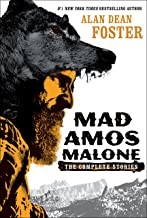
Alan: Folks are fascinated by the mountain men who explored the American west. I thought it would be interesting to develop one who acts and lives like your typical mountain man, but who is considerably More Than He Seems. When you like a character but are never sure how he will react in a given situation it adds tension to a story. Think the character of Mike in “Breaking Bad”. Not quite what he seems. Also, in the end, thoroughly bad ass.
Kaye: In 1985 you wrote a novelization of the movie Pale Rider, with Clint Eastwood. How did that come about? Did you get to meet any actors from the movie? Did you consult with the screenwriters during the writing? What was the most difficult thing about doing a novelization?
 Alan: Authors of film adaptations rarely get anywhere near a movie set (though I have, on occasion). Certainly I never met or consulted with anyone attached to the movie.
For me, the most difficult thing in doing a novelization is to expand on the characters without contradicting the characterizations in the film itself. That, and remaining true to the spirit and style of the filmmakers while simultaneously injecting a little bit of myself here and there. You always have to be aware.
 Kaye: You have a story in Straight Outta Tombstone. The anthology is listed as fantasy, but its stories have kind of a western twist. Would you talk a little about that book?
Alan: The stories are fantasy with, generally, settings in what is called the American West. I think it would be more accurate to called them westerns with a fantasy twist. Fantasy or science-fictional takes on actual history are a lot of fun to do, and can often be thought-provoking. Call it the “What if the South had won the Civil War”? trope, only often with more recognizable fantasy elements.
Kaye: What’s the most fun part of writing a western novel or short story? What’s the least fun part?
Alan: Working with actual western history. Many of the Mad Amos stories take place in actual western settings and involve real folks from history. Just with the occasional witch, dragon, Chinese demon, visiting gnomes, etc.
Kaye: What time of day do you prefer to do your writing? Why?
Alan: Mornings, because I’m fresh, and also because I prefer to go to gym in the afternoon. But I will work late if and when necessary. And if an idea hits me, I’ll head for the study no matter what time it is.
Kaye: What is the biggest challenge of being a writer?
Alan: Not getting bored with your own work. And persisting even when you are.
Kaye: What is the one thing in your writing career that is the most unusual or unique thing you’ve done so far?
Alan: I think my historical novel MAORI, which takes place in 19th-century New Zealand. That’s a long way from writing science-fiction or fantasy. Very hard to research such a subject from Prescott in pre-internet days. Might also consider SHADOWKEEP, which was the very first novelization of an original computer game.
Kaye: What do you think is the single most important element in a story?
Alan: Character. If your characters aren’t interesting, then you’ve lost the reader no matter what kind of language, special effects, settings, or action you employ. True of any kind of writing, be it theater, film, prose, even commercials.
Kaye: When did you know you wanted to be an author?
Alan: When I made my first two short story sales, to August Derleth and John W. Campbell. I figured if two giants in the field thought my words worth buying, I might have a shot at doing it full-time.
Kaye: What’s the best piece of advice you were ever given?
Alan: Don’t make your heroes too powerful (Campbell). You can be interested in Superman, but it’s hard to empathize with him. Hence the need to invent kryptonite.
Kaye: Which is your favorite type of writing? Short fiction or novels?
Alan: I enjoy them both, but if pressed I’d have to say short stories. Get the idea down and out fast and dirty. I also very much enjoy writing non-fiction. Essays, movie reviews, history, etc.
Kaye: What is next for Alan Dean Foster? What are you working on now? Any more weird westerns in the future?
Alan: No weird westerns at the moment. Putting together The Complete Mad Amos Malone was a bit of a project in itself.
Forthcoming: April – The Unsettling Stars – original Star Trek novel set in the Kelvin universe. Later this year: Madrenga – original fantasy novel from Wordfire Press. The Director Should’ve Shot You – non-fiction; a history of my involvement with film novelizations from Centipede Press.
Hopefully next year: Mid-Death and other tales of the Commonwealth – a collection of all the short stories set in the Commonwealth, featuring the never before reprinted Midworld novella “Mid-Death”, from Haffner Press. Short story “The Treasure of the Lugar Morto” – Analog; no date yet.
Forthcoming at a future date: the completed Commonwealth novel Secretions and the stand-alone SF novel Prodigals.
I want to thank Alan Dean Foster for sharing with us here as we delve into the weird western. It looks like his work is cut out for him for the next couple of years. Obviously, many writing tips and tricks are not restricted to a single genre, but can be applied across them all. You can learn more about Alan and his books on his website or his Amazon Author page.
Like this post? Let me know in the comments. You can be sure not to miss any of Writing to be Read’s great content by subscribe to e-mail or following on WordPress. If you found this content helpful or entertaining, please share.
Share this:

“Death Wind”: The ghosts of the West do not rest easy
Posted: March 20, 2020 Filed under: Book Review, Books, Fiction, Paranormal, weird western, Western | Tags: Book Review, Death Wind, Inspiration, Jim Pinto, Paranormal western, Travis Heerman, weird western, Western, Writing to be Read 2 Comments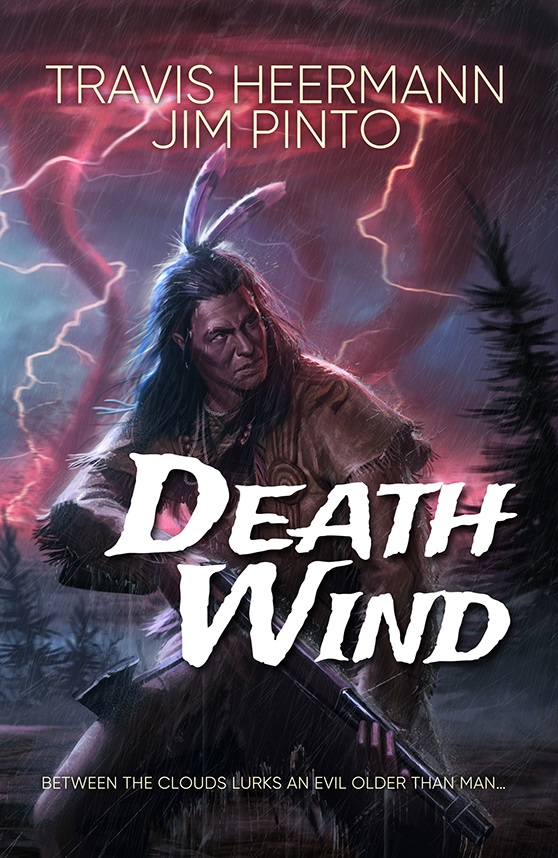
Death Wind, by Travis Heerman and Jim Pinto is a paranormal western, also known as weird western, that makes the reader believe in legends, if only for a short time. In a time of war between the white man and the Indians, there comes a foe of unspeakable power and cruelty only known through the stories of the native American people.
There is a great evil on the horizon, bearing down upon White Pine and the Lakota Souix reservation following the Wounded Knee Creek Massacre in 1891. The evil is hungry and it feasts on anyone in its path, threatening to consume them all, no matter the color of their skin. The only hope of survival lies in the ancient legends of the native peoples of the land and will unite white and Indian in a common goal.
Carefully crafted to produce graphic imagery and a captivating story line, Death Wind kept me reading until the last page. I give it five quills.

Amazon Buy Link: https://www.amazon.com/Death-Wind-Travis-Heermann-ebook/dp/B01L2EYKK8/ref=sr_1_1?keywords=Death+Wind+Pinto&qid=1583962493&s=books&sr=1-1
Kaye Lynne Booth does honest book reviews on Writing to be Read in exchange for ARCs. Have a book you’d like reviewed? Contact Kaye at kayebooth(at)yahoo(dot)com.
Share this:

Are You Up To The WordCrafter Challenge?
Posted: March 9, 2020 Filed under: Fiction, Paranormal, Speculative Fiction, Stories, weird western, Western, WordCrafter, Writing, Writing Contest | Tags: Paranormal western, Short Fiction, Short Fiction Contest, Short Stories, weird western, Western Paranormal, WordCrafter, WordCrafter Paranormal Western, Writing Contest, Writing to be Read 6 Comments
I wanted the 2020 WordCrafter Short Fiction Contest to be a challenge, to motivate authors and writers to reach outside their comfort zones and write a short story in a genre they maybe hadn’t tried yet. But, from the low number of entries received thus far, I’m wondering if I didn’t scare a lot of writers off when I named the genre as paranormal western.
It’s one of those combination genres that have risen up in recent times, also called weird westerns, that has both elements of western and elements of paranormal. I presented it as western ghost stories, because the old west has plenty of potential for ghosts. (Mark and Kym Todd’s Wild West Ghosts is filled with the stories of many real life characters whose ghosts are said to haunt the west today, if you’re looking for inspiration.) However, I fear our friends abroad may be shying away because they just don’t know a whole lot about the American western frontiers.
While westerns usually take place in the American west, they don’t have to. The movie Quiggly Down Under, with Tom Sellak comes to mind, taking place in the Australian Outback, but with plenty of western elements. Every country has its own frontier history that helped to shape it, some may be still developing their frontiers. So, let me re-itterate, a western does not need to be set on the American frontier, but it does need to have some of the elements of the western genre. Man (or woman) against the elements, man (or woman) fighting for justice in an untamed landscape where the only law may be what he (or she) can manage to dole out. Western characters lead nomadic lifestyles, carry guns, ride horses, drink whiskey and face their own mortality, sometimes on a daily basis.
Weird westerns tend to use these elements, but they add elements of the paranormal or speculative fiction. I’ve reviewed a few and found their authors to be quite creative in combining the two genres. Chris Barili’s Hell’s Butcher series features a gun toting Marshall who is tasked with keeping all the outlaws in hell and tracking down any who happen to escape into the realm of the living. In DeAnna Knippling’s Chance Damnation is a paranormal western fantasy, where hell breaks through and wreaks havoc on the western frontier. And a book that I’m reviewing this month is Death Wind, by Travis Heerman and Jim Pinto, tells a tale of ancient Indian legends come to life. (You can catch my review of this book on Friday, March 20th).
So, with this in mind, I’m asking each of you to re-consider entering your own paranormal western short in the 2020 WordCrafter Short Fiction Contest. It’s only $5 to enter, and the winner will be featured in the resulting anthology and receive a $25 Amazon gift card. Other entries may also be included in the anthology by invitation, so get those entries in to me by April 30. There’s still time, and you can find the complete submission guidelines here: https://wp.me/pVw40-49e
Like this post? Let me know in the comments. You can be sure not to miss any of Writing to be Read’s great content by subscribe to e-mail or following on WordPress. If you know other writers that might be interested, please share.
Share this:

Riding the Landscape of Westerns in March
Posted: March 2, 2020 Filed under: Books, Fiction, Historical Fiction, weird western, Western, western romance, Writing to be Read | Tags: classic western, weird western, Western, western romance, Writing to be Read Leave a comment
The western genre has always been about man against the elements, man against man, and man against nature. Western heroes are tough and rugged, and ready to face outlaws, Indians, wild animals, and any inclement of bad weather to uphold right and see justice done. In the western genre that I grew up with the good guys wore white hats and the bad guys wore black, and there was no question as to who was who. Cowboys were rough and rowdy, but they were gentleman when a lady was present, tipping their hats and addressing her as Ma’am. There was a clear sense of right and wrong in westerns written by Louis L’Amore and Zane Grey, and right always won out in the end.
Today’s westerns are different. Although you can still find the classic western with authors such as my “Chatting with the Pros” author guest, Cherokee Parks, or the guest for my supporting interview, Alan Dean Foster. But, the western of today isn’t as clear cut. Today’s westerns look past lawmen and outlaws to the less known factions of western society, with protagonists such as soiled doves, Indians, Negroes, and immigrants from many different countries, who may be looked down upon by some as less desirable, so they must work harder to convince the reader that they are the good guy. They portray segments of the western populations which have been previously overlooked or devalued. Although members of near invisible populations, they were a part of the western culture and western fiction is now giving them voice. The tales may be fiction, but the portrayal of life in the western landscape is not romanticized as much as it once may have been. It may be more stark and brutal in many ways, but they are true to the places and times of their settings.
In the western genre market, there are more female authors than ever before, and that means more female protagonists. A woman as main character can’t be a delicate flower who cowers behind her man as in westerns of old. The women of the west were tough, because they had to be. It was often a matter of survival. Even in western romance, the women are strong willed and determined, and they play many different roles on the western frontier. We all know that many women made a living in the parlor houses, bordellos, and saloons, but women played many other roles on the western frontier, and today’s western authors are capitalizing on that.
 My own western, Delilah, features a tough and gritty female protagonist who, at the age of nineteen, is already hardened against life’s trials. Although not actually a romance, it does have that romance element, but she must learn to love again before that story line can come to completion. Delilah is being re-released this month with a great new cover, (designed by WordCrafter), and new front materials, including forewords by western authors Robert Hanlon and C. Emerson Law. I’m looking for feedback, so please let me know what you think of the new cover in the comments.
The historical westerns of Loretta Miles Tollefson, such as her short fiction collection, Old One Eye Pete, which I’ll be reviewing, are embedded in New Mexico territory in the 1800s. Many of Tollefson’s books feature tough female protagonists who do what they must to survive the harsh landscape and harsher men of the times, who rise above the traditional female role through strength and courage. I think an author must work harder to sell to women characters in non-traditional roles to the reader, but if written well, they make interesting and, often colorful characters that enhance their stories. readers don’t want to put down. Western romance is in abundance. At the end of March, Writing to be Read will feature a special post about my experience as a judge of the western romance category, including reviews of some of my favorite entries.
But in contemporary times, space westerns venture into the science fiction genre, and there are even western fantasy stories, such as the steampunk western romance series of Jordan Elizabeth. Westerns have branched out to combine with the paranormal, creating the weird western sub-genre, such as Death Wind, by Travis Heerman and Jim Pinto, which I will be reviewing this month. This sub-genre is growing in popularity as authors realize the potential for supernatural tales from the old west. The western frontier leaves behind many ghosts and contemporary authors are realizing their story potential.
Paranormal western is the genre for the 2020 WordCrafter Short Fiction Contest, but there have only been a few entries. I think maybe authors shy away from the western genre, especially those outside the U.S. that are not so familiar with the history of the American frontier. But the American frontier is not the only possible setting for a western story. Think Quiggly Down Under, for a western story set in the Australian Outback. Every country has western style stories in their history. As long as there is a western element and a paranormal element of some type in your story, it qualifies as an entry. It can be about zombies rambling over the western prairie, on vampires nesting in the Rockies. It can be a haunted hotel or saloon in a frontier town, or a restless spirit that refuses to pass on until the hombre that pulled the trigger on them pays for what he done. If you are a creative writer, then step up and take the challenge to write a paranormal western and send it to me. The deadline is April 30th, so there’s still plenty of time. Don’t forget, the author of the winning story will receive a $25 Amazon gift card. You can find the complete submission guidelines here.
Join us on Writing to be Read as we ride the landscape of the western genre and explore the possibilities. The western genre is alive and well today, although it may look different than expected. I love to hear from readers, so be sure to leave a comment to let me know you’ve visited. Also feel free to like and share.
Reviews of westerns by Loretta Miles Tollefson:
Reviews of steampunk western romances by Jordan Elizabeth:
Reviews of weird westerns:
Hell’s Butcher series, by Chris Barili
Chance Damnation, by DeAnna Knippling
2019 interviews with western authors:
Scott Harris – classic western
Juliette Douglas – western romance
Patricia PacJac Carroll – Christian western romance
Loretta Miles Tollefson – historical western
Like this post? Let me know in the comments. You can be sure not to miss any of Writing to be Read’s great content by subscribe to e-mail or following on WordPress. If you found this content helpful or entertaining, please share.




















