Mind Fields: My Eating Disorders
Posted: June 23, 2025 Filed under: Commentary, essays, Mind Fields | Tags: Arthur Rosch, Eating Disorders, Mental Health, Mind Fields, Writing to be Read Leave a comment
Keeping The Faith (While Completely Fucked Up)
Arthur Rosch
January 22, 2021, The Year Of The Great Fungus
I have a conceit, i.e. that I should hold the title as “The World’s Most Fucked Up Person”. The only problem is that all of you would also like to hold this same title. Don’t try to con me. I know what you think. The only reason I know what you think is that it’s the same thing that I think.
Or. I used to think. When I recognized that each of us claims this title as the most neurotic person on Earth, I began to have more confidence in myself. Surely, I reasoned, if I am exactly the same amount of fucked up as everyone else, then I must belong to this Family of Man. I’m human. And we all know that there is great dignity to being human. We are builders of pyramids, makers of satellites and space ships.
I have a very weird relationship with food. The first time I grasped that I was deeply crazy was when I began to eat huge amounts of food. I indulged especially in sweets. If I were to make a pie chart of my life (and refrain from eating it), I’m sure it would show huge chunks of time in the bulimia/anorexia’ zone. The worst of my food disorders followed me through adolescence; years seventeen through twenty two. I was out in the world, trying to maneuver by being on or near college campuses.
I had a sneaky way of being anorexic. I deluded myself into thinking that this was a spiritual discipline. I was drawn to exotic food disciplines, like Macrobiotics. It would get me high, exalt me spiritually. By eating small portions of brown rice and onions, chickpeas in barley, I was the paragon of yogic discipline. This was who I wanted myself to be. I got skinny. I weighed 125. On top of this I was taking LSD and smoking weed. I was deep into my purpose, my destiny of becoming a musician of salvation and a figure of reverence. The things that young people think: oh my god!
Then I came to a breaking point. After a year of Macrobiotics I had such a craving for a peanut butter and jelly sandwich that I bought the ingredients and took them back to my hidey hole. “What are you doing?” I asked myself. “This is a self betrayal, this is the opposite of Macrobiotic food. You asshole, what a failure you are!” So I ate it. Then I ate something else sweet and gooey. Then I couldn’t stop eating every kind of junk food on the planet. I had been like a spring ready to snap. Boing!
I was so ashamed of myself. This was 1967, before eating disorders had been invented. I was a pioneer. My bulimia wasn’t the pukey kind. It was the Exercise Freakishly type of bulimia, the one where on alternate days I would purge with sweat and effort, then follow with a day of relentless eating: an entire apple pie, backed up by a half gallon of ice cream. After that came the cookies, and so forth. One day exercising. One day binge eating. Back and forth, one followed the other, for more than a year. I looked for help. I went to the college shrink. He said, “I don’t know what’s happening to you and I can’t help you. Besides, you’re not even enrolled as a student at this college”
I lost weight during this time. My waist was a twenty nine or thirty. I was living in a vacant student’s quarter, avoiding the security guys and bedding down with a pad and sleeping bag. I got money from my dad. I worked as a stable boy at a local horse ranch. A stable boy.
I had my drums stashed at the university’s music building in a practice room. I practiced there for hours every day, getting high by all means and experimenting with the limits of my technique. That was the point of not going to college. I let my dad pay for semesters at Western Reserve or Wayne State and then I would slip down to Yellow Springs from Cleveland and hang out with people who talked to trees. I would practice all the time, working through the famous “Stick Control” book and listening to Coltrane records.
This was a pleasant period that lasted about a year. I think that I’m conflating two different periods of time. It doesn’t matter. That’s the way memory works when it sort of fails to work. I think there’s a memory bank in the brain and it gets filled up and needs to be purged once in a while. It’s all just story anyway. Life truly is fiction, it has to be. I just want a subject to write about and my life has been so bizarre that it qualifies as the stuff of novels. That poor guy (that is, myself) didn’t know what lay ahead. He thought that if he took enough acid, did yoga, ate rice and played the drums then he would launch himself into nirvana. It’s not a bad plan, really. The problem was that I was fractured psychologically, harboring behaviors that would shame me again and again.
These were adolescent ordeals, but they were precursors to my future. In 1967 my eighteen year old self dreamed of cosmic unity while the biggest thing that lay ahead of me was heroin addiction. I interrogated my psyche by reading about psychology. After that came years of therapy. I was determined to save myself.
It took a long time, but none of it can be repudiated. It’s lucky I’m still alive and well.
I’m still slightly food disordered. I control, compensate, manage. Mostly I exercise.
I get a lot of exercise.
________________
About Arthur Rosch
Arthur Rosch is a novelist, musician, photographer and poet. His works are funny, memorable and often compelling. One reviewer said “He’s wicked and feisty, but when he gets you by the guts, he never lets go.” Listeners to his music have compared him to Frank Zappa, Tom Waits, Randy Newman or Mose Allison. These comparisons are flattering but deceptive. Rosch is a stylist, a complete original. His material ranges from sly wit to gripping political commentary.

Arthur was born in the heart of Illinois and grew up in the western suburbs of St. Louis. In his teens he discovered his creative potential while hoping to please a girl. Though she left the scene, Arthur’s creativity stayed behind. In his early twenties he moved to San Francisco and took part in the thriving arts scene. His first literary sale was to Playboy Magazine. The piece went on to receive Playboy’s “Best Story of the Year” award. Arthur also has writing credits in Exquisite Corpse, Shutterbug, eDigital, and Cat Fancy Magazine. He has written five novels, a memoir and a large collection of poetry. His autobiographical novel, Confessions Of An Honest Man won the Honorable Mention award from Writer’s Digest in 2016.
More of his work can be found at www.artrosch.com
Photos at https://500px.com/p/artsdigiphoto?view=photos
___________________________________
Did you know you can sponsor your favorite blog series or even a single post with an advertisement for your book? Stop by the WtbR Sponsor Page and let me advertise your book, or you can make a donation to Writing to be Read for as little as a cup of coffee, If you’d like to show your support for this author and WordCrafter Press.
____________________________________
This segment of “Mind Fields” is sponsored by the Roberta Writes blog site, where you can find the poetry, photos, videos, and book reviews by Robbie Cheadle and so much more.
Share this:

Growing Bookworms – Reasons why reading is good for your child or teenager’s mental health
Posted: July 12, 2023 Filed under: Books, Children's Books, Growing Bookworms, Literacy, Reading, Reading Therapy, Teaching children | Tags: Children's Books, Growing Bookworms, Mental Health, Reading Therapy, Recomendations, Robbie Chedle, Writing to be Read 58 Comments
From March 2020 mental health increased world-wide and those affected include children and teenagers. Post-pandemic, mental health issues continue to be prevalent among children and teenagers. Although most children and teenagers who contracted Covid-19 did not experience severe symptoms, numerous mental health problems have emerged among children and teens exposed to the COVID-19 pandemic, including anxiety, stress, depression, panic, irritation, impulsivity, physical symptoms caused by mental or emotional factors, sleep problems, rapid and extreme changes in mood, post-traumatic stress disorder (PTSD), and suicidal behavior.
Reading to your child, or your older child or teenager reading to him or herself, has the following mental health benefits:
Reduces stress
Reading is a wonderful form of escapism for everyone, including children. Following the White Rabbit down a hole, going on an adventure with Will Solvit or Percy Jackson or travelling across America in a pioneer wagon with Laura Ingalls Wilder, all help children escape their problems for a few hours. Reading also aids concentration which reduces stress and tension. According to studies, 30 minutes of reading relieves the same amount of tension as doing 30 minutes of yoga.
Improves emotional development
Reading exposes children to characters in books who may be going through a vast spectrum of experiences and emotional responses. Reading about how characters in books react to situations and the emotions those characters have and express help children and teens to normalise their own emotional responses to situations. Children and teens can feel isolated if they think their reactions and emotions are unique and not experienced by others. Reading helps reassure children that the feelings they have are experienced by others in similar situations.
The Secret Garden by Frances Hodgson Burnett is a wonderful book to teach youngsters about inappropriate and spoiled behaviour and its consequences as well as demonstrating the worthiness of mature and considerate behaviour.
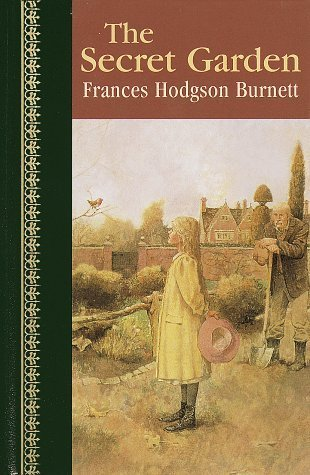
Blurb –
When orphaned Mary Lennox comes to live at her uncle’s great house on the Yorkshire Moors, she finds it full of secrets. The mansion has nearly one hundred rooms, and her uncle keeps himself locked up. And at night, she hears the sound of crying down one of the long corridors. The gardens surrounding the large property are Mary’s only escape. Then, Mary discovers a secret garden, surrounded by walls and locked with a missing key. One day, with the help of two unexpected companions, she discovers a way in. Is everything in the garden dead, or can Mary bring it back to life?
One of the most delightful and enduring classics of children’s literature, The Secret Garden has remained a firm favorite with children the world over ever since it made its first appearance. Initially published as a serial story in 1910 in The American Magazine, it was brought out in novel form in 1911.
Loneliness
This is particularly common in teenagers who feel isolated and lonely when they are caught up in a whirlwind of hormones that they don’t understand and can’t control. Teenagers want to be ‘part of the herd’ and the same as their friends and peer group. If they aren’t the same for various reasons including health issues, learning barriers or abilities, isolation can set in. Reading about other youngsters who are experiencing the same challenges or even unusual physical or intellectual achievements, helps promote self acceptance and reduce loneliness.
A good example of a book that involves peer pressure and the need to belong is Are You There God? It’s Me, Margaret.
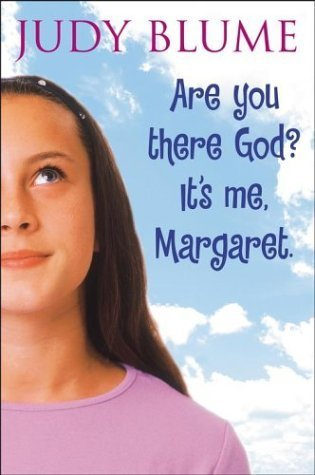
Blurb: Margaret Simon, almost twelve, likes long hair, tuna fish, the smell of rain, and things that are pink. She’s just moved from New York City to Farbook, New Jersey, and is anxious to fit in with her new friends—Nancy, Gretchen, and Janie. When they form a secret club to talk about private subjects like boys, bras, and getting their first periods, Margaret is happy to belong.
But none of them can believe Margaret doesn’t have religion, and that she isn’t going to the Y or the Jewish Community Center. What they don’t know is Margaret has her own very special relationship with God. She can talk to God about everything—family, friends, even Moose Freed, her secret crush.
Margaret is funny and real, and her thoughts and feelings are oh-so-relatable—you’ll feel like she’s talking right to you, sharing her secrets with a friend.
Reduces depression and anxiety
Reading a good book full of joy and happiness helps lift low spirits. For example, reading about the dwarves and Bilbo enjoying clotted cream and honey on freshly baked bread at the home of Beorn, is uplifting. Reading about Harry Potter and his friends defeating Voltemort and his Deatheaters is absorbing and fills the reader with courage and enthusiasm. Many books give the reader a wonderful sense of well being and satisfaction when the adversity comprising the plot is resolved.
Developing social skills
Reading helps youngsters learn how to negotiate and deal with different social situations. It teaches them about romance and the emotions of love, and also rejection and sadness when romance ends or goes wrong. Reading about other people experiencing traumatic and difficult situations helps develop empathy and facilitates the development of meaningful relationships with different people from different backgrounds, cultures and religions.
I am David by Anne Holm is a wonderful book to teach children about gaining social skills. David has to learn to socialise with Maria and her brothers after he saves her from the fire. It is difficult for David who grow up in a concentration camp and only socialised with adults held in captivity.

Blurb – David’s entire twelve-year life has been spent in a grisly prison camp in Eastern Europe. He knows nothing of the outside world. But when he is given the chance to escape, he seizes it. With his vengeful enemies hot on his heels, David struggles to cope in this strange new world, where his only resources are a compass, a few crusts of bread, his two aching feet, and some vague advice to seek refuge in Denmark. Is that enough to survive?
David’s extraordinary odyssey is dramatically chronicled in Anne Holm’s classic about the meaning of freedom and the power of hope.
Winding down
Reading is a wonderful way for children and teens to wind down before sleeping. Today’s children and teens are continuously busy and subject to an endless barrage of mental stimulation. This can make sleep elusive and lack of sleep is very bad for mental health. Reading before bed is the perfect way to wind down after a long day.
About Robbie Cheadle
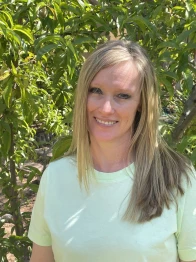
Award-winning, bestselling author, Robbie Cheadle, has published thirteen children’s book and three poetry books. Her work has also appeared in poetry and short story anthologies.
Robbie also has two novels published under the name of Roberta Eaton Cheadle and has horror, paranormal, and fantasy short stories featured in several anthologies under this name.
The ten Sir Chocolate children’s picture books, co-authored by Robbie and Michael Cheadle, are written in sweet, short rhymes which are easy for young children to follow and are illustrated with pictures of delicious cakes and cake decorations. Each book also includes simple recipes or biscuit art directions which children can make under adult supervision.
Robbie’s blog includes recipes, fondant and cake artwork, poetry, and book reviews. https://robbiesinspiration.wordpress.com/
Share this:

Mind Fields: My Eating Disorders
Posted: March 5, 2021 Filed under: Exposition, Memoir, Mental Health, Mind Fields, Nonfiction, Reflections | Tags: Arthur Rosch, Eating Disorders, Memoir, Mental Health, Mind Fields, Writing to be Read Leave a comment
The first time I grasped that I was deeply crazy was when I began to eat huge amounts of food. I indulged especially in sweets. If I were to make a pie chart of my life (and refrain from eating it), I’m sure it would show huge chunks of time in the bulimia/anorexia’ zone. The worst of my food disorders followed me through adolescence; years seventeen through twenty two. I was a “student” out in the world, trying to maneuver by being on college campuses.
I had a sneaky way of being anorexic. I deluded myself into thinking that this was a spiritual discipline. Macrobiotics. It would get me high, exalt me spiritually. By eating small portions of brown rice and onions, chickpeas in barley, I was the paragon of yogic discipline. This was who I wanted myself to be. I got skinny. I weighed 125. On top of this I was taking LSD, DMT and smoking weed. I was deep into my purpose, my destiny of becoming a musician of salvation and a figure of reverence. I hope you can hear the self mockery in my tone.
Then I came to a breaking point. After a year of eating a strict Macrobiotic diet I had such a craving for a peanut butter and jelly sandwich that I bought the ingredients and took them back to my hidey hole. “What are you doing?” I asked myself. “This is a self betrayal, this is the opposite of Macrobiotic discipline. You asshole, what a failure you are!” So I ate it. Then I ate something else sweet and gooey. Then I couldn’t stop eating every kind of junk food on the planet. I had been like a coiled spring ready to bounce. Boing!
I was so ashamed of myself. This was 1967, before eating disorders had been invented. I was a pioneer. My bulimia wasn’t the pukey kind. It was the Exercise Freakishly type of bulimia, the one where on alternate days I would purge with sweat and effort, then follow with a day of relentless eating: an entire apple pie, backed up by a half gallon of ice cream. After that came the cookies, and so forth. One day exercising. One day binge eating. Back and forth, one followed the other, for more than a year. It was insane and I knew it. I got so unhealthy that I could pull out hands full of my own hair! I looked for help. I went to the college shrink. I was desperate. He said, “I don’t know what’s happening to you and I can’t help you.”
Ironically, I lost weight. My waist was a twenty nine or thirty. I was not a registered student any more, I had dropped out. I was living in a vacant student’s quarter, avoiding the security guys and bedding down with a pad and sleeping bag. I got money from my dad. I worked as a stable boy at a local horse ranch. I had my drums stashed at the university’s music building in a practice room. I practiced there for hours every day, getting high by all means and experimenting with the limits of my technique. That was the point of not attending classes. I let my dad pay for semesters at Western Reserve and then I would slip down to Antioch College in Yellow Springs from Cleveland and hang out with people who talked to trees. I practiced with relentless vigor, working through the famous “Stick Control” book and listening to Coltrane records.
Wait a minute. I’m conflating two different periods of time. It doesn’t matter. That’s the way memory works. It’s all narrative but sometimes the pages are out of order. I find myself more objective about my life as I get older. My life has been so bizarre that it qualifies as the stuff of novels. That poor guy (that is, myself) didn’t know what lay ahead. He thought that if he took enough acid, did yoga and meditation, ate rice and played the drums then he would launch himself into nirvana. It’s not a bad plan, really. The problem was that I was fractured psychologically, harboring behaviors that would shame me again and again. They would almost kill me.
These were adolescent ordeals, but they were precursors to my future. In 1967 my eighteen year old self dreamed of cosmic unity while the biggest thing that lay ahead of me was heroin addiction. I interrogated my psyche by reading Jung and Freud. After that came years of therapy. I was determined to save myself.
It took a long time, but none of it can be repudiated. I am lucky to be alive and well.
I’m still slightly food disordered. I control, compensate, manage. Mostly I exercise and pray.
______________________________________________________________________________________

Arthur Rosch is a novelist, musician, photographer and poet. His works are funny, memorable and often compelling. One reviewer said “He’s wicked and feisty, but when he gets you by the guts, he never lets go.” Listeners to his music have compared him to Frank Zappa, Tom Waits, Randy Newman or Mose Allison. These comparisons are flattering but deceptive. Rosch is a stylist, a complete original. His material ranges from sly wit to gripping political commentary.
Arthur was born in the heart of Illinois and grew up in the western suburbs of St. Louis. In his teens he discovered his creative potential while hoping to please a girl. Though she left the scene, Arthur’s creativity stayed behind. In his early twenties he moved to San Francisco and took part in the thriving arts scene. His first literary sale was to Playboy Magazine. The piece went on to receive Playboy’s “Best Story of the Year” award. Arthur also has writing credits in Exquisite Corpse, Shutterbug, eDigital, and Cat Fancy Magazine. He has written five novels, a memoir and a large collection of poetry. His autobiographical novel, “Confessions Of An Honest Man” won the Honorable Mention award from Writer’s Digest in 2016.
More of his work can be found at www.artrosh.com
Photos at https://500px.com/p/artsdigiphoto?view=photos
_________________________________________________________________________________________________
Want to be sure not to miss any of Art’s “Mind Fields” segments? Subscribe to Writing to be Read for e-mail notifications whenever new content is posted or follow WtbR on WordPress. If you find it interesting or just entertaining, please share.
Share this:

Words to Live By – Losing My Mind (in Real Life)
Posted: February 3, 2021 Filed under: Commentary, Creativity, Mental Health, Opinion, Self-Help, Words to Live By, Writing, Writing Life | Tags: Mental Health, Mental Illness, Words to Live By, Writing Life, Writing to be Read 3 Comments
The first Wednesday of every month, writer Jeff Bowles muses on life, creativity, and our collective destinies as makers of cool stuff. You’re a writer, but have you ever thought about how or why? Here are some words to live by.
Losing My Mind (in Real Life)
At three-thirty in the morning, I’m screaming at demons. There’s something inside me, something over which I have very little control, and it’s been at my throat for months. Somehow I’ve convinced myself the voice in my head belongs to a friend from graduate school, that she’s speaking to me telepathically over a great distance. She’s crueler than the person I remember, always mocking and deceiving me, but I don’t do the simple mental math. The voice tells me all sorts of things, and this is the first time I’ve ever been crazy, so I don’t necessarily understand I’m not supposed to listen.
Though I sleep dismally, I call her the very next morning. The real person I mean. I say crazy things, most of which I don’t remember now. A few days later, something even worse happens. An incident with the car in our driveway. My wife, she gets hurt. The voice told me she was trying to kill me, and I believed every word, so I attempted to flee the house and she ended up with six fractured ribs. God, some days are made in Hell. If I close my eyes, even five years later, it’s an easy vision to conjure, and it lays me low every time. This happened, it was real, and I was crazy, crazy, crazy, an animal, a lunatic, someone completely undeserving of justice or fairness or something simple and clean like compassion.
I made a mess of my life, ended up in jail, in court, on a psychiatric ward, and I have had to cope with a version of myself from that time I cannot excuse, someone vulgar and unhinged, someone barely hanging on. I won’t go into details that are still too painful to write in blunt, unadulterated language. The pressures of life had gotten to me, an unexpected barrage of one thing after another, as life is known to dish out. Unexpected health issues, loss of a job, unable to pay the mortgage. No, I’d never heard voices before, but that doesn’t mean I’m worthy of forgiveness. My loved ones keep telling me I should finally let go, be kind to myself on this front, realize people make mistakes, that these things can and do happen and that none of it makes me a bad or dangerous person. I find it difficult to believe what they say. Scratch that, I find it impossible. It’s a miracle no one was killed.
Many prominent creative voices throughout history have commented on the clear and seemingly causal link between mental illness and creative genius, but not every dork with a science fiction and fantasy fetish and a couple of short story sales goes full tilt into lunacy. It’s not in my nature to describe myself in lofty terms. It’s not in my nature to think of myself very fondly at all, and that’s perhaps where dark things like this take root. Whatever creative abilities I’ve been granted and have spent years honing seem to have come at a cost. I knew I had depression at a very young age, but schizophrenia, I didn’t even know what that was.
It’s like this: you can’t trust your thoughts, your senses, your worldly experience. You will hear voices and smell phantom aromas and see things that aren’t there. You’ll think delusional thoughts every once in a while, strange ruminations and lines of logic that make perfect sense at the time they occur. If you’re lucky, medication will help, and counseling will teach you skills you can lean on that boil down to keeping it real, keeping it present, leaning on others if you’re having a truly difficult time distinguishing fantasy from reality. Don’t listen when you think you hear your friend from school. Don’t listen when you think you hear your friend from school. Don’t listen when you think you hear your friend from school.
There were nights I was so terrified I couldn’t imagine surviving till morning. These voices, they torture you in all sorts of creative and intimate ways. They make fun of you in the toilet, in the shower, when you’re dressing in the morning. They con you into driving recklessly in city traffic, convince you your counseling appointment has been canceled, and that in fact, you don’t really need counseling anyway. At some point, the ruse couldn’t sustain, and I finally realized I wasn’t speaking with my friend. Sensibly, tardy as usual, I asked to whom or what I was in fact speaking, in my head, in the room, just out of sight.
It said it wanted to be called Dave. Just Dave. And the more my wife and I used the name as shorthand, the more it seemed appropriate. Dave, like some faceless person who could be anyone or anything at any time. Dave, a personality that might be normal or might be abnormal, just depended on the day. And now when I write, even a simple essay like this one, I feel as though Dave is guiding my fingers over my laptop keyboard.
I can feel him looking out my eyes sometimes. He wiggles my toes and fidgets when I’m barely paying attention. He’s in me, he is me, yet they say he’s not the conscious, aware me. If my id expresses itself thusly, what the hell is wrong with me? Is it any wonder the book I wrote about that insane, scary time depicts Dave as a full-stop demon? Not a biproduct of janky biochemistry or a brain or emotional disorder, but rather something separate and inhuman? Took me two years to write that book. I still can’t stand to read a single word of it.
I wasn’t myself. It must be a constant reminder, or the truth is the person I am today, the person I’ve always believed myself to be, he’s a lie. And this is something I can’t accept. You must take action when your own wounding wounds others. It’s a teaching moment, a failing you can catch like a falling aspen leaf. It was a shot across the bow, an opportunity to reorient myself, look at my life and everything I’ve created and done not as the end-all-be-all, but as a small component of who I am in full. Each and every time Dave speaks to me, I can silently rebuke or ignore him and remind myself what real humility and humanity look like.
They look like the patients at the psych hospital who’d just survived suicide attempts and psychotic episodes. How gentle and caring they seemed. Not like me, strapped to a hospital bed, screaming my head off, trying to cut my wrists in a pretty useless fashion, thinking the Velcro ties would do the trick. Humility and humanity look like the caregivers—yes, even the guards at the county jail—who could’ve condemned me but instead took pity on me, tried to protect and treat me.
Even five years later, I awake sometimes from nightmares. He’s always there, but thankfully, so am I. Watchful, careful, repentant. Honestly, not at all interested in returning to that place ever again. I could’ve lost so much. It all could’ve ended so much worse. My blessings, I do my best to count them, but I know I could do far more. Recovery is a long process, or at least it can be, and it’s a bumpier ride than most people give it credit for being. But I have to go through it. It’s an imperative. Being better to people, hoping one day to learn to be better to myself. Leave the creative stuff aside. In fact, leave everything aside that is surface-level and cheap. Maybe it’s what I came here to do. Maybe it’s what we all came here to do.
If you or anyone you know is suffering severe mental health issues right now, I urge you to seek help. Especially in the middle of this pandemic, it’s a huge issue for many, and we owe it to ourselves, our friends, and our family to treat it with respect. There’s hope, there’s survival, and there is recovery. I’m proof of that. We all deserve to be the best versions of ourselves. All of us. I pray and hope for the best life has to offer, and I pray and hope the same for you as well. Safety, happiness, generosity, and love. Sanity most of all, my friends. Until next month.
Jeff Bowles is a science fiction and horror writer from the mountains of Colorado. The best of his outrageous and imaginative work can be found in God’s Body: Book One – The Fall, Godling and Other Paint Stories, Fear and Loathing in Las Cruces, and Brave New Multiverse. He has published work in magazines and anthologies like PodCastle, Tales from the Canyons of the Damned, the Threepenny Review, and Dark Moon Digest. Jeff earned his Master of Fine Arts degree in creative writing at Western State Colorado University. He currently lives in the high-altitude Pikes Peak region, where he dreams strange dreams and spends far too much time under the stars. Jeff’s new novel, Love/Madness/Demon, is available on Amazon now!
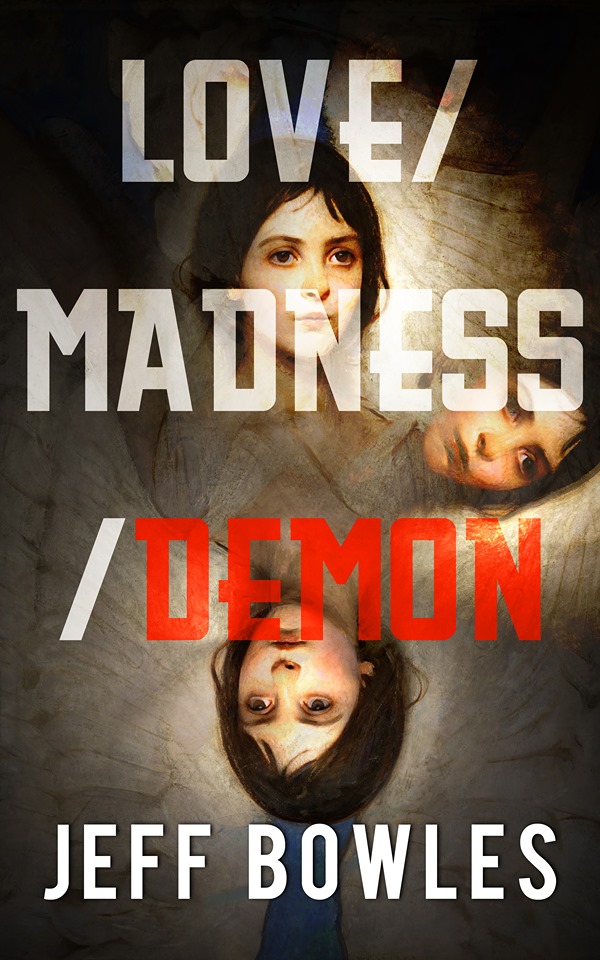
Check out Jeff Bowles Central on YouTube – Movies – Video Games – Music – So Much More!
Want to be sure not to miss any of Jeff’s “Words to Live By” segments? Subscribe to Writing to be Read for e-mail notifications whenever new content is posted or follow WtbR on WordPress. If you found this useful or just entertaining, please share.
Share this:

Words to Live By – Creativity, Mourning, and the Year 2021
Posted: January 6, 2021 Filed under: Commentary, Creativity, Mental Health, Writing, Writing Life, Writing Tips | Tags: Creativity, Grief, Jeff Bowles, Mental Health, Words to Live By, Writing Life, Writing to be Read 1 CommentThe first Wednesday of every month, writer Jeff Bowles muses on life, creativity, and our collective destinies as makers of cool stuff. You’re a writer, but have you ever thought about how or why? Here are some words to live by.
Creativity, Mourning, and the Year 2021
2020 was a rough year for all of us. To varying degrees, it was tense, stressful, tragic, contentious, and perhaps most surprisingly of all, dangerous. I had been hoping the new year would bring better tidings, but my 2021 thus far has been a doozy as well.
On January 2nd, one of my poor kitties passed away. It was very sudden, very sad. He was only two years old, and a sweeter animal you’ve never met. Then, just a couple days later, my father called to tell me a relative had died from complications related to Coronavirus and a recent injury. Needless to say, it feels like tragedy and sadness are still everywhere I look.
I’m not a pessimist or a cynic, and I almost always believe the future can be better. This month’s Words to Live By is about creative struggle. What do you do as a writer or a musician, an artist or photographer, when it seems like you’re surrounded by tragedy? How do you stay productive when you’re feeling down or scared or just plain fed up with life? Should you stay productive at all, or is it more appropriate to take some time for yourself?
As I’ve mentioned in other articles, my method of writing fiction is minimalist. I only write 400 words per day, and I typically don’t do it every day of the year. It’s low-commitment, and it keeps me on the ball over the weeks and months it takes to generate a new novel. Having a low workload has been enormously helpful over the past few days. By the same token, there’s been a lot of grief in my household, and I don’t mind admitting that having some kind of daily work process—any kind of process—has helped get my mind off things when it’s all become just a bit too much.
I’m also a musician, an independent singer songwriter, and I’ve got an entertainment channel on YouTube. This is a solution some people choose, work through the pain. It isn’t for everyone. Sometimes it can even develop into something we modern people have termed workaholism. And let’s be honest, there are times in life working through the pain isn’t an option. I’m a creator, and if I’m not creating, I tend to struggle. But we all know how grief goes. Yes, sometimes it can be a good idea to distract yourself, stay busy, keep your chin up, but then again, when we deny our own turbulent emotions too long, they can fester and become something much, much worse.
If you’re going through tough times at the moment, or if you’re just a bit shell-shocked from the surprises and pitfalls of 2020, you may want to take extra care of yourself and the people closest to you. Yes, most of us have become very good at looking after the health of our bodies, but what about the health of our hearts and minds?
About five years ago, my life was in shambles. Mental health issues, stress, and exhaustion got the better of me. At that time, I was forced to place all my creative drives and impulses on the backburner. Things were so chaotic for a while, I couldn’t possibly have written a single word, and the thought of picking up a guitar only filled me with dread. It was appropriate for me to quit at that time. Just up and quit. And what’s more, I wasn’t sure I’d ever pick any of it up again. I should’ve known I could trust myself to do what was right for me. In general, I should’ve known it was better to trust, to have faith, and to give myself the time and space I needed to recover. No guilt, just allow and help myself get well again.
Sometimes when we feel like giving up, it isn’t because we’re weak or because we lack longevity. Sometimes it’s because we do in fact have the right to give up. At least for a while. I’m here to tell you, when the deluge of life begins, and it doesn’t show any sign of stopping, it’s incredibly important to lay down what you need to lay down, take with you only what you require, and face the storm with all the confidence you can muster. The real question is whether or not you can recognize, as I failed to, that the work of life resides in the heart, in the soul, and that patience and self-compassion are incredibly important, crucial in fact.
Having modified my schedule some time ago has been beneficial. I can weather fiercer storms, but I’m always conscious of the fact that I don’t have to do it if it gets too challenging. I won’t work myself to the bone just because I think I have to, not anymore. I miss my dear relative, and truth be told, I miss my poor kitty. I suppose, like many of you, I’m also grieving the world as I once knew it.
Nothing lasts forever. All things pass away in time. That’s especially true of people, places, and eras. Like I said, I’m not a pessimist or a cynic. I believe the future can and will be better. If you’re experiencing similar thoughts and feelings, I urge you to consider your own needs. You may feel better working through it. Then again, you may not. Look at yourself, your strengths, and while you’re at it, look at your weaknesses in equal measure. And don’t be afraid to ask for help. I believe you’ll know what to do; as with most everything else we encounter, it’s all a matter of instinct and timing.
There’s no use denying it: sometimes life can be hard. But that doesn’t mean you have to suffer alone, suffer in silence, suffer instead of choosing to do what’s right for you and for the people you care about most. Take care of yourselves out there, everybody. I’ll talk to you again next month in Words to Live By.
Jeff Bowles is a science fiction and horror writer from the mountains of Colorado. The best of his outrageous and imaginative work can be found in God’s Body: Book One – The Fall, Godling and Other Paint Stories, Fear and Loathing in Las Cruces, and Brave New Multiverse. He has published work in magazines and anthologies like PodCastle, Tales from the Canyons of the Damned, the Threepenny Review, and Dark Moon Digest. Jeff earned his Master of Fine Arts degree in creative writing at Western State Colorado University. He currently lives in the high-altitude Pikes Peak region, where he dreams strange dreams and spends far too much time under the stars. Jeff’s new novel, Love/Madness/Demon, is available on Amazon now!
Check out Jeff Bowles Central on YouTube – Movies – Video Games – Music – So Much More!
Want to be sure not to miss any of Jeff’s “Words to Live By” segments? Subscribe to Writing to be Read for e-mail notifications whenever new content is posted or follow WtbR on WordPress. If you found this useful or just entertaining, please share.
Share this:

“Letters of May”: A collection of glimpses into mental illness from the inside
Posted: February 8, 2019 Filed under: Book Review, Books, Nonfiction | Tags: Book Review, Letters of May, Mental Health, Mental Illness, Writing to be Read 5 Comments
Letters of May is, to my knowledge, a unique collection of writings, poetry and artwork which offer glimpses of mental illness from an inner perspective. I can see how someone afflicted with any of the mental illnesses addressed within it’s pages might be grateful to find others who relate with them and the knowledge that they are not alone. These authors have vowed to fight against the stigma of mental illness and share of themselves openly.
For someone who is not afflicted, they offer opportunities to step into the authors shoes and see the world as they do. For the authors and others who are afflicted, dealing with their mental illness is a way of life, encountered on a daily basis. For me, they were a learning experience, identifying some things, but also exploring worlds foreign to my experiences.
These pages might be empowering to some, and enlightening to others. This collection was compiled with the intention of raising awareness of mental illness. Their message above all else: Those with mental health issues are more than their illness. They are still human beings and deserve to be treated with dignity and understanding. This book has much to offer all readers. I give Letters of May five quills.

Kaye Lynne Booth does honest book reviews on Writing to be Read in exchange for ARCs. Have a book you’d like reviewed? Contact Kaye at kayebooth(at)yahoo(dot)com.




















Voting For Sociopaths
Posted: November 17, 2025 | Author: artrosch | Filed under: Commentary, Mind Fields | Tags: consciousness, meditation, Mental Health, mindfulness, spirituality | 1 CommentIf you vote for a sociopath to serve in public office, you may be acting from your own sociopathic tendencies. Americans have succumbed to a sociopathic culture that is sad and shocking. It isn’t wealth or poverty that counts in the USA. It’s numbness to the suffering of others. It is disturbing that numbness has spread itself wide, that apathy has replaced interest in public discourse. The awful fact is that people are dead inside.
How do I know this? I know it from personal experience. I was also dead inside. Now, I have a bit of life within myself. I continue to fight this social and spiritual desolation. I am less dead than in the past. I use every tool I can grasp: therapy, meetings with a group, reading about psychology, learning about Consciousness itself.
Growing up in a typically dysfunctional family has left me reeling with emotional pain and often engaged in struggles with addiction and other debilitating conditions. I didn’t want this! I wanted to live free and happy, but that is neither possible nor even desirable. I have learned patience and the ability to frame my narratives of pain in terms that show their creative importance.
As far as I know, I was not “sent here” by anyone other then another faculty of my very core SELF. We need to understand that possession of a Self is a very high privilege, a vital connection between what is human and what is not of this world, but of some inner possibility. Selfness is a condition of consciousness, a unique and important faculty of identity. It isn’t random, it doesn’t come from nowhere. It comes from within the mind and the fact that there IS a mind at all is crucial.
Why? Why have a mind? Of what evolutionary use is a mind? All creatures have minds and some of them may be highly organized and developed. We have no idea what goes on in the mind of an animal like a whale or an elephant. It seems clear from observation that they are not automata. Nor are they entirely conditioned by nature. There is something else, something beyond our grasp, about the minds of other species. We are desperately uninformed. At best, we are guessing, by way of zoologists, veterinarians, communicators and empaths.
What if a blue whale knows about the cosmos in an entirely different way? What if its brain produces some profound psychedelic that eludes human beings? In its own way, as it sounds the depths, it may be swimming among the stars. Is there not an inner life within the life we see? Should not a bear possess an inner life? Does not its memory belong to the universe?
About Arthur Rosch
Arthur Rosch is a novelist, musician, photographer and poet. His works are funny, memorable and often compelling. One reviewer said “He’s wicked and feisty, but when he gets you by the guts, he never lets go.” Listeners to his music have compared him to Frank Zappa, Tom Waits, Randy Newman or Mose Allison. These comparisons are flattering but deceptive. Rosch is a stylist, a complete original. His material ranges from sly wit to gripping political commentary.
Arthur was born in the heart of Illinois and grew up in the western suburbs of St. Louis. In his teens he discovered his creative potential while hoping to please a girl. Though she left the scene, Arthur’s creativity stayed behind. In his early twenties he moved to San Francisco and took part in the thriving arts scene. His first literary sale was to Playboy Magazine. The piece went on to receive Playboy’s “Best Story of the Year” award. Arthur also has writing credits in Exquisite Corpse, Shutterbug, eDigital, and Cat Fancy Magazine. He has written five novels, a memoir and a large collection of poetry. His autobiographical novel, Confessions Of An Honest Man won the Honorable Mention award from Writer’s Digest in 2016.
More of his work can be found at www.artrosch.com
Photos at https://500px.com/p/artsdigiphoto?view=photos
___________________________________
Did you know you can sponsor your favorite blog series or even a single post with an advertisement for your book? Stop by the WtbR Sponsor Page and let me advertise your book or your site, or you can make a donation to Writing to be Read for as little as a cup of coffee, If you’d like to show your support for this author and WordCrafter Press.
___________________________________
This segment of “Mind Fields” is sponsored by the Roberta Writes blog site, where you can find the poetry, photos, videos, and book reviews by Robbie Cheadle and so much more.
Share this: