Jeff’s Movie Reviews – Wonder Woman 1984
Posted: January 8, 2021 Filed under: Action/Adventure, Comic books, Comic Hero, Jeff's Movie Reviews, Movie Review, Movies, Review, Super Hero, Super Villains | Tags: Comic Book Heros, DC Comics, Jeff Bowles, Jeff's Movie Reviews, Wonder Woman, Wonder Woman 1984, Writing to be Read 2 Comments
A Little Less Wonderful
by Jeff Bowles
When the first Wonder Woman film hit theaters three years ago, it was met with substantial fanfare. The Greek goddess superheroine is more than just a cultural phenomenon, she’s a feminist icon, a symbol of strength and nobility for millions of people all over the world. Her first major foray onto the big screen meant more to some people than anything else DC Comics has ever produced, so yeah, its sequel has quite a bit to live up to.
Wonder Woman 1984 is, if nothing else, an interesting product of its time, 2020, a year in which it was supposed to have been released in theaters in July. Coronavirus forced Warner Bros. to push the film until December, and the studio chose to do so by mixing a theatrical release with a special limited release on the home video streaming platform, HBO Max. So you can watch this movie right now at home for a small membership fee, kind of a remarkable thing in the history of cinema. New movies always used to be, you know, out at the movies. But now, who knows?
Subsequently, the flick has been met with much less fanfare than its predecessor enjoyed. Wonder Woman 1984 has been a success of sorts, but it’s doubtful to make much of an impact beyond that. The reasons for this aren’t merely limited to its precarious release schedule. The story makes some choices that keep it from being quite as wonderful as it deserves to be.

For one, Wonder Woman 1984 revolves around a somewhat ridiculous McGuffin that allows for wishes to come true. This is a comic book movie, of course, which I have to admit I’m a huge fan of, even when they’re loud and dumb. But it’s almost as if the entirety of the plot was constructed on a simple and somewhat lazy notion to resurrect one key dead character. That would be Chris Pine’s Steve Trevor, Wonder Woman’s traditional love interest. The movie works best when the two share screen time. Their chemistry is relatable and infectious, so it’s no surprise writer/director Patty Jenkins wanted to pull him back into the fold.
Also returning is Gal Gadot as the titular hero, and she’s still great. More comfortable this time around, perhaps, but then, she’s played the character a total of four times now. SNL alum Kristen Wiig joins the cast as a relatable if slightly goofy foil/villain whose wish to be just like Wonder Woman goes wrong in all the right ways. The Mandalorian’s Pedro Pascal plays Maxwell Lord, a DC bad guy who first appeared in a 1987 Justice League comic and who has now been given the 1984 self-help guru treatment. Pascal gives the guy a lot of juice. A lot of juice. Perhaps its best not to say too much more about it than that.
One of the problems with the movie is that it doesn’t seem to feel the need to indulge in 80s-themed nostalgia in any major way, not like other recent shows and movies set in the decade have done. Odd, considering they wanted me to know the year it takes place months and months before it ever came out. Oh, there’s some paltry lip service to the year 1984 scattered here and there. An early action set-piece takes place in a mall, for instance. But again, no 80s tunes or anything? No Simple Minds? No New Coke references? What gives, dudes?
Wonder Woman 1984 comes together all right in the end, but really, it’s just another example of a DC Comics adaptation that’s barely handled well enough to justify its own existence. I’m a pretty big comics fan when it comes down to it. Gosh, it’s getting harder and harder to compete in that space. They’ve already announced Wonder Woman 3. Let’s hope Patty Jenkins and Warner Bros. bring a bit more punch to the superhero party next time.
Jeff’s Movie Reviews gives Wonder Woman 1984 a Six out of Ten.
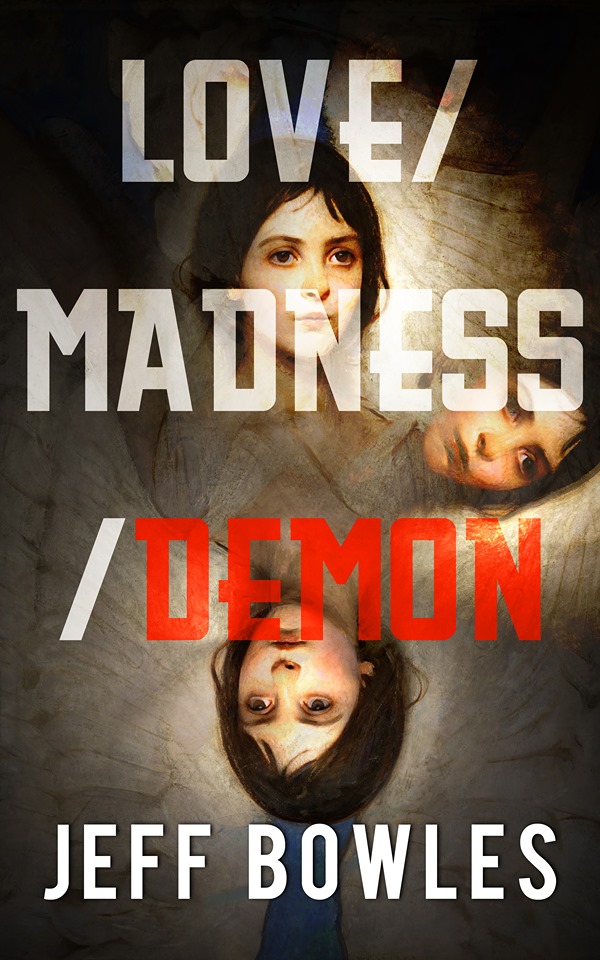
Jeff Bowles is a science fiction and horror writer from the mountains of Colorado. The best of his outrageous and imaginative work can be found in God’s Body: Book One – The Fall, Godling and Other Paint Stories, Fear and Loathing in Las Cruces, and Brave New Multiverse. He has published work in magazines and anthologies like PodCastle, Tales from the Canyons of the Damned, the Threepenny Review, and Dark Moon Digest. Jeff earned his Master of Fine Arts degree in creative writing at Western State Colorado University. He currently lives in the high-altitude Pikes Peak region, where he dreams strange dreams and spends far too much time under the stars. Jeff’s new novel, Love/Madness/Demon, is available on Amazon now!
Check out Jeff Bowles Central on YouTube – Movies – Video Games – Music – So Much More!
Want to be sure not to miss any of Jeff’s Movie Reviews? Subscribe to Writing to be Read for e-mail notifications whenever new content is posted or follow WtbR on WordPress
Share this:

Craft and Practice with Jeff Bowles – What’s the Use of Trunk Novels?
Posted: December 16, 2020 Filed under: Craft and Practice, Writing | Tags: Craft and Practice, Jeff Bowles, Trunk Novels, Writing, Writing to be Read 2 Comments
Each month, writer Jeff Bowles offers practical tips for improving, sharpening, and selling your writing. Welcome to your monthly discussion on Craft and Practice.
Everything old is new again.
Trunk novels. Everyone’s heard of them. Heck, odds are some of you have one or two lying around. Personally, I’ve got three. Three and a half, if you count a couple false starts from back when I was in my late teens and early twenties. I recently dug one out and started reading and editing it a bit, just to see if there’s a viable release opportunity for me in it.
I’m kind of a modernist when it comes to publishing. My background is in lots of short story publications, but when it’s come to book-length work, I’ve always gone the direct route and published things myself. The good news this year is that I’m already ahead of schedule on the next book I’m writing, which means I’ve got more than enough time to try and polish this older book, see if I can turn it into something presentable. It’ll take some time. Let’s face it, there’s not much in writing that can’t be improved or sharpened in some fashion. And it’s a trunk novel, which means I chose to hide it away for a reason.
That term, trunk novel, it’s got a slightly negative connotation, hasn’t it? It would seem to imply that if a book were any good, it would’ve gotten published rather than collected dust in some old trunk, either in reality or in the newfangled digital sense. This book I’m looking at, I wrote it about thirteen years ago. That’s kind if astounding, really. I also happen to have written it at a time my writing gifts were still in the soft-boiled state.
Although I do find the material worthwhile to pursue after a fashion, I just wasn’t a very good writer back then. That’s par for the course, if you ask me. So what are you to do if you’ve got some old book you’d like to resurrect, but the writing isn’t up to your present standards?
Well, I say do the hard work and chip away at it, bit by bit, until it looks a little better. Grab the opinions of a few beta readers, and then chip away at it again. The focus for me has been in shortening and cutting. Lots and lots and lots of cutting. I was a pretty verbose writer, so I expect to cut something like 30,000 to 40,000 words from a manuscript originally in the 120,000 word range. But you might have a very different task. Maybe you’ve got to make additions, or perhaps you’ll have to rewrite whole sections of it.
The truth is, if you really still believe in the story, you should be willing to do just about anything to give it a fair shot. And look, you have so many more publication options in the year 2021 than you had in decades past. The traditional route continues to be the preferred option for just about everybody out there, but it doesn’t necessarily need to be the case. Reviving an old work, hiring an editor, a book designer and cover illustrator, or doing your best with some or all of these duties yourself, it can be a very gratifying way of letting the world see something that likely would have never come up for air otherwise.
I’ve always thought hidden art is the worst kind. An alternative to publishing a more polished version of old material outright, of course, would be cannibalizing it for spare parts. This can be a really effective tool for future story development. Maybe the trunk novel has a second life in it. Is it possible it contains ideas or even entire passages or chapters you could lift out and use somewhere else? Sometimes being a writer under the gun is the same thing as being a Frankenstein-like doctor, assembling narrative monsters from bits here and bobs there.
Or, and let’s be perfectly frank about this possibility, maybe you’ll find the trunk novel needs to stay in the trunk. No problem with this. Perhaps it was meant to be. At least you know for sure now. The time I’ve taken to look at my thirteen-year-old manuscript has been well spent. So far, I haven’t seen anything too objectionable, nothing that can’t be fixed. Is it possible this kind of retreading takes more effort than simply drafting up a new story from scratch? Potentially, but again, it comes down to how much you like the work and how much you think it deserves to be seen.
That’s it for this month’s craft and practice, everyone. Until next month.
Jeff Bowles is a science fiction and horror writer from the mountains of Colorado. The best of his outrageous and imaginative work can be found in God’s Body: Book One – The Fall, Godling and Other Paint Stories, Fear and Loathing in Las Cruces, and Brave New Multiverse. He has published work in magazines and anthologies like PodCastle, Tales from the Canyons of the Damned, the Threepenny Review, and Dark Moon Digest. Jeff earned his Master of Fine Arts degree in creative writing at Western State Colorado University. He currently lives in the high-altitude Pikes Peak region, where he dreams strange dreams and spends far too much time under the stars. Jeff’s new novel, Love/Madness/Demon, is available on Amazon now!
Check out Jeff Bowles Central on YouTube – Movies – Video Games – Music – So Much More!
Want to be sure not to miss any of Craft and Practice with Jeff Bowles segments? Subscribe to Writing to be Read for e-mail notifications whenever new content is posted or follow WtbR on WordPress
Share this:

Craft and Practice with Jeff Bowles – Should You Write Every Day?
Posted: November 23, 2020 Filed under: Craft and Practice, Writing, Writing Life, Writing Tips | Tags: Craft and Practice, Jeff Bowles, Writing, writing advice, Writing Life, Writing Tips, Writing to be Read 3 CommentsEach month, writer Jeff Bowles offers practical tips for improving, sharpening, and selling your writing. Welcome to your monthly discussion on Craft and Practice.
The cure for common burnout?
I’m not a long-haul writer. I’ve tried to live by the adage a writer should write every day, and to be perfectly frank, there are monasteries in the world that live by less draconian standards. My best writing gets done when I work in spurts, crank out a project of one kind or another, take a break of weeks or even months, and then get back at it feeling refreshed.
By traditional standards, this is a pretty lazy and dysfunctional way to go about it. These things were determined long ago by the writing powers that be, and as far as they were ever concerned, it’s a bad idea to rest on your laurels when you could be mass-communicating incredible beauty and truth.
Milage varies on that last point, of course. Because after all, how can we communicate much of anything when we’re dog tired and in need of a rest?
If you’re like me, keeping up with a daily, monthly, yearly word count is hard work. For sure, being a writer is hard work anyway, so if we can make our jobs easier, even just a little bit, I think we owe it to ourselves to do so. But be warned, the advice which follows is not for the faint of heart. If the idea of going long-term without putting any words down sends you into an apoplectic fit, maybe stick to the way you’ve always done things.
I do, however, think you’ll find my method of working allows for much more personal freedom than the long-standing tradition of writing till you drop. Yes, you may get less done in a year. That is a distinct possibility. But do you want to know something funny? When polled, most writers who also work a typical nine-to-five job say they wish they had more time, and that if they did have more time, they’d produce far more writing.
But what if some of those writers are wrong? What if, somewhat counter-intuitively, more free time on our hands doesn’t always equal a higher rate of production? The thing about being an author of any kind is that it requires incredible creative and intellectual energy to pull off on a regular basis. Yes, taking breaks might damage your output. Then again, it may just boost it. You may also find that the quality of your writing improves the more slack you cut yourself.
I’m big on cutting writers slack. I think it’s incredibly important, and in my experience, most of us are simply too hard on ourselves. That’s really why my writing habits have developed this way. By nature, I’m hard on myself, which means if I don’t take breaks every now and then, I’m liable to tear myself down instead of fostering a mental attitude that helps me build myself up.
Now, the first thing to realize is that taking a break from your writing means your skills will not atrophy so much as cool down a little. Writing is not unlike riding a bike. You never forget how to do it. But let’s say you take a five-month hiatus, simply because you’re feeling worn out or you’ve got more important things going on in your life—happens all the time. After that five months, you might return to the craft a bit dismayed at your apparent lack of talent. Whatever you’re working on needs to be rewritten from page one, and it’s all because you took the lazy advice of that awful Bowles guy.
One key thing, of course, is that I never said to quit entirely. If you know you’ll be taking a siesta, if you can schedule that in for yourself, why not also schedule in some light exercises so you don’t feel like a total louse?
For instance, I write for this blog three times a month even when I’m not writing a book. Producing content for the internet is a great way to keep your skills in tip-top shape. You could also work on a short (and I do mean short) story or two, or in the very least, engage in some weekly finger exercises. It doesn’t really matter so long as you don’t miss the point. Rest, recuperation. This is the point.
Conversely, and this is always a good idea, you could increase your reading load. The worst kept secret of the craft is that reading a lot tends to make us better writers. And the good news is it doesn’t really matter what we read. The basic engagement of our minds in this way seems to keep our intellectual and communicative abilities primed. Reading’s good for you. It keeps the stupid at bay (it is to be hoped). Honestly, you should be doing it anyway, and if you’re not…
Another piece of advice I can offer is to decrease your writing load rather than to cut it off altogether. For a little while at least, try transforming your 2,000 word-per-day average into something more like 500 words-per-day. That’s not a bad count-up when averaged out over an entire year. If you could write a scant 500 words per day, you’d end up cranking out about 15,000 words in a month. That’s the equivalent of a novel or two in a year, and the best thing about it is that 500 words per day means you’re only writing for about an hour or so, half an hour if you’re quick. That doesn’t sound too daunting, does it? If you’re feeling burned out, this might be just what the doctor ordered.
And the truth of it is people do get burned out, fed up, exhausted, and all sorts of other tired-sounding descriptors that equal one thing: you’re a human being, not a machine. If you’re struggling with your work right now, if you’re having issues with confidence or anxiety or anything of the sort, try slowing down. Trust me on this, don’t even fret, your desire to write will return in all its power and glory, and then you’ll be ready to crank out another masterpiece.
You’ve got a masterpiece or two lurking inside you, right? That’s what I thought. Happy writing, everyone. Or perhaps I should wish you a happy vacation. I’ll be back with more Craft and Practice next month.
Jeff Bowles is a science fiction and horror writer from the mountains of Colorado. The best of his outrageous and imaginative work can be found in God’s Body: Book One – The Fall, Godling and Other Paint Stories, Fear and Loathing in Las Cruces, and Brave New Multiverse. He has published work in magazines and anthologies like PodCastle, Tales from the Canyons of the Damned, the Threepenny Review, and Dark Moon Digest. Jeff earned his Master of Fine Arts degree in creative writing at Western State Colorado University. He currently lives in the high-altitude Pikes Peak region, where he dreams strange dreams and spends far too much time under the stars. Jeff’s new novel, Love/Madness/Demon, is available on Amazon now!
Check out Jeff Bowles Central on YouTube – Movies – Video Games – Music – So Much More!
Want to be sure not to miss any of Craft and Practice with Jeff Bowles segments? Subscribe to Writing to be Read for e-mail notifications whenever new content is posted or follow WtbR on WordPress
Share this:

Craft and Practice with Jeff Bowles – The Odds and Ends of Worldbuilding
Posted: October 21, 2020 Filed under: Craft and Practice, Fiction, World Building, Writing, Writing Process, Writing Tips | Tags: Craft and Practice, Jeff Bowles, World Building, writing advice, Writing Process, Writing to be Read 1 CommentEach month, writer Jeff Bowles offers practical tips for improving, sharpening, and selling your writing. Welcome to your monthly discussion on Craft and Practice.
How Well Can You Play Jazz?
In the grand scheme of things, there are some elements of storytelling that make a larger impact than others. Character, point of view, scene, dialogue, these are all textual, the brass nuts and bolts your readers will engage with directly. Then there are elements of craft that are more supportive, behind-the-scenes, the framework and scaffolding that keep your story together.
Worldbuilding falls into this latter category. No matter what you do as a storyteller, regardless of genre or narrative intent, you will have to build worlds for your characters to inhabit. If you’re a genre writer (sci-fi, fantasy, horror, etc.) odds are you’re in need of more of this scaffolding than, say, a writer of contemporary adult fiction, or really, anything set in a non-magical or non-hyper-technological world.
For instance, if I want to write a family drama set in Waco, Texas, I can most likely get away with using my imagination. A gas station in Texas is the same as a gas station here in my home state of Colorado. A bar is a bar, a home is a home, a restaurant is a restaurant. Now, if I I’m a very skilled and enterprising writer, I might actually travel out to Waco, especially if I’ve never been there before. I might walk the streets, soak in the ambience, listen to how the locals talk, how they interact with each other. Nice, right? Conversely, I could do it the lazy way and just use Google Maps. You know, worldbuilding for slugs.
Don’t worry, there’s no judgement here. I’m slug number one. Anything worth doing is worth doing the easy way, or so my habitual procrastination always tells me. Still, you may find it difficult to easily jot off scene details when your story is set on an intergalactic space station, or in a magical realm full of wizards and dragons, or perhaps in a unique and genre-bending setting heretofore unimagined by non-writing mortals. Like dragons tearing ass through awesome space stations. Bestseller material. I’m sure of it.
As with everything, novice writers tend to lean on advice found on the internet or in books on craft published thirty years ago. Take it from your local writing advice guy, there’s nothing wrong with that. We all need instructors, examples, positive influences to look up to, no matter how experienced we become. Worldbuilding advice from certain genre masters includes meticulous research, lots of thinking and planning, note-taking, mapmaking, character family lineage, alien astronomy, mythical world histories, languages built on complete working syntax and sentence structures.
And far be it for me to second-guess the masters. However, it must be noted that even they aren’t huge on taking their own advice. I once had a professor who picked the brain of Fantasy author George R.R. Martin on this very subject. When asked how it was he built such engrossing, immediately present and lush worlds, Martin didn’t rattle off dry advice like, “I draw up detailed maps,” or, “I don’t write a single word until I have the look and feel of every fork and every knife placed on each house dining hall table.”
Nope. It seems the creator of the Game of Thrones series likes to wing it. He said, simply enough, that if he wanted a character to have a fork in her hand, he’d describe it on-the-fly and then move on to the next thing. Dialogue, for instance, which can convey information about a world in subtle yet effective ways. He’d then need to describe a goblet or a roaring fireplace into which his character could spit the unwanted rind of a piece of old cheese. Was there a history behind that fireplace? Yeah, maybe. And in this way, his worlds build themselves automatically. In other words, for him the process is organic, unrehearsed, true to the spirit of conjuring stuff from fairy dust and raw intuition.
Not to suggest Martin eschews preparation in every case, because I’m sure he doesn’t. Never start a book without thinking about it at least a little. You know not to do that, right? Stephen King offers similar advice to Martin’s in his seminal autobiography/writing manual, On Writing.
“Description should begin in the writer’s imagination and finish in the reader’s.”
By which he means an economy of words and ideas is our best friend. After all, we don’t write fiction to glorify our own intellects. At least not all of us do. We write to entertain, edify, enlighten, shock, or otherwise affect our readers. Let them participate. Don’t overburden them with extraneous fluff.
Generally speaking, I don’t do much worldbuilding. Some writers come to see it as a crutch, but I don’t think that’s true. It’s a matter of comfort and personal style. There are many highly skilled authors who do take the time to establish their working narrative milieus in exacting detail before committing them to an initial draft. I can’t fault them for this. I’ll just say that for the majority of us, especially those of us who are just starting out, all that detail can become a liability. What’s to stop us from using it—all of it—to create infodumps of mythic proportions? You know what an infodump is, don’t you? It’s when a writer loses confidence and shoves a pile of overcooked world down my throat.
“Look! There’s story here! Don’t choke on my custom third-age elf lore, please. I made it just for you.”
It’s okay to play jazz a little bit, throw stuff at the wall and see what sticks. You never known what your narrative needs until it asks you directly. Trust me on this. Ever overprepare for a job interview? Caught off guard by unexpected questions, flustered now, rattling off hyperbole and corporate nonsense instead of real knowledge acquired through years of experience. Too much worldbuilding can become a mess precisely because we think we know what to expect yet never seem to.
Sometimes we fall into a rut and overprepare because it’s easier than the actual writing. It’s a different animal, playing with your characters in real terms. Everything you do up to that point is academic and therefor inert. Besides, improvisation as an author’s best friend. You may find over the course of your career it’s your saving grace. You’ve got instincts. I say use them. The best stories ever told have had an organic, unaffected, natural quality, don’t you find? Besides which, I like Jazz. It’s surprising, fresh, sometimes complicated, but never boring. Unless you like Country, and if that’s the case, I need you to stop reading this blog post and go develop a decent sense of music.
Joking. Only joking.
Well, that’s about it for Craft and Practice this month, folks. Drop me a line in the comments section below. Are you a meticulous worldbuilder? Do you find that a more improvisational approach is best? In November, we’ll take a look at a sister topic, character development. See you then!
Jeff Bowles is a science fiction and horror writer from the mountains of Colorado. The best of his outrageous and imaginative work can be found in God’s Body: Book One – The Fall, Godling and Other Paint Stories, Fear and Loathing in Las Cruces, and Brave New Multiverse. He has published work in magazines and anthologies like PodCastle, Tales from the Canyons of the Damned, the Threepenny Review, and Dark Moon Digest. Jeff earned his Master of Fine Arts degree in creative writing at Western State Colorado University. He currently lives in the high-altitude Pikes Peak region, where he dreams strange dreams and spends far too much time under the stars. Jeff’s new novel, Love/Madness/Demon, is available on Amazon now!
Check out Jeff Bowles Central on YouTube – Movies – Video Games – Music – So Much More!
Want to be sure not to miss any of Craft and Practice with Jeff Bowles segments? Subscribe to Writing to be Read for e-mail notifications whenever new content is posted or follow WtbR on WordPress
Share this:

Craft and Practice with Jeff Bowles – To Comma or not to Comma
Posted: September 16, 2020 Filed under: Commentary, Craft and Practice, Writing, Writing Tips | Tags: Craft and Practice, Grammar and Punctuation, Jeff Bowles, Writing, Writing rules, Writing to be Read 2 CommentsEach month, writer Jeff Bowles offers practical tips for improving, sharpening, and selling your writing. Welcome to your monthly discussion on Craft and Practice.
To Comma or not to Comma
Basic rules of grammar and punctuation aside, I find that many writers, regardless of experience or education, have a hard time with commas. Oh sure, most people breeze right through them, place them wherever they figure they ought to go. It can’t be that hard. Readers know better than to pick apart our comma usage. Aside from periods, commas are the most common punctuation mark we make. If anything, semicolons are a lot scarier, right? I mean, how the heck do we even use semicolons?
Here’s how.
A semi-colon, in its most common usage, is properly deployed between two completely independent yet related clauses. Commas, on the other hand, have a wide variety of applications. Connecting ideas, creating lists, separating dialogue and dialogue tags, and let’s not forget the old Oxford comma, which confuses and infuriates people left, right, and sideways.
Don’t worry. This isn’t going to be a boring post dedicated to the rules of the English language. The truth of the matter is that schools and writing programs all over the world place more emphasis on basic mechanics than they do on style. And why is that? Because style is more or less unteachable, and in developing our unique voices as writers, we often learn to break the rules as soon as the authorities that be teach them to us.
For instance, check out this classic line from Charles Dickens:
“It was the best of times, it was the worst of times, it was the age of wisdom, it was the age of foolishness, it was the epoch of belief, it was the epoch of incredulity, it was the season of Light, it was the season of Darkness, it was the spring of hope, it was the winter of despair…”
We’ve got all the makings of a terrible run-on sentence here, haven’t we? How’d he get away with it? If the grammar authorities were in charge, he wouldn’t have. Grammarly tells me it’s okay Dickens wrote his classic introduction to A Tale of Two Cities in such a manner because Dickens often used rambling language to satirize long-winded speakers of his time. I think that’s nonsense. Dickens wrote like this because it was his style. And no one was going to criticize him because he was Charles Dickens. Will anyone criticize you for similar crimes, real or imagined? Maybe it’s time to find out.
If you’re planning on being an indie writer, or if you already are one, recognize you have potentially earned yourself a bit more freedom in this playing field. You can toss out commas till the cows come home, and no one will bother you about it. Well, maybe sometimes they will. If, however, you’d like to publish via a more traditional route, get ready for some intense editing, because your comma usage doth rain like flash storms on the Serengeti.
Are you a stickler for form? Or do believe rules are meant to be broken? I have to admit, I’m kind of on the fence on this one myself. I do hate to see a misused comma, but I’m also cognizant of the fact that the written word is our ultimate tool for communication, and that for it to remain relevant in today’s fevered world, it needs to reach people on an individualized level. That means there’s room for all types of writing, all styles, as many variations as there are working writers in the world. I’m thinking more of a glorious rainbow than a unified, boring color-scape in which no piece of writing stands above another.
In a now famous interview with Oprah, author Cormac McCarthy took to task the basic institution, tradition, and prescription of punctuation.
“I believe in periods, in capitals, in the occasional comma, and that’s it,” McCarthy said. “I mean, if you write properly you shouldn’t have to punctuate.”
And how do we feel about that? Surely, our teachers and professors would’ve torn our earliest writings to shreds for ignoring quotation marks, colons, semicolons, dashes. You’re going to find a hundred articles on how to use this and not to use that. Very few so-called authorities will council you to write in a broken and unusual manner like your favorite poet does.
Regardless of where you come down, you have to admit a certain disconnect between what we teach our kids about writing and the actual job done by actual writers. Thanks to the invention of online communication, we’ve raised a generation of kids who struggle with grammar and punctuation anyway. I envision a future in which writing is a terribly fluid, wonderfully flawed thing. Is it better to know the rules before you break them? Yes, I think so. But I also believe the game should never be played exclusively by people who know the rules. That’s elitism, a facet of our creative nature that ruins more great work than it helps.
Writing in the modern world is not meant for the few. Thank God for that. Anyone with the desire now has the ability, more or less. Your voice deserves to be heard as much as mine. If I didn’t believe in that, I also wouldn’t believe in things like Democracy, term limits for our elected officials, and a world free enough it hasn’t outlawed pizza yet.
Let us pray the grammar police are never put in charge of pizza.
Keep your chin up, keep studying those rules, especially if you’re new to writing or publishing. But if you find your writing is flawed, know you’re in terrific company. How about that intro to a Tale of Two Cities, huh? Better than a warm glass of milk and a comfy blankey.
Jeff Bowles is a science fiction and horror writer from the mountains of Colorado. The best of his outrageous and imaginative work can be found in God’s Body: Book One – The Fall, Godling and Other Paint Stories, Fear and Loathing in Las Cruces, and Brave New Multiverse. He has published work in magazines and anthologies like PodCastle, Tales from the Canyons of the Damned, the Threepenny Review, and Dark Moon Digest. Jeff earned his Master of Fine Arts degree in creative writing at Western State Colorado University. He currently lives in the high-altitude Pikes Peak region, where he dreams strange dreams and spends far too much time under the stars. Jeff’s new novel, Love/Madness/Demon, is available on Amazon now!
Check out Jeff Bowles Central on YouTube – Movies – Video Games – Music – So Much More!
Want to be sure not to miss any of Craft and Practice with Jeff Bowles segments? Subscribe to Writing to be Read for e-mail notifications whenever new content is posted or follow WtbR on WordPress
Share this:

Jeff’s Movie Reviews – Bill & Ted Face the Music
Posted: September 11, 2020 Filed under: Commentary, Jeff's Movie Reviews, Movie Review, Movies, Opinion, Review | Tags: Bill & Ted Face the Music, Jeff Bowles, Jeff's Movie Reviews, Movie Review, Writing to be Read 4 CommentsParty On, Dudes
by Jeff Bowles
Nostalgia is a fickle thing. Sometimes it can make new spins on old content sparkle. Then again, it can also blind us to bad movies, books, TV shows, really anything marketable to our hungry and impatient inner kids. Nostalgia is often manipulated by the entertainment powers that be. Apart from sex and death, it’s Hollywood’s number one favorite tool. So how did this happen? How did we come to see the release of a new Bill & Ted movie in the year 2020, almost three decades after the last entry in the series, the aptly titled Bill & Ted’s Bogus Journey? In that movie, the hapless, witless duo from San Dimas, California went to Hell and back. Literally. Gosh, where else can we take them? More importantly, should we even bother? Especially since stars Keanu Reeves and Alex Winter aren’t exactly high school students anymore?
The answer is that while Bill & Ted Face the Music occasionally misses the mark, it never leaves us feeling empty or bored, especially if that nostalgia factor is in play. I first saw the original when I was a kid. I’m a product of the 80s and 90s, so you can bet this movie was more entertaining for me than it would be for audiences either much older or much younger than I. But if you’re in the mood for a fun, funny, ridiculous time travel movie that’s no more or less useless or necessary than the first entries in this series, look no further. Bill & Ted Face the Music is a great excuse to stay home and stream, avoid the movie theaters, avoid that pesky virus. Heck, I’m not even sure Face the Music would’ve survived in the normal corporate theater chain climate. It’s kind of a specialty product, one nobody was looking or even asking for.
Bill S. Preston Esq. and Ted Theodore Logan have had a hard few decades since they braved the time-ways and journeyed through Hell and Heaven. Their band, Wild Stallions, has failed to ignite the period of world peace and excellence guaranteed by their old mentor, Rufus, and though they actually can play their instruments now, nobody cares about their music, which must be a shock for supposed rock and role messiahs. And on top of everything else, their marriages to the royal princesses (remember them?) are falling apart. It is a most heinous and non-excellent time, dudes.

The rest of the plot is a hodgepodge of different ideas that reflect places and faces we’ve seen before. Bill and Ted must write that one amazing song they’ve been trying to write since they were young, and screw the basic scientific efficacy of the concept of time travel, they’ve only got a few hours to write it. So what do they do? Cheat and try to steal it from their future selves, of course. Meanwhile, their teenage daughters—also cheerfully known as Bill and Ted—go on a quest of their own to recruit for Wild Stallions the likes of Jimmy Hendrix, Louis Armstrong, and Mozart. You see, the girls still believe in their dads, perhaps blindly so. After all, we’ve been promised Bill and Ted would save the world twice before. What makes anyone think they’re likely to do it now?
As you can see, there’s a lot going on here. And it’s only an hour-and-a-half long. More jokes land than miss, and there’s a larger supporting cast that’s hilarious to watch, including a robot assassin that feels terrible, just terrible for killing the wrong targets and the return of fan favorite the Grim Reaper, the ultimate rock bass player, Death himself.
Ultimately, the ride proves worthwhile, especially since Reeves and Winter give it their all. Neither seems terribly put out they’re having to reprise roles they haven’t played since the first Bush administration. They still hit their “dudes” and “whoas” with perfect timing, and it’s genuinely nice to see them again. I’m sure these guys never thought they’d star in another Bill & Ted, and to listen to them chat about it in interviews, they couldn’t have had a more enjoyable time making it if they’d tried.
Some lingering frustrations may ensue if you’ve allowed your brain to clock in at any moment during the running length. Also know this: the special effects were finished during the initial stages of the COVID outbreak, so some of them don’t look as bodacious as they otherwise might.
But so what? Bill & Ted Face the Music has a mind to rock you, entertain and overwhelm you with its nostalgic charm, and just like the original, you might actually learn something about yourself and the world. Like the fact that the great Satchmo was one of Jimi Hendrix’s key influences. Or that you’ve got more of that old goofy teenager lurking in your heart than you thought.
Jeff’s Movie Reviews gives Bill & Ted Face the Music a 7 out of 10.
Now do me a favor and be excellent to each other out there. After all, any one of us can change the world. We just need to sing the right song. Catch you later, blog-reading dudes!
Jeff Bowles is a science fiction and horror writer from the mountains of Colorado. The best of his outrageous and imaginative work can be found in God’s Body: Book One – The Fall, Godling and Other Paint Stories, Fear and Loathing in Las Cruces, and Brave New Multiverse. He has published work in magazines and anthologies like PodCastle, Tales from the Canyons of the Damned, the Threepenny Review, and Dark Moon Digest. Jeff earned his Master of Fine Arts degree in creative writing at Western State Colorado University. He currently lives in the high-altitude Pikes Peak region, where he dreams strange dreams and spends far too much time under the stars. Jeff’s new novel, Love/Madness/Demon, is available on Amazon now!
Check out Jeff Bowles Central on YouTube – Movies – Video Games – Music – So Much More!
Want to be sure not to miss any of Jeff’s Movie Reviews? Subscribe to Writing to be Read for e-mail notifications whenever new content is posted or follow WtbR on WordPress
Share this:

Craft and Practice with Jeff Bowles – Story Synthesis: The Ultimate Tool in the Toolkit
Posted: August 24, 2020 Filed under: Craft and Practice, Fiction, Writing | Tags: Craft and Practice, Fiction, Jeff Bowles, Story synthesis, Writing, Writing to be Read 3 CommentsEach month, writer Jeff Bowles offers practical tips for improving, sharpening, and selling your writing. Welcome to your monthly discussion on Craft and Practice.
The Ultimate Tool in the Toolkit
Remember when you were a kid and you had to lie to your parents? Maybe you trashed the house while they were away, dented the passenger-side door of their new car, or perhaps you can go back even farther with me and you remember drawing with crayons on the wall or stealing the last cookie from the cookie jar.
Whatever you did, I’ll bet you had to tell one heck of a story to get out of trouble. Maybe it worked, maybe it didn’t. Odds are, if you told a real whopper, they grounded you for a week. Too many details, or maybe too few. Too many working components you couldn’t keep track of, or maybe you introduced logic gaps and they picked the damn thing apart on you, literary-critic-style. The key all along would’ve been balance, believability mixed with a healthy dose of surprise. And boy were they surprised. What lovely colors you added to their wall.
As storytellers, we often do something similar, draw all over the walls and then spin an incredible yarn about it. Although, if you feel the need to call us liars, remember that the preferred technical term is “professional liars”. Story synthesis relies on your reasoning skills, ability to drive a narrative in fun and creative ways, and your talent for convincing your readers everything happened just like you said.
Story synthesis applies to every level of the storytelling process, from brainstorming and outlining to drafting and revisions. It applies to character histories, plot details, scene details, dialogue choices, and you must believe me when I tell you this, if you can’t synthesize spare parts on the fly in an organic, natural, and logical manner, you’ll leave your readers cold, and no one wants cold readers, now do they? In very real terms, story synthesis is the most important tool in the toolkit, one not every author has developed to its full potential.
It’s a bit of a magic act, a spell you’ve got to cast on yourself. It happens while you’re writing, which of course means it must be at least somewhat subliminal and unconscious. What we’re really talking about here, though, is completion and resonance. Do all the different parts of your story add up? Do they make sense in context? Does anything come out of left field? Or conversely, is your story just too milk toast?
Story synthesis isn’t hard as such, because your brain synthesizes concepts from disparate elements all day long anyway. It does, however, require a bit of practice to do well, especially if you’re writing a long-form story, like a novel. Much as a spider would, your job as an author is to take all the loose threads you’ve spun and collect them together into a coherent web. This is why it’s usually a bad idea to abandon a project and then pick it up again later. Those threads might be lost on you. The process by which you were synthesizing the narrative died an untimely death, and now you can’t pick your way through and reassemble it, at least not in the same manner.
Story emerges from character, unless you’re outlining too heavily, in which case story emerges from, well, an outline. What’s the difference? In one scenario, it appears to the reader that your characters are making their own choices. In the other, it’s clear you’ve rigged the deck, and that the whole experience is artificial. In my experience, people who rely too heavily on outlines doubt their ability to synthesize story in a natural way. Either that or they think outlining will save them time and effort. As Stephen King once said, “Outlines are the last resource of bad fiction writers who wish to God they were writing masters’ theses.”
At any one moment in the process, ask yourself what your characters want and how, reasonably so, they can go about getting it. The rest will flow from that, though not effortlessly, so don’t get it twisted. Maybe you’ve written yourself into a corner. A common enough situation. And though you’ve had a general plan all along, something ended up rushed and malformed. You may need to go off the rails to land back on your feet. So to speak. I say blow the whole thing to pieces. Do something to really shake yourself loose. You’ve got to navigate your own twisting waterways with grace, or put another way, all those balls you’ve tossed into the air? They’d better be in your hands and not on the floor by the end of your routine.
Don’t be afraid. Some of the best writing you’ll ever produce will be wholly unexpected. Be the trapeze artist, the reed in the wind. Be willing to exert a little nonchalant flexibility when you feel most worried all your herculean efforts have gone up in smoke. The synthesis of your tale into something readable and engaging begins when you relinquish a little control and trust your creativity and rational mind. Because really, it requires both.
Synthesis in this context applies most especially to story climaxes, the worst of the worst, the hardest to pull off. Sure, beginnings are tricky, and middles are a tough nut to crack, but the endings, oh, the endings. I’d like you to imagine a pot of boiling stew. Now imagine your readers watched you cook this amazing stew from start to finish. They watched you cut up the veggies and meat, saw you season everything and stand at the stove for hours, stirring and tweaking. They’re even aware you’ve been taste testing, which is important because it means they trust that you at least find the flavor remarkable.
But let’s say that stew wasn’t synthesized properly. Maybe you were working off a recipe and failed to notice it needed certain improvements, or maybe it just came to you and you rushed the chopping and cutting. Potato pieces the size of peas. Celery stocks that may as well be whole. If dinner doesn’t go well, it hardly matters what you think you did or how well you think you did it. I mean just look. You left a whole pile of carrots sitting on the cutting board. Why didn’t you throw those in? And that beef broth you only used half of? It probably explains why your stew tastes like wet cardboard.
You see? Good story synthesis means combining all of your disparate and seemingly unconnected ingredients together creatively, confidently, logically. In fact, if you do find yourself in no man’s land over a piece of fiction, get excited, because it means you’ve got the opportunity to pull off something truly magical. As you’re writing, keep track of everything you still have to pay off. You know what a payoff is, right? If someone mentions a mountain in Chapter One and we never see its summit, not even by Chapter Forty, that’s not a good payoff. You might even keep a list running so you miss not a single opportunity to pull one more good thread together.
Like the man said, “Not all who wander are lost.” I urge you to get lost in your writing this month. Check and see that this particular superpower is performing at peak levels. And remember, good story synthesis isn’t about shock and awe, not necessarily. It’s about balance, inevitability, structural harmony. Plus tons of shock and awe. You wouldn’t want people to get bored, now would you? I’ll be back in September with more Craft and Practice. Good hunting, everybody.
Check out Jeff Bowles Central on YouTube – Movies – Video Games – Music – So Much More!
Want to be sure not to miss any of Craft and Practice with Jeff bowles segments? Subscribe to Writing to be Read for e-mail notifications whenever new content is posted or follow WtbR on WordPress
Share this:

“Love/Madness/Demon”: A theological tale of fates
Posted: August 19, 2020 Filed under: Book Review, Books, Fantasy, Fiction | Tags: Angels and Demons, Book Review, Jeff Bowles, Love/Madness/Demon, Writing to be Read Leave a comment
Love/Madness/Demons, by Jeff Bowles might make you question everything you ever thought you believed or disbelieved. This fictional tale was inspired by true life experiences. Are there forces at work that steer our destiny? Is life just a matter of predetermined fate? Does freewill even play a part in our lives? These are questions I’m sure we’ve all pondered at one time or another, and this tale of eternal love and betrayals will bring them once again to the forefront of the reader’s mind.
Arthur and Madeline are twin flames, soul mates, who have encountered each other again and again through many different lifetimes, and are destined to be together once more in this life. Arthur believes he’s in love with Madeline, and it makes no difference that he is married to Allissa, whom he once thought that he loved, and maybe still does. But, stalking his soul mate has not been effective in convincing her to leave her husband, Stuart, and his bizarre behavior lands him in a mental hospital. Is he losing his mind or are the voices that he hears really there? Why does the voice of Madeline tell him to do things that can only succeed in away everyone he cares for?
Madeline is happily married to Stuart, and although she has a fondness in her heart for Arthur, whom she met in college, she doesn’t understand his behavior any more than Arthur’s wife does. She turns her strange experiences with Arthur into a story, with fictiona; characters, whom it seems, have all crossed over into reality and want her dead.
The reader is given some insight, with glimpses into the dimensions of the divine, so we know that Arthur and Madeline are indeed being influenced by higher powers who aren’t necessarily out for their best interests. Destructive forces threaten to destroy their lives and all that they care about, and they are helpless to stop the events which have been put into motion. Or perhaps, they are the only ones who can stop it.
An intricately woven story of heaven and hell and the earthly realm in between, Love/Madness/Demon will keep the pages turning as the story of Madeline and Arthur and their connections to one another unfolds, and the forces of evil turn up the heat. I give it five quills.

Love/Madness/Demon is available on Amazon.
Kaye Lynne Booth does honest book reviews on Writing to be Read in exchange for ARCs. Have a book you’d like reviewed? Contact Kaye at kayebooth(at)yahoo(dot)com.
Share this:

Craft and Practice with Jeff Bowles – Writing for Catharsis
Posted: July 15, 2020 Filed under: Books, Commentary, Craft and Practice, Fiction, Inspirational, Writing, Writing Inspiration, Writing Life, Writing Tips | Tags: Catharthis, Craft and Practice, Healing, Jeff Bowles, Writing, writing advice, Writing to be Read 6 CommentsThe third Wednesday of each month, writer Jeff Bowles offers practical tips for improving, sharpening, and selling your writing. Welcome to your monthly discussion on Craft and Practice.
Writing for Catharsis
Writing is a hard enough gig without the existence of one persistent, unceasing fact: things change, nothing lasts, and all things pass away. You could make a decent mantra out of that, couldn’t you? I mean it’s true enough I don’t even really have to repeat it. I will though. Several times, in fact, because I’d like to impress upon you the urgency of a world in desperate need of good, personal, dare I say it, emotional storytellers.
This month’s Craft and Practice will be a little different. We’re going to talk about our feelings. Wait! Don’t click off! You can’t run from them any more than I can. Things change, nothing lasts, all things pass away. And if you and your incredible writing superpowers are needed anywhere in the world, it’s quite possible they’re needed at home most of all.
You see, people can recognize the transience of life without too much effort, but they’re either too locked into their own experiential tangents to do anything about it, or they simply keep their stories to themselves. Writers don’t have that luxury, and nor should we be afforded it. It’s our job to comment, profile, report, extol, condemn, codify, decode. If not for everyone living today and for a hundred generations beyond, then at least for ourselves, right here and now. What does this all boil down to? We can write about all the crazy stuff that happens to us and call it catharsis. Neat, huh?
I recently released a novel called Love/Madness/Demon. It deals, in part, with a psychotic episode I experienced four or five years ago. Now at that time I didn’t know or understand what was happening to me. If you or someone you know is struggling with mental health issues, I urge you seek qualified help, because once I was able to do so, once a true diagnosis came my way, things slowly began to turn around for me. But I knew as I started recovering that what I’d gone through—what I’d put my loved ones through—it constituted serious traumatic territory, and I also knew that it might make me feel better to write about it someday.
It did. That’s the long and short of it. Moreover, spending sufficient time with my story as a finished manuscript tended to help even more. I had to tread, retread, and re-retread the same ground again and again. The worst moments of the ordeal tended to lose their hold on me. Now writing as catharsis implies you’ve repressed or buried something. Some people haven’t done anything of the sort, though I’d wager that to one degree or another, the vast majority of us have. This is life, after all, the greatest bare-knuckled, knock-down cage match of them all. If you’ve taken a few lumps in recent years, you aren’t alone.
I think it’s best to approach cathartic writing from a place of complete honesty. What are you doing it for otherwise? And realistically, you’ve got endless literary modes available to you. I chose fiction because it’s what I’m most comfortable with, but maybe you prefer poetry or nonfiction.
Nonfiction may be the best way to approach the craft for the sake of healing because you can just write the truth as it seemed to you. Now, you may have to wrestle with legalities, ditto with fiction, but I tend to believe most of the advice given to writers about these things are of the overblown, cover-one’s-own-ass variety. Can you write about things that really happened to you? Of course you can. Who says you can’t? What you can’t do is drag someone’s name through the mud in the process, but I’ve got a good feeling about you. You’re not interested in hurting others with your writing. You’re a paragon of humility and moral excellence. I mean, I can just tell by looking at you. What a punim.
I hurt after my psychotic break. A lot of people around me did. Because I was delusional, because I didn’t understand what was happening to me, I lashed out frequently and did things it’s taken me a lot of time to try and get over.
But your experience with cathartic writing will be wholly different. I hope and pray you haven’t got any major traumas in your direct experience. But if you have, and if you’re lucky enough to have been given an aptitude for the written word, I highly suggest putting your emotional self on the line and trying to do a little self-evaluation and self-nurturing. Even if you intend on never letting another soul read it, the initial intimacy and privacy of the act are paramount. I’d never suggest a person try to write their pain away rather than seek the help of a licensed professional, but I’ve found that a good therapy program lines up very well with cathartic writing. In fact, there were times in my recovery I didn’t have the ability to engage in counseling, so the writing of Love/Madness/Demon was even more crucial to me.
I feel better now. I don’t feel perfect. In fact, I still have a lot of bad days. But it was worth it to me to at least try to alleviate some of the pressures of everything I’d gone through. Maybe you can do the same for yourself. I hope you can. Things change, nothing lasts, all things pass away. It’s sort of a very painful time for many people out there. Writing about what ails us? There are worse ways to cope.
Check out Jeff Bowles Central on YouTube – Movies – Video Games – Music – So Much More!
Want to be sure not to miss any of Jeff’s Pep Talk segments? Subscribe to Writing to be Read for e-mail notifications whenever new content is posted or follow WtbR on WordPress












Words to Live By – Creativity, Mourning, and the Year 2021
Posted: January 6, 2021 | Author: Jeff Bowles | Filed under: Commentary, Creativity, Mental Health, Writing, Writing Life, Writing Tips | Tags: Creativity, Grief, Jeff Bowles, Mental Health, Words to Live By, Writing Life, Writing to be Read | 1 CommentThe first Wednesday of every month, writer Jeff Bowles muses on life, creativity, and our collective destinies as makers of cool stuff. You’re a writer, but have you ever thought about how or why? Here are some words to live by.
Creativity, Mourning, and the Year 2021
2020 was a rough year for all of us. To varying degrees, it was tense, stressful, tragic, contentious, and perhaps most surprisingly of all, dangerous. I had been hoping the new year would bring better tidings, but my 2021 thus far has been a doozy as well.
On January 2nd, one of my poor kitties passed away. It was very sudden, very sad. He was only two years old, and a sweeter animal you’ve never met. Then, just a couple days later, my father called to tell me a relative had died from complications related to Coronavirus and a recent injury. Needless to say, it feels like tragedy and sadness are still everywhere I look.
I’m not a pessimist or a cynic, and I almost always believe the future can be better. This month’s Words to Live By is about creative struggle. What do you do as a writer or a musician, an artist or photographer, when it seems like you’re surrounded by tragedy? How do you stay productive when you’re feeling down or scared or just plain fed up with life? Should you stay productive at all, or is it more appropriate to take some time for yourself?
As I’ve mentioned in other articles, my method of writing fiction is minimalist. I only write 400 words per day, and I typically don’t do it every day of the year. It’s low-commitment, and it keeps me on the ball over the weeks and months it takes to generate a new novel. Having a low workload has been enormously helpful over the past few days. By the same token, there’s been a lot of grief in my household, and I don’t mind admitting that having some kind of daily work process—any kind of process—has helped get my mind off things when it’s all become just a bit too much.
I’m also a musician, an independent singer songwriter, and I’ve got an entertainment channel on YouTube. This is a solution some people choose, work through the pain. It isn’t for everyone. Sometimes it can even develop into something we modern people have termed workaholism. And let’s be honest, there are times in life working through the pain isn’t an option. I’m a creator, and if I’m not creating, I tend to struggle. But we all know how grief goes. Yes, sometimes it can be a good idea to distract yourself, stay busy, keep your chin up, but then again, when we deny our own turbulent emotions too long, they can fester and become something much, much worse.
If you’re going through tough times at the moment, or if you’re just a bit shell-shocked from the surprises and pitfalls of 2020, you may want to take extra care of yourself and the people closest to you. Yes, most of us have become very good at looking after the health of our bodies, but what about the health of our hearts and minds?
About five years ago, my life was in shambles. Mental health issues, stress, and exhaustion got the better of me. At that time, I was forced to place all my creative drives and impulses on the backburner. Things were so chaotic for a while, I couldn’t possibly have written a single word, and the thought of picking up a guitar only filled me with dread. It was appropriate for me to quit at that time. Just up and quit. And what’s more, I wasn’t sure I’d ever pick any of it up again. I should’ve known I could trust myself to do what was right for me. In general, I should’ve known it was better to trust, to have faith, and to give myself the time and space I needed to recover. No guilt, just allow and help myself get well again.
Sometimes when we feel like giving up, it isn’t because we’re weak or because we lack longevity. Sometimes it’s because we do in fact have the right to give up. At least for a while. I’m here to tell you, when the deluge of life begins, and it doesn’t show any sign of stopping, it’s incredibly important to lay down what you need to lay down, take with you only what you require, and face the storm with all the confidence you can muster. The real question is whether or not you can recognize, as I failed to, that the work of life resides in the heart, in the soul, and that patience and self-compassion are incredibly important, crucial in fact.
Having modified my schedule some time ago has been beneficial. I can weather fiercer storms, but I’m always conscious of the fact that I don’t have to do it if it gets too challenging. I won’t work myself to the bone just because I think I have to, not anymore. I miss my dear relative, and truth be told, I miss my poor kitty. I suppose, like many of you, I’m also grieving the world as I once knew it.
Nothing lasts forever. All things pass away in time. That’s especially true of people, places, and eras. Like I said, I’m not a pessimist or a cynic. I believe the future can and will be better. If you’re experiencing similar thoughts and feelings, I urge you to consider your own needs. You may feel better working through it. Then again, you may not. Look at yourself, your strengths, and while you’re at it, look at your weaknesses in equal measure. And don’t be afraid to ask for help. I believe you’ll know what to do; as with most everything else we encounter, it’s all a matter of instinct and timing.
There’s no use denying it: sometimes life can be hard. But that doesn’t mean you have to suffer alone, suffer in silence, suffer instead of choosing to do what’s right for you and for the people you care about most. Take care of yourselves out there, everybody. I’ll talk to you again next month in Words to Live By.
Jeff Bowles is a science fiction and horror writer from the mountains of Colorado. The best of his outrageous and imaginative work can be found in God’s Body: Book One – The Fall, Godling and Other Paint Stories, Fear and Loathing in Las Cruces, and Brave New Multiverse. He has published work in magazines and anthologies like PodCastle, Tales from the Canyons of the Damned, the Threepenny Review, and Dark Moon Digest. Jeff earned his Master of Fine Arts degree in creative writing at Western State Colorado University. He currently lives in the high-altitude Pikes Peak region, where he dreams strange dreams and spends far too much time under the stars. Jeff’s new novel, Love/Madness/Demon, is available on Amazon now!
Check out Jeff Bowles Central on YouTube – Movies – Video Games – Music – So Much More!
Want to be sure not to miss any of Jeff’s “Words to Live By” segments? Subscribe to Writing to be Read for e-mail notifications whenever new content is posted or follow WtbR on WordPress. If you found this useful or just entertaining, please share.
Share this: