Wrapping Up the WordCrafter “The French Winemaker’s Daughter” Book Blog Tour
Posted: December 20, 2024 Filed under: Blog Tour, Book Review, Books, Fiction, Historical Fiction, history, Review, WordCrafter Book Blog Tours | Tags: Historical Fiction, Loretta Ellsworth, Strong Female Protagonists, The French Winemaker's Daughter, WordCrafter Book Blog Tours, World War II, WWII 6 Comments
This is the final day of the WordCrafter The French Winemaker’s Daughter Book Blog Tour. Today, we have my review of The French Winemaker’s Daughter to wrap things up.
If you’d like to learn more about this moving historical fiction novel and you missed a stop on the tour, you can still visit each stop through the links in the schedule below.
Tour Schedule
Monday: Writing to be Read – Interview with author Loretta Ellsworth
Tuesday: Carla Reads – Guest post from author Loretta Ellsworth
Wednesday: Kyrosmagica – Guest post from author Loretta Ellsworth
Thursday: Book Places – Guest post from author Loretta Ellsworth
Friday: Writing to be Read – Review of The French Winemaker’s Daughter
About The French Winemaker’s Daughter
Set during World War II, an unforgettable historical novel about love, war, family, and loyalty told in in the voices of two women, generations apart, who find themselves connected by a mysterious and valuable bottle of wine stolen by the Nazis.
1942. Seven-year-old Martine hides in an armoire when the Nazis come to take her father away. Pinned to her dress is a note with her aunt’s address in Paris, and in her arms, a bottle of wine she has been instructed to look after if something happened to her papa. When they are finally gone, the terrified young girl drops the bottle and runs to a neighbor, who puts her on a train to Paris.
But when Martine arrives in the city, her aunt is nowhere to be found. Without a place to go, the girl wanders the streets and eventually falls asleep on the doorstep of Hotel Drouot, where Sister Ada finds her and takes her to the abbey, and watches over her.
1990. Charlotte, a commercial airline pilot, attends an auction with her boyfriend Henri at Hotel Drouot, now the oldest auction house in Paris. Successfully bidding on a box of wine saved from the German occupation during the Second World War, Henri gives Charlotte a seemingly inferior bottle he finds inside the box. Cleaning the label, Charlotte makes a shocking discovery that sends her on a quest to find the origins of this unusual—and very valuable—bottle of wine, a quest that will take her back fifty years into the past. . . .

A powerful tale of love, war, and family, The French Winemaker’s Daughter is an emotionally resonant tale of two women whose fates are intertwined across time. Loretta Ellsworth’s evocative and poignant page-turner will linger in the heart, and make you think about luck, connection, and the meaning of loyalty.
Purchase Link: https://www.amazon.com/French-Winemakers-Daughter-Novel-ebook/dp/B0D3CJYP5Y
My Review of The French Winemaker’s Daughter
I received a PDF copy of The French Winemaker’s Daughter from author Loretta Ellsworth to review for this tour. All opinions stated here are my own.
Any book with two strong female protagonists is my kind of book. I’m a fan of historical fiction, and this story peaked my interest, with it’s compelling synopsis in the back matter. It was definitely worth the read.
In this story, we follow little Martine, a Jewish child, as she survives the war with the help of the kind people she meets along the way, after the German’s take her Papa and her friend away. We follow the story through the eyes of a child, displaced from her family and the vineyard that’s been her only home, filled with guilt for losing a bottle of wine that her father entrusted her with, and the hope of once again being reuinted with her Papa.
In the present day, we follow Charlotte, and airline pilot, who acquires a bottle of wine that was confiscated by the Germans, which turns out to be quite valuable and carries a mystery in a note written on the back of a false label. We follow her as she searches the vineyards around Paris, trying to locate the vineyard the wine came from and learn the identity of its rightful owner. She ends the search after learning that in all probability, father and child did not survive the war, but fate steps in and takes a hand in sealing the connection between these two women.
A lovely duel story line which is well written to bring both stories together and give readers a very satisfying ending. I cheered for both women as they triumphed over the adversities that life threw their way. And I give The French Winemaker’s Daughter five quills.

________________________________
Book your WordCrafter Book Blog Tour today!
Share this:

Reasons why you may want to self-publish.
Posted: December 19, 2024 Filed under: Uncategorized Leave a commentShare this:

Day 4 of the WordCrafter “The French Winemaker’s Daughter” Book Blog Tour
Posted: December 19, 2024 Filed under: Blog Tour, Books, Fiction, Guest Post, Historical Fiction, WordCrafter Book Blog Tours | Tags: Historical Fiction, Loretta Ellsworth, The French Winemaker's Daughter, WordCrafter Book Blog Tours Leave a commentWe’re over at Book Places today for Day 4 of the WordCrafter The French Winemaker’s Daughter Book Blog Tour with a guest post from author Loretta Ellsworth. Join us in exploring the origins of this wonderful historical fiction novel.
Share this:

Day 3 of the WordCrafter “The French Winemaker’s Daughter” Book Blog Tour
Posted: December 18, 2024 Filed under: Blog Tour, Books, Guest Post, Historical Fiction, WordCrafter Book Blog Tours Leave a commentFor Day 3 of the WordCrafter The French Winemaker’s Daughter Book Blog Tour, we’re over at “Kyrosmagica”, with a guest post from author Loretta Ellsworth. Please join us and learn more about the inspiration for this wonderful historical fiction novel.
Share this:

Treasuring Poetry – Sunflower Tanka: An Anthology of Tanka, Tanka Prose, & Experimental Tanka collated by Colleen M. Chesebro and Robbie Cheadle #poetry #treasuringpoetry
Posted: December 18, 2024 Filed under: Anthology, Poetry, Treasuring Poetry | Tags: Colleen M. Chesebro, Robbie Cheadle, Sunflower Tanka, Treasuring Poetry, Writing to be Read 52 Comments
For this final post of 2024, I am sharing about Sunflower Tanka: An Anthology of Tanka, Tanka Prose, & Experimental Tanka collated by Colleen M. Chesbro and myself, Robbie Cheadle.
The theme for this collection, “Into the Light,” was influenced by how a young sunflower bud always faces the sun. This sun tracking is called heliotropism.
It is believed that sunflowers participate in heliotropism because they possess an internal clock similar to humans. This internal clock enables the plant to maximize its growth and absorb optimal energy.
The buds are heliotropic until the end of the bud stage. Upon reaching maturity, the sunflower ceases to follow the sun.
The combination of sunflowers as an emblem, and “Into the Light” as a theme is intended to throw shards of brightness out into the world. By actively seeking out happiness and sharing love and light, we can make this planet a better place for all its people and creatures.
golden sunflowers
watch Apollo’s chariot
move across the sky
from dawn’s first light to sunset
forever seeking the light
by Colleen M. Chesebro

Blurb
Sunflower Tanka, edited by Robbie Cheadle & Colleen M. Chesebro, is an annual anthology of contemporary tanka, tanka prose, & experimental tanka from a broad mix of new and established poetic voices from across the world.
Our theme, “Into the Light,” draws inspiration from the way a young sunflower bud constantly turns to face the sun. Poets delved into the realms of death, love, and the natural world, capturing their human experiences in the timeless form of syllabic poetry.
Contributors to the first edition of the Sunflower Tanka: Suzanne Brace, Yvette Calleiro, Kay Castenada, Luanne Castle, Robbie Cheadle, Colleen M. Chesebro, E.A. Colquitt, Melissa Davilio, Destiny, Tamiko Dooley, Lisa Fox, Cindy Georgakas, Chris Hall, Franci Hoffman, Marsha Ingrao, Jude Itakali, JulesPaige, Kenneth, MJ Mallon, Brenda Marie, Selma Martin, Michelle Ayon Navajas, Lisa Nelson, D. Wallace Peach, Freya Pickard, Dawn Pisturino, Gwen M. Plano, Jennifer Russo, Aishwarya Saby, Reena Saxena, Merril D. Smith, Nicole Smith, Ivor Steven, Ben Tonkin, Trilce Marsh Vazquez, Cheryl Wood.
A few examples of the poetry in this book
All the poems in this book are gorgeous, so I have just randomly selected three pieces to share here:
echoes of despair
hushed as tears fail haunted eyes
silence expresses
a quiet faiths’ grip on hope
firm through darkened horizons
Tanka By Destiny
***
ash and dust reclaim
from flames of passion or shame
born this, raised as that
do butterflies from cocoons
ditch all that was, for petals?
Extract from Intertwined Essence (garland tanka) by Jude Itakali
***
within the forest
there’s a glen where children play
under a white light
where mystical faeries
flit around, happy and free
Tanka by Ivor Steven
Jacaranda Blue
As a photographer and painter, I am always trying to capture light in my work. This series of three photographs of my painting, Jacaranda Blue, was intended to demonstrate how this painting captures light in different ways.


This painting is dedicated to my amazingly artistic blogging friend, Resa McConaghy, who recently shared a most extraordinary series of articles about The Painted House. You can find the last article, with links to all the rest, here: https://graffitiluxandmurals.com/2024/11/24/exterior/. In addition to her amazing photography, Resa creates the most incredible art gowns out of recycled materials. Click on Resa’s name to discover more about her gowns.
This is a short extract from my poem Jacaranda Blue, a rensaku, inspired by this painting and included in Sunflower Tanka:
dressed for a spring ball
frocks of filmy organza
Jacaranda blue
delicate forms gently swaying in softly flowing fabric
Sunflower Tanka Video
Did you know you can sponsor your favorite blog series or even a single post with an advertisement for your book? Stop by the WtbR Sponsor Page and let me advertise your book, or you can make a donation to Writing to be Read for as little as a cup of coffee, If you’d like to show your support for this author and WordCrafter Press.
About Robbie Cheadle
South African author and illustrator, Robbie Cheadle, has written and illustrated sixteen children’s books, illustrated a further three children’s books, and written and illustrated three poetry books. Her work has also appeared in poetry and short story anthologies.
Robbie also has two novels and a collection of short stories published under the name of Roberta Eaton Cheadle and has horror, paranormal, and fantasy short stories featured in several anthologies under this name.
You can find Robbie Cheadle’s artwork, fondant and cake artwork, and all her books on her website here: https://www.robbiecheadle.co.za/
___________________________
This segment of “Treasuring Poetry” is sponsored by WordCrafter Press and the Poetry Treasures series.

Get Your Copy Today!
Poetry Treasures: https://books2read.com/PoetryTreasures
Poetry Treasures 2: Relationships: https://books2read.com/PT2-Relationships
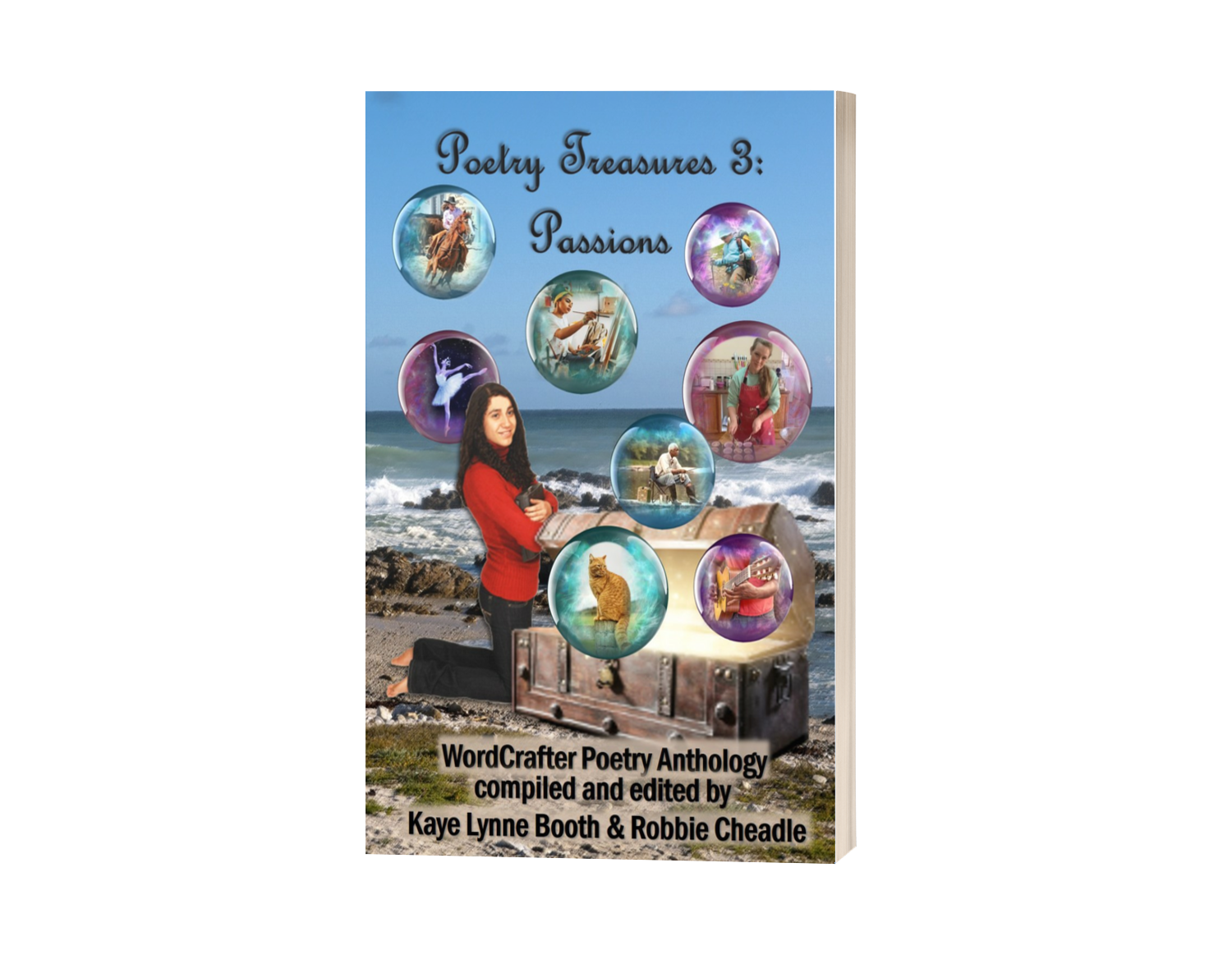
Poetry Treasures 3: Passions: https://books2read.com/u/b5qnBR
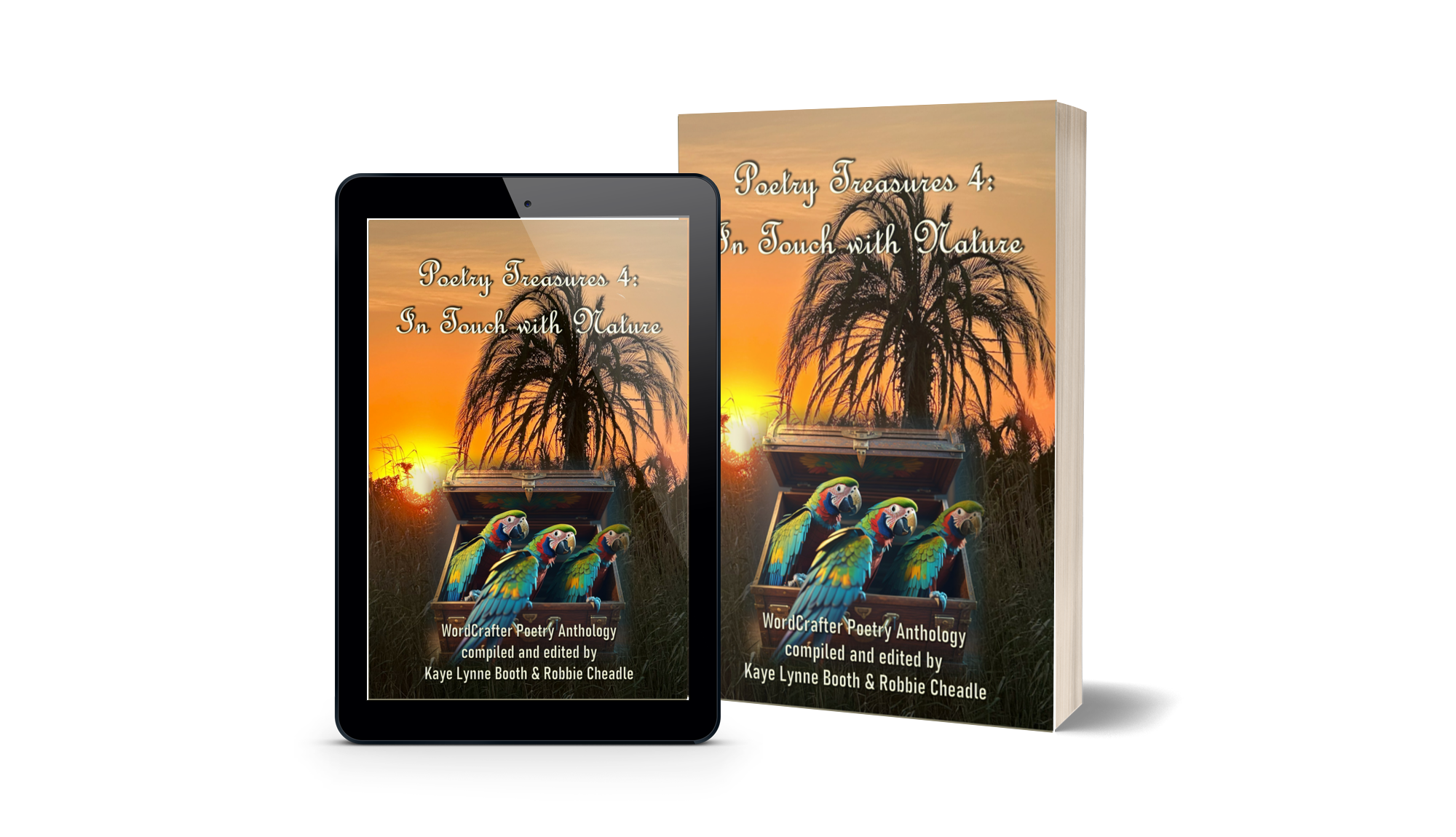
Poetry Treasures 4:In Touch With Nature: https://books2read.com/PT4-Nature
Share this:

Day 2 of the WordCrafter “The French Winemaker’s Daughter” Book Blog Tour
Posted: December 17, 2024 Filed under: Uncategorized Leave a commentFor Day 2 of the WordCrafter The French Winemaker’s Daughter Book Blog Tour, we’re over at Carla Reads with a guest post from author Loretta Ellsworth. I hope you’ll join us.
Share this:

Welcome to the WordCrafter “The French Winemaker’s Daughter” Book Blog Tour
Posted: December 16, 2024 Filed under: Author Interview, Blog Tour, Books, Historical Fiction, Interview, Women in History, WordCrafter Book Blog Tours 6 CommentsWelcome to the WordCrafter The French Winemaker’s Daughter Book Blog Tour! This historical fiction novel could be classified as women’s fiction, as well, with two strong women in different times connected by a bottle of wine lost during the Nazi invasion, and recovered in current times. I don’t want to give away too much, because I want you to follow the tour to learn more about The French Winemaker’s Daughter.
We have a great tour lined up, with guest posts from the author, so you can get to know a little bit more at each stop. You can follow the tour through the links in the schedule below, but each link will not work until the post for that tour stop goes live, so please wait for the scheduled dates to click on them.
Tour Schedule
Monday: Writing to be Read – Interview with the author
Tuesday: Carla Reads – Guest Post
Wednesday: Kyrosmagica – Guest Post
Thursday: Book Places – Guest Post
Friday: Writing to be Read – Review
About The French Winemaker’s Daughter
Set during World War II, an unforgettable historical novel about love, war, family, and loyalty told in in the voices of two women, generations apart, who find themselves connected by a mysterious and valuable bottle of wine stolen by the Nazis.
1942. Seven-year-old Martine hides in an armoire when the Nazis come to take her father away. Pinned to her dress is a note with her aunt’s address in Paris, and in her arms, a bottle of wine she has been instructed to look after if something happened to her papa. When they are finally gone, the terrified young girl drops the bottle and runs to a neighbor, who puts her on a train to Paris.
But when Martine arrives in the city, her aunt is nowhere to be found. Without a place to go, the girl wanders the streets and eventually falls asleep on the doorstep of Hotel Drouot, where Sister Ada finds her and takes her to the abbey, and watches over her.
1990. Charlotte, a commercial airline pilot, attends an auction with her boyfriend Henri at Hotel Drouot, now the oldest auction house in Paris. Successfully bidding on a box of wine saved from the German occupation during the Second World War, Henri gives Charlotte a seemingly inferior bottle he finds inside the box. Cleaning the label, Charlotte makes a shocking discovery that sends her on a quest to find the origins of this unusual—and very valuable—bottle of wine, a quest that will take her back fifty years into the past. . . .
A powerful tale of love, war, and family, The French Winemaker’s Daughter is an emotionally resonant tale of two women whose fates are intertwined across time. Loretta Ellsworth’s evocative and poignant page-turner will linger in the heart, and make you think about luck, connection, and the meaning of loyalty.
Purchase Link: https://www.amazon.com/French-Winemakers-Daughter-Novel-ebook/dp/B0D3CJYP5Y
______________________________
Today, we have an interview with author, Loretta Ellsworth, and I’m so excited because The French Winemaker’s Daughter is such a powerful and thought provoking story. So let me tell you about the author, and then we’ll jump right into the interview.
About Loretta Ellsworth
Loretta earned a master’s degree in Writing for Children from Hamline University. She’s the author of four young adult novels: THE SHROUDING WOMAN, a Rebecca Caudill nominee; IN SEARCH OF MOCKINGBIRD, which won the Midwest Bookseller’s Choice Honor Award, was a Teen’s Top Ten finalist, an IRA Notable, and was named to the New York Library’s List of Books for the Teen Age; IN A HEARTBEAT, which was named a spring Midwest Connection’s Pick and an ALA Notable; and UNFORGETTABLE, which was a Kirkus Pick of the Month. Her debut adult novel STARS OVER CLEAR LAKE, was published by St. Martin’s Press in 2017. Her debut picture book, Tangle-Knot, will be published by Page Street Kids in 2023.
A former Spanish teacher, she lives with her family in Minnesota. Visit her website at: http://www.lorettaellsworth.com and follow her on twitter @lellsworth.

Interview with Loretta Ellsworth
Kaye: Let’s start by having you tell us a little about your author journey. How did you get to where you’re at today as an author?
Loretta: I started out writing articles for magazines, and was lucky to have a few published. This encouraged me to try writing longer pieces, and I wrote my first book The Shrouding Woman, a middle-grade novel. I spent many years revising it as I learned more about the craft of writing, and it was published in 2002. From there, I wrote three YA novels that were published, one picture book, and an adult historical novel. Along the way I also earned my Master’s Degree in Writing, and I read extensively.
Kaye: You developed the habit of writing every day from keeping a diary as a young girl. I agree that this is a great habit for an author to have. The words add up if you just keep putting them down. What other skills do you possess that are helpful to you as an author?
Loretta: I’m an avid reader, which helps all writers. I’m not afraid of revision, and have been known to revise a book ten or more times. And I’m one who doesn’t give up easily. When I was searching for an agent for my adult novel, I sent over 250 queries before I found representation.
Kaye: You write for children and teens as well, as adults, and you place a lot of emphasis on your experience as a educator. Do your books for children and teens carry educational messages?
Loretta: I don’t purposely write with a message in mind. I usually write about relationships, but themes do tend to rise to the surface, ones of hope, grief, guilt, connection, and self-discovery. Although my main goal is to entertain, I do write from my own heart and passion, and that comes across on the page.
Kaye: Tell us about your new adult fiction book, The French Winemaker’s Daughter.
Loretta: The French Winemaker’s Daughter is the story of two women who are connected by a rare, and valuable, bottle of wine. Seven-year-old Martine hides in an armoire when her Jewish father is taken away by the Nazis. In her arms in a bottle of wine she has been instructed to keep safe. But she drops it when she hears Germans in her father’s vineyard, and runs away. In 1990, Charlotte, an American pilot, attends an auction with her boyfriend in Paris, where he bids on a box of wine saved from the German occupation during WW II. He gives Charlotte a seemingly inferior bottle he finds inside the box. Cleaning the label, Charlotte makes a shocking discovery that sends her on a quest to find the origins of this unusal bottle of wine, a quest that will take her fifty years into the past.
Kaye: What inspired you to write The French Winemaker’s Daughter?
Loretta: My novel Stars Over Clear Lake is set in Iowa during WWII. The main character’s brother is in France fighting the Nazis while she is at home with her parents and German prisoners of war who are working their farm. In researching what part of France her brother would be in, I did a lot of reading and ended up going down a rabbit hole that led me to a book called Wine & War. It details how France undertook daring measures to save their most precious natural resource – wine. And while reading it I had an image of a Jewish girl hiding with a bottle of wine that is her inheritance, one that she loses. Of course, I had to finish the other novel before embarking on this idea, but it was one that I kept thinking about for several years.
Kaye: What was the most interesting fact you turned up in your research for The French Winemaker’s Daughter?
Loretta: One interesting fact that I used in my book is how a Moroccan leather portfolio sold at the auction house Hotel Drouot ended up containing the bill of sale for the Louisiana Purchase. You never know what valuables you will find there. Another interesting fact is the Club Les Bains, a nightclub that originally began as a bathhouse in the 1870s where Proust visited, and became a mecca of personalities in the 1980s during its heyday. Still open today, the pool is one of its most fascinating features.
Kaye: This book has not one, but two, strong female protagonists. Was it your intention to market it as women’s historical fiction?
Loretta: Yes, I’d always intended it to be historical fiction, which is what I enjoy reading as well. But it’s also part mystery and part romance, which brings other elements into the story.
Kaye: Is there a message that you hope for readers to walk away with from reading this book?
Loretta: As Mr. Rogers says, “Always look for the helpers.” No matter the situation, there have always been good people who help those in need. It’s just a matter of finding them.
Kaye: What was the biggest challenge for you when writing The French Winemaker’s Daughter?
Loretta: I had never been to France, so researching it was difficult. I read as much as I could, but Covid made if hard to visit. Finally, in 2022, I was able to go to France and visit every location where a scene in my book takes place. Being able to soak up the atmosphere was priceless.
Kaye: What did you enjoy most about writing this book?
Loretta: I enjoyed writing from two different character’s point of view and two different time periods, although it was challenging. But I found that it stretched my writing self, and I feel more accomplished in doing so. Also, doing research in France is the best!
Kaye: Where can readers who want to know more about you or about The French Winemaker’s Daughter find you online? (Please include links here.)
Instagram – Lorettaellsworth_author
Facebook – Loretta Ellsworth Author Page
Bluesky – @lorettaellsworth.bsky.social

____________________________________
Book your WordCrafter Book Blog Tour today!
Share this:

Chatting with the Pros: Bobby Nash
Posted: December 14, 2024 Filed under: Book Review, Books, Chatting with the Pros, Interview, Review, weird western | Tags: BobbyNash, Book Review, Chatting with the Pros, Dante's Reconing, Dante's Showdown, Dante's Tenth, Interview, Kaye Lynne Booth, The Tales of Dante Series, Writing to be Read 7 Comments
I’m pleased to have award winning author Bobby Nash as my guest today on “Chatting with the Pros”. Bobby writes both novels and short fiction, graphic novels and comic books, and has even written screenplays and worked on the movie sets.
About Bobby Nash
An award-winning author, Bobby Nash writes novels, comic books, short stories, novellas, graphic novels, and the occasional screenplay for a variety of publishers. He is a member of the International Association of Media Tie-in Writers and International Thriller Writers. On occasion, Bobby appears in movies and TV shows, usually standing behind your favorite actor and sometimes they let him act. Recently, he was seen in Creepshow, Joe Stryker, Doom Patrol, The Outsider, Ozark, Lodge 49, Slutty Teenage Bounty Hunters, and more. He also draws from time to time.
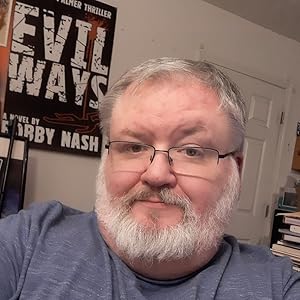
He was named Best Author in the 2013 Pulp Ark Awards. Rick Ruby, a character co-created by Bobby and author Sean Taylor also snagged a Pulp Ark Award for Best New Pulp Character of 2013. Bobby has also been nominated for the 2014 New Pulp Awards and Pulp Factory Awards for his work. Bobby’s novel, Alexandra Holzer’s Ghost Gal: The Wild Hunt won a Paranormal Literary Award in the 2015 Paranormal Awards. The Bobby Nash penned episode of Starship Farragut “Conspiracy of Innocence” won the Silver Award in the 2015 DC Film Festival. Bobby’s story in The Ruby Files Vol. 2 “Takedown” was named Best Short Story in the 2018 Pulp Factory Awards, one of five nominations for The Ruby Files Vol. 2 (created by Bobby Nash & Sean Taylor). Bobby’s digest novel, Snow Drive was nominated for Best Novel in the 2018 Pulp Factory Awards. Bobby was part of Moonstone’s Yours Truly, Johnny Dollar, which won a 2020 Pulp Factory Award for Best Pulp Anthology. Bobby’s novel, Nightveil: Crisis at the Crossroads of Infinity was also named Best Pulp Novel in the 2020 Pulp Factory Awards. In 2020, The Sangria Summit Society awarded the New Pulp Fiction Award to Bobby Nash for his work on Snow Falls and the Snow series.
For more information on Bobby Nash please visit him at http://www.bobbynash.com, http://www.ben-books.com, and across social media.
Interview
Kaye: You’ve been in the writing and publishing business a long time. What is your take on how the publishing industry has changed, and what adaptions have you had to make?
Bobby: There are certainly many more options for getting stories to readers now than when I started back in the pre-internet, pre-self-publishing model we have today. When I was getting started, you wrote a query, synopsis, and three chapters, printed them out, put them in a self-addressed stamped envelope, and mailed them to a publisher in the hopes you might hear back, or at the very least receive a form letter. Self-publishing wasn’t as well regarded as it is today so that wasn’t really an option. No internet limited your reach back then. Things are more open today, but that also means there are more books out there as well, so you have to work even harder to make your book stand out in a crowded field.
Today, being a writer means you’re running a small business. Marketing, promotion, publicist, travel/event planner, etc. That’s all on the writer, whether self-published or traditional.
I had to teach myself how to promote. I had to learn how to handle book production, pre-press, cover design, how to write a press release, things like that. I learned how to speak in public, to do panels and interviews, live podcasts, stage performances, and the like. As an author, you’re not just trying to sell books. You’re selling an experience. You’re part of that experience so you’re selling yourself as well. Branding is important to building an author brand. It is a bit time-consuming, but is important to my career as an author. Writing is just a small part of my job.
Kaye: According to your bio, you’ve written “novels, comic books, short stories, novellas, graphic novels, audio dramas, and the occasional screenplay”. Which form of writing would you say you enjoy most? Why?
Bobby: Not sure if ‘enjoy most’ is the best way to describe it. Each works different creative muscles so they’re not always easily compared. With prose, it’s all me so I see it all as I’m doing it. With comics, audio, and screenplays, I do my part, it goes away, then later comes back to me to do more, then goes away, and on and on until it’s finished. I’m part of a team there so I’m in and out at various stages of the process. Each has its enjoyable parts and the parts I like less. Just the nature of the beast, I suppose. I love them all. I will say that comic books were my first love. All of this desire to create, to tell stories, was born in the pages of comic books.
Kaye: Which type of writing presents the most challenge for you? Why?
Bobby: Novels require more time. As they are all me, I’m responsible for everything in them. That means I have to describe things in detail without it coming across as dull or as an info-dump. I’m painting the picture for the audience with words only. With scripts, most of what I write is direction for the artist or actors. They then interpret those details, adding another layer to the story. In a novel, if we walk into a character’s living room, I describe it so the reader can ‘see’ it. In a comic, I tell the artist it’s a living room. I will say that there are certain things that need to be there if important, but I leave it to the artist to design the living room. It’s a very different mindset. When I write for the artist, it’s not to entertain them, but to let them know what’s going on. The artists and actors aren’t my audience. They’re my partners.
Writing characters that are not mine also presents its own challenges. Doing work-for-hire on publisher-owned titles or media tie-ins means making sure I write the characters correctly. Research and study come in handy there. The characters have to stay in character. If not, the reader will notice something’s not right.
Kaye: You’ve done some work with graphic novels and comic books. How does the writing in these mediums differ from fiction?
Bobby: Comics are collaborative. The artist has input into the storytelling. We’re a creative team. When I write a script, as I mentioned earlier, most of what I write in the script is direction, so the artist knows what I’m thinking in regard to the panel. I also tell them what dialogue I’m planning, though this may change after I see the art. The artist then takes this information and creates the page with art and making that art flow and tell the story. Here’s an example of a script panel.
Panel 1. Bobby sat at the desk in his office, writing. Books and comics are stacked everywhere. Controlled chaos. He’s typing on a laptop, a soda and several action figures on his desk. He appears stumped. His hair is uncombed. Glasses slid down his nose. Deep in thought about his current story.
Caption: MEANWHILE, THE WRITER SITS TUCKED AWAY IN HIS OFFICE, UNAWARE OF THE DANGER HEADED HIS WAY.
WHY CAN’T I MAKE THIS PAGE WORK?
SFX (in the distance): BOOM!
SFX is sound effects. Something like that. The artist would then figure out the best way to draw this panel. It never comes back to me the way I pictured it in my head, which is fine. It almost always comes back better than I imagined. Seeing the art come in is one of the big joys of writing comics. It always makes me smile.
Kaye: How does one get into writing comic books or graphic novels? Is there a secret society one must break into? What’s the secret handshake?
Bobby: This is a harder question to answer than you might think. There’s an old joke that says that anyone who manages to break into comics is expected to brick up that entrance and close it off. Ha! Ha! Getting to work for larger, established comic book publishers is tough. Really tough. Most do not take submissions. Those that do want you to turn in a finished project, story, art, letters, colors, ready to print. Today, you basically have to be a comic book creator to get hired by publishers that create comics.
That said, we live in an age where you can put out your own comics yourself. Self-publishing, comic ebooks, and webstrips are all wonderful ways to show the world your work. If your goal is to work for Marvel, DC, Dark Horse, etc., then showing the editors there your published work is the only way to show these publishers what you can do. If they like what they see, then they may reach out to you about possibly pitching something to them.
If you want to create comics, then create comics. That’s step one.
From there, you keep trying, keep creating, and hope you capture someone’s attention if doing work-for-hire comics is for you. There are smaller publishers that will hire creators to create comics. I write comics on a work-for-hire basis, but it took a long time to get into those publishers. Once they know you and your work, and if they like working with you, it’s easier to get additional comic book opportunities.
Kaye: Do you do your own illustrations for these books?
Bobby: Heavens, no. I leave that to the professionals who are so much better at it than I. I can draw. I doodle. I sketch. I can give the artist a sketch if I have a specific idea on how I would like to see a scene so he or she can see what I was thinking, but otherwise, I leave that to the artists. They’re so much better at it than me.
My dream as a kid was to be a comic book artist. I started writing so I would have stories to draw. Turns out, I was better at writing comics than drawing them. Eventually, I focused on the writing and eventually was hired to write a comic. I never looked back.
Kaye: You are a member of the International Association of Media Tie-Ins. Can you give a brief explanation of what a media tie-in is and tell us a little about how you got into that arena?
Bobby: Media tie-ins are stories based on characters that originated in other mediums. Novels, comics, short stories, etc. based on television shows or movies are media tie-ins. Star Trek, Star Wars, MCU, etc. These characters are usually licensed from the owner of the property and creators are hired by the publisher, often with approval from the rights holder. Stories are also approved by the rights holders as well. Media tie-ins generally come with a lot of rules, a lengthy list of the type of stories you can and cannot do. The owners of Zorro, for example, are there to protect Zorro. They won’t allow you to write a story that hurts the character. One of the biggest misconceptions I hear about media tie-ins are that many readers assume this is fanfiction. It’s not. With fanfic, you basically write what you want with no oversight. With tie-ins, there is oversight. There are rules. The challenge we, as writers, face is how to tell the best story we can within those parameters, which is not really that big a challenge. You just have to know what you can and cannot pitch. Don’t kill any main characters, cut off their arms, get them married or have children, things like that. Big changes to the characters will come from the owners. I’m just borrowing the character and returning it the way I received it.
I like to describe media tie-in writing like an episode of Star Trek. The original series usually opened with the Enterprise flying through space. Everyone is on the bridge, happy, maybe laughing. Then, trouble happens. The crew has to deal with, then solve a problem. At the end of the episode, the Enterprise flying through space. Everyone is on the bridge, happy, maybe laughing. Media tie-in writing generally happens like that. I can bend the characters, but not break them.
My media tie-in journey started with a local access morning kids television series called Roger Rocket. He was an astronaut musician who had puppets on the spaceship with him and they played music videos for kids. I met him at a comic shop and he hired me to write a comic for his show. Though, very little of my work survived him deciding to rewrite it himself, that was my first tie-in experience. Years later, Moonstone invited me to write a Green Hornet short story. From there, I was lucky to be invited to write other characters like Zorro, Kolchak: The Night Stalker, The Lone Ranger, Night Beat, Yours Truly, Johnny Dollar, Box 13, Remo Williams, At The Earth’s Core, and a number of properties owned by various authors and publishers. It’s fun to play in someone else’s sandbox from time to time.
Kaye: How does one get into media tie-ins? Do you go knocking or do they find you? What advice would you give to someone trying to break in to media tie-ins? Is there a secret handshake for that one?
Bobby: Much like comics, they tend to find you. Unlike anthologies or company-owned characters, getting hired for media tie-ins means you have to be approved by the editor and publisher then approved by the owners of the media tie-in property. I was once tapped by an editor for a media tie-in project only to be told no by the owners of the property because they wanted a more well-known writer. That’s their choice, of course. It stung, though.
Usually, media tie-ins are not open calls. The publisher reaches out and invites writers they know to be part of it. There’s a method to writing tie-ins. You have to understand what kind of stories you can tell or not. Because I now have experience, I know what stories not to pitch because they will probably never be greenlit. As I mentioned previously, media tie-in writing is not fanfiction. That’s very important to remember. Writing tie-ins comes with a lot more rules, a lot more do’s and don’ts than other types of writing. You have to write a story that fits the brand you’re writing. The characters have to act and sound right. They have to be in character. Your story should fit seamlessly into the world of the media project that you’re writing.
As with comics, get work out there. Write your own characters and get them out there as your resume, as your writing samples. That will be what tells the publishers if your style fits their licensed characters. Once publishers get to know you, they may invite you to be part of their media tie-in projects.
As with everything in publishing, a lot of it boils down to timing and luck.
Kaye: Your work has won or been considered for many awards over the years. Which of these would you say you are the most proud of, and why?
Bobby: The first one is always special. There are also those that happen without you even knowing. I won best author in the Pulp Ark Awards, which was a huge surprise. Winning the Sangria Summit Society’s Pulp Fiction Award was also a nice surprise. I had no idea I was in the running for either. Awards are nice. It’s a bit of an ego boost. You feel like you’re doing something right, but also that others have noticed. Awards aren’t why I write, but it is a great feeling when it happens.
Kaye: Which do you enjoy writing most, heroes or villains? Why?
Bobby: Villains get the best lines. They get to do the coolest stuff. Villains are fun to write.
Kaye: Every author has those stories which are near and dear to their heart, those that are just special for whatever reason. Which of your works would you say falls into that sweet spot for you? Why?
Bobby: My go to answer for this question is usually Evil Ways. Evil Ways was my first published novel, and the book that launched this career of mine. It wasn’t always fun or easy. My original publisher turned out to be horrible, but I had a book in hand as a resume that allowed me to reach out to other publishers and show them my work. I picked up some writing gigs that kept me working until my contract ran out and I got the rights to Evil Ways back. Then, I published it myself, which was my first foray into self-publishing. So, yeah, I owe a lot to Evil Ways.
Kaye: You have a Patreon, where you market your books. Can you tell us a little about that? How effective do you find Patreon to be compared to other venues for selling your books?
Bobby: Patreon is nice. I have a small following. I post a writing blog there, keeping everyone up do date on work. I also have an ebook club ($5 and up tiers) where most of my ebooks exist. I also run serialized novels and novellas there, posting chapters every week-ish (sometimes I fall behind). Patrons are part beta readers that way. This allows me to be more productive and gets at least two additional novellas out a year more than I would otherwise. Good motivation.
I like Patreon. I don’t really sell many books through there though. My patrons tend to be readers who were probably already getting the books who are there to support me. That support means a lot to me.
Kaye: Which book marketing strategies do you find to be most effective?
Bobby: My most impactful way to sell books is at in-person events. Getting out to conventions, conferences, libraries, bookstores, and other events where I can meet people, talk up the books, just get to know readers. Outside of that, I use social media, I do interviews like this one, go on podcasts and virtual panels, write and send out press releases to news outlets, create and send out a free monthly newsletter (you can sign up at https://www.subscribepage.com/NashNews), and other opportunities as they present themselves to talk about writing and my books. There are many marketing methods out there. Not all of them work the same for every book. A promotion method that works for Evil Ways, for example, might not work for Dante’s Reckoning. You have to be willing to try new promotional paths to see what works and what doesn’t.

Kaye: Your most recent work seems to be your Dante novels. Would you like to talk a little about that series?
Bobby: The Dante books are fun. I wrote a short story for Valhalla Books’ The Devil’s Due prose anthology. The theme was that all deals come with a price. I wrote a story set in the old west, a mining town called Dante. There, a deal had been made years before with an other-dimensional being. It was time to pay up, but there were those in the town who wanted to keep the final settlement from happening. It was a fun little horror/western story. The publisher later came to me and asked what happened next. I told him I didn’t know. I just wrote a short story. I hadn’t planned any further than that. He said, this is a series. So, I got busy writing. Book 3, Dante’s Reckoning just released this Halloween. I am working on book 4, Dante’s Rebirth for 2025. I love it when things work out this way. I’m glad the publisher saw something in the concept that made him want to keep it going.
Kaye: Where can readers who would like to learn more about you and your works find you?
Bobby: I’m all over social media. There’s links at my website, which is www.bobbynash.com. This is the main hub of all things me. Ha! Ha! There are links to everywhere you can find me on the site. My indie press, BEN Books is at www.ben-books.com. These are the titles I publish myself. Please visit me and say hello.
About the A Tale of Dante Series
Welcome to Dante!
Dante, Arizona is not your average mining town.
Many dreamers have come to this barren speck of desert to strike it rich. Gold, silver, and other valuable minerals are there for the taking if you’re brave enough to pay the price, this wealth, power, and influence. Dante turned peasants into millionaires overnight.
Some suggest that these men sold their souls for the find of a lifetime. Did Dante’s founders make a deal with the devil? If so, what was it? More importantly, what will it cost the town? Nothing happens for free. Every deal has its price and there are still deals to be made.
This brings new blood to town as well as old blood. When a young reporter’s assistant becomes enamored of the daughter of a new arrival, he learns the terrifying truth behind the town. A deal was made.
And payday is coming.

Dante’s long nightmare begins here with the short story that started it all and two new tales from Dante. From the pages of The Devil’s Due comes Dante’s Tenth by award-winning author Bobby Nash.
My Review of the A Tale of Dante Series
I remember reviewing my first weird western, before I was even aware that there was such a genre, back in 2020, a book in the western genre with dragons, trolls, dwarves, and other beings from the fantasy domain. Since that time, I’ve read and review several more weird westerns and I’ve grown quite fond of the genre. Naturally, when I saw that Bobby Nash had a weird western series, I offered to review the whole series for this segment of “Chatting with the Pros”. And I’m glad that I did. One never knows what will happen next in the A Tale of Dante series, where vampires lurk in the shadows and werewolves roam the desert landscape surrounding Dante, Arizona. By hiding in plain sight, they manuvuere behind the scenes and interact with the unmidful miners and townfolk.
The town sits central in the hub of a great evil, where deals were struck long ago and now, a debt has become due. At times it is hard to tell the good guys from the bad, but make no mistake that there will be a reckoning. These stories can be read as stand alones, but I recommend reading Dante’s Showdown before Dante’s Reckoning, as the later takes place after the former. Dante’s Tenth is a collection of three short Dante stories which offer insight into three of the characters readers meet in the other two books.
The protagonists are likeable, and the villians deplorable, and lines are drawn between good and evil, if a little blurred at times. Vampires and werewolves abound in the old west town of Dante, and even the good guys carry guns. Bobby Nash brings us a vampiric priest and an army of the undead, a couple of gunfighters and a newspaper reporter who takes her job seriously to champion on the side of goodness and stop the final reckoning from taking place.
An excellent weird western series, I give the Tales of Dante series five quills.

__________________________________
This segment of “Chatting with the Pros” is sponsored by WordCrafter Quality Writing & Author Services.

Whether it’s editing, publishing, or promotion that you need, WordCrafter Quality Writing & Author Services can help at a price you can afford.
Stop by and see what we have to offer today: https://writingtoberead.com/readings-for-writers/wordcrafter-quality-writing-author-services/
Share this:

Book Review: “Unbowed”
Posted: December 13, 2024 Filed under: Book Review, Books, Fiction, Mystery, Review | Tags: Book Review, Book Reviews, Books, Fiction, M.G. da Mota, mystery, Unbowed, Writing to be Read 2 Comments
About Unbowed
Only six months. But six tumultuous months.
Months that would have a profound and lasting effect on Alexia Jewel.
A multi-talented musical prodigy, Alexia’s scholarship to London’s prestigious Royal College of Music at the age of 15 came with controversy and difficulty. Girls at that time weren’t welcome in the professional ranks of classical music, let alone one with her sights set on becoming a conductor. But as she approaches her 50th birthday all that has changed. She has overcome all obstacles to become one of the world’s foremost classical music conductors, celebrated for her artistry and talent. Lured back to London from her life in Munich where she is chief conductor of the Bavarian Radio Symphony Orchestra and music director of the Munich Opera House, Alexia is preparing to conduct a series of concerts with the London Symphony Orchestra to mark her birthday. While in London she begins to put her late parents’ estate into order and discovers an antique diamond ring that she learns had belonged to her great-grandmother. Agreeing to appear on the BBC’s Who do you think you are programme Alexia gives them the double mystery of her barely-known great-grandmother and the ring to investigate.

Four men, all who desire her, enter her life in these six months. As does a stalker, who threatens her safety, serenity and life.
My Review of Unbowed
I received a digital copy of Unbowed, by M.G. da Mota to review through Sandra’s Book Club. All opinions stated here are my own.
This book had a slow start, with a lot of backstory and character introductions, and no real action until well into the book. A single figure in the shadows is intended to hold reader interest for too long before the mystery finally begins to unravel. While this story has the potential to be a good mystery, the author takes so long getting into it, that I almost put the book down.
A mystery unfolds as the facts are uncovered about Alexia’s diamond and her great-grandmother’s life, all while a stalker lurks in the shadows. Four different men proclaim their love and need for her, and any one could be the dark man who is terrorizing her. But the mystery of the diamond takes precedence, the only obstacles in the way are the tracks that have been covered by time. But the evidence is all there, conveniently left for those who take time and effort to investigate, while the stalker makes random appearances and doesn’t feel as threatening as it should.
While all the pieces are there, the ones that should count don’t seem to have enough weight to carry the story. I give Unbowed three quills.

____________________________________________
Kaye Lynne Booth does honest book reviews on Writing to be Read in exchange for ARCs. Have a book you’d like reviewed? You can request a review on the Book Review tab above.
_____________________________
This post is sponsored by WordCrafter Press with a reminder that all WordCrafter Press books are currently 50% off in the SmashWords End of Year Ebook Sale, only in the SmashWords store: https://www.smashwords.com/shelves/promos/

Share this:

Read and Cook with Robbie Cheadle – Letters from Father Christmas by J.R.R. Tolkien and a recipe for Christmas cake #bookreview #recipe #Christmas
Posted: December 11, 2024 Filed under: Books, Read and Cook, Recipes, Review | Tags: Christmas, Christmas fiction, J.R.R.Tolkien, Letters From Father Christmas, Read and Cook, Robbie Cheadle, Writing to be Read 43 Comments

My review
Letters to Father Christmas is Tolkien at his absolute best. A series of letters written to his own children and featuring Father Christmas as a very real and relatable person who experiences lots of setbacks, both small and large. Set over an extended period, the letters also run through World War II and explains how the war and its deprivations impact on the folk at the North Pole. Although WWII is a long time past, this messaging of resilience and making the best of things is still relevant in our modern time of uncertainty and warfare.
Father Christmas relies on his number one helper, Polar Bear, to help him in his work. As time passes and more and more children are born, Father Christmas also gets help from the elves. His elven secretary also starts assisting him with his letter writing. Polar Bear is a delightful character, full of fun and very naughty, he is always getting into trouble and creating mishaps. Father Christmas has to move house after Polar Bear tries to rescue his hat from blowing away in a wind and falls through the room and into the family room.
Father Christmas also faces adversity in the form of the hostile goblins who keep attacking his home every couple of hundred years. The goblins are mean and treacherous creatures and the folk at the North Pole have to call upon the red dwarves for assistances from their attack. An interesting way of explaining war and its meaning to young children.
A delightful book for children and adults and one I highly recommend.
You can purchase Letters from Father Christmas by J.R.R. Tolkien from Amazon US here: https://www.amazon.com/gp/product/0618512659
Quotes from Letters from Father Christmas
“if you remember him, is still fast asleep, and quite thin after so much fasting. He will soon cure that. I shall tickle his ribs and wake him up soon; and then he will eat several months’ breakfast all in one). More love, your loving Father Christmas There is audio content at this location that is not currently supported for your device. The caption for this content is displayed below. Christmas Eve 1934”
“I hope you will like the little things I have sent you. You seem to be most interested in Railways just now, so I am sending you mostly things of that sort. I send as much love as ever, in fact more. We have both, the old Polar Bear and I, enjoyed having so many nice letters from you and your pets. If you think we have not read them you are wrong; but if you find that not many of the things you asked for have come, and not perhaps quite as many as sometimes, remember that this Christmas all over the world there are a terrible number of poor and starving people. I (and also my Green Brother) have had to do some collecting of food and clothes, and toys too, for the children whose fathers and mothers and friends cannot give them anything, sometimes not even dinner. I know yours won’t forget you. So, my dears, I hope you will be happy this Christmas and not quarrel, and will have some good games with your Railway all together. Don’t forget old Father Christmas, when you light your tree.”
Christmas cake recipe

Ingredients for Christmas cake
250 grams currants
240 grams sultana
200 grams mixed berries
240 grams raisins
120 grams mixed peel
180 grams chopped cherries
300 grams plain white cake flour
pinch salt
2.5 ml mixed spice
2.5 ml cinnamon
300 grams softened butter
300 grams sticky brown sugar
30 ml lemon zest
6 eggs, lightly beaten
45 ml brandy
Method for Christmas cake
Preheat the oven to 140 degrees Celsius. Double line the cake tin with thick baking paper.
Beat the sugar and butter in an electric mixer. Add the lemon zest. Add the eggs, beating in one at a time.
In a separate bowl mix the dried fruit, spices, salt cherries and flour. Add the egg mixture and mix well. Lastly, pour in the brandy and combine.
Scoop the mixture into the baking tin and level with the back of a spoon. Wrap a layer of tin foil around the base of the baking tin and place in the oven. Bake for +- 3 hours.
Last year’s Christmas cakes had a roses theme:


________________________________________
About Robbie Cheadle
South African author and illustrator, Robbie Cheadle, has written and illustrated seventeen children’s books, illustrated a further three children’s books, and written and illustrated three poetry books. Her work has also appeared in poetry and short story anthologies.
Robbie also has two novels and a collection of short stories published under the name of Roberta Eaton Cheadle and has horror, paranormal, and fantasy short stories featured in several anthologies under this name.
You can find Robbie Cheadle’s artwork, fondant and cake artwork, and all her books on her website here: https://www.robbiecheadle.co.za/
_______________________________________
Did you know you can sponsor your favorite blog series or even a single post with an advertisement for your book? Stop by the WtbR Sponsor Page and let me advertise your book, or you can make a donation to Writing to be Read for as little as a cup of coffee, If you’d like to show your support for this author and WordCrafter Press.
_______________________________________
This post is sponsored by the My Backyard Friends Kid’s Book Series and WordCrafter Press.

The My Backyard Friends kid’s book series is inspired by the birds and animals that visit the author Kaye Lynne Booth’s mountain home. Beautiful illustrations by children’s author, poet, and illustrator, Robbie Cheadle, bring the unique voices of the animal characters to life.
Get Your Copy Now.
Heather Hummingbird Makes a New Friend (Ages 3-5): https://books2read.com/MBF-HeatherHummingbird
Timothy Turtle Discovers Jellybeans (Ages 3-5): https://books2read.com/MBF-TimothyTurtle
Charlie Chickadee Gets a New Home (Ages 6-8): https://books2read.com/MBF-CharlieChickadee