Getting in Shape for Writing
Posted: July 26, 2012 Filed under: Writing | Tags: Western State College, Writing 6 Comments I didn’t even consider that I would be humping up the hills of Western State College carrying my back pack, filled with my laptop and all my books, and my small, but well packed purse. Had I known, I would have trained to get in shape before I headed off to class. Getting to class wasn’t so bad, it was all downhill. However, this was a case of what goes down must go up, and it was all uphill getting back to the dorm at least twice a day, if not more. That hike to the dorm made my unprepared calves moan with misery every time. By the second week, my shoulders burned by the time I arrived at either destination. Next year, I will definitely take steps to prepare me for this.
The classes I am taking are a preparation of another kind. They are designed to get me in shape to be a professional writer, and the writing exercises and assignments that we’re given are mostly painless. They are designed to help us limber up the writing muscles of the brain and expand our literary horizons. In that, they were successful. Thanks to my Patterns & Paradigms in Mainstream & Genre Fiction course, I now have the beginning chapters for a Western Novel, the start of a chapter that I can use to transform a small collection of stories about two young girls growing up in Massachusetts during the depression into a YA mystery novel, and I’m looking forward to experimenting more with the horror genre, even though my first attempt was absolutely awful. (You guessed it. My area of concentration is genre fiction.)
As with any type of training, you must tone up the basic muscles to be used before you try mastering the more difficult stances, or executing some of the more complex maneuvers. In the aforementioned course, I also toned up the basic writing muscles. My dialog punctuation was a little flabby, but learning the proper way to exercise this muscle group should have my character exchanges shaped up in no time. I learned the basic elements of the novel: plot, character and setting; methods to create character; and how the “mono-myth”, or hero’s journey works; and techniques to set the pace and tone which will help to create a tight, shapely narrative. And I learned that I often have a case of, what the course instructor calls, “adverb-itis” in my writing; using adverbs to describe things that don’t really need to be described. Flexing those stagnant writing muscles has already improved my writing.
Just as my calves will require continuous workout to remain toned and build more muscle, I must continue to work those writing muscles every single day. No doubt, I will be in better shape next summer, when it comes time to do this again. I will have a better idea of what lies ahead and will be better able to prepare. Certainly, I will need to exercise my muscles, both the writing ones and the physical ones, so they will be prepared for the extensive two week workout I now know to anticipate on both levels. I may not be ready to run the 10K by then, but perhaps I’ll at least be ready to start planning my thesis.
Share this:

Back to School After All These Years
Posted: July 21, 2012 Filed under: Writing | Tags: back to school, Western State College, Writing 2 Comments Last week was the first week of classes for me, in my quest to obtain my MFA in Creative Writing at Western State College. It was an eye opening experience, to say the least. After thirty years, I found myself back behind a student’s desk, concentrating on the words of two extremely talented writers, whose job it is this semester to educate me and the others in my class. It was amazing! It was a little uncomfortable, being in this new element, so of course I was nervous and it took me awhile to get into my “zone”, as one of my fellow students is fond of saying, but once I settled in, awesome things began to happen.
My instructors, Barbara Chapaitis and Russell Davis are like the yin and yang of the writing spectrum, but both are just bursting with creative energy that I could feel transcending over to their students. Russell Davis is a very nuts and bolts kind of guy, whose job, for these two weeks, at least, is to teach us the basic elements of writing a novel, and that’s what he gets right down to business doing just that. His basic philosophy on writing is, “Sit your ass in the chair and write the damn book!” While Barbara Chapaitis, is a binge writing, free spirit, who is interested in the writing process and helping us to discover how that works for each individual writer. For her class, we sang, we howled, we meditated, we observed a spectacular lightning storm, and we did some free writing exercises to grease the writing wheels and get the ball rolling.
Russell believes that part of his job is to make his students as uncomfortable as possible. He writing assignments are aimed at getting us to write outside the genres that we are most comfortable with and experiment. To that end, last week I wrote a segment of a YA mystery, which I have plans to use to revive a book that has been dead in the water for about five years, and I started on a western piece, that isn’t turning out too bad. I also took a segment of that western and turned it into a horror story, but we won’t talk about that.
At first, I wondered what all the wild things Barbara had us doing had to do with writing. It soon became apparent that she was trying to get us to think about our own processes and be aware of what they are. She talked about the difference between being a planner, who outlines and plots out all the little details before sitting down to actually write the book, and being an organic writer, who gets an idea and just runs with it. Barbara is without doubt an organic writer, who locks herself in her writing space, allows no interruptions, and writes until it’s done. I wondered how she could do that. After all, life doesn’t just disappear while we are writing. She emphasized that the process is different for each one of us and encouraged us to explore our own. I discovered that for me, I’ve learned to write around life, grasping any time that makes itself available to write whenever and wherever I can. As our home is small and I have no closed door to lock myself behind, I have turned my recliner and a small coffee table into “my writing space”, and I have learned to block out the television and other distractions in my environment and immerse myself in the word that I am putting on the page. I have also learned to make whatever space I am in, “my writing space”. I can write on my breaks at work, sitting by my son’s grave, or in the car, while we are on the road, since I commute. (Thankfully, my husband does most of the driving.)
That’s my week in a nutshell. There is so much more that I learned and discovered over the past week, but I must keep this post short, because I have homework. That Western excerpt is due Tuesday; I have to critique the work of my peers, and I have to prepare for the Write the Rockies Conference next weekend, which I will also be covering as the Southern Colorado Literature Examiner. I’ll let you know how it goes.
Share this:

Explorations in Uncharted Territory
Posted: July 9, 2012 Filed under: Writing | Tags: "Adventures in Writing", Writing Leave a comment
Writing to be Read
Note to Readers: Due to a lack in Internet access, it has been way more than a week since my last post. This post is one that I had written, but was unable to post in a timely manner. I apologize to readers for my extended absence, but things should get back on track now. I hope you will bear with me.
Those who have been following this blog recently know that I have been using Beth Barony’s Adventures in Writing to develop my own writing skills. While doing the exercises from her book, I have discovered that I am just not an outline type of writer. I began by trying to make an outline for a story that I’ve been rolling around in my head. It soon occurred to me that I really don’t know how to make an outline for a story. In my opinion, it is better to use a story arc or a timeline to illustrate how events will unfold. That’s not to say that I am particularly adept at making story arcs, but I think that I will probably learn to use that skill when I start working on my MFA in Creative Writing through Western State, in July.
To me, an outline is more appropriate for nonfiction, so I decided to start over and do an outline for a nonfiction book that I have been researching for, and have already begun writing. Before beginning my outline, I decided to go back and take a look at what I had previously written and I realized that I actually had some pretty good stuff that was mostly usable. I didn’t end up with an outline, but I did write a new introduction and rewrite my original introduction as a chapter, instead. In the midst of all this, I started thinking that perhaps what I needed wasn’t an outline, per se, but some basic organization. So, I also created a basic table of contents with what I have so far, (which is sort of like an outline), listing the chapter titles that I have so far. It turns out that I already have seven partial chapters and now I have them better organized both in my mind, and in print.
Thus, I chose to set aside the fiction story to work on as I earn my MFA and use Adventures in Writing to develop and hone my nonfiction book. It should be an interesting exploration into uncharted territory for me. It presents a good challenge, as Barony suggests allowing a year to completion for first book writers, and my timeline allows for about seven weeks, as I want to finish before I begin graduate school. She offers a Project Timeline Chart in the Appendix for those that wish to finish their books in 8-12 weeks, so I think it might be possible to accomplish this if I stick to the time and word count goals that I set for myself in the exercises. Rewriting makes it difficult to measure word count, but I have faithfully put in more than my minimum daily time that I set as my goal thus far. Barony also suggests listing five to twelve main events that happen, (or in my case points that I want to make), stating that if you can’t list at least five, that perhaps you should be writing an article or short story instead. To my surprise, (and pleasure), I found that my five points from the exercise, together with my seven chapter titles, and the subsections that I had already broken some of my chapters into, made up a book structure that actually resembles an outline. Huh? Maybe I am an outline writer after all.
Share this:

Outline, Revise, Submit
Posted: May 16, 2012 Filed under: Writing Leave a comment Last week I began the first exercise in The Writer’s Adventure Guide: 12 stages to Writing Your Book, by Beth Barany. I posted the results for the first part of that writing exercise in my blog entry titled, An Adventure in Writing. The second part of the exercise involved discovering how my writing goals have changed over the past week and to begin your book, which for me, entails writing an outline, which is not one of my strong areas, but I gave it a shot.
I began the outline and took it partially into the second chapter, but it does not look the way that I learned that an outline should look. I think I might have gotten too detailed in some places, or maybe I just need to break it down more. It definitely needs work, but it’s a start, right? So, I’ll work more on that later. It is difficult for me to outline a fictional story. It almost seems as if a chronological timeline wouldn’t be a better fit. I have that nonfiction book that the outline thing would probably work better for. Would it be cheating to change books after the first week? I don’t think you really can cheat on something like this, but it would definitely signify a change in goals. Hmmmm.
I don’t think that my writing goals have changed much over the past week, but thinking about all of this has gotten me motivated to take steps toward achieving those goals from last week. The avenues I’ve chosen to pursue those goals is what changed, at least somewhat. I pulled up a juvenile chapter book, for upper elementary aged children that I wrote a few years back. The Adventures of Ann and Kinzi is about two young girls who befriend one another during the depression. I had never done anything with it, mostly because I wasn’t completely happy with the story line. I didn’t feel like it really had enough of a climax. It was a good story idea, but I felt that upon finishing it, readers might say, “So what?”. There just wasn’t enough happening and it didn’t all fit together as smooth as I would have liked. The reason that I dug this particular story up came from all the thinking that this exercise caused. I had been thinking about the Nancy Drew Mysteries and how I had enjoyed them as a girl, when I suddenly figured out how to make this story into something worthwhile, just as if a switch had been flipped in my head. Those were the elements that I had wanted for this story. The answer is to turn this story into a mystery, which will need quite a bit of rewriting, but I have already revised three chapters. While I am at it, I will add more period details, as this is another area where this story is weak.
I missed the deadline on the Writer’s Digest contest. Story of my life, I always seem to fall short of finances for these things. So, maybe that goal was forced to shift a bit, as well. Not much though. I will go ahead and submit that story, Timothy Turtle Discovers Jelly Beans, to my publisher and cross my fingers. I don’t see any reason for her not to accept it. I think that it is that good. I guess we’ll see.
Next week, I’ll talk about Stage 2 in Beth Barony’s book, so be sure and drop by to see what’s happening on Writing to be Read.
Share this:

“The Demon Is In the Details”
Posted: May 14, 2012 Filed under: Book Review | Tags: Book Review, Harris Channing, Paranormal Romance, The Demon is in the Details Leave a comment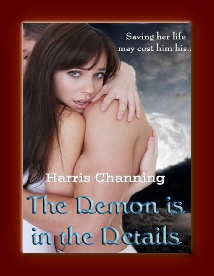 The Demon is in the Details, by Harris Channing, is a fast-moving paranormal romance. As part of The Immortal Protector series, Zane has been charged with the task of killing demons of all forms and protecting Stella, even at the cost of his own existence. A story of horrific childhood haunts Stella, but when she returns to scene of her years of abuse to face her fears, she discovers that she’s been blocking out many of the memories. Her abusive aunt wasn’t just crazy, but truly evil, bargaining with her niece’s soul to secure her own power and a promise of immortality. Now her aunt may be reaching from beyond the grave to finish what she started and calling up a hoard of demons to aid her in her quest. Together, Zane and Stella battle the demons of hell with lethal ferocity, but they aren’t strong enough to fight the draw of the love growing between them. When her therapist, who she believes she is in love with, shows up, things get really complicated. He learns that her memories were not a part of a psychosis and now his own life and soul are on the line, dependent on Stella and Zane’s triumph over an evil that is very real. The Demon is in the Details may not be your typical romance, but the supernatural action will keep the pages turning until the very end.
Share this:

Adventures in Writing
Posted: May 2, 2012 Filed under: Fiction, Writing | Tags: Fiction, goals, Journal Entries, Novels, Writing, writing exercise 2 Comments Last week I started reading The Writer’s Adventure Guide: 12 stages to Writing Your Book, by Beth Barany. The first stage that she outlines involves beginning where you are, but you must discover where that is first. The first exercise involves a 20 minute timed writing that discusses what writing means to you, what your goals are as a writer, and identifying your strengths and weaknesses which stand in your way or help you to meet those goals. She asked that you look at both the inner strengths and weaknesses, as well as those presented by the outer world around you. Part of the objective of this exercise is to help you begin viewing yourself as a writer, and although I’ve been doing that for a long time, I chose to do the exercise anyway. You never know when you may discover something unexpected by doing an exercise that you don’t think you really need. So, the following is the results of that first exercise for me, but I have great ambitions, so I didn’t stop at twenty minutes, but followed it through until I had covered all the areas suggested.
I am a writer. I live to write. Writing makes me feel free, because I can express myself through it. When I write, I can block out the outer world as I explore the inner world of the story or poem. My goal is to become a paid author, able to make enough to support my family and finance my writing career. I see myself 10 years from now traveling from place to place giving lectures, teaching workshops and signing books. I would also like to be attending conferences and workshop to increase my knowledge about writing, as I feel that writers must always continue to learn and grow and to develop their craft.
When I’m not writing, I am reading. I love being the Southern Colorado Literature Examiner and doing my blog, Writing to be Read, because I get to meet other authors and do book reviews. I also do book reviews for Webb Weavers. Doing book reviews puts me into both of the elements that I love. I get to read good books and then write the reviews for them. It’s the best of both worlds. Plus, by functioning in these capacities, I am able to increase my own visibility within the literary community.
Of course, this all revolves around the assumption that I will be a successful author by that time. I already have a children’s book being published, which I am waiting for with much anticipation. I have others written that will follow in the series, that are just lack polishing. Since I already have a publisher for the first book, I think that the chances are good that they will agree to publish the other in the series. I am waiting to submit the second story though, because I want to enter it in a Writer’s Digest writing contest. I truly feel this story is good enough to possibly win. I also have other children’s stories that wouldn’t fit into the series, but I think they might be good enough to stand alone.
In addition, I am planning to attend college this summer to get my MFA in creative writing, which will lend credibility for me as a teacher and help me to complete my novel. I have the story in my head, but I don’t know where to start to put it all in print. In the past I have written short stories and poetry. I have always just sat down and begun writing and the stories just have flowed out for me, but a novel length story presents a challenge, because it requires more detail and more than one or two characters be developed. Acquiring my MFA will help me to gain the skills that I need to overcome my weakness and write the novel that is now, only in my mind.
One day, I also plan to put together a collection of my best poetry, with illustrations. Publishers for poetry may be more difficult to find than they are for books or children’s stories, so I might consider self-publishing my poetry collection, maybe even as an E-book. E-books seem to be the rage these days. I wonder if poetry does well in the E-book format? I think that it might.
Also, in my head, there lies a memoir about my son Michael and his tragic death at the tender age of 19. I have begun many times to write such a book, but there are so many loose ends still, three and a half years later, that I don’t know how to end it. Even a memoir has to have an end to the story, does it not? Before one can see the tragedy of his death for what it is, they must understand who he was, which requires details about his childhood. I can remember details about his life as if they had occurred yesterday, but how much of this actually needs to be relayed to readers? No one will ever know Mike the way that I did, no matter how many words I put down on the page, or how eloquently I relay those details. That’s the problem. Because my words don’t seem to me to express what I want to say adequately, I always end up putting this project down only to start over at a later date, maybe from a different approach, but ultimately with the same results. I have been working on a nonfiction book, as well. It is still in the research stages, but I need to get a better idea of how I want to present the information. Again, I think an outline might help me to clarify my direction in my own mind.
As I said, I have thought of myself as a writer for many years. This exercise did make me look at my unfinished projects and evaluate the reasons why they are unfinished. I do fine with short stories, but longer books are intimidating to me. I think that outlining my story ideas might help in this area. As far as my memoir goes, I think I may still be too close to the story in real life. It isn’t over for me, and I don’t know if it ever will be truly. There are so many questions that I may never have the answers to. I think I need to let more time go by before I attempt to tackle that particular writing project.
So, I did come out with a better idea of my weaknesses and some ways to overcome them, or at least deal with them. I also was able to look at my strengths and the actions that I am taking that push me closer to my goal. My discoveries in this area pleased me. I think the things that I am already doing or have planned for the immediate future are a good start in the right direction.
The rest of the exercise consists of being aware of how my goals might change over the next week, now that I am more aware. Again I will follow through with the exercise, although I don’t think that they will change much. Barony instructs to start your book in this coming week, as well. For me, that will entail constructing an outline and exploring my characters. I’ll keep you posted on my progress, so be sure to drop back in for next week’s blog post.
Share this:

Cynthia Vespia is an author at heart
Posted: April 30, 2012 Filed under: Author Profile, Writing 1 Comment
Printed by permission of the author
There’s more to writing than just putting a pen to paper or typing out words on the keyboard, and no one knows this better than author Cynthia Vespia. She writes short stories and novels, does the artwork for her book covers and successfully promotes her work with video trailers that she creates. Her most recent accomplishment has made an award-winning video editor of her, when she received a New Covey Most Artistic book trailer award for the creation of her video trailer for her Demon Hunter Saga. In addition, she shares her knowledge with others through her fledgling advertising company, with ambitions to teach online workshops in book advertising.
For Cynthia Vespia, it is all about writing. Since she was a child of eight, she has wanted to be a writer, “It’s the only thing I’ve known I’m good at. If I was going to do anything else it would have to remain on the creative side.” Although she has been successful in many things in her life, writing has remained her first love; her passion, if you will. Today she is currently watching that dream come to fruition before her eyes. To date, she has worked as a journalist and promotional writer, and produced several short stories, in addition to her books. She has published three novels; Demon Hunter:Saga, Life, Death and Back, and Theater of Pain.
One of her greatest inspirations has been author Dean Koontz, who she refers to as her “literary hero”,
“It was Dean who pushed me from just writing short stories to saying ‘I want to write novels.’
I read his novel INTENSITY in highschool and from there I was hooked. Dean writes in a way
that keeps the pace moving from cover to cover. I’d like my writing to flow in such a way.
And he also writes his characters with flaws that make them real but makes them loveable.
Dean’s a master at drawing out emotion. When I finished Odd Thomas I actually cried…”
Her writing does emulate the work of Dean Koontz in many ways. Costa, her protagonist in her book, Demon Hunter: Saga, is an example of a strong young character searching for his own identity; a character that sticks in your mind and stays with you long after you have finished the book. She sees a little of herself in all of her characters, as she believes every author does. With Costa, she says that she drew from her martial arts training to write his training sessions to learn the skills needed to become a demon hunter. Her storylines intrigue and capture the imagination, hooking readers and reeling them in.
Like Koontz, much of her works carry dark themes, as well. Cynthia was even fortunate enough to have an opportunity to meet her “literary hero” in person, reinforcing her enthusiasm for writing,
“When I met Dean he spoke about how he never uses an outline, he doesn’t even do a
character breakdown. I tried his method on my next book and it brought me back to
the fun of writing. Everything seemed to just flow with much more creative freedom…
I was very fortunate to have met him…”
In fact, it sounds as if Cynthia’s method of developing a story may not have been far off from that of Koontz, even before she met him,
“I never sit down and actively look for a story idea. Some sort of topic will appeal to me
in a way that will spark a story idea; I’ll flush it out a bit, and then start the story. Right
now I’ve got a folder full of ideas that I need to get to and the “sparks” just keep coming.
I can’t keep up with my own imagination!”
Her character driven stories are well written and quite entertaining. When asked what she develops first, character or plot, Vespia said,
“More often than not I get the overall idea for the story and then develop the characters
around that. There have been some instances where a character comes to me first. For
instance, I’m about to start work on a series where it was the character…actually just the
character name…who started me off on the journey.”
Her characters are indeed memorable. Her character driven stories are well written and quite entertaining, with memorable characters that make readers believe. Savvy Authors: Writers Helping Writers says, “Today Cynthia writes suspense fiction with savagely powerful characters and strong storylines designed to stir the adrenaline.” In her Demon Hunter: Saga, Costa is a young man searching for his true identity and learning what his own strengths and weaknesses are. His two friends and his father are strong characters that are developed well, with strengths and weaknesses of their own. Death is a character that won’t soon be forgotten in Death’s Grand Design, a lighthearted short story presented from the point of view of a reluctant Grim Reaper that is sure to stir a chuckle.
Earlier this year she began her own advertising business, The Original Cyn Advertising, that places emphasizes on promotional materials for writers including book cover design, banners, logos and book trailers. She also plans to offer an online book marketing workshop through her The Original Cyn website, to share her expertise with fellow authors. Vespia offers advice to new writers that she once received herself,
“…’write for the wastebasket.’…What this advice tells me is to relax when writing. It is
called a first draft for a reason. It doesn’t have to be perfect, you’re going to throw out
or rework, most of it anyway, so just relax and let it flow naturally. I would also say learn
everything you can about the business, the ins and outs of not just writing but how the
publishing scene works…You are your own best sales force…”
It seems that Cynthia will be successful in whatever way she chooses to express her creativity. Whether developing characters and story lines, creating book covers and video trailers, or marketing books, writing will always be at the heart of what Cynthia Vespia does. The fact that she does all these things so well makes her a perfect fit for her life’s dream; the role of author.
Share this:

Author Tim Baker tells how to “kickstart” your writing project
Posted: April 15, 2012 Filed under: Promotion, Writing | Tags: fund raisers, independent publishing, Kickstarter, Pump It Up, Tim Baker, Writing 3 CommentsToday, I’d like to let my readers know about a new site, called Kickstarter, that may be very useful to struggling authors, who are looking for ways to fund their publishing costs for their books. So I’ve invited someone who knows about the site and its program to tell you all about it. My friend, author Tim Baker has agreed to do a guest blog for us and tell us about this interesting fund raising program. Many of you may remember Tim from the profile that I did on him earlier this year. He is an independent author who has written and published five wonderfully entertaining books, and is currently looking to fund his most recent one, Pump It Up, through the Kickstarter program. Please welcome Tim as he tells us more about it, and feel free to ask questions or leave comments.
 Kickstarter is a public web site where artists of all kinds can seek private funding for projects. It isn’t limited to writing. Funding has been secured for independent films, CDs, art projects, video game creation and, of course, novels and graphic novels. Just about anything “art” related can be funded. It is one of a number of sites which uses a relatively new concept called “crowd-funding”.
To start, the artist fills out a general information proposal on the site – giving the basic information of his project—what it is, why he needs funding, what he plans to do with the money, etc. The Kickstarter people review this proposal and decide if the project meets their guidelines. Assuming it does, the artist then writes a full blown project outline describing in detail what he/she wants to do. The inclusion of a video is recommended and pictures also help. The artist should also explain to potential supporters why he needs this money, what it will be used for and any other pertinent information. Then the artist must create “rewards” which serve as incentive to entice backers.
Since one of the rules of Kickstarter is that there can be no monetary payback or financial rewards (you can’t promise people a share in your profits or a percentage of sales) it is common to offer unique rewards. In my case I offered a variety of e-book packages, hard copy packages, etc.
A time frame is set by the artist as to how long he/she will leave the project active. Kickstarter recommends 30 days but you can go as long as 90 if you like.
Once the project is posted, it is then the responsibility of the artist to spread the word and solicit backers. This is where the artist must rely on the potential viral power of the internet.
There are a couple of limitations on the types of projects for which one can seek funding. No pornographic material, no “hate” material and no “fund my life while I create” projects.
The only true “rub” in the whole thing is this: Kickstarter is an “all-or-nothing” deal.
If you seek $1000 to fund a project and you select a 30 day time frame… if you do not raise the $1000 by the end of the 30 days, you get nothing – and the people who have pledged support pay nothing.
This seems unfair at first…people instinctually ask “why can’t I keep the money I raise?”
This is done to protect the backers.
If you claim that you will need $1000 and you only secure $750 – it is conceivable that you may not be able to “complete” your project as described. This would mean people donated money to an incomplete project. It would also mean your rewards may never happen.
All In all – Kickstarter is a great idea and really takes supporting independent artists to the next level.
For more information you can read the guidelines on the site and feel free to view (and share) my project to see a typical listing. http://www.kickstarter.com/projects/blindogg/pump-it-up-a-novel-by-tim-baker .
Thank you, Tim for all the great information on Kickstarter. One question that I had, was what if you raise more money for your project than the goal that you have set. Tim’s answer was that the artist gets to keep any money that they raise, as long as the initial goal is met. It sounds like a great way to help fund writing projects, although other types of artists may find it useful, as well. I hope all my readers will click on the link above and check out Tim’s page for his project, and don’t forget to make a pledge to help Tim meet his goal. Pump It Up is a great book, well worth your contributions. You can read my review of Pump It Up here:
https://kayelynnebooth.wordpress.com/2012/03/10/get-wrapped-up-in-tim-bakers-pump-it-up/
Share this:

Bond Girl is an Unsuspected View of life on Wall Street
Posted: April 11, 2012 Filed under: Book Review | Tags: Bond Girl, Book Review, Erin Duffy Leave a comment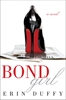 Bond Girl, the debut novel by Erin Duffy, is fresh and entertaining, offering readers a female take on the inner workings of the Wall Street scene. Since she was a young girl, Alex had known that she wanted to work on “the Street”, like her father. She knew that it wouldn’t be easy as a woman in the male dominated world of high finance, but she never dreamed that she would be sitting on a folding chair with no desk of her own, filling lunch orders, and buying $1000 wheels of cheese. Just when things begin to look up for her, 2008 rolls around and she watches her company turn topsy-turvey, trying to stay on top of a dying market. Alex is determined not to let them break her. She has always played the game her way, even when her male counterparts tried to make her play it theirs, but can she hold on without going down like the markets that are her job to anticipate? Alex Garrett is a bold and sassy heroine that you can’t help but like; a financier that follows her heart. Warm, funny and really quite an enjoyable read.
Share this:

Hurry Up and Wait
Posted: April 9, 2012 Filed under: Poetry, Writing | Tags: Poetry, Writing Leave a comment My fingers fly across the keys
As fast as they can go.
I hit publish and wonder why
The Internet is so slow.
Hurry up and wait!
Hurry up and wait!
Seems that’s all I ever do.
If my computer would go faster
I’d already be through.
I watch the little hour-glass
That tells me it’s working hard
But nothing seems to happen
From what I’ve seen so far.
Hurry up and wait!
Hurry up and wait!
Seems that’s all I ever do.
If my computer would go faster
I’d already be through.
I have stories bouncing in my head
Just waiting to be written down.
My computer won’t go faster
No matter how I scowl and frown.
Hurry up and wait!
Hurry up and wait!
Seems that’s all I ever do.
If my computer would go faster
I’d already be through.
Copyright ©2009 Kaye Lynne Booth
I published this on the old blog in 2009. Just thought I’d reprint it today to share with my new readers. Hope you like it.




















