Someone is winding up the “Clockwork Doll House”
Posted: November 16, 2018 Filed under: Book Review, Books, Fiction, Mystery, Speculative Fiction, Steampunk, Stories, Suspense, Young Adult | Tags: Clockwork Dollhouse, Jordan Elizabeth, Murder Mystery, mystery, Steampunk, YA, Young Adult, Young Adult Fiction Leave a comment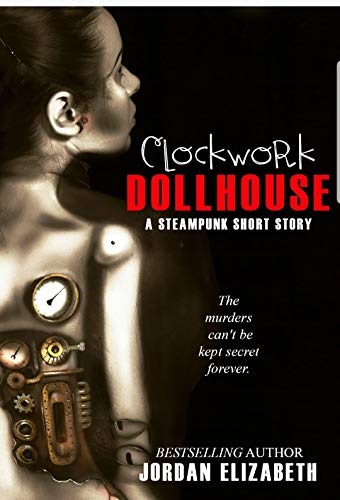
Clockwork Dollhouse, by Jordan Elizabeth is a short steampunk tale which may give readers the chills. Robert has many secrets, but Jane’s clockwork dollhouse sees and reveals things Robert would rather stay hidden. But what is really going on? Who’s winding the dollhouse after all these years and setting the stage? Is it Ainsley, his niece, the ghost of his dead sister, Jane, or is the dollhouse haunted? And can it be stopped before the truth comes out?
A brief story which captivates. Clockwork Dollhouse is a tale of murder unraveled in short fiction format. Perfect for YA audiences. I give it five quills.

Kaye Lynne Booth does honest book reviews on Writing to be Read in exchange for ARCs. Have a book you’d like reviewed? Contact Kaye at kayebooth(at)yahoo(dot)com.
Share this:

“Lost Girl”: A paranormal thriller mystery just in time for Halloween
Posted: October 26, 2018 Filed under: Book Review, Books, Fiction, Mystery, Paranormal, Suspense | Tags: Ann Francis Scott, Book Review, Lost Girl, mystery, Paranormal, Parnormal Mystery, Suspense 4 Comments
Lost Girl, by Anne Francis Scott keeps the suspense ratched up to high, with more twists and turns that a serpentine spiral. This paranormal suspense mystery is crafted with skill that keeps readers guessing, but in a good way. Her search for her past draws Alison to Dawson Mills, where some very strange things occur. She is haunted by a past that she can’t quite remember, one just as disturbing as the ghost children she sees in the woods around the large Victorian she intends to make her home. But, does the danger lie in the ghost children, or is there a greater menace lurking in the shadows?
Ghosts, suspense and questions galore, Lost Girl has all the elements of a good scary story. I give it five quills.

Kaye Lynne Booth does honest book reviews on Writing to be Read in exchange for ARCs. Have a book you’d like reviewed? Contact Kaye at kayebooth(at)yahoo(dot)com.
Share this:

“Doomed to Repeat”: A Mystery in History
Posted: October 5, 2018 Filed under: Action/Adventure, Book Review, Books, Fiction, Historical Fiction, Mystery, Thriller | Tags: Action, Book Review, mystery, Tim Baker, Time, Time travel 1 Comment
Doomed to Repeat is author Tim Baker’s latest crazy crime novel, complete with his usual cast of lovable characters; Ike, Brewski, Ralph Donabedian and the Golden Lion Staff.
Ike and Brewski get a blast from the past when Nazis with amnesia show up in Flagler Beach. As they work to unravel the mystery of how they came to be in this time, while trying to stay one step ahead of the white supremicist who is trying to muscle Ralph Donabedian and the other Flagler Beach business owners into selling all of their properties, they learn their new found friends may hold the evidence to prove two great historical myths to be truths. But, with the bad guys, the C.I.A. and the Russians all closing in, can they save their new found friends and the secrets they carry with them without getting themselves killed or letting their secrets fall into the wrong hands?
When you pick up a novel set in Flagler Beach, and find Ike and Brewski sitting in the middle of it, you know the story will be entertaining, and Doomed to Repeat does not disappoint. I give it five quills.

Kaye Lynne Booth does honest book reviews on Writing to be Read in exchange for ARCs. Have a book you’d like reviewed? Contact Kaye at kayebooth(at)yahoo(dot)com.
Share this:

Interview with author Tom Johnson
Posted: July 2, 2018 Filed under: Author Profile, Books, Children's Books, Fiction, Interview, Mystery, Nonfiction, Publishing, Self-Publishing, Super Hero, Writing | Tags: Author Interview, Children's Stories, Nofiction, Publishing, Pulp Fiction, Writing 5 Comments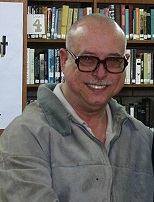
Today I have the pleasure of interviewing an old hand in the writing and publishing business, author Tom Johnson. Tom has written stories from a young age. He has been publishing his writing for more than twenty-two years and has over eighty books in publication. He grew up reading comic books and pulp fiction, becoming a collector in adulthood and his stories reflect the fascination that those books held for him. He has also written numerous nonfiction books and is currently involved in writing children’s stories. Please help me welcome Tom Johnson.
Kaye: Hi Tom. Although in the past, you’ve written and published many different genres, you are currently writing only children’s stories. So, let’s talk about that. Tell me a little about your stories.
Tom: My children stories are about 1k and meant as bedtime tales, and to be read in classroom or library settings. They are short stories with little morals to teach children something about life.
Kaye: Are they a series or stand alone?
Tom: They are a series, and published in anthologies about once a year. There have been four anthologies so far. I was invited to participate beginning in volume #3. The anthology is called Wire Dog Storybook. Here is the background. True story. A young girl, Ellen Walters, asked her father, David Walters, if she could have a dog, and he said, “No.” So she found an old wire hanger and shaped it to resemble a dog, and called it wire dog. David Walters was fascinated by her ingenuity and created the Wire Dog Storybooks. So the stories usually feature Ellen and Wire Dog, but always Wire Dog. Five of my stories have been published so far, and I’ve written three more for the 2018 yearbook when it comes out at the end of the year.
Kaye: What age group are they aimed at?
Tom: I feel that we should begin reading to our children by age one. With that in mind, my stories are aimed at the age group of 1 to 5. However, older children will enjoy the stories, as do adults.
To get a better idea of what Tom’s children’s stories are like, you can get a free copy of one here. They are short and can be read in only a few minutes.: Wire Dog Has An Ugly Mood Day – Or The House of 1000 Mirrors https://wiredogstories.com/2016/01/19/story-40-wire-dog-has-an-ugly-mood-day/
Kaye: What differences do you see between writing for children and writing adult fiction?
Tom: Adult fiction usually means, “no holds barred”, while writing children stories you want to stay away from violence, horror, and adult themes. Keep in mind, young children absorb what they hear quickly, and some themes could have an adverse effect on young minds. When writing for children we must keep this in mind.
Kaye: What appeals to you about writing for children?
Tom: Do you remember the old radio show for kids, Let’s Pretend ? It produced shows for children that acted out fairy tales and light adventures – nothing as harsh as today’s cartoons that are aimed at our youth. Well, I have the chance to import my love for adventure in tales easily understood by young people; children who some day may also experience that same love to pass on to their children. Stories that give our children a moral to live by, not “It’s clobbering time!” Or Pow! Bang! Boom! It’s something my mother did for me when I was little, and now I have the same opportunity, and I’m not going to pass it up.


You can get the Wire Dog books here:
Wire Dog Storybook #3 http://www.lulu.com/shop/david-clyde-walters/wire-dog-storybook-3-in-full-color/paperback/product-22554849.html
Wire Dog Storybook #4 http://www.lulu.com/shop/david-clyde-walters/wire-dog-storybook-4-in-color/paperback/product-23424745.html
Kaye: You have wanted to write for children since you were little and your mother used to read to you.
Tom: Oh, yes. I hope that mothers are still reading to their children. They learn at such a young age, and we’re missing an opportunity if we fail them when they’re young. They will never forget what they learn as children, it’s when their minds are growing and grasping at everything. I think one of the first words they learn is, “Why?”
Kaye: What were your favorite children’s stories?
Tom: Really, I would have to look them up in the book of fairy tales on my shelf. There were so many she read to me. Knights saving young damsels come to mind. I remember one particular fairy tale where the princess was on a glass mountain, and the young knight had to save her. She watched each day as a knight riding brown horse attempts to scale the glass mountain, then a knight on a white horse, and so on, until the final day when a knight riding a great steed scales the mountain, and we find out that he was the knight on the brown horse, the white horse, etc. It wasn’t the color of the horse, but the persistence of the knight that finally achieved the goal.
Kaye: In what ways do the stories you write emulate those favorites from your childhood?
Tom: Like the fairy tale I mentioned above, my stories will also have a similar moral – it’s not the color of the horse, or the knight’s armor, but his persistence that wins the hand of the princess. Do the right thing, for the right reason. Persevere. If you don’t succeed today, try and try again.
Kaye: You have written since you were a young man, for fifty some years, and you had your own small press for many years. Always, your life seems to have writing at the center of it. Looking back on your life, what does writing mean to you?
Tom: I think writing was always an escape to other worlds, other realms, and other dimensions. We could be anyone we wanted, go anywhere we wished, and experience great adventures. We create those worlds and people we want in them, and our heroes and heroines are who we want to be, or the friends we want beside us. We choose those things that mean the most to us. Whether we’re a cowboy or cowgirl, Conan or Xena, we bring the characters to life. That’s what writing means to me, to give life to my characters.
Kaye: How do you see the rise of digital publishing affecting authors of today?
Tom: Publishing has never been easier. When we were publishing the small press magazines, it was hands on. We did every aspect of the business, from reading, approving or rejecting, editing, set up and printing, then mailing to subscribers and bookstores that carried our magazines. Today we have Lulu and Amazon for all that. We just write, they publish. Anyone can be a writer or publisher now.
 Kaye: What is the strangest inspiration for a story you’ve ever had?
Tom: I had a dream one night. A young boy was in the woods dying when a strange being found him and comforted him as he passed. The strange being was an alien and I saw the saucer-shaped craft behind him. When I woke the dream stayed with me. Did the alien kill the boy? Why was the alien there? What was the boy doing in the woods? It wouldn’t let go of me. I wrote What Goes There from that dream. The boy was dying from snakebite and the alien took his pain from him so he could pass more easily. Then I made a mystery with the plot. The story is part of my book, These Alien Skies.
Kaye: Is there anything unique or unusual about your writing process?
Tom: When I write, I don’t want to be disturbed. No music, no background noise at all. My work computer is in my bedroom. I close my door from all outside communication, telephone, wife, neighbors, etc. I have to be alone when I write.
Kaye: You’ve written over eighty books in many different genres over the course of your career. Which of your books would you say are your favorites? Why?
 Tom: If we’re speaking of my fiction stories I would probably say my favorite is Guns of The Black Ghost, as it is my homage to Walter Gibson and his character The Shadow (remember him). The Shadow was one of my favorite radio dramas as a kid, and I met the creator of the character, Walter Gibson, in the mid-1970s and we were friends until his passing. I always wanted to write a Shadow novel, but copyright protection kept me from it, thus my own character, The Black Ghost came into being.
However, my non-fiction research books are probably my best sellers. I’ve written over half a dozen of them. A lot of work went into them. A lot of reading and studying, and I think it paid off, as fans have all bought the huge books for the data. These are books that don’t get thrown away, but have a special place on their bookshelves.
Kaye: So, tell us a little about your nofiction books. What is the subject matter and how did you come to write them?
Tom: As a pulp collector it was natural for me to become a historian. I had completed runs in many of the lead characters, thus had the opportunity to study the novels for research, identifying authors, plots, etc. At the time I was writing fiction and Introductions for ALTUS PRESS books, and the publisher wanted my research put into books. Some of those series were Secret Agent X Companion, Operator #5 Companion (History of The Purple Wars), The Phantom Detective Companion, The Black Bat Companion, Dan Fowler’s G-Men Companion, and Echoes 30. Several ran for twenty years, and 171 issues. Some not so long, but just as popular to the fan and collectors today. There may be others, my mind is slipping, but these were the big volumes. They covered the complete pulp series of each title. Echoes 30 covered conventions, pulp books, authors, artists, and publishers. All are in demand and have been good sellers.


Kaye: Are you a plotter or a pantser? Why?
Tom: I’m a pantser. I never could understand why you needed to write a fifty-page plot outline, just write the darn book. Once the words start flowing you don’t want them to stop. And they will, if you’re outlining.
Kaye: What do you think is the single most important element in a story?
Tom: Characterization. Make your characters come alive. You want readers to connect to them, feel for them, and be drawn to them. The plot will work itself out, but if your characters aren’t real I don’t care how much of a plot you have, it will bomb.
Kaye: If writing suddenly made you rich and famous, what would you do?
Tom: I don’t know that I would want to be rich and famous. What would be next? I want to always be reaching, always trying to entertain. If I set my goal for rich and famous I might forget about the entertainment and pleasure we get from writing. If I entertain one person, then I am already rich. Besides, we already have money, and fame is fleeting at best.
Kaye: What’s the best piece of advice you were ever given?
Tom: Write what you know. I’ve read a lot of books where the author is writing about something s/he knows nothing about, and it shows. I know information is at the tip of one’s fingers today, but if you haven’t truly experienced something you will come off as unbelievable if you try to write about the subject.
I want to thank Tom for joining us today on Writing to be Read and offering up some really great answers to my questions. I have really enjoyed having him. If you’d like to learn more about Tom Johnson or his books you can check out his website or his Amazon Author Page.
Like this post? Subscribe to Writing to be Read for e-mail notifications whenever new content is posted or follow WtbR on WordPress.
Share this:

Mindsight: A Futuristic Crime Novel
Posted: June 15, 2018 Filed under: Book Review, Books, Crime, Fiction, Mystery, Speculative Fiction, Suspense | Tags: Book Review, Crime novel, Dean Kenyon, Detective Story, Futuristic, Hardboiled, Mindsight Leave a comment
Mindsight, by Dean Kenyon, is a crime story along the line of the golden age of detective fiction. Frank Mallory is a P.I. who might run in the same circles as hardboiled detectives such as Mike Hammer and Sam Spade, except Mallory operates in the future world of 2025.
The Giver is a serial killer who provides his victims the one thing they desire more than life itself in exchange for their submission to his torture and their eventual death. Frank Mallory must penetrate the underworld of the mindsighters, (a sub-culture of users of the empathy drug, mindsight, who dwell in caverns below the city), to uncover the truth. But, there is more to The Giver than is immediately apparent. Can Mallory crack the case to reveal a diabolical plot no one would have guessed before he is drawn in too far to turn back?
A pulp detective novel set in a future where designer drugs rule, or do they? I give Mindsight five quills.

Kaye Lynne Booth does honest book reviews on Writing to be Read in exchange for ARCs at no charge. Have a book you’d like reviewed? Contact Kaye at kayebooth(at)yahoo(dot)com.
Share this:

Interview with multi-genre author Ashley Fontainne
Posted: May 28, 2018 Filed under: Author Profile, Fiction, Interview, Mystery, romance, Science Fiction, Speculative Fiction, Suspense, Thriller, Writing | Tags: Ashley Fontaine, Author Interview, Fatal Agreements, Writing Leave a comment
I recently had the pleasure of virtually meeting this charming author when I did a review of her thriller, Zero Balance, earlier this month. This woman is an award winning, muti-genre, best selling author with over twenty books on the bestseller lists. Her genres include: Mystery, Thriller, Suspense, Science Fiction, Post-Apocalyptic, Coming of Age, Addiction, Romantic Suspense, and Short Stories. She’s an independent author, who founded her own independent press, BSMW, and one of her books has been turned into an independent film. Please help me welcome Ashley Fontainne to Writing to be Read.
Kaye: You brand yourself “The Dark Southern Belle” on your website. Where does this title come from?
Ashley: A fan coined the phrase in a review of one of my books. It made me smile. I knew as soon as I read it that it was the perfect catch phrase.
Kaye: Would you share a little about your own author’s journey with us?
Ashley: It has been a crazy ride! Seven years ago, I had no clue how my life would change when I hit “publish” on Amazon Kindle with my first title. I had no idea what I was doing or getting myself in to, and though the road has been rough at times, wouldn’t change a thing!
Kaye: What’s something most readers would never guess about you?
Ashley: I am a huge crybaby. In fact, I refuse to watch certain movies or read particular genres of books because, despite the subject matter of most of my books, I have a very sensitive side. I still tear up at the end scene of Homeward Bound when Shadow appears on the hill.
Kaye: What is the strangest inspiration for a story you’ve ever had?
Ashley: There have been a lot, but the one that stands out the most is for my zombie series. I am a huge fan of the genre and of course, The Walking Dead. I wanted to add a different take on how the zombie apocalypse starts. The rampant abuse of drugs in our society was the perfect fit and the second the two ideas connected, I started writing.
Kaye: You have some really interesting titles. One of my favorites is Fine as Frog Hair. The title makes me want to read it and I haven’t even read the description for the book. How do you decide the titles for your books? Where does the title come in the process for you?
Ashley: Fine as Frog Hair is a saying my grandfather was fond of using when asked, “How are you?” He liked to say, “Why honey, I’m fine as frog hair.” It’s a cute southern expression and since the short story is loosely based off his life, I thought the title fit perfectly. Like the stories, the titles appear out of thin air.
Kaye: You write in multiple genres. What are the differences for you as you write each one?
Ashley: Nothing really. I refuse to pigeonhole my creativity into just one genre. A story is a story no matter the backdrop. A character and/or idea pops into my head and I just let the words flow.
Kaye: You’re an award winning author. Which awards have you been the recipient of?
Ashley: Number Seventy-Five won the Bronze in Fiction/Suspense from Readers’ Favorite. The Lie won Gold from the Illumination Book Awards.
Kaye: Would you tell us about One of a Kind Covers?
Ashley: As I mentioned earlier, I didn’t know a thing about epub, mobi, formatting or cover design when I first jumped into this crazy world. Over the years, I taught myself how to do all of those things out of financial necessity, and in the course of doing so, other authors came to me, asking if I would design a cover for them, which is how One of a Kind Covers came about.
Kaye: You’re the founder of your own independent press, RSMW. Tell us about RSMW. ; What does RSMW stand for? What’s the story behind it?
Ashley: RMSW Press stands for Rambling Mad Southern Woman, which is also the name of my blog. While learning how to design a website and blog, I was so frustrated I almost gave up. I was complaining about it to my husband and said, “I feel like a rambling mad southern woman,” and poof! There was the title.
 Kaye: Your latest release is Fatal Agreements, which came out April 23rd. Would you tell us a little about that book?
Ashley: Whispered rumors tickled the ears of the residents of an entire town for decades about the disturbing secrets of the old Halstead House, dating all the way back to the early 1920s. Most people didn’t believe them. Several people will soon discover they should have listened.
Three years after struggling to cope with the death of her beloved father and escaping an abusive relationship, Samantha Chapman decides it’s time to return to her hometown of Hot Springs. She buys the ramshackle Halstead House, eager to transform the dilapidated, abandoned piece of history into her new law office and residence, hoping it will be the start of a brighter chapter and a safe haven to escape her personal demons.
Instead of newfound freedom, things take a dark turn when the resurrection of the old home reveals the disturbing secrets hidden within its walls. When youthful transgressions of numerous people come to light, including ones some members of the Chapman family are desperate to contain, it reveals the sins of the past. They collide with the grave mistakes of the present, creating a perfect storm of chaos and death for not only the Chapman family but others as well.
Some will survive.
Others will get burned.
Sam and her loved ones realize some family secrets should have remained buried.
Kaye: Your book Ruined Wings was turned into an independent film. Can you tell us how that came about? Who wrote the screenplay?
Ashley: I wrote the screenplay along with the Executive Producer, Sabrina Stewart. We have been a tight duo since the first day we connected years ago when she auditioned to narrate Number Seventy-Five. I sent her the book and she loved it. Opioid addiction is a major crisis in our world and we hope through this movie to help stop the plague.
Kaye: What was it like to see your characters come alive on the screen?
Ashley: Life-changing. Humbling. Terrifying!
Kaye: You also have a GoFundMe campaign going to fund the film. Would you like to tell us about it and how readers can contribute?
Ashley: The film will be shared at no cost to educators and organizations to be played at schools, churches, civic meetings and youth organizations where it can target those most vulnerable to fall into the pit of abuse and addiction. Donate here: https://www.gofundme.com/independent-film-ruined-wings
Kaye: What is the working title of your next book?
Ashley: Blood Stain
Kaye: Which author, dead or alive, would you love to have lunch with?
Ashley: Edgar Allan Poe.
Kaye: What advice do you have for aspiring authors?
Ashley: Grow a thick skin. Never give up. Hone your craft. Write from the heart.
I want to thank Ashley Fontainne for joining us here on Writing to be Read. You can learn more about Ashley at the following places:
Website: http://www.ashleyfontainne.com/
Facebook Author Page: https://www.facebook.com/ashley.fontainne/
Blog: http://ramblingsofamadsouthernwoman.blogspot.com
Like this post? Subscribe to Writing to be Read for e-mail notifications whenever new content is posted or follow WtbR on WordPress.
Share this:

Monthly Memo: The Flashback vs. The Flash Forward
Posted: July 13, 2017 Filed under: Fiction, Monthly Writing Memo, Movies, Mystery, Science Fiction, Screenwriting, Screenwriting, Stories, Uncategorized, Weekly Writing Memo, Writing, Writing Tips | Tags: Fiction, flash forward, flashback, flashbacks, Screenwriting, Stories, Writing, writing tip, Writing Tips 2 Comments
In last month’s memo I talked about ways you can use flashbacks in stories and it led to a discussion about flash forwards and a request from Kaye that I do a post about them, so I decided to focus on the difference between flashbacks and flash forwards. I’m going to primarily use films and TV shows for examples as the film/TV examples are easy to visually show what I mean.
(Disclaimer: I don’t own the rights to any of these video clips or shows. I apologize in advance for some of the quality of the clips but they were the only ones I could find at times. Many of these shows mentioned are on Netflix, so I recommend watching there if possible.)
Flashbacks:
A flashback is almost any moment when a story jumps from the present time of the story to show you something that happened in the past. It’s not just talking about the past, but actually showing the events that happened. The flashback can be just a quick glimpse, or it can be a very long section of the story.
Flashback Example 1 – The Usual Suspects:
This film opens with the explosion on the ship and then moves forward to Kevin Spacey in the police station being interviewed. When he starts telling the story of how all the “usual suspects” were rounded up the film flashes back to show this happening, and the story continues in the flashback time period until the end of the film when we return to Kevin Spacey in the police station again.
Flashback Example 2 – Forest Gump:
This one is pretty straightforward that it’s cutting to a flashback. Forest is in the present moment talking about things that happened in his past from his childhood to adulthood, and we constantly hear his voice over and see him in present day on the bench talking about his past.
Flashback Example 1 – Breaking Bad Season 1 Episode 1:
Again, we start in the present time where Walt is crashing the RV and already cooking meth, then we very clearly jump back after the opening credits several weeks in time to when he was a normal school teacher. The main story of this first episode is all flashback with the opening and ending being the present moments.
Flash Forwards:
Flash forwards are tiny glimpses of the possible future within a story. Basically you get a glimpse of the future and then return to the present afterward. This future glimpse doesn’t have to be true, and it doesn’t HAVE to happen, it’s just a glimpse of what COULD happen and the audience has to keep watching to see if it does.
This technique is often used in stories involving anything with psychics. The key is the events haven’t happened yet, and may never happen depending on how the present continues to unfold. It’s a glimpse of the potential future, but the story is still taking place in the present day and will return to present day once the future glimpse is over.
Flash Forward Example 1 – The Dead Zone (film)
When Christopher Walken shakes Martin Sheen’s hand he gets a vision of the potential future. We see clips of what Martin Sheen may do, but we don’t know if it will happen or not because it hasn’t happened yet, all we know is that it’s possible to happen. Once the flash forward is over we return to the present moment where Christopher Walken is.
Flash Forward Example 2 – Scrooged:
When Bill Murray leaves the elevator he gets several glimpses of the possible future he will encounter if he doesn’t change his ways. Again, these are all brief flash forwards showing potential future moments. It’s a little different because it seems like Bill Murray is in the flash forwards, but he has no ability to change them while he’s there so it’s still a flash forward to a potential future if he doesn’t change his ways in the present.
Flash Forward Example 3 – Terminator 2
When she lays her head down, Sarah Connor has a dream vision of the future if machines are allowed to get out of control. This vision is a potential future and is the motivation for her to try to stop this outcome with her actions in the present.
Flash Forward Example 4 – FlashForward TV Show Season 1 Episode 1:
This episode actually has a flash forward AND a flashback in it. I’ve started this clip right before the flash forward moment where the protagonist gets a glimpse of his future and then wakes up after the accident, but if you scroll back to the very opening of the episode you’ll see that the story starts with the accident, then there is a flashback to 4 hours earlier leading up to the accident again to show what caused it (which was actually the flash forward). Are you confused? I know, it’s a lot.
The flash forward is the glimpse of the potential future that the main character may experience at some point later on, and then you return to the present moment. The opening sequence at the start that shows the accident is NOT technically a flash forward because it’s not a glimpse of the future, it’s where the story is NOW. Then we flashback to 4 hour earlier to see how we got there and how the accident happened.
Flash Forward Example 5 – Sherlock Holmes (film)
This fight scene is a type of micro flash forward because it tells us what will happen moments before it does, even though it’s in verbal form. It’s more of an abbreviated flash forward because it’s verbal and it’s similar to how flash forwards are often used in fiction. The narrator gives the reader a glimpse of what will be to come, but we’re still in the present moment of the story where it hasn’t actually happened yet.
Distinguishing Between the Two:
Most of the time it’s pretty easy to tell whether something is a flashback or a flash forward because it’s in the middle of the story and the story either jumps forward or back for a short time before returning to the present. However, the one area that seems to cause the most confusion is when the flashback or flash forward is used immediately at the opening of a story. Is the story starting in a flash forward? Is the main story all in flashback? What is happening? To figure out whether you’re seeing a flashback or a flash forward, think about where the scene is currently taking place and where the protagonist is in the present.
If you look at the openings of Forest Gump and Breaking Bad, both are happening as we watch and we’re not seeing a future possible event, we’re seeing the events as they happen to the protagonist, then we (the audience) jump back to see how the protagonist got to that present moment, but all of it has already happened and the protagonist is still in the present at that opening scene waiting for us to catch up to him.
Flash forward scenes are events that have NOT happened yet, and may not happen, and when they end we are returned to the present moment where the story is taking place and the protagonist is currently. Everything between that present moment and the future event we saw has not happened yet, and may not happen, but that is why we’re watching to find out. The present moment may eventually lead to that flash forward moment, but there’s no guarantee.
One of the few times a show can open with a flash forward is if it opens with a psychic event such as a dream or prophecy where we get a glimpse of what may or may not happen before a character pops awake or something and reveals it all was a vision or dream. Then the rest of the show builds to reveal whether it is something that is going to happen or not.
Neither Flashbacks nor Flash forwards:
There are a few other story methods that some people confuse with flash forwards and flashbacks but one of the main ones I want to mention is time travel such as in the Back to the Future Series. This and other time travel stories are tricky areas because it is easy to say we’re flashing back because we’re going back in time, but that’s not true in most stories I can think of.
A flashback involves looking back at past events that have already happened exactly as the person remembers them happening, while most time travel stories involve a character physically going back to these past events such as Marty does, and having influence on those events. This makes it not a flashback because Marty has the ability to change things if he does something wrong. That means the events aren’t set and aren’t just a memory of what happened, they’re fluid and changing. Flashbacks are memories of what happened prior to the present so they can’t be changed unless someone is misremembering something or lying. Marty is physically there and it’s his present time even if he’s physically living in the past, and he can make mistakes (and does) that change the future, so it’s not a flashback.
The other thing I wanted to point out is that just because a story goes forward in time doesn’t mean it’s a flash forward. A flash forward is a glimpse into the future but it doesn’t move the story TO the future. When your story jumps forward in time to a future point, if the story continues from that point on and isn’t just a glimpse of that future time, then what you have is a forward time jump and not a flash forward.
Final notes
Every now and then you’ll see someone define those opening scene moments where we start the story at a major event as a flash forward because it shows a “future” event and then immediately goes back in time after to where a huge chunk of the story takes place. But these stories that start with a major event and then go back in time almost always say something like “x time earlier” which establishes that the first scene is the present time period and everything afterward is in the past, making everything after that opening scene a flashback.
Ultimately, if you’re asking “what happened to get us here?” then you’re probably about to see a flashback to find out. However, if you’re asking “what WILL happen to get us here?” then you’re watching a flash forward and you will return to the present to find out as events unfold.
Share this:

Monthly Memo: From Outline to the Page
Posted: April 19, 2017 Filed under: Fiction, Monthly Writing Memo, Mystery, Screenwriting, Screenwriting, Stories, Uncategorized, Weekly Writing Memo, Writing, Writing Tips Leave a comment
Sometimes the hardest part of writing a story is taking the outlined idea and turning it into words on the page. It’s great to know that X and Y need to happen, but how do you make them happen in writing? How do you take that character and bring him to life? How do you take that villain and make her fun yet terrifying? How do you unravel those conflicts in words? There are a lot of different methods for bringing a story to life, but here are the few that I find help me the most when moving from the outline, to the page.
Character
Before I begin writing a character I spend some time figuring out at least 3-4 concrete details about his or her personality. I think about their dominant personality trait that people see, their core moral value that guides most of their decisions, and a personality trait that they have that’s a flaw. I also sometimes figure out a minor personality trait that most people may not notice, but it’s a core part of who that character is. Beyond that, I like to find one physical trait I see very clearly to help me visualize the character, and I like to understand at least one solid relationship they have with someone, be it family or friend. The other two things I think you should figure out is what the characters main goal in life is, and perhaps what they’re afraid of.
I think these core details give you enough that you can easily visualize the character and write them well without having to figure out every last ounce of the characters life. These details give you an overall sense of who they are, and as you work out more while writing you can develop the character more clearly. If you need to do more to figure out the character in order to write them, try doing a free-write so you can ease yourself into the character’s voice. If you write 3-5 pages in your character’s voice, you’ll learn a lot about them and find it easier to write the character’s voice for the story.
Setting
To get your setting from outline to page, I think the important thing is to ask yourself what’s important about the setting. What about it is vital to your story? Why does the story need to take place in that specific spot? If you know these details then you know what elements of your setting to emphasize in your story. The more important a detail is, the more you want to describe it unless you’re trying to keep it subtle for some sort of plot reveal. At the very least, when writing a setting I feel you should give enough detail about it to help create a solid visual image in your reader’s head. You want them to be able to visualize where the characters are, how they’re moving throughout the scene, and why we’re in that specific place.
Plot
The hardest part of taking your outline and bringing it to the page in my opinion is how to portray the plot. You have your outline that says “Amy goes to the park. Amy runs into Ryan. They fight. Amy leaves upset.” If you write it that way, that’s an incredibly short story and has no real depth or development. So how do you write that short sequence of events and make it interesting? What parts do you expand on and what do you rush through?
For the first step in your outline “Amy goes to the park,” you want to show Amy’s mindset, give a sense of the setting, and establish some form of a goal for why she’s going to the park. Is she meeting someone? Is she trying to find some privacy? Does she have a kid she’s taking to play? Set the tone of the scene, and choose your tone with the thought of how it will change in the upcoming scenes in mind. Then as you go to the next scene, “Amy runs into Ryan,” start thinking about the implications of that scene. How does meeting Ryan change Amy’s mood? How does their interaction start? How do they meet up? On purpose or accidentally?
As you go into the final scenes, “They fight, and Amy leaves upset,” start to think about how to transition there as well. What upsets Amy? How quickly does she leave? What’s the environment around them look like? The questions can go on forever, but it’s important to focus on things that involve the tone, the setting, the characters, and the sequence of events.
Final Notes
If you’re really struggling to transfer your story from outline to page, remind yourself that a story isn’t just about action and a sequence of events. The details you bring out in the story will help take your story from an outline of X and Y happens, to something that has depth and is fun to read. So explore the layers of your story and try to bring them out. Remember, it’s often easier to remove details if you put too much rather than trying to add more later on. So write and explore, and see what kind of story evolves.
Robin Conley offers great writing advice in her Monthly Memo on Writing to be Read. If you just can’t wait until next month to find out more, you can pop into her blog, Author the World, for more tips, or a weekly writing prompt.
Share this:

“Lucky Sevens” offers a rare look at Las Vegas life
Posted: August 7, 2014 Filed under: Book Review, Mystery, Writing | Tags: Cynthia Vespia, Las Vegas, Lucky Sevens, Murder Mystery 1 Comment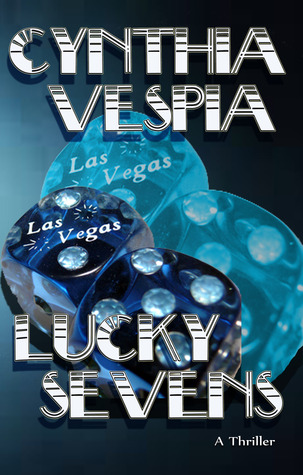
“Lucky Sevens” by Cynthia Vespia
As head of security for the recreated Saints and Sinners, it’s Luca “Lucky” Luchazi’s job to keep the brass and the clients alive when a series of mysterious accidents befall the casino, starting with the death of his friend and mentor, Charles Vega, the previous owner of Lucky Sevens. But Luca isn’t feeling so lucky anymore. The casino has changed hands, changed its name and changed everything, the woman he loves won’t speak to him, and if things don’t change, he’ll be out of a job, or maybe out of his life.
Many of us have visited Vegas and seen Sin City with the cast of neon to dazzle our view. Lucky Sevens, by Cynthia Vespia, tells the story from the inside view, the angle few of us ever see. It’s the story of those that make keep the cogs moving any way they can and try not to get caught up in the machinery. When it was Lucky Sevens, run by his friend and mentor, Charles Vega, it seemed like a pretty good place to be. Now, he’s not so sure. The new boss is connected and has big corporate money behind him, the mysterious deaths that have occurred in the hotel lately all seem to be connected and black magic seems to be in the air. It’s up to Lucky to uncover what is really going on, but the question is whether he can do it before his luck runs out.
Lucky Sevens is an entertaining read that offers a different perspective on the Vegas scene, showing that it isn’t all bright lights and cash flow. Everyone wants to come out with the winning hand, even behind the scenes where the stakes may be higher than anyone realizes. Take a walk through the Vegas underworld with Lucky Luchazi, but tread carefully. You never know who’s lurking around the next corner, who can be trusted or who’s going to come out on top.
Share this:

Time Flies
Posted: January 12, 2014 Filed under: Fantasy, Fiction, Mystery, Western, Writing | Tags: Books, Fantasy, Fiction, mystery, New Year, Western, Writing Leave a comment Wow! It’s 2014 and I just realized how long it’s been since I published here, I’ve been busy earning my degree, along with the many other demands that life places on all of us. But hard work and dedication pays off. In fact, since I began the MFA program at Western State Colorado University, I’ve produced rough drafts for two novels, which I’m now working on revising. The first is a western, Delilah, and the second is a middle grade mystery, The Adventures of Ann and Kinzi. I’m currently working on a mythological fiction/fantasy/science fiction novel, with the working title, A Playground for the Gods, which I’m considering using as my thesis.
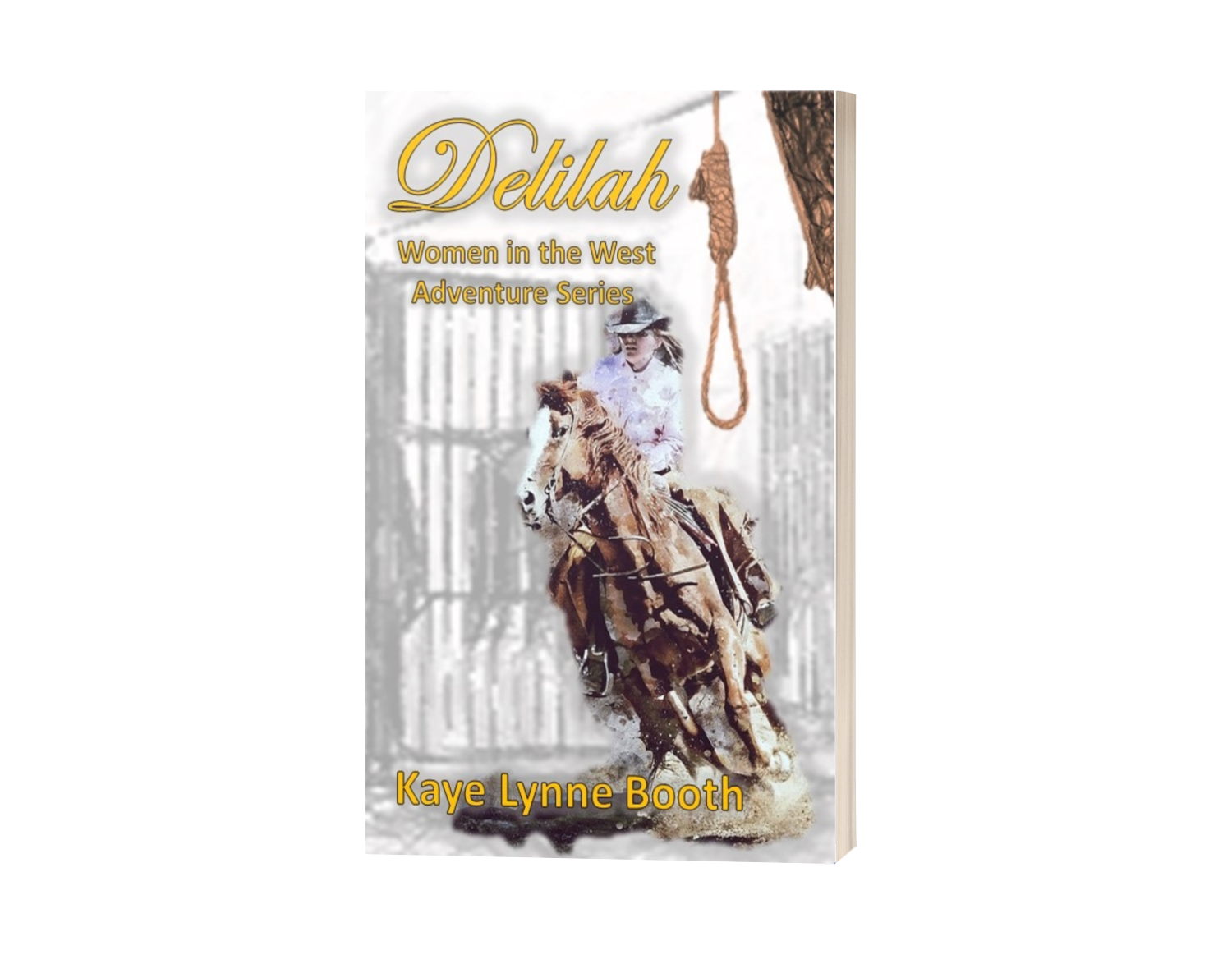
Delilah is a tough young woman who grew up on the Colorado frontier. On her way home to the San Luis Valley, she’s brutally raped and left for dead, sending her on a quest for vengeance. Her hunt for her tormentors leads her to the Colorado mining town of Leadville, where the colorful inhabitants work their way into Delilah’s heart and give her hope for a future she’d thought lost along with her innocence. Now she must stay alive and protect her new-found friends as she faces the many dangers of the western wilderness and the outlaw elements of the growing new Colorado territory.
The Adventures of Ann and Kinzi is the story of two young girls growing up during the depression. Their shared love of animals and the fact that they’ve both lost their mothers are the common ground on which cements their friendship. When strange things start happening at the McViddie farm, where they care for the horses, and one of their classmates disappears, Ann and Kinzi set out to solve the mystery and save their friend, but they must do it without being caught by the kidnapper themselves.
In A Playground for the Gods, Inanna is the goddess of love and war on a quest to save humanity. The foolish judgement of men and their misuse of the technology the gods have provided have brought them to the brink of self-destruction and convinced the gods that humanity is not ready to receive the secrets of long life and powers that would make them godlike. They’re preparing to find a new planet on which they hope to find a new species to bestow their gifts upon. Inanna must prove that humans are worthy of their godly gifts, and convince them not to leave humanity in such a mess.
That’s it. That’s my excuse for neglecting this Writing to be Read blog. Now all I can do is ask forgiveness from my readers and offer the promise that if they stick with me, I promise to blog on a regular basis in the coming year. I don’t foresee that I will abandon novel-writing, but I do plan to try to organize my time better, so I’ll be able to commit to at least two or three posts a month. I hope you will all join me for the journey.
I’d also welcome any feedback on which of the above stories capture your interest and why. Comments are always appreciated.