Book Review: “Horn Dogs”
Posted: December 27, 2024 Filed under: Book Review, Books, Dark fiction, Dark Humor, Fairy Tales, Fiction, Review, Speculative Fiction, Zombie Fiction | Tags: Book Review, Dan Shamble Zombie P.I., Horn Dogs, Kaye Lynne Booth, Kevin J. Anderson, Writing to be Read 6 Comments
I’m a big fan of the Dan Shamble, Zombie P.I. series, so when I got a review request for the two latest books in the collection, you know I couldn’t turn it down. All opinions stated here are my own. ( You can catch my review of Stiffs & Stones on Friday, January 10th, 2025.)
Other titles I’ve reviewed in the Dan Shamble, Zombie P.I. Series
- Bats in the Belfry & Heart of Clay: https://writingtoberead.com/2023/12/29/book-review-bats-in-the-belfry-heart-of-clay/
- Zomnibus: https://writingtoberead.com/2018/07/27/zomnibus-two-zombie-detective-novels-in-one-book/
- Double Booked & Bump in the Night: https://writingtoberead.com/2022/07/22/book-reviews-double-booked-bump-in-the-night/
About Horn Dogs

Dan Shamble’s most pointed case, with murdered unicorns,frog princes, corporate fairy godmothers, and lagoon creatures, all looking for a fairy-tale ending in the gritty streets of the Unnatural Quarter.
My Review of Horn Dogs
I requested a digital review copy of Horn Dogs, from author Kevin J. Anderson’s Reader’s Group. All opinions stated here are my own.
Everyone wants a happily ever after, and Dan Shamble, Zombie P.I. is determined to make it happen.
The unnatural characters and their crazy antics in the Unnatural Quarter after the Big Uneasy, are what keep me coming back to the Dan Shamble, Zombie P.I. series, and Horn Dogs is no exception. In addition to all my favorite characters, such as Dan Shamble and his ghost girlfriend Shyenne, his human partner Robin, his vampire half-daughter, Alvina, and his best human friend Officer McGoo, this volume brings us frog demons, evil wizards, fairy godmothers, and unicorns and their pet horn dogs spreading magic and warm fuzzies throughout the Unnatural Quarter.
When Prince Dirk is changed into a frog by the evil wizard, Oorgak, he falls in love with a frog demon, RRita, heiress to the successful local pool service in the Unnatural Quarter. But Oorgak had an epiphany after seeing a unicorn, and reversed all of his previous evil deeds, and now the happy couple isn’t happy, especially when their illegitamate tadpoles are held hostage by the swamp monsters who own the new swamp water park.
And when someone dognaps all the unidogs, and unicorns are being murdered, the Secret Society of Horn Brothers and Horn Sisters must come out of hiding to employ Dan Shamble’s services, too. Can this zaney zombie P.I. save the unidogs and tadpoles, and reunite the unhappy couple, giving everyone the happily ever after that they’re looking for? You’ll have to read Horn Dogs to find out.
A fun and silly read, I give Horn Dogs five quills.
_____________________________________
Kaye Lynne Booth does honest book reviews on Writing to be Read in exchange for ARCs. Have a book you’d like reviewed? You can request a review on the Book Review tab above.
___________________________________
This post is sponsored by WordCrafter Press with a reminder that all WordCrafter Press books are currently 50% off in the SmashWords End of Year Ebook Sale, only in the SmashWords store: https://www.smashwords.com/shelves/promos/

Share this:

Wrapping Up the WordCrafter “The French Winemaker’s Daughter” Book Blog Tour
Posted: December 20, 2024 Filed under: Blog Tour, Book Review, Books, Fiction, Historical Fiction, history, Review, WordCrafter Book Blog Tours | Tags: Historical Fiction, Loretta Ellsworth, Strong Female Protagonists, The French Winemaker's Daughter, WordCrafter Book Blog Tours, World War II, WWII 6 Comments
This is the final day of the WordCrafter The French Winemaker’s Daughter Book Blog Tour. Today, we have my review of The French Winemaker’s Daughter to wrap things up.
If you’d like to learn more about this moving historical fiction novel and you missed a stop on the tour, you can still visit each stop through the links in the schedule below.
Tour Schedule
Monday: Writing to be Read – Interview with author Loretta Ellsworth
Tuesday: Carla Reads – Guest post from author Loretta Ellsworth
Wednesday: Kyrosmagica – Guest post from author Loretta Ellsworth
Thursday: Book Places – Guest post from author Loretta Ellsworth
Friday: Writing to be Read – Review of The French Winemaker’s Daughter
About The French Winemaker’s Daughter
Set during World War II, an unforgettable historical novel about love, war, family, and loyalty told in in the voices of two women, generations apart, who find themselves connected by a mysterious and valuable bottle of wine stolen by the Nazis.
1942. Seven-year-old Martine hides in an armoire when the Nazis come to take her father away. Pinned to her dress is a note with her aunt’s address in Paris, and in her arms, a bottle of wine she has been instructed to look after if something happened to her papa. When they are finally gone, the terrified young girl drops the bottle and runs to a neighbor, who puts her on a train to Paris.
But when Martine arrives in the city, her aunt is nowhere to be found. Without a place to go, the girl wanders the streets and eventually falls asleep on the doorstep of Hotel Drouot, where Sister Ada finds her and takes her to the abbey, and watches over her.
1990. Charlotte, a commercial airline pilot, attends an auction with her boyfriend Henri at Hotel Drouot, now the oldest auction house in Paris. Successfully bidding on a box of wine saved from the German occupation during the Second World War, Henri gives Charlotte a seemingly inferior bottle he finds inside the box. Cleaning the label, Charlotte makes a shocking discovery that sends her on a quest to find the origins of this unusual—and very valuable—bottle of wine, a quest that will take her back fifty years into the past. . . .

A powerful tale of love, war, and family, The French Winemaker’s Daughter is an emotionally resonant tale of two women whose fates are intertwined across time. Loretta Ellsworth’s evocative and poignant page-turner will linger in the heart, and make you think about luck, connection, and the meaning of loyalty.
Purchase Link: https://www.amazon.com/French-Winemakers-Daughter-Novel-ebook/dp/B0D3CJYP5Y
My Review of The French Winemaker’s Daughter
I received a PDF copy of The French Winemaker’s Daughter from author Loretta Ellsworth to review for this tour. All opinions stated here are my own.
Any book with two strong female protagonists is my kind of book. I’m a fan of historical fiction, and this story peaked my interest, with it’s compelling synopsis in the back matter. It was definitely worth the read.
In this story, we follow little Martine, a Jewish child, as she survives the war with the help of the kind people she meets along the way, after the German’s take her Papa and her friend away. We follow the story through the eyes of a child, displaced from her family and the vineyard that’s been her only home, filled with guilt for losing a bottle of wine that her father entrusted her with, and the hope of once again being reuinted with her Papa.
In the present day, we follow Charlotte, and airline pilot, who acquires a bottle of wine that was confiscated by the Germans, which turns out to be quite valuable and carries a mystery in a note written on the back of a false label. We follow her as she searches the vineyards around Paris, trying to locate the vineyard the wine came from and learn the identity of its rightful owner. She ends the search after learning that in all probability, father and child did not survive the war, but fate steps in and takes a hand in sealing the connection between these two women.
A lovely duel story line which is well written to bring both stories together and give readers a very satisfying ending. I cheered for both women as they triumphed over the adversities that life threw their way. And I give The French Winemaker’s Daughter five quills.

________________________________
Book your WordCrafter Book Blog Tour today!
Share this:

Chatting with the Pros: Bobby Nash
Posted: December 14, 2024 Filed under: Book Review, Books, Chatting with the Pros, Interview, Review, weird western | Tags: BobbyNash, Book Review, Chatting with the Pros, Dante's Reconing, Dante's Showdown, Dante's Tenth, Interview, Kaye Lynne Booth, The Tales of Dante Series, Writing to be Read 7 Comments
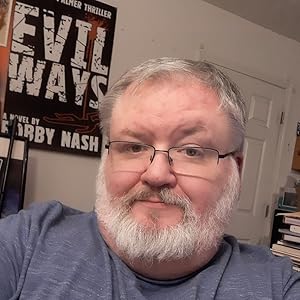
I’m pleased to have award winning author Bobby Nash as my guest today on “Chatting with the Pros”. Bobby writes both novels and short fiction, graphic novels and comic books, and has even written screenplays and worked on the movie sets.
About Bobby Nash
An award-winning author, Bobby Nash writes novels, comic books, short stories, novellas, graphic novels, and the occasional screenplay for a variety of publishers. He is a member of the International Association of Media Tie-in Writers and International Thriller Writers. On occasion, Bobby appears in movies and TV shows, usually standing behind your favorite actor and sometimes they let him act. Recently, he was seen in Creepshow, Joe Stryker, Doom Patrol, The Outsider, Ozark, Lodge 49, Slutty Teenage Bounty Hunters, and more. He also draws from time to time.
He was named Best Author in the 2013 Pulp Ark Awards. Rick Ruby, a character co-created by Bobby and author Sean Taylor also snagged a Pulp Ark Award for Best New Pulp Character of 2013. Bobby has also been nominated for the 2014 New Pulp Awards and Pulp Factory Awards for his work. Bobby’s novel, Alexandra Holzer’s Ghost Gal: The Wild Hunt won a Paranormal Literary Award in the 2015 Paranormal Awards. The Bobby Nash penned episode of Starship Farragut “Conspiracy of Innocence” won the Silver Award in the 2015 DC Film Festival. Bobby’s story in The Ruby Files Vol. 2 “Takedown” was named Best Short Story in the 2018 Pulp Factory Awards, one of five nominations for The Ruby Files Vol. 2 (created by Bobby Nash & Sean Taylor). Bobby’s digest novel, Snow Drive was nominated for Best Novel in the 2018 Pulp Factory Awards. Bobby was part of Moonstone’s Yours Truly, Johnny Dollar, which won a 2020 Pulp Factory Award for Best Pulp Anthology. Bobby’s novel, Nightveil: Crisis at the Crossroads of Infinity was also named Best Pulp Novel in the 2020 Pulp Factory Awards. In 2020, The Sangria Summit Society awarded the New Pulp Fiction Award to Bobby Nash for his work on Snow Falls and the Snow series.
For more information on Bobby Nash please visit him at http://www.bobbynash.com, http://www.ben-books.com, and across social media.
Interview
Kaye: You’ve been in the writing and publishing business a long time. What is your take on how the publishing industry has changed, and what adaptions have you had to make?
Bobby: There are certainly many more options for getting stories to readers now than when I started back in the pre-internet, pre-self-publishing model we have today. When I was getting started, you wrote a query, synopsis, and three chapters, printed them out, put them in a self-addressed stamped envelope, and mailed them to a publisher in the hopes you might hear back, or at the very least receive a form letter. Self-publishing wasn’t as well regarded as it is today so that wasn’t really an option. No internet limited your reach back then. Things are more open today, but that also means there are more books out there as well, so you have to work even harder to make your book stand out in a crowded field.
Today, being a writer means you’re running a small business. Marketing, promotion, publicist, travel/event planner, etc. That’s all on the writer, whether self-published or traditional.
I had to teach myself how to promote. I had to learn how to handle book production, pre-press, cover design, how to write a press release, things like that. I learned how to speak in public, to do panels and interviews, live podcasts, stage performances, and the like. As an author, you’re not just trying to sell books. You’re selling an experience. You’re part of that experience so you’re selling yourself as well. Branding is important to building an author brand. It is a bit time-consuming, but is important to my career as an author. Writing is just a small part of my job.
Kaye: According to your bio, you’ve written “novels, comic books, short stories, novellas, graphic novels, audio dramas, and the occasional screenplay”. Which form of writing would you say you enjoy most? Why?
Bobby: Not sure if ‘enjoy most’ is the best way to describe it. Each works different creative muscles so they’re not always easily compared. With prose, it’s all me so I see it all as I’m doing it. With comics, audio, and screenplays, I do my part, it goes away, then later comes back to me to do more, then goes away, and on and on until it’s finished. I’m part of a team there so I’m in and out at various stages of the process. Each has its enjoyable parts and the parts I like less. Just the nature of the beast, I suppose. I love them all. I will say that comic books were my first love. All of this desire to create, to tell stories, was born in the pages of comic books.
Kaye: Which type of writing presents the most challenge for you? Why?
Bobby: Novels require more time. As they are all me, I’m responsible for everything in them. That means I have to describe things in detail without it coming across as dull or as an info-dump. I’m painting the picture for the audience with words only. With scripts, most of what I write is direction for the artist or actors. They then interpret those details, adding another layer to the story. In a novel, if we walk into a character’s living room, I describe it so the reader can ‘see’ it. In a comic, I tell the artist it’s a living room. I will say that there are certain things that need to be there if important, but I leave it to the artist to design the living room. It’s a very different mindset. When I write for the artist, it’s not to entertain them, but to let them know what’s going on. The artists and actors aren’t my audience. They’re my partners.
Writing characters that are not mine also presents its own challenges. Doing work-for-hire on publisher-owned titles or media tie-ins means making sure I write the characters correctly. Research and study come in handy there. The characters have to stay in character. If not, the reader will notice something’s not right.
Kaye: You’ve done some work with graphic novels and comic books. How does the writing in these mediums differ from fiction?
Bobby: Comics are collaborative. The artist has input into the storytelling. We’re a creative team. When I write a script, as I mentioned earlier, most of what I write in the script is direction, so the artist knows what I’m thinking in regard to the panel. I also tell them what dialogue I’m planning, though this may change after I see the art. The artist then takes this information and creates the page with art and making that art flow and tell the story. Here’s an example of a script panel.
Panel 1. Bobby sat at the desk in his office, writing. Books and comics are stacked everywhere. Controlled chaos. He’s typing on a laptop, a soda and several action figures on his desk. He appears stumped. His hair is uncombed. Glasses slid down his nose. Deep in thought about his current story.
Caption: MEANWHILE, THE WRITER SITS TUCKED AWAY IN HIS OFFICE, UNAWARE OF THE DANGER HEADED HIS WAY.
WHY CAN’T I MAKE THIS PAGE WORK?
SFX (in the distance): BOOM!
SFX is sound effects. Something like that. The artist would then figure out the best way to draw this panel. It never comes back to me the way I pictured it in my head, which is fine. It almost always comes back better than I imagined. Seeing the art come in is one of the big joys of writing comics. It always makes me smile.
Kaye: How does one get into writing comic books or graphic novels? Is there a secret society one must break into? What’s the secret handshake?
Bobby: This is a harder question to answer than you might think. There’s an old joke that says that anyone who manages to break into comics is expected to brick up that entrance and close it off. Ha! Ha! Getting to work for larger, established comic book publishers is tough. Really tough. Most do not take submissions. Those that do want you to turn in a finished project, story, art, letters, colors, ready to print. Today, you basically have to be a comic book creator to get hired by publishers that create comics.
That said, we live in an age where you can put out your own comics yourself. Self-publishing, comic ebooks, and webstrips are all wonderful ways to show the world your work. If your goal is to work for Marvel, DC, Dark Horse, etc., then showing the editors there your published work is the only way to show these publishers what you can do. If they like what they see, then they may reach out to you about possibly pitching something to them.
If you want to create comics, then create comics. That’s step one.
From there, you keep trying, keep creating, and hope you capture someone’s attention if doing work-for-hire comics is for you. There are smaller publishers that will hire creators to create comics. I write comics on a work-for-hire basis, but it took a long time to get into those publishers. Once they know you and your work, and if they like working with you, it’s easier to get additional comic book opportunities.
Kaye: Do you do your own illustrations for these books?
Bobby: Heavens, no. I leave that to the professionals who are so much better at it than I. I can draw. I doodle. I sketch. I can give the artist a sketch if I have a specific idea on how I would like to see a scene so he or she can see what I was thinking, but otherwise, I leave that to the artists. They’re so much better at it than me.
My dream as a kid was to be a comic book artist. I started writing so I would have stories to draw. Turns out, I was better at writing comics than drawing them. Eventually, I focused on the writing and eventually was hired to write a comic. I never looked back.
Kaye: You are a member of the International Association of Media Tie-Ins. Can you give a brief explanation of what a media tie-in is and tell us a little about how you got into that arena?
Bobby: Media tie-ins are stories based on characters that originated in other mediums. Novels, comics, short stories, etc. based on television shows or movies are media tie-ins. Star Trek, Star Wars, MCU, etc. These characters are usually licensed from the owner of the property and creators are hired by the publisher, often with approval from the rights holder. Stories are also approved by the rights holders as well. Media tie-ins generally come with a lot of rules, a lengthy list of the type of stories you can and cannot do. The owners of Zorro, for example, are there to protect Zorro. They won’t allow you to write a story that hurts the character. One of the biggest misconceptions I hear about media tie-ins are that many readers assume this is fanfiction. It’s not. With fanfic, you basically write what you want with no oversight. With tie-ins, there is oversight. There are rules. The challenge we, as writers, face is how to tell the best story we can within those parameters, which is not really that big a challenge. You just have to know what you can and cannot pitch. Don’t kill any main characters, cut off their arms, get them married or have children, things like that. Big changes to the characters will come from the owners. I’m just borrowing the character and returning it the way I received it.
I like to describe media tie-in writing like an episode of Star Trek. The original series usually opened with the Enterprise flying through space. Everyone is on the bridge, happy, maybe laughing. Then, trouble happens. The crew has to deal with, then solve a problem. At the end of the episode, the Enterprise flying through space. Everyone is on the bridge, happy, maybe laughing. Media tie-in writing generally happens like that. I can bend the characters, but not break them.
My media tie-in journey started with a local access morning kids television series called Roger Rocket. He was an astronaut musician who had puppets on the spaceship with him and they played music videos for kids. I met him at a comic shop and he hired me to write a comic for his show. Though, very little of my work survived him deciding to rewrite it himself, that was my first tie-in experience. Years later, Moonstone invited me to write a Green Hornet short story. From there, I was lucky to be invited to write other characters like Zorro, Kolchak: The Night Stalker, The Lone Ranger, Night Beat, Yours Truly, Johnny Dollar, Box 13, Remo Williams, At The Earth’s Core, and a number of properties owned by various authors and publishers. It’s fun to play in someone else’s sandbox from time to time.
Kaye: How does one get into media tie-ins? Do you go knocking or do they find you? What advice would you give to someone trying to break in to media tie-ins? Is there a secret handshake for that one?
Bobby: Much like comics, they tend to find you. Unlike anthologies or company-owned characters, getting hired for media tie-ins means you have to be approved by the editor and publisher then approved by the owners of the media tie-in property. I was once tapped by an editor for a media tie-in project only to be told no by the owners of the property because they wanted a more well-known writer. That’s their choice, of course. It stung, though.
Usually, media tie-ins are not open calls. The publisher reaches out and invites writers they know to be part of it. There’s a method to writing tie-ins. You have to understand what kind of stories you can tell or not. Because I now have experience, I know what stories not to pitch because they will probably never be greenlit. As I mentioned previously, media tie-in writing is not fanfiction. That’s very important to remember. Writing tie-ins comes with a lot more rules, a lot more do’s and don’ts than other types of writing. You have to write a story that fits the brand you’re writing. The characters have to act and sound right. They have to be in character. Your story should fit seamlessly into the world of the media project that you’re writing.
As with comics, get work out there. Write your own characters and get them out there as your resume, as your writing samples. That will be what tells the publishers if your style fits their licensed characters. Once publishers get to know you, they may invite you to be part of their media tie-in projects.
As with everything in publishing, a lot of it boils down to timing and luck.
Kaye: Your work has won or been considered for many awards over the years. Which of these would you say you are the most proud of, and why?
Bobby: The first one is always special. There are also those that happen without you even knowing. I won best author in the Pulp Ark Awards, which was a huge surprise. Winning the Sangria Summit Society’s Pulp Fiction Award was also a nice surprise. I had no idea I was in the running for either. Awards are nice. It’s a bit of an ego boost. You feel like you’re doing something right, but also that others have noticed. Awards aren’t why I write, but it is a great feeling when it happens.
Kaye: Which do you enjoy writing most, heroes or villains? Why?
Bobby: Villains get the best lines. They get to do the coolest stuff. Villains are fun to write.
Kaye: Every author has those stories which are near and dear to their heart, those that are just special for whatever reason. Which of your works would you say falls into that sweet spot for you? Why?
Bobby: My go to answer for this question is usually Evil Ways. Evil Ways was my first published novel, and the book that launched this career of mine. It wasn’t always fun or easy. My original publisher turned out to be horrible, but I had a book in hand as a resume that allowed me to reach out to other publishers and show them my work. I picked up some writing gigs that kept me working until my contract ran out and I got the rights to Evil Ways back. Then, I published it myself, which was my first foray into self-publishing. So, yeah, I owe a lot to Evil Ways.
Kaye: You have a Patreon, where you market your books. Can you tell us a little about that? How effective do you find Patreon to be compared to other venues for selling your books?
Bobby: Patreon is nice. I have a small following. I post a writing blog there, keeping everyone up do date on work. I also have an ebook club ($5 and up tiers) where most of my ebooks exist. I also run serialized novels and novellas there, posting chapters every week-ish (sometimes I fall behind). Patrons are part beta readers that way. This allows me to be more productive and gets at least two additional novellas out a year more than I would otherwise. Good motivation.
I like Patreon. I don’t really sell many books through there though. My patrons tend to be readers who were probably already getting the books who are there to support me. That support means a lot to me.
Kaye: Which book marketing strategies do you find to be most effective?
Bobby: My most impactful way to sell books is at in-person events. Getting out to conventions, conferences, libraries, bookstores, and other events where I can meet people, talk up the books, just get to know readers. Outside of that, I use social media, I do interviews like this one, go on podcasts and virtual panels, write and send out press releases to news outlets, create and send out a free monthly newsletter (you can sign up at https://www.subscribepage.com/NashNews), and other opportunities as they present themselves to talk about writing and my books. There are many marketing methods out there. Not all of them work the same for every book. A promotion method that works for Evil Ways, for example, might not work for Dante’s Reckoning. You have to be willing to try new promotional paths to see what works and what doesn’t.

Kaye: Your most recent work seems to be your Dante novels. Would you like to talk a little about that series?
Bobby: The Dante books are fun. I wrote a short story for Valhalla Books’ The Devil’s Due prose anthology. The theme was that all deals come with a price. I wrote a story set in the old west, a mining town called Dante. There, a deal had been made years before with an other-dimensional being. It was time to pay up, but there were those in the town who wanted to keep the final settlement from happening. It was a fun little horror/western story. The publisher later came to me and asked what happened next. I told him I didn’t know. I just wrote a short story. I hadn’t planned any further than that. He said, this is a series. So, I got busy writing. Book 3, Dante’s Reckoning just released this Halloween. I am working on book 4, Dante’s Rebirth for 2025. I love it when things work out this way. I’m glad the publisher saw something in the concept that made him want to keep it going.
Kaye: Where can readers who would like to learn more about you and your works find you?
Bobby: I’m all over social media. There’s links at my website, which is www.bobbynash.com. This is the main hub of all things me. Ha! Ha! There are links to everywhere you can find me on the site. My indie press, BEN Books is at www.ben-books.com. These are the titles I publish myself. Please visit me and say hello.
About the A Tale of Dante Series
Welcome to Dante!
Dante, Arizona is not your average mining town.
Many dreamers have come to this barren speck of desert to strike it rich. Gold, silver, and other valuable minerals are there for the taking if you’re brave enough to pay the price, this wealth, power, and influence. Dante turned peasants into millionaires overnight.
Some suggest that these men sold their souls for the find of a lifetime. Did Dante’s founders make a deal with the devil? If so, what was it? More importantly, what will it cost the town? Nothing happens for free. Every deal has its price and there are still deals to be made.
This brings new blood to town as well as old blood. When a young reporter’s assistant becomes enamored of the daughter of a new arrival, he learns the terrifying truth behind the town. A deal was made.
And payday is coming.

Dante’s long nightmare begins here with the short story that started it all and two new tales from Dante. From the pages of The Devil’s Due comes Dante’s Tenth by award-winning author Bobby Nash.
My Review of the A Tale of Dante Series
I remember reviewing my first weird western, before I was even aware that there was such a genre, back in 2020, a book in the western genre with dragons, trolls, dwarves, and other beings from the fantasy domain. Since that time, I’ve read and review several more weird westerns and I’ve grown quite fond of the genre. Naturally, when I saw that Bobby Nash had a weird western series, I offered to review the whole series for this segment of “Chatting with the Pros”. And I’m glad that I did. One never knows what will happen next in the A Tale of Dante series, where vampires lurk in the shadows and werewolves roam the desert landscape surrounding Dante, Arizona. By hiding in plain sight, they manuvuere behind the scenes and interact with the unmidful miners and townfolk.
The town sits central in the hub of a great evil, where deals were struck long ago and now, a debt has become due. At times it is hard to tell the good guys from the bad, but make no mistake that there will be a reckoning. These stories can be read as stand alones, but I recommend reading Dante’s Showdown before Dante’s Reckoning, as the later takes place after the former. Dante’s Tenth is a collection of three short Dante stories which offer insight into three of the characters readers meet in the other two books.
The protagonists are likeable, and the villians deplorable, and lines are drawn between good and evil, if a little blurred at times. Vampires and werewolves abound in the old west town of Dante, and even the good guys carry guns. Bobby Nash brings us a vampiric priest and an army of the undead, a couple of gunfighters and a newspaper reporter who takes her job seriously to champion on the side of goodness and stop the final reckoning from taking place.
An excellent weird western series, I give the Tales of Dante series five quills.

__________________________________
This segment of “Chatting with the Pros” is sponsored by WordCrafter Quality Writing & Author Services.

Whether it’s editing, publishing, or promotion that you need, WordCrafter Quality Writing & Author Services can help at a price you can afford.
Stop by and see what we have to offer today: https://writingtoberead.com/readings-for-writers/wordcrafter-quality-writing-author-services/
Share this:

Book Review: “Unbowed”
Posted: December 13, 2024 Filed under: Book Review, Books, Fiction, Mystery, Review | Tags: Book Review, Book Reviews, Books, Fiction, M.G. da Mota, mystery, Unbowed, Writing to be Read 2 CommentsAbout Unbowed
Only six months. But six tumultuous months.
Months that would have a profound and lasting effect on Alexia Jewel.
A multi-talented musical prodigy, Alexia’s scholarship to London’s prestigious Royal College of Music at the age of 15 came with controversy and difficulty. Girls at that time weren’t welcome in the professional ranks of classical music, let alone one with her sights set on becoming a conductor. But as she approaches her 50th birthday all that has changed. She has overcome all obstacles to become one of the world’s foremost classical music conductors, celebrated for her artistry and talent. Lured back to London from her life in Munich where she is chief conductor of the Bavarian Radio Symphony Orchestra and music director of the Munich Opera House, Alexia is preparing to conduct a series of concerts with the London Symphony Orchestra to mark her birthday. While in London she begins to put her late parents’ estate into order and discovers an antique diamond ring that she learns had belonged to her great-grandmother. Agreeing to appear on the BBC’s Who do you think you are programme Alexia gives them the double mystery of her barely-known great-grandmother and the ring to investigate.

Four men, all who desire her, enter her life in these six months. As does a stalker, who threatens her safety, serenity and life.
My Review of Unbowed
I received a digital copy of Unbowed, by M.G. da Mota to review through Sandra’s Book Club. All opinions stated here are my own.
This book had a slow start, with a lot of backstory and character introductions, and no real action until well into the book. A single figure in the shadows is intended to hold reader interest for too long before the mystery finally begins to unravel. While this story has the potential to be a good mystery, the author takes so long getting into it, that I almost put the book down.
A mystery unfolds as the facts are uncovered about Alexia’s diamond and her great-grandmother’s life, all while a stalker lurks in the shadows. Four different men proclaim their love and need for her, and any one could be the dark man who is terrorizing her. But the mystery of the diamond takes precedence, the only obstacles in the way are the tracks that have been covered by time. But the evidence is all there, conveniently left for those who take time and effort to investigate, while the stalker makes random appearances and doesn’t feel as threatening as it should.
While all the pieces are there, the ones that should count don’t seem to have enough weight to carry the story. I give Unbowed three quills.

____________________________________________
Kaye Lynne Booth does honest book reviews on Writing to be Read in exchange for ARCs. Have a book you’d like reviewed? You can request a review on the Book Review tab above.
_____________________________
This post is sponsored by WordCrafter Press with a reminder that all WordCrafter Press books are currently 50% off in the SmashWords End of Year Ebook Sale, only in the SmashWords store: https://www.smashwords.com/shelves/promos/
Share this:

Chatting with New Blood: Mathew V. Brockmeyer
Posted: November 23, 2024 Filed under: Chatting with New Blood, Horror, Interview | Tags: Chatting with New Blood, horror, Interview, Kaye Lynne Booth, Mathew V. Brockmeyer, Writing to be Read 10 Comments
I’m pleased to introduce horror author, Mathew V. Brockmeyer. Mathew has published a novel and two short fiction collections of his own, and has had a number of short stories featured in various anthologies and horror magazines, both online and in print. His novel, Kind Nepenthe, won the 2018 Maxy award for best suspense thriller. (You can read my review of Kind Nepenthe here.)
About Mathew V. Brockmeyer

Matthew V. Brockmeyer lives in an off-grid cabin, deep in the forest of Northern California, with his wife and two children. He enjoys howling at the moon and drenching his fangs in human blood.
He is the author of the critically-acclaimed novel KIND NEPENTHE: A Savage Tale of Terror Set in the Heart of California’s Marijuana Country.
His short stories have been featured in numerous publications, both in print and online, including, among others, Infernal Ink Magazine, Not One of Us, Timeless Tales Magazine, Body Parts Magazine, Alephi, Pulp Metal Magazine, and the anthologies The Edge: Infinite Darkness, After the Happily Ever After, and One Hundred Voices.
Interview
Kaye: Hello Mathew. I’m pleased to have you as my guest today. Horror is a genre that has always fascinated me. I read horror long before I thought of writing it. Stephen King, Anne Rice, Dean Koontz, John Saul are a few of my favorite horror authors. But its a genre I struggle with writing, so I’m hoping to pick up a few tips from you today.
So, let’s start with the basics. Why horror?
Mathew: Well, first one might ask what even is horror? Like pornography, many say it’s hard to define, but when you see it you know it. I believe there’s elements of horror in all great literature, from Steinbeck to the Grimms Brothers to Dostoevsky. I also tend to classify things as horror that others do not, such as the works of Cormac McCarthy and much of Joyce Carol Oates. I also see many elements of horror in true crime, of which I have a life-long love. In fact much of my time these days is spent working on a true crime podcast called Murder Coaster I put out with Bram Stoker-award-winning author Christa Carmen, an old friend of mine.
But back to your question, why horror? Well, first off there’s the thrill, the roller-coaster-ride rush of adrenaline. It’s highly entertaining. But on a deeper level there’s an existential confrontation with our mortality. Horror forces one to reconcile with death, which is the final destination for all of us. I believe reconciling with death makes us more empathetic and better human beings. Ever notice horror freaks and true crime fans are the nicest people you could ever want to meet?
Finally there is the implied warnings and life lessons. Like fairy tales of old, horror, as well as true crime, teaches us to be aware. Life can be dangerous, can be scary, monsters are out there.
Kaye: Where does inspiration for your stories come from? Is your mind just terribly twisted and dark?
Mathew: Most my inspiration comes from reality, which I find much more terrifying than any vampire or werewolf tale. I’ve led a wild life, seen many crazy things, been in many scary situations, I have a lot of material to pull from there. And true crime has always been an huge inspiration, from the Manson Family to serial killers, cults of all sorts, these are the places I go to seeking inspiration.
I occasionally write about vampires, ghosts and werewolves, but I see them more as metaphors for types of people than actual tropes. Vampires as psychic parasites that feed off of people’s life energy and soul, dead inside and living off of other’s misery, and in doing so creating fellow monsters. Ghosts as elements of the past that haunt us, lurking in our subconscious. And werewolves as folks with an inner beast raging inside them, a monster hiding within waiting for the right moment to show itself.
But, yes, my mind is naturally twisted and dark. I really don’t know why. I find some bizarre comfort in the horrific. Perhaps it makes me feel better about my own situation,
Kaye: Your novel, Kind Nepenthe, won the 2018 Maxy Award for best suspense thriller. Is this something that you sought after or was it a complete surprise?
Mathew: It was entered by my publisher and was a nice little surprise, for sure.
Kaye: Much of your writing career is based on short fiction. You have stories published in numerous anthologies and magazines. It is a good way to get your name out there. Do you have any tips for submitting short fiction that might get an author closer to acceptance?
Mathew: Carefully going over the submission guidelines is probably the most important, making sure it’s the right genre, the right length, whether it should be submitted as a word doc or in the body of the email, whether it’s a blind submission and your name shouldn’t be on the manuscript, all of these simple things are so important and often ignored.
Kaye: What differences do you see in writing short fiction and novel length works? Which do you prefer?
Mathew: Well, they say a novelist is a failed short story writer, take that how you will. The length of a novel obviously leaves a lot of room for character development and world building and a longer narrative arc. The short story has to quickly get to the point. Some say every chapter of a novel should hold the elements of a short story, and many writers have submitted chapters as short stories. When Louise Erdrich was writing her first novel Love Medicine she famously had some chapters published as short stories, which went on to win awards, and helped establish her as a writer. I can’t say I prefer one over the other, though, obviously, it’s much more of a commitment to write a novel than a short story.
Kaye: What advice would you give to an author wanting to break into the horror genre?
Mathew: Read, read, read. Get to know the community. There’s a vibrant horror scene on social media. The extreme horror and splatter punk communities are blowing up right now. It appears to be a great time to be an indie horror writer.
Kaye: Who are your favorite authors? Do you try to emulate them?
Mathew: Off the top of my head my favorite authors are John Steinbeck, Cormac McCarthy, Bret Easton Ellis, Donna Tart, Irvine Welsh, John Irving and Andre Dubus III. Do I try to emulate them? Yes. Absolutely, though I try to always give everything a uniqueness and my own personal style. But when writing a pastoral scene I will stop and think, how would Steinbeck phrase this? Or when trying to be postmodern or meta I’ll think, what would Bret Ellis do to convey how advertising and television has shaped this person’s soul? Of course trying to sound like Cormac McCarthy or Irvine Welsh could be dangerous and absurd, ha ha ha. But in the end, we stand on the shoulders of those before us.
Kaye: What’s the best piece of writing advice you were ever given?
Mathew: Make it harder for your protagonist, make their lives harder, their conflicts more intense. How can the situation be worse? More life and death? Brings us to that point.
Kaye: What’s next for Mathew V. Brockmeyer? Is there another book in the works?
Mathew: I’m trying to sell a finished novel, a prequel to Kind Nepenthe. I’m finishing up a novella. I have a few short stories I’ve recently sold that await publication. But my main focus right now is this podcast Murder Coaster. It’s a fully scripted podcast where we often act out the stories, more like an old-time radio dramatization than a modern podcast, with sound effects and full musical scores. It’s insanely labor intensive. I had no idea what I was getting into when I started it, but I love the process. I really love podcasts, there’s an independent, DIY, almost punk rock element to them. Anyone with a microphone and computer can make one. It’s a very underground thing.
Kaye: Where can readers learn more about you and your works?
Mathew: For my podcast go to murdercoasterpodcast.com and for me go to matthewvbrockmyer.com. As for social media I’m most active on Facebook and have a lot of fun there interacting with people. Thanks so much for having me!
I want to thank Mathew for joining us here today. His tips for submitting short fiction, (or anything, really), are spot on to what I have experienced in both submitting and in receiving submissions. And his take on emulating his favorite authors made a lot of sense.
_______________________________________________
This segment of “Chatting with New Blood” is sponsored by The Rock Star & The Outlaw and WordCrafter Press.
A time-traveler oversteps his boundaries in 1887. Things get out of hand quickly, and he is hanged, setting in motion a series of events from which there’s no turning back.
In 1887, LeRoy McAllister is a reluctant outlaw running from a posse with nowhere to go except to the future.
In 2025, Amaryllis Sanchez is a thrill-seeking rock star on the fast track, who killed her dealing boyfriend to save herself. Now, she’s running from the law and his drug stealing flunkies, and nowhere is safe.

LeRoy falls hard for the rock star, thinking he can save her by taking her back with him. But when they arrive in 1887, things turn crazy fast, and soon they’re running from both the outlaws and the posse, in peril once more.
They can’t go back to the future, so it looks like they’re stuck in the past. But either when, they must face forces that would either lock them up or see them dead.
Get your copy today: https://books2read.com/RockStarOutlaw
Share this:

Book Review: “The Cultist’s Wife”
Posted: November 22, 2024 Filed under: Book Review, Books, Horror, Review | Tags: BJ Sikes, Book Reveiw, Gothic Horror, The Cultist's Wife, Writing to be Read Leave a commentAbout The Cultist’s Wife
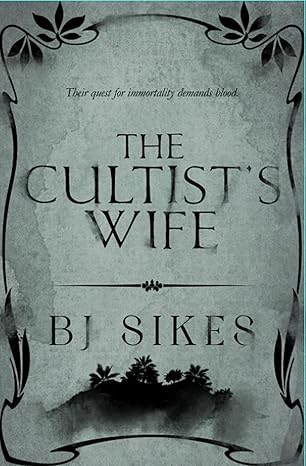
A gothic horror set in 1908 Bahamas
She loathes him but the cult beckons.
1908, the height of the British Empire. Clara’s autonomy is shattered when her long-absent husband summons her to join him at his eerie sect’s headquarters, insulated on a sparsely inhabited island in the Bahamas.
After a harrowing sea voyage, Clara and her children disembark into an unfamiliar landscape and climate. The children explore the marvels and mysteries of Andros Island and develop friendships with a Bahamian family, while Clara struggles to find her place as a woman within the cult.
But what seems at first to be a spiritual haven for Clara reveals itself to be a monster-worshiping cult intent on draining her family of more than their fortune.
Must Clara give up her quest for independence to protect her children from the cult’s depravity?
With themes of Spiritualism, motherhood, and female empowerment, The Cultist’s Wife will appeal to fans of The Ghost Woods and The Quickening.
Purchase Link: https://www.amazon.com/Cultists-Wife-BJ-Sikes-ebook/dp/B0CW1FKGND
My Review
I recieved a digital copy of The Cultist’s Wife, by B.J. Sikes from Sandra’s Book Club review program in exchange for an honest review. All opinions stated here are my own.
I was attracted to this book by its simple cover design which highlights the title, which caught my eye, so I chose this book from a slew of books Sandra’s Book Club has available for review. It’s a gothic horror novel, which could even fall under the women’s fiction genre. Clara, the female protagonist, is a woman in British society seeking her independence through spiritualism at the beginning of the twentieth century in the absence of her husband, who has been in the Bahamas for the past five years. And later in the story, we meet a second strong female who plays an equally vital role in the story’s plot.
At first, I must admit, I didn’t like Clara very much. I found her to be selfish, worried more about appearances in society than anything else, as she allows a nanny to take responsibility for the care of her children, eight-year-old Elsie and five-year-old Reggie, which was common for the times. When her absent husband summons her to bring the children and join him, she cows to his will as a proper wife should, in spite of her questions as to his motive. Upon their arrival, her choice to seek enlightenment on Andros Island and become a member of the cult her husband is involved, and her almost total disregard for her children and their well-being reinforced my first impression and made me wonder how she could be so blind to what was happening around her. I felt it to be at odds with the self-rightous, independent woman she was struggling to be.
The children are the real heroes in this tale, showing strength and ingenuity in their mother’s absence as she bends to the will of the Order. They are left to their own devices to explore the island, making friends with the indigenous people, and uncovering a murder in the process. Their mother doesn’t believe them and they turn to Aunty Irene, another strong and independent female from the local population, but even she may not be strong enough to stand against the Order.
By the end of the story, we see Clara grow and change into a truly strong and caring woman as her priorities shift and her eyes are opened to the reality of her situation, providing an unsuspected and satisfying ending as every character arc should, but it is little Elsie who I identified with and rooted for. Perhaps it should have been titled, “The Cultist’s Children” instead.
A classic gothic horror story, I give The Cultist’s Wife four quills.

_________________________________
Kaye Lynne Booth does honest book reviews on Writing to be Read in exchange for ARCs. Have a book you’d like reviewed? You can request a review on the Book Review tab above.
Share this:

Treasuring Poetry – Meet poet Maggie Watson and a review of Pieces of Me, A collection of poems #TreasuringPoetry #poetrycommunity #bookreview
Posted: November 20, 2024 Filed under: Book Review, Books, Collection, Interview, Poetry, Review | Tags: Interview, Maggie Watson, Pieces of ME, Poetry, Review, Robbie Cheadle, Treasuring Poetry, Writing to be Read 72 Comments
Today, I am delighted to introduce poet, Maggie Watson. Maggie writes incredibly compelling poetry which you can find on her blog here: Ephemeral Encounters
Over to Maggie
Robbie, thank you so much for inviting me to be your guest on Treasuring Poetry. I loved your questions, and I hope everyone finds my answers, at the very least, a little interesting.
My favourite style of poetry to read is haiku.
Haiku poems are easy on the eye, yet they can evoke strong emotions in a few words. If a poem is too long, I lose interest halfway through unless it grabs me in the first couple of lines.
My favourite haiku is “A Poppy Blooms” by Katsushika Hokusai
I write, erase, rewrite
Erase again, and then
A poppy blooms.
The writer here uses the imagery of spring to describe his writing process.
I would use winter, as I sometimes find the whole writing process frustrating, especially when I am blocked, staring at a blank piece of paper (a barren landscape in winter).
My favourite style of writing poetry is freestyle. I am ashamed to say that I have not tried any other style. I did attempt a few haiku a while back, but not consistently. As I write, it comes from my heart and soul and usually reflects my mood or thoughts at that moment. I hope no one shoots me down in flames for saying this, but poetry should be as free as a bird set free, not confined or restricted to parameters.
My favourite poem written by me is one of the first I ever wrote in 2020, one of the better ones, I hasten to add. The Mask is also in my new Collection, Pieces of Me and is related to the subject matter.
She puts it on before she goes outside,
just in case anyone should see inside.
The darkness, the hurt, the years ripped and scarred with dirt.
No one knows.
No one cares.
They only see the Mask she wears.
She tries but can’t forget all the angry words and threats buried deep within and the pain that never seems to dim.
So she smiles, wears the Mask, and hopes that no one ever asks.
I had originally planned to call this collection Bouquets of Barbed Wire, however, it was a little too close to the title of a television programme that I remember my parents watching, so I decided against it.
Pieces of Me is another poem from another Collection, “In the Shadow of my Pen: A Collection of Poetry and Prose.
Not long after joining WordPress, David from A Skeptics Kaddish reblogged it. I then decided to write two other parts, all three are in the new Collection. The new collection is my story in poems about my abusive relationship. The main form of abuse was gaslighting, which is a gradual erosion of your spirit, piece by piece. By sharing my story, I hope to inspire others to do the same.
Thank you again Robbie for giving me this space.
It’s my pleasure, Maggie. Thank you for being a wonderful guest.
My review of Pieces of Me, A collection of poems by Maggie Watson

Pieces of Me is a collection of powerful poems written by a survivor of domestic abuse. The abuse the poet suffered was not physical or sexual, but rather mental. The kind that slowly and insidiously destroys your spirit.
The collection is divided into parts reflecting the various stages of the poet’s abuse from the early days of her marriage until she found the determination and courage to exit her destructive relationship.
Red light spells danger: These poems are about the warning signs that the poet was to young and inexperienced to understand. It is awful to think of a young person being lured into such a terrible set of circumstances like a fly into a spider web.
“I was blind.
I did not see it.
Too young, too naive.
Red light spells danger, but I ignored the colour of your aura.”
An extract from Red Lights Spell Danger
When I think back over my own youth, I sigh with relief that I never fell victim to such a man’s charms. It could have happened so easily as we are gullible and innocent when we are young.
Eggshells is the next section and eloquently describes living with a bully and gas lighter.
“A soul in pain, cute with a blade, the wound
then stitched together with words unkind
Spirit erased, replaced with doubts and fears.
Thoughts of unworthiness grow among the stitches sown
Drip, drip, they slowly infiltrate the mind.”
Extract from Soul in Pain
I am becoming is an uplifting section where the poet describes her escape from the vicious clutches of her abuser and path towards reclaiming her life.
“Never be a lamb to their slaughter
don’t let them watch you bleed
It is they who are weak as they plant their
seeds in your womb
for the pleasure that they seek.”
A collection of strongly worded and evocative poems that make you walk the poet’s path hand-in-hand with her. With compassion comes understanding.
Purchase Pieces of Me: A collection of poems from Amazon US here: https://www.amazon.com/gp/product/B0DH32JKQ8
About Maggie Watson

Maggie was born in Cape Town, South Africa.
She now lives in Scotland.
She has CFS which is a very debilitating/unpredictable illness, but she refuses to let that define her.
She began writing in 2020 at the start of the Pandemic.
At that point, she had no idea it would play such a huge part in her life as it does now!
In 2021 she self-published her first collection of poetry and has since self-published five others.
Maggie draws a lot on her life experiences when she writes.
As a Domestic Abuse Survivor she uses her voice through her words to empower.
Her work has also been published by Gypsophila Zine, Glass Gates Publishing, Spill Words and Edge of Humanity and others.
And, also included in three anthologies.
For more examples of her writing visit her blog here: https://poetrybymaggiewatson.uk/
________________________________
Did you know you can sponsor your favorite blog series or even a single post with an advertisement for your book? Stop by the WtbR Sponsor Page and let me advertise your book, or you can make a donation to Writing to be Read for as little as a cup of coffee, If you’d like to show your support for this author and WordCrafter Press.
___________________________
This segment of “Treasuring Poetry” is sponsored by WordCrafter Press and the Poetry Treasures series.

Get Your Copy Today!
Poetry Treasures: https://books2read.com/PoetryTreasures
Poetry Treasures 2: Relationships: https://books2read.com/PT2-Relationships
Poetry Treasures 3: Passions: https://books2read.com/u/b5qnBR
Poetry Treasures 4:In Touch With Nature: https://books2read.com/PT4-Nature
Share this:

Review in Practice: “Wit & Wisdom”, “Romance Character Tropes” & “Steps to Self-Editing”
Posted: November 18, 2024 Filed under: Book Review, Books, Nonfiction, Review, Review in Practice, Story Bundle, Writing, Writing Reference, Writing Tips | Tags: 2024 Novel Writing Story Bundle, Book Reviews, Craig Martelle, Jana S. Brown, Jessica Barber, Review in Practice, Romance Character Tropes, Steps to Self-Editing, Tara G. Ericson, Wit & Wisedom, Writing Resorce, Writing to be Read 3 CommentsOne of the advantages of being in a Story Bundle, is that you get a free copy of all the books included in the bundle. That means you get to read everyone else’s book. With the 2024 Novel Writing Story Bundle, for me, it, means I get to read a lot of writing reference books and I can discover from them, bits of writing wisdom which I can utilize in my own writing and publishing processes to improve my own work. For this segment of Review in Practice, I chose three books from this Story Bundle, with hopes of a few little nugets of gold that I can mine from them and share with you: Wit & Wisdom, by Craig Martelle, Romance Character Tropes, by Jessica Barber and Tara G. Ericson, and Steps to Self-Editing, by Jana S. Brown.
Wit & Wisdom, by Craig Martelle

An exclusive first release in this StoryBundle— chock full of quips and snippets to help authors stay focused on the right things to accelerate their business.
My Thoughts on Wit & Wisdom
I always wanted to attend the 20 Books to 50K Conference, but I never could make it. So, when I had the opportunity to review a book written by one of the founders, Craig Martelle, you can be sure I jumped at the chance. Wit & Wisdom is packed full of useful tips and advice to help make your writing business successful.
Romance Character Tropes, by Jessica Barber & Tara G. Ericson
In this one-of-a-kind resource, you’ll find more than a list of tropes or broad genre fiction advice.
The Romance Writer’s Encyclopedia Series breaks down our method for categorizing tropes into four types of framework tropes – Character Tropes, Situational Tropes, Setting Tropes, and Relational Tropes.
The Character Tropes Encyclopedia includes detailed entries on favorite romance tropes like Cowboys, Royalty, Law enforcement, and Athletes. And we didn’t forget popular modern tropes like Alpha Male, Cinnamon Roll, or The Grump!
But this is more than a trope list – it’s an encyclopedia!
Each encyclopedia entry includes an introduction to the trope itself, as well as information on why readers love the trope (including examination of what inner desire is being met by the trope), what expectations exist in the stories, common pitfalls that authors need to avoid, common characteristics and potential wounds.
Putting a cowboy hat on the cover of your book isn’t enough to have a Cowboy romance that readers will love – but we’ll tell you what will. And then we’ll do it for Pirates and Rockstars and Firefighters, too.
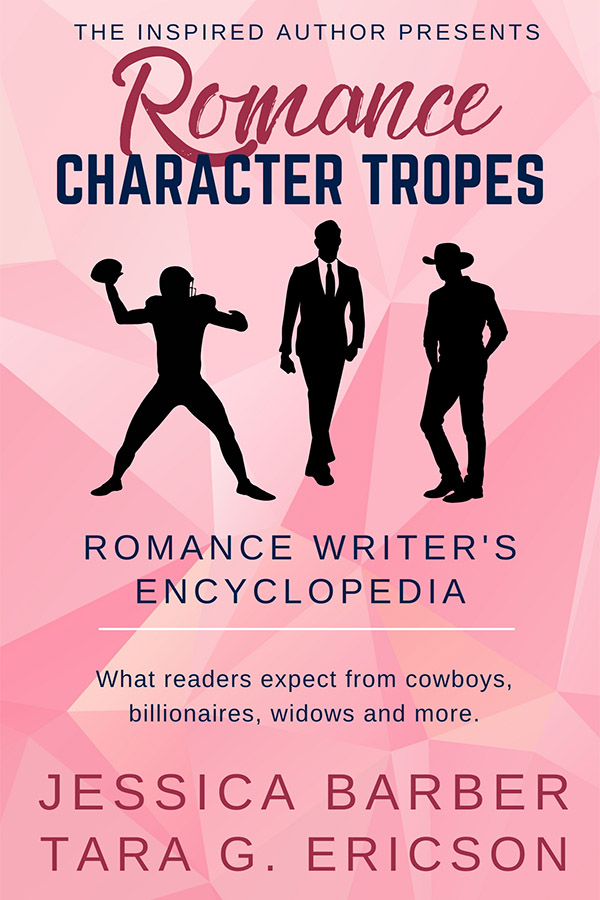
Romance Character Tropes is designed to be used at every stage of planning, writing, and publishing your books. If used effectively, it will help you write a romance that readers will love, but also help you market that book to get it into the hands of readers who will devour it.
We’ve studied thousands of books and movies, polled readers and studied the market to understand not just which Character Tropes work – but WHY they work. And knowing why they work means you can put them to work for you.Harness the power of Character Tropes to make your book marketable, multi-dimensional, and satisfying, so readers will come back again and again.
You can purchase this book seperately here: https://www.amazon.com/Romance-Character-Tropes-Billionaires-Encyclopedia-ebook/dp/B0C1HQLW8X/
My Thoughts on Romance Character Tropes
Tropes are something which have always puzzled me. They were touched on in my graduate classes, to say that you should be aware of them and know what they are, but it was left to the individual to figure it out from there, probably because there are so many of them, and they differ from genre to genre. Since then, I’ve learned that there are too many tropes, no matter the genre, that the whole trope thing seemed overwhelming to me, and I got tired of trying to figure it out , choosing instead, to just write.
I wish I’d had a resource such as this one back then, because Barber and Ericson made it so easy to understand. If someone had explained that internal character tropes were based on the archetypes that I studied in graduate school, it would have all made sense so much sooner. They give a clear definition of what tropes are and why we use them.
“Each of the internal character tropes in this chapter is derived from some of the most popular literary archetypes in fiction. They will carry elements of the universal symbolism, themes, and patterns that have transcended both time and history.”
When I was running my “Ask the Authors-” blog series, back in 2018, I inteviewed many authors, and one of the questions was about using tropes. Some said they used them, some said they avoided them, and still others didn’t have a clue as to what a trope was. But the fact is, we all use tropes, whether we do it conciously or not, no matter what genre we write in. Without character tropes, our characters would be flat, with no personality, and readers would have no reason to care whether our characters achieved their goals or not. If you have a character who is a firefighter, then you are writing with a Man in Uniform character trope. And if you do it conciously, which you should, there are certain things you need to be aware of which will make your character bigger than life for your readers.
I haven’t written much romance, so you might find it odd that I would choose to review Romance Character Tropes, by Jessica Barber and Tara G. Ericson. My thinking is that although this book delves into tropes which are specific to the romance genre, many of the character tropes can be found in other genres, as well.
This month, for NaNoWriMo, I’m writing the second book in my Time Travel Adventure series, the sequel to The Rock Star & The Outlaw, which has a strong romance element, and my male protagonist just happens to be a cowboy, which is a popular romance character trope, so I paid particular attention to what the authors had to say about the Cowboy trope.
I discovered that the cowboy hero I created for the first book, and I am now writing into the second isn’t a rodeo cowboy, a lone wolf or off the grid cowboy, or a law enforcement cowboy, but more of a cross between the cowboy and the reformed bad boy tropes. When LeRoy is introduced in the twenty-first century, in the first book, he is all cowboy, manners and all, and that fact is what attracts my heroine, Amaryllis, in the first place. But when he goes back in time, to an actual western setting, we see the reformed bad boy, who has done all the wrong things, but for the right reasons. Over all, I feel like I did a pretty good job on the first book, and I’ve gathered some ideas about where his character arc may lead in the second one, to make him a more well-rounded character.
I learned so much useful information from Romance Character Tropes that I know it will be a resource I turn to again and again. I have a couple of romance stories that have been trunked, and after reading this book, I’m tempted to pull them out and give them another go, so don’t be surprised if I had add romance to my list of genres I write in in the future.
Steps to Self-Editing, by Jana S. Brown

You’ve finished writing your rough draft! Congratulations!
Now what are you going to do?
Before going out into the world, every manuscript needs a little love from its creator in the form of self-editing and revision.
However, that can be a daunting task.
- Plotlines
- Character arcs
- Continuity
- Grammatical mistakes
Where do you begin?
Join author and editor, Jana S. Brown, at her virtual table and learn the Steps to Self-Editing from setting your structure, to rubbing out wordiness to make your manuscript shine.
You can purchase this book seperately here: https://www.amazon.com/Steps-Self-Editing-Common-Writing-Publishing-ebook/dp/B0CK54T3TC
My Thoughts on Steps to Self-Editing
I chose to read this book because I do self-edit, in spite of all the warnings that I’ve heard not to. I’ve always been told that self-editing is a big no-no, especially if you do it as you are writing, and guess what, I do that, too. But Steps to Self-Editing, by Jana S. Brown doesn’t make that judgement. In it, Brown actually discusses the reasons why you may want to self-edit and talks about the differences in self-editing as you write, and doing an overall self-edit when you’ve finished, (I do both types), and when you may want to do both, as well as when you may not. Brown also makes it clear that self-editing is not recommended to take the place of paying a professional editor. It’s just another step which can be taken to hone your creative child and polish it to look its best.
As I am currently undertaking the NaNoWriMo challenge, and I’m in the process of writing the second book in my Time Travel Series, so I’m already using some of the tips as I self-edit as I go. I am compelled to do this with my writing, as I find and fix plot holes, and go back to add foreshadowing where needed, but Brown has reminded me of other things that can be looked for and fixed early on.
When I have a completed manuscript, hopefully at the end of the month, I’ll be using it again to give my manuscript a complete once over, before sending it off to be scrutinized by another set of eyes. Brown also is a fan of reading your manuscript aloud as a part of self-editing, a step which I always employ, sometimes during the writing process, sometimes after. As she points out, reading your work aloud can help you find logic errors and inconsistencies in your story, as well as helping to smooth the rough edges.
The section that touches on punctuation and grammar rules assures I’ll be turning back to this book again and again, because there are too many rules to remember, making double checking a necessity. This is a quick and easy to use writing resource, which will be a valuable addition to my library.
The 2024 Novel Writing Story Bundle

Wit & Wisdom, by Craig Martelle, Romance Character Tropes, by Jessica Barber and Tara G. Ericson, and Steps to Self-Editing, by Jana S. Brown, are all offered in the 2024 Novel Writing Story Bundle, along with my own The D.I.Y. Author and nine other valuable writing references that every author should have at their fingertips. This bundle offers valuable writing advice from successful authors such as Kerrie Flanagan, Kevin J. Anderson, Mark Leslie Lefabvre, Wulf Moon, Joshua Essoe, Kerrie Flanagan, Matty Dalrymple and M.L. Ronn, Jessica Brawner, Todd Fahnestock, along with a year’s subscription to Indie Author Magazine. A percentage of every bundle sold goes to the Neil Peart Brain Cancer Research Fund from Cedars Sinai. These digital books are DRM-free and compatable with any digital reading device. And you get a lot of books for one great price.
You can get your 2024 Novel Writing Story Bundle here: https://storybundle.com/writing
_______________________________________________
About Kaye Lynne Booth

For Kaye Lynne Booth, writing is a passion. Kaye Lynne is an author with published short fiction and poetry, both online and in print, including her short story collection, Last Call and Other Short Fiction; and her paranormal mystery novella, Hidden Secrets; Books 1 & 2 of her Women in the West adventure series, Delilah and Sarah, and her Time-Travel Adventure novel, The Rock Star & The Outlaw,as well as her poetry collection, Small Wonders and The D.I.Y. Author writing resource. Kaye holds a dual M.F.A. degree in Creative Writing with emphasis in genre fiction and screenwriting, and an M.A. in publishing. Kaye Lynne is the founder of WordCrafter Quality Writing & Author Services and WordCrafter Press. She also maintains an authors’ blog and website, Writing to be Read, where she publishes content of interest in the literary world.
____________________
This post is sponsored by The D.I.Y. Author and WordCrafter Press.
Being an author today is more than just writing the book. Authors in this digital age have more opportunities than ever before. Whether you pursue independent or traditional publishing models, or a combination of the two, being an author involves not only writing, but often, the publishing and marketing of the book.
In this writer’s reference guide, multi-genre author and independent publisher, Kaye Lynne Booth shares her knowledge and experiences and the tools, books, references and sites to help you learn the business of being an author.
Topics Include:
Becoming Prolific
Writing Tools
Outlining
Making Quality a Priority
Publishing Models & Trends
Marketing Your Book
Book Covers & Blurbs
Book Events—In Person & Virtual
And more…
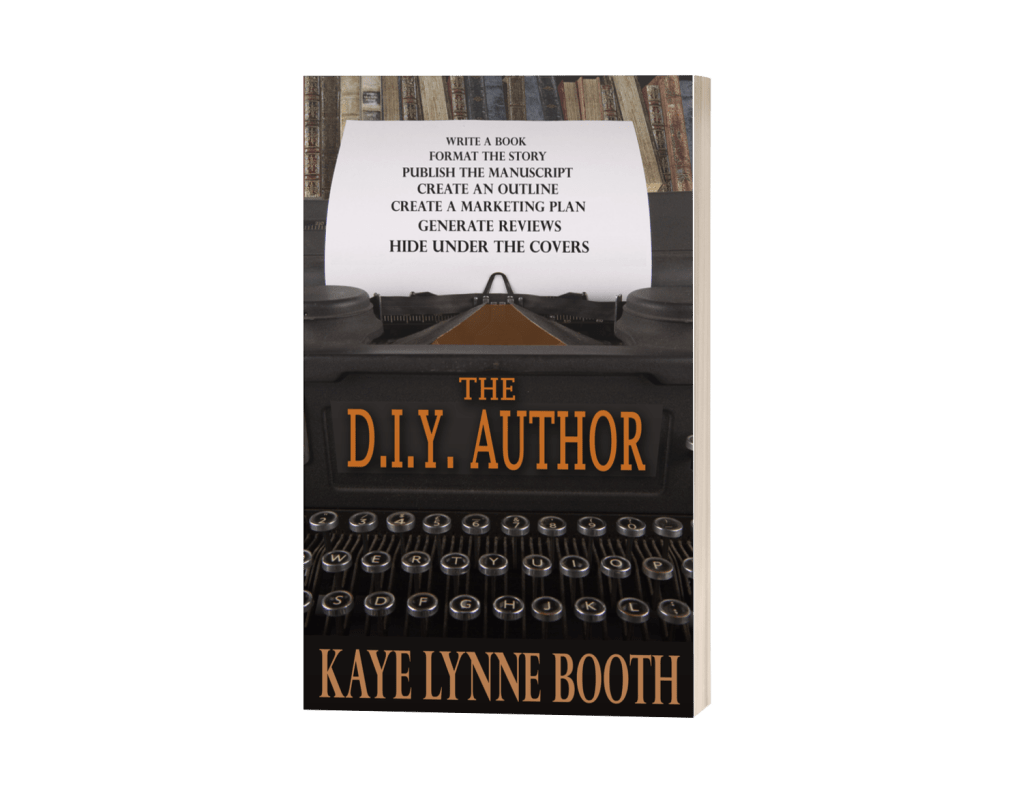
Purchase your copy today: https://books2read.com/The-DIY-Author
Share this:

Book Review: The Friday Edition
Posted: November 15, 2024 Filed under: Book Review, Books, Crime, Fiction, Mystery | Tags: Betta Ferrendelli, Book Reveiw, Crime Thriller, Kaye Lynne Booth, mystery, The Friday Edition, Writing to be Read 10 CommentsAbout the Book
Snow isn’t all that’s falling in Denver, Colorado on Christmas Eve.
A beautiful, young district attorney tumbles from her balcony to her death.
Police suspect suicide, but the DA’s sister, newspaper reporter Samantha Church, isn’t buying it.
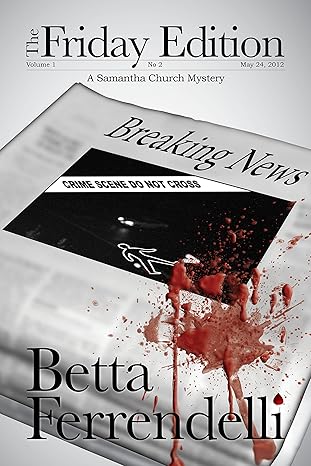
Samantha discovers evidence linking her sister to a drug smuggling case and quickly learns she has stumbled onto a major news story. She must summon the courage to not only face a cartel of criminals, but her own fears and shortcomings when she is confronted by the inescapable specter of a far greater enemy—her addiction to alcohol. Samantha’s dependency has not only cost her job at a major metropolitan daily, but, worse, custody of her daughter, April.
Samantha pursues her sister’s killers, maneuvering through a minefield of intrigue deliberately set out to divert her from the truth. Despite being betrayed, physically beaten and facing the possibility of sharing her sister’s fate, Samantha refuses to stop her investigation.
However, when the killers threaten to harm April, Samantha realizes that, for her daughter’s sake, she can no longer continue the investigation on her own. She knows she must swallow her pride and turn to her ex-husband and police detective, Jonathan Church, for help.
Can Samantha ultimately prevail—find her sister’s killer, write the story of her career, confront her drinking problem, and finally begin to change her life, or will she and April become the killer’s next victims?
Purchase Link: https://www.amazon.com/Friday-Samantha-Church-Mystery-Book-ebook/dp/B008IIFWYK
My Review
I received a digital copy of The Friday Edition, A Samantha Church Mystery, Book 1, by Betta Ferrendelli through Freebooksie. All opinions stated here are my own.
This tale has all the elements of a well-written mystery and crime thriller: a determined reporter plays detective, and she’s a wonderfully flawed character with plenty of room to grow, a suspicious death, and a lot going on behind closed doors to keep you guessing. Ferrendelli takes us to the depths of the main character and protagonist, Samantha Church, where we learn about the the demons which she battles, and expose her all her weaknesses, and come out likeing her all the more for them. She makes us root for Samantha to solve the case and break the story. When it seems she’s sliding backwards down a dark hole, we hold out breath and we cheer the loudest when she manages to pull through.
Samantha is a mess and she knows it, but her heart is always in the right place, even when her mind takes her down a dark path. Her alcoholism has cost her plenty, including the one thing that matters most to her in the world, her daughter April. Now, fueled by suspicions that her sister’s death was not a suicide, as police say, she sets out to learn the truth, but her failed attempts at earning back April’s trust threaten to plummet her into darkness and prevent her from uncovering a conspiracy the will rock the city of Denver. She is a strong, but flawed female protagonist and we want to see her win.
An enthralling mystery which kept me turning pages. I give The Friday Edition five quills.
__________________________________________
Kaye Lynne Booth does honest book reviews on Writing to be Read in exchange for ARCs. Have a book you’d like reviewed? You can request a review on the Book Review tab above.
Share this:

Reviews Coming in for Midnight Garden
Posted: November 9, 2024 Filed under: Book Review, Books, Dark fiction, Fiction, Horror, Review | Tags: Book Review, Midnight Garden 1 Comment
A great review for Midnight Garden: Where Dark Tales Grow on Carla Reads.




















