Weekly Writing Memo: Know Your Theme
Posted: September 22, 2016 Filed under: Fiction, Screenwriting, Stories, Uncategorized, Weekly Writing Memo, Writing, Writing Tips | Tags: Fiction, Screenwriting, Writing, writing advice, Writing Process 2 Comments Every story, whether intentional or not, has a theme within it. A theme is not necessarily a moral or lesson, but rather it is what your story is about at its core. Finding the theme of your story can sometimes take some work, as can making the theme come through in your writing, but it’s not as hard as it might seem.
What is your theme?
To find your story’s theme, ask yourself what your story is about. Maybe you won’t be able to break it down into a neat answer, but as long as you can answer the question you have the first step to finding your theme.
For example, let’s say you’re writing Die Hard. Your story would be about a cop who travels to visit his wife out of town, and ends up having to stop a terrorist plot. So what is the theme of this story? Well, it can be broken down in a lot of ways if you think about what the general terms of the story are: good triumphing over evil (cop vs villains), one man against the world (John vs the terrorists), or even how greed can lead to your downfall (the terrorists refusing to give up even though they’re losing because they’re determined to get the money).
The key to figuring out your story’s theme is to think about the larger concepts and the plot of your story, then try to break them down into simple terms as shown above. These larger ideas are the core of your story, and they help tell your audience what type of story it is. If you’re doing this and you are having trouble deciding what the main theme from your options is, ask yourself which potential theme if removed would completely change the story. The one that can’t be removed, and the one that is the biggest overall concept of the story, is your main theme.
How to show your theme?
Showing your theme throughout your story should not be hard. In Die Hard the theme of good triumphing over evil happens consistently. John is determined to do what’s right and to stop the bad guys, and despite all the trouble and missteps that happen, he ultimately always comes through. Even when he loses, it’s just further motivation for him to come back at the bad guys with even more vehemence so he can win. So for your own story, think of what your theme is and how your main character can represent that theme in some way.
Other ways to show your theme is to use something called mirroring. This is when you show the theme through minor secondary characters throughout the story. Sticking with the Die Hard example, you can see some minor mirroring of the theme “one guy against the world” when you look at the local cop who is stuck outside the building and is trying to help John. This cop is fighting against all the others to get John help and is the lone voice in the crowd. By showing your theme through these small mirroring acts you are also adding another layer of plot to your story.
You don’t always have to have the minor characters experience the same outcome as your protagonist either. You can use minor characters to show what the other possible outcome of your theme could be for your protagonist. For example, if your theme is good triumphing over evil, you could have a minor character lose to the evil to show the consequences if your character fails.
Can you have multiple themes?
As is clear with the Die Hard example, there is always a potential for there to be multiple themes in your story. Of course there should be one main theme that is the core of your story, but there can also be some minor themes that help build up your story as well. Maybe good vs evil is your main theme, but then you have themes involving love or, like in Die Hard, greed. These kinds of minor themes can contribute to your plot, as well as help deepen your characters, and many of them will appear without you having to force them into the story. If you look at your subplots, you should be able to see some of the themes that are present in them and bring them out a bit more so they are stronger.
Final Note
In general, it’s a good idea to know what your theme is before you start your story so you can keep your writing consistent. Sometimes, however, the theme comes out and is discovered as you write the story. Alternatively, you can also start your story thinking the theme is one thing, but as you write you discover it is really something else. This is fine, and happens all the time, but if it happens this way make sure you go back once you’re finished writing and make sure everything is consistent throughout the story. The most important thing about the theme of your story is that you’re consistent, and the clearer the theme is in your mind when you start writing, the easier this will be to do.
Robin Conley offers great writing advice most Wednesdays on Writing to be Read. If you just can’t wait until next week to find out more, you can pop into her blog, Author the World, for more tips, or a weekly writing prompt.
Share this:

Weekly Writing Memo: What’s in a Name
Posted: September 14, 2016 Filed under: Screenwriting, Stories, Uncategorized, Weekly Writing Memo, Writing, Writing Tips | Tags: Creative Fiction, Fiction, Writing, Writing Process 4 Comments Through all my conversations with other writers, I’ve learned that there seems to be two camps of people when it comes to naming characters, places, and things in stories. One group thinks that the names don’t matter, while the other spends hours finding just the right meaning for each name in their world. Personally, I think it depends on the story, as well as whatever it is you are naming. I do believe main characters should have names that mean something, or at the very least, ‘fit’ the character’s story, but I don’t think everything in your story has to have deeper meaning. If you want to give the people, places, and things you name in your story special meaning, there are several ways you can go about it.
Origins
One of the main things I do look at when I am naming something is the origin of the name. What country is the name originally from? What language is it? Is it predominant in a specific religion, or culture? These kinds of details can help you pick names that have more history behind them to help with whatever you are naming. If you have a character that you want to have an Irish background, then a name with a touch of Irish history would be perfect. It doesn’t have to be a historical or cliché name, but it is an option. Another option is to research popular names in Ireland and pick one that way instead. You may end up with a name that isn’t classically Irish, but it will still have a connection to Ireland.
The point of this kind of research for the names you give in your stories is that it creates a built in history for what you are naming. Without telling the reader, you are hinting at where your character might come from and what their family connections are. Now of course people in real life are often given names with no connection to their roots, and you can use this in your story as well if you want, but by making a deliberate choice to either use the name or not you are making every element of your story count. So be deliberate, and if you decide to go against your characters origins, then make that part of the story as well even if it’s a minor part.
Preconceptions
Something else you can use to your advantage when naming a character, place, or thing in a novel are known preconceptions about the name you use. For example, if you use a name from a myth, many people will recognize it and have certain ideas about that character. Zeus is a mighty god with great power, who also happens to be a bit of a player, and a character named Zeus might be suspected of having some of those traits. There are all sorts of fables and legends out there from every different culture and time period, and even if you use one that doesn’t have meaning to the majority of the population it will still help deepen your character. The point is that it is another layer for a reader to find, and the ones that do will love the touch.
Beyond past myths, you can also use names from modern pop culture and such. Big names like Kanye or Justin are well known enough that they also have immediate pre-conceptions to them. Maybe in another 20 years they won’t have the same impact on your readers as pop culture changes, but for modern readers you can use names like those to paint a picture of who your character is. Big public names have personas around them, and if you’re writing a character with a similar attitude you can use those pre-existing ideas to help nudge your reader in a certain direction before they know anything else about your character.
Meanings
One of the final elements you can use when naming things in your stories is symbolism. There are all sorts of names and words that have deeper meaning beyond them besides the word itself. Most names have some alternate meaning to them when you research the original language they came from. These sorts of meanings can be used to speak to the type of person your character is going to be. If you have a surprisingly brave character, then choosing a name that secretly means bravery could be a subtle nod to readers who know that. These are the kind of details that won’t change anything in the story for the most part, but they can add another layer of meaning to your story. It can be especially useful when naming objects in fantasy worlds.
Final Notes
No matter your take on naming in stories, it’s important to consider what the minor details of naming can do for your story. The small touches can often give a story the extra boost to make it something special. As a reader, I know I enjoy the small details that I discover later on about a story, such as deeper meanings in names, and it only makes me enjoy the story more. If you do go the special naming route, however, I find it works best if you don’t go too obvious with the symbolism in the name. You want it to be a small touch, not a neon sign in your audience’s face. Ultimately, if you find a special name is something that will add to your story, then use it, if not, then don’t. It’s your story, so you have to decide what benefits it the most. Trust your instincts and you’ll be fine.
Share this:

Fear is a Writer’s Best Friend
Posted: September 12, 2016 Filed under: Uncategorized 1 Comment
That’s right. That’s what I said. If we’re writers, fear is our best friend. Now I’m not talking about all those personal fears we might have: fear of failure, fear of success, fear that no one will like what we write. No, those fears must be pushed to the side and we must carry on in spite of them, but whether we write books or screenplays, we must have fear to make each story work.
Every character must have a fatal flaw or something they are afraid of that must be overcome to complete their character arc. One solid rule in every story is that the character must change by the end of the story, and if the character is perfect, there is no room for change and nothing to challenge the character so he/she can prove what they are made of. Without a challenge, or conflict, there is no tension, and no story, or at least not a very good one.
Of course, there are always external challenges to be overcome, but there must also be an inner challenge, through which the character changes. Often the external challenge is the vehicle that brings about the inner challenge. If the character has a fear of heights, they might have to cross a log across a deep chasm to save a small child from a serial killer. Saving the child is the external challenge, but it requires the character to face her biggest fear in order to complete the task, and once the character faces her fear, she will forever be transformed. Thus, both the story arc and her personal character arc are completed.
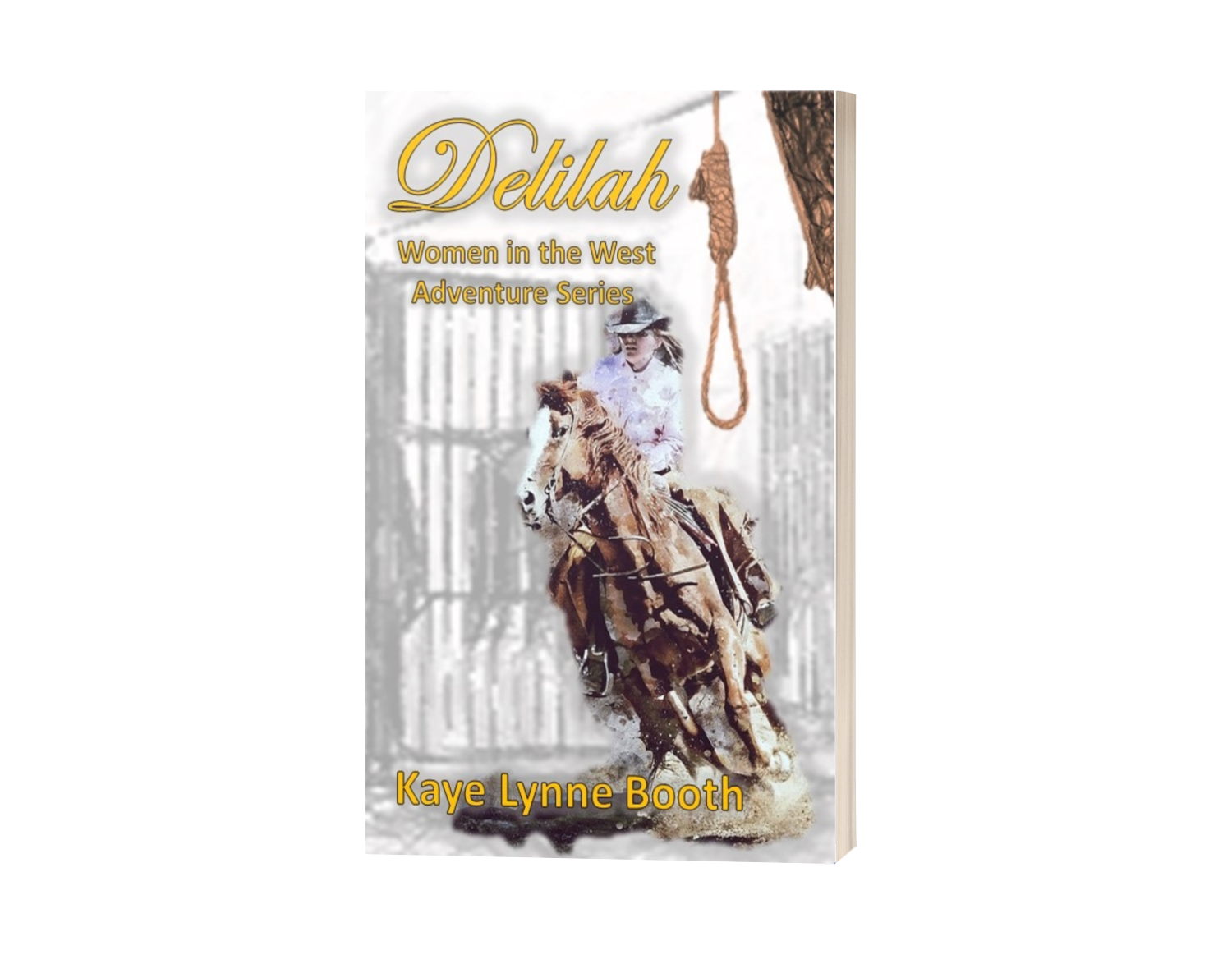
Sometimes, it isn’t the external challenge of the story arc itself, but a lesson that is learned along the way that brings about the change in the character. In my western novel, Delilah, my protagonist has had experiences which make her feel that she has let down those whom she loves, making her afraid of getting too close to others. Her quest for revenge against the men who raped her and left her for dead, abducting her young ward leads her into Leadville, where she meets some very colorful characters, who teach her how to love again. In this case, the external challenge of revenge does nothing to help her overcome her fear of forming attachments, but those she meets along the way do.
One of my screenwriting professors had a nifty way of showing how the internal challenge and the external challenge and the character’s fear or flaw are always related. Before we could begin to write our screenplay, he would have us make a character triangle, where we noted three things. The first was the character’s want, which is usual an external thing that the character strives for throughout the story. Next, he’d have us note what the fear or flaw to be overcome is, and as I said, every character must have at least one. Last, he would have us note what it is that the character really needs, and this is usually an internal change or lesson the character needs to learn. Although the character may get what she thinks she wants, like Delilah, who thinks she wants revenge, achieving what she needs is what causes the internal change within and she must face her fear to do that.
So, go on. Get busy writing. What are you afraid of?
Share this:

Weekly Writing Memo: Networking
Posted: September 7, 2016 Filed under: Promotion, Screenwriting, Uncategorized, Weekly Writing Memo, Writing, Writing Tips | Tags: Fiction, promotion, Publishing, Screenwriting, Writing, writing advice, Writing Process 3 Comments Sorry I have been missing the last few weeks. As you might have seen on Author the World, I unexpectedly moved to Los Angeles and haven’t had a lot of time to do posts. This week’s post is all about networking. Networking is a major element of having a writing career, and it takes some practice to really learn the right and wrong ways to network.
The most important thing to remember when networking is that you shouldn’t be doing it to use people, and you shouldn’t be doing it to be selfish. Good networking is about being genuine. The best way to network is to approach each networking relationship you make with the attitude of how you can help each other, rather than focusing on how they can help you. The best kinds of networking relationships are mutually beneficial, and maintaining this kind of attitude helps these relationships stay healthy and fulfilling.
Building your Network
You can build your network literally anywhere, it’s all about meeting people and learning about them. If you know who people are, what they do, and what kinds of people they know, you can keep them in mind for later if something comes up they can help with. For writing, often times you can make networking connections in writing groups, classes, at conferences, or even in random places like coffee shops and hair salons. The important thing is to keep your eyes open for people you can help, and for people that may be able to help you. Remember, things need to go both ways, and sometimes the act of offering help to someone can lead to unexpected connections. Ultimately, all networking contacts break down into four different types that can each be beneficial in their own way.
The Introducer
The Introducer may not have any work for you, and may not be someone who is going to offer you advice, but they do know people you want to know and they will help you meet them. These kinds of contacts are always useful to maintain because they help broaden your network, and they can help introduce you to other parts of the writing world you may not be familiar with. One of the best way to meet new people is through a middle-man who can introduce you because it can cut out the awkward process of trying to force a meeting with a stranger. If you’re going to be the Introducer for someone else, remember to make sure you give each person’s name, and then try to share what they have in common or why you think they should talk so you can help jump start the conversation.
The Mentor
The mentor is someone who has been where you are and knows a lot about the business. They are the perfect sort of person who can offer you advice, and give you guidance that will make navigating the writing world easier. Maybe they won’t be able to get you a job, or introduce you to new people, but they will help you find answers to the random questions and issues you run into. Just make sure you don’t burden your mentor by asking too much of them, or wasting their time with easy questions that you could have found out anywhere. They may only have so much free time, so make sure to figure out how much help they are willing to give you and to stick within that range. If you are going to be a mentor, be clear up front what you are willing to do for the person you’re helping, but also try to remember what it was like when you were where they are.
The Helper
The Helper is someone who has an opportunity for you that could potentially help your career, whether it’s a job or an interview doesn’t matter, it’s someone that can put you in line for a job or a writing sale. These kinds of connections are incredibly valuable because they are what give your career a boost. The important thing to remember when meeting people who offer you these types of opportunities is to make the most of them, and to make sure you don’t misrepresent yourself to the person setting it up, because if you waste it or lie it could prevent the person from ever offering you another opportunity again.
The Teammate
In some ways, these are the most valuable networking connections you can make. The Teammate is someone who is going through the same stuff you are at the same time. They are someone you can bounce ideas off of, or trade writing with. They are on your side and you are mutually trying to help each other reach your goals. For writing, having people you can talk writing with is incredibly important, as is having people around who understand what you’re going through. If you are a teammate to someone, make sure the help isn’t going one way. If you find yourself asking too much and not doing anything in return, then try to find a balance.
Final Notes
Ultimately, networking is about broadening the connections you have in your industry, and maintaining those connections by trying to keep things mutually beneficial for all involved. Even if you can’t help someone the moment they help you, always try to keep them in mind and return the favor when you can. One of the most important elements of networking is that the people around you see that you are a part of the cycle of helping, and that you aren’t just a vacuum sucking up all the favors you can get without returning anything. People will quickly notice if you only ever seem to receive help, so the more you can be a part of the cycle the better.
Share this:

Weekly Writing Memo: Overcoming the Blank Page
Posted: August 17, 2016 Filed under: Books, Fiction, Publishing, Stories, Uncategorized, Weekly Writing Memo, Writing | Tags: Creative Fiction, creative process, Fiction, Screenwriting, Writing, writing advice, Writing Process 1 Comment Sometimes when it comes to writing, the hardest thing to overcome is the simplest. One such example of this is to overcome the intimidation of a blank page and to simply get started. Those first moments when you sit down in front of the page and tell yourself you’re going to write can be huge, and overwhelming. All sorts of thoughts can pass through your head that make putting the first words down on the page near impossible. Am I good enough? Do I have anything to say? How do I do this? Will anyone want to read it? Etc. These kinds of thoughts can stop your writing in its tracks before you even begin. Knowing how to overcome the blank page can be vital, and while there isn’t a method that works for everyone, there are several things that I find work well.
Free Write First
One of the easiest ways I find to get into writing is to simply allow myself to free write for a while. Even if I have a specific story idea in mind, I will sometimes think of my character or my setting and just write whatever comes to mind. It doesn’t always flow in a pretty way, or even make sense, but it does allow me to explore the characters or setting without restrictions and it gets me writing. Once I start putting words on the page, focusing them becomes easier. I also find that just getting started on the act of writing makes some of the tension around writing dissipate. So however you do it, get started by freewriting and getting words on the page. Even if you have to start by writing about your day or something, see where the freewriting takes you. Once you no longer have a blank page, it’s easier to focus on creating something cohesive that you can turn into a story.
Copy Someone Else
This is a method that has been around for a while, and was even used in the movie Finding Forrester. When you are just getting started writing and struggling, try grabbing a random book and copying down the first paragraph of it. As you are writing, let your mind wander, and when you’re comfortable, stop copying and start making it your own. Sometimes using someone else’s work to get you started writing can help you transition into your own work. Just remember to go back once you finish and to change the beginning so it is no longer copying the original author’s work. The key to this is that it gets words on the page, and in making what you write your own.
Make A Rough Outline
When I have a specific story idea in mind, but am struggling to get started, I find that writing down 3-5 bullet points of where I want the immediate section of story I’m working on to go helps. Usually I will do this when I start each chapter. I grab a piece of paper and jot down the 3-5 key moments of the chapter that form the arc of it, then when I write I have “goals” to write toward. It’s just enough outlining to keep the story focused while I’m writing, but not so much that people who hate outlining will feel like they’ve over planned anything.
It works for me because I prefer abbreviated outlines, and it allows me to discover how the characters get from one big moment to the next as I write. So take a few moments to create a small arc for what you want to write, and then let yourself write to those points. It’ll help you visualize what you’re planning to write, and it’ll give you points in the story to write toward. Just try not to make your bullet points too broad, or you can end up feeling lost as to where to start again.
Try a Different Medium
One of the last things I try when I’m struggling to write is to switch mediums. Sometimes I find that I just can’t write a certain story at the computer, and instead I end up writing with a notepad and pen. It seems silly, but just switching mediums like that can actually help get you started. Sometimes I think the notepad works better than the computer when I’m struggling because the notepad feels less permanent and professional. I’m just jotting down ideas! Not writing for real! Which isn’t true at all, but it feels that way. So allow yourself to try a different medium and see if it changes anything. At the very least, switching to something like a notepad where you can do things by hand can allow you to doodle and jot ideas to brainstorm while you are working on getting to the real writing. Which can be just as productive.
Final Notes:
The final thing to remember if you are stuck on the white page is that you don’t have to start by writing right away. If writing simply isn’t working, trying outlining or researching or brainstorming for your story. If you do those things, you’ll still be working on your story in some way, and maybe it’ll help you feel more confident so you can get started. Just remember, at some point you have to stop doing these things and get to the writing, so don’t procrastinate too long!
Share this:

Weekly Writing Memo: A Matter of Time
Posted: August 10, 2016 Filed under: Fiction, Screenwriting, Uncategorized, Weekly Writing Memo, Writing, Writing Tips | Tags: Fiction, Writing, Writing Process 1 Comment Something that almost every story deals with is the passing of time. It’s natural, and to be expected. What every writer needs to focus on is how to show the passing of time, and when to skip time in a story. These two things can be a huge pitfall in a story. If you tell too much of the story and don’t skip time when you need to, then the story can feel sluggish and boring. If you skip too much time the audience can feel like they’re missing things, and you can take away from the tension of the action. There’s a careful balance to time in every story, so the key is finding it for yours.
When to Skip Time
In general, you should skip time when nothing is happening in the story. Any time you have huge chunks of time passing with no conflict going on, you need to get the story moving and skip ahead if possible. There should always be some form of conflict going on in your story, so whenever it’s lacking you’ve either missed a plotline, started in the wrong place, or need to find a way to skip ahead. Look at this time period and see what happens in it that you absolutely need to show your reader, then find a way to show it elsewhere or to compress it down.
Sometimes you can also skip time when you are telling a story in a nonlinear way. Some stories work better if you can jump ahead and then go back to a flashback or something, so look at your conflict and see if it is best told linearly, or if skipping around in time can help you create more tension within the story. You want to maximize the tension and conflict, so if you can do this by telling the story in a new way, then you should try.
How to Skip Time
There are endless stories to use as reference for skipping time (Time Traveler’s Wife; Looper; Lord of the Rings). One of the key things to remember when skipping time is that you need to find a way to show that time has passed. In films, this is usually done with visual elements such as scenery changes, characters aging, seasons changing, etc. In fiction, this can be shown through some of those elements as well, but you can also use words that help show this. Mention the time passing, or use cueing phrases that help guide the reader (Ex – Months later; Kiera was 16 when she finally returned to the village…). Whatever you do, always find a way to show the time change unless you have a reason not to.
Sometimes in stories the writer will skip time by using a montage to show the key moments that happen during the transition, ending with the characters at the point in time where the story continues. Other times, the writer will just skip ahead and start the story at the point in the future where they want it to be. The method to use depends on what happens during the time skip. If something vital happens, then try to find a way to show it either in a flashback later, or before skipping time. As long as there is a key story element, then it needs to be shown. So figure out what matters to the story, and where the conflict is, and you’ll know which elements to show and which to skip.
Final Notes
Obviously there are a lot of moments in a story where exciting action isn’t happening that are still important, so don’t think that you need to skip all these. Those moments can still have character development and conflict. Internal conflict is just as important as external conflict, so make sure you aren’t skipping all that. If you find yourself skipping a lot of time in your story, it might also be time to look at if you’re starting in the right place. If you start your story later, can you still show all the information that you’re skipping over in some way? Usually the answer is yes. Whatever you decide, just remember that you can always ask for a second opinion if needed. Overall, just remember to consider the conflict, the character development, and how your story will change if you skip time. If you do those three things, you should be able to figure out what you need to do.
Share this:

“Keepers of the Forest” Plot Draws Readers In
Posted: August 5, 2016 Filed under: Book Review, Books, Fiction, Uncategorized | Tags: Book Review, Books, Creative Fiction, Fiction, James McNally, Keepers of the Forest 3 Comments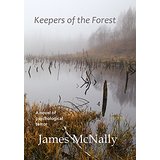
Keepers of the Forest, by James McNally has a good plot and interesting characters. When Chris is chosen by Crispus Attuck Brown to be the Chosen One, a summer spent with Scott and Chris’ aunt and uncle takes an unexpected turn, and Chris’ swim instructor, Brian is the only who realizes something is amiss. Brian must find a way to save the two brothers and foil Brown’s evil plot to destroy the world.
Brian is a young man who is afraid of commitment and perhaps drinks a little too much. He befriends a young boy, Chris, who is a sweet kid that falls into unfortunate circumstance and becomes the victim of an evil plot. Other players on the good guy’s team are Chris’s older brother, Scott, an angry teen who works through his own issues and story arc, and Brian’s bartender friend, Nancy who has her stuff together and acts as support for Brian as he works through his personal issues and becomes the hero. One of the most colorful characters unfortunately, has only a supporting role and isn’t really involved in any of the action. Nancy’s aunt, Leah, the balding swim instructor with cancer is a strong character, and I would have liked to see more of her.
The villain, Crispus Attuck Brown is an interesting chap, who believes he can bring about the second coming of the Dryad, and he’s gathering the Keepers of the Forest to that end. I think if we’d seen more of how bad he is sooner, it would’ve helped us to fear him more. At his side is an ex-hooker named Sherry, who is a misguided pawn in Brown’s game until she removes the blinders and realizes what is really going on around her. The big guy, Mason, is the muscle for the operation. He is feared because of his size, but is shown to have a soft heart. The crew is rounded out by two gay ex-cons, Ted and Vincent, who are cold blooded killers, who kill because they like it and almost seem more to be feared than Brown.
I had a couple of problems with Keepers of the Forest. First, McNally does a bit of head hopping, which makes it confusing to the reader as to whose P.O.V. we are in at times. And second, the characters all have such clear insight into their own motivations that they can self-analyze and express exactly what they are feeling and their motivations verbally. There isn’t a lot of subtext, and real people just don’t do that.
***************************SPOILER ALERT********************************
The other thing that just didn’t sit quite right with me, was the fact that the good guys save the day, but they are lead to the solution by Sherry, after she comes to the realization that her beliefs in Brown are faulty. Brian becomes a passive protagonist, in a way, because although he has a part in saving the boys, the rescue is led by a member of the opposing side, turned defector and he just does what he is told. For me, all the characters have the potential to be really great characters, but most of them fall short of what they could be.
I give Keepers of the Forest three quills. 
Share this:

Weekly Writing Memo: Writing Truth
Posted: August 3, 2016 Filed under: Screenwriting, Uncategorized, Weekly Writing Memo, Writing, Writing Tips | Tags: Books, Fiction, Screenwriting, Writing, Writing Process Leave a comment One of the things that is distinct about great writing is that it delivers a truth. This doesn’t mean the narrator or characters have to tell the truth, but it does mean that the writing has to be true to the story. Even if your characters or narrators are liars, their actions and their words have to be true to who they are. There are three main ways stories tell the truth:
Truth of Story
For a story to read realistic, it has to stay true to itself unless the writer has a very big reason to write it another way. However the events of your story happen, they have to be the true way they would happen and not forced for the writer’s preference. For example, in the Harry Potter novels, people had to die whether JK Rowling liked it or not. If she let everyone survive through all of the conflict within the novels she would be lying to her audience for the sake of a happy ending. In wars, people die, and without that death the story is a lie.
Whatever type of story you are writing, you have to stay true to the type of story. People die, couples break up, families are torn apart, and bad things happen. You can’t protect your characters and your audience by lying to them. If you do, the story will lose its depth and worth, and the audience will know it.
Truth of Character
Characters in stories have to stay true to who they are. If they behave out of character for the sake of progressing the plot, then the character will often lose the audience. The audience is not dumb and they know when the writer is manipulating a character for the sake of the plot. You can’t force your characters to go where you want them to. Every action has to be justified by your characters motivations. By staying true to your characters, you are strengthening your plot and your story, and your audience will buy into your story more.
Big Truths
Finally, every story has a big truth to it. In Harry Potter the truth was that people die, good has to make sacrifices to defeat evil, and that evil can be an alluring force that turns good people bad. I’m sure there are others, but these are some of the big truths and themes that the Harry Potter stories bring out in their telling. So what are your story’s truths? What is your story saying about the world? Whatever it is, make sure it is truth and not wishful thinking or a fairytale unless you are doing it deliberately.
A lot of children’s stories will have morals that aren’t always true, such as “good always triumphs.” These kinds of stories when given to adult audiences don’t work as well because adults generally know that they aren’t true for how the world works. By telling the truth about the world to your audience, you are creating a story with more depth. Of course, what is true for some is not true for all, but write the truth the best you can.
The purpose of all this is to say that you can’t lie to your audience. Your audience is buying into your story, and if you lie to them they will know and they will almost always be disappointed. You can have characters and narrators that lie, but you the writer cannot lie. Whatever you do, do it with purpose, and with truth, and if you do that, your story will be the better for it.
Robin Conley offers great writing advice most Wednesdays on Writing to be Read. If you just can’t wait until next week to find out more, you can pop into her blog, Author the World, for more tips, or a weekly writing prompt.
Share this:

Weekly Writing Memo: Setting Writing Prompt
Posted: July 21, 2016 Filed under: Fiction, Screenwriting, Uncategorized, Weekly Writing Memo, Writing, Writing Tips | Tags: Creative Fiction, creative process, Fiction, Screenwriting, Writing, Writing Process 1 Comment[Sorry for the delay this week, there was a glitch in posting yesterday.]
 I’m off in Gunnison, Colorado this week for a writing conference at my old graduate school, Western State Colorado University. For me, a writing conference is a chance to talk writing and get inspired, so I thought I’d post a writing prompt this week to spread some of the inspiration.
Since I’m in a place that is known for its beautiful scenic views, I thought I’d go with a writing prompt that is all about starting with setting to find your story. Try to use the prompt to help visualize the setting, and see where it takes you for creating a story.
A Tree Grows in the Desert
A tree grows alone in the desert. What kind of tree is it? What does it look like?
Describe every detail you can think of. What do those details tell us about the tree?
How does it grow there?
Who discovers it? Someone has to come across it and be our narrator. So who? Why are they in the desert? How did they find the tree?
Who are they?
What does the tree mean to them? Do they interact with the tree somehow?
Is this all a dream?
Or a vision?
A miracle?
A mirage?
Don’t just have this character be at the tree, give them a reason, a purpose. Why are they there? Why is the tree there? How do the tree and the character impact each other? Where do they go once they part?
This prompt is about character and setting, since they are the two core parts of the prompt. It’s also about using mysterious elements to help draw the plot out. If there is a mystery element to be investigated, and a character to investigate it, then there is a plot in there somewhere. So explore the tree, develop the character who interacts with the tree, and see where the story takes you.
Next week I’ll be back with my usual post, but for now, happy writing! If you want to play with this prompt, you can try to set it in other unusual places if you want (the ocean, a grocery store, etc). The key is, that the tree is somewhere unusual, and the story comes from someone interacting and exploring the tree and why it is there. So explore, have fun, and get writing!
Robin Conley offers great writing advice most Wednesdays on Writing to be Read. If you just can’t wait until next week to find out more, you can pop into her blog, Author the World, for more tips, or a weekly writing prompt.
Share this:

Weekly Writing Memo: When to Include Movement with Dialogue
Posted: July 13, 2016 Filed under: Fiction, Uncategorized, Weekly Writing Memo, Writing, Writing Tips | Tags: Screenwriting, Writing, writing advice, Writing Process 1 Comment One thing I’ve noticed during my time reading and critique fiction, is that not everyone includes movement of characters, or actions, within the dialogue scenes. This is a pretty obvious thing, as not all scenes would call for it, but how do you know when you should or shouldn’t include movement with the dialogue?
Forward Momentum
One reason to include movement in dialogue is that it moves the story forward physically in a way that dialogue generally cannot. The exception to this is if you write like Shakespeare or other playwrights where they often imply or describe the movements in the speech. If a scene of dialogue goes on for a long while without any movement, it can make the reader feel like the story is standing still as two or more characters talk things out. Adding in the body movements can make the reader feel like the characters are actually doing something and that the story is still progressing forward, even if the characters are staying in one room.
Emphasis
Movement can also help emphasize certain words that are being said, as well as how they are being said, and can even be used to tell more about the character who is speaking. For example, if your character is trying to act tough but doesn’t feel very tough at all, you can give them strong words in the dialogue but have their body language be weak to show they’re not confident in the words. This can be a subtle way to show a lot about the character without telling.
Another example of this is if you want to emphasize a characters anger, you can have them throw something or slam something. Yes, these types of gestures can venture into cliché, but when done well they can also really highlight how a character is feeling and what they mean by their words.
Transition
Movement can also be used as a transition of subjects in dialogue. If you jump from one subject to another in dialogue without any sort of physical break on the page, the story can feel clunky or awkward, and sometimes throw the reader out of the story. Adding in the movement between a subject change can slow things down for the reader and make the transition smoother by helping the reader follow the speaker’s train of thought. An example:
“I want to go to the park,” Bobby said. He looked down the street as the milk truck drove by, then turned back to his brother. “Did mom go to grocery store yet? We should eat first.”
If you remove the dialogue tag and the action, the dialogue seems cluttered, rushed, and not necessarily cohesive: “I want to go to the park. Did mom go to the grocery store yet? We should eat first.” Written this way, the character seems almost like his has an attention disorder. By using movement, you can create a pause between the subject shifts if needed, or use the opportunity to help show the reader what is the cause of the subject shift as done above.
Exceptions
There are a few spots where movement should not be in dialogue, but really it should be judged on a scene-by-scene basis. If you are having an important conversation where the emphasis really needs to be on the words, then the focus should be the dialogue with movement only added in where an action is needed for the story.
If you have a long scene with a lot of movement and little dialogue, then keeping the dialogue sections movement free can help balance the chapter out. If you add more movements into a scenario such as this one, it can make the dialogue feel cluttered and buried in all the actions in the story.
Another exception is if you have a slower chapter and want to speed the dialogue up some, then you can take out the movement. A segment of dialogue with minimal movements or dialogue tags can really speed up a chapter because the reader can move through it quickly, focusing just on what is being said by the characters.
Final Thoughts
Ultimately, each instance of where to put movement within the dialogue should depend on the scene and the writer’s goal for the scene. If you understand what the effect of the actions and movements in dialogue are, then you can understand how to use them in the strongest way for your story. If you really want to understand it, take some of your favorite novels and look at the scenes with dialogue. See how the author handles them and try to figure out the effect it has on the story. Really, when working on any aspect of writing, seeing how it has been done and then experimenting with it yourself is the ultimate way to understand it.