Book Review: “The Book of Wounded Healers”
Posted: January 24, 2025 Filed under: Book Review, Books, Fiction, Review, Science Fiction, Self-Discovery | Tags: Book Review, Joseph Carrabis, Scieince Fiction, The Book of Wounded Healers, Writing to be Read 10 Comments
About The Book of Wounded Healers
Ben Matthews is a mathematical linguist studying spontaneous languages at Columbia University in New York City. Recently home from committing himself to a northern New Hampshire psychiatric center, he spends a relaxing late-May day bonding with his son, Jimmy, at South Street Seaport.
They’re watching a juggler when the East River to Brooklyn and beyond becomes a white sand desert. A sirocco wind raises waves and whips ice cream wrappers, crumpled napkins, visitor guides, ticket stubs, and other ground level trash in town.
Three creatures, their images shimmering in the heat like a mirage, walk across the sand towards The Battery and TriBeCa South. Ben is knocked down and loses track of Jiminy as people race to safety.
The desert fades away, the sirocco recedes, and the three creatures walk up to Ben. The one in front says, “We are Healers from the Land of Barass.” It points to the one on its right. “He is Cetaf, who cries for his own pain.” It turns to the one on its left. “This is Jenreel, who tends to his own needs. I am Beriah. I will tell you how I feel.”
The creature offers Ben its hand. “We are Healers from the Land of Barass.”
All Ben can think of to say is “I’ve lost my little boy.”
Beriah helps him up. “Then you must find him.”

Ben, aided by The Healers from the Land of Barass, embarks on a quest through Manhattan and learns he’s lost much more than his son, and finds much more in himself.
My Review of The Book of Wounded Healers
I requested a review copy because I know Joseph Carrabis writes fiction that makes you think. Every book of his I’ve read, I’ve learned something from, as well as being thoroughly entertained. I have read and reviewed several of his books and you can find those reviews at the following links:
I received a digital copy of of The Book of Wounded Healers from the author in exchange for an honest review. All opinions here are my own.
The Book of Wounded Healers is a journey into the truths of humanity through the eyes of a man named Ben, who loses his son in the confusion, upon the arrival of three visitors, ambassadors from the Land of Barass. Once Ben’s son, Jiminy, is safe, he goes on a walk-about over the island of Manhatten with the alien tourists, and he learns to see, as they do, stirring his own memories, and bringing him revelations about himself and his fellow human beings.
I am not a mathematician, and I won’t claim to understand the formulas Ben uses to explain the truths of the human condition. But I understood enough to relate many of them to my own life and know they are valid. The revelations that Ben makes for himself can be applied to our own lives.
A tale of truths, brilliantly woven into the tapestry of a story. I give The Book of Wounded Healers five quills.

_______________________________________
Kaye Lynne Booth does honest book reviews on Writing to be Read in exchange for ARCs. Have a book you’d like reviewed? You can request a review on the Book Review tab above.
Share this:

Book Review: “Guilty Knowledge”
Posted: January 17, 2025 Filed under: Books, Crime, Fiction, Mystery, Review, romance, Suspense 2 CommentsAbout Guilty Knowledge

Detective Jesse Aaron has no leads in the murder of Rosa Logan when pretty blonde Sariah Brennan claims to have seen the killer—in a vision. Unfortunately, the man she identifies is dead—or is he?
Sariah is an unsophisticated small town girl, but her background and her motives are mysterious, and she seems to be hiding something. Jesse is increasingly convinced she has guilty knowledge of the crime, even as he finds himself more and more attracted to her. How can he unravel the web of secrets, without putting Sariah at risk, before the killer strikes again?
Purchase Link:
My Review of Guilty Knowledge
I recieved an audiobook copy of Guilty Knowledge, written by Linda Griffin and narrated by Scott LeCote, in exchange for an honest review. All opinions stated here are my own.
Guilty Knowledge is a romantic crime mystery about a cop who falls in love with a possible suspect in his case. When Seriah comes forward with information about a murder which she should have no way of knowing, and it turns out to be right, Detective Jesse Aaron, knows she’s not being totally forthcoming, and determines to ferret out the truth. But he finds himself strangely attracted to her during the investigation, and his partner, Camille never fails to remind him in her bullying sort of way, to keep his emotions in check, not only because she is a suspect, but because she doesn’t approve of interracial relationships. Sariah is illusive and alluring, but whatever she’s hiding is an obstacle to their relationship, one that, if revealed, could bring it to a crumbling halt.
Jesse is a smart detective who knows Sariah is holding something back, yet he gives her the benefit of the doubt against his own better judgement, and shelters her from his brutish bully of a partner, who I found very hard to like. Camille is bigoted and pushy, and critical of Jesse to the point that she acts more like Jesse’s spouse or parent than his partner. Sariah, is secretive and moody, and should have set off all the warning signals in a good cop, not blinded by his emotions.
The story is well crafted, but I had a hard time in investing in any of the characters. I don’t think I related to any of them enough to root for them. The narrator, Scott LeCote, tries to differeniate the voices, but I found it difficult at times to know who was speaking. The mystery is what drives this tale, and what kept me listening.
A romantic crome mystery that keeps you guessing. I give Guilty Knowledge four quills.

___________________________________
Kaye Lynne Booth does honest book reviews on Writing to be Read in exchange for ARCs. Have a book you’d like reviewed? You can request a review on the Book Review tab above.
_______________________________________
Want exclusive content? Join Kaye Lynne Booth & WordCrafter Press Readers’ Group for WordCrafter Press book & event news, including the awesome releases of author Kaye Lynne Booth. She won’t flood your inbox, she NEVER sells her list, and you might get a freebie occasionally. Get a free digital copy of her short story collection, Last Call and Other Short Fiction, just for joining.
Share this:

Chatting with the Pros: Todd Fahnestock
Posted: January 11, 2025 Filed under: Book Review, Chatting with the Pros, Fantasy, Fiction, Interview, Review | Tags: Book Review, Book Reviews, Books, Chatting with the Pros, Fantasy, Interview, Todd Fahnestock, Tower of the Four: The Rise of Magic, Writing, Writing to be Read 1 Comment
My guest this month on “Chatting with the Pros” is Todd Fahnestock, a talented epic fantasy author for both adults and teens. I met Todd, kind of, when we both participated in the 2024 Novel Writing Story Bundle. In fact, his nonfiction writer’s resource, Falling to Fly, is the subject of this month’s “Review in Practice”, and you can catch that post this coming Monday.
He is the author of many epic fantasy series and that fascinates me because epic fantasy spans long periods of time, with multiple characters and multiple storylines to follow. As an author, I’ve been playing around with writing in multiples, (see this month’s “Chatting with the Pros” segment), I find it fascinating to learn how other authors handle this aspect of writing. So, let’s get right to the interview.
About Todd Fahnestock
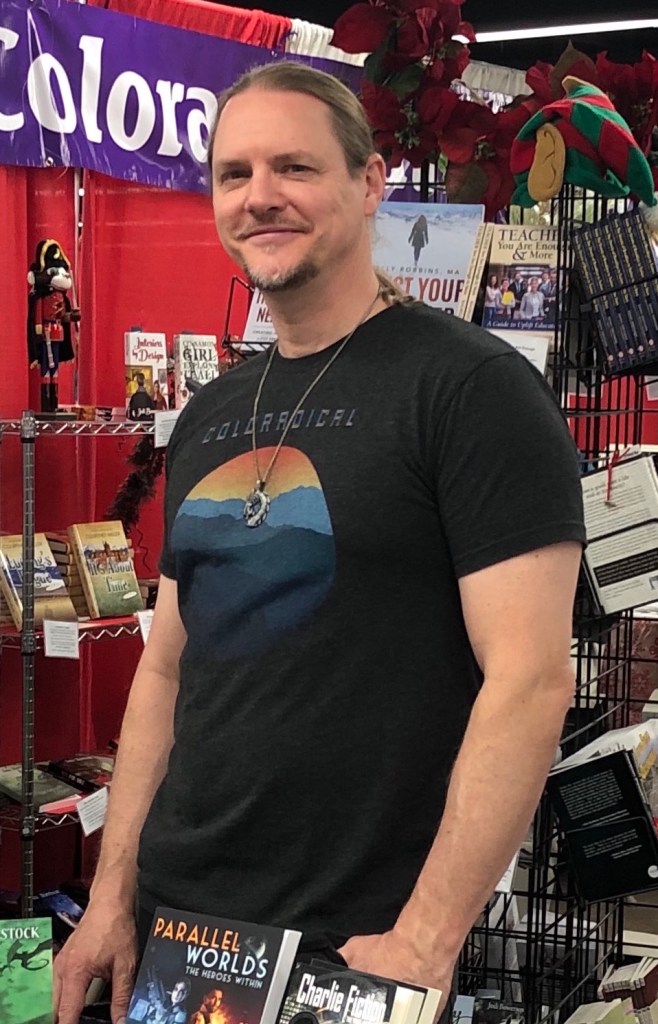
Todd Fahnestock is an award-winning, #1 bestselling author of fantasy for all ages and winner of the New York Public Library’s Books for the Teen Age Award. Threadweavers and The Whisper Prince Trilogy are two of his bestselling epic fantasy series. He is a founder of Eldros Legacy—a multi-author, shared-world mega-epic fantasy series—three-time winner of the Colorado Authors League Award for Writing Excellence, and two-time finalist for the Colorado Book Award for Tower of the Four: The Champions Academy (2021) and Khyven the Unkillable (2022).
His passions are great stories and his quirky, fun-loving family. When he’s not writing, he travels the country meeting fans, fabricates philosophy with his son, plays board games with his wife, dissects movies with his daughter, and plays to the point of bruises with Galahad the Weimaraner.
Visit Todd at toddfahnestock.com.
Interview with Todd Fahnestock
Kaye: Tell us a little about your background or your author’s journey.
Todd: Ha ha! Well, if you want the entire story, I highly recommend reading Falling to Fly, which is a memoir I wrote about this very question. It goes into detail for about 50K words about my writer’s journey, starting with the little beginnings of discovering epic fantasy novels when I was fourteen to speaking in front of a packed-house at Planet Comicon in Kansas City.
I’ll try to do a shorter version here.
So when I was in 8th grade, I was waiting for my brother to pick me up from school, and I wandered over to the public library which was, conveniently, just across the street from Smiley Junior High. After thumbing through the Sports Illustrated Swimsuit editions in the magazine section, I started wandering through the stacks looking for something a bit more mentally stimulating. I stumbled across Lloyd Alexander’s The Book of Three. The cover just captured me; it transported me away to a place that felt foreign and familiar at the same time, so I opened the book and…
Wow. I hadn’t even known what I was looking for, but The Book of Three had a huge, helping of it. I got lost in the epic fantasy trope.
The story is about a young man my age who has no idea about the magical, dangerous world outside his little farm. The highest honor he can imagine is being promoted to assistant pig keeper within the farm, but he gets swept into an epic journey where he will fight alongside kings, battle legendary monsters, and foil supernatural villains.
I was hooked.
In fact, in a very real way, fantasy books saved my life. My parents were going through a divorce at the time, and in my real life I felt clipped free on a tumultuous ocean, drifting in a boat with no rudder. Fantasy books became a safe port for me. Inside a fantasy story, I could feel powerful. I could feel heroic. I could be unafraid. I clung to those stories like a lifeline.
I went on to read Weis & Hickman’s Dragonlance series, Brooks’ Shannara chronicles, and Piers Anthony’s Xanth series. I devoured every fantasy book I could find.
When I got a little older—eighteen years old to be exact—the most amazing thing I could think to do with my life was to write stories like the ones that had captivated me in my junior high days. So I did. I started writing my first novel in an Independent Study class during my senior year.
It was a magical story about a nigh-invincible, acrobatic swordsman named Koric… with absolutely NO possibility of being published. But I thought it was amazing, so I wrote a second, and a third, and… well, here I am now.
Kaye: Why do you write fantasy as opposed to other genres you might write?
Todd: I’ve actually written in a few other genres: memoir, middle grade, time travel. I even have a 1980s road trip, coming-of-age story with a twist of magic (not sure exactly what genre that is), but I always come back to high fantasy.
I think it’s for two reasons. First, fantasy is completely open-ended. I can get as imaginative as I want while doing little to no research. Anything about the world I don’t know, I can simply invent, and that’s my strong suit.
Second, high fantasy is optimistic. It’s hopeful. High fantasy is the very essence of triumph. I drag my characters through hell, but it is with the hope that they will find their way through the dark, that they will prevail in the end. I love that trope. I simply can’t get enough of it.
So that unique combination simply draws me back again and again. If I’m feeling silly, I can create some snark to serve my mood, a crusty little gromnambulan who rides on the character’s shoulder and has a penchant for eating poker chips or something. If I’m feeling angry and vicious, I can pour all of that negative energy into the most vile villain I can create. I can make that pessimism useful to convey the overall optimism I hold by coming up with a way for my heroes to defeat him. And, of course, I love creating heroes most of all, unlikely misfits who find a way to prevail or—I also love this one—destined characters with unbelievable abilities who are going to be put to the utmost test of their strength/brilliance/competency.
Kaye: You write epic fantasy. Is it more difficult to keep the stories going in epic proportions?
Todd: Ha ha! I don’t know that I’d say it’s more difficult. More difficult than what? Than doing research on how strains of a biological weapon breed and multiply so that I can accurately depict a world-threatening event in a thriller? I don’t know. I’ve never written a thriller.
I know I hate doing research and I love imagining things, looking for my own internal logic rather than sticking to the hard facts of the real world. So maybe in my case, it’s easier to keep stories going in epic proportions than doing that. Epic fantasy is what I’ve known for decades. It seems natural to me.
But it’s not easy.
I do struggle often with trying to fit something together over a larger arc, but I’m getting better at it every time I finish a longer series.
I think holding the threads of an epic story takes up a lot of RAM in my head. In the real world, I’ll forget names. I’ll forget dates. My wife often gets frustrated with me because I can’t remember to bring something up from downstairs that she asked me to get literally two minutes ago, but I think a lot of this is because most of my brainpower is subconsciously sorting plot threads so that when I get to the keyboard, things seem to ‘magically’ sort themselves out.
That’s just a theory, but it seems applicable.
Kaye: You are an author of fantasy for all ages. Can you talk about the main differences in writing teen and young adult fantasy, and adult fantasy?
Todd: Sex.
Ha ha! No, not entirely. But that’s a big one. When people come up to my booth and ask me what age range a book is, that’s what they’re mostly asking about. I’ve interacted with many readers at many cons—and I’m mostly talking about parents who are looking for something for their teenage or tween-age readers—and they don’t care that much if Khyven the Unkillable is hacking a sword through a mythical cat beast. They wanna know if there’s any graphic snogging in the book.
I’ll even often have some pretty creepy or frightening descriptions of monsters—bordering on horror—but it doesn’t seem to bother parents or young audiences. I think young readers can handle more than we give them credit for. And a lot of them are hungry for that kind of thing.
Other factors, especially with readers younger than eleven or so, is the vocabulary. Too many big words and you’re gonna lose them. But there are a LOT of precocious eleven- and twelve-year-old readers out there, and the more epic—and complicated—the story, the more they love it. It’s interesting.
For the last three or four years, I’ve been hanging in the PG-13 range (Eldros Legacy). There are a few romantic relationships in that 5-book story, but it’s just a bit of kissing and if it’s something more, it’s only implied. We close the door, put a sock on the handle.
Adults often WANT the spicier side of things. They want a little more description of the snogging, a bit of a heavier emphasis on the snogging. So when I’m writing an adult story, I try to up the sexy quotient. I don’t think I ever get “erotica” graphic, but I dance right up to the edge of it.
Kaye: Which do you enjoy writing most, heroes or villains? Why?
Todd: Heroes. I never get tired of exploring how and why someone becomes a hero, whether it’s to themselves or to the world, whether it’s a badass warrior who’s selfish and needs to learn to put others above himself or a geeky high school kid who needs to find his confidence.
I think we’re all trying to find our inner hero, whatever that hero looks like. Joseph Campbell stipulates in his book The Hero with a Thousand Faces that we have a regular cycle we go through as humans.
- Step 1: We start in our comfort zone (status quo)
- Step 2: We are pushed into the Special World (something NOT the status quo)
- Step 3: We go through trials
- Step 4: We reach a crisis point
- Step 5: We find the wisdom/strength/magic sword to overcome the crisis
- Step 6: We defeat our internal or external demons
- Step 7: We return to the status quo
There are other details he illuminates, but those are the basics. This is the format of the Hero’s Journey, and it is used in hundreds of stories you’ve read or movies you’ve seen. The original Star Wars is a classic example, but you can find it everywhere. This format is used over and over and over again, and the reason is because it resonates so powerfully, so intimately, with us. And the reason it does is because we LIVE this journey almost every day.
- Step 1: We head out to work (status quo)
- Step 2: We come across a frustration (car won’t start).
- Step 3: We go through trials (inspecting the car/Googling the problem/finding the part/installing it ourselves or taking it to a mechanic).
- Step 4: We reach a crisis point (yelling and throwing the wrench/kicking the fender).
- Step 5: We find the “magic sword” (money, time, effort).
- Step 6: We fix the problem.
- Step 7: We get back on the road…
There are a million ways to solve these problems, and there are a million different kinds of heroes to solve these problems. I haven’t yet tired of exploring all the different facets.
As an aside, I do enjoy writing villains, too. I love it. It allows me to dance in my dark side, to imagine the very worst of the worst. It’s… cathartic. And frightening. Thinking of the things that lurk in my dark side sometimes makes me shiver. But bringing those thoughts into the light…
…and then having the heroes bring the smackdown is very satisfying.
There’s a scene in the fifth Eldros Legacy book where one of the characters has been abused and twisted and tormented by one of the villains. She finally gets the chance to bring justice to him in a very personal (and bloody) way. I stand up and cheer when I get to that scene.
Kaye: Would you tell us about your podcast, Fantasy in the Margins?
Todd: Absolutely. This is a new thing I started in November of 2024. Essentially, I release a three-chapter chunk of the audio book Khyven the Unkillable (the first book in the Eldros Legacy: Legacy of Shadows series) each week, and then I do an author’s commentary on the chapters. Sometimes I’ll talk about what I liked the most—or hated the most—about its creation.
Oftentimes I’ll break it down as though I’m teaching a writing class on how to put together a story. I talk a lot about Save the Cat (a writer’s how-to book). It’s a lot of fun.
It’s also a great way to get the audiobook for free.
Kaye: You sell direct on your site. In addition to books, you also sell merchandise related to your books. I took a peek, and there’s some pretty cool stuff there. Does selling direct from your site offer you an advantage as an author?
Todd: It has huge advantages as an author.
My policy is to use all the platforms I can. I’m on Amazon. I’m in bookstores. If someone wants to find me or has a preferred platform they like to buy from, I make it as easy as possible.
But I spend a lot of time meeting readers face to face. I make and build relationships with them, and they buy directly from me at those events and online. Often, they would like to continue buying directly from me, and I want to let them. Thus, the website.
An added benefit is that if I sell directly, I make more money per book.
The merchandise is fun, too. That was started by my assistant, and it’s awesome to think people have Wishing World blankets or Eldros mugs in their houses.
I think it also helps in building my brand. The more stuff with my name and/or my characters on it that is out in the world, the more recognizable my brand becomes.
Kaye: Your work has won or been considered for many awards over the years. Which of these would you say you are the most proud of, and why?
Todd: Oh… That’s a tough one. It was such an honor to have one of my short stories (written with my friend Giles Carwyn) be selected by the New York Public Library’s Books for the Teenage. It was completely unexpected, and we were actually living in New York at the time, so we got to go to the reception.
Getting nominated twice for the Colorado Book Award (for Tower of the Four: The Champions Academy and Khyven the Unkillable) was quite an honor.
But I think my favorite are my wins from the Colorado Authors League. I have three of those now for Tower of the Four: The Champions Academy, Khyven the Unkillable and Ordinary Magic, a memoir about me and my 14-year-old son hiking The Colorado Trail, a 486-mile trek from Denver to Durango.
Kaye: What is the best writing advice you’ve ever received?
Todd: Oh jeesh. You’re going to make me pick ONE?
Sorry. Can’t do it. Gonna give you three.
Margaret Weis, author of the Dragonlance novels, once said to me when I was a wide-eyed fledgling novelist:
“You can’t listen to the bad reviews… but you can’t listen to the good reviews either.”
It was like a Zen Buddhist koan. I totally understood the first part. Don’t let the haters get you down, right? Got that. Old wisdom.
But the second part? I puzzled over that for years. Why NOT listen to the good reviews? Isn’t that the whole point? People who love what you do telling you so?
Yeah, I didn’t get it until I started having success… and then it hit like a hammer.
When Tower of the Four won awards and Khyven the Unkillable was creating a buzz behind-the-scenes in the publishing industry, I was on top of the world. I felt like I was finally hitting my artistic stride. I could do no wrong.
Then I went to work on my next book. The demons in my mind swarmed me: “What if this book isn’t an award winner? What if you’ve lost your mojo?”
I completely locked up. I struggled to get to the midpoint and then gave up with a gasp, thunderstruck and full of fear that I’d lost my ability to write.
I had to set aside that work-in-progress and intentionally write a “crappy novel.” That is to say, write without fear of disappointing anyone, especially myself. To just let myself create whatever came out. That broke the log-jam. I found my stride again, but I will remember that lesson forever.
Another great bit of advice was delivered by Jim Butcher, author of the Harry Dresden Urban Fantasy phenomenon. He said:
“Don’t worry about getting ridiculous in your writing. You are in far greater danger of losing a reader to boredom than from a reader saying, ‘This is too silly. I can’t possibly read more of this because it’s so ridiculous.’”
I carry that with me everywhere. To me it means: be brave when you write. Write the things that scare you, things you’re afraid people will judge. That’s the good stuff. That’s the stuff people identify with. I assure you, you’re not alone in feeling like others might judge you. And the readers that feel those same things will develop a kinship with you, the author who understands them. That’s what makes fans.
Lastly, Dean Wesley Smith once said during his Writing into the Dark class:
“Stay in your creative mind when you write.”
He clarified by saying writers have a “creative mind” and a “critical mind.” My impression was that Dean didn’t have much use for the “critical mind.” Even when editing. He said that the creative mind, when it comes across something that doesn’t work in your writing, will say something like, “Oooo! This gives me the opportunity to create this.” Or “Oh wow. I see what I was trying to do here. I wanna rewrite this so that I can get closer to my vision.”
The critical mind, on the other hand, says things like, “This chapter sucks! What were you thinking?”
In short, the creative mind is excited.4 The creative mind wants to build.
The critical mind wants to criticize. It is not a builder.
As a writer, stay in the creative mind.
Kaye: Thank you for being my guest today, Todd. It’s been a pleasure chatting with you. Before we go, tell us where readers can go to find out more about you and your books.
Todd: Thank you for having me! This has been a treat.
As to finding my books, you can get them from my website: toddfahnestock.com
For ebooks, it’s cheaper for you (and more money for me). And if you’re a hardback or paperback reader, you can get signed copies!
You can also get unsigned books on Amazon or order them from your local bookstore, too. They’re all there.
Thanks again, Kaye. Have a fantastic weekend!
About Tower of the Four: The Rise of Magic

In a world where magic binds fate, trust is the most dangerous spell of all.
Ovalia was once a powerful mage, bound by loyalty to her closest companions. But when betrayal strikes, her friends—four trusted allies—cast her into The Dreaming, a nightmarish dimension where time and reality twist and tear apart. There, a dragon of unimaginable power incinerates her in a burst of fiery wrath.
But death is not the end.
Resurrected by an ancient magic, Ovalia emerges from The Dreaming stronger, fiercer, and driven by a singular purpose: vengeance. With her power growing in ways she cannot yet control, she will stop at nothing to make her former friends pay for their treachery. Yet the deeper she plunges into a world of revenge, the more she discovers the dark secrets of those she once trusted—and the devastating price of her resurrection.
Now, as shadows close in and alliances shift, Ovalia must decide whether she will remain a weapon of destruction… or become something far more dangerous.
My Review of Tower of the Four: The Rise of Magic
I received a digital copy of Tower of the Four: The Rise of Magic, by Todd Fahnesstock, in exchange for an honest review. All opinions stated here are my own.
Tower of Four: Rise of Magic, comprises episodes 7-9 in Todd Fahnestock’s Tower of the Four fantasy series. Even though I have not read episodes 1-6, I found the rules of the world clearly outlined where needed and had no problem following the later episodes in this volume.
The world building is top notch, as Fahnestock does a great job of introducing us to a world of magic, where seemingly nothing is impossible. Or is it? Fahnestock takes us on an adventure, as magic is conception on this world, through several turns of the tables over the centuries, cluing readers in to the rules of magic, and showing us just what it can do.
The characters are well-developed, but unpredictable, which in epic fantasy, can be a good thing. You never know who will be tempted or tricked into switching sides, and of course all good villians have an unsuspected trick up their sleeve. In this epic tale, the villians have more than a few. But, as is often in life, the character’s true inner selves, may be their downfall.The possession of magical powers changes people in unsuspected ways, and those who are at first percieved as heroes, may later be seen as villians in this tale of betrayal and revenge.
A magical adventure that is truly entertaining. I give Tower of the Four: The Rise of Magic five quills.
____________________________________
Did you know you can sponsor your favorite blog series or even a single post with an advertisement for your book? Stop by the WtbR Sponsor Page and let me advertise your book, or you can make a donation to Writing to be Read for as little as a cup of coffee, If you’d like to show your support for this author and WordCrafter Press.
_____________________________________
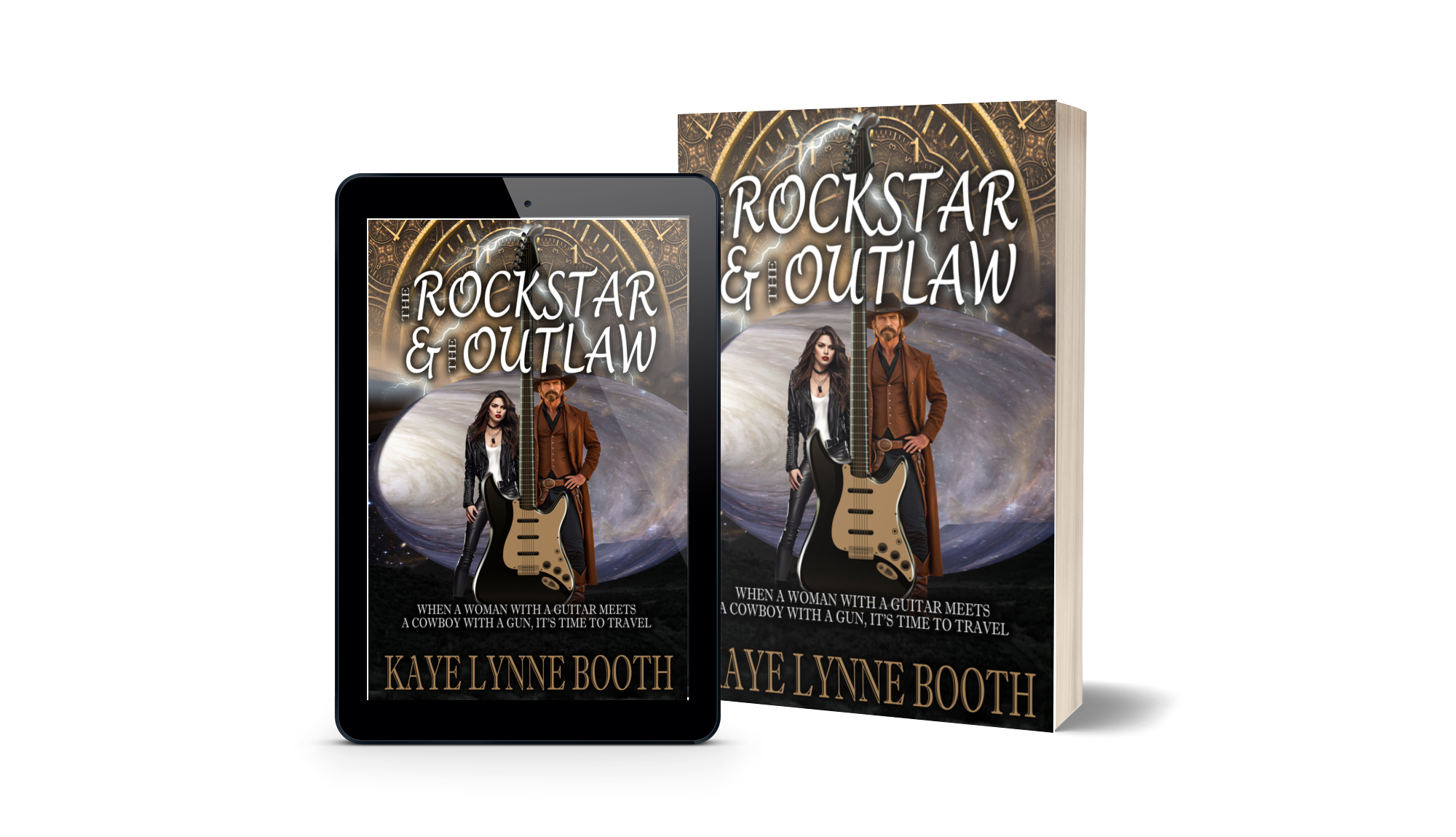
This segment of “Chatting with the Pros” is sponsored by The Rock Star & The Outlaw and WordCrafter Press.

A time-traveler oversteps his boundaries in 1887. Things get out of hand quickly, and he is hanged, setting in motion a series of events from which there’s no turning back.
In 1887, LeRoy McAllister is a reluctant outlaw running from a posse with nowhere to go except to the future.
In 2025, Amaryllis Sanchez is a thrill-seeking rock star on the fast track, who killed her dealing boyfriend to save herself. Now, she’s running from the law and his drug stealing flunkies, and nowhere is safe.
LeRoy falls hard for the rock star, thinking he can save her by taking her back with him. But when they arrive in 1887, things turn crazy fast, and soon they’re running from both the outlaws and the posse, in peril once more.
They can’t go back to the future, so it looks like they’re stuck in the past. But either when, they must face forces that would either lock them up or see them dead.
Purchase Link: https://books2read.com/RockStarOutlaw
Share this:

Book Review: “Stiffs and Stones”
Posted: January 10, 2025 Filed under: Book Review, Books, Dark fiction, Dark Humor, Fiction, Review, Speculative Fiction, Zombie Fiction | Tags: Book Review, Dan Shamble Zombie P.I., Kaye Lynne Booth, Kevin J. Anderson, Stiffs & Stones, Writing to be Read 4 CommentsI’m a big fan of the Dan Shamble, Zombie P.I. series, so when I got a review request for the two latest books in the collection, you know I couldn’t turn it down. All opinions stated here are my own.
Other titles I’ve reviewed in the Dan Shamble, Zombie P.I. Series
- Horn Dogs: https://writingtoberead.com/?p=37841
- Bats in the Belfry & Heart of Clay: https://writingtoberead.com/2023/12/29/book-review-bats-in-the-belfry-heart-of-clay/
- Zomnibus: https://writingtoberead.com/2018/07/27/zomnibus-two-zombie-detective-novels-in-one-book/
- Double Booked & Bump in the Night: https://writingtoberead.com/2022/07/22/book-reviews-double-booked-bump-in-the-night/
About Stiffs and Stones

Dan Shamble, zombie P.I. is back from the dead and back on the case in this new collection of eight wacky adventures with enough plot twists and stomach turns to keep you guessing, and chuckling, until the very end.
My Review of Stiffs and Stones
I requested a digital revew copy of Stiffs & Stones from Kevin J. Anderson’s Reader’s Club. All opinions stated here are my own.
Stiffs & Stones, by Kevin J. Anderson is a collection of eight Dan Shamble, P.I. short stories, some which were published earlier, so I chose to focus my review on the stories I hadn’t read and reviewed previously. This collection of undead stories will keep you laughing until the last page.
- “Hand Job” is the tale of a disembodied hand who has been framed for a robbery it didn’t commit and it’s up to Dan Shamble to prove its innocence. If there’s one thing the zombie P.I. doesn’t need with this case, it’s a hand. (Although these stories are filled with it, that corney humor is my own.)
- “Bull Runs” is the tale of the Meter Maid Minitaur with tummy trouble. It’s up to Dan Shamble to discover the reason the Minituars are all falling ill and stop the debilitating illness before the big charity race.
- “Mystery Meat” is the case of the giant Momma Fly with missing baby maggots. This case takes Dan Shamble into the backstreets of the Unnatural Quarter where he uncovers the source of the new and delicious mystery meat being served while searching for the missing tots.
- “Holy Balls” is the tale of a warlock whose witchy wife is after his (crystal) balls, and it’s up to Dan Shamble to protect them. But the witchy wife is relentless, and Dan Shamble must use the highest security measures he has to protect the warlock’s balls.
- “The Eyeball at the End of the Rainbow” is the tale of an inebriated Leprechaun who has misplaced the eye of the Centuar stoner, leaving him blind and straight until Dan Shamble can solve the case and find the missing eyeball.
Also included are “Bump in the Night”, “Fire in the Hole”, and “Heart of Clay”.
_______________________________________
Kaye Lynne Booth does honest book reviews on Writing to be Read in exchange for ARCs. Have a book you’d like reviewed? You can request a review on the Book Review tab above.
________________________________________
Want exclusive content? Join Kaye Lynne Booth & WordCrafter Press Readers’ Group for WordCrafter Press book & event news, including the awesome releases of author Kaye Lynne Booth. She won’t flood your inbox, she NEVER sells her list, and you might get a freebie occasionally. Get a free digital copy of her short story collection, Last Call and Other Short Fiction, just for joining.
Share this:

Cook and Read – My review of A Town Like Alice by Nevil Shute and Peach Chicken #CookandRead #fiction
Posted: January 8, 2025 Filed under: Books, Read and Cook, Recipes, Review, romance | Tags: A Town Like Alice, Nevil Shute, Peach Chicken, Read and Cook, Robbie Cheadle, romance, Writing to be Read 45 Comments
My review of A Town Like Alice by Nevil Shute

This was my favourite classic book read of 2024. A delightful romance initially set in Malaysia during World War II and then moving between post-war London and Australia, Jean Paget’s story of strength, endurance, and leadership made for an amazingly uplifting read.
The novel commences with the main character, Jean Paget, a secretary in a leather goods factory, receiving notification from a solicitor, Noel Strachan, that she has inherited a large sum of money from an uncle she never knew. Noel is the trustee of the funds until Jean can inherit at the age of 35 years old (this age was set by the uncle who believed that women were incompetent fools who couldn’t be trusted with money until they had a family and life experience). Strachan acts as Jean’s financial advisor and, over time, a good friend. His part of the story is all the more interesting because of the secret love he develops for Jean. Noel is the narrator of the story.
Jean announces to Noel that her first priority is to build a well in a village in Malaysia and this introduces her poignant backstory as a prisoner of war in Malaysia during WW2. This part of the story is based on a real survival story which makes it all the more fascinating. Jean was working in Malaysia when the Japanese invaded and she was taken prisoner along with a large group of other European women and children. The Japanese authorities doesn’t know what to do with the group so they end up walking from one village to another for months. The lack of good food, exposure of the elements and hardship results in the deaths of a large number of the group. Jean meets an Australian soldier, Joe Harman, who is also a prisoner of war and is driving a lorry for the Japanese invaders. He tries to help the women and ultimately steals five chickens from a local Japanese commander. He is eventually caught and beaten, crucified and left to die by the Japanese soldiers. Jean believes that Jo Harman is dead. Soon after, the women’s Japanese guard dies and they take shelter in a Malaysian village for the rest of the war. Jean wishes to build a well in this village as a gesture of gratitude to the villagers who saved the lives of the remaining women and children by taking them in. During the construction of the well, Jean discovers by accident that Joe survived and returned to Australia. She decides to go in search of him in Australia and this sets the stage for the rest of the story and the romance. Joe had mentioned the town of Alice Springs during their short time as friends, and this is where Jean heads.
The writing is completely engaging and the characters of both Jean and Joe are well developed and admirable. As a reader, I become completely involved in both their stories and was rooting for their romance and success as individuals and a couple. Jean is portrayed as a strong willed survivor with a strong sense of compassion and responsibility. She is a remarkable leader and an excellent role model for young women.
Joe is portrayed as being recklessly brave and this results in his undoing. He is a very determined and strong willed person, however, an these characteristics result in his miraculous survival.
I read this book because I am interested in learning more about the war in the Pacific and the Japanese involvement in World War II. I have read several books on this topic and A Town Like Alice is the one that stands out the most in my memory. I highly recommend this book to lovers of romance and war literature.
You can purchase A Town Like Alice by Nevil Shute from Amazon US here: https://www.amazon.com/gp/product/1842323008
Recipe for Peach Chicken
This recipe is based on Matt Preston’s recipe for Apricot Chicken in his book, Cook Book. I made some variations. If you are interested in purchasing Matt Preston’s book, you can do so here: https://www.amazon.com/Cook-Book-recipes-incredibly-popular-ebook/dp/B016NIBORU
Ingredients
8 chicken thighs and 8 chicken drumsticks, on the bone with skin
160 ml olive oil
1 Tbspn garlic flakes
1 heaped Tbspn dried oregano
5 ml dried thyme
1 tin peaches and the juice
24 caperberries
24 green olives, pits removed and cut in half
2 bay leaves
1 Tbspn chicken stock (powder)
Ground black pepper to taste
1 1/2 cups (375 ml) white wine
Method
Heat the over to 180 C. Line the bottom and sides of a oven baking dish with silver foil. Lay the chicken skin up on the bottom on the dish. In a separate bowl, mix the oil, wine, herbs and caperberries. Pour the tinned peaches over the chicken. Add the wine mixture. Lastly, place the olives over the chicken. Cover the dish with tin foil.
Bake in the oven for 45 minutes. Turn the oven to grill. Remove the tin foil and grill the chicken until nicely browned. Do not let the peaches burn. About 15 – 20 minutes.
Enjoy with rice.

About Robbie Cheadle
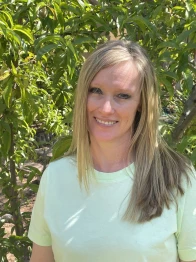
South African author and illustrator, Robbie Cheadle, has written and illustrated seventeen children’s books, illustrated a further three children’s books, and written and illustrated three poetry books. Her work has also appeared in poetry and short story anthologies.
Robbie also has two novels and a collection of short stories published under the name of Roberta Eaton Cheadle and has horror, paranormal, and fantasy short stories featured in several anthologies under this name.
You can find Robbie Cheadle’s artwork, fondant and cake artwork, and all her books on her website here: https://www.robbiecheadle.co.za/
_______________________________________
Did you know you can sponsor your favorite blog series or even a single post with an advertisement for your book? Stop by the WtbR Sponsor Page and let me advertise your book, or you can make a donation to Writing to be Read for as little as a cup of coffee, If you’d like to show your support for this author and WordCrafter Press.
_______________________________________
This post is sponsored by the My Backyard Friends Kid’s Book Series and WordCrafter Press.

The My Backyard Friends kid’s book series is inspired by the birds and animals that visit the author Kaye Lynne Booth’s mountain home. Beautiful illustrations by children’s author, poet, and illustrator, Robbie Cheadle, bring the unique voices of the animal characters to life.
Get Your Copy Now.
Heather Hummingbird Makes a New Friend (Ages 3-5): https://books2read.com/MBF-HeatherHummingbird
Timothy Turtle Discovers Jellybeans (Ages 3-5): https://books2read.com/MBF-TimothyTurtle
Charlie Chickadee Gets a New Home (Ages 6-8): https://books2read.com/MBF-CharlieChickadee
Share this:

Chatting with New Blood: C.R. Johansson
Posted: December 28, 2024 Filed under: Book Review, Books, Crime, Fiction, Review | Tags: A.O.G.: Act of God, C.R. Johansson, Chatting with New Blood, Political Thriller, Writing to be Read 3 Comments
I am pleased to introduce my guest this month on “Chatting with New Blood”, C.R. Johansson. She has had stories featured in three different WordCrafter Press anthologies, but today we’ll talk mostly about her novel, A.O.G.: Act of God. She is a talented author, who writes unusual stories that make readers think, and it is my pleasure to have her as my guest.
About C.R. Johansson

C.R. Johansson writes gripping thrillers, science fiction, and fantasy stories with a genetic twist. Her characters explore universes where the unknown prevails and the impossible is possible akin to her life with congenital heart disease. She lives in the Pacific Northwest with her husband and comical pugs. When not writing, she enjoys listening to the river nearby, working in her garden, paper-mache’, knitting and sitting on the couch drinking tea.
Interview
Kaye: Would you begin by telling us about your author journey? How long have you been writing? What inspires you to write?
Cindy: I was a daydreamer as a child, I still am, always making up stories to entertain myself. My very first poem was in elementary school. The assignment was to write a story using that week’s spelling words. I wrote “The Circus Bear” and amused my family with the ending where the bear stood on his head and then he was dead. To this day, they won’t let me forget it.
From there my journey continued with more poetry in junior high and high school until one day, I thought to myself, “I’m going to write a novel.” So, I went to the library to check out a book on how to write a novel. After I read the book, I sat down and wrote my first novel. What inspires me to write? I don’t really feel as though I’m inspired to write, I feel I’m compelled to write. The stories and poems in my head need to come out, even if they’re never read by anyone.
Kaye: I’m curious. Why did you choose to use a pen name? And how did you choose the name to use?
Cindy: The idea of using a pen name came from my husband. He thought my married name was common, so he suggested using my birth name. I thought it was a wonderful idea and just like that C.R. Johansson became my pen name.
Kaye: Let’s talk about your book, A.O.G.: Act of God. Can you tell readers a little bit about it?
Cindy: A.O.G. Act of God tells the story of a religious woman of science who is caught in her own moral struggles regarding the scientific discovery of a lifetime, the potential identification of a human soul, which ended in her boyfriend’s murder. Her drive as a scientist compels her to continue experimenting even as the murderer now turns his focus on her and her family.
Kaye: What led you to write a political crime thriller?
Cindy: To be honest, I thought it was going to be a science fiction story, but the characters had other ideas. I had just read an article about Orchestrated Objective Reduction, a controversial theory about human consciousness on a quantum level, which described the consciousness as energy. After I read the article, I had so many questions. Does the energy really exist? Is it a human soul? What happens to that energy upon death? Does it disperse into the universe? I thought to myself, if that energy is the human soul and someone discovered a technique to trap it, that person would have unmeasurable power. Immediately, I saw the scene where Amelie’s boyfriend is murdered, and the story started.
There’s so much scientific discovery going on. If you want to look for good plot ideas, look to science and medical discoveries and mysteries.
Kaye: What was the best part of writing A.O.G.: Act of God? Why?
Oh my gosh, the best part of writing A.O.G. Act of God was the roller coaster ride of deception the characters took me on. The twists and turns. They kept me on my toes.
Kaye: What was the most difficult part of the book to write? Why?
Cindy: It’s always very mentally and emotionally exhausting for me to get into my antagonist’s mind. To discover what drives them to do the horrible things they do and then write about it. I spend a lot of time walking around the house when writing those scenes.
Kaye: You also write short fiction, and have had work featured in three WordCrafter Press anthologies: Visions, with your story, “Her Beholder”; Midnight Roost, with your story, “She Shed Galeria”, and Tales From the Hanging Tree, with your story “Therion’s Heart”. All of these stories are rather dark, the last being an excellent take on the theme for the anthology, ‘lives of the hanged as lived through the ephemeral hanging tree’, and very well written, I might add. Where did inspiration for these unusual stories come from?
Cindy: Thank you so much! I’m a visual person and my stories always start with a mental image. That image can be the result of just about anything, a thought, a song, a word, a smell, anything. For “She Shed Galleria”, I saw a seductive woman standing next to a painting of a man. The man’s frightened eyes were moving as if the painting were alive, very similar to the old movies where the portraits in the mansions had eye peepholes. Meanwhile, the woman, stared forward with cold, blank eyes, but the smug smile on her lips made me shiver. I knew she’d done something horrible.
For “Therion’s Heart”, I saw a naïve’ woman standing in the torrential rain surrounded by an angry and very frightened mob. It reminded me of scenes from horror stories where a fear driven mob turns on someone, an outsider or one of their own, and commits horrific actions because of that fear. Fear of anything unknown is a powerful motivator.
Kaye: What differences do you see in writing short fiction and novel length works? Which do you prefer?
Cindy: There are so many differences between writing short fiction and writing novels, but I would say the most challenging is creating an interesting short story without holes in plot or character that’s entertaining. Which do I prefer? I’m a novelist at heart. I love taking my time to explore all the details of the worlds and characters I create. Sharing their triumphs and failures, and peeling away the onion of what makes them tick.
Kaye: Where do you hope to see yourself as a writer in ten years?
Cindy: I’ll still be writing and publishing novels, but I really hope to share my writing with more people.
Kaye: You work in the thriller, science fiction and fantasy genres. What advice would you give to an author wanting to break into any of these genres?
Cindy: I’ll start with the cliché, just keep writing and reading, but more importantly, don’t be afraid to put yourself out there to editors, publishers, and the public. Wear every rejection letter you receive like a medal. You’ve earned it and it means you’re one step closer to being published because you learned something.
Kaye: Who are your favorite authors? Do you try to emulate them?
Cindy: I love the oldies, Alfred Hitchcock, Ray Bradbury, Kurt Vonnegut, and George Orwell. Character driven stories that expose human behavior. The good, the bad, and the ugly. Life is messy, unexpected, and full of unknowns. Things we think will happen, don’t always happen. I believe my life is an example of that. Doctors told my parents when I was a baby that I wasn’t going to survive infancy and here I am.
I definitely emulate my favorites, in my own unique style. If I can write a story that blurs the line between right and wrong, villain and hero, and takes the reader on their own self-discovery journey and leaves them wondering what they would do in the same situation then I’ve succeeded.
Kaye: What’s the best piece of writing advice you were ever given?
When I went to my first writers conference, I felt so insignificant compared to everyone else because I wasn’t published. Another author befriended me and told me, “I was an author, whether published or not.” From that day onward I moved forward with confidence, and I share that word of wisdom with others out there. You are an author whether you’re published or not.
Kaye: What’s next for C.R. Johansson? Is there another book in the works?
Cindy: Yes, I’m always working on something. I plan on re-releasing “Bless The Beasts”, my first novel, in tandem with its sequel “Suffer The Children” in 2026. Plus, I may release a collection of flash fiction in the autumn of 2025.
Kaye: Please tell my readers how they can find you online, if they’d like to learn more about you and your books. (Include links here.)
Cindy: I’m most active on Facebook, but I’m on Goodreads, Linkedin, and Pinterest as well. My books can be found on Amazon. This was loads of fun! Thanks for having me!
Kaye: You’ve been a wonderful guest, and you provided some really good answers to my questions. I look forward to future submissions to WordCrafter Press anthologies, and wish you the best with your books.
About A.O.G. Act of God
What is a soul?
After Kent is murdered for uncovering the answer, Amelie, a woman of science raised in a world of religion, finds the looming threat of death at the hands of the same sordid murderer now hangs over her and her family should she pursue the technology further. With her new friend and lover, Hatch, by her side, her own moral compass betrays her, and she realizes too late that her own naïveté is her downfall against the depraved dark corners of man’s heart.

My Review of A.O.G. Act of God
I acquired a digital copy of A.O.G.: Act of God from the author, and my guest today, C.R. Johansson. All opinions stated here are my own.
This political crime thriller is based on a premise which I found quite unique; the idea that a soul might be captured after death in some way. It’s an interesting premise, and Johansson explores the both the morality of it and the possibilities it would present. In what way might this ability be used? And should it be used, or left to the realm of the devine? The implications are downright scary.
Amelie is a research scientist, exploring the realms beyond death. When her partner and significant other, Kent, is murdered for uncovering the code for capturing souls, and places his findings for her to continue where he left off, it places she and her family in danger from the killer. Someone doesn’t want the secret let out, and they’ll go to any lengths to prevent it. She doesn’t know who to trust. Her boss, Bill, who seems so sympathetic? The elders of the religious community she lives in? Her co-worker, Clint, who has the knowledge and ability to help her find the answers she seeks? Her new friend, Hatch, who she has unexpected feelings for?
This political thriller has a story line that keeps the reader guessing until they reach the final pages. But, I also felt some of the major players could have been developed more. I give A.O.G.: Act of God four quills.
____________________________________________
Did you know you can sponsor your favorite blog series or even a single post with an advertisement for your book? Stop by the WtbR Sponsor Page and let me advertise your book, or you can make a donation to Writing to be Read for as little as a cup of coffee, If you’d like to show your support for this author and WordCrafter Press.
__________________________________________
This segment of “Chatting with New Blood” is sponsored by WordCrafter Press with a reminder that all WordCrafter Press Books are still on sale, at 50% off at the Smashwords store, during the Smashwords 2024 End of Year Sale.

Now is your best chance to find the entire WordCrafter Press ebook collection for a promotional price of 50% off at @Smashwords as part of their 2024 End of Year Sale! Find WordCrafter Press books and many more at https://www.smashwords.com/shelves/promos/ through January 1! #SmashwordsEoYSale #Smashwords
Share this:

Book Review: “Horn Dogs”
Posted: December 27, 2024 Filed under: Book Review, Books, Dark fiction, Dark Humor, Fairy Tales, Fiction, Review, Speculative Fiction, Zombie Fiction | Tags: Book Review, Dan Shamble Zombie P.I., Horn Dogs, Kaye Lynne Booth, Kevin J. Anderson, Writing to be Read 6 CommentsI’m a big fan of the Dan Shamble, Zombie P.I. series, so when I got a review request for the two latest books in the collection, you know I couldn’t turn it down. All opinions stated here are my own. ( You can catch my review of Stiffs & Stones on Friday, January 10th, 2025.)
Other titles I’ve reviewed in the Dan Shamble, Zombie P.I. Series
- Bats in the Belfry & Heart of Clay: https://writingtoberead.com/2023/12/29/book-review-bats-in-the-belfry-heart-of-clay/
- Zomnibus: https://writingtoberead.com/2018/07/27/zomnibus-two-zombie-detective-novels-in-one-book/
- Double Booked & Bump in the Night: https://writingtoberead.com/2022/07/22/book-reviews-double-booked-bump-in-the-night/
About Horn Dogs

Dan Shamble’s most pointed case, with murdered unicorns,frog princes, corporate fairy godmothers, and lagoon creatures, all looking for a fairy-tale ending in the gritty streets of the Unnatural Quarter.
My Review of Horn Dogs
I requested a digital review copy of Horn Dogs, from author Kevin J. Anderson’s Reader’s Group. All opinions stated here are my own.
Everyone wants a happily ever after, and Dan Shamble, Zombie P.I. is determined to make it happen.
The unnatural characters and their crazy antics in the Unnatural Quarter after the Big Uneasy, are what keep me coming back to the Dan Shamble, Zombie P.I. series, and Horn Dogs is no exception. In addition to all my favorite characters, such as Dan Shamble and his ghost girlfriend Shyenne, his human partner Robin, his vampire half-daughter, Alvina, and his best human friend Officer McGoo, this volume brings us frog demons, evil wizards, fairy godmothers, and unicorns and their pet horn dogs spreading magic and warm fuzzies throughout the Unnatural Quarter.
When Prince Dirk is changed into a frog by the evil wizard, Oorgak, he falls in love with a frog demon, RRita, heiress to the successful local pool service in the Unnatural Quarter. But Oorgak had an epiphany after seeing a unicorn, and reversed all of his previous evil deeds, and now the happy couple isn’t happy, especially when their illegitamate tadpoles are held hostage by the swamp monsters who own the new swamp water park.
And when someone dognaps all the unidogs, and unicorns are being murdered, the Secret Society of Horn Brothers and Horn Sisters must come out of hiding to employ Dan Shamble’s services, too. Can this zaney zombie P.I. save the unidogs and tadpoles, and reunite the unhappy couple, giving everyone the happily ever after that they’re looking for? You’ll have to read Horn Dogs to find out.
A fun and silly read, I give Horn Dogs five quills.
_____________________________________
Kaye Lynne Booth does honest book reviews on Writing to be Read in exchange for ARCs. Have a book you’d like reviewed? You can request a review on the Book Review tab above.
___________________________________
This post is sponsored by WordCrafter Press with a reminder that all WordCrafter Press books are currently 50% off in the SmashWords End of Year Ebook Sale, only in the SmashWords store: https://www.smashwords.com/shelves/promos/

Share this:

Wrapping Up the WordCrafter “The French Winemaker’s Daughter” Book Blog Tour
Posted: December 20, 2024 Filed under: Blog Tour, Book Review, Books, Fiction, Historical Fiction, history, Review, WordCrafter Book Blog Tours | Tags: Historical Fiction, Loretta Ellsworth, Strong Female Protagonists, The French Winemaker's Daughter, WordCrafter Book Blog Tours, World War II, WWII 6 Comments
This is the final day of the WordCrafter The French Winemaker’s Daughter Book Blog Tour. Today, we have my review of The French Winemaker’s Daughter to wrap things up.
If you’d like to learn more about this moving historical fiction novel and you missed a stop on the tour, you can still visit each stop through the links in the schedule below.
Tour Schedule
Monday: Writing to be Read – Interview with author Loretta Ellsworth
Tuesday: Carla Reads – Guest post from author Loretta Ellsworth
Wednesday: Kyrosmagica – Guest post from author Loretta Ellsworth
Thursday: Book Places – Guest post from author Loretta Ellsworth
Friday: Writing to be Read – Review of The French Winemaker’s Daughter
About The French Winemaker’s Daughter
Set during World War II, an unforgettable historical novel about love, war, family, and loyalty told in in the voices of two women, generations apart, who find themselves connected by a mysterious and valuable bottle of wine stolen by the Nazis.
1942. Seven-year-old Martine hides in an armoire when the Nazis come to take her father away. Pinned to her dress is a note with her aunt’s address in Paris, and in her arms, a bottle of wine she has been instructed to look after if something happened to her papa. When they are finally gone, the terrified young girl drops the bottle and runs to a neighbor, who puts her on a train to Paris.
But when Martine arrives in the city, her aunt is nowhere to be found. Without a place to go, the girl wanders the streets and eventually falls asleep on the doorstep of Hotel Drouot, where Sister Ada finds her and takes her to the abbey, and watches over her.
1990. Charlotte, a commercial airline pilot, attends an auction with her boyfriend Henri at Hotel Drouot, now the oldest auction house in Paris. Successfully bidding on a box of wine saved from the German occupation during the Second World War, Henri gives Charlotte a seemingly inferior bottle he finds inside the box. Cleaning the label, Charlotte makes a shocking discovery that sends her on a quest to find the origins of this unusual—and very valuable—bottle of wine, a quest that will take her back fifty years into the past. . . .

A powerful tale of love, war, and family, The French Winemaker’s Daughter is an emotionally resonant tale of two women whose fates are intertwined across time. Loretta Ellsworth’s evocative and poignant page-turner will linger in the heart, and make you think about luck, connection, and the meaning of loyalty.
Purchase Link: https://www.amazon.com/French-Winemakers-Daughter-Novel-ebook/dp/B0D3CJYP5Y
My Review of The French Winemaker’s Daughter
I received a PDF copy of The French Winemaker’s Daughter from author Loretta Ellsworth to review for this tour. All opinions stated here are my own.
Any book with two strong female protagonists is my kind of book. I’m a fan of historical fiction, and this story peaked my interest, with it’s compelling synopsis in the back matter. It was definitely worth the read.
In this story, we follow little Martine, a Jewish child, as she survives the war with the help of the kind people she meets along the way, after the German’s take her Papa and her friend away. We follow the story through the eyes of a child, displaced from her family and the vineyard that’s been her only home, filled with guilt for losing a bottle of wine that her father entrusted her with, and the hope of once again being reuinted with her Papa.
In the present day, we follow Charlotte, and airline pilot, who acquires a bottle of wine that was confiscated by the Germans, which turns out to be quite valuable and carries a mystery in a note written on the back of a false label. We follow her as she searches the vineyards around Paris, trying to locate the vineyard the wine came from and learn the identity of its rightful owner. She ends the search after learning that in all probability, father and child did not survive the war, but fate steps in and takes a hand in sealing the connection between these two women.
A lovely duel story line which is well written to bring both stories together and give readers a very satisfying ending. I cheered for both women as they triumphed over the adversities that life threw their way. And I give The French Winemaker’s Daughter five quills.

________________________________
Book your WordCrafter Book Blog Tour today!
Share this:

Chatting with the Pros: Bobby Nash
Posted: December 14, 2024 Filed under: Book Review, Books, Chatting with the Pros, Interview, Review, weird western | Tags: BobbyNash, Book Review, Chatting with the Pros, Dante's Reconing, Dante's Showdown, Dante's Tenth, Interview, Kaye Lynne Booth, The Tales of Dante Series, Writing to be Read 7 CommentsI’m pleased to have award winning author Bobby Nash as my guest today on “Chatting with the Pros”. Bobby writes both novels and short fiction, graphic novels and comic books, and has even written screenplays and worked on the movie sets.
About Bobby Nash
An award-winning author, Bobby Nash writes novels, comic books, short stories, novellas, graphic novels, and the occasional screenplay for a variety of publishers. He is a member of the International Association of Media Tie-in Writers and International Thriller Writers. On occasion, Bobby appears in movies and TV shows, usually standing behind your favorite actor and sometimes they let him act. Recently, he was seen in Creepshow, Joe Stryker, Doom Patrol, The Outsider, Ozark, Lodge 49, Slutty Teenage Bounty Hunters, and more. He also draws from time to time.
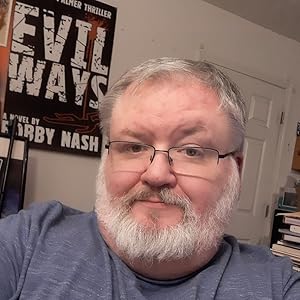
He was named Best Author in the 2013 Pulp Ark Awards. Rick Ruby, a character co-created by Bobby and author Sean Taylor also snagged a Pulp Ark Award for Best New Pulp Character of 2013. Bobby has also been nominated for the 2014 New Pulp Awards and Pulp Factory Awards for his work. Bobby’s novel, Alexandra Holzer’s Ghost Gal: The Wild Hunt won a Paranormal Literary Award in the 2015 Paranormal Awards. The Bobby Nash penned episode of Starship Farragut “Conspiracy of Innocence” won the Silver Award in the 2015 DC Film Festival. Bobby’s story in The Ruby Files Vol. 2 “Takedown” was named Best Short Story in the 2018 Pulp Factory Awards, one of five nominations for The Ruby Files Vol. 2 (created by Bobby Nash & Sean Taylor). Bobby’s digest novel, Snow Drive was nominated for Best Novel in the 2018 Pulp Factory Awards. Bobby was part of Moonstone’s Yours Truly, Johnny Dollar, which won a 2020 Pulp Factory Award for Best Pulp Anthology. Bobby’s novel, Nightveil: Crisis at the Crossroads of Infinity was also named Best Pulp Novel in the 2020 Pulp Factory Awards. In 2020, The Sangria Summit Society awarded the New Pulp Fiction Award to Bobby Nash for his work on Snow Falls and the Snow series.
For more information on Bobby Nash please visit him at http://www.bobbynash.com, http://www.ben-books.com, and across social media.
Interview
Kaye: You’ve been in the writing and publishing business a long time. What is your take on how the publishing industry has changed, and what adaptions have you had to make?
Bobby: There are certainly many more options for getting stories to readers now than when I started back in the pre-internet, pre-self-publishing model we have today. When I was getting started, you wrote a query, synopsis, and three chapters, printed them out, put them in a self-addressed stamped envelope, and mailed them to a publisher in the hopes you might hear back, or at the very least receive a form letter. Self-publishing wasn’t as well regarded as it is today so that wasn’t really an option. No internet limited your reach back then. Things are more open today, but that also means there are more books out there as well, so you have to work even harder to make your book stand out in a crowded field.
Today, being a writer means you’re running a small business. Marketing, promotion, publicist, travel/event planner, etc. That’s all on the writer, whether self-published or traditional.
I had to teach myself how to promote. I had to learn how to handle book production, pre-press, cover design, how to write a press release, things like that. I learned how to speak in public, to do panels and interviews, live podcasts, stage performances, and the like. As an author, you’re not just trying to sell books. You’re selling an experience. You’re part of that experience so you’re selling yourself as well. Branding is important to building an author brand. It is a bit time-consuming, but is important to my career as an author. Writing is just a small part of my job.
Kaye: According to your bio, you’ve written “novels, comic books, short stories, novellas, graphic novels, audio dramas, and the occasional screenplay”. Which form of writing would you say you enjoy most? Why?
Bobby: Not sure if ‘enjoy most’ is the best way to describe it. Each works different creative muscles so they’re not always easily compared. With prose, it’s all me so I see it all as I’m doing it. With comics, audio, and screenplays, I do my part, it goes away, then later comes back to me to do more, then goes away, and on and on until it’s finished. I’m part of a team there so I’m in and out at various stages of the process. Each has its enjoyable parts and the parts I like less. Just the nature of the beast, I suppose. I love them all. I will say that comic books were my first love. All of this desire to create, to tell stories, was born in the pages of comic books.
Kaye: Which type of writing presents the most challenge for you? Why?
Bobby: Novels require more time. As they are all me, I’m responsible for everything in them. That means I have to describe things in detail without it coming across as dull or as an info-dump. I’m painting the picture for the audience with words only. With scripts, most of what I write is direction for the artist or actors. They then interpret those details, adding another layer to the story. In a novel, if we walk into a character’s living room, I describe it so the reader can ‘see’ it. In a comic, I tell the artist it’s a living room. I will say that there are certain things that need to be there if important, but I leave it to the artist to design the living room. It’s a very different mindset. When I write for the artist, it’s not to entertain them, but to let them know what’s going on. The artists and actors aren’t my audience. They’re my partners.
Writing characters that are not mine also presents its own challenges. Doing work-for-hire on publisher-owned titles or media tie-ins means making sure I write the characters correctly. Research and study come in handy there. The characters have to stay in character. If not, the reader will notice something’s not right.
Kaye: You’ve done some work with graphic novels and comic books. How does the writing in these mediums differ from fiction?
Bobby: Comics are collaborative. The artist has input into the storytelling. We’re a creative team. When I write a script, as I mentioned earlier, most of what I write in the script is direction, so the artist knows what I’m thinking in regard to the panel. I also tell them what dialogue I’m planning, though this may change after I see the art. The artist then takes this information and creates the page with art and making that art flow and tell the story. Here’s an example of a script panel.
Panel 1. Bobby sat at the desk in his office, writing. Books and comics are stacked everywhere. Controlled chaos. He’s typing on a laptop, a soda and several action figures on his desk. He appears stumped. His hair is uncombed. Glasses slid down his nose. Deep in thought about his current story.
Caption: MEANWHILE, THE WRITER SITS TUCKED AWAY IN HIS OFFICE, UNAWARE OF THE DANGER HEADED HIS WAY.
WHY CAN’T I MAKE THIS PAGE WORK?
SFX (in the distance): BOOM!
SFX is sound effects. Something like that. The artist would then figure out the best way to draw this panel. It never comes back to me the way I pictured it in my head, which is fine. It almost always comes back better than I imagined. Seeing the art come in is one of the big joys of writing comics. It always makes me smile.
Kaye: How does one get into writing comic books or graphic novels? Is there a secret society one must break into? What’s the secret handshake?
Bobby: This is a harder question to answer than you might think. There’s an old joke that says that anyone who manages to break into comics is expected to brick up that entrance and close it off. Ha! Ha! Getting to work for larger, established comic book publishers is tough. Really tough. Most do not take submissions. Those that do want you to turn in a finished project, story, art, letters, colors, ready to print. Today, you basically have to be a comic book creator to get hired by publishers that create comics.
That said, we live in an age where you can put out your own comics yourself. Self-publishing, comic ebooks, and webstrips are all wonderful ways to show the world your work. If your goal is to work for Marvel, DC, Dark Horse, etc., then showing the editors there your published work is the only way to show these publishers what you can do. If they like what they see, then they may reach out to you about possibly pitching something to them.
If you want to create comics, then create comics. That’s step one.
From there, you keep trying, keep creating, and hope you capture someone’s attention if doing work-for-hire comics is for you. There are smaller publishers that will hire creators to create comics. I write comics on a work-for-hire basis, but it took a long time to get into those publishers. Once they know you and your work, and if they like working with you, it’s easier to get additional comic book opportunities.
Kaye: Do you do your own illustrations for these books?
Bobby: Heavens, no. I leave that to the professionals who are so much better at it than I. I can draw. I doodle. I sketch. I can give the artist a sketch if I have a specific idea on how I would like to see a scene so he or she can see what I was thinking, but otherwise, I leave that to the artists. They’re so much better at it than me.
My dream as a kid was to be a comic book artist. I started writing so I would have stories to draw. Turns out, I was better at writing comics than drawing them. Eventually, I focused on the writing and eventually was hired to write a comic. I never looked back.
Kaye: You are a member of the International Association of Media Tie-Ins. Can you give a brief explanation of what a media tie-in is and tell us a little about how you got into that arena?
Bobby: Media tie-ins are stories based on characters that originated in other mediums. Novels, comics, short stories, etc. based on television shows or movies are media tie-ins. Star Trek, Star Wars, MCU, etc. These characters are usually licensed from the owner of the property and creators are hired by the publisher, often with approval from the rights holder. Stories are also approved by the rights holders as well. Media tie-ins generally come with a lot of rules, a lengthy list of the type of stories you can and cannot do. The owners of Zorro, for example, are there to protect Zorro. They won’t allow you to write a story that hurts the character. One of the biggest misconceptions I hear about media tie-ins are that many readers assume this is fanfiction. It’s not. With fanfic, you basically write what you want with no oversight. With tie-ins, there is oversight. There are rules. The challenge we, as writers, face is how to tell the best story we can within those parameters, which is not really that big a challenge. You just have to know what you can and cannot pitch. Don’t kill any main characters, cut off their arms, get them married or have children, things like that. Big changes to the characters will come from the owners. I’m just borrowing the character and returning it the way I received it.
I like to describe media tie-in writing like an episode of Star Trek. The original series usually opened with the Enterprise flying through space. Everyone is on the bridge, happy, maybe laughing. Then, trouble happens. The crew has to deal with, then solve a problem. At the end of the episode, the Enterprise flying through space. Everyone is on the bridge, happy, maybe laughing. Media tie-in writing generally happens like that. I can bend the characters, but not break them.
My media tie-in journey started with a local access morning kids television series called Roger Rocket. He was an astronaut musician who had puppets on the spaceship with him and they played music videos for kids. I met him at a comic shop and he hired me to write a comic for his show. Though, very little of my work survived him deciding to rewrite it himself, that was my first tie-in experience. Years later, Moonstone invited me to write a Green Hornet short story. From there, I was lucky to be invited to write other characters like Zorro, Kolchak: The Night Stalker, The Lone Ranger, Night Beat, Yours Truly, Johnny Dollar, Box 13, Remo Williams, At The Earth’s Core, and a number of properties owned by various authors and publishers. It’s fun to play in someone else’s sandbox from time to time.
Kaye: How does one get into media tie-ins? Do you go knocking or do they find you? What advice would you give to someone trying to break in to media tie-ins? Is there a secret handshake for that one?
Bobby: Much like comics, they tend to find you. Unlike anthologies or company-owned characters, getting hired for media tie-ins means you have to be approved by the editor and publisher then approved by the owners of the media tie-in property. I was once tapped by an editor for a media tie-in project only to be told no by the owners of the property because they wanted a more well-known writer. That’s their choice, of course. It stung, though.
Usually, media tie-ins are not open calls. The publisher reaches out and invites writers they know to be part of it. There’s a method to writing tie-ins. You have to understand what kind of stories you can tell or not. Because I now have experience, I know what stories not to pitch because they will probably never be greenlit. As I mentioned previously, media tie-in writing is not fanfiction. That’s very important to remember. Writing tie-ins comes with a lot more rules, a lot more do’s and don’ts than other types of writing. You have to write a story that fits the brand you’re writing. The characters have to act and sound right. They have to be in character. Your story should fit seamlessly into the world of the media project that you’re writing.
As with comics, get work out there. Write your own characters and get them out there as your resume, as your writing samples. That will be what tells the publishers if your style fits their licensed characters. Once publishers get to know you, they may invite you to be part of their media tie-in projects.
As with everything in publishing, a lot of it boils down to timing and luck.
Kaye: Your work has won or been considered for many awards over the years. Which of these would you say you are the most proud of, and why?
Bobby: The first one is always special. There are also those that happen without you even knowing. I won best author in the Pulp Ark Awards, which was a huge surprise. Winning the Sangria Summit Society’s Pulp Fiction Award was also a nice surprise. I had no idea I was in the running for either. Awards are nice. It’s a bit of an ego boost. You feel like you’re doing something right, but also that others have noticed. Awards aren’t why I write, but it is a great feeling when it happens.
Kaye: Which do you enjoy writing most, heroes or villains? Why?
Bobby: Villains get the best lines. They get to do the coolest stuff. Villains are fun to write.
Kaye: Every author has those stories which are near and dear to their heart, those that are just special for whatever reason. Which of your works would you say falls into that sweet spot for you? Why?
Bobby: My go to answer for this question is usually Evil Ways. Evil Ways was my first published novel, and the book that launched this career of mine. It wasn’t always fun or easy. My original publisher turned out to be horrible, but I had a book in hand as a resume that allowed me to reach out to other publishers and show them my work. I picked up some writing gigs that kept me working until my contract ran out and I got the rights to Evil Ways back. Then, I published it myself, which was my first foray into self-publishing. So, yeah, I owe a lot to Evil Ways.
Kaye: You have a Patreon, where you market your books. Can you tell us a little about that? How effective do you find Patreon to be compared to other venues for selling your books?
Bobby: Patreon is nice. I have a small following. I post a writing blog there, keeping everyone up do date on work. I also have an ebook club ($5 and up tiers) where most of my ebooks exist. I also run serialized novels and novellas there, posting chapters every week-ish (sometimes I fall behind). Patrons are part beta readers that way. This allows me to be more productive and gets at least two additional novellas out a year more than I would otherwise. Good motivation.
I like Patreon. I don’t really sell many books through there though. My patrons tend to be readers who were probably already getting the books who are there to support me. That support means a lot to me.
Kaye: Which book marketing strategies do you find to be most effective?
Bobby: My most impactful way to sell books is at in-person events. Getting out to conventions, conferences, libraries, bookstores, and other events where I can meet people, talk up the books, just get to know readers. Outside of that, I use social media, I do interviews like this one, go on podcasts and virtual panels, write and send out press releases to news outlets, create and send out a free monthly newsletter (you can sign up at https://www.subscribepage.com/NashNews), and other opportunities as they present themselves to talk about writing and my books. There are many marketing methods out there. Not all of them work the same for every book. A promotion method that works for Evil Ways, for example, might not work for Dante’s Reckoning. You have to be willing to try new promotional paths to see what works and what doesn’t.

Kaye: Your most recent work seems to be your Dante novels. Would you like to talk a little about that series?
Bobby: The Dante books are fun. I wrote a short story for Valhalla Books’ The Devil’s Due prose anthology. The theme was that all deals come with a price. I wrote a story set in the old west, a mining town called Dante. There, a deal had been made years before with an other-dimensional being. It was time to pay up, but there were those in the town who wanted to keep the final settlement from happening. It was a fun little horror/western story. The publisher later came to me and asked what happened next. I told him I didn’t know. I just wrote a short story. I hadn’t planned any further than that. He said, this is a series. So, I got busy writing. Book 3, Dante’s Reckoning just released this Halloween. I am working on book 4, Dante’s Rebirth for 2025. I love it when things work out this way. I’m glad the publisher saw something in the concept that made him want to keep it going.
Kaye: Where can readers who would like to learn more about you and your works find you?
Bobby: I’m all over social media. There’s links at my website, which is www.bobbynash.com. This is the main hub of all things me. Ha! Ha! There are links to everywhere you can find me on the site. My indie press, BEN Books is at www.ben-books.com. These are the titles I publish myself. Please visit me and say hello.
About the A Tale of Dante Series
Welcome to Dante!
Dante, Arizona is not your average mining town.
Many dreamers have come to this barren speck of desert to strike it rich. Gold, silver, and other valuable minerals are there for the taking if you’re brave enough to pay the price, this wealth, power, and influence. Dante turned peasants into millionaires overnight.
Some suggest that these men sold their souls for the find of a lifetime. Did Dante’s founders make a deal with the devil? If so, what was it? More importantly, what will it cost the town? Nothing happens for free. Every deal has its price and there are still deals to be made.
This brings new blood to town as well as old blood. When a young reporter’s assistant becomes enamored of the daughter of a new arrival, he learns the terrifying truth behind the town. A deal was made.
And payday is coming.

Dante’s long nightmare begins here with the short story that started it all and two new tales from Dante. From the pages of The Devil’s Due comes Dante’s Tenth by award-winning author Bobby Nash.
My Review of the A Tale of Dante Series
I remember reviewing my first weird western, before I was even aware that there was such a genre, back in 2020, a book in the western genre with dragons, trolls, dwarves, and other beings from the fantasy domain. Since that time, I’ve read and review several more weird westerns and I’ve grown quite fond of the genre. Naturally, when I saw that Bobby Nash had a weird western series, I offered to review the whole series for this segment of “Chatting with the Pros”. And I’m glad that I did. One never knows what will happen next in the A Tale of Dante series, where vampires lurk in the shadows and werewolves roam the desert landscape surrounding Dante, Arizona. By hiding in plain sight, they manuvuere behind the scenes and interact with the unmidful miners and townfolk.
The town sits central in the hub of a great evil, where deals were struck long ago and now, a debt has become due. At times it is hard to tell the good guys from the bad, but make no mistake that there will be a reckoning. These stories can be read as stand alones, but I recommend reading Dante’s Showdown before Dante’s Reckoning, as the later takes place after the former. Dante’s Tenth is a collection of three short Dante stories which offer insight into three of the characters readers meet in the other two books.
The protagonists are likeable, and the villians deplorable, and lines are drawn between good and evil, if a little blurred at times. Vampires and werewolves abound in the old west town of Dante, and even the good guys carry guns. Bobby Nash brings us a vampiric priest and an army of the undead, a couple of gunfighters and a newspaper reporter who takes her job seriously to champion on the side of goodness and stop the final reckoning from taking place.
An excellent weird western series, I give the Tales of Dante series five quills.

__________________________________
This segment of “Chatting with the Pros” is sponsored by WordCrafter Quality Writing & Author Services.

Whether it’s editing, publishing, or promotion that you need, WordCrafter Quality Writing & Author Services can help at a price you can afford.
Stop by and see what we have to offer today: https://writingtoberead.com/readings-for-writers/wordcrafter-quality-writing-author-services/
Share this:

Book Review: “Unbowed”
Posted: December 13, 2024 Filed under: Book Review, Books, Fiction, Mystery, Review | Tags: Book Review, Book Reviews, Books, Fiction, M.G. da Mota, mystery, Unbowed, Writing to be Read 2 CommentsAbout Unbowed
Only six months. But six tumultuous months.
Months that would have a profound and lasting effect on Alexia Jewel.
A multi-talented musical prodigy, Alexia’s scholarship to London’s prestigious Royal College of Music at the age of 15 came with controversy and difficulty. Girls at that time weren’t welcome in the professional ranks of classical music, let alone one with her sights set on becoming a conductor. But as she approaches her 50th birthday all that has changed. She has overcome all obstacles to become one of the world’s foremost classical music conductors, celebrated for her artistry and talent. Lured back to London from her life in Munich where she is chief conductor of the Bavarian Radio Symphony Orchestra and music director of the Munich Opera House, Alexia is preparing to conduct a series of concerts with the London Symphony Orchestra to mark her birthday. While in London she begins to put her late parents’ estate into order and discovers an antique diamond ring that she learns had belonged to her great-grandmother. Agreeing to appear on the BBC’s Who do you think you are programme Alexia gives them the double mystery of her barely-known great-grandmother and the ring to investigate.

Four men, all who desire her, enter her life in these six months. As does a stalker, who threatens her safety, serenity and life.
My Review of Unbowed
I received a digital copy of Unbowed, by M.G. da Mota to review through Sandra’s Book Club. All opinions stated here are my own.
This book had a slow start, with a lot of backstory and character introductions, and no real action until well into the book. A single figure in the shadows is intended to hold reader interest for too long before the mystery finally begins to unravel. While this story has the potential to be a good mystery, the author takes so long getting into it, that I almost put the book down.
A mystery unfolds as the facts are uncovered about Alexia’s diamond and her great-grandmother’s life, all while a stalker lurks in the shadows. Four different men proclaim their love and need for her, and any one could be the dark man who is terrorizing her. But the mystery of the diamond takes precedence, the only obstacles in the way are the tracks that have been covered by time. But the evidence is all there, conveniently left for those who take time and effort to investigate, while the stalker makes random appearances and doesn’t feel as threatening as it should.
While all the pieces are there, the ones that should count don’t seem to have enough weight to carry the story. I give Unbowed three quills.

____________________________________________
Kaye Lynne Booth does honest book reviews on Writing to be Read in exchange for ARCs. Have a book you’d like reviewed? You can request a review on the Book Review tab above.
_____________________________
This post is sponsored by WordCrafter Press with a reminder that all WordCrafter Press books are currently 50% off in the SmashWords End of Year Ebook Sale, only in the SmashWords store: https://www.smashwords.com/shelves/promos/