Growing Bookworms – Tongue Twisters and a review of A Wrinkle in Time by Madeleine L’Engle
Posted: September 13, 2023 Filed under: Book Review, Books, Children's Books, Classics, Fiction, Growing Bookworms, Literacy, Nursery Rhymes, Reading, Review | Tags: A Wrinkle in Time, Growing Bookworms, Madeleine L'Engle, Robbie Cheadle, Tongue Twisters, Writing to be Read 57 Comments
The benefits of Tongue Twisters for children (and adults too)
What is a tongue twister?
A tongue twister is a sequence of words or sounds, usually of an alliterative kind, that are difficult to pronounce quickly and accurately.
An example of a tongue twister
One of the tongue twisters I grew up with is Peter Piper Picked a Peck of Pickled Pepper.
This is a video of the tongue twister:
Benefits of tongue twisters
Tongue twisters are fun and often results in lots of laughter, but they also have benefits for children.
Tongue twisters are a great way of introducing different consonant sounds to small children. They help pronunciation by teaching the brain how to form the necessary signals and organs of speech to make the required movements.
Regular recitation stimulates control of the muscles used for speech, ensuring clearer pronunciation of words with difficult syllables. Tongue twisters help children to decease instances of pauses in speech and reduce hesitation over pronunciation.
Listening to a parent or caregiver reciting tongue twisters helps to improve a child’s listening skills and comprehension of spoken English. Learning a tongue twister, promotes memorization which improves memory and cognitive skills.
Disadvantages of tongue twisters
The disadvantage of tongue twisters is that they take children a long time to master and thus a lot of patience from the teacher.
Did you learn tongue twisters as a child?
Did you teach tongue twisters to your children?
Let me know if the comments
My review of A Wrinkle in Time By Madeleine L’Engle

I was recommended this book by a friend of mine as I am unfamiliar with American children’s books and wanted to try a few.
I enjoyed this extraordinary science fantasy which involves three children with unique characteristics, a missing father, three fascinating good witches, time travel, different planets with unusual inhabitants and culminates in a battle for the preservation of creativity and difference against robotic sameness and loss of individuality represented by a disembodied brain called IT. I thought the author used an intriguing storyline and set of characters to support her central themes of rejection of difference and pressure to conform, the importance of love, not judging based on appearances, and that total understanding of everything in life is not possible.
Ultimately, I saw this as a book that celebrated individuality and uniqueness in people and reminded the reader about the importance of art, music, prose and poetry to society. The world of Camazotz, a world controlled by IT where sameness is glorified and exceptions to the accepted normal destroyed, is not portrayed in an appealing light. It is the main character, Meg Murray’s, individuality and difference that help save her father and brother and the greater world of humans from IT.
I liked the message of acceptance of difference in this book and think it will be a great read for all children. Reading about difference goes a long way towards acceptance.
About Robbie Cheadle
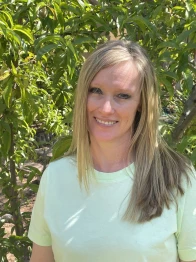
Award-winning, bestselling author, Robbie Cheadle, has published thirteen children’s book and three poetry books. Her work has also appeared in poetry and short story anthologies.
Robbie also has two novels published under the name of Roberta Eaton Cheadle and has horror, paranormal, and fantasy short stories featured in several anthologies under this name.
The ten Sir Chocolate children’s picture books, co-authored by Robbie and Michael Cheadle, are written in sweet, short rhymes which are easy for young children to follow and are illustrated with pictures of delicious cakes and cake decorations. Each book also includes simple recipes or biscuit art directions which children can make under adult supervision.
Robbie’s blog includes recipes, fondant and cake artwork, poetry, and book reviews. https://robbiesinspiration.wordpress.com/
Share this:

Dark Origins – Old Mother Hubbard
Posted: November 24, 2021 Filed under: Dark Origins, Nursery Rhymes, Nursery Rhymes | Tags: Dark Origins, Nursery Rhymes, Old Mother Hubbard, Roberta Eaton Cheadle, Writing to be Read 41 Comments
Old Mother Hubbard is a popular nursery rhyme but the words are not very child friendly. It is rather long so I am only sharing the first three verses here:
Old Mother Hubbard
Went to the cupboard,
To give the poor dog a bone:
When she came there,
The cupboard was bare,
And so the poor dog had none.
She went to the baker’s
To buy him some bread;
When she came back
The dog was dead!
She went to the undertaker’s
To buy him a coffin;
When she came back
The dog was laughing.
As with most nursery rhymes, it is not possible to peg down its exact origins but I am going to share with you two quite different proposed origins, one being much darker than the other.
Old Mother Hubbard is purported to refer to Cardinal Thomas Wolsey and his failure to obtain an annulment from the Pope of King Henry VIII of England’s first marriage to Catherine of Aragon. The cupboard represents the Catholic Church, the dog represents King Henry VIII, and the bone, the coveted annulment.
Thomas Wolsey (1475 to 1530) was a cardinal and a statesman, Henry VIII’s lord chancellor and one of the last clergymen to play a dominant role in English political life.
Henry was desperate for a male heir and Catherine produced a daughter, Mary. He argued that his marriage to Catherine was not lawful and requested that Wolsey use his influence in Rome to get a papal annulment so that he could remarry.
However, Catherine’s nephew, the Holy Roman Emperor Charles V, dominated the Pope at the time and Wolsey failed in his mission. This failure led to him being arrested in November 1530 and accused of treason. He died on 29 November 1530 on his way south to face trial.

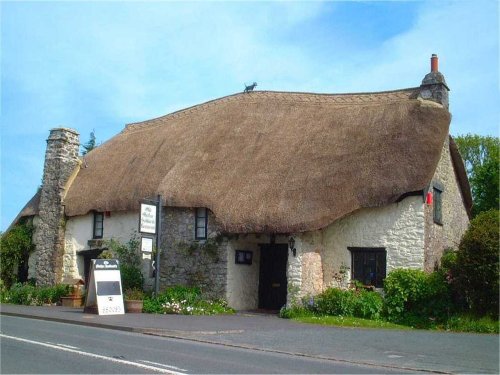
The other popular belief is that Old Mother Hubbard from the nursery rhyme was a retired housekeeper called Miss Sarah Catherine Martin. Miss Martin wrote and illustrated the poem in 1804, but whether or not it was about her own life is unknown. She worked as a housekeeper at Kitley House, the estate of Sir Henry Bastard in Yealmpton, and when she retired she occupied a lovely thatched stone and cob cottage nearby. The area abounds with legends about Sarah and Prince William Henry, a friend of Sir Bastard and a visitor to his estate.
About Roberta Eaton Cheadle

Roberta Eaton Cheadle is a South African writer and poet specialising in historical, paranormal, and horror novels and short stories. She is an avid reader in these genres and her writing has been influenced by famous authors including Bram Stoker, Edgar Allan Poe, Amor Towles, Stephen Crane, Enrich Maria Remarque, George Orwell, Stephen King, and Colleen McCullough.
Roberta has short stories and poems in several anthologies and has 2 published novels, Through the Nethergate, a historical supernatural fantasy, and A Ghost and His Gold, a historical paranormal novel set in South Africa.
Roberta has 9 children’s books published under the name Robbie Cheadle.
Roberta was educated at the University of South Africa where she achieved a Bachelor of Accounting Science in 1996 and a Honours Bachelor of Accounting Science in 1997. She was admitted as a member of The South African Institute of Chartered Accountants in 2000.
Roberta has worked in corporate finance from 2001 until the present date and has written 7 publications relating to investing in Africa. She has won several awards over her 20-year career in the category of Transactional Support Services.
Find Roberta Eaton Cheadle
Blog: https://wordpress.com/view/robertawrites235681907.wordpress.com
Twitter: https://twitter.com/RobertaEaton17
Facebook: https://www.facebook.com/robertawrites
Amazon: https://www.amazon.com/Roberta-Eaton-Cheadle/e/B08RSNJQZ5
_____________________________________________________________________________________________
Want to be sure not to miss any of Robbie’s “Dark Origins” segments? Subscribe to Writing to be Read for e-mail notifications whenever new content is posted or follow WtbR on WordPress. If you found it interesting or entertaining, please share.
Share this:

Dark Origins – Here We Go Round the Mulberry Bush
Posted: June 30, 2021 Filed under: Dark Origins, Nursery Rhymes, Nursery Rhymes | Tags: Dark Origins, Here We Go Round the Mulberry Bush, Nursery Rhymes, Roberta Eaton Cheadle, Writing to be Read 79 Comments
Do you know the nursery rhyme Here We Go Round the Mulberry Bush?
I remember it from when I was a girl. The girls used to hold hands and dance in a circle singing the lyrics and doing the actions.
These are the first two stanzas of the most modern version:
Here we go round the mulberry bush,
The mulberry bush,
The mulberry bush.
Here we go round the mulberry bush
On a cold and frosty morning.
This is the way we wash our face,
Wash our face,
Wash our face.
This is the way we wash our face
On a cold and frosty morning.
The rhyme was first recorded by James Orchard Halliwell, an English Shakespearean scholar, antiquarian, and a collection of English nursery rhymes and fairy tales, as an English children’s game in the mid-nineteenth century.
The song and associated game are traditional in England and different versions are found in Scandinavia and the Netherlands.
R.S. Duncan, a prison governor at HM Prison Wakefield in Wakefield, West Yorkshire, England suggested that the nursery rhyme was about female Victorian prisoners exercising in the yard at Wakefield. A mulberry tree grew in the yard and women inmates would dance around the tree with their children and sing the song. The tree died in May 2019.
About the Victorian prison system
The Victorian prison system was created by men for men. Accommodation for women was usually an after thought and the penal system designed for them as generally a modified version of the men’s prison.
Women convicts were considered to need saving twice, firstly from their criminality and secondly from their deviance from expected female behaviour.
To this end, instead of being subjected to hard labour, women progressed through several disciplinary stages intended to put them on the path to reform. The stages were separate confinement for four months (men had to endure nine months of separate confinement), associated labour and, finally, a transfer to a female-only institution.
Prison authorities had to deal with pregnant and postpartum women. Lying-in wards and nurseries had to be created and the regulations relating to exercise, communication, and dietary provision had to be modified for such women.

Another possible interpretation of the rhyme is that it references Britain’s struggle to produce silk. Silkworms eat mulberry leaves and during the eighteenth and nineteenth centuries, Britain tried to emulate the success of the Chinese silk production industry. Britain’s cold winters with frost proved to be to harsh for the mulberry trees to thrive and this hampered the development of a successful silk production industry.
The lyrics: “Here we go round the mulberry bush / On a cold and frosty morning” are thought to be a joke about the difficulties experienced by the industry.
About Roberta Eaton Cheadle
I am a South African writer specialising in historical, paranormal and horror novels and short stories. I am an avid reader in these genres and my writing has been influenced by famous authors including Bram Stoker, the Bronte sisters, Amor Towles, Stephen Crane, Enrich Maria Remarque, George Orwell, Stephen King, and Colleen McCullough.
I was educated at the University of South Africa where I achieved a Bachelor of Accounting Science in 1996 and a Honours Bachelor of Accounting Science in 1997. I was admitted as a member of The South African Institute of Chartered Accountants in 2000.
I have worked in corporate finance from 2001 until the present date and have written seven publications relating to investing in Africa. I have won several awards over my twenty year career in the category of Transactional Support Services.
I have been published a number of anthologies and have two published YA books, While the Bombs Fell and Through the Nethergate. I have recently published my first adult novel called A Ghost and His Gold which is partly set in South Africa during the Second Anglo Boer War.
Find Roberta Eaton Cheadle
Blog: https://wordpress.com/view/robertawrites235681907.wordpress.com
Twitter: https://twitter.com/RobertaEaton17
Facebook: https://www.facebook.com/robertawrites
Amazon: https://www.amazon.com/Roberta-Eaton-Cheadle/e/B08RSNJQZ5
_____________________________________________________________________________________________
Want to be sure not to miss any of Robbie’s “Dark Origins” segments? Subscribe to Writing to be Read for e-mail notifications whenever new content is posted or follow WtbR on WordPress. If you found it interesting or entertaining, please share.
Share this:

Dark Origins – Hansel and Gretel
Posted: February 24, 2021 Filed under: Children's Books, Classics, Dark Origins, Fairy Tales, Fiction, Nursery Rhymes, Stories | Tags: Classic Literature, Dark Origins, Fairy Tales, Hansel and Gretel, Writing to be Read 33 CommentsMost people are familiar with the story of Hansel and Gretel, a German fairy tale collected by the Brothers Grimm and published in their Grimm’s Fairy Tales in 1812.
In summary, the story goes as follows:
Hansel and Gretel are a brother and sister whose starving parents decide to abandon them in the forest. Hansel overhears his parents plotting and drops pebbles on the path so that he and Gretel can find their way home later. The family’s plight does not improve and a short while later the mother [or stepmother depending on the version] persuades the father to take the children into the forest again and leave them there. This time, Hansel drops a trail of breadcrumbs but the birds eat them and the two children become lost in the forest.
The starving children come across a gingerbread house and they begin to break off bits and eat it. The house, however, is a trap set by a wicked witch who captures the children, enslaves Gretel and locks Hansel in a cage. She sets about fattening Hansel up so that she can eat him.
Gretel saves Hansel by shoving the witch into the oven which she has heated up in order to cook Hansel. The pair escape and manage to find their way home with the witch’s treasure. In the meantime, their mother [or stepmother] has died and their father is a broken man having abandoned his beloved children. The family live happily ever after.
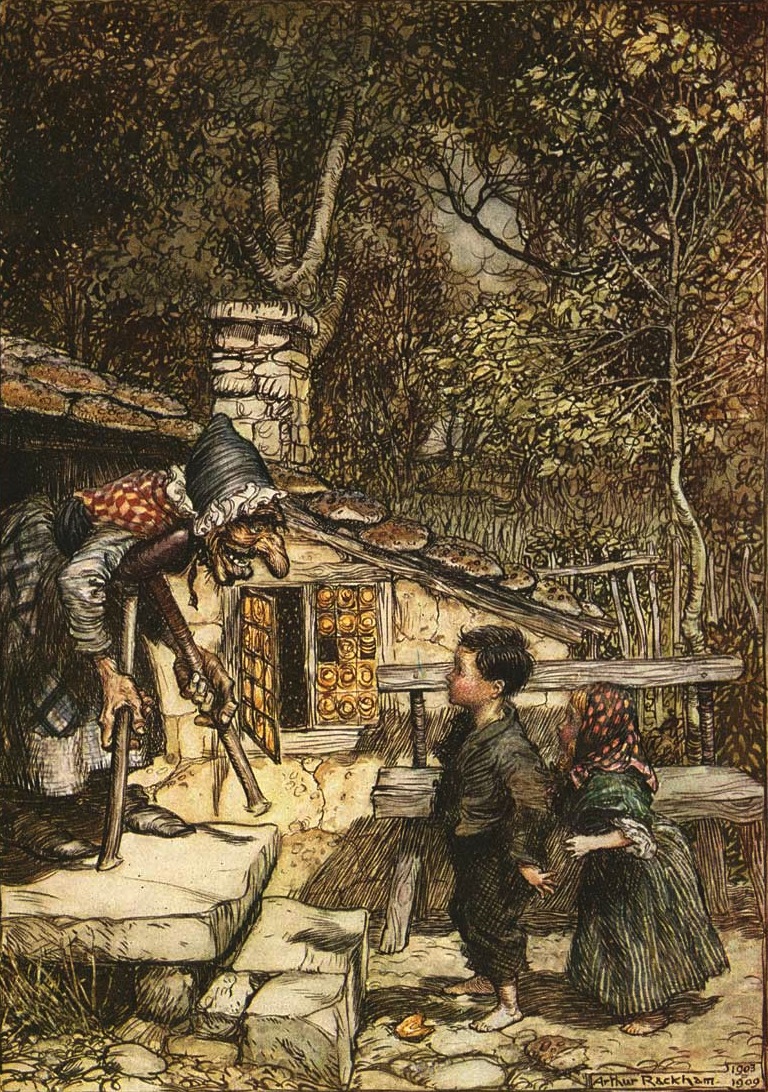
The real history behind this already rather grim story, is even more grim.
The true story of Hansel and Gretel may have its roots in the great flood and great famine of 1314. 1314 was a year of continuous rain and this continued throughout 1315 and 1316. The wet conditions resulted in crops rotting in the ground, harvests failing and livestock drowning or starving. Food prices increased dramatically as a result of severe food shortages.
The great famine is estimated to have effected 400,000 square miles of Europe, 30 million people and to have resulted in the deaths of up to 25 percent of the population in certain areas.
The famine was so bad that during the winter of 1315/1316, the peasants resorted to eating the seed grain they had stored for planting in the spring. People resorted to begging, stealing and even murder in their quest for food. Parents abandoned their children to fend for themselves and their were rumours of cannibalism. An Irish chronicler wrote that people “were so destroyed by hunger that they extracted bodies of the dead from cemeteries and dug out the flesh from the skulls and ate it, and women ate their children out of hunger.”
In the story of Hansel and Gretel, the pair are taken into the forest by their father and abandoned. They are taken in by an old woman living in a cottage. When the old woman starts to heat the oven, the children realise she is planning to roast and eat them. Gretel tricks the woman into opening the oven and pushes her inside.
It is interesting to note that this time of famine coincided with the end of the medieval warm weather period and the beginning of the little ice age. The changing climate with its cooler and wetter summers and earlier autumn storms damaged the harvests. Given the strange wet and cool summer South African is experiencing, coupled with severe cold in the northern hemisphere, this really is food for thought.
Another grim early tale along the lines of Hansel and Gretel is a Romanian story called The Little Boy and the Wicked Stepmother. You can read this story here: http://www.planetofbirds.com/the-story-of-the-little-boy-and-the-wicked-step-mother
The story of Hansel and Gretel was the inspiration for my recent twisted fairy tale Covid-19 cake which featured a gingerbread house and a witch who is trying to keep children out after they are declared to be vectors for the virus.

About Roberta Eaton Cheadle


Roberta Eaton Cheadle has published nine children’s books under the name of Robbie Cheadle. She has branched into writing for adults and young adults and, in order to clearly separate her children’s books from her adult books, is writing for older readers under the name Roberta Eaton Cheadle.
Her supernatural stories combine fabulous paranormal elements with fascinating historical facts.
Supernatural fantasy YA novel:
Through the Nethergate
Horror Anthologies (edited by Dan Alatorre):
Spellbound
Nightmareland
Dark Visions
Paranormal Anthologies (edited by Kaye Lynne Booth):
Spirits of the West
Whispers of the Past
Murder mystery Anthology (edited by Stephen Bentley)
Death Among Us
Find Roberta Eaton Cheadle
Blog: https://wordpress.com/view/robertawrites235681907.wordpress.com
Twitter: https://twitter.com/RobertaEaton17
Facebook: https://www.facebook.com/robertawrites
Amazon: https://www.amazon.com/Roberta-Eaton-Cheadle/e/B08RSNJQZ5
_____________________________________________________________________________________________
Want to be sure not to miss any of Robbie’s “Dark Origins” segments? Subscribe to Writing to be Read for e-mail notifications whenever new content is posted or follow WtbR on WordPress. If you found it interesting or entertaining, please share.
Share this:

The joy of nursery rhymes: Twinkle, twinkle little bat
Posted: November 11, 2020 Filed under: Children's Books, Growing Bookworms, Literacy, Nursery Rhymes, Reading | Tags: Growing Bookworms, Literacy, Nursery Rhymes, Reading, Robbie Cheadle, Writing to be Read 56 Comments
“Twinkle, twinkle, little star
How I wonder what you are
Up above the world so high
Like a diamond in the sky
Twinkle, twinkle little star
How I wonder what you are”
Do you remember the words of this nursery rhyme? It has always been one of my favourites and the first one I remember hearing as a child. There was something about it that captured my imagination. Today, the words of this nursery rhyme are imprinted on my brain and remind me of the Blue Fairy in Pinocchio, one of my favourite childhood books.
When I was 9 years old, Alice in Wonderland was my favourite book [it still is a favourite and I have a number of different copies of it]. The words of Lewis Carroll’s adaption of Twinkle twinkle little star stayed with me and is still the version I think of first.

I had difficult babies. They were both real ‘howlers’. Gregory cried so much I gave all my baby stuff away when he was three months old and the promised reprieve from the endless crying didn’t happen. It turned out he was a ‘six-monther’. Terence had to work hard to convince me to have another baby and then Michael turned out to be a howler too. His health issues were even more challenging and he was in hospital numerous times during his first two years of life.
But, I digress … back to nursery rhymes. I used to recite nursery rhymes to my kids while I carried them around. They howled and I recited. It kept both of us sane.
Both of my sons have good vocabularies and literacy skills and both are musical. Reading up on the useful benefits of nursery rhymes for children, I think all the reciting I did may have helped enhance these skills.
The five major benefits of nursery rhymes are as follows:
They help develop language and literacy skills:

The help develop phonemic awareness – children hear the words said and learn to pronounce them. A lot of nursery rhymes include unusual and funny words and phrases.

Nursery rhymes help build word memory and articulation. They are full of rhyming words and include words and groups of sounds you don’t encounter in everyday speech.

Nursery rhymes help develop creativity in children by encouraging them to imagine the scene in their heads. Just think of this one:
The Owl and the Pussy-Cat
BY EDWARD LEAR
The Owl and the Pussy-cat went to sea
In a beautiful pea-green boat,
They took some honey, and plenty of money,
Wrapped up in a five-pound note.
The Owl looked up to the stars above,
And sang to a small guitar,
“O lovely Pussy! O Pussy, my love,
What a beautiful Pussy you are,
You are,
You are!
What a beautiful Pussy you are!”
II
Pussy said to the Owl, “You elegant fowl!
How charmingly sweet you sing!
O let us be married! too long we have tarried:
But what shall we do for a ring?”
They sailed away, for a year and a day,
To the land where the Bong-Tree grows
And there in a wood a Piggy-wig stood
With a ring at the end of his nose,
His nose,
His nose,
With a ring at the end of his nose.
III
“Dear Pig, are you willing to sell for one shilling
Your ring?” Said the Piggy, “I will.”
So they took it away, and were married next day
By the Turkey who lives on the hill.
They dined on mince, and slices of quince,
Which they ate with a runcible spoon;
And hand in hand, on the edge of the sand,
They danced by the light of the moon,
The moon,
The moon,
They danced by the light of the moon.
Source: The Random House Book of Poetry for Children (1983)
Finally, nursery rhymes teach children to listen, a very important life skill.
I am finishing off this post with a video of a recital of the poem Television by Roald Dahl. It is hilarious and epitomizes my thoughts about children and the modern trend of television and video/TV games.
About Robb,ie Cheadle

Hello, my name is Robbie, short for Roberta. I am an author with seven published children’s picture books in the Sir Chocolate books series for children aged 2 to 9 years old (co-authored with my son, Michael Cheadle), one published middle grade book in the Silly Willy series and one published preteen/young adult fictionalised biography about my mother’s life as a young girl growing up in an English town in Suffolk during World War II called While the Bombs Fell (co-authored with my mother, Elsie Hancy Eaton). All of my children’s book are written under Robbie Cheadle and are published by TSL Publications.
I have recently branched into adult and young adult horror and supernatural writing and, in order to clearly differential my children’s books from my adult writing, I plan to publish these books under Roberta Eaton Cheadle. My first supernatural book published in that name, Through the Nethergate, is now available.
I have participated in a number of anthologies:
- Two short stories in Spellbound, a collection of horror stories edited by Dan Alatorre;
- Two short stories in Spirits of the West, A Wordcrafter Western Paranormal Anthology edited by Kaye Lynne Booth;
- Two short stories in #1 Amazon bestselling anthology, Dark Visions, a collection of horror stories edited by Dan Alatorre;
- Three short stories in Death Among Us, an anthology of murder mystery stories, edited by Stephen Bentley;
- Three short stories in #1 Amazon bestselling anthology, Nightmareland, a collection of horror stories edited by Dan Alatorre; and
- Two short stories in Whispers of the Past, an anthology of paranormal stories, edited by Kaye Lynne Booth.
I also have a book of poetry called Open a new door, with fellow South African poet, Kim Blades.
Find Robbie Cheadle
Blog: https://bakeandwrite.co.za/
Blog: robbiesinspiration.wordpress.com
Twitter: BakeandWrite
Instagram: Robbie Cheadle – Instagram
Facebook: Sir Chocolate Books
Want to be sure not to miss any of Robbie’s “Growing Bookworms” segments? Subscribe to Writing to be Read for e-mail notifications whenever new content is posted or follow WtbR on WordPress.