In Touch With Nature – The role of the Oxpecker bird in nature #oxpeckers #giraffes #rhinos
Posted: July 24, 2024 Filed under: Animals, Books, Collection, Nature, Poetry, Wildlife | Tags: African Wildlife, Codependency, Cohabitation, Girraffes, In Touch With Nature, Oxpeckers, Rhinos, Writing to be Read 39 Comments
When I go on safari into the Southern African bush, I frequently see oxpecker birds. When I spot them, they are nearly always sitting on the heads, necks, or backs of a giraffe, buffalo, or rhino. This is because oxpeckers, either the yellow-billed or the red-billed species, feed almost exclusively on ixodid ticks, dead skin, saliva, blood, sweat and tears that they collect from the skins of large African mammals. The behaviour of oxpecker birds keeps the birds well fed and reduces the parasite load on the animal. Parasites such as ticks can pass on deadly diseases as well as causing anemia in their mammal host making the animal more susceptible to illnesses.
Oxpeckers are not all good news for their animal hosts as they are sanguinivores which means that blood comprises a large part of their diet. They eat ticks for the blood they provide and a wound on an animal is an enticing blood meal. Oxpeckers peck at wounds on their hosts and can reopen them in an effort to access fresh blood.


Oxpeckers also serve as an alarm system for mammals. Their Swahili name, askari wa kifaru, means the rhino’s guard. Rhinos have very poor eye sight which puts them at a severe disadvantage when it comes to poaching. Research has show that rhinos who act as hosts to oxpeckers are less likely to be shot by poachers because the oxpeckers create a commotion when they see danger approaching. They also warn herbivores about the approach of predators like lions or hyenas.


If you look carefully at this video, you’ll see the oxpecker on the giraffe’s head. There is also one near the shoulders.
The following poem may disturb sensitive readers!
The following poem is extracted from my poetry book, Lion Scream.
Rhino Dilemma
Near-sighted eyes observe
Through tall, swaying grass
Yellowish curtain hides heavy-set body
But, camouflage fails him
The poachers close in
***
Small bird cries a warning
Animal reacts
Stands upright, facing the wind, ready for flight
Tranquiliser gun fires
Ground shakes when beast falls
***
Savage men move quickly
Hack out valued horn
Animal left bleeding; awakes to sure death
Tears of pain and anguish
Slide from fading eyes
About Rhino Dilemma
At the start of the 20th century, there were over 500,000 rhinos living in the wild. Today, that number has dropped to less than 30,000 and they are critically endangered. The main threats to rhino today are poaching and loss of habitat.
Rhino Dilemma is about the brutal slaying of rhinos for their horns. I wrote this poem after a visit to a national park in North West Province. The rhinos in the park are all dehorned.
The guide told us a horrific story about a male southern white rhino weeping in pain after poachers hacked off his horn and removed part of the bone in his skull in a South African game reserve.
On my return home, I researched this incident and found this article about a rhino crying tears after being brutally attacked and injured by a poacher. It makes me cry too: https://www.dailymail.co.uk/news/article-10152157/Heartbreaking-mages-Southern-White-rhino-weeping-pain-poachers-hacked-horn.html
I wrote “Rhino Dilemma” to share the plight of the rhinos to readers in my community.

About Roberta Eaton Cheadle

Roberta Eaton Cheadle, is a South African writer and poet specialising in historical, paranormal, and horror novels and short stories. She is an avid reader in these genres and her writing has been influenced by famous authors including Bram Stoker, Edgar Allan Poe, Amor Towles, Stephen Crane, Enrich Maria Remarque, George Orwell, Stephen King, and Colleen McCullough.
Roberta has two published novels and a collection of short stories and has horror, paranormal, and fantasy short stories included in several anthologies. She is also a contributor to the Ask the Authors 2022 (WordCrafter Writing Reference series).
Roberta is also the author and illustrator of sixteen children’s books, illustrator to a further three children’s books, and the author and illustrator of three poetry books published under the name of Robbie Cheadle, and has poems and short stories featured in several anthologies under this name.
Roberta’s blog features discussions about classic books, book reviews, poetry, and photography. https://roberta-writes.com/.
Find Roberta Eaton Cheadle
Blog: https://wordpress.com/view/robertawrites235681907.wordpress.com
Twitter: https://twitter.com/RobertaEaton17
Facebook: https://www.facebook.com/robertawrites
Amazon: https://www.amazon.com/Roberta-Eaton-Cheadle/e/B08RSNJQZ5
___________________________________________
Want to be sure not to miss any of Robbie’s “In Touch With Nature” segments? Subscribe to Writing to be Read for e-mail notifications whenever new content is posted or follow WtbR on WordPress. If you found it interesting or entertaining, please share.
__________________________________________
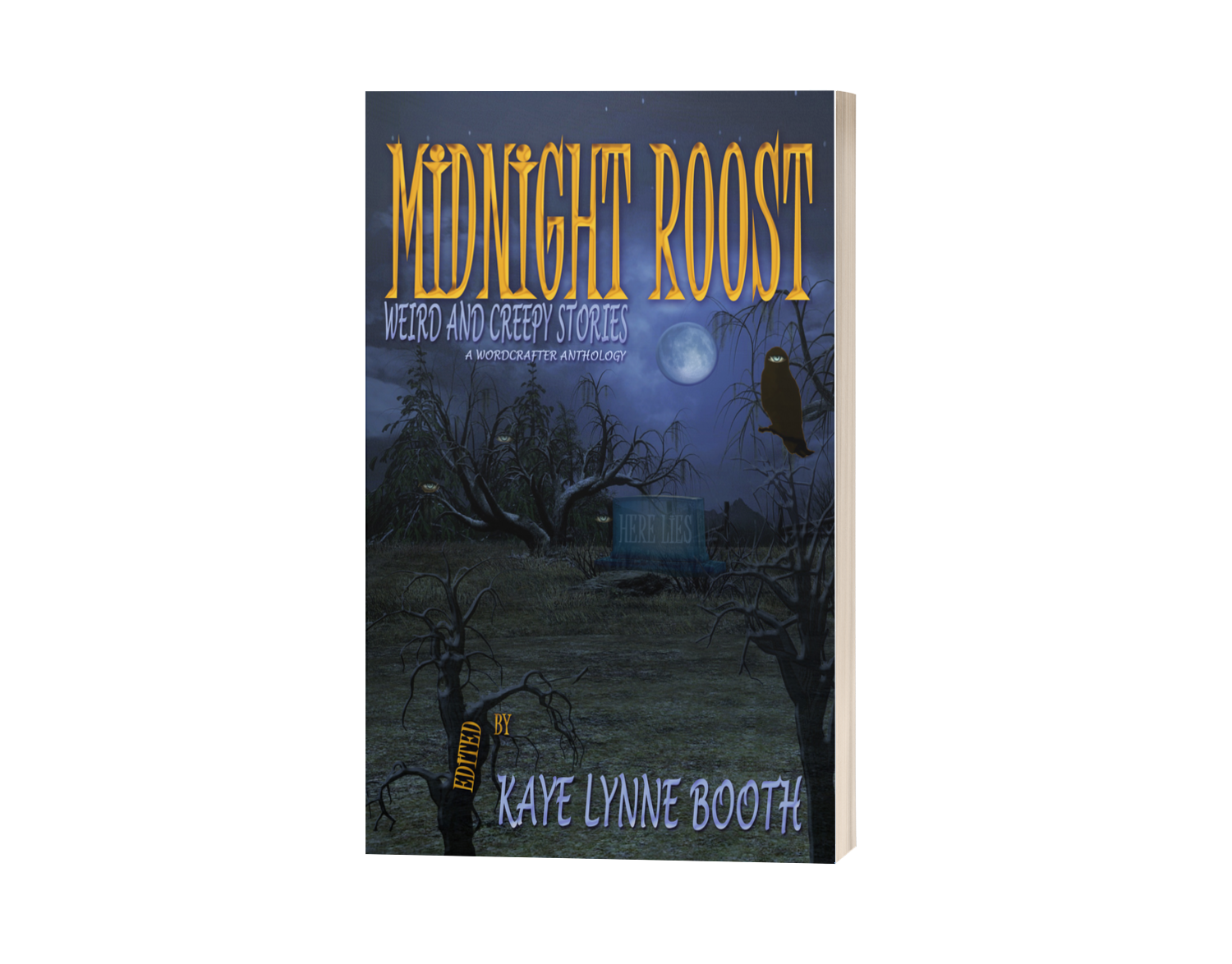
This segment of “In Touch with Nature” is sponsored by Midnight Roost: Weird & Creepy Stories and WordCrafter Press.

20 authors bring your nightmares to life in 23 stories of ghosts, paranormal phenomenon and the horror from the dark crevasses of their minds. Stories of stalkers, both human and supernatural, possession and occult rituals, alien visitations of the strange kind, and ghostly tales that will give you goosebumps. These are the tales that will make you fear the dark. Read them at the Midnight Roost… if you dare.
On sale now for only $4.99
June 15 – August 31,2024
https://books2read.com/MidnightRoost
Share this:

A Day at the Lake
Posted: June 17, 2024 Filed under: Animals, Bird Watching, Nature, Writing to be Read | Tags: Bird Watching, Ducks, Geese, Kaye Lynne Booth, Storks, Waterfowl, Writing to be Read 2 Comments
I always enjoy going places where I can see different birds from those that visit my yard. Recently I visited a lake in Salida, Colorado, where ducks and geese frequent. I spent a pleasant afternoon walking around the lake and I was fortunate to be there at a time when the storks stopped by for a visit. You can see them perched in the photo above. They are quite large, and interesting looking, but oh, so graceful in flight. Unfortunately, I wasn’t able to capture their departure as they lit out for their next stop. But I did get some shots of the cute duckies and geese below.


I found a better picture of the majestic stork. Different trip, different lake. This one was spotted on Lake DeWeese, just outside Westcliffe, Colorado.

_________________________________________
About the Author

For Kaye Lynne Booth, writing is a passion. Kaye Lynne is an author with published short fiction and poetry, both online and in print, including her short story collection, Last Call and Other Short Fiction; and her paranormal mystery novella, Hidden Secrets; Books 1 & 2 of her Women in the West adventure series, Delilah and Sarah, and her Time-Travel Adventure novel, The Rock Star & The Outlaw. Kaye holds a dual M.F.A. degree in Creative Writing with emphasis in genre fiction and screenwriting, and an M.A. in publishing. Kaye Lynne is the founder of WordCrafter Quality Writing & Author Services and WordCrafter Press. She also maintains an authors’ blog and website, Writing to be Read, where she publishes content of interest in the literary world.
_______________________________________
If you’d like to show your support for this author, you can make a donation to Writing to be Read for as little as a cup of coffee, or check out the WtbR Sponsor Page and let me advertise your book.
Share this:

In Touch with Nature – Highly endangered African painted wild dogs #Africanwildlife #Africanwilddogs
Posted: April 24, 2024 Filed under: Africa, Animals, In Touch With Nature, Nature, Wildlife | Tags: African Wild Dogs, In Touch With Nature, Nature, Robbie Cheadle, Wildlife, Writing to be Read 77 Comments
The African wild dog, also called the hunting dog or African painted dog, is currently listed as endangered on the IUCN Red List. According to the African Wildlife Foundation, only 6,600 African wild dogs remain in the wild across the entire African continent. The main reason for their endangerment is habitat fragmentation (the most common reason for wildlife endangerment) which causes conflict between these predators and humans. Throughout Africa, wild dogs have been shot and poisoned by farmers for loss of livestock, even though these losses are frequently due to other predators including hyenas and leopards. In addition, African wild dogs also suffer from endemic disease outbreaks.
African wild dogs have a mottled coat comprising of yellow, black and white patches. They have long legs with flat, broad heads, a short black muzzle, and large round ears.
Wild dogs have strong social bonds and live in packs of two to twenty-seven adults and yearling pups.
Wild dogs are excellent hunters. They hunt in packs of six to twenty individuals and catch their prey by chasing them to exhaustion. Wild dogs can run at speeds of up to 66 km/h (41 mph) for between 10 to 60 continuous minutes. They have an 80 percent kill success rate with is higher than bigger predators like lions and leopards.
Observers have noticed that prior to setting out to hunt, the wild dogs’ populations in the Okavango Delta of Botswana rally to determine whether they should depart. Departure is more likely when more individual dogs sneeze, a short sharp exhale through the nostrils. If a dominant dog initiates by sneezing, around three additional sneezes guarantee departure.
Sighting a pack of African wild dogs in the wild has been on my bucket list for a long time. I was lucky enough to see a pack of wild dogs at the Bthongo Rhino & Lion Nature Reserve but they live inside a relatively small enclosure and are fed.

Obviously, seeing wild dogs in captivity is not quite the same as seeing them in a national park or game reserve. I was, therefore, delighted when we saw wild dogs at Madikwe Game Reserve not once, but two days in a row. We were fortunate enough to observe, the hunt (chase), devouring of a kill, and wild dogs relaxing and having fun.


The poem below, Dog Vote, is extracted from my poetry book, Lion Scream.
Dog Vote
They yelp and growl at play
Then sleep in a mass
Of black fur, overlapped with yellow and white
They are invisible
Among the shadows
***
Having strong social bonds
Wild dogs live in packs
Dominated by a single breeding pair
But they all have a say
Conveyed as a vote
***
Before leaving to hunt
The adults rally
Sneezing to express a preference to hunt
The majority rules
All members comply
This is my YT video of African wild dogs playing:
African wild dogs in a gathering:
About Roberta Eaton Cheadle
Award-winning, bestselling author, Roberta Eaton Cheadle, is a South African writer and poet specialising in historical, paranormal, and horror novels and short stories. She is an avid reader in these genres and her writing has been influenced by famous authors including Bram Stoker, Edgar Allan Poe, Amor Towles, Stephen Crane, Enrich Maria Remarque, George Orwell, Stephen King, and Colleen McCullough.
Roberta has two published novels and has horror, paranormal, and fantasy short stories included in several anthologies. She is also a contributor to the Ask the Authors 2022 (WordCrafter Writing Reference series).
Roberta also has thirteen children’s books and two poetry books published under the name of Robbie Cheadle, and has poems and short stories featured in several anthologies under this name.
Roberta’s blog features discussions about classic books, book reviews, poetry, and photography. https://roberta-writes.com/.
Find Roberta Eaton Cheadle
Blog: https://wordpress.com/view/robertawrites235681907.wordpress.com
Twitter: https://twitter.com/RobertaEaton17
Facebook: https://www.facebook.com/robertawrites
Amazon: https://www.amazon.com/Roberta-Eaton-Cheadle/e/B08RSNJQZ5
_____________________________________________________________________________________________
Want to be sure not to miss any of Robbie’s “In Touch With Nature” segments? Subscribe to Writing to be Read for e-mail notifications whenever new content is posted or follow WtbR on WordPress. If you found it interesting or entertaining, please share.
Share this:

Welcome to the WordCrafter “Poetry Treasures 4: In Touch with Nature” Book Blog Tour
Posted: April 8, 2024 Filed under: Anthology, Book Promotion, Books, Giveaways, Nature, Nature writing, Poetry, Poetry Readings, Treasuring Poetry, WordCrafter Book Blog Tours, WordCrafter Press 100 Comments
It’s day 1 of the WordCrafter Poetry Treasures 4 Book Blog Tour, and today we have contributing poet D.L. Finn with a reading of her poem, “The Island”. Stick with the tour for the rest of the week for readings and guest posts from contributing authors Andrew McDowell, Patricia Furstenberg, Merril D. Smith, Selma Martin and Robbie Cheadle, an interview with contributing author Emily Gmitter, and a review on Carla Loves to Read. If you leave a comment at each stop, you’ll be entered in our great giveaway.
Giveaway
Leave a comment for a chance to win one of three free copies of
Poetry Treasures 4: In Touch with Nature.
Leave a comment at each stop for additional chances.
Winners chosen by random drawing.
You can keep up with the tour through the links in the schedule below, but they won’t work until each stop goes live.
Mon. April 8 – Writing to be Read – Reading by D.L. Finn
Tues. April 9 – Yesterday and Today: Merril’s Historical Musings – Reading by Andrew McDowell
Wed. April 10 – Book Places – Interview w/ Emily Gmitter & Reading by Selma Martin
Thurs. April 11 – d.l. finn author – Guest post by Patricia Furstenberg
Fri. April 12 – Colleen Chesebro, Author & Poet – Guest post by Merril D. Smith
Sat. April 13 – Carla Reads – Review/ Reading by Robbie Cheadle
Book Trailer
About the Anthology
This volume of the Poetry Treasures series is a special one for me because it is the first volume to feature my works. I am proud to be featured along side such talented poets as Colleen Chesebro, D.L. Finn, Frank Prem, and Robbie Cheadle who I have gotten to know and I am familiar with their works. In addition, I got to work woth many creative poets who were new to me, introduced through Robbie’s “Treasuring Poetry” series right along with the series readers. These include Andrew McDowell, Patricia Furstenberg, Emily Gmitter, Marcia Meara, Selma Martin, Luanne Castle, and Merril D. Smith. Without their contributions and willingness to pitch in with the promotions, there would be no anthology. I have so enjoyed working with this group of poets, who have stuggled to meet tight deadlines and put up with my confusions as I shuffled through emails to & from hosts and contributors, and contributors who were also acting as hosts as I put this blog tour together. A big thanks goes out to them for all their efforts and hard work.
The quality of poetry in this volume makes it a poetry treasure to be sure, and I’ve had several contributors thank me for all my hard work. It has been a labor of love. But although I co-edited and did the final formatting, this is really Robbie’s baby, and without all of her hard work, this project wouldn’t be. The anthology was born from Robbie’s “Treasuring Poetry” blog series, and it is Robbie who invited the guests to submit their work, compiled and organized them all into a coherent manuscript, and did the first round of editing. Somehow, she fit all that into her very busy life, and it is she who should be commended, not I.
This is my blog post, my addition to the tour as a contributing author, as well as editor of the project. I will not burden you with my photo and bio, which you, my readers, see with every post I make. Instead I will get right to the main attraction for this stop and move on to a reading by contributing author D.L. Finn.
Introduction of D.L. Finn
Author of children’s books, adult fiction and poetry, D.L. Finn is a multi-talented Califirnia author. Her Haibun and syllabic poetry draw vivid pictures in the mind and I am pleased to feature her works within this volume of Poetry Treasures. She shares with us today a reading of her poem, “The Island”.
Reading of “The Island”, by D.L. Finn
About D.L. Finn

D. L. Finn is an independent California local who encourages everyone to embrace their inner child. She was born and raised in the foggy Bay Area, but in 1990 she relocated with her husband, kids, dogs, and cats to Nevada City, in the Sierra foothills. She immersed herself in reading all types of books but especially loved romance, horror, and fantasy. She always treasured creating her own reality on paper. Finally, surrounded by towering pines, oaks, and cedars, her creativity was nurtured until it bloomed. Her creations include children’s books, adult fiction, and poetry. She continues on her adventure with an open invitation to all readers to join her.
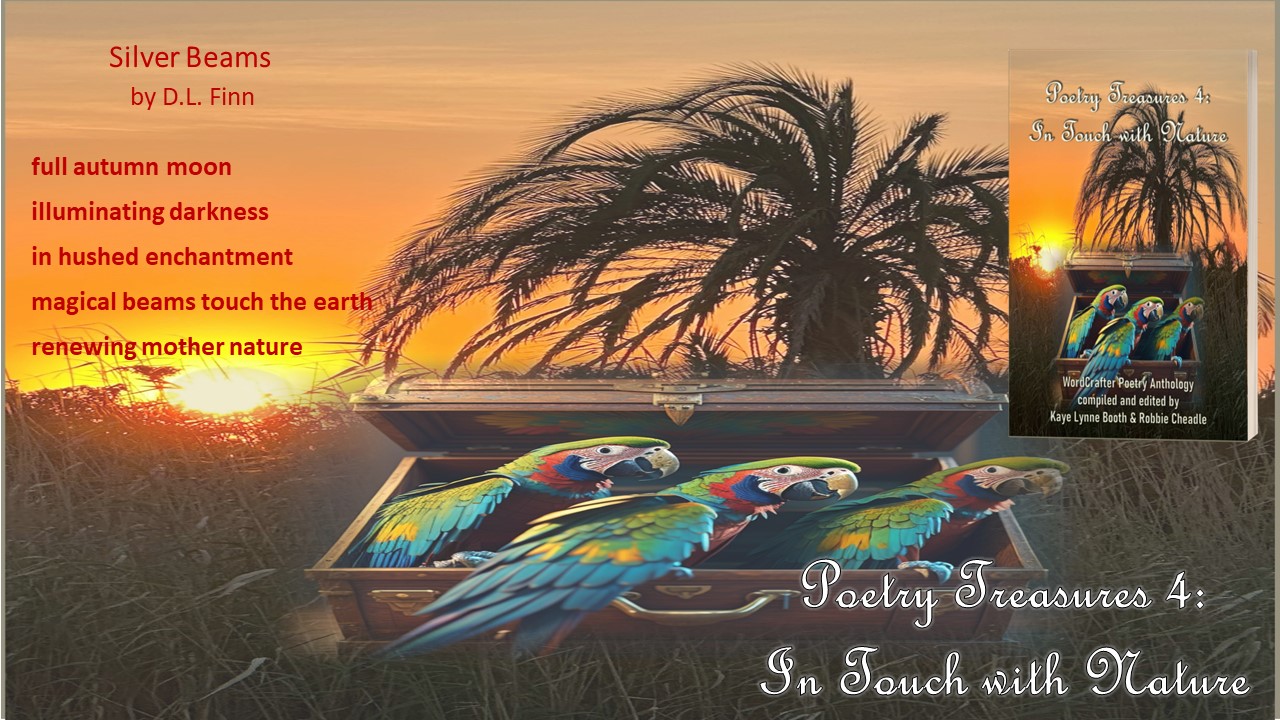
About Poetry Treasures 4: In Touch with Nature
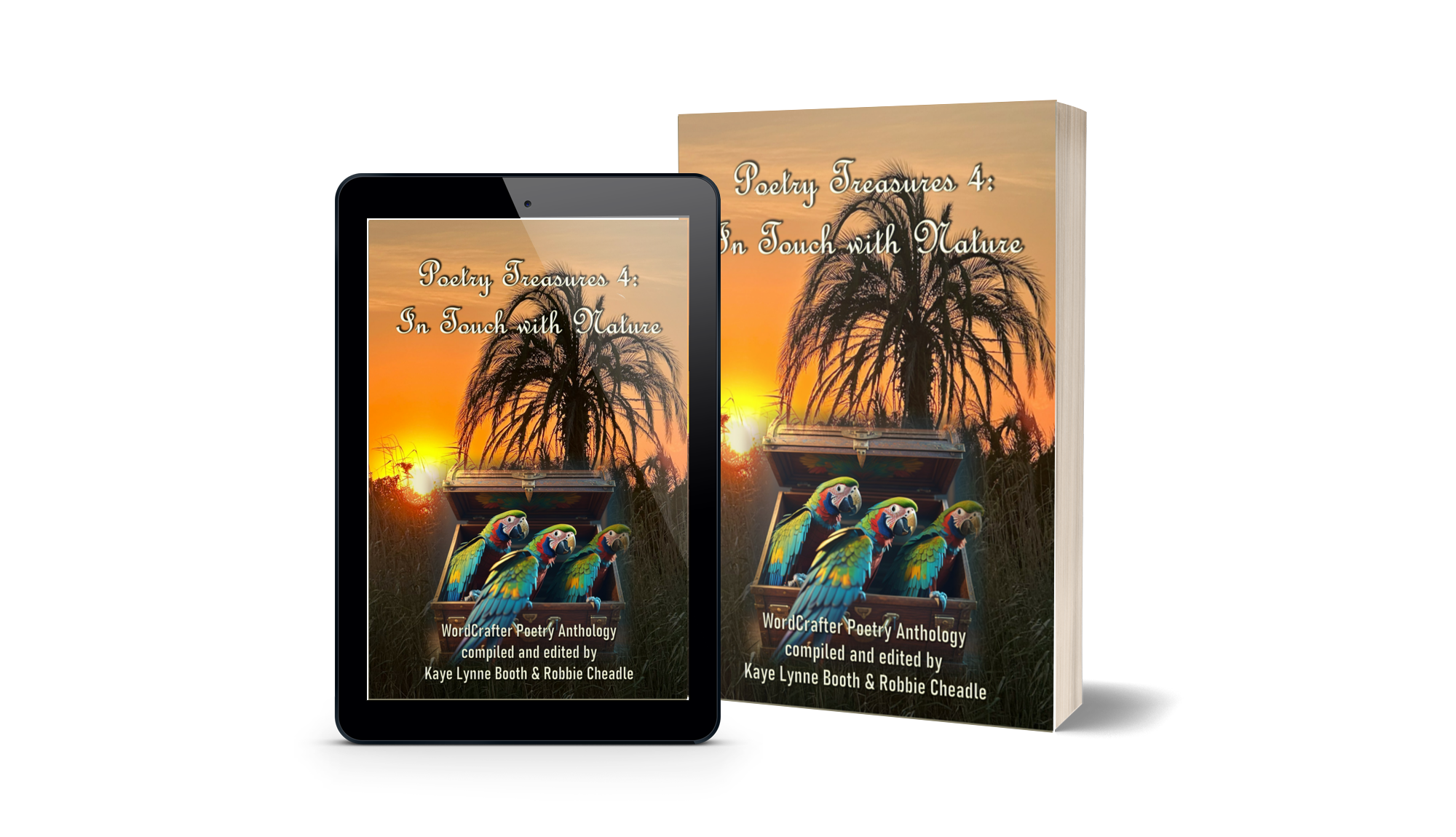
Open the cover
and you will discover
Poetry Treasures
from the guests on
Robbie Cheadle’s 2023
“Treasuring Poetry”
blog series
on Writing to be Read.
Included are poetic gems from: Andrew McDowell, Robbie Cheadle, Patricia Furstenberg, Marcia Meara, Luanne Castle, D.L. Finn, Emily Gmitter, Kaye Lynne Booth, Selma Martin, Merril D. Smith, Frank Prem, and Colleen Chesebro.
Purchase Link: https://books2read.com/u/mlM5YA

____________________________________________
That wraps up today’s stop. Don’t forget to leave a comment and enter the giveaway for a free copy of this lovely poetry collection. Tomorrow will find us over at Colleen Chesebro, Author & Poet with a guest post by contributing poet, Merril D. Smith. Join us and don’t forget to leave a comment for another chance to win a free digital copy of Poetry Treasures 4: In Touch with Nature.
______________________________________
Book your WordCrafter Book Blog Tour today!
Share this:

In Touch With Nature – Lionesses, the queens of the savannah #lionesses #wildlife
Posted: March 27, 2024 Filed under: Animals, In Touch With Nature, Nature, Writing to be Read | Tags: Animal Kindom, In Touch With Nature, Lions, Robbie Cheadle, Writing to be Read 58 CommentsLast month, I discussed the role of male lions in the pride. If you missed it, you can read it here: https://writingtoberead.com/2024/02/28/in-touch-with-nature-the-vulnerable-life-of-male-lions-wildlife-lions/. This month I’m talking about female lions.
Lionesses are the primary hunters within the pride. They hunt in groups of three to eight females, all of whom are usually related. Lionesses display exceptional teamwork during hunts, deploying strategic hunting techniques, such as coordinated flanking and ambushing, to outmaneuver their prey. Their synchronized approach increases the likelihood of a successful kill. Lionesses, working together, are able to take down a target twice their size. Lion prey includes zebra, wildebeests, buffalo, antelope and other grassland animals.
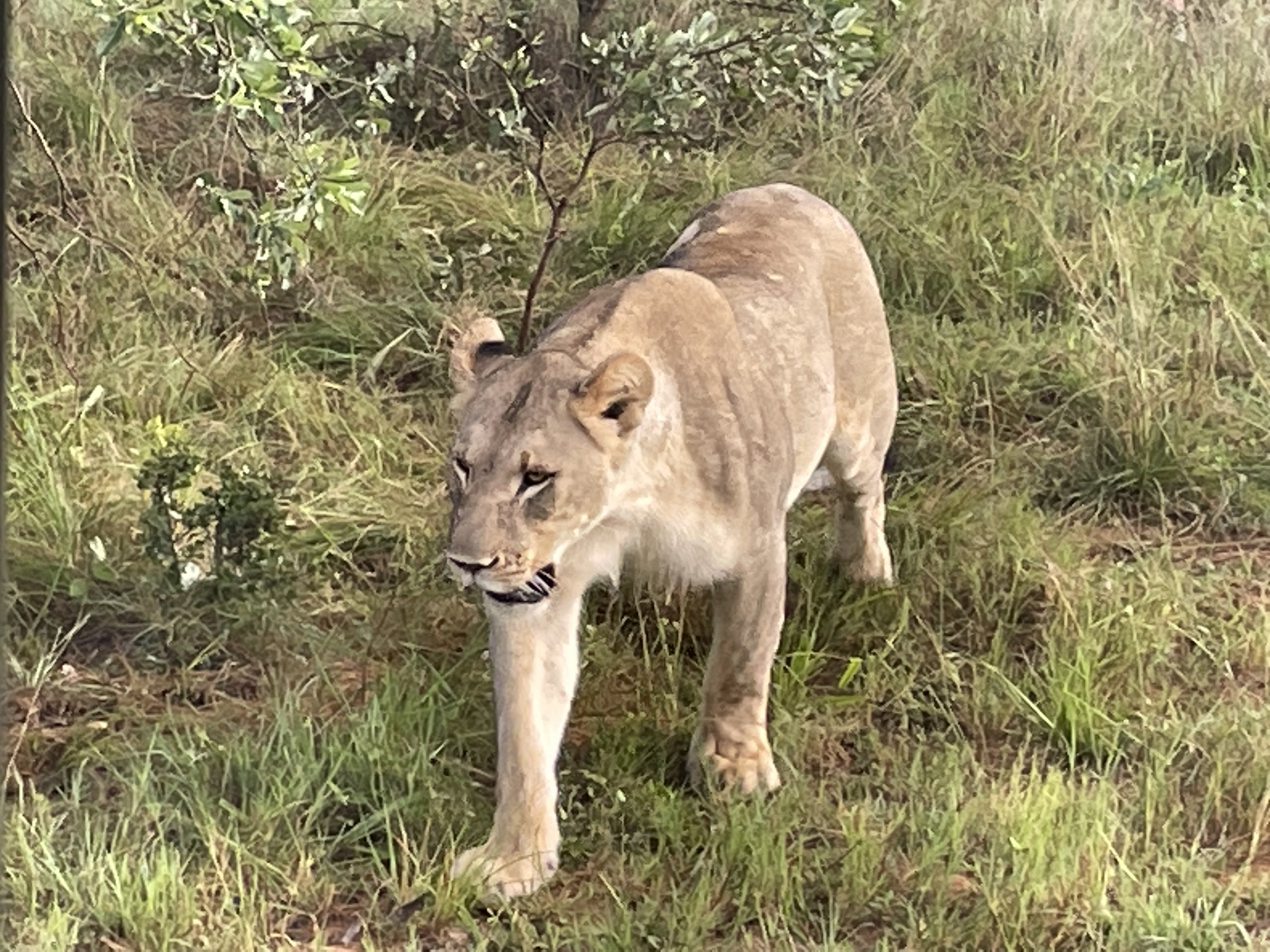
Lions will kill other predators including leopards, cheetahs, hyenas and African wild dogs. They do not eat them as the flesh of other predators is not nutritious. Lion predator kills are purely to remove competitors for food and territory, as well as threats to the lions young. In particular, lions actively kill leopards as leopards kill and eat their cubs.

This is my video of this lioness kill:
Lionesses are known to be excellent mothers and will go to great lengths to ensure the survival of their cubs. Lion mating is polygamous and takes place all year round. The dominant male will copulate with multiple females within his pride. Lionesses are receptive to mating for three or four days within their variable reproductive cycle and during this time they will mate frequently, up to fifty times per day. Female lions have the ultimate say in deciding which lion they will reproduce with. Lionesses observe the males carefully, accessing their physical condition, strength, and overall fitness, before committing to a partnership. Lionesses are also not monogamous and can mate with multiple lions during their estrous cycle, although it has been observed that approximately two-thirds of these mating events occur with the primary male, with the remaining third being distributed among multiple males from the peripheral coalitions of that primary male. This means that a single litter can have cubs from different fathers. Lionesses in the same pride often breed around the same time and the resultant cubs are raised together.
My video of lions mating:
Lionesses are pregnant for 105 to 112 days, during which time her belly will grow larger, and her nipples will enlarge and darken. Just before giving birth, the lioness will begin to look for a safe and secure place to give birth. Once she has found a suitable spot that is hidden from predators and close to water, she will start to build a den using grass and other materials. The actual birth is relatively quick, approximately 1 hour, and between two and four is the usual number for a litter.
The cubs are born blind and helpless and rely on their mothers to protect and care for them. During the first few weeks of their lives, the cubs feed on their mother’s milk and she only leaves them for short periods to hunt.
My video of lion clubs:
Last month I said that male lions commit infanticide and can kill the cubs of other males. Given that lionesses are fiercely protective of their cubs, why do they not defend their cubs from lions? The answer is simply that male lions are much bigger and more aggressive than lionesses. Challenging a male lion is risky for a lioness as it could lead to the serious injury or death of the lioness, as a result, in this situation the lioness will prioritise her own survival and the wellbeing of the rest of the pride over the survival of her cubs.
If you are interested in seeing more of my photographs, videos and artworks relating to Cats, please enjoy this stunning post created by the talented Resa McConaghy. Resa and I share a love for wildlife and a passion for conservation.
Lion Lust by Robbie Cheadle
Sidling up beside her
He strokes her shoulder
In a gesture of affection for his mate
He quickly mounts her
For the eighteenth time
***
She walks quickly away
He meekly follows
Lying down face-to-face in her chosen spot
A short period of rest
Before the next round
***
They will stay together
For twenty-four hours
Mating every twenty to thirty minutes
Despite his high demands
She lovingly purrs
This poem is from my book Lion Scream, Syllabic Poetry About Southern African Wildlife.
About Roberta Eaton Cheadle
Award-winning, bestselling author, Roberta Eaton Cheadle, is a South African writer and poet specialising in historical, paranormal, and horror novels and short stories. She is an avid reader in these genres and her writing has been influenced by famous authors including Bram Stoker, Edgar Allan Poe, Amor Towles, Stephen Crane, Enrich Maria Remarque, George Orwell, Stephen King, and Colleen McCullough.
Roberta has two published novels and has horror, paranormal, and fantasy short stories included in several anthologies. She is also a contributor to the Ask the Authors 2022 (WordCrafter Writing Reference series).
Roberta also has thirteen children’s books and two poetry books published under the name of Robbie Cheadle, and has poems and short stories featured in several anthologies under this name.
Roberta’s blog features discussions about classic books, book reviews, poetry, and photography. https://roberta-writes.com/.
Find Roberta Eaton Cheadle
Blog: https://wordpress.com/view/robertawrites235681907.wordpress.com
Twitter: https://twitter.com/RobertaEaton17
Facebook: https://www.facebook.com/robertawrites
Amazon: https://www.amazon.com/Roberta-Eaton-Cheadle/e/B08RSNJQZ5
_____________________________________________________________________________________________
Want to be sure not to miss any of Robbie’s “In Touch With Nature” segments? Subscribe to Writing to be Read for e-mail notifications whenever new content is posted or follow WtbR on WordPress. If you found it interesting or entertaining, please share.
Share this:

In Touch With Nature – Giraffes chew bones and lions eat grass #animalkingdom #natureconservation
Posted: January 24, 2024 Filed under: Animals, In Touch With Nature, Nature, Wildlife | Tags: In Touch With Nature, Predators and Prey, Robbie Cheadle, Wildlife, Writing to be Read 107 CommentsKaye and I are starting a new series this year entitled “In Touch With Nature”. We will be sharing information about the natural environment, and I will include some of my nature videos, artworks, and photographs.
For any writers, poets and authors who have an interest in nature conservation and our natural environment, I have joined the Society of Environmental Authors and Journalists. You can find out more about it here: Society of Environmental Authors and Journalists – Robbie Cheadle
For this first post in this series, I am discussing the topic of herbivores and carnivores.
The Oxford dictionary defines a herbivore as an animal that feeds on plants.
National Geographic expands on this to say that a herbivore is an organism that mostly feeds on plants. Herbivores range in size from tiny insects such as aphids to large, lumbering elephants. You can read more on this topic here: Herbivore (nationalgeographic.org)
Conversely, Oxford defines a carnivore as an animal that feeds on other animals.
National Geographic says: “A carnivore is an organism that eats mostly meat, or the flesh of animals. Sometimes carnivores are called predators.” You can read more here: https://education.nationalgeographic.org/resource/carnivore/

With the above in mind, did you know that many herbivores chew on bones? It’s true. Giraffes, red deer, reindeer, camels, wildebeest, kudu, gemsbok, and sable antelopes, as well as domestic cows and sheep, are not the strict vegans we think they are. They have all been observed to consume bones in a practice called osteophagy.
These animals do not actually eat the bones or break them open to eat the marrow inside, they only chew on dry bones and only when they are mineral deprived. Chewing bones provides herbivores with essential nutrients, phosphorus, and a bit of sodium.
Phosphorus is an essential mineral for all animals. This mineral plays an important role in the formation of the skeletal system and is necessary for certain biological processes including energy metabolism, protein synthesis, cell signaling, and lactation. A lack of phosphorus results in delayed growth and failure to regenerate new bone as well as problems with the reproductive system.
Another way herbivores obtain essential minerals and other elements they need is natural licks, also called salt licks. These licks can be natural but many are artificial and created by humans for the animals. You will see deer, moose, elephants, hippos, rhinos, tapirs, woodchucks, fox squirrels, mountain goats, porcupines and frugivorous bats all making use of natural or artificial licks to obtain phosphorus and biometals (sodium, calcium, iron, zinc, and other trace elements).
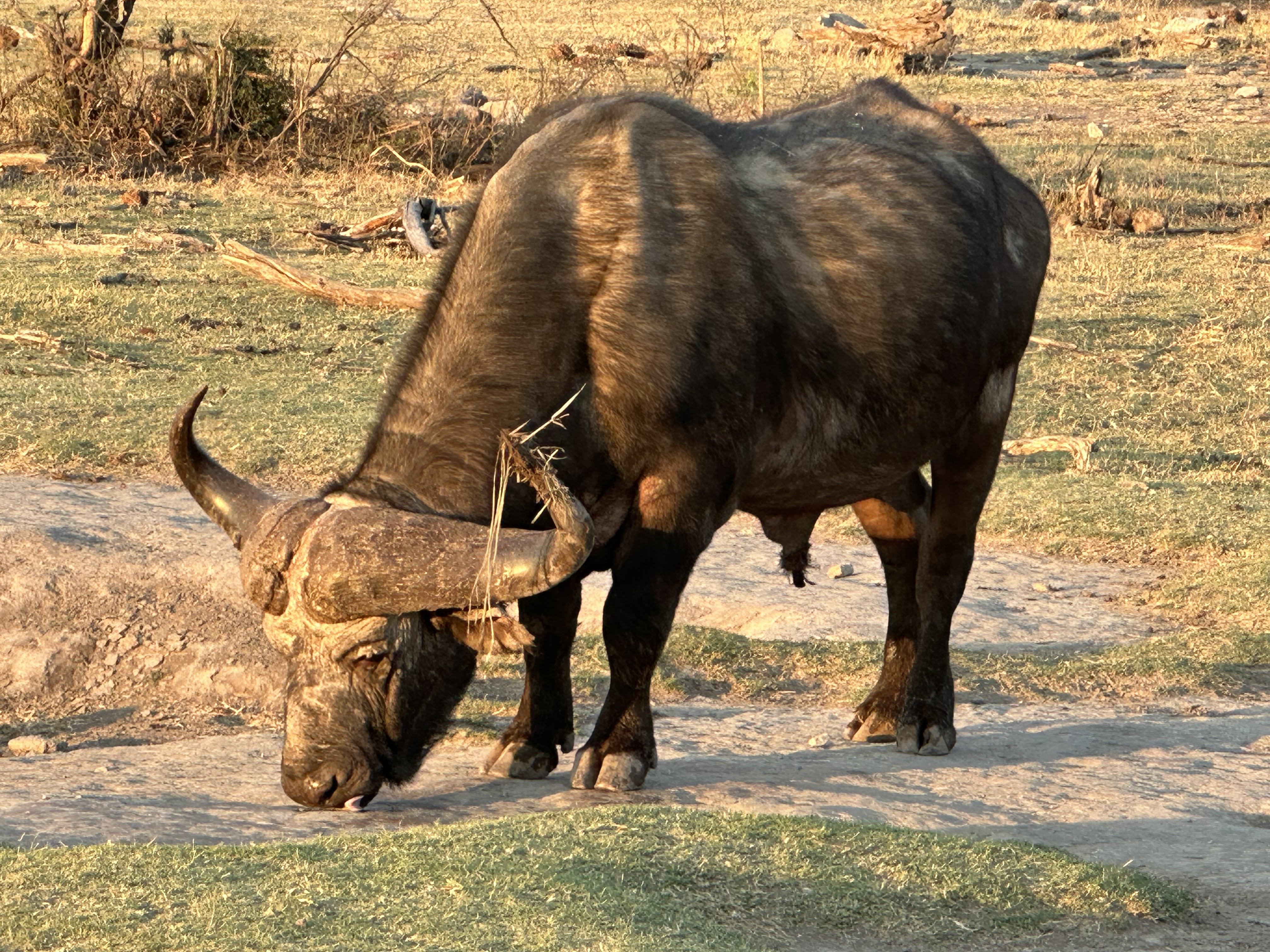
A further surprise is that lions sometimes eat small amounts of grass to extract certain nutrients they need. As their digestive system is designed to digest meat, they cannot digest the grass fully and often vomit soon after eating it.
Some of the reasons a lion may eat grass are as follows:
- It helps provide them with a source of water;
- It helps maintain their body weight;
- It helps keep them cool in hot weather;
- It helps settle stomach aches; and
- Its an easy way for a lion to get nutrients.
Lions are versatile. This means that if they are hunting in dry regions like the Kalahari Desert, lions may eat plants and fruits as an alternate source of water. Lions don’t drink very much.
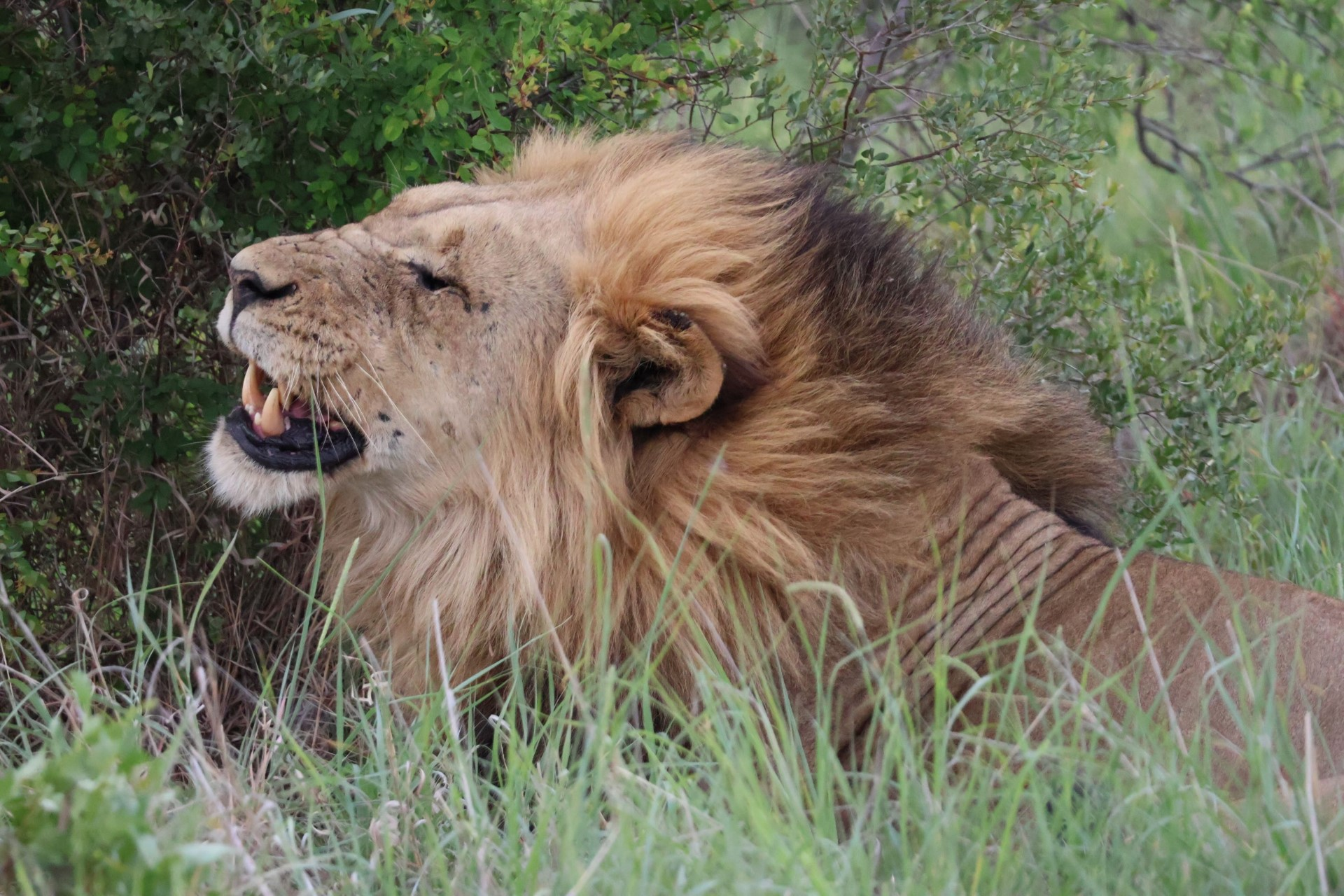

Domestic dogs and cats also sometimes eat grass for the same reasons as lions. Just like lions, they usually vomit after eating it.
Animals are adaptable and find ways to meet their dietary needs. There are few perfect examples of herbivores or carnivores in the wild.
Here are a few of my YouTube wildlife videos:
This black maned lion walked right past our vehicle:
About Roberta Eaton Cheadle
Award-winning, bestselling author, Roberta Eaton Cheadle, is a South African writer and poet specialising in historical, paranormal, and horror novels and short stories. She is an avid reader in these genres and her writing has been influenced by famous authors including Bram Stoker, Edgar Allan Poe, Amor Towles, Stephen Crane, Enrich Maria Remarque, George Orwell, Stephen King, and Colleen McCullough.
Roberta has two published novels and has horror, paranormal, and fantasy short stories included in several anthologies. She is also a contributor to the Ask the Authors 2022 (WordCrafter Writing Reference series).
Roberta also has thirteen children’s books and two poetry books published under the name of Robbie Cheadle, and has poems and short stories featured in several anthologies under this name.
Roberta’s blog features discussions about classic books, book reviews, poetry, and photography. https://roberta-writes.com/.
Find Roberta Eaton Cheadle
Blog: https://wordpress.com/view/robertawrites235681907.wordpress.com
Twitter: https://twitter.com/RobertaEaton17
Facebook: https://www.facebook.com/robertawrites
Amazon: https://www.amazon.com/Roberta-Eaton-Cheadle/e/B08RSNJQZ5
_____________________________________________________________________________________________
Want to be sure not to miss any of Robbie’s “In Touch With Nature” segments? Subscribe to Writing to be Read for e-mail notifications whenever new content is posted or follow WtbR on WordPress. If you found it interesting or entertaining, please share.
Share this:

Bonanza!
Posted: June 12, 2023 Filed under: history, Inspirational, Nature, Photography | Tags: Bonanza, Colorado History, Exchequer, Kaye Lynne Booth, Mining towns, Nature, Writing to be Read 8 Comments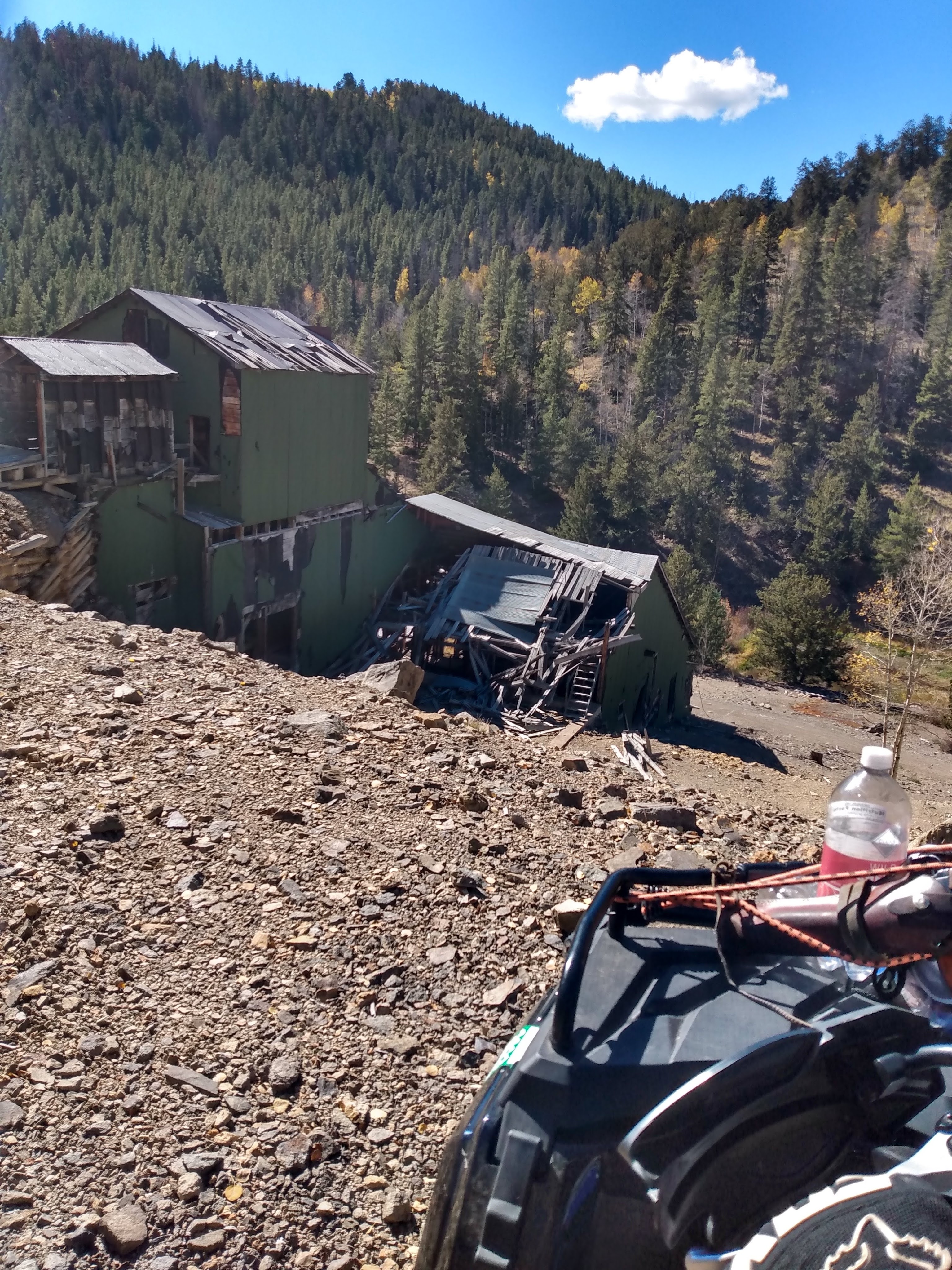
History
Bonanza, Colorado is an old silver mining town, settled in 1880, which I have visited for many years. Originally, purported to have over 100 buildings, including 36 saloons and 7 dancehalls. It also boasted a post office, a drugstore, a hardware store, a town hall, a schoolhouse, a furniture store and two hotels. As the silver mines were played out the population dropped, but the town got a second wind when the Rawley mine was discovered in the 1920’s and they carried the ore out to the mill in Shirley by cabletram. The town was virtually abandoned after ore production fell off in the 1930s.
Bonanza Today
Now, just a small number of year round residents, (17 in 2020 according to wikipedia), some of the old mining buildings are still standing beyond the township. Although the town is kind of cool, these mining structures, which can be found beyond the town up a four-wheel-drive road, are what has always interested me more than the town itself.

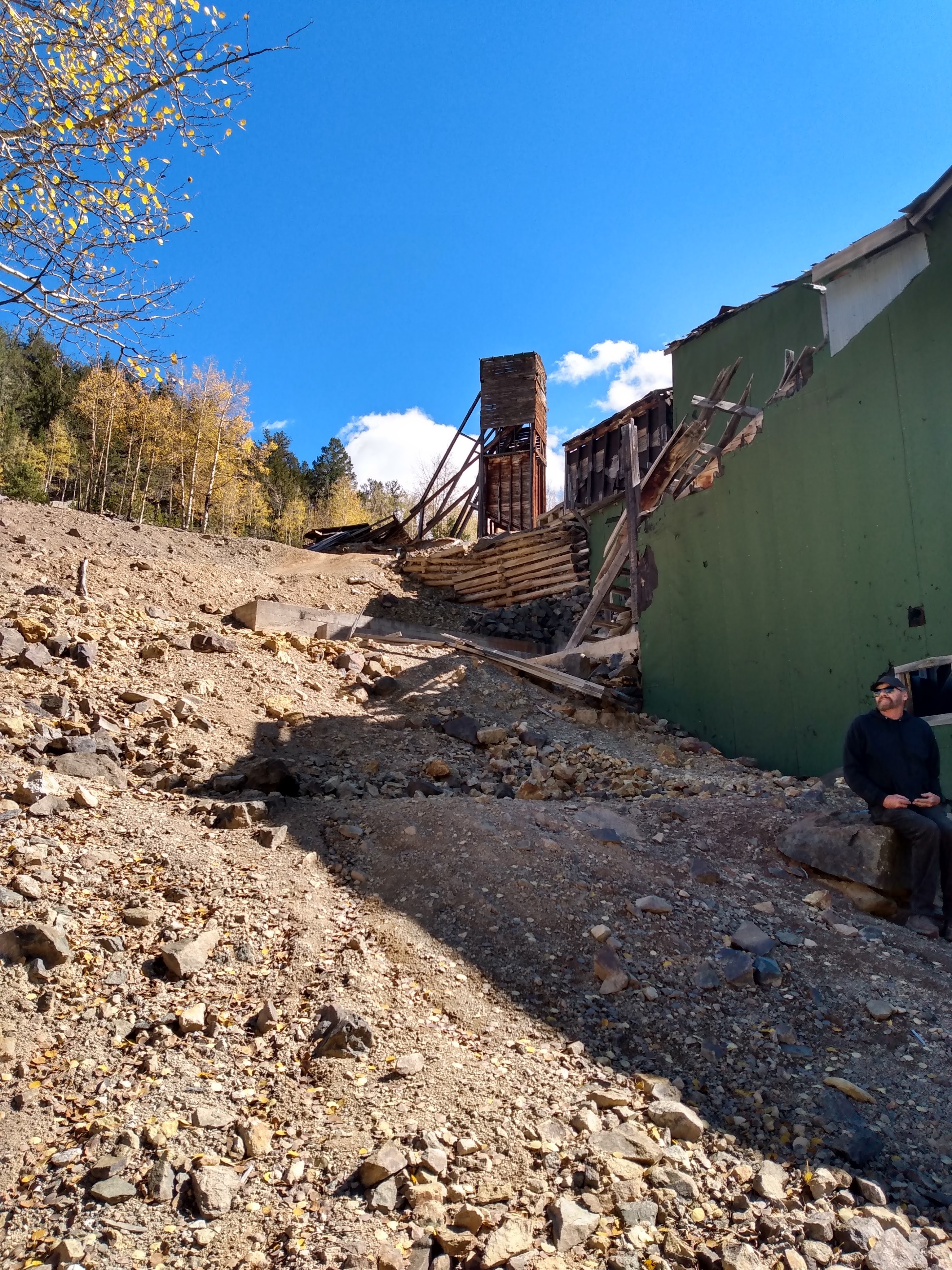
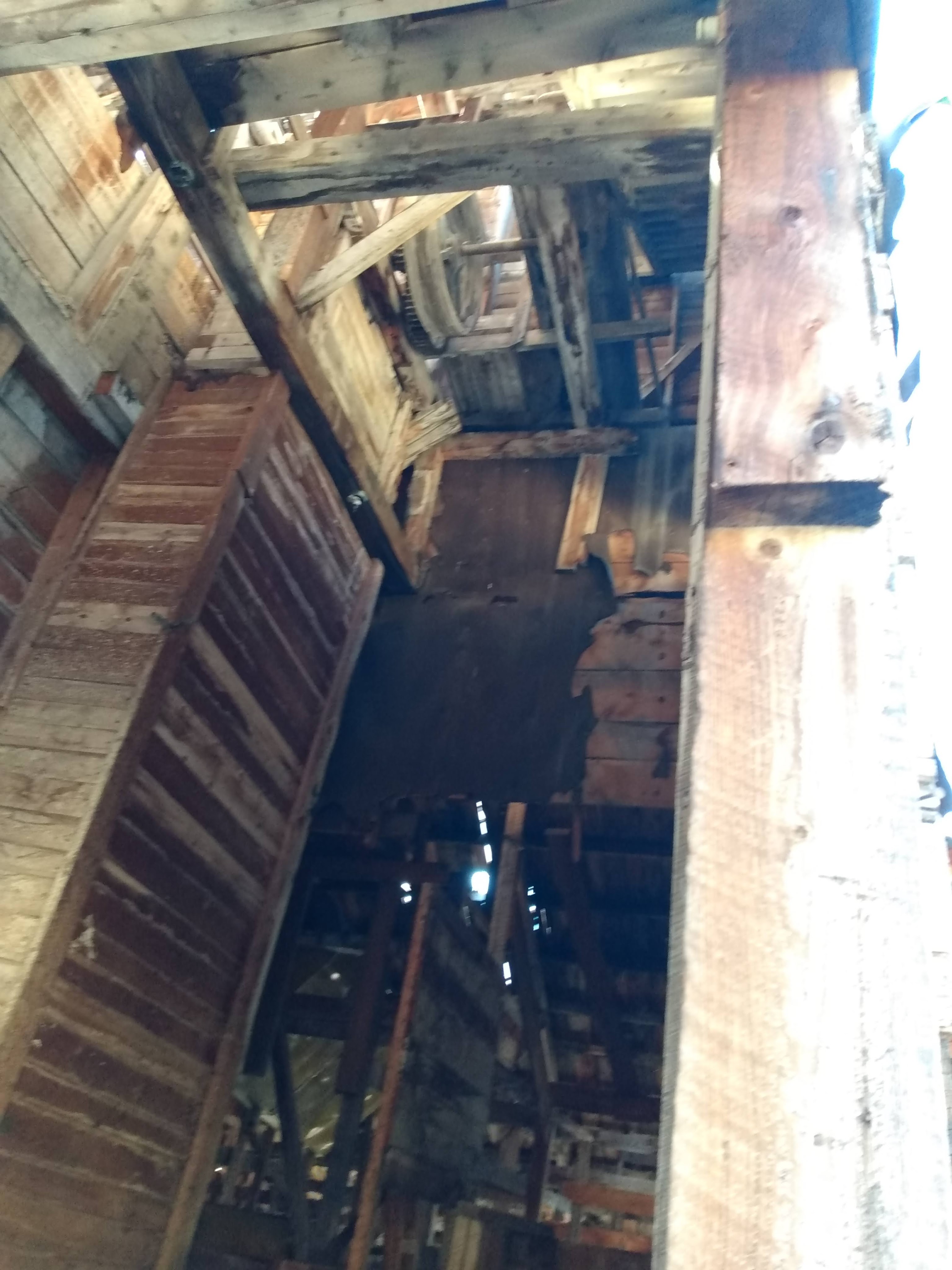


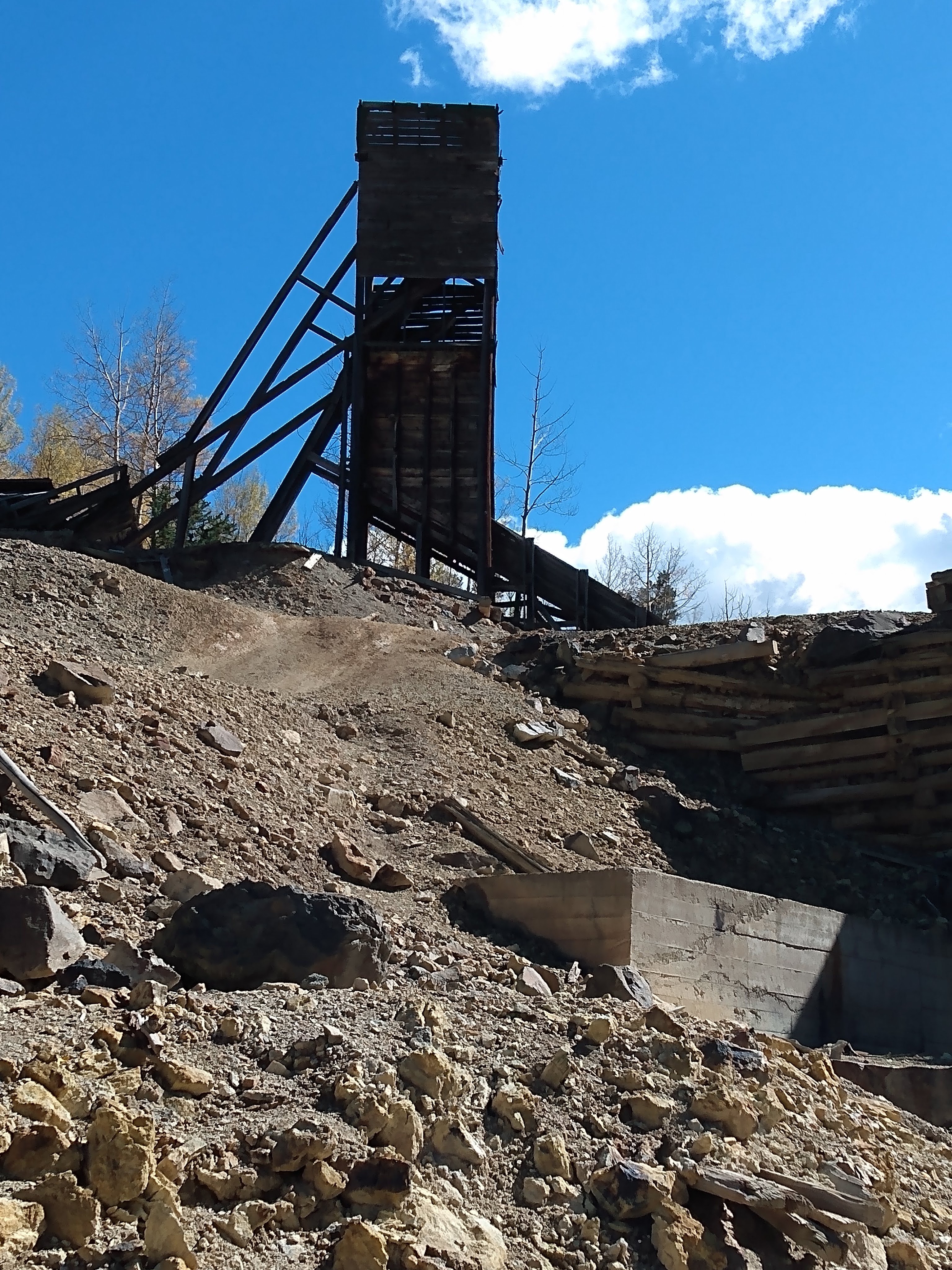

The old ore stamping mill, seen in the photos above, is now crumbling down in disrepair, but in years past I explored the interior with my children. Most of the staircases were intact when I first explored the remains of Bonanza, and at one time, I climbed all the way to the top of the mill, but today only two short stairways are even passable. The equipment that was to large and too heavy to be carried off by scavengers and vandalls, such as the large stamps used to crush the rock so they could seperate the ore, and the engine which ran the pulley system that brought the ore up from the mine remained thirty years ago, but today even these items have been hauled out by those determined enough to collect the scrap metal fee from them.
Exchequerville
Above Bonanza there exists an old cabin, which is the only remians of the townsite of Exchequer, or Exchechequerville. On the hill above is an old cemetary, which caught my interest, so I’ve visited there two or three times. I’ve always wondered what the story was about this little mining town. Whenever I’ve visited, I’ve felt like there was a story there, and it has made me curious. I found very little information about this strange place with one building and a cemetary to attest that it ever existed at all.
All I did find was a tidbit to make an interesting aside, probably of more interest to female authors. According to a site called Haunted at Timberline, Exchequer fame is attributed to three female authors wrote books using Bonanza and Exchequer as their setting. Anne Ellis wrote a sereis of letters chronicaling the pioneer life of she and her family, much of which took place around Exchequer, and the collection is housed in the University of colorado Boulder Libraries. Her book, titiled “The Life of an Ordinary Woman”, is a part of a triad of famous books written by female authors during the gold and silver rushes in the mid-to-late 1800s, including Father Struck it Rich, by Evalyn Walsh McLean and Tomboy Bride, by Harriette Fish Backus. Ellis, her mother and her two brothers are all buried in the cemetary above the old townsite.
Site Seeing
At an elevation of 9, 470 feet, Bonanza is a favortite spot to visit for fall colors, as well. With several four-wheel-drive trails which venture into the hills above, including the Ottis Mears Toll Road, there is plenty of trees and open space for picnicking, hiking, riding, camping, or however else you choose to enjoy the great Colorado outdoors.

References
“Bonanza, CO Ghosttown – By Villa Grove”. Uncover Colorado. Retrieved from https://www.uncovercolorado.com/ghost-towns/bonanza/
“Bonanza, Colorado”. Western Mining History. Retrieved from https://westernmininghistory.com/towns/colorado/bonanza/
“Rawley Mine, Bonanza, Colorado”. onX maps. Retrieved from https://www.onxmaps.com/offroad/trails/us/colorado/rawley-mine-bonanza
Bradford Harrison. “About Exchequer Cemetary”. Haunted at Timberline. Retrieved from http://hauntedattimberline.com/about/exchequercemetery.htm
“Anne Ellis Papers Collection”. University of Colorado Boulder Libraries. Retrieved from https://archives.colorado.edu/repositories/2/resources/96
Share this:

Riding Tunnel Drive on Easter Sunday
Posted: May 8, 2023 Filed under: Holidays, Nature, Recreation | Tags: Arkansas River Walk, Canon City, Colorado, Easter Sunday, Royal Gorge, Writing to be Read Leave a comment
This year was the first time in seven years that I had Easter Sunday off. It was a beautiful day in southern Colorado, so I decided to do something I hadn’t done in several years. In Canon City, Colorado, they have a river walk that now spans from one end of town to the other. I used to ride this trail all the time when we lived in Canon City, and Mike and Josey were kids, but not for many years. When I was riding it, it was in sections and the route was not a continuous one, but they’ve completed the full length since my last ride in Canon City. On Easter Sunday, I started off at the Department of Recreation on Reynold’s Avenue and road clear through town, which is a fairly flat route and an easy ride all along the Arkansas River, to Tunnel Drive, which has a steep climb at the beginning, and then follows the river through the canyon from above.
Tunnel Drive is a path was the old wagon road which follows the river into the Royal Gorge Canyon along the east side. It runs through a series of three tunnels blasted through the granite of the mountainside, hence the name. When I’d come here with my boys, you could see bats hanging from the tunnel ceilings, and near dusk, you might see them flying. But besides bats, these tunnels and this trail have an interesting history. Originally proposed as an open ditch system to carry water to Penrose until citizens turned against the project after blasting caused damage to nearby houses, and then funding fell through, it eventually carried water through the canyon in an elborate piping system to the Canyon City water department. According to Brooke Johnson of the Canon City Daily Record, “A 30-inch wooden pipeline ran from the center of the Royal Gorge alongside the gorge walls across the river bringing water to an open ditch.” In fact, you can still see the remnants of the old pipeline running along the Gorge in spots, high up on the canyon walls, and there are pieces still remaining at the end of the trial.
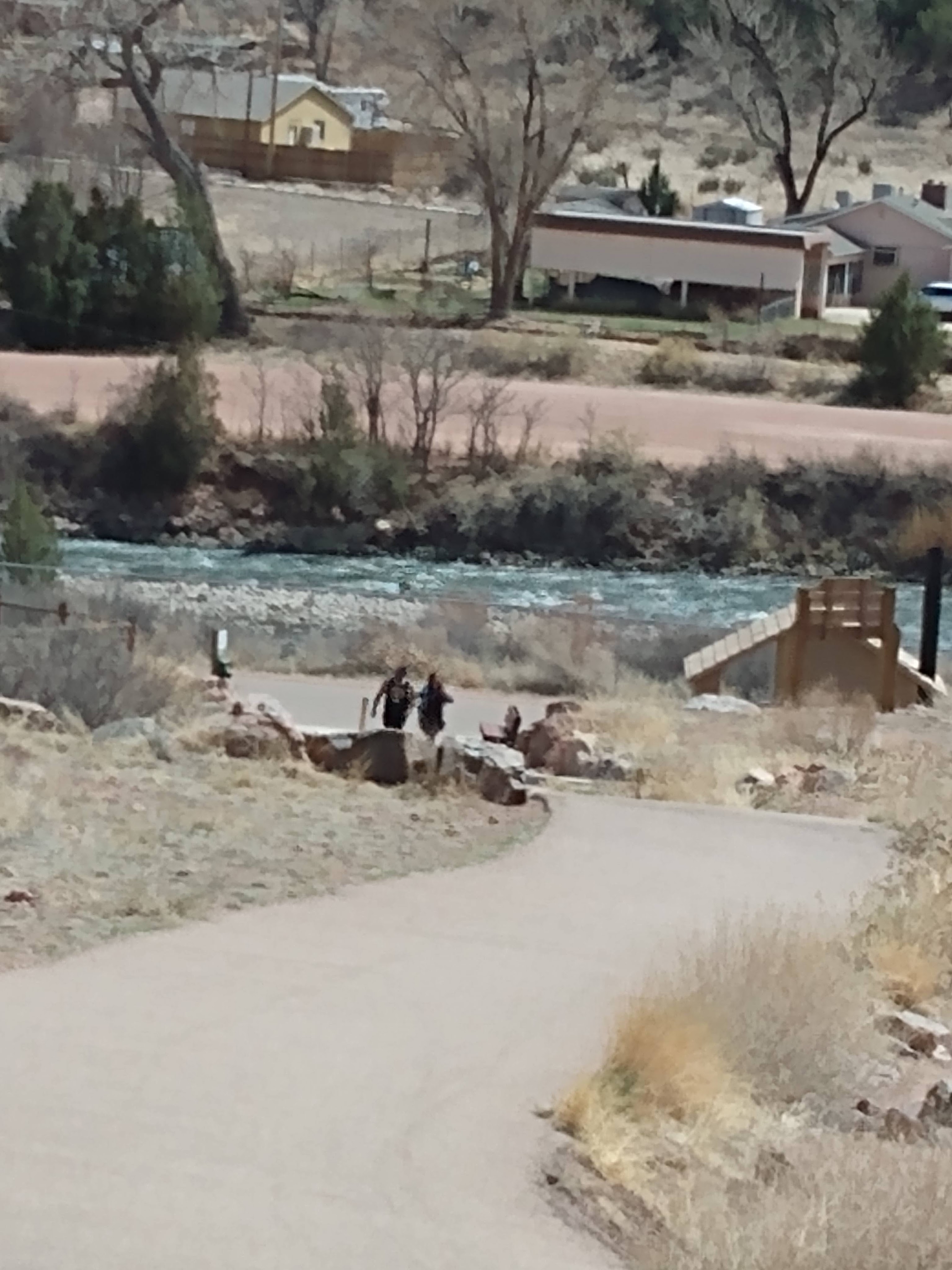
As I mentioned, the start of this trail is pretty steep, and I won’t lie, I walked my bike to the top. Even an electric assist bike needs help for a climb like this one, and this old lady didn’t have it in her. But once up the hill, the ride to the end of the line is fairly smooth through three tunnels and across two bridges to the end of the line, about a three mile ride one way. At the last bridge I was fortunate to see the Easter Sunday train coming down the canyon below, which was kind of cool.
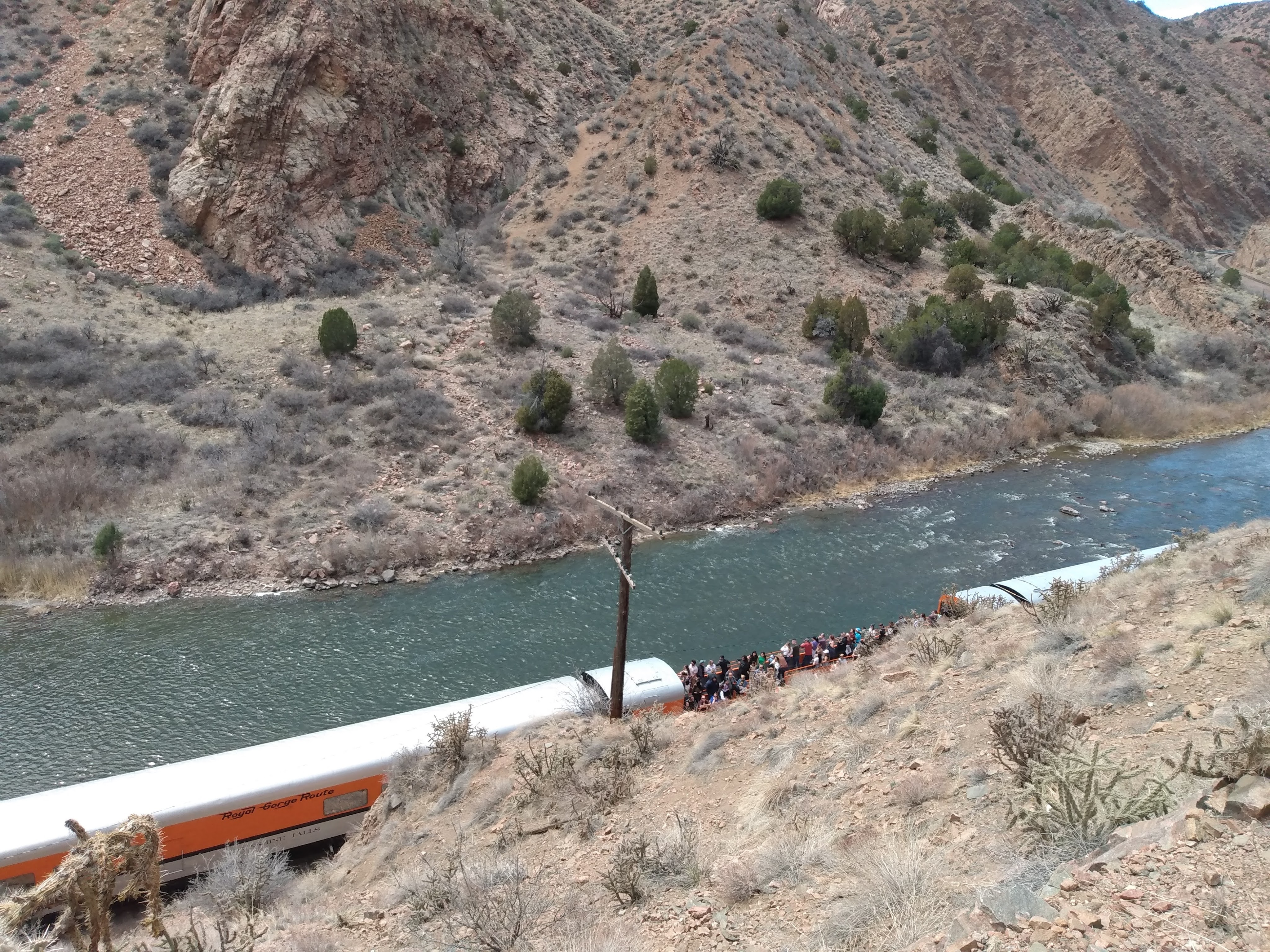

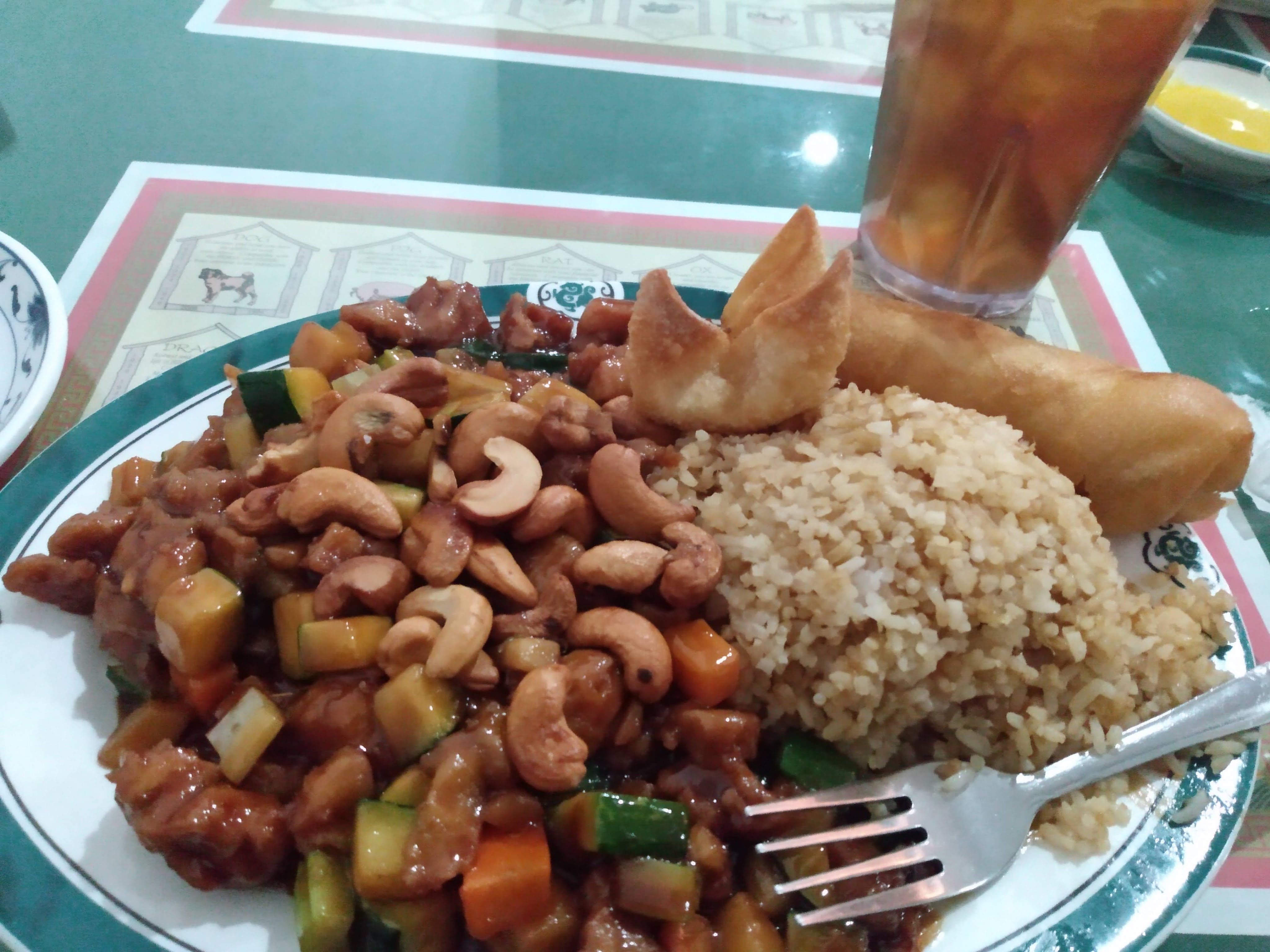
Canon City has it’s own tourist train that runs up the Gorge and back these days, complete with a dining car, an open car and one that is glassed in for those who don’t wish to brave the elements, but still want to enjoy the view. $119.00 per person to take the Easter train. I checked because I was thinking of doing that with my son for Easter Dinner, but a little too pricey for my pocketbook. Instead we ended up going to The China Garden and ate Chinese food for Easter dinner. As usual, Josey wouldn’t let me take his picture, even though we haven’t had a meal on Easter Sunday together for the last seven years, so I settled for photos of the food.

It was a very pleasant day, over all. It was a nice way to spend an Easter Sunday for someone who had maybe forgotten how. The river walk was a pleasant ride, as was the ride over Tunnel Drive. It all brought back fond memories of times past. Maybe I’ll go to the Royal Gorge Bridge for Memorial Day. HAven’t been there in a while either.
References
Royal Gorge Region: Tunnel Drive
Johnson, Brooke. 18 July 2020. “Back in Time: Tunnel Drive Originally Had a Different Purpose”. Canon City Daily Record. Retrieved from https://www.canoncitydailyrecord.com/2020/07/18/back-in-time-tunnel-drive-originally-had-a-different-purpose/
About Kaye Lynne Booth
For Kaye Lynne Booth, writing is a passion. Kaye Lynne is an author with published short fiction and poetry, both online and in print, including her short story collection, Last Call and Other Short Fiction; and her paranormal mystery novella, Hidden Secrets. Kaye holds a dual M.F.A. degree in Creative Writing with emphasis in genre fiction and screenwriting, and an M.A. in publishing. Kaye Lynne is the founder of WordCrafter Quality Writing & Author Services and WordCrafter Press. She also maintains an authors’ blog and website, Writing to be Read, where she publishes content of interest in the literary world.
______________________________________________________________________
Want exclusive content? Join Kaye Lynne Booth & WordCrafter Press Readers’ Group for WordCrafter Press book & event news, including the awesome releases of author Kaye Lynne Booth. She won’t flood your inbox, she NEVER sells her list, and you might get a freebie occasionally. Get a free digital copy of her short story collection, Last Call and Other Short Fiction, just for joining.
Share this:

CFFC: Anything small & Found in nature #photography #nature
Posted: April 15, 2023 Filed under: Nature, Photography, Writing to be Read | Tags: CFFC, Nature, Photography, Poetry Challenge, Small, Writing to be Read 10 Comments
I found this challenge through a post which Robbie Cheadle made earlier this week, where she posted several lovely photos. You can see Robbie’s response to this challenge on Roberta Writes. I went to Cee’s blog to see what all the fuss was about and it sounded like fun, so I decided to join in with this Saturday post. You can find out more about Cee’s cool challenges here.
The smallest of the bird species comes in a variety of colors with a plethora of different types of Hummingbirds all over the world. Above is a male Rufus Hummingbird drinking from one of my feeders while hovering in mid-air.

The small blooms of a Geranium flower.

The Indian Paintbrush flower comes in bright, dazzling orange.

Dwarf Marigold growing in my garden always brightens things up for me.
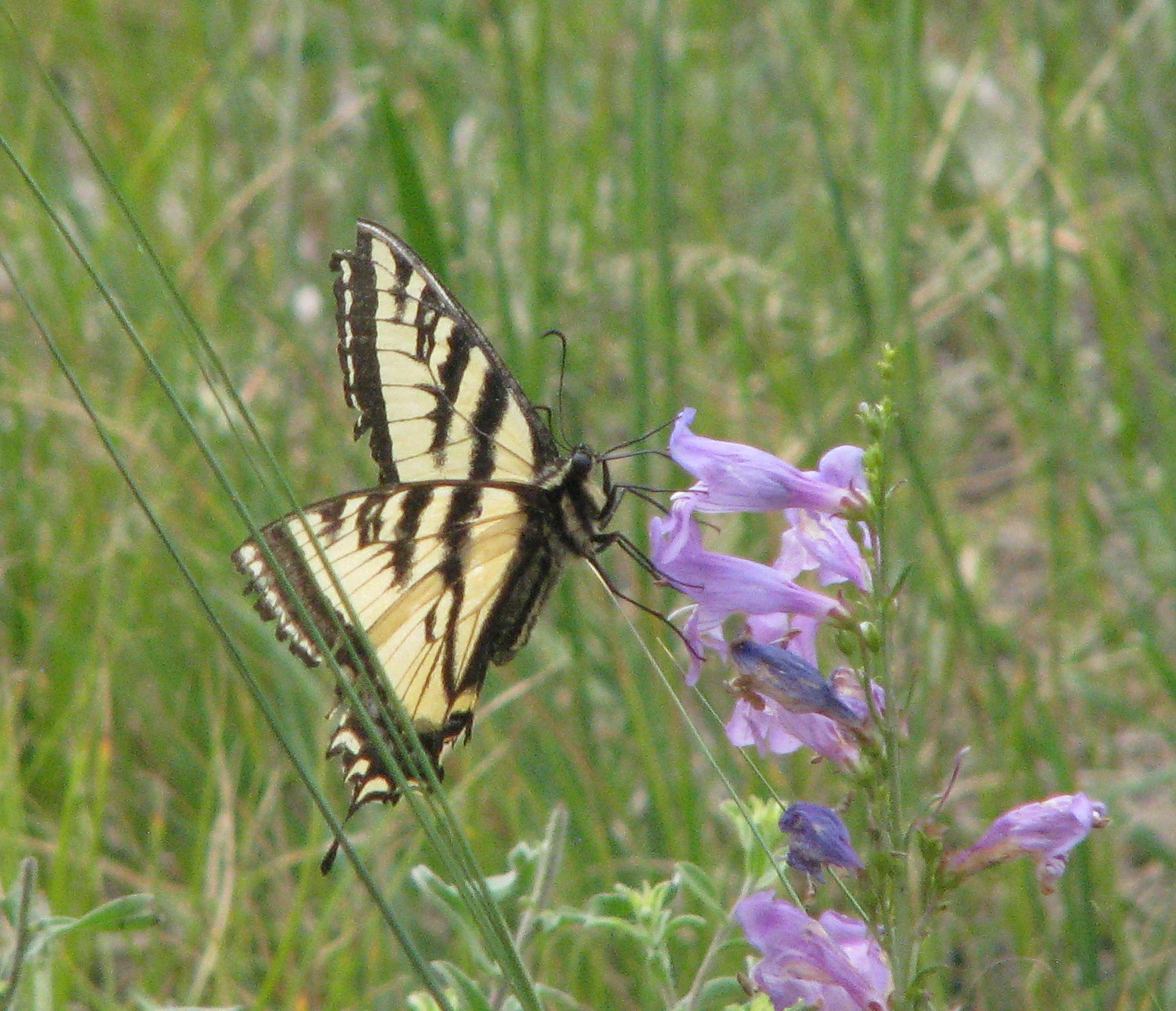
A butterfly lands on the tiny blooms of a purple bell flower.
_______________________________________________________________________
For Kaye Lynne Booth, writing is a passion. Kaye Lynne is an author with published short fiction and poetry, both online and in print, including her short story collection, Last Call and Other Short Fiction; and her paranormal mystery novella, Hidden Secrets; and book 1 of her Women in the West adventure series, Delilah. Kaye holds a dual M.F.A. degree in Creative Writing with emphasis in genre fiction and screenwriting, and an M.A. in publishing. Kaye Lynne is the founder of WordCrafter Quality Writing & Author Services and WordCrafter Press. She also maintains an authors’ blog and website, Writing to be Read, where she publishes content of interest in the literary world.
__________________________________________________________
Want exclusive content? Join Kaye Lynne Booth & WordCrafter Press Readers’ Group for WordCrafter Press book & event news, including the awesome releases of author Kaye Lynne Booth. She won’t flood your inbox, she NEVER sells her list, and you might get a freebie occasionally. Get a free digital copy of her short story collection, Last Call and Other Short Fiction, just for joining.
Share this:

Growing Bookworms – Teaching children about nature and conservation
Posted: January 11, 2023 Filed under: Books, Children's Books, Nature | Tags: Conservation, Growing Bookworms, Nature, Parenting, Robbie Cheadle, Writing to be Read 45 Comments
Teaching our children about the natural environment and conservation is one of the greatest gifts we can give them. There are a few good ways of making sharing about nature and conservation with children, as follows:
- Reading books about nature with your child;
- Exploring nature with your child;
- Art and play; and
- Watching documentaries
Reading
There are a number of wonderful children’s books that subtly teach children about the wonders of nature. One is The Secret Garden by Frances Hodgson Burnett when Dicken shows Mary how to care for the locked garden and plant new flowers. Journey to the River Sea by Eva Ibbotson is another. Set along the Amazon River in Brazil, this book has a strong theme about the importance of nature to the human spirit. A few other wonderful children’s books about animals are White Fang by Jack London, The Incredible Journey by Sheila Burnford, Charlotte’s Webb by E.B. White, Jock of the Bushveld by Sir James Percy FitzPatrick, and The Jungle Book by Rudyard Kipling.
This is the song, The Bare Necessities, from Disney’s The Jungle Book, when Baloo, the Sloth Bear, meets Mowgli, the human boy.
There are also some excellent non-fiction books that explain a lot about nature. One of my favourites is Nature Cross-Sections by Richard Orr which includes wonderful picture spreads of cross-sections of, amongst others, a beehive, a tide pool, a termite mound, and a beaver lodge.

The Disney Mickey Wonders Why series is also terrific for young children. Laid out as a series of questions such as Why is the sky blue? and Why is the grass green? these books include comprehensive, yet simple, answers and lovely illustrations. You can find the Micky Wonders Why series on Amazon as a set of books or as single books.
Do you have any wonderful books for children about nature that you can recommend?
Exploring nature
There are numerous ways to explore nature and its bounty with your child from nature walks to visiting places of interest like aquariums, bunny parks, and game reserves.
Cooking or baking with your child is also a wonderful way of teaching your child about natures bounty and the products the animal kingdom contributes to our lives including eggs and fresh milk. I was surprised to discover that some city children don’t know that milk and other dairy products generally come from cows.
Art and play
When my sons were younger, we used to play games that included animals. We built a game reserve in the sand pit and set out all the toy animals. We learned about the natural habitat of different animals and that some animals live in rocky terrain, some in savannah areas and some in the forest. We created the right habitat using pot plants and garden rocks and put the correct animals in the correct areas. We also played a water game with a large plastic shell full of water, rocks and a few plants. The water animals lived in the pond. Small children love playing in sand and water and it has many benefits for them. It was amazing how the boys and their friends learned to work together with these games.
I also did a lot of art with my children. We made a swamp from an old cardboard box, paper and paint and learned about the animals that live in a swamp including, of course, Shrek and Fiona. We made centipedes from parts of egg boxes and pipe cleaners and built a volcano from paper mache. When it comes to art, the options are limitless for learning and lots of tactile fun.
Watching documentaries
There are numerous amazing documentaries available that parents can watch with their children. It is always fun to discuss the details of these shows with children afterwards and explore and develop their thoughts and impressions from the information and visuals provided.
Conservation
It is not enough just to talk about conservation, you have to lead by example and demonstrate through your own choices and actions the importance of helping the planet and all its creatures and forms of life to thrive. I will expand on conservation and leading by example in a future post.
About Robbie Cheadle

Robbie Cheadle is a South African children’s author and poet with thirteen children’s books and two poetry books.
The eight Sir Chocolate children’s picture books, co-authored by Robbie and Michael Cheadle, are written in sweet, short rhymes which are easy for young children to follow and are illustrated with pictures of delicious cakes and cake decorations. Each book also includes simple recipes or biscuit art directions which children can make under adult supervision.
Robbie and Michael have recently introduced the first book in the Sir Chocolate holidays and high days book series. Sir Chocolate and the Missing Christmas harp is available on Kindle Unlimited and as an ebook and paperback from Amazon. This series is illustrated with Robbie Cheadle’s gorgeous cake and fondant artwork and includes themed activities and recipes for adults to make with children.
Robbie and Michael have also written Haunted Halloween Holiday, a delightful fantasy story for children aged 5 to 9. Count Sugular and his family hire a caravan to attend a Halloween party at the Haunted House in Ghost Valley. This story is also beautifully illustrated with Robbie’s fondant and cake art creations.
Robbie has also published two books for older children which incorporate recipes that are relevant to the storylines as well as one micro read with a Christmas theme.
Robbie has two adult novels in the paranormal historical and supernatural fantasy genres published under the name Roberta Eaton Cheadle. She also has short stories, in the horror and paranormal genre, and poems included in several anthologies.
Robbie Cheadle contributes two monthly posts to https://writingtoberead.com/, namely, Growing Bookworms, a series providing advice to caregivers on how to encourage children to embrace learning, and Treasuring Poetry, a series aimed at introducing poetry lovers to new poets and poetry books.
In addition, Roberta Eaton Cheadle contributes one monthly post to https://writingtoberead.com/ called Dark Origins: Nursery Rhymes and Fairy Stories.
Find Robbie Cheadle
Blog: https://www.robbiecheadle.co.za/
Blog: robbiesinspiration.wordpress.com
Twitter: BakeandWrite
YouTube: https://www.youtube.com/channel/UCVyFo_OJLPqFa9ZhHnCfHUA
Facebook: Sir Chocolate Books
______________________________________________________________________________________________
Want to be sure not to miss any of Robbie’s “Growing Bookworms” segments? Subscribe to Writing to be Read for e-mail notifications whenever new content is posted or follow WtbR on WordPress. If you found it interesting or entertaining, please share.