Day 5 of the WordCrafter My Backyard Friends Book Blog Tour
Posted: July 19, 2024 Filed under: Animals, Book Release, Book Review, Books, Children's Books, Review, WordCrafter Book Blog Tours 2 Comments
Day 5 of the WordCrafter My Backyard Friends Book Blog Tour brings us to Undawnted, where we meet Timothy Turtle in a mini-interview and learn some fun facts about turtles. Plus, DL Mullan offers a review of Timothy Turtle Discovers Jellybeans. Join us as we continue to send of this wonderful kid’s book series written by Kaye Lynne Booth and illustrated by Robbie Cheadle.
http://www.undawnted.com/2024/07/my-backyard-friends-meet-timothy-turtle
Share this:

Day 4 of the WordCrafter My Backyard Friends Book Blog Tour
Posted: July 18, 2024 Filed under: Animals, Book Release, Books, Children's Books, Guest Post, Illustrations, WordCrafter Book Blog Tours, WordCrafter Press | Tags: Kaye Lynne Booth, My Backyard Friends series, Robbie Cheadle, Timothy Turtle Discovers JEllybeans, WordCrafter Press Leave a comment
Today we’re over at Robbie’s Inspiration for Day 4 of the WordCrafter My Backyard Friends Book Blog Tour with a guest post from me, some fun facts about beavers, and a mini-interview with Robbie and Becky Beaver. Join us in helping to send off the series and raise enough to publish them in color print editions.
Share this:

Day 3 of the WordCrafter My Backyard Friends Book Blog Tour
Posted: July 17, 2024 Filed under: Animals, Book Release, Book Review, Books, Children's Books, Interview, Review, WordCrafter Book Blog Tours, WordCrafter Press | Tags: Book Reveiw, Character interview, Children's Books, Heather Hummingbird, Heather Hummingbird Makes a NEw Friend, Kids Books, My Backyard Friends series, WordCrafter Book Blog Tours 2 CommentsJoin us on Undawnted for day 3 of the WordCrafter My Backyard Friends Book Blog Tour where DL Mullan interviews Heather Hummingbird and offers a review of Heather Hummingbird Makes a New Friend. Come join in the fun as we send off all three of the wonderful books in the My Backyard Friends Kid’s Book Series.
http://www.undawnted.com/2024/07/my-backyard-friends-meet-heather.html
Share this:

Growing Bookworms – illustrating children’s books #childrensfiction #growingbookworms #readingcommunity
Posted: July 10, 2024 Filed under: Animals, Birds, Books, Children's Books, Fiction, Growing Bookworms, Illustrations, Writing | Tags: Children's Books, Growing Bookworms, Illustrations, Kid's Series, My Backyard Friends series, Robbie Cheadle, WordCrafter Press, Writing to be Read 47 Comments
I have always loved reading. I started reading at the age of four years old and have never stopped. I consume books like dinners. When I was a little girl, I used to read books from the library. I didn’t own many books myself. I loved books with bold and bright illustrations and I always think of Richard Scarry’s books first.

Richard Scarry used personification for the animals in his books. They all walk and talk like humans and they wear clothes. They are delightful, but they are not representative of the world of nature and the reality of nature. When I was little, I knew about animals. I was exposed to them and I knew that milk came from cows, eggs came from chickens, and other things about meat that I’ve always tried not to think about to much. As I grew older, I read other books that included the personification of animals. One of my favourite books in this genre is Wind in the Willows by Kenneth Grahame.
Last year, when I discovered an aptitude for drawing and painting, I thought I would turn my hand to creating pictures of the animals and birds I love so much. I have now created several animal pictures which you can see on my art page here:
In June 2023, Kaye Lynne asked me if I would like to illustrate her My Backyard Friends books. I thought about it and decided to give it a go, even though I hadn’t ever tried to do drawn/painted illustrations before. I was busy at the time with creating the illustrations and story for my latest children’s book, Neema the Misfit Giraffe.
Before embarking on illustrating books for children, I reflected for some time on what the best type of illustration would be for modern children. Children who grow up in cities now don’t have much interaction with animals. They don’t know that milk comes from cows and eggs come from chickens. I decided it was necessary for them to see the reality of the animal world and not a fantasy, personified versions. Especially given the Sixth Mass Extinction our planet is currently facing with the endangerment of many of our animal species world wide. If believed it was better for children to be exposed to wildlife in a true and natural way. I hoped it would help to stimulate interest and passion for our animals. Afterall, our children are the next generation and will have to carry the torch for the salvation of what is left of the animal kingdom.
It is for these reasons that my drawings and paintings of wildlife and birds in my own children’s books and in Kaye Lynne’s children’s books are based off real photographs and are not personified or animated in any way. I am happy with how the illustrations have worked out and I hope that they will make a small difference towards saving our limited supply of remaining animals and birds.

About Robbie Cheadle
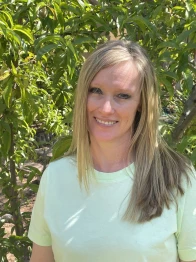
Award-winning, bestselling author, Robbie Cheadle, has published fifteen children’s book and three poetry books. Her work has also appeared in poetry and short story anthologies.
Robbie also has two novels published under the name of Roberta Eaton Cheadle and has horror, paranormal, and fantasy short stories featured in several anthologies under this name.
The eleven Sir Chocolate children’s picture books, co-authored by Robbie and Michael Cheadle, are written in sweet, short rhymes which are easy for young children to follow and are illustrated with pictures of delicious cakes and cake decorations. Each book also includes simple recipes or biscuit art directions which children can make under adult supervision.
Robbie and Michael’s new Southern African Safari Adventures series is aimed at teaching young children about Southern African wildlife in a fun and entertaining way. Each book contains a rhyming verse story about a particular animal, as well as illustrations by Robbie Cheadle, photographs and links to video footage about that animal.
Robbie’s blog includes recipes, fondant and cake artwork, poetry, and book reviews. https://robbiesinspiration.wordpress.com/
_____________________________________________
Want to be sure not to miss any of Robbie’s “Growing Bookworms” segments? Subscribe to Writing to be Read for e-mail notifications whenever new content is posted or follow WtbR on WordPress. If you found it interesting or entertaining, please share.
________________________________________________
This segment of “Growing Bookworms” is sponsored by the My Backyard Friends Kid’s Book Series and WordCrafter Press.

The My Backyard Friends kid’s book series is inspired by the birds and animals that visit the author Kaye Lynne Booth’s mountain home. Beautiful illustrations by children’s author, poet, and illustrator, Robbie Cheadle, bring the unique voices of the animal characters to life.
Pre-Oder Your Copy Now.
Heather Hummingbird Makes a New Friend (Ages 3-5): https://books2read.com/MBF-HeatherHummingbird
Timothy Turtle Discovers Jellybeans (Ages 3-5): https://books2read.com/MBF-TimothyTurtle
Charlie Chickadee Gets a New Home (Ages 6-8): https://books2read.com/MBF-CharlieChickadee
Share this:

A Day at the Lake
Posted: June 17, 2024 Filed under: Animals, Bird Watching, Nature, Writing to be Read | Tags: Bird Watching, Ducks, Geese, Kaye Lynne Booth, Storks, Waterfowl, Writing to be Read 2 Comments
I always enjoy going places where I can see different birds from those that visit my yard. Recently I visited a lake in Salida, Colorado, where ducks and geese frequent. I spent a pleasant afternoon walking around the lake and I was fortunate to be there at a time when the storks stopped by for a visit. You can see them perched in the photo above. They are quite large, and interesting looking, but oh, so graceful in flight. Unfortunately, I wasn’t able to capture their departure as they lit out for their next stop. But I did get some shots of the cute duckies and geese below.


I found a better picture of the majestic stork. Different trip, different lake. This one was spotted on Lake DeWeese, just outside Westcliffe, Colorado.

_________________________________________
About the Author

For Kaye Lynne Booth, writing is a passion. Kaye Lynne is an author with published short fiction and poetry, both online and in print, including her short story collection, Last Call and Other Short Fiction; and her paranormal mystery novella, Hidden Secrets; Books 1 & 2 of her Women in the West adventure series, Delilah and Sarah, and her Time-Travel Adventure novel, The Rock Star & The Outlaw. Kaye holds a dual M.F.A. degree in Creative Writing with emphasis in genre fiction and screenwriting, and an M.A. in publishing. Kaye Lynne is the founder of WordCrafter Quality Writing & Author Services and WordCrafter Press. She also maintains an authors’ blog and website, Writing to be Read, where she publishes content of interest in the literary world.
_______________________________________
If you’d like to show your support for this author, you can make a donation to Writing to be Read for as little as a cup of coffee, or check out the WtbR Sponsor Page and let me advertise your book.
Share this:

Afternoon Visitor
Posted: May 29, 2024 Filed under: Animals, Poetry | Tags: Kaye Lynne Booth, Poetry, Writing to be Read 3 Comments
Afternoon Visitor
Sunning in my driveway
A warm place for a long journey’s rest.
Three shades of green
the darkest, almost onyx
the lightest, a pale yellowish hue
Not a diamond pattern, but close enough.
Stopping for a closer look
circling my uninvited guest at a safe distance
yellow eyes gazing back at me
tongue flicking.
Head turning, eyes following.
a tail-shake in wispy warning, but no rattling.
The rattle will form soon
the diamond will become more defined.
But today, I was fooled.
I watched as it slithered off
to find a better place to nap.
_______________
About Kaye Lynne Booth
For Kaye Lynne Booth, writing is a passion. Kaye Lynne is an author with published short fiction and poetry, both online and in print, including her short story collection, Last Call and Other Short Fiction; and her paranormal mystery novella, Hidden Secrets; Books 1 & 2 of her Women in the West adventure series, Delilah and Sarah, and her Time-Travel Adventure novel, The Rock Star & The Outlaw. Kaye holds a dual M.F.A. degree in Creative Writing with emphasis in genre fiction and screenwriting, and an M.A. in publishing. Kaye Lynne is the founder of WordCrafter Quality Writing & Author Services and WordCrafter Press. She also maintains an authors’ blog and website, Writing to be Read, where she publishes content of interest in the literary world.
__________________
Want exclusive content? Join Kaye Lynne Booth & WordCrafter Press Readers’ Group for WordCrafter Press book & event news, including the awesome releases of author Kaye Lynne Booth. She won’t flood your inbox, she NEVER sells her list, and you might get a freebie occasionally. Get a free digital copy of her short story collection, Last Call and Other Short Fiction, just for joining.
Share this:

In Touch With Nature – The difference between hyenas and wild dogs #hyena #wilddogs #Intouchwithnature
Posted: May 22, 2024 Filed under: Africa, Animals, In Touch With Nature, Poetry, Wildlife | Tags: African Wild Dogs, Hyenas, In Touch With Nature, Lion Scream, Painted Dogs, Poetry, Robbie Cheadle, Wildlife, Writing to be Read 56 Comments
My In Touch With Nature post last month was all about wild dogs. You can read that post here: https://writingtoberead.com/2024/04/24/in-touch-with-nature-highly-endangered-african-painted-wild-dogs-africanwildlife-africanwilddogs/
Several readers questioned the relationship between hyenas and wild dogs. I didn’t realise that there was confusion between these creatures because I’ve grown up knowing the differences (or some of them at least). This month, I am providing some insights into those differences.
First and foremost, wild dogs are canines and hyenas are Hyaenidae. Hyenas are considered to be ‘cat-like’ carnivores and are evolutionarily closer to felines than canines.
Appearance
Wild dogs have large, rounded ears that stand up on their heads as if perpetually listening. The African painted wild dog has a pattern on its coat that resembles paint splashes in white, ochre, and black. Wild dogs are the largest of the African canine and measure between 60 and 75 centimetres tall at their shoulders. They weight between 18 and 36 kilograms and have long, slender legs.

Hyenas have smaller ears that they draw back towards their heads. The spotted hyena has a brown-coloured coat with small dark brown spots scattered all over it and a main of longer hair. Spotted hyenas have short hind legs and longer front legs. They are larger and stronger than wild dogs having a height of up to 92 centimetres at the shoulder and a weight of up to 86 kilograms.
Behaviour
Wild dogs
Wild dogs are always on the move as they are threatened by bigger, stronger predators. They live in packs ranging from approximately 7 to 15 members and roam huge territories in search of food. Male wild dogs stay with their birth packs and females leave and find another one to join.
Packs are usually led by a dominant pair, although every member plays a valuable role. Team players, wild dogs care for other members of their pack and never leave a pack member behind.
Wild dogs are known for their endurance and can run long distances to wear down their prey. Wild dogs can reach a top speed of approximately 60 kilometres per hour (44 miles per hour).
Wild dogs are primarily diurnal like cheetahs, meaning they hunt during the day. Wild dogs are excellent hunters with an 85% hunting success rate, making them one of the most successful predators in the world. Working as a team, they can wear down animals like zebras, wildebeest (gnu) and large antelope like kudu. During a hunt, each member assumes a role as follows: subordinate males separate the target, the pack leader runs down the prey, and the others fan out to cover escape routes. Wild dogs nip and tear at their prey with their teeth as it continues to run away from them.
Hyenas
Hyenas live in groups, or clans, of between 6 and 100 individuals. Their complex social hierarchies are dominated by the larger and more aggressive females. They are much more aggressive than wild dogs and spend a lot of time fighting among each other. Despite this behaviour, the members of the pack work together to raise their young. Juveniles eat first at kills and the older females tend to sick and elderly pack members, even regurgitating food for them.
Opportunistic hunters and scavengers, hyenas have a reputation for stealing food from other predators. Hyenas are nocturnal meaning they hunt at night. Although they look ungainly, spotted hyenas can pursue prey for several kilometres without tiring. They can reach a top speed of approximately 60 kilometres per hour (37 miles per hour) and their heart is, proportionately, twice as big as a lion’s. Spotted hyenas often hunt alone but they can take down larger prey if they hunt as a pack. However, if the opportunity presents itself, they will steal from other predators including cheetahs and wild dogs.


YT video of a young spotted hyena in the wild:
YT video of an adult spotted hyena:
The poem below, from my book Lion Scream, is about the unusual genitalia and birthing process of spotted hyenas. I wrote a guest post about which featured on my lovely blogging friend, Meeks’, blog. If you missed it, you can read it here: https://acflory.wordpress.com/2023/03/19/the-hyena-natures-feminist/
Nature’s Trick
My gender is obscure
One of nature’s tricks
I have the same appendages as my mate
I am also bigger
Much more aggressive
***
Birthing is difficult
My babies – stillborn
After suffocating in my birth canal
Only the strong survive
To continue my line
***
When my pack makes a kill
I get my share first
When all females have fed, and
then our offspring
Then, and only then
Do the males partake

About Roberta Eaton Cheadle

Award-winning, bestselling author, Roberta Eaton Cheadle, is a South African writer and poet specialising in historical, paranormal, and horror novels and short stories. She is an avid reader in these genres and her writing has been influenced by famous authors including Bram Stoker, Edgar Allan Poe, Amor Towles, Stephen Crane, Enrich Maria Remarque, George Orwell, Stephen King, and Colleen McCullough.
Roberta has two published novels and has horror, paranormal, and fantasy short stories included in several anthologies. She is also a contributor to the Ask the Authors 2022 (WordCrafter Writing Reference series).
Roberta also has thirteen children’s books and two poetry books published under the name of Robbie Cheadle, and has poems and short stories featured in several anthologies under this name.
Roberta’s blog features discussions about classic books, book reviews, poetry, and photography. https://roberta-writes.com/.
Find Roberta Eaton Cheadle
Blog: https://wordpress.com/view/robertawrites235681907.wordpress.com
Twitter: https://twitter.com/RobertaEaton17
Facebook: https://www.facebook.com/robertawrites
Amazon: https://www.amazon.com/Roberta-Eaton-Cheadle/e/B08RSNJQZ5
_____________________________________________________________________________________________
Want to be sure not to miss any of Robbie’s “In Touch With Nature” segments? Subscribe to Writing to be Read for e-mail notifications whenever new content is posted or follow WtbR on WordPress. If you found it interesting or entertaining, please share.
Share this:

In Touch with Nature – Highly endangered African painted wild dogs #Africanwildlife #Africanwilddogs
Posted: April 24, 2024 Filed under: Africa, Animals, In Touch With Nature, Nature, Wildlife | Tags: African Wild Dogs, In Touch With Nature, Nature, Robbie Cheadle, Wildlife, Writing to be Read 77 CommentsThe African wild dog, also called the hunting dog or African painted dog, is currently listed as endangered on the IUCN Red List. According to the African Wildlife Foundation, only 6,600 African wild dogs remain in the wild across the entire African continent. The main reason for their endangerment is habitat fragmentation (the most common reason for wildlife endangerment) which causes conflict between these predators and humans. Throughout Africa, wild dogs have been shot and poisoned by farmers for loss of livestock, even though these losses are frequently due to other predators including hyenas and leopards. In addition, African wild dogs also suffer from endemic disease outbreaks.
African wild dogs have a mottled coat comprising of yellow, black and white patches. They have long legs with flat, broad heads, a short black muzzle, and large round ears.
Wild dogs have strong social bonds and live in packs of two to twenty-seven adults and yearling pups.
Wild dogs are excellent hunters. They hunt in packs of six to twenty individuals and catch their prey by chasing them to exhaustion. Wild dogs can run at speeds of up to 66 km/h (41 mph) for between 10 to 60 continuous minutes. They have an 80 percent kill success rate with is higher than bigger predators like lions and leopards.
Observers have noticed that prior to setting out to hunt, the wild dogs’ populations in the Okavango Delta of Botswana rally to determine whether they should depart. Departure is more likely when more individual dogs sneeze, a short sharp exhale through the nostrils. If a dominant dog initiates by sneezing, around three additional sneezes guarantee departure.
Sighting a pack of African wild dogs in the wild has been on my bucket list for a long time. I was lucky enough to see a pack of wild dogs at the Bthongo Rhino & Lion Nature Reserve but they live inside a relatively small enclosure and are fed.

Obviously, seeing wild dogs in captivity is not quite the same as seeing them in a national park or game reserve. I was, therefore, delighted when we saw wild dogs at Madikwe Game Reserve not once, but two days in a row. We were fortunate enough to observe, the hunt (chase), devouring of a kill, and wild dogs relaxing and having fun.


The poem below, Dog Vote, is extracted from my poetry book, Lion Scream.
Dog Vote
They yelp and growl at play
Then sleep in a mass
Of black fur, overlapped with yellow and white
They are invisible
Among the shadows
***
Having strong social bonds
Wild dogs live in packs
Dominated by a single breeding pair
But they all have a say
Conveyed as a vote
***
Before leaving to hunt
The adults rally
Sneezing to express a preference to hunt
The majority rules
All members comply
This is my YT video of African wild dogs playing:
African wild dogs in a gathering:
About Roberta Eaton Cheadle
Award-winning, bestselling author, Roberta Eaton Cheadle, is a South African writer and poet specialising in historical, paranormal, and horror novels and short stories. She is an avid reader in these genres and her writing has been influenced by famous authors including Bram Stoker, Edgar Allan Poe, Amor Towles, Stephen Crane, Enrich Maria Remarque, George Orwell, Stephen King, and Colleen McCullough.
Roberta has two published novels and has horror, paranormal, and fantasy short stories included in several anthologies. She is also a contributor to the Ask the Authors 2022 (WordCrafter Writing Reference series).
Roberta also has thirteen children’s books and two poetry books published under the name of Robbie Cheadle, and has poems and short stories featured in several anthologies under this name.
Roberta’s blog features discussions about classic books, book reviews, poetry, and photography. https://roberta-writes.com/.
Find Roberta Eaton Cheadle
Blog: https://wordpress.com/view/robertawrites235681907.wordpress.com
Twitter: https://twitter.com/RobertaEaton17
Facebook: https://www.facebook.com/robertawrites
Amazon: https://www.amazon.com/Roberta-Eaton-Cheadle/e/B08RSNJQZ5
_____________________________________________________________________________________________
Want to be sure not to miss any of Robbie’s “In Touch With Nature” segments? Subscribe to Writing to be Read for e-mail notifications whenever new content is posted or follow WtbR on WordPress. If you found it interesting or entertaining, please share.
Share this:

In Touch With Nature – Lionesses, the queens of the savannah #lionesses #wildlife
Posted: March 27, 2024 Filed under: Animals, In Touch With Nature, Nature, Writing to be Read | Tags: Animal Kindom, In Touch With Nature, Lions, Robbie Cheadle, Writing to be Read 58 CommentsLast month, I discussed the role of male lions in the pride. If you missed it, you can read it here: https://writingtoberead.com/2024/02/28/in-touch-with-nature-the-vulnerable-life-of-male-lions-wildlife-lions/. This month I’m talking about female lions.
Lionesses are the primary hunters within the pride. They hunt in groups of three to eight females, all of whom are usually related. Lionesses display exceptional teamwork during hunts, deploying strategic hunting techniques, such as coordinated flanking and ambushing, to outmaneuver their prey. Their synchronized approach increases the likelihood of a successful kill. Lionesses, working together, are able to take down a target twice their size. Lion prey includes zebra, wildebeests, buffalo, antelope and other grassland animals.
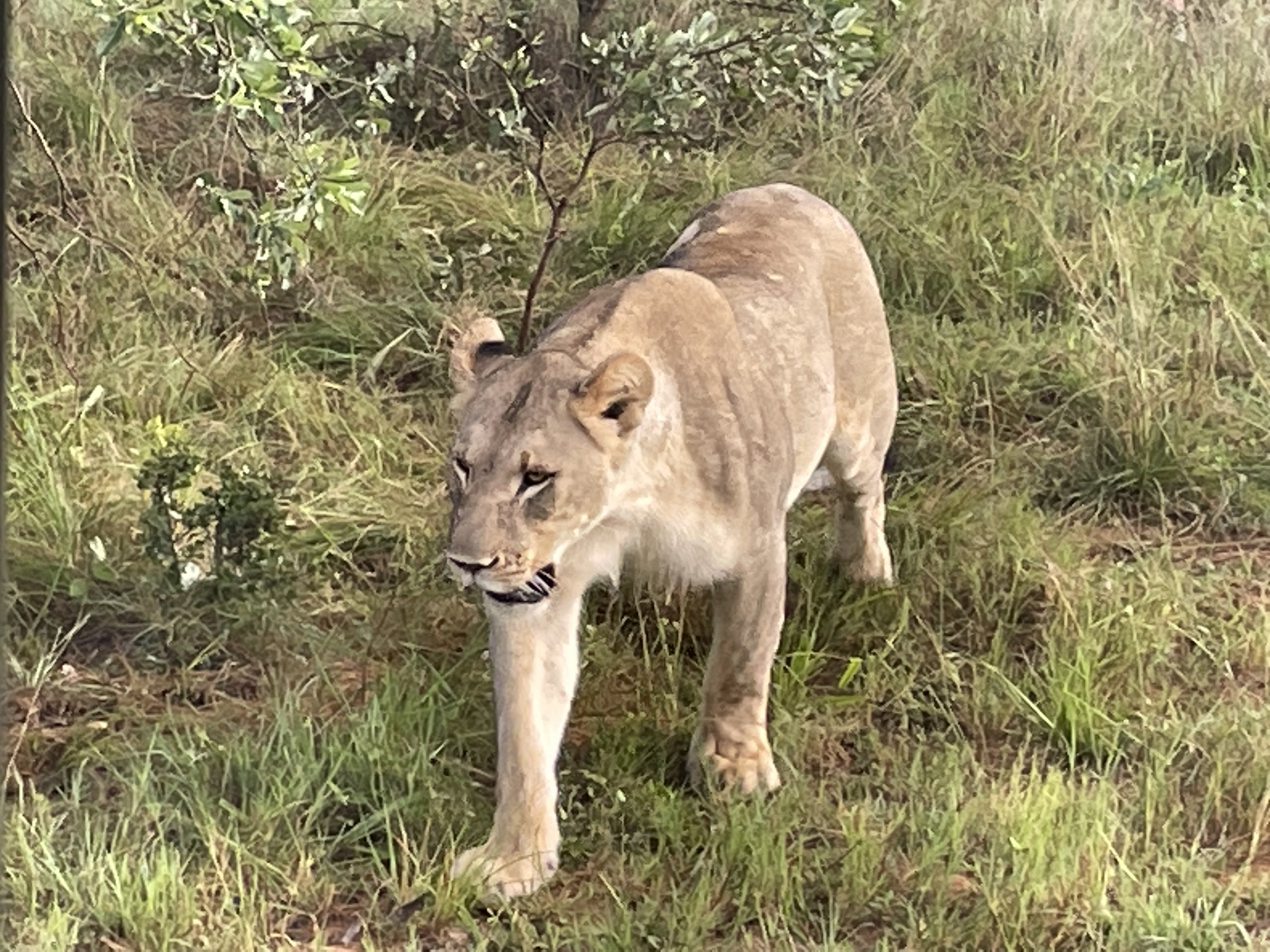
Lions will kill other predators including leopards, cheetahs, hyenas and African wild dogs. They do not eat them as the flesh of other predators is not nutritious. Lion predator kills are purely to remove competitors for food and territory, as well as threats to the lions young. In particular, lions actively kill leopards as leopards kill and eat their cubs.

This is my video of this lioness kill:
Lionesses are known to be excellent mothers and will go to great lengths to ensure the survival of their cubs. Lion mating is polygamous and takes place all year round. The dominant male will copulate with multiple females within his pride. Lionesses are receptive to mating for three or four days within their variable reproductive cycle and during this time they will mate frequently, up to fifty times per day. Female lions have the ultimate say in deciding which lion they will reproduce with. Lionesses observe the males carefully, accessing their physical condition, strength, and overall fitness, before committing to a partnership. Lionesses are also not monogamous and can mate with multiple lions during their estrous cycle, although it has been observed that approximately two-thirds of these mating events occur with the primary male, with the remaining third being distributed among multiple males from the peripheral coalitions of that primary male. This means that a single litter can have cubs from different fathers. Lionesses in the same pride often breed around the same time and the resultant cubs are raised together.
My video of lions mating:
Lionesses are pregnant for 105 to 112 days, during which time her belly will grow larger, and her nipples will enlarge and darken. Just before giving birth, the lioness will begin to look for a safe and secure place to give birth. Once she has found a suitable spot that is hidden from predators and close to water, she will start to build a den using grass and other materials. The actual birth is relatively quick, approximately 1 hour, and between two and four is the usual number for a litter.
The cubs are born blind and helpless and rely on their mothers to protect and care for them. During the first few weeks of their lives, the cubs feed on their mother’s milk and she only leaves them for short periods to hunt.
My video of lion clubs:
Last month I said that male lions commit infanticide and can kill the cubs of other males. Given that lionesses are fiercely protective of their cubs, why do they not defend their cubs from lions? The answer is simply that male lions are much bigger and more aggressive than lionesses. Challenging a male lion is risky for a lioness as it could lead to the serious injury or death of the lioness, as a result, in this situation the lioness will prioritise her own survival and the wellbeing of the rest of the pride over the survival of her cubs.
If you are interested in seeing more of my photographs, videos and artworks relating to Cats, please enjoy this stunning post created by the talented Resa McConaghy. Resa and I share a love for wildlife and a passion for conservation.
Lion Lust by Robbie Cheadle
Sidling up beside her
He strokes her shoulder
In a gesture of affection for his mate
He quickly mounts her
For the eighteenth time
***
She walks quickly away
He meekly follows
Lying down face-to-face in her chosen spot
A short period of rest
Before the next round
***
They will stay together
For twenty-four hours
Mating every twenty to thirty minutes
Despite his high demands
She lovingly purrs
This poem is from my book Lion Scream, Syllabic Poetry About Southern African Wildlife.
About Roberta Eaton Cheadle
Award-winning, bestselling author, Roberta Eaton Cheadle, is a South African writer and poet specialising in historical, paranormal, and horror novels and short stories. She is an avid reader in these genres and her writing has been influenced by famous authors including Bram Stoker, Edgar Allan Poe, Amor Towles, Stephen Crane, Enrich Maria Remarque, George Orwell, Stephen King, and Colleen McCullough.
Roberta has two published novels and has horror, paranormal, and fantasy short stories included in several anthologies. She is also a contributor to the Ask the Authors 2022 (WordCrafter Writing Reference series).
Roberta also has thirteen children’s books and two poetry books published under the name of Robbie Cheadle, and has poems and short stories featured in several anthologies under this name.
Roberta’s blog features discussions about classic books, book reviews, poetry, and photography. https://roberta-writes.com/.
Find Roberta Eaton Cheadle
Blog: https://wordpress.com/view/robertawrites235681907.wordpress.com
Twitter: https://twitter.com/RobertaEaton17
Facebook: https://www.facebook.com/robertawrites
Amazon: https://www.amazon.com/Roberta-Eaton-Cheadle/e/B08RSNJQZ5
_____________________________________________________________________________________________
Want to be sure not to miss any of Robbie’s “In Touch With Nature” segments? Subscribe to Writing to be Read for e-mail notifications whenever new content is posted or follow WtbR on WordPress. If you found it interesting or entertaining, please share.
Share this:

In Touch With Nature – The vulnerable life of male lions #wildlife #lions
Posted: February 28, 2024 Filed under: Animals, In Touch With Nature, Poetry, Wildlife | Tags: Animals, In Touch With Nature, Lions, Robbie Cheadle, South Africa, Wildlife, Writing to be Read 74 CommentsLions live in groups called prides. Each pride is comprised of related lionesses and one or more adult male lions will also be present with the dominant male being the pride leader. Female lionesses are loyal to their pride and not to their family members, and this often means that they don’t keep related males in their pride.
Male lion cubs are frequent victims of snake bits, hunting hyenas, and male lions that aren’t their father or uncle. One in two male lion cubs will die in their first year of life. The greatest single cause of male lion mortality in the first year of life is infanticide by unrelated male lions.

At approximately three years of age, male lions are pushed out of their pride by their fathers. Alternatively, they may be forced to leave the pride when a new coalition of male lions takes over the pride. For a period of two or three years after leaving their prides, young male lions wander on their own, trying to avoid confrontation with older, stronger male lions. Frequently, single males find other males of a similar age and join them to form a coalition. Coalitions typically comprise of two to four male lions and are often made up of brothers or cousins although some include unrelated males. The main purpose for male lions forming coalitions is to compete with other male lions for mates.
When the males in a coalition reach four to five years of age, they will challenge other male coalitions for access to a pride of lionesses. When a new coalition takes over a pride, the new males seek out and kill the cubs of other males or drive them away. The purpose of the killing of cubs is to accelerate the return of the lionesses to a reproductive state thereby allowing the new males to raise their own cubs. The dominant male or pride leader generally gets first mating rights but lionesses do mate with other pride males. The lesser males usually get their opportunity when several females are in heat at the same time and if the dominant male losses interest while the lionesses are still in heat.


The dominant male is usually the largest, strongest male lion. Dominant males usually only retain that position for a few years and then they are challenged by a younger male or an outside coalition. During their time as pride leader, the male is responsible for defending the females and their cubs from predators such as hyenas.
When a battle for leadership takes place within an existing pride, the battle is usually fierce but not deadly. If an outside coalition challenges the leader, the battle will be to the death.
Brothers, a 99-sylable Double Ennead poem by Robbie Cheadle

Dry, yellow grass stretches
To the horizon
Just there, under a scrub tree, lie two brothers
Within slumbers embrace
They soak up the sun
***
The colour of ripe wheat
They blend with the bush
Male lions resting peacefully
Enjoying blissful dreams
Concerning fat buck
***
One starts gently stirring
Rolls over and sighs
His underbelly unintimidating
But then he yawns widely
Showing great long teeth
This poem is included in Lion Scream, Syllabic Poetry About Southern African Wildlife
Lion brothers walking on the road:
About Roberta Eaton Cheadle
Award-winning, bestselling author, Roberta Eaton Cheadle, is a South African writer and poet specialising in historical, paranormal, and horror novels and short stories. She is an avid reader in these genres and her writing has been influenced by famous authors including Bram Stoker, Edgar Allan Poe, Amor Towles, Stephen Crane, Enrich Maria Remarque, George Orwell, Stephen King, and Colleen McCullough.
Roberta has two published novels and has horror, paranormal, and fantasy short stories included in several anthologies. She is also a contributor to the Ask the Authors 2022 (WordCrafter Writing Reference series).
Roberta also has thirteen children’s books and two poetry books published under the name of Robbie Cheadle, and has poems and short stories featured in several anthologies under this name.
Roberta’s blog features discussions about classic books, book reviews, poetry, and photography. https://roberta-writes.com/.
Find Roberta Eaton Cheadle
Blog: https://wordpress.com/view/robertawrites235681907.wordpress.com
Twitter: https://twitter.com/RobertaEaton17
Facebook: https://www.facebook.com/robertawrites
Amazon: https://www.amazon.com/Roberta-Eaton-Cheadle/e/B08RSNJQZ5
_____________________________________________________________________________________________
Want to be sure not to miss any of Robbie’s “In Touch With Nature” segments? Subscribe to Writing to be Read for e-mail notifications whenever new content is posted or follow WtbR on WordPress. If you found it interesting or entertaining, please share.




















