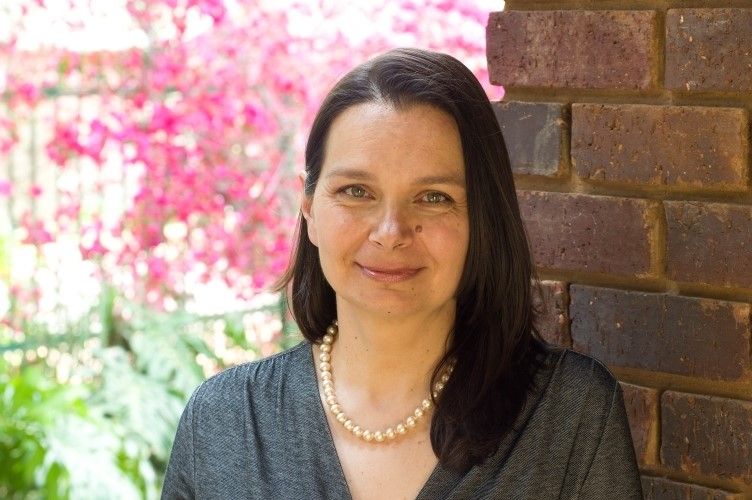
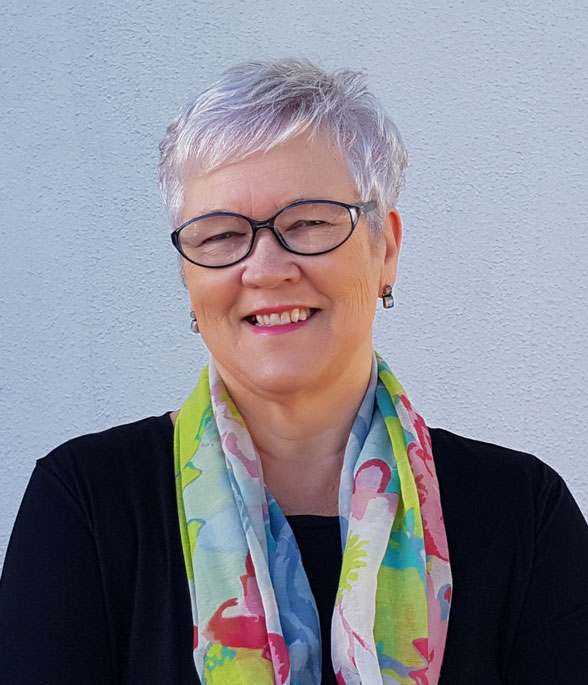
Today, I am delighted to welcome author and poet, Patricia Furstenberg, as my March Treasuring Poetry guest.
Why do you write poetry?
To me, writing poetry is like being a flâneuse of the literary world.
The history and meaning of flâneuse (with its masculine form, flâneur) derive from the turn of the century, late 19th to early 20th. It defines those men and women who had the time, the inclination, the passion (and the finances, back then) to wonder along the streets of a big city and to observe and be a part of the daily city life. Those who enjoyed taking in the city.
It was after this past holiday, when my family and I covered about 200km on the streets of Romania, in Bucharest and Sibiu, that I learned this expression, flâneuse.
Writing poetry is my reaction to being a flâneuse in a city of words. Writing poetry is like strolling among literary creations, classical or modern (buildings made of words if you wish) and taking in their beauty and rhythm. A turn of the word here, a phrase there, they blend with the breeze, the song of bird, or the memories of my youth (like dappled shadows) – creating poetry.
Do you think poetry is still a relevant form of expressing ideas in our modern world? If yes, why?
Absolutely. Poetry permanently sheds a light on the world; it helps us see our everyday life through a different perspective. It adds colour to a world monotonous in its everyday violence. It also highlights, thus helping us remember, the forgotten beauty of life.
Poetry also creates bridges that unite us, past distances (and I mean social distances) or any other barriers. Poetry is that one constant in times of change. Because poetry helps us understand our emotions and communicate them. It helps us make sense of an uncertain future or of a tumultuous past. Poetry translates, by use of imagery that what – at first – is hard to comprehend and it appears scrambled.
Which poem by any other poet that you’ve read, do you relate to the most and why?
So many times I asked myself this question and the answer varied, but more often it was Robert Frost’s “The Road Not Taken” the poem I most relate with.
The Road Not Taken
Two roads diverged in a yellow wood,
And sorry I could not travel both
And be one traveler, long I stood
And looked down one as far as I could
To where it bent in the undergrowth;
Then took the other, as just as fair,
And having perhaps the better claim,
Because it was grassy and wanted wear;
Though as for that the passing there
Had worn them really about the same,
And both that morning equally lay
In leaves no step had trodden black.
Oh, I kept the first for another day!
Yet knowing how way leads on to way,
I doubted if I should ever come back.
I shall be telling this with a sigh
Somewhere ages and ages hence:
Two roads diverged in a wood, and I—
I took the one less traveled by,
And that has made all the difference.
Life, the simple act of living and of leading a happy and fulfilled family life, are such a tremendous gift – but we tend to take it for granted. I think that contemplating the road that brought us here, as well as the ones followed by our ancestors, is a valuable exercise.
“The Road Not Taken” by Robert Frost is about the choices and the opportunities we encounter in life. But unlike Frost’s poem, I believe that it isn’t the regret over the roads not taken that should overshadow our future, but the excitement for further choices, born out of our past decisions. Life is a continuous maze, and a beautiful and exciting one.
Which of your own poems is your favourite and why?
I enjoyed following the antics of the puppies depicted in my poetry book “as Good as Gold”. There were times when I would write and laugh. When I grew up in Romania we would live in an apartment so we shared some pretty close living quarters with our dog. Whoever looked after a puppy will remember that, at the beginning, they hardly sleep through the night.
While writing “As Good as Gold” I enjoyed mentally watching a puppy conversing with the moon, or meeting an owl (during night-time, of course) for the very first time. Writing from experience… Today I look fondly on those memories. Thus, my favourite poem is “Why, Rain?” where we follow a puppy on his first encounter with a surprise storm during what starts like a perfect summer day, just right for some nature exploration.
Is writing poetry easy for you compared to prose or do you do a lot of editing and revision of your poems?
I enjoy writing poetry for its free form and lack of constraints. Poetry allows my thoughts to roam unrestrained. For me, writing poetry is like finding shapes in the clouds – they can be anything and I won’t be wrong in writing them as such. The reader, in turn, can interpret them the way she sees them and none will be wrong for taking that what her / his heart chose to see.
Writing prose asks for much more structure, although I enjoy it just as much. Writing prose is like building a house.
Poetry is like writing a song. Sometimes you hum it for a long time before you get the melody out on paper just the way you heard it in your mind. Prose is more like writing a symphony. Just as rewarding, perhaps more demanding. Prose will confer a whole set of ideas, where poetry will distil the thought to a perfect, silky thread.
What mode (blog, books, YouTube, podcasts) do you find the most effective for sharing your poems with poetry lovers and readers?
As an independent author with self-published poetry books as well as poems published in various poetry anthologies I find that, today, readers show a fear of commitment towards poetry. I discovered that publishing my poems on my blog or into an online literary magazine I can reach a wider audience than publishing a poetry book.
My review of As Good as Gold, A dog’s life in poems by Patricia Furstenberg
As Good as Gold: A Dog’s Life in Poems is a delightful and uplifting collection of poems about domestic dogs and puppies. Each poem is accompanied by a lovely photograph of the dog through whose eyes the poems is written. I liked that the poems were told from the perspective of the dogs and I thought the freestyle form of poetry suited this book well as each poem is a mini story or adventure.
The writing style is conversational and relaxed. The following few extracts give a feel for the style of the poetry:
“Puppy tiptoes, Takes a peek. Sniffs carefully … What IS that squeak?”
“It’s oval, it bounces, it floats away, It’s pink like his tongue, it wants to play! “I’m coming!” barks pup and off he goes. Down the hill the pink shape flows And puppy follows suit. It’s just within his reach,”
For cat lovers, there are also a few poems told from the perspective of our feline friends and I loved those especially, as I am a cat owner.
I think this book is a lovely way of teaching children about animals as pets and the writing is appropriate for both children and adults, all of whom will adore the antics and curiosity displayed by the dogs, especially the puppies.
Writer and poet Patricia Furstenberg authored 18 books to date. Patricia grew up in Bucharest and was brought up listening to the legends and folktales of Romania’s past. She came to writing through reading, her passion for books being something she inherited from her parents. Her writing career followed a sinuous road that passed through a Medical Degree, practicing medicine, extensive traveling, and it also produced a happy marriage and two children. The recurrent motives in her writing are unconditional love and war, while Patricia’s keen interest for history and dogs brought her writing, through a perfect loop, to her native Romania. Today Patricia writes fiction and poetry. Her poems were published in anthologies by Green Ink Poetry, The Poem Magazine, and Lothlórien Poetry Journal as well as in over thirty online literary journals
Award-winning, bestselling author, Robbie Cheadle, has published thirteen children’s book and two poetry books. Her work has also appeared in poetry and short story anthologies.
Robbie also has two novels published under the name of Roberta Eaton Cheadle and has horror, paranormal, and fantasy short stories featured in several anthologies under this name.
The ten Sir Chocolate children’s picture books, co-authored by Robbie and Michael Cheadle, are written in sweet, short rhymes which are easy for young children to follow and are illustrated with pictures of delicious cakes and cake decorations. Each book also includes simple recipes or biscuit art directions which children can make under adult supervision.
When I was at school, we had music lessons during which we learned to play certain easy songs on an instrument like a recorder or a xylophone. We were also taught to sing musical notes in much the same way as Maria teaches the von Trapp children to sing notes in the film The Sound of Music.
I can remember listening to stories that taught me and my classmates about musical instruments and the different sounds they make. Peter and the Wolf comes to mind, as well as my personal favourite, Sparky’s Magic Piano.
If you are interested in watching Sparky’s Magic Piano, or have a child you would like to share it with, you can watch it here:
I always wanted to learn how to play the piano. Our neighbour started teaching me once and I was getting along nicely, but then we moved to another town and the opportunity didn’t present itself again.
Both my sons had music lessons and Gregory passed Grade 5 theory and practical piano. Michael initially wanted to learn the violin, but that didn’t last very long. He went on to learn the piano for a few years and is now having drum lessons.
Before my sons were born, I remember reading that learning to play an instrument was beneficial to the study of mathematics and this is one of the reasons I encouraged music so much with my sons. I understand that this link has been demonstrated through a study conducted by NAMM (National Association of Music Merchants Foundation) (You can read more about it here: https://www.nammfoundation.org/educator-resources/why-learn-play-music-advocacy-brochure-0).
More recently, I discovered recently that scientists at the University of Southern California’s Brain and Creativity Institute have discovered a link between music in early childhood and accelerated brain development. You can read more about that study here: https://news.usc.edu/102681/childrens-brains-develop-faster-with-music-training/
Studies have demonstrated that learning music can improve speech and readings skills in children by increasing their abilities to differential between different sounds and understand the patterns of language.
The top ten benefits of music and learning a musical instrument for children are as follows:
Improved brain development due to music’s ability to stimulate parts of the brain that govern hearing, memory, movement, and emotion.
Improved social skills as music helps children identify facial expressions, communicate with peers, and empathise with others.
Increases creativity and builds problem solving skills.
Learning to play an instrument promotes self-discipline in children.
Learning to play an instrument increases children’s self-esteem.
Musically trained children have better memories as music strengthens the hippocampus in the brain, which plays a vital role in regulating learning, memory encoding, memory consolidation, and spatial navigation.
There is an overlap of the brain connections which process music and language with the result that learning music and learning to read complement each other.
Music is a natural mood enhancer and helps children to reduce stress by calming and soothing them.
Children who learn music have a better ability to control their own behaviour, emotions, and impulses.
Learning a musical instrument improves co-ordination in children.
The one thing I noticed with my son, Gregory, who was reading music fluently at the age of five, was that the transition from written musical notes to written letters was a bit of an effort for him. It was a bit like learning a second language. This was not a big disadvantage for him, but it did take a little longer for him to learn the alphabet than I expected. Michael learned the alphabet before I started music lessons with him, and he found it more difficult to learn the music notes than the alphabet.
About Robbie Cheadle
Award-winning, bestselling author, Robbie Cheadle, has published thirteen children’s book and two poetry books. Her work has also appeared in poetry and short story anthologies.
Robbie also has two novels published under the name of Roberta Eaton Cheadle and has horror, paranormal, and fantasy short stories featured in several anthologies under this name.
The ten Sir Chocolate children’s picture books, co-authored by Robbie and Michael Cheadle, are written in sweet, short rhymes which are easy for young children to follow and are illustrated with pictures of delicious cakes and cake decorations. Each book also includes simple recipes or biscuit art directions which children can make under adult supervision.
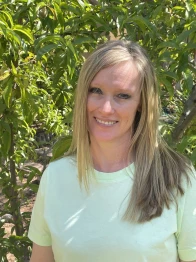
Today, I’m delighted to welcome author, poet, and blogger, Sally Cronin as my February Treasuring Poetry guest.
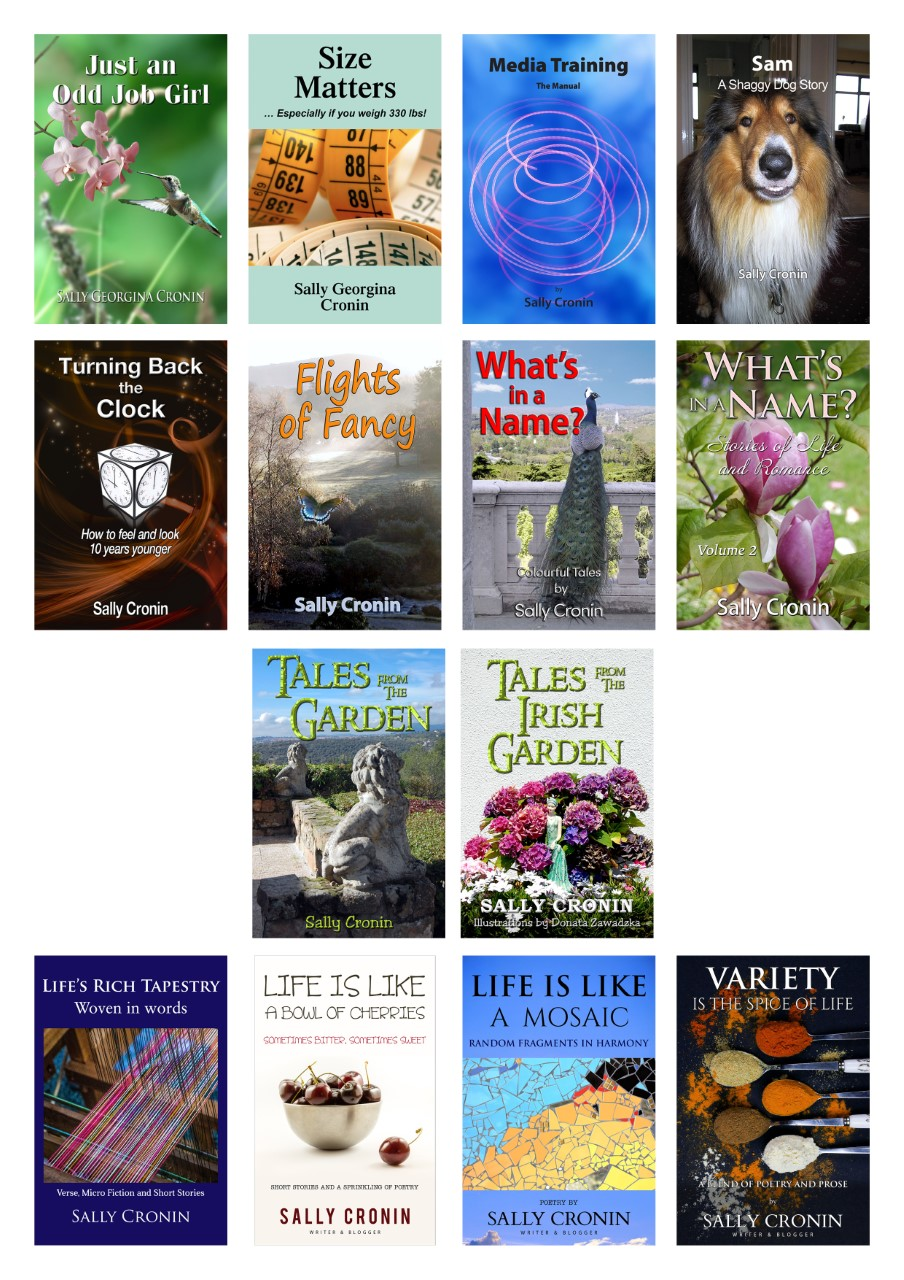
A collage of Sally Cronin’s book covers
Why do you write poetry?
Thank you so much Robbie for inviting me along to talk about poetry it is lovely to be here.
I loved nursery rhymes when I was very young, and for most children it is their first introduction to poetry. I wanted to write my own and would scribble down as stories that probably made no sense to anyone but me. I illustrated them and even put them together in a book I kept under the mattress and they were not shown to anyone. I was seven and my growing love of all kinds of poetry from short and pithy to the long saga adventures has never faded. As a teenager I switched to writing song lyrics and found it a wonderful way to express my thoughts and feelings.
For many, as we become adults, life brings other priorities and responsibilities, and writing for pleasure is put aside. When I gave up corporate life and retrained in nutrition in my 40s I still worked hard, but the schedule was mine to make. It left time for my more creative side and I began to write books, and also began to experiment with poetry in various formats.
I love the challenge of telling a story in a few lines or ever a few syllables. I have often started off with five or six verses and ended up with two. It is the same with 99 word flash fiction and nothing gives me more pleasure when someone says they enjoyed the story.
Do you think poetry is still a relevant form of expressing ideas in our modern world? If yes, why?
I definitely think poetry is still a relevant form of communication in our modern world. In fact the more technology takes over our lives, it should become more relevant. Robots are being programmed to write text in many forms including poetry. But, without the human emotion infused into the words, it might rhyme, be perfectly correct in form, but it will lack that vital ingredient.
Which poem by any other poet that you’ve read, do you relate to the most?
I have always loved poetry and there are many I relate to, particular as I get older. One of the hopes of any writer is that our words will linger on after we have gone, but I also believe we leave a sense of ourselves in the places we have lived and the people we have known. I have lost family and friends and I see those I have loved in quite random things that remind me of them and the time we spent together. This poem by Mary Elizabeth Frye sums that up for me beautifully.
Do not stand at my grave and weep I am not there. I do not sleep. I am a thousand winds that blow. I am the diamond glints on snow. I am the sunlight on ripened grain. I am the gentle autumn rain. When you awaken in the morning’s hush I am the swift uplifting rush Of quiet birds in circled flight. I am the soft stars that shine at night. Do not stand at my grave and cry; I am not there. I did not die.
Which of your own poems in Variety is the Spice of Life is your favourite and why?
I am not sure if it is because I am now heading into my second childhood, but I had a lot of fun writing Lullaby and perhaps it is because of an abiding memory of being sung to as a child in a foreign language when we lived abroad. The words might not have been understood but the emotion and love certainly were.
Lullaby
to sing a lullaby you must first consider preferences of the baby waiting
perhaps a jolly song aimed to make them chortle to wave their hands around with glee happy
maybe slow and gentle soothing a fractious mood or the soreness of teething gums tearful
deep toned to reassure those fearing the shadows now allayed by a father’s voice safety
language a foreign tongue but words that mothers sing to babies all around the world loving.
Is writing poetry easy for you compared to prose or do you do a lot of editing and revision of your poems?
I probably do as much editing and revision of my poetry as I do my prose. I used to struggle with the format but now I am working with syllabic poetry I find it easier. I began writing haikus about ten years ago and once I began participating in challenges online on a regular basis, my options for different formats expanded.
As with my prose, I start with a brain dump and then go back again and again until I am happy with the end result.
Poetry is always best shared orally by the poet. You have started sharing your poetry via podcasts. Are you finding this a good way of sharing your poetry with others?
I mentioned how poetry should convey emotion that resonates with the reader, and I do believe that when a poem is read aloud, it allows for colour to be added to the words to bring the emotion to life. From the feedback, including you own, I am finding it a great way to share my poems and those of others I admire, such as the War Poets. This year I hope to share more of those and of other poets I admire.
My review of Variety is the Spice of Life by Sally Cronin
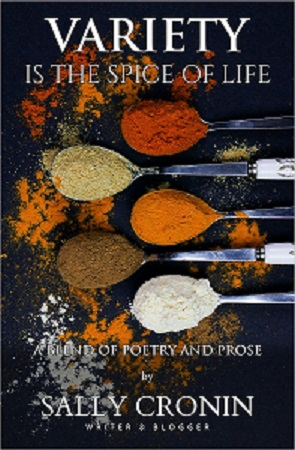
Cover of Variety is the Spice of Life by Sally Cronin
This delightful book is a mixture of poetry and short stories. Much of the poetry relates to nature and nature’s impact on humanity, although a few focus on human relationships. All of the poems are syllabic and beautifully written.
My favourite of the poems, and a few lines from each, are as follows:
Kinship – “sanctuary formed in kinship there may not always be harmony but the ties of love cannot be broken.”
Storm front – “clouds disperse and run for their lives to seek shelter of night softer gaze of the moon.”
Drought – “grass shoots vibrantly green burst thought the ground in days a miracle of abundance at last”
The short stories in the book are all typical of the author’s style of writing. Each story pierces the veil of human relationships and behaviour and exposes the good and the bad for the reader’s enjoyment, surprise, shock, and entertainment.
My four favourites were as follows:
Miss Lloyd’s Robin – a short story that has many facets. It emphasizes that people’s looks generally do not define them and gently reminds the reader not to stereotype people based on appearance. Miss Lloyd thinks that Sharon Dawson will never amount to anything because she has unruly red hair that is hard to tame. This story also highlights the damage an unkind teacher can inflict on a student. At the same time, Miss Lloyd, so hard and sharp in the classroom, has a softer side and feeds the birds in her backyard with relentless determination. This is a beautiful, feel good story that leaves the reader believing in the goodness of people.
The Green Hill – this short story has a light paranormal twist and joyfully highlights the beauty of a long and loving relationship and marriage between two people. It also demonstrates the strength of devotion that develops between people and their dogs.
The Secret – another beautifully written story about the potential damage secrets within a close family circle can do. It also highlights the terrible indifference of many people in positions to influence others, especially youngsters, and their complete irresponsibility and selfishness. This story made me glad that most of the girls I grew up with and who my sons associate with are a bit street wise. Modern women who grow up in more enlightened households are no longer naïve to a point where they can ruin their whole lives over a misguided mistake. It was delightful that this story had a satisfying ending.
The Healer – this tale was set in a dystopian future when people with the ability to heal and help the sick are persecuted as charlatans and imprisoned for life. I enjoyed reading about Serina and her gift and discovering how common sense and love for a child will often overwhelm fear of reprisal from a misguided and often cruel leadership. A lovely story with a fulfilling outcome.
Another well written and thought provoking collection from a talented author.
Sally Cronin is the author of sixteen books including her memoir Size Matters: Especially when you weigh 330lb first published in 2001. This has been followed by another fifteen books both fiction and non-fiction including multi-genre collections of short stories and poetry.
As an author she understands how important it is to have support in marketing books and offers a number of FREE promotional opportunities on her blog and across her social media. The Smorgasbord Bookshelf
Her podcast shares book reviews, poetry and short stories Sally Cronin Soundcloud
After leading a nomadic existence exploring the world, she now lives with her husband on the coast of Southern Ireland enjoying the seasonal fluctuations in the temperature of the rain.
Award-winning, bestselling author, Robbie Cheadle, has published thirteen children’s book and two poetry books. Her work has also appeared in poetry and short story anthologies.
Robbie also has two novels published under the name of Roberta Eaton Cheadle and has horror, paranormal, and fantasy short stories featured in several anthologies under this name.
The ten Sir Chocolate children’s picture books, co-authored by Robbie and Michael Cheadle, are written in sweet, short rhymes which are easy for young children to follow and are illustrated with pictures of delicious cakes and cake decorations. Each book also includes simple recipes or biscuit art directions which children can make under adult supervision.
Today, I am delighted to introduce Darlene Foster, author of the Amanda travel series of books for children aged 9 to 12 years old. I have read several of the Amanda books and enjoyed them all.
Your Amanda stories appeal to me as they take me back to my own childhood readings days of The Famous Five and Adventure series. Was there any particular children’s author who influenced the style of your Amanda series?
That makes me very happy to hear this since the Enid Blyton books were very popular. I didn’t read the Famous Five series growing up in Canada, but I enjoyed The Bobbsey Twins by Laura Lee Hope as they travelled to interesting places, encountered danger and solved mysteries. I also enjoyed Trixie Belden, Donna Parker, and Nancy Drew because the main character in each series is a young girl who overcomes obstacles and solves mysteries. The author who influenced me the most was Lucy Maude Montgomery. She created a character I totally admired. Anne Shirley is spunky, caring, positive and resourceful. Her relationship with her best friend, Diana Barry, is described incredibly well, as is the setting in the charming province of Prince Edward Island.
Are the characters of Amanda and Leah based on any particular person or people?
Amanda is the twelve-year-old me I would have liked to have been. I felt my life was boring living on a farm and dreamt of travelling the world. So there is a bit of little me in Amanda. The great thing about being a writer is that you can recreate your childhood and be whoever you want to be! Leah is a combination of some of my closest friends as well as a dear aunt who is my age. Leah is Amanda’s, Diana Barry.
When you visit schools and chat to the children, how do they react to the travel element of the Amanda books? Do they find it exciting and exotic or do some find it scary and overwhelming?
I am always amazed at how many of the students have done a lot of travelling already. One of my first questions at a school presentation is, “How many of you have travelled to other countries?” There is always a sea of hands. Then I ask if they have been to the country in my most recent book. There are usually some who have travelled there. The classrooms are very diverse these days and many of the students were born in a country other than Canada or the US. The international schools I visit in Spain contain students from all over the world. Children are much more well travelled these days for various reasons. They always suggest I write a book that takes place in their or their parents’ original country. I would say that most children today relate to the travel element of my books. If they haven’t been to the countries I’ve written about, they plan to visit them someday.
What comes first, the setting, characters, or the plot idea?
For me, the setting always comes first. I choose a place that I find intriguing and go from there. The two main characters, Amanda and Leah are always the same, but I have fun coming up with a few new ones for each story. The plot is the last thing I work on and the part I find the most difficult at times. It usually evolves as I write the story.
What are your goals for the Amanda series? Are you planning to make it a long-term series like The Famous Five?
As long as people continue to want to read these books, I plan to continue writing them. There are so many more places Amanda could visit. I’m currently working on book number ten, Amanda in Scotland: The Standing Stones. There are twenty-one Famous Five books; I’m not sure I’ll write that many but you never know!
Books for children are harder to market than books for adults. How do you go about marketing your books and what works best for you?
This is true. Word of mouth is always the best; getting the books in the hands of children is vital so they can spread the word. Visiting schools, libraries, and book stores is effective but not always possible. Over the past couple of years, I’ve been doing virtual visits to schools all over the world. This has been great for getting the students, teachers and school librarians to know about my books. I have learned that I need to market the books to adults as well since they are the ones who actually purchase the books and write the reviews. Being part of a blogging community has worked well for me as everyone is so supportive and helpful in getting the word out about my books. I have also learned a lot from other bloggers/writers. Marketing is ongoing, and there is a huge learning curve.
Thank you, Robbie, for the opportunity to talk about my books and writing in general.
You are a delightful guest, Darlene, and I am thrilled to host you here and discuss your books.
My review of Amanda in France
Amanda in France is the latest in the adventure series of books by Darlene Foster. I have read several of the books in this series, and enjoyed them all. The author has a marvelous way of integrating historical and environmental landmarks into her works in a natural and interesting way that is appealing to young readers.
Amanda and Leah are fortunate enough to accompany Aunt Jenny to Paris, France. Paris is a fascinating location and Amanda is completely bowled over by the sights, sounds, and foods on offer. The threesome are staying in a dormitory attached to the Shakespeare and Company book store, where they will work a couple of hours each day. Amanda, a great lover of books, is delighted and can’t wait to share her book knowledge and enthusiasm with others and promote reading.
Naturally, the girls meet a wide spectrum of new people, including the fascinating but mysterious, Phillipe Lawrence, an older man who is doing research for a book; Jerome, a young man who has become involved with some dodgy friends; and Pierre, who works at the Paris Opera House.
The new characters and fabulous sites set the stage for another exciting and interesting Amanda adventure that includes their visiting famous gardens, graveyards, and helping to save works of art during the fire at Notre-Dame Cathedral.
Congratulations to the author on another exciting and well written adventure story.
Growing up on a ranch near Medicine Hat, Alberta, Canada, Darlene Foster dreamt of writing, traveling the world, and meeting interesting people. She also believed in making her dreams come true. It’s no surprise she’s now the award-winning author of Amanda Travels, a children’s adventure series featuring a spunky twelve-year-old who loves to travel to unique places. Readers of all ages enjoy following Amanda as she unravels one mystery after another. When not traveling herself, Darlene divides her time between the west coast of Canada and the Costa Blanca, Spain with her husband and entertaining rescue dogs, Dot and Lia. www.darlenefoster.ca
Award-winning, bestselling author, Robbie Cheadle, has published thirteen children’s book and two poetry books. Her work has also appeared in poetry and short story anthologies.
Robbie also has two novels published under the name of Roberta Eaton Cheadle and has horror, paranormal, and fantasy short stories featured in several anthologies under this name.
The ten Sir Chocolate children’s picture books, co-authored by Robbie and Michael Cheadle, are written in sweet, short rhymes which are easy for young children to follow and are illustrated with pictures of delicious cakes and cake decorations. Each book also includes simple recipes or biscuit art directions which children can make under adult supervision.
Which famous poet has influenced your poetry the most?
When I was young, I admired William Shakespeare. I was impressed with how he used words to convey emotions and ideas, and I wanted to follow his example. In my junior year of high school, I participated in a Poetry Out Loud contest where we had to recite a poem. I chose Sonnet XVIII (“Shall I compare thee to a summer’s day?”) and won third place. The Shakespearean sonnet was the first poetic form I tried to consistently write in beyond regular rhyming lines. It would not be until college that I began branching out to other forms and eventually free verse.
Which poem that you’ve read has impacted the way you see things in life?
This was a tough one, but one poem that has impacted me is Robert Frost’s famous “The Road Not Taken.”
Two roads diverged in a yellow wood, And sorry I could not travel both And be one traveler, long I stood And looked down one as far as I could To where it bent in the undergrowth;
Then took the other, as just as fair, And having perhaps the better claim, Because it was grassy and wanted wear; Though as for that the passing there Had worn them really about the same,
And both that morning equally lay In leaves no step had trodden black. Oh, I kept the first for another day! Yet knowing how way leads on to way, I doubted if I should ever come back.
I shall be telling this with a sigh Somewhere ages and ages hence: Two roads diverged in a wood, and I— I took the one less traveled by, And that has made all the difference.
In what way has this poem influenced your viewpoint?
Most people interpret it as about making new trails, which is how I interpreted it as a child. Many times, when I’ve been walking, when I took a turn different from the norm, the last three lines presented themselves in my mind.
However, I’d heard that interpretation is accurate, so I looked it up, and to my surprise, it’s true. Frost wrote it as a joke regarding his friend and colleague Edward Thomas, who often hiked with him and had trouble deciding which way to go. The poem is not only about how choices we make determine where we go in life, but also that we often look back and wonder whether we’ve made the right choice. Though I did not grow up with that interpretation, I have found it to be true and profound.
Perhaps Frost’s way of telling poetry influenced me, too; I remember a professor in college, who taught a poetry class I was in, observed that I liked to end poems with a meaning or lesson, drawing a parallel to Frost.
What is your favorite of your own poems?
This was another tough one, because several have special meaning to me. But of those I have published so far, one that deeply resonates is “Lonely Wolf,” which appeared in the 2019 Spring Edition of And I Thought Literary Magazine. It was written in college as a failed attempt at a pantoum, but after a few rejections, I rewrote it as a villanelle. It speaks to the loneliness I have felt—socially and romantically.
I am a lonely wolf who walks at night.
Amongst the tall pine trees and heavy snow,
Hear my cry to the half-moon shining bright.
***
Young once within a den huddled tight.
The years passed and sadly I had to go.
I am a lonely wolf who walks at night.
***
Embarking for the greatest peak tonight,
There shall I convey my long-held sorrow.
Hear my cry to the half-moon shining bright.
***
Though many have come within my sight,
Why they stand distant I can never know.
I am a lonely wolf who walks at night.
***
Winter’s bitter cold reigns in silent might.
Dark silence only brings light to my woe.
Hear my cry to the half-moon shining bright.
***
Here I stand alone on this rocky height.
Here I do bay up where countless stars glow.
I am a lonely wolf who walks at night.
Hear my cry to the half-moon shining bright.
What’s next for you in your writing career?
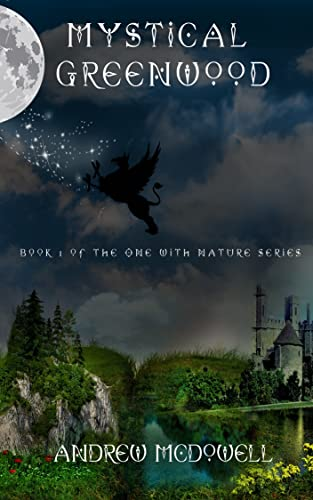
My focus right now is fiction. My fantasy novel Mystical Greenwood came out in a new edition, so my primary goal is to complete the sequel. I do have many unpublished poems, so I want to keep an eye out for publishing opportunities. A volume of poetry isn’t out of the question—if I can find a unifying theme (my poems touch on many unique ones).
About Andrew McDowell
Andrew McDowell became interested in writing at age 11, inspired by childhood passions for stories and make-believe. By the time he was 13, he knew he wanted to be a writer. He studied at St. Mary’s College and the University of Maryland, College Park. He is a member of the Maryland Writers’ Association.
In addition to his fantasy novel Mystical Greenwood, Andrew has written poetry, short stories, and creative nonfiction, and he is interested in writing drama and lyrics. He was diagnosed with Asperger syndrome, an autism spectrum disorder, when he was 14.
Dermot is a fifteen-year-old boy living in a remote village in the land of Denú. He has always longed for something more in his life. Now, everything changes after he sees a renowned creature–a gryphon–in the sky, and then crosses paths with a reclusive healer who harbors a secret.
Soon, he and his brother have no choice but to leave the only home they’ve ever known. They travel with new friends across the land through several great forests, along the way meeting an old man, a family of unicorns, and witnessing an important birth. They must evade fire-breathing dragons and dark-armored soldiers hunting them down, all serving an evil sorcerer determined to subjugate the kingdom, and who will stop at nothing to destroy them.
Denú’s only hope is if a renowned coven returns to face the enemy after years in hiding. Dermot, however, suspects their own role may be more significant than he thought, as he slowly discovers a power which exists amongst the trees and creatures of every greenwood. Can they save those they hold dear? Will Dermot find what he has sought? Or will all that’s free and good be consumed by darkness?
My review
Andrew McDowell has written an extraordinary fantasy tale which centres around the guardians of nature and the Greenwood, called driadors. The plot follows a typical good versus evil path, but the overlay of the protection versus the destruction of the natural environment was unusual, topical, and really fantastic.
Dermot and his brother, Brian, do not get on. Brian is the son who always does as he is asked by his parents and fits the mould of a pleaser, while Dermot is a dreamer and has always felt he was intended for more than his life as an apprentice blacksmith to his father. The rivalry between the two boys comes to a head when Dermot is carried away by a hunting gryphon. Dermot persuades the gryphon to drop him but he is injured during his fall. He wakes up in the care of a healer called Saershe, and her grandson, Ruairi. Dermot realises that they are not ordinary forest dwellers and, following his return home, he becomes obsessed with finding them again.
Brian becomes aware that Dermot has had some sort of unusual experience during his absence and uses this knowledge to stir up trouble for Dermot with their parents. Meanwhile, an evil force in the shape of a fallen driador called Taranis, is lurking just beyond the village, waiting for an opportunity to wreak havoc and destruction and restart an old battle against the driadors. Dermot and Brian will have to learn to trust and rely on each other, and harness the power of nature if they want to save the Greenwood, their friends, family, and themselves.
This is an unusual and well paced story with interesting characters, and these elements more than makes up for the odd moments in the book when Dermot and Brian’s emotional reactions to situations seem slightly lacking in depth or incongruent to the circumstances.
The author has great potential as a writer and I would love to read the next book in this series and find out what happens next in the battle for control between Taranis and the driadors.
My review of As the World Burns: Writers and Artists Reflect on a World Gone Mad
What amazon says
As the World Burns: Writers and Artists Reflect on a World Gone Mad is an anthology of poetry, prose, essay, and art inspired by the unprecedented events of the year 2020. It embraces fierce and raw creative works relating to life during the Covid-19 pandemic, Black Lives Matter, Donald Trump, and the economic uncertainty and horror of the last eight months. One hundred and fourteen writers and artists spanning ten countries and 30 states are represented in this powerful volume. It is both a story of survival and an act of resistance.
“We speak with many voices, to the damage wrought in these violent, fevered months. Let us never forget or turn away, from what is just, what is necessary, to keep light alive in this world.”
My review
This is an interesting recording by numerous contributors, of the status of the world and society in the run up to the Covid lockdowns, and during the subsequent on-going pandemic. The writings, which comprise of mainly poetry, but also some essays and visual art pieces, also cover events that ran parallel to the lockdowns and pandemic that had an impact on society and politics.
Reading this anthology is an adventure as the messages are intense and vivid and the styles of writing hugely varied due to the significant number of contributors. Although not all the styles of poetry appealed to me, they were all memorable due to the strong emotional messaging, and well worth reading.
My favourite poems are as follows: Falls the Shadow by John W. Leys, I Think the Birds don’t Care by Kelsey Hontz (the words “Somebody has mixed up the two themes of apocalypse and paradise, which would be a fireable offense if anybody were still in the director’s chair for this year of hindsight.” really resonated with me.), Lately by L. Stevens, Quarantine by Andrew McDowell, Upon Waking in a Pandemic by Christine E. Ray, Choice Perhaps by Jane Dougherty, Thirteen Ways of Looking at Life before the Virus by Leslea Newman, Am I Angry? by John W. Leys, Virus by Erik Klingenberg (nightpoet), and Tumbling by Merril D. Smith.
Two of the essays, were particularly interesting to me. I-Soul-Ation by Dr. Sneha Rooh. The closing words of this essay have sadly not come to fruition, in my opinion:
“I would like to think that we will hug people longer, be grateful to be able to work, that we will smile brighter when the masks come off and we’ll let the smiles fully enter our hearts, that we will be careful abut the lies sold to us and remember that we are precious mortals with precious lives and an immense ability to connect and care.”
I am of the view, that the world has returned to its previous status quo with alarming speed and that as a species, we have learned nothing from the lockdowns and the pandemic.
The other essay I particularly enjoyed was Serendipity by Kim D. Bailey.
This book is an important documenting of life during this difficult and stressful time of life when the entire world united to face a common enemy. Sadly, we have still not learned our lesson, as I mentioned above, but perhaps some of us have found more courage to fight for a better eventual outcome for our planet and for humanity.
Award-winning, bestselling author, Robbie Cheadle, has published thirteen children’s book and two poetry books. Her work has also appeared in poetry and short story anthologies.
Robbie also has two novels published under the name of Roberta Eaton Cheadle and has horror, paranormal, and fantasy short stories featured in several anthologies under this name.
The ten Sir Chocolate children’s picture books, co-authored by Robbie and Michael Cheadle, are written in sweet, short rhymes which are easy for young children to follow and are illustrated with pictures of delicious cakes and cake decorations. Each book also includes simple recipes or biscuit art directions which children can make under adult supervision.
Teaching our children about the natural environment and conservation is one of the greatest gifts we can give them. There are a few good ways of making sharing about nature and conservation with children, as follows:
Reading books about nature with your child;
Exploring nature with your child;
Art and play; and
Watching documentaries
Reading
There are a number of wonderful children’s books that subtly teach children about the wonders of nature. One is The Secret Garden by Frances Hodgson Burnett when Dicken shows Mary how to care for the locked garden and plant new flowers. Journey to the River Sea by Eva Ibbotson is another. Set along the Amazon River in Brazil, this book has a strong theme about the importance of nature to the human spirit. A few other wonderful children’s books about animals are White Fang by Jack London, The Incredible Journey by Sheila Burnford, Charlotte’s Webb by E.B. White, Jock of the Bushveld by Sir James Percy FitzPatrick, and The Jungle Book by Rudyard Kipling.
This is the song, The Bare Necessities, from Disney’s The Jungle Book, when Baloo, the Sloth Bear, meets Mowgli, the human boy.
There are also some excellent non-fiction books that explain a lot about nature. One of my favourites is Nature Cross-Sections by Richard Orr which includes wonderful picture spreads of cross-sections of, amongst others, a beehive, a tide pool, a termite mound, and a beaver lodge.
This is a cross-section of a beehive from Richard Orr’s Nature Cross-Sections. I referred to this picture when I wrote a piece of my book, Through the Nethergate, about a queen bee and the workings of a beehive.
The Disney Mickey Wonders Why series is also terrific for young children. Laid out as a series of questions such as Why is the sky blue? and Why is the grass green? these books include comprehensive, yet simple, answers and lovely illustrations. You can find the Micky Wonders Why series on Amazon as a set of books or as single books.
Do you have any wonderful books for children about nature that you can recommend?
Exploring nature
There are numerous ways to explore nature and its bounty with your child from nature walks to visiting places of interest like aquariums, bunny parks, and game reserves.
Cooking or baking with your child is also a wonderful way of teaching your child about natures bounty and the products the animal kingdom contributes to our lives including eggs and fresh milk. I was surprised to discover that some city children don’t know that milk and other dairy products generally come from cows.
Art and play
When my sons were younger, we used to play games that included animals. We built a game reserve in the sand pit and set out all the toy animals. We learned about the natural habitat of different animals and that some animals live in rocky terrain, some in savannah areas and some in the forest. We created the right habitat using pot plants and garden rocks and put the correct animals in the correct areas. We also played a water game with a large plastic shell full of water, rocks and a few plants. The water animals lived in the pond. Small children love playing in sand and water and it has many benefits for them. It was amazing how the boys and their friends learned to work together with these games.
I also did a lot of art with my children. We made a swamp from an old cardboard box, paper and paint and learned about the animals that live in a swamp including, of course, Shrek and Fiona. We made centipedes from parts of egg boxes and pipe cleaners and built a volcano from paper mache. When it comes to art, the options are limitless for learning and lots of tactile fun.
Watching documentaries
There are numerous amazing documentaries available that parents can watch with their children. It is always fun to discuss the details of these shows with children afterwards and explore and develop their thoughts and impressions from the information and visuals provided.
Conservation
It is not enough just to talk about conservation, you have to lead by example and demonstrate through your own choices and actions the importance of helping the planet and all its creatures and forms of life to thrive. I will expand on conservation and leading by example in a future post.
About Robbie Cheadle
Robbie Cheadle is a South African children’s author and poet with thirteen children’s books and two poetry books.
The eight Sir Chocolate children’s picture books, co-authored by Robbie and Michael Cheadle, are written in sweet, short rhymes which are easy for young children to follow and are illustrated with pictures of delicious cakes and cake decorations. Each book also includes simple recipes or biscuit art directions which children can make under adult supervision.
Robbie and Michael have recently introduced the first book in the Sir Chocolate holidays and high days book series. Sir Chocolate and the Missing Christmas harp is available on Kindle Unlimited and as an ebook and paperback from Amazon. This series is illustrated with Robbie Cheadle’s gorgeous cake and fondant artwork and includes themed activities and recipes for adults to make with children.
Robbie and Michael have also written Haunted Halloween Holiday, a delightful fantasy story for children aged 5 to 9. Count Sugular and his family hire a caravan to attend a Halloween party at the Haunted House in Ghost Valley. This story is also beautifully illustrated with Robbie’s fondant and cake art creations.
Robbie has also published two books for older children which incorporate recipes that are relevant to the storylines as well as one micro read with a Christmas theme.
Robbie has two adult novels in the paranormal historical and supernatural fantasy genres published under the name Roberta Eaton Cheadle. She also has short stories, in the horror and paranormal genre, and poems included in several anthologies.
Robbie Cheadle contributes two monthly posts to https://writingtoberead.com/, namely, Growing Bookworms, a series providing advice to caregivers on how to encourage children to embrace learning, and Treasuring Poetry, a series aimed at introducing poetry lovers to new poets and poetry books.
In addition, Roberta Eaton Cheadle contributes one monthly post to https://writingtoberead.com/ called Dark Origins: Nursery Rhymes and Fairy Stories.
Want to be sure not to miss any of Robbie’s “Growing Bookworms” segments? Subscribe to Writing to be Read for e-mail notifications whenever new content is posted or follow WtbR on WordPress. If you found it interesting or entertaining, please share.
I am using this last Treasuring Poetry post for 2022 to celebrate the writing talent of Sue Vincent who passed in March 2021. Sue was an incredible blogger who did a huge amount to support her fellow bloggers, authors, and poets. Her poetry, books, and blog are still close to many of our hearts which is an incredible tribute to her talent and personal charisma.
I am sharing Sue’s responses to a Poetry Readathon I ran on Robbie’s Inspiration in December 2018, two years after I first met Sue.
Tell us a bit about yourself
I am a Yorkshire lass with two grown sons and two granddaughters. I live with the notorious Small Dog, in a village in rural Buckinghamshire, England. I write daily for my own blog, the Daily Echo, which is an eclectic mix of personal reflections, poetry, history and folklore. I help run the Silent Eye, an international organisation that helps people realise their potential through awareness, and write for our website too. As a writer, I have several books published, including one written with G. Michael Vasey, but most of the time I write in partnership with Stuart France, exploring ancient sites, myths and symbolism in a semi-fictional way.
When ever I think of Yorkshire it reminds me of the book, The Secret Garden by Frances Hodgson Burnett. Sue and Stuart’s separate and combined blog posts also remind me of this book with their amazing and wonder inducing sights and ideas.
Sue’s blog is still available to readers who share her love of poetry and fascinating places in the United Kingdom.
Who is your favourite poet?
That has to be an unfair question! It all depends on the moment and the mood. If I had to choose, I would say Omar Khayyam, whose poetry I have carried in my handbag and re-read for many years.
On the other hand, and completely at the other end of the literary scale, there is Marriot Edgar, whose rhyming monologues, written and recited in the vernacular, were so much a part of my childhood that even now, when I write humorous verse, it is to his rhythm.
As I lived in France for many years and learned the language as well as my own, I learned to love French poetry too, and while I could say my favourite is Alfred de Musset or Victor Hugo, I will be honest and say that the poet that moves me the most is the Belgian singer/songwriter, Jacques Brel. The lyrics of his songs are poems in their own right and have a good deal to say and to teach.
The idea of the book of poetry you carry in your handbag, Sue, is completely wonderful to me. It has quite captured my imagination and I think I may start a tradition like this with my son, Gregory.
What is your favourite poem?
Omar Khayyam is easy… Fitzgerald translated his work from the original Farsi, and the quatrains are all in one book, the Rubaiyat…
“The Moving Finger writes; and, having writ,
Moves on: nor all thy Piety nor Wit.
Shall lure it back to cancel half a Line,
Nor all thy Tears wash out a Word of it.”
But then, there is Marriot Edgar to consider… and although The Lion and Albert is probably his best-known work, which I can still recite by heart, I do have a fondness for his take on various events in British history. Particular favourites are The Battle of Hastings, where King Harold confronted William of Normandy:
King ‘Arold came up as they landed –
His face full of venom and ‘ate –
He said ‘lf you’ve come for t’Regatta
You’ve got here just six weeks too late.’
At this William rose, cool but ‘aughty,
And said ‘Give us none of your cheek;
You’d best have your throne re-upholstered,
I’ll be wanting to use it next week.’
Though if I had to pick one, it would be Magna Charter, which recounts how King John was forced to sign the Magna Carta, even if he did dip his pen in the jam…
“And it’s through that there Magna Charter,
As were made by the Barons of old,
That in England today we can do what we like,
So long as we do what we’re told.”
Thank you for introducing me and my readers to these poems, Sue. They are lovely and memorable.
What do you appreciate most in a poem?
The first word that sprang to mind in answer to this question was ‘integrity’, and that, I think, can be applied to all forms of poetry. With humorous verses, I want to laugh. With narrative poems, I want a story that has a beginning, middle and end. With short forms, like the haiku and tanka that are now so popular, I want the capture of a moment and layers of possible interpretation that make me think. With classic poetry, I want to feel what the writer felt, understand the elusive thought or emotion that made them write.
Whether it is free verse, rhyme or one of the many recognised forms, it is not enough to simply string words and phrases together across the lines and beats, arranging it to look like a poem. A poem has to flow; it should sing its own music as it is read, even free verse should have its own rhythm and inner shape. And, whether it is humorous, romantic, spiritual or dramatic, it should have something to say that will leave the reader the richer for having read.
You have summed up beautifully what I also think, Sue. A poem should be meaningful and leave a lasting impression upon the reader.
Why do you write poetry?
I grew up around poetry. My mother’s notebooks introduced me early to how odd incidents and fleeting emotions could be captured in verse. There were the monologues shared with my great-grandparents, and always books… even my first Sunday School Prize was written in verse, and I have loved Dr Seuss ever since.
Things that amuse me tend to be written in my head, as they happen, in Edgar-esque verses, but there are other, deeper things that seem as if they can only be conveyed by poetry. You cannot capture them in everyday words… transient realisations, fleeting emotions, inspiration half-understood. Thoughts and feelings too wide to condense into speech find a home in poetry, where the unspeakable can be spoken and the uncontainable contained in such a way that others might share and glimpse an elusive idea. That is why I read and write poetry.
Would you see Eden in a withered bough?
Sunlight in shadows, or flowers bloom in frost?
Beauty in sorrow, or gifts in the dark?
Ask the Earth and the song of wild water
To whisper their secrets.
Follow the moon-path to the horizon
And look within.
I feel you have written your reasons like a true poet, Sue. Writing poetry is something we are compelled to do as part of the communication of our deepest feelings and thoughts. It is really the only way some things can be said for some people.
Sue Vincent’s poetry books
My review of Notes from a Small Dog: Four Legs on Two
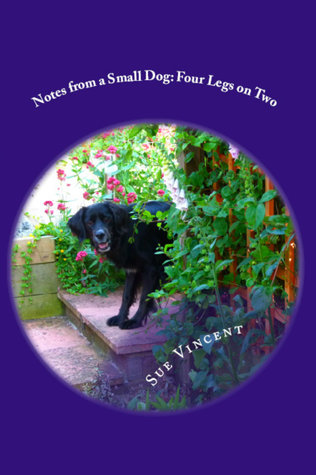
Where to start with a review of Notes from a Small Dog: Four Legs on Two by Sue Vincent? I loved this books so much and so did Michael. It became a bit of a contentious book between Mike and I as I sneakily read ahead and Michael realised that I wasn’t starting where I had finished reading to him and made me go back. He was very determined not to miss a single word. I love this type of story, told mainly through the eyes of a small and very cute dog called Ani. Sue depicts day to day life in such a humorous and fun filled way and I found it a wonderful way to end each stress filled day to sit down and read a few chapters of Ani’s antics to Michael [and to myself of course thereby sparking Mike’s intense displeasure as mentioned above]. Sue writes beautiful descriptions of the natural environment where she lives and her depictions of some of Ani’s learning experiences are very funny. I can just picture the surprise of a small dog taking a flying leap into a pond that has frozen overnight. Sue describes Ani’s anxiety and attention when she is ill and her concern and caring when Ani is ill. This book is altogether completely delightful and tells a beautiful story of the special relationship that can develop between man and his best friend. There are also a few of Sue’s humorous and clever Ani poems thrown in for good measure. This genre of book is just up my street and I rated this book five out of five on Goodreads and Amazon.
Michael and I are firm Ani addicts so another whole book about Ani’s antics is a real treat. The goings on of Ani’s two legs, sets Michael off into gales of laughter so we are really happy to read about the trials and tribulations of “Her” too.
The book is written in rhyming verse and tells all sorts of tales. To coin a phrase, Ani says:
“The time has come,” the doglet said,
“to talk of many things;
Of tennis balls and squeaky ducks,
and sneaky bees with stings; …”
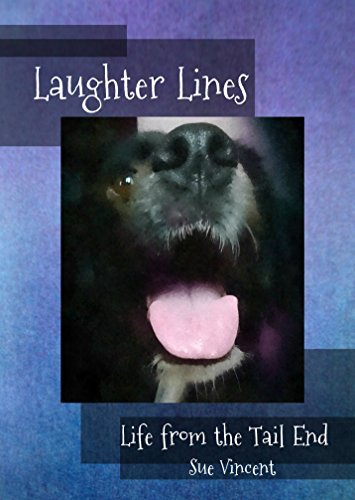
In this book, Laughter Lines, Life from the Tail End, you will meet some of Ani’s friends, OR NOT:
The cat likes to sit on the roof of the shed
While the dog views this as an intrusion,
It’s all fur and teeth
As the dog growls beneath
And the birds flutter round in confusion.
We get some insights into Ani’s diet:
Its cream cheese and crackers for me and the dog,
While I’m more the epicure… she’s just a hog…
AND
Me and the dog had a sandwich for brunch
(Well, for me it was breakfast, for her it was lunch.)
NOT TO MENTION
The ham disappeared without leaving a trace
Except for the grin upon one small dog’s face.
So if you like to enjoy life and have a good giggle, pick up this delightful book of light-hearted poems and jump right in. There are also some lovely photographs in the book for the reader to enjoy.
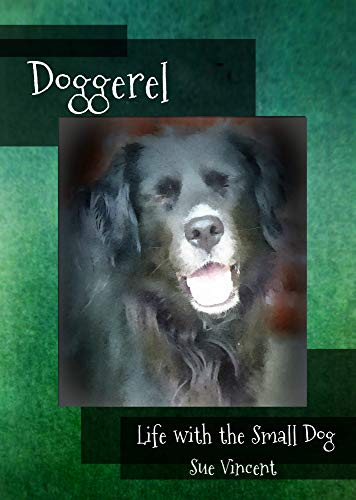
Ani, or the Small Dog, as she is referred to in this delightful collection of poetry, is a rescue dog whose mother and father were found living together in an Irish field, awaiting the birth of their litter of puppies. Ani’s two legs is named Sue Vincent and she is a Yorkshire born writer, a teacher and a director of The Silent Eye. Both Ani and Sue write highly entertaining blogs.
So what is life like for a Small Dog who blogs and writes poetry, living with another writer who is obsessed with bathing her? Ani tells us all about her life with Sue in a collection of hilarious and poignant poems, largely written in rhyming verse
Well, to start of with, Ani makes it quite clear she does not enjoy being tricked into bathing: “I got them back on exit When I shook my dripping fur… (I didn’t get my boy too much, But aimed it all at her.)”
“To add insult to injury… All guilt upon her head… When I went off to sulk a bit I found she’d washed my bed!” Both from Touche.
Ani also does not like having to diet: “Now this works a treat, if you’ll pardon the pun, ‘Cause she either forgets, gives me treats or a bun Or more likely she will not go in there at all ‘Cause, “You’ve put on a pound or two, girlie, since fall…” from In hiding…
Of course, Ani is the first to worry if her Two-Legs gets sick: “My two-legs has broken down again, Or maybe she’s still broke, I think she’s cute with hamster cheeks… She says it’s not a joke.” from Karma
Ani is also the first to admit that when she is sick, her Two-Legs nurses her with devoted care: “Being poorly does have compensations; ‘Cause she’s worried to death, I can tell. But now she is just so attentive… I’m not in a rush to get well.” from Sleeping Dogs Lie…?
This is a thoroughly enjoyable book of poetry about the antics and life experiences of the Small Dog. I would recommend it to anyone who loves dogs and who enjoys having a good giggle about life in general.
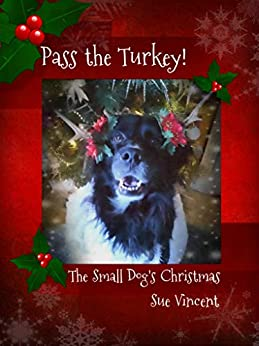
Pass the Turkey: The Small Dog’s Christmas is a delightful book full of Christmas cheer. Ani, the small dog, is reflecting on Christmas’ past, present and future through a combination of letters to Santa and poems. The perplexities of ‘fake’ Santas, the ‘theft’ of a favourite sofa, and gifts of tennis balls and a chicken flavoured biscuit, all require Ani’s consideration. Her naughty secrets are also revealed such as the time she ate all the left over turkey and salmon and fell through the ice in the pond [it was shallow]. The indignities of baths and having to wear reindeer antlers are also shared.
Join Ani and her two legs, Sue Vincent, for a glorious romp through advent and Christmas Day.
A few of my favourite verses: “I’ve tried to help with household chores, I’ve laundered all my balls, I’ve chased the pigeons form the shed And spiders from the walls.” from Request
“She’s like a puppy when it snows We just go out to play… And if she wraps up warm enough We might stay out all day.” from Wishing for the White Stuff
“The windows are all closed at night The keyhole seems to small To wriggle through with turkey And a brand new tennis ball.” from Chimneys.
I love poetry and I read a lot of poems and poetry books and I found the poems in this amazing little book to be quite profound. Sue Vincent touches on all aspects of life, including the sadder and more emotionally difficult aspects such as loss of a loved one, in a beautifully poignant and yet positive and uplifting way which make them satisfying and wonderfully uplifting.
Most of these poems are written in freestyle form with a couple in rhyming verse. The poet has matched the style well to the content of the poem and the rhyming verse poems present the more light hearted and upbeat toned poems.
A few short extracts that I found particularly impactful are as follows:
“The pen paints the souls longing In jewel tones.” from Purpose
“There were flowers, Three red roses, Red as life, Placed in a cold hand, One for each heart Saying a final farewell. When the tears fall, There are always flowers.” from Flowers
“Two ravens whisper in my ear, As Thought and Memory begin.
Within the darkness of their wings Stir images, both dark and bright, That dance within the secret heart And quiet hours of the night.” from Odin’s Ravens [my favourite poem in this collection]
“My pillow held the hollow where you lay, With love glazed eyes that held me, Watching as the wildness took me, Smiling up at me.” from Memory [intensely poignant poem]
Sue Vincent is well know for her poetry. Some is poignant and sad, some is humorous, some is incredibly beautiful, and all is emotional, insightful, and meaningful. Sue has mastered many forms of poetry, including freestyle, rhyming verse, tankas, and haikus.
Her haikus, only 17 syllables long, are among the most powerful of her many poems. This book is a collection of 365 days of haikus and loosely follows the seasons.
The best way of demonstrating the beauty and power of these haikus is by sharing a few of my favourites:
“earth captures heaven
holding stars in tender hands
that the blind may see”
***
“a flaming chalice
raising itself to the sun
accepting the light”
***
“beyond the roses
colouring a summer sky
a smiling god paints”
***
“defiant colour
sparking through the fading days
celebrating joys”
***
“memory’s pictures
neatly framed in timeless rolls
colouring the day”
These five haiku are the ones that moved me the most and I hope they have illustrated the magnificence of this beautiful book.
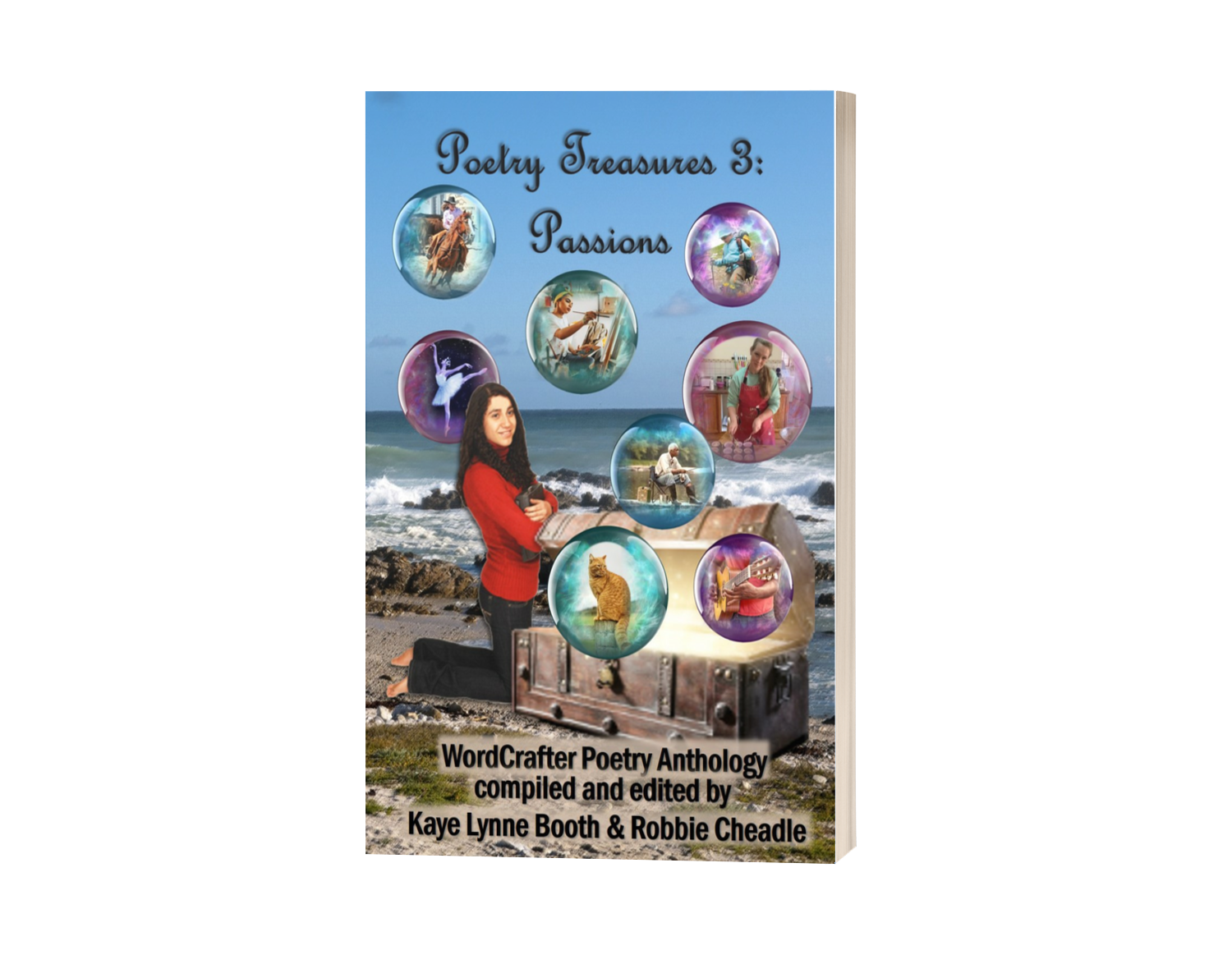
Sue Vincent was also a contributor to Poetry Treasures, a WordCrafter anthology of poetry.
A review of Poetry Treasures
A sweet short read and a collaboration of a variety of poems written in various forms of poetry by some talented poets. I feel like this book was an introduction to the poets as well as a sampling of their creativity in poetry. I especially enjoyed the poetry of Colleen Chesebro and a delicious sampling of intrinsic poetry by the talented and missed, the late, Sue Vincent.
Robbie Cheadle is a South African children’s author and poet with eleven children’s books and two poetry books.
The eight Sir Chocolate children’s picture books, co-authored by Robbie and Michael Cheadle, are written in sweet, short rhymes which are easy for young children to follow and are illustrated with pictures of delicious cakes and cake decorations. Each book also includes simple recipes or biscuit art directions which children can make under adult supervision.
Robbie and Michael have also written Haunted Halloween Holiday, a delightful fantasy story for children aged 5 to 9 about Count Sugular and his family who hire a caravan to attend a Halloween party at the Haunted House in Ghost Valley. This story is beautifully illustrated with Robbie’s fondant and cake art creations.
Robbie has published two books for older children which incorporate recipes that are relevant to the storylines.
Robbie has two adult novels in the paranormal historical and supernatural fantasy genres published under the name Roberta Eaton Cheadle. She also has short stories, in the horror and paranormal genre, and poems included in several anthologies.
Robbie Cheadle contributes two monthly posts to https://writingtoberead.com, namely, Growing Bookworms, a series providing advice to caregivers on how to encourage children to read and write, and Treasuring Poetry, a series aimed at introducing poetry lovers to new poets and poetry books.
In addition, Roberta Eaton Cheadle contributes one monthly post to https://writingtoberead.com called Dark Origins: African Myths and Legends which shares information about the cultures, myths and legends of the indigenous people of southern Africa.
Want to be sure not to miss any of Robbie’s “Treasuring Poetry” segments? Subscribe to Writing to be Read for e-mail notifications whenever new content is posted or follow WtbR on WordPress. If you found it interesting or entertaining, please share.
Christmas is fast approaching and this year’s will be the first normal Christmas many of us will be experiencing since 2019.
Last year, South Africa had an outbreak of Covid-19 round about now and we all went back into hibernation. My cousin and his family were here from the UK and they got trapped for an extra 2 1/2 weeks because of the quarantine requirements in the UK.
We are looking forward to a lovely family Christmas this Saturday before my family and my mom leave for the UK for just over two weeks. We are looking forward to seeing our extended family for the first time in three years.
The run up to Christmas is a wonderful time to read books with your children. There are numerous books that celebrate the Christmas story and also a significant number of books that share the message of kindness and sharing without any specific religious affiliation.
These are a few of my favourite Christmas stories and I’ve slipped in my own two newly released Christmas books for children at the end. These books are my first attempts at publishing on Kindle Direct Publishing and I am pleased with how they’ve turned out.
How the Grinch Stole Christmas by Dr. Seuss
What Amazon says
The timeless Christmas classic from the iconic Dr. Seuss is now available in ebook. Read this favourite story of joy, love and acceptance anytime, anywhere!
(This ebook is optimised for Kindle tablets and the Kindle App. It is not suitable for e-Ink kindle devices, such as the PaperWhite. We recommend you download a sample to your device before purchase if in doubt.)
“The Grinch hated Christmas! The whole Christmas season! Now, please don’t ask why. No one quite knows the reason…”
With a heart two sizes too small, the Grinch is the meanest creature you’ll ever meet. He hates Christmas and the whole festive season. But when he hatches a dastardly plot to steal Christmas, he’s in for a big surprise!
This classic seasonal story has become a favourite for good reason. Through hilarious rhymes and beautiful illustrations, Dr. Seuss teaches readers the true meaning of Christmas.
With his unique combination of hilarious stories, zany pictures and riotous rhymes, Dr. Seuss has been delighting young children and helping them learn to read for over fifty years. Creator of the wonderfully anarchic Cat in the Hat, and ranked among the UK’s top ten favourite children’s authors, Dr. Seuss is a global best-seller, with over half a billion books sold worldwide.
A few quotes
“Packed it up with their presents, their ribbons, their wrappings, Their snoof and their fuzzles, their tringlers and trappings! Ten thousand feet up, up the side of Mount Crumpet, He rode with his load to the tiptop to dump it!”
“And the Grinch, with his Grinch-feet ice cold in the snow, stood puzzling and puzzling, how could it be so? It came without ribbons. It came without tags. It came without packages, boxes or bags. And he puzzled and puzzled ’till his puzzler was sore. Then the Grinch thought of something he hadn’t before. What if Christmas, he thought, doesn’t come from a store. What if Christmas, perhaps, means a little bit more.”
“Seeing is believing, but sometimes the most real things in the world are the things we can’t see.”
Late one Christmas Eve after the town has gone to sleep, the boy boards the mysterious train that waits for him: the Polar Express bound for the North Pole. When he arrives, Santa offers the boy any gift he desires. The boy modestly asks for one bell from the harness of the reindeer. The gift is granted. On the way home the bell is lost. On Christmas morning, the boy finds the bell under the tree. The mother of the boy admires the bell, but laments that it is broken—for you see, only believers can hear the sound of the bell.
Awarded the prestigious Caldecott Medal in 1986, ‘The Polar Express ‘has sold more than 7 million copies, become a classic holiday movie, and been translated into stage productions that take place across the United States during the holiday season.
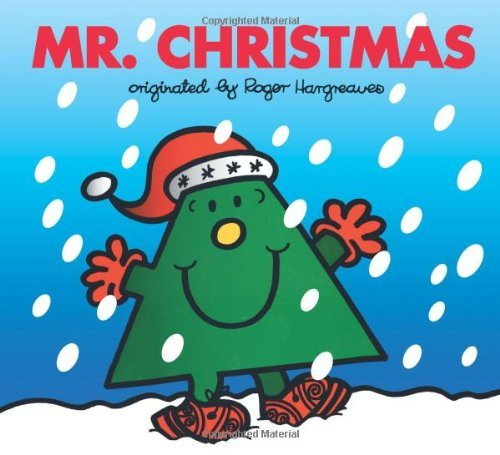
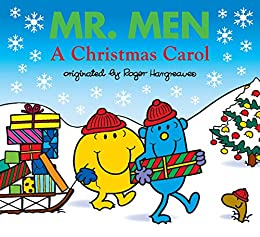
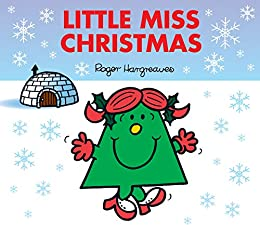
Mr. Men and Little Miss Christmas Books by Roger Hargreaves
Roger Hargreaves has an array of different books in the Mr. Men and Little Miss series of illustrated books for children. Among his many amazing books, he has a few dedicated to Christmas.
One day Mr. Christmas receives a call from his uncle, Santa Claus, asking for help. Can Mr. Christmas help Santa deliver presents to all of the Mr. Men?
Mr. Stingy is a stingy old miser who hates Christmas. But one night he is visited by three ghosts who show him that heÕs been living his life badly and needs to mend his ways! In this lighthearted adaptation of DickensÕs A Christmas Carol, Mr. Happy plays Bob Cratchit and Mr. Nosey, Little Miss Wise, and Little Miss Bossy play the ghosts of Christmas Past, Present, and Future.
Little Miss Christmas spends all year wrapping presents for Santa Claus. But when the wrapping isn?t done in time, Little Miss Christmas has to call on her Mr. Men and Little Miss friends to help out!
The Christmas Bird by Robbie Cheadle
The Deanne family is having a difficult time financially. Mr. Deanne’s business has failed and there is no money for Christmas presents and other luxuries. The family’s undernourished dogs discover a bird’s nest on Christmas Day and attack and kill the chicks. All except one tiny ball of fluff with luminous bright eyes like drops of oil. The baby bird is in shock, but the four Deanne girls try to save it. Will the Christmas Bird survive?
The Christmas Fairy’s harp has gone missing. Without it, the parents and children won’t sleep on Christmas Eve and Santa can’t deliver Christmas presents. Can Sir Chocolate help Santa find the missing harp and save Christmas? Includes five fun related limericks and five Christmas themed creative activities and recipes that caregivers can make with small children.
I made a video for this book and I would be delighted if you would view it and let me know what you think of it here:
About Robbie Cheadle
Robbie Cheadle is a South African children’s author and poet with eleven children’s books and two poetry books.
The eight Sir Chocolate children’s picture books, co-authored by Robbie and Michael Cheadle, are written in sweet, short rhymes which are easy for young children to follow and are illustrated with pictures of delicious cakes and cake decorations. Each book also includes simple recipes or biscuit art directions which children can make under adult supervision.
Robbie and Michael have also written Haunted Halloween Holiday, a delightful fantasy story for children aged 5 to 9 about Count Sugular and his family who hire a caravan to attend a Halloween party at the Haunted House in Ghost Valley. This story is beautifully illustrated with Robbie’s fondant and cake art creations.
Robbie has published two books for older children which incorporate recipes that are relevant to the storylines.
Robbie has two adult novels in the paranormal historical and supernatural fantasy genres published under the name Roberta Eaton Cheadle. She also has short stories, in the horror and paranormal genre, and poems included in several anthologies.
Robbie Cheadle contributes two monthly posts to https://writingtoberead.com, namely, Growing Bookworms, a series providing advice to caregivers on how to encourage children to read and write, and Treasuring Poetry, a series aimed at introducing poetry lovers to new poets and poetry books.
In addition, Roberta Eaton Cheadle contributes one monthly post to https://writingtoberead.com called Dark Origins: African Myths and Legends which shares information about the cultures, myths and legends of the indigenous people of southern Africa.
Want to be sure not to miss any of Robbie’s “Growing Bookworms” segments? Subscribe to Writing to be Read for e-mail notifications whenever new content is posted or follow WtbR on WordPress. If you found it interesting or entertaining, please share.
Trying to choose a favorite poem of my own, is like trying to choose a favorite child! Writing is an incredibly personal thing and our creations become our “babies”. Looking back through poems that I’ve written in the past, I will come across one that really strikes me as being exceptional. I’m often surprised by what I find on these journeys of reminiscing.
But to answer your question, today, right now, I think my favorite poem is called Poetry Of My Heart .
The poetry of my heart
spills onto the page
in blue ink
and fervent sighs
The poetry of my heart
is written on the wings
of dreams
and nights
of longing
The poetry of my heart
negate shadows of terrors
not voiced
The poetry of my heart
stands tall
against this world
What inspired you to write this poem?
I don’t know if any One Thing was the inspiration for this poem. In essence, I’m saying that my poetry will speak for me when I cannot and I find a lot of power and freedom in that.
What are your plans for your poetry going forward?
I am currently going through past poems of mine, published and unpublished in order to compile them to submit for publishing in a book or Chapbook.
What is your favourite poem?
My favorite poem? This is a very difficult question. I have many, many beloved works of poetry. Since joining the WordPress community, that love has expanded 10-fold and continues to grow.
My mother dedicated a poem to me when I was very young, called “Ordinary Miracles”, by Erica Jong. This is probably still a favorite poem of mine.
Spring, rainbows, ordinary miracles about which nothing new can be said.
The stars on a clear night of a New England winter; the soft air of the islands along the old Spanish Main; pirate gold shining in the palm; the odor of roses to the lover’s nose. . .
There is no more poetry to be written of these things. The rainbow’s sudden revelation– behold! The cliché is true! What can one say but that?
So too with you, little heart, little miracle,
but you are no less miracle for being ordinary.
Why do you like this poem?
I like this poem because it always reminds me of my mother and her love for me. To her, I was her “little miracle”. It has always held a special place in my heart because of that.
***
Thank you, Penny, for being a wonderful guest. I really loved both your poetry choices and am delighted at the idea your mother dedicated a poem to you. What a lovely idea. I look forward to reading your book in due course.
About Penny Wilson
Penny Wilson is a freelance writer who writes in several genres. She has written articles for WOW Women on Writing. Her poetry has been published in online journals, such as Ariel Chart, Spill Words Press and the Poppy Road Review. Penny is a member of the Austin Poetry Society. Her poetry has been featured in the publication America’s Emerging Poets 2018 & 2019 by Z Publishing, Poets Quarterly and Dual Coast Magazine published by Prolific Press. You can find more of her writings on her blog at https://pennywilsonwrites.com/ and follow her on Twitter @pennywilson123.
About Robbie Cheadle
Robbie Cheadle is a South African children’s author and poet with eleven children’s books and two poetry books.
The eight Sir Chocolate children’s picture books, co-authored by Robbie and Michael Cheadle, are written in sweet, short rhymes which are easy for young children to follow and are illustrated with pictures of delicious cakes and cake decorations. Each book also includes simple recipes or biscuit art directions which children can make under adult supervision.
Robbie and Michael have also written Haunted Halloween Holiday, a delightful fantasy story for children aged 5 to 9 about Count Sugular and his family who hire a caravan to attend a Halloween party at the Haunted House in Ghost Valley. This story is beautifully illustrated with Robbie’s fondant and cake art creations.
Robbie has published two books for older children which incorporate recipes that are relevant to the storylines.
Robbie has two adult novels in the paranormal historical and supernatural fantasy genres published under the name Roberta Eaton Cheadle. She also has short stories, in the horror and paranormal genre, and poems included in several anthologies.
Robbie Cheadle contributes two monthly posts to https://writingtoberead.com, namely, Growing Bookworms, a series providing advice to caregivers on how to encourage children to read and write, and Treasuring Poetry, a series aimed at introducing poetry lovers to new poets and poetry books.
In addition, Roberta Eaton Cheadle contributes one monthly post to https://writingtoberead.com called Dark Origins: African Myths and Legends which shares information about the cultures, myths and legends of the indigenous people of southern Africa.
Want to be sure not to miss any of Robbie’s “Treasuring Poetry” segments? Subscribe to Writing to be Read for e-mail notifications whenever new content is posted or follow WtbR on WordPress. If you found it interesting or entertaining, please share.
Many children’s picture books make use of brightly coloured cartoon style illustrations. Children are attracted to bright colors such as red, yellow, green, blue, and pink. These colors create a sense of energy and playfulness and also emanate happiness. Colour impacts on children’s moods, behaviour, and educational performance.
Part of the reason children prefer bright colours is because saturated colours are easier for young, developing eyes to see. Bright colors and contrasting colors stand out more in a child’s field of vision than feinter shades.
Colour effects the way the brain functions and can be used by illustrators to encourage pattern recognition, memory, and the ability of young readers to absorb new information.
Here are a few examples of colours and how they can be used for learning:
RED – a powerful and attention-grabbing colour, red stimulates alertness and excitement. It encourages creativity and can also increase appetite.
BLUE – provides a sense of comfort by exuding calmness, loyalty, peace, serenity, and security.
YELLOW – encourages positive feelings and improves concentration by promoting creativity, clarity, and optimism.
GREEN – symbolises nature and the natural world. Green relieves stress and provides a sense of healing. It also represents balance, growth, tranquillity, cleanliness and calmness.
ORANGE – like red, orange is an energetic colour that promotes alertness. Orange creates a sense of passion, warmth, excitement and encourages communication.
PINK – symbolises love, romance, nurture, warmth, calmness, and imagination.
It is also important for illustrators, or writers engaging an illustrator, to note that colours can also overstimulate children, instead of inspiring them, so a balance of bright and neutral colours is required for illustrations.
I illustrate my own children’s books and I try to apply these principles in my own work. This is a collage of a selection of my fondant and cake art illustrations.
My illustrations have proved popular with children so I think I am getting the colour coding right.
These are some examples of famous children’s books and illustrators:
What do you think? Do you like bright colours? Have you written a children’s book and illustrated it yourself or engaged an illustrator? Let me know in the comments.
About Robbie Cheadle
Robbie Cheadle is a South African children’s author and poet with eleven children’s books and two poetry books.
The eight Sir Chocolate children’s picture books, co-authored by Robbie and Michael Cheadle, are written in sweet, short rhymes which are easy for young children to follow and are illustrated with pictures of delicious cakes and cake decorations. Each book also includes simple recipes or biscuit art directions which children can make under adult supervision.
Robbie and Michael have also written Haunted Halloween Holiday, a delightful fantasy story for children aged 5 to 9 about Count Sugular and his family who hire a caravan to attend a Halloween party at the Haunted House in Ghost Valley. This story is beautifully illustrated with Robbie’s fondant and cake art creations.
Robbie has published two books for older children which incorporate recipes that are relevant to the storylines.
Robbie has two adult novels in the paranormal historical and supernatural fantasy genres published under the name Roberta Eaton Cheadle. She also has short stories, in the horror and paranormal genre, and poems included in several anthologies.
Robbie Cheadle contributes two monthly posts to https://writingtoberead.com, namely, Growing Bookworms, a series providing advice to caregivers on how to encourage children to read and write, and Treasuring Poetry, a series aimed at introducing poetry lovers to new poets and poetry books.
In addition, Roberta Eaton Cheadle contributes one monthly post to https://writingtoberead.com called Dark Origins: African Myths and Legends which shares information about the cultures, myths and legends of the indigenous people of southern Africa.
Want to be sure not to miss any of Robbie’s “Growing Bookworms” segments? Subscribe to Writing to be Read for e-mail notifications whenever new content is posted or follow WtbR on WordPress. If you found it interesting or entertaining, please share.