Jeff’s Movie Reviews – Wonder Woman 1984
Posted: January 8, 2021 Filed under: Action/Adventure, Comic books, Comic Hero, Jeff's Movie Reviews, Movie Review, Movies, Review, Super Hero, Super Villains | Tags: Comic Book Heros, DC Comics, Jeff Bowles, Jeff's Movie Reviews, Wonder Woman, Wonder Woman 1984, Writing to be Read 2 Comments
A Little Less Wonderful
by Jeff Bowles
When the first Wonder Woman film hit theaters three years ago, it was met with substantial fanfare. The Greek goddess superheroine is more than just a cultural phenomenon, she’s a feminist icon, a symbol of strength and nobility for millions of people all over the world. Her first major foray onto the big screen meant more to some people than anything else DC Comics has ever produced, so yeah, its sequel has quite a bit to live up to.
Wonder Woman 1984 is, if nothing else, an interesting product of its time, 2020, a year in which it was supposed to have been released in theaters in July. Coronavirus forced Warner Bros. to push the film until December, and the studio chose to do so by mixing a theatrical release with a special limited release on the home video streaming platform, HBO Max. So you can watch this movie right now at home for a small membership fee, kind of a remarkable thing in the history of cinema. New movies always used to be, you know, out at the movies. But now, who knows?
Subsequently, the flick has been met with much less fanfare than its predecessor enjoyed. Wonder Woman 1984 has been a success of sorts, but it’s doubtful to make much of an impact beyond that. The reasons for this aren’t merely limited to its precarious release schedule. The story makes some choices that keep it from being quite as wonderful as it deserves to be.

For one, Wonder Woman 1984 revolves around a somewhat ridiculous McGuffin that allows for wishes to come true. This is a comic book movie, of course, which I have to admit I’m a huge fan of, even when they’re loud and dumb. But it’s almost as if the entirety of the plot was constructed on a simple and somewhat lazy notion to resurrect one key dead character. That would be Chris Pine’s Steve Trevor, Wonder Woman’s traditional love interest. The movie works best when the two share screen time. Their chemistry is relatable and infectious, so it’s no surprise writer/director Patty Jenkins wanted to pull him back into the fold.
Also returning is Gal Gadot as the titular hero, and she’s still great. More comfortable this time around, perhaps, but then, she’s played the character a total of four times now. SNL alum Kristen Wiig joins the cast as a relatable if slightly goofy foil/villain whose wish to be just like Wonder Woman goes wrong in all the right ways. The Mandalorian’s Pedro Pascal plays Maxwell Lord, a DC bad guy who first appeared in a 1987 Justice League comic and who has now been given the 1984 self-help guru treatment. Pascal gives the guy a lot of juice. A lot of juice. Perhaps its best not to say too much more about it than that.
One of the problems with the movie is that it doesn’t seem to feel the need to indulge in 80s-themed nostalgia in any major way, not like other recent shows and movies set in the decade have done. Odd, considering they wanted me to know the year it takes place months and months before it ever came out. Oh, there’s some paltry lip service to the year 1984 scattered here and there. An early action set-piece takes place in a mall, for instance. But again, no 80s tunes or anything? No Simple Minds? No New Coke references? What gives, dudes?
Wonder Woman 1984 comes together all right in the end, but really, it’s just another example of a DC Comics adaptation that’s barely handled well enough to justify its own existence. I’m a pretty big comics fan when it comes down to it. Gosh, it’s getting harder and harder to compete in that space. They’ve already announced Wonder Woman 3. Let’s hope Patty Jenkins and Warner Bros. bring a bit more punch to the superhero party next time.
Jeff’s Movie Reviews gives Wonder Woman 1984 a Six out of Ten.
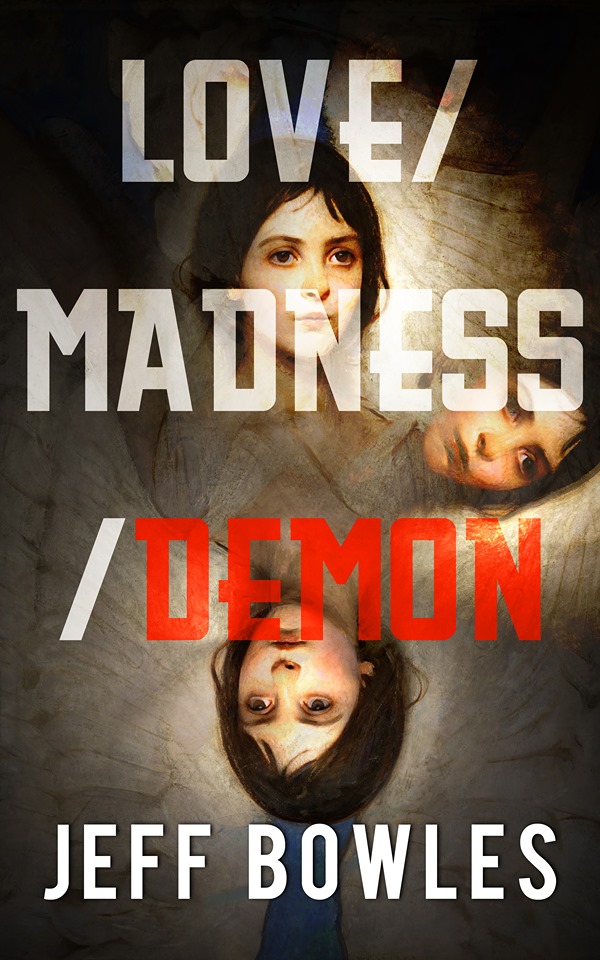
Jeff Bowles is a science fiction and horror writer from the mountains of Colorado. The best of his outrageous and imaginative work can be found in God’s Body: Book One – The Fall, Godling and Other Paint Stories, Fear and Loathing in Las Cruces, and Brave New Multiverse. He has published work in magazines and anthologies like PodCastle, Tales from the Canyons of the Damned, the Threepenny Review, and Dark Moon Digest. Jeff earned his Master of Fine Arts degree in creative writing at Western State Colorado University. He currently lives in the high-altitude Pikes Peak region, where he dreams strange dreams and spends far too much time under the stars. Jeff’s new novel, Love/Madness/Demon, is available on Amazon now!
Check out Jeff Bowles Central on YouTube – Movies – Video Games – Music – So Much More!
Want to be sure not to miss any of Jeff’s Movie Reviews? Subscribe to Writing to be Read for e-mail notifications whenever new content is posted or follow WtbR on WordPress
Share this:

Craft and Practice with Jeff Bowles – What’s the Use of Trunk Novels?
Posted: December 16, 2020 Filed under: Craft and Practice, Writing | Tags: Craft and Practice, Jeff Bowles, Trunk Novels, Writing, Writing to be Read 2 Comments
Each month, writer Jeff Bowles offers practical tips for improving, sharpening, and selling your writing. Welcome to your monthly discussion on Craft and Practice.
Everything old is new again.
Trunk novels. Everyone’s heard of them. Heck, odds are some of you have one or two lying around. Personally, I’ve got three. Three and a half, if you count a couple false starts from back when I was in my late teens and early twenties. I recently dug one out and started reading and editing it a bit, just to see if there’s a viable release opportunity for me in it.
I’m kind of a modernist when it comes to publishing. My background is in lots of short story publications, but when it’s come to book-length work, I’ve always gone the direct route and published things myself. The good news this year is that I’m already ahead of schedule on the next book I’m writing, which means I’ve got more than enough time to try and polish this older book, see if I can turn it into something presentable. It’ll take some time. Let’s face it, there’s not much in writing that can’t be improved or sharpened in some fashion. And it’s a trunk novel, which means I chose to hide it away for a reason.
That term, trunk novel, it’s got a slightly negative connotation, hasn’t it? It would seem to imply that if a book were any good, it would’ve gotten published rather than collected dust in some old trunk, either in reality or in the newfangled digital sense. This book I’m looking at, I wrote it about thirteen years ago. That’s kind if astounding, really. I also happen to have written it at a time my writing gifts were still in the soft-boiled state.
Although I do find the material worthwhile to pursue after a fashion, I just wasn’t a very good writer back then. That’s par for the course, if you ask me. So what are you to do if you’ve got some old book you’d like to resurrect, but the writing isn’t up to your present standards?
Well, I say do the hard work and chip away at it, bit by bit, until it looks a little better. Grab the opinions of a few beta readers, and then chip away at it again. The focus for me has been in shortening and cutting. Lots and lots and lots of cutting. I was a pretty verbose writer, so I expect to cut something like 30,000 to 40,000 words from a manuscript originally in the 120,000 word range. But you might have a very different task. Maybe you’ve got to make additions, or perhaps you’ll have to rewrite whole sections of it.
The truth is, if you really still believe in the story, you should be willing to do just about anything to give it a fair shot. And look, you have so many more publication options in the year 2021 than you had in decades past. The traditional route continues to be the preferred option for just about everybody out there, but it doesn’t necessarily need to be the case. Reviving an old work, hiring an editor, a book designer and cover illustrator, or doing your best with some or all of these duties yourself, it can be a very gratifying way of letting the world see something that likely would have never come up for air otherwise.
I’ve always thought hidden art is the worst kind. An alternative to publishing a more polished version of old material outright, of course, would be cannibalizing it for spare parts. This can be a really effective tool for future story development. Maybe the trunk novel has a second life in it. Is it possible it contains ideas or even entire passages or chapters you could lift out and use somewhere else? Sometimes being a writer under the gun is the same thing as being a Frankenstein-like doctor, assembling narrative monsters from bits here and bobs there.
Or, and let’s be perfectly frank about this possibility, maybe you’ll find the trunk novel needs to stay in the trunk. No problem with this. Perhaps it was meant to be. At least you know for sure now. The time I’ve taken to look at my thirteen-year-old manuscript has been well spent. So far, I haven’t seen anything too objectionable, nothing that can’t be fixed. Is it possible this kind of retreading takes more effort than simply drafting up a new story from scratch? Potentially, but again, it comes down to how much you like the work and how much you think it deserves to be seen.
That’s it for this month’s craft and practice, everyone. Until next month.
Jeff Bowles is a science fiction and horror writer from the mountains of Colorado. The best of his outrageous and imaginative work can be found in God’s Body: Book One – The Fall, Godling and Other Paint Stories, Fear and Loathing in Las Cruces, and Brave New Multiverse. He has published work in magazines and anthologies like PodCastle, Tales from the Canyons of the Damned, the Threepenny Review, and Dark Moon Digest. Jeff earned his Master of Fine Arts degree in creative writing at Western State Colorado University. He currently lives in the high-altitude Pikes Peak region, where he dreams strange dreams and spends far too much time under the stars. Jeff’s new novel, Love/Madness/Demon, is available on Amazon now!
Check out Jeff Bowles Central on YouTube – Movies – Video Games – Music – So Much More!
Want to be sure not to miss any of Craft and Practice with Jeff Bowles segments? Subscribe to Writing to be Read for e-mail notifications whenever new content is posted or follow WtbR on WordPress
Share this:

Jeff’s Movie Reviews – The Godfather, Coda: The Death of Michael Corleone
Posted: December 11, 2020 Filed under: Commentary, Jeff's Movie Reviews, Movie Review, Movies | Tags: Jeff's Movie Reviews, Movie Review, The Godfather Coda, Writing to be Read 3 Comments“Just When I Thought I was Out…”
by Jeff Bowles
There are few more legendary films than The Godfather and at least one of its two sequels. The American Film Institute named Part I the third most important movie of all time, coming in behind only Casablanca and Citizen Kane. The Godfather Part II is held up by many as a true cinematic masterpiece, superior to the first in every way, with a richness and depth rarely found in Hollywood films.
And then there’s The Godfather Part III, largely considered the weakest in the series, if not one of the weakest closing chapters of any film franchise, period. It suffered from a jumbled and imprecise development cycle, very nearly crumbling under the weight of its own narrative legacy. Originally released in 1990, The Godfather Part III was overly operatic, self-reverential, far too dependent on its own aging formula. Some casting missteps didn’t help matters either, nor did a story that had little of the depth or urgency of the previous two films.
Now, thirty years later, director and co-writer Francis Ford Coppola has resurrected The Godfather Part III with a new title and a new cut that is leaner, more focused, slightly (very slightly) different in tone and subtext, and essentially, not all that much better than it was three decades ago.
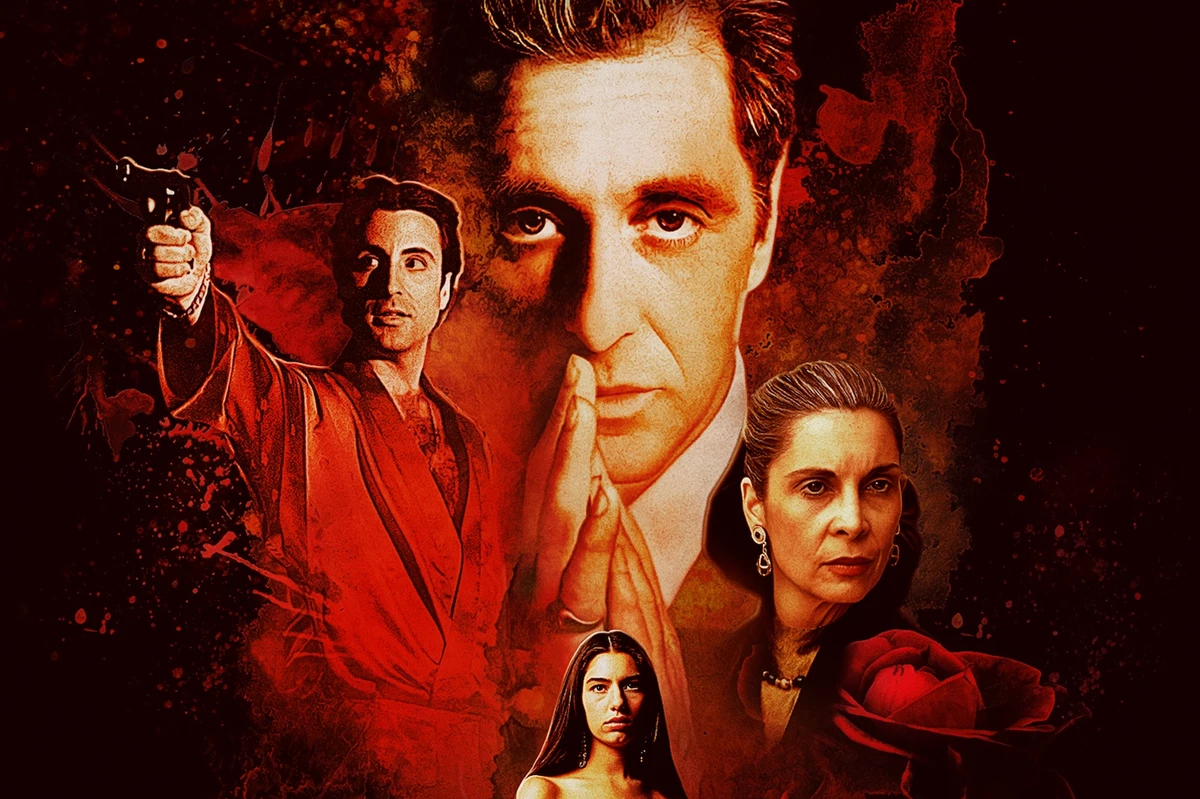
Mario Puzo’s The Godfather, Coda: The Death of Michael Corleone (as it’s now known) may have an insanely verbose title, but let’s face it, the original cut was an odd duck anyway. Admittedly, it’s not such a bad movie to revisit. Michael Corleone and his supporting cast are some of the best drawn and most acutely emotional film characters of all time. And yet, shifting a few elements around and cutting a bit of bulk does not storytelling redemption make. The movie looks fantastic due to a new remaster and a simultaneous limited theatrical release alongside blu-ray and home streaming options. And yes, the deeper themes explored by the series as a whole stand in slightly starker and clearer relief than they did previously. But only if you’re seriously paying attention, because really, this is basically the same movie with a longer title.
Al Pacino’s Michael Corleone is a different man than the angry, murderous mafia don who ordered the death of his own brother in Part II. The truth is, Michael thinks he can buy his way into Heaven. Good deeds, charitable works, liquidating all non-legitimate assets and operations, cozying up to the church, becoming a better father. Family and the breakdown of familial bonds is one of the key themes of the entire series, and Michael’s family has been broken for years. His ex-wife, Kaye (played by the always wonderful Diane Keaton) dreads him and the bad memories that still plague her, and his two adult children love but barely trust him. Don Corleone wants out, but as his famous line of dialogue goes, just when you think you’re out … well, you know the rest.
The film benefits from increased contextual musculature and sinew, and the “new’ beginning and end aren’t so much new as better placed and/or better executed. Is it reason enough to watch all three in marathon fashion? Sure, why not? In the age of pandemic lockdowns, who’s to say what movie night can look like. As far as Coppola is concerned, The Godfather Part III was poorly named anyway. A coda, in musical terms, is a concluding passage that summarizes main themes and very often offers a sort of flourishing resolution. The Godfather, Coda does that in a way, but again, if you haven’t seen the original cut in years, it’s doubtful you’ll notice much difference.
Even still, time has a way of making old things shine. The first two films have aged remarkably well, and the series simply wouldn’t feel the same without an ambitious but clunky concluding chapter.
When it comes to The Godfather, Coda, you may want to leave the gun and take the cannoli, if you don’t mind the dumb Clemenza reference, but if you’re at all interested in what this new version brings to the table, there’s certainly worse mob stories to binge at home on a Saturday afternoon. I mean seriously. Netflix again, dear?
Jeff’s Movie Reviews gives The Godfather, Coda: The Death of Michael Corleone a Seven out of Ten.
Look at how they massacred my boy!
Jeff Bowles is a science fiction and horror writer from the mountains of Colorado. The best of his outrageous and imaginative work can be found in God’s Body: Book One – The Fall, Godling and Other Paint Stories, Fear and Loathing in Las Cruces, and Brave New Multiverse. He has published work in magazines and anthologies like PodCastle, Tales from the Canyons of the Damned, the Threepenny Review, and Dark Moon Digest. Jeff earned his Master of Fine Arts degree in creative writing at Western State Colorado University. He currently lives in the high-altitude Pikes Peak region, where he dreams strange dreams and spends far too much time under the stars. Jeff’s new novel, Love/Madness/Demon, is available on Amazon now!
Check out Jeff Bowles Central on YouTube – Movies – Video Games – Music – So Much More!
Want to be sure not to miss any of Jeff’s Movie Reviews? Subscribe to Writing to be Read for e-mail notifications whenever new content is posted or follow WtbR on WordPress
Share this:

Craft and Practice with Jeff Bowles – Should You Write Every Day?
Posted: November 23, 2020 Filed under: Craft and Practice, Writing, Writing Life, Writing Tips | Tags: Craft and Practice, Jeff Bowles, Writing, writing advice, Writing Life, Writing Tips, Writing to be Read 3 CommentsEach month, writer Jeff Bowles offers practical tips for improving, sharpening, and selling your writing. Welcome to your monthly discussion on Craft and Practice.
The cure for common burnout?
I’m not a long-haul writer. I’ve tried to live by the adage a writer should write every day, and to be perfectly frank, there are monasteries in the world that live by less draconian standards. My best writing gets done when I work in spurts, crank out a project of one kind or another, take a break of weeks or even months, and then get back at it feeling refreshed.
By traditional standards, this is a pretty lazy and dysfunctional way to go about it. These things were determined long ago by the writing powers that be, and as far as they were ever concerned, it’s a bad idea to rest on your laurels when you could be mass-communicating incredible beauty and truth.
Milage varies on that last point, of course. Because after all, how can we communicate much of anything when we’re dog tired and in need of a rest?
If you’re like me, keeping up with a daily, monthly, yearly word count is hard work. For sure, being a writer is hard work anyway, so if we can make our jobs easier, even just a little bit, I think we owe it to ourselves to do so. But be warned, the advice which follows is not for the faint of heart. If the idea of going long-term without putting any words down sends you into an apoplectic fit, maybe stick to the way you’ve always done things.
I do, however, think you’ll find my method of working allows for much more personal freedom than the long-standing tradition of writing till you drop. Yes, you may get less done in a year. That is a distinct possibility. But do you want to know something funny? When polled, most writers who also work a typical nine-to-five job say they wish they had more time, and that if they did have more time, they’d produce far more writing.
But what if some of those writers are wrong? What if, somewhat counter-intuitively, more free time on our hands doesn’t always equal a higher rate of production? The thing about being an author of any kind is that it requires incredible creative and intellectual energy to pull off on a regular basis. Yes, taking breaks might damage your output. Then again, it may just boost it. You may also find that the quality of your writing improves the more slack you cut yourself.
I’m big on cutting writers slack. I think it’s incredibly important, and in my experience, most of us are simply too hard on ourselves. That’s really why my writing habits have developed this way. By nature, I’m hard on myself, which means if I don’t take breaks every now and then, I’m liable to tear myself down instead of fostering a mental attitude that helps me build myself up.
Now, the first thing to realize is that taking a break from your writing means your skills will not atrophy so much as cool down a little. Writing is not unlike riding a bike. You never forget how to do it. But let’s say you take a five-month hiatus, simply because you’re feeling worn out or you’ve got more important things going on in your life—happens all the time. After that five months, you might return to the craft a bit dismayed at your apparent lack of talent. Whatever you’re working on needs to be rewritten from page one, and it’s all because you took the lazy advice of that awful Bowles guy.
One key thing, of course, is that I never said to quit entirely. If you know you’ll be taking a siesta, if you can schedule that in for yourself, why not also schedule in some light exercises so you don’t feel like a total louse?
For instance, I write for this blog three times a month even when I’m not writing a book. Producing content for the internet is a great way to keep your skills in tip-top shape. You could also work on a short (and I do mean short) story or two, or in the very least, engage in some weekly finger exercises. It doesn’t really matter so long as you don’t miss the point. Rest, recuperation. This is the point.
Conversely, and this is always a good idea, you could increase your reading load. The worst kept secret of the craft is that reading a lot tends to make us better writers. And the good news is it doesn’t really matter what we read. The basic engagement of our minds in this way seems to keep our intellectual and communicative abilities primed. Reading’s good for you. It keeps the stupid at bay (it is to be hoped). Honestly, you should be doing it anyway, and if you’re not…
Another piece of advice I can offer is to decrease your writing load rather than to cut it off altogether. For a little while at least, try transforming your 2,000 word-per-day average into something more like 500 words-per-day. That’s not a bad count-up when averaged out over an entire year. If you could write a scant 500 words per day, you’d end up cranking out about 15,000 words in a month. That’s the equivalent of a novel or two in a year, and the best thing about it is that 500 words per day means you’re only writing for about an hour or so, half an hour if you’re quick. That doesn’t sound too daunting, does it? If you’re feeling burned out, this might be just what the doctor ordered.
And the truth of it is people do get burned out, fed up, exhausted, and all sorts of other tired-sounding descriptors that equal one thing: you’re a human being, not a machine. If you’re struggling with your work right now, if you’re having issues with confidence or anxiety or anything of the sort, try slowing down. Trust me on this, don’t even fret, your desire to write will return in all its power and glory, and then you’ll be ready to crank out another masterpiece.
You’ve got a masterpiece or two lurking inside you, right? That’s what I thought. Happy writing, everyone. Or perhaps I should wish you a happy vacation. I’ll be back with more Craft and Practice next month.
Jeff Bowles is a science fiction and horror writer from the mountains of Colorado. The best of his outrageous and imaginative work can be found in God’s Body: Book One – The Fall, Godling and Other Paint Stories, Fear and Loathing in Las Cruces, and Brave New Multiverse. He has published work in magazines and anthologies like PodCastle, Tales from the Canyons of the Damned, the Threepenny Review, and Dark Moon Digest. Jeff earned his Master of Fine Arts degree in creative writing at Western State Colorado University. He currently lives in the high-altitude Pikes Peak region, where he dreams strange dreams and spends far too much time under the stars. Jeff’s new novel, Love/Madness/Demon, is available on Amazon now!
Check out Jeff Bowles Central on YouTube – Movies – Video Games – Music – So Much More!
Want to be sure not to miss any of Craft and Practice with Jeff Bowles segments? Subscribe to Writing to be Read for e-mail notifications whenever new content is posted or follow WtbR on WordPress
Share this:

Jeff’s Movie Reviews – The Queen’s Gambit
Posted: November 13, 2020 Filed under: Jeff's Movie Reviews, Movies, Opinion, Review | Tags: Chess, Jeff's Movie Reviews, The Queen's Gambit, Writing to be Read 2 CommentsSeduction by Chess
by Jeff Bowles
Chess is not typically known for excitement or suspense. The game of kings has certainly been portrayed any number of ways by Hollywood throughout the years, but Netflix’s new limited series The Queen’s Gambit makes it look passionate, dangerous, and well, sexy.
Maybe it’s the stylish 60s themes, fashions, and music. Or perhaps the magic of this series is in the writing, which is sharp, compelling, and just a little bit wild. So too is the basic look of the show. Each and every chess match (and there are quite a few scattered across seven hour-long episodes) has a different feel, a different level of intensity. And make no mistake, The Queen’s Gambit is all about intensity. To finish a single match is to look into the hungry and carnal eyes of your opponent and ask for another round. And here I thought chess was boring.
No two ways about it, Beth Harmon (played by the wonderful Anya Taylor-Joy) is a child prodigy. After a terrible car accident kills her mother, she’s sent to an orphanage and there befriends a lowly janitor who lives in a veritable dungeon of a basement. The janitor, by the way, happens to be a chess wizard himself. After some brief instruction and the early rumblings of blind obsession, Beth beats him, his chess club (all at once in a series of simultaneous matches) and then begins to play on the larger American circuit. She becomes an overnight sensation, her face on magazine covers, her name known to anyone interested in the game. But the fire in her belly is unquenchable. She’s a marvel and a ticking time-bomb. We know she will explode. The only question is when.

We are talking about the 1960s here, and at that time chess and master chess players were honored and respected worldwide. Beth’s basement-dwelling mentor warns her genius often comes at a price. Her personal demons take the forms of addiction, mental illness, and compulsion. Every single night is an opportunity for her to practice and read and imagine (or perhaps hallucinate) whole matches upside down on the ceiling above her bed. She pops a few of her favorite pills, which are never specifically named, maybe has a drink or two, and then she lies down and watches as the shadowy game unfolds above her.
The Queen’s Gambit is based on a novel by Walter Tevis, who passed away in 1984. It’s a shame he didn’t live to see the adaptation, because Netflix has done his book justice. There’s real emotion and drama here. Beth Harmon is a fascinating character, and though she’s entirely fictional, she and her world are so fully realized you might mistake her for an actual public figure. The show drips with passion and lust. It’s incredibly sexy at times. Imagine making chess sexy.
How rare is it to find someone who burns for something, anything, as much as Beth burns for chess? Mastering the game, explosive, sometimes cold, almost always calculated, but there’s a beating heart inside her, a need for appreciation, recognition, for someone to love and understand her. Even those closest to her see her as an enigma. So incredibly young, stunningly beautiful, dressed in the most Chic fashions of the time. A genius, absolutely. But always at a distance, just beyond everyone’s reach, right where she likes it.
Drug addiction adds an interesting element to The Queen’s Gambit. Self-destruction, it seems, can be as seductive as a tender kiss. Even if the acting weren’t top notch across the board (and it is), the fascination, drama, and blind ambition emanating from Tevis’ narrative is stunning. If you were as determined to become the greatest chess master of all time, you might develop a drug problem, too. Then again, maybe you wouldn’t. Beth Harmon comes from tragedy, and it follows her wherever she goes. Adopted by a married couple whose relationship was on the rocks to begin with, she learns from a very early age the only way to get by in this world is to commit to personal freedom and absolute autonomy. She drinks, she pops pills, but the ultimate question of what it all costs comes down to this: if genius and madness go hand-in-hand, when does the ride stop? Where must the line be drawn?
We’re never really sure Beth Harmon receives the answers to these questions. The Queen’s Gambit is an unexpectedly charming, gripping, and seductive limited series all fans of excellent storytelling need to stream immediately.
Jeff’s Movie Reviews gives it a Nine out of Ten.
I think that’s checkmate, everyone.
Jeff Bowles is a science fiction and horror writer from the mountains of Colorado. The best of his outrageous and imaginative work can be found in God’s Body: Book One – The Fall, Godling and Other Paint Stories, Fear and Loathing in Las Cruces, and Brave New Multiverse. He has published work in magazines and anthologies like PodCastle, Tales from the Canyons of the Damned, the Threepenny Review, and Dark Moon Digest. Jeff earned his Master of Fine Arts degree in creative writing at Western State Colorado University. He currently lives in the high-altitude Pikes Peak region, where he dreams strange dreams and spends far too much time under the stars. Jeff’s new novel, Love/Madness/Demon, is available on Amazon now!
Check out Jeff Bowles Central on YouTube – Movies – Video Games – Music – So Much More!
Want to be sure not to miss any of Jeff’s Movie Reviews? Subscribe to Writing to be Read for e-mail notifications whenever new content is posted or follow WtbR on WordPress
Share this:

Craft and Practice with Jeff Bowles – The Odds and Ends of Worldbuilding
Posted: October 21, 2020 Filed under: Craft and Practice, Fiction, World Building, Writing, Writing Process, Writing Tips | Tags: Craft and Practice, Jeff Bowles, World Building, writing advice, Writing Process, Writing to be Read 1 CommentEach month, writer Jeff Bowles offers practical tips for improving, sharpening, and selling your writing. Welcome to your monthly discussion on Craft and Practice.
How Well Can You Play Jazz?
In the grand scheme of things, there are some elements of storytelling that make a larger impact than others. Character, point of view, scene, dialogue, these are all textual, the brass nuts and bolts your readers will engage with directly. Then there are elements of craft that are more supportive, behind-the-scenes, the framework and scaffolding that keep your story together.
Worldbuilding falls into this latter category. No matter what you do as a storyteller, regardless of genre or narrative intent, you will have to build worlds for your characters to inhabit. If you’re a genre writer (sci-fi, fantasy, horror, etc.) odds are you’re in need of more of this scaffolding than, say, a writer of contemporary adult fiction, or really, anything set in a non-magical or non-hyper-technological world.
For instance, if I want to write a family drama set in Waco, Texas, I can most likely get away with using my imagination. A gas station in Texas is the same as a gas station here in my home state of Colorado. A bar is a bar, a home is a home, a restaurant is a restaurant. Now, if I I’m a very skilled and enterprising writer, I might actually travel out to Waco, especially if I’ve never been there before. I might walk the streets, soak in the ambience, listen to how the locals talk, how they interact with each other. Nice, right? Conversely, I could do it the lazy way and just use Google Maps. You know, worldbuilding for slugs.
Don’t worry, there’s no judgement here. I’m slug number one. Anything worth doing is worth doing the easy way, or so my habitual procrastination always tells me. Still, you may find it difficult to easily jot off scene details when your story is set on an intergalactic space station, or in a magical realm full of wizards and dragons, or perhaps in a unique and genre-bending setting heretofore unimagined by non-writing mortals. Like dragons tearing ass through awesome space stations. Bestseller material. I’m sure of it.
As with everything, novice writers tend to lean on advice found on the internet or in books on craft published thirty years ago. Take it from your local writing advice guy, there’s nothing wrong with that. We all need instructors, examples, positive influences to look up to, no matter how experienced we become. Worldbuilding advice from certain genre masters includes meticulous research, lots of thinking and planning, note-taking, mapmaking, character family lineage, alien astronomy, mythical world histories, languages built on complete working syntax and sentence structures.
And far be it for me to second-guess the masters. However, it must be noted that even they aren’t huge on taking their own advice. I once had a professor who picked the brain of Fantasy author George R.R. Martin on this very subject. When asked how it was he built such engrossing, immediately present and lush worlds, Martin didn’t rattle off dry advice like, “I draw up detailed maps,” or, “I don’t write a single word until I have the look and feel of every fork and every knife placed on each house dining hall table.”
Nope. It seems the creator of the Game of Thrones series likes to wing it. He said, simply enough, that if he wanted a character to have a fork in her hand, he’d describe it on-the-fly and then move on to the next thing. Dialogue, for instance, which can convey information about a world in subtle yet effective ways. He’d then need to describe a goblet or a roaring fireplace into which his character could spit the unwanted rind of a piece of old cheese. Was there a history behind that fireplace? Yeah, maybe. And in this way, his worlds build themselves automatically. In other words, for him the process is organic, unrehearsed, true to the spirit of conjuring stuff from fairy dust and raw intuition.
Not to suggest Martin eschews preparation in every case, because I’m sure he doesn’t. Never start a book without thinking about it at least a little. You know not to do that, right? Stephen King offers similar advice to Martin’s in his seminal autobiography/writing manual, On Writing.
“Description should begin in the writer’s imagination and finish in the reader’s.”
By which he means an economy of words and ideas is our best friend. After all, we don’t write fiction to glorify our own intellects. At least not all of us do. We write to entertain, edify, enlighten, shock, or otherwise affect our readers. Let them participate. Don’t overburden them with extraneous fluff.
Generally speaking, I don’t do much worldbuilding. Some writers come to see it as a crutch, but I don’t think that’s true. It’s a matter of comfort and personal style. There are many highly skilled authors who do take the time to establish their working narrative milieus in exacting detail before committing them to an initial draft. I can’t fault them for this. I’ll just say that for the majority of us, especially those of us who are just starting out, all that detail can become a liability. What’s to stop us from using it—all of it—to create infodumps of mythic proportions? You know what an infodump is, don’t you? It’s when a writer loses confidence and shoves a pile of overcooked world down my throat.
“Look! There’s story here! Don’t choke on my custom third-age elf lore, please. I made it just for you.”
It’s okay to play jazz a little bit, throw stuff at the wall and see what sticks. You never known what your narrative needs until it asks you directly. Trust me on this. Ever overprepare for a job interview? Caught off guard by unexpected questions, flustered now, rattling off hyperbole and corporate nonsense instead of real knowledge acquired through years of experience. Too much worldbuilding can become a mess precisely because we think we know what to expect yet never seem to.
Sometimes we fall into a rut and overprepare because it’s easier than the actual writing. It’s a different animal, playing with your characters in real terms. Everything you do up to that point is academic and therefor inert. Besides, improvisation as an author’s best friend. You may find over the course of your career it’s your saving grace. You’ve got instincts. I say use them. The best stories ever told have had an organic, unaffected, natural quality, don’t you find? Besides which, I like Jazz. It’s surprising, fresh, sometimes complicated, but never boring. Unless you like Country, and if that’s the case, I need you to stop reading this blog post and go develop a decent sense of music.
Joking. Only joking.
Well, that’s about it for Craft and Practice this month, folks. Drop me a line in the comments section below. Are you a meticulous worldbuilder? Do you find that a more improvisational approach is best? In November, we’ll take a look at a sister topic, character development. See you then!
Jeff Bowles is a science fiction and horror writer from the mountains of Colorado. The best of his outrageous and imaginative work can be found in God’s Body: Book One – The Fall, Godling and Other Paint Stories, Fear and Loathing in Las Cruces, and Brave New Multiverse. He has published work in magazines and anthologies like PodCastle, Tales from the Canyons of the Damned, the Threepenny Review, and Dark Moon Digest. Jeff earned his Master of Fine Arts degree in creative writing at Western State Colorado University. He currently lives in the high-altitude Pikes Peak region, where he dreams strange dreams and spends far too much time under the stars. Jeff’s new novel, Love/Madness/Demon, is available on Amazon now!
Check out Jeff Bowles Central on YouTube – Movies – Video Games – Music – So Much More!
Want to be sure not to miss any of Craft and Practice with Jeff Bowles segments? Subscribe to Writing to be Read for e-mail notifications whenever new content is posted or follow WtbR on WordPress
Share this:

Jeff’s Movie Reviews – The Trial of the Chicago 7
Posted: October 16, 2020 Filed under: Film Review, Jeff's Movie Reviews, Movie Review, Movies | Tags: Historical Drama, Jeff's Movie Reviews, The Trail of the Chicago 7, Writing to be Read 2 CommentsBomb Throwers and Peacemakers
by Jeff Bowles
Movie reviews generally don’t work when the reviewer gets too opinionated. Politics, for instance. Just kind of common sense “the movie guy” shouldn’t vent his issues with this candidate or that major event all over your nice, unsuspecting blog visit. I don’t even have to be qualified to tell you that, do I? I’m not qualified, by the way, not in the least, but then, who among us is? Look ma, no hands.
It should be noted, however, that this movie reviewer is a human being, and as is the annoying habit of most human beings, he can’t help actually having an opinion. And a unique perspective, he might add.
I might add. Sorry.
I’m a Millennial, which means Aaron Sorkin’s new political courtroom drama, The Trial of the Chicago 7, is perhaps made with me in mind. After all—and it’s clear as day for everyone with news access to see—the events surrounding the 1968 Democratic National Convention closely mirror protests and riots happening at this very moment, all over this country, chiefly led or supported by people my approximate age.
It feels like if you’re in your twenties or thirties in this day and age, you’re expected to be a revolutionary in one sense or another. At one point I had a nice job as a technical writer, and as the young blood, the fresh meat, revolution was supposed to have been my forte. That word, revolution. I wonder if most people understand what it means before an honest to god revolutionary moment has broken out. They definitely understand afterward, as did the eight men put on trial for an alleged conspiracy to incite a riot and provoke Chicago police into acting violently against Vietnam War protesters during the ‘68 DNC. This whole thing is so tied up in politics, nostalgia, and bright yet somehow startlingly foggy memory that it binds up my fingers and makes it difficult to type the full length of this review. And that’s saying something. I haven’t even gotten out of my bathrobe yet.
Truthfully? I’m more of a peacemaker than a bomb thrower. I think I recognize a time and place for the latter, but as the former, I can’t get behind violence for the sake of ideas, the most transient of all puffy white clouds in humankind’s mental skyline. The Trial of the Chicago 7 seems bent on assuring me revolution is a positive thing. Should I take the film’s word for it? I wonder. In fact, I find I’ve always had to wonder.
Aaron Sorkin is known for precisely two things: incredibly sharp pacing, dialogue, and character work that’s often rendered too slickly and can add up to less than the sum of its parts. And The West Wing. That too.
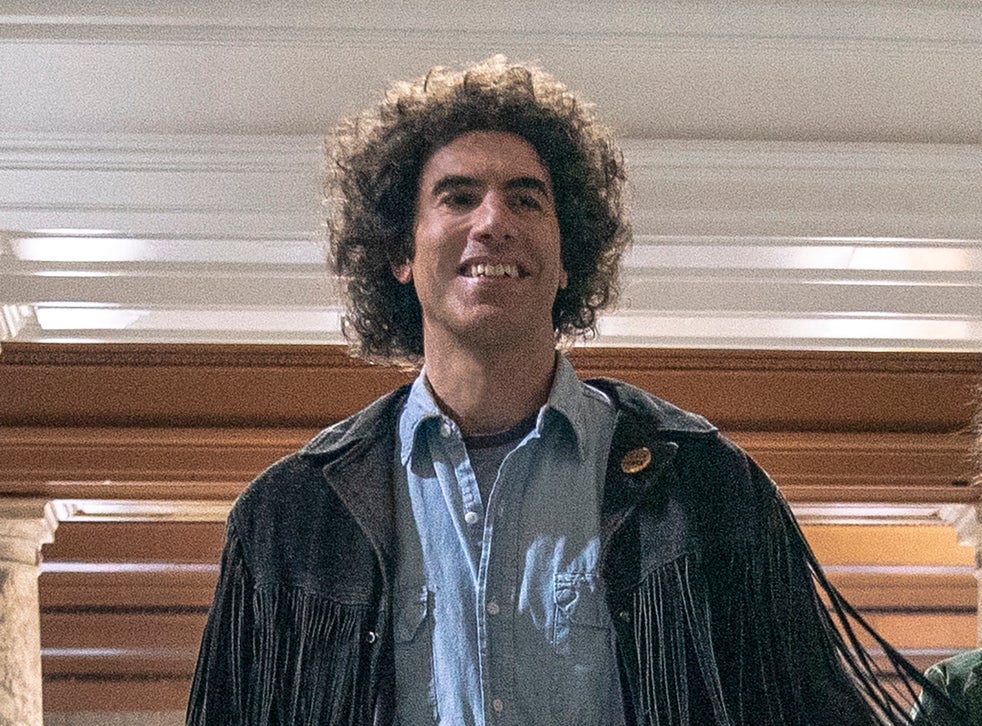
That this film has been in the works for fourteen years doesn’t surprise me, nor does Sorkin’s clear intention to finally produce and release it just before the 2020 general election. Yes, it’s star-studded and wonderfully written, and yes, it’s also too whimsical and nonorganic to present the events of that time and place with any kind of genuine honesty. Basically, all the historical components are there. These young men, they couldn’t have understood what they were in for. Sacha Baron Cohen is too old to play Abbie Hoffman but knocks it out of the park regardless, and Jerry Rubin is basically turned into a two-hour-long stoner joke.
But what the heck? It’s not as sensationalized as an Oliver Stone movie, and I believe general consensus circa 2020 is that these eight men stood for something noble and endured a fascist political trial under a federal judge who had no intention of doing anything less than screwing them to the wall. Again, this seems to be Sorkin’s intended memorandum, and again, I don’t think I’m all that interested in agreeing or disagreeing. I’m the movie reviewer, after all. The movie is what it is, and my role is cut and dry.
Except to say this. If violent (and I must be frank, even nonviolent) revolutions are so effective, why do human beings always seem to wind up entangled in them? My mind works this way: there will never be a positive and lasting human revolution until and unless human beings themselves, on both an individual and collective level, revolutionize their own archaic hearts and minds. This nonsense of us versus them, this grand illusion, it has plagued us from the very beginning. I don’t bow down to more of it, and I realize I might be alone in that kind of thinking.
Also, very simply, it must be asked if Sorkin himself is aware of the ability of commercialized entertainment to stoke passionate societal flames almost as easily as calling for blood from behind a podium. The potential responsibility inherent in such an acknowledgment, it may be too much for his kind of star power. Regardless, his new Netflix film is easy to enjoy, to digest, and to dismiss. And really, isn’t that the best sort of popcorn entertainment?
I could engage with The Trial of the Chicago 7 a bit further, but not easily, not without being forced into more politics. Systemic racism is addressed, for instance. But not in a way that will satisfy people sick to death of the anglo-savior storytelling trope. Again, nuts to politics, what about the beating heart of a man gagged and shackled in the middle of a US courtroom? That would be Bobby Seale, the event depicted without teeth but after a fashion, I suppose, accurately enough. What about a growing awareness that essentially, we have the same soul, the same tormented passions? Does that kind of thinking seem present or absent in today’s politics? Or the politics of 1968? Or of any other era for that matter?
The wheel keeps spinning, the bomb throwers throw, the peacemakers do their best, and somehow, one way or another, all of it seems destined to end up on my TV.
Jeff’s Movie Reviews gives Netflix’s The Trial of the Chicago 7 a seven out of ten. Good enough for government work, if government work is indeed on offer.
Jeff Bowles is a science fiction and horror writer from the mountains of Colorado. The best of his outrageous and imaginative work can be found in God’s Body: Book One – The Fall, Godling and Other Paint Stories, Fear and Loathing in Las Cruces, and Brave New Multiverse. He has published work in magazines and anthologies like PodCastle, Tales from the Canyons of the Damned, the Threepenny Review, and Dark Moon Digest. Jeff earned his Master of Fine Arts degree in creative writing at Western State Colorado University. He currently lives in the high-altitude Pikes Peak region, where he dreams strange dreams and spends far too much time under the stars. Jeff’s new novel, Love/Madness/Demon, is available on Amazon now!
Check out Jeff Bowles Central on YouTube – Movies – Video Games – Music – So Much More!
Want to be sure not to miss any of Jeff’s Movie Reviews? Subscribe to Writing to be Read for e-mail notifications whenever new content is posted or follow WtbR on WordPress
Share this:

Words to Live By – The Big Chill
Posted: October 7, 2020 Filed under: Creativity, Words to Live By, Writing, Writing Life, Writing Process, Writing Tips | Tags: COVID 19, Pandemic, Words to Live By, Writing, writing advice, Writing Process, Writing to be Read 3 Comments
The first Wednesday of every month, writer Jeff Bowles muses on life, creativity, and our collective destinies as makers of cool stuff. You’re a writer, but have you ever thought about how or why? Here are some words to live by.
The Big Chill
I’ve always tended to believe there’s a time for action and a time for inaction. For instance, as a writer, I very rarely get away with working the whole year round. I realize it’s something of a controversial position to take, but I don’t like constant effort and much prefer writing in bursts. Perhaps I’ll work on the rough draft of a new book from Christmas to Groundhog’s Day, polish it up till early summer, and if I feel like releasing it myself, do that sometime in July. That’s usually how it goes. This year is bound to be different, though.
I don’t have to tell you, but 2020’s been something of a seminal time, both famously and infamously so. Even if it weren’t for the pandemic, we as a collective have dealt with politics, racism, the inherent corruption, or if you like, the non-corruption of the system designed to protect and serve us, and it’s still only early October. But yes, on top of it all, we do have a global pandemic to worry about. As Bob Dylan once famously sang, the times, they are a’changing. And not too nicely, either.
I’m aware I should be working harder on prepping my next major writing project. I’m aiming for the stars on this one. I’ve got enough details planned out in my head I could start outlining any day. But I haven’t yet. I’m choosing not to. Why is that? Because there are times for action and inaction.
Known by another name, inaction is simply observation. I feel the need as a storyteller to be the witness for a while. We all play the witness. In fact, it could be considered one of the chief characteristics of being alive. We watch the times, the places, the faces that come circulating through our daily experiences. And when something big like 2020 comes along, we are helpless but to stop everything and pay attention.
Maybe you’ve never paid this much attention before. Maybe you’ve never had the time. I’ve got news for you, 2021 isn’t likely to go any smoother. I’d like the opportunity to soak up the lopsided feeling of this year, like a beautiful but flawed piece of Italian bread marinating in extra virgin olive oil and herbs. Sure, leave that bread in its bath too long and it’ll come out a mushy mess. But it does deserve to marinate, doesn’t it? For the sake of fine cuisine?
Okay, maybe that’s an odd image. I’m more of a cheap peperoni pizza guy, anyway. The point is, if the world is changing, I’m no doubt changing right along with it. And if I’m changing—as a person, as a creative individual, a writer, and an entrepreneur—then surely the work I’m capable of producing is changing, too. Which means I can wait to tell that next story. The Germans have a lovely little phrase, one which has always fascinated me: zeitgeist, the spirit of the times. Things aren’t how they were five years ago. Heck, I’m not even sure last year was anything like 2020. And if you think for a minute you know how the world’s going to shake out from all this, I’m here to tell you you’re dead wrong. Maybe that’s why I’m choosing observation right now. I’m waiting for the other shoe to drop.
Of course, there will be some who don’t feel like anything’s changed at all. There will be others still who, in the face of great change, make the choice to dig in, refortify, and to be more or less aggressive versions of the people they’ve always been. No yielding or bending. Go on and write your old-school hardcore science fiction the way you’ve always written it. Financially speaking, who can say what a smart approach looks like anymore? If I knew that … well, let’s just say I don’t know. Still, from a creative standpoint, I know there are some fellow authors out there who must see the clear opportunity for growth.
I’ve watched so many lives change in the last seven months. I’ve seen it all year long in my social media threads, too. This couple is breaking up after twenty years together. This son is finally moving out and this daughter is abandoning a job she never wanted in the first place. Change is all around us, and I’d wager that if you stopped for just a moment, cleared your head, quit thinking for a second or two, you’d feel profound change within yourself as well.
So here’s what I’m advocating for writers this month. Unless you’re already in the middle of a project, don’t even think about starting something new. Give it to till the end of the year, or longer if you’d like. Witness the world for a while, in whatever fashion seems best to you. Yes, you could watch global events on TV every morning. There’s certainly enough of them to go around. By the same token, you could watch ripples of water on a natural pool, the silent fall of red and golden leaves while sitting on a comfy park bench, the smile on your son’s or daughter’s face when he or she discovers just how big and perennially full of opportunity the world is.
As for me, I’ll be plotting that next big book, but only in my head, at least for the time being. It’s a personal story, no heavy-handed global events to speak of. Yet something tells me, the Jeff Bowles who’d start drafting that book in December will be a totally different guy than the Jeff Bowles who’d begin now, next week, or even next month. This is a clear opportunity to, if you don’t mind the aggressive self-talk, shut up and listen for a while, and boy oh boy, gleefully shall I do so.
Stop and smell the roses, fellow writer people. Or maybe I should say, choose to linger a while and watch the roses develop. The world isn’t all that interested in selling you flowers at the moment anyway. Gather ye petals while ye may, know what I mean? And then spend the big fat stack of them in the Spring, when the world is lush, your creative mind is firing on all cylinders, and fingers crossed and knock on wood or whatever other inert mass you’ve got lying around—there will be no such thing as elections and diseases, diseases and elections.
And if you must think about revolution, revolutionize yourself first. Everything decent will flow from there. That’s all for this month. Have a good one, everybody.
Jeff Bowles is a science fiction and horror writer from the mountains of Colorado. The best of his outrageous and imaginative work can be found in God’s Body: Book One – The Fall, Godling and Other Paint Stories, Fear and Loathing in Las Cruces, and Brave New Multiverse. He has published work in magazines and anthologies like PodCastle, Tales from the Canyons of the Damned, the Threepenny Review, and Dark Moon Digest. Jeff earned his Master of Fine Arts degree in creative writing at Western State Colorado University. He currently lives in the high-altitude Pikes Peak region, where he dreams strange dreams and spends far too much time under the stars. Jeff’s new novel, Love/Madness/Demon, is available on Amazon now!
Check out Jeff Bowles Central on YouTube – Movies – Video Games – Music – So Much More!
Want to be sure not to miss any of Jeff’s “Words to Live By” segments? Subscribe to Writing to be Read for e-mail notifications whenever new content is posted or follow WtbR on WordPress. If you found this useful or just entertaining, please share.
Share this:

Craft and Practice with Jeff Bowles – To Comma or not to Comma
Posted: September 16, 2020 Filed under: Commentary, Craft and Practice, Writing, Writing Tips | Tags: Craft and Practice, Grammar and Punctuation, Jeff Bowles, Writing, Writing rules, Writing to be Read 2 CommentsEach month, writer Jeff Bowles offers practical tips for improving, sharpening, and selling your writing. Welcome to your monthly discussion on Craft and Practice.
To Comma or not to Comma
Basic rules of grammar and punctuation aside, I find that many writers, regardless of experience or education, have a hard time with commas. Oh sure, most people breeze right through them, place them wherever they figure they ought to go. It can’t be that hard. Readers know better than to pick apart our comma usage. Aside from periods, commas are the most common punctuation mark we make. If anything, semicolons are a lot scarier, right? I mean, how the heck do we even use semicolons?
Here’s how.
A semi-colon, in its most common usage, is properly deployed between two completely independent yet related clauses. Commas, on the other hand, have a wide variety of applications. Connecting ideas, creating lists, separating dialogue and dialogue tags, and let’s not forget the old Oxford comma, which confuses and infuriates people left, right, and sideways.
Don’t worry. This isn’t going to be a boring post dedicated to the rules of the English language. The truth of the matter is that schools and writing programs all over the world place more emphasis on basic mechanics than they do on style. And why is that? Because style is more or less unteachable, and in developing our unique voices as writers, we often learn to break the rules as soon as the authorities that be teach them to us.
For instance, check out this classic line from Charles Dickens:
“It was the best of times, it was the worst of times, it was the age of wisdom, it was the age of foolishness, it was the epoch of belief, it was the epoch of incredulity, it was the season of Light, it was the season of Darkness, it was the spring of hope, it was the winter of despair…”
We’ve got all the makings of a terrible run-on sentence here, haven’t we? How’d he get away with it? If the grammar authorities were in charge, he wouldn’t have. Grammarly tells me it’s okay Dickens wrote his classic introduction to A Tale of Two Cities in such a manner because Dickens often used rambling language to satirize long-winded speakers of his time. I think that’s nonsense. Dickens wrote like this because it was his style. And no one was going to criticize him because he was Charles Dickens. Will anyone criticize you for similar crimes, real or imagined? Maybe it’s time to find out.
If you’re planning on being an indie writer, or if you already are one, recognize you have potentially earned yourself a bit more freedom in this playing field. You can toss out commas till the cows come home, and no one will bother you about it. Well, maybe sometimes they will. If, however, you’d like to publish via a more traditional route, get ready for some intense editing, because your comma usage doth rain like flash storms on the Serengeti.
Are you a stickler for form? Or do believe rules are meant to be broken? I have to admit, I’m kind of on the fence on this one myself. I do hate to see a misused comma, but I’m also cognizant of the fact that the written word is our ultimate tool for communication, and that for it to remain relevant in today’s fevered world, it needs to reach people on an individualized level. That means there’s room for all types of writing, all styles, as many variations as there are working writers in the world. I’m thinking more of a glorious rainbow than a unified, boring color-scape in which no piece of writing stands above another.
In a now famous interview with Oprah, author Cormac McCarthy took to task the basic institution, tradition, and prescription of punctuation.
“I believe in periods, in capitals, in the occasional comma, and that’s it,” McCarthy said. “I mean, if you write properly you shouldn’t have to punctuate.”
And how do we feel about that? Surely, our teachers and professors would’ve torn our earliest writings to shreds for ignoring quotation marks, colons, semicolons, dashes. You’re going to find a hundred articles on how to use this and not to use that. Very few so-called authorities will council you to write in a broken and unusual manner like your favorite poet does.
Regardless of where you come down, you have to admit a certain disconnect between what we teach our kids about writing and the actual job done by actual writers. Thanks to the invention of online communication, we’ve raised a generation of kids who struggle with grammar and punctuation anyway. I envision a future in which writing is a terribly fluid, wonderfully flawed thing. Is it better to know the rules before you break them? Yes, I think so. But I also believe the game should never be played exclusively by people who know the rules. That’s elitism, a facet of our creative nature that ruins more great work than it helps.
Writing in the modern world is not meant for the few. Thank God for that. Anyone with the desire now has the ability, more or less. Your voice deserves to be heard as much as mine. If I didn’t believe in that, I also wouldn’t believe in things like Democracy, term limits for our elected officials, and a world free enough it hasn’t outlawed pizza yet.
Let us pray the grammar police are never put in charge of pizza.
Keep your chin up, keep studying those rules, especially if you’re new to writing or publishing. But if you find your writing is flawed, know you’re in terrific company. How about that intro to a Tale of Two Cities, huh? Better than a warm glass of milk and a comfy blankey.
Jeff Bowles is a science fiction and horror writer from the mountains of Colorado. The best of his outrageous and imaginative work can be found in God’s Body: Book One – The Fall, Godling and Other Paint Stories, Fear and Loathing in Las Cruces, and Brave New Multiverse. He has published work in magazines and anthologies like PodCastle, Tales from the Canyons of the Damned, the Threepenny Review, and Dark Moon Digest. Jeff earned his Master of Fine Arts degree in creative writing at Western State Colorado University. He currently lives in the high-altitude Pikes Peak region, where he dreams strange dreams and spends far too much time under the stars. Jeff’s new novel, Love/Madness/Demon, is available on Amazon now!
Check out Jeff Bowles Central on YouTube – Movies – Video Games – Music – So Much More!
Want to be sure not to miss any of Craft and Practice with Jeff Bowles segments? Subscribe to Writing to be Read for e-mail notifications whenever new content is posted or follow WtbR on WordPress




















Words to Live By – Creativity, Mourning, and the Year 2021
Posted: January 6, 2021 | Author: Jeff Bowles | Filed under: Commentary, Creativity, Mental Health, Writing, Writing Life, Writing Tips | Tags: Creativity, Grief, Jeff Bowles, Mental Health, Words to Live By, Writing Life, Writing to be Read | 1 CommentThe first Wednesday of every month, writer Jeff Bowles muses on life, creativity, and our collective destinies as makers of cool stuff. You’re a writer, but have you ever thought about how or why? Here are some words to live by.
Creativity, Mourning, and the Year 2021
2020 was a rough year for all of us. To varying degrees, it was tense, stressful, tragic, contentious, and perhaps most surprisingly of all, dangerous. I had been hoping the new year would bring better tidings, but my 2021 thus far has been a doozy as well.
On January 2nd, one of my poor kitties passed away. It was very sudden, very sad. He was only two years old, and a sweeter animal you’ve never met. Then, just a couple days later, my father called to tell me a relative had died from complications related to Coronavirus and a recent injury. Needless to say, it feels like tragedy and sadness are still everywhere I look.
I’m not a pessimist or a cynic, and I almost always believe the future can be better. This month’s Words to Live By is about creative struggle. What do you do as a writer or a musician, an artist or photographer, when it seems like you’re surrounded by tragedy? How do you stay productive when you’re feeling down or scared or just plain fed up with life? Should you stay productive at all, or is it more appropriate to take some time for yourself?
As I’ve mentioned in other articles, my method of writing fiction is minimalist. I only write 400 words per day, and I typically don’t do it every day of the year. It’s low-commitment, and it keeps me on the ball over the weeks and months it takes to generate a new novel. Having a low workload has been enormously helpful over the past few days. By the same token, there’s been a lot of grief in my household, and I don’t mind admitting that having some kind of daily work process—any kind of process—has helped get my mind off things when it’s all become just a bit too much.
I’m also a musician, an independent singer songwriter, and I’ve got an entertainment channel on YouTube. This is a solution some people choose, work through the pain. It isn’t for everyone. Sometimes it can even develop into something we modern people have termed workaholism. And let’s be honest, there are times in life working through the pain isn’t an option. I’m a creator, and if I’m not creating, I tend to struggle. But we all know how grief goes. Yes, sometimes it can be a good idea to distract yourself, stay busy, keep your chin up, but then again, when we deny our own turbulent emotions too long, they can fester and become something much, much worse.
If you’re going through tough times at the moment, or if you’re just a bit shell-shocked from the surprises and pitfalls of 2020, you may want to take extra care of yourself and the people closest to you. Yes, most of us have become very good at looking after the health of our bodies, but what about the health of our hearts and minds?
About five years ago, my life was in shambles. Mental health issues, stress, and exhaustion got the better of me. At that time, I was forced to place all my creative drives and impulses on the backburner. Things were so chaotic for a while, I couldn’t possibly have written a single word, and the thought of picking up a guitar only filled me with dread. It was appropriate for me to quit at that time. Just up and quit. And what’s more, I wasn’t sure I’d ever pick any of it up again. I should’ve known I could trust myself to do what was right for me. In general, I should’ve known it was better to trust, to have faith, and to give myself the time and space I needed to recover. No guilt, just allow and help myself get well again.
Sometimes when we feel like giving up, it isn’t because we’re weak or because we lack longevity. Sometimes it’s because we do in fact have the right to give up. At least for a while. I’m here to tell you, when the deluge of life begins, and it doesn’t show any sign of stopping, it’s incredibly important to lay down what you need to lay down, take with you only what you require, and face the storm with all the confidence you can muster. The real question is whether or not you can recognize, as I failed to, that the work of life resides in the heart, in the soul, and that patience and self-compassion are incredibly important, crucial in fact.
Having modified my schedule some time ago has been beneficial. I can weather fiercer storms, but I’m always conscious of the fact that I don’t have to do it if it gets too challenging. I won’t work myself to the bone just because I think I have to, not anymore. I miss my dear relative, and truth be told, I miss my poor kitty. I suppose, like many of you, I’m also grieving the world as I once knew it.
Nothing lasts forever. All things pass away in time. That’s especially true of people, places, and eras. Like I said, I’m not a pessimist or a cynic. I believe the future can and will be better. If you’re experiencing similar thoughts and feelings, I urge you to consider your own needs. You may feel better working through it. Then again, you may not. Look at yourself, your strengths, and while you’re at it, look at your weaknesses in equal measure. And don’t be afraid to ask for help. I believe you’ll know what to do; as with most everything else we encounter, it’s all a matter of instinct and timing.
There’s no use denying it: sometimes life can be hard. But that doesn’t mean you have to suffer alone, suffer in silence, suffer instead of choosing to do what’s right for you and for the people you care about most. Take care of yourselves out there, everybody. I’ll talk to you again next month in Words to Live By.
Jeff Bowles is a science fiction and horror writer from the mountains of Colorado. The best of his outrageous and imaginative work can be found in God’s Body: Book One – The Fall, Godling and Other Paint Stories, Fear and Loathing in Las Cruces, and Brave New Multiverse. He has published work in magazines and anthologies like PodCastle, Tales from the Canyons of the Damned, the Threepenny Review, and Dark Moon Digest. Jeff earned his Master of Fine Arts degree in creative writing at Western State Colorado University. He currently lives in the high-altitude Pikes Peak region, where he dreams strange dreams and spends far too much time under the stars. Jeff’s new novel, Love/Madness/Demon, is available on Amazon now!
Check out Jeff Bowles Central on YouTube – Movies – Video Games – Music – So Much More!
Want to be sure not to miss any of Jeff’s “Words to Live By” segments? Subscribe to Writing to be Read for e-mail notifications whenever new content is posted or follow WtbR on WordPress. If you found this useful or just entertaining, please share.
Share this: