Second Anglo Boer War propaganda poetry – the British side of things
Posted: June 22, 2020 Filed under: Books, Commentary, Historical Inspiration, Opinion, Poetry | Tags: A Ghost and His Gold, Poetry, Robbie Cheadle, Rudyard Kipling, Second Anglo Boer War, South African History, Writing to be Read 44 Comments
In my post entitled Second Anglo Boer War propaganda Poetry – the Boer side of things, I gave a brief overview of the circumstances that led to the Boers declaring war on the British Empire for the second time.
The late 19th century saw a significant increase in imperialism in Britain, spurred on by the theories of social Darwinism which argued that the biological concepts of natural selection and survival of the fittest should be applied to sociology and politics. This imperialism provided an ideological foundation for warfare and colonisation in the name of the British Empire.
Journalism was used to disseminate these ideas to the British public and, in the years leading up to the Second Anglo Boer War, newspapers were characterised by extreme pro-war propaganda, which was strictly controlled by the British High Commission in South Africa, Sir Alfred Milner.
After a holiday to South Africa in early 1898, Rudyard Kipling became friendly with Cecil John Rhodes, a British mining magnate and politician in southern Africa, Leander Starr Jameson, the leader of the botched Jameson Raid which aimed to overthrow the Transvaal government in December 1895, and Sir Alfred Milner. Kipling cultivated these friendships and came to admire these men and their politics. Before and during the Second Anglo Boer War, Kipling wrote poetry in support of the British cause in the Boer War.
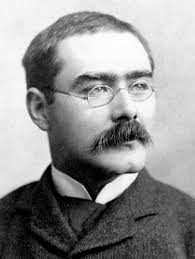
One of Kipling’s early propaganda poems was The Old Issue which is published in his The Five Nations book of poetry.
The Old Issue
OCTOBER 9, 1899
(Outbreak of Boer War)
By Rudyard Kipling
“HERE is nothing new nor aught unproven,” say the Trumpets,
“Many feet have worn it and the road is old indeed.
“It is the King—the King we schooled aforetime !”
(Trumpets in the marshes—in the eyot at Runnymede!)
“Here is neither haste, nor hate, nor anger,” peal the Trumpets,
“Pardon for his penitence or pity for his fall.
“It is the King!”—inexorable Trumpets—
(Trumpets round the scaffold at the dawning by Whitehall!)
. . . . .
“He hath veiled the Crown and hid the Sceptre,” warn the Trumpets,
“He hath changed the fashion of the lies that cloak his will.
“Hard die the Kings—ah hard—dooms hard!” declare the Trumpets,
Trumpets at the gang-plank where the brawling troop-decks fill!
Ancient and Unteachable, abide—abide the Trumpets!
Once again the Trumpets, for the shuddering ground-swell brings
Clamour over ocean of the harsh, pursuing Trumpets—
Trumpets of the Vanguard that have sworn no truce with Kings!
All we have of freedom, all we use or know—
This our fathers bought for us long and long ago.
Ancient Right unnoticed as the breath we draw—
Leave to live by no man’s leave, underneath the Law.
Lance and torch and tumult, steel and grey-goose wing
Wrenched it, inch and ell and all, slowly from the King.
Till our fathers ’stablished, after bloody years,
How our King is one with us, first among his peers.
So they bought us freedom—not at little cost
Wherefore must we watch the King, lest our gain be lost,
Over all things certain, this is sure indeed,
Suffer not the old King: for we know the breed.
Give no ear to bondsmen bidding us endure.
Whining “He is weak and far”; crying “Time shall cure.”,
(Time himself is witness, till the battle joins,
Deeper strikes the rottenness in the people’s loins.)
Give no heed to bondsmen masking war with peace.
Suffer not the old King here or overseas.
They that beg us barter—wait his yielding mood—
Pledge the years we hold in trust—pawn our brother’s blood—
Howso’ great their clamour, whatsoe’er their claim,
Suffer not the old King under any name!
Here is naught unproven—here is naught to learn.
It is written what shall fall if the King return.
He shall mark our goings, question whence we came,
Set his guards about us, as in Freedom’s name.
He shall take a tribute, toll of all our ware;
He shall change our gold for arms—arms we may not bear.
He shall break his judges if they cross his word;
He shall rule above the Law calling on the Lord.
He shall peep and mutter; and the night shall bring
Watchers ’neath our window, lest we mock the King—
Hate and all division; hosts of hurrying spies;
Money poured in secret, carrion breeding flies.
Strangers of his counsel, hirelings of his pay,
These shall deal our Justice: sell—deny—delay.
We shall drink dishonour, we shall eat abuse
For the Land we look to—for the Tongue we use.
We shall take our station, dirt beneath his feet,
While his hired captains jeer us in the street.
Cruel in the shadow, crafty in the sun,
Far beyond his borders shall his teachings run.
Sloven, sullen, savage, secret, uncontrolled,
Laying on a new land evil of the old—
Long-forgotten bondage, dwarfing heart and brain—
All our fathers died to loose he shall bind again.
Here is naught at venture, random nor untrue—
Swings the wheel full-circle, brims the cup anew.
Here is naught unproven, here is nothing hid:
Step for step and word for word—so the old Kings did!
Step by step, and word by word: who is ruled may read.
Suffer not the old Kings: for we know the breed—
All the right they promise—all the wrong they bring.
Stewards of the Judgment, suffer not this King!
Commentary
Kipling’s description of the Boers as “sloven”, “savage” and “evil” was insulting and most definitely part of the British government’s pre-war campaign to dehumanise the enemy in the eyes of the public. The lines “He shall take tribute, toll of all our ware, he shall change our gold for arms – arms we may not bear” are arrogant and indicated that Kipling believed the British had a legitimate claim to the gold of the Transvaal.
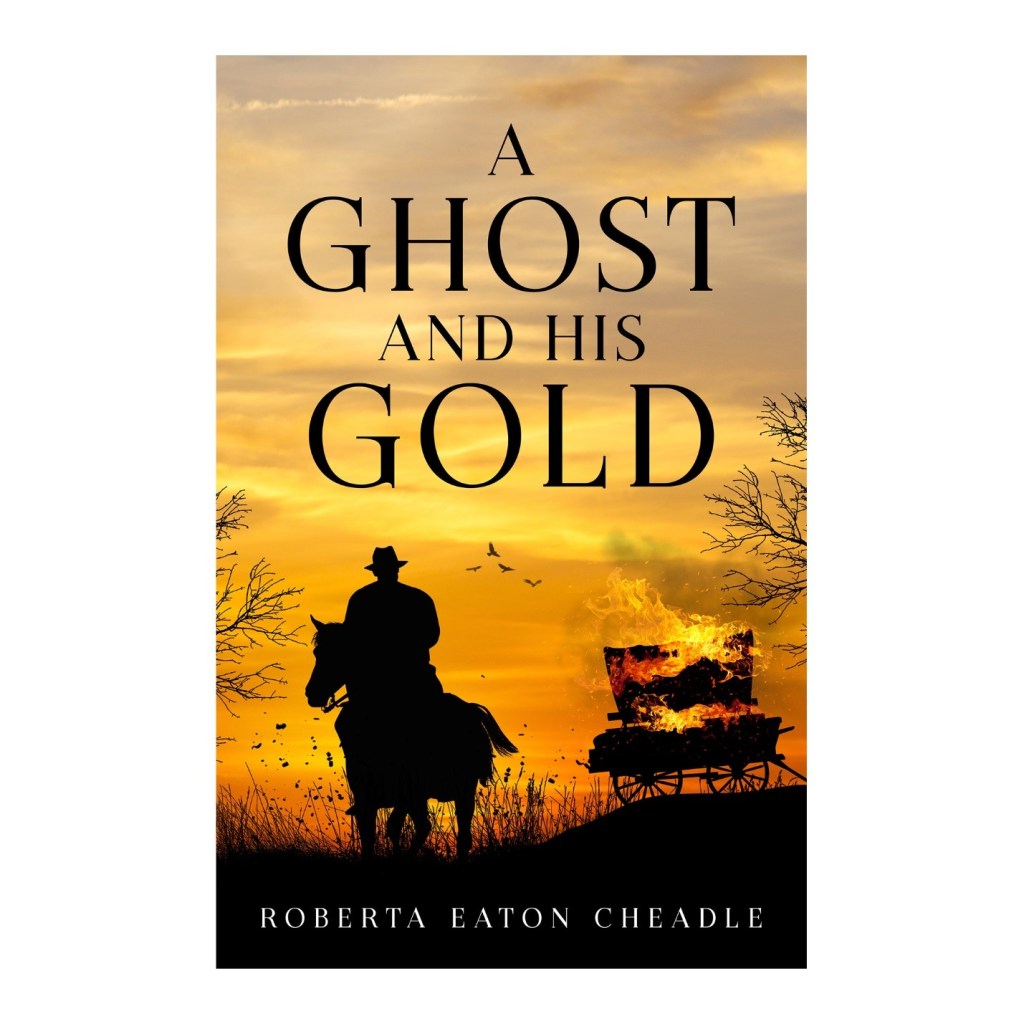
A Ghost and His Gold by Roberta Eaton Cheadle – Cover reveal
About Roberta Eaton Cheadle

I am an author who has recently branched into adult horror and supernatural writing and, in order to clearly differential my children’s books from my young adult and adult writing, these will be published under the name Roberta Eaton Cheadle. My first young adult supernatural novel, Through the Nethergate, has recently been published.
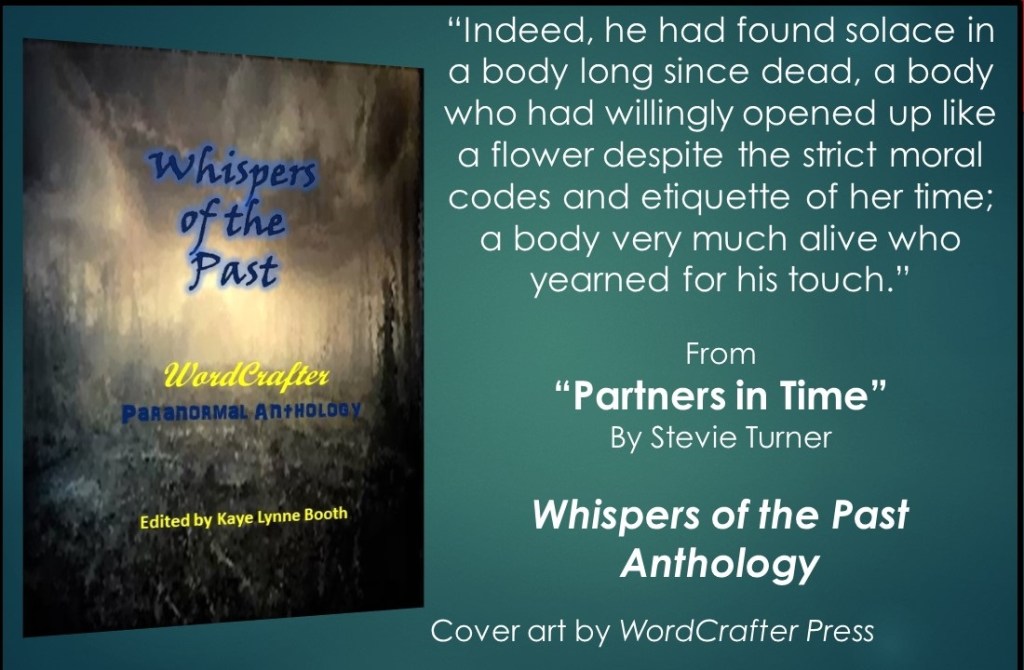
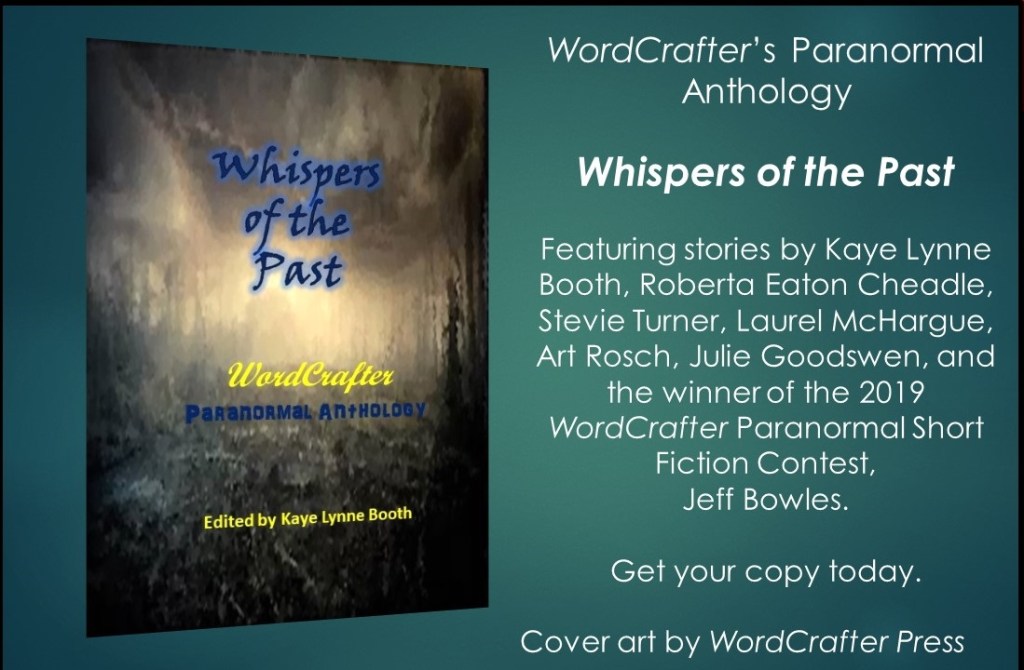
I also have two short paranormal stories in Whispers of the Past, a paranormal anthology edited by Kaye Lynne Booth.
Like this post? Let me know in the comments. You can be sure not to miss any of Writing to be Read’s great content by subscribe to e-mail or following on WordPress. If you found this content helpful or entertaining, please share.
Share this:

Poet and blogger, Christy Birmingham-Reyes, shares her thoughts about poetry and a review
Posted: June 20, 2020 Filed under: Book Review, Books, Interview, Poetry, Treasuring Poetry | Tags: Christy Birmingham, Poetry, Poets, Robbie Cheadle, Treasuring Poetry, Versions of the Self, Writing to be Read 50 Comments
Treasuring Poetry
Today, I am featuring Christy Birmingham-Reyes as my Treasuring Poetry guest. No only is Christy a wonderful and heartfelt poet, but she has a superb blog where she shares insightful and useful posts about life, parenting, working, caring for elderly relatives and many other amazing topics. You can follow Christy’s blog here: https://whenwomeninspire.com/
Over to Christy
Hi Robbie, thank you for offering me a spot in this great series on poetry! It’s a pleasure to be here. I enjoyed the time spent thinking about my answers to the five questions on this rainy, windy day on Canada’s west coast. Here we go:
My favourite poem is Nothing Gold Can Stay by Robert Frost. It was written by Frost in 1923 and published that same year.
My interpretation of this poem is that nothing stays in bloom forever. The moment is fleeting when the flowers blossom and trees are abundant with leaves. As the season ends, the flowers and leaves fall, just as humans too have a period where they are “in their prime” and grow frailer over the years.
While the interpretation above could be one that you might say is depressing, I disagree and find hope in the words of Robert Frost. To me, the poem is a reminder to enjoy today and to fill ourselves full of the golden moments we experience in life.
Cherishing the moments of happiness and taking in nature’s beauty is something we must not forget to do amidst the business of daily life. Now, more than ever, I feel grateful for the “small” things that are so big in their importance.
For example, today, I went for a walk between the rainstorms. The smell of the air was amazing to me, and I breathed it in deeply. That moment was golden, and it renewed my energy.
Nothing Gold Can Stay by Robert Frost
Nature’s first green is gold,
Her hardest hue to hold.
Her early leaf’s a flower;
But only so an hour.
Then leaf subsides to leaf.
So Eden sank to grief,
So dawn goes down to day.
Nothing gold can stay.
I would not want to write like any other poet, although I do certainly admire Maya Angelou’s writing style. To be a copy of someone else is not possible, and I would not succeed in doing so. Instead, I choose to put my efforts into trying to be my best self, in my writing, as a wife, as a daughter, and in other areas of life.
Maya Angelou’s poetry is candid. It is full of moments that take my breath away with their authenticity. She was true to herself on each page she wrote, and I can tell she wrote from her soul.
Thank you for having me over for a visit today! It has been a pleasure to chat about poetry and the emotions it draws out of us as readers. Stay safe xx
About Christy Birmingham

Christy Birmingham is a freelance writer in Victoria, BC, who has a BA in Psychology and has taken professional writing courses at the University of Victoria. She is the author of Pathways to Illumination (Redmund Productions, 2013), her first poetry book. Her work also appears in the Poetry Institute of Canada’s From the Cerulean Sea: An Anthology of Verse (2013) and the literary journals The Claremont Review and Tipton Poetry Journal.
Versions of the Self
Imagine a shift to the way you see the world that arises through poetic narration.
Imagine the world, at its base level, is a collection of selves. These selves collide, disperse, intermingle, and share themselves in lines of free verse. Such is the premise of Versions of the Self, poetry that assumes multiple types of selves exist and relate in ways that alter them. Each of the eight chapters looks at a different type of self, including the singular “I” and romantic interactions. These unique 80 poems definitely color themselves outside of the lines.
My review of Versions of the Self
Versions of the self is quite an extraordinary book of poetry. The poet, Christy Birmingham, has a very unique style of writing which I found very intriguing. I also thought this style worked exceptionally well for the content of this book which is all about different versions of self. It imitates the flow of thought but in an easy to read and fascinating way.
I felt I would like to get to know the poet as I read her poems. While she does write about a mixture of various emotions, there is a thread of sadness or melancholy that runs through many of them and I felt that the writer had suffered pain in her past relationships. The poems become lighter and happier as you move through the book and I found myself hoping that this is a reflection of Christy’s life.
These are a few of the verses I found the most compelling in this beautiful book:
“You direct me forward but
I want to go back,
Back to when we were wrapped in
Clean sheets, before the
Lies melted on your tongue.”
From Lack of Direction
***
“You were once a masterpiece
Now, your colors run down the fabric of
My past,
Shades of yellow and orange that have
Grown thick in consistency,
As the price of fine art rises with inflation.”
From You, Colors, and Realization
***
“You came to see me at a pillow rich with creativity,
Where I had hope beyond reason for tugging at my heartstrings.
You know exactly which strings to play on your
keys to keep me smiling.
From You, Unique.
Purchase Versions of the Self
About Robbie Cheadle
Hello, my name is Robbie, short for Roberta. I am an author with six published children’s picture books in the Sir Chocolate books series for children aged 2 to 9 years old (co-authored with my son, Michael Cheadle), one published middle grade book in the Silly Willy series and one published preteen/young adult fictionalised biography about my mother’s life as a young girl growing up in an English town in Suffolk during World War II called While the Bombs Fell (co-authored with my mother, Elsie Hancy Eaton). All of my children’s book are written under Robbie Cheadle and are published by TSL Publications.
I have recently branched into adult and young adult horror and supernatural writing and, in order to clearly differential my children’s books from my adult writing, I plan to publish these books under Roberta Eaton Cheadle. My first supernatural book published in that name, Through the Nethergate, is now available.
I have participated in a number of anthologies:
- Two short stories in #1 Amazon bestselling anthology, Dark Visions, a collection of horror stories edited by Dan Alatorre;
- Three short stories in Death Among Us, an anthology of murder mystery stories, edited by Stephen Bentley;
- Three short stories in #1 Amazon bestselling anthology, Nightmareland, a collection of horror stories edited by Dan Alatorre; and
- Two short stories in Whispers of the Past, an anthology of paranormal stories, edited by Kaye Lynne Booth.
I also have a book of poetry called Open a new door, with fellow South African poet, Kim Blades.
Find Robbie Cheadle
Blog: https://www.robbiecheadle.co.za/
Blog: robbiesinspiration.wordpress.com
Goodreads: Robbie Cheadle – Goodreads
Twitter: BakeandWrite
Instagram: Robbie Cheadle – Instagram
Facebook: Sir Chocolate Books
Want to be sure not to miss any of Robbie’s “Treasuring Poetry” segments? Subscribe to Writing to be Read for e-mail notifications whenever new content is posted or follow WtbR on WordPress. If you found it interesting or entertaining, please share.
Share this:

Is Shakespeare still relevant 400 hundred years after his death?
Posted: June 19, 2020 Filed under: Commentary, Historical Inspiration, Literary, Opinion, Theater, Writing | Tags: Classic Literature, Robbie Cheadle, William Shakespeare, Writing, Writing to be Read 34 Comments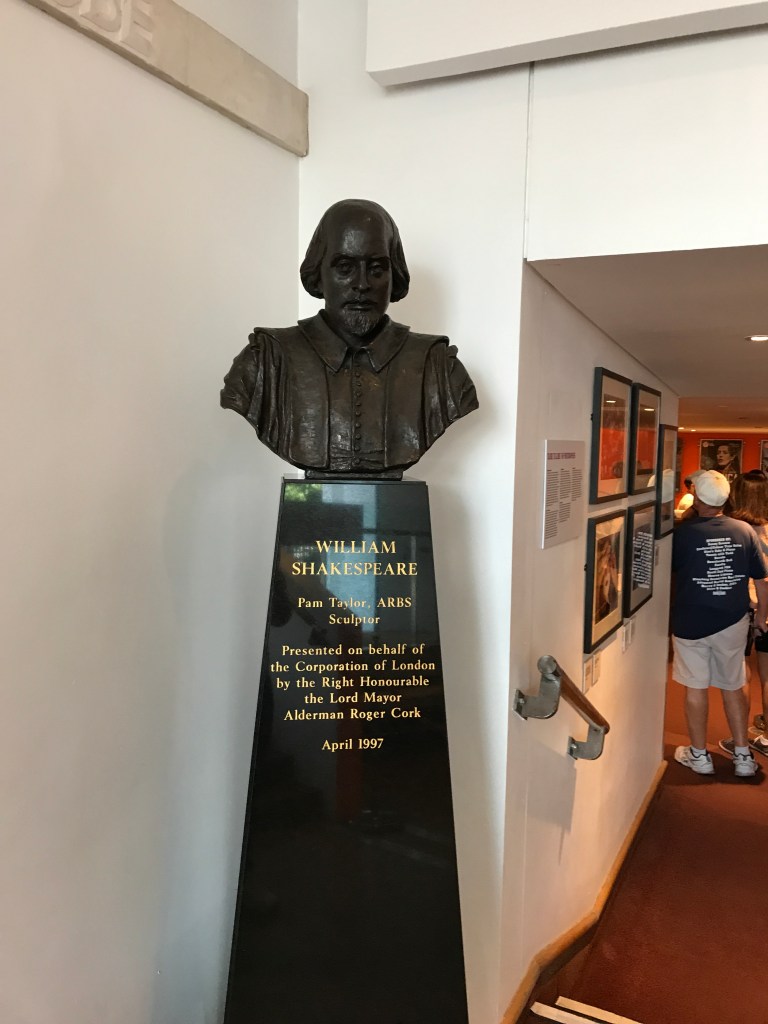
My son and I have different opinions on the relevancy of Shakespeare in our modern world. Greg thinks Shakespeare’s works have become irrelevant and would prefer to study more modern writers who have written about issues that have shaped our modern world.
He would rather study 1984 by George Orwell which is about totalitarianism, discrimination, tracking and other issues that, in his opinion, are still a concern today. He sees Fahrenheit 451 by Ray Bradbury as being relevant because he does not see people burning books in Western society.
I disagree with Greg on both counts but I am limiting this post to my thoughts about the relevancy of Shakespeare, who just happens to be one of my favourite authors.
These are the reasons that I think it is still worthwhile for students to study literature:
We quote Shakespeare all the time
Shakespeare invented over 1700 of our common words. He did this by changing nouns into verbs, changing verbs into adjectives, connecting words never before used together, adding prefixes and suffixes, and devising entirely original words.
Some of my favourite Shakespeare originated words are green-eyed, assassination, bloodstained, lustrous and obscene.
In addition to all the words Shakespeare invented, he also put words together in new ways to create phrases and idioms. Most people know the famous quotes which are commonly attributed to Shakespeare including:
- All the world ‘s a stage, and all the men and women merely players. They have their exits and their entrances; And one man in his time plays many parts;
- Some are born great, some achieve greatness, and some have greatness thrust upon them; and
- How sharper than a serpent’s tooth it is to have a thankless child!
Many people don’t realise, however, that many everyday sayings are attributable to Shakespeare such as be all and end all, catch a cold, heart of gold and to much of a good thing.

His works are universal and enduring as are his characters
Shakespeare’s plays portray timeless themes of human experience and interaction that have remained relevant since his death. They are also considered to be among the most expertly written and beautifully poetic works in the history of literature.
The outstanding features of Shakespeare’s play are as follows:
- Characterization: Shakespeare created very real and intense characters who deeply feel all of their emotions. This makes them alive and real to the reader and/or audience;
- Language: As detailed above, Shakespeare contributed a significant number of words, phrases and idioms to the English language. His usage of language was masterful and make his works enduring and memorable;
- Range of plays: Shakespeare wrote at least 37 plays and collaborated on several more. His plays comprised of comedies, histories, tragedies and sonnets. Nearly all of his work was of an extraordinary high quality of excellence which is one of the reasons his plays are still studied by students of literature;
- Shakespeare has had a massive influence on literary culture: In addition to the use by modern writers of his words, idioms and phases in their work, allusions to Shakespeare and his plays have influenced a number of well-known subsequent literary works including the following:
- Moby-Dick by Herman Melville (allusions to Macbeth/King Lear);
- The Daughter of Time by Josephine Tey (Richard III);
- The Dogs of War by Frederick Forsyth (Julius Caesar);
- Love in Idleness by Amanda Craig (A Midsummer Night’s Dream);
- The Talented Mr Ripley by Patricia Highsmith (Macbeth);
- Brave New World by Aldous Huxley (The Tempest);
- Cakes and Ale by W Somerset Maugham (Twelfth Night);
- The Black Price by Iris Murdoch (Hamlet);
- Wise Children by Angela Carter (The Taming of the Shrew et al); and
- A Thousand Acres by Jane Smiley (King Lear);
- Exciting plots: Shakespeare’s plots are exciting and are filled with romance, horror, bloodshed, family feuds, fairies, ghosts, witches and comedy.

What is your view? Do you think Shakespeare is still relevant? If not, what would you have preferred to study instead?
About Roberta Eaton Cheadle
I am an author who has recently branched into adult horror and supernatural writing and, in order to clearly differential my children’s books from my young adult and adult writing, these will be published under the name Roberta Eaton Cheadle. My first young adult supernatural novel, Through the Nethergate, has recently been published.
I also have two short paranormal stories in Whispers of the Past, a paranormal anthology edited by Kaye Lynne Booth.
Like this post? Let me know in the comments. You can be sure not to miss any of Writing to be Read’s great content by subscribe to e-mail or following on WordPress. If you found this content helpful or entertaining, please share.
Share this:

Craft and Practice with Jeff Bowles – To Self-Publish or not to Self-Publish
Posted: June 17, 2020 Filed under: Book Covers, Commentary, Craft and Practice, Opinion, Publishing, Self-Publishing, Writing | Tags: Craft and Practice, Jeff Bowles, Publishing, Self-Publishing, Writing, Writing to be Read 9 Comments
The third Wednesday of each month, writer Jeff Bowles offers practical tips for improving, sharpening, and selling your writing. Welcome to your monthly discussion on Craft and Practice.
To Self-Publish or not to Self-Publish
I guess I’m a bit of a dreamer when it comes down to it. Head in the clouds much of the time, projecting myself right out of reality because, well, I take more comfort in worlds inside my mind than the world as it really is. I’ve always been that way, and it’s helped me enormously as a creative individual. Has it helped me much in life? That’s a conversation for another time. Or, you know, maybe never.
For me, the dream was always the most important thing, because I understood dreams become reality with startling frequency. I mean, that’s essentially what storytelling is, right? Making something whole, tangible, expressive, from nothing at all. It’s something I have to believe in order to do what I do. If I didn’t think anything and everything was possible, how could I convince you?
I like self-publishing. It’s a good speed for me. I made great efforts to publish short fiction in the traditional form for more than ten years, and I wouldn’t change anything about that time. But then I went off to earn an MFA in Creative Writing, and it slowly dawned on me that recognition, fans, and even money will only get you so far. If you’re dedicated to your craft, you can do it penniless. In no way does it make or break your enjoyment of the act of writing. In fact, achieving something like the ever-ubiquitous yet disappointing “best-seller” status often throws unsuspecting authors into a rut, one that can be difficult to climb out of. With success so comes stress and an urgent need to produce. I’m not good with stress, suffer from some anxiety and other mental health issues, and I somehow knew about myself that if I wanted to put my books out, I’d have to do it in a manner congruent with my everyday tolerance levels.
So when it came time to publish my first novel, I did it myself. I got the most amazing help from a friend of mine to render a cover and some gorgeous chapter-to-chapter artwork, I set the date, released it through Amazon, and then plugged it as best I could, also knowing I’m not a natural salesman. The truth is I would’ve made far more money if I’d snagged a traditional publisher. The truth also happens to be that I don’t care all that much either way, because I’m still the writer guy doing his writer thing, albeit at a somewhat reduced level.
I like controlling the whole process from beginning to end. The product I end up with, for better or worse, is all on me. The people who’ve read my first novel have enjoyed it immensely. Living the kind of life that’s cool and confident and down for lower-case “success”, simply because I’m not sure the upper-case kind is actually all that much fun, well it works for me right now. Maybe a few years down the line I’ll really push for the traditional publishing route. I’m not sure. What price success?
Given the choice, most writers would opt for more sales over fewer. I don’t think I’ve used the word “duh” since I was thirteen years old, but duh. The point is, you can write as much or as little as you want, and you can shoot for the stars or just keep your work on the down-low, but the real question is what fuels you? What keeps you satisfied? Is it money in the bank or pure creative expression? A happy mix of both? What do you want? What do you want? WHAT DO YOU WANT?!
If you’re working on a book or have recently completed one, first of all, congratulate yourself. You’ve done something most people on the planet want to do but never seem to get around to doing. Secondly, ask yourself the question in capital letters up in that last paragraph there. It’s harder to find sponsorship than to put it out yourself. That’s true no matter what you do, so consider it numero uno. Are you willing to risk rejection aplenty and month after month of waiting for an agent to reach out and tell you your work is magnificent (or abhorrent)? Or do you want to produce your book on the fly and handle all the publicity yourself later on? Know that for the vast majority of self-publishers, a hundred lifetime sales is considered superb. That’s a slow lunchtime minute in February for one of the major houses.
Work the traditional route, you’re likely to feel under-the-gun and underappreciated by your publisher. DIY it, and you’ll probably feel like you’re grinding your gears, working your butt off just to make a few lousy sales. Release your work through an established house, and perhaps struggle to earn out your advance and start bringing in those royalties. Put it out yourself, and claim your dividends immediately, meager though they may be.
See? Plusses and minuses for both. Nice work if you can get it, but look, your best bet is to keep producing and put your work out however you can, whenever you can. That’s the shotgun method, and it works. I know what’s been right for me in the past several years, but I also claim the right to change my mind someday. In the grand scheme of things, it’s all benefit and no loss. Just keep doing your thing, and if you get the opportunity to publish your work in a major way, absolutely go for it. If you can’t, however, or you simply would rather not, don’t sweat it, because magnificent career legacies have been built on less. Just don’t sell yourself short, and whatever you do, remain true to your vision and your goals.
Now for a little practical advice. You knew it had to be buried in here somewhere, right? If you’re in the market for an agent, find yourself a good searchable database like AgentQuery.com, or if you’re so inclined, think about picking up the 2020 edition of the Guide to Literary Agents, which many writers throughout the years have found great success with. Your manuscript must be in tip-top shape before you send it to anyone. I know that seems like common sense, but you’d be surprised how often people mess this up. Tip-top means thoroughly revised, edited, and proofread. If you can make it any better, you’re not done with it. Remember to remain professional and courteous, even when you get shot down. Especially when you get shot down.
On the flip-side of the publishing coin, the final state of your book is just as important in self-release, perhaps more so, because you won’t get an assigned editor to walk you through the process. If you can afford one, hire the services of an independent editor, and if you’re not super artistic, hire someone to do the cover and book layout, too. A lot of people, like yours truly, release their stuff through Amazon and call it good, but this is by no means your only option. Vanity publishing, independent print-on-demand, and independent ebook distributors all exist, though do your homework, because some are more attractive than others. Vanity publishing, by the way, try to eschew it if you can. I like Amazon because it’s one-stop shopping, and their KDP publishing system is easy to use, but your mileage may vary, and you may have bigger plans for your work than I’ve had for mine.
Regardless of how you publish, just remember it’s incredibly important to put out the best work you can. You want words you can feel proud of. In the end, your writing legacy is completely in your hands. That’s it for this post, everybody. I’ve got an overdue book to edit, and you’ve got more awesome Writing to Be Read articles to peruse. See ya next time.

Check out Jeff Bowles Central on YouTube – Movies – Video Games – Music – So Much More!
Want to be sure not to miss any of Jeff’s “Craft and Practice” segments? Subscribe to Writing to be Read for e-mail notifications whenever new content is posted or follow WtbR on WordPress. If you found this useful or just entertaining, please share.
Share this:

Second Anglo Boer War propaganda poetry – the Boer side of things
Posted: June 15, 2020 Filed under: Historical Inspiration, Nonfiction, Poetry, Writing | Tags: Boer, Robbie Cheadle, Second Anglo Boer War, South Africa history, Writing to be Read 41 CommentsBackground
For those of you who do not know, a Boer is the Dutch and Afrikaans word for “farmer”.
Britain occupied the Cape in South Africa in 1795, ending the role of the Dutch East India Company in the region. After the British occupation, the infrastructure in the Cape Colony began to change as English replaced Dutch, the British pound sterling replaced the Dutch rix-dollar and a freehold system of landownership gradually replaced the existing Dutch tenant system.
Between 1835 and 1840, the Great Trek took place when approximately 12 000 Boers from the Cape Colony migrated into the South African interior to escape British control and to acquire cheap land.
Over time, the Boers achieved the independence of their two republics, the South African Republic (Transvaal) and the Orange Free State which shared borders with the British controlled Cape Colony.
When Sir Alfred Milner took over as Governor of the Cape Colony and High Commissioner for Southern Africa in May 1897, relations between Britain and the two Boer republics had been strained for some time. The Boers had already successfully defended the annexation of the Transvaal by the British during the first Anglo Boer War. Milner knew that an independent Transvaal stood in the way of Britain’s ambition to control all of Africa from the Cape to Cairo and that, with the discovery of gold in the Transvaal, the balance of power in South Africa had shifted from Cape Town to Johannesburg.
After the discovery of gold in the Transvaal, thousands of British and other gold seekers called Uitlanders, flocked to the Witwatersrand. The Boers considered that the Uitlanders threated the independence of their republic and refused to give them the vote. Milner used the Uitlander issue as a pretext to provoke the Boer government. The two republics declared war on the British Empire on 11 October 1899 and the second Anglo Boer War started.
Propaganda during the war
During the Second Anglo Boer War or South African War, there was a lot of propaganda on both sides. Propaganda is common in a war scenario. It is a significant tool used by government to get men sufficiently wound up against the enemy to shoot them without conscious.
As with all wars, some terrible things occurred during this war. One of the worst developments, in my opinion, were the concentration camps that Lord Kitchener created to incarcerate the families of fighting Boers. Approximately 48 000 people, a lot of whom were children, died in the concentration camps between September 1900 and May 1902.

Emily Hobhouse tells the story of the young Lizzie van Zyl who died in the Bloemfontein concentration camp: She was a frail, weak little child in desperate need of good care. Yet, because her mother was one of the “undesirables” due to the fact that her father neither surrendered nor betrayed his people, Lizzie was placed on the lowest rations and so perished with hunger that, after a month in the camp, she was transferred to the new small hospital. Here she was treated harshly. The English disposed doctor and his nurses did not understand her language and, as she could not speak English, labeled her an idiot although she was mentally fit and normal. One day she dejectedly started calling for her mother, when a Mrs Botha walked over to her to console her. She was just telling the child that she would soon see her mother again, when she was brusquely interrupted by one of the nurses who told her not to interfere with the child as she was a nuisance. Quote from Stemme uit die Verlede (“Voices from the Past”) – a collection of sworn statements by women who were detained in the concentration camps during the Second Boer War (1899-1902).
While I was doing the research for my new novel that tells the stories of three ghosts who all experienced different aspects of this war, I came across the following propaganda poem about the concentration camps.
The refugee camps (so called)
Lord Roberts he boasts that he stands at the head
Of all that is noble, and nice, and wellbred,
So we’ve got to believe it, it’s only his due,
He says so himself – so it’s bound to be true.
If against the “cowardly ignorant Boer”
In a barbarous manner he carries on war,
Why! What does it matter to me or to you,
He says so himself – so it’s bound to be true.
The Boer has deserted his children and wife
For the purpose of leading a pleasanter life
Yes, “Such are those people, unnatural crew!”
Lord Kitchener says – so it’s bound to be true.
If he harries weak women and children tender
It is not to induce the men to surrender,
Oh no! that’s a thing he never would do,
He says so himself – so it’s bound to be true.
If the women and orphans he drags away
In his pest-smitten camps are willing to stay
Let no one assert he the Innocents slew,
He says so himself – so it’s bound to be true.
If by thousands they die of disease and starvation
In those sweet health-resorts they call “concentration”
No matter! Those people deserved it too,
He says so himself – so it’s bound to be true.
Lord Kitchener persecutes woman and child
Because he was always exceedingly mild
And the more they objected the kinder he grew
He says so himself – so it’s bound to be true.
Oh! He is so gentle, the Mahdi’s head
He cut that off when his foe was dead;
In uncivilized warfare, that’s nothing new
He says so himself – so it’s bound to be true.
The wife gets a pass and may go away
To bring in the man; but the child must stay;
This, of course, Lord Kitchener never knew,
He says so himself – so it’s bound to be true.
But Thanks to our wives, for they do not care
Whatever the hardships they have to bear,
They willingly suffer their woeful plight
If their husbands stand firm for God and the right.
By her noble example the Burgher’s wife
Still gives him strength to continue the strife
And she cheers him on with all her might
To stand up firmly for God and the right.
O Africander! Be staunch and true
For that’s what your wife is expecting from you
You will help her to make the burden light
By standing firm for God and the right.
This poem is published in The War Reporter The Anglo-Boer War Through the eyes of the Burghers by J.E.H. Grobler
A Ghost and His Gold by Roberta Eaton Cheadle – Cover reveal
About Roberta Eaton Cheadle
I am an author who has recently branched into adult horror and supernatural writing and, in order to clearly differential my children’s books from my young adult and adult writing, these will be published under the name Roberta Eaton Cheadle. My first young adult supernatural novel, Through the Nethergate, has recently been published.
I also have two short paranormal stories in Whispers of the Past, a paranormal anthology edited by Kaye Lynne Booth.

Like this post? Let me know in the comments. You can be sure not to miss any of Writing to be Read’s great content by subscribe to e-mail or following on WordPress. If you found this content helpful or entertaining, please share.
Share this:

Jeff’s Movie Reviews – Just Mercy
Posted: June 12, 2020 Filed under: Commentary, Jeff's Movie Reviews, Movie Review, Movies, Opinion | Tags: current events, Jeff's Movie Reviews, Just Mercy, Social Justice, Writing to be Read Leave a comment
Justice For All
by Jeff Bowles
Movie theaters across the country are closed due to Coronavirus concerns, so there aren’t many new major films coming out. June is typically the heart of the summer movie season, when all the major studios showcase their big releases for the year. Still, film buffs aren’t completely in the cold right now. Plenty of flicks that otherwise would’ve been released in theaters have come to on-demand services, and some true gems from the past year are getting a little well-earned, extended time in the spotlight.
One such film is perhaps one of the most relevant and urgently messaged home releases for this moment in history. I’m not referring to some pandemic movie that’s meant to invoke COVID fears, but rather a film that deals directly with issues surrounding the current international protests over the death of George Floyd. It’s an incredibly apt time to take a look at racism in the criminal justice system and in our society at large, and Just Mercy, directed and co-written by Destin Daniel Cretton, offers us an unflinching and impassioned portrayal of some truly chilling events.
Just Mercy is free to watch on streaming platforms everywhere for a limited time, and I highly suggest you do so. It’s an affecting film, one that forces viewers to confront the cold hard truth: as a nation, we have failed millions of our own citizens, placed them in handcuffs, incarcerated and criminalized them, often without the benefit of valid and Constitutionally guaranteed due process. As the film tells us in it’s closing moments, one in nine federal convictions has been overturned by the introduction of new evidence, sometimes years after an original crime was committed. That is a startling figure. Put bluntly, Just Mercy is about the wrongful imprisonment, dehumanization, and subjugation of black men and women, and I truly don’t mind admitting (in fact it’s a privilege to admit it) I was in tears by the end.
Jamie Foxx plays Walter McMillian, who, in 1987, was sentenced to die for the notorious murder of an 18-year-old girl, despite a preponderance of evidence proving his innocence and the fact that the only testimony against him came from a criminal with a motive to lie. The movie is really about the early career of world-renowned civil rights attorney Bryan Stevenson (Michael B. Jordan), who graduated Harvard Law and immediately moved to the deep south because, as he put it, “I’ve learned that each of us is more than the worst thing that we’ve ever done; that the opposite of poverty isn’t wealth, the opposite of poverty is justice.”

Michael B. Jordan and Jamie Foxx in Just Mercy
Jordan is terrific as Stevenson, passionately engaged in the portrayal of a young man who simply doesn’t have the word “quit” in his vocabulary. Jordan has begun to make quite a career for himself in this and other films that handle racism directly, though this might be his most grounded and honest role yet. It’s really Foxx who makes the biggest impact, though. Truly, this film offers one of the finest performances of his career. McMillian both chooses to believe and not believe in his right to fair and just treatment. It’s sort of the moral and spiritual undercurrent of the film. This system breaks people down in startling and terrible ways. Even when you’re innocent you feel guilty.
The plot is more or less similar to dozens of other criminal justice movies. A hotshot attorney takes on an impossible case, gathers evidence, faces obstacles and even risks his own life, all for the rights and freedom of his client. But it’s the raw emotionality that distinguishes Just Mercy. Look, we shouldn’t handle this stuff with kid gloves anymore. Either you believe the system targets minorities, or you don’t. A story like this has the capacity to change minds. At a time like this, that could be worth its weight in gold.
I’m a white American. I am not now nor have I ever been an individual who has experienced on a personal level the true horrors of racism. I’m not actually qualified to write a review for a movie like this, not as far as I’m concerned. But’s it’s important to me to listen at a time like this. To learn and to ask myself what I’d be prepared to do if it was my freedom, my life, on the line. Just Mercy is so powerful precisely because it pulls no punches. When a man dies on death row, you feel it. When a racist district attorney undermines and condescends to his African American colleague, it makes you angry.
Anger will only get us so far if we really want to change the world, but information, education, even in the form of a piece of entertainment, it’s incredibly important. And this a great film regardless. In my humble opinion—and by the way, opinions are everywhere right now, so I’m not intensely interested in sharing the full extent of mine—this issue has been politicized to an extreme and absurd level. Leave it to the politicians and pundits to make all the hay they want. With Just Mercy, audiences are asked to take an honest look at incredibly urgent matters and to do more than just think about them. This is a movie that wishes to provoke an emotional, intellectual, and societal response. And it may just do exactly that.
Jeff’s Movie Review’s gives Just Mercy a 9/10.
Check out Jeff Bowles Central on YouTube – Movies – Video Games – Music – So Much More!
You can keep up on what Jeff’s been watching and catch all of his great movie reviews the second Friday of each month on Writing to be Read. Subscribe to email or follow on WordPress today.
Share this:

Growing Bookworms: Teaching your child to read
Posted: June 10, 2020 Filed under: Books, Children's Books, Growing Bookworms, Reading | Tags: Children's Books, Growing Bookworms, Reading, teaching reading, Writing to be Read 59 Comments
Growing Bookworms
When my son, Gregory, was a small lad, he was eager to learn how to read as quickly as possible. He became positively frustrated because he was not able to read. Our local protocol is that children only start learning the alphabet in grade 0 (reception) and learning to read in grade 1 (the year they turn 7). Greg was only 5 when his inability to read became a problem for him.
I decided to start trying to teach Greg to read myself, after all how hard could it be … I’d been reading since I was 5 years old and I have two degrees and a great deal of determination. Well, it turned out to be a little more difficult and complex than I anticipated. We did get there in the end, but I am sure the path to success would have been easier if I have followed a few simple steps up front.
The four main steps in teaching a child to read are as follows:
- Making them aware of the written word all around them;
- Teaching your child about the different sounds – phonemic awareness;
- Teaching your child, the letters of the alphabet and the sounds related to each letter phonics;
- Demonstrating to your child how the different sounds fit together to form words.
Awareness of the written word
Pointing out word usage in your immediate environment helps your children understand the purpose of words and reading, and their usefulness in society. When I drove my children around, I always pointed out road and other signs to my boys. I also pointed out newspaper sellers who sold newspapers that people read and always took them into bookstores so they could see the books. We also had lots of books at home which I read to my sons every day, sometimes for up to two hours. I can remember taking two-year-old Greg with me to the obstetrician and my sitting and read to him for between 2 and ½ and 3 hours. Last time I visited, the receptionist still remembered my son as “the boy who sat and listened to stories for three hours.”
As a result of my efforts, my boys came to appreciate the purpose of reading and writing as an important communication tool. This led to both demonstrating a keen interest in learning how to read.
Awareness of sounds
There are lots of different ways to help your children become aware of sounds. The methods my boys and I enjoyed the most were singing nursery rhymes and songs and playing “Eye spy” in the car.
There are other fun games you can play with your child including the following:
- Making up songs and poems using different rhyming words;
- Listening games where children close their eyes and identify a sound such as crumpling paper;
- Playing with words to see if you child can identify the error, for example saying let’s stay instead of let’s play;
- Play dancing, clapping and stamping games;
- Reading rhymes and sentences that use alliteration and assonance.
Phonics
This is a method of teaching children to read by linking sounds (phonemes) and the symbols that represent them (letter groups).
You can find some great step-by-step information on teaching children phonics here: https://www.theschoolrun.com/phonics-teaching-step-by-step
There are lots of fun YouTube videos to help you teach children Phonics.
Blending sounds
Children need to be familiar with the blending of sounds to form words before they can read. One of the best ways of demonstrating the blending of sounds is by reading repetitive books and rhyming books.
My boys loved the Poppy and Sam Farmyard Tales books and the Dr Seuss books. I read these to them repeatedly until they could point out the words and say them because they had memorised the books.
You can purchase the Poppy and Sam Farmyard Tales books here: Amazon US
You can purchase the Dr Seuss books here: Amazon US

Other methods I used to familiarise my children with words and sounds were letting them listen to audio books, they loved the Roald Dahl books and listened to these repeatedly. I think I still know most of them off by heart.
Michael was a sickly boy and was off school for over 40 days per year during his first years of schooling. During these long periods of convalescence at home, he listened to a huge array of audio books including many of E Nesbit’s books including The Railway Children and Five Children and It. He also listened to all the Famous Five books by Enid Blyton and even some non-fiction books about Romans, Vikings and mythology.
My oldest son is an enthusiastic and copious reader and recently read 1984 by George Orwell. He has Cry the Beloved Country by Alan Paton next on his list.
Michael isn’t as fast or advanced a reader as Greg, but he still reads every day and enjoys reading. I think my efforts to instil a love of reading in them have played a bit role in their attitudes towards reading.
Did you teach your children to read? What methods did you use?
About Robbie Cheadle
Hello, my name is Robbie, short for Roberta. I am an author with six published children’s picture books in the Sir Chocolate books series for children aged 2 to 9 years old (co-authored with my son, Michael Cheadle), one published middle grade book in the Silly Willy series and one published preteen/young adult fictionalised biography about my mother’s life as a young girl growing up in an English town in Suffolk during World War II called While the Bombs Fell (co-authored with my mother, Elsie Hancy Eaton). All of my children’s book are written under Robbie Cheadle and are published by TSL Publications.
I have recently branched into adult and young adult horror and supernatural writing and, in order to clearly differential my children’s books from my adult writing, I plan to publish these books under Roberta Eaton Cheadle. My first supernatural book published in that name, Through the Nethergate, is now available.
I have two short stories in the horror/supernatural genre included in Dark Visions, a collection of 34 short stories by 27 different authors and edited by award winning author, Dan Alatorre. I also have three short stories in Death Among Us, a collection of short murder mystery stories by 10 different authors and edited by Stephen Bentley. These short stories are all published under Robbie Cheadle.
I have recently published a book of poetry called Open a new door, with fellow South African poet, Kim Blades.
Find Robbie Cheadle
Blog: https://bakeandwrite.co.za/
Blog: robbiesinspiration.wordpress.com
Goodreads: Robbie Cheadle – Goodreads
Twitter: BakeandWrite
Instagram: Robbie Cheadle – Instagram
Facebook: Sir Chocolate Books
***Just a note here, since Robbie is so modest. She has five stories of dark fiction coming out in anthologies during October in 2019. “The Siren Witch”, “A Death Without Honour”, and “The Path to Atonement” will appear in Dan Alatorre’s Nightmareland horror anthology, and “Missed Signs” and “The Last of the Lavender” will be featured in the WordCrafter paranormal anthology, Whispers in the Dark.
Want to be sure not to miss any of Robbie’s “Growing Bookworms” segments? Subscribe to Writing to be Read for e-mail notifications whenever new content is posted or follow WtbR on WordPress.
Share this:

Hot Off the Press! “Ask the Authors” is now available!
Posted: June 8, 2020 Filed under: Ask the Authors, Books, Collaboration, Craft and Practice, Nonfiction, Writing, Writing Inspiration, Writing Life, Writing Process, Writing Reference, Writing Tips | Tags: Ask the Authors Anthology, WordCrafter Press, writing advice, Writing Reference, Writing Tips, Writing to be Read 5 Comments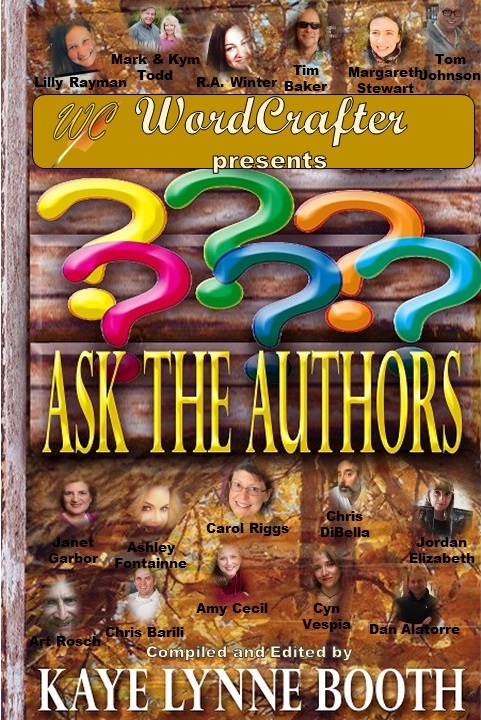
It has been two years in the making, but I’m pleased to announce that the WordCrafter Q&A anthology, Ask the Authors, has finally been released. This anthology has its origins right here on Writing to be Read back in 2018, when I ran a twelve week blog series of the same name. I compiled those interviews to create a valuable author’s reference, with writing tips and advice from seventeen different authors on all areas of writing, craft and promotion.
Contributing authors on this project include Dan Alatorre, Tim Baker, Chris Barili, Amy Cecil, Chris DiBella, Jordan Elizabeth, Ashley Fontainne, Janet Garber, Tom Johnson, Lilly Rayman, Carol Riggs, Art Rosch, Margareth Stewart, Mark and Kym Todd, Cynthia Vespia, and R.A. Winter. Single and multi-genre authors combined, write fiction for both Y.A. and adult readers, in a multitude of genres: medical thriller, science fiction, commercial fiction, action/adventure, crime fiction, weird western, romance, steampunk, fantasy, paranormal fiction, murder mystery, thrillers, speculative fiction, pulp fiction, literary fiction, humor, nonfiction, dark fantasy, and western. Subject matter includes all aspects of writing from process and inspiration, to craft and practice, to publishing, to marketing and book promotions. This is one writing reference no author should be without.
Get your copy today!: https://books2read.com/u/mdzvwO
Like this post? Let me know in the comments. You can be sure not to miss any of Writing to be Read’s great content by subscribe to e-mail or following on WordPress. If you found this content helpful or entertaining, please share.
Share this:

Words to Live By – Love in the Time of COVID
Posted: June 3, 2020 Filed under: Commentary, Editorial, Opinion, Words to Live By, Writing | Tags: COVID, Creativity, Jeff Bowels, Words to Live By, Writing, Writing to be Read 5 Comments
The first Wednesday of every month, writer Jeff Bowles muses on life, creativity, and our collective destinies as makers of cool stuff. You’re a writer, but have you ever thought about how or why? Here are some words to live by.
Love in the Time of COVID
It goes without saying, few people living on the planet today have experienced any year quite like 2020. It’s almost a numerical thing, isn’t it? Or maybe just a numerological thing. Like we could see it coming a mile away, 2020, the year of perfect vision. Or of perfect integration of all the things we used to blindly ignore.
There’s a hell of a lot of old neurotic dead weight coming to the surface, both for individuals and for us as a collective. It brings to mind the basic processes involved in psychotherapy. Very often, the goal is to dredge up, edify, and to therefore let go of past hurts. Then we can move forward, better than before, ready to face the world again as new people. At least that’s the idea.
Is it possible that’s all this is? A chance by the cosmic forces that be to enlighten us through just a pinch, just a little skosh of what feels like outright torture? Have you been trapped in your house for three months straight? Were you used to being so homebound? Used to spending excessive amounts of time with the people you love? It strains the credulity of the value of being social creatures, doesn’t it? This is love in overdrive, folks. The rubber hits the road right about now.
Some people think love is a chosen thing, but I learned better long ago. Love is something given to you. You can’t help who you love. I’m not a father and I have no other dependents. I’ve been holed up with my wife, just the two of us, and it’s pushed us around here and there. I don’t mind admitting there’s been a few harmless spats, because I’m sure you can relate. It doesn’t mean there hasn’t been plenty of moments of fun and warmth between the pair of us. We’ve been watching old movies and chatting all day like we used to when we first started dating. That’s been wonderful. I’ve learned more about who my wife is now than I ever bothered to find out in the entirety of last year. People are constantly changing, and one of the secrets of a successful long-term relationship is to allow each other to grow up. Just a little bit. No one wants actual adults floating about. Heaven forbid.
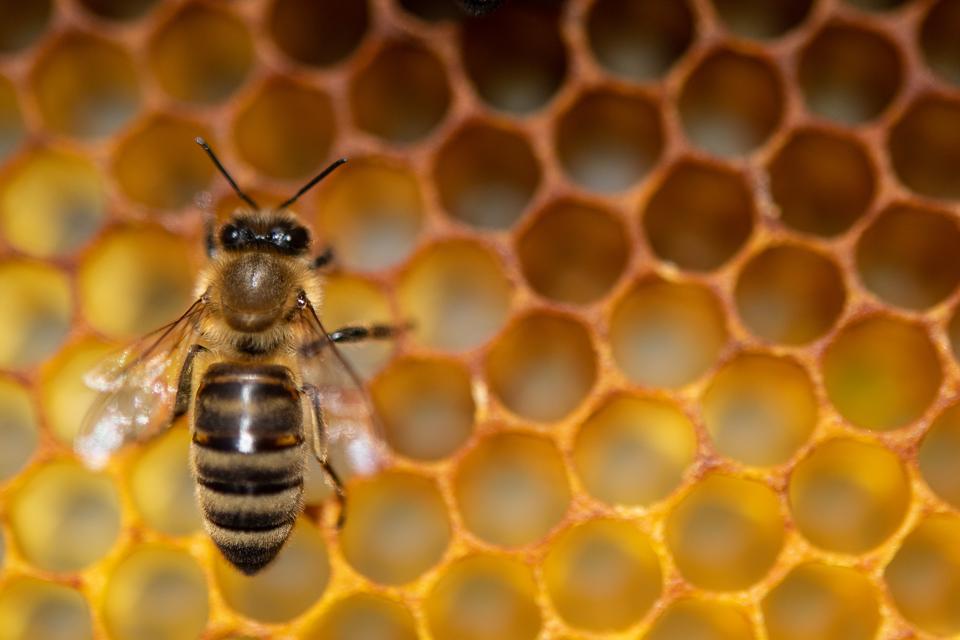
We’re all such busy little bees, buzzing around, accomplish this task, fulfill this obligation, run this or that errand, put out this fire and then drag our attention to the next. When was the last time any of us had to sit down and face-to-face acknowledge all the people in our lives? In today’s modern society, not very often, not like this. Maybe you have no idea what I’m talking about. Or perhaps you know too well.
My wife and I have chosen productivity over boredom. I mean, for crying out loud, how many times can you watch all the Star Wars movies on Disney Plus? For starters, I’ve been working on final edits for my latest novel, so that’s kept me busy. She had this idea for a radio-style animated YouTube show featuring angels, demons, and a fictionalized fantasy world, and for my contribution to her concept, I wanted to play with my old monkey.
Sorry, I should qualify that. Years ago, I wrote a short story I liked very much about a detective robot and his hyper-intelligent gorilla companion. The robot was fun, but Gorilla Todd, as he’s known, is one of my all-time favorite personal creations. So he’s going to be a main character on this show, and I’ll also be writing some companion novels about him, ‘cause Hey, Mack, a gorilla’s gotta eat.
That’s the plan. My wife is the artist and craftsperson, so she’s been drawing up maps and concept images, while I’ve been plotting scripts and outlining in my head where I’d like to take some of these stories. It’s been fun being collaborative with her. Though we’ve been married ten years, and we’ve done and seen everything together, we’ve never actually been creative as a team before. It’s an opportunity we might have otherwise missed. So that’s a blessing right there. Love in the time of COVID, you know what I mean?
But doesn’t that just make me a busy little bee again? Am I avoiding the chaos that seems to be raging in all parts of the globe by choosing a large creative project that will likely take the two of us months to gain any ground on? Quite possibly. Love, you see, needs breathing room. It’s just like fire. Suck all the oxygen out of the room, and the damn thing goes out.
And I’m aware, of course, that there are many people right now who don’t have anyone. I’m aware, for instance, that lots of relationships are currently taking a nosedive. Situations you should’ve ended long ago are ending very abruptly, and then you’ve got no one to synchronize surgical masks with when you’re out buying dog food and driving past your favorite movie theater, staring with jealous resignation at its pristine, empty parking lot.
Be careful with your love right now, folks. That’s the message I hope to impart with this post. Protect it fiercely. And if you are the creative type, head in the direction of new horizons for you and your art. Trust me, a nice afternoon of writing after being glued to the news all morning can be a wonderful salve. And, ehem, let’s not forget to use our bodies. Love can help out there, too. I don’t need to go into detail. Suffice it to say, if you are locked away with your partner, neither of you needs to starve for affection.
Yes, you might be saying, but what about unrequited love or love that’s gone cold? What if you’re in a situation right now that’s broken your heart and made you feel small? I’ve been there, man. We all have. Certainly, you can find a trusted friend to whom you can divulge all your longing and pain. See what I mean about love not being something we should take for granted? It’s everything, permeates all walks of life, yet it can up and vanish on you like a flash storm.

The truth is creativity and love go hand in hand. Just like you couldn’t help falling for your one true immortal beloved, you can’t help falling for a creative project that excites and motivates you. That’s the ticket, quantifiably so. We’ve got to love something if it has any chance of growing up big and strong. Works for people, books, paintings, songs. Works for everything we do and make and choose to be in this life.
Like I said, I have no children, but if I did, I imagine I’d be having an extra challenging time right now. It’s no wonder so many people are ill-tempered, lashing out. Society has been thrashing around on issues of race and inequality, civil rights, gun rights, freedom of speech, freedom of the press, freedom of this, freedom of that, and we’ve been doing it for hundreds of years, so don’t get it twisted. What you’re seeing on the news is by no means some spring chicken phenomenon. It’s led many to pontificate, where’s the love? We’ve come to 2020, that year of perfect vision, and we are being asked to finally open our eyes and see.
To actually see. What a priceless and burdensome gift.
All you need is love, as John Lennon once sang. Don’t forget to kiss the ones who matter most, let them know how you really feel, because none of us is guaranteed one more tomorrow. We tend to neglect this very basic fact. We neglect a lot of things. But the truth is, we’re all in this together, and if you think you know what the future will be, better buckle up, brothers and sister, because the ride gets even bumpier from here.
I’ll have more words to live by next month, folks. Until then, how about a song?
Check out Jeff Bowles Central on YouTube – Movies – Video Games – Music – So Much More!
Want to be sure not to miss any of Jeff’s “Words to Live By” segments? Subscribe to Writing to be Read for e-mail notifications whenever new content is posted or follow WtbR on WordPress. If you found this useful or just entertaining, please share.



















“Mind Fields”: The Big Grief or Computer Wipeout
Posted: June 24, 2020 | Author: artrosch | Filed under: Commentary, Mind Fields, Opinion | Tags: Art Rosch, Arthur Rosch, backups, computercrash, computers, electronics, essay, Fantasy, Humor, Mind Fields, USB, Writing to be Read | 3 CommentsMind Fields
May 2020
“Enter Password”. Okay. I type in that which I remember as my password.
“Password Incorrect”. That’s what it says. Small wonder. I may have used a hundred different passwords this week, just to log into Google. I had a computer wipeout, a big one, and now my browsers have forgotten my cookies: they’ve forgotten my cakes, my donuts, and my fritters. I have to re-up the whole password thing.
“FORGOTTEN PASSWORD?” Click here. OK.…it says it will send a link to my email account.
R..uh R..oh. I need a password to get into my email account. I can’t recover my password until I recover the password to my email account. Is that a Catch-22? Yep, A classic!
I try guessing some of my go-to passwords, things that contained my year of birth. Sometimes I base a password on the Hebrew year. What year is this for Jews? It’s the twenty second of the month of Iyar, in the year 5780.
Yep. I think my password is Jew!5780. I’m a Jew. This is private humor, not chauvinism. Click. Wait a moment. Then: “Password Incorrect”. Passwords used to be simpler. That was before paranoia became normalnoia online.
Without the right password, I can’t do shit. I can’t even get into my email to collect my reset password. I’m screwed. The logical conclusion is that I need to invest in some password management software.
I buy Password Manager.
Enter Password, it says. I know, I’m supposed to invent one. My “master password” it’s called. When I click “enter Master Password” I am asked to fill out three pages of “Profile Information”. Remember when Profile was a bad word? Now you’ve got to have a profile.
I have a lot of folders on my outboard USB drives labeled “Bathwater”. I can’t name password list files as “Password List Files”. I call them “Bathwater1” or “Samurai9” “Let me see what I’ve got here. I’ve learned the hard way to date my entries into this file. I began this file eleven years ago and it’s gotten grotesque. Shit. Two hundred pages of passwords.
I have backup drives. I have USB devices containing mountains of data: tens of thousands of pictures, files of my writing work going back twenty years. I thought that getting a terabyte USB drive would give me space for a long time. Hah! How naïve! I’m looking right now at three USB drives containing ten terabytes of space. Yeah, available storage space, filling up fast.
If you’ve ever had a massive computer wipeout, I hope you’ve got a backup. The struggle you’re about to endure will drive you nuts! It is almost better not to have a backup. Almost.
My computer wouldn’t boot unless I did nutty things. Go into BIOS, re-arrange boot drives, that kind of stuff. This is a sure indication that my computer is a mess. The C: drive needs to be restored.
The backup software I use is called Acronis True Image. But today Acronis doesn’t see my backups. It isn’t True and it has no Image. I have other backups. I take no chances Maybe Windows can see the Windows Image Backup (that is, the WIB) that I made a few months ago. Oh, look! Windows sees it, there it is. The backup to the backup, thank god.
I’m a compulsive ‘backer-upper’. I back up everything to USB drives, discs, the Clouds, I back it up! In theory, I should be able to do a System Restore or recovery without much effort. I suspect that our entire universe is a backup!
I have six Acronis backups spread all across my drives. I found the most recent backup, clicked “Yes” on Acronis and then waited an hour and a half. I left my office for a while. When I returned I saw this message, which I now paraphrase: “Acronis worked its ass off to restore your backup but it couldn’t find ‘such and such’ a file and is unable to complete the restoration.”
It took me six hours of trial and error to reach this point. I wanted Acronis to work; mostly because it cost me seventy dollars when I bought it in 2011. Do I have an assumption? To whit: Windows products aren’t as good as outsourced software. The Windows defraggers, searchers, keepers, sleepers and beepers aren’t as good as software that costs a hundred bucks. Maybe I’m wrong; maybe Windows can get the job done. My “WIB” was waving at me. “Press OK and I’ll do it, FREE!” Windows 10 is waving at me and I’m too much of a snob to let it do its Thing.
I went to sleep without a functioning computer. I am seriously co-dependent with this machine. My sleep was interrupted by binges on chocolate bars. These candies shoved themselves into my mouth. They muted my frustration. In the morning I’ll punish their wrappers.
Here it is: another morning. I’m going to try my WIB, my Windows Image Backup. I think the folders are stored on USB drives “N”, “F” and “K”. I’m going into my files to do a search. “WIB BACKUP”. I enter the terms. Hoping, hoping. Not expecting anything. I’ve had so much failure this week that I’ve become apathetic. Jaded. But…..
Omigod. The search program sees my wib. My WIB! All right. Let’s see if this will do the job that Acronis failed to do. Let’s see.
“Do you want Windows Backup to restore your files?”
Hell yes! I’m desperate. I click “Restore Files” and watch as the dialogue window indicates that some mysterious work is being done. My WIB has been seen and has been pressed into service.
Fifteen minutes later: “Oh my fucking god!” It’s done. My computer has been restored with the humble Windows Image Back The Fuck Up from Windows Ten 64 bit Home Pro Edition and I am so thrilled and surprised. Why should I be surprised? It was that assumption, to whit: Windows software is no good. It’s got to be some hundred dollar hookah from which I puff.
Not so. Not so. Windows Ten took good care of me. If there’s a Windows Eleven or a Windows Twelve, I’ll be there, first in line to buy the damned software.
There’s no escape.
A Midwesterner by birth, Arthur Rosch migrated to the West Coast just in time to be a hippie but discovered that he was more connected to the Beatnik generation. He harkened back to an Old School world of jazz, poetry, painting and photography. In the Eighties he received Playboy Magazine’s Best Short Story Award for a comic view of a planet where there are six genders. The timing was not good. His life was falling apart as he struggled with addiction and depression. He experienced the reality of the streets for more than a decade. Putting himself back together was the defining experience of his life. It wasn’t easy. It did, however, nurture his literary soul. He has a passion for astronomy, photography, history, psychology and the weird puzzle of human experience. He is currently a certified Seniors Peer Counselor in Sonoma County, California. Come visit his blogs and photo sites. www.artrosch.com and http://bit.ly/2uyxZbv.
Want to be sure not to miss any of Art’s “Mind Fields” segments? Subscribe to Writing to be Read for e-mail notifications whenever new content is posted or follow WtbR on WordPress. If you find it interesting or just entertaining, please share.
Share this: