Weekly Writing Memo: Do’s and Don’ts of World Building
Posted: March 30, 2016 Filed under: Fiction, Uncategorized, Weekly Writing Memo, Writing, Writing Tips | Tags: Creative Fiction, Fiction, Writing, Writing Process 1 Comment World building is something I hear writers spend a lot of time anxiously freaking out about. All the tips on Where to Start a Story and How to Make Your Audience Care won’t help you get writing if you’re stuck in the preliminary stages of world building, so I thought I’d do a post on the basic do’s and don’ts of developing the world for your story.
When I talk about world building, I don’t just mean fantasy worlds or futuristic science fiction stuff. World building encompasses every story ever written, even ones based on true stories. Whenever you write you are building the world for your audience, so that those whose world view is different can “buy in” and believe the world is real. So every story involves showing the world it takes place in, the ones based on the real world just take a little less set-up because it’s easier for people to accept and figure out.
- DO establish “normal”
Every story has a baseline for what is normal in it. Establishing this just means you are saying to your audience that this is the world the story takes place in, and everything from this point forward will be based on that. To decide what needs to be established in this way, think of what is different in your world than the world we live in.
Do you have monsters that kill people? Do your characters have strong emotional/societal differences? Like in Invention of Lying where they can’t tell a lie, or in horror movies where the monster is supernatural, these things have to be established early on to orient the audience in the world of the story.
You don’t need to show us everything, but do show us what is important for understanding your plot, characters, and anything necessary for the story to work. It’s about small details, and consistency. So first decide what needs to be established, and then look for the easiest, and shortest, way to establish it, preferably in a way that helps move the story forward.
- DON’T over explain
It’s easy to get wrapped up in describing the details of a world because it can be fun to write. If you spend too much time laying out the world, however, it’ll start to feel like a history book of facts rather than a story. The key is to find a balance.
How much information does your audience need to know in order to understand the story? How much do they need in order to get a feel for the world? If you tell the audience just enough to get oriented in how the world works, without going too far past that, they will know what they need for the story and not feel like they’re bogged down by unnecessary details. Ask yourself with every detail, whether it is pertinent to the story, and how the story would be different without it.
- DO find one specific thing
The rule I use whenever I’m world building is to give one specific detail about anything that may be different from our modern world. So if I invent a new corporation, or a new style of car, I give one specific detail about it that tells the audience what this thing is, and how it fits in my world. This gives the audience something to latch onto for visualization, and something to define this “new” thing by.
As a side note, I also use this for minor characters and such in stories. I give them at least one specific detail about them that stands out, be it physical, personality, or history. It helps personalize each character, and make them their own.
- DON’T spend more time world building than writing
I’ve heard more than a few stories about writers who spend years building the world of their story. They think they need maps, and history, and every species planned out, and religions, and etc. While this kind of thing is a version of storytelling in itself, if you aren’t actually ever getting to write the story, you aren’t writing.
The key, as mentioned above, is to figure out what is important to the story and plan those things without going off on any side tangents. If you really feel you need to develop more of the world in order to deepen your story or to solidify the world for yourself, that’s fine, but set limits. Tell yourself you can plan out 3 or 4 main things that are the core of that subject (religion, politics, geography, etc), then force yourself to move on. If it’s not the core of your story, then you don’t really need more than that to get writing.
- DO remember to touch on the big things
Even though I say don’t get sidetracked by things that aren’t necessary to your story, there are several big things that should be touched upon if you are creating a new world. These things are things that are a part of every society, and even if your story works without them, it’ll be more realistic if you have some mention (even minor) of them.
The big 5, I think, are: politics, religion, culture (fashion, music, art, etc), transportation, and commerce (agriculture, industry, production, markets, etc). There are more, but these are the ones that no matter where your character is, there will always be touches of them present somewhere.
They don’t require an in depth expository segment on them, they just require the small details being integrated throughout your story wherever there is an easy opportunity for them. Your character passes people in a hall, we’ll see touches of their culture in clothes and appearance, and maybe even faith in jewelry or tattoos and such. The passing details can tell us a lot.
- DON’T compare
Don’t go the easy route and say anything that can be summed up as “unlike the world you know, this world works like this.” If you’re creating your world, our world probably doesn’t exist in it. Now, if you’re writing a character who is from “our” world and goes to another, then of course this doesn’t apply. If, however, you’re writing your completely original world, then it doesn’t make sense for your narrator to talk about a world they shouldn’t even know about.
You can use things from the known world in your world, that’s done all the time, just don’t point them out as being from our world. Your narrator is the one telling the story, so stay true to how they’d describe things. If their world doesn’t have bicycles, don’t describe something that looks like a spoked circle as being “like a bicycle wheel.” You have to stay true to the narrator.
Final Notes:
All of this kind of sums up to one major point. Do only as much planning as necessary to develop the basis of your world, and try to avoid overindulging in the development stage. A lot of the world building can happen as you work.
Personally, I develop what is necessary for the plot first, then start writing. While I write, I keep a Word document with new details I add. If I name a gadget or a city as I go, I write it on the Word document so I don’t forget what it’s named. It’s something I keep open as I write so I can reference and update it as needed. As with the post on researching, the thing to remember is that all roads should lead to writing and telling the story, so try to world build with that in mind.
Share this:

Weekly Writing Memo: What Do I Write?
Posted: March 16, 2016 Filed under: Fiction, Uncategorized, Weekly Writing Memo, Writing, Writing Tips | Tags: Books, Creative Fiction, Fiction, Writing, Writing Process 3 Comments I think the writing questions I hear the most are questions about where to get ideas, and what ideas are good ones. People constantly want the secret formula for the next bestseller, or confirmation before they start writing that the idea they’re working on is great. The problem is, there is no magical way to tell before something is written.
Of course, there are ways you can help improve an idea before writing, but there isn’t a secret guide to a guaranteed selling idea. That being said, there are some tips to help you decide whether the idea you have is one you want to pursue.
What do I write?
Ideas are everywhere. Look at friends and family, look at the news or celebrity magazines, and find what interests you. I always advise writing something that truly gets you involved and not just something that you think will sell. The more you love the story, the better the writing will be, and the audience will be able to feel your enthusiasm for it. So find a story involving something you love, or something that fascinates you.
Once you have a topic, the next step is to figure out your character and your plot. Those things are blog posts of their own, so I’ve posted a few links to previous ones I’ve written on the subjects below for more in-depth information. In general, though, you need to understand who your character is and how they would behave, and you need to know what kind of trouble they are going to get into that will disrupt their world.
Beginning a Story: What’s in a Beginning?; Tips for Finding Your Story’s Beginning
Plot: 3 Types of Plot; 5 Ways to Increase Tension in Story
Character: 5 Tips for Establishing Character; Relatability or Likability
Is my idea good enough? Interesting enough? Sellable? The next big hit?
Maybe you already have an idea, but you’re not sure it’s interesting or sellable. You can always ask a few people and get a second opinion, but in general until the story is written there is no way to say one way or another. A great idea can be presented in a poor way and make people think it won’t work, but then you write it and it does. A bad idea can be made to sound wonderful, but then it can fall apart in the writing.
The only way to find out if your idea works, is to write and see how it turns out. That being said, you can help increase the chances that your idea works by doing your homework up front. Outline, develop your characters, develop your setting, and learn as much as you can about writing as possible. No matter how good of a writer you are, there is always more to learn.
Has it been done before?
Beyond the concern of whether a story idea is interesting, the other concern I often hear is whether the idea has been done before. It’s easy to look at your story concept and think of everything similar that has been done. You’ll start to feel inadequate, or like a mimic, or that your story doesn’t measure up. This is a valid concern because you don’t want a story that is too similar to an existing one, but all stories have elements that overlap with other stories. There is nothing wrong with being inspired by another story, or having something similar with another story, but the key is to have something to distinguish your story from the existing one.
For example, an easy reference of distinguishing traits is to look at the movies White House Down and Olympus Has Fallen. The two movies came out around the same time and had incredibly similar plots, but what distinguishes them from each other, besides actors, is tone. White House Down isn’t a comedy, but it does come off as a bit more lighthearted and comedic at times. Olympus Has Fallen, on the other hand, is more of a serious action movie in the vein of the original Die Hard. Now if the movies had been written one after the other, whichever was written second would have had to do even more to distinguish itself from the original, but because they came out at the same time they get away with being so similar.
The important thing is to remember that as long as you’ve taken steps to separate your idea from whatever existing idea you’re looking at, then you should be fine. Focus on making it your own, on writing it the best you can, and embrace your story, and always have something that makes your story your own unique, be it style, viewpoint, character, or plot.
Final Notes:
The easiest way to truly learn to understand stories, and to know what is and isn’t sellable, is to consumer stories that are selling. Read, watch movies, listen to podcasts, check magazines, and take in stories in all of their forms. One of the easiest ways to learn about writing and telling a story is to see how it’s been done for centuries and think critically about them.
You need to take in stories wherever you can, and always take note of what you like, what you didn’t, and WHY. The more you study existing works and learn how the storytelling is executed, the more techniques and tools, so to speak, you’ll have at your disposal for your own writing. So study, explore, and embrace your idea. In the end, once you get it out you can always verify with someone else whether the idea is too similar to something that exists or if it’s any good, then tweak as needed, but until it’s on paper, no one will ever be able to say for sure. So go write, stop procrastinating with worry and self-doubt, and maybe you’ll surprise yourself.
Share this:

It’s Not About Speed
Posted: March 2, 2013 Filed under: Writing | Tags: Writing, writing advice, Writing Process 7 Comments I’ve heard a good average for writers is one book a year. For some of us aspiring writers, that seems like a break-neck pace. Then there are those that whip out a novel in a month’s time for NaNoWriMo each year, and there’s a girl in my class who participated in a 365 stories project where she wrote a story a day for a year. Many of us may not write that fast though. I’ve done NaNoWriMo twice unsuccessfully. Those who do finish may have something that resembles a novel, but it’s far from a polished manuscript. It’s good to be able to write fast if you’re writing to deadline or if you want to make a living as a novelist, producing one or more books per year. But the fact of the matter is, it’s not how fast you write that is important, as much as it is that what you write is good, quality writing.
What is important, my instructors at Western State will tell you, is that you find a writing speed that is comfortable for you, that allows you to produce quality writing and set your own pace. I’ve heard it suggested that if you write three hundred words a day, which probably adds up to a couple of hours on slow days, you can complete a novel in a year, and supposedly, that’s a reasonable pace. That’s probably true, and it at least shows dedication, but some writers may find that even meeting that three hundred word per day mark is difficult at times. I know for me, if I have what I want to write, firmly planted in my head before I start, I can write a lot faster than that. But, if I start out with only a vague idea that I’m not sure how I want to express it, those three hundred words may come agonizingly slow, like pulling cactus needles from my derriere after not choosing my seat carefully on a long mountain hike.
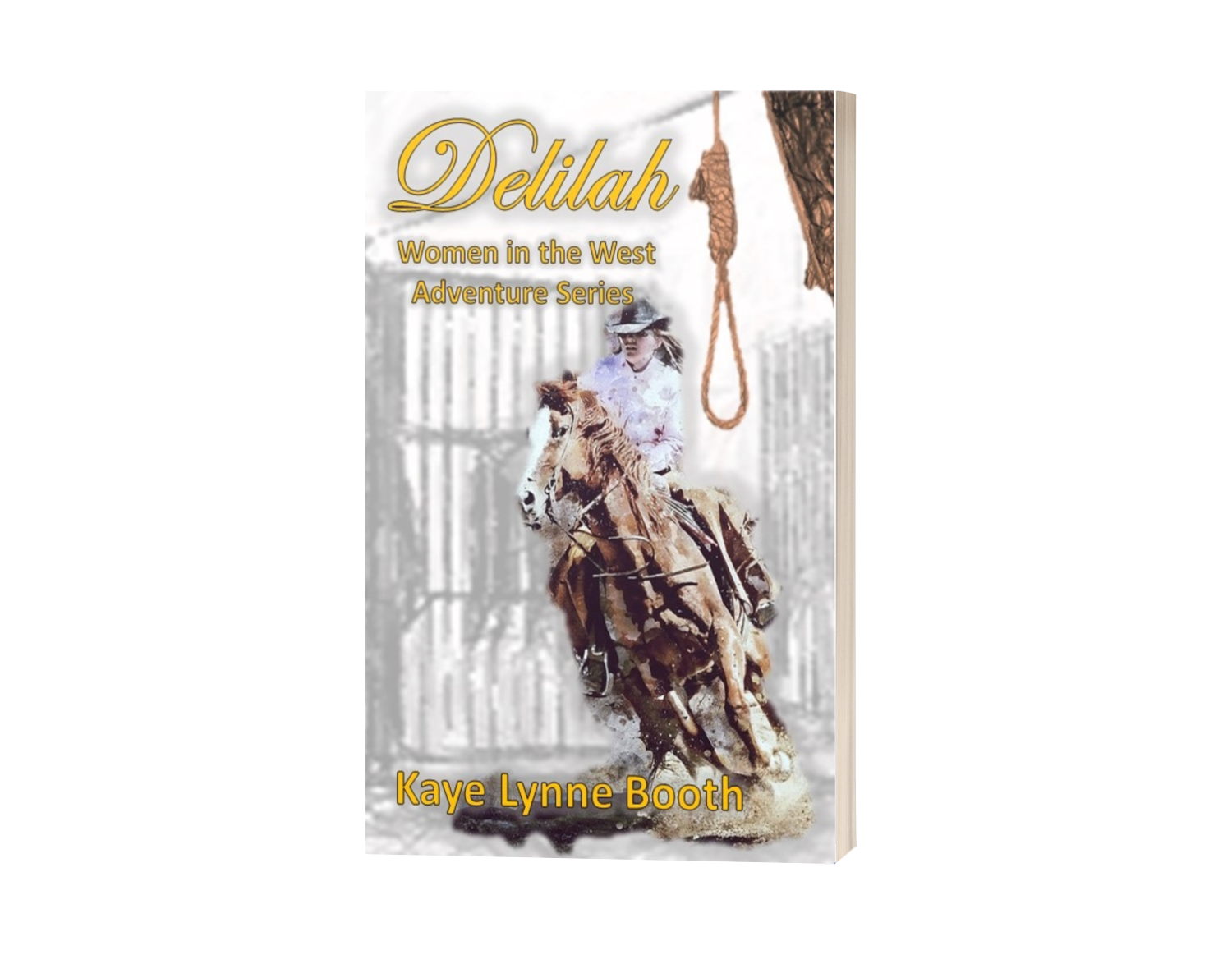
I wrote the first draft of my first novel, Delilah, in six months, which I’m told is pretty good. I wrote between 600 and 1,000 words a day on the days I actively wrote. But honestly, I didn’t write on Delilah every single day of that six months. Many days I just worked out stuff in my head, figuring out what I wanted to write and how I would write it. It was a pace that worked for me. I didn’t feel I was pushing it too hard I sand I still produced some quality writing. I still have a lot of work to do on the rewrites, but it feels good to know I have a good solid base that can withstand some minor alterations or even major reconstruction if necessary.
Writers are human beings, and just as each and every one of us are unique individuals with different strengths and weaknesses, every writer has their own speed at which they write. Can someone else write a first draft faster than I did? Yes, my instructor, Barb Chepaitis, wrote a novel in a weekend. It probably took her longer to regain her sanity afterwards, than it did to write the story, but it is possible. She did it to see if she could. It’s not her normal writing speed, but she does write much faster than I do. Other writers struggle to get a first draft done in a year.
On the first day of class last summer, Barb asked us if we knew how many words we could write in an hour. Being beginning MFA students, most of us did not. She said it was important that we know how fast we write, but she didn’t say it was important that we write fast. Finding that comfortable rhythm where the story flows out without being forced is what produces good quality writing. It doesn’t matter if you only put down two hundred words a day, as long as they are good words. It’s not about speed. The story will always get told in its own time. It’s our job to our job as writers to make sure it’s told well.
Share this:

A Closer Look at My Own Writing Process
Posted: January 6, 2013 Filed under: Fiction, Writing | Tags: Delilah, Fiction, Writing, Writing Process Leave a comment Since I’ve been seeking my MFA through Western State University, my posts here have been dwindling. On top of my school work, I’ve been writing a western novel and I’m close to having it completed, but this also has put a strain the limits of my writing time, not to mention several curveballs that life has thrown at me recently. However, I’m learning some really neat things about my own writing process that can be shared here, so perhaps my readers will forgive me for slacking off a bit.
In my Craft & Practice I class, my instructor, Barbara Chepaitis, guided us in analyzing our own writing process and taught us about the different types of writing processes. This is a subject I’d never thought much about before. While some writing processes are very structured, with outlines and plot lines and story arcs, others are more organic, just letting the words flow to the page, and still others are somewhere in between. While I’ve done outlines for my nonfiction writing process, I’ve tended to be more organic in my fiction writing process. I just sit down and start writing and see what comes about.
That’s what I did with the western novel I’ve been diligently working on. Delilah started as a character driven story, when I was assigned to do a western excerpt for my class this summer. I created the character of Delilah for the excerpt and it built itself one scene at a time as the character showed me what happened next. It’s been a fun journey since trouble seems to have a way of finding Delilah, but as I neared the finish line, I needed to make sure that my plot and all of my sub-plots wrapped up neatly. I didn’t want to inadvertently leave any loose ends. So, I found it necessary to plot it out and take a look at my story arcs, one for the plot and one for each sub-plot, to make sure they all had a beginning, a middle and an end, and see how they interrelated with each other.
In doing this, I was surprised to see how many different story arcs my story actually has. After drawing out the main plotline, I drew a story arc in a different color for each of my different sub-plots and ended up with eight different story arcs, including the main arc. Every motivation or relationship that Delilah has, creates a different sub-plot with a story arc of its own. Like a good stew, where each separate ingredient mixes its own flavor into the pot to create that delicious stew taste, each separate story arc adds to the flavor of my story. Below is a picture of what I came out with.

This enabled me to see where things were missing and envision how it will all come together in the end. It has required me to revise some parts of my story, but I can see the value in doing this. The different colors represent the individual story arcs and the colored circles represent the plot points where each one begins and ends. The main story arc includes every plot point, while the sub-plots start at different plot points, further into the story and some end before the main story ends, while at least five of them are tied in together and conclude at the end, along with the main plot. This is what I think a good story should do, so I am pleased with the results. Now that I have discovered how it all ends, all that’s left to do is to write it.
My instructor, Barb did not try to tell us that one process was better than another and she encouraged us to explore different processes to see what worked for us and what didn’t. I’ve discovered that my process needs to be both structured and organic. I’ve never tried the structured approach to fiction before, so with my next novel, which is an action/adventure story, I’ve started with the plotting. In fact, I already have the main plot line of the major events drawn out. Although this story is based on a character, Betty Lou Dutton, that I created and used for two scenes in Barb’s class, this approach will be a basic reversal of my usual process. As I write, I may find that more story arcs need to be added, although I already know there will be at least four sub-plots, it will be interesting to see how well this turns out. Wish me luck.










How You Can Help to Build a Writer’s Platform
Posted: March 3, 2016 | Author: kayelynnebooth | Filed under: Commentary, Promotion | Tags: Book Review, Children's Books, Creative Fiction, F, Fiction, promotion, Southern Colorado Literature Examiner, Western State College, Writing, Writing Process | 1 CommentPainting by Mitch Barrett, Poetry by Kaye Lynne Booth
Everything I’ve ever done in life, I’ve done my own way, usually depending on myself and no one else. One thing anyone who knows me can tell you is I’m persistent. When I set out to achieve something, I don’t stop until I do. It has been no different with writing. But I’m discovering that I need a little help with this endeavor.
I had an unpleasant experience with a student teacher in the English department as an undergrad, so just when I was beginning to learn that I liked writing and maybe English should be my major, I was soured on the whole idea by the feeling that the field was too subjective for me, and I chose to major in psychology instead.
But after I’d been out of college for a few years, I discovered not only that I had a love for the written word, but also that I had some talent for it. I started out writing poetry, which I’ve since learned, is not my strong suit, but even there, I don’t do too bad. I sold my first poem to Dusk & Dawn Magazine in 1996 for $5. Problem was, that didn’t even cover all the postage I had spent submitting, and I couldn’t afford to play the starving artist. I had a family to help support. There were others to consider. So, writing went onto a back burner, just simmering for about twelve years.
Then, I discovered the Internet and rediscovered my abilities for writing as new opportunities presented themselves. The rise of the Web actually changed the entire publishing industry over time, opening up all kinds of new opportunities for writers, including, but not limited to, self-publishing, marketing via social media, vanity presses, and content mills. As blogs and websites grew in number, more content was needed than ever before. Problem was, I’m technologically challenged. Slowly, over time, I have learned to use social media to my advantage a little, and I’ve learned to use many of the writing sites and content mills to make minimal amounts of money.
One of the coolest things happened in my writing endeavors didn’t involve any money at all. I had one of my poems featured in a painting by artist Mitch Barrett and displayed and sold at the Kaleidoscope Gallery in Battlesea Park, London. (There’s a lengthy story behind how this came about, which I may relate in a future blog post. Anyone who knows me is surely tired of hearing it.
As a freelancer, I became the Southern Colorado Literature Examiner for Examiner.com, which didn’t really pay, but offered opportunity to meet other writers, get free books for review and obtain credits for my portfolio. I also cranked out articles for other content mills which did pay, at least a little, which added to my skill set, diversifying my writing talents, and I was published in Freeman, which was a bit more profitable.
I thought I was quite fortunate when I was able to obtain a publisher for one of my children’s stories. After seven wasted years, it turned out I was not so fortunate, since my book still wasn’t published. But we learn from experience.
Still struggling to launch my writing career, I discovered the low residency MFA program for Creative Writing offered by Western State and I applied. Maybe I couldn’t do it on my own, but I would learn what I needed to know, one way or another. And I have learned a lot. I’ve learned about my own writing process. When I started at Western, I’d never even thought about it. I’m not even sure I was aware I had a process, but I did and still do. Now I’m just more aware of it. I learned how to craft my words to be pleasing to the ear. I learned how to read aloud in front of an audience, and I’ve learned that I do it well.
Last summer, I completed my emphasis in genre fiction and read from my thesis novel, Playground for the Gods: Book 1: The Great Primordial Battle. I’ve learned how to treat my writing as a business, at least in theory, although I’m still trying to get it off the ground. And I’ve learned how advances and royalties work, and that you have to sell a lot of books before you will ever receive royalties.
And I learned that screenwriting is where the big money is. When I took genre screenwriting for my out of concentration class, I also learned that it was fun, it came pretty easy to me and I was fairly good at it. So, instead of graduating, I stayed in school for another year to get a second emphasis in screenwriting. What I’m learning this year, is that there’s a lot of competition on screenwriting and it’s tough to get a break. You practically have to live in L.A. to get anywhere. Yet, I am determined to make all the money I now owe for my schooling pay off. I haven’t given up yet, and I don’t intend to now.
I’m currently shopping my thesis novel and two of my children’s stories, five short stories, and various poems. I’m also very close to finishing my western novel, Delilah. At Western, thanks to my instructor, Russell Davis drawing us out of our comfort zones, (and maintaining as much discomfort for us as possible), I discovered that I enjoy writing in the western genre, and although it is not one of the bestselling markets, I do it well. And I’m working hard, through this blog and social media, to build a writer’s platform and gain a following to make myself look more appealing to agents and publishers.
Here’s where you, my readers come in, because you can help. Without my readers, my writing just sits there on the page, not doing much of anything. You are my writer’s platform. You are my following.
Many people don’t realize that liking a link on Facebook, while cool, doesn’t really help the author grow their platform unless they actually read the post and subscribe by email. What does help, is if you’ll take the time to read the post here, on my Writing to be Read site, and subscribe to the blog. That’s what shows how large my reader following is, and it does my heart good to watch as it grows.
You can also like the post below it, with all the “share” buttons, but you must have a WordPress account. If you don’t have one, you can sign up for one, but then, of course, you will have a blog to maintain, so be sure you know what you’re getting into. I’m guessing that many people just like the link on Facebook to show their support, but they don’t actually click on the link and read the post. But, if you leave a comment, I’ll be able to tell that you read it, and if you subscribe, it will show you liked what you read. You’ll make my day.
If you’d like to show even more support, you can buy my short science fiction story, Last Call. If you like it, write a review on Amazon. And, you can follow me on Facebook, Twitter, LinkedIn, or Pintrest. Help an old writer get a break.
Your support is always appreciated. Thank you for being a reader of my work. After all, for me, it’s not really about money. It’s about Writing to be Read.
Share this: