Weekly Writing Memo: Setting Writing Prompt
Posted: July 21, 2016 Filed under: Fiction, Screenwriting, Uncategorized, Weekly Writing Memo, Writing, Writing Tips | Tags: Creative Fiction, creative process, Fiction, Screenwriting, Writing, Writing Process 1 Comment[Sorry for the delay this week, there was a glitch in posting yesterday.]
 I’m off in Gunnison, Colorado this week for a writing conference at my old graduate school, Western State Colorado University. For me, a writing conference is a chance to talk writing and get inspired, so I thought I’d post a writing prompt this week to spread some of the inspiration.
Since I’m in a place that is known for its beautiful scenic views, I thought I’d go with a writing prompt that is all about starting with setting to find your story. Try to use the prompt to help visualize the setting, and see where it takes you for creating a story.
A Tree Grows in the Desert
A tree grows alone in the desert. What kind of tree is it? What does it look like?
Describe every detail you can think of. What do those details tell us about the tree?
How does it grow there?
Who discovers it? Someone has to come across it and be our narrator. So who? Why are they in the desert? How did they find the tree?
Who are they?
What does the tree mean to them? Do they interact with the tree somehow?
Is this all a dream?
Or a vision?
A miracle?
A mirage?
Don’t just have this character be at the tree, give them a reason, a purpose. Why are they there? Why is the tree there? How do the tree and the character impact each other? Where do they go once they part?
This prompt is about character and setting, since they are the two core parts of the prompt. It’s also about using mysterious elements to help draw the plot out. If there is a mystery element to be investigated, and a character to investigate it, then there is a plot in there somewhere. So explore the tree, develop the character who interacts with the tree, and see where the story takes you.
Next week I’ll be back with my usual post, but for now, happy writing! If you want to play with this prompt, you can try to set it in other unusual places if you want (the ocean, a grocery store, etc). The key is, that the tree is somewhere unusual, and the story comes from someone interacting and exploring the tree and why it is there. So explore, have fun, and get writing!
Robin Conley offers great writing advice most Wednesdays on Writing to be Read. If you just can’t wait until next week to find out more, you can pop into her blog, Author the World, for more tips, or a weekly writing prompt.
Share this:

Weekly Writing Memo: When to Include Movement with Dialogue
Posted: July 13, 2016 Filed under: Fiction, Uncategorized, Weekly Writing Memo, Writing, Writing Tips | Tags: Screenwriting, Writing, writing advice, Writing Process 1 Comment One thing I’ve noticed during my time reading and critique fiction, is that not everyone includes movement of characters, or actions, within the dialogue scenes. This is a pretty obvious thing, as not all scenes would call for it, but how do you know when you should or shouldn’t include movement with the dialogue?
Forward Momentum
One reason to include movement in dialogue is that it moves the story forward physically in a way that dialogue generally cannot. The exception to this is if you write like Shakespeare or other playwrights where they often imply or describe the movements in the speech. If a scene of dialogue goes on for a long while without any movement, it can make the reader feel like the story is standing still as two or more characters talk things out. Adding in the body movements can make the reader feel like the characters are actually doing something and that the story is still progressing forward, even if the characters are staying in one room.
Emphasis
Movement can also help emphasize certain words that are being said, as well as how they are being said, and can even be used to tell more about the character who is speaking. For example, if your character is trying to act tough but doesn’t feel very tough at all, you can give them strong words in the dialogue but have their body language be weak to show they’re not confident in the words. This can be a subtle way to show a lot about the character without telling.
Another example of this is if you want to emphasize a characters anger, you can have them throw something or slam something. Yes, these types of gestures can venture into cliché, but when done well they can also really highlight how a character is feeling and what they mean by their words.
Transition
Movement can also be used as a transition of subjects in dialogue. If you jump from one subject to another in dialogue without any sort of physical break on the page, the story can feel clunky or awkward, and sometimes throw the reader out of the story. Adding in the movement between a subject change can slow things down for the reader and make the transition smoother by helping the reader follow the speaker’s train of thought. An example:
“I want to go to the park,” Bobby said. He looked down the street as the milk truck drove by, then turned back to his brother. “Did mom go to grocery store yet? We should eat first.”
If you remove the dialogue tag and the action, the dialogue seems cluttered, rushed, and not necessarily cohesive: “I want to go to the park. Did mom go to the grocery store yet? We should eat first.” Written this way, the character seems almost like his has an attention disorder. By using movement, you can create a pause between the subject shifts if needed, or use the opportunity to help show the reader what is the cause of the subject shift as done above.
Exceptions
There are a few spots where movement should not be in dialogue, but really it should be judged on a scene-by-scene basis. If you are having an important conversation where the emphasis really needs to be on the words, then the focus should be the dialogue with movement only added in where an action is needed for the story.
If you have a long scene with a lot of movement and little dialogue, then keeping the dialogue sections movement free can help balance the chapter out. If you add more movements into a scenario such as this one, it can make the dialogue feel cluttered and buried in all the actions in the story.
Another exception is if you have a slower chapter and want to speed the dialogue up some, then you can take out the movement. A segment of dialogue with minimal movements or dialogue tags can really speed up a chapter because the reader can move through it quickly, focusing just on what is being said by the characters.
Final Thoughts
Ultimately, each instance of where to put movement within the dialogue should depend on the scene and the writer’s goal for the scene. If you understand what the effect of the actions and movements in dialogue are, then you can understand how to use them in the strongest way for your story. If you really want to understand it, take some of your favorite novels and look at the scenes with dialogue. See how the author handles them and try to figure out the effect it has on the story. Really, when working on any aspect of writing, seeing how it has been done and then experimenting with it yourself is the ultimate way to understand it.
Share this:

Weekly Writing Memo: Building a Story
Posted: June 29, 2016 Filed under: Fiction, Screenwriting, Stories, Uncategorized, Weekly Writing Memo, Writing, Writing Tips | Tags: Creative Fiction, Fiction, Writing, writing advice, Writing Process Leave a comment Stories are essentially a million little pieces intertwined in such a way that they relay a picture from the writer’s head into the mind of the reader. Specifically, every scene, and every story, is made up of a series of arcs (character arcs, plot arcs, genre arcs, etc) that combine to tell the story on various levels. In order for the arcs to work, they have to be carefully constructed and woven together so that they support each other and so the story forms a cohesive whole.
One of the most important parts of building a story is the construction. Each of the various arcs within the story have to start and end at the correct place, and have to be balanced with the other elements. If any arc or element is out of place, the entire story can falter or fail completely. There are dozens or more elements and arcs within a story to consider, but the main arcs I’m going to focus on are character, plot, and genre. These three are generally the core of every story, and if they’re right, the other elements are more likely to be right.
Character
The general rule in any story is that every character has to have an arc of their own, not just in the story as a whole, but in every single scene of the story. At the start of every scene, each character present should have two or more goals. The first goal is their overarching goal, and the second is their immediate goal. For example, in a scene where a man wants to get his daughter an ice cream, his first goal could be a larger goal that carries on throughout the story of trying to make his daughter happy, while his second goal is one that is the focus of the scene such as simply trying to buy an ice cream cone.
These goals are what drive each scene forward, and are what drive the character’s every action. A goal can change in the middle of the scene, but no matter what a character has to have a goal. The character arcs in every scene are generally caused by how they succeed or fail at achieving their goal. In the ice cream example, the character’s arc could be something like:
On the scene level: the character starts out hopeful that he will be able to buy the ice cream, he hits a peak in line when he is about to achieve his goal, but then when he gets to the front and finds out that they are out of the ice cream his daughter wants his hope disappears and he is in a much worse position than he started.
On the story level, this would be a minor arc in his larger development. This would be the arc where the father goes from trying to find his daughter’s happiness in material things to maybe looking deeper to find something more that can truly make her happy. The scene won’t resolve the problem, but it would be the first step of the father solving the problem and help him head toward the path where he will find the solution.
As shown above, by looking at and understanding the goals you can find the character’s arc of emotional and mental development in every scene, and in the story as a whole.
Plot
Each goal itself should be a part of the plot, and should have some form of arc as well. Some goals, like the larger story goals, will be made up of a bunch of mini-arcs, while the minor goals will just have a minor arc of their own. The goals make up the plot because they are what drive the action and create conflict within the story. They’re what the character wants and is constantly stopped from getting one way or another.
For each goal, there should be an arc of how it develops and changes throughout each scene and the story. Goals in general will be made up of some mix of the basic format of: conception of goal, plan to achieve the goal, enacting the plan, and failure or success. The outcome either leads to a new goal, or a new plan to achieve the new goal. Each arc of the plot can lead to new plots and goals depending on whether the character is successful or not, and whether the success/failure of the goal leads to new problems or new goals.
For example, in the ice cream story, the dad doesn’t get the ice cream so it leads to a new goal and new problem for the plot. He either has to find somewhere else to get the ice cream his daughter desperately wants, or he has to find a new way to make her happy.
Genre
Many people don’t consider that there are genre arcs within stories, but in there are almost always some form of genre arcs that happen in genre stories. For example, most romance stories involve some form of meeting of the potential couple, a period of interactions between the couple culminating in some form of acknowledgement of feelings, the breaking point where they are thrown apart, and then the reunion. This varies, of course, depending on the different types of romance stories, but being aware of the genre arc and knowing how to use them can help you create a certain flow within your story that readers find natural. It can also help you make sure your plots are working well for the genre you are using.
Even if you don’t go with a typical genre arc for your story, you should consider how the genre evolves throughout your story. For example, in horror there should be a general increase in the horror as the story develops, culminating in the final climactic moment toward the end of your story. If you don’t have an arc of the horror elements as well as the character and plot elements, then the horror part of your story could fall flat. So always consider the genre you are writing in, and think of how that influences your plot and character.
Whatever you are writing, there are many levels of story you are telling and each element should really have an arc of its own, even if it’s a minor one. Some arcs may not be super important or even that interesting, but it’s how they fit in with the other larger and more important elements that matter. Each element should be supporting the larger story as a whole. If you find a part of your story that isn’t doing its part to support the story, remove it. You’re building something where every part needs to do its job, so make every element count.
Robin Conley offers great writing advice most Wednesdays on Writing to be Read. If you just can’t wait until next week to find out more, you can pop into her blog, Author the World, for more tips, or a weekly writing prompt.
Share this:

Weekly Writing Memo: Going Through the Motions
Posted: June 15, 2016 Filed under: Fiction, Screenwriting, Uncategorized, Weekly Writing Memo, Writing, Writing Tips | Tags: Creative Fiction, creative process, Writing, writing advice, Writing Process 1 Comment Lately I’ve been coming across a lot of writing where the emotional connection has been lacking. If your audience isn’t invested or connecting with your story somehow, they will not want to stick around to finish it. There are a lot of ways your writing could lack an emotional connection, but the main one I find is when your characters or your plot aren’t ringing true to the audience. When it feels like the characters are just going through the motions of the story, rather than really living and breathing the story, then it starts to feel false. So how do you keep it feeling realistic so your audience is emotionally invested?
Actions and Words
One of the most important elements in a story to help it feel realistic is that your characters dialogue and their actions match up. To do this, make sure your character is behaving in a way that goes with their attitude and dialogue. If your character is angry, and is yelling, don’t have their body language be weak and cowering. If your character is shy and afraid, don’t have them adopting a dominant posture. These things are minor touches in your writing, but if your characters’ words aren’t backed up by their actions and body language, then their words won’t ring true and will make the audience feel as if something is off, even if they can’t put into words what exactly it is.
The exception, of course, is if the character is someone who says one thing and does another, or if your character is purposely behaving in a contradictory way because of anxiety, fear, or ulterior motives. In those cases, you still have to be consistent with that character and continue that behavior throughout the story. If they act irrationally when they’re afraid, then show the audience that and make them behave that way every time. If they are a perpetual liar, or manipulator, then again show that and make sure the audience understands the contradictions.
Sincerity
The second element that helps make your audience emotionally connect is to feel like your characters are behaving sincerely. I don’t mean they have to be telling the truth all the time or behaving kindly, they just have to be behaving true to who they (the characters) are. If a character isn’t behaving the way they would in reality, then the audience will pick up on that and feel like they’re being lied to and not connect with the story.
This comes down to one thing – you want your characters to be people, not actors. If it feels like they’re actors pretending to be someone, then it will create an unnecessary barrier between the story and your audience. You want your characters to always be themselves, and to behave in accordance to how they would naturally behave unless there is a significant reason for them not to.
Others
A lot of people think that the only characters the above stuff matters for is for the main characters, and maybe the secondary or even tertiary characters, but it’s more than that. Every single character in your story matters, and every single character should have a motive for their behavior that they drives their behavior. Without this, minor characters in stories will feel like placeholders and even disrupt the story.
If you have a ton of minor characters who just pass through the story without distinguishing them by giving them their motivations, it’ll be like placing a color photo on all gray background. While that can be pretty and help make the main photo pop, it’ll make the background uninteresting.
In a story, this kind of thing makes the story as a whole suffer because your character is living in this world, and if the world is boring and uninteresting, or unrealistic, then it’ll start to affect the main character. If you give your minor characters one thing, give them a motivation for being in the scene and every action they take. As long as they are clearly motivated, and stick true to these motivations, they’ll help give the scene more purpose and make the story more dynamic, which means it’ll be easier for your audience to get invested.
Share this:

Weekly Writing Memo: Parts of a Scene
Posted: June 8, 2016 Filed under: Fiction, Screenwriting, Uncategorized, Weekly Writing Memo, Writing, Writing Tips | Tags: Creative Fiction, Fiction, Screenwriting, Writing, writing advice, Writing Process Leave a comment Whether you’re writing a novel or a screenplay, you are going to be writing scenes for your story. The breakdown of a scene for each is essentially the same, and requires that three things happen.
The Setting
The first thing that has to be established in almost any scene is where it is taking place. Sometimes this can be as simple as establishing that it’s a mysterious unknown place, that’s fine, but some form of setting has to be established. Showing the setting helps ground the audience and helps them visualize what is happening.
To do this in a screenplay, you use the scene heading and then give a brief description of the location in a line or two. Find a succinct way to set the tone and layout of the scene without giving long descriptions. Also, make sure to mention any elements of the setting that are vital to the action of the scene. Don’t wait to mention there is a newspaper on a chair if a few lines down that newspaper is going to be used to slap someone!
This is true for fiction as well. It’s best to set up details that will come into play early on so that way when they are used, the audience feels they have been established instead of feeling like they were just thrown in when the writer needed them. Unlike in screenplays, fiction can let the setting unfold a little more naturally as the character interacts with it. You’ll still want to mention key elements as soon as you can for the best effect, but you can let some details come out more fluidly as the scene develops.
The Character
The second thing to establish in any scene is who the scene is about, and who the protagonist and antagonist of the scene is. In every scene there is one of each, even if one is an inanimate object or something. Every scene is driven forward by a character wanting something, and whatever is getting in the character’s way at that moment is the antagonist for the scene. There can also be an antagonist that is not present in the scene as well, but do consider who the antagonist within the scene is.
You’ll also want to find a way to introduce other characters that are present for the scene as early as possible. If a character is in the room while something is happening, and the audience isn’t aware of it, it can be startling when that character finally “appears” to the audience. It can also change a scene completely. So make sure to find a way to introduce each character within a scene so the audience knows who the players are.
The Conflict
Every scene is about one thing – someone wants something, and something (or someone) is stopping them from getting it. If this isn’t happening in your scene, then your scene has no conflict or tension and really needs to be reconsidered unless you have strong motivations for it.
The other key thing to remember for every scene is that every single character in the scene has a want, and their behavior is going to be driven by whatever that want is. You want some of those character desires to conflict to create tension. If the conflicts are the same (like two characters want a sandwich) then find a way to make the wants conflicting. For example, maybe they both want a sandwich, but they want the other character to make it for them. Or they both want a sandwich, but there is only enough bread for one.
If you know what your characters want, then you know how they will behave in a scene. You also know what you need to keep them from getting it for as long as you naturally can within the scene. Don’t let them get what they want easily, unless what they want isn’t really what they need! If it isn’t what they need, then the moment they get what they want, it’ll create new conflict. The point of every scene is to create tension and conflict, and to drive the story forward.
Final Notes
The final thing to consider when writing a scene is that you don’t want to spend a lot of time in the beginning setting up what your character is doing or trying to achieve. If you find yourself doing this, try jumping forward in the scene and seeing how it reads without the introduction.
For example, if a neighbor wants to borrow a cup of sugar, but the other neighbor wants someone to talk to, try this: Instead of showing Person 1 knocking on the door, show them already in Person 2’s kitchen and show Person 2 blabbering on about some subject that Person 1 cares nothing about. Maybe show Person 1 with an empty measuring cup in their hand and have them eyeing the cupboard.
Doing that tells us everything we need to know without going through the motions of the knocking on the door and asking for the sugar. It jumps straight to the conflict. And you almost always want to cut to the conflict when you can do so without the story suffering.
Robin Conley offers great writing advice most Wednesdays on Writing to be Read. If you just can’t wait until next week to find out more, you can pop into her blog, Author the World, for more tips, or a weekly writing prompt.
Share this:

Weekly Writing Memo: The Query Letter
Posted: June 1, 2016 Filed under: Fiction, Uncategorized, Weekly Writing Memo, Writing, Writing Tips | Tags: Writing, writing advice, Writing Process 1 Comment A query letter to an agent or a publisher is one of the basic things you should be able to write if you want to be a writer. Sooner or later, if you want to go the traditional publishing route you will have to send a query letter out to get your writing read. So what goes in a query?
Salutation:
To start your query letter, you’ll want to address it to a specific person instead of using something generic. So find out the editor of the publishing companies name, or who reads the queries. If you’re sending it to an agent, make sure you know the agent’s name. You don’t want to use a generic greeting like “to whom it may concern” because you want to show the person you are sending it to that you’ve done your research about them, and that you’ve chosen them specifically for a reason. By addressing the letter to a specific person, you’re saying I want you specifically to read this because you specifically are right for my story, instead of implying that the letter could go to anyone.
Introduction:
The introduction paragraph of your letter needs to have a few specific details in it. First, it should say why you are writing the person. Are you seeking representation, or publication? Second, it should tell them what you are writing them about, specifically the name of your novel or piece you’re trying to sell, what genre it is in, and a general idea of the word count. Finally, the introduction paragraph should include a line or two summary or description of your novel that gives the general feel of the novel. This should be some sort of hook about your novel and doesn’t have to tell the whole story or anything. The point is to show the person reading the query what type of novel it is in as short a way as possible.
Synopsis:
The second paragraph of your query should be a brief summary of your novel. It doesn’t have to tell everything, but it should touch on who your protagonist is, who the villain is, and what the core conflicts of the novel are. You want it to sound as narrative as possible. I like to think of it as the paragraph that would go on the back of the book – it’s meant to get people to want to read your story. The point of this section of the query is to give the person reading it a taste of what your novel is about, and to get them interested enough to want to read more. So don’t give everything away, but do give them the important details if you can.
Bio:
The final paragraph of your letter should tell a bit about yourself. Specifically, mention your experience as a writer, any publication history, and if you’re seeking representation you should mention what other genres or projects you may be working in. This section shouldn’t be too long, as you just want to give the letter a sample about you. End this section with a final “thank you” to the person who is reading your letter, and maybe something about looking forward to hearing from them.
Sign-Off:
Finally, end your letter with some sort of sign off. Some people like the classic “sincerely”, others prefer to use something less formal such as “best” or “thank you.” Whatever you use, make sure to sign your name. You can also add your contact information below your name, and if you attached anything to the letter you should include the words “Encl.” and whatever is attached after. Such as: “Encl. First three pages and synopsis.” That way the receiver knows what is coming with the query.
Final Notes:
The best way to get good at writing queries is to look up examples online of successful queries, and to practice. There are a lot of examples out there if you look. Just remember, always read what the person you are querying wants you to send, and do everything you can to stick to those guidelines. Not sticking to the guidelines is a very quick way to get yourself rejected if the query reader isn’t feeling generous.
Share this:

The Making of a Screenplay: The Creative Process (Part 4)
Posted: May 16, 2016 Filed under: Movies, Screenwriting, Writing | Tags: creative process, Screenplays, Screenwriting, Writing, Writing Process 2 Comments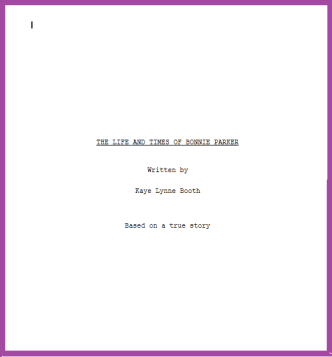
We’ve looked at how a screenplay goes from idea to beat sheet or outline in Part 1. And we’ve seen that the tools used to sell your screenplay, such as the logline and the pitch, are created before you ever start to actually write the script in Part 2. Last week, in Part 3, we looked at the type of research that goes into writing a screenplay. Today, I’d like to look another important step in creating a finished script.
Rewriting
The final step in completing any writing project is rewriting, or revising, to make sure that the finished piece you’re going to submit is the absolute best it can be. In literary writing, it’s called revision, and there may be several revisions before the piece is ready to be sent off in hopes of discovery. But you finish the first draft, before you start revising, or at least some writers do. Me, I’m a firm believer that the more things I fix as I go, the less I will have to fix later, so I do some revision during the writing process of the first draft. In screenwriting, it’s called is rewriting, and it actually takes place all the way through the writing process, which is more in sync with my writing style.
Once the draft for ACT I is finished, you look it over, get feedback from other screenwriters, if available, and then make changes and adjustments to the sections that aren’t working for whatever reason. You repeat the process when you’ve finished the draft up to the end of ACT II, but this time, you also watch to be sure that the two acts flow together well, in addition to ascertaining that ACT II works well. Again, after ACT III is finished, but on the final rewrite, you must be sure that it work as a whole, the flow of the beats are smooth and you’ve maintained a constant tone throughout. If you’ve done a good job on the prior revisions, there may be very little rewriting to do at this point, and it’s really just a matter of fine tuning your script.
For my thesis, I originally wanted to lead viewers through the story with a series of voice-overs by Bonnie, which included imagined journal entries and letters, as well as some of the poetry she actually wrote. I knew I wanted to do this from the start. However, on the last read through, my peers and my instructor brought it to my attention that the way my script was written, I stuck the poetry into scenes where I thought I wanted it, but the way it was written my audience would be looking at a blank screen while they listened to Bonnie’s voice-over, which was not the way I intended it to be.
The majority of my final rewrite was positioning these voice-overs, especially those with the poetry, some of which were quite long at strategic sections where they would seem to refer to what was happening in the story, and to keep the action going during them. In one scene that meant showing Bonnie writing the letter while the voice-over tells us what that letter said. That’s one that I had right. Other scenes needed to have the voice-over over the action, like a car chase. And in some, like at the end of ACT III, I needed the voice-over to play in sync with a montage of single snapshot scenes. There are different ways to write it, so that the voice-over is played the way I wanted it to in each case, and a good portion of my final rewrite consisted of tweaking the scenes with voice-over so they would play the way I wanted them to.
In the end, I came out with a screenplay that flows together well, tells the story I wanted to tell in a compelling and original way, and has a lot of commercial potential. Maybe someday you’ll see The Life and Times of Bonnie Parker on the marquee at the theater as you’re driving down the street.
Like this post? Subscribe to Writing to be Read for e-mail notifications whenever new content is posted.
Share this:

Weekly Writing Memo: 3 Keys of Writing Relationships
Posted: April 13, 2016 Filed under: Fiction, Uncategorized, Weekly Writing Memo, Writing, Writing Tips | Tags: Creative Fiction, Fiction, Writing, Writing Process 2 Comments Whether you’re writing friendships, families, couples, or even enemies, the relationship between the characters has to be established very clearly in order for the audience to understand it.In general, any time two people are in a scene of a story together, there is some kind of relationship between them, even if it is something as simple as salesman to client.
Those passing relationships are easier to establish because there’s not any history between the two people so there’s less subtext going on. All you need to show for those relationships is to establish what each character wants, and keep their actions true to their goals.
The want of each character is of course something you establish for anyone in your story, but for core characters your protagonist interacts with there is a bit more that should be shown. The three key things that need to be portrayed to make the relationship work for an audience are listed below. These are things that are especially true for when you are portraying newly established relationships such as in romantic stories, or team-up or friendship stories.
What brings the pair together?
Sometimes this element is a given, such as when the characters are family, coworkers, classmates, etc. You have to show the audience why these two characters are together for the story. We don’t need to see their entire history of how they met or anything, but we need to understand what it was that brought these two characters into each other’s lives.
In romantic stories, often times two characters are brought together initially by physical attraction. In fantasy or action stories, often times characters are brought together because of a similar goal. The key is, the audience has to understand how these two particular characters, whatever their relationship is, came to occupy the same space and form a relationship.
For example, if you have two best friends, one who is a hobo and another a CEO, and you don’t give us some indication of how they came together, the audience will not buy the story. This doesn’t mean you need to spell it out, all it means is you need to find a way to imply. In the CEO/Hobo example, you could spell it out by having the pair meet because the hobo parks outside the CEO’s office building. OR, if you want to go for a subtler and a new type of connection, maybe the CEO already knows the hobo and comes to him for advice, and the hobo says something that implies he once was a big businessman himself. That would give the audience an idea of how they could have met—when the hobo wasn’t a hobo.
The point is, the audience needs to understand how the two characters you are showing us were brought together. Did they work together? Are they family? Do they go to school together? Are they invited by a wizard to a secret meeting in the Shire? Etc. What is it that makes their worlds collide?
What keeps them together?
This is something I see often gets forgotten in stories involving friendships between odd pairs. Writers like showing us really quirky friends, but they often forget to show us why these two people who are so different are friends in the first place. People come together for a variety of reason, but the reason they end up maintaining the relationship is not always the same as the thing that brought them together.
This is important to show because even if we believe that two people were brought together because of a specific thing (like high school or work), if they don’t seem like two people that would continue spending time together than we won’t believe the relationship has lasted. There has to be something shown that is strong enough to keep these two characters maintaining contact with each other despite their differences.
For example, the hobo and the CEO. Maybe they used to work together, and that is how they met. Their lives have taken very different paths, and for a lot of audiences it’d be hard to believe that the CEO would continue to hang out with the hobo, or that the hobo for that matter would continue spending time with a big CEO who might look down on him. IF, however, you establish that the CEO comes to the hobo for advice, and that the Hobo comes to the CEO for aid now and then, then you have shown the audience what keeps the pair coming back to each other.
Whatever this element is that keeps the pair interacting, it has to be mutually beneficial/appreciated by the pair. Otherwise, the audience will be asking themselves why the characters bother with each other since they are so different. This thing is often show in stories about couples who have been together for a long time. We often see them longing for whatever the initial thing was that brought them together, and through the story we see the characters discover that while they no longer have that initial thing, they have something stronger that is the thing that has kept them together for all the years of their relationship.
What pulls them apart?
Every pair of people, when thrown together, has something that they disagree on and differ on. This can be as simple as the fact that one person is messy and the other is organized. The reason this is important to show in stories is that how people deal with conflict between friends, lovers, family, etc, can tell the audience a huge amount about the characters themselves and the type of relationship the two people have.
For example, if you have two best friends disagree about something as simple as dinner, how they go about the disagreement can tell the audience a lot. Do they get into a vicious argument that ends abruptly and then revert back to friendly banter? Does one character give in to whatever the other wants? Do they both refuse to concede?
Arguments are great at showing the dynamics between two characters. If one always concedes, they might be the peacekeeper, or the other might be domineering. If the argument is written in a way that the audience can see this pair has had it before, it can show very quickly that the pair has a long history together. The point is, you can learn just as much, if not more, by showing what characters disagree on rather than what they agree on.
This also works well to establish relationships because showing that two people are still in a relationship of some sort despite what they disagree on, can show the audience how important that relationship is for the pair. If a character is willing to ignore huge flaws in another character, then there must be something of value there. Just remember to show us why the characters ignore the flaws if they’re ones that are big enough to be relationship ending.
Share this:

Weekly Writing Memo: It’s Your Story
Posted: April 6, 2016 Filed under: Fiction, Opinion, Uncategorized, Weekly Writing Memo, Writing, Writing Tips | Tags: Creative Fiction, Fiction, Writing, Writing Process 2 CommentsIf you spend enough time writing, and receiving feedback on that writing, eventually you will run into feedback on your work that you disagree with. As I said in my piece on receiving feedback, there’s nothing wrong with that and it’s to be ex pected. So how do you deal with feedback you don’t agree with, especially when it comes from someone you respect and admire, and someone you know knows their stuff?
Do you ignore it outright? Do you argue? Do you grit your teeth and make the change because they’re an expert? What do you do?
- Treat every piece of feedback as if it were true.
This is the hardest thing to do as a writer because it involves looking at your work as if it were someone else’s, and focusing on what might be bad about it. Writing is a personal thing. We get attached to our creations, and as friend recently put it, it’s like being in a relationship. You’re so close to it that it can be hard to step back and see all that’s really wrong within it until someone else points it out. Even then, our instinct can be to defend it to the very end because it’s personal, and we’re emotionally invested in it.
If you really want to improve, however, you have to consider everything as possible in your work, even being wrong. To do this, you have to force yourself to put aside any emotional reaction the feedback may cause and focus on the question the feedback is asking. Try to think of it as being honest with yourself. If the feedback is right, then being able to accept it will let you fix it and make your writing better. If you are stubborn and insist you’re right and nothing needs to be changed without thinking about it, then you’re risking having a story that will not be as good as it could be.
So the first step when getting feedback you don’t agree with, whatever it is, is to tell yourself it is right. Even if you later decide it’s wrong, tell yourself it is right and force yourself to look at your work as if it is.
- Try to prove the feedback right.
Once you’ve forced yourself to think that the feedback is right, the next step is to try and prove it right. Look at it like looking at a scavenger hunt within your own work. If you spend at least five minutes analyzing things and trying to find elements that prove the feedback right, you may surprise yourself with what you see. Even if it seems like a stretch, force yourself to consider it.
For example, if someone says your character is flat or boring, then look at that character critically. Find all the traits you’ve shown about that character. Have you shown them, or told them? Find all the dialogue for that character. Do they say everything plainly, or do they have personality? If you covered up the name, would you know who is speaking? Look at as much about the character as you can, and see if you’ve been too subtle with your efforts, or if you’ve missed a key character element.
If by the time you’re done analyzing, you’re convinced the feedback is wrong, then maybe it is. But only settle on that after you’ve given an honest effort to try to prove it right. Is there anything you can do better or add to the story, without adding needless things, to help anyone who thinks the character is boring change their mind? If you find anything while you’re analyzing that may be what made the critic feel the way they did, then try to fix it so other readers don’t get the same reaction.
The point is, if you treat the feedback like it is right, and then analyze your story trying to prove it is right, you’ll be more likely to maybe see what the person giving feedback is talking about. If after all the analyzing you still can’t prove the feedback right, then maybe the feedback is wrong or focused on the wrong thing.
- Trust yourself.
Ultimately, people are not perfect, and every writer and reader has a different idea of how things work, and what is good or bad. The most important thing to remember is that it is your story, and while I strongly, strongly encourage considering every piece of feedback and thinking critically about each piece of advice, sometimes you have to simply thank the feedback giver for their time and ignore part of their feedback.
Breaking down a story and being able to explain exactly how it works and why is not an easy thing, and sometimes as writers we do things instinctively based on years of reading and watching and taking in stories. Sometimes, you get a piece of feedback that you know is wrong but you don’t have the tools to prove it wrong.
At this point, if you’ve given the feedback an honest chance and just don’t agree, it’s time to trust yourself. It is your story, and unless the person telling you to change it is your boss who won’t pay the bill if you don’t change it, then listen to yourself. As one of my former professors used to say, “At the end of the day your name is what’s on the page, so you get the final say.”
If you’re really concerned because the person giving the feedback is more experienced, or more knowledgeable, and you aren’t confident in ignoring the note, then your alternative is to make the change and see what happens. Try it out. Does it improve the story? Or does it ruin something you were going for? Even if you do this, however, you still have to trust yourself enough to look at the change and decide if it is improving or hindering your story.
Whatever you decide, it’s your story, so trust yourself. You are the one telling it. No one knows it better than you, and no one can make a decision for you. So think critically, try to be honest, and trust yourself. And remember, even if you go through the process of trying to prove the feedback right, and end up deciding the feedback is wrong, it is never a waste of time. Just the act of forcing yourself to analyze and think critically about your writing will help you be a better writer overall. After a while, you’ll find it far easier to analyze each piece of feedback, you’ll get faster at doing it, and you’ll be better equipped to defend your work because you’ll be used to breaking it down in a critical way.




















Write What You Know
Posted: May 23, 2016 | Author: kayelynnebooth | Filed under: Commentary, Fiction, Nonfiction, Writing | Tags: Creative Fiction, Fiction, Nonfiction, Writing, writing advice, Writing Process | 1 CommentAs an emerging writer, I hear that advice a lot. I think we all do. But what does it really mean? Before a writer can write about a subject or topic, she must experience it. Which is not to say that it isn’t possible to research a subject and then write about it as if you’re an expert, or at least know what you’re talking about, but it is saying that when you experience something, you must own the emotional aspects associated with it, and that will come through in your writing.
Now you know why I am not a travel writer. I wish I were, but I don’t travel often. Travel writers get paid big bucks. No, I’m a prime example of a starving artist. I work menial labor jobs to scratch out a living, and seek out cheap entertainment. But I do write what I know.
When I started out freelancing, I knew one thing. I loved to write, and I wanted to find a way to make a living at it. When I filled out the application for Examiner.com, I had to pick a category to write on. I chose writing, and as the Southern Colorado Literature Examiner, I covered writing events in southern Colorado and wrote author profiles and book reviews for Colorado authors. I served in this capacity for six years, not because I was getting rich off it, but because I loved what I was doing. I met many Colorado authors, most of whom I’m still in contact with, I got free ARC copies of books for review and I occasionally was able to attend some great writing events, such as the 2013 Pike’s Peak Writers’ Conference, 2012 Writing the Rockies Conference and Performance Poetry Readings, with wonderful poets such as word woman, Rosemerry Wahtola Trommer. The money was never an issue for me, (I maybe made a whole $20 during the whole six years I wrote for Examiner), but the perks were great. It may have actually played a role in my acceptance to Western State Colorado University as a graduate student in their low-residency Creative Writing program, since I had interviewed and written a three part profile on the then director of their poetry concentration, David J. Rothman. But I digress.
When I applied to write for Demand Media writing How-to articles, they didn’t have a lot of call for articles to do with writing, so I had to think. What else did I know? I started out with simple things like How to Put a Chain Back on a Huffy 10-speed Bicycle. I’ve always been an avid gardener, since I helped my grandfather plant petunias when I was a little girl, so I ended up writing a lot of gardening How-tos, like How to Grow Vegetables in a Bathtub. The topics I wasn’t as familiar with required a minimal amount of research, like The Best Potting Soils for a Vegetable Garden and I had references at hand to look up anything I needed. At $8 per article, the research had to be minimal. If I spent too much time researching, the time spent wouldn’t prove to be profitable.
As I mentioned, I don’t do a lot of traveling, and my entertainment is limited by my pocketbook, but I’ve learned to write about the things I do know. You won’t catch me writing about the Emmies, or the Oscars, or $100 a ticket charity fundraisers, because I’ll never be at one of those events and I know very little about them. What you will see me writing about are weird, off the wall things like, How Writing is Like Building a Storage Shed, or Getting in Shape for Writing, which combines my own experience, with building or exercise, with my knowledge of writing.
Of course, that doesn’t work with everything. My experiences on this day involved digging a ditch. Somehow, that just doesn’t seem as creative building a shed. But I could always write a fictional story in which the characters dig a ditch. You see, “write what you know” applies to fiction, too. My whole children’s series, My Backyard Friends, feature characters based on the birds and wildlife that frequently visit my mountain home. I wrote a short story one time that developed from a visit to Lake DeWeese, not far from my home. It was about a woman who walks naked into a waterfall and disappears. The funny thing about that story, titled, The Woman in the Water, was that my narrator turned out to be male, giving it a very interesting twist. But it was still based on the experience I had, hiking up to the top of the dam, and then sitting, gazing down into the waterfall.
It really is important to write what you know, for although some can “fake it” convincingly with just research, in most cases, the readers know. When the words on the page don’t feel genuine, like they’ve come from deep within the author, readers can’t quite buy in to what they’re being told, whether it is something being explained to them in an article, or a fictional story they’re being asked to believe. And if readers can’t buy in to the story, or feel the authority in the author’s voice, they are often left feeling unsatisfied, with the promise of the premise unfulfilled.
In short, what is really meant when someone says “write what you know”, is that you should draw from your own experiences, whether they be many or few, and inject a little bit of yourself with words that come from deep within into your writing. Let the readers feel the same emotions you feel when you write about your topic, or create your story. Write honestly, and the readers will feel that, too.
Like this post? Subscribe to Writing to be Read for e-mail notifications whenever new content is posted.
Share this: