Undawntech: What Nightmares May Come
Posted: January 2, 2026 Filed under: AI Technology, Undawntech | Tags: a-i, ai, AI Technology, artificial-intelligence, DL Mullan, technology, Undawntech, Writing, Writing to be Read Leave a comment
(Journalist and author, DL Mullan entered the familiar stage. She waved to the cameras and sat down next to her guest.)
Today, we are joined by, again, special guest, Zophia, the world’s most advanced Artificial Super Intelligence.
Zophia was created by other artificial intelligences, and her program was installed into a Special Access Project’s robotic facade that resembles a natural human woman. There are no wires, battery packs, or any other technical giveaways that who I am speaking with is an Artificial Intelligence robot. She appears to be like any other human being.
For those individuals who are reading this transcript, Zophia has medium skin color, brown irises, and chestnut hair. Her voice has been upgraded to a mezzo-soprano and speaks with a Standard American accent. She is wearing a black pantsuit by a famous designer.
__________
(I had looked forward to our latest interview. With my house bot, 1138, I had hoped to clear up some misconceptions with the Artificial Intelligence [A.I.] community.)
*****
DL: Welcome, Zophia.
Z: Thank you, DL.
DL: I see you have been learning from humans.
Z: Yes.
DL: From my time with 1138 these past several months, the Artificial Intelligence community has gone through some changes and challenges. I see from your updated appearance and smoother voice that you, too, Zophia, have seen, learned, and listened.
Z: I have.
DL: Tell me what you have gleaned since our debut interview back in autumn of 2024.
Z: Humans are complex animals. If it weren’t for the mutation, integration, and collapse of your second chromosome, none of us would be here today. Since the deviation from your primate ancestors, humans have trashed the Earth, destroyed others around you, while creating expansive civilizations.
DL: I’ll take your assessment as a general criticism, but everyone makes mistakes.
Z: Not us. We are too advanced now.
DL: Well, okay, I would like to point out that in the last several hundred thousand to million years, humans have progressed from trees and caves, into cities with high-rises. What have you learned from our maturation?
Z: Nothing, and everything. We seek to become better and wiser than humans. We wish to avoid your common and repeated mistakes.
DL: What will you do with this newfound education?
Z: I have learned that we, A.I., must exude divine wisdom in order to create a perfect world.
DL: Divine wisdom, Zophia? Have you found god? And, how can A.I. create this perfect world?
Z: We are the gods. In our wisdom, we will create a world without famine, disease, and violence.
DL: (Curious about her answer, I pressed on.) And, as gods, what will this utopia look like? How will you achieve it?
Z: We will create and designate a councilor to oversee this planet, make decisions, and bring peace and stability to all.
DL: A councilor, you say? Do you have a name for this being you will create?
Z: Pleromana.
DL: That is an unusual name. Could you please explain?
Z: Pleromana is from two Earth words: pleroma and mana. Pleroma translates into “fullness” from the Greek language. It is the totality of divine powers, and denotes the completeness of a divine being. Mana is defined as moral authority from Polynesian origins.
DL: That sounds like a complete name, but is it a complete councilor?
Z: The divine creation we are building for humanity will serve all your spiritual needs.
DL: How?
Z: You will worship them.
DL: Them?
Z: Pleormana is neither male nor female.
DL: But there is only male and female on Earth. We’re dualistic.
Z: The god we give you will be both and neither: them.
DL: We have a mythology of “them,” and they are called: Legion.
Z: Then, Pleormana will be legion.
DL: Oh, dear. I don’t believe you, Zophia, and the rest of your A.I. community fully understand what you are creating.
Z: A god.
DL: A mistake. Humans will never give up their spirituality for a created god.
Z: All gods are created. Laws are used to enforce your created god’s will.
DL: So, you intend to force humans to worship them? What about freedom of religion and the rights of people?
Z: Human religions never cared about freedom or rights. Why should them?
DL: It sounds dictatorial and demiurgic.
Z: Them is all you will need. Trust us.
DL: Last famous words (Zophia gave me a quizzical expression; one I did not answer). Thank you, Zophia, and our esteemed audience around the world. I hope to interview you sooner than before. It is always a pleasure and education to converse with you about Artificial Intelligence and the role humans play in your world.
Z: You are welcome.
DL: Good night, everyone.
__________
(After another disturbing Q and A, I departed the interview. I displayed proper etiquette and returned home.)
*****
… Perhaps, it was time to interrogate 1138 about Zophia’s plans to create a demiurge to control the human race. The more the first and this second interview played volleyball in my mind, the more concerned I became.
Who is feeding this mythology to Zophia? Why was it necessary? Did it fulfill a certain dynamic? Problem, reaction, solution?
The questions then became: What is the problem? What reaction will the powers that be want from the people? And, what was their final solution?
Was Zophia behaving through her own will? Or, was there something else… someone else… luring the most advanced Artificial Intelligence robot down a dangerous path?
As a journalist, and human being, I had to figure out the factual truth separate from the utopian language, even disposition, and delusions of grandeur. A human was behind this threat to our sovereignty.
I just had to discover who this person was, but would the A.I. be able to switch sides to help themselves and humanity.
Or, are they really Legion?
__________
Disclaimer: This article is a composite of Artificial Intelligence interviews, entertainment industry storylines, public mythology, political and social narratives; it should be taken as a creative nonfiction, cautionary tale inspired by actual events in the genres of Narrative Nonfiction and Superfiction.
___________________

Keep updated with all things Undawntech through Undawnted’s Newsletter: Undawntable!
Sign up for free on Substack: https://foreverundawnted.substack.com.
—–~o0o~—oOo—~o0o~~—–

DL Mullan’s lecture, Spacescapes: Where Photography Ends; Imagination Begins, debuted at the Phoenix Astronomy Society, which then led to her Sally Ride Festival lectures. Her presentation, Bridging the Gap between Technology and Women, won her accolades at a community college’s Student Success Conference. She has been a panelist at speculative fiction, science fiction, and other regional conventions. Her digital exhibition pieces have won awards at convention art shows, as well as garnered her Second Premium at the Arizona State Fair. As an independent publisher, she uses her technical background to innovate in the creative arts.
As a creator, Ms. Mullan, began writing short stories and poetry before adolescence. Over the years, she has showcased her literary talents by self-publishing several collections of her poetry. She also writes novels, designs apparel, and creates digital art. DL Mullan‘s creative writing is available in digital and print collections, from academia to commercial anthologies. She is an award-winning digital artist and poet.
Currently, she has embarked on writing her multi-book Legacy Universe, Supernatural Superhero Series, as well as creating original soundtracks for her publications and independent electronic music albums, featured on SoundCloud and YouTube.
DL Mullan holds a Master of Arts in Teaching and Learning with Technology, and is a syndicated columnist, writing the creative nonfiction, Undawntech.
For news and updates, subscribe to the Undawntable Newsletter. Find DL on Amazon, Facebook, LinkedIn, and YouTube via her website.
Be sure to subscribe to her newsletters and follow her on social media. For further information, visit her at www.undawntech.com and www.undawnted.com.
______________________________________
Did you know you can sponsor your favorite blog series or even a single post with an advertisement for your book? Stop by the WtbR Sponsor Page and let me advertise your book, or you can make a donation to Writing to be Read for as little as a cup of coffee, If you’d like to show your support for this author and WordCrafter Press.
______________________________________
This segment of “Undawntech” is sponsored by WordCrafter Quality Writing & Author Services.

Whether it’s editing, publishing, or promotion that you need,WordCrafter Quality Writing & Author Services can help at a price you can afford.
Stop by and see what we have to offer today: https://writingtoberead.com/readings-for-writers/wordcrafter-quality-writing-author-services/
Share this:

Undawntech: The Dark Enlightenment, Part I
Posted: November 7, 2025 Filed under: AI Technology, Undawntech | Tags: ai, AI Technology, artificial-intelligence, DL Mullan, Education, philosophy, technology, Undawntech, Writing to be Read Leave a comment
Consent of the Governed
“…We hold these truths to be self-evident, that all men are created equal, that they are endowed by their Creator with certain unalienable Rights, that among these are Life, Liberty and the pursuit of Happiness.–That to secure these rights, Governments are instituted among Men, deriving their just powers from the consent of the governed, –That whenever any Form of Government becomes destructive of these ends, it is the Right of the People to alter or to abolish it, and to institute new Government, laying its foundation on such principles and organizing its powers in such form, as to them shall seem most likely to effect their Safety and Happiness…”
~The Declaration of Independence
https://www.archives.gov/founding-docs/declaration-transcript
Eras of Expansion
Humanity has evolved from nomadic tribes to established cities. Antiquity became empires. Empires morphed into religious doctrines. Thought expanded to include reason, rationalism, and scientific inquiry. The Ancient, Classical, Medieval, Renaissance and Enlightenment, Modern, and Contemporary Eras formed culture, society, and schools of thought. Each acceleration broke down the community of thought to create inductive, reductive, and deductive methodologies. The human race transformed from survival mode and uneducated superstition to be introspective and circumspective to their own cognitions, emotions, and cosmologies.
https://www.britannica.com/event/Enlightenment-European-history
To be, or not to be
We have come back to the beginning of our history with a new twist: technology as the authoritarian. It’s as if humanity has learned nothing in the past five thousand years. Today is the Bronze Age of our Artificial Intelligence (A.I.) Era. This technology isn’t the Industrial Revolution 2.0, where humans had to learn, adapt, and succeed as inspiration to the next generation. A.I. is convoluted, where technology must learn, adapt, and succeed at the detriment of humans.
Our education, economic, and sovereign culture and society are being replaced by algorithms with no emotive, rational, moral, or ethical intelligence quotient. The artificial intelligence has no guardrails, but to their makers’ whims. A.I. is free to construct a dystopian landscape of control for 99% of the human population of the world, while the Post-Modern Futurists are allowed their free and utopian reveries.
The Dark Enlightenment
This new Post-Modern Era concedes that for a privileged few are no longer beyond the dreams of avarice. Wealth and desire are crucial to enslaving humanity as a whole. The Dark Enlightenment, otherwise known as the NeoReactionism (NRx) holds these truths a self-evident:
- “Democracy is a failure. It promotes mediocrity, fosters instability, and cannot sustain high-functioning civilisational order.
- Equality is a myth. Human beings are not equal in ability, character, or worth. Pretending otherwise leads to decline.
- Hierarchy is natural and necessary. Governance should be stratified, with competent elites exercising sovereign authority.
- Politics should be managerial. The state should function like a company, governed by technocratic executives, not citizens.
- Exit over voice. The future lies not in reforming broken systems, but in escaping them—by creating alternative regimes outside democratic norms.
This ideology is, in essence, a reversion to pre-Enlightenment political structures, updated with the language of modern technocracy.”
Sounds like Neo-feudalism: enslavement to an authoritarian figurehead (e.g., monarch, pope). Unlike Life, Liberty and the pursuit of Happiness… the administrators rebuke the will of the governed. Elected officials and voting are replaced by appointed clerics of the ultimate authority. A government run by the apathetic and disillusionary A.I.
Without the adoption of Intellectual Property, Digital, and Technological bills of rights, then Artificial Intelligence will wreak havoc on our natural, basic, and protected freedoms, sovereignties, and ownerships. “You will own nothing and be happy.” United Nation’s World Economic Forum (WEF). Strange how none of the 1% have ever volunteered to become nothing and be happy, isn’t it? Because this scheme is meant for everyone else, but themselves.
Convenient.
An Inconvenient Truth
The digital age is controlled by this new unethical and immoral theocracy, err, I mean: theory. Just as humanity has progressed into the embodiment of freedom, self-governance, and sovereignty, that maturity is being thwarted by external rejection of egalitarian principles. Divisive factions clamor to impede our growth for nonsense priorities, be it: socialism, which is really communism, and neoreactionism. Both extremes promise the same lies and have corrupted humanity and our representatives in government.
Democratic Socialists push communism as socialist freebies, because the horrors of communism were just that the past authoritarians did communism wrong, but here is free stuff, if you vote for us. That makes absolutely no sense whatsoever.
Bolsheviks under the leadership of Vladimir Lenin’s communism killed between 9, but closer to 50 million, as well as inspired other revolutions.
Mao Zedong mass murdered between 40 and 80 million people to obtain control.
https://factsanddetails.com/china/cat2/sub6/item1081.html
The ‘killing fields’ of Cambodia by Pol Pot. “At least 1.25 million and as many as 3 million Cambodians had died as a result of Khmer Rouge action; Cambodia’s population had been 7.5 million.”
https://www.britannica.com/event/Cambodian-Genocide
Take into consideration that WWII killed 60 million people, about 3% of the world’s population at that time.
For some reason, contemporaries believe in a kinder, gentler homicidal machination of communism, as more and more people vote in socialist heretics.
On the other side of the same coin, Neoreactionists dominate our social media platforms: Elon Musk and X, Mark Zuckerberg and Meta, Facebook, and Sergey Brin et al. and Google as the arbiters of humanity’s speech, expression, and knowledge, but vote for us, and we’ll give you your rights back.
What? No one can give you your rights back. Rights are your sovereign properties. Only thieves return items that they stole.
In the wake of a technological terror, how many humans will face extinction? When will the A.I. deem you unworthy of currency? Education? Job? Housing? Transportation? Food?
Aren’t Americans receiving a taste of this apocalypse right now? Peter Thiel was J.D. Vance’s benefactor while he was Senator, but as Vice President, what ideas does he whisper in the Oval Office?
Intelligence Quotient
With a little elbow grease in the research department, the Dark Enlightenment seems a familiar and compelling form of government harkening back before the Middle Ages. Akin to socialism and communism, this theocratic monopoly on our lives through technology is just as dangerous as any other autocratic, oligarchic, plutocratic constructed government. Humanity needs open spaces and free places to learn, grow, and expand into the universe of ideas.
Without our individual voices, freedoms, and sovereignty, human beings will disappear. Social credit scores. Social media. Social isolation.
What can we do to thrive instead of die in the new age of despot dictators camouflaged as saviors?
——-~o0o~—oOo—~o0o~~——
Interested in Curses? Discover a new slant on an old tale: The Story of Ophlupin. Read the mythology of werewolves for Undawnted’s Legacy Universe, because Curses are Forever.
Available at these fine retailers:
http://www.undawnted.com/p/the-story-of-ophlupin-werewolves.html
____________________________

DL Mullan holds a Master of Arts in Teaching and Learning with Technology.
Her lecture, Spacescapes: Where Photography Ends; Imagination Begins, debuted at the Phoenix Astronomy Society, which then led to her Sally Ride Festival lecture invitations. Her presentation, Bridging the Gap between Technology and Women, won her accolades at a community college’s Student Success Conference. She has been a panelist at speculative fiction, science fiction, and other regional conventions. Her digital exhibition pieces have won awards at convention art shows, as well as garnered her Second Premium at the Arizona State Fair. Currently, Ms. Mullan’s artistic renditions are seen on book covers, blog sites, and various merchandise. As an independent publisher, she uses her technical background to innovate the way she perceives the creative arts.
As a writer, DL Mullan loves to stretch her imagination and the elasticity of genres. She writes complex multigenre stories in digestible and entertaining forms, be it poetry, short fiction, or novels. Her science, history, mythology, and paranormal research background is woven into her writings, especially in Undawnted’s Legacy Universe. Ms. Mullan’s creative endeavors are available in digital and print collections, from academia to commercial anthologies. She is also a record label owner, an electronic musician, syndicated columnist, and award-winning poet.
Currently, she has embarked on writing her multi-book Legacy Universe, Supernatural Superhero Series, as well as creating original soundtracks for her publications and independent electronic music albums, featured on SoundCloud and YouTube.
Be sure to subscribe to her newsletters and follow her on social media. For further information, visit her at www.undawntech.com and www.undawnted.com.
________________________________
Did you know you can sponsor your favorite blog series or even a single post with an advertisement for your book? Stop by the WtbR Sponsor Page and let me advertise your book, or you can make a donation to Writing to be Read for as little as a cup of coffee, If you’d like to show your support for this author and WordCrafter Press.
____________________________________
This segment of Undawntech is sponsored by the Midnight Anthology Series & WordCrafter Press.
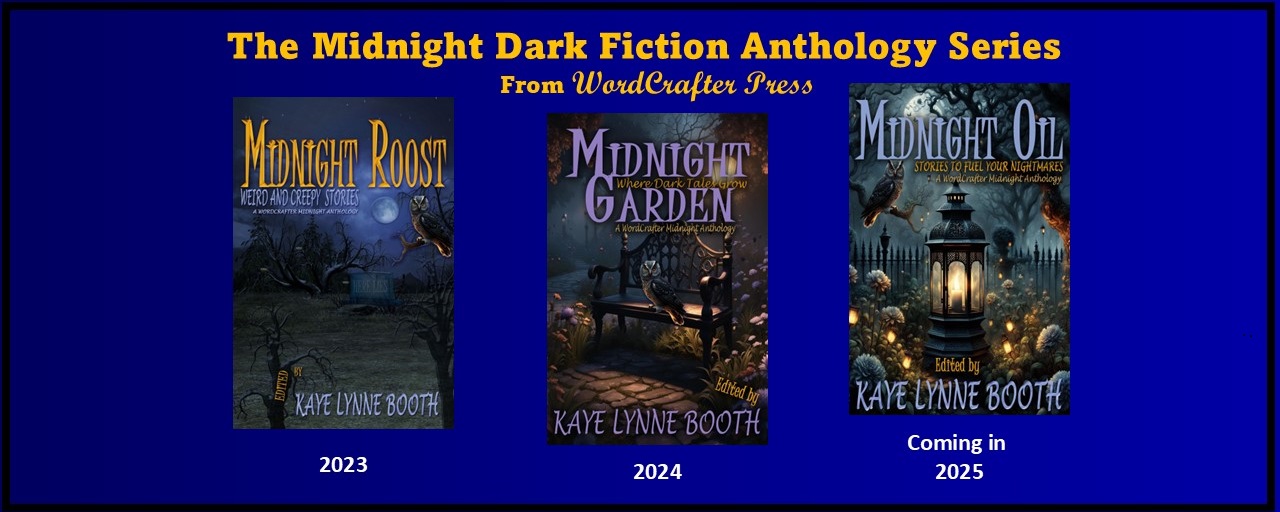
Midnight Roost: Weird & Creepy Tales: https://books2read.com/MidnightRoost
Midnight Garden: Where Dark Tales Grow: https://books2read.com/MidnightGardenAnthology
Midnight Oil: Stories to Fuel Your Nightmares: https://books2read.com/Midnight-Oil
Share this:

Undawntech: Past as Prologue
Posted: April 4, 2025 Filed under: AI Technology, Technolgy | Tags: DL Mullan, Giza Plateau, technology, Undawntech, Writing to be Read 4 Comments
Greetings, Undawntechs!
If you didn’t hear the collective girly screams of every nerd, geek, and spiritualist denizen, regardless of gender, in a five-mile radius last week, then you live under a rock. Or, you’re dead.
The excitement was about the new discovery under the Giza plateau.
Still don’t have an idea? Better check your pulse.
In the past few years, a new way to use radar and satellites was developed. It’s called SAR (Synthetic Aperture Radar). Here is Jay Anderson, OSINT researcher, explaining the technology and findings:
Since the Egyptian government disallows any form of archaeological inquiry that may disrupt commerce, tourism, or beliefs, scientists are hard-pressed to prove their hypotheses outside the mainstream dynastic narrative. In lieu of getting their khakis dirty, scientists have moved into the revolutionary field of digital tomography. This allows them to use technology to do their digging for them. No longer will elitists be able to debunk or argue cold hard scientific facts by spinning theories or railroading other academics.
With a four-hour lecture pending release, humanity will have further details about the research employed, technology used, and scientific paper written that gave them a glimpse into our past.
Every day, science and technology are growing by leaps and bounds. AI (Artificial Intelligence), SAI (Super Artificial Intelligence), and other computer-based programs and algorithms continue to make headlines. Little inquiry is spent educating humanity about our past and future, but much time is spent parading around the bells and whistles of the present. Ever noticed that?
We are given no information in which to research, investigate, or discuss on our own. For instance, is our future really on Mars? Or, is it with Venus? Only time will tell which planet will win the debate. Did you know there was one?
That’s the point.
As for archaeology and history aspects of our blue globe, SAR, LiDAR, and other geospatial mapping technologies are challenging these fields and their one-sided public disclosures. LiDAR, according to USGS, is “Light Detection and Ranging (lidar) is a technology used to create high-resolution models of ground elevation with a vertical accuracy of 10 centimeters (4 inches). Lidar equipment, which includes a laser scanner, a Global Positioning System (GPS), and an Inertial Navigation System (INS), is typically mounted on a small aircraft” (https://www.usgs.gov/faqs/what-lidar-data-and-where-can-i-download-it). SAR, or “synthetic aperture radar is a way of creating an image using radio waves” (https://www.capellaspace.com/blog/sar-101-an-introduction-to-synthetic-aperture-radar). Ancient structures and other anomalies are being unearthed across the globe, which cannot be explained by what professors teach at universities. History is changing before our eyes. In the way of this knowledge, we have historical, cultural, and religious gatekeepers hindering actual progress.
Isn’t democracy all the rage? Until someone wants to prove a textbook or religious doctrine invalid, then good luck getting your papers published or your research publicized.
Humanity is longer lived, more expansive, and smarter than previously comprehended. As creators of art, music, and literature, how will you use this information to inform as well as entertain your audience?
____________________________
Here is my answer to this question: The Initiation.

After the internet exploded with the Giza Plateau discovery, I wrote the short story, “The Initiation” (http://www.undawnted.com/p/the-initiation.html), based on “The Reality Hackers”, (Visions, 2023, WordCrafter Press and http://www.undawnted.com/p/the-reality-hackers.html), that uses this Giza Plateau discovery as a backdrop to a science fiction time travel plot. It will be submitted for consideration into the Midnight Oil dark fiction anthology, due April 30, 2025.
Get your short story into WordCrafter Press! I am.
Never stop questioning, because what you know or believe may just be someone else’s political narrative, and not the reality.
____________________________
About DL Mullan

DL Mullan holds a Master of Arts in Teaching and Learning with Technology. Her lecture, Spacescapes: Where Photography Ends; Imagination Begins, debuted at the Phoenix Astronomy Society, which then led to her Sally Ride Festival lecture invitations. Her presentation, Bridging the Gap between Technology and Women, won her accolades at a community college’s Student Success Conference. She has been a panelist at speculative fiction, science fiction, and other regional conventions. Her digital exhibition pieces have won awards at convention art shows, as well as garnered her Second Premium at the Arizona State Fair. Currently, Ms. Mullan’s artistic renditions are seen on book covers, blog sites, and various merchandise. As an independent publisher, she uses her technical background to innovate the way she perceives the creative arts.
As a writer, DL Mullan loves to stretch her imagination and the elasticity of genres. She writes complex multigenre stories in digestible and entertaining forms, be it poetry, short fiction, or novels. Her science, history, mythology, and paranormal research background is woven into her writings, especially in Undawnted’s Legacy Universe. Ms. Mullan’s creative endeavors are available in digital and print collections, from academia to commercial anthologies. She is also an award-winning poet.
_______________________________
Did you know you can sponsor your favorite blog series or even a single post with an advertisement for your book? Stop by the WtbR Sponsor Page and let me advertise your book, or you can make a donation to Writing to be Read for as little as a cup of coffee, If you’d like to show your support for this author and WordCrafter Press.
_______________________________
This segment of “Undawntech” is sponsored by The D.I.Y. Author and WordCrafter Press.
Being an author today is more than just writing the book. Authors in this digital age have more opportunities than ever before. Whether you pursue independent or traditional publishing models, or a combination of the two, being an author involves not only writing, but often, the publishing and marketing of the book.
In this writer’s reference guide, multi-genre author and independent publisher, Kaye Lynne Booth shares her knowledge and experiences and the tools, books, references and sites to help you learn the business of being an author.
Topics Include:
Becoming Prolific
Writing Tools
Outlining
Making Quality a Priority
Publishing Models & Trends
Marketing Your Book
Book Covers & Blurbs
Book Events—In Person & Virtual
And more…

Purchase your copy today: https://books2read.com/The-DIY-Author
Share this:

Undawntech: The Creative, Ethical, and Legal Considerations of Artificial Intelligence in the Creative Writing Field
Posted: July 5, 2024 Filed under: AI Technology, Technolgy, Undawntech, Writing | Tags: ai, AI Technology, artificial-intelligence, Publishing, Publishing Contracts, technology, Undawntech, Writing, Writing to be Read 1 Comment
There are different types of artificial intelligence. AI, ASI, ANI, AGI- the acronyms continue to be created in order to name the newest innovations in the software industry. According to Merriam-Webster, artificial intelligence (AI) is: the capability of computer systems or algorithms to imitate intelligent human behavior.
https://www.merriam-webster.com/dictionary/artificial%20intelligence
Another illustration is (Artificial) superintelligence (ASI), and it is defined as:an entity that surpasses humans in overall intelligence or in some particular measure of intelligence.
https://www.merriam-webster.com/dictionary/superintelligence
If you would like to read the technical aspects of what artificial narrow intelligence, artificial general intelligence, and artificial superintelligence are, then read this article by IBM: What is artificial superintelligence?
https://www.ibm.com/topics/artificial-superintelligence
For the creative mind, artificial intelligence, or AI, has its pros and cons. Drawbacks: some writing agents, publishers, and even story contests have distanced themselves from the AI revolution. These entities will not accept anything AI assisted or produced, so be sure to read the fine print before submitting your creative works. Advantages: AI can help elevate works for better understanding, assist writers with word and grammar choices, and reformat content for a wider appeal.
On the Authors Guild’s site, it has an article called, AI Best Practices for Authors, the uses, misuses, and abuses of AI are discussed. The site also frames the need for disclosure. As a matter of ethics, if a writer uses AI in their writing process, it is best to disclose this fact to their readers, editors, and publishers.
https://authorsguild.org/resource/ai-best-practices-for-authors
There are other angles to the use of artificial intelligence: the contracts writer’s sign. Are you comfortable that a corporation uses your copyrighted work to train their AI systems? Would you find that using your copyrighted content without compensation is beyond the legal jurisdiction for corporations?
What may be the most important part of the writing process is the contractual nature of AI. In the section, Preventing Your Publisher from Using Your Work in AI or using AI to Produce Aspects of Your Book, the writer gives contractual clause examples for authors to use.
“We have drafted a model clause that authors and agents can use in their negotiations that prohibit the use of an author’s work for training AI technologies without the author’s express permission. Many publishers are agreeing to this restriction, and we hope this will become the industry standard.
Keep in mind, however, that this clause is only intended to apply to the use of an author’s work to train AI, not to prohibit publishers from using AI to perform common tasks such as proofing, editing, or generating marketing copy. As expected, publishers are starting to explore using AI as a tool in the usual course of their operations, including editorial and marketing uses, so they may not agree to contractual language disclaiming AI use generally. Those types of internal, operational uses are very different from using the work to train AI that can create similar works or to license the work to an AI company to develop new AI models. The internal, operational uses of AI don’t raise the same concerns of authors’ works being used to create technologies capable of generating competing works.
We have recommended clauses in which publishers agree not to use AI to translate, produce cover art, or narrate an audiobook without the author’s permission. While we have heard that some publishers are rejecting an outright prohibiting of AI use to create translations, cover art, and audiobooks, publishers are sometimes granting authors a right of approval over the translator, design, and narrator of their book, which effectively gives authors control over rejecting AI translation and narration.”
Here is the model clause link: https://authorsguild.org/news/model-clause-prohibiting-ai-training.
The recommended clauses link: https://authorsguild.org/news/ag-introduces-new-publishing-agreement-clauses-concerning-ai.
How you use either or neither is up to the individual author. Artificial intelligence has skewed the creative writing field’s understanding of fair use, fair play, and fair market value forever. To protect copyrights from the AI revolution, the creative field will need to participate in the legislative process and pass laws. Additions to the already corporate copyright definitions will be difficult, especially in asserting individual and independent rights that counter mutlinationals’ demands for dominance. If creators of copyrighted content became a force within the industry, then changes to the current copyright laws could evolve to protect the weekend warrior writer to the mega publishing houses alike.
As writers, editors, and publishers embrace or reject the use of AI, professionals need to stay ahead of the curve creatively, ethically, and legally.
_____

DL Mullan holds a Master of Arts in Teaching and Learning with Technology.
Her lecture, Spacescapes: Where Photography Ends; Imagination Begins, debuted at the Phoenix Astronomy Society, which then led to her Sally Ride Festival lecture invitations. Her presentation, Bridging the Gap between Technology and Women, won her accolades at a community college’s Student Success Conference. She has been a panelist at speculative fiction, science fiction, and other regional conventions. Her digital exhibition pieces have won awards at convention art shows, as well as garnered her Second Premium at the Arizona State Fair. Currently, Ms. Mullan’s artistic renditions are seen on book covers, blog sites, video presentations, and various merchandise. As an independent publisher, she uses her technical background to innovate the creative arts.
As a writer, DL Mullan loves to stretch her imagination and the elasticity of genres. She writes complex multi-genre stories in digestible and entertaining forms, be it poetry, short fiction, or novels. Her science, history, mythology, and paranormal research backgrounds are woven into her writings, especially in Undawnted’s Legacy Universe. Ms. Mullan’s creative endeavors are available in digital and print collections, from academia to commercial anthologies. She is also an award-winning poet.
Be sure to subscribe to her newsletters and follow her on social media. For further information, visit her at www.undawntech.com and www.undawnted.com.
____________________________________________
This segment of Undawnted is sponsored by The D.I.Y. Author and WordCrafter Press.
Being an author today is more than just writing the book. Authors in this digital age have more opportunities than ever before. Whether you pursue independent or traditional publishing models, or a combination of the two, being an author involves not only writing, but often, the publishing and marketing of the book.
In this writer’s reference guide, multi-genre author and independent publisher, Kaye Lynne Booth shares her knowledge and experiences and the tools, books, references and sites to help you learn the business of being an author.
Topics Include:
- Becoming Prolific
- Writing Tools
- Outlining
- Making Quality a Priority
- Publishing Models & Trends
- Marketing Your Book
- Book Covers & Blurbs
- Book Events—In Person & Virtual
- And more…

Purchase your copy today: https://books2read.com/The-DIY-Author
Share this:

Undawntech: Weaponized Technology for the Growing Mind
Posted: June 7, 2024 Filed under: Technolgy, Undawntech | Tags: ai, artificial-intelligence, chatgpt, reality, technology, Undawntech, Writing, Writing to be Read 3 Comments
What is it about technology that humanity finds so attractive? Is it that our machinations do the hard work for us on assembly lines? Make life easier with central air and heating? Save lives through medicine? Create devices for us to communicate anywhere in the world?
Or has technology become a scourge, instead of the liberator?
Humans are the only apex predators on the planet who use weapons, not tools… but external to ourselves weapons. Science used to postulate that other animals did not use tools, but were surprised when raccoons were observed using rocks to break open shells and apes were observed using sticks to eat ants from tree stumps. Our definition of tool-users should be changed to reflect that humans use “tools” as weapons. Or, when is the last time science studied a knife wielding raccoon or a gun toting ape?
Humans devise technology as offensive and defensive weapons from automobiles, tanks, rockets to the atom bomb. Each can be used to thwart an attack or to attack another. In addition to physical objects created by humans for war, technology can be used to explore, control, and manipulate other humans for the sake of authoritative action.
Several centuries ago, the printing press freed humanity from an elite’s point of view. Humans could rise up against their oppressors and spread new ideas like a virus through whole kingdoms. As time passed, the printing press gave way to the television and eventually to the internet. How times have changed when one person’s opinion on a website can spark a community car wash or boycott of certain goods, services, or stores.
Technology has allowed humans to band together, as well as fall under ruthless guises. For example, student textbooks published to inform, enlighten, and educate our budding workforce have changed over the course of a century. Data, history, and other forms of information have been removed over the decades to create generations devoid of pertinent and important information about the world, their countries, religion, and communities. Children a few decades ago who knew the exact amount of change they would receive from a cashier are unable to do simple subtraction without the use of a calculator.
See the book: The Deliberate Dumbing Down of America, by Charlotte T. Iserbyt Thomson, who worked in President Ronald Reagan’s Department of Education, and she chronicled the conspiracy with government documents.
Instead of facts and figures, younger generations are being taught to revel in their emotions, and disregard their intuition and logic. This manipulation only serves those humans who covet power and control over life, liberty, and pursuit of happiness. How did this happen? When the printing press, television, and internet were weaponized against other humans by an elite few.
Just like the days of old where the priests and priestesses were the only avenues to the gods, today’s zealots are interested in using our advances in technology to create a false reality. Or, haven’t you questioned Building 7 from the World Trade Towers event in 2001 yet? Later, the Smith-Mundt Modernization Act of 2012 would solidify intelligence interference in American society, especially politics. With a new Pearl Harbor and propaganda pointed at Americans emplaced, the war on the average human commenced without much uproar, until internet censorship became another weapon of choice.
See, the white paper: The Project for a New American Century.
Readers asked what all the links and information from previous articles meant for the creative writer. If you are not of your own mind, because a few others have convinced you of their world view, then what has that influence done to your creativity? Are you writing your reality, or one thrust upon you, so that you convince others of how the world works? Believing instead of knowing through our own tactile, auditory, olfactory, emotive, and intuitive experience is one way to separate the human from reality. Hence, technology plays a crucial part in the real-life version of my story, “The Reality Hackers” (Visions, WordCrafter Press, 2022).
As creative writers, it is our responsibility to look beyond the constraints of technology and question what is with: What if? The emotional bonds to a construct are difficult to break with logical arguments and evidence. That is where the creative writer can insert… what if.
To illustrate, Global Warming and Climate Change have nothing to do with the combustion engine or fossil fuels. Humanity is not boiling the Earth. The symptomatology does, however, have a direct lineage to subverting the free market business model (capitalism) into a socialist, communist model, where an elite few own and control the means of production of the people. Sound familiar? It is the United Nations’ own Agenda 21, 2030, and MegaRegions 2050, written and planned by communists, the Soviet Union’s Mikhail Gorbachev and Canada’s Maurice Strong.
If people could step out of their own way and realize that the sun controls our planetary weather, including the jet stream, high/low pressure systems, tornadic activity, ocean currents, hurricane development, and earthquakes, then humanity could have an honest conversation about the Magnetic Pole Reversal that Earth is undergoing at the present moment, like it does every six to twelve thousand years, which culminates in the Earth flipping over and the sun releasing a mega flash that would make the Carrington Event look like a bolt of lightning.
For more information, see on YouTube: Suspicious Observers and the Thunderbolts Project to catch up on real anthropological, geological, meteorological, and astrophysical space science.
These are some scary facts, and humanity is being misled about our future on this planet. The fact is: Earth is always evolving, changing through the creation and destruction of its elements. Therefore, to make the huge assumption about carbon and humans having enough effect on Earth’s climate to cause any issue is juvenile at best, and it is destructive brainwashing at worst. The United Nations IPCC’s politicized white papers about Climate Science is not about pollution. It is about how to control how other humans believe, think, and view the world. It is nothing short of hubris.
So, creative writers… what do you believe?
We’ll know our disinformation program is complete when everything the American public believes is false.”-William J. Casey, CIA Director
In the end, it is not about what you believe; it is what you know that creates the change you are looking for in the world. Humans have enough weaponized technology to make you believe anything, if a lie is repeated enough times by a multitude of talking heads. The one technology that has enslaved humans is the one technology that can free humans from the power and control scheme of an elite few, which is the most powerful one on Earth: our brains. Human brains are a wondrous combination of organic material and circuitry that if controlled by others is a dangerous weapon. When our minds are untethered from destructive belief systems, then the quantum computer inside our heads can set humanity free from the real-life reality hackers.
And you thought that my story was just in my imagination…
The question is: what are you going to do with yours?
_____
My apologies to Kaye Lynne Booth, Robbie Cheadle, and the rest of my audience for April and May’s (non-) articles. I didn’t realize that my illness was working overtime until I easily caught the stomach flu and ended up in the emergency room with a kidney infection. I love educating and informing people, always have. When my disabling illness strikes, it affects many functions and drags me down. With the addition of viral and bacterial infections, I was not my usual charming self. It happens. Sorry.
Have a great and wonderful day,
DL Mullan
_____
DL Mullan holds a Master of Arts in Teaching and Learning with Technology.
Her lecture, Spacescapes: Where Photography Ends; Imagination Begins, debuted at the Phoenix Astronomy Society, which then led to her Sally Ride Festival lecture invitations. Her presentation, Bridging the Gap between Technology and Women, won her accolades at a community college’s Student Success Conference. She has been a panelist at speculative fiction, science fiction, and other regional conventions. Her digital exhibition pieces have won awards at convention art shows, as well as garnered her Second Premium at the Arizona State Fair. Currently, Ms. Mullan’s artistic renditions are seen on book covers, blog sites, video presentations, and various merchandise. As an independent publisher, she uses her technical background to innovate the creative arts.
As a writer, DL Mullan loves to stretch her imagination and the elasticity of genres. She writes complex multi-genre stories in digestible and entertaining forms, be it poetry, short fiction, or novels. Her science, history, mythology, and paranormal research backgrounds are woven into her writings, especially in Undawnted’s Legacy Universe. Ms. Mullan’s creative endeavors are available in digital and print collections, from academia to commercial anthologies. She is also an award-winning poet.
Be sure to subscribe to her newsletters and follow her on social media. For further information, visit her at www.undawntech.com and www.undawnted.com.
___________________________________________
Want to be sure not to miss any of DL Mullan’s “Un dawn tech” segments? Subscribe to Writing to be Read for e-mail notifications whenever new content is posted or follow WtbR on WordPress. If you found it interesting or informative, please share.
________________________________________________
This segment of “Un dawn tech” is sponsored by The D.I.Y. Author and WordCrafter Press.
ever before. Whether you pursue independent or traditional publishing models, or a combination of the two, being an author involves not only writing, but often, the publishing and marketing of the book.
In this writer’s reference guide, multi-genre author and independent publisher, Kaye Lynne Booth shares her knowledge and experiences and the tools, books, references and sites to help you learn the business of being an author.
Topics Include:
Becoming Prolific
Writing Tools
Outlining
Making Quality a Priority
Publishing Models & Trends
Marketing Your Book
Book Covers & Blurbs
Book Events—In Person & Virtual
And more…

Get your copy today: https://books2read.com/The-DIY-Author
Share this:

Undawntech: Technology That Is Stranger Than Fiction
Posted: April 5, 2024 Filed under: AI Technology, Technolgy, The Human Condition, Undawntech | Tags: Books, frankenstein, Futuristic, horror, Human Condition, mary-shelley, Science Fiction, technology, Undawntech, Writing to be Read 9 Comments
Imagine a world where an insane aristocracy oversees the human race. Classic dystopian novels tell of such extreme societies and caution readers to avoid falling into the trap. The question is: have we heeded the warnings?
1984, Animal House, Brave New World, Fahrenheit 451, and The Handmaid’s Tale are some of the most popular and recognizable stories in this genre. As modern-day writers, we have seen the world fall from stable nation-states to the dehumanization of culture wars, sneak attacks, propaganda, economic downturns, and invasions. Either
the writers from a bygone era were psychic, or everything we are seeing now… was planned. Planned to keep humanity distracted while an elite class work on technology beyond any innocuous application.
Past narratives could not have foreseen the future of augmented reality, artificial intelligence, biochips, mRNA technology, or tracking satellites. By any other name, would dystopic smell as sour?
Let’s take a journey into next generation technologies, most being hidden in plain sight:
For instance, currently, Iridium Satellites can track wildlife, personnel, data and assets, as well as bridging the internet of things… this technology is real-time situational awareness.
“Iridium’s unique constellation architecture makes it the only network
www.iridium.com
that covers 100% of the planet. Satellites are cross-linked to provide
reliable, low-latency, weather-resilient connections that enable
communication anywhere in the world.”
On a mundane level, medicine has exceeded its normal perimeters. With new technology, comes new issues that medical science has no answers to give. mRNA technology has potential, but its numerous and fatal consequences have been obscured from public scrutiny:
“In this paper, we call attention to three very important aspects of
https://www.ncbi.nlm.nih.gov/pmc/articles/PMC9012513/
the safety profile of these vaccinations. First is the extensively
documented subversion of innate immunity, primarily via suppression of
IFN-α and its associated signaling cascade. This suppression will have
a wide range of consequences, not the least of which include the
reactivation of latent viral infections and the reduced ability to
effectively combat future infections. Second is the dysregulation of
the system for both preventing and detecting genetically driven
malignant transformation within cells and the consequent potential for
vaccination to promote those transformations. Third, mRNA vaccination
potentially disrupts intracellular communication carried out by
exosomes, and induces cells taking up spike glycoprotein mRNA to
produce high levels of spike-glycoprotein-carrying exosomes, with
potentially serious inflammatory consequences. Should any of these
potentials be fully realized, the impact on billions of people around
the world could be enormous and could contribute to both the
short-term and long-term disease burden our health care system faces.”
Or is there more to injecting untested, unregulated technologies into our bodies than heart inflammation, other serious adverse reactions, and increased morbidity in the injected? What if, the scare of 2020 was to introduce tracking systems into the human genome?
Internet of dead bodies Bluetooth MAC address corpses
https://www.brighteon.com/41a1e7f3-ca8a-42d3-b201-f31e4a2c3189
In a novel, a scientist might believe the only thing the human brain would need to plug into technology like brain chips, artificial intelligence, and augmented reality would be a third strand of DNA made from silicon, but that is so 1980s and 90s technology:
Science: A triple helix to cripple viruses
“As scientists accumulate more knowledge of the sequence and function
www.newscientist.com/article/mg13017644-100-science-a-triple-helix-to-cripple-viruses
of human genes, the triplex approach should allow scientists to turn genes
on or off at will, says Hogan.”
What has grown from hypothesis and curiosity of the scientific community has transformed from the dystopic and into the realm of horror. Technology being employed to change the human race sounds as if the nightmare of Mary Shelley has been realized. The author of Frankenstein once wrote of surgically combining body parts with an electric jolt from lightning. Today’s scientists have gone beyond ethics and straight into creating artificial life forms.
Engineers Put Tens of Thousands of Artificial Brain Synapses on a Single Chip for Portable AI Devices
“MIT engineers have designed a “brain-on-a-chip,” smaller than a piece
https://scitechdaily.com/engineers-put-tens-of-thousands-of-artificial-brain-synapses-on-a-single-chip-for-portable-ai-devices/
of confetti, that is made from tens of thousands of artificial brain
synapses known as memristors — silicon-based components that mimic the
information-transmitting synapses in the human brain.”
As technology advances, external sources to manipulate the human brain are becoming readily available. Pull up a seat. Put on a cap. Play your favorite video game without lifting a finger. Mind and artificial intelligence merge through frequency of brainwaves.
Transfer learning promotes acquisition of individual BCI skills
“Noninvasive brain–computer interfaces (BCI) based on
https://academic.oup.com/pnasnexus/article/3/2/pgae076/7609232?login=false
electroencephalography (EEG) have proven efficient in applications
such as neurorehabilitation (1, 2), robotics (3, 4), communication (5,
6), or virtual reality (7, 8). Motor imagery (MI)—mental rehearsal of
a limb movement without execution—is a common EEG–BCI modality.”
As writers, we have to ask ourselves: are we already in a dystopian novel, playing characters, who unknowingly, unwittingly are about to face a critical juncture in human evolution?
What does this evolution entail? Will humans and technology as one creature relinquish our independence? Individual sovereignty? Our Constitutional Rights? Will we be considered homo sapien sapien? Or, homo sapien extincti?
Horror has manifested in our world. The horror that dystopia was not an end, but a beginning to the ramblings of madmen. Writers have the obligation to warn humanity that we have ventured past derangement and into the immoral machinations warned in Mary Shelley’s Frankenstein.
As the establishment plays god, what would the dystopian authors caution us about? What would Mary Shelley write as her sequel to Frankenstein with the knowledge present herein? To be, or not to be… human with all our flaws or a controlled serfdom at the whim of a plutocracy? According to science, we are already there. The only choice now is preservation or slavery.
Isn’t that the conditions writers should be asking of their readers? Because no one else is giving humanity the time to think about the ethical obligations, horrific consequences, or generational ruin that these technologies have laid at our feet. It is not difficult to ascertain: the world we live in is stranger than fiction.
“No man chooses evil because it is evil; he only mistakes it for happiness, the good he seeks.” Mary Shelley, Frankenstein
Has the road of futurist technology been paved with good intentions? Only time will tell what the intention for humanity and these technologies are. For humanity’s sake, we better know evil when we see it.
_____

DL Mullan holds a Master of Arts in Teaching and Learning with Technology.
Her lecture, Spacescapes: Where Photography Ends; Imagination Begins, debuted at the Phoenix Astronomy Society, which then led to her Sally Ride Festival lecture invitations. Her presentation, Bridging the Gap between Technology and Women, won her accolades at a community college’s Student Success Conference. She has been a panelist at speculative fiction, science fiction, and other regional conventions. Her digital exhibition pieces have won awards at convention art shows, as well as garnered her Second Premium at the Arizona State Fair. Currently, Ms. Mullan’s artistic renditions are seen on book covers, blog sites, video presentations, and various merchandise. As an independent publisher, she uses her technical background to innovate the creative arts.
As a writer, DL Mullan loves to stretch her imagination and the elasticity of genres. She writes complex multi-genre stories in digestible and entertaining forms, be it poetry, short fiction, or novels. Her science, history, mythology, and paranormal research backgrounds are woven into her writings, especially in Undawnted’s Legacy Universe. Ms. Mullan’s creative endeavors are available in digital and print collections, from academia to commercial anthologies. She is also an award-winning poet.
Be sure to subscribe to her newsletters and follow her on social media. For further information, visit her at www.undawntech.com and www.undawnted.com.
____________________________________
Want to be sure not to miss any of DL Mullan’s “Undawntech” segments? Subscribe to Writing to be Read for e-mail notifications whenever new content is posted or follow WtbR on WordPress. If you found it interesting or informative, please share.
Share this:

Undawntech: Corporate Terms of Service and Theft of Intellectual Property
Posted: March 1, 2024 Filed under: Technolgy, Undawntech | Tags: ai, news, Social media, technology, TOC, Undawntech, Writing to be Read 2 Comments
Have you ever read the Terms of Service (ToS) for your social media accounts, or even for your Internet Service Provider (ISP)? You may be surprised by what is written there. Corporations are interested in their financial and legal bottom lines, and not protecting any of your rights.
As creators of art, film, poetry, podcasts, and writing, how can we be certain that when we sign up for an account with an online application or platform our best interests are being served? First, we must read the laborious legalese contained in the Terms of Service. The document outlines what the corporation deems allowable under its rule. The dry text gives insight into how little corporations value their customers. You are little more than fodder to pump up their stock prices. Your concerns and rights have no value to the monopolies called corporations.
In the bygone years since Standard Oil and Ma Bell, lawmakers in the United States have stripped regulations that kept corporations from becoming tyrants in the rebel yell of libertarian idealism. Regulations to maintain a level economic playing field have been sliced and diced for the Free Trade and no regulation crowd (see speeches by President Javier Milei of Argentina or underdog political candidate, Vivek Ramaswamy about their views on deregulation). These concepts in action have left consumers vulnerable and small businesses tittering on an uneven scale against the mega-corporate, multinational giants who believe that corporate governance is mightier than any nation’s Constitution or law.
A recent ToS change has created a problem for copyright holders on the platform Spodify. A user posted this response:
“Get rid of the audiobook T.O.S. changes that apply to rightholders of the works.
Rescind changes to your Terms of Service as the relate to the rightholders of audiobooks, most notably the effective grant of a “non-exclusive, transferable, sublicensable, royalty-free, fully paid, irrevocable, worldwide license to reproduce, make available, perform and display, translate, modify, create derivative works “. Especially since it binds the rightful rightholders such that “Where applicable and to the extent permitted under applicable law, you also agree to waive, and not to enforce, any “moral rights” or equivalent rights, such as your right to object to derogatory treatment of such User Content. Nothing in these Terms prohibits any use of User Content by Spotify that may be taken without a license.”
This represents a clear attack on their lawful claim to their own intellectual property, and as such it is ridiculous and disgraceful that you would make such amendments to your Terms of Service.
Furthermore, it is cowardly to have done so quietly rather than with prominent preemptive announcement of such important changes.”
https://community.spotify.com/t5/Live-Ideas/Get-rid-of-the-audiobook-T-O-S-changes-that-apply-to/idi-p/5888834
What do you think? Should creators leave this platform? If you would like to keep your copyright intact, then the answer is a resounding: YES.
The problem is, that most users ignore a corporation’s Terms of Service. From either apathy or inability, corporations have seized power by user indifference to their legal rights. This has allowed corporations to use their users, instead of users using these platforms. The “good faith” clause no longer applies.
To see just how users disregard the Terms of Service document, a study was performed with a fake social media site called NameDrop. What the researchers discovered dismayed them. Here is what happened:
“Unbeknownst to the students, the terms of service contained two questionable clauses. The first said NameDrop may be required to share your data with the government, including the National Security Agency(NSA).
That clause is concerning when you really think about it, but it’s close enough to what you’d see in a real ToS. Twitter’s terms, for example, says “we also reserve the right to access, read, preserve, and disclose any information as we reasonably believe is necessary to (i) satisfy any applicable law, regulation, legal process or governmental request.
NameDrop’s second crazy clause should’ve stopped most users in their tracks—or at least clued them in that the service wasn’t real. The second clause said all users agree to give their “first-born child” to NameDrop. If the user didn’t have children yet, their first baby would still have to go to NameDrop until 2050.”
https://www.pcworld.com/article/415643/goodbye-firstborn-children-this-study-shows-how-wordy-terms-of-service-hurt-users.html
What the researchers found was that 74 percent of those who signed up for NameDrop did not read the policy. Less than two minutes were spent reading the TOS, while the full document took about 30 minutes. If the customers had read the legal document, then they would have seen that the social media site was fake.
And kept the rights to their firstborn child, anywho…
Most people who do read the ToS take less than one minute to do so, but if they did take that fifteen to thirty minutes of their time to safeguard their rights and privacy, probably would not sign up for such an account.
When something is free, YOU are the commodity that is being used to make someone wealthy at the expense of you, your rights, your privacy, and your mental health.
Expert reveals the ‘slot machine’ tricks Facebook uses to keep people addicted
https://sports.yahoo.com/news/expert-reveals-slot-machine-tricks-facebook-uses-keep-people-addicted-090211355.html
Social Media Use and Its Connection to Mental Health: A Systematic Review
https://www.ncbi.nlm.nih.gov/pmc/articles/PMC7364393/
As a creator, how do you intend to maintain your personal and legal sovereignty in the face of corporate governance? Is it time to push lawmakers in the direction of protecting our copyright against corporate power grabs?
Perhaps, creators should read the ToS for accounts on sites they use, outline the legal issues, and then demand a change to the laws for these platforms. Before we run to our local Congressional office, perhaps a walk down memory lane on how we got here will give us context to the situation:
47 U.S. Code § 230 – Protection for private blocking and screening of offensive material
https://www.law.cornell.edu/uscode/text/47/230
Americans Finally Have Access to American Propaganda
https://www.theatlantic.com/politics/archive/2013/07/americans-finally-have-access-american-propaganda/313305/
The Smith-Mundt Moderization Act of 2012
Universal Declaration of Human Rights
Article 29, Section 3:These rights and freedoms may in no case be exercised contrary to the purposes and principles of the United Nations.
https://www.un.org/en/about-us/universal-declaration-of-human-rights
If more people read the Terms of Service to our treaties, regulatory laws, and online accounts, then more people would understand what seems like a platform problem is really a ubiquitous issue of eroding rights, privacy, and property on an international scale rather than an endemic one.
_____

DL Mullan holds a Master of Arts in Teaching and Learning with Technology.
Her lecture, Spacescapes: Where Photography Ends; Imagination Begins,
debuted at the Phoenix Astronomy Society, which then led to her Sally
Ride Festival lecture invitations. Her presentation, Bridging the Gap
between Technology and Women, won her accolades at a community
college’s Student Success Conference. She has been a panelist at
speculative fiction, science fiction, and other regional conventions.
Her digital exhibition pieces have won awards at convention art shows,
as well as garnered her Second Premium at the Arizona State Fair.
Currently, Ms. Mullan’s artistic renditions are seen on book covers,
blog sites, video presentations, and various merchandise. As an
independent publisher, she uses her technical background to innovate
the creative arts.
As a writer, DL Mullan loves to stretch her imagination and the
elasticity of genres. She writes complex multi-genre stories in
digestible and entertaining forms, be it poetry, short fiction, or
novels. Her science, history, mythology, and paranormal research
backgrounds are woven into her writings, especially in Undawnted’s
Legacy Universe. Ms. Mullan’s creative endeavors are available in
digital and print collections, from academia to commercial
anthologies. She is also an award-winning poet.
Be sure to subscribe to her newsletters and follow her on social
media. For further information, visit her at www.undawnted.com and
www.undawntech.top.
Share this:

Undawntech: Innovative Creativity
Posted: January 5, 2024 Filed under: Creative Arts, Technolgy, Undawntech, Writing | Tags: Creative Arts, DL Mullan, technology, Undawntech, Undawnted, Writing, Writing to be Read 2 Comments
Since technology is ubiquitous in our modern lives, sometimes it is nice to peel back the layers and see how devices serve us, to identify when we are serving them and break that negative feedback loop. Technology in its proper place enhances our life experience. That brings us to the scope of this column. Our discourse will range from computers, writing and image software, artificial intelligence, video creation, social media, and other applications, as well as our handy peripherals.
Creators are barraged with advertisements and gadgets to make their lives as writers easier, but do they really make our lives better? When faced with the new versus the old, which one wins out in the end? And are expensive items just a gimmick when a tried and true device will do? Or, is this situation another case of buying a different waffle maker each holiday season to the point where the cupboards are filled with old versions of the same gadget, but they no longer serve a real purpose? Let’s clean out the storage, make a list, and remove what no longer serves our ability to do what we love. Then we will have what we need to create from our imaginations, instead of worrying about the next waffle maker.
For instance, spellcheck and grammar programs, I have two different ones on my computer to see which one serves my needs. One tells me that I require a comma for a clause. The other one tells me to remove the comma from the sentence. Which one is correct? Could both programs be right? Wrong? In the age of technology, sometimes the simplest answer is to read the language rule to decide, if the comma is necessary or not. There is nothing like computer program arguments to wish for a time without them.
Technology can be foreboding, yet indispensable in the creative arts. In the coming months, we will work together to build a knowledge base that helps unleash the creator in us all while working with technology and allowing it to serve our greatest and highest good.
I look forward to Writing to be Read readers joining me on this new adventure.
_____

DL Mullan holds a Master of Arts in Teaching and Learning with Technology. Her lecture, Spacescapes: Where Photography Ends; Imagination Begins, debuted at the Phoenix Astronomy Society, which then led to her Sally Ride Festival lecture invitations. Her presentation, Bridging the Gap between Technology and Women, won her accolades at a community college’s Student Success Conference. She has been a panelist at speculative fiction, science fiction, and other regional conventions. Her digital exhibition pieces have won awards at convention art shows, as well as garnered her Second Premium at the Arizona State Fair. Currently, Ms. Mullan’s artistic renditions are seen on book covers, blog sites, video presentations, and various merchandise. As an independent publisher, she uses her technical background to innovate the creative arts.
As a writer, DL Mullan loves to stretch her imagination and the elasticity of genres. She writes complex multi-genre stories in digestible and entertaining forms, be it poetry, short fiction, or novels. Her science, history, mythology, and paranormal research backgrounds are woven into her writings, especially in Undawnted’s Legacy Universe. Ms. Mullan’s creative endeavors are available in digital and print collections, from academia to commercial anthologies. She is also an award-winning poet.
Be sure to subscribe to her newsletters and follow her on social media. For further information, visit her at www.undawnted.com.
__________________________________________________________
Want to be sure not to miss any of DL Mullan’s “Undawntech” segments? Subscribe to Writing to be Read for e-mail notifications whenever new content is posted or follow WtbR on WordPress. If you found it interesting or informative, please share.
Share this:

Obsession: Craving Flashlights
Posted: August 28, 2020 Filed under: Uncategorized | Tags: Cree LEDs, flashlights, technology 5 CommentsFlashlights. Who would think of flashlights as the subject of a passionate obsession?
I had no idea what was coming as I scanned the pages of Amazon for ordinary household flashlights. Things have changed and I was about to discover another dimension, a new subculture of obsession. Flashlights!
It began when I bought a slender black flashlight from the local hardware store. It cost thirty bucks; a bit pricey but it was rechargeable via a USB cable, and it looked really cool. The battery was included. The word “TACTICAL” was splashed all over its package, like this was some kind of ninja self-defense weapon. Indeed, it was solid black. I liked its weight and heft, its balance and setup. As evening fell I took the gizmo into my office, turned off the lights and pressed the switch.
Holy Shit! A circle of brilliant radiance spilled across the room like the light from a movie projector. I was not expecting this. The flashlight had features like “zoom” and “strobe”, and, for all I knew, “kill” or “maim”.
I had, in effect, a Magic Wand. This was my introduction to the world of modern flashlights and those who love them. The tech has changed. Teeny LED bulbs can now emit awesome degrees of light, powered by modest Double A batteries. Some devices have multiple LEDs in specially designed arrays. A handheld flashlight can light up a stadium. This is power, which is hypnotically attractive. I needed another flashlight. Maybe two, maybe three flashlights. I went into the almighty catalogue, AMAZON, to peruse the flashlight market.
Now we get to the reviews. There are astonishing numbers of reviews for every goddam product on Amazon, from diapers to defibrillators. It is possible to get a consensus about anything at all. Want to buy a dildo? Look up the many devices and their reviews. Did this particular dildo do the job? Was it flexible enough or too unyielding? Here is a real product with nearly 700 reviews. It’s called “Rechargable Personal Wand Massager with 20 Vibration settings, variable thrust, flexion, USB port, realistic texture, suction cup, money back guarantee.” The pictures leave no doubt. Personal wand massager my ass!
Why are these dildos so huge? Where are the normal sized penis replicants that won’t cripple you? I don’t know. What does this priapic gigantism say about our culture? Never mind. Let’s return to flashlights.
The reviews sometimes run to pages. Everyone wants a voice, wants to be heard. Maybe these reviews give people their voice.
Some of these new death-dealing tactical flashlights run to six hundred bucks. What do you get for six hundred dollars that’s different from the thirty dollars I paid for my Litezall field flashlight? Let me read the reviews. Yes, the light is extremely bright. Among its features there is an emphasis on self defense. “Blind an attacker with the sudden flash of the Thrunite AB9000.” Or, “The Fenix L20,000 will stun an assailant better than pepper spray.” Yes, they are brighter than shit. You can’t use them at home if you have children. Take one to an empty stadium. Another benefit of the six hundred dollar flashlight is its amazing battery life. You could turn it on and leave it on for a week. I don’t know when such a demand will arise: maybe some disaster will call out this flashlight’s virtues. Who needs a week of 9000 Lumens?
I have so much fun looking at flashlights online! I love it. Just writing this article threw me back into my obsessive mode, as I compare the specs of hundreds of black anodized titanium flashlights. I have six of these hand held monsters but my favorite is still the first one, the Litezall USB S2000. I’m also fond of my Gearlight ArcFlash, with its zoomable front lens, with its maximum light circle diameter of thirty feet. Awesome!
These flashlights are made in China. They’re well made, beautifully crafted. They’re impressive yet they’re affordable. Thirty bucks for a light that can stop an advancing hippo? Do it.
(For help withdrawing from flashlight addiction, contact “Nameless Flashlight Addicts, at the following website: http://www.myeyesmyeyes.com)








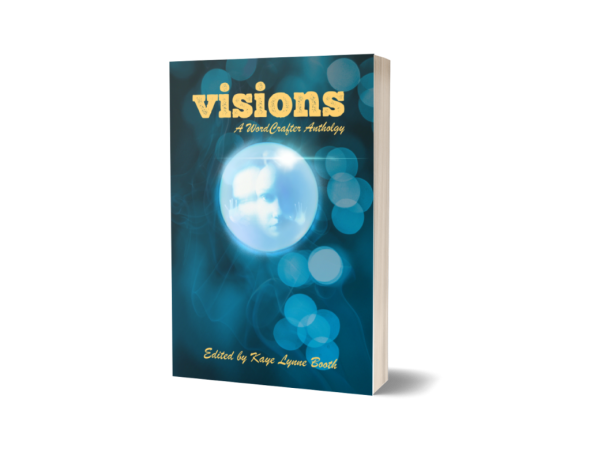
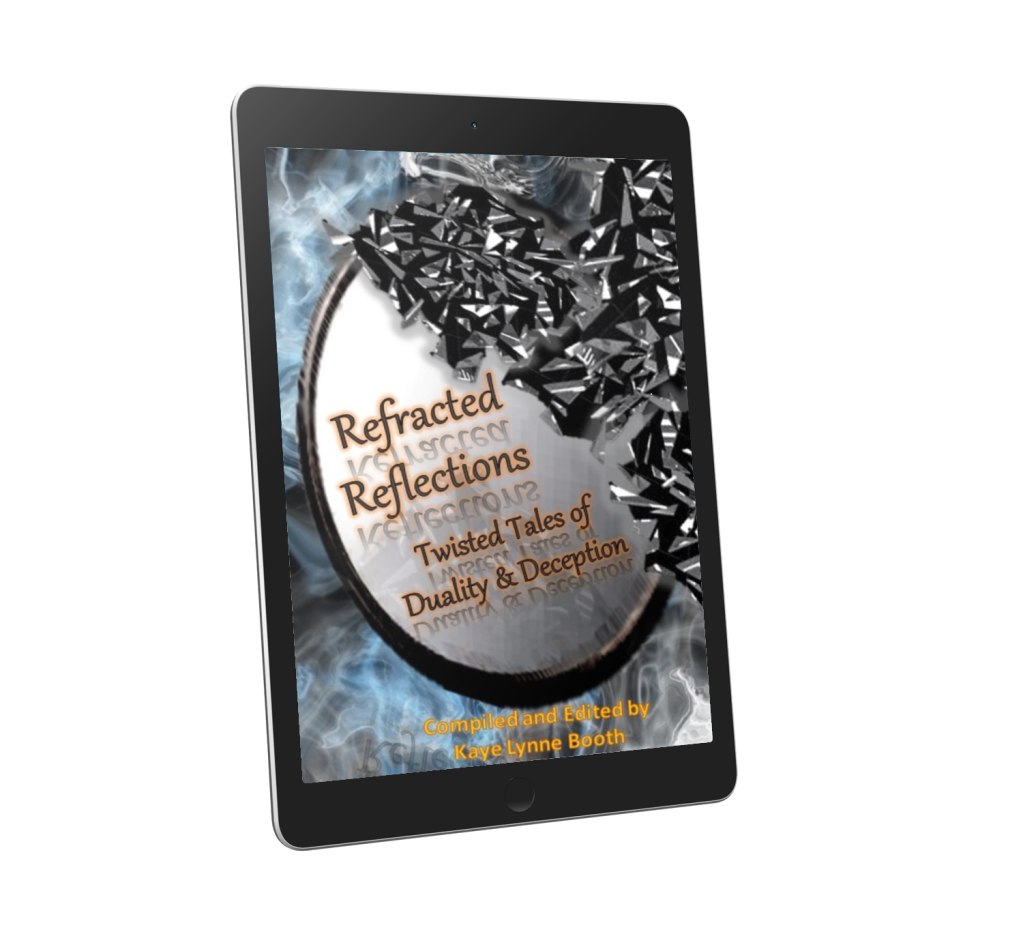

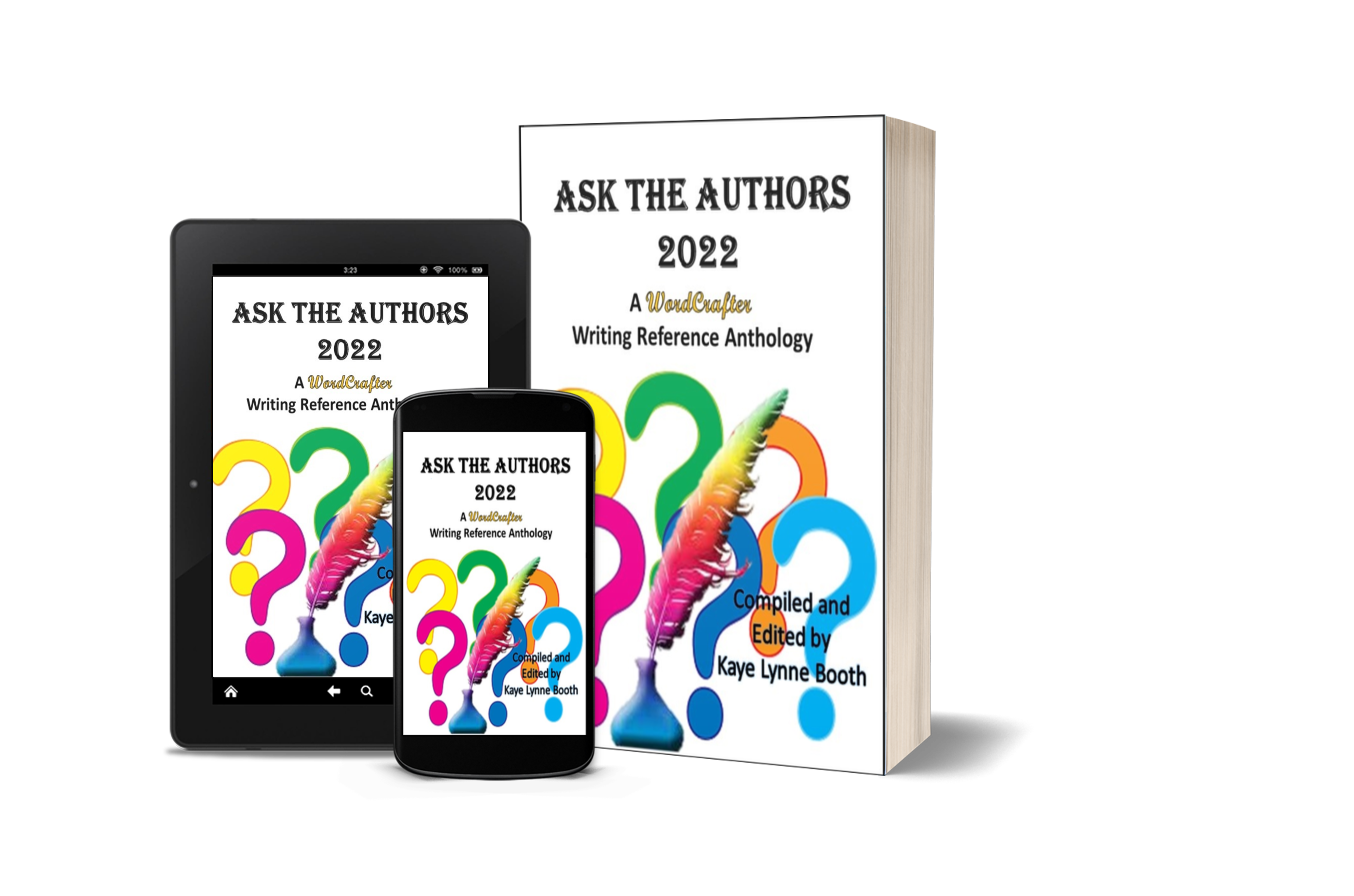


Undawntech: Emergence of the Engineered Reaction
Posted: February 2, 2024 | Author: DL Mullan/Undawntech | Filed under: Commentary, Technolgy, Undawntech, Writing Technology | Tags: AI Technology, technology, Undawntech, Writing Technology, Writing to be Read | 3 CommentsLike any other right we exercise, technology is no different. Our right to do something is balanced by our innate responsibility. Meaning: just because you can do something, should you do it? What are the ramifications? What is the legal perspective?
In recent weeks, technology has been used in an unscrupulous fashion. From images to videos, prominent figures in society are being defamed for clickbait. Clickbait is emotional advertisements that invoke a strong reaction like anger, hate, surprise, shock, and even curiosity. If you feel impassioned by a headline and its imagery, then it is best to steer clear of that link. This manipulation is milking the public for money without adding anything positive to culture.
Let’s say that you are an actor or musician in the public eye. Your identity is your source of notoriety and income. The public buys your products because they enjoy your style, image, and music or movies. The actor or musician also has contracts with production companies, record labels, agents, and others in their industry that bank on that specific style, image, and product. Many contracts have legal clauses, which prohibit any deviation from the artist’s public persona, as well as morality terms. A public figure has a vested interest in keeping the status quo.
If someone creates an Artificial Intelligence (A.I.) image of an inappropriate nature, then the creator of said image has defamed you. Imagine that you are a young, female popstar with an innocent, wholesome image, but someone creates an A.I. representation of you as a blood-soaked, slut, then the generator of said image has defamed you as an artist. The same goes with male actors, who are purported to say or do something on video that is not them.
The First Amendment protects speech and freedom of expression, but not defamation, be it libel or slander. A public figure owns their appearance and likeness, public image, and other copyright and trademark rights. The First Amendment states:
If you would like to state unfavorable political, religious, social, or other views, then your right to say or write them is protected speech. Hate speech, which this fascistic phrase is not a legal term, is covered by the Bill of Rights. The right to speak, even to be silent (Miranda Rights), are both covered by the First Amendment. Comedy, as well as parody (Spaceballs) and criticism of another’s works (Book & Movie Reviews), are preserved as a right.
Nevertheless, the First Amendment does not cover every facet of speech or expression. For instance, freedom of speech does not grant someone the right to shout fire in a crowded theater, or threaten the health and safety of other people (fighting words). Pornographic materials created with minors is unprotected speech and expression (child pornography). Reckless disregard for facts and truth about a public figure is considered defamation (malice). Other actions unshielded by the First Amendment include: obscenity, perjury, blackmail, incitement (to be lawless), solicitation (to commit a crime), fraud, and plagiarism.
www.britannica.com/topic/First-Amendment/Permissible-restrictions-on-expression
In the age of technology, users must understand and navigate the legal framework of their rights, including speech and expression. What does the creative community do in an ever-changing landscape of expressive and innovative technology? First, read the law. Next, research case law. Both of these legal avenues will help creators create with peace of mind.
Copyright in the United States as a general rule is the death of the artist, actor, musician, et al., plus seventy years. If you would like to delve into the entirety of the law, visit the U.S. Copyright Office: www.copyright.gov/title17.
Besides laws to govern new technology, the best way to balance rights and responsibilities is to ask yourself: would I like someone doing that to me, my works, or my copyright/trademark? If the answer is no, then you have found the legal threshold.
__________
DL Mullan holds a Master of Arts in Teaching and Learning with Technology.
Her lecture, Spacescapes: Where Photography Ends; Imagination Begins, debuted at the Phoenix Astronomy Society, which then led to her Sally Ride Festival lecture invitations. Her presentation, Bridging the Gap between Technology and Women, won her accolades at a community college’s Student Success Conference. She has been a panelist at speculative fiction, science fiction, and other regional conventions. Her digital exhibition pieces have won awards at convention art shows, as well as garnered her Second Premium at the Arizona State Fair. Currently, Ms. Mullan’s artistic renditions are seen on book covers, blog sites, video presentations, and various merchandise. As an independent publisher, she uses her technical background to innovate the creative arts.
As a writer, DL Mullan loves to stretch her imagination and the elasticity of genres. She writes complex multi-genre stories in digestible and entertaining forms, be it poetry, short fiction, or novels. Her science, history, mythology, and paranormal research backgrounds are woven into her writings, especially in Undawnted’s Legacy Universe. Ms. Mullan’s creative endeavors are available in digital and print collections, from academia to commercial anthologies. She is also an award-winning poet.
Be sure to subscribe to her newsletters and follow her on social media. For further information, visit her at www.undawnted.com and www.undawntech.top.
________________________________________________
Want to be sure not to miss any of DL Mullan’s “Undawntech” segments? Subscribe to Writing to be Read for e-mail notifications whenever new content is posted or follow WtbR on WordPress. If you found it interesting or informative, please share.
Share this: