“Wrinkles” – A Diverse Story of True Love, Friendship and Faith
Posted: October 14, 2016 Filed under: Book Review, Books, Opinion, Uncategorized | Tags: Book Review, Books, characters, Fiction, Inspiration, Mian Mohsin Zia, Novels, Reviews, Wrinkles, Writing 1 Comment
While representing his company at the expo, Xavier meets the woman in the next booth, Anna, and before you know it, he believes he’s fallen in love with her. Xavier doesn’t know why Anna is keeping him at a distance, never allowing him to get too close, but he is relentless in his pursuit of her and enlists his mother’s advice and the help of his friends to win her heart.
I had trouble buying into some of the occurrences in Wrinkles: A True Love Story, by Mian Mohsin Zia, but I realize a lot of this can be attributed to the fact that the culture in the story is very different from mine. Because I’ve never been to Africa, where the story is set, many of the events and customs portrayed in this book were foreign to me, making it seem strange. I may not have understood it all, but the story was compelling and touching, and I just may have learned a few things about other cultures and religions which I wasn’t previously aware of. I loved that it carried the underlying theme of integration, racial and religious tolerance.
Xavier’s relationship for his mother goes way beyond parental respect, but there are glimpses of an insecure little boy residing in the big man. This is his fatal flaw. Xavier’s biggest fear is that of losing his mother, whom he refers to as his “Lifeline”. His respect for his mother makes him a more endearing, as the doting son.
Descriptions are vivid, but they relate too many unnecessary details. We don’t need to know all the colors of clothing, color of pacifier, what materials their clothes are made from, etc… The story is repetitive and states the obvious quite a bit. Everything is spelled out for us, not giving the reader credit for being able to follow along.
There were other problems with Wrinkles, concerning formatting, punctuation, and grammar. The dialog is very stiff and formal, with dialog tags which are either missing or misplaced, there are subtle switches in point of view, a slight case of adverbitis, and a passive voice. I have put down books in cases where problems such as these, but the characters are likable enough for me to overlook them and keep reading.
What really sticks out the most for me though, was the fact that the last piece of dialog from Faith, Xavier’s mother, doesn’t ring true to her character. Throughout the whole story, she has always taught honesty, through verbal lessons and through example, and here she promises the young boy that they all be with him forever, when he asks questions about aging. Of course, we all know it would be impossible for the adults in the family to remain with him forever. The point is it isn’t true and it comes from a major character, who has been pillar of honesty thus far.
Overall, I saw some problems with this book, but the uplifting theme, heart touching story, likable characters, and compelling romance plot still make it an enjoyable read. I give Wrinkles: A True Love Story three quills.

Kaye Lynne Booth does honest book reviews on Writing to be Read, and she never charges for them. Have a book you’d like reviewed? Contact Kaye at kayebooth(at)yahoo(dot)com.
Share this:

“Under a Brass Moon”: A Cool Collection of Steampunk and Science Fiction Stories
Posted: October 7, 2016 Filed under: Book Review, Fiction, Science Fiction, Speculative Fiction, Steampunk, Stories | Tags: Benjamin Spurduto, Book Review, Fiction, G.Miki Hayden, James Wymore, Jessica Gunn, Jordan Elizabeth, Short Fiction, Under a Brass Moon 1 Comment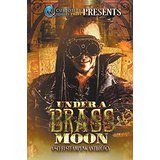
Under A Brass Moon: A Sci-Fi Steampunk Anthology is not quite as big the last anthology by Curiosity Quills Press which I reviewed, Chronology, but it is still pretty big. Unlike Chronology, which was full of pleasant surprises for me, Under a Brass Moon was just what it promised to be in the title: a collection of sci-fi and steampunk stories, and every story had elements of one or both genres.
The biggest contributor is YA author Jordan Elizabeth, who had six stories featured. Included is a Cogling short story, Upon Which Victor Viper Sat, which is a steampunk ghost story. (See my review of Cogling here.) A cursed hotel, where spirits are trapped. When Lady Rachel Waxman’s chest of paper cranes is stolen from Edna, she is determined to get them back, even if it means she must face a cursed hotel with trapped spirits and a desperate boy, willing to do anything, even murder, to regain his family’s fortune. Maiden in the Clock Tower is a stand-alone love story, along the lines of a fairy tale, with a rather sweet Happily Ever After. The other four short stories are companion stories to her Treasure Chronicles series, of which I also had the pleasure of reviewing Treasure Darkly. They Call Her Treasure is a humorous piece, sure to rouse a chuckle or two, but the other three, Treasure in the Field, Run of the Treasure and The Other Face of Treasure fell short for me, as if they weren’t finished and the promise of the premise wasn’t quite fulfilled. It’s a problem I find a lot in writing short fiction.
The second biggest contributor is James Wymore, with four stories: Sherriff Anderson’s Steam Deputies, a steampunk western shootout with steam powered deputies; Gearhead, a story of victory from apparent defeat when a captured gearhead knight tricks the Baron and steals his captured war machine; Vault, a magical steampunk story of witches and wizards and trapped spirits; and The Dark Glass, a tale of Jinda, an orphan girl, and her brother, who dream of escape from the care of the mean old butler who has been assigned with their care, but when Jinda discovers the key that leads to the treasure their father left them and escape is close at hand, the story ends. Like the Treasure Chronicle short stories of Jordan Elizabeth, mentioned above, this short story fails to deliver on the promise of the premise.
One of the problems with short stories is that it is hard to get in a full story arc with so few words. Other stories from this collection which left me feeling there should be more include Talking Metal, by W. K. Pomeroy, Fritz Finkel and the Marvelous Mechanical Thing, by award winning author Lorna Macdonald Czarnota, (We get to see why the two can’t be together, the obstacles their love faces. We get to see the grand measures taken in leiu of courtship, because it is a short story. There is a realization that she feels the same way he does, but steps to achieve the goal are only alluded to. The reader is left feeling cheated and wanting more.), Lucky Escape for Goldilocks Girl, by Irish writer Perry Mcdaid, (This protagonist had the feel of a female steampunk Robin Hood, promising to be an exciting story, but alas, it falls short of delivering on the premise.), and Queen of Cobwebs, by Jeremy Mortis, (A mechanical spider vampire tale. The protagonist is not very proactive and is rescued by outside intervention. This tale had the potential to be really good, but didn’t follow through.) Another story that didn’t quite do the trick for me were Harvester, by poet and author Amberle L. Husbands, a story about sentient plants, which lost me totally.
Under the Brass Moon also features two steampunk time travel stories: A Connecticut Yankee in Queen Victoria’s Court, by G. Miki Hayden, and Hour of Darkness, by Ashley Pasco; and two steampunk spy stories: Kung Pow Chicken for Pygmalion, by fantasy and science fiction author D.J. Butler, and The Poison We Breathe, by Christine Baker. For a steampunk ghost story, check out Calliope, by award winning author Terri Karsten, and for a great not-love story, try Henry the Tailor, by Grant Eagar. Upcoming writer Nick Lofthouse also does a passable science fiction story where the future isn’t so promising in Vacant.
My favorite stories from Under the Brass Moon include The Iron Face of God, by freelance writer and author Benjamin Spurduto, which is a pretty good steampunk mystery. It kept my interest. The story didn’t really let on to the motive for the murders, but maybe that’s okay with this one.
Also on my favorites list is Ethereal Coil, by MG/YA novelist S.A. Larsen, where nothing is as it appears, and The Women of Lastonia, by Lorna Marie Larson, which is a science fiction story that takes readers to outer space and planets far away. A Gulliver’s Travels of outer space, but this starship crew break the first rule of space travel when they rebel against the planet’s distasteful laws, which dictate they give up one of their shipmates or interfere with the evolution of the alien species.
Last but not least, my favorite story from this collection is The Balloon Thief, by New Adult author Jessica Gunn, a steampunk heist story where everyone is after the treasure and no one is who they seem. This story is well written and quite enjoyable.
Overall, the stories in this collection were entertaining, but many of them left me disappointed just due to the fact that I didn’t feel they had a full story arc and there should have ben more. Even the ones which left me wanting more, were entertaining stories, though not all were enchanting. I give Under the Brass Moon three quills.

Kaye Lynne Booth does honest book reviews on Writing to be Read, and she never charges for them. Have a book you’d like reviewed? Contact Kaye at kayebooth(at)yahoo(dot)com.
Share this:

Weekly Writing Memo: All About the Setup
Posted: September 28, 2016 Filed under: Fiction, Screenwriting, Screenwriting, Speculative Fiction, Stories, Thriller, Uncategorized, Weekly Writing Memo, Writing, Writing Tips | Tags: Fiction, Screenwriting, Writing, writing advice, Writing Process Leave a comment One of the most important elements of a story for it to work is for everything to be set up properly. Your plot, your characters, and your resolution all need to be set up in such a way that your audience can believe them. If the audience doesn’t believe it, or “buy in” as it’s often called, then they won’t enjoy your story and may not even continue it. So how do you properly set up everything in your story so it works?
What does your audience need to know?
Think about your plot, your characters, and your world before you start writing. What does your audience need to know about each of these in order for them to understand your story? If needed, make a list. Add to it anything that needs to happen in order for your plot to unfold, and decide in what order those things need to happen.
The things on this list are the things you need to set up in order for your audience to get into your story. Does your character have a mental problem? Then even if you don’t reveal it right away you need to show signs of it, foreshadowing what is to be revealed so when the reveal happens the audience believes it. Does your world involve superhuman mutants? Then again, this is something that needs to be set up in your story so your audience understands the world. Even if you don’t want to reveal the mutants, you need to reveal that there is the possibility of something supernatural going on. Think of all these sorts of elements that will be in your story before you get writing so you have a clear image in mind of what you need to do. You don’t have to make the elements obvious or spell it out blatantly, but do find ways to at least hint at these details so they don’t throw off your audience when they come into play later.
When do they need to know it?
The second part of setting up a story is know WHEN to reveal things. How much do you need to set up right away, and how much can you hold onto and reveal later? You don’t want all these details to come out in a list when you’re writing. They should come out in small doses as necessary. For example, your audience needs to know right away that your character has an enormous scar if it plays into how people react to him/her throughout the story. However, your audience doesn’t need to know right away how your character got the scar. In fact, the audience may never need to know how the character got the scar unless it plays an important part in the story for some reason.
The common mistake I see when people are setting up a story is mainly not mentioning something until it is needed to move the plot forward. For example, if your character needs to know complex mathematics, but your entire story she never once uses math, it’ll seem awfully convenient if the moment she needs it she busts out some calculus. Anything such as this that is key to moving the plot forward, or key to solving a problem, should be established in advance of when the character needs it. If it is something that is constant, then it should be established right from the beginning. If it’s something minor, then it just needs to be established a few scenes or so before it becomes relevant.
How can I show it?
So how do you show these minor things in your story without them coming off as listing or uninteresting? Something like the mathematics example would be boring if the character just said “I’m good at math.” Instead, you could simply have a short moment where your character does some impressive mental math for some reason, or even have something subtle like a math diploma on the wall someplace. These kinds of small details, or small moments, can be a way to establish important elements without taking too much story time.
For anything minor, the quicker you can establish it and move on, usually the better. Anything that is a key element of the story can be established by doing continual small touches throughout the story as it unfolds. For example, if you want to establish someone has anxiety about something, you can have them behave in increasingly anxious ways until their full anxiety is revealed.
Final Notes
Ultimately, there will be three stages of setting up your story. The first is the things you’ll know right off that you need to establish before you even begin writing. The second will be the things you discover as you are writing. When you come across these things in the second stage, it’s important to remember to not just throw them in when they come up. Take a moment to sit back and think about where that detail could naturally fit into the story. If you just put it in where you think of it, will it seem like something that conveniently pops up to solve the story conflict?
The final stage of setting up your story will come after you get feedback. Whoever you use as your beta reader should be able to tell you what doesn’t make sense, and you can use that as a sounding board for what in your story needs more setting up, and what you can do less on. No matter how obvious you think something is, people will always have different viewpoints so if you can find a subtle way to set it up a tad more, it’s probably a good idea to do so.
Robin Conley offers great writing advice most Wednesdays on Writing to be Read. If you just can’t wait until next week to find out more, you can pop into her blog, Author the World, for more tips, or a weekly writing prompt.
Share this:

Which Comes First, the Story or the Theme?
Posted: September 26, 2016 Filed under: Fiction, Movies, Screenwriting, Writing | Tags: Creative Fiction, Fiction, Screenwriting, Writing, Writing to be Read 2 Comments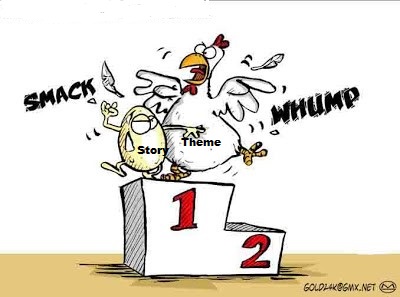
I asked Robin to do a post on theme for last week’s Writing Memo, as a compliment to my post here. She did a great job of explaining what theme is and how to bring it out in your story. She talked about how to identify your theme, how to bring your theme out in your writing and how multiple themes can be, and often are, woven into a single story. After reading her post, it sounded so easy.
One of the most difficult parts of writing, for me, is determining what my story’s theme is. The theme is what your story or screenplay is really about, and it isn’t always obvious. Often you really have to think about the story as a whole and look for the underlying theme. Or at least, I do.
Die Hard is a story about a man, John McClane, (Bruce Willis), trying to save his marriage, but when her office party is taken hostage, it becomes a story about survival – survival of the good guys, as well as survival of the marraige. (Yes, I see the irony in the fact that Robin and I both chose to use Die Hard in our examples.) Survival is what the story is really about.
 Lethal Weapon may be a buddy cop movie about the two cops getting the bad guys, but Roger Murtaugh, (Danny Glover), is struggling with aging and his approaching retirement, and his partner, Martin Riggs, (Mel Gibson), is struggling with the loss of his wife and certain suicidal urges. Dealing with aging and the end of life is what the movie is really about. But the underlying theme is not always easy to pick up on under all the shoot ’em up, good guy – bad guy stuff.
While pursuing my screenwriting emphasis for my M.F.A., one of the things that I was taught was how to breakdown the structure of a movie into different parts, or beats. My professor and screenwriting advisor, J.S. Mayank, had us use the structure model presented in the Save the Cat books by Blake Snyder. Professor Mayank had us watch a lot of movies and read a whole lot of screenplays and break their structures down, and one of the things I learned from this, is that in almost every movie, one of the characters states the theme in their dialog, usually by page five. As a general rule, it’s true. And if you can figure out what the movie is really about, you can put your finger on which line of dialog that is, however, that’s not always an easy thing to do.
For one thing, the line of dialog that states the theme usually doesn’t do it outright. To do so would make the dialog feel forced, untrue to what the character would say. For instance, the line that states the theme in Lethal Weapon is, “Your beard is getting gray. It makes you look old.” Coming from Roger Murtaugh’s daughter, as his family serves his 50th Birthday Cake while he takes a bath works well, but it doesn’t come out and say, “You’re getting ready to retire and your life is coming to an end. How are you going to deal with it?” It’s said and gone, and most viewers probably didn’t even catch that it was the theme stated unless they were looking for it.
These exercises in screenwriting were very helpful to me, but they required that I view movies in a whole new way. (We did a similar thing in my genre fiction classes, dissecting different novels to see what methods the authors used to portray their stories and how effective they are. And when you critique as you read, it’s a lot different than just reading to enjoy the story.) Most people watch movies for entertainment, right? I always had. But when you are doing structure analysis, you have to concentrate more on how it’s put together than you do on what happens in the story. And to figure out what the theme is, you have to watch, or read in the case of screenplays, with a philosophical eye to discover what the story is really about.
Th at’s where I had problems, especially when I was watching the actual movie, rather than reading the screenplay. I always sat down to watch a movie and immediately immersed myself in the story. Before I knew it, I would look up and realize the first five pages of script must be long past and I had failed to identify the line of dialog in which the theme was stated. It was the thing with reading screenplays. I found myself reading and re-reading those first five pages, searching desperately for the line that would tell me what the whole movie was about. I didn’t understand how I could be expected to pick out a line of dialog that stated what the movie was really about before I’d read the entire screenplay. And the sad thing is, I was no better at picking out theme in my own writing and writing a line of dialog to state it.
Here’s where I digress from Robin. You cannot decide what you want your theme to be and then write a story to fit. At least, I can’t. It won’t work. For me, theme must evolve from the story naturally, not the other way around.
When I decided to write, Bonnie, my screenplay for my thesis, I thought I was writing a story about two young kids who chose to live on the wrong side of the law in order to cope with the circumstances of living in the depression. But Bonnie is different than other renditions of the Bonnie and Clyde story, because it is told from Bonnie’s perspective, and before I had finished it, I found that what it is really about is Bonnie’s love for Clyde. Their love is my underlying theme. Just as love is the underlying theme in a story about a huge ocean liner that hit an iceberg and sank into the ocean, sending most of the passengers to their deaths. And just as it worked for James Cameron, when he wrote Titanic, I think it works for Bonnie. Love is what it is really about, the underlying theme.
The point here is, I didn’t set out to write a story about a young girl’s amazing love. That is what evolved from my story about a young couple’s choice to embark on a life of crime. Love was Bonnie’s motivation. Undying love was my theme and I didn’t even know it until I was more than halfway through writing the screenplay. This is why I say theme is the most difficult part of writing for me, whether I’m writing a novel or a screenplay.
But, I still say writing to the theme is more difficult. The theme must emerge naturally from the story, whether you’re writing for the page or the screen. If I just write the story, being true to my characters, the theme will come to the surface of its own accord. But, that’s me. Obviously, it’s different for Robin, who likes to identify her theme before she begins the story and finds ways to bring the theme out. Which comes first for you?
Like this post? Subscribe to Writing to be Read for e-mail notifications whenever new content is posted.
Share this:

“Godling and Other Paint Stories”: Contemplate the Meanings
Posted: September 23, 2016 Filed under: Book Review, Books, Fiction, Stories | Tags: Book Review, Books, Creative Fiction, Fiction, Godling, Jeff Bowles 3 Comments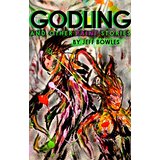
Godling and Other Paint Stories, by Jeff Bowles, is a collection of six short stories all thematically tied together by a very thin thread of paint, or more specifically, colors. In the ingenious mind behind these stories, it probably doesn’t seem far-fetched that paints would be self-aware, or that dogs could evolve into thinking talking animals with human-looking lips, but your average reader will take a look at these stories and say, “Wow!” But one thing these stories will make readers do, is ponder possibilities, because frankly, as an author with a God-thing going on, Bowles conceives of some really heavy concepts, the kind that really make you think.
The collection starts out with Godling, a science fiction tale of a God machine, which gave up its humanity for love, and may, or may not, be able to reunite to become whole once more. (With short stories, you really can’t have spoiler alerts, because they give away the whole thing, so you’ll have to read the story to find out what happens.)
Next is Traffic Patterns, a tale of a sentient traffic light that is granted godhood, for a time. And, Making Paint as a Means of Impermanence is filled with some truly disturbing images of how an attempt to gain immortality turns into an ever renewing ritual to maintain an impermeable existence. Wild Dogs of Buffalo is a canine Godfather, excuse me, I meant Dog Father. Anyway, I love it. It’s a truly entertaining read.
God, the Little Artist – An artist’s heaven. This is not the first time that author Bowles has killed God off in his stories. The main character is Mr. Williams. As in Robin? That’s what I kept picturing in my mind as I read this story. Robin Williams talking to the large baby God whose time is running out, as if perhaps God ages backward. When I’d finished, all I could think was Robin Williams as God. Now that’s scary. But, maybe it’s just me. (No spoiler alerts. Again read the story.)
Dr. Julianus Techt’s 5 Easy Steps to Building a Better You is an instruction manual on how to sell your soul in order to improve on God’s handiwork, which is you. Only Jeff Bowles would create such a story. As you read these stories, when you come to this last, do not… I repeat, DO NOT try this at home.
Godling and Other Paint Stories will be released on Amazon on September 25th, 2016. I highly recommend you grab a copy. Overall, this collection of short stories are all easy, enjoyable reads, which will give reader’s brains lots of food for thought. They are strange and unusual, but Jeff’s writing talent is such that it doesn’t take much to suspend your disbelief. I give Godling and Other Paint Stories five quills.

Kaye Lynne Booth does honest book reviews on Writing to be Read, and she never charges for them. Have a book you’d like reviewed? Contact Kaye at kayebooth(at)yahoo(dot)com.
Share this:

Weekly Writing Memo: Know Your Theme
Posted: September 22, 2016 Filed under: Fiction, Screenwriting, Stories, Uncategorized, Weekly Writing Memo, Writing, Writing Tips | Tags: Fiction, Screenwriting, Writing, writing advice, Writing Process 2 Comments Every story, whether intentional or not, has a theme within it. A theme is not necessarily a moral or lesson, but rather it is what your story is about at its core. Finding the theme of your story can sometimes take some work, as can making the theme come through in your writing, but it’s not as hard as it might seem.
What is your theme?
To find your story’s theme, ask yourself what your story is about. Maybe you won’t be able to break it down into a neat answer, but as long as you can answer the question you have the first step to finding your theme.
For example, let’s say you’re writing Die Hard. Your story would be about a cop who travels to visit his wife out of town, and ends up having to stop a terrorist plot. So what is the theme of this story? Well, it can be broken down in a lot of ways if you think about what the general terms of the story are: good triumphing over evil (cop vs villains), one man against the world (John vs the terrorists), or even how greed can lead to your downfall (the terrorists refusing to give up even though they’re losing because they’re determined to get the money).
The key to figuring out your story’s theme is to think about the larger concepts and the plot of your story, then try to break them down into simple terms as shown above. These larger ideas are the core of your story, and they help tell your audience what type of story it is. If you’re doing this and you are having trouble deciding what the main theme from your options is, ask yourself which potential theme if removed would completely change the story. The one that can’t be removed, and the one that is the biggest overall concept of the story, is your main theme.
How to show your theme?
Showing your theme throughout your story should not be hard. In Die Hard the theme of good triumphing over evil happens consistently. John is determined to do what’s right and to stop the bad guys, and despite all the trouble and missteps that happen, he ultimately always comes through. Even when he loses, it’s just further motivation for him to come back at the bad guys with even more vehemence so he can win. So for your own story, think of what your theme is and how your main character can represent that theme in some way.
Other ways to show your theme is to use something called mirroring. This is when you show the theme through minor secondary characters throughout the story. Sticking with the Die Hard example, you can see some minor mirroring of the theme “one guy against the world” when you look at the local cop who is stuck outside the building and is trying to help John. This cop is fighting against all the others to get John help and is the lone voice in the crowd. By showing your theme through these small mirroring acts you are also adding another layer of plot to your story.
You don’t always have to have the minor characters experience the same outcome as your protagonist either. You can use minor characters to show what the other possible outcome of your theme could be for your protagonist. For example, if your theme is good triumphing over evil, you could have a minor character lose to the evil to show the consequences if your character fails.
Can you have multiple themes?
As is clear with the Die Hard example, there is always a potential for there to be multiple themes in your story. Of course there should be one main theme that is the core of your story, but there can also be some minor themes that help build up your story as well. Maybe good vs evil is your main theme, but then you have themes involving love or, like in Die Hard, greed. These kinds of minor themes can contribute to your plot, as well as help deepen your characters, and many of them will appear without you having to force them into the story. If you look at your subplots, you should be able to see some of the themes that are present in them and bring them out a bit more so they are stronger.
Final Note
In general, it’s a good idea to know what your theme is before you start your story so you can keep your writing consistent. Sometimes, however, the theme comes out and is discovered as you write the story. Alternatively, you can also start your story thinking the theme is one thing, but as you write you discover it is really something else. This is fine, and happens all the time, but if it happens this way make sure you go back once you’re finished writing and make sure everything is consistent throughout the story. The most important thing about the theme of your story is that you’re consistent, and the clearer the theme is in your mind when you start writing, the easier this will be to do.
Robin Conley offers great writing advice most Wednesdays on Writing to be Read. If you just can’t wait until next week to find out more, you can pop into her blog, Author the World, for more tips, or a weekly writing prompt.
Share this:

Weekly Writing Memo: What’s in a Name
Posted: September 14, 2016 Filed under: Screenwriting, Stories, Uncategorized, Weekly Writing Memo, Writing, Writing Tips | Tags: Creative Fiction, Fiction, Writing, Writing Process 4 Comments Through all my conversations with other writers, I’ve learned that there seems to be two camps of people when it comes to naming characters, places, and things in stories. One group thinks that the names don’t matter, while the other spends hours finding just the right meaning for each name in their world. Personally, I think it depends on the story, as well as whatever it is you are naming. I do believe main characters should have names that mean something, or at the very least, ‘fit’ the character’s story, but I don’t think everything in your story has to have deeper meaning. If you want to give the people, places, and things you name in your story special meaning, there are several ways you can go about it.
Origins
One of the main things I do look at when I am naming something is the origin of the name. What country is the name originally from? What language is it? Is it predominant in a specific religion, or culture? These kinds of details can help you pick names that have more history behind them to help with whatever you are naming. If you have a character that you want to have an Irish background, then a name with a touch of Irish history would be perfect. It doesn’t have to be a historical or cliché name, but it is an option. Another option is to research popular names in Ireland and pick one that way instead. You may end up with a name that isn’t classically Irish, but it will still have a connection to Ireland.
The point of this kind of research for the names you give in your stories is that it creates a built in history for what you are naming. Without telling the reader, you are hinting at where your character might come from and what their family connections are. Now of course people in real life are often given names with no connection to their roots, and you can use this in your story as well if you want, but by making a deliberate choice to either use the name or not you are making every element of your story count. So be deliberate, and if you decide to go against your characters origins, then make that part of the story as well even if it’s a minor part.
Preconceptions
Something else you can use to your advantage when naming a character, place, or thing in a novel are known preconceptions about the name you use. For example, if you use a name from a myth, many people will recognize it and have certain ideas about that character. Zeus is a mighty god with great power, who also happens to be a bit of a player, and a character named Zeus might be suspected of having some of those traits. There are all sorts of fables and legends out there from every different culture and time period, and even if you use one that doesn’t have meaning to the majority of the population it will still help deepen your character. The point is that it is another layer for a reader to find, and the ones that do will love the touch.
Beyond past myths, you can also use names from modern pop culture and such. Big names like Kanye or Justin are well known enough that they also have immediate pre-conceptions to them. Maybe in another 20 years they won’t have the same impact on your readers as pop culture changes, but for modern readers you can use names like those to paint a picture of who your character is. Big public names have personas around them, and if you’re writing a character with a similar attitude you can use those pre-existing ideas to help nudge your reader in a certain direction before they know anything else about your character.
Meanings
One of the final elements you can use when naming things in your stories is symbolism. There are all sorts of names and words that have deeper meaning beyond them besides the word itself. Most names have some alternate meaning to them when you research the original language they came from. These sorts of meanings can be used to speak to the type of person your character is going to be. If you have a surprisingly brave character, then choosing a name that secretly means bravery could be a subtle nod to readers who know that. These are the kind of details that won’t change anything in the story for the most part, but they can add another layer of meaning to your story. It can be especially useful when naming objects in fantasy worlds.
Final Notes
No matter your take on naming in stories, it’s important to consider what the minor details of naming can do for your story. The small touches can often give a story the extra boost to make it something special. As a reader, I know I enjoy the small details that I discover later on about a story, such as deeper meanings in names, and it only makes me enjoy the story more. If you do go the special naming route, however, I find it works best if you don’t go too obvious with the symbolism in the name. You want it to be a small touch, not a neon sign in your audience’s face. Ultimately, if you find a special name is something that will add to your story, then use it, if not, then don’t. It’s your story, so you have to decide what benefits it the most. Trust your instincts and you’ll be fine.
Share this:

Weekly Writing Memo: Networking
Posted: September 7, 2016 Filed under: Promotion, Screenwriting, Uncategorized, Weekly Writing Memo, Writing, Writing Tips | Tags: Fiction, promotion, Publishing, Screenwriting, Writing, writing advice, Writing Process 3 Comments Sorry I have been missing the last few weeks. As you might have seen on Author the World, I unexpectedly moved to Los Angeles and haven’t had a lot of time to do posts. This week’s post is all about networking. Networking is a major element of having a writing career, and it takes some practice to really learn the right and wrong ways to network.
The most important thing to remember when networking is that you shouldn’t be doing it to use people, and you shouldn’t be doing it to be selfish. Good networking is about being genuine. The best way to network is to approach each networking relationship you make with the attitude of how you can help each other, rather than focusing on how they can help you. The best kinds of networking relationships are mutually beneficial, and maintaining this kind of attitude helps these relationships stay healthy and fulfilling.
Building your Network
You can build your network literally anywhere, it’s all about meeting people and learning about them. If you know who people are, what they do, and what kinds of people they know, you can keep them in mind for later if something comes up they can help with. For writing, often times you can make networking connections in writing groups, classes, at conferences, or even in random places like coffee shops and hair salons. The important thing is to keep your eyes open for people you can help, and for people that may be able to help you. Remember, things need to go both ways, and sometimes the act of offering help to someone can lead to unexpected connections. Ultimately, all networking contacts break down into four different types that can each be beneficial in their own way.
The Introducer
The Introducer may not have any work for you, and may not be someone who is going to offer you advice, but they do know people you want to know and they will help you meet them. These kinds of contacts are always useful to maintain because they help broaden your network, and they can help introduce you to other parts of the writing world you may not be familiar with. One of the best way to meet new people is through a middle-man who can introduce you because it can cut out the awkward process of trying to force a meeting with a stranger. If you’re going to be the Introducer for someone else, remember to make sure you give each person’s name, and then try to share what they have in common or why you think they should talk so you can help jump start the conversation.
The Mentor
The mentor is someone who has been where you are and knows a lot about the business. They are the perfect sort of person who can offer you advice, and give you guidance that will make navigating the writing world easier. Maybe they won’t be able to get you a job, or introduce you to new people, but they will help you find answers to the random questions and issues you run into. Just make sure you don’t burden your mentor by asking too much of them, or wasting their time with easy questions that you could have found out anywhere. They may only have so much free time, so make sure to figure out how much help they are willing to give you and to stick within that range. If you are going to be a mentor, be clear up front what you are willing to do for the person you’re helping, but also try to remember what it was like when you were where they are.
The Helper
The Helper is someone who has an opportunity for you that could potentially help your career, whether it’s a job or an interview doesn’t matter, it’s someone that can put you in line for a job or a writing sale. These kinds of connections are incredibly valuable because they are what give your career a boost. The important thing to remember when meeting people who offer you these types of opportunities is to make the most of them, and to make sure you don’t misrepresent yourself to the person setting it up, because if you waste it or lie it could prevent the person from ever offering you another opportunity again.
The Teammate
In some ways, these are the most valuable networking connections you can make. The Teammate is someone who is going through the same stuff you are at the same time. They are someone you can bounce ideas off of, or trade writing with. They are on your side and you are mutually trying to help each other reach your goals. For writing, having people you can talk writing with is incredibly important, as is having people around who understand what you’re going through. If you are a teammate to someone, make sure the help isn’t going one way. If you find yourself asking too much and not doing anything in return, then try to find a balance.
Final Notes
Ultimately, networking is about broadening the connections you have in your industry, and maintaining those connections by trying to keep things mutually beneficial for all involved. Even if you can’t help someone the moment they help you, always try to keep them in mind and return the favor when you can. One of the most important elements of networking is that the people around you see that you are a part of the cycle of helping, and that you aren’t just a vacuum sucking up all the favors you can get without returning anything. People will quickly notice if you only ever seem to receive help, so the more you can be a part of the cycle the better.
Share this:

“Victorian”: A Ghostly Story Packed Full of Secrets
Posted: September 2, 2016 Filed under: Book Review, Books, Speculative Fiction, Young Adult | Tags: Book Review, Books, Fiction, Ghosts, Jordan Elizabeth, Review, Secrets, Victorian, Young Adult 1 Comment
Victorian, by Jordan Elizabeth, is a truly unique YA story featuring not one, but two young girls, Celeste and Weronica, who each have a dark secret hidden in the past that keeps them closed off to others. When they both get jobs at a historical fair in a strange old village which harbors secrets of its own, things turn interesting, as each one learns to trust again with the help of the fair’s colorful cast of characters and the ghosts of the past.
Elizabeth’s characters are realistic and believable. Weronica acts as if she’s self assured, but worries more about what others think of her than she lets on. She shares only enough to keep curiosity at bay, keeping her ghosts close and the secrets they hold even closer. Celeste really just wants to belong, but fear that her secret will be revealed causes her to hold others at bay. Her ghosts are really those of the historic village, but they hold the key to unlocking her secrets, as well as unraveling the mysterious past of the village.
This well-crafted story builds just the right amount of suspense to keep the pages turning, as it alternates between the two co-protagonist’s points of view. The story line is easy to follow, the village setting becoming a character in and of itself. Victorian is well worth the read.
I give Victorian four quills. 
Share this:

“A Shot in the Dark” is a Wild Ride
Posted: August 26, 2016 Filed under: Action/Adventure, Book Review, Books, Fantasy | Tags: A Shot in the Dark, Action, Book Review, Books, Fantasy, Fiction, Jesse James Dawson, K. A. Stewart, Review 1 Comment
It’s not every day we have a demon hunter for a friend. Not unless you are a friend of Jesse James Dawson, that is. In A Shot in the Dark, by K. A. Stewart, an annual weekend camping trip turns into a fight for survival for Jesse and his friends. Jesse must wager everything, including his soul as he faces off with an old adversary, full of new and improved deadly surprises in the remote Colorado mountain retreat.
A Shot in the Dark is an action filled story dealing in matters, not only of life and death, but of heaven and hell. In dealing with questions of good and evil, the answers aren’t always black and white, but often lie somewhere in the gray. Now the only question is, will Jesse’s friends still be his friends if they live through this supernatural wilderness adventure.
Stewart’s likable characters and unusual villains make settling in for this demon hunting tale quite enjoyable. Antagonist Jesse James Dawson and his friends pull out all the stops, combining traditional weaponry, magic and religion to battle the minions of the underworld, but can he bring all his friends home safely?
As the second book in Stewart’s Jesse James Dawson series, I give A Shot in the Dark three quills.




















