Writer’s Corner: Author of the Future – Selling Books
Posted: March 2, 2026 Filed under: Book Promotion, Book Release, Book Sales, Books, Crowd Funding, Direct Sales, Kickstarter | Tags: Crowd Funding, Direct Sales, Kaye Lynne Booth, Kickstarter, The Rock Star & The Outlaw 2 Double Visions, Writer's Corner, Writing to be Read 2 Comments
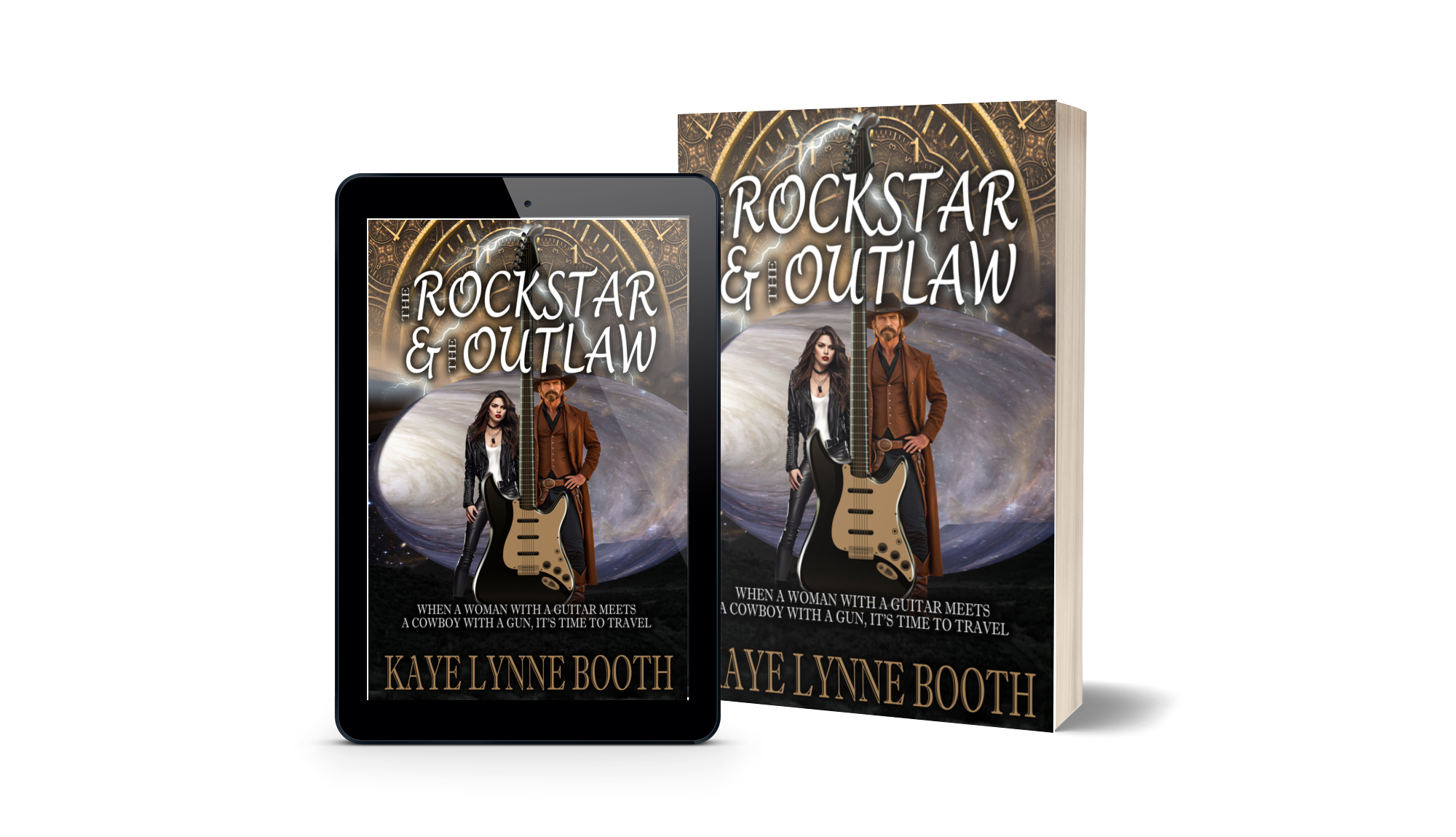
I’ve run a few Kickstarter campaigns in the past, and I’m running one this month for my Time Travel Adventure Series and the release of the second book, The Rock Star & The Outlaw 2: Double Visions. It began yesterday, March 1, and will run through March 28th, 2026. (Little secret: March 3rd is my birthday, but your gift of support lasts forever.) If you’d like to check it out, and maybe even support this author with a pledge, you can check it out here: https://www.kickstarter.com/projects/kayelynnebooth-wcp/the-rock-star-and-the-outlaw-2-double-visions
I started down this road back in 2023, when I successfully funded two campaigns, including one for the first book in this series, The Rock Star & The Outlaw. I chose to sell my books through Kickstarter because the buzz is, that Direct Sales and Kickstarters are the successful author’s future. Since the WordCrafter website isn’t set up for direct sales as yet, Kickstarter looked to be the best option.
We’ve Come a Long Way Baby
When I first started writing books, the publishing world was entering a transition phase. Traditional publishers had run the show for a very long time, and if you were an author, you peddled your book to literary agents. Once you found one of those, they would peddle your book to publishers and hopefully, found it a home with one of the Big Five. Or, you could peddle your book to smaller, independent publishers and try to find a home for your book yourself. Either way, very few authors found a way in, and even fewer made the best seller lists. If you were fortunate enough to be picked up by a traditional publisher, you might get a substantial advance when you signed your contract, which the book would have to earn out in sales before you could receive any further royalties. If the book didn’t earn out, you never saw another dime. But this was the way the publishing industry worked. You didn’t get in without making it past the gatekeepers; the agents and publishers who held all the power.
At that time, independent publishing carried a nasty taste with it. The world of independent publishing was filled with vanity presses that would publish your book for a cost, and they thoroughly took advantage of authors who tried to buck the system and bypass the gatekeepers. As publish on demand (POD publishing) gained popularity, it offered authors the opportunity to publish their work for much cheaper, but it also opened the door for anyone who wanted to, to claim authorship. Not everyone cared about quality, and authors who chose this cheaper route were likely to have skipped costly steps like editing, too. This flooded the market and gave independent authors a bad name, but traditional publishers still viewed them not as a threat, but a nuisance.
Traditional publishers stuck to their guns, and continued to do things the same way they always had, because that was the way it had always been. But as they began to falter, their advance payments grew smaller and smaller, and today, even if you get a traditional deal with one of the Big Three, you may not receive an advance at all. Indie authors began to hit the best seller lists, offering some real competition and traditional publishers began to take indie publishing more seriously. Suddenly, there was a new route past the gatekeepers. If your book hit the best seller lists, a traditional publisher might come knocking with an offer, even if you weren’t looking for one.
And why should independent authors go trad? With only small advances being offered, if at all, and less and less of the marketing efforts being put forth by trad publishers, there really was little reason to go with traditional publishing unless you were just after the literary prestige. An indie author, who did the work to publish and market their own work got to keep more of their royalties than the 40% traditional publishers were offering.
With the rise of aggregators, such as Lulu, Smashwords, and Draft2Digital, independent publishing became even cheaper for authors, and traditional publishing continued to look less and less appealing, at least to me. So today, authors can do it all. Write the story, publish the book, and market it, all by themselves. That’s a lot. So, of course, they can also choose to outsource any of the work, depending on how much they want to spend. Because it’s all up to them. The author is the boss and the choices are all theirs.
Now we are faced with more choices about where to sell our books. We can publish exclusively, placing them on Amazon in Kindle Unlimited, but to me, that’s putting all your eggs in one basket. We can publish wide and place our books on retail sites around the globe. Or we can sell direct from our website, start a store on Shopify, or sell through crowd funding on Kickstarter.
Many authors use a combination, selling direct or crowd funding and placing their books on retail sites, as well. This is what I perceive to be the future of book marketing. Direct sales are how authors can make the most money from their books, but retail stores have the visibility to get their books discovered.
Why do I say these are the future of book marketing?
Come along as we explore the pros and cons, below.
Direct Sales
Direct sales are the best way to go if you are able to set up a store on your site. Having an onsite store would be a bigger expense from the hosting site, in order to give your site monetary capabilities, so it is more expensive initially. I’m still struggling to get enough sponsors and donations to cover the annual costs of the Writing to be Read site on the current level, so the upgrade must wait, although this would be my preference for selling my books.
Why?
One big reason is authors who sell through direct sales cut out the retailer middle men and get to keep more money from each sale. So, when you can buy a book directly from the author’s site, you are supporting that author more than the person who buys the same book through a retail site. Because they don’t have to pay 30-70% of their royalties out to retailers, the savings can be considerable.
Authors may have to do all the marketing for their books, but these days, that may be the case even with traditional publishing, so why not do the work and reap the reward?
The Kickstarter Platform
Kickstarter is a crowd funding platform that can be a great way to finance all your creative projects, if done right. They keep a small percentage of each project that is successfully funded. So, while you are giving them a small cut of the royalties, they handle the collection and distribution of monies, and provide promotional materials in return. Plus, it gives.you access to the crowd funding community, which is big on creative projects and accustomed to supporting them. And if it doesn’t fund, it doesn’t cost you anything.
I like running Kickstarter campaigns upon launch because I can offer books at less than the prices set on retail sites, and exclusive offers, such as signed print copies or special edition books, which aren’t available anywhere else, so my readers benefit, too. I can also offer package deals, combining two or more books.
For those same reasons, it pays to support your favorite authors on the Kickstarter platform because you can get some really awesome deals on some really great books. I not only sell on Kickstarter, but I’m also a supporter of the projects of others. You can show your support, usually for as little as $5. It’s a great way to get books and other exclusive merchandise, and of course, I wrote reviews for all the books I bought to further show support for the author.
International bestselling author, Kevin J. Anderson, runs at least two Kickstarter campaigns per year, with some astounding results. Likewise, Dean Wesley Smith and Kristine Katherine Rusch run several each year. As does author Russell Nohelty. But you don’t have to be a big name to run a successful Kickstarter campaign. I’m the proof of that. To date, I have run three successful campaigns and only one that failed to fund.
The Rock Star & The Outlaw 2: Double Visions Campaign
If you’d like to support this author and help to fund my current campaign for The Rock Star & The Outlaw 2: Double Visions, drop in via the link below. We have great deals on Books 1 & 2 of the Time Travel Adventure Series, including signed print copies, plus posters and goodies bags available only through the Kickstarter campaign. All support is greatly appreciated.
About The Rock Star & The Outlaw 2: Double Visions
In 1887, LeRoy is stuck, bringing trouble down on those around him. Sissy is kidnapped and he’s the only one who can save her.
She wakes up in 2030, in a future very different to the one she knows, one in which she may not have been born. Amaryllis will stop at nothing to find LeRoy fix what she messed up in the past.
She and a version of Monique which is different from the one she grew up with travel back to 1887 to try and make things right.
Add two time travel regulators from the future who are after the time module, and things begin to get wild.
When the time loops are crossed, things change, but not the way Amaryllis intended and pretty soon, everybody is seeing doubles.
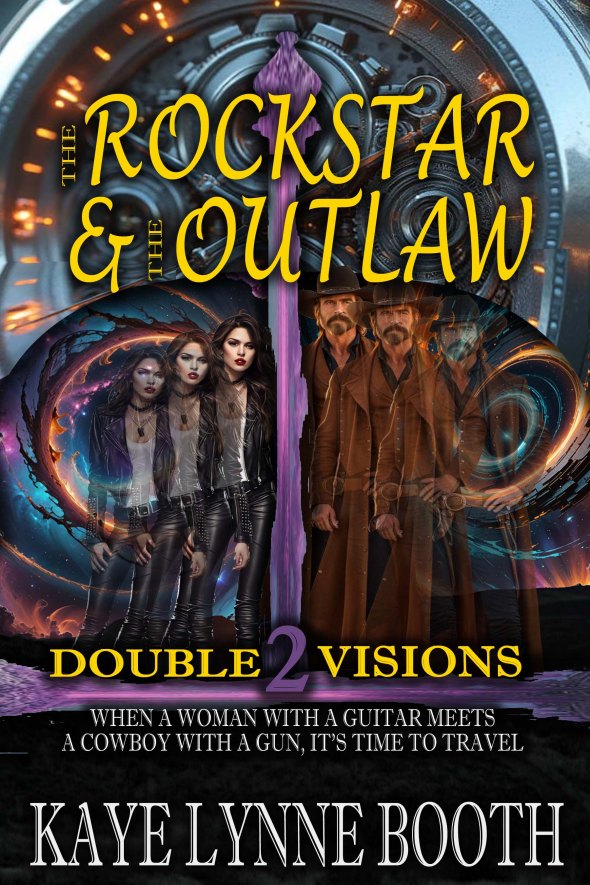
If you’d like to know more about the second book in the Time Travel Adventure Series, we’ll be running a book blog tour March 23-27, 2026, right here on Writing to be Read. Join us for readings and guest posts about the inspiration and creation of this series, and a great giveaway of digital and signed print copies.
About Kaye Lynne Booth

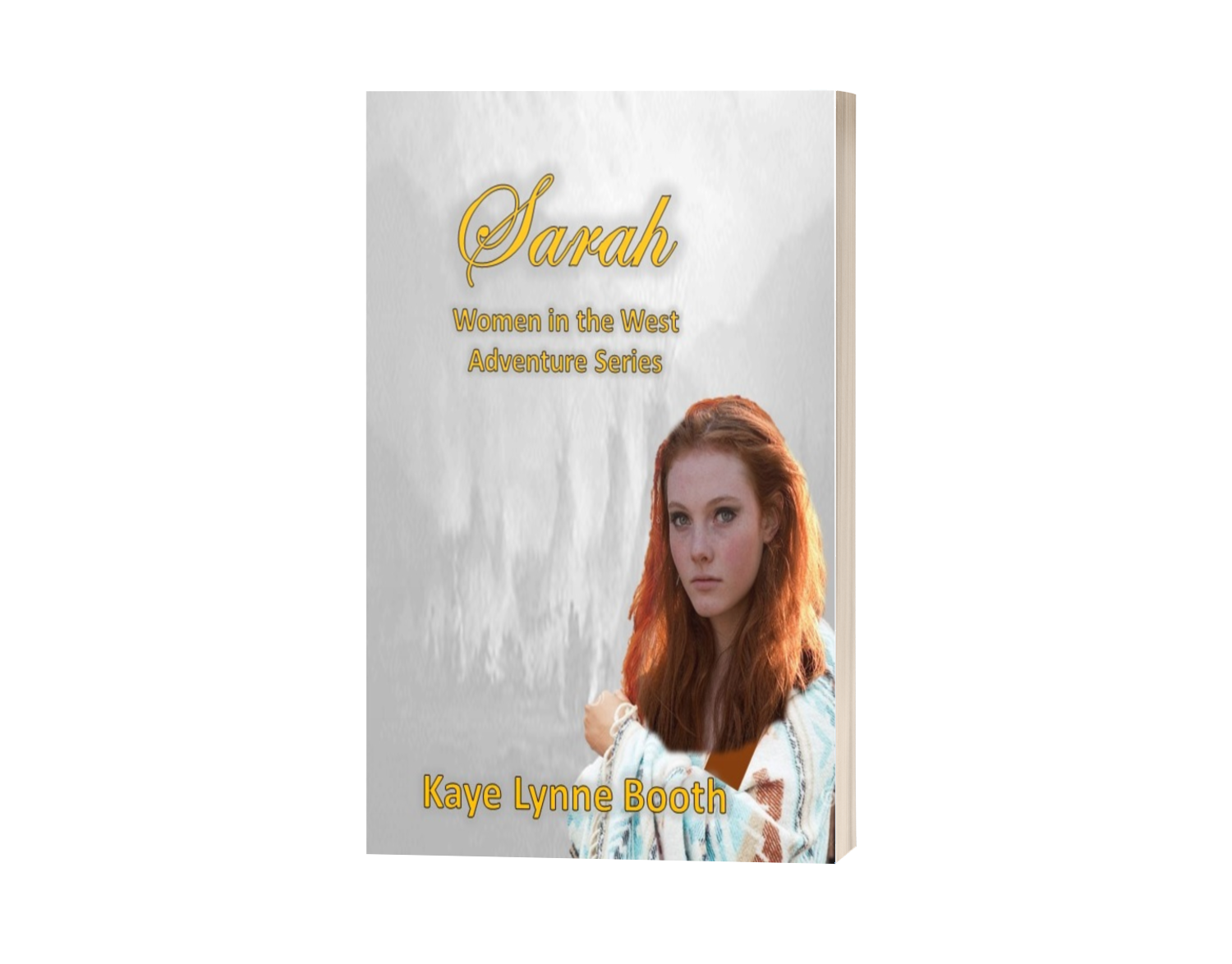
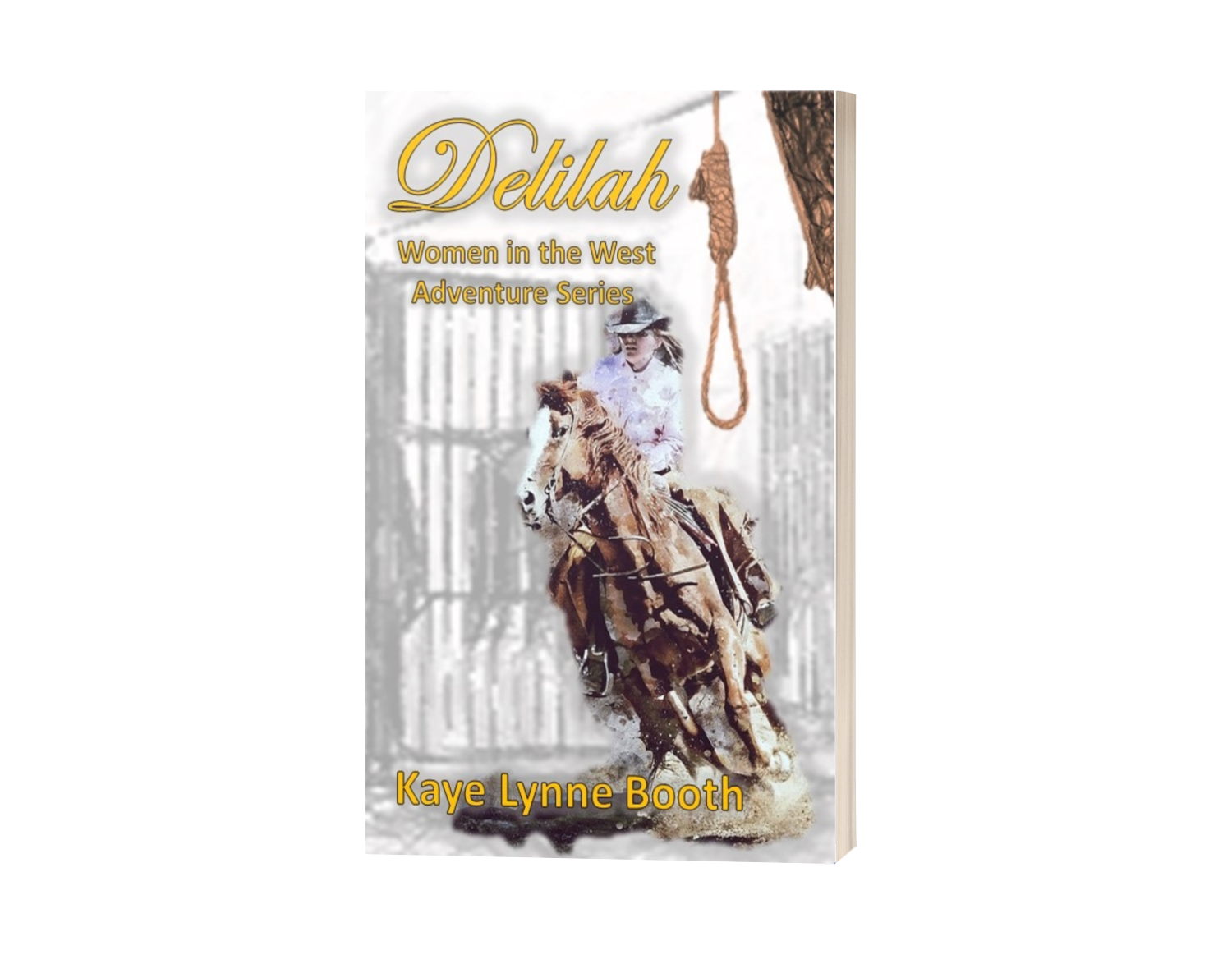
For Kaye Lynne Booth, writing is a passion. Kaye Lynne is an author with published short fiction and poetry, both online and in print, including her short story collection, Last Call and Other Short Fiction; and her paranormal mystery novella, Hidden Secrets; Books 1 & 2 of her Women in the West adventure series, Delilah and Sarah, and Book 1 in her Time-Travel Adventure series, The Rock Star & The Outlaw, as well as her poetry collection, Small Wonders.
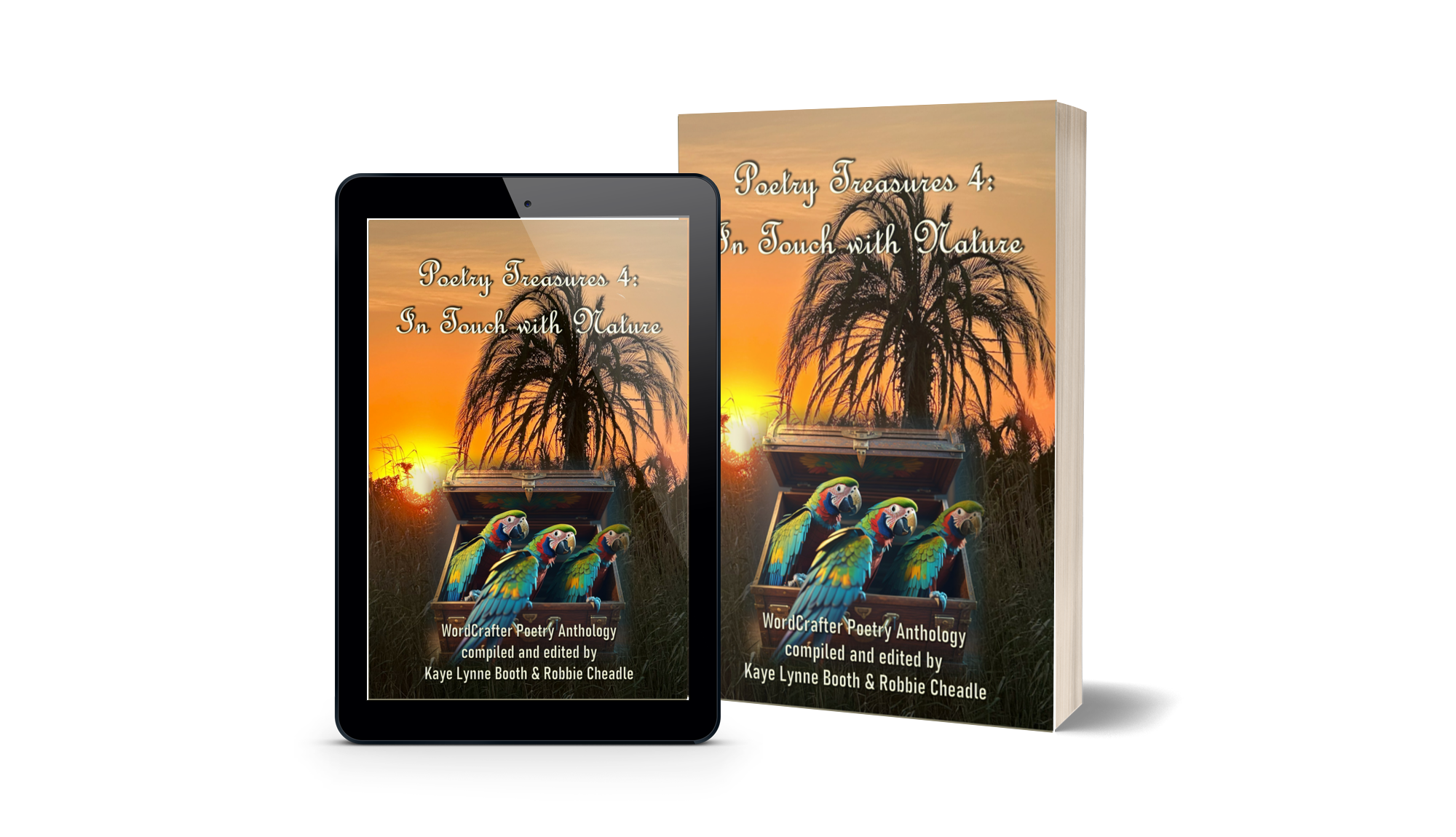
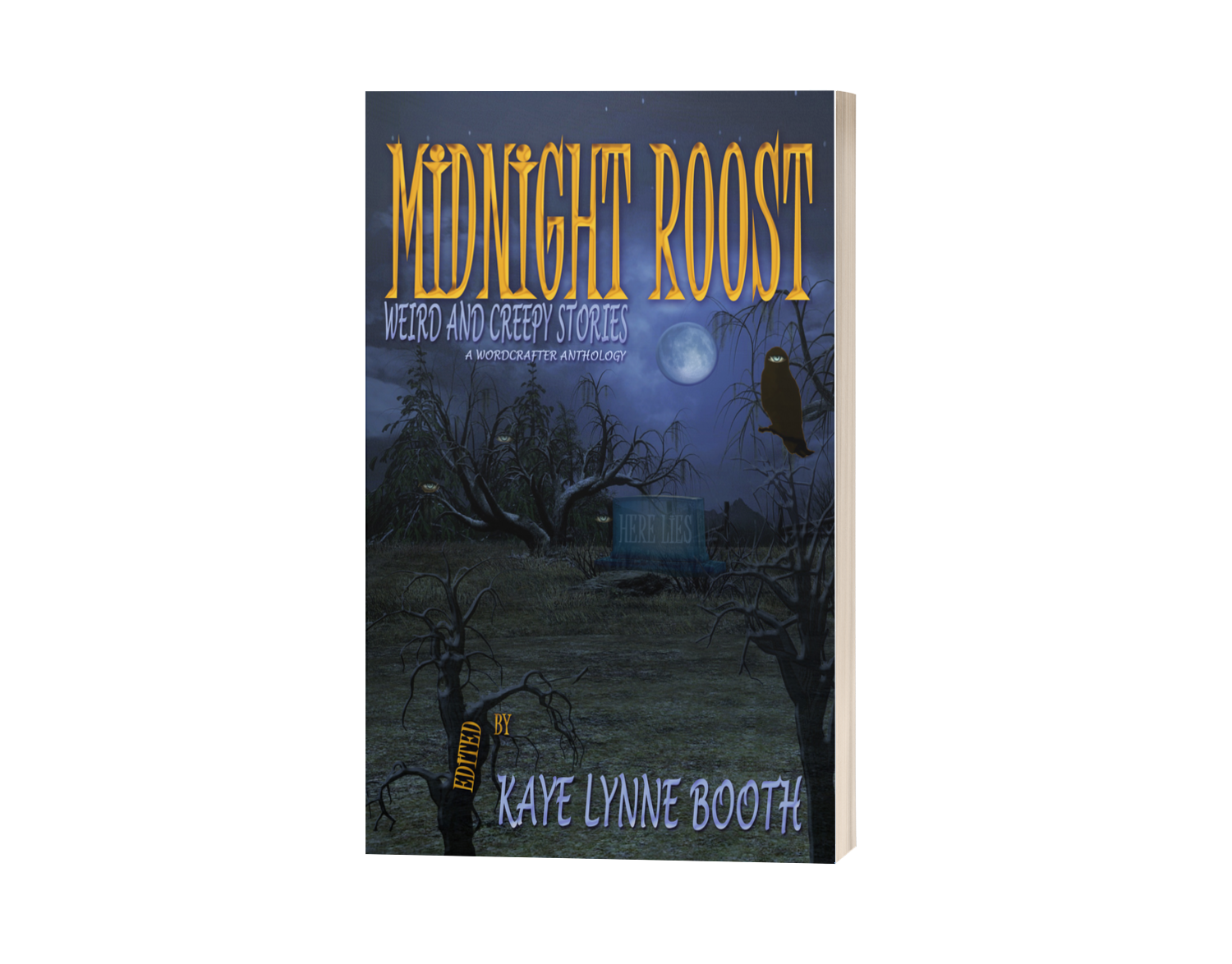
Kaye holds a dual M.F.A. degree in Creative Writing with emphasis in genre fiction and screenwriting, and an M.A. in publishing. Kaye Lynne is the founder of WordCrafter Quality Writing & Author Services and WordCrafter Press, where she edits and publishes two short fiction anthologies and one poetry anthology every year amidst her many writing projects. She also maintains an authors’ blog and website, Writing to be Read, where she publishes content of interest in the literary world.
________________________________________
Did you know you can sponsor your favorite blog series or even a single post with an advertisement for your book? Stop by the WtbR Sponsor Page and let me advertise your book, or you can make a donation to Writing to be Read for as little as a cup of coffee, If you’d like to show your support for this author and WordCrafter Press.
__________________________________________
This segment of “Writer’s Corner” is sponsored by the Robbie’s Inspiration blog site, where you can find ideas on writing and baking with hostess, Robbie Cheadle.
Share this:

Writer’s Corner: Direct Selling on the Kickstarter Platform
Posted: August 15, 2022 Filed under: book marketing, Book Promotion, Kickstarter, Writer's Corner | Tags: book marketing, Direct Sales, Kaye Lynne Booth, Kickstarter, Writer's Corner, Writing to be Read 1 CommentKickstarter seems to be the latest platform for direct sales of your books. They aren’t new to the scene, but they have changed considerably since they first made their appearance. (Look here if you’d like to see a 2012 guest post about Kickstarter by author Tim Baker when they were first starting up.) Up until recently, Kickstarter has been looked upon like a platform where you would go ask for money from people, similar to Go Fund Me, but with , the spectacularly successful campaign that Bryan Sanderson did recently, which everyone seems to be talking about, it looks like that impression may be changing.
Platforms like Kickstarter and Patreon form what Joanna Penn refers to as the “creator economy”, which is similar to what artists did during the Renaissance to survive. (You can listen to Joanna’s interview with Bryan Cohen, author of the Sell More Books Show podcast, on the subjects of Kickstarter and multiple streams of income on The Creative Penn, here.) Renaissance patrons would fund artists and support them so that they could survive while creating their art. Likewise, authors today cannot be expected to survive on just their book income. Most of us would truly starve if we tried to do that. According to Joanna, there are readers out there who are not only willing, but eager, to support your work, you just have to find them.
No. Today’s creators must have multiple streams of income, and many have day jobs to support them, only indulging their craft on a part time basis. Kickstarter provides a platform designed for creatives, including authors, where we can sell our creations directly to our reading audience without the middlemen distributors, such as Amazon, and by selling direct, we receive more than our 70%, allowed by Amazon, or whatever percentage we get from other distributors, but there are a few things we need to prepare for a successful Kickstarter campaign.
Make no mistake. Kickstarter is not a platform where you beg for money, as some may believe. It’s method of direct selling, and when you run a Kickstarter campaign, you have to put in the work for your money. I learned this by following the Kickstarter campaign of Kevin J. Anderson from the operations side of things.
As his student, I was allowed an inside look into the workings of a Kickstarter campaign, and a quite successful one, at that. KJA ran a Kickstarter to fund his latest Dan Shamble Zombie Detective novel, Double Booked. He showed us how to set up the project overview, set your overall campaign goal, set up with Stripe and attach to your bank account so you can get paid, create a video to tell people about your project, set up incentives for the different tiers and stretch goals, etc… Let me tell you, there is a lot of work involved.
Kevin also gave the whole Dan Shamble series eye-catching new covers, which are absolutely fabulous. Then, once the Kickstarter campaign had run its course, the author must make good on their promises and provide the deliverables. For Kevin’s campaign, that involved doing print runs and signing each print copy of the book and mailing them out to his supporters at the appropriate level, (he actually ended up hiring someone to mail them all out, there were so many), as well as following up to be sure each supporter fills out and returns their Kickstarter survey.
KJA’s overall goal was $2,000, which he exceeded. He started at the $5 level, which provided a digital copy of Double Booked. This was the lowest tier of support, so anyone who subscribed to the campaign, at any level, received this. The tiers went all the way up to the $10,000 crazy super fan level, where Kevin promises to narrate an audio book, which he did anyway, then offered as a $25 add on during the campaign. I don’t know how likely it would be for him to actually get a $10,000 crazy super fan to jump on the campaign bandwagon, but either way he narrates his own audio book, and either way he makes money. (You can see just how well KJA did with this Kickstarter here.)
Advice from the hosts of the Six Figure Author podcast (https://6figureauthors.com/ Episode 048 – July 23, 2020) was to never do a Kickstarter for something which you can’t fund on your own, in case you don’t meet your goal. Kevin had Double Booked written before he began the Kickstarter. He knew he could deliver all the rewards promised at every tier. Doing this assures that none of your supporters go away disappointed. Satisfied readers are what is important here, because satisfied readers come back for more. They also suggest setting a lower goal at first, as low as $500, so you’ll be more likely to be able to meet the goal, then raising the bar for subsequent campaigns, building gradually.
Kevin’s campaign was not as crazy successful as Bryan Sanderson’s, which ran right around the same time, but both are examples of how an author can use Kickstarter to sell their work directly to their readers and make decent money. (You can see how crazy successful Bryan Sanderson’s Kickstarter really was here.) Granted, not all authors are Kevin J. Anderson or Bryan Sanderson. While some followers come from the Kickstarter community, it does help to have an existing following, people who already love and admire your work. I think it also helps if you are an established author with a decent backlist, otherwise you would have to make all the rewards new works, which would be even more work for the author.
U.S.A. Today bestselling authors Russell P. Nohelty and Monica Leonelle coauthored Get Your Book Selling on Kickstarter, which talks about reasons to sell direct through Kickstarter, how to sell books on Kickstarter, how to budget and market your Kickstarter project, and more. This book takes you step by step through setting up your Kickstarter campaign, and even though I watched KJA do it, I must admit I was intimidated by the sheer number of steps which must be taken and the things which should be included, and of course, it helps to illustrate everything visually, which adds even more to do. It is really a bit overwhelming. This book reinforces the idea that while Kickstarter does have a community of followers who are looking for campaigns of interest to support, your chances of success will be much improved if you already have a flowing to bring with you to to the platform.
From the author side, there’s a lot involved, but from the supporter side, it’s pretty cool because you get all kinds of goodies. For my support, I received a digital copy of Double Booked, plus a new short story in the series, “Bump in the Night”. As well as stretch goal rewards of digital copies of Kevin J. Anderson’s Selected Stories: Fantasy; from his most popular epic space opera series, Saga of the Seven Suns: Two Short Novels; and a government mystery thriller which he coauthored with Doug Beason, PhD, Virtual Destruction. I’ll be posting reviews for all of these down the road, but there were so many that it’s going to take me a while to get through them. (For now, you can read my review of his Selected Stories: Science Fiction here: https://writingtoberead.com/2019/03/01/kevin-j-andersons-selected-stories-science-fiction-volume-2-a-must-read-for-science-fiction-fans/)
______________________________________________________

For Kaye Lynne Booth, writing is a passion. Kaye Lynne is an author with published short fiction and poetry, both online and in print, including her short story collection, Last Call and Other Short Fiction; and her paranormal mystery novella, Hidden Secrets. Kaye holds a dual M.F.A. degree in Creative Writing with emphasis in genre fiction and screenwriting, and an M.A. in publishing. Kaye Lynne is the founder of WordCrafter Quality Writing & Author Services and WordCrafter Press. She also maintains an authors’ blog and website, Writing to be Read, where she publishes content of interest in the literary world.
____________________________________________________________
Join Kaye Lynne Booth & WordCrafter Press Readers’ Group for WordCrafter Press book & event news, including the awesome releases of author Kaye Lynne Booth. Get a free digital copy of her short story collection, Last Call and Other Short Fiction, as a sampling of her works just for joining.