Dark Origins – The creepy true story behind Alice in Wonderland #DarkOrigins #AliceinWonderland
Posted: April 26, 2023 Filed under: Books, Children's Books, Classics, Dark Origins, Fantasy, Fiction | Tags: Alice in Wonderland, Children's Books, Classic Children's Literature, Dark Origins, Lewis Carroll, Robbie Cheadle, Writing to be Read 76 Comments
Alice in Wonderland is one of my favourite childhood books. I love it so much, I have seven different copies, one of which is vintage.
The book, Alice in Wonderland, starts with a young girl, Alice, sitting on a bank and watching her sister read a boring book with no pictures or conversations. Seeing a white rabbit passing by, she follows it down a rabbit hole. The rabbit walks and talks and has a pocket watch. Alice falls down and down the rabbit hole, all the while having an interesting conversation with herself, and ends up in a large entrance hall. There is a small door beyond which is a beautiful world, but Alice is to big to pass through it. She experiments with eating and drinking various items until she is finally small enough to gain entry to Wonderland.
Wonderland is a strange and mysterious world filled with unusual creatures and people. It is summed up by this quote: “If I had a world of my own, everything would be nonsense. Nothing would be what it is, because everything would be what it isn’t. And contrary wise, what is, it wouldn’t be. And what it wouldn’t be, it would.”
You can obtain a free copy of Alice in Wonderland from Gutenberg here: https://www.gutenberg.org/ebooks/11

About the author
Lewis Carroll was a pseudonym for Charles Lutwidge Dodgson, who was born in England in 1832. At the age of 18, Dodgson left home to attend Oxford University, where he studied and worked for the next 20 years. He was a student and then a professor and a mathematician.
Dodgson created the Lewis Carroll pseudonym while he was at Oxford, in order to write children’s books that would not be connected to his academic career. He was well known for developing close friendships with children but very few relationships with adults. He befriended the children of his colleagues and acquaintances and spent a lot of time with them, even writing them letters.
“Extra thanks and kisses for the lock of hair,” he wrote to a 10-year-old girl. “I have kissed it several times — for want of having you to kiss, you know, even hair is better than nothing.”
When Henry George Liddell became the Dean of Christ Church at Oxford, Dodgson became friends with his three young daughters: Lorina, Edith and Alice.
The story, Alice in Wonderland, came into existence in 1862 when Dodgson and a colleague took the three girls out on a picnic and rowing trip along the Thames. In order to keep the trio entertained, Dodgson started telling the story that would become Alice in Wonderland which was published in 1865.

Dodgson was also a keen photographer and it is known that he took photos of nude and semi-nude children – including a full-frontal nude shot of Alice’s sister Lorina.
Dodgson wrote:
“I confess I do not admire naked boys in pictures. They always seem to me to need clothes: whereas one hardly sees why the lovely forms of girls should ever be coverd [sic] up!”
In 1863, Dodgson’s friendship with the Liddell family came to a sudden end and he never again spent time alone with their daughters.
There’s no record of why Dodgson’s relationship with the family ended, but there is a theory that he proposed marriage to Alice. This wasn’t that unusual in the mid 1800s as the age of consent was 12 years old and some men did marry young girls.
Before even examining the deeper meaning and themes of Alice in Wonderland, its author and the creation of this story are cast in rather a creepy light.
Deeper meaning and themes of Alice in Wonderland
The Tragic and Inevitable Loss of Childhood Innocence
The theme of growing up is central to Alice in Wonderland. The author is credited with enjoying the innocence with which children approach the world. The multitude of physically changes Alice goes through in Wonderland are believed to be symbolic of puberty and the many changes that take place during that period of a person’s life.
Alice finds these changes disturbing and traumatic and she struggles to find a comfortable size, reverting eventually to her original size.
Relevant quotes:
“I wonder if I’ve been changed in the night. Let me think. Was I the same when I got up this morning? I almost think I can remember feeling a little different. But if I’m not the same, the next question is ‘Who in the world am I?’ Ah, that’s the great puzzle!”
“It was much pleasanter at home,” thought poor Alice, “when one wasn’t always growing larger and smaller, and being ordered about by mice and rabbits. I almost wish I hadn’t gone down the rabbit-hole–and yet–and yet–…”
“I knew who I was this morning, but I’ve changed a few times since then.”
Alice is also confused about who she is and her role in the world around her, namely, Wonderland.
“It’ll be no use their putting their heads down and saying “Come up again, dear!” I shall only look up and say “Who am I then? Tell me that first, and then, if I like being that person, I’ll come up: if not, I’ll stay down here till I’m somebody else”–but, oh dear!’ cried Alice, with a sudden burst of tears, ‘I do wish they WOULD put their heads down! I am so VERY tired of being all alone here!”
Life as a Meaningless Puzzle
As Alice travels through Wonderland, she encounters a series of situations and circumstances which she cannot make sense of and which have no clear solutions. This is symbolism for how life throws frustrating curveballs and problems that cannot be solved or unraveled in the expected way. Often, lateral thinking is required to circumvent issues and, sometimes, problems have no solution in life.
Relevant quotes:
“One day Alice came to a fork in the road and saw a Cheshire cat in a tree. ‘Which road do I take?’ she asked. ‘Where do you want to go?’ was his response. ‘I don’t know,’ Alice answered. ‘Then,’ said the cat, ‘it doesn’t matter.”
“Mad Hatter: Would you like a little more tea?
Alice: Well, I haven’t had any yet, so I can’t very well take more.
March Hare: Ah, you mean you can’t very well take less.
Mad Hatter: Yes. You can always take more than nothing.”
“The March Hare took the watch and looked at it gloomily: then he dipped it into his cup of tea, and looked at it again: but he could think of nothing better to say than his first remark, ‘It was the best butter, you know.’ Alice had been looking over his shoulder with some curiosity. ‘What a funny watch!’ she remarked. ‘It tells the day of the month, and doesn’t tell what o’clock it is!’ ‘Why should it?’ muttered the Hatter. ‘Does your watch tell you what year it is?’ ‘Of course not,’ Alice replied very readily: ‘but that’s because it stays the same year for such a long time together.’ ‘Which is just the case with mine,’ said the Hatter. Alice felt dreadfully puzzled. The Hatter’s remark seemed to have no sort of meaning in it, and yet it was certainly English. ‘I don’t quite understand you,’ she said, as politely as she could. ‘The Dormouse is asleep again,’ said the Hatter, and he poured a little hot tea upon its nose. The Dormouse shook its head impatiently, and said, without opening its eyes, ‘Of course, of course; just what I was going to remark myself.’ ‘Have you guessed the riddle yet?’ the Hatter said, turning to Alice again. ‘No, I give it up,’ Alice replied: ‘what’s the answer?’ ‘I haven’t the slightest idea,’ said the Hatter. ‘Nor I,’ said the March Hare. Alice sighed wearily. ‘I think you might do something better with the time,’ she said, ‘than waste it in asking riddles that have no answers.’ ‘If you knew Time as well as I do,’ said the Hatter, ‘you wouldn’t talk about wasting it.”

Death as a Constant and Underlying Menace
Over and over again, Alice finds herself in dangerous situations that suggest that death is lurking just around the corner. Although death never manifests in the book, the reader senses it and so does Alice. At the end of the book she comes to realise that despite the ridiculous circumstances in Wonderland, death could be a very real outcome and that is when she wakes up and the reader comes to understand the entire book is a dream.
Relevant quotes:
“Well!” thought Alice to herself. “After such a fall as this, I shall think nothing of tumbling down-stairs! How brave they’ll all think me at home! Why, I wouldn’t say anything about it, even if I fell off the top of the house!” (Which was very likely true.)”
“The executioner’s argument was that you couldn’t cut of something’s head unless there was a trunk to sever it from. He’d never done anything like that in his time of life, and wasn’t going to start now.
The King’s argument was that anything that had a head, could be beheaded, and you weren’t to talk nonsense.
The Queen’s argument was that if something wasn’t done about it in less than no time, she’d have everyone beheaded all round.
It was this last argument that had everyone looking so nervous and uncomfortable.”
Characterisation
Alice meets a plethora of characters that have become well known. It is believed that many of these characters, including Alice herself, suffer from mental health disorders. This is a list of some of the most famous characters with a description from Spark Notes (https://www.sparknotes.com/lit/alice/characters/)
The White Rabbit – “The frantic, harried Wonderland creature that originally leads Alice to Wonderland. The White Rabbit is figure of some importance, but he is manic, timid, and occasionally aggressive.” The White Rabbit suffers from an anxiety disorder and is in a constant state of panic.
The Queen of Hearts – “The ruler of Wonderland. The Queen is severe and domineering, continually screaming for her subjects to be beheaded.” The Queen of Hearts is completely self absorbed and has a narcissistic personality disorder.
The Cheshire Cat – “A perpetually grinning cat who appears and disappears at will. The Cheshire Cat displays a detached, clearheaded logic and explains Wonderland’s madness to Alice.” The Cheshire Cat is schizophrenic.
The Caterpillar – “A Wonderland creature. The Caterpillar sits on a mushroom, smokes a hookah, and treats Alice with contempt. He directs Alice to the magic mushroom that allows her to shrink and grow.” The Caterpillar is a drug addict who smokes a hookah and gives Alice a mushroom with mind and body-altering capabilities.

The Mad Hatter – “A small, impolite hatter who lives in perpetual tea-time. The Mad Hatter enjoys frustrating Alice.” The hatter is simply mad.
Have you read Alice in Wonderland? Did you spot these underlying themes and meanings?
Share this:

Contemporary versus classic books for children
Posted: November 13, 2019 Filed under: Books, Children's Books, Classics, Reading | Tags: Children's Books, Classic Children's Literature, Contemporary Children's Literature, Growing Bookworms, Robbie Cheadle, Writing to be Read 43 Comments
I have read a lot of children’s books. Some I read to myself as a girl and others I read to my sons, nephews and nieces and the children who attended our local Sunday school, over the past sixteen years. Many of the books I have read over the past six teen years are contemporary fiction which is defined as a fictional book (events, settings, characters etc. described are not real) set in contemporary times (modern times).
A few examples of popular contemporary fiction book series for children I can think of are Horrid Henry written by Francesca Simon and illustrated by Tony Ross, Winnie the Witch written by Valerie Thomas and illustrated by Korky Paul and the Percy Jackson, Kane Chronicles and Heroes of Olympus series written by Rick Riordan. All of these books share the common characteristic that they are set in our modern world and the main characters have access to television, email, cell phones and the internet.


Two common traits I have noticed with contemporary fiction books for children are that these books tend to be far more plot driven than classic children’s books and that there is often, but not always, a theme of disregard and even disrespect for authority figures.
The books I have mentioned above are the ones that I think deal with this growing concept of disrespect towards authority figures by youthful characters in books in an acceptable manner. Horrid Henry, for example, is a naughty pre-teen boy. His brother is his complete anti-thesis and many of the stories revolve around the tension and conflict between the two boys. In these stories, however, the parents always come out on top and Henry is always disciplined and made to toe the line.
Books that are more plot driven can be more appropriate for modern children than classic books which focus more on characterisation such as Little Women by Louise May Alcott and What Katy Did. Our children are used to the fast pace of television and computer games so if we want a book of compete with these other choices, it needs to keep their attention. Modern children also have shorter concentration spans due to modern electronic devices and do not want to read long flowery descriptions. I think the same can be said for many modern adult readers too. Short stories and novellas have become more popular due to time constraints and more available choices when it comes to relaxation. Many modern readers do not want to trawl through the lengthily descriptions included in books like Great Expectations by Charles Dickens and The Scarlet Letter by Nathaniel Hawthorne.
Given everything I have said above, are classic books worthwhile for modern children, or even books written post World War II like Enid Blyton’s books?
Let us look at the definition of a classic book: “The classic that keeps on being read is the book whose situations and themes remain relevant over time—that miracle of interpretive openness that makes us feel as though certain stories, poems, and plays are written with us in mind.”
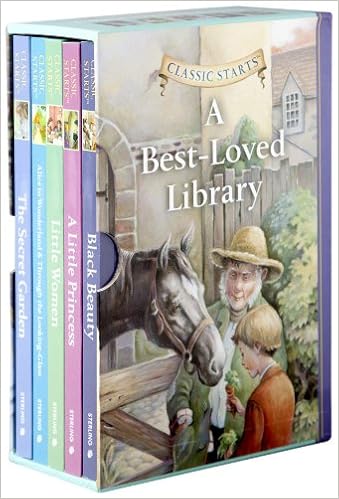
I group classic books in my mind into fairy tales and other classic books. Fairy tales spark the imagination and this is an important aspect of children’s development. In addition, fairy tales help children confront and overcome their fears, which are featured in these enduring stories and also, provide a lot of social messages about how to behave in order to achieve a good life outcome. Fairy tales also introduce children to the idea that life has pitfalls and things don’t always go the way you hope and want them to. They teach children to be resilient and enduring.
Classic books feature humans experiencing life and all it has to offer. The often contain thought-provoking socio-ethical situations such as I am David, which depicts the life of a boy on the run from a concentration camp. Classic books introduce children to history in an interesting and understandable way such as the Little House series of books which depict the pioneer life of Laura Ingalls Wilder and her family. As with fairy tales, classic books contain messages the teach children about perseverance to overcome injustice such as the Count of Monte Cristo. Classic books are also a challenge which stimulate the mind, which can only be a good thing.
What are your thoughts and experiences with contemporary and classic books for children?
About Robbie Cheadle

Hello, my name is Robbie, short for Roberta. I am an author with six published children’s picture books in the Sir Chocolate books series for children aged 2 to 9 years old (co-authored with my son, Michael Cheadle), one published middle grade book in the Silly Willy series and one published preteen/young adult fictionalised biography about my mother’s life as a young girl growing up in an English town in Suffolk during World War II called While the Bombs Fell (co-authored with my mother, Elsie Hancy Eaton). All of my children’s book are written under Robbie Cheadle and are published by TSL Publications.
I have recently branched into adult and young adult horror and supernatural writing and, in order to clearly differential my children’s books from my adult writing, I plan to publish these books under Roberta Eaton Cheadle. My first supernatural book published in that name, Through the Nethergate, is now available.
I have participated in a number of anthologies:
- Two short stories in #1 Amazon bestselling anthology, Dark Visions, a collection of horror stories edited by Dan Alatorre;
- Three short stories in Death Among Us, an anthology of murder mystery stories, edited by Stephen Bentley;
- Three short stories in #1 Amazon bestselling anthology, Nightmareland, a collection of horror stories edited by Dan Alatorre; and
- Two short stories in Whispers of the Past, an anthology of paranormal stories, edited by Kaye Lynne Booth.
I also have a book of poetry called Open a new door, with fellow South African poet, Kim Blades.
Find Robbie Cheadle
Blog: https://www.robbiecheadle.co.za/
Blog: robbiesinspiration.wordpress.com
Goodreads: Robbie Cheadle – Goodreads
Twitter: BakeandWrite
Instagram: Robbie Cheadle – Instagram
Facebook: Sir Chocolate Books
Want to be sure not to miss any of Robbie’s “Growing Bookworms” segments? Subscribe to Writing to be Read for e-mail notifications whenever new content is posted or follow WtbR on WordPress.
Share this:

A children’s picture book literary tasting
Posted: August 14, 2019 Filed under: Books, Children's Books, Classics, Fiction, Growing Bookworms, Reading, Stories | Tags: Beatrix Potter, Children's Books, Children's Stories, Classic Children's Literature, Dr. Suess, Growing Bookworms, Korky Paul, Richard Scarry, Valerie Thomas, Writing to be Read 41 Comments
This month on Writing to be Read, I thought it would be fun to do a children’s picture book literary tasting to give readers an opportunity to sample short extracts from some wonderful children’s picture books. Interesting toddlers and small children in books and the written word lays the foundation for future readers and there is nothing like a great picture book to entice them into the book world.
Imagine you are at a picnic and the snippets in this post are delicious and varied food items.

The wonderful Dr Seuss
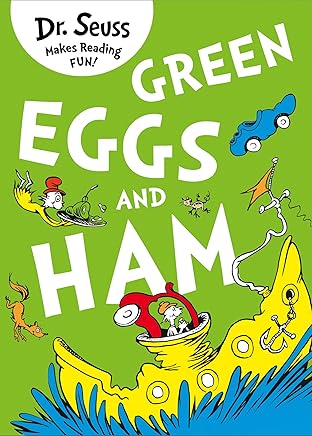
Dr Seuss’ delightful rhyming verse picture books are the perfect reading material for small children and beginner readers. There is a lot of benefit to the sound and word repetitions in these books which is comforting and confident enhancing to children in this age and learning bracket.
Dr Seuss also includes messages about friendship, environmental friendliness and sharing in his books which can’t go amiss.
I see his books as the hamburgers at the picnic.
“And then I got mad.
I got terribly mad.
I yelled at the Lorax, “Now listen here, Dad!
All you do is yap-yap and say, Bad! Bad! Bad! Bad!
Well, I have my rights, sir, and I’m telling you
I intend to go on doing just what I do!
And, for your information, you Lorax, I’m figgering on biggering
and BIGGERING
and BIGGERING
and BIGGERING,
turning MORE Truffula Trees into Thneeds
which everyone, EVERYONE, EVERYONE needs!“
From The Lorax by Dr. Seuss. You can purchase all of Dr Seuss’ books here: Dr Seuss Amazon US
The creative Richard Scarry
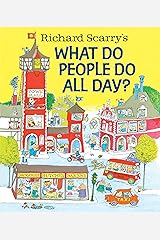
Richard Scarry is an amazing artist and children’s book author. He is know for his brilliant artwork personification where pigs, dogs, hippos and other animals wear clothes and take the roles of humans in his fantasy world. His books are aimed at a variety of age groups from toddlers to young children and teach them about a variety of things such as their ABCs for the youngest age group to What do people do all day?, Cars and trucks and things that co and A day at the airport. My boys loved these books and listened to me read them over and over again.
Richard Scarry books are the French fries at the picnic.
““Ho! Ho! Ho! And who are you?” asks a
great big fellow in red trousers. Mr Frumble
explains that he needs his skipickledoo
repaired so that he can get to the North Pole.
“Ho, ho, but you ARE at the North Pole!
I’m Santa Bear and these are all my helpers.”
Welcome!””
From The Night Before the Night Before Christmas! by Richard Scarry. You can buy all of Richard Scarry’s books here: Richard Scarry Amazon US
The artistic Beatrix Potter
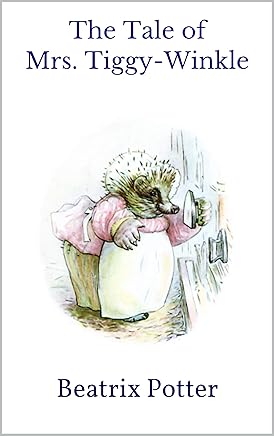
Beatrix Potter wrote beautiful stories about the trails and tribulations of the small animals she had as pets and also studied during holidays to Scotland and the Lake District. The most famous of Beatrix Potter’s books is The Tale of Peter Rabbit. My personal favourites are The Tale of Mrs. Tiggy-Winkle, which features a hedgehog, and The Tale of Two Bad Mice, which features two naughty mice, Tom Thumb and his wife, Hunca Munca.
The Beatrix Potter books are the delicious cake at the picnic.
“Hunca Munca tried every tin spoon in
turn; the fish was glued to the dish.
Then Tom Thumb lost his temper. He put
the ham in the middle of the floor, and hit it
with the tongs and with the shovel – bang, bang,
smash, smash!
The ham flew all into pieces, for underneath the
shiny pain it was made of nothing but plaster!”
From The Tale of Two Bad Mice by Beatrix Potter. You can purchase all of Beatrix Potter’s books here: Beatrix Potter Amazon US
The fun Valerie Thomas and Korky Paul
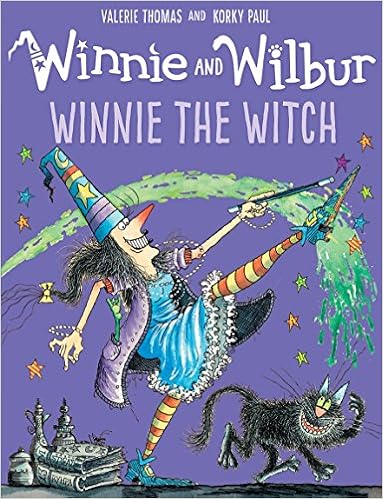
Valerie Thomas and Korky Paul have teamed up to create the Winnie the Witch series of children’s picture books which feature a sweet and unconventional witch called Winnie and her sardonic cat named Wilbur. Winnie likes black and eats funny foods like batburghers, but Winnie has a heart of gold and is always trying to do nice things to impress and entertain the “little ordinaries” who attend the local primary school. Unfortunately, Winnie’s attempts to do conventional things always ends in disaster and Wilbur has to try to bail her out of her debacles. My son, Michael, and my two nephews loved these books and I read them many times to an attentive and fascinated audience. These books are more modern and include references to technology in the form of computers and mobile phones which appeals to modern children.
I see the Winnie the Witch books as the sweet and tempting cupcakes at the picnic.
“Winnie turned around, and there behind her
was a great crowd of people. They were
running along the road towards her house.
***
They crowded into her garden
They took off their coats, their
hats, their boots, their gloves,
and their scarves.
***
They sat in the sunshine
They walked on Winnie’s flowers
They put orange peel on Winnie’s
grass. They paddled in Winnie’s pond.”
From Winnie in Winter by Valerie Thomas and Korky Paul. You can buy all their books here: Valerie Thomas Amazon US
I hope you have enjoyed this literary tasting. See you next month.
About Robbie Cheadle
Hello, my name is Robbie, short for Roberta. I am an author with five published children’s picture books in the Sir Chocolate books series for children aged 2 to 9 years old (co-authored with my son, Michael Cheadle), one published middle grade book in the Silly Willy series and one published preteen/young adult fictionalised biography about my mother’s life as a young girl growing up in an English town in Suffolk during World War II called While the Bombs Fell (co-authored with my mother, Elsie Hancy Eaton). All of my children’s book are written under Robbie Cheadle and are published by TSL Publications.
I have recently branched into adult horror and supernatural writing and, in order to clearly differential my children’s books from my adult writing, I plan to publish these books under Roberta Eaton Cheadle. I have two short stories in the horror/supernatural genre included in Dark Visions, a collection of 34 short stories by 27 different authors and edited by award winning author, Dan Alatorre. These short stories are published under Robbie Cheadle.
I have recently published a book of poetry called Open a new door, with fellow South African poet, Kim Blades.
Find Robbie Cheadle
Blog: https://bakeandwrite.co.za/
Blog: robbiesinspiration.wordpress.com
Goodreads: Robbie Cheadle – Goodreads
Twitter: BakeandWrite
Instagram: Robbie Cheadle – Instagram
Facebook: Sir Chocolate Books
Want to be sure not to miss any of Robbie’s Growing Bookworms segments? Subscribe to Writing to be Read for e-mail notifications whenever new content is posted or follow WtbR on WordPress.




















