Treasuring Poetry – Sunflower Tanka Dreams anthology compiled by Robbie Cheadle and Colleen M. Chesebro
Posted: December 17, 2025 Filed under: Anthology, Poetry, Treasuring Poetry | Tags: #Poetryanthology, #Poetrycommunity, #RobbieCheadle, #TreasuringPoetry, Colleen M. Chesebro, Dreams, Poetry, Poetry Anthology, Robbie Cheadle, Sunflower Tanka, Treasuring Poetry, Writing to be Read 67 CommentsHi everyone, this is my last Treasuring Poetry post 0f 2025 and I’m thrilled to be ending with a post about the second anthology in the Sunflower Tanka anthology series with the theme of dreams.
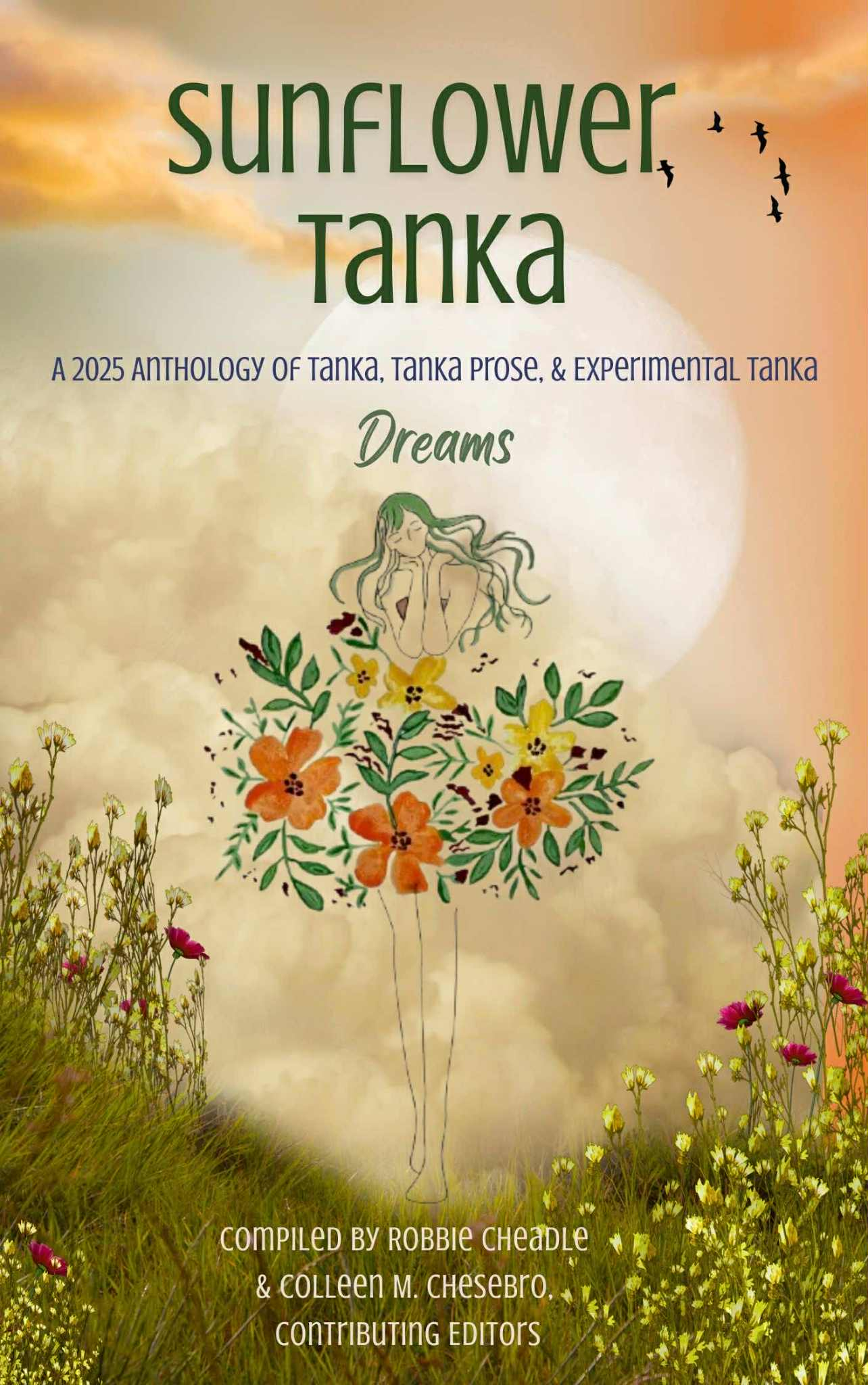
This wonderful anthology has 54 contributors and the variety of fascinating takes on the theme of dreams is fascinating. Colleen M. Chesebro and I are contributing editors of this collection and Colleen created an amazing cover using one of my watercolour paintings. The green-haired flower maiden is based on Meadow, a character from one of Teagan Riordain Geneviene’s imaginative stories, Atonement in Bloom. You can learn more about this book here: https://teagansbooks.com/2025/12/08/a-bloomin-snippet-for-cffc/
Blurb
Sunflower Tanka, edited by Robbie Cheadle and Colleen M. Chesebro, is an annual anthology showcasing contemporary tanka, tanka prose, and experimental tanka. Each volume brings together a vibrant tapestry of voices—both emerging and established—from across the globe.
For 2025, our theme “Dreams” invites poets to explore the symbolic language of dreaming, where metaphors blur the line between reality and imagination. Dreams often serve as gateways to layered meaning, offering fertile ground for syllabic poetry.
This year’s contributors journeyed deep into their dreamscapes, opening portals to boundless creativity. Through the timeless form of syllabic verse, they captured visions that transcend waking life, weaving poetry that resonates with mystery, wonder, and the infinite possibilities of the human imagination.
This is the promo video on YouTube:
I am going to take this opportunity to share one of Colleen’s poems and one of my collaborative poem’s with my son, Michael, from this collection.
Writing Through Dreams (tanka Puente) by Colleen M. Chesebro
in the fog of lies
honesty outlines a path
beyond my worst fears
my dreams, a shining lighthouse
nudge out my darkest secrets
– Honesty is the first chapter in the book of wisdom. – Thomas Jefferson, former U.S. president
dreams empower me
to use my curative skills
a fresh cup of tea
affords me the wisdom to
write syllabic poetry
The End In Sight (Tanka Puente Collaboration) by Robbie and Michael Cheadle
on the brink of change
bright eyes viewing the future
my son and his friends
graduation imminent
transition to adulthood
– If you think you can do a thing or think you can’t do a thing, you’re right – Henry Ford
anxiety creeps
deep despair spreads like fire
spars fear of failure
disappointing those you love
mother’s nagging tongue lashes
My review
This is a collection of beautiful syllabic poems contributed by 54 poets from around the world. All the poems centre around the theme of dreams and the range of interpretations is fascinating.
The poems in the collection comprise of tanka, tanka prose, garland tanka, tanka Puente, bussokuseki, rensaku and taiga which includes a black and white image and they collectively form a delightful poetry adventure.
The collection is introduced with an interesting overview about the inspiration for the theme and the various meanings of the word dreams. This section closes with a delightful tanka by partnering editor, Colleen Chesebro, as follows:
rain cools with sky-mist
sweet drops spark my appetite
whispering prayers
moonlight breaks through the darkness
a feverish dream of you
The collection concludes with a selection of each of the partnering editors favourite poems and the reasons why those specific poems resonated with each of them.
One of my favourite poems is by Yvette M. Calleiro:
miracle baby
you came to me in a dream
blessing from above
missing puzzle piece in life
my greatest accomplishment
I feel this way about my own two sons and so this poem has stayed in my heart.
A delightful collection of poetry that will make a lovely gift to others or to yourself.
Amazon US purchase link: https://www.amazon.com/Sunflower-Tanka-Anthology-Prose-Experimental/dp/B0G51RKG61
Tanka Tuesday
You can join in weekly syllabic poetry challenges on Tanka Tuesday here: https://tankatuesday.com/2025/12/09/tankatuesday-poetry-challenge-no-42-gift-gifting-12-09-25/
About Colleen M. Chesebro
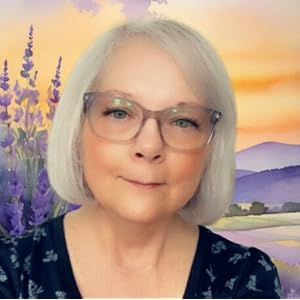
Colleen M. Chesebro grew up in a large city in the Midwest. Keen on making her own way in the world, she joined the United States Air Force after graduation to tour the world and find herself. To this day, that search continues.
An avid reader, Colleen M. Chesebro rekindled her love of writing poetry after years spent working in the accounting industry. These days, she loves crafting syllabic poetry, flash fiction, and creative fiction and nonfiction.
In addition to poetry books, Chesebro’s publishing career includes participation in various anthologies featuring short stories, flash fiction, and poetry. She’s an avid supporter of her writing community on her blog on by organizing and sponsoring a weekly syllabic poetry challenge, called #TankaTuesday, where participants experiment with traditional and current forms of Japanese and American syllabic poetry.
Chesebro lives in the house of her dreams in mid-Michigan, surrounded by the Great Lakes with her husband and two (unicorn) cats, Chloe & Sophie.
You can find Colleen M. Chesebro on her personal blog here: https://colleenchesebro.org/
About Robbie Cheadle

South African author and illustrator, Robbie Cheadle, has written and illustrated sixteen children’s books, illustrated a further three children’s books, and written and illustrated three poetry books. Her work has also appeared in poetry and short story anthologies.
Robbie also has two novels and a collection of short stories published under the name of Roberta Eaton Cheadle and has horror, paranormal, and fantasy short stories featured in several anthologies under this name.
You can find Robbie Cheadle’s artwork, fondant and cake artwork, and all her books on her website here: https://www.robbiecheadle.co.za/
________________________
Did you know you can sponsor your favorite blog series or even a single post with an advertisement for your book? Stop by the WtbR Sponsor Page and let me advertise your book, or you can make a donation to Writing to be Read for as little as a cup of coffee, If you’d like to show your support for this author and WordCrafter Press.
__________________________
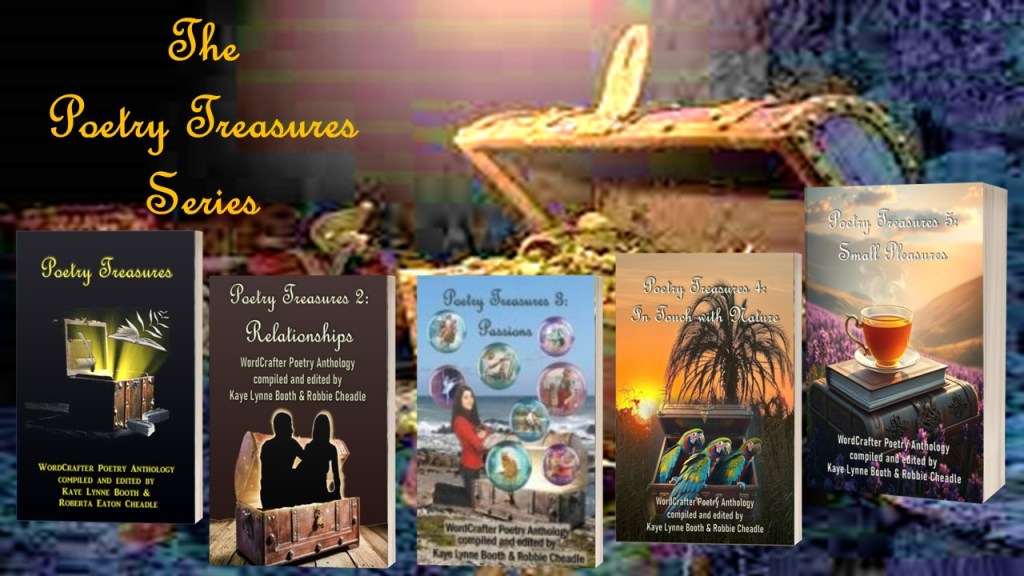
This segment of “Treasuring Poetry” is sponsored by WordCrafter Press and the Poetry Treasures series.
Get Your Copy Today!
Poetry Treasures: https://books2read.com/PoetryTreasures
Poetry Treasures 2: Relationships: https://books2read.com/PT2-Relationships
Poetry Treasures 3: Passions: https://books2read.com/u/b5qnBR
Poetry Treasures 4:In Touch With Nature: https://books2read.com/PT4-Nature
Poetry Treasures 5: Small Pleasures: https://books2read.com/PT5-SmallPleasures
Share this:

Treasuring Poetry – Meet poet and blogger, Melissa Lemay, and a review of Bro ken Rengay
Posted: November 19, 2025 Filed under: Treasuring Poetry | Tags: #Bookreview, #Poetrycommunity, #TreasuringPoetry 57 Comments
My November Treasuring Poetry guest is poet and blogger, Melissa Lemay. Melissa is also the editor of Collaborature, an online journal for poetry and fiction. You can find Melissa on her blog here: https://melissalemay.wordpress.com/2025/11/06/creating-community-syllabic-poetry-more-with-colleen-chesebro/
You can find out how to submit to Collaborature here: https://collaborature.blogspot.com/p/submit.html
Tell us about Collaborature. What inspired the idea for this on-line poetry platform and what are your aims for it going forward?
Collaborature is an online only journal for poetry and fiction. The key point of every submission is that it must be written by more than one author, or include a collaboration of two or more individuals (eg: art and poetry).
Inspiration for this idea was a result of my collaborating with various writers, like David Bogomolny, Lesley Scoble, Nigel Byng, and Lakshman Bulusu. I found that I enjoyed the art of creating poetry together very enjoyable. It was from these collaborations, along with my participation in the poetry community on WordPress and places like dVerse and Tanka Tuesday, that I turned my focus toward collaborative work.
I searched the internet and found that there were very limited options for people to have their collaborative work published. I mulled it over for a while, what this space and creating it would look like. Through encouragement of friends, and with help from Nigel coming up with the name, I decided to launch a journal in January of this year.
Submissions to Collaborature have slowed down a great deal. Initially, I scheduled one post for each publishing day. The amount of submissions I received was so great that I began to schedule two posts a day. I did this to reduce the wait time for publishing. Even now, I am scheduling a couple months out. Perhaps this was an error, and I should have kept to one per day. Now that submissions have slowed down, I have enough works to take us through January. If people aren’t interested in submitting, then unfortunately I won’t be able to maintain this publication schedule, and may even need to shut down Collaborature altogether. This is not my dream, but I accept that things are constantly changing, and that whatever there is a need for will flourish. It has been a great first year and a wonderfully engaging experience. I have gotten to know more friends from around the world and build relationships with some of the writers who submit to Collaborature.
How do you go about writing collaborative poetry? I am sure many poets would like to try but don’t know how to go about collaborating with a poem.
Initially, I wanted to host strictly collaborative poetry that was written by multiple authors at Collaborature. Even before it launched, I considered that it was such a niche market and might be difficult to gather enough submissions to have the journal running the way I envisioned. I wanted to have multiple posting days a week, preferably a couple posts per day. I realized that people may not submit enough poetry and fiction to have continued publication. So, I allowed submitters to collaborate by writing ekphrastic poetry, quoting other authors, and so on, in order to broaden the category for the journal’s purposes.
To write truly collaborative poetry in the present moment, one must have a partner to work with. People make this more difficult than it needs to be. In my experience, part of the problem is that people are hesitant to reach out to other people, for whatever reasons. Time is also a factor. I hear that from people, that they just don’t have time to collaborate.
My collaborations started via email. I think David’s Poetry Partners was a big inspiration. His is a great example of writing collaborative poetry. Poets submit a poem to him and he responds with a poem of his own, and then he publishes these pairings on his blog. This is a perfect example of how to write collaborative poetry. Well done, David!
In my mind, collaboration really can take on a broader view. Any time two people work together, in essence this is collaborative. Just as we are all connected and our actions every day influence other people around us, so do our words on the page. I don’t think it is an “easy out” to sit down and write a response poem to a poem written by someone who is deceased. You’re still working with that person’s ideas. Had they not had them, you would not have been prompted to create that response. So, I think this should be counted towards collaborative work.
However, I would love to see people truly connecting with one another. It can be as simple as you writing a line and sending it to me, then I respond with a line, then you respond with another line, and so on. Or send a short poem to a friend, and and them to respond with a short poem. There are tons of forms that lend themselves to collaborative work effectively. A lot of the Japanese forms were begun through collaborative work. Renga is a great example. This form started over 700 years ago, which tells me that people have had the desire far and wide and for a long time to engage collaboratively with one another.
My suggestion: if you have a friend and you’d like to try writing collaborative poetry (or fiction), get together in person, on the phone, or via email, and talk about your ideas. Decide how you will write, whether line by line, or maybe you’ll try a form like renga. Carol Anne and I have written acrostics together for each month of the year; we each take a letter, write a line, and alternate back and forth. You may see them all here: https://collaborature.blogspot.com/search?q=Carol+Anne+and+Melissa+Lemay
A quick internet search will return lots of results with different collaborative forms or ideas for collaborating together. Here are a few sources:
https://poets.ca/collaborative-poetry/
https://www.writersdigest.com/write-better-poetry/list-of-50-poetic-forms-for-poets
Tell us about Bro ken Rengay. How did this collection of collaborative poems come into being?
Bro ken Rengay came from my introduction of Rengay to Nolcha Fox and Barbara Leonhard. I became friends with both of them through submitting to different websites where they are editors, as well as responding to prompts Nolcha posted in various places. Nolcha and Barbara have published books both together and separately. I have read some of their writing and thought it would be fun to write together, so I reached out. Thankfully, they also liked the idea.
I had recently discovered Rengay, and I suggested we use this form. We were off to the races! We share similar senses of humor and thoughts about life. So, writing together was a breeze. Our voices compliment one another nicely. Bro ken Rengay includes around 30 published works. We have more in our arsenal.
Who is your favourite poet and why?
I don’t really have a favorite poet, although I have many whom I enjoy. Ai, Gwendolyn Brooks, Charles Bukowski, Emily Dickinson, Allen Ginsberg, Dorianne Laux, Sylvia Plath, Assotto Saint, Charles Simic, Dylan Thomas… There are also many WordPress poets whom I admire, too many to name, but a handful: David Bogomolny, Robbie Cheadle, Colleen Chesebro, Kim M. Russell, Kerfe Roig, Lesley Scoble, Merril D. Smith, Andrew Wilson… Okay, that’s more than a handful…
What is your favourite poem?
I have two favorite poems, and they’re both fairly short. I think they compliment each other quite well, they exhibit the tension of the duality of human existence and spirit, and I have been deeply embedded in both sides of the coin. I hope you enjoy them.
“Cause and Effect”
By Charles Bukowski
the best often die by their own hand
just to get away,
and those left behind
can never quite understand
why anybody
would ever want to
get away
from
them
“For the Sake of Strangers”
By Dorianne Laux
No matter what the grief, its weight,
we are obliged to carry it.
We rise and gather momentum, the dull strength
that pushes us through crowds.
And then the young boy gives me directions
so avidly. A woman holds the glass door open,
waiting patiently for my empty body to pass through.
All day it continues, each kindness
reaching toward another—a stranger
singing to no one as I pass on the path, trees
offering their blossoms, a child
who lifts his almond eyes and smiles.
Somehow they always find me, seem even
to be waiting, determined to keep me
from myself, from the thing that calls to me
as it must have once called to them—
this temptation to step off the edge
and fall weightless, away from the world.
My review of Bro ken Rengay
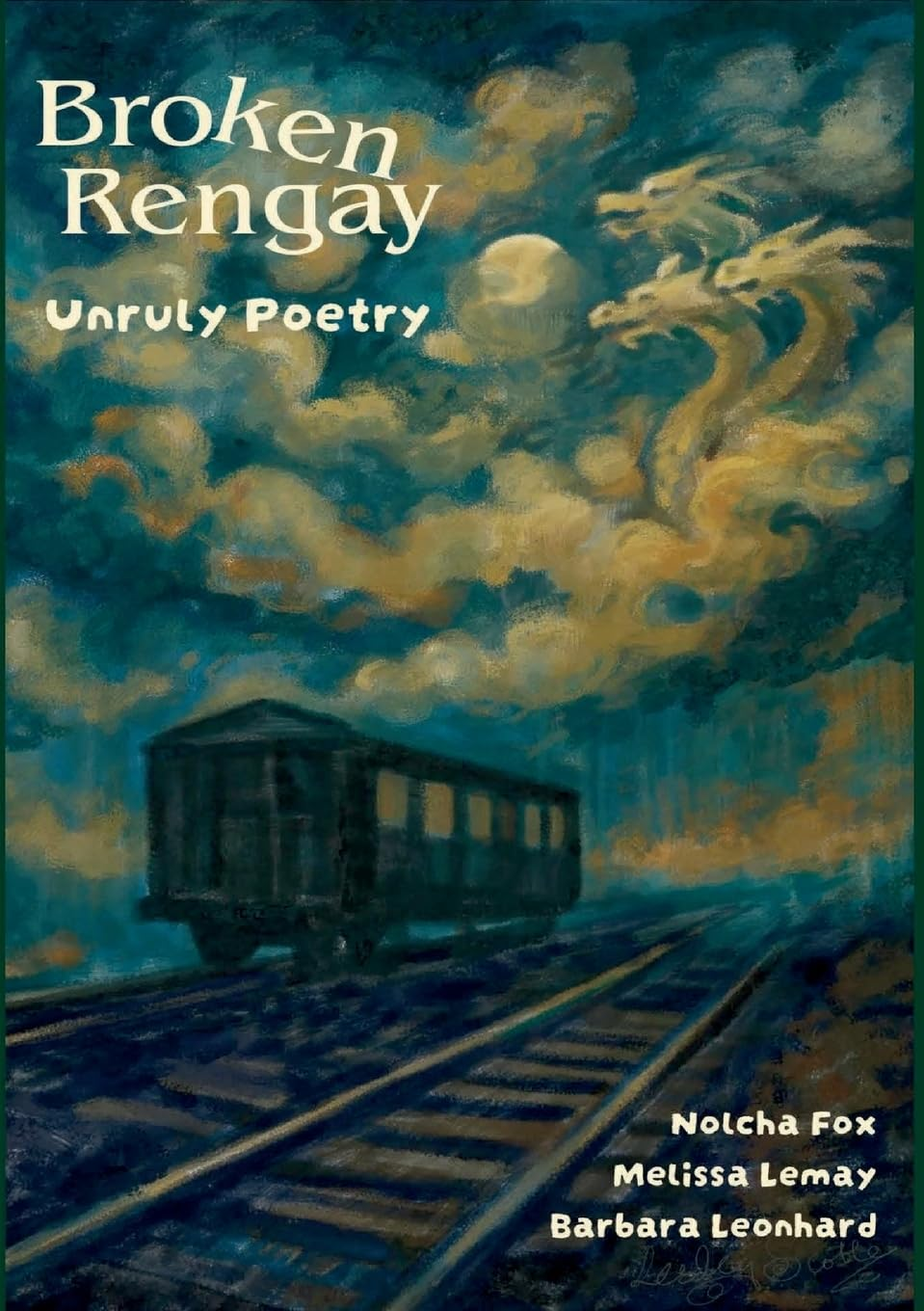
I am always hugely admiring of poetry and book collaborations. These three talented poets have managed to stitch the poems in this interesting book together in such a seamless way you would not know that they are written by more than one person.
The poems cover a spectrum of topics from experiences to emotions to aging and they all inject a thread of dark humour into the mundaneness of the human condition. Let’s be honest, daily life is generally pretty ordinary except when pain or joy make their ad hoc appearances and to be able to laugh at our daily grind is a wonderful thing.
This extract from ‘Everybody Knows My Name’ is an example of this humour:
“baskets of laundry
hanging out in the hallway
calling my name
I changed my name
and I don’t speak laundry
I speak frozen custard, French vanilla
country drives to count the deer
beer and pizza on date night”
‘Pain Will Do That’ is a poem that exposes the debilitating nature of on-going pain and how we are forced to face it and deal with it as we age. This is a short extract:
“pain is the perfect weight loss plan
food tastes bitter
even cheesecake makes me flee
holding a pen too long –
my wrists ask me for Ibuprofen
if I could, I’d challenge pain to a duel
my titanium joints, my weapons
I’m a cyborg, pain, get ready!”
These poems highlight the humanity of the poets and bring the reader into their worlds of ups and downs, achievements and disappointments. This is a relatable collection of poems that will make you feel better about your own life and give you some rose coloured spectacles through which to view life.
Purchase Bro ken Rengay from Amazon US here: https://www.amazon.com/Bro-ken-Rengay-Unruly-Poetry/dp/1962374572
About Robbie Cheadle
South African author and illustrator, Robbie Cheadle, has written and illustrated sixteen children’s books, illustrated a further three children’s books, and written and illustrated three poetry books. Her work has also appeared in poetry and short story anthologies.
Robbie also has two novels and a collection of short stories published under the name of Roberta Eaton Cheadle and has horror, paranormal, and fantasy short stories featured in several anthologies under this name.
You can find Robbie Cheadle’s artwork, fondant and cake artwork, and all her books on her website here: https://www.robbiecheadle.co.za/
________________________
Did you know you can sponsor your favorite blog series or even a single post with an advertisement for your book? Stop by the WtbR Sponsor Page and let me advertise your book, or you can make a donation to Writing to be Read for as little as a cup of coffee, If you’d like to show your support for this author and WordCrafter Press.
__________________________
This segment of “Treasuring Poetry” is sponsored by WordCrafter Press and the Poetry Treasures series.
Get Your Copy Today!
Poetry Treasures: https://books2read.com/PoetryTreasures
Poetry Treasures 2: Relationships: https://books2read.com/PT2-Relationships
Poetry Treasures 3: Passions: https://books2read.com/u/b5qnBR
Poetry Treasures 4:In Touch With Nature: https://books2read.com/PT4-Nature
Poetry Treasures 5: Small Pleasures: https://books2read.com/PT5-SmallPleasures
Share this:

Treasuring Poetry – Kevin Morris shares about his book, Passing Through: Some thoughts on life and death, and a review #poetry #poetrycommunity #TreasuringPoetry
Posted: September 17, 2025 Filed under: Book Review, Books, Collection, Poetry, Review, Treasuring Poetry | Tags: Book Review, K. Morris, Passing Through, Poetry, Robbie Cheadle, Treasuring Poetry, Writing to be Read 48 CommentsToday, I am thrilled to welcome talented Kevin Morris back to Treasuring Poetry. Kevin was one of my inaugural guests when I first started this series nearly six years ago. Kevin’s latest book is a real treasure and I am proud to showcase it here.
The blurb of your book, Passing Through: Some thoughts on life and death, explains the circumstances that resulted in this book of poetry. Please can you give a bit of background to this health event and how it motivated you to write the poetry in this book.
In late January this year I collapsed whilst at home. At that time I had no idea that I had suffered a seizure. Therefore, I continued my life as normal. Then, on the first Sunday in February I suffered another seizure whilst out walking with my guide dog, Apollo, and a friend and her dog.
Following my seizure I was admitted to Croydon University hospital where I suffered another seizure, as a consequence of which I was kept in overnight for observations and tests.
The next morning I was discharged with a diagnosis of epilepsy and Levetiracetam, tablets designed to treat the condition.
Following my discharge from hospital, I decided to spend a week with my family in Liverpool to recuperate prior to returning to work. However, a few days after having arrived in Liverpool I lost most of the movement in the right side of my body, began slurring my speech and became very confused. Consequently I was admitted to hospital where a scan revealed that I was suffering from a brain abscess which was causing the health issues I was experiencing.
Having undergone an operation for the removal of my brain abscess, I spent some 6 weeks in the Walton Centre recovering, during which time I was treated with antibiotic drips and, in the latter stages by a combination of drips and oral antibiotics. My health scare brought me face-to-face with my own mortality in a profoundly shocking manner. And being a poet I responded in the only way I knew how, by spending a considerable part of my time in hospital in the composition of poetry. Hence my book, “Passing Through: Some Thoughts on Life and Death” was born.
What is your main hope for readers of this poetry book? What would you like them to take away from the experience?
Writing poetry whilst recovering in hospital provided me with tremendous solace. I hope that those who read my work will derive both pleasure and solace from my collection. We all must come face-to-face with death and I believe that poetry can help us when this occurs.
Which poem/s is/are the most meaningful for you in the collection. Please share the text of the poem/s and what it means to you.
The first poem in the collection, “On the Death of a Writer”, was written in 2024 prior to me becoming unwell. It relates to the death of a writer I met only once. However, I was reminded of the poem on becoming ill, hence it seemed appropriate to include it here:
“The rain is falling again.
The garden smells fresh
And a solitary blackbird sings.
I heard of your death.
Your book remains unread.
You had others to write
And now are dead.
Each man has his plans,
Literary or otherwise.
But none knows
When his eyes may close.
The clock ticks as I write.
The scent of wet earth
Enters the house.
Tonight, I will close my eyes
And tomorrow write…” .
Whilst in the Walton Centre, I longed to return to my home in London’s Upper Norwood, and my poem “Humility” deals with my yearning to be back in my own space:
“My old blue armchair
Is still there
By the wooden bookcase.
In that space,
I sat and read
As the antique clock ticked
My day away.
Here, no clock ticks
And my need
Is for these antibiotic drips.
But how I miss
My old bookcase
And the ageing armchair where
I read the day away.
When I return again
To my own private place
The tick tock
Of my old clock
From high on the bookcase
Will teach me humility.”
Are there any poems by other poets on the subject of life and death that influenced your writing? If yes, is there any specific poem that you would like to share.
Following my discharge from Liverpool’s Walton Centre, I spent some time recovering at my mum’s home. My poem, “Emily’s Carriage” was composed during this period and stems from a walk I took on a sunny windswept day. It was also influenced by Emily Dickinson’s poem “Because I Could not Stop for Death”, hence the title “Emily’s Carriage”:
Because I Could not stop for Death by Emily Dickinson
Because I could not stop for Death –
He kindly stopped for me –
The Carriage held but just Ourselves –
And Immortality.
We slowly drove – He knew no haste
And I had put away
My labor and my leisure too,
For His Civility –
We passed the School, where Children strove
At Recess – in the Ring –
We passed the Fields of Gazing Grain –
We passed the Setting Sun –
Or rather – He passed Us –
The Dews drew quivering and Chill –
For only Gossamer, my Gown –
My Tippet – only Tulle –
We paused before a House that seemed
A Swelling of the Ground –
The Roof was scarcely visible –
The Cornice – in the Ground –
Since then – ’tis Centuries – and yet
Feels shorter than the Day
I first surmised the Horses’ Heads
Were toward Eternity –“.
What’s next for Kevin Morris?
Back in 2019 I published “The Selected Poems of K Morris”. Since then I have published several other collections, including this one. I have long intended to update my “Selected Poems” and will now sit down and do so.
My review of Passing Through: Some thoughts on life and death by K Morris

I have read a lot of this poet’s thoughtful and though provoking poetry and, for me, this is his best collection to date. A short collection of intense and heart felt poems written by the poet in the aftermath of a seizure leading to brain surgery, and his subsequent recovery in hospital.
Having experienced a similar health incident with a loved one, I related strongly to Kevin’s reflections on both life and death as he grappled to come to terms with ‘looking death in the eye’ as depicted in his poem, Seizure:
“I felt no cold breath of Death
Nor the Reaper’s skeletal hand
Yet he greeted me
And I mumbled and tumbled
And found myself on the cold ground
Where all are bound.”
The tedium and drift towards institutionalisation that characterise a long stay in hospital are exposed through the poet’s fine words in Free Air”
“How dear the air is to me.
It enters through my window
And calls to me of liberty
And says how, below, people don’t know
The profundity of the air.”
A change in attitude towards life having faced mortality intimately is a common reaction. I have witnessed this same change in others and I believe it does lead to better life choices and seizing joy in moments. All of these reflections and subtle changes in outlook are clearly evident in these compelling poems.
Extract from A Garden in Early Spring:
“I could decide to go inside
As the temperature has dropped.
Yet the blackbird has not stopped
His song, which brings delight.
So I stay as the day
Moves imperceptibly towards the night.
A beautiful and moving collection.
Purchase Passing Through: Some thoughts on life and death from Amazon US here: https://www.amazon.com/gp/product/B0F8TWMZJD
About Kevin Morris

I was born in Liverpool on 6 January 1969, a year best known of course for my birth. Well no actually it is better known for the moon landings which certain
peculiar conspiracy theorists still maintain never took place (the moon landings that is, not my birth!).
One of my earliest recollections is of eating roast dinners, on Saturday in British Home Stores with my grandfather. Although cooked in the kitchen of a department store they tasted wonderful to a small boy but then again it is easy to look back at one’s childhood with rose tinted spectacles.
On Saturdays my grandfather and I would invariably pop into W H Smiths and buy a book. Often he bought Enid Blighton books and I’ve happy memories of him
reading to me about the adventures of Julian, Dick and Ann – not forgetting Timmy the Dog (who could!) Being blind, it was a real treat to sit on my grandfather’s knee, hearing him regail me with children’s adventures. It was from my grandfather – a man who had never so much dreamed of going to university that I derived my love of literature.
As I grew older I learned to read braille which opened up a world of independent reading to me. Only a tiny proportion of books are available in braille, however it was still amazing to me, as a young boy to be able to sit with a book on my knee reading for myself. Besides braille I was also a huge consumer of spoken word cassettes, everything from Treasure Island to Wuthering Heights.
I still possess almost all of the many cassettes which I have purchased and had bought for me over the years but many of them have now warped with age so are, sadly unusable. Today it is the text to speech facility on my Kindle and iBooks (using voiceover) on my iPad which is my favourite means of accessing the wonderful world of literature.
I attended school in Liverpool and later went on to read history and politics at university. I must be a glutton for punishment as having obtained my degree
I went onto study for and obtain a MA in political theory (I can see your eyes glazing over already)!
Since 1994 I have lived and worked in London. I live in Crystal Palace, a part of London high above sea level and famed for it’s steep hills. It is very
green and the air is much fresher than many parts of London. I like were I live and I’m lucky that my home overlooks a large garden and an historic park.
I began to write seriously in mid 2012. All of my writing takes place in my spare room surrounded by books. Being blind I use a standard laptop with Jaws (software which converts text into speech and braille allowing me to access my computer’s screen).
I can not write with background noise other than the singing of birds, as conversation and other extraneous sounds interfere with my concentration. I do most of my writing at weekends and once the bit is between my teeth I can write for hours sustained by copious cups of coffee!
Other than writing I enjoy walking in green places with my guide dog Trigger, listening to a wide variety of music and socialising with friends.
I hope that you enjoy my books.
To find me on amazon.com please go to: http://www.amazon.com/-/e/B00CEECWHY
You can visit my website here for regular updates: http://kmorrispoet.com
About Robbie Cheadle
South African author and illustrator, Robbie Cheadle, has written and illustrated sixteen children’s books, illustrated a further three children’s books, and written and illustrated three poetry books. Her work has also appeared in poetry and short story anthologies.
Robbie also has two novels and a collection of short stories published under the name of Roberta Eaton Cheadle and has horror, paranormal, and fantasy short stories featured in several anthologies under this name.
You can find Robbie Cheadle’s artwork, fondant and cake artwork, and all her books on her website here: https://www.robbiecheadle.co.za/
________________________
Did you know you can sponsor your favorite blog series or even a single post with an advertisement for your book? Stop by the WtbR Sponsor Page and let me advertise your book, or you can make a donation to Writing to be Read for as little as a cup of coffee, If you’d like to show your support for this author and WordCrafter Press.
__________________________
This segment of “Treasuring Poetry” is sponsored by WordCrafter Press and the Poetry Treasures series.
Get Your Copy Today!
Poetry Treasures: https://books2read.com/PoetryTreasures
Poetry Treasures 2: Relationships: https://books2read.com/PT2-Relationships
Poetry Treasures 3: Passions: https://books2read.com/u/b5qnBR
Poetry Treasures 4:In Touch With Nature: https://books2read.com/PT4-Nature
Poetry Treasures 5: Small Pleasures: https://books2read.com/PT5-SmallPleasures
Share this:

Treasuring Poetry – A chat with poet and blogger, Marsha Ingrao, and a review #TreasuringPoetry #poetrycommunity #bookreview
Posted: June 18, 2025 Filed under: Book Review, Books, Interview, Poetry, Review, Treasuring Poetry, Women's Fiction and Poetry | Tags: Embracing the Power to Live, Marsha Ingrao, Poetry, Robbie Cheadle, Treasuring Poetry, Writing to be Read 68 Comments
Today, I am delighted to host blogger and hostess of Story Chat about which she says the following: “Story Chat is more than a writing challenge. It is a unique and proven online program that encourages interaction between authors and readers. It’s part writers group, part beta readers, part fun fiction, and pure enjoyment.”
You can find out more about Story Chat here: https://alwayswrite.blog/story-chat-2025-a-unique-blogging-program/
Now, over to Marsha.
Robbie, thank you so much for inviting me to be on your blog. It is such an honor. I’ve spent a lot of time reading and researching poetry since you sent these questions to me, so it’s taken me a long time to come up with the answers.
What is your favourite style of poetry to read i.e. haiku, ballad, epic, freestyle, etc.?
I adore reading tankas, but my favorite style to read is freestyle, words that are natural without the constraints of order.
What is your favourite poem in your favourite style to read?
Mary Oliver is a new author to me, but well-known to many. I picked her because I have so many favorites among our friends, and I don’t want to choose. Mary Oliver published poetry from 1963 to 2015 before she passed in 2019. She was well known for her observations of the natural world, tying them to deep emotions or emotional events, as you can see in the following poem.
Gethsemane
By Mary Oliver
The grass never sleeps.
Or the roses.
Nor does the lily have a secret eye that shuts until morning.
Jesus said, wait with me. But the disciples slept.
The cricket has such splendid fringe on its feet,
and it sings, have you noticed, with its whole body,
and heaven knows if it ever sleeps.
Jesus said, wait with me. And maybe the stars did, maybe the wind wound itself into a silver tree, and didn’t move,
maybe
The lake far away, where once he walked as on
a blue pavement,
lay still and waited, wild awake.
Oh the dear bodies, slumped and eye-shut, that could not
keep that vigil, how they must have wept,
so utterly human, knowing this too
must be a part of the story.
(Mary Oliver Devotions p. 129, © 2019 by NW Orchard LLC, Penguin Books)
What I loved about this poem is that it takes a familiar biblical event way outside the box. When you saw the title, Gethsemene, did you think about the grass sleeping or the wind winding itself into a silver tree? I didn’t, until her poem suggested that I think about it.
How can I train myself to think past and around the outer edges of my topic? That is my goal this year.
What is your favourite style of poetry to write?
I like free style, acrostic, limericks, and tankas best. But I also enjoy other syllabic poems and some of the French form poetry when I want a challenge. What I want to improve this year are some of the nuances that I’ve missed in writing syllabic poetry as well as thinking outside the box with freestyle poems.
What is your favourite of your own poems?
Messages From the Cat (free verse)
Poems, no longer innocent kittens,
Intentionally sneak up on you at night,
Concise imagery padding silently across the carpet,
Weaving its way into your dreams.
Rhyming couplets stealthily leap onto your bed,
Pretending they would curl at your feet for a long nap,
Or lie warm against the curve of your spine,
But instead, they pounce on your head, tearing it open.
If you cry out, call for help,
Precise verses slip away, leaving only an open gash.
Life’s language drips from the wound.
You jump to consciousness, capture each phrase
As it percolates from your throbbing skull
Like slush melting away from Frosty on a sunny day.
At sunrise, linguistic gems gleaming,
Iambic felines sun themselves
In a streaming hot shower of midmorning light,
Licking their forms to glistening perfection,
For all to stroke with admiration,
While you trod off to work,
Exhausted from your sleepless scratch with immortality.
Please tell us about your poetry book, Embracing the Power to Live. How did this book come about? What would you like readers to take away from this collection?
You’ve asked several important questions, Robbie. I hope I’ll answer the first question as I answer the second and third ones.
I’ve written (and kept) poems since the 1980s when my first husband and I moved to Visalia, California, to pastor a tiny church in the rural community of Ivanhoe, California. At that time, I experimented with different styles of poetry, most of which were out of date, but writing them challenged me.
After I retired in 2012, I wanted to write a book, but my blog led me in a different direction. Arcadia Books contacted me because of some of my posts about Woodlake, California. Five months later, they published my book, Images of America Woodlake.
Then I tried fiction, and struggled for years trying to write a bestseller that would become the next Netflix series. That didn’t happen.
I loved blogging, and that’s what I did best, so I gave up my dream of publishing a book of my own work until I met Colleen Chesebro and had a year of writing Haiku and other syllabic poetry under my belt. Meanwhile, several of my blogging friends started publishing poetry books. I was intrigued. Normally, I struggled to read a whole book of poetry. However, Robbie, when I read your book, Lion Scream, that changed for me. I was not ready for this poem. I had to put the book aside and wait for my heart to calm down. I had never read such moving poetry in my life.
Rhino Dilemma
Near-sighted eyes observe
Through tall, swaying grass
Yellowish curtain hides heavy-set body
But, camouflage fails him
The poachers close in
Small bird cries a warning
Animal reacts
Stands upright, facing the wind, ready for flight
Tranquiliser gun fires
Ground shakes when beast falls
Savage men move quickly
Hack out valued horn
Animal left bleeding;
awakes to sure death
Tears of pain and anguish
Slide from fading eyes
Cheadle, Robbie. Lion Scream: Syllabic Poetry About Southern African Wildlife (pp. 22-23). Kindle Edition.
As I read the poem aloud to a friend, while I prepared for this interview, it brought tears to my eyes and made my stomach churn. I wanted my poems to matter, but I didn’t have an agenda. So, I fell back on what I do naturally, which is to encourage people to do what they do best.
When I picked my word of the year for this year, the title fell into place. I wanted to create something that would be uplifting to others and would help them fulfill their own dreams. So, somehow, I had to go from the poems I had written about random topics and pull them together with new poems that would minister to people’s souls and encourage them to find their own creativity.
I drew a lot from Sunflower Tanka and Cindy Georgakas’s book Celebrating Poetry. As I read her book, I fell in love with certain poems and the titles of poems. For example, isn’t her title “Messages from the Moon” a great title? The idea of the moon sending me messages set my imagination on fire. It became “Messages from the Cat” in Embracing the Power to Live. There were no similarities in the poetry or the subject, but I loved the title.
I have already started to realize the joy that comes from reaching the goal of helping others. I’ve shared on social media and my blog about my neighbor Dan Daniels. Dan started writing poetry at age 11 when he was a rough and tumble New York City kid in a large family. He started working at about age seven.
As he handed me an aged sheet of paper with a typewritten poem, he told me I was only the second person he had ever shared his poem with. I was blown away. He is now in his 80s, and he and his wife inspired one of the poems in my book, “Aging Gracefully.” This is his poem, and I am proud to announce that you are now collectively the third person he is sharing it with.
Stand Amongst the Flowers Gentle
By Dan Daniels
Stand amongst the flowers gentle
Look and smell and feel their power
How they light the day with beauty
Not long enough to stay an hour.
Stand amongst the flowers gentle
Let them fill your soul inspired
Touch them all with love and kindness
Nothing more of you required.
Nature all around us speaks
We, who hear, must answer strongly
Love all that nature has to give
Stand amongst the flowers gentle.
Robbie, I can’t wait to read what your readers say about Dan’s poem. When I called to ask permission to use his poem, he and his wife were sitting in their living room reading Embracing the Power to Live and talking about where he might have hidden the other poems he wrote through the years. Dan has Parkinson’s Disease, so I am going to help him publish them in a small book that he can give to his family as part of his legacy to them.
Another friend called me the week the book came out to tell me she was ordering it for a couple of relatives of hers who had stopped communicating with each other and with her. She thought somehow my book might encourage them to start talking. Helping Dan come out of his poetry shell and helping people find ways to communicate their feelings exemplifies the reasons I wrote the book, Embracing the Power to Live.
Thank you again for inspiring and encouraging me, and for inviting me to take part in this project. It means so much to me.
Thank you, Marsha, for this wonderful interview. It is truly amazing how much you have gained from being part of this on-line poetry community. I am deeply honoured that my poem resonated with you and thank you for the contribution of Dan’s gorgeous poem as well as detailing how Sunflower Tanka and Celebrating Poetry inspired and guided you.
My review of Embracing the Power to Live

What Amazon says
Embracing the Power to Live is a poetic journey of a woman’s perseverance despite life’s hard knocks. This collection taps into the true spirit of poetry—reaching ordinary people with the message that they are enough. Some poems hold profound meaning. Others are included simply for the fun of playing with words – a joy reborn when she stepped into the world of syllabic poetry.
Told by different authority figures in her life that she would never marry or achieve her dreams, the author defied the discouraging voices. Her poetry shatters shame uplifts the spirit, and encourages readers to embrace the strength to do the same.
This collection isn’t a self-help guidebook—it’s an invitation to laugh, weep, grow, and live together, connecting hearts through poetry. Embracing the Power to Live is for anyone who seeks to rise above a spinning world to gain strength, perspective, and a new beginning.
My review
This is a most unusual and enjoyable collection of poems, photographs, memories, and religious quotes that collectively tell the story of the poet’s life. A most interesting memoir, the poet has not shied away from sharing her human experience in all its marvelous highs and compelling lows. The short paragraphs embellishing the poems with additional colour and memories are enlightening and the photographs make the whole experience more visual and vivid.
This book is presented in different chapters, each focusing on different aspects of life and living to highlight and reveal in. While the poems are all encompassing and share moments of sadness and discomfort, the collective package is a positive experience of finding contentedness and peace to support the poet on her journey through life in all its manifestations. Religion, the poet’s guiding light, is threaded throughout the book as a common thread of hope and support.
I am sharing one poem, It’s hard being semi smart (pantoum) which I feel embodies the spirit of this book and its relatability to us all.
It’s hard being semi-smart because,
It’s so hard to choose.
I have many skills with several flaws
And activities that enthuse.
It’s so hard to choose
Because I’m sort of good.
And activities that enthuse
Make me think I should.
Because I’m sort of good,
I try to do too much.
Makes me think I should,
But nothing has the master’s touch.
I try to do too much.
I have many skills with several flaws.
But nothing has the master’s touch.
It’s hard being semi-smart because.
In closing, I must mention the cover of this book which I think is gorgeous.
Purchase Embracing the Power to Live from Amazon US here: https://www.amazon.com/Embracing-Power-Live-Marsha-Ingrao-ebook/dp/B0F6423PSJ
Find Marsha Ingrao’s Amazon Author page here: https://www.amazon.com/stores/author/B0CJ9ZLQ9C
About Marsha Ingrao

Marsha’s newest book, Embracing the Power to Live, a poetry anthology and memoir, is set to come out in late May or early June. She is the contributing editor for Story Chat Volumes I and II. Previous works include a chapter in This Is How We Grow (2023) by Yvette Prior, contributions to Sunflower Tanka, a Poetry Anthology by Colleen Chesebro and Robbie Cheadle (2024), and Images of America: Woodlake – Arcadia Publishing (August 13, 2015), available on Amazon. In addition, Ingrao published numerous poems and articles. She has blogged since 2012.
She earned a Bachelor of Arts, Teaching, and Administrative Credentials from Fresno State University. As a bilingual teacher, she earned a CLAD Certificate. While employed at Tulare County Office of Education, she earned her Master’s in Curriculum and Instruction from Fresno Pacific University. At the county office, she developed curriculum for Migrant Education and later served as a History Consultant for the county’s Educational Resource Services.
Ingrao believes in lifelong learning. Today, she remains active as a blogger, writer, photographer, and history buff.
She grew up in Indiana and Oregon, moved as an adult to Colorado, then near the Giant Sequoias. After living in Arizona for four years, she and her husband, Vince, her dog, Goldie, and her cat, Moji, have recently returned to the land of the big trees in California.
About Robbie Cheadle
South African author and illustrator, Robbie Cheadle, has written and illustrated sixteen children’s books, illustrated a further three children’s books, and written and illustrated three poetry books. Her work has also appeared in poetry and short story anthologies.
Robbie also has two novels and a collection of short stories published under the name of Roberta Eaton Cheadle and has horror, paranormal, and fantasy short stories featured in several anthologies under this name.
You can find Robbie Cheadle’s artwork, fondant and cake artwork, and all her books on her website here: https://www.robbiecheadle.co.za/
________________________
Did you know you can sponsor your favorite blog series or even a single post with an advertisement for your book? Stop by the WtbR Sponsor Page and let me advertise your book, or you can make a donation to Writing to be Read for as little as a cup of coffee, If you’d like to show your support for this author and WordCrafter Press.
__________________________
This segment of “Treasuring Poetry” is sponsored by WordCrafter Press and the Poetry Treasures series.

Get Your Copy Today!
Poetry Treasures: https://books2read.com/PoetryTreasures
Poetry Treasures 2: Relationships: https://books2read.com/PT2-Relationships
Poetry Treasures 3: Passions: https://books2read.com/u/b5qnBR
Poetry Treasures 4:In Touch With Nature: https://books2read.com/PT4-Nature
Share this:

Wrapping up the “Poetry Treasures 5: Simple Pleasures” Book Blog Tour
Posted: April 27, 2025 Filed under: Anthology, Blog Tour, Book Release, Books, Editing, Giveaways, Poetry, Treasuring Poetry, WordCrafter Book Blog Tours, WordCrafter Press | Tags: Kaye Lynne Booth, Poetry, Poetry Treasures 5: Small Pleasures, Robbie Cheadle, WordCrafter Book Blog Tours 40 Comments
Picture Caption: WordCrafter Poetry Treasures 5: Small Pleasures Tour Banner
We’re wrapping up the WordCrafter Poetry Treasures 5: Small Pleasures Book Blog Tour. We’ve had a great tour this past week and I hope you all visited each stop and left a comment for a chance to win one of three digital copies of Poetry Treasures 5 in our giveaway. If you missed a stop or joined us late, you can still go back and meet more poets featured in the anthology, but the giveaway ends tonight, so get your comments in now.
I want to thank contributors Michelle Ayon Navajas, Dawn Pisturino, Barbara Harris Leonard, Ivor Steven, and DL Mullen for their participation in the tour. And thanks also goes out to the hosts for this tour: Colleen Chesebro of Colleen Writes & Publishes, Patty Fletcher of Patty’s Worlds, Carla Johnson-Hicks of Carla Loves to Read, Michelle Navajas of Poetry by Mich, Kay Castenada of Book Places, and DL Mullen of Un dawnted. I feel everyone did a great job and it is appreciated.
I’d like to.make this stop a celebration of the author/poets who contributed to the anthology-those who shared their work on the tour and those who weren’t able to join us. They are all talented poets, and I feel fortunate to feature their lovely works in a WordCrafter poetry anthology.

Tour Schedule
April 21-28 – Poetry Treasures 5: Small Pleasures, by Kaye Lynne Booth, et.al.
Mon. 4/21 – Opening Day- Writing to be Read – (Intro. post & Book Trailer)
Tues 4/22 – Colleen Writes & Publishes – (Dawn Pisturino. Guest Post)
Wed. 4/23 – Patty’s Worlds – (Michelle Navajas Guest Post)
Thurs. 4/24 – Carla Loves to Read– (Ivor Steven’s Reading)
Fri. 4/25 – Poetry By Mich – (Barbara Harris Leonhard Reading)
Sat. 4/26 – Book Places – (DL Mullan Reading)
Sun. 4/27 – Writing to be Read – (Wrap up) – Undawnted (Interview with Dawn Pisturino)
Today we have a double stop. Along with the final stop here, we have DL Mullen interviewing Dawn Pisturino over at Un dawnted. You can’t comment on that site, but you can leave your comments for DL and Dawn here. And here on Writing to be Read, I’ll be introducing you to the contributing poets who did not provide content for the tour. Their valuable contributions to the anthology are not to be overlooked, for it was a group effort that made this anthology such an exceptional collection of poetry.
About Poetry Treasures 5: Simple Pleasures
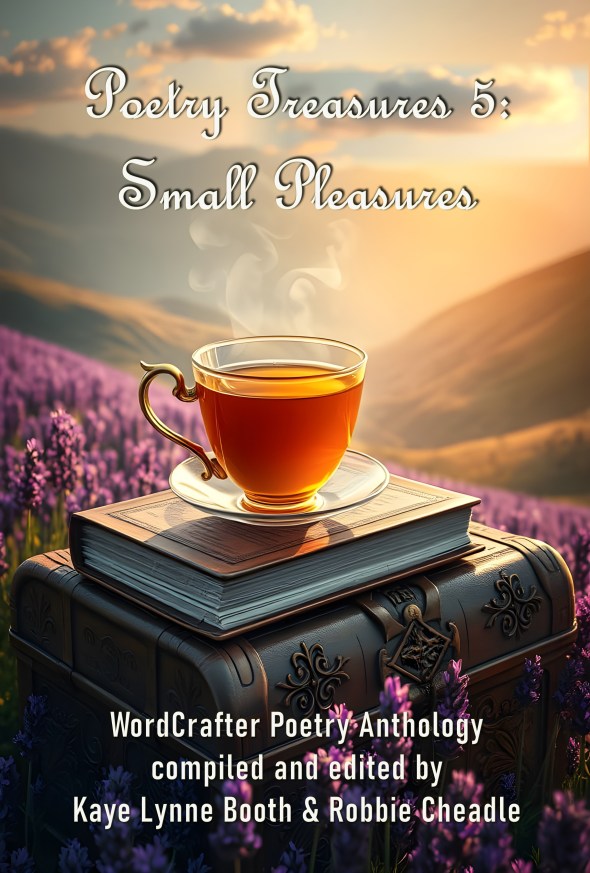
Open the cover
and you will discover
Poetry Treasures
from the guests on
Robbie Cheadle’s 2024
“Treasuring Poetry”
blog series
on Writing to be Read.
Join poets DL Mullan, Barbara Harris Leonhard, Jude Itakali, Ivor Steven, Robbie Cheadle, Michelle Ayon Navajas, Gwen M. Plano, Elizabeth Gauffreau, David Bogomolny, Dawn Pasturino, Maggie Watson, and Colleen Chesebro share their own small pleasures in poetic verse.
Purchase Link: https://books2read.com/PT5-SmallPleasures
Giveaway
This tour we’re giving away digital copies of Poetry Treasures 5: Small Pleasures to three lucky winners. Follow the tour and comment at each stop, so we’ll know you were there. You’ll be entered for another chance in the giveaway at each stop. Winners are chosen through a random drawing by WordCrafter Press. Winners will be announce in tomorrow’s “WordCrafter News”.
Meet the Contributors Who Didn’t Make the Tour
David Bogomolny

You can catch David’s interview with Robbie Cheadle on “Treasuring Poetry” here: https://writingtoberead.com/2024/09/18/treasuring-poetry-meet-poet-and-blogger-david-bogomolny-the-mastermind-behind-the-skeptics-kaddish-blog-and-w3-prompts-poetrycommunity/
Maggie Watson

You can catch Maggie’s interview with Robbie Cheadle on “Treasuring Poetry” here: https://writingtoberead.com/2024/11/20/treasuring-poetry-meet-poet-maggie-watson-and-a-review-of-pieces-of-me-a-collection-of-poems-treasuringpoetry-poetrycommunity-bookreview/
Elizabeth Gauffreau

You can catch Liz’s interview with Robbie Cheadle on “Treasuring Poetry” here: https://writingtoberead.com/2024/08/21/treasuring-poetry-meet-author-and-poet-elizabeth-gauffreau-and-a-book-review-poetrycommunity-bookreview-treasuringpoetry/
Gwen M. Plano

You can catch Gwen’s interview with Robbie Cheadle on “Treasuring Poetry” here: https://writingtoberead.com/2024/07/17/treasuring-poetry-meet-talented-author-and-poet-gwen-m-plano-and-a-review-poetry-bookreview-readingcommunity/
Jude Itakali

You can catch Jude’s interview with Robbie Cheadle on “Treasuring Poetry” here: https://writingtoberead.com/2024/03/20/treasuring-poetry-meet-poet-and-novelist-jude-itakali-and-a-review/
Robbie Cheadle

That’s it for today’s stop on Writing to be Read. Be sure to visit the second part of this double stop over at Un dawnted, where DL Mullan is interviewing author/contributor Dawn Pisturino. I hope you enjoyed the tour and the poetry samples shared enough to get you to buy the book. By using the Books2Read UBL, above, you can purchase from your favorite distributor around the world. Be sure to drop by and catch tomorrow’s “WordCrafter News”, here on Writing to be Read, to find out who the winners in the giveaway are.
_______________________
Book your WordCrafter Book Blog Tour today!
Share this:

Welcome to the “Poetry Treasures 5: Small Pleasures” Book Blog Tour
Posted: April 21, 2025 Filed under: Anthology, Blog Tour, Book Release, Books, Editing, Giveaways, Poetry, Treasuring Poetry, WordCrafter Book Blog Tours, WordCrafter Press | Tags: Barbara Harris Leonhard, Colleen Chesebro, David Bogomolny, Dawn Pistrurino, DL Mullan, Elizabeth Gauffreau, Gwen M. Plano, Ivor Steven, Jude Itakali, Kaye Lynne Booth, Maggie Watson, Michelle Ayon Navajas, Poetry, Poetry Treasures 5: Small Pleasures, Robbie Cheadle, WordCrafter Book Blog Tours 27 CommentsPicture Caption: WordCrafter Poetry Treasures 5: Small Pleasures Tour Banner
Welcome to the WordCrafter Poetry Treasures 5: Small Pleasures Book Blog Tour. We have a great tour planned, and I hope you all will stick with us and visit each stop, because comments at each stop enters you for another chance to win one of three digital copies of Poetry Treasures 5 in our giveaway. We’ve got guest posts from from contributors Michelle Ayon Navajas and Dawn Pisturino, readings from Barbara Harris Leonhard, Ivor Steven, and DL Mullen, and a special interview with Dawn Pisturino. Plus you may find a couple of early reviews from our wonderful tour hosts. So please join us and follow along on the schedule below to learn more about this outstanding poetry anthology and enjoy a few Small Pleasures.
Tour Schedule
April 21-28 – Poetry Treasures 5: Small Pleasures, by Kaye Lynne Booth, et.al.
Mon. 4/21 – Opening Day- Writing to be Read – (Intro. post & Book Trailer)
Tues 4/22 – Colleen Writes & Publishes – (Dawn Pisturino. Guest Post)
Wed. 4/23 – Patty’s Worlds – (Michelle Navajas Guest Post)
Thurs. 4/24 – Carla Loves to Read– (Ivor Steven’s Reading)
Fri. 4/25 – Poetry By Mich – (Barbara Harris Leonhard Reading)
Sat. 4/26 – Book Places – (DL Mullan Reading)
Sun. 4/27 – Writing to be Read – (Wrap up) – Undawnted (Interview with Dawn Pisturino)
About Poetry Treasures 5: Simple Pleasures
Open the cover
and you will discover
Poetry Treasures
from the guests on
Robbie Cheadle’s 2024
“Treasuring Poetry”
blog series
on Writing to be Read.
Join poets DL Mullan, Barbara Harris Leonhard, Jude Itakali, Ivor Steven, Robbie Cheadle, Michelle Ayon Navajas, Gwen M. Plano, Elizabeth Gauffreau, David Bogomolny, Dawn Pasturino, Maggie Watson, and Colleen Chesebro share their own small pleasures in poetic verse.
Purchase Link: https://books2read.com/PT5-SmallPleasures
Giveaway
This tour we’re giving away digital copies of Poetry Treasures 5: Small Pleasures to three lucky winners. Follow the tour and comment at each stop, so we’ll know you were there. You’ll be entered for another chance in the giveaway at each stop. Winners are chosen through a random drawing by WordCrafter Press. We’ll be watching for your name.
Book Trailer
A special thanks goes out to Teagan Genevieve for our lovely book trailer. Thank you so much Teagan.
About the Editors
You will meet some of the contributors along the way on this tour, but in this opening day post, I’d like ton tell you a little about the editors who put this project together and made it happen. I also thought it might be interesting to share a brief glimpse of what goes on behind the scenes when putting together a poetry anthology, which I hope you’ll find of interest.
Kaye Lynne Booth

For Kaye Lynne Booth, writing is a passion. Kaye Lynne is an author with published short fiction and poetry, both online and in print, including her short story collection, Last Call and Other Short Fiction; and her paranormal mystery novella, Hidden Secrets; Books 1 & 2 of her Women in the West adventure series, Delilah and Sarah, and her Time-Travel Adventure novel, The Rock Star & The Outlaw,as well as her poetry collection, Small Wonders and The D.I.Y. Author writing resource. Kaye holds a dual M.F.A. degree in Creative Writing with emphasis in genre fiction and screenwriting, and an M.A. in publishing. Kaye Lynne is the founder of WordCrafter Quality Writing & Author Services and WordCrafter Press. She also maintains an authors’ blog and website, Writing to be Read, where she publishes content of interest in the literary world.
My job is to edit the final manuscript, format and publish it. I find poetry to be a personal endeavor, so I do very little editing of the actual poems for fear of changing the poet’s meaning, since poetry often does not follow the rules of grammar and punctuation which apply to the English language. In addition, we have poets from all over the globe included in the anthology, which makes for variation in style and differences in spellings, so I pretty much leave the poetry as is unless it is something I know is a typo or mistaken word.
But the person who truly makes this anthology possible is my co-editor, Robbie Cheadle, who finds and schedules poets to be interviewed on the “Treasuring Poetry” blog series on Writing to be Read. It is Robbie who selects and interviews each poet, and she usually reviews their latest release, as well. Then, at the end of the year, Robbie sends out invitations to the anthology and collects and compiles all the materials into a manuscript before turning it over to me. Without Robbie to do all of the preliminary work, there would not be any Poetry Treasures Anthologies. I couldn’t do it without her.
Robbie Cheadle
South African author and illustrator, Robbie Cheadle, has written and illustrated sixteen children’s books, illustrated a further three children’s books, and written and illustrated three poetry books. Her work has also appeared in poetry and short story anthologies.
Robbie also has two novels and a collection of short stories published under the name of Roberta Eaton Cheadle and has horror, paranormal, and fantasy short stories featured in several anthologies under this name.
You can find Robbie Cheadle’s artwork, fondant and cake artwork, and all her books on her website here: https://www.robbiecheadle.co.za/
That’s it for today’s stop. I hope I gave you enough of a taste of this delectable poetry anthology to make you want to sample more. There are several more tasty morsels from then contributing authors along the way. Join us tomorrow, on Colleen Writes & Publishes, where author/poet Dawn Pisturino will share a guest post and poetry from Poetry Treasures 5: Small Pleasures.
_______________________
Book your WordCrafter Book Blog Tour today!
Share this:

Treasuring Poetry – Meet poet and author V.M. Sang and a review #poetry #poetrycommunity #bookreview
Posted: April 16, 2025 Filed under: Book Review, Books, Poetry, Review, Treasuring Poetry | Tags: January to June, Poetry, Robbie Cheadle, Treasuring Poetry, V.M. Sang, Writing to be Read 74 CommentsToday, I am delighted to Welcome V.M. Sang, author and poet, as my April Treasuring Poetry guest.
Welcome Viv!
Thank you, Robbie, for inviting me to come and chat about poetry. I am honoured that you asked me.
What is your favourite style of poetry to read?
I enjoy Haiku and Tanka. I appreciate the structure and the work that goes in to make the syllables fit. But I also enjoy sonnets.
What is your favourite poem in your favourite style to read?
I struggled with this. There are so many I enjoy. I like the 1st World War poets and their take on the war. Particularly poignant are the two lines from Yeates An Irish Airman Forsees His Death.
Those that I fight I do not hate
Those that I guard I do not love.
But one poem I’ve loved since studying it at College is the sonnet, Ozymandias, by Percy Bysshe Shelley. It is a warning to all who strive to get above themselves. I think it is particularly pertinent at this time.
Ozymandias
by Percy Bysshe Shelley
I met a traveller from an antique land,
Who said, “Two vast and trunkless legs of stone
Stand in the desert. Near them, on the sand,
Half sunk, a shattered visage lies, whose frown,
And wrinkled lip, and sneer of cold command,
Tell that its sculptor well those passions read
Which yet survive, stamped on these lifeless things,
The hand that mocked them, and the heart that fed;
And on the pedestal these words appear:
‘My name is Ozymandias, king of kings:
Look on my works, ye Mighty, and despair!’
Nothing beside remains. Round the decay
Of that Colossal Wreck, boundless and bare,
The lone and level sands stretch far away.”
What is your favourite style of poetry to write?
I enjoy writing most forms, but particularly those with a strict form, like the sonnet and the Japanese forms, but I especially like to write rhyming poetry. I know it’s not fashionable at the moment, but I find the discipline a challenge. Discovering words with the right sound and number of syllables can be quite a challenge.
What is your favourite of your own poems?
I have to admit that there are two, both related. ‘I Am Earth’ appears in my first poetry book, Miscellaneous Thoughts, and the second one ‘I Am Earth 2’ is in From January to June, February 7th.
I Am Earth
I am Earth.
I am your mother.
I gave you birth.
I gave you a nest.
A wonderful home
On which you can rest.
I gave you food .
Plenty to eat.
You waste all that’s good.
I gave you the seas
And forests and hills,
But you chop down the trees.
You think you’re so cool,
But you pollute the air
By the burning of fuel.
You heat up the air
And care not a jot
For the poor polar bear.
Animals die
Because of your greed.
You hear not their cry.
I teemed with life,
Both great and small,
Yet extinction is rife.
Like a cancer you spread
Throughout the whole world.
It won’t end till you’re dead.
But I’ll make you pay
For all you have done.
You’ll be sorry one day.
I’ll shiver my skin.
Your buildings will fall
And bury your kin.
The land I will flood
By raising the seas
And drown all in mud.
My mountains so high
Will belch forth their flames
And you will all die.
I am Earth.
I am your mother.
I gave you birth.
BUT I WILL DESTROY YOU.
I Am Earth (2)
I am Earth.
I am your mother
I gave you birth.
I told you
What will occur.
And now you will rue.
You ignore me
And take little heed
Of my anxious plea.
So I send you rain
To flood all your homes
And give you pain.
I send the drought
So no crops will grow.
There’s famine, no doubt.
I heat the world
And many will die
From the heat I have hurled.
Winds I will send
In hurricanes now.
Your lands they will rend.
Yet you will not learn.
To me you are deaf
So the world I will burn.
Fires in the summer;
Deep snow in the cold.
You get dumber and dumber.
My skin I do shiver
And make buildings fall
As the ground it does quiver.
I will belch forth fire
From deep in my heart.
Make Earth like a pyre.
Will you now learn?
Don’t exploit my wealth.
Or you I will burn.
I AM DESTROYING YOU.
Please tell us about your poetry books, One Poem A Day Series? How did this book come about? It is a big commitment to write a poem a day.
My daughter, when she was little, had a bedtime story book with a very short story or a little poem for each day of the year. It was amazing because when she asked for more, as children will, I could say that the next poem or story was tomorrow’s.
For some reason I found myself thinking about this book one day. I’ve no idea why. It was decades ago when she was so small.
Then I thought, “Why not try to write one poem each day for a year, just like that book.” So that’s how it began.
It was quite difficult. Some days I had no inspiration and had to search for it. Other days I just didn’t feel like writing.
The discipline was good for me. I tend to be a procrastinator. There were some days when I couldn’t write due to circumstances, but I caught up by writing two poems until I was back on track.
My review of From January to June (One Poem A Day Series Book 1)

I enjoyed this collection of poetry very much. It is very British in its content and language and the poems reminded me of the stories of my mother has told me of her childhood growing up in a small town in Suffolk, UK. The references and descriptions are all familiar to me and reading this book was like putting on a comfortable dressing gown.
The style of the poems is varied from freestyle, to rhyming verse, to syllabic poetry and I enjoyed this aspect. There were also several limericks to make the reader smile. The content is also wide ranging from nature, to a Roman gods theme, to friends and family. The poems are grouped by month and tell a story of the poet’s daily experiences during that month in terms of the environment, the holidays, and entertainment.
A few of my favourite poems with a short synopsis:
Grown Up – a fun poem asking about why the poet should do certain expected things in order to be deemed grown up;
The Peacock – a delightful descriptive poem of a male peacock;
Destruction – a sad commentary of the damage humans have, and continue to, inflict on the planet;
The Fishmonger’s – a delicious commentary on the yummy seafood enjoyed by the poet;
Robin – a gorgeous depiction of a robin in the poet’s garden;
Starlings – a tanka about a murmuration of starlings going to roost;
Tea – a poem about English tea;
Blackpool – a comparative poem between the Blackpool of the poet’s childhood memories and the modern Blackpool;
Mum – a very special tribute to the poet’s mother;
Boudicca – a poem about this famous historical queen. I was interested to note that the name of this woman has been changed from Boudicea which is the name my mom always calls her. It cleared up a confusion for me;
Son – a delightful poem about the poet’s son;
Rainbow – an interesting and unique take on the colours of the rainbow;
Spring cleaning – an entertaining take on spring cleaning which is very familiar to me;
I am a Writer – a poem about why the poet writes. I always enjoy peeks into why poets and authors write;
True Love – a romantic poem about a lost love;
Teddy – a delightful poem about the poet’s teddy bear from childhood. I also had mine until recently;
Fickle Muse – a commentary about when the words don’t come;
Gardens, I’ll quote this short poem:
“Gardens are bits of heaven
Fallen from above.
Gardeners are angels
Tending them with love.”
Ode to Beer – an amusing poem about the historical and modern joys of beer;
The Village Green – my personal favourite in this collection. A poem about British communal life;
This is a delightful collection that really warmed my heart.
You can purchase From January to June (One Poem A Day Series Book 1) from Amazon US here: https://www.amazon.com/gp/product/B0CNW1NQPZ
And from Amazon UK here: https://www.amazon.co.uk/January-June-One-Poem-Day/dp/482418892X
About V.M. Sang

V.M. Sang was born and lived her early life in Cheshire in the north west of England. She has always loved books and reading and learned to read before she went to school.
During her teenage years she wrote some poetry, one of which was published in Tecknowledge,the magazine of the University of Manchester Institute of Science and Technology (UMIST). Unfortunately, that is the only one that is still around.
V.M. Sang became a teacher and taught English and Science at her first school.
She did little writing until starting to teach in Croydon, Greater London. Here she started a Dungeons and Dragons club in the school where she was teaching. She decided to write her own scenario. The idea of turning it into a novel formed but she did nothing about it until she took early retirement. Then she began to write The Wolves of Vimar Series.
Walking has always been one of V.M. Sang’s favourite pastimes, having gone on walking holidays in her teens. She met her husband walking with the University Hiking Club, and they still enjoy walking on the South Downs.
V.M.Sang also enjoys a variety of crafts, such as card making, tatting, crochet, knitting etc. She also draws and paints.
V.M.Sang is married with two children, a girl and a boy. Her daughter has three children and she loves to spend time with them.
She now lives in East Sussex with her husband.
Find V.M. Sang
Goodreads: https://www.goodreads.com/user/show/23500375-vivienne-sang
Pinterest: https://www.pinterest.co.uk/sang0566/
Amazon Author Profile: http://viewauthor.at/VMSang
Facebook: https://www.facebook.com/Carthinal/
Instagram: https://www.instagram.com/v.m.sang/
Bluesky: @aspholessaria.bsky.social
Find V.M. Sang’s books
FANTASY
The Wolves of Vimar series.
The Wolf Pack https://books2read.com/u/m0lxEy
The Never-Dying Man https://books2read.com/u/3R6ozR
Wolf Moon https://books2read.com/u/mvWjXe
The Wolves of Vimar prequels.
Jovinda and Noli
https://books2read.com/u/mgjrO0
The Making of a Mage
https://books2read.com/u/mddNNO
Dreams of an Elf Maid
https://books2read.com/u/4ElDZg
Horselords:
https://books2read.com/u/31XQ0a
Elemental Worlds duo.
The Stones of Earth and Air
https://books2read.com/u/mYygKV
The Stones of Fire and Water
https://books2read.com/u/brwoVE
Historical Fiction
A Family Through the Ages
Vengeance of a Slave
https://books2read.com/u/3kLZxR
Jealousy of a Viking
https://books2read.com/u/bMYGKk
POETRY BOOKS
Miscellaneous Thoughts.
January to June. One Poem a Day. Book 1
https://books2read.com/u/bx6azJ
July to December. One Poem a Day. Book 2
https://books2read.com/u/3kXvDR
Non-Fiction
Viv’s Family Recipes
https://books2read.com/u/mVR7dM
All the books are available in many formats, including audio for several of them.
About Robbie Cheadle
South African author and illustrator, Robbie Cheadle, has written and illustrated sixteen children’s books, illustrated a further three children’s books, and written and illustrated three poetry books. Her work has also appeared in poetry and short story anthologies.
Robbie also has two novels and a collection of short stories published under the name of Roberta Eaton Cheadle and has horror, paranormal, and fantasy short stories featured in several anthologies under this name.
You can find Robbie Cheadle’s artwork, fondant and cake artwork, and all her books on her website here: https://www.robbiecheadle.co.za/
________________________
Did you know you can sponsor your favorite blog series or even a single post with an advertisement for your book? Stop by the WtbR Sponsor Page and let me advertise your book, or you can make a donation to Writing to be Read for as little as a cup of coffee, If you’d like to show your support for this author and WordCrafter Press.
__________________________
This segment of “Treasuring Poetry” is sponsored by WordCrafter Press and the Poetry Treasures series.
Get Your Copy Today!
Poetry Treasures: https://books2read.com/PoetryTreasures
Poetry Treasures 2: Relationships: https://books2read.com/PT2-Relationships
Poetry Treasures 3: Passions: https://books2read.com/u/b5qnBR
Poetry Treasures 4:In Touch With Nature: https://books2read.com/PT4-Nature
Share this:

Treasuring Poetry – Enjoying poetry with Dave Williams and a review of Gasp! Poetry! #TreasuringPoetry #bookreview #poetry
Posted: January 15, 2025 Filed under: Books, Poetry, Treasuring Poetry, Writing to be Read | Tags: BookReview, Dave Williams, Gasp! Poetry!, Interview, Poetry, Robbie Cheadle, Treasuring Poetry, Writing to be Read 81 CommentsI am very excited to welcome talented artist, poet, and author, Dave Williams to “Treasuring Poetry”. Dave is discussing his thoughts on poetry and I’ve reviewed his unique poetry book Gasp! Poetry!
What is your favourite style of poetry to read i.e. haiku, ballad, epic, freestyle, etc?
Freestyle. I like playful poetry, and poetry that causes me to think of stuff in different ways than my status quo. Also, I’m a big fan of short poetry about nature. Doesn’t have to be haiku. Poems that focus on one aspect of nature, be that a particular animal or plant or season. This kind of poetry is like a seed for me to meditate over that aspect of nature.
What is your favourite poem in your favourite style to read?
My favorite poem by another writer is “maggie and milly and molly and may” by E. E. Cummings. I love it because it’s lively and frisky and profound. And because it reminds me of growing up near the Atlantic Ocean. And because one of my daughters is named Molly (with a capital M, not lowercase like in the poem — although she’s welcome to be creative with the capitalization of her name if she likes).
The poem:
maggie and milly and molly and may
went down to the beach (to play one day)
and maggie discovered a shell that sang
so sweetly she couldn’t remember her troubles,and
milly befriended a stranded star
whose rays five languid fingers were;
and molly was chased by a horrible thing
which raced sideways while blowing bubbles:and
may came home with a smooth round stone
as small as a world and as large as alone.
For whatever we lose (like a you or a me)
it’s always ourselves we find in the sea
Source: https://poets.org/poem/maggie-and-milly-and-molly-and-may
What is your favourite style of poetry to write? Why?
I enjoy writing freestyle the most. Limericks and haiku can be fun to write by following their rules. But I typically go with freestyle because I don’t have to worry about rhymes or syllables or meter.
What is your favourite of your own poems?
A tough question, Robbie! One poem of mine doesn’t jump out as a favorite. I looked through Gasp! Poetry! to find one to include here. I chuckled over several poems, but the poem that clicks with me right now isn’t aimed at humor. Rather, it feels hopeful:
Chickadee
Seeing an eagle,
the chickadee
aspired to greatness:
soaring high in the
Great Blue
Yet he could not
transform into that epic bird
In her son’s sullenness,
mama chickadee asked
the elders to offer wisdom
They told him
there’s a quiet dignity
in being a chickadee
and that
warmed his heart.
Your poetry collection Gasp! Poetry! has a most unusual name and blurb. Please tell us a bit about this book, what the poems are about, and what your intentions were will the collection.
The cover tries to warn people who have no interest in poetry. The title and cover illustration pretend what such a person’s reaction might be to a poetry book. They might throw up their hands and shriek, “Gasp! Poetry!” Then they’d run for the safety of a Non-Poetry Zone. Where, after catching their breath, they might tell other people how close they got to a poetry book and how terrifying it was. The cover uses drama for humor (hopefully).
Some poems in the book aim for silliness, while others are serious. The topics are assorted. One short poem is about a monkey taking a bath. One long poem is about how Scheherazade told a thousand tales to avoid being murdered. If you’ve followed my blog for a while, chances are good that you’ve read poems from this collection.
My intention was to package a bunch of poems on my blog, and ones that haven’t been published there yet. I hoped to entertain readers who like playfulness and absurdity in poems.
You write both novels and poetry. Which do you prefer?
Novels. Even when short, they’re more immersive than poems — which are like sketches to me (since I don’t write epic poems). I enjoy pondering possible plot paths of novels, as well as possible backgrounds of characters. It’s akin to reading a book and being immersed in the story. But with novel writing, the story can unfurl in various, potential directions. Joy is in exploring and shaping the story. So is frustration. But it’s worth the frustration when the book is finished.
My review of Gasp! Poetry!

The amusing title of this poetry collection by Dave Williams is indicative of the nature of the poetry. All of the poems are clever, slightly dark, and poke fun at humans and humanity in general. In other words, these poems are brilliant and hugely entertaining.
Is a Poem about Grains of Sand on a Beach Too Pretentious?
“I wondered that question,
lying on a floral beach towel,
a speck in a crowd
of swimsuited people –
all of us were lumps of cookie dough
glazed with sunscreen and coconut oil
baking in this oven.”
The short extract above is a great example of Dave dark humour in relation to human behaviours and his engaging descriptions.
Valor is a great example of the poet’s quick and clever mind and attitudes towards adversity:
“”You’re not sharp enough?”
“Get some sides!”
Yells were hurled from
the crowd of octagons
at the little circle.
“You look ridiculous!”
The circle puffed up
with valor,
said “I am what I am,”
refused to conform,
then rolled defiantly towards home.”
This was my favourite poem in the book. I really enjoyed the personification of shapes and it reminded me of Flatland by Edward Abbott Abbott.
There is some wonderful life wisdom encased in these freestyle poems. A short extract from Ocean Inside which captivated my mind:
“Meanwhile I work against the urge to liquefy myself
and pour myself into the container
others have sculpted for me”
Having gone through my own teenage years and watched three sisters and two sons go through theirs, I am acutely aware of how very real this pack mentality is with young people. Sometimes, people never manage to escape its grip and find their own path in life.
If you enjoy dark humour, excellent poetry, and life truths, you will love this engaging and entertaining collection.
You can purchase Gasp! Poetry! from various suppliers here: https://books2read.com/u/mBJjRk
You can find all of Dave William’s great books on Amazon US here: https://www.amazon.com/stores/Dave-Williams/author/B08662D961
About Dave Williams

Surely many people are named “Dave Williams” and this particular Dave is a redheaded one who enjoys writing speculative fiction, drawing, and reading. He lives in Maryland with his wonderful wife, two inspirational daughters, and two cats (a lazy one and a playful one).
You can find Dave Williams on his blog here: https://davewilliamswriter.wordpress.com/
About Robbie Cheadle
South African author and illustrator, Robbie Cheadle, has written and illustrated sixteen children’s books, illustrated a further three children’s books, and written and illustrated three poetry books. Her work has also appeared in poetry and short story anthologies.
Robbie also has two novels and a collection of short stories published under the name of Roberta Eaton Cheadle and has horror, paranormal, and fantasy short stories featured in several anthologies under this name.
You can find Robbie Cheadle’s artwork, fondant and cake artwork, and all her books on her website here: https://www.robbiecheadle.co.za/
________________________
Did you know you can sponsor your favorite blog series or even a single post with an advertisement for your book? Stop by the WtbR Sponsor Page and let me advertise your book, or you can make a donation to Writing to be Read for as little as a cup of coffee, If you’d like to show your support for this author and WordCrafter Press.
__________________________
This segment of “Treasuring Poetry” is sponsored by WordCrafter Press and the Poetry Treasures series.
Get Your Copy Today!
Poetry Treasures: https://books2read.com/PoetryTreasures
Poetry Treasures 2: Relationships: https://books2read.com/PT2-Relationships
Poetry Treasures 3: Passions: https://books2read.com/u/b5qnBR
Poetry Treasures 4:In Touch With Nature: https://books2read.com/PT4-Nature
Share this:

Treasuring Poetry – Sunflower Tanka: An Anthology of Tanka, Tanka Prose, & Experimental Tanka collated by Colleen M. Chesebro and Robbie Cheadle #poetry #treasuringpoetry
Posted: December 18, 2024 Filed under: Anthology, Poetry, Treasuring Poetry | Tags: Colleen M. Chesebro, Robbie Cheadle, Sunflower Tanka, Treasuring Poetry, Writing to be Read 52 Comments
For this final post of 2024, I am sharing about Sunflower Tanka: An Anthology of Tanka, Tanka Prose, & Experimental Tanka collated by Colleen M. Chesbro and myself, Robbie Cheadle.
The theme for this collection, “Into the Light,” was influenced by how a young sunflower bud always faces the sun. This sun tracking is called heliotropism.
It is believed that sunflowers participate in heliotropism because they possess an internal clock similar to humans. This internal clock enables the plant to maximize its growth and absorb optimal energy.
The buds are heliotropic until the end of the bud stage. Upon reaching maturity, the sunflower ceases to follow the sun.
The combination of sunflowers as an emblem, and “Into the Light” as a theme is intended to throw shards of brightness out into the world. By actively seeking out happiness and sharing love and light, we can make this planet a better place for all its people and creatures.
golden sunflowers
watch Apollo’s chariot
move across the sky
from dawn’s first light to sunset
forever seeking the light
by Colleen M. Chesebro

Blurb
Sunflower Tanka, edited by Robbie Cheadle & Colleen M. Chesebro, is an annual anthology of contemporary tanka, tanka prose, & experimental tanka from a broad mix of new and established poetic voices from across the world.
Our theme, “Into the Light,” draws inspiration from the way a young sunflower bud constantly turns to face the sun. Poets delved into the realms of death, love, and the natural world, capturing their human experiences in the timeless form of syllabic poetry.
Contributors to the first edition of the Sunflower Tanka: Suzanne Brace, Yvette Calleiro, Kay Castenada, Luanne Castle, Robbie Cheadle, Colleen M. Chesebro, E.A. Colquitt, Melissa Davilio, Destiny, Tamiko Dooley, Lisa Fox, Cindy Georgakas, Chris Hall, Franci Hoffman, Marsha Ingrao, Jude Itakali, JulesPaige, Kenneth, MJ Mallon, Brenda Marie, Selma Martin, Michelle Ayon Navajas, Lisa Nelson, D. Wallace Peach, Freya Pickard, Dawn Pisturino, Gwen M. Plano, Jennifer Russo, Aishwarya Saby, Reena Saxena, Merril D. Smith, Nicole Smith, Ivor Steven, Ben Tonkin, Trilce Marsh Vazquez, Cheryl Wood.
A few examples of the poetry in this book
All the poems in this book are gorgeous, so I have just randomly selected three pieces to share here:
echoes of despair
hushed as tears fail haunted eyes
silence expresses
a quiet faiths’ grip on hope
firm through darkened horizons
Tanka By Destiny
***
ash and dust reclaim
from flames of passion or shame
born this, raised as that
do butterflies from cocoons
ditch all that was, for petals?
Extract from Intertwined Essence (garland tanka) by Jude Itakali
***
within the forest
there’s a glen where children play
under a white light
where mystical faeries
flit around, happy and free
Tanka by Ivor Steven
Jacaranda Blue
As a photographer and painter, I am always trying to capture light in my work. This series of three photographs of my painting, Jacaranda Blue, was intended to demonstrate how this painting captures light in different ways.


This painting is dedicated to my amazingly artistic blogging friend, Resa McConaghy, who recently shared a most extraordinary series of articles about The Painted House. You can find the last article, with links to all the rest, here: https://graffitiluxandmurals.com/2024/11/24/exterior/. In addition to her amazing photography, Resa creates the most incredible art gowns out of recycled materials. Click on Resa’s name to discover more about her gowns.
This is a short extract from my poem Jacaranda Blue, a rensaku, inspired by this painting and included in Sunflower Tanka:
dressed for a spring ball
frocks of filmy organza
Jacaranda blue
delicate forms gently swaying in softly flowing fabric
Sunflower Tanka Video
Did you know you can sponsor your favorite blog series or even a single post with an advertisement for your book? Stop by the WtbR Sponsor Page and let me advertise your book, or you can make a donation to Writing to be Read for as little as a cup of coffee, If you’d like to show your support for this author and WordCrafter Press.
About Robbie Cheadle
South African author and illustrator, Robbie Cheadle, has written and illustrated sixteen children’s books, illustrated a further three children’s books, and written and illustrated three poetry books. Her work has also appeared in poetry and short story anthologies.
Robbie also has two novels and a collection of short stories published under the name of Roberta Eaton Cheadle and has horror, paranormal, and fantasy short stories featured in several anthologies under this name.
You can find Robbie Cheadle’s artwork, fondant and cake artwork, and all her books on her website here: https://www.robbiecheadle.co.za/
___________________________
This segment of “Treasuring Poetry” is sponsored by WordCrafter Press and the Poetry Treasures series.
Get Your Copy Today!
Poetry Treasures: https://books2read.com/PoetryTreasures
Poetry Treasures 2: Relationships: https://books2read.com/PT2-Relationships
Poetry Treasures 3: Passions: https://books2read.com/u/b5qnBR
Poetry Treasures 4:In Touch With Nature: https://books2read.com/PT4-Nature
Share this:

Treasuring Poetry – Meet talented poet, Dawn Pisturino and a review #poetrycommunity #poetry #TreasuringPoetry
Posted: October 16, 2024 Filed under: Books, Collection, Poetry, Review, Treasuring Poetry | Tags: Dawn Pistrurino, Haiku for the Midnight Hour, Interview, Poeetry, Robbie Cheadle, Treasuring Poetry, Writing to be Read 65 CommentsToday, I am delighted to welcome talented poet, Dawn Pisturino, as my October Treasuring Poetry guest. Dawn has a Halloween collection of micro poems which I’ve reviewed below.
What is your favourite style of poetry to read i.e. haiku, ballad, epic, freestyle, etc?
I like any style of poetry to read, but my favorite is the sonnet. William Shakespeare and Elizabeth Barrett Browning excelled in this art form that elevates the mind and captures the soul.
What is your favourite poem in your favourite style to read?
My favorite sonnet is the classic love poem by Elizabeth Barrett Browning from her collection, Sonnets from the Portuguese. “Portuguese” was Robert Browning’s pet name for his wife. Her sonnets are so expertly written and articulate such deep love and passion! They are delightful to read and reflect the nature of true romantic love between two people—the abiding love that most people dream about but rarely find.
Sonnet XLIII
How do I love thee? Let me count the ways.
I love thee to the depth and breadth and height
My soul can reach, when feeling out of sight
For the ends of Being and ideal Grace.
I love thee to the level of everyday’s
Most quiet need, by sun and candle-light.
I love thee freely, as men strive for Right;
I love thee purely, as they turn from Praise.
I love thee with the passion put to use
In my old griefs, and with my childhood’s faith.
I love thee with a love I seemed to lose
With my lost saints, – I love thee with the breath,
Smiles, tears, of all my life! – and, if God choose, 2
I shall but love thee better after death.
What is your favourite style of poetry to write? Why?
It’s easier to write in free verse and let the words and emotions flow. Writing in a tight form, like a sonnet or haiku, requires discipline, creativity, and a more extensive vocabulary.
What is your favourite of your own poems?
“Ariel’s Song” is my favorite poem because it was written for my daughter when she was quite small. It reflects our life when we lived in the San Francisco Bay Area.
Ariel’s Song
Ariel sings a lusty song
Of ships upon the sea,
And ere the night is very long,
Her spell is cast on me.
She spins a web of intrigue,
She tells a tale of woe;
And when the sun is waxing big,
I do not want to go, –
No, I do not want to go.
But she folds her wings together
And whispers my release;
For her stories last forever
And her songs will never cease.
Then, she rises from the window,
Winging high into the light,
And I’m left alone in shadow
As she disappears from sight.
Tell us a bit about your latest collection of haiku, Haiku for the Midnight Hour. What inspired you to write this collection? Is Halloween a favourite celebration of yours?
Halloween is one of my favorite holidays. I have fond childhood memories of picking fresh pumpkins from the garden, buying cider from the local apple stand, bobbing for apples at my best friend’s house, and going trick-or-treating with my little brother. Early in the year, I thought about writing a dark haiku collection and decided to finish it in time for Halloween. It was a fun project. I wrote twisted, dark limericks for Underneath the Juniper Tree that were quite popular with readers of all ages. I thought it would be fun to do the same with haiku. Purists may not like non-traditional haiku about monsters, aliens, demons, voodoo gods, and other dark themes, but I’m hoping it will be an interesting introduction to haiku for adults, teens, and young adults.
My review of Haiku for the Midnight Hour

This is an entertaining collection of micro poems that revolve around the themes of Halloween and ghostly happenings. The micro poems are collected under common themes with headings, for example, Wee Folk and Crystal Balls.
While most of the micro poems deal with the paranormal, there are several that deal with Family and dark events in the home. On such example is Aunt Jane, as follows:
“aunt jane – locked away
in the attic for years – rocks
back and forth in chains”
The poems are clever and darkly humorous. Two of my favourites are as follows:
Jack and the Giant
“jack climbed the beanstalk
with curious intention
a giant backlash”
Purgatory
“purgatory and
punishment clean souls tarnished
by sinful doings”
If you enjoy clever and dark theme micro poems, this is the book for you.
Purchase Haiku for the Midnight Hour by Dawn Pisturino from Amazon US here: https://www.amazon.com/gp/product/B0DD3SBP6N
About Dawn Pisturino

Dawn Pisturino is a retired nurse in Arizona whose international publishing credits include poems, short stories, and articles. Her first poetry book, Ariel’s Song: Published Poems, 1987 – 2023, debuted with five-star reviews. Her short chapbook, Lunar Gazing Haiku, became a #1 Amazon New Release in six categories. Her newest release, Haiku for the Midnight Hour, achieved #1 Amazon New Release status in three categories. She is a member of Mystery Writers of America, PEN America, and the Arizona Authors Association.
You can find all of Dawn Pisturino’s books on Amazon US here: https://www.amazon.com/stores/author/B0CYM7BV37
About Robbie Cheadle
South African author and illustrator, Robbie Cheadle, has written and illustrated sixteen children’s books, illustrated a further three children’s books, and written and illustrated three poetry books. Her work has also appeared in poetry and short story anthologies.
Robbie also has two novels and a collection of short stories published under the name of Roberta Eaton Cheadle and has horror, paranormal, and fantasy short stories featured in several anthologies under this name.
You can find Robbie Cheadle’s artwork, fondant and cake artwork, and all her books on her website here: https://www.robbiecheadle.co.za/
________________________________________
Want to be sure not to miss any of Robbie’s “Treasuring Poetry” segments? Subscribe to Writing to be Read for e-mail notifications whenever new content is posted or follow WtbR on WordPress. If you found it interesting or entertaining, please share.
______________________________________
This segment of “Treasuring Poetry” is sponsored by WordCrafter Press and the Poetry Treasures series.
Poetry Treasures: https://books2read.com/PoetryTreasures
Poetry Treasures 2: Relationships: https://books2read.com/PT2-Relationships
Poetry Treasures 3: Passions: https://books2read.com/u/b5qnBR
Poetry Treasures 4:In Touch With Nature: https://books2read.com/PT4-Nature



















