Weekly Writing Memo: All About the Setup
Posted: September 28, 2016 Filed under: Fiction, Screenwriting, Screenwriting, Speculative Fiction, Stories, Thriller, Uncategorized, Weekly Writing Memo, Writing, Writing Tips | Tags: Fiction, Screenwriting, Writing, writing advice, Writing Process Leave a comment One of the most important elements of a story for it to work is for everything to be set up properly. Your plot, your characters, and your resolution all need to be set up in such a way that your audience can believe them. If the audience doesn’t believe it, or “buy in” as it’s often called, then they won’t enjoy your story and may not even continue it. So how do you properly set up everything in your story so it works?
What does your audience need to know?
Think about your plot, your characters, and your world before you start writing. What does your audience need to know about each of these in order for them to understand your story? If needed, make a list. Add to it anything that needs to happen in order for your plot to unfold, and decide in what order those things need to happen.
The things on this list are the things you need to set up in order for your audience to get into your story. Does your character have a mental problem? Then even if you don’t reveal it right away you need to show signs of it, foreshadowing what is to be revealed so when the reveal happens the audience believes it. Does your world involve superhuman mutants? Then again, this is something that needs to be set up in your story so your audience understands the world. Even if you don’t want to reveal the mutants, you need to reveal that there is the possibility of something supernatural going on. Think of all these sorts of elements that will be in your story before you get writing so you have a clear image in mind of what you need to do. You don’t have to make the elements obvious or spell it out blatantly, but do find ways to at least hint at these details so they don’t throw off your audience when they come into play later.
When do they need to know it?
The second part of setting up a story is know WHEN to reveal things. How much do you need to set up right away, and how much can you hold onto and reveal later? You don’t want all these details to come out in a list when you’re writing. They should come out in small doses as necessary. For example, your audience needs to know right away that your character has an enormous scar if it plays into how people react to him/her throughout the story. However, your audience doesn’t need to know right away how your character got the scar. In fact, the audience may never need to know how the character got the scar unless it plays an important part in the story for some reason.
The common mistake I see when people are setting up a story is mainly not mentioning something until it is needed to move the plot forward. For example, if your character needs to know complex mathematics, but your entire story she never once uses math, it’ll seem awfully convenient if the moment she needs it she busts out some calculus. Anything such as this that is key to moving the plot forward, or key to solving a problem, should be established in advance of when the character needs it. If it is something that is constant, then it should be established right from the beginning. If it’s something minor, then it just needs to be established a few scenes or so before it becomes relevant.
How can I show it?
So how do you show these minor things in your story without them coming off as listing or uninteresting? Something like the mathematics example would be boring if the character just said “I’m good at math.” Instead, you could simply have a short moment where your character does some impressive mental math for some reason, or even have something subtle like a math diploma on the wall someplace. These kinds of small details, or small moments, can be a way to establish important elements without taking too much story time.
For anything minor, the quicker you can establish it and move on, usually the better. Anything that is a key element of the story can be established by doing continual small touches throughout the story as it unfolds. For example, if you want to establish someone has anxiety about something, you can have them behave in increasingly anxious ways until their full anxiety is revealed.
Final Notes
Ultimately, there will be three stages of setting up your story. The first is the things you’ll know right off that you need to establish before you even begin writing. The second will be the things you discover as you are writing. When you come across these things in the second stage, it’s important to remember to not just throw them in when they come up. Take a moment to sit back and think about where that detail could naturally fit into the story. If you just put it in where you think of it, will it seem like something that conveniently pops up to solve the story conflict?
The final stage of setting up your story will come after you get feedback. Whoever you use as your beta reader should be able to tell you what doesn’t make sense, and you can use that as a sounding board for what in your story needs more setting up, and what you can do less on. No matter how obvious you think something is, people will always have different viewpoints so if you can find a subtle way to set it up a tad more, it’s probably a good idea to do so.
Robin Conley offers great writing advice most Wednesdays on Writing to be Read. If you just can’t wait until next week to find out more, you can pop into her blog, Author the World, for more tips, or a weekly writing prompt.
Share this:

“Victorian”: A Ghostly Story Packed Full of Secrets
Posted: September 2, 2016 Filed under: Book Review, Books, Speculative Fiction, Young Adult | Tags: Book Review, Books, Fiction, Ghosts, Jordan Elizabeth, Review, Secrets, Victorian, Young Adult 1 Comment
Victorian, by Jordan Elizabeth, is a truly unique YA story featuring not one, but two young girls, Celeste and Weronica, who each have a dark secret hidden in the past that keeps them closed off to others. When they both get jobs at a historical fair in a strange old village which harbors secrets of its own, things turn interesting, as each one learns to trust again with the help of the fair’s colorful cast of characters and the ghosts of the past.
Elizabeth’s characters are realistic and believable. Weronica acts as if she’s self assured, but worries more about what others think of her than she lets on. She shares only enough to keep curiosity at bay, keeping her ghosts close and the secrets they hold even closer. Celeste really just wants to belong, but fear that her secret will be revealed causes her to hold others at bay. Her ghosts are really those of the historic village, but they hold the key to unlocking her secrets, as well as unraveling the mysterious past of the village.
This well-crafted story builds just the right amount of suspense to keep the pages turning, as it alternates between the two co-protagonist’s points of view. The story line is easy to follow, the village setting becoming a character in and of itself. Victorian is well worth the read.
I give Victorian four quills. 
Share this:

Chronology is full of surprises
Posted: June 24, 2016 Filed under: Book Review, Books, Fantasy, Fiction, Horror, Science Fiction, Speculative Fiction, Steampunk, Stories | Tags: Anthology, Book Review, Books, Creative Fiction, Fantasy, Fiction, horror, Review, Speculative Fiction, Steampunk, Writing 3 Comments
I’ve just had the pleasure of reviewing a new anthology of short fiction put out by Curiosity Quills Press. When asked if I’d like to review Chronology, I had the impression that it was a steampunk anthology, which is a genre I’m newly discovering. Some of the stories in this collection do have steampunk elements, such as Wind Up Hearts, the steampunk-ish romance that is sure to break readers’ hearts, by Bram Stoker Award finalist, Stan Swanson, or Flight of the Pegasus by Dr. Darin Kennedy. There’s also That Which is Hidden, a haunted steampunk-ish werewolf romance, by Julie Frost. But, I was pleasantly surprised to find the stories in Chronology to be a diverse mixture of speculative fiction.
Some are futuristic, leaning more toward science fiction, such as the apocalyptic Afterparty by Mark Woodring, Limited Liability, a futuristic outer space story by Matthew Graybosch or Gookie Visits Her Moma by G. Miki Hayden, an alternate universe science fiction story about a space bounty hunter whose current bounty takes her back to her home planet. Many others are more in the fantasy realm, such as Draconic King, by award winning author, James Wymore, or Yours Until the Ink Dries, a true faerie tale, as a young outcast girl discovers her true identity in her drawings, by Y.A. author Jordan Elizabeth. And then there are those stories that fall into the mythical realm, such as Strange Flesh, a well-crafted story of mythical creatures by Katie Young, or Wampus Cat, a tale of Appalachian legends come true by international bestselling author Scott Nicholson.
Still, others have a horror element or two, such as The Lair, a story of a cursed treasure hunt in jungle swamps, by best-selling independent author, Tony Healey, or Lava, a spectral love story by New York Times bestselling author, Piers Anthony, or In the Clutches of the Mummy Prince, by B.C. Johnson, which was not very scary. Also I had trouble relating with the main character in Johnson’s story, who wasn’t very likeable. There is also The Comeback, the weirdest zombie romance I’ve ever heard of, told from the zombie’s POV, by techno-thriller and MG fantasy author, Tara Tyler, and Inmate #85298, a chilling death row tale, by author and screenwriter, Andy Rausch.
Of course, there are also those stories that weren’t so easy to classify, including White Chapel, which sheds new light on the story of Jack the Ripper, by author, editor and podcast co-host, Andrew Buckley, or Signs Unseen, the story of a small town race war, by J.P. Moyahan, or Bait and Witch, a troublesome witch story by speculative fiction author, J.P. Sloan. There is also The Bull, by novelist and short story writer, J.R. Rain, which turns a Minotaur into a superhero, and The Unattended Life, a reminder to stop and smell the roses by J.E. Anckorn, and an intriguing airship romance, Above the Clouds, by Richard Roberts.
Yes, it is a big book, about 530 pages, but it is definitely a good read. In addition to the stories mentioned above there are the three I enjoyed the most, which I saved to tell you about in more detail. The following stories stuck out in my mind the most, but not in any particular order.
The Room Below, by novelist Wilbert Stanton is a horror story worthy of Lovecraft, or King. This story about a stay in a mental institution that puts One Flew Over the Cuckoo’s Nest to shame. It held my attention and kept me on the edge of my seat, and had a surprising, yet satisfying ending.
The Colorado King, by Nathan Yocum is a story in which survival is the name of the game as a father and daughter travel over post-apocalyptic badlands in search of kin and refuge, bringing with it some very hard lessons. This well-crafted tale grabs readers’ attention and doesn’t let go, yet it leaves readers feeling like there should be more, probably due to the fact that it is an excerpt. I’m guessing that it is from Yocum’s novel, The Zona.
And finally, Innocent Deception, by Matthew Cox is a well-crafted story which has a surprising reveal in its final pages. The daughter of a pharmaceutical company’s CEO is kidnapped and held for ransom, but the plan falls apart when the mother doesn’t want the kid back.
Overall, I give Chronology 3 Quills. 
Kaye Lynne Booth does honest book reviews on Writing to be Read, and she never charges for them. Have a book you’d like reviewed? Contact Kaye at kayebooth(at)yahoo(dot)com.
Share this:

“Cogling”: A Delightful Steampunk Journey
Posted: April 17, 2016 Filed under: Book Review, Speculative Fiction, Steampunk, Young Adult 3 Comments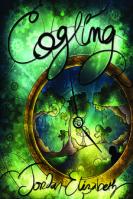
As my introduction to the steampunk genre and I must say I found Cogling, by Jordan Elizabeth a pleasing surprise. The story telling is strong, descriptions vivid, and characters who are realistic and likeable. Elizabeth has created a magical fantasy world in which readers are drawn in and easily immersed.
When Edna’s younger brother Harrison is stolen by hags and replaced with an enchanted mechanical replica, or cogling, Edna will stop at nothing to get him back. She enlists the help of a pickpocket street boy, Ike, who has knowledge of the hags and a few secrets, to aide her in her quest. Ike’s not the only one with secrets, for Edna harbors a secret of her own, one she’s afraid to admit, even to herself.
In their efforts to free Edna’s brother, they uncover a plot to annihilate the humans and the race is on to expose the hags’ evil plot to the king. When they arrive at the castle, they learn that Mother Sambucus and the other hags have infiltrated the entire Royal Court with their wretched coglings. Edna, Ike and their friends are captured once more, with no recourse except escape, in order to bring down the hags and save the kingdom.
Jordan Elizabeth is a talented New York author, whose other works include Escape from Witchwood Hallow, Treasure Darkly, Born of Treasure, several short story anthologies, and her newest novel, Goat Children.
I give Coglings Four Quills.