In Touch With Nature – Nyala antelope #southernAfricanwildlife
Posted: March 26, 2025 Filed under: Africa, Animals, In Touch With Nature, Nature, Wildlife | Tags: In Touch With Nature, Nyala Antelope, Robbie Cheadle, South Africa, Writing to be Read 88 Comments
The Nyala is a spiral horned antelope native to southern Africa. It is the antelope with the highest sexual dimorphism (differences between male and female of the species). This is easy to see in the photographs and videos I’ve shared in this post so look out for the rusty or rufous brown coats of the females and juveniles and the dark brown or slate grey coat of adult males. Females and juveniles also have ten or more white vertical stripes on their sides which the stripes are greatly reduced or completely absent in the adult males. The males are significantly larger than the females.


The Nyala is a shy animal and is usually seen in the early morning and the late afternoon when it browses, feeding on foliage, fruits, and grasses. They live in thickets within dense and dry savannah woodlands and are usually found in single-sex or mixed family groups of up to ten animals. These antelope are not fast runners, and their camouflage is their main defense against predators.
The main predators of the Nyala are lions, leopards, African wild dogs, and humans. The males are highly prized as game animals, and they are often victims of poaching. Human settlement is also encroaching on their habitat resulting in a declining population although they are classified as Least Concern by the International Union for Conservation of Nature (IUCN).
Nyalas have a special relationship with the baboons and vervet monkeys with whom they share the woodlands. They eat any fruit dropped by these primates and also react to any alarm calls made by primates from their advantageous viewing points in the trees. The baboons and monkeys also benefit from the relationship as Nyala have exceptional hearing, smell, and sight. When a Nyala spots danger, it gives off a striking alarm call sounding a bit like a barking dog. This warning also serves the primates and other creatures sharing their habitat.
Interestingly, Nyalas are not territorial. They wander about in groups and do not try to protect any areas from other creatures.
Nyala buck have an aggressive way of breeding. Firstly, the males fight for dominance, crashing into each other with their sharp horns acting like swords. The horns often draw blood. The bulls fight until one backs down by walking away as a sign of submission. These battles can be fatal if the wounds become infected or if the bull is concussed. The winning bull then slowly dances within the group of females, using strange, stuttering movements and raising its head to show off its white underfur.
When a female is on heat, the male follows her on foot, pushing his nose between her legs. He gets excited and buts her hindquarters right off the ground. If the female is interested, she stops walking. The male then walks around her and presses her head down before he mounts her. Gestation is 220 days and ewes can conceive from the age of 14 months.


YouTube video of Nyala herd comprising of young males and females:
Male Nyala licking his legs YT video:
YT video of a Nyala male feeding:
The Fire Part 1
Flamboyant performer
Sun takes final bow
Pitch black curtains descend; concealing the stage
Campers assemble fire
Restraining darkness
***
Wood ignites, flames crackle
Illuminating
Nocturnal animals materialise
Skulking in deep shadow
Bright eyes glittering
***
Feeding ravenous blaze
An essential task
Stopping potential diners from helping themselves
To a convenient
Snack of arms or legs
The Fire Part 2
Dawn makes her grand entrance
Painting the sky red
Men prepare to depart, water smothers fire
Murky vapour billows
Dark ashes sodden
***
Everything orderly
The campers move on
Single flickering coal smolders unnoticed
Mutely clinging to life
Nurtured by the breeze
***
Dry leaves fall stealthily
Embracing ember
Sustenance provided; leaves burst into flame
Cunningly building strength
Destruction ensured
These poem duo is from my book, Lion Scream, Syllabic Poetry About Southern African Wildlife, available from Amazon here: https://www.amazon.com/Lion-Scream-Syllabic-Southern-Wildlife-ebook/dp/B0BXP5N766

About Roberta Eaton Cheadle

Roberta Eaton Cheadle, is a South African writer and poet specialising in historical, paranormal, and horror novels and short stories. She is an avid reader in these genres and her writing has been influenced by famous authors including Bram Stoker, Edgar Allan Poe, Amor Towles, Stephen Crane, Enrich Maria Remarque, George Orwell, Stephen King, and Colleen McCullough.
Roberta has two published novels and a collection of short stories and has horror, paranormal, and fantasy short stories included in several anthologies. She is also a contributor to the Ask the Authors 2022 (WordCrafter Writing Reference series).
Roberta is also the author and illustrator of sixteen children’s books, illustrator to a further three children’s books, and the author and illustrator of three poetry books published under the name of Robbie Cheadle, and has poems and short stories featured in several anthologies under this name.
Roberta’s blog features discussions about classic books, book reviews, poetry, and photography. https://roberta-writes.com/.
Find Roberta Eaton Cheadle
Blog: https://wordpress.com/view/robertawrites235681907.wordpress.com
Bluesky: https://bsky.app/profile/robbiecheadle.bsky.social
Facebook: https://www.facebook.com/robertawrites
Amazon: https://www.amazon.com/Roberta-Eaton-Cheadle/e/B08RSNJQZ5
___________________________________________
Like this post? Are you a fan of this blog series? Did you know you can sponsor your favorite blog series or even a single post with an advertisement for your book? Stop by the WtbR Sponsor Page and let me advertise your book, or you can make a donation to Writing to be Read for as little as a cup of coffee, If you’d like to show your support for this author and WordCrafter Press.
__________________________________________
This segment of “In Touch with Nature” is sponsored by the Midnight Anthology Series and WordCrafter Press.

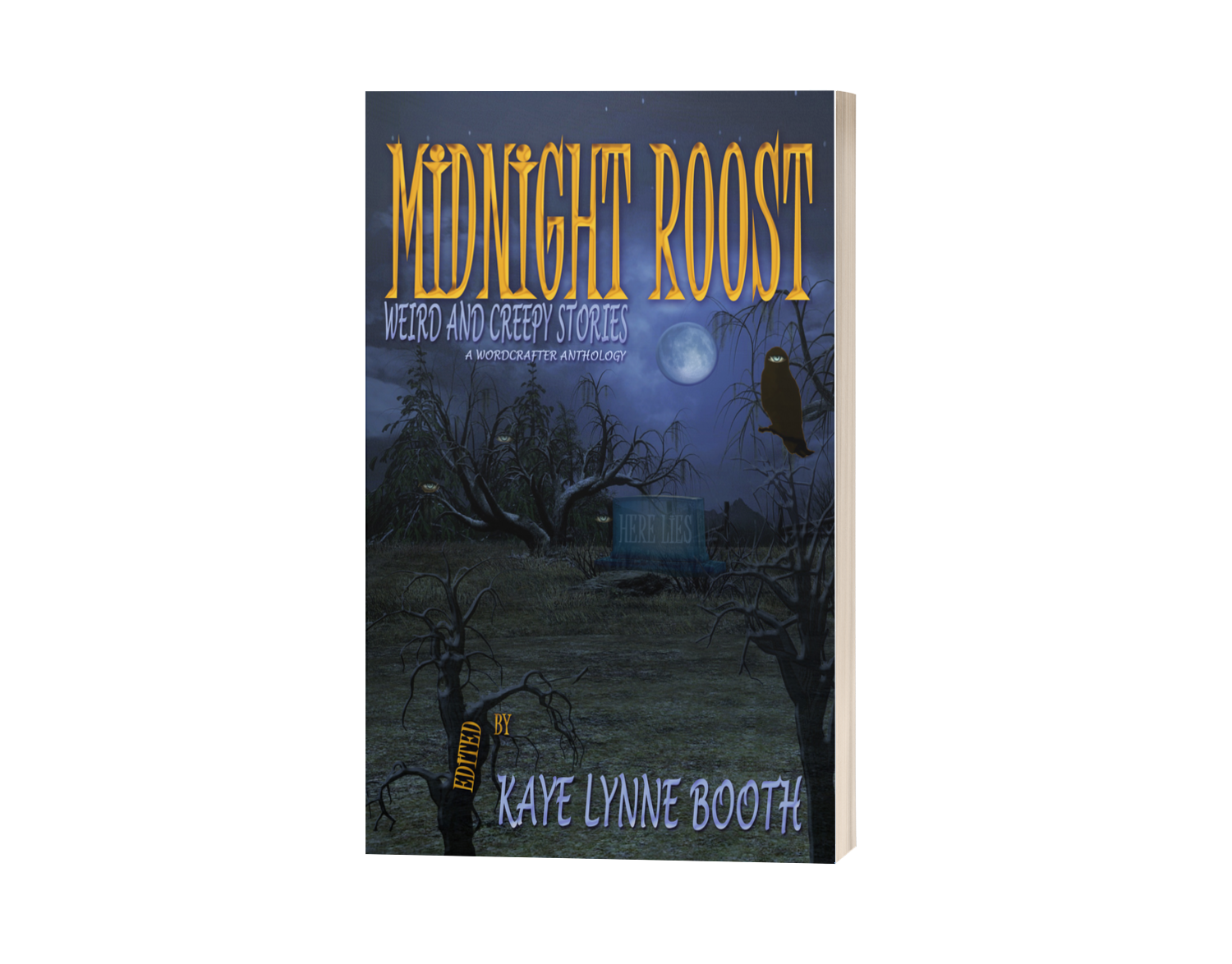
Midnight Roost: Weird and Creepy Stories: 20 authors bring your nightmares to life in 23 stories of ghosts, paranormal phenomenon and the horror from the dark crevasses of their minds. Stories of stalkers, both human and supernatural, possession and occult rituals, alien visitations of the strange kind, and ghostly tales that will give you goosebumps. These are the tales that will make you fear the dark. Read them at the Midnight Roost… if you dare. https://www.amazon.com/Midnight-Roost-Kaye-Lynne-Booth-ebook/dp/B0CL6FPLVJ
Midnight Garden: Where Dark Tales Grow: 17 authors bring you 21 magnificent dark tales. Stories of magic, monsters and mayhem. Tales of murder and madness which will make your skin crawl. These are the tales that explore your darkest fears. Read them in the Midnight Garden… if you dare. https://www.amazon.com/Midnight-Garden-Where-Tales-Anthology-ebook/dp/B0DJNDQJD3
Share this:

In Touch With Nature – African’s most unusual bird of prey – Ode to a Secretary Bird #southernafricanwildlife #birds #poetry
Posted: January 22, 2025 Filed under: Africa, Birds, In Touch With Nature, Nature, Poetry, Writing to be Read | Tags: African Wildlife, Birds, In Touch With Nature, Photography, Poetry, Roberta Eaton Cheadle, Secretary Bird, Video, Writing to be Read 68 CommentsDuring our recent trip of Babanango Game Reserve in KwaZulu-Natal, we had a good sighting of a secretary bird roosting in a tree. That sighting prompted the creation of this poem which tells you all about this fascinating bird.
Ode to a Secretary Bird
My mouth smiles, a grin spreading from ear to ear
When I spy the Secretary Bird perched in a tree
It looks around, hoping its favourite food will appear
A slithering snake its equivalent of scones and tea
An eagle type body perched atop legs like a crane
Giving it a height of up to 1.3 meters; tall for a bird
Crazy feather spikes surround its face – a bad hair day
Or does it think it’s a lion with a shaggy black mane
During a courting ritual, its frog-like call is heard
The rest of the year, a calm silence holds sway

***
Breeding usually takes place once in a year
During spring and summer when food is plentiful
The male helps to incubate the eggs, he’s quite a dear
Mating with one female for life, he’s also faithful
Preferring to stay grounded, it will fly if it must
Legs sticking out behind it in a ridiculous way
Outside of mating or nesting, it does its thing alone
When it needs to run, you only see a cloud of dust
With a wingspan of two metres, it creates a great display
Living out its life within a fifty square kilometre zone

***
Grey tailcoat and dark knee-length pants its claim
To male secretary status – it even has goose-quill pens
Carried behind its ears, the combined cause of its name
Also called ‘Devil’s horse’ by its traditional African friends
In honour of the great speed at which it hunts its prey
Including reptiles, amphibians, and mammals like rats
And venomous snakes which it beats to death on the ground
Popular due to their diet, people encourage them to stay
At keeping land free of vermin, they’re better than cats
Once they were numerous, but they no longer abound

***
This bird’s endangered classification mankind’s great shame
Along with its relatives, buzzards, vultures, and harriers
The fault of human greed and selfishness, nothing else to blame
I’m grateful some are protected behind fences and barriers
An important feature in the South African coat of arms
It’s chest a protea, also endangered or vulnerable to extinction
Powerful legs formed by a crossed knobkierie and long spear
Symbolism as the protector of the nation one of its many charms
You’d expect its status to afford it a measure of distinction
The loss of this messenger of the heavens not something people fear
A fascinating YT video featuring a secretary bird (not my video):
About Roberta Eaton Cheadle
Roberta Eaton Cheadle, is a South African writer and poet specialising in historical, paranormal, and horror novels and short stories. She is an avid reader in these genres and her writing has been influenced by famous authors including Bram Stoker, Edgar Allan Poe, Amor Towles, Stephen Crane, Enrich Maria Remarque, George Orwell, Stephen King, and Colleen McCullough.
Roberta has two published novels and a collection of short stories and has horror, paranormal, and fantasy short stories included in several anthologies. She is also a contributor to the Ask the Authors 2022 (WordCrafter Writing Reference series).
Roberta is also the author and illustrator of sixteen children’s books, illustrator to a further three children’s books, and the author and illustrator of three poetry books published under the name of Robbie Cheadle, and has poems and short stories featured in several anthologies under this name.
Roberta’s blog features discussions about classic books, book reviews, poetry, and photography. https://roberta-writes.com/.
Find Roberta Eaton Cheadle
Blog: https://wordpress.com/view/robertawrites235681907.wordpress.com
Bluesky: https://bsky.app/profile/robbiecheadle.bsky.social
Facebook: https://www.facebook.com/robertawrites
Amazon: https://www.amazon.com/Roberta-Eaton-Cheadle/e/B08RSNJQZ5
___________________________________________
Like this post? Are you a fan of this blog series? Did you know you can sponsor your favorite blog series or even a single post with an advertisement for your book? Stop by the WtbR Sponsor Page and let me advertise your book, or you can make a donation to Writing to be Read for as little as a cup of coffee, If you’d like to show your support for this author and WordCrafter Press.
__________________________________________
This segment of “In Touch with Nature” is sponsored by the Midnight Anthology Series and WordCrafter Press.
Midnight Roost: Weird and Creepy Stories: 20 authors bring your nightmares to life in 23 stories of ghosts, paranormal phenomenon and the horror from the dark crevasses of their minds. Stories of stalkers, both human and supernatural, possession and occult rituals, alien visitations of the strange kind, and ghostly tales that will give you goosebumps. These are the tales that will make you fear the dark. Read them at the Midnight Roost… if you dare. https://www.amazon.com/Midnight-Roost-Kaye-Lynne-Booth-ebook/dp/B0CL6FPLVJ
Midnight Garden: Where Dark Tales Grow: 17 authors bring you 21 magnificent dark tales. Stories of magic, monsters and mayhem. Tales of murder and madness which will make your skin crawl. These are the tales that explore your darkest fears. Read them in the Midnight Garden… if you dare. https://www.amazon.com/Midnight-Garden-Where-Tales-Anthology-ebook/dp/B0DJNDQJD3
Share this:

In Touch With Nature – Christmas Special: Japanese Macaque (Snow Monkeys) #snowmonkeys #Japan
Posted: December 25, 2024 Filed under: Animals, In Touch With Nature, Nature, Photography, Travel | Tags: In Touch With Nature, Japan, Robbie Cheadle, Snow Monkeys, Writing to be Read 47 Comments
For my final In Touch With Nature post of 2024, which happens to fall on Christmas Day, I am taking you 17 hours of flying time away from South Africa to Nagano in Japan (yes, the same place where the 1998 Olympic Winter Games were held).
Nagano is a very beautiful place and it is home to the Japanese Macaque or snow monkeys.
According to Wikipedia, snow monkeys are a terrestrial Old World monkey (primates in the family Cercopithecidae) species that is native to Japan. They live in areas where snow covers the ground for a significant part of the year. Snow monkeys are the only species of monkeys found in Japan and they are one of the big reasons I wanted to go to Japan when the opportunity arose (TC was offered a lead reviewer position in Tokyo for two weeks and I was expensive luggage – haha!).
We visited a wild snow monkey park in Jigokudani Yaen-koen (altitude 850 metres), located in the Valley of Yokoyu River in the northern part of Nagano. This is the only place in the world where monkeys bathe in hot springs.
These are pictures of Jigokudani Yaen-koen:


Snow monkeys have brownish grey fur, pink to red faces, and short, stumpy tails. The males weigh about 11.3 kg (25 lb) and the females weigh about 8.4 kg (19 lb). They generally move on all fours.
Snow monkeys are omnivorous and eat a variety of foods including approximately 213 species of plants, insects, bark, and soil. During the winters with heavy snowfall, the monkeys rely heavily on bark (the same as elephants during the Southern African winter which is quite interesting).
These are some of my photographs of the snow monkeys in the thermal spring:


Gallery photo caption: These are all snow monkey pictures I took with my iphone.
These are a few of the pictures I took with my camera. They are better, I think.


If you are interested in using any of my snow monkey or Mount Fuji photographs, they are available for free download from Unsplash here: https://unsplash.com/@r_cheadle
Two YouTube shorts of the snow monkeys:
Kaye and I wish you happy holidays and if you celebrate Christmas, may it be very merry.
A few pictures of the tree lights in Japan.


About Roberta Eaton Cheadle
Roberta Eaton Cheadle, is a South African writer and poet specialising in historical, paranormal, and horror novels and short stories. She is an avid reader in these genres and her writing has been influenced by famous authors including Bram Stoker, Edgar Allan Poe, Amor Towles, Stephen Crane, Enrich Maria Remarque, George Orwell, Stephen King, and Colleen McCullough.
Roberta has two published novels and a collection of short stories and has horror, paranormal, and fantasy short stories included in several anthologies. She is also a contributor to the Ask the Authors 2022 (WordCrafter Writing Reference series).
Roberta is also the author and illustrator of sixteen children’s books, illustrator to a further three children’s books, and the author and illustrator of three poetry books published under the name of Robbie Cheadle, and has poems and short stories featured in several anthologies under this name.
Roberta’s blog features discussions about classic books, book reviews, poetry, and photography. https://roberta-writes.com/.
Find Roberta Eaton Cheadle
Blog: https://wordpress.com/view/robertawrites235681907.wordpress.com
Twitter: https://twitter.com/RobertaEaton17
Facebook: https://www.facebook.com/robertawrites
Amazon: https://www.amazon.com/Roberta-Eaton-Cheadle/e/B08RSNJQZ5
___________________________________________
Like this post? Are you a fan of this blog series? Did you know you can sponsor your favorite blog series or even a single post with an advertisement for your book? Stop by the WtbR Sponsor Page and let me advertise your book, or you can make a donation to Writing to be Read for as little as a cup of coffee, If you’d like to show your support for this author and WordCrafter Press.
__________________________________________
This segment of “In Touch with Nature” is sponsored by the Midnight Anthology Series and WordCrafter Press.
Midnight Roost: Weird and Creepy Stories: 20 authors bring your nightmares to life in 23 stories of ghosts, paranormal phenomenon and the horror from the dark crevasses of their minds. Stories of stalkers, both human and supernatural, possession and occult rituals, alien visitations of the strange kind, and ghostly tales that will give you goosebumps. These are the tales that will make you fear the dark. Read them at the Midnight Roost… if you dare. https://www.amazon.com/Midnight-Roost-Kaye-Lynne-Booth-ebook/dp/B0CL6FPLVJ
Midnight Garden: Where Dark Tales Grow: 17 authors bring you 21 magnificent dark tales. Stories of magic, monsters and mayhem. Tales of murder and madness which will make your skin crawl. These are the tales that explore your darkest fears. Read them in the Midnight Garden… if you dare. https://www.amazon.com/Midnight-Garden-Where-Tales-Anthology-ebook/dp/B0DJNDQJD3
Share this:

In Touch With Nature – the difference between African and Asian Elephants #Elephants #wildlife
Posted: August 28, 2024 Filed under: Africa, Animals, In Touch With Nature, Nature, Wildlife | Tags: African Wildlife, Elephants, In Touch With Nature, Roberta Eaton Cheadle, South Africa, Writing to be Read 49 Comments
A couple of years ago, my family visited an elephant sanctuary near the Cradle of Humankind. For those of you who don’t know the Cradle of Humankind, it is an area in South Africa where many fossils, tools, and other traces of early humans have been found.
We also visited the Sterkfontein Caves where the 2.3 million year old fossil of Mrs Ples is on display, but this post is about the elephants.
We participated in a guided tour of the elephant sanctuary and one of the discussions with the guide revolved around the differences between African and Asian elephants. I thought it was quite interesting.

The above photograph is of African elephants. There are two species of African elephants, the larger being the African bush elephant (or African savannah elephant) which is the one I’m most familiar with, and the smaller being the African forest elephant. The above picture is of African savannah elephants.

Can you spot the differences. They are as follows:
Size: African elephants are much bigger than Asian elephants. African savannah elephants weigh approximately 8,000 kg or 9 tons and are between 3 and 4 metres tall (10 and 13 feet) at the shoulder. Asian elephants weigh approximately 5,500 kg or 6 tons and are not taller than 3,5 metres at the shoulder.
Ears: African elephants have much bigger ears and they are shaped like the continent of Africa. Asian elephants have smaller, round ears. African elephants have larger ears because they dissipate heat through their ears and Africa is hotter than Asia.
Head shape: African elephants have rounded heads and Asian elephants have a twin-domed head.
Tusks: Both male and female African elephants can have tusks, but only Asian male elephants have them. Not all elephants grow tusks.
A lot of people have romanticised ideas about elephants and think they are cute like Dumbo. This is not true. African elephants are very territorial and highly protective of their young. They can be exceptionally dangerous. I wrote a poem about this recently which you can read here: https://roberta-writes.com/2024/08/17/roberta-writes-song-parody-for-dverse-open-link-night-dverse-elephants-poetry-art/


Elephants playing in the river at Madikwe (this is at Thakadu Tented Camp)
A very grubby elephant (taken at Makikwe Game Reserve – Madikwe Hills Lodge)
I adore this video of a herd of elephants walking in line:
About Roberta Eaton Cheadle
Roberta Eaton Cheadle, is a South African writer and poet specialising in historical, paranormal, and horror novels and short stories. She is an avid reader in these genres and her writing has been influenced by famous authors including Bram Stoker, Edgar Allan Poe, Amor Towles, Stephen Crane, Enrich Maria Remarque, George Orwell, Stephen King, and Colleen McCullough.
Roberta has two published novels and a collection of short stories and has horror, paranormal, and fantasy short stories included in several anthologies. She is also a contributor to the Ask the Authors 2022 (WordCrafter Writing Reference series).
Roberta is also the author and illustrator of sixteen children’s books, illustrator to a further three children’s books, and the author and illustrator of three poetry books published under the name of Robbie Cheadle, and has poems and short stories featured in several anthologies under this name.
Roberta’s blog features discussions about classic books, book reviews, poetry, and photography. https://roberta-writes.com/.
Find Roberta Eaton Cheadle
Blog: https://wordpress.com/view/robertawrites235681907.wordpress.com
Twitter: https://twitter.com/RobertaEaton17
Facebook: https://www.facebook.com/robertawrites
Amazon: https://www.amazon.com/Roberta-Eaton-Cheadle/e/B08RSNJQZ5
___________________________________________
Want to be sure not to miss any of Robbie’s “In Touch With Nature” segments? Subscribe to Writing to be Read for e-mail notifications whenever new content is posted or follow WtbR on WordPress. If you found it interesting or entertaining, please share.
__________________________________________
This segment of “In Touch with Nature” is sponsored by Midnight Roost: Weird & Creepy Stories and WordCrafter Press.

20 authors bring your nightmares to life in 23 stories of ghosts, paranormal phenomenon and the horror from the dark crevasses of their minds. Stories of stalkers, both human and supernatural, possession and occult rituals, alien visitations of the strange kind, and ghostly tales that will give you goosebumps. These are the tales that will make you fear the dark. Read them at the Midnight Roost… if you dare.
On sale now for only $4.99
June 15 – August 31,2024
https://books2read.com/MidnightRoost
Share this:

In Touch With Nature – The role of the Oxpecker bird in nature #oxpeckers #giraffes #rhinos
Posted: July 24, 2024 Filed under: Animals, Books, Collection, Nature, Poetry, Wildlife | Tags: African Wildlife, Codependency, Cohabitation, Girraffes, In Touch With Nature, Oxpeckers, Rhinos, Writing to be Read 39 CommentsWhen I go on safari into the Southern African bush, I frequently see oxpecker birds. When I spot them, they are nearly always sitting on the heads, necks, or backs of a giraffe, buffalo, or rhino. This is because oxpeckers, either the yellow-billed or the red-billed species, feed almost exclusively on ixodid ticks, dead skin, saliva, blood, sweat and tears that they collect from the skins of large African mammals. The behaviour of oxpecker birds keeps the birds well fed and reduces the parasite load on the animal. Parasites such as ticks can pass on deadly diseases as well as causing anemia in their mammal host making the animal more susceptible to illnesses.
Oxpeckers are not all good news for their animal hosts as they are sanguinivores which means that blood comprises a large part of their diet. They eat ticks for the blood they provide and a wound on an animal is an enticing blood meal. Oxpeckers peck at wounds on their hosts and can reopen them in an effort to access fresh blood.


Oxpeckers also serve as an alarm system for mammals. Their Swahili name, askari wa kifaru, means the rhino’s guard. Rhinos have very poor eye sight which puts them at a severe disadvantage when it comes to poaching. Research has show that rhinos who act as hosts to oxpeckers are less likely to be shot by poachers because the oxpeckers create a commotion when they see danger approaching. They also warn herbivores about the approach of predators like lions or hyenas.


If you look carefully at this video, you’ll see the oxpecker on the giraffe’s head. There is also one near the shoulders.
The following poem may disturb sensitive readers!
The following poem is extracted from my poetry book, Lion Scream.
Rhino Dilemma
Near-sighted eyes observe
Through tall, swaying grass
Yellowish curtain hides heavy-set body
But, camouflage fails him
The poachers close in
***
Small bird cries a warning
Animal reacts
Stands upright, facing the wind, ready for flight
Tranquiliser gun fires
Ground shakes when beast falls
***
Savage men move quickly
Hack out valued horn
Animal left bleeding; awakes to sure death
Tears of pain and anguish
Slide from fading eyes
About Rhino Dilemma
At the start of the 20th century, there were over 500,000 rhinos living in the wild. Today, that number has dropped to less than 30,000 and they are critically endangered. The main threats to rhino today are poaching and loss of habitat.
Rhino Dilemma is about the brutal slaying of rhinos for their horns. I wrote this poem after a visit to a national park in North West Province. The rhinos in the park are all dehorned.
The guide told us a horrific story about a male southern white rhino weeping in pain after poachers hacked off his horn and removed part of the bone in his skull in a South African game reserve.
On my return home, I researched this incident and found this article about a rhino crying tears after being brutally attacked and injured by a poacher. It makes me cry too: https://www.dailymail.co.uk/news/article-10152157/Heartbreaking-mages-Southern-White-rhino-weeping-pain-poachers-hacked-horn.html
I wrote “Rhino Dilemma” to share the plight of the rhinos to readers in my community.

About Roberta Eaton Cheadle
Roberta Eaton Cheadle, is a South African writer and poet specialising in historical, paranormal, and horror novels and short stories. She is an avid reader in these genres and her writing has been influenced by famous authors including Bram Stoker, Edgar Allan Poe, Amor Towles, Stephen Crane, Enrich Maria Remarque, George Orwell, Stephen King, and Colleen McCullough.
Roberta has two published novels and a collection of short stories and has horror, paranormal, and fantasy short stories included in several anthologies. She is also a contributor to the Ask the Authors 2022 (WordCrafter Writing Reference series).
Roberta is also the author and illustrator of sixteen children’s books, illustrator to a further three children’s books, and the author and illustrator of three poetry books published under the name of Robbie Cheadle, and has poems and short stories featured in several anthologies under this name.
Roberta’s blog features discussions about classic books, book reviews, poetry, and photography. https://roberta-writes.com/.
Find Roberta Eaton Cheadle
Blog: https://wordpress.com/view/robertawrites235681907.wordpress.com
Twitter: https://twitter.com/RobertaEaton17
Facebook: https://www.facebook.com/robertawrites
Amazon: https://www.amazon.com/Roberta-Eaton-Cheadle/e/B08RSNJQZ5
___________________________________________
Want to be sure not to miss any of Robbie’s “In Touch With Nature” segments? Subscribe to Writing to be Read for e-mail notifications whenever new content is posted or follow WtbR on WordPress. If you found it interesting or entertaining, please share.
__________________________________________
This segment of “In Touch with Nature” is sponsored by Midnight Roost: Weird & Creepy Stories and WordCrafter Press.
20 authors bring your nightmares to life in 23 stories of ghosts, paranormal phenomenon and the horror from the dark crevasses of their minds. Stories of stalkers, both human and supernatural, possession and occult rituals, alien visitations of the strange kind, and ghostly tales that will give you goosebumps. These are the tales that will make you fear the dark. Read them at the Midnight Roost… if you dare.
On sale now for only $4.99
June 15 – August 31,2024
https://books2read.com/MidnightRoost
Share this:

A Day at the Lake
Posted: June 17, 2024 Filed under: Animals, Bird Watching, Nature, Writing to be Read | Tags: Bird Watching, Ducks, Geese, Kaye Lynne Booth, Storks, Waterfowl, Writing to be Read 2 Comments
I always enjoy going places where I can see different birds from those that visit my yard. Recently I visited a lake in Salida, Colorado, where ducks and geese frequent. I spent a pleasant afternoon walking around the lake and I was fortunate to be there at a time when the storks stopped by for a visit. You can see them perched in the photo above. They are quite large, and interesting looking, but oh, so graceful in flight. Unfortunately, I wasn’t able to capture their departure as they lit out for their next stop. But I did get some shots of the cute duckies and geese below.


I found a better picture of the majestic stork. Different trip, different lake. This one was spotted on Lake DeWeese, just outside Westcliffe, Colorado.

_________________________________________
About the Author

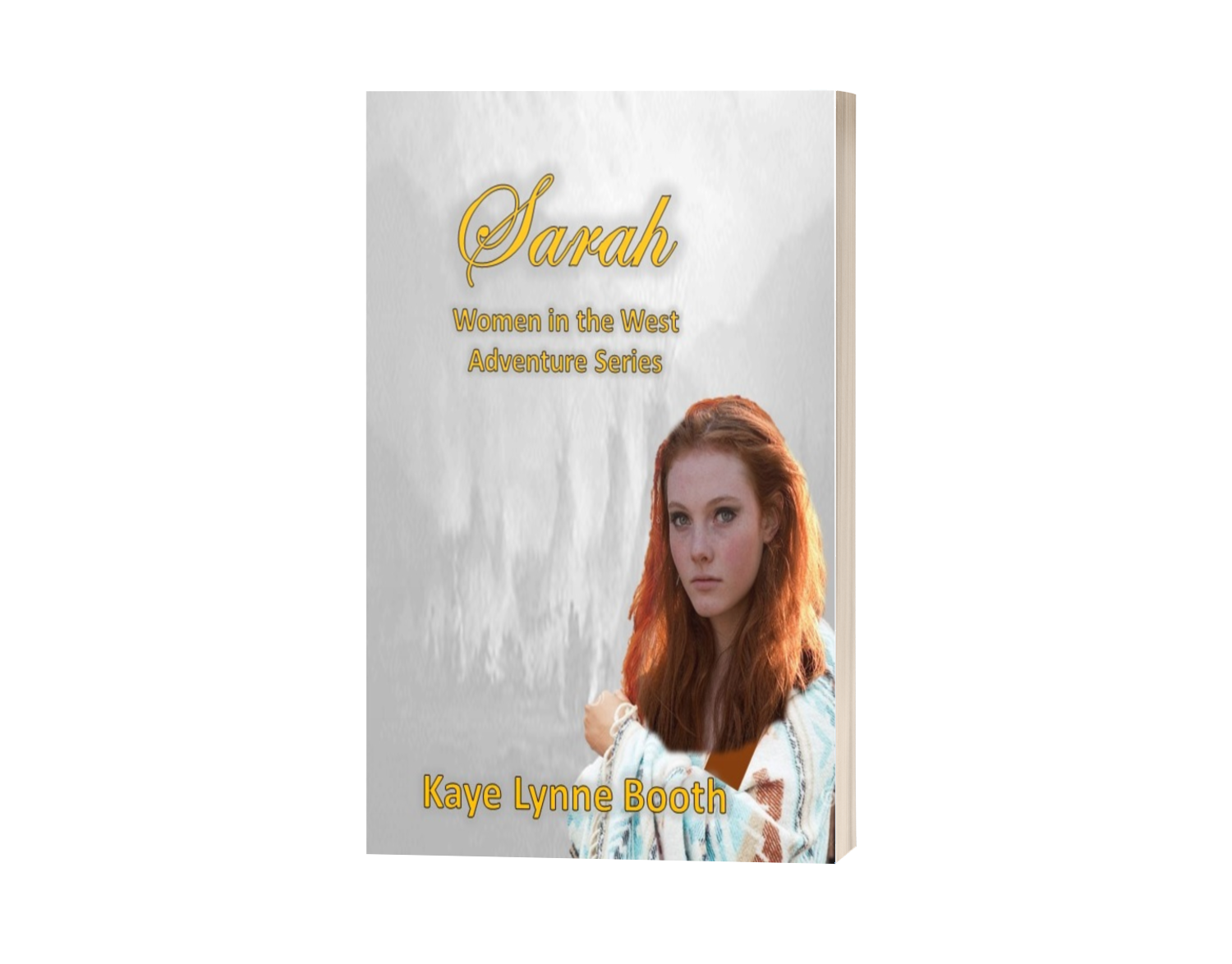
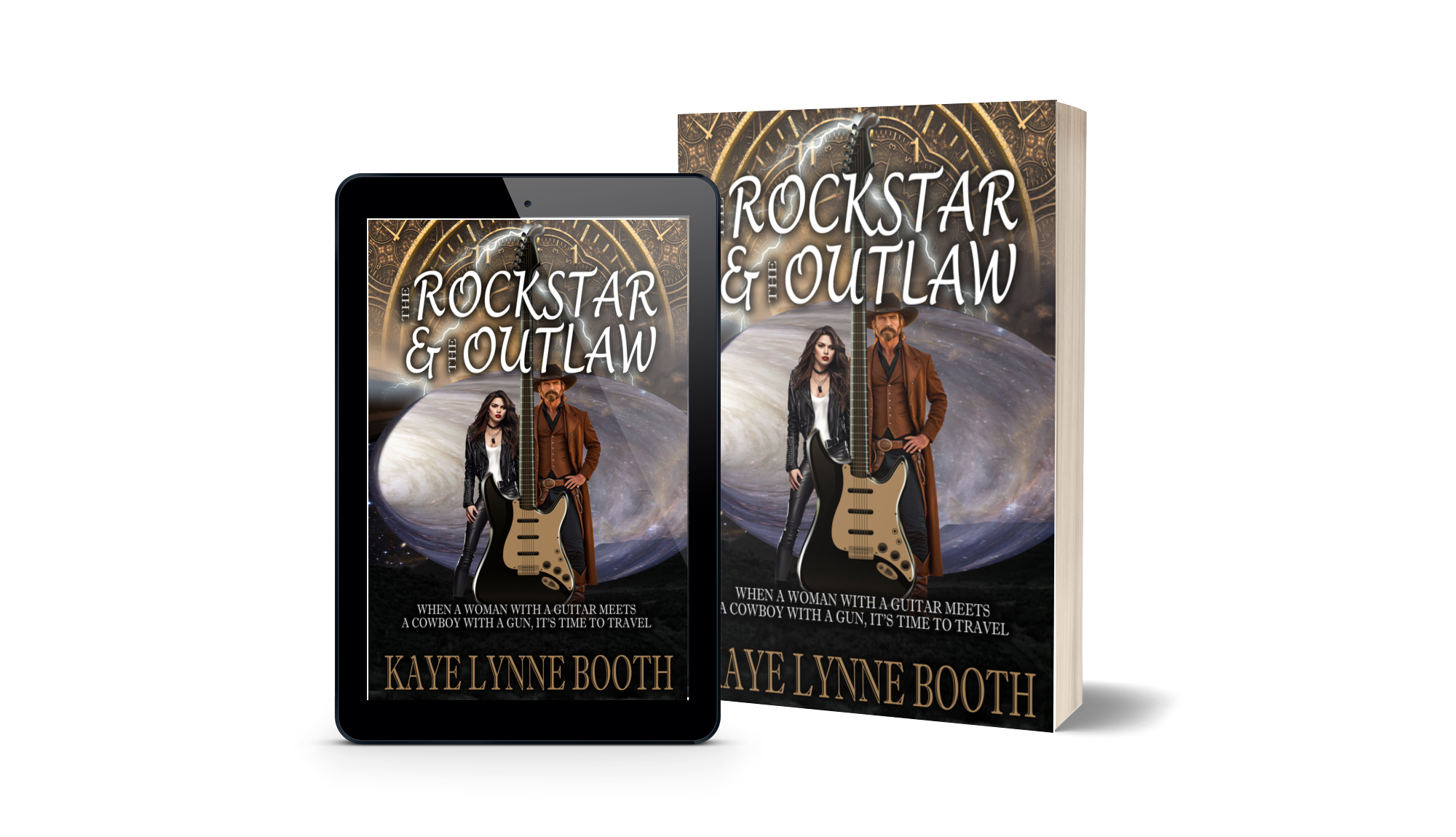
For Kaye Lynne Booth, writing is a passion. Kaye Lynne is an author with published short fiction and poetry, both online and in print, including her short story collection, Last Call and Other Short Fiction; and her paranormal mystery novella, Hidden Secrets; Books 1 & 2 of her Women in the West adventure series, Delilah and Sarah, and her Time-Travel Adventure novel, The Rock Star & The Outlaw. Kaye holds a dual M.F.A. degree in Creative Writing with emphasis in genre fiction and screenwriting, and an M.A. in publishing. Kaye Lynne is the founder of WordCrafter Quality Writing & Author Services and WordCrafter Press. She also maintains an authors’ blog and website, Writing to be Read, where she publishes content of interest in the literary world.
_______________________________________
If you’d like to show your support for this author, you can make a donation to Writing to be Read for as little as a cup of coffee, or check out the WtbR Sponsor Page and let me advertise your book.
Share this:

In Touch with Nature – Highly endangered African painted wild dogs #Africanwildlife #Africanwilddogs
Posted: April 24, 2024 Filed under: Africa, Animals, In Touch With Nature, Nature, Wildlife | Tags: African Wild Dogs, In Touch With Nature, Nature, Robbie Cheadle, Wildlife, Writing to be Read 77 Comments
The African wild dog, also called the hunting dog or African painted dog, is currently listed as endangered on the IUCN Red List. According to the African Wildlife Foundation, only 6,600 African wild dogs remain in the wild across the entire African continent. The main reason for their endangerment is habitat fragmentation (the most common reason for wildlife endangerment) which causes conflict between these predators and humans. Throughout Africa, wild dogs have been shot and poisoned by farmers for loss of livestock, even though these losses are frequently due to other predators including hyenas and leopards. In addition, African wild dogs also suffer from endemic disease outbreaks.
African wild dogs have a mottled coat comprising of yellow, black and white patches. They have long legs with flat, broad heads, a short black muzzle, and large round ears.
Wild dogs have strong social bonds and live in packs of two to twenty-seven adults and yearling pups.
Wild dogs are excellent hunters. They hunt in packs of six to twenty individuals and catch their prey by chasing them to exhaustion. Wild dogs can run at speeds of up to 66 km/h (41 mph) for between 10 to 60 continuous minutes. They have an 80 percent kill success rate with is higher than bigger predators like lions and leopards.
Observers have noticed that prior to setting out to hunt, the wild dogs’ populations in the Okavango Delta of Botswana rally to determine whether they should depart. Departure is more likely when more individual dogs sneeze, a short sharp exhale through the nostrils. If a dominant dog initiates by sneezing, around three additional sneezes guarantee departure.
Sighting a pack of African wild dogs in the wild has been on my bucket list for a long time. I was lucky enough to see a pack of wild dogs at the Bthongo Rhino & Lion Nature Reserve but they live inside a relatively small enclosure and are fed.

Obviously, seeing wild dogs in captivity is not quite the same as seeing them in a national park or game reserve. I was, therefore, delighted when we saw wild dogs at Madikwe Game Reserve not once, but two days in a row. We were fortunate enough to observe, the hunt (chase), devouring of a kill, and wild dogs relaxing and having fun.


The poem below, Dog Vote, is extracted from my poetry book, Lion Scream.
Dog Vote
They yelp and growl at play
Then sleep in a mass
Of black fur, overlapped with yellow and white
They are invisible
Among the shadows
***
Having strong social bonds
Wild dogs live in packs
Dominated by a single breeding pair
But they all have a say
Conveyed as a vote
***
Before leaving to hunt
The adults rally
Sneezing to express a preference to hunt
The majority rules
All members comply
This is my YT video of African wild dogs playing:
African wild dogs in a gathering:
About Roberta Eaton Cheadle
Award-winning, bestselling author, Roberta Eaton Cheadle, is a South African writer and poet specialising in historical, paranormal, and horror novels and short stories. She is an avid reader in these genres and her writing has been influenced by famous authors including Bram Stoker, Edgar Allan Poe, Amor Towles, Stephen Crane, Enrich Maria Remarque, George Orwell, Stephen King, and Colleen McCullough.
Roberta has two published novels and has horror, paranormal, and fantasy short stories included in several anthologies. She is also a contributor to the Ask the Authors 2022 (WordCrafter Writing Reference series).
Roberta also has thirteen children’s books and two poetry books published under the name of Robbie Cheadle, and has poems and short stories featured in several anthologies under this name.
Roberta’s blog features discussions about classic books, book reviews, poetry, and photography. https://roberta-writes.com/.
Find Roberta Eaton Cheadle
Blog: https://wordpress.com/view/robertawrites235681907.wordpress.com
Twitter: https://twitter.com/RobertaEaton17
Facebook: https://www.facebook.com/robertawrites
Amazon: https://www.amazon.com/Roberta-Eaton-Cheadle/e/B08RSNJQZ5
_____________________________________________________________________________________________
Want to be sure not to miss any of Robbie’s “In Touch With Nature” segments? Subscribe to Writing to be Read for e-mail notifications whenever new content is posted or follow WtbR on WordPress. If you found it interesting or entertaining, please share.
Share this:

Welcome to the WordCrafter “Poetry Treasures 4: In Touch with Nature” Book Blog Tour
Posted: April 8, 2024 Filed under: Anthology, Book Promotion, Books, Giveaways, Nature, Nature writing, Poetry, Poetry Readings, Treasuring Poetry, WordCrafter Book Blog Tours, WordCrafter Press 100 Comments
It’s day 1 of the WordCrafter Poetry Treasures 4 Book Blog Tour, and today we have contributing poet D.L. Finn with a reading of her poem, “The Island”. Stick with the tour for the rest of the week for readings and guest posts from contributing authors Andrew McDowell, Patricia Furstenberg, Merril D. Smith, Selma Martin and Robbie Cheadle, an interview with contributing author Emily Gmitter, and a review on Carla Loves to Read. If you leave a comment at each stop, you’ll be entered in our great giveaway.
Giveaway
Leave a comment for a chance to win one of three free copies of
Poetry Treasures 4: In Touch with Nature.
Leave a comment at each stop for additional chances.
Winners chosen by random drawing.
You can keep up with the tour through the links in the schedule below, but they won’t work until each stop goes live.
Mon. April 8 – Writing to be Read – Reading by D.L. Finn
Tues. April 9 – Yesterday and Today: Merril’s Historical Musings – Reading by Andrew McDowell
Wed. April 10 – Book Places – Interview w/ Emily Gmitter & Reading by Selma Martin
Thurs. April 11 – d.l. finn author – Guest post by Patricia Furstenberg
Fri. April 12 – Colleen Chesebro, Author & Poet – Guest post by Merril D. Smith
Sat. April 13 – Carla Reads – Review/ Reading by Robbie Cheadle
Book Trailer
About the Anthology
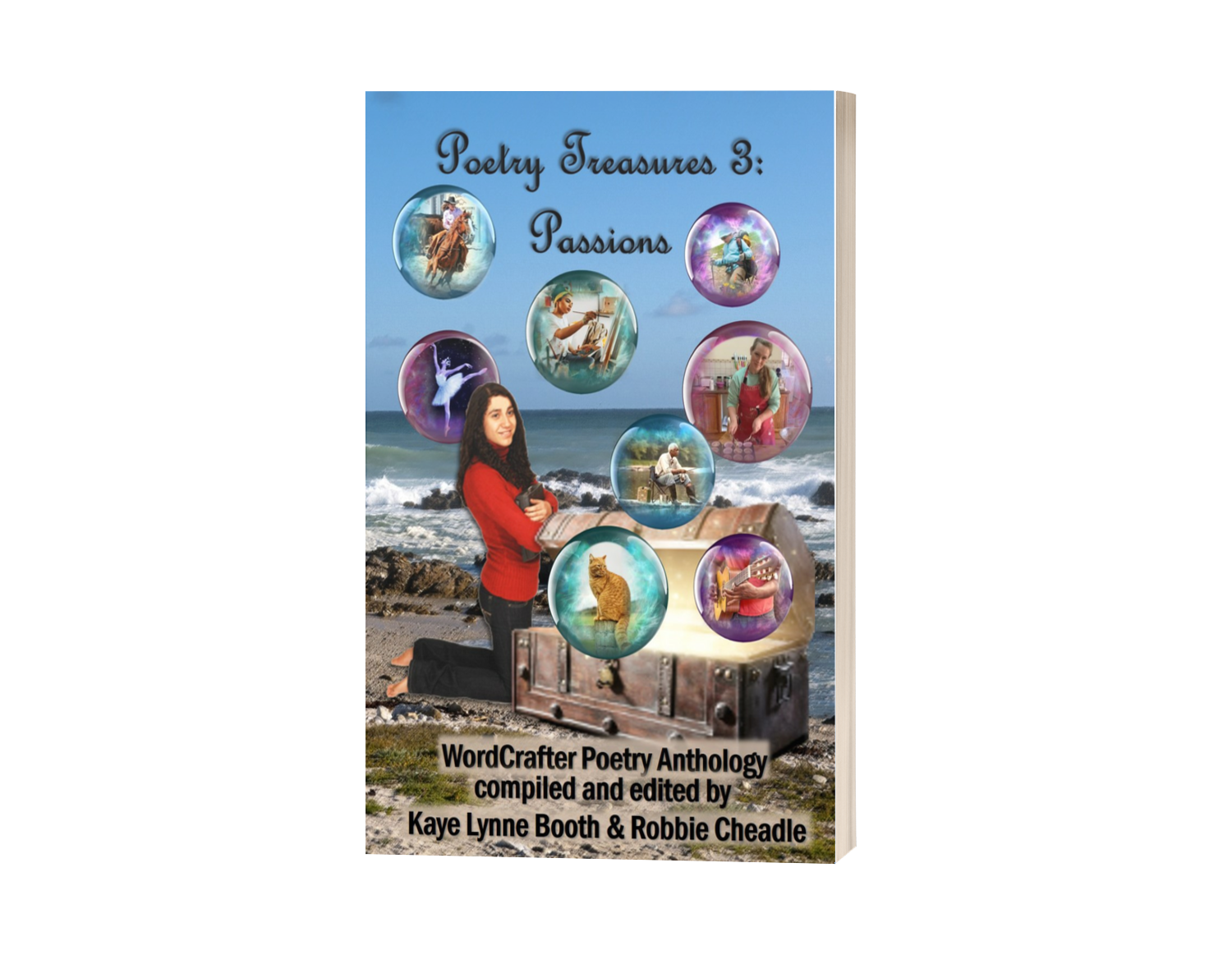
This volume of the Poetry Treasures series is a special one for me because it is the first volume to feature my works. I am proud to be featured along side such talented poets as Colleen Chesebro, D.L. Finn, Frank Prem, and Robbie Cheadle who I have gotten to know and I am familiar with their works. In addition, I got to work woth many creative poets who were new to me, introduced through Robbie’s “Treasuring Poetry” series right along with the series readers. These include Andrew McDowell, Patricia Furstenberg, Emily Gmitter, Marcia Meara, Selma Martin, Luanne Castle, and Merril D. Smith. Without their contributions and willingness to pitch in with the promotions, there would be no anthology. I have so enjoyed working with this group of poets, who have stuggled to meet tight deadlines and put up with my confusions as I shuffled through emails to & from hosts and contributors, and contributors who were also acting as hosts as I put this blog tour together. A big thanks goes out to them for all their efforts and hard work.
The quality of poetry in this volume makes it a poetry treasure to be sure, and I’ve had several contributors thank me for all my hard work. It has been a labor of love. But although I co-edited and did the final formatting, this is really Robbie’s baby, and without all of her hard work, this project wouldn’t be. The anthology was born from Robbie’s “Treasuring Poetry” blog series, and it is Robbie who invited the guests to submit their work, compiled and organized them all into a coherent manuscript, and did the first round of editing. Somehow, she fit all that into her very busy life, and it is she who should be commended, not I.
This is my blog post, my addition to the tour as a contributing author, as well as editor of the project. I will not burden you with my photo and bio, which you, my readers, see with every post I make. Instead I will get right to the main attraction for this stop and move on to a reading by contributing author D.L. Finn.
Introduction of D.L. Finn
Author of children’s books, adult fiction and poetry, D.L. Finn is a multi-talented Califirnia author. Her Haibun and syllabic poetry draw vivid pictures in the mind and I am pleased to feature her works within this volume of Poetry Treasures. She shares with us today a reading of her poem, “The Island”.
Reading of “The Island”, by D.L. Finn
About D.L. Finn

D. L. Finn is an independent California local who encourages everyone to embrace their inner child. She was born and raised in the foggy Bay Area, but in 1990 she relocated with her husband, kids, dogs, and cats to Nevada City, in the Sierra foothills. She immersed herself in reading all types of books but especially loved romance, horror, and fantasy. She always treasured creating her own reality on paper. Finally, surrounded by towering pines, oaks, and cedars, her creativity was nurtured until it bloomed. Her creations include children’s books, adult fiction, and poetry. She continues on her adventure with an open invitation to all readers to join her.
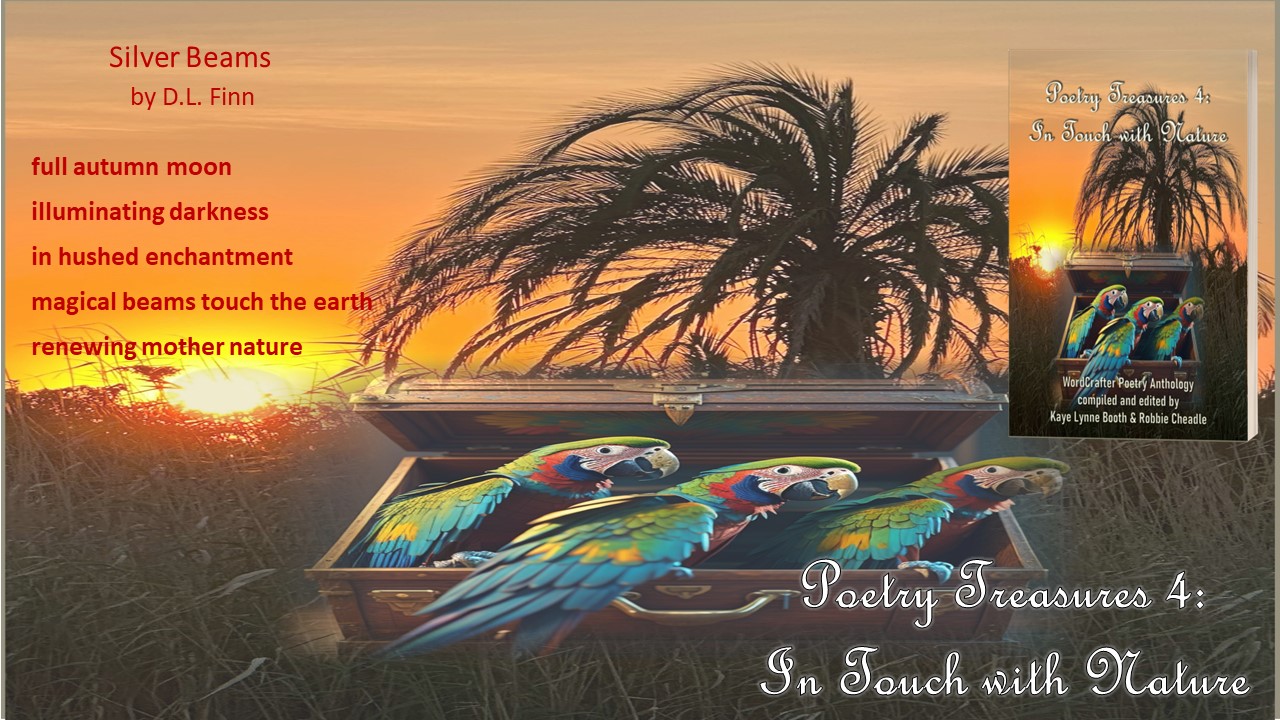
About Poetry Treasures 4: In Touch with Nature
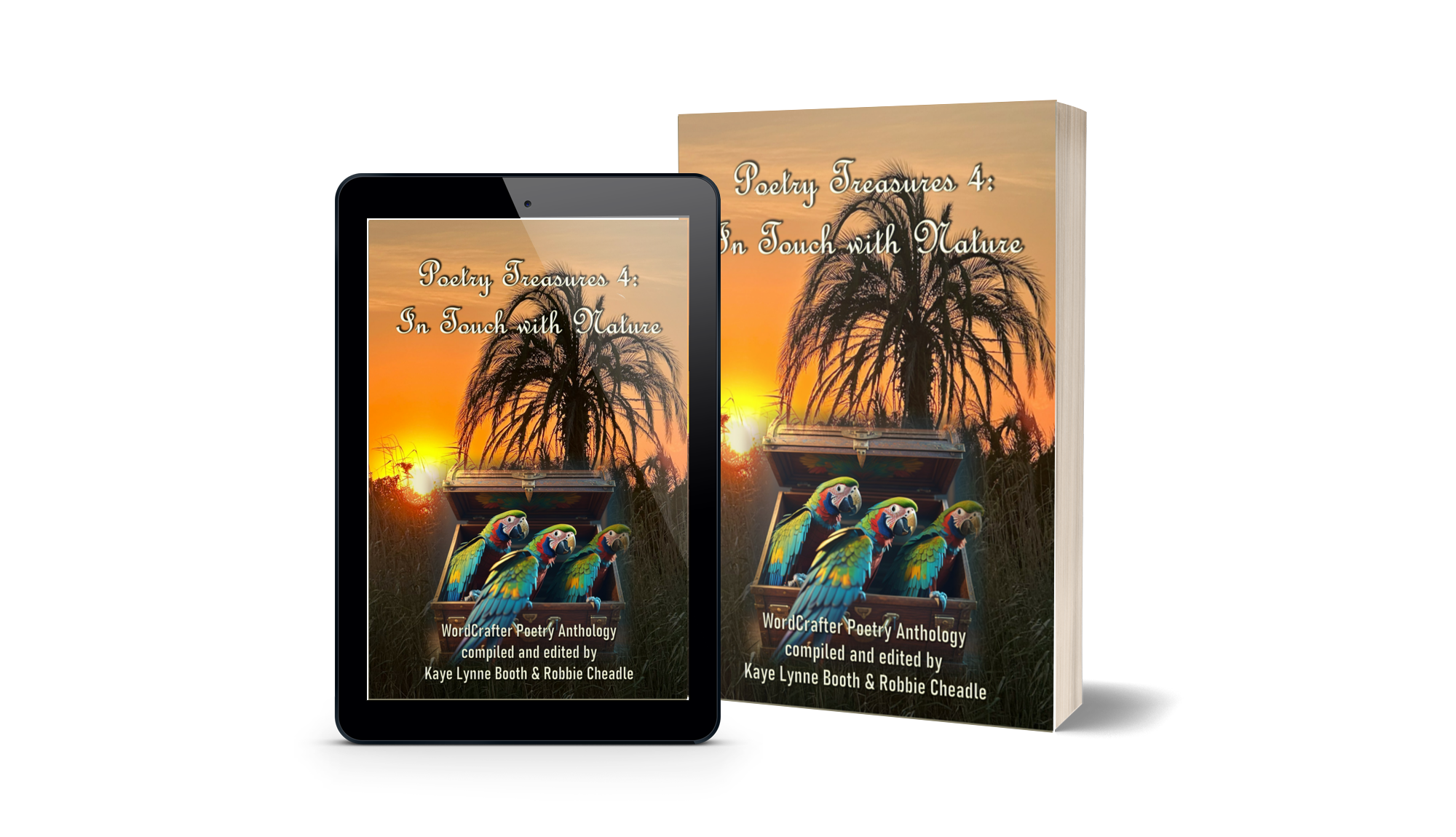
Open the cover
and you will discover
Poetry Treasures
from the guests on
Robbie Cheadle’s 2023
“Treasuring Poetry”
blog series
on Writing to be Read.
Included are poetic gems from: Andrew McDowell, Robbie Cheadle, Patricia Furstenberg, Marcia Meara, Luanne Castle, D.L. Finn, Emily Gmitter, Kaye Lynne Booth, Selma Martin, Merril D. Smith, Frank Prem, and Colleen Chesebro.
Purchase Link: https://books2read.com/u/mlM5YA

____________________________________________
That wraps up today’s stop. Don’t forget to leave a comment and enter the giveaway for a free copy of this lovely poetry collection. Tomorrow will find us over at Colleen Chesebro, Author & Poet with a guest post by contributing poet, Merril D. Smith. Join us and don’t forget to leave a comment for another chance to win a free digital copy of Poetry Treasures 4: In Touch with Nature.
______________________________________
Book your WordCrafter Book Blog Tour today!
Share this:

In Touch With Nature – Lionesses, the queens of the savannah #lionesses #wildlife
Posted: March 27, 2024 Filed under: Animals, In Touch With Nature, Nature, Writing to be Read | Tags: Animal Kindom, In Touch With Nature, Lions, Robbie Cheadle, Writing to be Read 58 CommentsLast month, I discussed the role of male lions in the pride. If you missed it, you can read it here: https://writingtoberead.com/2024/02/28/in-touch-with-nature-the-vulnerable-life-of-male-lions-wildlife-lions/. This month I’m talking about female lions.
Lionesses are the primary hunters within the pride. They hunt in groups of three to eight females, all of whom are usually related. Lionesses display exceptional teamwork during hunts, deploying strategic hunting techniques, such as coordinated flanking and ambushing, to outmaneuver their prey. Their synchronized approach increases the likelihood of a successful kill. Lionesses, working together, are able to take down a target twice their size. Lion prey includes zebra, wildebeests, buffalo, antelope and other grassland animals.
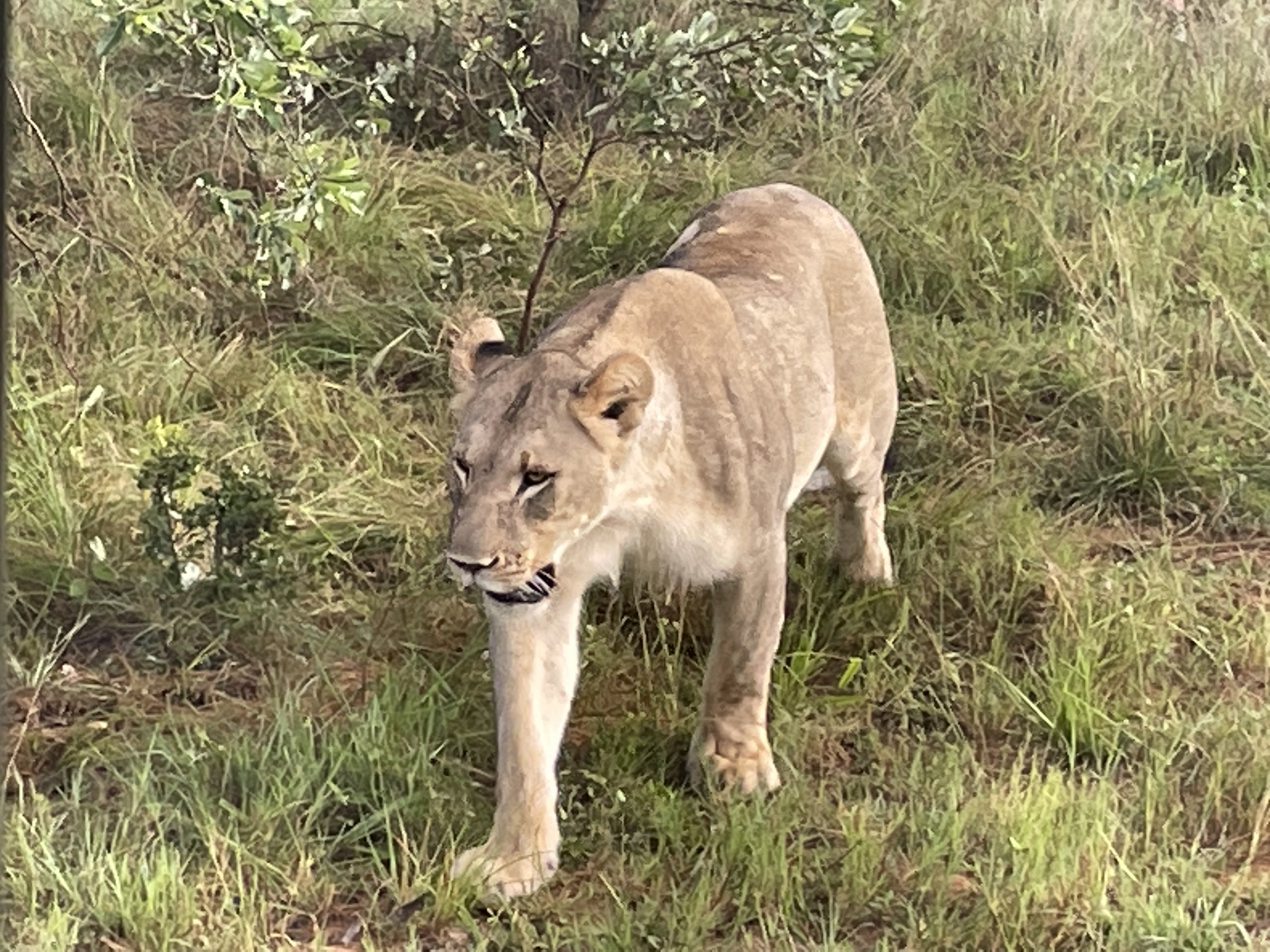
Lions will kill other predators including leopards, cheetahs, hyenas and African wild dogs. They do not eat them as the flesh of other predators is not nutritious. Lion predator kills are purely to remove competitors for food and territory, as well as threats to the lions young. In particular, lions actively kill leopards as leopards kill and eat their cubs.

This is my video of this lioness kill:
Lionesses are known to be excellent mothers and will go to great lengths to ensure the survival of their cubs. Lion mating is polygamous and takes place all year round. The dominant male will copulate with multiple females within his pride. Lionesses are receptive to mating for three or four days within their variable reproductive cycle and during this time they will mate frequently, up to fifty times per day. Female lions have the ultimate say in deciding which lion they will reproduce with. Lionesses observe the males carefully, accessing their physical condition, strength, and overall fitness, before committing to a partnership. Lionesses are also not monogamous and can mate with multiple lions during their estrous cycle, although it has been observed that approximately two-thirds of these mating events occur with the primary male, with the remaining third being distributed among multiple males from the peripheral coalitions of that primary male. This means that a single litter can have cubs from different fathers. Lionesses in the same pride often breed around the same time and the resultant cubs are raised together.
My video of lions mating:
Lionesses are pregnant for 105 to 112 days, during which time her belly will grow larger, and her nipples will enlarge and darken. Just before giving birth, the lioness will begin to look for a safe and secure place to give birth. Once she has found a suitable spot that is hidden from predators and close to water, she will start to build a den using grass and other materials. The actual birth is relatively quick, approximately 1 hour, and between two and four is the usual number for a litter.
The cubs are born blind and helpless and rely on their mothers to protect and care for them. During the first few weeks of their lives, the cubs feed on their mother’s milk and she only leaves them for short periods to hunt.
My video of lion clubs:
Last month I said that male lions commit infanticide and can kill the cubs of other males. Given that lionesses are fiercely protective of their cubs, why do they not defend their cubs from lions? The answer is simply that male lions are much bigger and more aggressive than lionesses. Challenging a male lion is risky for a lioness as it could lead to the serious injury or death of the lioness, as a result, in this situation the lioness will prioritise her own survival and the wellbeing of the rest of the pride over the survival of her cubs.
If you are interested in seeing more of my photographs, videos and artworks relating to Cats, please enjoy this stunning post created by the talented Resa McConaghy. Resa and I share a love for wildlife and a passion for conservation.
Lion Lust by Robbie Cheadle
Sidling up beside her
He strokes her shoulder
In a gesture of affection for his mate
He quickly mounts her
For the eighteenth time
***
She walks quickly away
He meekly follows
Lying down face-to-face in her chosen spot
A short period of rest
Before the next round
***
They will stay together
For twenty-four hours
Mating every twenty to thirty minutes
Despite his high demands
She lovingly purrs
This poem is from my book Lion Scream, Syllabic Poetry About Southern African Wildlife.
About Roberta Eaton Cheadle
Award-winning, bestselling author, Roberta Eaton Cheadle, is a South African writer and poet specialising in historical, paranormal, and horror novels and short stories. She is an avid reader in these genres and her writing has been influenced by famous authors including Bram Stoker, Edgar Allan Poe, Amor Towles, Stephen Crane, Enrich Maria Remarque, George Orwell, Stephen King, and Colleen McCullough.
Roberta has two published novels and has horror, paranormal, and fantasy short stories included in several anthologies. She is also a contributor to the Ask the Authors 2022 (WordCrafter Writing Reference series).
Roberta also has thirteen children’s books and two poetry books published under the name of Robbie Cheadle, and has poems and short stories featured in several anthologies under this name.
Roberta’s blog features discussions about classic books, book reviews, poetry, and photography. https://roberta-writes.com/.
Find Roberta Eaton Cheadle
Blog: https://wordpress.com/view/robertawrites235681907.wordpress.com
Twitter: https://twitter.com/RobertaEaton17
Facebook: https://www.facebook.com/robertawrites
Amazon: https://www.amazon.com/Roberta-Eaton-Cheadle/e/B08RSNJQZ5
_____________________________________________________________________________________________
Want to be sure not to miss any of Robbie’s “In Touch With Nature” segments? Subscribe to Writing to be Read for e-mail notifications whenever new content is posted or follow WtbR on WordPress. If you found it interesting or entertaining, please share.
Share this:

In Touch With Nature – Giraffes chew bones and lions eat grass #animalkingdom #natureconservation
Posted: January 24, 2024 Filed under: Animals, In Touch With Nature, Nature, Wildlife | Tags: In Touch With Nature, Predators and Prey, Robbie Cheadle, Wildlife, Writing to be Read 107 CommentsKaye and I are starting a new series this year entitled “In Touch With Nature”. We will be sharing information about the natural environment, and I will include some of my nature videos, artworks, and photographs.
For any writers, poets and authors who have an interest in nature conservation and our natural environment, I have joined the Society of Environmental Authors and Journalists. You can find out more about it here: Society of Environmental Authors and Journalists – Robbie Cheadle
For this first post in this series, I am discussing the topic of herbivores and carnivores.
The Oxford dictionary defines a herbivore as an animal that feeds on plants.
National Geographic expands on this to say that a herbivore is an organism that mostly feeds on plants. Herbivores range in size from tiny insects such as aphids to large, lumbering elephants. You can read more on this topic here: Herbivore (nationalgeographic.org)
Conversely, Oxford defines a carnivore as an animal that feeds on other animals.
National Geographic says: “A carnivore is an organism that eats mostly meat, or the flesh of animals. Sometimes carnivores are called predators.” You can read more here: https://education.nationalgeographic.org/resource/carnivore/

With the above in mind, did you know that many herbivores chew on bones? It’s true. Giraffes, red deer, reindeer, camels, wildebeest, kudu, gemsbok, and sable antelopes, as well as domestic cows and sheep, are not the strict vegans we think they are. They have all been observed to consume bones in a practice called osteophagy.
These animals do not actually eat the bones or break them open to eat the marrow inside, they only chew on dry bones and only when they are mineral deprived. Chewing bones provides herbivores with essential nutrients, phosphorus, and a bit of sodium.
Phosphorus is an essential mineral for all animals. This mineral plays an important role in the formation of the skeletal system and is necessary for certain biological processes including energy metabolism, protein synthesis, cell signaling, and lactation. A lack of phosphorus results in delayed growth and failure to regenerate new bone as well as problems with the reproductive system.
Another way herbivores obtain essential minerals and other elements they need is natural licks, also called salt licks. These licks can be natural but many are artificial and created by humans for the animals. You will see deer, moose, elephants, hippos, rhinos, tapirs, woodchucks, fox squirrels, mountain goats, porcupines and frugivorous bats all making use of natural or artificial licks to obtain phosphorus and biometals (sodium, calcium, iron, zinc, and other trace elements).
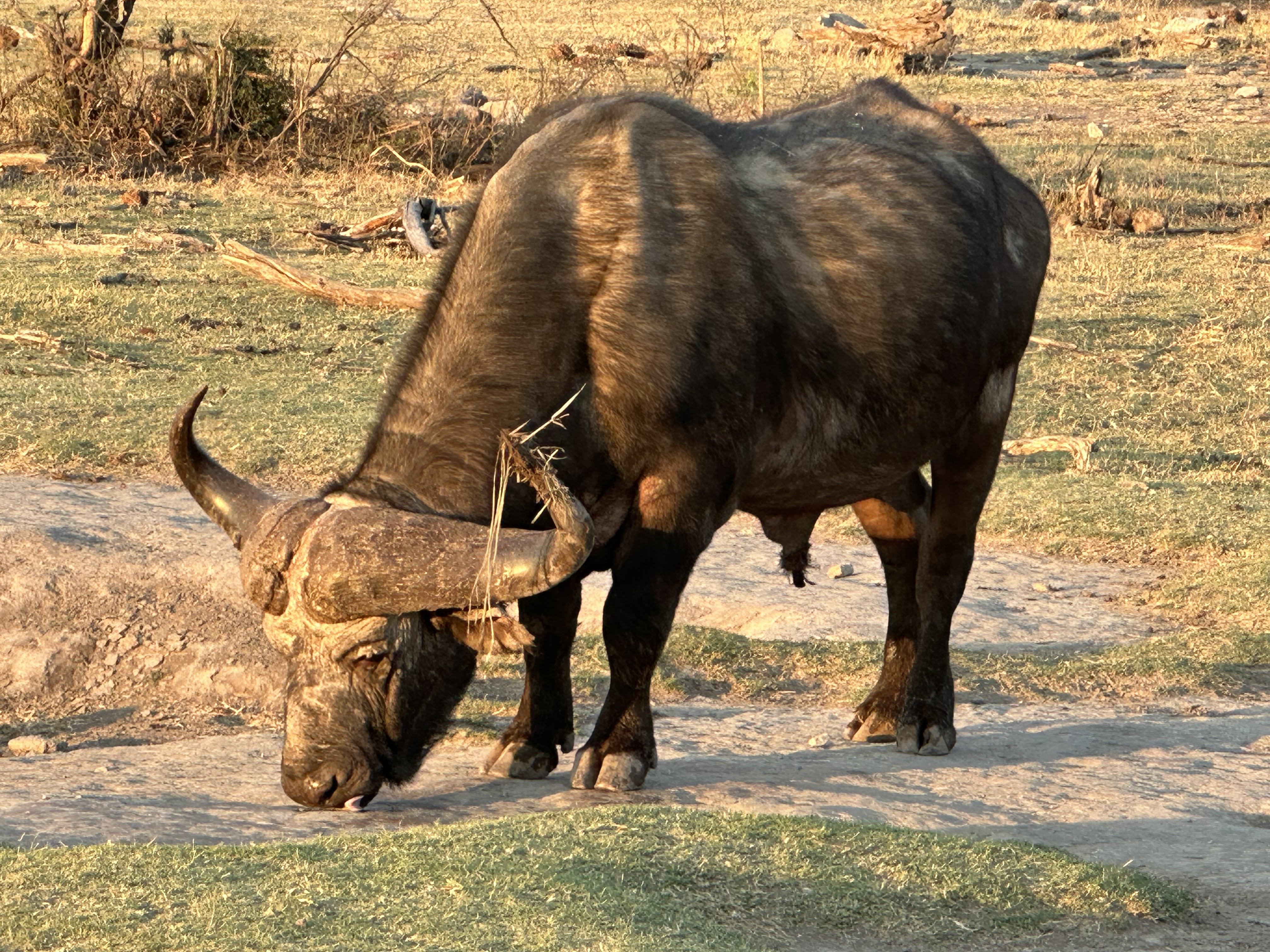
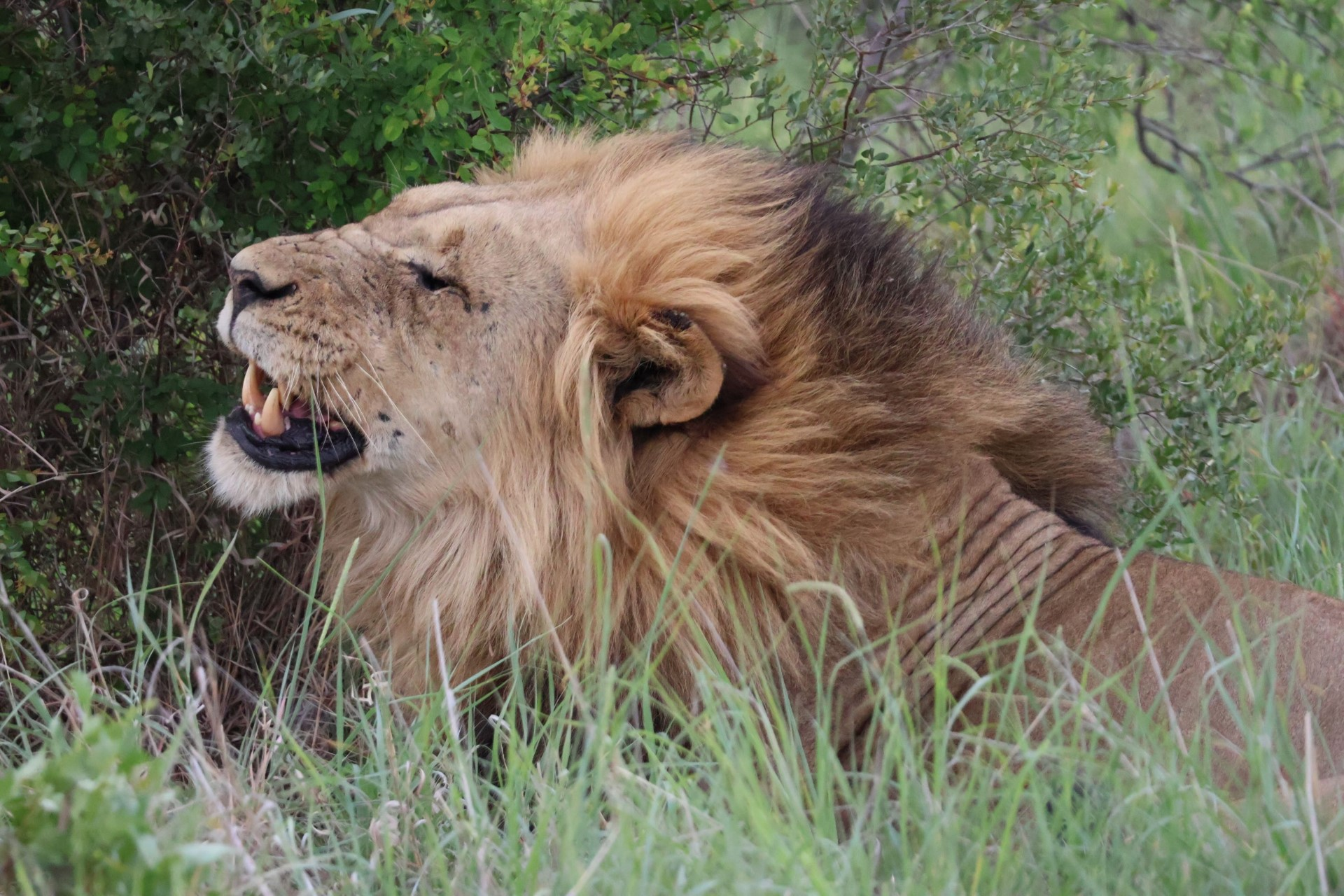
A further surprise is that lions sometimes eat small amounts of grass to extract certain nutrients they need. As their digestive system is designed to digest meat, they cannot digest the grass fully and often vomit soon after eating it.
Some of the reasons a lion may eat grass are as follows:
- It helps provide them with a source of water;
- It helps maintain their body weight;
- It helps keep them cool in hot weather;
- It helps settle stomach aches; and
- Its an easy way for a lion to get nutrients.
Lions are versatile. This means that if they are hunting in dry regions like the Kalahari Desert, lions may eat plants and fruits as an alternate source of water. Lions don’t drink very much.

Domestic dogs and cats also sometimes eat grass for the same reasons as lions. Just like lions, they usually vomit after eating it.
Animals are adaptable and find ways to meet their dietary needs. There are few perfect examples of herbivores or carnivores in the wild.
Here are a few of my YouTube wildlife videos:
This black maned lion walked right past our vehicle:
About Roberta Eaton Cheadle
Award-winning, bestselling author, Roberta Eaton Cheadle, is a South African writer and poet specialising in historical, paranormal, and horror novels and short stories. She is an avid reader in these genres and her writing has been influenced by famous authors including Bram Stoker, Edgar Allan Poe, Amor Towles, Stephen Crane, Enrich Maria Remarque, George Orwell, Stephen King, and Colleen McCullough.
Roberta has two published novels and has horror, paranormal, and fantasy short stories included in several anthologies. She is also a contributor to the Ask the Authors 2022 (WordCrafter Writing Reference series).
Roberta also has thirteen children’s books and two poetry books published under the name of Robbie Cheadle, and has poems and short stories featured in several anthologies under this name.
Roberta’s blog features discussions about classic books, book reviews, poetry, and photography. https://roberta-writes.com/.
Find Roberta Eaton Cheadle
Blog: https://wordpress.com/view/robertawrites235681907.wordpress.com
Twitter: https://twitter.com/RobertaEaton17
Facebook: https://www.facebook.com/robertawrites
Amazon: https://www.amazon.com/Roberta-Eaton-Cheadle/e/B08RSNJQZ5
_____________________________________________________________________________________________
Want to be sure not to miss any of Robbie’s “In Touch With Nature” segments? Subscribe to Writing to be Read for e-mail notifications whenever new content is posted or follow WtbR on WordPress. If you found it interesting or entertaining, please share.